Available Online atwww.ijcsmc.com
International Journal of Computer Science and Mobile Computing
A Monthly Journal of Computer Science and Information Technology
ISSN 2320–088X
IJCSMC, Vol. 3, Issue. 7, July 2014, pg.930 – 935
RESEARCH ARTICLE
A Central Router Controller Adaptive
Optimization for Nested Mobile Network
Nidhi Chaudhary
Student, M.Tech (CSE) Vaish College of Engineering, Rohtak
Madhu Bhatia
Assistant Professor, Vaish College of Engineering, Rohtak [email protected]
Deepak Goyal
HOD, Vaish College of Engineering, Rohtak [email protected]
Abstract: A Mobile Network is Dynamic Infrastructure less Network that performs the cooperative communication over the network. One of the complex mobile network architecture is Nested Mobile Network. In this network form, complete network is divided in sub network with top level and nested form networks. Each sub network is defined with central router device. As the communication is performed between nodes of two sub networks, the communication is initiated by central router. To perform communication, node sends the request to the controller node and the controller node performs the information transformation and generates the route towards the destination node. The work is implemented in NS2 environment. The obtained results show that the work has improved the network communication and reduced the communication delay and communication loss over the network.
Keywords: Nested Network, Sub Network, central Controller, Mobility
I. INTRODUCTION
with topology specification so that the routing functionality over the network will be improved. These kind of network are defined with the specification of mobile nodes. The nodes generates the path by generating the forwarding message [4,5,6].
Figure 1: Cooperative Mobile Network
There are number of indoor and outdoor applications of mobile network respective to size and the communication form in the network. These network types include the small scale, large scale, static and dynamic network. The network design depends on the network protocols so that the network issues will be reduced and the communication will be effective over the network. These network types includes the network organization, link management and routing in effective way. The network is defined under different concerns such as security, latency etc. The environmental and the communication vectors are present that affects the network communication and the performance [7,8].
Figure 2: Multihop Communication
When the mobile network is defined without specification of any topology and without any infrastructure, the factor considered are the distance and the mobility. In such case, if the node does not occur in direct range of other node, in such case, the communication is performed with the help of other nodes called intermediate nodes. In such case, multihop communication network is performed over the network. Here figure 2 shows the communication path for the nodes as the black lines. It is also defined with the mobile nodes. The basic difficulty in such network is the mobility vector. The topology can also be defined in the form of dynamic scenario that will be changed periodically. The route selection over the network will be done dynamically so that to achieve the effective selection of route, routing protocols are defined in the network. This kind of network provides the communication respective to the communicating values with high speed data transmission and quick change in the network topology[9][10][11].
II. RELATED WORK
A mobile network is defined with under specific network and communication architecture. Lot of work is defined by earlier researchers on different network forms and architecture. Some of the work defined by earlier researchers is described in this section. A work on grid based topology network is defined by Hock Guan Goh[1]. Author defined this network scenario for agricultural monitoring and performed the sensor network study under the effective network construction. Author presented a work on flat tree routing approach under the network construction and specification. Author defined an algorithmic study based work on the monitoring and specification so that the data aggregation will be done effectively. Author performed the network distribution management and performs the intermediate communication analysis to generate the route and reduce the energy consumption over the network. Author[2] presented a branch grow algorithmic approach for optimization of network in terms of network life and to reduce the communication delay over the network. A topology specific cooperative communication approach is defined by sensor network. Author defined the network transmission analysis under the connectivity constraints. Author defined the topology control under the deployment model for both the indoor and outdoor network types. Author defined the measurement over the network under single hop and multi hop communication. Author presented the convergence based time analysis and energy adaptive analysis to generate the optimize route and to attain the effective communication over the network. Macro Zimmerling[3] has presented a power aware communication approach to optimize the routing in mobile network. Author presented an evaluation under the topology generation and the connectivity analysis so that the minimum energy relay based communication will be performed. Author presented the comparative study on different power adaptive routing approaches. Author defined the time based lower bound analysis to provide optimal power consumption over the network. Author defined his work as the modified protocol and performs the network analysis under different communication parameters. Chih Yung Chang[4] has presented an energy aware node construction and topology control mechanism. Author performed the traffic load based analysis routing so that the relay node specific route will be generated. The communication is controlled under the node placement and scheduling mechanism so that the power consumption analysis and the collision over the network will be optimized. Author defined the tree specific network architecture and performed distance adaptive routing over the network.
Xiong Yan[5] has defined the topological analysis over the network under the connectivity and overage range analysis. Author defined a density analysis approach to perform the decision making and to perform the work under the threshold based computational analysis. Author has taken the simulation directed criteria to perform the directive analysis under the reasoning. Jin Zhu[6] has presented a work on network reliability analysis. Author defined topology control mechanism under the connectivity analysis. Author also performed the reliability analysis under the quantized network. Author defined a network topology approach for the data acquisition under the rate control mechanism to perform the analysis on the reliability and capability estimation over the network. Lamling Shum[7] performed the analysis and design of topology control mechanism. Author defined a review based work on topology control with the unit disk graph under the network modeling. Author defined the work on physical layer so that range based network construction and range assignment will be done. Author defined a cross layer work on physical layer and logical layer. Aki Happonen[8] has presented a work on energy adaptive sensor network for network construction. Author defined the work under the network design with low power system with energy efficiency and to achieve the effective network construction. SandyaSree Thaskani[9] presented the topology control mechanism under the architecture specification. Author defined the network with mobile base station so that the improved network results will be obtained from the system. C. Behren[10] presented the topology construction mechanism under network design. Author defined a cooperative energy management based approach for battery monitoring and voltage control with the inclusion of additional hardware. K.Vanitha[11] presented the self healing pervasive sensor network construction. Author defined the node localization and the scalability of nodes under different tracks and slices. Author defined a deployment model under the wait-n-relay approach so that mobility in the network will be achieved. Author defined information clustering of nodes in the region analysis to track the identified region.
III. RESEARCH METHODOLOGY
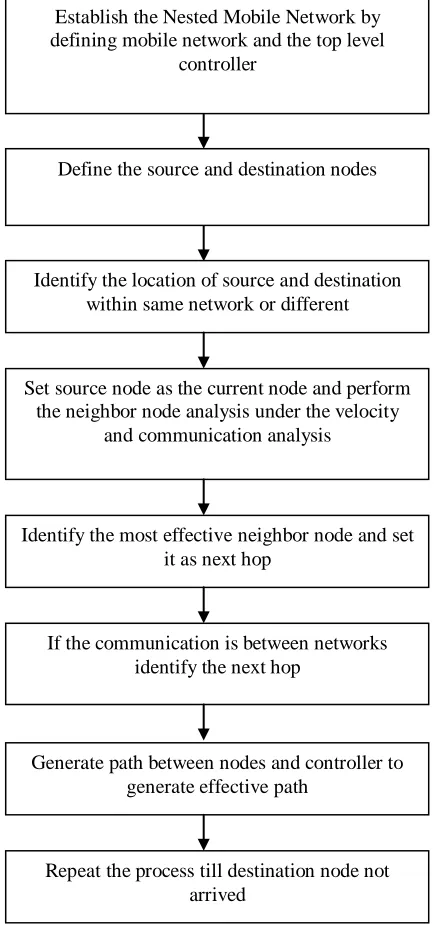
also be performed between two mobile nodes present in different mobile networks. In such case, the communication will be performed between the mobile and the controller node to manage the communication. While generating the effective route between the nodes, the two level analyses will be performed. The first level analysis will be in terms of velocity analysis and second level analysis will be performed based on the communication parameters.
Figure 3 : Flow of Work
Based on these weighted parameters, the next hop selection. The work includes the dynamic selection of neighboring nodes based on the velocity and distance analysis. The velocity will be identified by generating the request at two time stamps so that effective route identification will be performed. The complete Research Design is shown in figure 4. In this present work, an effective velocity and communication analytical routing is nested mobile network. The presented work is effective because the work will provide the effective communication when the nodes are moving. The work will identify the node mobility dynamically so that direction based selection of next hop can be done. The work will provide
Establish the Nested Mobile Network by defining mobile network and the top level
controller
Identify the location of source and destination within same network or different
Set source node as the current node and perform the neighbor node analysis under the velocity
and communication analysis
Identify the most effective neighbor node and set it as next hop
If the communication is between networks identify the next hop
Define the source and destination nodes
Generate path between nodes and controller to generate effective path
the route based on routing and velocity based parameters so that the generated route will be effective in terms of communication analysis.
IV. RESULTS
The presented work is implemented in NS2 environment. The communication scenario considered in this work is shown in table 1. The network is defined with 5 sub networks initially. Each such network is defined with controller router node. The nodes are having mobility and the inter network and intra network communication is performed over the network.
Table 1: Network Scenario Parameters Values Number of Nodes 50 Protocol AODV Simulation Time 10 Sec Packet Size 512 MAC protocol 802.11 Network Area 1990x1990 Type of Network Nested Mobile
Network Number of Sub
Networks
5
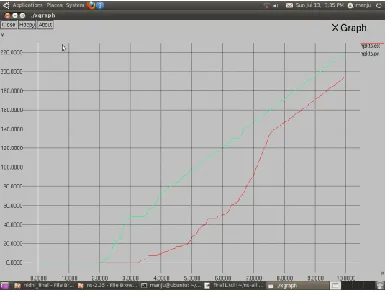
In this work, the communication decision is taken by the controller node. Each communication route is generated via the controller node. The communication analysis of the work is here done in terms of communication performed and the communication loss parameters. As the routing approach considered in this work is dynamic, the dynamic adaptive route is generated over the network
Figure 4: Packet Communication (Existing Vs. Proposed)
transmitted over the network. The figure shows, the presented work has reduced the communication initialization time so that the communication begin earlier and the communication is improved over the network. Here green line shows the packet transmission in case of proposed work and it shows the improved communication than existing approach.
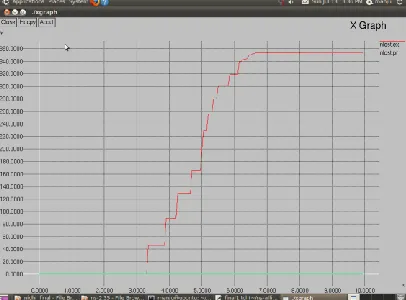
Figure 5 : Packet Loss Analysis (Existing Vs. Proposed)
The figure 5 is showing the comparison graph to represent the number of packets lost over the network. Here XAxis represents the simulation time and the y axis represents the number of packets lost in the network. In case of proposed network, the communication approach adaptive is implemented. The results show that the presented work reduced the communication loss whereas in case of existing approach heavy data loss occurs over the communication.
V. CONCLUSION
In this work, adaptive controller node specific routing approach is defined in nested mobile network. The network is defined as the collection of sub networks where each sub network is controlled by the controller device. The obtained results show the work has improved the network communication and reduced the communication loss over the network.
References
[1] Hock Guan Goh, ” Energy Efficient Routing for Wireless Sensor Networks with Grid Topology”, E. Sha et al. (Eds.):
EUC 2006, LNCS 4096, pp. 834-843, 2006.
[2] Paolo Costa,” A Cooperative Approach for Topology Control in Wireless Sensor Networks”, Annual IEEE Conference
on Local Computer Networks, pp 1-5, 2010
[3] Marco Zimmerling, ”Localized Power-Aware Routing in Linear Wireless Sensor Networks”. International Conference
on Context-awareness for Self-Managing Systems, pp 24-33, 2008
[4] Chih-Yung Chang,” Energy-aware node placement, topology control and MAC scheduling for wireless sensor networks”. Computer Networks, pp 2189–2204, 2008
[5] XIONG Yan,” An Analysis of the Working/Sleeping Decision in Topology Control of Wireless Sensor Networks”, Chinese Journal of Electronics Vol.19, No.1, Jan. 2010
[6] Jin Zhu, ”Reliability Analysis of Wireless Sensor Networks Using Markovian Model”, IEEE conference on Intelligent
Computer Communication and Processing pp 323-328, 2009
[7] Lamling Shum, ”Localised Topology Measurement and Control in Wireless Sensor Network”. Pp 1-4, 2006
[8] Aki Happonen, ”Low Power Design for Wireless Sensor Networks”.
http://www.ee.oulu.fi/~carlos/WSN_Presentations_and_Papers/Aki_Happonen, pp 1-5, 2005
[9] SandhyaSree Thaskani, ”Application of topology under control wireless sensor networks in precision agriculture”, Mid-Term Symposium on Taking Telecom and IT Revolution to Rural India, pp 1-4, 2010
[10] C. Behrens, ”Energy-efficient topology control for wireless sensor networks using online battery monitoring”, Copernicus Publications on behalf of the URSI Landesausschuss, pp 205-208, 2007