The effect of “Internet of Things” on supply chain
integration and performance: An organisational capability
perspective
Tharaka de Vass College of Business Victoria University Melbourne, Australia [email protected]
Himanshu Shee College of Business Victoria University Melbourne, Australia
Shah Miah College of Business Victoria University Melbourne, Australia
Abstract
The Internet of things (IoT) is a next generation of Internet connected embedded ICT systems in a digital environment to seamlessly integrate supply chain and logistics processes. Integrating emerging IoT into the current ICT systems can be unique because of its intelligence, autonomous and pervasive applications. However, research on the IoT adoption in supply chain domain is scarce and acceptance of the IoT into the retail services in specific has been overly rhetoric. This study is drawn upon the organisational capability theory for developing an empirical model considering the effect of IoT capabilities on multiple dimensions of supply chain process integration, and in turn improves supply chain performance as well as organisational performance. Cross-sectional survey data from 227 Australian retail firms was analysed using structural equation modelling (SEM). The results indicate that IoT capability has a positive and significant effect on internal, customer-, and supplier-related process integration that in turn positively affects supply chain performance and organisational performance. Theoretically, the study contributes to a body of knowledge that integrates information systems research into supply chain integration by establishing an empirical evidence of how IoT-enabled process integration can enhance the performance at both supply chain and organisational level. Practically, the results inform the managers of the likely investment on IoT that can lead to chain’s performance outcome.
Keywords: Internet of Things, supply chain integration, supply chain performance, firm
performance, organisational capability theory
1
Introduction
platform thus facilitates “things” to be identified, located, sensed and controlled via the global platform (Borgia, 2014). It is viewed as progression of information and communication technology (ICT) (e.g. computers, ERP, bar code, email, fax, phone, and WMS) applications that are helpful to capture and share data in a network of organisations on real-time basis (Borgia, 2014). This “digitally upgrading” of conventional objects via Internet connectivity generates added capabilities to its functionality (Mattern & Floerkemeier, 2010). IoT capabilities may differ to previous ICT capabilities due to their ubiquity, intelligence and autonomy (Constantinides, Kahlert, & de Vries, 2017).
Aside, conventional ICT technologies help monitor supply chain functions such as purchasing, transportation, storage, distribution, sales and returns (Vanpoucke, Vereecke, & Muylle, 2017). With many other smart devices recently joining the list under the newly coined IoT umbrella of technologies, the potential to address the information capture and exchange in real-time has multiplied (Atzori et al., 2010; Borgia, 2014). Although the advances in IoT applications in the form of sensor is expected to revolutionise retail sector (Kahlert, Constantinides, & de Vries, 2017), its acceptance and potential to integrate supply chain processes is largely under developed both for theoretical and practical implications.
Although there have been a number of studies that have investigated the ICT-enabled supply chain processes integration in improving the performance (Li, Yang, Sun, & Sohal, 2009; Qrunfleh & Tarafdar, 2014; Rai, Patnayakuni, & Seth, 2006; Vanpoucke et al., 2017), no study is documented to empirically assess the effect of emerging IoT adoption on supply chain integration. Supply chain integration includes both inter- and intra-organisational integration across the entire supply chain through a collaborative mechanism (Alfalla-Luque, Medina-Lopez, & Dey, 2013), that can generate greater customer value by offering superior services (Christopher & Towill, 2001). In a scenario of network-based competition, the strength of a supply chain is determined by how effective the flow of goods and services is, information exchange, and funds flows (Rai et al., 2006). IoT is perceived to strengthen the supply chain integration by connecting the objects through Internet (Ping, Liu, Zhou, & Wang, 2011; Tu, 2018). Adoption and use of IoT help organisation building its capability. From organisational capability theory perspective, IoT is likely to enhance the capability to integrate the suppliers, customers and intra-organisational logistics processes.
IoT bridges the gap between physical and digital world by synchronising the information flow with the physical flow for greater supply chain integration (Ping et al., 2011). IoT capability is defined as additional capabilities gained by supply chains with everyday objects being embedded with technology that provides identifying, sensing, networking and processing capabilities to communicate with other devices and services over the Internet (Whitmore, Agarwal, & Da Xu, 2014).
on IoT within this context is timely (Ben-Daya, Hassini, & Bahroun, 2017; Dubey, Gunasekaran, Childe, Papadopoulos, & Wamba, 2017; Mishra et al., 2016; Tu, 2018).
The question is what extent the emerging list of technologies classified as 'IoT' can facilitate external (i.e. suppliers and customers) and internal (cross-functional operations) process integration to deliver better supply chain performance and firm performance. This study, therefore, aims to empirically investigate the perceived effect of IoT adoption on supply chain process integration that in turn enhances both supply chain, and firm performance.
This paper is organised as follows. First, the literature on organisational capability theory, supply chain integration, and IoT is reviewed to propose a conceptual framework for IoT-enabled supply chain process integration and performance. The methodology of data collection and analysis technique using SEM modelling is then outlined. The discussion of results, theoretical and managerial implications of the findings are then discussed. Finally, we summarise the work and outline some limitations within the study context.
2
Background literature review
2.1 Organisational capability theory
IoT adoption can be viewed as an additional capability that may add value to the current configuration of ICT capability within any organisation. It is important for studies to utilise and treat IoT capability as a progression of ICT capability that may facilitate intra- and inter-organisational communication and information flows in more integrated way (Borgia, 2014). The intra- and inter-organisational information sharing (Huh, Yook, & Kim, 2008), information communication (Huh et al., 2008; Kusunoki, Nonaka, & Nagata, 1998), and inter-firm relationships (Lorenzoni & Lipparini, 1999) together represent process integration capabilities. We, therefore, intend to develop an insight from the literature that organisations can build additional capabilities by adopting IoT into the mainstream business running on the legacy of ICT backbone. The inter- and intra-organisational communication and information exchange are perceived to be facilitated by IoT capability.
Organisational capability theory therefore can be argued to underpin this research. Organisational capability perspective, related to resource-based view theory, suggests that a firm must develop its own resources and capabilities for performance improvement (Huo, 2012; Rai et al., 2006). Integration per se is a higher order process capability that can directly influence firm performance (Huo, 2012; Verona, 1999). Further, organisational capability theory suggests that internal integration can directly affect external integration where internal process integration is the base for the development of the firm’s external process integration (Huo, 2012; Zhao, Huo, Selen, & Yeung, 2011). Verona (1999) suggest that internal capabilities include internal communication, process integration and job training, while external capabilities represent external communication and networks of partners. Bharadwaj (2000) further argues that ICT implementation itself cannot have a direct effect on performance; rather it needs to be blended with the other organisational resources (e.g. human and financial resources) for performance improvement. Hence, IoT can be thought of improving the integration capability of an organisation perceived the way ICT does.
2.2 Supply chain integration
2001), the increased supply chain performance enhances sustainable competitive advantage (Seuring & Müller, 2008; Spekman, Kamauff Jr, & Myhr, 1998). In conceptualising supply chain management (Christopher, Crum, & Holweg, 2011; Ellram & Cooper, 1993; Ho, Au, & Newton, 2002), the supply chain integration represents a mechanism for improving supply chain performance (Alfalla-Luque et al., 2013; Ataseven & Nair, 2017).
Supply chain integration can be defined as collaborative inter- and intra-organisational management on the strategic, tactical and operational business processes to achieve effective and efficient flows of products, information and funds to provide the maximum value to the end customer at the lowest cost and the greatest speed (Alfalla-Luque et al., 2013; Huo, 2012; Yu, 2015; Zhao et al., 2011). Being a leading research theme that combines information systems knowledge into supply chain management literature, integration has been viewed as the digital connection of business processes within the organisation, and between organisations involving upstream suppliers and downstream customers (Ataseven & Nair, 2017). In addition, many scholars consider supply chain integration having three dimensions: internal process integration, upstream supplier integration and downstream customer integration (Alfalla-Luque et al., 2013; Ataseven & Nair, 2017; Näslund & Hulthen, 2012).
Internal integration refers to the breakdown of cross-functional barriers within an organisation via synchronised processes by facilitating real-time information sharing across business functions, strategic collaboration and coordination to achieve superior performance (Yu, 2015; Zhao et al., 2011). Supplier and customer integration refers to strategic information sharing, mutual planning and collaboration between the focal organisation and its upstream suppliers and downstream customers in managing synchronised processes (Huo, 2012; Yu, 2015). Supplier integration involves collaboration between a focal organisation and its suppliers in managing cross-firm business processes; customer integration enables a deeper understanding of market expectations and opportunities for a more accurate and rapid response to customer requirements (Ataseven & Nair, 2017; Huo, 2012). Conceptually, the goal of integration is to achieve cost efficiency and delivery effectiveness across the entire supply chain, while creating value for the customer (Näslund & Hulthen, 2012). Frohlich and Westbrook (2001) suggest the ‘arcs of integration’ theory where organisations with greater supply chain integration will benefit from superior performance outcomes. Abundance of studies in literature have shown the positive effect of supply chain integration on its performance (Ataseven & Nair, 2017; Flynn, Huo, & Zhao, 2010; Huo, 2012).
2.3 Internet of Things (IoT) in process integration
The advancement of Internet-enabled network of infrastructure from RFID readers to 4G high-speed wireless communication acts as catalyst behind the growth of these disruptive technologies designed with low-power, low-transmission, machine-to-machine level communication to send and receive data (Souders, 2015). The data however is not disruptive by itself. Ample of logistics related data was then gathered using even existing devices, but they were soiled between functional areas and was seldom available on a real-time basis. Instead, capturing and analysing more relevant data become essential tasks upon which disruptive technologies are built (Wasserman & Mahmoodi, 2017). IoT therefore promises substantially for this purpose.
including cloud that facilitates transmission; and hosting and processing of data as well as its information synthesis and processing ability. Even though current IoT applications are reported to be in its infancy compared to its broader potential, its intelligence, autonomous and pervasive applications have made it popular through cost-effective miniaturisation (Uckelmann, Harrison, & Michahelles, 2011). As IoT technologies became more effective and affordable in recent years, its adoption and deployment in supply chain operations progressively grows despite challenges (Verdouw, Wolfert, Beulens, & Rialland, 2016).
ICT, as digital enabler for supply chain integration, promotes effective information flow (Rai et al., 2006; Yu, 2015). The additional capabilities generated by IoT technologies are argued to potentially facilitate the information capture and sharing among the partners (Ben-Daya et al., 2017; Tu, 2018). Thus, IoT, has the capability to sense supply chain processes, improving visibility, accuracy, traceability, interoperability and collaborative decisions along the chains (Reaidy, Gunasekaran, & Spalanzani, 2015). Authors acknowledge supply chains in general (Borgia, 2014) and retail supply chains in particular (Lee & Lee, 2015; Yu et al., 2015) as a key industry application domain of IoT. Ben-Daya et al. (2017) argues that IoT is one of the key founding technologies of Industry 4.0. Zhou, Liu, and Zhou (2015) argue for integration of IoT into logistic information helping the partners to capture data and use them effectively in decision making.
Current supply chain applications of IoT are reported to take various forms such as RFID which requires a more unified, standardised and investment-oriented approach to exploit widespread smart devices, GPS and smartphones that come with various built in IoT functionalities (Borgia, 2014; Ng, Scharf, Pogrebna, & Maull, 2015; Perera, Member, Jayawardena, & Chen, 2015; Yu et al., 2015). Therefore, IoT should not be viewed as a technology limited to large, resourceful operations, but as a generally available capability. However, IoT deployment is reported currently as fragmented and lacks interoperability to realise its full potential due to issues with standardisation, architecture, security and privacy (Borgia, 2014). Therefore, further investigation on the perceived impact of IoT on supply chain integration process is needed.
Literature on IoT is emerging and quite rhetoric on its adoption (Mishra et al., 2016). By analysing over 300 IoT publications, Xu, He, and Li (2014) find mounting scholarly interest on IoT. The focus so far is mainly on conceptual definitions, model building, key technology and features (Liu & Gao, 2014). Whitmore et al. (2014) reviewed 127 IoT focussed publications mostly confined to a technology perspective and not well represented in the management and operations literature. Review of 1,556 articles published on IoT from 2000 to 2015, Mishra et al. (2016) find the field dominated by conceptualisations and few case studies on applications of IoT. The authors reveal that greater part of the literature focuses on technology perspective and hardly any study looks at the relationship between IoT adoption for improved supply chain and organisational performance. Moreover, supply chain integration being an underlying concept (Reaidy et al., 2015; Tu, 2018), the vital link between IoT adoption and supply chain performance is largely unexplored within the literature.
laboratory conditions explore the relationship between IoT and supply chain integration. These authors suggest that IoT is an effective approach for supply chain integration to achieve overall supply chain performance. Nonetheless, the authors offer no empirical evidence of IoT that can improve supply chain process integration from the perspective of organisational capability theory.
Overall, the academic literature does not provide enough evidence on the relationship between IoT capability and supply chain process integration from the supply chain perspective or specifically, the retail supply chain context. Despite the emergence of laboratory-based studies, quantitative studies on the capabilities of IoT are not yet available (Verdouw et al., 2016). Therefore, this study addresses the knowledge gap by examining empirically whether IoT can strengthen supply chain integration capability to influence performance in the Australian retail industry. Mishra et al. (2016) posit that socio-organisational implications of IoT adoption will benefit both academics and practitioners than focusing only on technology per se.
2.4 Conceptual research framework and hypotheses development
The conceptual framework in this study is built upon the process integration model proposed by Huo (2012), who empirically investigates operational and financial performance significantly influenced by integration mechanism from a manufacturing industry perspective. In his model, Huo (2012) includes three sub-dimensions of integration: supplier, customer and intra-organisational integration. Literature evidences a wide range of studies on integration primarily focused on the relationship between supply chain integration and performance (Fabbe-Costes & Jahre, 2008; Huo, 2012; Kim, 2009). Rai et al. (2006), while acknowledging the positive effect of digitally enabled supply chain integration on firm performance, draw upon ICT capability as a separate construct. Further, Yu (2015), building on Huo (2012)’s model, considers ICT as a separate construct having a significant effect on the three dimensions of supply chain integration. However, none of the existing studies so far used IoT as an enabler of suppliers, customers and internal integration in the context we have drawn in this study. This study draws on ICT-enabled organisational capabilities perspective, that is the theoretical notion of how ICT shapes higher-order process capabilities for performance gains (Rai et al., 2006). This concept is extended to investigate the hierarchy of IoT-related capabilities and their effect on organisational performance. While the studies on emerging IoT technology remain rhetoric in the literature, this study fills the gap by examining the perceived effect of IoT capability on the three dimensions of supply chain integration, and subsequent effect on supply chain and organisational performance. This addresses the gap in the targeted literature that we have discussed above.
2.4.1 Hypotheses development
existing supply chains by capturing additional data flowing among supply chain entities, processes, equipment and people, and transfer, process and action in real-time (Ben-Daya et al., 2017; Borgia, 2014). The extent literature claims that IoT has the capability to assist with real-time data capture thereby facilitating inter- and intra-firm communication and integration (Ping et al., 2011; Yan et al., 2014). Zara, for instance, achieves planning flexibility, effective replenishment, shorter lead times and product variations with the assistance of such hand-held devices (Qrunfleh & Tarafdar, 2014). IoT further helps in fleet tracking; shipment condition monitoring; storage conditions of cold chain/perishable products and; product tracking, thereby integrating suppliers into buyers’ communication process. Further, product delivery process, shop guidance, customer shopping behaviour, and product tracking where IoT can help customers by integrating them in to the process. Therefore, the hypothesis can be formulated as,
Hypothesis H1: IoT capability has a positive effect on supplier integration.
H2: IoT capability has a positive effect on internal integration.
H3: IoT capability has a positive effect on customer integration.
The literature posits that internal integration improves external integration in terms of supplier and customer integration (Huo, 2012). Organisational capability theory suggests that internal integrative capabilities can directly affect external integration capabilities (Huo, 2012; Zhao et al., 2011). Information exchange with suppliers using IoT technology can improve the understanding of joint planning, forecasting and partnerships. Information exchange via IoT can help organisations to understand the customer requirements and to collaborate with customers for better demand planning and customer service. The use of internal IoT can be a base to develop IoT capability to the entire supply chain. Therefore, it is hypothesised that,
Hypothesis H4: IoT-enabled internal integration has a positive effect on supplier integration.
H5: IoT-enabled internal integration has a positive effect on customer integration.
Literature suggests that partner integration can minimise cost via waste reduction and asset utilisation (Näslund & Hulthen, 2012) and also help supply chains to be more flexible, adaptive, reactive and responsive to cope with risks and market uncertainty (Reaidy et al., 2015). Therefore, all three dimensions of supply chain integration improves supply chain performance (Huo, 2012; Vanpoucke et al., 2017). Digitally enabled supply chain integration has a positive effect on performance (Rai et al., 2006; Yu, 2015). IoT can improve the way people and systems collaborate and coordinate supply chain processes, analyse captured data. This helps to identify optimisation prospects and effective procedures for performance gains throughout the entire supply chain via operational efficiency, quality, flexibility, delivery reliability and customer experience. The three dimensions of supply chain integration via IoT, therefore, are likely to influence supply chain performance. Hence, the hypotheses can be formulated as,
Hypothesis H6: IoT-enabled supplier integration has positive influence on supply chain performance.
H7: IoT-enabled internal integration has positive influence on supply chain performance.
The literature further suggests that ICT-enabled supply chain performance impacts organisational performance positively (Qrunfleh & Tarafdar, 2014; Vanpoucke et al., 2017). The real time information provided by IoT helps track supply chain activities, from product design to the end users, providing accurate and timely information to help organisations respond to the market changes (Mishra et al., 2016). While supply chain strategy yields performance by focussing on cost, quality, delivery and flexibility improvement (Gunasekaran, Patel, & McGaughey, 2004), it attempts to align with the firm objectives of improving triple bottom line performance to generate environmental, social, and economic benefits (Carter & Rogers, 2008; Elkington, 1997). Likewise, IoT-enabled supply chain performance influences firms’ economic performance while caring for environment and social dimensions. Hence, the following hypothesis is proposed.
Hypothesis H9: IoT-enabled supply chain performance is positively related to organisations’ sustainable performance.
2.4.2 Control variables
Organisational size, characterised by employee number, is often found to determine firms actions and performance (Rai et al., 2006). Large organisations offer strength to acquire capabilities due to its resource availability, the economics of scale and the capacity to influence supply chain partners (Yu, 2015). This study includes organisations from multiple retail forms. The IoT application could vary on each retail form. The e-tail model relies more on information sharing as compared to physical goods flows in traditional bricks and mortar model. Therefore, organisational size and retail form were tested as control variables as they might have positive effect on retail performance.
3
Methodology
3.1 Sample characteristics
Retail sector (n=227) Frequency Percent
Restaurant, café, takeaway 26 11.5
Supermarkets, grocery 37 16.3
Household goods (e.g. hardware, furniture) 22 9.7
Clothing, footwear and personal accessories 33 14.5
Electrical, electronic, computer 22 9.7
Pharmaceutical, cosmetic, toiletry 20 8.8
Motor vehicles & parts 11 4.8
Fuel and convenience stores 9 4.0
Department stores 25 11.0
Other 22 9.7
Table 1: Retail sectors represented in the sample
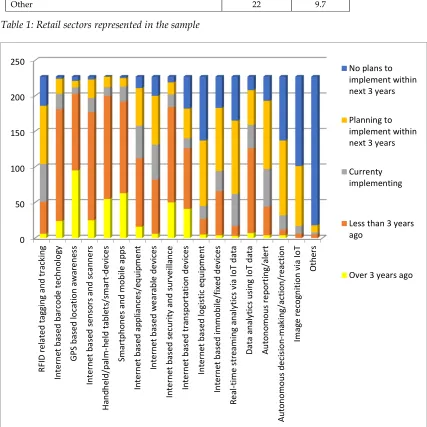
Figure 1: Current/planned adoption of IoT in respondents’ supply chain operation
The Figure 1 displays how the respondents have implemented or planned to implement each form of IoT in their supply chain operations in late 2016. Even though RFID is widely reported
0 50 100 150 200 250 R F ID r e la te d t a g g in g a n d t ra ck in g In te rn e t b a se d b a rc o d e t e ch n o lo g y G P S b a se d l o ca ti o n a w a re n e ss In te rn e t b a se d s e n so rs a n d s ca n n e rs H a n d h e ld /p a lm -h e ld t a b le ts /s m a rt -d e v ic e s S m a rt p h o n e s a n d m o b il e a p p s In te rn e t b a se d a p p li a n ce s/ e q u ip m e n t In te rn e t b a se d w e a ra b le d e v ic e s In te rn e t b a se d s e cu ri ty a n d s u rv e il la n ce In te rn e t b a se d t ra n sp o rt a ti o n d e v ic e s In te rn e t b a se d l o g is ti c e q u ip m e n t In te rn e t b a se d i m m o b il e /f ix e d d e v ic e s R e a l-ti m e s tr e a m in g a n a ly ti cs v ia I o T d a ta D a ta a n a ly ti cs u si n g I o T d a ta A u to n o m o u s re p o rt in g /a le rt A u to n o m o u s d e ci si o n -m a k in g /a ct io n /r e a ct io n Im a g e r e co g n it io n v ia I o T O th e rs
No plans to implement within next 3 years
Planning to implement within next 3 years
Currenty implementing
Less than 3 years ago
as the primary form of IoT, the use of RFID related tagging and tracking is relatively low in retail supply chains. On the other hand, Internet-based barcode technology, GPS-based location awareness, Internet-based sensors and scanners, handheld/palm-held tablets/smart devices, smartphones and mobile apps and Internet-based security and surveillance demonstrate a high concentration of deployment. The findings confirm that, although IoT originates from the concept of RFID, it is now a central element on its own, with far-reaching capabilities and eclectic diffusion.
Every respondent firm had at least one form of IoT currently deployed within their supply chain operations. While 89 percent of respondents had four or more forms, 33 percent respondents had ten or more IoT forms deployed in their respective supply chain operations. These statistics confirm the diffusion of IoT in many primary forms in the retail supply chains in Australia.
3.2 Sample and data collection
The study used self-reported survey instrument for data collection from Australian retailers across industries. Retail firms from across industries in six states of Australia were randomly chosen from the Yellow Pages of Australian businesses directory and alphabetically listed to avoid duplication of cases (YellowPages, 2016; Yu, 2015; Zhao et al., 2011). A single key informant from each retailer was identified by inviting them through LinkedIn professional networking and Facebook. Prior research has successfully applied the similar online method to collect research data using questionnaire survey (Baltar & Brunet Icart, 2011, 2012). The professional and academic connections were found to be successful as reported in prior similar studies (Yu, 2015; Yu, Jacobs, Salisbury, & Enns, 2013; Zhao et al., 2011). The use of social networking sites of informants was effective to identify this "hard-to-reach"/"hard-to-involve" population (Baltar & Brunet Icart, 2011, 2012). Then it was snowballed from initial connections to the second tier, third tier connections to identify possible informants belonged to the generated representative sample. When pre-contacted, potential informants from 546 retail firms agreed to participate in the survey. These potential respondents mainly represent either the supply chain and logistics area or IT department within that retailing business enabling them to respond to the questionnaire on IoT.
The link to the online Qualtrics survey was sent to the mailing list in a personally addressed email (Dillman, 2011). The questionnaire accompanied a cover letter explaining the objective and the potential contributions of the research. Following online reminders and follow-up phone calls, a total of 231 responses were collected. Four responses were discarded for their unengaged responses, reducing the sample to 227 usable cases that represented a 41 percent response rate.
3.3 Measurement items and survey design
were primarily adapted from Huo (2012) and Rai et al. (2006). They comprise of ten supplier integration items, ten internal integration items and nine customer integration items. All nine supply chain performance measurement items were adapted from a study by Schoenherr and Swink (2012). For firm performance, out of 11 items, six items were adapted from Rai et al. (2006), one from Yu et al. (2013) and additional social and environmental measurement items were adapted from Paulraj (2011), Dolbier, Webster, McCalister, Mallon, and Steinhardt (2005) and Zhu, Sarkis, and Lai (2012). Following prior similar studies (Huo, 2012; Yu, 2015), a seven-point Likert scale was chosen to measure all items with the responses ranging from 1 (strongly disagree) to 7 (strongly agree). The measurement items used in this study can be found in Table 2. In accordance with previous supply chain and operations management studies, the respondents were instructed to evaluate improvement relative to the performance of their main competitors over the last 3 years (Yu et al., 2013). It was clearly explained that the supply chain from the retail firm perspective not just includes their suppliers and customers but also the logistics intermediaries such as 3PL operators managing their transport and storage functions.
The survey followed Dillman (2011)’s design method guide on Internet surveys. A pre-pilot panel of five academics and five industry practitioners were asked to critique the questionnaire for content validity, appropriateness and clarity of questionnaire (Dillman, 2011). They identified some duplication and ambiguity in questionnaire items. After incorporating their feedback, the final version was entered in Qualtrics software and a link was created.
4
Data analysis
4.1 Non-response bias and common method bias
Non-response bias was assessed by comparing demographic variables of early and late respondents (at 60% to 40% split) via an independent sample t-test (Armstrong & Overton, 1977). The t-test results indicated no significant differences between early and late responses at p < 0.05 indicating no non-response issues (Armstrong & Overton, 1977; Huo, 2012).
Harman’s single-factor test was performed applying both exploratory factor analysis (EFA) and confirmatory factor analysis (CFA) (Podsakoff, MacKenzie, Lee, & Podsakoff, 2003). First, the all-item EFA revealed seven distinct factors with eigenvalue above 1.0, explaining 65.92 percent of the total variance. The first factor explained 40.48 percent of the total variance, which is not the majority of the total variance. Second, the CFA was applied to Harman’s single-factor model (Flynn et al., 2010; Podsakoff et al., 2003). The CFA demonstrated a poor model fit at χ²/df = 2904/945 = 3.073, GFI = 0.529, TLI = 0.672, CFI=0.623, RMSEA = 0.096 and SRMR = 0.0846, with indices way inferior than the measurement model, confirming the absence of common method bias in the data set.
4.2 Measurement model
1999). However, the chi-square value is found to be a poor model fit of data because of the associated p-value more than 0.05. Hair et al. (2014, p. 584), however, state that when the model contains over 30 measurement items and number of observed variables are fewer than 250, p -value less than 0.05 (p <.05) is acceptable. Ideally p-value should be >0.05 for the model to be fit and accepted. Therefore, Bollen-Stine p-value was estimated through bootstrapping procedure that provided p>0.194 (i.e. more than p>0.05) (Bollen & Stine, 1992). Many previous studies have not reported p-value but appear to apply bootstrapping procedure in testing smaller samples to fit the model (Qrunfleh & Tarafdar, 2014; Rai et al., 2006; Ralston, Blackhurst, Cantor, & Crum, 2015). Therefore, we argue the model fit is acceptable. The model fit indices are: χ² (930) =1366.876, Bollen-Stine p=0.194, χ²/df=1.255, SRMR=0.0451, RMSEA=0.034, CFI=0.962 and TLI=0.960. The details of the factor loadings and t-values of CFA are presented in Table 2.
Item
no Measurement Item
Factor
loading t-value Construct 1: IoT capability
IoT has the capability in our supply chain:
1.1 To provide individual item level identification. dropped in CFA
1.2 To provide unit level (e.g. container/box/pallet) identification. 0.759 12.109*
1.3 To monitor, track and trace supply chain entities and people through
auto-captured data. 0.749 11.919*
1.4 To measure supply chain activities, processes and its environmental
conditions. 0.781 A
1.5 To help control supply chain processes remotely. 0.718 11.323*
1.6 To make autonomous supply chain decisions. dropped in CFA 1.7 To provide real-time information to optimise supply chain activities 0.798 12.88*
1.8 To provide real-time intelligence of supply chain operations. dropped in CFA
1.9 To provide large volumes and variety of data to apply data analytics for tactical
and strategic decision making. 0.767 12.26*
1.10 To strengthen inter and intra organizational information sharing within the
supply chain. 0.774 12.398*
1.11 To facilitate inter and intra organizational decision making within the supply
chain. dropped in CFA
1.12 To strengthen communication and coordination between operators. dropped in CFA
Construct 2: Supplier integration
We have been able to improve the business processes with our suppliers to:
2.1 Improve information exchange with our suppliers. 0.803 13.469*
2.2 Establish a quick ordering of inventory from our suppliers. 0.798 A
2.3 Accurately plan and adopt the procurement process in collaboration with our
suppliers. dropped in CFA
2.4 Stabilize procurement with our suppliers. 0.758 12.489*
2.5 Share real-time demand forecasts with our suppliers. 0.721 11.71*
2.6 Improve strategic partnerships with our suppliers. 0.758 12.478*
2.7 Help suppliers improve their processes to better meet our needs. 0.738 12.057*
2.8 Improve the account payable processes for suppliers. dropped in CFA
2.9 Improve the transport/logistics processes of logistics partners to deliver orders
2.10 Improve our receiving processes for delivered goods. 0.762 12.581*
Construct 3: Internal integration
We have been able to improve our internal logistics processes to:
3.1 Improve the integration of data among internal functions. dropped in CFA
3.2 Improve real-time communication and linkage among all internal functions. 0.806 14.38*
3.3 Accurately plan and adopt internal processes in collaboration with cross
functional teams. 0.819 14.718*
3.4 Make and adopt demand forecasts in collaboration with cross functional teams. 0.827 A
3.5 Improve inventory management in collaboration with cross functional teams. dropped in CFA
3.6 Improve real-time searching of the inventory levels. 0.808 14.433*
3.7 Improve real-time searching of logistics-related operating data. 0.717 12.17*
3.8 Employ cross functional teams in process improvement. 0.706 11.918*
3.9 Improve replenishment of shop floor shelves. 0.766 13.343* 3.10 Reduce stock outs in the shop floor shelves. 0.789 13.912*
Construct 4: Customer integration
We have been able to improve the business processes with our customers to:
4.1 Improve the strength of linkages with our customers. 0.796 12.812*
4.2 Improve regular contacts with our customers. 0.798 12.856* 4.3 Improve communication with our customers on products and promotions. dropped in CFA
4.4 Make and adopt demand forecasts with a real-time understanding of market
trends. 0.778 A
4.5 Improve the customer shopping experience/time/ordering/customising
processes. 0.771 12.325*
4.6 Accurately plan and adopt the checkout/dispatch/delivery processes through
a better understanding of market trends. 0.759 12.082* 4.7 Improve the check-out/dispatch/delivery process of goods. 0.739 11.693* 4.8 Improve and simplify the payment receivable process from our customers. 0.734 11.606* 4.9 Improve customer feedback process. dropped in CFA
Construct 5: Supply chain performance
We have been able to develop our supply chain processes to:
5.1 Improve product quality. dropped in EFA
5.2 Improve supply chain delivery reliability. dropped in CFA
5.3 Improve fill rates. dropped in CFA
5.4 Improve perfect order fulfilment (deliveries with no errors). 0.776 A
5.5 Improve supply chain flexibility (react to product changes, volume, mix). 0.643 9.601*
5.6 Reduce the cash-to-cash cycle time. 0.646 9.655*
5.7 Reduce the total supply chain management cost. 0.74 11.24*
5.8 Reduce the cost of goods sold. 0.764 11.665*
5.9 Improve value-added productivity (sales per employee). 0.684 10.291*
Construct 6: Organisational performance
We been able to develop our organisational operations to:
6.1 Improve the product delivery cycle time. 0.705 10.744*
6.2 Improve productivity (e.g. assets, operating costs, labour costs). 0.719 10.981*
6.3 Improve sales of existing products. 0.808 12.526*
6.4 Find new revenue streams. dropped in CFA
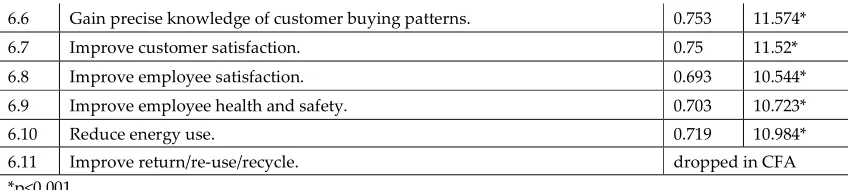
6.6 Gain precise knowledge of customer buying patterns. 0.753 11.574*
6.7 Improve customer satisfaction. 0.75 11.52*
6.8 Improve employee satisfaction. 0.693 10.544*
6.9 Improve employee health and safety. 0.703 10.723*
6.10 Reduce energy use. 0.719 10.984*
6.11 Improve return/re-use/recycle. dropped in CFA *p<0.001
*a = the loadings were set to unity to scale the latent variable
Table 2: CFA Results of the measurement model4.4. Reliability and validity
Content validity of the questionnaire was confirmed by industry practitioners and academics prior to data collection. The unidimensionality of the theoretical constructs was confirmed by CFA test. The CFA results (Table 2) conclude that the measurement model is acceptable and its unidimensionality is confirmed (Byrne, 2013; Hair et al., 2014; Hu & Bentler, 1999; Kline, 2015).
Reliability and validity of the constructs were tested post data collection by performing a series of analyses. The Cronbach’s alpha and composite reliability of all constructs exceed the specified value 0.7 confirming the construct reliability (Hair et al., 2014; Huo, 2012). Cronbach’s alpha values for all constructs were above 0.8. The composite reliability values were strong at 0.75 and above. The highest correlation between constructs were 0.69 indicating no multicollinearity issues among the constructs (Hair et al., 2014).
Construct
No. of items
IoT SI II CI SCP FP Mean SD Cr.
Alpha CR AVE
IoT capability 7 0.76 4.82 1.27 0.91 0.86 0.58
Supplier
integration 8 0.63 0.76 4.72 1.32 0.92 0.86 0.58
Internal
integration 8 0.64 0.70 0.78 4.50 1.37 0.93 0.87 0.61
Customer
integration 7 0.59 0.64 0.69 0.77 4.72 1.33 0.91 0.85 0.59
Supply chain
performance 8 0.66 0.63 0.63 0.60 0.71 4.65 1.45 0.86 0.75 0.51
Organisational
performance 9 0.65 0.60 0.58 0.62 0.62 0.73 4.44 1.41 0.91 0.84 0.54
The diagonal values represent the square root of AVE extracted for each construct CR= Composite reliability; Cr. Alpha=Cronbach’s alpha; SD=Standard deviation All correlation coefficients below the diagonal are significant at p < .001
Table 3: Descriptive statistics, Reliability (Cronbach alpha and composite) and discriminant validity tests
4.3 Structural path model and hypotheses testing
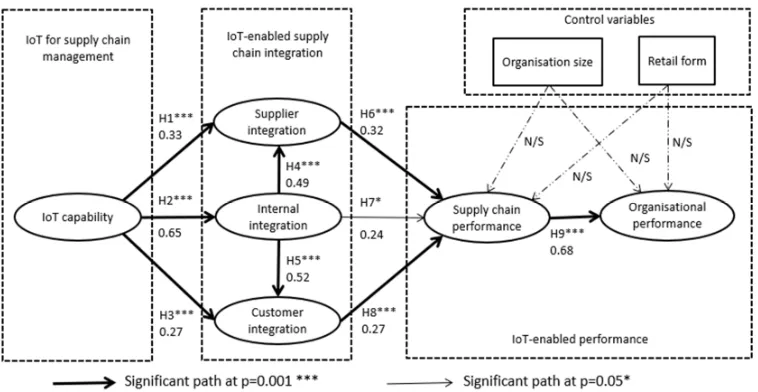
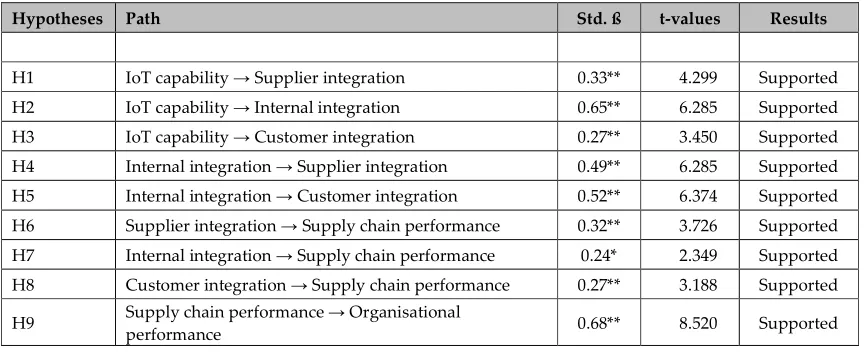
Figure 2 and Table 4 present the results of structural path model using AMOS 23 (Hair et al., 2014; Hu & Bentler, 1999). Bootstrapping was used to generate the p-statistic with 227 cases (Qrunfleh & Tarafdar, 2014; Ralston et al., 2015). The structural model resulted in overall acceptable fit with χ²(936)=1236.586, Bollen-Stine p=0.095, χ²/df=1.321, SRMR=0.0761, RMSEA=0.038, CFI=0.952 and TLI=0.949. All the goodness-of-fit indices are above or close to the recommended cut-off points, suggesting that the specified model adequately captures the hypothesised relationship among all constructs. The findings therefore validate the proposed theoretical model.
The nine hypotheses are supported as shown in Table 4. The standardised beta coefficients of the path along with the t-statistics are also presented.
Hypotheses Path Std. ß t-values Results
H1 IoT capability → Supplier integration 0.33** 4.299 Supported H2 IoT capability → Internal integration 0.65** 6.285 Supported H3 IoT capability → Customer integration 0.27** 3.450 Supported H4 Internal integration → Supplier integration 0.49** 6.285 Supported H5 Internal integration → Customer integration 0.52** 6.374 Supported H6 Supplier integration → Supply chain performance 0.32** 3.726 Supported H7 Internal integration → Supply chain performance 0.24* 2.349 Supported H8 Customer integration → Supply chain performance 0.27** 3.188 Supported
H9 Supply chain performance → Organisational
performance 0.68** 8.520 Supported
**<0.001, * p < 0.05
Table 4: Results of the structural path analysis
The results confirm the hypothesised relationships among the constructs in the theoretical framework, suggesting that IoT-enabled supply chain integration has a positive and significant effect on supply chain performance, that in turn impacts positively on organisational performance. IoT capability has a positive and significant effect on three dimensions of supply chain integration processes confirming the acceptance of H1, H2, and H3. Also, IoT-enabled internal integration is positively and significantly related to IoT-enabled supplier and customer integration process confirming the acceptance of H4 and H5. The findings show that IoT-enabled supplier-, internal- and customer integration are positively and significantly related to supply chain performance confirming the acceptance of H6, H7, and H8. Hypothesis H9 is confirmed too when IoT-enabled supply chain performance is found to be positively associated with organisational performance.
4.3.1 Testing for control variables
The results indicated that organisation size has no significant effect on IoT-enabled supply chain performance (ß = 0.167, t = 1.521, p = 0.128) or IoT-enabled organisational performance (ß
= 0.104, t = 0.968, p = 0.333) of retail organisations. Likewise, the retail form also did not exhibit a significant effect on IoT-enabled supply chain performance (ß = 0.058, t = 0.881, p = 0.378) or IoT-enabled organisational performance (ß = 0.09, t = 1.397, p = 0.162). Therefore, the two control variables were not found to be significant.
4.3.2 The post hoc analysis
was found insignificant (ß = 0.139, t = 1.419, p = 0.156). We, therefore, decline to accept this changed path relationship following the theory that IoT should have a positive effect on internal, supplier and customer integration to influence supply chain performance (Li et al., 2009; Rai et al., 2006). So, the competing model was overruled. The post hoc analysis concluded that model re-specification was not feasible.
5
Discussion and Implications
The empirical findings of this study show that IoT-enabled integration is perceived to improve the performance of supply chain as well as organisations. IoT adoption is found to have significant effect on three dimensions of integration namely suppliers, internal and customers. The IoT paradigm that includes physical objects such as sensors, actuators, palm-held devices and smart phone has the capability of external integration (i.e. suppliers and customers) as well as internal integration (i.e. cross-functional operations) enabling information capture, sharing, communication and inter-firm relationships. Drawing on the emerging IoT-enabled organisational capability perspective, we suggest that retailers those who leverage on IoT for supply chain integration capability can yield significant and sustained performance improvement. The IoT-powered digital infrastructure enables the retailers to develop a higher-order capability of supply chain integration among partners (e.g. suppliers and customers). This capability enables retailers to capture, share and analyse demand information of customers and their preference of products and services. It helps integrate suppliers for their product information and delivery schedule. While inter-functional integration within the organisations will reap the benefit of IoT capability, it brings more benefits to the organisations by integrating their customers and the suppliers, as perceived by the sample respondents.
The results reveal that IoT capability affects supply chain integration positively which is consistent with many earlier studies on ICT-enabled digital integration (Li et al., 2009; Rai et al., 2006; Yu, 2015). Co-existence of IoT functional capability along with ICT capability of organisations is perceived to add integration capability. IoT is viewed as added components to the exiting ICT technologies to make them proficient in data capture and information sharing. The finding supports the organisational capability theory perspective in a way that an organisation with a high level of internal communication and coordination capabilities is more capable of achieving a high level of external integration capabilities (Zhao et al., 2011). While scholars have conceptualised IoT adoption as more of rhetoric in supply chain operations in general (Atzori et al., 2010; Borgia, 2014; Zhou, Chong, & Ngai, 2015) and retail supply chains in specific (Lee & Lee, 2015; Yu et al., 2015), this research reinforces further that IoT adoption strategy can improve supply chain process integration, and in turn supply chain performance and organisational performance.
frequency, smart mobile phones, actuators etc. with the capability to capture and share data online through Internet. Earlier studies have provided no empirical evidence of these IoTs in supply chain integration context. Literature have argued IoT more of a pervasive technology per se by focusing on vision, features, and likely applications (Atzori et al., 2010; Borgia, 2014; Mishra et al., 2016; Whitmore et al., 2014). The literature claim IoT as having a capability to connect physical things with digital world, and argue that the ‘things’ can be read, recognised, located, addressed and controlled by using Internet (Borgia, 2014). Our results indicate that IoT adoption is positively connected to supply chain process integration of internal functions, supplier processes and customer processes. The integration thus achieved is likely to have positive influences on supply chain performance and organisational performance.
This study incorporates the emerging IoT adoption as an organisational capability which has not been studied previously in the domain of supply chain integration. From an organisational capability theory perspective, which is related to resource-based view, supply chain integration is a capability of organisations having IoT technologies as organisational resources (Rai et al., 2006). Like ICT-enabled integration affecting positively on supply chain performance (Li et al., 2009; Rai et al., 2006; Yu, 2015), adoption and deployment of IoT per se is perceived, in this study, to have positive influence on performance. Aside, Bharadwaj (2000) argues ICT investment is to be coupled up with other resources like human and financial resources to gain competitive advantage (Armstrong & Shimizu, 2007; Newbert, 2007). We argue in similar vein for IoT investment that will complement the current ICT capabilities in significant way. The perceived integration capability can improve the performance of supply chain, as well as firm sustainability. Further, the findings reinforce several IoT related conceptual discussions (Ng et al., 2015; Ping et al., 2011) and laboratory-based study outcomes (Reaidy et al., 2015; Yan et al., 2014) that corroborates its positive impact.
The study addressed an important shortfall by conducting an empirical research in the area of the emerging IoT applications in supply chain integration. While literature is conceptual and rhetoric about its business applications, this study has taken IoT aboard in an empirical framework to see its significant effects on performance improvement. It can be argued that while IoT plays a vital role on top of the current ICT legacy systems in internal operations, it can be deployed to enhance positive performance outcomes further by connecting digitally the globally spread smart objects and customers through Internet. While ICT connects end to end computers globally over Internet, IoT can increase the reach by connecting smart objects to computers and other objects to capture data.
performance (Qrunfleh & Tarafdar, 2014). The findings inform managers about IoT capabilities as an extension in the long established digitally-enabled supply chain integration capability. For example, the deployment of palm-held smart electronic devices assists in auto-capturing more crucial data around logistics helping mangers to explore analytics of these data. As data analytics gaining popularity for effective decision using quality data, firms increasingly find value in data-driven decision. IoT adoption and deployment into logistics functions within the retail organisations will certainly benefit in their day to day operations. The key insight is that managers should develop IoT- capability alongside existing ICT capability to achieve sustainable competitive advantage.
The results suggest that retail managers need to first establish internal integration within the internal functions while they go out for external integration with their customers or suppliers. As IoT-enabled supplier- and customer integration affects supply chain performance more significantly than IoT-enabled internal integration, in contrast to general consensus (Ataseven & Nair, 2017; Yu, 2015). It can be argued that IoT-enabled external integration is related at a higher significance for supply chain performance gains beyond firm boundaries due to IoT’s pervasiveness and omnipresent ability. Retail managers should stretch their focus from retail management perspective to the entire supply chain to include suppliers and customers. Further, they need to consider linking existing IoT devices with suppliers (e.g. GPS) and customers (e.g. smart phones), mustering all digital data into one Internet-based platform to share, communicate and process information from each other. This unified supply chain system approach may derive greater benefits for all partners fulfilling the conceptual objective of IoT platform to establishing a dynamic worldwide network (Borgia, 2014).
The findings also contribute to policy making by providing evidence that the investment in IoT is a sound public investment. Various developed and developing countries have pursued national strategies on IoT technology deployment and allocated substantial funding on IoT research. The findings may help advocate IoT to be lifted to the national strategy for Australian businesses, shadowing US, EU, China, Korea and Japan (Borgia, 2014).
6
Conclusion and limitations
IoT has emerged as an innovative technology with capabilities to improve supply chain information flow. However, the effect of IoT on supply chain integration and in turn performance is not yet explored empirically. The survey-based cross-sectional study reveals a positive and significant relationship between IoT adoption and the effect it can have on supplier, customers and internal supply chain functions of retail firms. Co-existence of IoT capability in combination with ICT capability is perceived to have a significant improvement in supply chain as well as sustainable firm performance. This study contributes to the supply chain integration literature over and above the contribution by generic ICT driven digitally enabled supply chain integration significantly associated with supply chain performance and in turn the performance of the retail firm. From organisational capability theory perspective, the adoption of IoT helps achieving organisational integration capability.
pacific regions where the Internet technology is relatively poor. The smaller sample size (n=227) did not allow a sector-specific analysis of IoT adoption to reveal its effect on integration mechanism and performance. Future research with larger sample can undertake a comparative study to reveal more of each sector. Adoption of emerging technology is attributed to institutional pressure from stakeholders such as suppliers, customers and local government (Teo & Pok, 2003). The future research needs to consider institutional pressure as a moderator to test its influence on the relationship between IoT-enabled process integration and supply chain performance. The cross-sectional study was undertaken with the retailers at a point of time that excluded the views of the suppliers and customers. The future study can include the supply chain partners to get a more meaningful opinion about IoT adoption in improving the organisational performance. Also, we suggest that a longitudinal study along the time gap of three years may validate the perceptual findings of this study. The study also lacks descriptive information thus an in-depth interview-based study in future may explain the findings of this cross-sectional study.
Acknowledgement
We acknowledge all the reviewers and editors for their valuable suggestion to improve the quality of paper.
References
ABS Retail industry analysis. (2014). Retail and Wholesale Industries, Australia,. Retrieved from
http://www.abs.gov.au/ausstats/[email protected]/Latestproducts/8622.0Main%20Features32012
-13?opendocument&tabname=Summary&prodno=8622.0&issue=2012-13&num=&view=
Alfalla-Luque, R., Medina-Lopez, C., & Dey, P. K. (2013). Supply chain integration framework using literature review. Production Planning & Control, 24(8-9), 800-817.
Anderson, J. C., & Gerbing, D. W. (1988). Structural equation modeling in practice: A review and recommended two-step approach. Psychological bulletin, 103(3), 411.
Armstrong, C. E., & Shimizu, K. (2007). A review of approaches to empirical research on the resource-based view of the firm. Journal of management, 33(6), 959-986.
Armstrong, J. S., & Overton, T. S. (1977). Estimating nonresponse bias in mail surveys. Journal of marketing research, 396-402.
Ataseven, C., & Nair, A. (2017). Assessment of supply chain integration and performance relationships: A meta-analytic investigation of the literature. International Journal of Production Economics, 185, 252-265.
Atzori, L., Iera, A., & Morabito, G. (2010). The Internet of Things: A survey. Computer Networks, 54(15), 2787-2805.
Baltar, F., & Brunet Icart, I. (2012). Social research 2.0: virtual snowball sampling method using Facebook: Centro de Documentación, Facultad de Ciencias Económicas y Sociales, Universidad Nacional de Mar del Plata.
Ben-Daya, M., Hassini, E., & Bahroun, Z. (2017). Internet of things and supply chain management: a literature review. International Journal of Production Research, 1-24.
Bharadwaj, A. S. (2000). A resource-based perspective on information technology capability and firm performance: an empirical investigation. MIS quarterly, 169-196.
Bollen, K., & Stine, R. A. (1992). Bootstrapping goodness-of-fit measures in structural equation models. Sociological Methods & Research, 21(2), 205-229.
Bollen, K. A. (1989). A new incremental fit index for general structural equation models.
Sociological Methods & Research, 17(3), 303-316.
Borgia, E. (2014). The Internet of Things vision: Key features, applications and open issues.
Computer Communications, 54, 1-31.
Byrne, B. M. (2013). Structural equation modeling with AMOS: Basic concepts, applications, and programming: Routledge.
Carter, C. R., & Rogers, D. S. (2008). A framework of sustainable supply chain management: moving toward new theory. International Journal of Physical Distribution & Logistics Management, 38(5), 360-387.
Christopher, M. (2016). Logistics & supply chain management: Pearson UK.
Christopher, M., Crum, M., & Holweg, M. (2011). “Supply Chain 2.0”: managing supply chains in the era of turbulence. International Journal of Physical Distribution & Logistics Management, 41(1), 63-82.
Christopher, M., & Towill, D. (2001). An integrated model for the design of agile supply chains.
International Journal of Physical Distribution & Logistics Management, 31(4), 235-246.
Constantinides, E., Kahlert, M., & de Vries, S. A. (2017). The relevance of technological autonomy in the acceptance of IoT services in retail. Paper presented at the 2nd International Conference on Internet of Things, Data and Cloud Computing, ICC 2017.
DHL. (2015). Internet of Things in Logistics. Retrieved from DHL Trend Research: http://www.dhl.com/en/about_us/logistics_insights/dhl_trend_research/internet_of_thi ngs.html#.Ve_EMpdSLuU
Dillman, D. A. (2011). Mail and Internet surveys: The tailored design method--2007 Update with new Internet, visual, and mixed-mode guide. New York: John Wiley & Sons.
Dolbier, C. L., Webster, J. A., McCalister, K. T., Mallon, M. W., & Steinhardt, M. A. (2005). Reliability and validity of a single-item measure of job satisfaction. American Journal of Health Promotion, 19(3), 194-198.
Dubey, R., Gunasekaran, A., Childe, S. J., Papadopoulos, T., & Wamba, S. F. (2017). World class sustainable supply chain management: critical review and further research directions.
The International Journal of Logistics Management, 28(2), 332-362.
Elkington, J. (1997). Cannibals with forks. The triple bottom line of 21st century.
Ellram, L. M., & Cooper, M. C. (1993). Characteristics of supply chain management and the implications for purchasing and logistics strategy. The International Journal of Logistics Management, 4(2), 13-24.
Fabbe-Costes, N., & Jahre, M. (2008). Supply chain integration and performance: a review of the evidence. The International Journal of Logistics Management, 19(2), 130-154.
Fleisch, E., & Tellkamp, C. (2005). Inventory inaccuracy and supply chain performance: a simulation study of a retail supply chain. International Journal of Production Economics, 95(3), 373-385.
Flynn, B. B., Huo, B., & Zhao, X. (2010). The impact of supply chain integration on performance: A contingency and configuration approach. Journal of Operations Management, 28(1), 58-71.
Fornell, C., & Larcker, D. F. (1981). Evaluating structural equation models with unobservable variables and measurement error. Journal of marketing research, 39-50.
Frohlich, M. T., & Westbrook, R. (2001). Arcs of integration: an international study of supply chain strategies. Journal of Operations Management, 19(2), 185-200.
Gunasekaran, A., Patel, C., & McGaughey, R. E. (2004). A framework for supply chain performance measurement. International Journal of Production Economics, 87(3), 333-347.
Haddud, A., DeSouza, A., Khare, A., & Lee, H. (2017). Examining potential benefits and challenges associated with the Internet of Things integration in supply chains. Journal of Manufacturing Technology Management, 28(8), 1055-1085.
Hair, J. F., Black, W. C., Babin, B. J., & Anderson, R. E. (2014). Multivariate data analysis (Vol. 7): Pearson Upper Saddle River, NJ.
Ho, D. C. K., Au, K. F., & Newton, E. (2002). Empirical research on supply chain management: A critical review and recommendations. International Journal of Production Research, 40(17), 4415-4430.
Hofmann, E., & Rüsch, M. (2017). Industry 4.0 and the current status as well as future prospects on logistics. Computers in Industry, 89, 23-34.
Hu, L. T., & Bentler, P. M. (1999). Cutoff criteria for fit indexes in covariance structure analysis: Conventional criteria versus new alternatives. Structural Equation Modeling: A Multidisciplinary Journal, 6(1), 1-55.
Huh, S., Yook, K.-H., & Kim, I.-w. (2008). Relationship between organizational capabilities and performance of target costing: an empirical study of Japanese companies. Journal of International Business Research, 7(1), 91.
Huo, B. (2012). The impact of supply chain integration on company performance: an organizational capability perspective. Supply Chain Management: An International Journal, 17(6), 596-610.
Kim, S. W. (2009). An investigation on the direct and indirect effect of supply chain integration on firm performance. International Journal of Production Economics, 119(2), 328-346.
Kline, R. B. (2015). Principles and practice of structural equation modeling (Vol. 4th edtion): The Guilford Press.
Kusunoki, K., Nonaka, I., & Nagata, A. (1998). Organizational capabilities in product development of Japanese firms: a conceptual framework and empirical findings.
Organization science, 9(6), 699-718.
Lee, I., & Lee, K. (2015). The Internet of Things (IoT): Applications, investments, and challenges for enterprises. Business Horizons, 58(4), 431-440.
Li, G., Yang, H., Sun, L., & Sohal, A. S. (2009). The impact of IT implementation on supply chain integration and performance. International Journal of Production Economics, 120(1), 125-138.
Liu, W., & Gao, Z. (2014). Study on IOT based architecture of logistics service supply chain.
International Journal of Grid and Distributed Computing, 7(1), 169-178.
Liu, X., & Sun, Y. (2011). Information Flow Management of Vendor-Managed Inventory System in Automobile Parts Inbound Logistics Based on Internet of Things. Journal of Software, 6(7), 1374-1380.
Lorenzoni, G., & Lipparini, A. (1999). The leveraging of interfirm relationships as a distinctive organizational capability: a longitudinal study. Strategic Management Journal, 317-338.
Mattern, F., & Floerkemeier, C. (2010). From the Internet of Computers to the Internet of Things
From active data management to event-based systems and more (pp. 242-259): Springer.
Mishra, D., Gunasekaran, A., Childe, S. J., Papadopoulos, T., Dubey, R., & Wamba, S. F. (2016). Vision, applications and future challenges of Internet of Things. Industrial Management & Data Systems, 116(7), 1331-1355.
Näslund, D., & Hulthen, H. (2012). Supply chain management integration: a critical analysis.
Benchmarking: An International Journal, 19(4/5), 481-501.
Newbert, S. L. (2007). Empirical research on the resource-based view of the firm: an assessment and suggestions for future research. Strategic Management Journal, 28(2), 121-146.
Ng, I., Scharf, K., Pogrebna, G., & Maull, R. (2015). Contextual variety, Internet-of-Things and the choice of tailoring over platform: Mass customisation strategy in supply chain management. International Journal of Production Economics, 159(1), 76-87.
O'Leary-Kelly, S. W., & Vokurka, R. J. (1998). The empirical assessment of construct validity.
Journal of Operations Management, 16(4), 387-405.
Paulraj, A. (2011). Understanding the relationships between internal resources and capabilities, sustainable supply management and organizational sustainability. Journal of Supply Chain Management, 47(1), 19-37.
Ping, L., Liu, Q., Zhou, Z., & Wang, H. (2011). Agile supply chain management over the internet of things. Paper presented at the Management and Service Science (MASS), 2011 International Conference on 2011 Aug 12.
Podsakoff, P. M., MacKenzie, S. B., Lee, J.-Y., & Podsakoff, N. P. (2003). Common method biases in behavioral research: a critical review of the literature and recommended remedies. Journal of applied psychology, 88(5), 879.
Qrunfleh, S., & Tarafdar, M. (2014). Supply chain information systems strategy: Impacts on supply chain performance and firm performance. International Journal of Production Economics, 147(1), 340-350.
Rai, A., Patnayakuni, R., & Seth, N. (2006). Firm performance impacts of digitally enabled supply chain integration capabilities. MIS quarterly, 30(2), 225-246.
Ralston, P. M., Blackhurst, J., Cantor, D. E., & Crum, M. R. (2015). A Structure-Conduct-Performance Perspective of How Strategic Supply Chain Integration Affects Firm Performance. Journal of Supply Chain Management, 51(2), 47.
Reaidy, P. J., Gunasekaran, A., & Spalanzani, A. (2015). Bottom-up approach based on Internet of Things for order fulfillment in a collaborative warehousing environment. International Journal of Production Economics, 159(1), 29-40.
Schoenherr, T., & Swink, M. (2012). Revisiting the arcs of integration: Cross-validations and extensions. Journal of Operations Management, 30(1), 99-115.
Seuring, S., & Müller, M. (2008). From a literature review to a conceptual framework for sustainable supply chain management. Journal of Cleaner Production, 16(15), 1699-1710.
Spekman, R. E., Kamauff Jr, J. W., & Myhr, N. (1998). An empirical investigation into supply chain management: a perspective on partnerships. Supply Chain Management: An International Journal, 3(2), 53-67.
Souders, Andy (2015 ). Fr om Desert St or m to the retail store: Fi ve technologies
that a re closi ng glob al supply chain gap s, Ret reived from
htt p://www.supply chai nqua rterly.com/t opics/technolo gy/20 151228-five-technol ogies- that-ar e-cl o sing-glob al- supply- chain-gaps/ on 2 0 May 2 018.
Teo, T. S., & Pok, S. H. (2003). Adoption of WAP-enabled mobile phones among Internet users.
Omega, 31(6), 483-498.
Trappey, A. J. C., Trappey, C. V., Hareesh Govindarajan, U., Chuang, A. C., & Sun, J. J. (2017). A review of essential standards and patent landscapes for the Internet of Things: A key enabler for Industry 4.0. Advanced Engineering Informatics, 33, 208-229.
Tu, M. (2018). An exploratory study of Internet of Things (IoT) adoption intention in logistics and supply chain management-a mixed research approach. International Journal of Logistics Management, The(just-accepted), 00-00.
Vanpoucke, E., Vereecke, A., & Muylle, S. (2017). Leveraging the impact of supply chain integration through information technology. International Journal of Operations & Production Management, 37(4), 510-530.
Verdouw, C. N., Wolfert, J., Beulens, A. J. M., & Rialland, A. (2016). Virtualization of food supply chains with the internet of things. Journal of Food Engineering, 176, 128-136.
Verona, G. (1999). A resource-based view of product development. Academy of Management Review, 24(1), 132-142.
Wasserman, M., & Mahm oodi, F. (2017). Disruptive t echn ol ogi es: Sh ould y ou give them th e green light? Ret rieved from htt p://www.supply chai nqua rterly.com/t opics/Tech nology/20 170302-disrupti ve-technologies- shoul d-yo u-give- them-the- green-li gh t/ on 20 May 2018 .
Weber, R. H. (2009). Internet of things–Need for a new legal environment? Computer law & security review, 25(6), 522-527.
Whitmore, A., Agarwal, A., & Da Xu, L. (2014). The Internet of Things—A survey of topics and trends. Information Systems Frontiers, 17(2), 261-274.
Xu, L. D., He, W., & Li, S. (2014). Internet of Things in industries: A survey. Industrial Informatics, IEEE Transactions on, 10(4), 2233-2243.
Yan, J., Xin, S., Liu, Q., Xu, W., Yang, L., Fan, L., . . . Wang, Q. (2014). Intelligent supply chain integration and management based on Cloud of Things. International Journal of Distributed Sensor Networks, 10(3), 1-15.
YellowPages. (2016). Australian Business Directory https://www.yellowpages.com.au/, retrieved on 14 December 12017.
Yu, J., Subramanian, N., Ning, K., & Edwards, D. (2015). Product delivery service provider selection and customer satisfaction in the era of internet of things: A Chinese e-retailers’ perspective. International Journal of Production Economics, 159(1), 104-116.
Yu, W. (2015). The effect of IT-enabled supply chain integration on performance. Production Planning & Control, 26(12), 945-957.
Yu, W., Jacobs, M. A., Salisbury, W. D., & Enns, H. (2013). The effects of supply chain integration on customer satisfaction and financial performance: An organizational learning perspective. International Journal of Production Economics, 146(1), 346-358.
Zhao, X., Huo, B., Selen, W., & Yeung, J. H. Y. (2011). The impact of internal integration and relationship commitment on external integration. Journal of Operations Management, 29(1), 17-32.
Zhou, K., Liu, T., & Zhou, L. (2015). Industry 4.0: Towards future industrial opportunities and challenges. Paper presented at the Fuzzy Systems and Knowledge Discovery (FSKD), 2015 12th International Conference on.