A Comparative Analysis of Information
Retrieval System Centered on RDBMS
Sanjana Thethwar, Abhishek kumar Dewangan
M. Tech Student, Department of CSE, Shri Shankaracharya Group of Institution, Bhilai CG, India
Asst. Professor, Department of CSE, Shri Shankaracharya Group of Institution, Bhilai CG, India
ABSTRACT: Relational Database management systems (RDBMS) are extensively used software products in
numerous types of systems. As we all are familiar with natural language which is the main communication means for humans, but this causes it not easy to handle damaged information. Earlier, research work while querying data from relational databases frequently goes through one of two ways: the keyword-based approach and the structured query approach. Both the ways have their recompense and disadvantages. The structured query approach, while expressive and powerful, is not easy for naive users. The keyword-based approach is very friendly to use, but cannot express complex query intent accurately. In this paper we will emphasis on Natural Language based query processor and we have discussed different approach of information retrieval system. Natural Language Processing is becoming more important in the field of Human Computer Interaction.
KEYWORDS: RDBMS; Natural Language Processing;Structured Query Language; Information retrieval
I. INTRODUCTION
IR (Information retrieval) systems are worn for discovery, within a hefty text database, containing details desirable by a user. The intricate and weak understood semantics of documents and user queries has prepared feedback and alteration important distinctiveness of any IR systems. Hence natural language based IR system will be much favourable. Natural language processing based IR systems are enormously capable to symbolize and manipulate the intricate query as complex and uncertain relationship presented among them. The conventional query in relational database management system is not capable of satisfying the needs for dealing with queries which are in natural language. What does 'Processing' Natural Language means? It Mean to 'Process' Human Language in computer language. NLP actually is used to analyse human expression or information by transforming an input expression into a source code (computer language) representation of that expression for use in further processing. Parsing creates a representation of the structure, or syntax, of an expression. Parsing can also refer to the creation of a representation of the meaning of an expression. Parsing actually reconstructs the input into are presentation more suitable for a specific application. The conflicting feature of 'processing' language 'generates' natural language from code representing information that is to be relayed to a human. Processing natural language combines 'parsing' and 'generation' with additional manipulations to provide a computer with the services necessary to allow simplistic communication with human’s communication.
work while querying data from relational databases frequently goes through one of two ways: the keyword-based approach and the structured query approach. Both the ways have their recompense and disadvantages. The structured query approach, while expressive and powerful, is not easy for naive users. The keyword-based approach is very friendly to use, but cannot express complex query intent accurately. In contrast, natural language has both advantages to a large extent: even naive users are able to express complex query intent in natural language [Fei Li et. al. 2014].
In this paper we have discussed different literature based on NLP in context of Relation data base management system. Further in, section II elaborates several literatures, in section III the reason of motivated toward study is briefed and in section IV we provide comparative table among different approach.
II. RELATEDWORK
The literature review is very significant in any research project as it clearly establishes the need of the work and the background development. it generates related queries regarding improvements in the study already done and allows unsolved problems to emerge and thus clearly define all boundaries regarding the development of the research project. it also gives a clear picture about the research topic that how much work has been done. also what were the positive outcomes in the research work? what can be the future aspects in the research field? by studying the various papers, it is found that all data retrieving concepts have a need of query to fetch data. but the major problem is that there is no easiest scope of accessing data based on the sentences based query. the important thing of accessing information is, the way of processing the query to understand the data and retrieving the data in a simple manner. So the proposed system will provide query optimization using NLP (natural language processing) on the basis of simple query based sentence.
Bihani R. et al (2014) has proposed converts the natural language query into SQL (Structured Query Language) which is a database programming language. We will perform the following steps for the transformation of query from natural language to database query (SQL) sequentially as listed in the following points: First we will accept the string in natural language. After accepting the query we will check the query for misspelled words (if any) using word pair mining. After that we will split query into tokens. After getting tokens we perform the SQL mapping for transformation. This paper conclusion is the search interface that will be applicable for the online applications, provides ease to the user by reducing their part of recalling complex database language syntax. Our system also corrects the spelling mistakes did by the users, automatically and also takes care of grammatical errors. Proposed system generates output query irrespective of the database.
Cambria E. et all (2012) has proposed Natural Language Processing Research. NLP research according to three different paradigms, namely: the bag-of words, bag-of-concepts, and bag-of-narratives models. Borrowing the concept of ‘jumping curves’ from the field of business management, this survey article explains how and why NLP research has been gradually shifting from lexical semantics to compositional semantic and offers insights on next-generation narrative-based NLP technology. This paper conclusion is Web where user-generated content has already hit critical mass, the need for sensible computation and information aggregation is increasing exponentially, as demonstrated by the ‘mad rush’ in the industry for ‘big data experts’ and the growth of a new ‘Data Science’ discipline. The democratization of online content creation has led to the increase of Web debris, which is inevitably and negatively affecting information retrieval and extraction. To analyze this negative trend and propose possible solutions, this review paper focused on the evolution of NLP research according to three different paradigms, namely: the bag-of words, bag-of-concepts, and bag-of-narrative models. Borrowing the concept of ‘jumping curves’ from the field of business management, this survey article explained how and why NLP research is gradually shifting from lexical semantics to compositional semantics and offered insights on next-generation narrative based NLP technology.
period between the two queries is kept short, the reason behind this that it is observed that user firing query is corrects the misspelled word immediately After recognizing the mistake. Finally we make pairs misspelled and corrected word across the whole sessions and give it a frequency to each word pair and later on discard the word pair that has lower frequency. The following table shows some example of correct and misspelled word. Query Mapping In this the natural language query is taken in English Language, any form of statement (WH type questions, word, any type of statement etc.). Then the query in English language mapped according to syntax of SQL query that provides user the accurate data from database after execution of mapped SQL query. The accuracy in mapped Query is focused here. This paper conclusion is search interface that will be applicable for the online applications, provides ease to the user by reducing their part of recalling complex database language syntax. Our system also corrects the spelling mistakes did by the users, automatically and also takes care of grammatical errors. Proposed system generates output query irrespective of the database. Future scope of the work is proposed system converts the Natural Language query in SQL query, also it corrects the spelling automatically. In future we will be focusing towards reformulation of query and transforming the Natural Language Query in the SPARQL database language required for the semantic search to provide the more accurate result as the user require instead of checking the multiple link as we do at present. Today’s generation also use lots of abbreviation so keeping it in mind we will be reformulating the query (for e.g. LA by Los Angeles and TOI by Times Of INDIA) so in the future we will try to implement the above discussed goals.
Mr. Elworthy D. Proposed the unprecedented large volume of semi-structured data has exacerbated the need for an easy-to-use query interface for semi-structured data sources. Natural language interfaces and keyword search techniques that take advantage of the data set structure make it very easy for ordinary users to access the data. In this paper, it is introduced that important challenges that lie in the way of building an elective and efficient keyword and/or natural language query interface for semi-structured databases. It shows that the current approaches to this problem rely heavily on heuristics that are intuitively appealing but ultimately ad hoc. Their assumptions are valid for some domains, database designs, and/or schema structures but they are not correct in general. Thus, these often retrieves false. Positive answers, overlook correct answers, and cannot rank answers appropriately.
Douali N. et al (2012) has proposed focus on the representation of such information in an appropriate language so as to facilitate the execution of guidelines in CDSS. Bayesian network, belief network or directed acyclic graphical model is a probabilistic graphical model that represents set of variables (nodes) and their conditional interdependencies. Nodes can represent medical observables, such as medical goals, therapies, examinations and clinical signs while their directed interconnected arches can bear measures of quantitative or qualitative origin to describe the given relationship. The nodes are known with certainty or even uncertainty described by a subjective probability. Subjective probabilities express the degree of a person’s belief, given a certain knowledge background of him. This notion of probability differs from the most used classical probability. Thus objective or Bayesian probabilities can describe a value of belief to unique events that are not repeatable.
III. MOTIVATION
Fig.-1 Earlier System
The past system converts the natural language query into SQL (Structured Query Language) which is a database programming language. The steps for the transformation of query from Input User query to database query (SQL) sequentially as firstly it will accept the string in natural language after than it will check the query for misspelled words (if any) using word pair mining. Furtherit will split query into tokens and in the end with the tokens the SQL mapping for transformation is processed.
IV. COMPARISION
S. No. Author/Paper title/Year Name of
Algorithm/Tool/Method Description
1.
Mathias Soeken et. al. Automating the Translation of Assertions Using Natural
Language Processing
Techniques FDL Proceedings ECSI 2014
High abstraction level and low abstraction level assertions.
Author presented an algorithm that automates the translation of natural language assertions into System Verilog Assertions using natural language processing techniques. Instead of manually translating each assertion separately.
2.
Ryuichiro Higashinaka et. al.
Towards an open-domain
conversational system fully based on natural language processing Proceedings of COLING 2014
Rule-based system.
This paper proposes an architecture for an open-domain conversational system and evaluates an implemented system. The proposed architecture is fully composed of modules based on natural language processing techniques.
Input User
Query
Spell Correction
Split into Tokens
Query Mapping
Database
3.
Anupriya et. al. Fuzzy Querying Based on Relational Database IOSR-JCE Jan-2014
Fuzzy Logic
This paper mainly discusses the realization of fuzzy query through fuzzy theory and SQL combined C#. Also, a real life application of fuzzy query based on relational database (the Patient Information database) is provided.
4.
Lei Zou et. al. Natural Language Question Answering over RDF — A Graph Data Driven Approach SIGMOD 2014
Graph Data Driven Approach
Author proposes a semantic query graph to model the query intention in the natural language question in a structural way, based on which, RDF Q/A is reduced to subgraph matching problem. More importantly, author resolve the ambiguity of natural language questions at the time when matches of query are found. The cost of disambiguation is saved if there are no matching found
5.
Joao P. Carvalho et. al. A Critical Survey on the use of Fuzzy Sets in Speech and Natural Language Processing IEEE 2012
Fuzzy Set
This paper shows how the use and applications of Fuzzy Sets (FS) in Speech and Natural Language Processing (SNLP) have seen a steady decline to a point where FS are virtually unknown or unappealing for most of the researchers currently working in the SNLP field, tries to find the reasons behind this decline, and proposes some guidelines on what could be done to reverse it and make FS assume a relevant role in SNLP.
6.
IHAB F et. al. A Survey of Top-k Query Processing Techniques in Relational Database Systems
ACM Computing Surveys
(CSUR), 2008
Top-k queries in XML domain
Author have surveyed top-k processing techniques in relational databases. Author provided a classification for top-k techniques based on several dimensions such as the adopted query model, data access, and implementation level and supported ranking functions. Author discussed the details of several algorithms to illustrate the different challenges and data management problems they address. Author also discussed related top-k processing techniques in XML domain, as well as methods used for scoring XML elements. Finally, Author provided a theoretical background of the ranking and top-k processing problems from voting theory.
V. CONCLUSION
We have experienced different literary works and discovered some bottleneck in normal dialect inquiry handling which are as per the following:
Spelling correction for mistakes made by the user while firing query map the natural language query into database query language.
In earlier system user has to fire queries in WH type question.
Earlier system did not supported single word query.
A limited data dictionary was used in which words were updated after regular period of time.
Natural language query had to be in double quotes (“”).
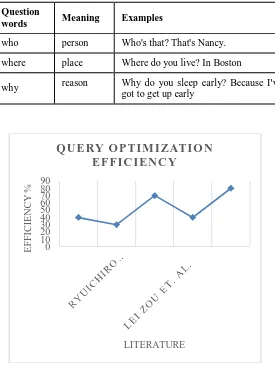
Fig 2.- Performance comparison of Efficiency
The conventional query in relational database management system is not capable of satisfying the needs for dealing with queries which are in natural language. From different literature we can conclude that fuzzy based query processor are efficient query processing but still there is chance of improvement i.e. we can optimize the query processing so that query processing time decreases.
0 10 20 30 40 50 60 70 80 90
E
F
F
ICIE
N
CY
%
LITERATURE
Q U E RY O PT IM I ZAT I O N
E FFI C I E N C Y
Question
words Meaning Examples
who person Who's that? That's Nancy.
where place Where do you live? In Boston
REFERENCES
1. Mathias Soeken, Christopher B. Harris, Nabila Abdessaied, Ian G. Harris, Rolf Drechsler, “Automating the Translation of Assertions Using Natural Language Processing Techniques FDL Proceedings”, ECSI, Vol.1, 2014.
2. Ryuichiro Higashinaka1, Kenji Imamura1, Toyomi Meguro2, Chiaki Miyazaki, “Towards an open-domain conversational system fully based on natural language processing Proceedings of COLING 2014”, “The 25th International Conference on Computational Linguistics: Technical Papers”, pages 928–939, Dublin, Ireland, August 23-29 2014.
3. Anupriya, Prof. Rahul Rishi “Fuzzy Querying Based on Relational Database”, “OSR Journal of Computer Engineering (IOSR-JCE)”, e-ISSN: 2278-0661, p- e-ISSN: 2278-8727, Volume 16, Issue 1, Ver. I (Jan. 2014), PP 53-59.
4. Antonio Lieto, Andrea Minieri1, Alberto Piana1 and Daniele P. Radicioni, “A Knowledge-Based System for Prototypical Reasoning” ISSN: 0954-0091 print/ISSN 1360-0494 oct 2014.
5. Lei Zou, Ruizhe Huang, Haixun Wang “Natural Language Question Answering over RDF — A Graph Data Driven Approach” “SIGMOD”, June 22–27, 2014.
6. Andre Freitas & Edward Curry, “Natural Language Queries over Heterogeneous Linked Data Graphs: A Distributional-Compositional Semantics Approach”, “ACM”, 978-1-4503-2184-6/14, Feb 2014.
7. Fei Li & H. V. Jagadish NaLIR, “An Interactive Natural Language Interface for Querying Relational Databases”, “SIGMOD”, June 22–27, 2014.
8. Akshay G. Satav, Archana B. Ausekar, Radhika M. Bihani & Mr Abid Shaikh, “A Proposed Natural Language Query Processing System”, “WARSE”, Volume 3, No.2, March - April 2014.
9. Huangi,Guiang Zangi & Phillip C-Y Sheu, “A Natural Language database Interface based on probabilistic context free grammar”, “IEEE International workshop on Semantic Computing and Systems”, 2008.
10. Joao P. Carvalho, Fernando Batista & Luisa Coheur, “A Critical Survey on the use of Fuzzy Sets in Speech and Natural Language Processing”, “IEEE World Congress on Computational Intelligence”, June, 10-15, 2012.
11. Rini John and Sharvari S. Govilkar, “A Novel Approach For Information Retrieval Technique For Web Using NLP”, “International Journal on Natural Language Computing (IJNLC)”, Vol. 6, No.1, February, 2017.
12. Ronan Collobert, Jason Weston, L´eon Bottou, Michael Karlen, Koray Kavukcuoglu and Pavel Kuksa, “Natural Language Processing”,
“Journal of Machine Learning Research”, page 2493-2537, 12 (2011).
BIOGRAPHY
Sanjana Thethwar is an MTech Scholar in the Computer Science Department, College of Shri Shankaracharya Group