1 Engineering Management
Field Project
Survey on Social Networking Site for
Engineering Management Program
By
Rajyalakshmi Sirisha Mokkarala
Summer Semester, 2012
An EMGT Field Project report submitted to the Engineering Management Program and the Faculty of the Graduate School of The University of Kansas in
partial fulfillment of the requirements for the degree of Master’s of Science _________________________________ Linda Miller Committee Chairperson ________________________________ Mike Kelly Committee Member ________________________________ Herbert Tuttle Committee Member ________________________________ Shannon Skoglund Committee Member Date accepted: ____________________________
2
Table of Contents
Acknowledgments ... 4
1. Introduction ... 6
1.1. EMGT program description ... 7
1.2. Problem Statement... 9
2. Background on Web 2.0 technologies ... 11
2.1. Types of Web 2.0 technologies ... 12
3. Literature Review ... 17
3.1. Use of alternative SNSs in distance learning ... 17
3.2. Using the open web as a collaborative learning platform ... 19
3.3. Role of Facebook in higher education ... 21
3.4. Impact of online social networking on academic learning ... 21
4. Procedure and Methodology ... 25
4.1. Data collection procedure... 26
4.2. Data analysis ... 28
5. Results & Implications ... 29
5.1. Overview ... 29
5.1.1. Background information on the respondents ... 29
5.2. Classification of respondents based on their current SN exposure ... 30
5.2.1. High level of exposure to SN... 30
5.2.2. Intermediate level of exposure to SN ... 32
5.2.3. Minimal level of exposure to SN ... 33
3
5.3.1. Response to EMGT SNS based on level of exposure... 37
5.3.2. Response to EMGT SNS based on gender ... 38
5.3.3. Response to EMGT SNS based on age groups ... 40
5.3.4. Response to EMGT SNS based on Student Status ... 42
6. Conclusions, Limitations and Future work ... 45
6.1. Conclusions ... 45
6.2. Limitations ... 46
6.3. Future Work ... 47
7. References ... 48
4 Acknowledgments
I would like to thank my committee chair Prof. Linda Miller, for all her patience, support and constructive advice. Her organized and structured approach to managing projects and life in general helped me stay focused on finishing this project despite all the other parallel activities in my life.
I would like to thank faculty at KU Engineering Management program who taught me great things which helped broaden my perspective and land in a job and Parveen Mozaffar for helping me through course enrollment in every semester of the program.
I would like to thank my family, without whose support, none of this work could have been possible. My husband, Aravind, who has encouraged and supported me with unconditional love; my brother-in-law and family, for all the advice, support and encouragement to pursue my interests, whenever I thought I could not go any further. Last but not least, my parents and brother for listening to my complaints & frustrations and always believing in me.
5 Executive Summary
Social Networking Sites (SNSs) such as Facebook, LinkedIn and Twitter have gained much popularity as Web 2.0 technologies and have been widely adopted by different age groups from teenagers to students to working professionals. Consequently, social networking (SN) has potential to become useful tools for students in professional education for information sharing, communication and collaboration. Such a SNS, if designed for EMGT program, might lead to greater interaction among the students who are mostly full-time employees. A secondary research was conducted which included background on Web 2.0 technologies and literature review on SNS in professional education to understand how a SNS for academic programs could be beneficial. This helped in creation of a survey to capture students’ perceptions about EMGT SNS and the student responses to the survey are analyzed and discussed. The survey had a total response rate of 49% with survey results indicating 45% of respondents recommending EMGT SNS.
The survey was evaluated based on important factors like level of exposure and potential benefits as these could influence students’ opinions about EMGT SNS. Findings of the survey are summarized in this report to understand the possibility for a dedicated SNS for the EMGT graduate program.
6 1. Introduction
Social Networking (SN) could be defined as a way of interaction within a group of people. Web SN has redefined how people stay connected with each other in this fast-paced digital life. With the advent of SNSs over past five years, people have become more social on the web and this has changed how people share content or information on the web. This can be any one or all of the following: views, opinions, comments, videos, etc. Leading commercial SNSs like Facebook, Twitter, LinkedIn, MySpace have offered a way to socialize with ease as these websites have evolved and have taken into account the needs and preferences of their subscribers. The power of SNSs has expanded beyond communication or socialization among groups of people. SN gives the opportunity to share and collaborate. The use of SN tools has increased exponentially in marketing new products due to the kind of opportunity it gives businesses to reach out to potential buyers. SN tools are yet to become a huge part of professional education though these tools could prove to essential for communication and self-marketing for students. The usage of SN in education has not gained much acceptance but the opportunities of its potential benefits are astronomically growing due to evolving student’s technological preferences.
The possible benefits of SN for students (Brady, 2010; Mack, 2007) are described as below:
Means of communication - Staying connected with friends/peers/alumni Quick information dissemination
Creates community of interest/practices Professional Networking
7 Helps in effective marketing of individual to a potential employers
1.1. EMGT program description
The initial research is based on an understanding of how EMGT graduate program currently functions without any SN tools. The program comprises of three full-time faculty and twelve part-time faculty and two administrative staff. EMGT is a thirty three credit hour graduate program with core and optional courses. Students typically enroll in 1 or 2 courses every semester and the average span of time taken to graduate is between 2.5 to 3.5 years. The students in the program are mostly working professionals who are time students along with few full-time and distance students. In some cases, the part-time students who are traveling or employed temporarily at an offsite location enroll as distance students.
The program comprises of business and management courses which requires a lot of interaction and collaborative thinking to reach to possible solutions for real-time business problems. Students are mostly engineers, belong to different fields of engineering and bring to the class their respective rich working experiences to participate in the class discussions. Definitely these interactions needs to be captured and stored as this would help students to broaden their perspective and would be valuable logs of information on a topic in any of the courses.
The interaction between students and faculty is limited to emails, one-one-one discussion before and after class sessions and office hours. Over a regular semester, students meet with each other around 15 times for classroom sessions as there is only one session per
8 week that is three hours long. For course related group project assignments, students interact outside of classroom via emails and/or in-person as needed. Each course in the program gets students to form teams of 3-5 members and work on group projects. These group projects have 40-60% of the course grade. This gives students an opportunity to interact with a particular group of classmates. But the interaction gets limited to assignment needs, classroom and to the length of a given semester and there is not much contact after a semester either between the students or with the respective course faculty. SNSs could potentially fill this gap and allow better student engagement and interaction by providing an option for students to interact with faculty and fellow students with ease using SN tools.
The existing Course Management System (CMS) commonly referred to as Blackboard serves as the main source of all the course documents and also allow students to upload their assignments. Blackboard allows uploading of EMGT lecture videos and mostly these videos are lengthy as they cover complete 3hrs of lecture. But in consideration to hectic life and non-availability of time, students would need a faster way to glance through essential points of a lecture. Faculty can opt to post these types of videos on SNSs so that students can access and use them for quick reference of course lecture. Additionally all the course documents and videos are accessible after enrollment in the course until the end of the semester. But after completion of the semester, course documents are mostly flushed out as they replaced with the course content in the new semester. So, in this way students do not have access to course content post to a semester. The only way students can continue their interest in previous coursework would be by downloading all the course content and doing a self-study. Here if there is a
9 community of practice through SNSs, students can continue interacting with fellow students and faculty who have similar questions. This increases their learning over a longer period of time and enables a student to gain expertise through interaction on a reliable platform. The quality of education can be enhanced by creating assignments that would involve interaction like summarizing class teaching on a common platform so that students can post their comments on a course lecture or a topic.
Some of the limitations of present CMS/Blackboard are as follows: Little scope for interaction
Does not have features to support display of user profiles
Does not offer tools for collaboration and sharing of content via YouTube The content generated is usually instructor generated
The course documents can be accessed only through this CMS website
The site is more traditional and the interface is less user-friendly especially while posting comments or participating in the course discussions.
May not be able to address the specific needs of different graduate program
1.2. Problem Statement
EMGT, a graduate program for working professionals, currently uses CMS system as the main online communication tool and as discussed above, it offers a potential opportunity for using SN tools for enhancing coursework collaboration and for sharing course content. The project mainly focuses on identifying the need for SNSs for the Engineering Management (EMGT) graduate program at the University of Kansas (KU) to maximize learning activities in an academic setting.
10 A survey of the current students’ to evaluate the need for SNS will be conducted through this field project and thorough primary research will be done by surveying EMGT graduate students at KU. The primary research would capture whether SN technology can enhance classroom interactions and help students involve in the courses better and mirror their learning through interaction. The results mainly talks about the different things students are likely to do through this SNS. The report researches the need and potential uses of a SNS to enhance collaboration, communication and participation by addressing the following questions through a survey and secondary research:
1. What is level of exposure, students have to SNSs?
2. What would be the potential uses of having SNSs for EMGT students?
3. How much time do the students spend on SNSs? How do they access their SNS? 4. Can SNSs for EMGT help in fostering a collaborative learning environment?
11 2. Background on Web 2.0 technologies
Web 2.0 is defined as fusion of web application features that facilitate participatory information sharing, interoperability, user-centered design and collaboration on the Internet (Wiki 2012). A focus on user-generated content, content sharing and collaboration is done with web-based applications and use of web as a social platform for generating, repositioning and consuming content (Harris, 2009). The use of Web 2.0 technologies has made its way into education with increased ease of access to the internet. The beginning of shared content features of Web 2.0 technologies appeared first in 1980 in Tim Bereners-Lee’s prototype web software. The first roll out of the software did not have content sharing features until ward Cunningham wrote the first wiki in 1994-1995. Blogs or also known as weblogs in 2007 and the term Web 2.0 technologies came into existence in 2005 named by Tim O Reilly (Franklin, 2007). Since then different forms of Web 2.0 like wikis, blogs, podcasts, SNSs and virtual world technologies are been used for sharing of information. The adoption of these technologies is quicker from student’s side than from Universities and faculty due to ethical concern, policies, rules and regulation. Today we live in a world of portable devices which keeps us connected to internet most of the time and access to internet has become an alias to using computing devices. The different technologies of Web 2.0 have shown significant information sharing and collaboration among different groups and communities outside of class and could be adopted within a classroom environment to have the same advantages. With use of Web 2.0 tools the interaction between students and faculty could lead to interesting and thought provoking discussions which avoids premature judgment and limited scope of discussion that could happen in a given classroom session due to time limitations.
12 2.1. Types of Web 2.0 technologies
A deeper analysis of individual Web 2.0 technologies and their relative impact in coordinating with classroom education impartation are described below based on literature. The essential technologies talked about here include wikis, blogs, podcasts, social networks and virtual worlds. Further, how they can be helpful if included in professional education are described:
Wikis: The wikis are a collection of web pages with content provided by multiple users who can add, access, delete and modify the data (Wiki, 2012). One of the most commonly known and widely used wikis is Wikipedia. Wikis can be used to facilitate knowledge systems like Blackboard. They can help in creation of groups, content generation in terms of relevant documents, webpages and presentations. This could further lead to discussions on these topics among the group (Raman, 2005). This can be including links to Some courses of Engineering Management program have tried using wikis which gave students an introduction to creating content on course topics. The essential benefits of wikis include (Harris, 2009):
o Knowledge building through versioning
o Constructive evaluation of content generated by a group of users and faculty
o Progressive problem solving for complex open-ended problems
o Structured approach to developing content with regular evaluation by specialists, advanced students and faculty which avoid premature judgments The disadvantages include (Harris, 2009):
13
o Validity of the content by every individual contribution on variety of different topics cannot be identified and evaluated
o Feedback can be public
o Webpages are open to access for all
Blogs: A blog is a personal journal published on the Web consisting of discrete entries made by an individual and displays most recent entry first (Wiki 2012). Blogging can be done by an individual and occasionally by a small group based on a single subject. The blogs could be potentially be used as learning logs by students (Wagner, 2003). This technology has been used widely for knowledge sharing on specific topic. The users of the blog share each other’s’ experiences and thoughts on a topic. Again like other Web 2.0 tools, interaction is a key to this tool otherwise blog would not be interesting. The possible ways of including blogs in classroom impartation are (Franklin, 2007) :
o Instructional tips for students
o Annotated links for reading or reference
o Course announcements and readings
o Content related blogs as professional practice
o Knowledge/experience sharing
o Enables reflective writing
o Enhanced knowledge sharing and management
o Team discussion, idea and course-related resources sharing The disadvantages include (Harris, 2009):
14
o Difficult to grade the content as every individual contribution on variety of different topics cannot be identified and evaluated
o Webpages are open to access for all
Podcasts: These could be handy for students to revisit class lectures and use them at their convenience and is accessible 24/7 to students. Also, podcasts can be stored and referred to at a later date. Podcasts can be great supplements to class lecture. Podcasts have been widely in implementation in professional education specifically in distance learning and online courses. However, likes wikis and blogs, podcasting also has disadvantages which include (Harris, 2009):
o Skipping regular in-class sessions
o The content cannot be modified and is not interactive
o Requires high speed internet for streaming of the video or audio content. Social Networking sites (SNS): Though SN was not in existence until last five years,
it has gained quick adaptation among youth for its easy content sharing features. SN developed into dynamic services and communication tools collectively called as second generation tools that emphasize on peer-to-peer collaboration, wider contribution and effortless sharing of information (Paton, 2011). Video based SNSs like YouTube are used frequently by students and professors for various reasons like class presentations on course content. The main disadvantage of SN is that an individual is expected to have computer proficiency to use it and could expose too much of their personal information on public platform. SNS has the capability to incorporate multiple Web 2.0 tools like blogs, podcasts, etc. In addition it enables display of user profile and allows them to:
15
o select a group to which the user would want to connect
o customize their web page
o serves as web profile
If used in professional education a close community could be created for students who have enrolled in similar courses which allows them to interact with fellow students and exchange information and post reference links to course topics effortlessly (Panckhurst 2008). SN unlike other tools has multiple features which enables user have almost all of the SN tools discussed are included as a feature in SNSs.
Virtual World: Virtual world is a computer simulated environment where users interact without being limited by their location (Harris, 2007). This technology has been more popular in architectural and civil engineering fields as it would replicate 3D problems (Harris, 2009). Websites like Second Life (SL) which allows users to solve some of the most complex real-time problems and simulations are gaining much popularity in recent times. The advantages include collaborative development and creative solutions. The virtual world has been instrumental in creative engagement and interaction for students and faculty on a common ground. The complexity of virtual world is yet to be explored though the technology has been popular but its adoption has been relatively slow as compared to other Web 2.0 technologies.
The advances in the understanding student learning methodologies suggest that learning should evolve from “learning from acquisition” to “learning from participation.” Hence use of Web 2.0 technologies in education has benefits but yet they are not fully explored in full-fledged way for including them in professional
16 education. Professional education in this report, primarily, refers to undergraduate and graduate level programs. For successful implementation of Web 2.0 technologies in professional education, user content generation and content accessibility to users are essential features. If these features are implemented with a SNS, then these have the potential for classroom impartation. However, ethical and privacy issues need to be adopted with these SNSs.
17 3. Literature Review
A literature review on use of SN in professional education was done, which suggested that SNSs offer opportunities to interact and enhance learning through participation. Though at this point, there is not much literature talking about the structure/format of SNSs that could be included in professional education, the literature does talk about how online SNSs have been used on a trial basis and how students have found them beneficial in professional education. Some of the academic SNS are Ning, BuddyPress, Elgg and ScolaMates. Hence further literature review was done to understand the following aspects:
How SN could be used in professional education?
What were students’ responses to SNSs when included in curriculum? What kinds of Web 2.0 tools have been used in education in addition to
Blackboard?
So far the focus of the research in this area has been on identifying the benefits of merging SNS with academics. However, issues like privacy loss, ethical questions like can teachers interact with students, if so at what point interaction becomes inappropriate are some of the key questions that were expressed by the authors. This section captures students’ responses at different universities to use of SNSs in course work.
3.1. Use of alternative SNSs in distance learning
A case study was performed on the use of alternative SNSs like NING in higher education for distance learning courses. A survey was conducted as part of the case study on North Carolina State University students (Brady, 2010). The survey suggested that use
18 of SNSs like NING are relatively new and require more involvement from faculty and students to appreciate the full potential of SNSs. Other findings included essential benefits of SNSs such as allowing in-class participation and increased involvement in courses by providing a platform. Additionally in-class students also benefited from SNSs as they got more time to contemplate subject content and ideas from team members. In addition, true collaboration began as students discussed through the different features of SNSs like videos, blogs and comments. As part of this case study, throughout the semester students were asked to discuss ideas on any assignment using NING and as well submit their assignments on NING which encouraged all the students to be creative and to think differently. It was also helpful in getting students to discuss, share and reflect upon the assignments within the course. The site has become a venue to foster new ideas, to collaborate and to communicate. As students and faculty became familiar, they become more open to communication and exchange of information via NING (Brady, 2010). Finally a survey was conducted to obtain an input on whether the students found the site useful in terms of communication, collaboration, reflection and comprehension, convenience and comfort. Most of them indicated they appreciated the use of SNSs as it gave them more time to reflect and comment on other student’s comments in comparison to face-to-face conversations (Brady, 2010). However, they indicated potential drawbacks that included mainly access issues and time wasted on waiting for a response on a posted content.
19 3.2. Using the open web as a collaborative learning platform
A review paper suggested SNSs led to quicker information dissemination. It also results in better learning as access to the instructor and fellow students is not limited to office hours and class sessions anymore (Panckhurst, 2008). With greater access to sharing tools, an interest in generating and responding to content was seen and clearly a sense of inclusion and participation was noticed among students while students were using SNSs in education. A community of practice can be established which serves as an online community for discussion and sharing of information after course completion which could allow student learning beyond a semester. This community of practice evolves over time and includes students of different levels of understanding on topics. This enables students to look at weblogs and gradually improve their learning on the topic.
SN places its focus on learners and their interactions and provides a relatively informal space that allows learners to exercise their own thoughts, reflections, make their own connections. The paper compared and contrasted three case studies comprising distance learners, in-class learners and multi-cultural learners. The paper suggested key benefits, criteria and opportunities for pedagogic usage of eLearning environment. The essential benefits of eLearning environment include (Panckhurst, 2008):
Opportunities presented by SN tools for development of communities of practice across different professional groups include
o Ease of use
o Access to multicultural groups with same/similar professional context
o Access to individuals/groups which is not possible if limited to face-to-face context
20 Benefits of SN tools over traditional institutional platform includes
o Ease of setup
o Autonomy for learners and faculty for generating content on a common platform
o Customizable to accommodate a specific program needs
o Quick network could be set up from scratch with less complexity and restrictions
Identifying key fundamental principles/criteria required to promote effective communication in a timely manner.
o A sense of purpose to keep students focused on subject
o Group cohesion
o Learners provided with guidance to encourage/promote independence/autonomy
o Learners need a sense of ownership
o The assessment of individual’s knowledge is based on their ability to respond to the content generated by faculty and fellow students and as well as them generating quality articles.
SN tools presented opportunities for multicultural and bilingual collaborative learning. In order to set up an eLearning (eLEN) that is both effective and retains motivation and interest of its members, both faculty and students have to invest certain amount of time in early stages.
21 3.3. Role of Facebook in higher education
Facebook was considered as a potential SNS in higher education and the perceptions of the students and faculty were compared (Roblyer, 2010). The paper also talked about potential library uses, administrative uses and faculty uses of SN in the university community. Different uses of Facebook included (Mack, 2007):
o Creating profiles and groups to communicate events with users
o University marketing campaigns
o Access to student’s environment which is their personal Facebook webpage
o Communicate and market school events as well as activities to current and alumni students
o Ease of communication with students, faculty, alumni and others in the school community
o An easy way to post school announcements, recruit for study organization and upload pictures
o SN could be used to survey students on different topics
o A SNS opens communication between students and universities by informing them of college events, course deadlines and other collegiate activities.
3.4. Impact of online social networking on academic learning
To analyze the impact of SNS on academic learning a conceptual model was constructed to explain how college students’ online SN influences learning outcomes (Tian, 2011) .Several rounds of focus groups with college students were done to understand their overall attitude and experience to SN sites. Findings suggested that online SN does affect
22 social learning and academic learning of the students (Vogel, 2011). Some of the prominent universities like MIT, New York University have conducted university orientation on Facebook for their freshmen class and Cornell University’s “Thoughts on Facebook” creates student awareness about responsible use of SN. Numerous studies have demonstrated that peers are the most potent influential source of college students’ life (Ellison, 2007; Steinfield, 2008). Students’ SN with peers is important for developing psychological well-being, such as self-esteem and satisfaction with life (Helliwell, 2004). Peer attitudes and pressures affect individual commitment to universities (Tinto, 1997; Thomas, 2000). Hence SNS not only allows interaction but also provides potential benefits like (Tian, 2011):
1. Brings physical and physiological well being
2. Nurtures and maintains student’s integrity and commitment to University and lets them have a satisfying academic life
3. Makes the transition easy for new students and to orient themselves to different academic programs.
The university environment is conducive to having a social network for students and/or faculty as learning environment like university is in itself a social system of individuals interacting within a shared academic context. The learning activities should promote learning in different ways to continuously engage students and satisfy them academically and as well as socially.
As mentioned above potential benefits of SN affects student’s learning outcomes. This extends to three domains: cognitive, affective and skill-based (Tian, 2011). Each of the
23 domains reflects how academic and social learning facets can enhance different factors of each domain as explained below:
Learning outcomes Domains
Academic Learning Social Learning
Cognitive Comprehension Knowledge Self-esteem Self-confidence Affective Satisfaction and
appreciation with learning experience
Satisfaction with life Appreciation from
peers
Skill-based
Critical thinking Specific technical skills
related to the subjects Problem-solving
Communication Cooperation Networking
The new generation learners are looking for technological options hence faculty needs to rethink the traditional pedagogical approaches. Integration of social and academic learning has benefits in improving the overall personality of an individual and extends learning activities inside and outside of class (Vogel, 2011). Students can opt to learn about friends and their activities and join them. In this context, SN could be best reworded as a practice of establishing relationships with people in a certain environment. Research has shown that individuals can gain advantage from their personal network to achieve greater mobility, better job performance, and other career related success in job
24 life; while for newcomers, this helps in establishment of informational networks and role clarity and also enhances their social integration and organizational commitment.
Two learning theories which further outlines social Integration perspectives are Astin’s involvement theory and Tinto’s student integration theory. Astin proposed a model called “Input-environment-outcomes” to describe the student environment. Input refers to characteristics of the student at the time of joining; environment refers to various programs, policies, faculty, peers and educational experiences to which the student is exposed; the outcomes refers to students’ characteristics after exposure to the environment (Astin, 1993). Tinto’s integration theory talks about the interactive process by which students stay in or leave out higher education institution. Academic integration is an outcome of student’s interaction with faculty and their academic achievements whereas the social integration is an outcome of student’s formal and informal interaction with peers (Tinto, 1975, 1997).
Today’s learners are looking for continuous learning process and not confine themselves to the length of program, hence technology seems a viable options to them as it offers the required flexibility. SNS tools allow this by making social model of learning an experience of participation in daily life and a way we develop our identities and professional skills supported by our personal network of family, friends and co-workers (Tian 2011).
25 4. Procedure and Methodology
The primary research is based on a survey conducted with current EMGT students. The aim of this survey is to identify the need for a SNS and simultaneously understand the aspects of program which could be enhanced through interaction with other students via SNS. The survey conducted would capture the involvement of students in SNSs and as well as the amount time that they can spend on interaction during a semester. List of questions are focused on understanding students’ exposure to SNSs and identifying necessary features that could enhance the communication and collaboration between students and faculty of University of Kansas.
The research process began by looking for information on previously written articles on the subject of SN to better understand about social network in academic setup. At the beginning, the information on various SNSs and their influence on professional education articles and review papers were gathered. Information derived highlighted the pros and cons of use of SNSs in a professional educations and how students could quickly embrace the idea of learning by interaction. The research done so far suggested that interaction has learning benefits but further studies should be done to create the structure that helps the educational institutions to obtain maximum benefits.
To determine whether SNS is needed in professional education, in this case Engineering Management graduate program, a survey will be done on current Engineering Management students at the University of Kansas, Edwards Campus which will help in best understanding what they would like to do with a SNS. The survey tries to capture factors that can enhance the learning, sharing and improving interaction during their university life.
26 The survey comprises of questions ranging from basic information about the respondents to questions about their preferences in a SNS and about the time that they possibly spend on a SNS of their daily schedule. The survey is mostly multiple choice questions with single and multiple answers. A survey tool called Survey Monkey was used to get responses quickly and more accurately. The survey was sent to all the currently enrolled students in different courses of Engineering Management program. The respondents include both Engineering Management and non-Engineering Management students enrolled in different Engineering Management courses.
4.1. Data collection procedure
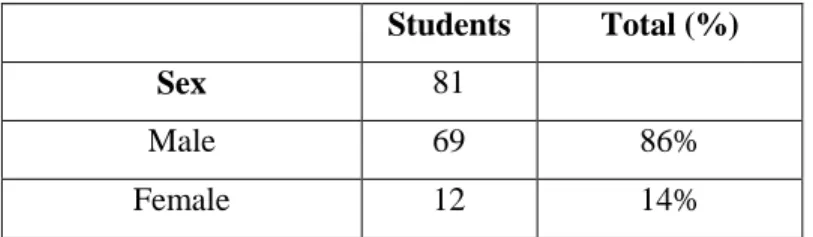
To understand EMGT students’ perspective on online SN tools and as well as their perceptions of its utility in an academic setting like the Engineering Management program, data were gathered via an online survey administered to Engineering Management current students. Engineering Management courses were solicited to participate in the online survey created with the help of program coordinator who forwarded an invitation to fill-out the survey with a Survey Monkey link. 81 students who completed the survey represent a convenient sample out of the total 164 EMGT graduate program students that is 49.35% response rate. Background information on these respondents is tabulated in the table 3.1.
Table 3.1 Background information on the survey respondents Students Total (%)
Sex 81
Male 69 86%
27 Age Group 21-29 32 39.5% 30-39 32 39.5% 40-49 11 13.6% 50-59 4 4.9% 60-69 2 2.5% Student Status Full-Time Employee/Part-time student 75 92.6% Part-Time Employee/Part-time student 1 1.2% Full-time student 5 6.2%
The survey focused on level of exposure EMGT students have to SN tools and the amount time that they are willing to spend if the EMGT graduate program had one. The survey respondent is mostly working professionals and part-time student with full-time working status. The survey consisted of total of 20 questions. The questions created for the survey can be divided into following categories:
1. Basic information: Questions 1 – 3 2. Exposure with SNSs: Questions 4 – 11
3. Exposure to Academic SNSs and professional blogs: Questions 12, 13, 19 and 20 4. Perceptions about a secure and private EMGT SNS: Questions 14 – 18
Survey logic was applied to ensure a flow questions that are line with previous response for example if a student responded that she/he does not belong to any SNS the next would be asking them why they would not belong to any SNS.
28 4.2. Data analysis
The data from the survey responses is further analyzed in the results section. Cross tabulation tool available with Survey Monkey was used to perform the data analysis. Cross tabulation is the process of creating a contingency table from the multivariate frequency distribution. Cross tabulations (or crosstabs for short) are heavily used in survey research.
The survey responses were cross tabulated based on the following categories to address questions defined in the problem statement.
Level of exposure
Access and time spent on SNSs
Potential uses of having SNS for EMGT students Collaborative learning environment via SNS Gender, age and student status
29 5. Results & Implications
The focus of this section is to provide an overview of responses by EMGT students and analyze the responses with an aim to understand how students perceive usefulness of SNS for EMGT program based on various categories identified in the previous sections.
5.1. Overview
As mentioned, the responders for this survey are the students of EMGT. Data from this survey, while limited to the percentage of return from the total population, paints an interesting picture of opinions of EMGT students on a SNS for KU EMGT graduate program. The uniqueness of the program is highlighted by the diversity in the age and students status compared to other programs at KU. Observations made in this section are based on the survey responses.
5.1.1. Background information on the respondents
From the survey questions 1, 2 and 3, the background information on the respondents was collected as shown in table 3.1. From the table, it was observed, the respondents are predominantly male though there are few females responders (11). Most of the responders were under the age of 40 with an average age of 35 years. Further, there were about 11 students who are in the age group 40-49 and 3 in the age group of 50-69. As expected, the responders were predominantly time employed and very few were full-time students. The characteristics of the responders can be identified as those less than 40 years, mostly male and full-time working & part-time students.
30 5.2. Classification of respondents based on their current SN exposure
As the idea for developing SNS for EMGT students is based on the fact that SN is widely prevalent, it is important to understand how this trend is among the EMGT students and infer from this trend how it affects their perceptions about the program specific SNS. Based on the responses, the survey responders can be classified into three groups as discussed below:
High level of exposure to SNSs: These students have used SNSs to socialize and have used them academically also. They have good exposure to different features of SNS.
Intermediate level of exposure to SNSs: These students have used SN primarily for socializing and have reasonable exposure to different features of SNS.
Minimal exposure to SNSs: These students did not seem to directly participate in a SNS and know its usability.
5.2.1. High level of exposure to SN
Based on the responses and the categories described in section 3.2, 10 students’ responses were similar to those characteristics described in the high-level exposure category. Students with high level of exposure to SNS suggested that they have SN account in all the leading SNSs Facebook, Twitter, and LinkedIn. This student group used their SN account to stay connected with friends and have used Facebook for professional networking and also for educational information sharing. The respondents spend at least an hour or more every day of the week that is around 10-12 hours a week and have access to SNSs at their work place and could also access via their portable devices like phones
31 or laptops. These students also suggested that on an average they access their online SNS account more than 5 times a day.
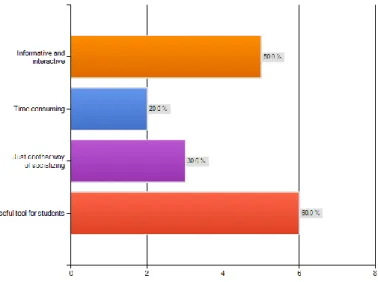
On question 13 when asked about their experiences with educational SNS, 60% of this high exposure students indicated they had good experience using SN tools in an academic setup and found it to be a useful tool for students. Rest of them selected the option ‘time consuming and just another way of socializing kind of tool’. The percentage of students selecting different options in this question is shown in the bar chart below (Figure 5.1). This presents an interesting mix of opinions among students where they are concerned about the time spent inspite of the information gained.
Figure 5.1: Student responses for Question 13 in the survey
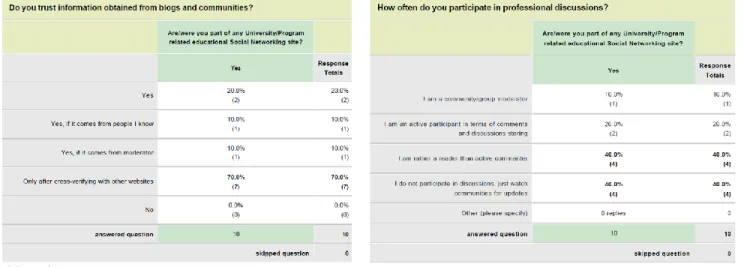
Cross-tab analysis helped in understanding how these students perceive about blogging and professional discussions. These are important aspects of SNSs as it promotes interaction among students on course topics, etc. Students of this group have indicated that they are mainly active observers of various blogs and comments that are written with it. Only a third of them actively participate in writing or being moderators of
32 such blogs. The main reason mentioned for non-participation was attributed to lack of verification on the information provided. They would trust the information coming from either the people they know or the moderators of the groups. The results from this analysis are included in the Figure 5.2 below.
Figure 5.2: Cross-tab analysis for high level exposure students on their activeness on
blogging
5.2.2. Intermediate level of exposure to SN
Similar to the high level exposure group, the intermediate level group was identified from the survey responses and the categories described in section 3.2. From this analysis, 54 students’ responses were similar to those characteristics described in the intermediate level exposure category. Students with Intermediate level of exposure to SNSs suggested that they have Facebook, Twitter and LinkedIn accounts but they are not active users in terms of frequency of usage. The respondents spend less than an hour every day of the week that is around 3-5 hours a week and have access to SN at their work place but they are less active and just glance through their SN webpage. These students also suggested
33 that on average they access their online SNS account lesser 5 times a day for a brief amount of time in a day. This group of students indicated that they do not have any experience using SNS in an academic setup. Students of this group have indicated that they are readers than active commenter in professional discussions and community blogs and also they trust information obtained from blog and communities but only after cross-verifying with other websites.
5.2.3. Minimal level of exposure to SN
Students with minimal level of exposure are the ones who do not belong to any SNS. From the survey response, there were 14 students who met this criterion. This group of respondents mostly commented that lack of time as their main reason for not using SNS. Other comments included fear of loss of privacy and confidentiality agreement though access to the SNSs was not mentioned as a reason. As can be expected, these students did not have any experience using SN in an academic setup. Majority of students of this group also indicated that they do not participate in professional discussions or blogs but watch for updates and also they trust information obtained from blog and communities but only after cross-verifying with other websites. This aspect seems to be in common among all the groups. Few of them though minimally use a SNS, actively participated in blogging. This indicates that SNS if used for relevant purposes can be useful to students as can be seen from Figure 5.3.
34 Figure 5.3: Responses of minimal level exposure students to blogging
5.3. Perceptions on SNS for EMGT Program
Having gained a background on the respondents in the previous sections, the aim of this section is to understand their perceptions on a SNS for EMGT program. A total of 81 students started the survey, out of which 78 were able to complete, equal to a healthy 96% completion rate. The responses about the EMGT SNSs were analyzed based on their level of exposure, gender, age and student status. Question 14 was a direct question on the recommendation of the students for a secure, private SNS for KU EMGT program. The survey respondents included 35 respondents who recommended EMGT SNS, while 43 respondents did not recommend one (Figure 5.4).
35 Figure 5.4: EMGT student recommendation for a secure, private EMGT SNS
Respondents, who recommended EMGT SNS, were presented with further questions (15-18) on their preferences, possible benefits and career opportunities through this site. These set of questions help in designing the content and features of a future EMGT SNS. Most of the students indicated who wanted EMGT SNS used Facebook as their prime SNS. But, when asked if they would like to connect to a EMGT SNS via Facebook, their responses were mixed. 63% students did not want to connect via Facebook (Figure 5.5). This difference in opinion for EMGT site could be due to their perception of Facebook as a traditional socializing site.
36 Figure 5.5: Student preference for Facebook as possible EMGT SNS.
The respondents who have recommended EMGT SNS wanted the site to be a place to share course related knowledge, information on program schedules and interact with peers. Further, they find interactive benefits of having a program specific SNS. The biggest benefits are easier access to peers, staff and faculty. This highlights the necessity of EMGT SNS because of the nature of the program where the respondents are full-time employed and part-time students and spend small amounts of time outside of the classroom. Further, they saw the use of the site for quicker information dissemination on the course related information, which is otherwise done through emails or word-of-mouth. The program does not have a dedicated career services and students found that having one professional networking community to be very helpful. Also, it was interesting to note that students felt that through a dedicated EMGT SNS that they would get a sense of involvement in the program activities. This provides a good overview of the expectations of the potential users of EMGT SNS. These students find that the fusion of Facebook and LinkedIn features at one place in the EMGT SNS to be appealing.
37 5.3.1. Response to EMGT SNS based on level of exposure
Cross-tab analysis with high level of exposure group of students showed that the majority of these students would prefer a private EMGT SNS. Further, they would like to leverage the usefulness of such a site to keep in touch with fellow students and for sharing job opportunities that they might come across at their work place. This group found professional networking as the biggest benefit of having SNS for EMGT students. But they indicated that 60% of them did not prefer to connect to an EMGT SNS via Facebook.
As can be expected, majority of intermediate level of exposure group of students (60%) did not recommend a SNS for EMGT program. Those who recommended the site do not prefer to connect to a EMGT SNS via Facebook. Also, those who recommended would like to leverage the usefulness of such a site to keep in touch with fellow students and for networking opportunities. 82% of intermediate group who recommended EMGT site would like to share job opportunities through EMGT SNS.
Further, those respondents who had minimal level exposure to SNSs responded in the similar manner to EMGT SNS. From the cross-tab analysis, more than 60% of them indicated their unwillingness for a EMGT SNS but quite a few of them (39%) wanted a EMGT site. The ones who recommended the site did not want to connect via Facebook. Also, they found networking opportunity to be the most beneficial aspect among the other content and were open to the idea of sharing job opportunities that they come across through this site. Figure 5.6 shows the recommendations for EMGT SNS based on the level of exposure.
38 Figure 5.6: Recommendation for EMGT SNS based on the level of exposure, connecting through Facebook and sharing job opportunities
5.3.2. Response to EMGT SNS based on gender
The perception of the EMGT students for a SNS was also analyzed based on their gender. There are in total 11 female respondents and the remaining, 67, were male respondents. The survey results seem to be skewed to large number of male respondents. But it is also important to capture how the female respondents perceive about the EMGT SN. Cross-tab analysis was used to understand how this group responded. All of the female respondents participate in SN and list Facebook as their primary SNS along with LinkedIn. Primarily social interaction is the reason female respondents use SNS. Further, professional interaction with colleagues and networking opportunities is also indicated.
8 18 2 0 4 3 0 2 4 6 8 10 12 14 16 18 20
High Intermediate Low
No . o f Respo nd ent s
Job opportunities sharing Yes No 3 10 0 5 12 5 0 2 4 6 8 10 12 14
High Intermediate Low
N o . o f R espo nde nt s
EMGT SN connect via Facebook Yes No
39 Most of them spend less than 7hrs a week and connect via laptop, mobile or desktop. 36% of them indicated they have used an academic based SNS which was informative and useful tool for students. But they found it to be time consuming. Based on these responses, 55% recommended EMGT SNS while 45% did not as shown in the bar chart below Figure 5.7. Out of the 55% respondents who recommended EMGT SNS, 50% did not want to connect via Facebook. All the female respondents wanted EMGT SNS to be a place to keep in touch with fellow students and 83% female respondents wanted EMGT SNS to be a place to post Course topics related info and program deadlines. Comparing this subsection of respondents with the overall group which was predominantly male respondents, the female respondents prefer to EMGT SNS than the overall group as can be seen from the Figure 5.8.
Figure 5.7: Recommendations of Female respondents for EMGTSNS
40 Figure 5.8: % of Male vs. Female perceptions on EMGT SNS in the total sample
5.3.3. Response to EMGT SNS based on age groups
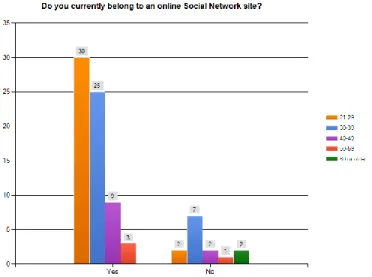
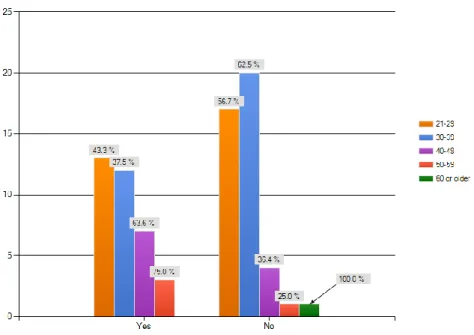
The advent of SN is relatively a new phenomenon that has caught up quickly with the younger generation people. This analysis presents how this trend holds among the current respondents as it could influence their perception about the EMGT site. The respondents were spread across the age groups 21-29, 30-39, 40-49, 50-59 and 60 or older. Figure 5.9 below shows the variation in the usability of SNS based on the age group. As can be seen, 14 respondents did not belong to SNS and they are spread across all the age groups. Out of 14, 50% belonged to the age group 30-39. Both the respondents in the 60 or older age groups, did not belong to a SNS. Despite the notion that SN is popular, there are people in different age groups who do not seem to be involved with a SNS.
41 Figure 5.9: Responses to their current SN usage based on age groups
Figure 5.10 shows how the EMGT students perceive EMGT SNS based on their age group. Respondents in the age groups 50-59 and 60-69, who did not belong to a SNS, did not recommend SNS for the EMGT program while the others recommended one. Respondents in the age group 20-29 and 30-39, who made up the majority, had mixed opinion on the recommendation of SNS for the EMGT program. While 93% of those in the age group 20-29 belonged to SNS, only 43% in this age group recommended a SNS for EMGT program. This 43% group includes 2 respondents who spend more than 14hrs per week on a SNS. 78% of respondents in the age group 30-39 belonged to SNS, but only 38% recommended a EMGT SNS. But on the contrary, those in the age group 40-49 respond positively to the EMGT SNS. 63% of age group 40-49 respondents recommended a EMGT SNS when 82% of them belong to a SNS.
So, irrespective of the age, respondents who, in general, find SNS useful, recommended a EMGT SNS. In the age groups 20-29 and 30-39, about 14% and 9% respondents respectively used academic SNS before. This minor trend seems to reflect in their
42 perception about the EMGT SNS. This trend is more evident with those in the age group 40-49, where about 27% of them used an academic SNS.
Figure 5.10: Recommendation of the respondents for a EMGT SNS based on their age group
5.3.4. Response to EMGT SNS based on Student Status
The survey respondents mainly included part-time students who are full-time employees. Typically these students enroll in 3-6 credit hours a semester that is around 2 courses in any given semester. Due to their part-time student status they have only in class room sessions time to interact with faculty and peers. Therefore, identifying how the student’s status plays a role in their comprehension about EMGT SNS would be very useful. Though the sample is predominantly part-time student/full-time employee, looking at the full-time students or part-time students could help in capturing different perspectives.
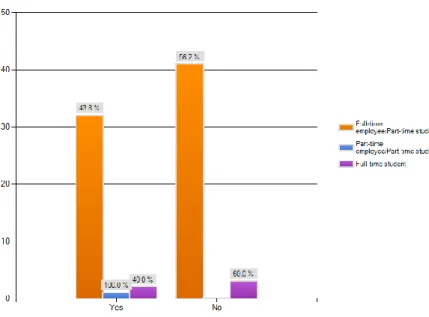
43 Figure 5.11: Responses to their current SN usage based on student status
Around 84% of the part-time students belong to SNS and around 60% of full-time students belong to SNS. Many of the full-time working employees actively use the SNS for socializing and for networking opportunities. While those who did not belong to a SNS, gave lack of time as their primary reason (Figure 5.11). Of the 5 full-time students, 2 of them did not belong to SNS. The primary users, part-time student/full-time employed, gave a mixed response to the EMGT SNS. 44% of this employed group perceived EMGT SNS to be useful for the students (Figure 5.12). This group include the 11% respondents who indicated being part of an academic SNS. Also, this 44% includes 11 respondents who spend more than 7-14hrs per week on SNS. Of these 11 heavy users of SNS, 55% recommend a EMGT SNS. Further, two respondents (one full-time employed and other full-time student) who spend more than 14hrs per week on a SNS, responded positively to the EMGT SNS. So, the volume of usage could play a minor role
44 in the perception of the students about EMGT SNS. The survey respondents, who did not recommend an EMGT SNS, seemed to have characteristics like spending less than 7hrs per week & accessing their accounts less than 5 times per day. They were also not a part of an academic SNS.
Figure 5.12: Recommendation of the respondents for a EMGT SNS based on students’ status
45 6. Conclusions, Limitations and Future work
6.1. Conclusions
This project began in the fall 2011 upon discussing with Prof. Miller at University of Kansas. Initially information was gathered on SNSs and their usability in academic programs. The extant literature does not talk about the structure of SNSs that can be most effective in academic setup. From the literature review it was observed that though there has been much written in recent years to describe the use of social media technologies, there is little hard evidence of validity and effectiveness of such tools in academic setup. Till date, the adoption of SN in University’s curriculums has been noticeably slow. The main reasons for slower adoption include essential considerations like ethical reasons, privacy of students and lack of right structure for implementation. A survey was conducted on the current EMGT students to assess the need of a SNS for EMGT program. The survey included question on background information, extent of usage of SNSs and their possible benefit to the program. Results from this survey reveal that majority of students have exposure to SN tools. The respondents can be categorized by their level of exposure to SNSs as High level, Intermediate level and Minimal level. This information was used to gauge their interest in a EMGT SNS. Other factors like gender, age and status were also studied. The characteristics of the respondents are 86% male, 95% part-time students. Further, 82% of them were in the age group 20-40. 45% of the students recommended a EMGT SNS, while 55% did not recommend one.
These 45% respondents, who recommended EMGT SNS, wanted the site to be a place to share course related knowledge, information on program schedules and interact with peers.
46 55% respondents, who did not recommend, seemed to have characteristics like spending less than 7hrs per week & accessing their accounts less than 5 times per day and not having used SNS in an academic setup. Further, employment status of this group could be considered as one of the reasons.
All the respondents were grouped into different level of exposure groups as 13% in high level, 69% in intermediate level and 18% in minimal level exposure student groups. Majority of the high level exposure group advocated for a EMGT SNS, while the majority in other two groups did not advocate one.
43%, 38%, 63% respondents in the age groups 20-29, 30-39, 40-49 recommended a EMGT SNS respectively. This corresponded well to their prior academic SNS usage.
Comparing female respondents with the overall group, female respondents prefer to have EMGT SNS than the overall group.
6.2. Limitations
Based on survey analysis and results, some of the inherent survey limitations and flaws were identified. Firstly, the survey did not adequately capture why students do not want EMGT private SNS. This information has been derived from other questions of the survey.
Secondly, cross-tab analysis helped in understanding the results better, but the cross-tab can be applied to one question at a time. Though this helped in differentiating students based on one criterion, it was difficult to capture characteristics of a group that required multiple questions as cross-tabbing cannot handle this. Thirdly, survey logic is applied so
47 that a subsequent question is in line with the answers given to a question by the survey respondents. This resulted in respondents getting different sets of questions based on their answers.
6.3. Future Work
Blackboard is the EMGT main course management system. So, it would be important to know if the Blackboard can be integrated with EMGT SNS or vice versa for easier accessibility. The survey could be extended to Alumni students and program’s faculty. This would help in gaining their perspective and preferences as both these groups could play a key role in the success of SNS.
48 7. References
A. W. Astin, What Matters in College. Liberal Education, 1993, Vol. 79, Issue 4, pp. 4-15.
J. Bennett, M. Owers, M. Pitt and M. Tucker. Workplace impact of social networking, Property Management, 2010, Vol. 28, Issue 3, pp. 139-148.
K. P. Brady, L. B. Holcomb and B. V. Smith. The use of alternative social networking sites in higher education settings: A case study of E-learning benefits of Ning in education, Journal of Interactive Online Learning, 2010, Vol. 9, Issue. 2, pp. 151-170.
A. L. Harris and A. Rea. Web 2.0 and virtual world technologies: An growing impact on IS education, Journal of Information Systems Education, 2009, Vo. 20, Issue 2, pp. 137-144.
J. F. Helliwell and R. D. Putnam. The social context of well-being, Philosophical Transactions of the Royal Society of London, 2004, Vol. 359, pp. 1435–1446.
M. P. Landman, J. Shelton, R. M. Kauffmann and J. B. Dattilo. Guidelines for maintaining a professional compass in the era of social networking, Journal of Surgical Education, 2001, Vol. 67, Issue 6, pp. 381-386.
D. M. Mack, A. Behler, B. Roberts and E. Rimland. Reaching students with Facebook: Data and best practices, Electronic Journal of Academic and Librarianship, 2007, Vol. 8, Issue 2.
L. A. Malesky and C. Peters. Defining appropriate professional behavior for faculty and university students on social networking websites, Higher Education, 2012, Vol. 63, pp. 135-151.
49 R. Panckhurst and D. Marsh. Communities of Practice. Using the Open Web as a
Collaborative Learning Platform, iLearning Forum, 2008, Paris, 4-5 February 2008. (In: iLearning Forum 2008 Proceedings. Paris: European Institute for E-Learning, http://hal.archivesouvertes.fr/index.php?halsid=38rrt996b1s92o6ofq6gi60nd6&view_ this_doc=hal-00291874&version=1).
C. Paton, P. Bamidis, G. Eysenbach, M. M. Hansen and M. Cabrer. Experience in use of social media in medical and health education, Nursing and Health Profession Faculty Research Paper 6, 2011.
M. Raman, T. Ryan and L. Olfman. Designing Knowledge Management Systems for Teaching and Learning with Wiki Technology, Journal of Information Systems Education, 2005, vol. 16, Issue 3, pp. 311-320.
M. D. Roblyer, M. McDaniel and M. Webb. Finding on Facebook in higher education: A comparison of college faculty and student uses and perceptions of SN sites, Internet and Higher Education, 2010, Vol. 13, pp. 134-140.
S. W. Tian, A. Y. Yu, D. Vogel and R. C-W. Kwok. The impact of online social networking on learning: A social integration perspective, International Journal of Networking and Virtual Organizations, 2011, Vol. 8, Issue. 3/4, pp. 264-280.
V. Tinto. Dropout from Higher Education: A Theoretical Synthesis of Recent Research, Review of Educational Research, 1975, Vol. 45, Issue 1, pp. 89-125.
V. Tinto. Classrooms as Communities: Exploring the Educational Character of Student Persistence, Journal of Higher Education, 1997, Vol. 68, Issue 6, pp. 599-623
50 J. Ulrich and M. Karvonen. Faculty instructional attitudes, interest, and intention: Predictors of Web 2.0 use in online courses, Internet and Higher Education, 2011, Vol. 14, pp. 207-216.
C. Wagner. Learning Experience with Virtual Worlds, Journal of Information Systems Education, 2008, Vol. 19, Issue 3, pp. 263-266
J. B. Williams, J. Jacobs. Exploring the use of blogs as learning spaces in the higher education sector, Australasian Journal of Educational Technology, 2004, Vol. 20, Issue 2, pp. 232-247.
http://emgt.ku.edu/students/
http://en.wikipedia.org/w/index.php?title=Social_network
Web_2.0, http://en.wikipedia.org/wiki/Web_2.0 ( accessed 2011 April)
Franklin, T. & van Harmelen, M., (2007) Web 2.0 for Content for Learning and Teaching in Higher-Education,http://ie-repository.jisc.ac.uk/148/l/web2-contentlearning-and-teaching.pdf (accessed May 9, 2009).
Wiki http://en.wikipedia.org/wiki/Wiki ( accessed 2012 April) Blog http://en.wikipedia.org/wiki/Blog ( accessed 2012 April) http://www.educationalnetworking.com/List+of+Networks
51 Appendix A: Survey questions
55 Appendix B: Survey responses