Interventions for Reducing Infant
Mortality in Developing Countries
A Literature Review
Omwono Judith
Silundika Sehlule Patricia
Bachelor’s
thesis
June 2020
Health care
Description
Author(s) Omwono Judith, Silundika Sehlule Patricia Type of publication Bachelor’s Thesis Date June 2020 Language of publica-tion: English Number of pages 40Permission for web publication: x Tittle of publication
Interventions for ReducingInfant Mortality inDeveloping Countries A Literature Review
Degree Programme
Degree Programme in Nursing Supervisor
Sinivuo, Riikka Assigned by -
Abstract
Infant mortality is a global public health issue. According to WHO, over 4 million infant deaths were recorded in 2018. A significant number of these deaths are due to preventable causes.
The aim of this study was to synthesis different available research in interven-tions for reducing infant mortality in developing countries. The purpose was to provide information and methods that could be adopted by professionals in dif-ferent health care settings to reduce infant mortality rates.
The study was conducted as a literature review and data was collected using two databases: Cinahl Plus full-text and Academic Search Elite. Overall, eleven arti-cles were chosen, and results were analyzed using inductive content analysis method. The following four main categories were generated: medical factors, be-havior changes, policies to minimize infant mortality and knowledge and skills. The review demonstrated that implementing and sustaining several low-cost in-terventions at community levels helped reduce infant mortality rates. The results also indicated the need for further studies in reviewing and updating the pediat-ric curpediat-riculum.
Keywords (subjects):
Infant mortality, neonatal mortality, child death, interventions, developing countries.
Contents
1 Introduction ... 3
2 Infant Mortality ... 4
2.1 Epidemiology ... 4
2.2 Causes of Infant Mortality ... 7
2.3 Environmental and Socio-economic Factors... 9
3 Aim, Purpose and Research Question ... 11
4 Methodology ... 11 4.1 Literature Review ... 11 4.2 Literature search ... 12 4.3 Data Analysis ... 14 5 Results ... 15 5.1 Medical Factors ... 16 5.2 Behaviour changes ... 17
5.3 Policies to minimize infant mortality ... 18
5.4 Knowledge and skills ... 18
6 Discussion ... 20
6.1 Discussion of results ... 20
6.2 Critical appraisal, ethical considerations, validity and reliability, strengths and limitations ... 24
6.3 Conclusions and recommendations for further studies ... 26
References ... 28
Appendices ... 32
Appendix 1- Summary of reviewed articles. ... 32
Tables
Table 1. Inclusion Criteria. ... 13
Table 2. Selection process. ... 13
Figures
Figure 1. Trends in infant mortality. (Source WHO 2018) ... 5Figure 2. Decline in under-five mortality. (Source WHO 2018) ... 6
Figure 3. Data analysis process illustration. ... 15
1
Introduction
Infant or neonatal mortality is defined as the number of deaths of children un-der one year of age. Infant mortality rate measures the number of deaths per thousand live births within a given population or region. A child is at the highest risk of dying within the first 28 days of life due to lack of quality care at birth or delayed treatment. The most common causes of neonatal deaths are cited as birth defects, infections, birth asphyxia and pre-term births. (Song, Theodoratou, Li, Liu, Chu, Black, Campbell, Rudan and Chan, 2016).
According to 2018 WHO statistics, there were 4.0 million infant deaths, of which 75% died within the first year of life (World Health Organisation, 2018). The UN Inter-agency Group for Child Mortality Estimation stated the figures at 5.4 million deaths, with 2.5 million in the first month of life, 1.6 mil-lion from 1-11 months and 1.3 milmil-lion occurring between the age of 1-4 years. In 2017 the average infant mortality rate was 18 deaths per 1000 live births globally. The region with the highest infant mortality was Sub-Saharan Africa with an average of 76 deaths per 1000 live births which is a ratio of 1 in 13 while the region with the lowest infant mortality rate in the world was Australia and New Zealand, with a ratio of 1 in 263 infant deaths. (United Na-tions Inter-Agency Group for Child Mortality Estimation, 2018).
Although statistics from 1990s to 2017 show significant decline in both post-neonatal deaths and child mortality rates of children under five, future projec-tions by the UN Inter-agency Group for Child Mortality Estimation
Re-port of 2018, indicates that between 2018-2030 about 56 million children will die before their fifth birthday. Half of those deaths will be neonates.
Infant mortality is a major public health issue globally as many statistics show that there is a significant number of infant deaths due to some preventable causes. Despite the major gains in technological advancement in the medical fields and availability of vaccines, the numbers are still alarmingly
high. (Song et al. 2016.)
The aim of this study is to synthesis different available research in interven-tions for reducing infant mortality in developing countries. The purpose of the study is to provide information and methods that could be adopted by nurses in different health care settings to reduce infant mortality rates.
2
Infant Mortality
2.1
Epidemiology
An infant is defined as a child under the age of one year, while a neonate is a new-born child under 28 days of age. Infant mortality refers to the total num-ber of deaths of children under one year of age. This is normally expressed in terms of the infant mortality rate, which measures the number of live births per thousand births within a given population. (UNIGME 2018.)
Infant mortality rates have shown a significant decline over the past two and a half decades, but the figures continue to be alarmingly high. Over 2.5 million neonates and 1.6 million infants died in the year 2017 globally. The risk of dy-ing within the first 28 days of life was estimated to be around 18 deaths per 1,000 live births, representing a 41% decline. The chance of dying within the first year was estimated at 12 deaths per 1,000. This represents a 51% decline since the year 2000. According to WHO between 2000 and 2017, high income
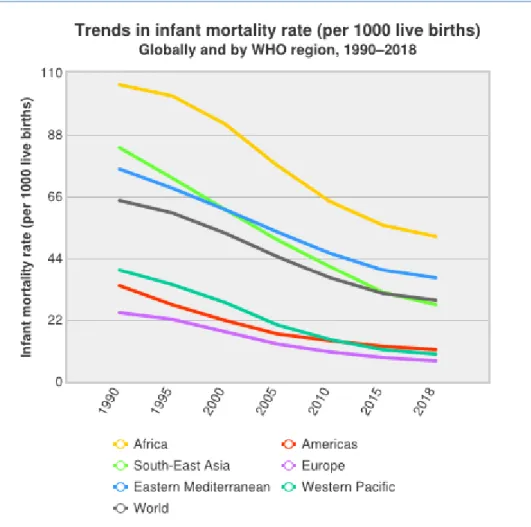
countries recorded the lowest declines in infant mortality rates as these were already lower from the beginning of the ‘90s to year 2000. (UNIGME 2018). Figure 1 below shows the trends in infant mortality globally from 1990 to 2018, according to WHO statistics of 2018.
Figure 1. Trends in infant mortality. (Source WHO 2018)
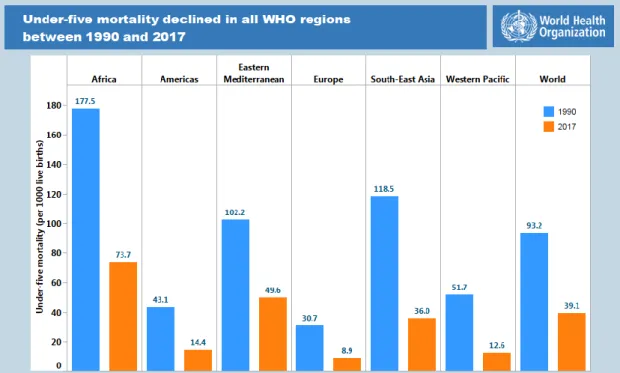
According to UNIGME (2018), neonatal deaths in 2017 accounted for 2.5 mil-lion deaths with three quarters dying within the first week of being born. In the 1990s, neonatal mortality was between 36-38 deaths per thousand live births, while in in 2017 the figure had declined to an average of 18 deaths per 1,000 live births. The largest decline came from East Asia and Europe, while Sub-Saharan Africa and Southern Asia remained with the highest neonatal mortality with 27 and 26 deaths per 1,000 live births respectively. Figure 2
below shows the decline in under-five mortality rates in WHO regions be-tween 1990 and 2017. (UNIGME, 2018.)
Figure 2. Decline in under-five mortality. (Source WHO 2018)
Some determining factors for survival seem to be linked to the region’s eco-nomic status. According to the 2017 statistics, Sub-Saharan African countries have the highest infant mortality rates with an estimated 76 deaths per thou-sand live births. This means that 1 in every 13 children dies before they reach the age of 5. In comparison, in high- income countries 1 in every 185 children dies before their fifth birthday. This is a clear indication of how income dis-parities influence child survival rates worldwide. Six countries with the high-est infant mortality rates and under 5 mortality rates came from Sub-Saharan Africa 50% of the deaths and Southern Asia, with 30%.
2.2
Causes of Infant Mortality
Preterm birth complications are the leading cause of infant deaths worldwide due to reduced quality of maternal or foetal nursing care. Preterm birth refers to any birth before completing 37 weeks of gestation and is classified into three groups: Extremely preterm- less than 28 weeks, very preterm- between 28 to 32 weeks, and moderate to late preterm- between 32-37 weeks. (WHO 2018).
Those occurring in the first weeks include breathing problems, heart prob-lems, underdeveloped immune system leading to high risk of infections, me-tabolism problems like hypoglycemia, anemia, gastrointestinal problems, brain hemorrhage, hypothermia and jaundice. Some risk factors of premature delivery include multiple pregnancies, infections of the lower genital tract and amniotic fluid, problems of the uterus, cervix or placenta, smoking and using illicit drugs while pregnant, short interval between pregnancies and chronic conditions such as diabetes and high blood pressure. A history of multiple miscarriages, abortions and previous premature births could also lead to premature delivery. In addition, trauma, physical injuries or other stressful events for example death of a loved one could also trigger premature deliv-ery. (WHO, 2018.)
Low birth weight (LBW), according to WHO (2018), is birth of an infant weighing less than 2500grams. It is mainly caused by premature birth and in-trauterine growth restriction (IUGR). IUGR, also known as foetal growth re-striction, is a slow prenatal growth rate which results in an infant being small for gestational age (SGA). SGA new-borns are those whose weight is below the 10th percentile for the gestational age. Risk factors for LBW include teen
pregnancies, multiple pregnancies, chronic diseases, poor prenatal care, poor nutrition, smoking, drug abuse and alcohol abuse. (WHO, 2018).
Birth defects. WHO (2016), states that congenital disorders, malformations or anomalies are structural or functional anomalies that occur before or dur-ing birth. Most congenital anomalies are caused by genetic, environmental or socioeconomic factors. In middle- and low-income countries, pregnant women may lack good nutrition or proper healthcare access due to their limited re-sources. At the same time, they may also be exposed to infections, pesticides, chemicals and other factors such as alcohol and smoking. All these increase the chances of abnormal prenatal development. If parents are from the same kinship, consanguinity, the risk of genetic congenital anomalies is
in-creased. (WHO, 2016)
Infections. Neonatal infections including sepsis, pneumonia, meningitis, teta-nus and diarrhoea are the most common causes of neonatal deaths in develop-ing countries. Viral infections include rubella, herpes simplex virus (HSV), varicella-zoster virus, hepatitis, parvovirus and HIV. Some of these infections are acquired through raptured membranes or in the birth canal during deliv-ery(intrapartum) or postpartum. Several factors contribute to these infections and subsequent deaths: poor or no antenatal care, preterm deliveries, low birth weights, unhygienic and unsafe delivery practices and cord care, poor health infrastructure and resources, economic hardships and lack of exclusive breastfeeding. (Thaver & Zaidi 2009.)
Sudden infant death syndrome (SIDS). According toBartlow, Cartwright and Shefferly (2016), SIDS, also known as cot or crib death is an unexpected and unexplained infant death in their sleep and occasionally while awake. Although the exact cause is unknown, it has been established that infant sleep positioning; mainly prone position and side-lying, and sleep environment,
that is, soft items in cribs are significant risk factors for SIDS. In addition, de-fects in the infant’s part of brain that controls breathing and arousal from sleep, low birth weight, respiratory infection, overheating while asleep, shar-ing a bed and havshar-ing excess materials in a crib are other factors believed to contribute to it. Nurses working in the new-born units are uniquely placed to, not only educate parents and caregivers about reducing the risks of SIDS but also to role model the care of infants to them. (Bartlow et. al 2016.)
Perinatal asphyxia. According to McGuire (2007), perinatal asphyxia is a ma-jor cause of death amongst infants. It may present as a lack of breathing just before, or during or immediately after post-natal birth. This can lead to a de-crease or a complete lack of oxygen (hypoxia)to the brain tissue, resulting in cardiorespiratory or neurological problems. An Apgar score is used to assess and determine the level of function and consciousness within five minutes of birth. (McGuire 2007.)
Risk factors include Meconium Aspiration Syndrome, where a baby may breathe in meconium during the birth process, or due to placental abruption, congenital anomalies, birth trauma, narcotics, depression of the umbilical cord and congenital sepsis. McGuire (2007), emphasizes the importance of prompt resuscitation of neonates to minimize death and neurological dam-age. Mengesha & Sahle (2017), state that delays in swift referrals and a lack of skilled health professionals maybe the leading cause of deaths due to as-phyxia in Sub-Saharan Africa.
2.3
Environmental and Socio-economic Factors
Environmental factors can be classified into two. Firstly, the
socio-eco-nomic status of poverty which has an impact on the quality of health or nurs-ing care received by an individual, lack of proper sanitation and safe drinknurs-ing
water. According to UNIGME (2018), children born into impoverished fami-lies and communities are twice at a higher risk of death compared to those born into well off families. Rich parents have more capabilities to provide their families with better sanitation and access to good healthcare. There-fore, they have low incidences of infant mortality as they are in a better finan-cial position to afford good healthcare services. (UNIGME 2018.)
On the other hand, those living in rural areas have higher rates of mortality compared to babies born in urban areas, especially in less economically devel-oped countries, as they have less access to better healthcare facilities and good quality nursing care. The second environmental factor is the effects of indus-trialization which has led to an increase in air pollution, resulting in respira-tory problems in infants. (Muttunga 2007.) Over the years, nursing has made a big contribution in research of health-related issues with regards to the envi-ronment. Through these researches, nurses have participated in advocacy and promotion of safe environments to improve the health of children. (Thompson and Keeling 2012.)
3
Aim, Purpose and Research Question
The aim of this study is to synthesis different available research on interven-tions for reducing infant mortality in developing countries. The purpose of the study is to provide information and methods that could be adopted by
healthcare professionals in different health care settings to reduce infant mor-tality rates. The research question is: What are the interventions for reducing infant mortality in developing countries?
4
Methodology
4.1
Literature Review
Whittemore & Knafl (2005), state that a literature review is an integrative re-view which is used to synthesize past empirical or theoretical literature, which gives a broad insight of a certain healthcare problem. The reviews may be used to advance knowledge of evidence-based practice, nursing science and research as well as using them to make policy reviews. (Whittemore et.al 2005)
The authors choose a literature review because there are previous empirical studies available on the interventions to reduce infant mortality. Literature re-views summarize previous research studies and highlight any gaps in
knowledge which can be used to carry out further research into the specific phenomenon. (Whittemore et.al 2005.)
Literature review involves firstly identifying a topic, problem or phenomenon in practice which presents gaps in knowledge, and formulating questions that can be used to provide solutions and insights into the phenomenon in
question. The research question serves as a guideline and makes the search more specific to the phenomenon or topic of the research. From the research topic, the aims and purpose of the research are formulated. (Rew 2010.)
The second step involves the search for literature. The researcher identifies the most relevant sources for their research by clearly stating the inclusion and ex-clusion criteria of the papers used. The terms used to search for articles and the online databases searched are stated. The next step involves searching and refining, whereby search terms are used to find materials from the selected search engines. Most relevant and recent articles are chosen while carefully documenting each search process and steps taken in the article selection pro-cess. After completing this process, the next step would be to read and ana-lyze the material and select quality articles that adequately answer the re-search question. After evaluating, data extraction is carried out by deciding which findings can be used to show accurate results of the search. The next step is to evaluate the trustworthiness of the material gathered and then fi-nally the literature review is written highlighting the findings and drawing conclusions. (Rew, 2010; Whittemore et al. 2005.)
4.2
Literature search
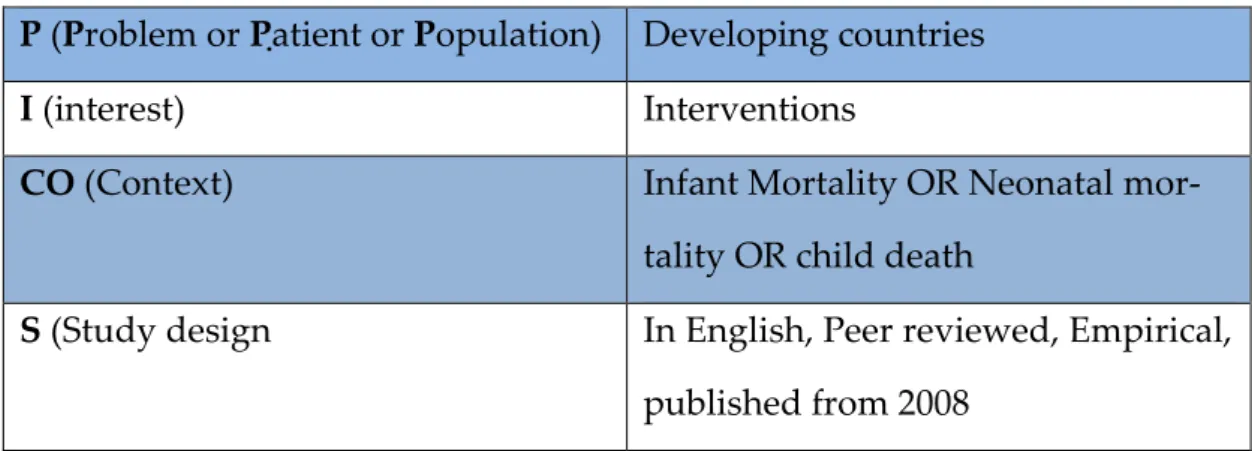
Literature for this review was collected from two databases, Cinahl Plus full-text and Academic Search Elite. A preliminary search on the interventions in minimizing infant mortality in developing countries was done using PICOS as illustrated in the table 1. below. The search key words that were used in the research were “infant mortality”, “neonatal mortality”, “child death” “inter-ventions” and “developing countries” to help refine the articles and obtain quality articles relevant to the research.
Table 1. Inclusion Criteria.
P (Problem or Patient or Population) Developing countries
I (interest) Interventions
CO (Context) Infant Mortality OR Neonatal
mor-tality OR child death
S (Study design In English, Peer reviewed, Empirical,
published from 2008
The following inclusion criteria was used: Boolean operators (AND, OR), full text for JAMK students, peer reviewed, English language, relevant to the study, answers research question and publications between 2008 and 2019. A total of 11 articles were chosen based on the search. Table 2 shows the selec-tion process and a table of the reviewed articles is found in appendix 1.
Table 2. Selection process. Data base Scope
search Based on inclusion criteria Relevant studies Based on developing countries Answers research question Cinahl plus full text 1882 1422 300 12 6 Academic search elite 1879 1335 170 9 5
4.3
Data Analysis
According to Elo & Kyngäs (2008), content analysis is a method of describing and quantifying phenomena, allowing for the extraction of the essential or most important aspects of the data and making replicable and valid inferences with the aim of providing new insights and knowledge and a guide for prac-tice. Content analysis may be used in an inductive or deductive way. Induc-tive method moves from specific to general and can be used when no previous studies about the phenomenon exist or when it’s fragmented. (Elo & Kyngäs, 2008). Since the authors did not have previous knowledge, they chose an in-ductive content analysis method to conduct the data analysis for this research. They did this in three stages: open coding, creating categories and abstraction.
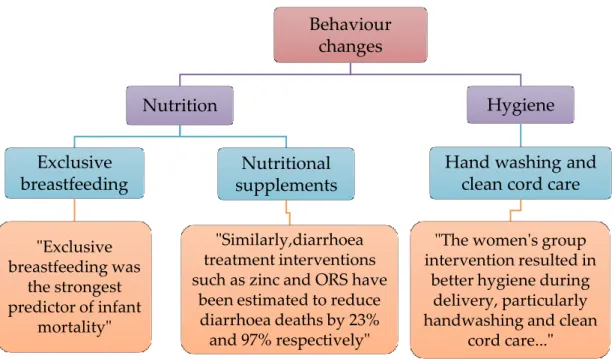
Open coding involved highlighting the main findings by giving headings to describe all aspects of the content. These codes were further clustered together to form categories that described the phenomenon more and increased under-standing. The abstraction stage involved further synthesis of the categories and naming them using content-characteristic words (Elo & Kyngäs, 2008.) Figure 3 below illustrates an example of the data analysis process used by the authors.
Figure 3. Data analysis process illustration.
5
Results
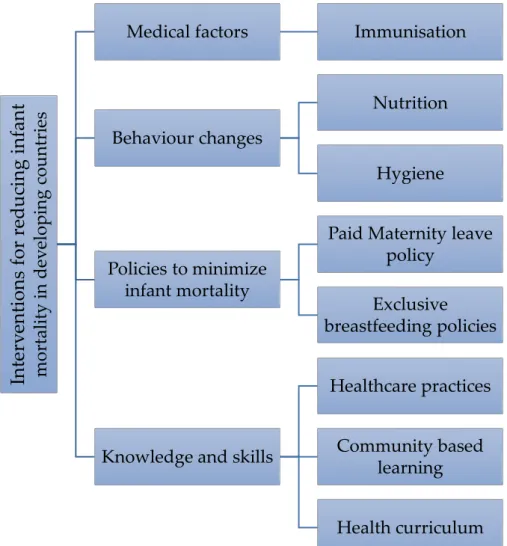
Findings from the analysis of the literature revealed four main categories of interventions for reducing infant mortality. These were: medical factors, be-havior changes, policies to minimize infant mortality and knowledge and skills as, represented in figure 4 below.
Behaviour changes Nutrition Exclusive breastfeeding "Exclusive breastfeeding was the strongest predictor of infant mortality" Nutritional supplements "Similarly,diarrhoea treatment interventions such as zinc and ORS have
been estimated to reduce diarrhoea deaths by 23% and 97% respectively"
Hygiene Hand washing and
clean cord care "The women's group intervention resulted in
better hygiene during delivery, particularly handwashing and clean
Figure 4. Themes and sub-themes of interventions for infant mortality.
5.1
Medical Factors
Immunization was a significant intervention in reducing infant mortality. Fewer infant deaths were reported in the vaccine period compared to the pre-vaccination period. The introduction of the 13-valent pneumococcal conjugate vaccine (PVC13), for example, led to reductions in hospitalizations and ambu-latory visits for all-cause pneumonia. Consequently, there were reductions in pneumonia-related and bacterial meningitis deaths. These findings were
Inter v en ti ons for r educing infan t m o rt ali ty i n dev elo pi ng coun tr ies
Medical factors Immunisation
Behaviour changes
Nutrition
Hygiene
Policies to minimize infant mortality
Paid Maternity leave policy
Exclusive breastfeeding policies
Knowledge and skills
Healthcare practices
Community based learning
observed in several countries. (Becker-Dreps, Blette, Briceño, Alemán, Hudg-ens, Moreno, Ordonez, Rocha, Weber and Amaya 2017).
5.2
Behaviour changes
Nutrition and breastfeeding. Positive behavioural practices interventions, such as exclusive breastfeeding practices and providing adequate nutrition to infants, have been found to minimize infant mortality rates in developing countries. (Doherty, Rohde, Besada, Kerber, Manda, Loveday, Nsibande, Daviaud, Kinney, Zembe, Leon, Rudan, Degefie, Sanders, 2016; Biks, Berhane, Worku, & Gete, 2015). For example, a study conducted by Doherty et al. (2016), showed that infant mortality rates declined as a result of interventions which included the successful initiation of exclusive breastfeeding and sup-plementary nutrition programmes, such as giving the infants vitamin A and encouraging the use of oral rehydration salts (ORS) in extreme cases of diar-rhoea.
Hygienic practices. Furthermore, interventions administered by women such as clean water, sanitation and proper hygiene resulted in decreased infant mortality rates were lowered and improved chances of survival of infants. Handwashing with soap was found to be directly related to a drop in the number of diarrhoea induced deaths in infants. This reduction is also
at-tributed to an increase in knowledge and use of oral rehydration salts coupled with minerals such as zinc. (Biks et al. 2015; Bosomprah, Beach, Beres, New-man, Kapasa, Rudd, Njobvu, Guffey, Hubbard, Foo, Bolton-Moore, Stringer and Chilengi, 2015; Doherty et al. 2016; Sarbani, Mahapatra, Rath, Bajpai, Singh, Rath, Nair, Tripathy, Gope, Sinha, Costello, Pagel & Prost 2013)). Lastly, Sarbani et al. (2013), found that home and hospital care interventions, such as clean code cutting by birth attendants, proper handwashing,
providing neonates with proper warmth and encouraging women to exclu-sively breast feed their child in the first 6 weeks of their life can help to de-crease mortality rates, especially in countries with poor access to health ser-vices.
5.3
Policies to minimize infant mortality
Paid maternity leave policies. Policies centering on longer paid maternity leave for parents who have recently given birth, have shown a reduction in in-fant, neonatal and post-natal deaths. Nandi, Hajizadeh, Harper, Koski,
Strumpf, & Heymann (2016) state that in their study of low and middle-in-come countries where this intervention was tested, an increase in paid leave saw a corresponding decline in the infant deaths risk ratios.
Exclusive breastfeeding policies. Exclusive breast feeding has been identified as one of the interventions in reducing infant mortality rates. Chale, Fenton & Kayange (2016), state that policies that focus on enforcing breastfeeding at the healthcare facilities amongst health workers were significant in infant mortal-ity. Training health care workers on these policies and the benefits of breast milk compared to formula feeding was an essential step in imparting
knowledge of the benefits of breastfeeding to mothers of infants. (Chale et al. 2016).
5.4
Knowledge and skills
Health care practices. Campaigns in the form of song and dance with themes on safe pregnancy and delivery practices helped increase and improve health knowledge and practices among mothers. As a result, decline in infant deaths was observed. (Boone, Eble, Elbourne, Frost, Jayanty, Lakshminarayana,
Mann, Mukherjee, Piaggio and Reddy, 2017). Training of traditional birth at-tendants about clean delivery practices such as cord-cutting and hand wash-ing as well as the use of home delivery-kit is significant in reducwash-ing infant mortality. The evidence indicated improved knowledge and practice of hypo-thermia prevention using simple methods such as immediate drying and wrapping of a baby, which are important factors in preventing infant mortal-ity (Falle, Mullany, Thatte, Khatry, LeClerq, Darmstadt, Katz and Tielsch 2009). Chale et al. (2016) stated that exclusive breastfeeding, encouraged by health workers, was an initiative of infant mortality reduction.
Community-based learning was highlighted as a low-cost intervention of re-ducing infant mortality. Women’s group meetings provided forums for learn-ing where women were encouraged to attend ante-natal clinics, seek care for any health problems during pregnancy as well as opt to deliver in health cen-tres if facilities were available. (Sarbani et. al 2013). Furthermore, these partici-patory discussion groups (PDG) focused on planning for birth, safe delivery techniques, family health and prenatal visits. (Boone, Eble, Elbourne, Frost, Jayanty, Lakshminarayana, Mann, Mukherjee, Piaggio and Reddy, 2017).
In areas with limited access to health care facilities, interventions through pri-mary health care workers (PHCW) were beneficial. (Setiawan, Dignam, Wa-ters and Dawson 2016). According to Setiawan and colleagues, PCHWs out-reach program gave mothers more knowledge on infant health, recognition of warning signs, treatment follow-ups and referrals to hospitals when needed. These visits made mothers content as they got more attention, and as a result, their children’s health improved. Sarbani et al (2013) further suggested that these interventions could be replicated in other areas with high mortality rates.
Health curriculum. Initiation of paediatric friendly curriculum in educational institutions. Evidence showed that reinforcing paediatric nurse training is an intervention in reducing infant mortality rates. According to Coetzee (2014), promoting nursing research based on current child health care issues and practices would align teaching and practice, thereby improving care practices. Furthermore, updating curricula with evidence-based practices would deter-mine good child health outcomes. Nursing towards reducing morbidity and mortality of children was the crucial role of paediatric nurses. For example, in South Africa, the key aim was to have at least one trained paediatric nurse in every children’s ward and more in the other health care facilities. (Coetzee, 2014).
6
Discussion
6.1
Discussion of results
This study reviewed eleven articles looking at interventions of reducing infant mortality in developing countries. The current review indicates that vaccina-tion programs play a significant role in infant mortality reducvaccina-tion, although Song et al. (2016) states that infant mortality rates are still quite high despite the availability of vaccines.This observation, to some extent, can be attributed to non-compliance of vaccination due to a misconception that parents might have which has also been documented by Delkhosh, Negarandeh, Ghasemi & Rostami (2014). However, some parents simply lack awareness of the im-portance and availability of vaccines as a result of limited access to health care services. (Delkhosh et. al 2014).
Delkhosh et al. (2014) therefore suggests that for primary health care provid-ers to effectively educate parents about vaccination, they must be armed with vaccination knowledge and be prepared to deal with concerns, questions, or negative attitudes of parents towards their children’s vaccination. WHO (2018) also recommends advising families to bring babies for timely vaccina-tions. Based on the results, it seems that introducing and implementing more vaccination programs would help reduce mortality rates. For such an inter-vention to be successful, healthcare workers must be equipped with the neces-sary knowledge and the resources.
The authors have identified that community-based training and outreach pro-grams are some of the interventions of reducing infant mortality rates. Out-reach programs by primary health care workers were beneficial to mothers, not only by imparting knowledge on their children’s health, but also provid-ing necessary trainprovid-ing for traditional birth attendants on safe delivery prac-tices. Similarly, Muttunga (2017) states that low socio-economic status of those living in rural areas led to higher rates of mortality because they had less ac-cess to better healthcare facilities. It seems that health care practices training, especially in rural areas with limited access to health care facilities gives knowledge and skills that when implemented could save lives of infants.
In terms of paediatric curricula, the current study indicates that there is need to review and update it with current evidence-based practices, Coetzee (2014). There appears not to be collaboration nor alignment between what is taught and what happens in practical settings thus hindering efforts of trying to re-duce infant morbidity and mortality. A redesign of the paediatric nursing cur-ricula that addresses infant mortality and morbidity should be considered. Based on the results of this study, policies such as longer paid maternityleave, exclusive breastfeeding andnutrition seem to have positive results in
reducing infant mortality. Obviously, child health outcomes can be improved when parents have more time to monitor and care for their infants at home with longer paid maternity leave (Jou, Kozhimannil, Abraham, Blewett, & McGovern, 2018; Nandi et. al, 2016; Rossin, 2011; WHO,2014).
Consequently, countries with high infant mortality must consider the intro-duction or extension of paid maternity leave. It is economically prudent to in-vest in the health of mothers and their newborn babies. The results further show that mothers are likely to have their infants vaccinated and exclusively breastfed with longer maternity leave policies in place as they have more time to spend at home with their infants. (Jou et. al, 2018; Nandi et. al, 2016; Rossin, 2011; WHO, 2014).
Moreover, paid maternity leave duration appears to be associated with lower incidences of hospitalisation of infants due to diseases of the gastrointestinal, acute and chronic respiratory infections (Jou et. al, 2018). The authors feel that these results have a potential to influence policies in low and middle-income countries that could provide mothers with longer paid maternity leave, to give them enough time to exclusively breastfeed for longer periods, vaccinate and provide adequate care for their babies without worrying about financial implications of leave without pay.
With regards to exclusive breastfeeding policies, Chale et al. (2016); WHO, (2014), state that exclusive breastfeeding policies could be used as interven-tions in reducing mortality rates in infants if they are enforced from the high-est levels of leadership down to institutional and hospital levels. In the au-thors’ opinion, if these policies could be implemented starting from the nurse or healthcare training schools in the lower income countries, they could help equip healthcare workers with the knowledge of the importance of exclusively breastfeeding in the fight against high infant mortality rates.
Exclusive breastfeeding seems to be effective in reducing infant mortality by providing much needed nutrition in infants, immunity, preventing sudden fant death syndrome and the risk of contracting diarrhoea and vomiting in in-fants, and premature infant complications (Gross, Taylor, Tomori, Coleman, Cook-Deegan, Majumder, & McGuire, 2019; Kresin, Pullins, & Horn, 2017). Likewise, nutritional supplementation and fluid intake in the form of oral re-hydration salts seem to be other interventions that can reduce infant mortality rates in cases of diarrhoea and vomiting in infants (Biks et al. 2015; Bosom-prah et. al, 2015; Doherty et al. 2016; Sarbani et al. 2013). Therefore, it would be imperative to encourage the practice of exclusive breastfeeding and nutri-tional supplementation as the best way to provide nutrition and innate im-munity to new-borns and infants. Nursing curriculum could include maternal guidance and education modules in these interventions. Additionally,
healthcare providers could be given in-service training to update the knowl-edges on exclusive breastfeeding and nutritional supplements.
Based on the results from this study, it looks like proper hygiene practices such as handwashing sanitation and clean water, and proper cord care at both hospital level and home care can be some of the interventions in infant mortal-ity (Sarbani et al. 2013). Similar to this result, Baird, Smith, & DeBacco, (2015) state that clean cord care can be encouraged by discouraging some traditional practices of using herbs which may cause the umbilical cord to be infected.
Considering these findings, the authors feel that traditional birth attendants in low resourced countries, could be given training by qualified nurses on basic hygiene practices, so they may be able to provide proper and informed guid-ance during antenatal care.
6.2
Critical appraisal, ethical considerations, validity and
reliability, strengths and limitations
An assessment of the selected articles was undertaken to determine their via-bility. According to Hawker, Payne, Kerr, Hardey & Powell (2002), critical ap-praisal is done in three stages, namely, assessment of relevance, data extrac-tion and scoring for methodological rigor. In the first stage, articles are elimi-nated based on their relevance to the specific research question, type of study, data source and context of material. In the data extraction stage, an assess-ment form is used to record full details of articles specifically with regards to the research question. The third stage of scoring for methodological rigor as-sesses the methodology of each of the empirical studies to grade them based on the reliability of the results. (Hawker et.al 2002.)
Hawker et al (2002), appraisal tool assesses nine areas of an article, i.e. abstract and title, introduction and aims, method and data, sampling, data analysis, ethics and bias, results, transferability or generalizability, and implications and usefulness (how important the findings are to policy and practice). The criteria used for scoring the quality of each article is 1 to 4; 4= Good, 3=Fair, 2=Poor, 1=Very Poor. The maximum score for any article is 36 whereas the minimum is 9. Articles scoring above 30 were considered for use in this re-search and the process is presented in appendix 2. (Hawker et.al 2002.)
Ethics in research is defined as the norms or standards for conduct that serve as a guideline for determining what kind of behavior is morally acceptable during research (Clark 2019). They ensure that abuse of research participants is minimized through obtaining informed consent, maintaining privacy and
confidentiality. The authors of this research chose articles that stated that prior to research being conducted the researchers had sought informed consent from the research participants, who were mostly adult women of childbearing ages. (Ibid). The chosen articles also stated that permissions from various eth-ical committees to conduct the research had been sought, prior to carrying out the research. However, two of the articles were mainly based on statistics ob-tained from various sources, hence the authors of this study considered them in conducting their research as no human subjects were used nor harmed. The authors also acknowledge that they have ethical responsibility of using the re-sults and admitting that they are dealing with death of infants, which is quite a sensitive topic.
Plagiarism in this study was avoided by acknowledging the authors of the re-search articles that were used in the process of writing this literature review by using appropriate references, giving the relevant authors credit for their search (Bierer, & Barnes 2014). Data obtained during the research was re-ported accurately as obtained from the original sources to avoid fabricating and falsifying information and results (Bierer, et. al 2014).
To ensure that the research is valid, research must be free of errors that may render the study results as not applicable or relevant by avoiding bias (El-Masri, 2013). For the purpose of this study, the writers of this article were lim-ited to sources that were offered free of charge from the JAMK database, therefore there was bias towards selecting available articles. There was also language bias as only articles written in English were selected, hence there is a possibility that there were more free articles available in other languages. These represent systematic article selection, which according to El-Masri, (2013) equates to selection bias. The articles selected by the authors were me-ticulously documented to ensure the validity of the research was maintained. The authors feel that the research was valid as the articles selected for this
study were obtained from research conducted in different countries and conti-nents thereby reducing bias to only one particular region (El-Masri, 2013).
The authors of this research ensured that the principles of reliability are ad-hered to by documenting the steps taken during this research to give clarity to the research process used. This ensures that the research is easy to follow by a reader and similar results may be obtained if the research is repeated. The au-thors were also careful to give credit to the rightful auau-thors of any infor-mation, thought or idea used in this research. The inclusion criteria used to se-lect the articles was documented in the data colse-lection criteria to give a clear outline of what the authors did and why they used the selected articles. (Grossoehme, 2014). The authors of this article feel that results of this study are reliable, and the interventions can be applied to middle- and high-income countries as well to reduce infant mortality rates.
The limitations of this research included cost limitations as only free articles were selected. This accorded the authors only a limited number of articles to choose from, hence some relevant studies might have been missed in the pro-cess. As the authors of this article are novices in research methodology, the re-search process may have not been as thorough. The strength of the rere-search lies in the fact that there were two authors of this research which helped to re-duce bias. The quality of the articles selected was evaluated using the Hawker critical appraisal tool ensuring that only quality articles were selected. The au-thors used recent articles with up to date information. (Hawker et.al 2002).
6.3
Conclusions and recommendations for further studies
The analysis of this study revealed that several low-cost interventions deliv-ered at community levels in low income and developing countries can con-tribute to reductions in infant mortality. Simple things like women’s’ group
meetings provide forums for discussing and encouraging health practices like exclusive breastfeeding, nutrition and hygiene which all promote infants’ health. Further research is needed in order to implement and sustain inter-ventions such as training and equipping of traditional birth attendants with proper knowledge and skills as well as longer paid maternity leave policies. At the same time, more effort is required in reviewing and updating the pae-diatric curriculum to include relevant evidence-based practices focused on re-ducing infant morbidity and mortality.
References
Baird, M. B., Smith, C. M., & DeBacco, K. M. 2015. Perspectives of Northern Ugandan Health Providers About the Effect of Cultural Beliefs and Practices on Birth Outcomes. Health Care for Women International, 36(11), 1208–1223.
Bartlow, K.L., Cartwright, S.B., & Shefferly, E.K. 2016. Nurses’ Knowledge and Adherence to Sudden Death Infant Prevention Guidelines. Pediatric Nursing, 42(1). Becker-Dreps, S., Blette, B., Briceño, R., Alemán, J., Hudgens, M. G., Moreno, G., Ordonez, A., Rocha, J., Weber, D. J., & Amaya, E. 2017. Changes in the inci-dence of pneumonia, bacterial meningitis, and infant mortality 5 years following in-troduction of the 13-valent pneumococcal conjugate vaccine in a “3+0”
sched-ule. PLoS ONE, 12(8), 1–15.
Bierer, B. E., & Barnes, M. 2014. Research Misconduct Involving Noncompliance in Human Subjects Research Supported by the Public Health Service: Reconciling Sepa-rate Regulatory Systems. Hastings Center Report, 44, S2–S26.
Biks, G. A., Berhane, Y., Worku, A., & Gete, Y. K. 2015. Exclusive breast feeding is the strongest predictor of infant survival in Northwest Ethiopia: a longitudinal study. Journal of Health, Population & Nutrition, 33, 1–6.
Boone, P., Eble, A., Elbourne, D., Frost, C., Jayanty, C., Lakshminarayana, R., Mann, V., Mukherjee, R., Piaggio, G., & Reddy, P. 2017. Community health pro-motion and medical provision for neonatal health-CHAMPION cluster randomised trial in Nagarkurnool district, Telangana (formerly Andhra Pradesh), India. PLoS Medicine, 14(7), 1–28.
Bosomprah, S., Beach, L. B., Beres, L. K., Newman, J., Kapasa, K., Rudd, C., Njobvu, L.,Gufey, B., Hubbard, S., Foo, K., Bolton-Moore, C., Stringer, J., & Chilengi, R. 2016. Findings from a comprehensive diarrhoea prevention and treat-ment programme in Lusaka, Zambia. BMC Public Health, 16(1), 1–7.
Chale, L. E., Fenton, T. R., & Kayange, N. 2016. Predictors of knowledge and prac-tice of exclusive breastfeeding among health workers in Mwanza city, northwest Tan-zania. BMC Nursing, 15, 1–8.
Clark, K. R. 2019. Ethics in Research. Radiologic Technology, 90(4), 394–397.
Coetzee, M. 2014. Re-envisioning paediatric nurse training in a re-engineered health care system. Curationis, 37(2), 1–8.
Delkhosh, M., Negarandeh, R., Ghasemi, E., & Rostami, H. 2014. Maternal con-cerns about immunization over 0-24 months children: a qualitative research. Issues in Comprehensive Pediatric Nursing, 37(4), 235–249.
Doherty, T., Rohde, S., Besada, D., Kerber, K., Manda, S., Loveday, M., Nsi-bande, D., Daviaud, E., Kinney, M., Zembe, W., Leon, N., Rudan, I., Degefie, T., Sanders, D. 2016. Reduction in child mortality in Ethiopia: analysis of data from demographic and health surveys. Journal of Global Health, 6(2), 1–9.
Elo, S. & Kyngäs, H. 2008. The qualitative content analysis process. Journal of Ad-vanced Nursing 62(1), 107-115
El-Masri, M. M. 2013. The Research File: Terminology 101.Selection bias. Cana-dian Nurse, 109(8), 10.
El-Radhi, A. S. 2015. Management of common neonatal problems. British Journal of Nursing, 24(5), 258–265.
Falle, T.Y., Mullany, L.C., Thatte, N., Khatry, S. K., LeClerq, S. C., Darmstadt, G.L., Katz. J., & Tielsch. J. M. 2009. Potential role of traditional birth attendants in neonatal healthcare in rural southern Nepal. Journal of Health, Population & Nu-trition, 27(1), 53–61.
Gross, M. S., Taylor, H. A., Tomori, C., Coleman, J. S., Cook-Deegan, R., Ma-jumder, M. A., & McGuire, A. L. 2019. Breastfeeding with HIV: An Evidence-Based Case for New Policy. Journal of Law, Medicine & Ethics, 47(1), 152–160. Grossoehme, D. H. 2014. Overview of Qualitative Research. Journal of Health Care Chaplaincy, 20(3), 109–122.
Hawker, S., Payne, S., Kerr, C., Hardey, M., & Powell, J. 2002. Appraising the evidence: reviewing disparate data systematically. Qualitative Health Research, 12(9), 1284-1299.
Son, J.Y., Bell, M. L., & Lee, J.T. 2011. Survival Analysis of Long-Term Exposure to Different Sizes of Airborne Particulate Matter and Risk of Infant Mortality Using a Birth Cohort in Seoul Korea. Environmental Health Perspectives, 119(5), 725-730.
Kresin, M. M., Pullins, C. T., & Horn, J. L. 2017. Mother’s Milk: In Sickness and
In Health?Journal of Women’s Health (15409996), 26(11), 1252–1254.
Maggio, L. A., Justin L. Sewell, J. L., & Artino, A. R Jr. 2016.The Literature Re-view: A Foundation for High-Quality Medical Education Research. Journal of Grad-uate Medical Education: 8(3) 297-303.
Mayo Clinic. Premature birth. 2018. Accessed on 25th November 2018.
Re-trieved from
https://www.mayoclinic.org/diseases-conditions/premature-birth/symptoms-causes/syc-20376730
McGuire, W. 2007. Perinatal asphyxia. BMJ clinical evidence, 2007, 0320.
Muttunga, Clive J. 2007. Environmental determinants of child mortality in Kenya, WIDER Research Paper, No. 2007/83, ISBN 978-92-9230-036-4, The United Na-tions University World Institute for Development Economics Research (UNU-WIDER), Helsinki
Song, P., Theodoratou, E., Li, X., Liu, L., Chu, Y., Black, R. E., Campbell, H., Rudan, E., & Chan, K. Y. 2016. Causes of death in children younger than five years in China in 2015: an updated analysis. Journal of Global Health, 6(2), 1–13. Nandi, A., Hajizadeh, M., Harper, S., Koski, A., Strumpf, E. C., & Heymann, J. 2016. Increased Duration of Paid Maternity Leave Lowers Infant Mortality in Low- and Middle-Income Countries: A Quasi-Experimental Study. PLoS Medicine, 13(3), e1001985.
Rew, L. 2010. The systematic Review of Literature: Synthesizing Evidence for Prac-tice. Journal for Specialists in Pediatric Nursing, 16.
Sarbani Roy, S., Mahapatra, R., Rath, S., Bajpai, A., Singh, V., Rath, S., Bajpai, A., Singh, V., Rath, S., Nair, N., Tripathy, P., Gope, R.K., Sinha, R., Costello, A., Pagel, C., & Prost, A. 2013. Improved neonatal survival after participatory
learning and action with women’s groups: a prospective study in rural eastern
In-dia. Bulletin of the World Health Organization, 91(6), 426–435.
Setiawan, A., Dignam, D., Waters, C., & Dawson, A. 2016. Improving Access to Child Health Care in Indonesia Through Community Case Management. Maternal & Child Health Journal, 20(11), 2254–2260.
Thaver, D., & Zaidi, A. K. M. 2009. Burden of Neonatal Infections in Developing Countries: A Review of Evidence From Community-Based Studies. The Pediatric In-fectious Disease Journal, 28(1), S3-S9
Thompson, M. E., & Keeling, A. A. (2012). Nurses' role in the prevention of infant
mortality in 1884-1925: health disparities then and now.Journal of pediatric nurs-ing, 27(5), 471–478.
Whittemore, R., Knafl, K. 2005. Methodological Issues in Nursing Research. The Integrative Review: Updated Methodology. Journal of Advanced Nursing, 52(5). WHO. 2014.Global Nutrition Targets 2025 Breastfeeding Policy Brief. Accessed on 4 May 2019. Retrieved from
https://apps.who.int/iris/bitstream/han-dle/10665/149022/WHO_NMH_NHD_14.7_eng.pdf?ua=1.
WHO. 2018. Newborns: Reducing Mortality. 2018. Accessed on 25th Novem-ber 2018. Retrieved from
http://www.who.int/news-room/fact-sheets/de-tail/newborns-reducing-mortality
WHO. 2018.Infant Mortality: Situation and Trends. Accessed on 22nd April 2020. Retrieved from https://www.who.int/gho/child_health/mortality/neona-tal_infant/en/
Williamson DM, Abe K, Bean C, Ferré C, Henderson Z, & Lackritz E. 2008.
Current research in preterm birth. Journal of Women’s Health (15409996), 17(10), 1545–1549.
Woodruff TJ, Darrow LA, & Parker JD. 2008. Air pollution and post-neonatal in-fant mortality in the United States, 1999-2002. Environmental Health Perspec-tives, 116(1), 110–115.
United Nations Inter-Agency Group for Child Mortality Estimation (UN IGME), ‘Levels & Trends in Child Mortality: Report 2018, Estimates developed by the United Nations Inter-Agency Group for Child Mortality Estimation’, United Nations Children’s Fund, New York, 2018. Accessed on 2 November 2018. Re-trieved from http://www.childmortality.org/.
Appendices
Appendix 1- Summary of reviewed articles.
Author(s) (year), country
Purpose of the study
Participants and methods Key findings Critical Appraisal
(Hawker et al. 2002, Becker-Dreps et al (2017); Nicaragua To evaluate changes in the incidence of pneumonia, bacte-rial meningitis, and infant mortality 5 years following in-troduction of the 13-valent pneumococ-cal conjugate vac-cine in a "3+0" schedule.
Participants: Population of Nicaragua (n=410,860)
Quantitative study. Data was collected by the Ministry of Health in Leo´n from public health facilities in all 10 mu-nicipalities in the Depart-ment.
During the first five years of program implementation, re-ductions were observed in health facility visits for pneu-monia in immunized age groups and infant mortality, which would be hard to achieve with any other single public health intervention.
32
Biks et al. (2015); Ethiopia
To identify risk fac-tors that are associ-ated with infant mortality.
A prospective open cohort study involving (n=1752) in-fants (1472.4518 person years of follow-up) was undertaken
Exclusive breast feeding is the strongest predictor of infant survival in this predominantly rural setting where hygienic
from November 2009 to Au-gust 2011. Kaplan-Meier Sur-vival analysis was used to es-timate infant mortality rate. Risk factors associated with infant mortality were as-sessed using multivariate Poisson regression.
standards are poor. Supporting mothers to exclusively breast feeding which is cost effective, safe and feasible strategy, can help reduce infant mortality.
Boone et.al (2017); India To investigate whether a package of interventions comprising commu-nity health promo-tion and provision of health services (including outreach and facility-based care) could lead to a reduction of the or-der of 25% in neona-tal morneona-tality.
Participants were married women <50 years old (n=14,137 control, n=15,532 intervention). They provided married women in the inter-vention villages with commu-nity health promotion (in-cluding health education via village health worker–led participatory discussion groups), outreach (including mobile teams providing ante-natal check-ups), and facility-based care (including subsi-dised access to non-public health centres).
The study found that, of the live-born babies, 343 (6.9%) in the control arm and 303 (5.2%) in the intervention arm died in their first 28 days of life, sug-gesting that there were 92 fewer deaths as a result of the intervention.
• Evidence of improved health knowledge and health prac-tices including health service usage in the intervention arm compared to the control arm was found.
36
Bosomprah et. Al (2016); Zambia
The Programme for the Awareness and Elimination of Diar-rhoea (PAED) was a pilot comprehensive
Participants population (n= <
85,000) births a year and (n= >320,000) children under 5 years of age. The study was a pre-post evaluation design.
The results showed a 34 % re-duction in the probability of death among U5 children who had survived beyond 1 month, over the period of
diarrhoea preven-tion and control programme aimed to reduce post-neo-natal, all-cause un-der-five mortality by 15 % in Lusaka Province.
The Demographic and Health Survey style population-based two-stage approach was used to collect data at the beginning of the intervention and 3 years following the start of intervention. The Kaplan-Meier time to event analysis was used to estimate the probability of death.
implementation of PAED from 2012 to 2015. That is, in 2015, 1 in every 52 children born in Lusaka Province, who had sur-vived the first 28 days, will die before attaining 5 years of age; as compared to 1 in every 34 children recorded at the start of the intervention. The results also showed that diarrhoea prevalence declined by about 20 % over the same period. Chale et al.
(2016); Tanzania
To report the health workers’ knowledge and practice on ex-clusive breastfeed-ing (EBF) in Tanza-nia, Universal exclu-sive breastfeeding (EBF) for the first 6 months is estimated to reduce infant mortality by 13–15% (9 million) in re-source poor coun-tries.
Participants: Health care workers (n=220) Meth-ods: A cross-sectional and de-scriptive study with two parts: face-to-face interviews with health workers and ob-serving health worker practi-cal skills using a checklist.
Logistic regression was used to determine factors associ-ated with exclusive breast-feeding knowledge and desir-able skills.
Less than 25% of healthcare workers surveyed had good knowledge of EBF. These find-ings identify the need for com-prehensive training and men-toring of health workers on ex-clusive breastfeeding, making breastfeeding policies available and understood, along with supportive supervision and monitoring. 33 Coetzee et al. (2014); South Africa To investigate the situation in South Africa’s paediatric
Participants: Heads of school and child nurse educators from the four
SANC-The current lack of collabora-tion between clinician nurses and nurse educators means
nurse training, plot ways to strengthen and expand post-graduate paediatric programmes to meet priority child health needs, and to build relationships between the various schools and stake-holders.
accredited universities and colleges that currently offer programmes in the three chil-dren ‘s nursing disciplines: child nursing, child critical care and neonatal critical care
(n=38)
Method: A one-and-a-half-day colloquium provided the setting for utilizing a partici-pative World Café approach (The World Café 2008) to ac-tively engage participants from a variety of constituen-cies in key discussions to gen-erate data describing the cur-rent situation of child nurse training in the country. This participative approach was used to prevent discussion contributions being limited to those of a number of ‘per-ceived experts’ only.
that what is taught is not what usually happens in practice, and further, what happens in practice is based more on tra-dition than evidence. Nurse educators are concerned by what they see in practice set-tings while managers and cli-nicians are concerned that for-mally trained nurses need fur-ther courses in the program-matic approaches imple-mented to address child and infant mortality and morbid-ity. Doherty et al. (2016); Ethiopia To examine changes in under-5 mortal-ity, coverage of child survival inter-ventions and nutri-tional status of
Estimates of child mortality
generated using three Ethio-pia Demographic and Health Surveys undertaken in 2000
(n=14072) ;2005 (n=13721) and
2011 (n=16702).
The mortality rate in children younger than 5 years de-creased rapidly from 218 child deaths per 1000 live births (95% confidence interval 183 to 252) in the period 1987–1991 to
children in Ethiopia between 2000 and 2011
Coverage indicators for high impact child health interven-tions were calculated and the Lives Saved Tool (LiST) was used to estimate child lives saved in 2011.
88 child deaths per 1000 live births in the period 2007–2011 (78 to 98). The prevalence of moderate or severe stunting in children aged 6–35 months also declined significantly. Im-provements in the nutritional status of children and in-creases in coverage of high im-pact interventions most nota-bly water, sanitation and hy-giene (WASH) and oral rehy-dration solution (ORS) have contributed to the decline in under–5 mortality in Ethiopia. Falle et al.
(2009): Nepal
To validate the po-tential of traditional birth attendants (TBAs) to improve neonatal health out-comes
Population: Randomly se-lected TBAs (n=93)
Method: A survey with ques-tionnaires.
Low-cost, evidence-based in-terventions for improving neo-natal outcomes might be im-plemented by TBAs in settings where most births take place in the home and neonatal mortal-ity risk is high. Continuing ef-forts to define the role of TBAs may benefit from an emphasis on their potential as active pro-moters of essential newborn care. 35 Nandi et.al. (2016;) To evaluate whether paid maternity
Participants: Data from 20 countries.
More generous paid maternity-leave policies represent a
leave policies affect infant mortality in low- and middle-in-come countries (LMIC)s.
A difference-in-differences approach was used. Samples from two sources of data, (1) live birth information col-lected from respondents sur-veyed as part of the Demo-graphic and Health Surveys (DHS) in 20 countries and (2) measures of maternity leave policies. 1yr old infants (n= 282,836) and (n=304,294) neo-nates.
potential instrument for facili-tating early-life interventions and reducing infant mortality in LMICs and warrant further discussion in the post-2015 sustainable development agenda. Sarbani et al. (2013); India To determine whether a women's group intervention involving participa-tory learning and action has a sustain-able and replicsustain-able effect on neonatal survival in rural, eastern India
Participants: Womens’
groups in clusters, zone 1 (n= 244) and zone 2(n=274) Cluster- randomized con-trolled trial, between 2005 and 2008, these clusters were part of a randomized con-trolled trial of how women’s group meetings involving participatory learning and ac-tion influence maternal and neonatal health. Between 2008 and 2011, groups in the original intervention clusters (zone 1) continued to meet to discuss post-neonatal issues and new groups in the
The results of this study indi-cate that the reduction in neo-natal mortality associated with facilitating women’s groups meetings involving participa-tory learning and action can be replicated in other areas with high neonatal mortality. The women’s group intervention resulted in: better hygiene dur-ing delivery, particularly hand washing and clean cord care; improved thermal care of the neonate, with the largest mor-tality reduction occurring in winter; and an increase in ex-clusive breastfeeding in a
original control clusters (zone 2) met to discuss neonatal health. Logistic regression was used to examine neona-tal morneona-tality rates after 2008 in the two zones.
context where neonates die of multiple overlapping causes, including prematurity, low birth weight and a high risk of sepsis.
Setiawan et al. (2016);
Indonesia
To evaluate commu-nity case manage-ment (CCM), a com-munity-based ser-vice delivery model to improve chil-dren's wellness and longevity, involving the delivery of life-saving, curative in-terventions to ad-dress common childhood illnesses, particularly where there are limited fa-cility-based services.
Population; Mothers and health workers (n=7) A qualitative study investi-gating the implementation of CCM.
The introduction of the CCM model may provide benefit for the community in rural areas in Indonesia in terms of in-creasing access to health care, especially access to lifesaving interventions for sick children. The employment of Primary Health Care Workers (PWHC) at village level in rural areas appears to have increased mothers’ health literacy, their compliance with care protocols and health seeking behaviour.
Appendix 2- Critical Appraisal of the articles (Hawker et al. 2002)
Author 1 ab-stract /title 2 Intro-duction and aims 3 meth-ods and data 4 sam-pling 5 Data analy-sis 6 Eth-ics and bias 7 Re-sults 8 Transfer-ability or generaliza-bility 9 Impli-cations and use-fulness to-tal Comments Becker-Dreps et al (2017); UnitedKing-dom 3 4 4 4 4 1 4 4 4 32 No mention of issues
Biks et al. (2015); Ethio-pia 3 3 4 4 4 4 4 4 4 34 Boone et.al (2017); India 4 4 4 4 4 4 4 4 4 36 Bosomprah et. al (2016); Zambia 4 4 4 4 4 4 4 4 4 36 Chale et al. (2016); Tanza-nia 4 4 4 4 3 4 4 3 3 33
Coetzee, M (2014); South
Africa 4 4 4 4 4 1 4 3 3 31 No mention of issues
Doherty et al.(2016) Ethi-opia 3 4 4 4 4 4 4 3 3 33 Falle et al. (2009) Nepal 4 4 4 4 3 4 4 4 4 35 Nandi et.al. (2016); 4 4 4 4 4 4 4 4 4 36 Sarbani et al. (2013); India 3 4 4 4 4 2 4 4 4 33 Setiawan et al. (2016); Indo-nesia 4 4 4 4 4 4 3 4 4 35