In or out?: Exploring selection processes of
farmers in cocoa sustainability standards
and certification programmes in Ghana
Dafni Skalidou
Thesis submitted for the degree of Doctor of
Philosophy
University of East Anglia
School of International Development
Submitted December 2018
© This copy of the thesis has been supplied on condition that anyone who consults it is understood to recognise that its copyright rests with the author and that use of any information derived therefrom must be in accordance with current UK Copyright Law.
Abstract
The sustainability of the global cocoa sector is currently being tested by acute deforestation, rampant poverty among cocoa farmers and fears of future cocoa supply shortages. Cocoa Sustainability Standards and their subsequent Certifications (SSC) are seen as a win-win solution to these challenges for both farmers and the industry. Nevertheless, questions regarding who is able to participate and potentially benefit from such interventions and, just as importantly, who is not, remain under-researched. Taking Ghana, the world’s second-largest producer of certified cocoa, as a case study, this thesis draws on actor and network approaches (Long, 1989; Latour, 1987), theory-based evaluation (Weiss, 1997; Pawson and Tilley, 2004) and the Sustainable Rural Livelihoods framework (Scoones, 1998) to unpack selection processes. It uses primary qualitative data from industry informants and farmers from the Brong Ahafo region, as well as national level secondary quantitative survey data to understand how farmers are externally selected, through programme placement and participant targeting, and self-selected into SSC programmes.
Findings suggest that SSC placement is business-oriented when programmes are driven by SSC implementing actors, with farmer-centered criteria gaining influence when funding and certifying actors are involved. In terms of targeting, farmers lacking land entitlements, like sharecroppers and their wives, tend to be left out of SSC related activities and the distribution of benefits, even when producing certified cocoa. Further, farmers’ dependence on credit determines their selling strategies and therefore their self-selection in or out of SSC programmes, when participation is conditional on selling to a particular buyer. In the absence of selling conditionality, selection is shaped by the farmers’ ability and willingness to adopt the standards.
Overall, better-off farmers are more likely to participate in SSC programmes, while landless, credit-dependent and isolated farmers tend to be left out, suggesting that if SSC are to advance the interests of both farmers and industry, issues of inclusiveness need to be addressed both at the policy and implementation level.
Table of contents
List of tables ...6 List of figures ...7 List of appendices ...8 List of abbreviations ...9 Acknowledgements ...11 1. Introduction ...12 1.1.Research rationale ...121.2.The role of Sustainability Standards and Certification ...16
1.3.Selection processes in certification ...23
1.4.Research aims and thesis structure ...29
2. Research context ...31
2.1.Introduction ...31
2.2.Power relations between producers and buyers ...31
2.3.The historical and institutional context ...34
2.4.Socio-economic mobility and structures ...39
2.5.Overview of programmes studied in this research ...42
2.6.Conclusion ...47
3. Theoretical and conceptual framework ...48
3.1.Introduction ...48
3.2.Development interventions, projects and programmes ...48
3.2.1.Actor-oriented approach ...48
3.2.2.Actor network theory ...50
3.3.Selection ...53
3.3.1.Systematic selection ...53
3.3.2.Selection as a bias ...55
3.3.3.Selection as a source of learning ...57
3.4.Conclusion ...60
4. Methodological approach ...62
4.1.Introduction ...62
4.2.Research motivation and positionality ...62
4.4.Research location ...67
4.5.Data collection, management and analysis ...71
4.5.1.Data collection methods ...71
4.5.2.Data management and analysis methods ...75
4.6.Challenges, limitations and ethical considerations ...81
4.6.1.Challenges and limitations ...81
4.6.2.Ethical issues ...84
4.7.Conclusion ...85
5. Exploring programme placement ...86
5.1.Introduction ...86
5.2.Overview of main qualitative and quantitative findings ...86
5.2.1.Main qualitative findings ...86
5.2.2.Main quantitative findings ...91
5.3.Integrated synthesis of key qualitative and qualitative findings ...99
5.3.1.Availability of cocoa volumes ...100
5.3.2.Sourcing capacity ...104
5.3.3.Business operationality ...109
5.3.4.Mission/ Corporate Social Responsibility objectives ...111
5.3.5.Farmers’ ability to attract certification ...114
5.4.Conclusion ...116
6. Unpacking eligibility ...119
6.1.Introduction ...119
6.2.Life histories of selected farmers ...120
6.2.1.Abdulai (sharecropper) ...120
6.2.2.Moses (sharecropper and tenant farmer) ...121
6.2.3.Solomon (farm owner) ...123
6.3.Eligibility: perceptions and practice ...124
6.3.1.Perceptions of eligibility ...124
6.3.2.Eligibility in practice ...128
6.4.Life trajectories, land entitlements and eligibility ...132
6.4.1.Overview of patterns in farmers’ life trajectories ...133
6.4.3.Social capital ...143
6.4.4.Economic capital ...144
6.5.Implications of findings ...146
6.6.Conclusion ...148
7. Unpacking participant selection ...150
7.1.Introduction ...150
7.2.Overview of main quantitative findings related to selection processes 150 . 7.3.Integrated synthesis of key quantitative and qualitative findings ...158
7.3.1.The farmer-PC relationship ...158
7.3.1.1.Provision of credit ...159
7.3.1.2.Fairness in the commercial relationship ...163
7.3.2.Ability and/or willingness to adopt the standards ...165
7.3.2.1.Labour costs of certified production ...166
7.3.2.2.Farming attitudes ...168
7.6.Conclusion ...169
8. Conclusion ...173
8.1.Study summary ...173
8.2.Key arguments and contributions to the existing literature ...174
8.3.Policy implications ...177
8.4.Reflections and recommendations ...179
Bibliography ...184
List of tables
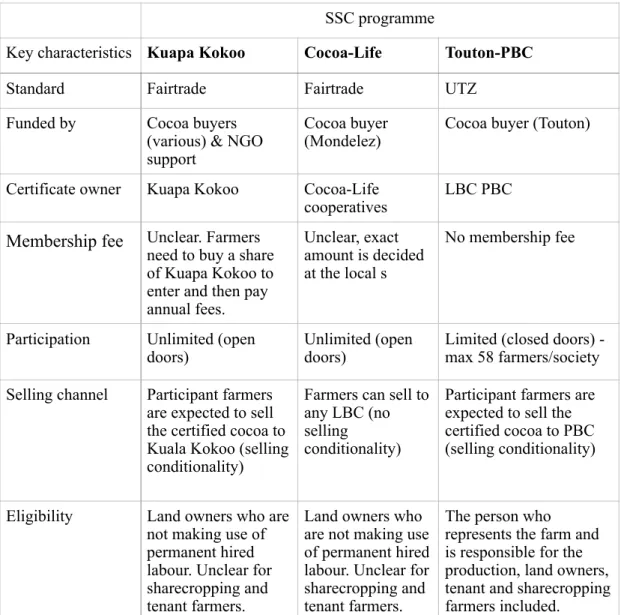
Table 1: Key characteristics of the main cocoa SSC ...19
Table 2: COCOBOD cocoa purchases in MT by cocoa district ...38
Table 3. Key characteristics of studied certification programmes ...46
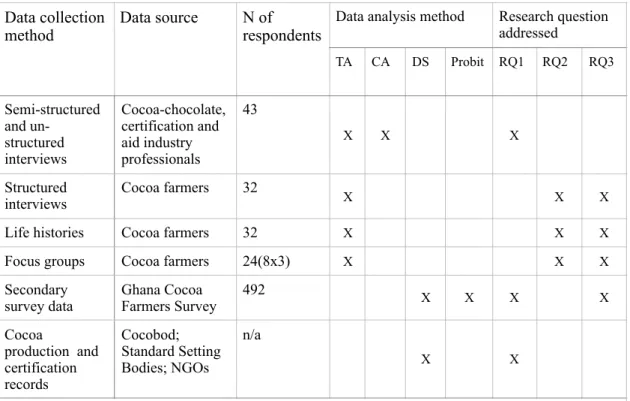
Table 4: Summary of data collection and analysis methods ...81
Table 5: Results of content analysis ...88
Table 6: Results of content analysis by actor category ...90
Table 7: Cross-tabulation of farmer categories by region ...92
Table 8: Descriptive statistics of explanatory variables, full sample. ...93
Table 9: Mean characteristics by access status to Kuapa Kokoo, full sample. ...95
Table 10: Probit estimations (access to Kuapa Kokoo) ...97
Table 11: Correlation coefficients: cocoa purchases & SSC programmes ...101
Table 12: Correlation coefficients: LBCs & SSC programmes ...108
Table 13: Interviewed farmers registered as farm operators ...130
Table 14: Farmer categories by membership status and region ...152
Table 15: Mean characteristics by membership status, full sample. ...153
List of figures
Figure 1: Selection of cocoa farmers into SSC programmes in Ghana ...15
Figure 2: Literature review of determinants of selection into SSC ...28
Figure. 3: Global cocoa production and consumption (thousand MT) ...32
Figure 4: Ghana’s cocoa growing and administrative regions ...37
Figure 5: Ghanaian production per cocoa district (2010-2015, cumulative) ...39
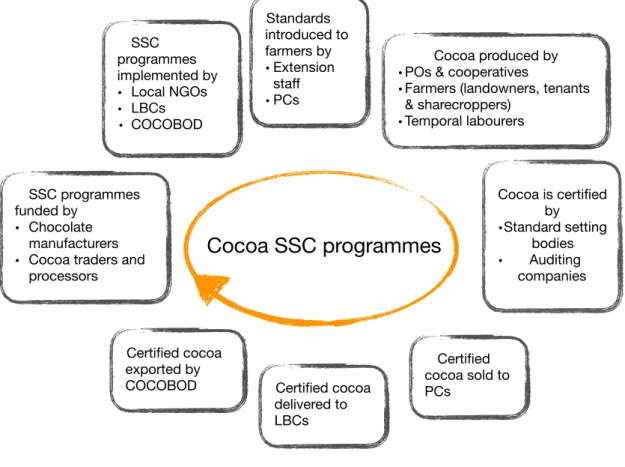
Figure 6: SSC programme cycle and actors involved ...53
Figure 7: Integrated conceptual framework ...61
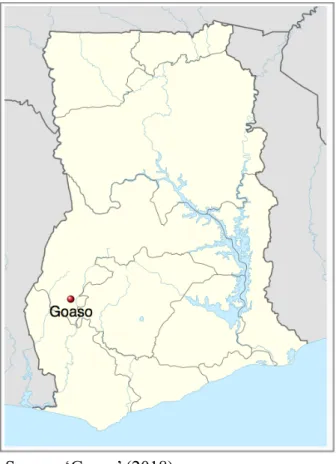
Figure 8: Fieldwork area ...68
Figure 9: Cocoa purchases and number of SSC programmes per district ...101
Figure 10: Cocoa purchases (2010-2015) and SSC programmes per region. ...103
Figure 11: Number of LBCs and number of SSC programmes per district ...108
Figure 12. Certified farmers in the community per land ownership status ...128
Figure 13: Land ownership status of farmers by certified group ...129
Figure 14: Land entitlements and certification status by farmer group. ...133
Figure 15: Pathways to land entitlements by farmer group. ...134
Figure 16: Life trajectory patters and SSC eligibility ...135
Figure 17: FarmerAge and first land entitlements by farmer group. ...136
Figure 18: Ethnic group by farmer group ...137
Figure 19: Schooling level by farmer group ...138
List of appendices
Appendix 1:Selection determinants into SSC programmes (literature review) 223 ...
Appendix 2: Interviews with industry informants ...226
Appendix 3: Questionnaire used for structured interviews ...228
Appendix 4: Protocol for life history interviews ...232
Appendix 5: Interviews with farmers ...234
Appendix 6: List of interviews informing the content analysis ...236
Appendix 7: Example of coding process for the content analysis ...237
Appendix 8: Description of variables (access to Kuapa Kokoo) ...239
Appendix 9:Patterns of missing values (access to Kuapa Kokoo). ...240
Appendix 10: Descriptive statistics, by district (access to Kuapa Kokoo) ...241
Appendix 11: Mean characteristics by access status, Ashanti region ...243
Appendix 12: Mean characteristics by access status, Brong Ahafo region ...244
Appendix 13: Mean characteristics by access status, Western region ...245
Appendix 14: Results of Shapiro Will test (access to Kuapa Kokoo) ...246
Appendix 15: Statistically non-significant results (access to Kuala Kokoo) ...247
Appendix 16: SSC programmes by cocoa district and certification scheme ...248
Appendix 17: Shapiro Will test for cocoa volumes and LBC presence ...252
Appendix 18: Description of variables (Kuapa Kokoo membership) ...253
Appendix 19: Descriptive statistics(Kuapa Kooko membership) ...254
Appendix 20: Descriptive statistics, by region (Kuapa Kooko membership) 255 ... Appendix 21: Mean characteristics by membership status, Ashanti region ...257
Appendix 22: Mean characteristics by membership status, Western region ...258
Appendix 23: Shapiro Will test (Kuapa Kooko membership) ...259 Appendix 24: Statistically non-significant results (Kuapa Kooko membership) 260
List of abbreviations
AME Average Marginal Effects
ANT Actor-Network Theory
ATO Alternative Trading Organisation
CA Content analysis
CCP Cadbury Cocoa Partnership
COCOBOD Ghana Cocoa Board
CSAE Centre for the Study of African Economies CSR Corporate Social Responsibility
DD Difference-in-Difference
DS Descriptive statistics
FLO Fairtrade Labelling Organisation
FOB Free On Board
GAP Good Agricultural Practices
GCFS Ghana Cocoa Farmers Survey
GHS Ghanaian Cedis
GLSS Ghana Living Standards Survey
IMF International Monetary Fund
IV Instrumental Variable
JHS Junior High School
LBC Licensed Buying Company
MT Metric Tonnes
PBC Produce Buying Company
PC Purchasing Clerk
PCU Project Co-ordination Unit
PO Producers’ Organisation
PSM Propensity Score Matching
RCT Randomised Controlled Trial
SSC Sustainability Standards and their subsequent Certifications
TA Thematic analysis
WB World Bank
Acknowledgements
I am deeply indebted to my supervisors, Dr. Maren Duvendack and Prof. Nitya Rao, for their constant support, flexibility and patience, and their insightful and constructive feedback. They believed I could complete this study even when I was losing faith and for this, I am extremely grateful. Special thanks go to Dr. Richard Palmer-Jones who was part of the supervisory team during the first year of my Ph.D. and whose sharp observations and suggestions shaped the foundations of this study. Other special thanks to Dr. Christine Okali for providing encouragement, practical guidance, and great discussions. Her passion for studying Ghana’s cocoa sector has been a great source of inspiration to me. My gratitude also goes to the School of International Development for providing the funding which enabled me to realise this study.
Outside academia, I am much obliged to Jens Soth from Helvetas for providing the first contacts in Ghana which kick-started my fieldwork. The same goes for Gladys Nketiah who accompanied me to the cocoa fields and helped me in all my interactions with the cocoa farmers. She has contributed enormously to this study and I truly wish we can work together again someday. In Goaso, my deep appreciation goes to Nana Sarpong, president of Asunafo North Co-operative Cocoa Farmers and Marketing Union who facilitated access to cocoa growing communities in the area. Last but not least, I am greatly indebted to all the research participants who trusted me with their views and stories. I hope this thesis does them justice. Fieldwork would not have been as satisfactory and fun without Silvia Abascal, who flew with me to Ghana to take care of my son while I was collecting my data. She has been the most amazing traveling companion, taking care of all of us. Many thanks go to Borja Perez Viana, Irene Perez Suarez, Sonia Martín Gutiérrez and many more in Norwich who helped me out with all sorts of things when I was there and when I was not. In Zurich, my gratitude goes to my circle of mothers for the playground time that kept me sane, and particularly to Vanesa Colsa for childcare support. Finally, tonnes of thanks and love to my mum for flying in and out during stressful deadlines to help us survive; to Marina for taking care of her little brother when I needed extra time; and to Kai for endless support and for not giving up on me.
1. Introduction
1.1.Research rationale
Recent decades have seen a significant expansion in international agricultural trade and with it a growing concern regarding the social and environmental conditions of agricultural commodity production (Byerlee and Rueda, 2015; Oya, Schaefer and Skalidou, 2018). The cocoa sector has long been susceptible to consumers’ concerns regarding its social impact, particularly among a growing segment of female and wealthier consumers of ‘quality’ chocolate (Barrientos, 2011 & 2014; Vecchio and Annunciate, 2015). Such concerns are fuelled by rampant poverty and continuing reports of child labour in the cocoa fields (Barrientos et al., 2007; Fountain and Hütz-Adams, 2015 & 2018), forcing chocolate companies to be among the first corporations to adopt measures to deal with social issues in their value chain (Off, 2006; Schrage and Ewing, 2005). Acute deforestation, an intrinsic part of cocoa production at least in West Africa (i.e. Hill, 1963; Ruf and Zadi, 1998; Amanor, 2005; Ruf, Schroth and Doffangui, 2015; Gockowski et al., 2013; Dumont et al., 2014), is also troubling consumers caring about their environmental footprint.
Moreover, fears that the cocoa supply is at risk, or will be in the near future, have intensified over the last years. It is indicative that in 2011 Armajaro, an important cocoa trader at the time, estimated a global cocoa shortage of 0.8 million metric tonnes (MT) by 2020 (Barrientos, 2016). More and better quality cocoa beans are expected to be needed to satisfy a long-anticipated rise in chocolate consumption in the emerging BRIC (Brazil, Russia, India, and China) and MINT (Mexico, Indonesia, Nigeria and Turkey) markets, as well as an increase in the consumption of dark, premium chocolate in the European and US markets (Whitehead, 2017; Nieburg, 2014; Salter, 2014). This increase in global demand cannot be satisfied by territorial crop expansion for the following reasons. Most of the land suitable for cocoa cultivation, particularly in West Africa, is either already in use, or protected by forest reserves (Dumont et al., 2014; Wessel and Quist-Wessel, 2015). In the case of Ghana, illegal mining is currently competing with cocoa production for land and labour (Nyame and Blocher, 2010;
Snapir, Simms and Waine, 2017; Schwartz Taylor and Taylor, 2018), putting extra pressure on the available land for cocoa production. Furthermore, climate change is expected to negatively affect cocoa growing areas in sub-Saharan Africa, making some directly unsuitable, while others will need adaptation measures in order to continue producing cocoa (Läderach et al., 2013; Schroth et al., 2016). The effects of this declining trend in the availability of land can be observed in the rise of land rent and even the eruption of armed conflicts, as the case of Côte d’Ivoire demonstrates (Woods, 2003). Nevertheless, the fact that productivity levels, particularly in West Africa, remain below maximum capacity suggests that there is a margin for increasing global cocoa production by obtaining higher yields per hectare instead of territorial expansion (Wessel and Quist-Wessel, 2015). In the case of Ghana, for instance, it is estimated that the average farmer produces only 40 percent of the potential output (Barrientos, 2014). Low productivity is attributed to poor farm maintenance, lack of innovation and farm renovation investments and low uptake of fertilisers and pesticides (Kolavalli and Vigneri, 2011; Dormon et al., 2004; Gockowski et al., 2013). An ageing population of cocoa farms and farmers are also often blamed for the low productivity of the region (Anyidoho et al., 2012; Mohammed, Asamoah and Asiedu-Appiah, 2011; Kyei, Foli and Ankoh, 2011; Löwe, 2017; Barrientos et al., 2007).
Cocoa Sustainability Standards and their subsequent Certifications (hereafter SSC), such as Fairtrade, UTZ and Rainforest Alliance, offer price and material incentives to producers (e.g. price and social premium, provisions of fertilisers on credit, free farming tools and equipment, etc.) in exchange for adopting specific production standards meant to increase productivity and hence cocoa income, but also to improve the environmental and social production conditions of the crop. They are seen, therefore, as a win-win solution that can benefit both the farmers involved in cocoa production and the cocoa and chocolate industry. Amid a broader tendency of SSC to cross to mainstream markets (Potts et al., 2014; Paschall, 2013; COSA, 2013), cocoa and chocolate companies are currently leading in the use of SSC in the confectionery market (Yu, 2017). More than a million MT of certified cocoa (including organic) was produced in 2015 by more than 916,000 producers worldwide, accounting for 23% of the global cocoa area (Lernoud et al., 2017). This marks an increase of 338% in the production of certified cocoa in only
five years (Potts et al., 2014), a growing trend which is expected to continue in the years to come, as major cocoa-chocolate companies, such as Mars, Ferrero, and Hershey, have made public commitments to source exclusively certified cocoa by 2020 (Mars, 2018; Ferrerocsr, 2018; Nieburg, 2012).
This impressive growth in the use of SSC in the cocoa sector in particular, and in agricultural commodities in general, is being reflected in an increasing number of impact evaluation studies seeking to assert whether claims of positive impact on the lives of producers and workers as well as on the environment made by SSC funding, implementing and certifying actors can be supported by evidence (e.g. Oya et al., 2017; Terstappen, Hanson and McLaughlin, 2013; Blackman and Rivera, 2010). The first wave of these studies (e.g. Bacon, 2005; Jaffee, 2007; Utting-Chamorro, 2005) had several methodological limitations, mainly failure to control for confounding factors that can be potentially correlated both with SSC programme exposure and outcomes, such as land size, labour and input resources, or social networks. After systematically reviewing the literature on the effectiveness of certification schemes, Oya et al. (2017) show that after 2008 there has been a substantial increase in the number of studies using adequate methodological designs to control for confounding (e.g. Becchetti, Castriota and Michetti, 2008; Riisgaard et al., 2009; Ruben and Fort, 2012; Cramer et al., 2014a; Schuster and Maertens, 2015; Chiputwa and Qaim, 2014; Minten et al., 2015; van Rijsbergen et al., 2016). Nevertheless, although more and better evidence on the impact 1 of SSC is currently available, doubts remain regarding the ability of SSC programmes to tackle deep-rooted structural problems such as rural poverty, low productivity, gender inequality, or weak and flawed Producers’ Organisations (POs) (Oya et al., 2017). Beyond the impact of SSC on participant producers and workers, even less is known regarding how participants select in or out of such initiatives, in other words, who is able to participate and therefore potentially benefit from certification and, just as importantly, who is not.
For transparency purposes, it is noted that the author of this thesis is a co-author of the 1
systematic review conducted by Oya et al. (2017). In particular, the author has contributed in the following tasks: protocol development, searching and critical appraisal of studies, data
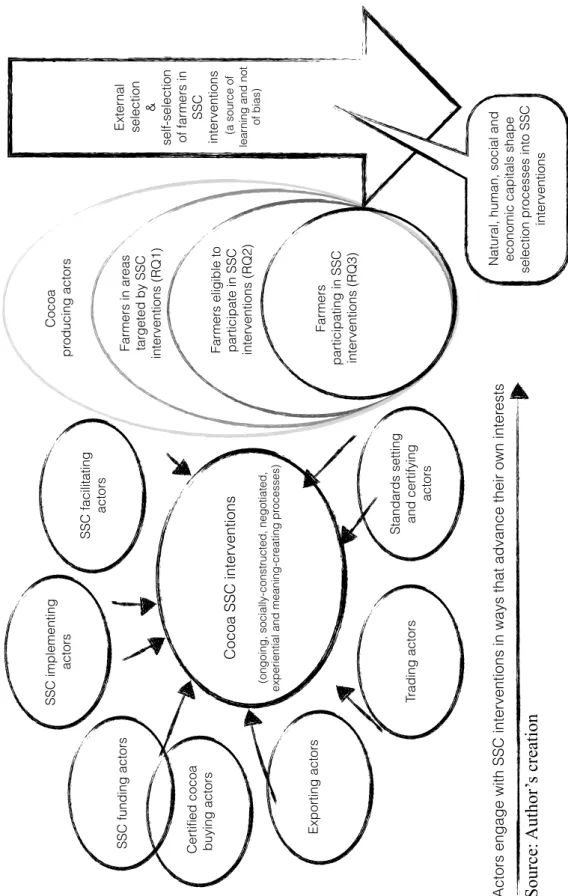
This thesis aims to unpack selection processes in cocoa SSC programmes in the Ghanaian context. The study regards selection as a three-stage process: first, the selection of particular geographical areas of programme implementation (i.e. programme placement); second the selection of the eligible population through direct or implicit targeting and eligibility criteria; third, the selection of participants into the programme. It is important to clarify that targeting and eligibility do not equal selection into the programme, as a farmer may be targeted or eligible to join a certification programme but may not become a participant. Both targeting and eligibility, however, are pre-conditions of selection, since participants are selected from the pool of already targeted and eligible farmers, as Figure 1 illustrates.
Figure 1: Selection of cocoa farmers into SSC programmes in Ghana
Taking Ghana, the world’s second-largest producer of certified cocoa as a case study (Lernoud et al. 2017), the thesis focuses on selection processes into the SSC programmes that are most common in cocoa production in the Ghanaian context: Fairtrade, UTZ and Rainforest Alliance. The organic certification is not covered here, as the Ghanaian production of organic cocoa is limited, accounting for less than 2.5% of the total certified production (ibid).
Eligibility criteria Participant selection
Cocoa farmers in Ghana Farmers in areas targeted by SSC programmes Farmers eligible to join SSC programmes
Farmers who join SSC programmes
Source: Author’s creation.
Programme placement
This introductory chapter is structured as follows. An overview of the current debates on the role of SSC in the global market is provided in section 1.2. This is followed by a focused literature review on the three stages of participant selection that guide this work: programme placement, eligibility criteria, and participant selection (section 1.3). Finally, section 1.4 provides the research aims and presents the structure of the thesis.
1.2.The role of Sustainability Standards and
Certification
Sustainability standards and their subsequent certifications emerged between the late 1980s and early 2000s, amid changing global trade dynamics dominated by the globalisation process. They were driven mainly by an increase in consumers’ awareness and sensitivity towards sustainability issues, as well as a growing recognition that public governance was limited in addressing sustainability concerns and that private action was needed in order to protect future global supply (Mayer and Gereffi, 2010; Barrientos, 2011; COSA, 2013; Potts et al., 2014). The pioneering Fairtrade certification first appeared in 1988 with a focus on improving “the welfare and livelihoods of small and disadvantaged producers” (COSA, 2013:10). This was the culmination of the ‘fair trade’ movement that emerged during the 1960s and initially operated through Alternative Trading Organisations (ATOs) buying directly from producers and selling directly to consumers through ‘solidarity’ or specialised retail shops (Jaffee, 2007; Murray and Raynolds, 2007). As the movement gained popularity and expanded during the 1980s, it evolved into a certification label with third-party audits exclusively conducted by the Fairtrade Labelling Organisation (FLO) which verifies that the production meets the Fairtrade “economic, social and (increasingly) environmental standards” (Paschall, 2013:7). After receiving the initial Fairtrade certification, producers are inspected on-site on an annual basis, unless their POs have been fully compliant over several years, in which case they can enter a three year inspection cycle (Vartotojai, 2019). In the case of products like cocoa, Fairtrade certifies cooperatives of small-scale farmers and sets a minimum price along with a fixed premium which is paid directly to the cooperative.
Since the first appearance of Fairtrade certified products, however, other voluntary standards-setting organisations operating through third-party certification have emerged, though each with varying priorities and approaches. Rainforest Alliance made its appearance in 1992 with a more environmental approach, focused on preserving biodiversity and natural reserves. UTZ Certified (initially UTZ Kapeh), on the other hand, emerged a decade later with a more business-oriented approach, emphasising “improved productivity” combined with “good social and environmental practices” (COSA, 2013:10). External audits against both standards are conducted annually, by independent certification bodies which can be for-profit private companies, such as IMO or non-profit organizations such as NEPCon (previously RA-Cert). Both 2 Rainforest Alliance and UTZ Certified allow the certification of farmers not necessarily organised in cooperatives or POs. In terms of economic incentives to the producers, they provide no minimum price guarantees, while the price premium is not fixed but negotiated with the final buyer and paid to the farmers’ association, or directly to the farmers through a local buyer. Given these similarities between UTZ and Rainforest Alliance in particular, it is not surprising that the UTZ and Rainforest Alliance decided to merge in January 2018, although the two schemes will continue to operate in parallel until the activation of a single new program at the end of 2019 (UTZ, 2018a).
Despite these differences across the main cocoa SSC (Fairtrade and UTZ/ Rainforest Alliance), however, a closer examination of their theories of change reveals that their strategies are similar. The basic idea is that by setting standards of production practices and business behaviour and supporting producers and their organisations to adopt them through training in Good Agricultural Practices (GAP) and facilitation of inputs, production will become more efficient and yields will increase, preserving at the same time the natural resources and protecting the ones who are socially vulnerable. In the case of cocoa, this involves adopting measures against child or other forms of exploitative labour, banning certain pesticides which are hazardous for humans and the environment, and pruning and weeding cocoa farms on a more regular basis to control for pests and diseases. An example would be taking more systematic care of mistletoe, a
For more information see Ecolabelindex (http://www.ecolabelindex.com/ecolabel/imo-2
certified) and NEPCon (https://www.nepcon.org/newsroom/two-leading-providers-sustainability-certification-services-nepcon-and-ra-cert-join-forces)
parasite plant that can reduce cocoa yields and ultimately harm the cocoa tree (Philips, 1977). The adoption of standards is complemented by building the markets that will reward these changes with price incentives. Creating networks and alliances while also working to influence a sector's agenda and policies is another element that these theories of change have in common. The main underlying assumption, therefore, is that by increasing production yields and prices, while also caring for the environmental and social aspects of production, the livelihoods of producers will improve (See Fairtrade International, 2019; UTZ, 2017a; SAN & Rainforest Alliance, 2015 for the theories of change of each scheme).
Overall, these theories of change describe the “hypothesized causal links” between the mechanisms of certification related interventions and “anticipated outcomes”, in other words they provide a ‘programme’ theory (Blamey and Mackenzie, 2007:445). It is important to note, however, that they only briefly and incidentally refer to contextual factors that can enhance or hinder the effectiveness of such interventions, despite the fact that context is a crucial component of the interplay between intervention mechanisms and outcomes (Greenhalgh et al., 2009; White, 2009) and plays a particularly decisive role in the case of SSC (Oya et al., 2017). Moreover, what is missing in all three cases, is what has been described as ‘implementation’ theory, i.e. a theory about how specific programme objectives are translated into “ongoing service delivery and programme operation” (Weiss, 1995:58, cited in Blamey and Mackenzie , 2007:445). In the case of SSC that would be an implicit or explicit theory about who should be targeted (i.e. which groups of individuals involved in certified crop production should be trained and receive support and price incentives) and how (e.g. how should programme placement decisions be taken, what staffing levels and characteristics are needed to deliver effective support to producers and their organisations, etc.). An overview of the main cocoa SSC and their key characteristics is provided in Table 1.
Table 1: Key characteristics of the main cocoa SSC
Although initially confined only to specialty niche markets, SSC have crossed into mainstream markets during the last decade (COSA, 2013; Lernoud et al., 2017). Today, SSC are used by some of the largest multinational companies as a tool of “market recognition” (Potts et al., 2014:19) to support market claims that “products and
Fairtrade Rainforest Alliance UTZ Certified
Origin Social movement/ NGO Social movement/ NGO Firm
Stated vision according to theory of change
A world in which all small producers and workers can enjoy secure and sustainable livelihoods, fulfil their potential and decide on their future. Sustainable resilient landscapes that: -conserve native biodiversity and ecosystem services - produce crops/
livestock efficiently & profitably
- Equitably improve local livelihoods - are managed to adapt
effectively to changing conditions
Create a world where sustainable farming is the norm: farmers implement good agricultural practices and manage their farms profitably with respect for people and planet; industry invests in and rewards sustainable
production, and consumers can enjoy and trust the products they buy.
Target groups Primarily small farmers
organized in cooperatives and workers organised in unions.
Large and medium-sized,
organised or not Producers of all sizes, organised or not
Certification
body FLO-Cert Private for-profit companies and
non-profit organisations
Private for-profit companies
Certificate
holder Certificate is hold by the farmers’ association or
the company that employs hired workers
Certificate is hold by the PO/ cooperative or the local buyer.
Certificate is hold by the PO/ cooperative or the local buyer.
Price
mechanisms Minimum price guaranteed and a fixed
premium paid directly to the cooperative.
No minimum price guaranteed. Premium is not fixed but negotiated with the final buyer and paid to the certificate holder
No minimum price guaranteed. Premium is not fixed but negotiated with the final buyer and paid to the certificate holder
Source: Author’s creation based on Von Hagen, Manning and Reinecke (2010); Fairtrade International, (2018a);Fairtrade International, (2019); UTZ (2018f); UTZ (2017a); Rainforest Alliance (2018a); SAN & Rainforest Alliance (2015); author’s primary data.
materials traded in complex, global supply chains have been produced in an ethical and environmentally benign way” (Petrokofsky and Jennings, 2018:2). Lernoud et al. (2017:3) further argue that the use of SSC increases the transparency in the value chain, allowing consumers to be better informed on the origin and the production conditions of the final products they purchase and helping companies to manage “reputational risks” and safeguard their corporate image. SSC are also being used as a supply risk management tool to avoid resource shortfalls, mainly through yields improvements, while also ensuring that the social and environmental conditions necessary to maintain (and increase) supply are in place (Lernoud et al. 2017; Potts et al. 2014).
Regarding the benefits resulting on the production side of the value chain, SSC are commonly regarded as “an avenue for improving the environment and reducing poverty levels among agricultural producers” by introducing more resource-efficient and environmentally friendly farming practices that can lead to yield improvements and lower environmental and health risks; improving product quality that can facilitate better access to markets and higher prices; and encouraging just social relations that can contribute to safer working conditions, non-discrimination and freedom to associate (COSA, 2013:11). Nevertheless, whether these intended goals are actually met or not remains highly contested (Dragusanu, Giovannucci, and Nunn, 2014; Oya et al., 2017). Arguments on what SSC can or cannot do diverge among scholars who examined the issue using microeconomics models and theories (e.g. Henderson, 2008; Smith, 2009; Haight and Henderson, 2010; de Janvry, McIntosh and Sadoulet, 2012; Tedeschi & Carlson, 2013; Griffiths, 2014; Giovannucci and Ponte, 2005) or impact evaluation methods (Cepeda et al., 2013; Dragusanu and Nunn, 2014; Stathers and Gathuthi, 2013; Beuchelt, Zeller and Oberthur, 2009; Nelson and Martin, 2013; Sen, 2009, among others). In an effort to provide an overall assessment of the impact of SSC, several reviews of the existing literature have emerged over the last decade (International Trade Centre, 2011; Blackman and Rivera, 2010; Nelson and Pound, 2009; Vagneron and Roquigny, 2010; Terstappen, Hanson and McLaughlin, 2013; Oya et al., 2017; Petrokofsky and Jennings, 2018). These reviews vary considerably in their methods and quality, however, it is safe to say that the overall picture they provide is at best one of mixed effects of SSC on producers and workers involved in certified production.
Although further discussing the SSC effectiveness debate is beyond the scope of this work, the following points are relevant to selection issues that guide this research and therefore worth highlighting. First, as SSC move into the mainstream, they tend to become increasingly market-driven (Paschall, 2013). This contrasts with the early years of SSC, where governmental and aid actors (i.e. national and international NGOs, aid agencies, religious organisations) appear to have played a key role in funding and implementing SSC programmes (Milford, 2012 & 2014; Arce, 2009; Dowdall, 2012; Fraser, Fisher and Arce, 2014; Rotter, 2000). Paschall (2013) argues that this shift to the mainstream results in decisions regarding where and with which groups of producers to implement a SSC programme being increasingly taken by mainstream buyers following business criteria. Such criteria involve minimising certification costs, skipping more difficult to reach and to certify farmers, prioritising implementing SSC programmes in areas that offer opportunities of fast and inexpensive expansion and an increasing marginalisation of farmers’ needs and benefits in the certification process. As a result, buyer-driven SSC programmes appear to be targeting and externally selecting producers that are more accessible and better prepared to adopt and comply with the standards.
Second, there has been a general focus of the literature on the ‘average’ impact of SSC on a ‘homogenous’ body of ‘smallholder’ producers, which neglects the presence of heterogeneous effects on differentiated and diverse producers and workers (Luetchford, 2008; Cramer et al., 2014a; Hansen and Trifkovic, 2013). Over the last years, more studies suggesting that not all producers benefit equally (or at all) from standards and certification have emerged. Breimer and de Vaal (2012), for instance, using a heterogeneous firms model found that only the most productive producers will join the Fairtrade certification, as higher production requirements and entry costs will hinder low-productivity producers from adopting the standard. A paradox thus is created: “when Fair Trade succeeds in its inherent workings - better standards, secure trade channels, and so on- the consequence is that it will help the better off, not the least advantaged” (ibid: 3). Moreover, Hansen and Trifkovic (2013:2), use empirical data to examine the effect of voluntary food standards, such as GlobalGAP, on Vietnamese pangasius producers. They show that only the upper-middle-class farmers can benefit from larger returns, while effects are insignificant for the poorest producers of their
sample, pointing to “an exclusionary impact of standards for the poorest farmers”. Staricco and Ponte (2015) reach similar conclusions with their comparative study of the Fairtrade and conventional wine sectors in Argentina. The authors find that “instead of empowering the most vulnerable groups, those producing table wine for the domestic market, Fairtrade is actually further marginalizing them” (ibid:65). Furthermore, Cramer et al. (2017:17) observed that within certified cooperatives a minority of larger producers received the lion’s share, while farmers with smaller plots and production volumes benefited to a lesser extent, therefore concluding that Fairtrade “aggravates rural inequality”. This is echoed by Carimentrand and Ballet (2010) and Staib (2012) who report tensions between larger and smaller producers within certified POs, often resulting in the exit of the smaller ones from the PO and therefore also from the certified market. Overall, such findings sharply contradict claims of poverty reduction related to the impact of SSC, and especially older proclamations of Fairtrade related organisations that the certification particularly targets “the poorest of the poor” or the “weakest producers” (Cramer et al., 2017:841).
Third, within the “poorest rural people” participating in certified production, wage workers employed by so-called ‘small-holder’ farmers have received even less attention, both by scholars and policymakers (Luetchford, 2008; Cramer et al., 2014a; Oya et al., 2017). This is mainly due to the (false) assumption that smallholder farmers draw mainly on family labour, while their use of wage labour is insignificant (Cramer et al., 2017). The lack of official standards and guidelines for hired labour employed by smallholder farmers clearly contributes to the invisibility of wage workers vis a vis SSC funding and implementing actors (Shreck, 2002; Heller, 2010). Even when standards for wage labour in smallholders’ farms are in place, however, their monitoring and auditing are reported to be poor and ineffective (Trauger, 2014; Heller, 2010). As a result, the few studies that have examined this issue suggest that certification related benefits tend to accumulate in the group of farm owners/employers and rarely trickle down to wage labourers. For instance, Cramer et al., (2014b:120) after investigating the effects of Fairtrade in coffee, tea and flower production in Ethiopia and Uganda, conclude that “Fairtrade has made no positive difference – relative to other forms of employment in the production of the same crops – to wage workers”. Dragusanu and Nunn (2018)
reach similar conclusions in their study on the effects of Fairtrade on coffee producers and workers in Costa Rica. While they find positive effects on income for farm owners, their analysis shows no effects on seasonal workers, such as coffee pickers. This is because cooperative members, who tend to be farm owners, are unlikely to use the Fairtrade premium to increase the wages of seasonal workers. Another example of unequal distribution of benefits across the population involved in certified production is provided by Nelson, Tallontire and Collinson (2002) who find a lack of clear benefits for porters and shellers participating in the production of Fairtrade Brazil nuts in Peru. Finally, studies comparing labour conditions in certified and non-certified coffee processing plants or mills also fail to provide evidence that SSC benefit wage workers (Valkila and Nygren, 2008; Walsh, 2004). Overall, such findings suggest a targeting or selection paradox: despite the fact that wage workers contribute, often significantly, in the production of certified commodities, they are not considered officially as SSC programme participants and are commonly excluded from any accruing SSC related benefits.
1.3.Selection processes in certification
The above discussion highlights the importance of reviewing how issues of selection into SSC programmes are dealt with so far in the existing literature. While the issue of farmers’ choice of selling strategies as a proxy to understand self-selection in certification has received some, although probably not sufficient, attention (Dammert and Mohan, 2014), broader issues of targeting through programme placement or eligibility criteria so far lack systematic reporting in the SSC literature (Oya et al, 2017).
Programme placement processes have received little attention in the broader development literature. Bebbington (2004) highlights that patterns of how and why development interventions (and NGO presence) vary across space and their implications for uneven local development have rarely been mapped or analysed. While there has been some discussion about the concentration of development professionals in urban over rural spaces (e.g. Chambers, 1983; Mercer, 2002), Bebbington (2004) argues that
there are more factors affecting the distribution of development interventions, which can be related to the socio-economic as well as historical and political context. Furthermore, Cramer et al. (2017:843) underline that “locally specific agronomic and microclimatic features” can also affect the placement of an intervention and therefore confound comparisons between ‘treatment’ and ‘control’ areas.
SSC programmes, at least until recently, were commonly driven by “benevolent external” actors with a ‘poverty reduction’ mission, such as NGOs, religious organisations, or aid agencies (Milford, 2012:18). Such actors are likely to have particularly targeted poorer or more marginalised areas. In the case of Chiapas, Mexico, for instance, Milford (2012) reports that certified coffee cooperatives were formed in areas were the population was more disadvantaged in terms of access to information and bargaining skills. This points to a ‘negative’ selection process, where the least better off are selected into SSC initiatives. Nevertheless, other authors argue that SSC funding and implementing actors, whether aid or market related, are more likely to target areas with already organised farmers, which tend to be in areas with better infrastructure in terms of roads, access to education and health care, etc. Fountain and Hutz-Adams, (2015:7), for instance, highlight that “low hanging fruits” areas with already organised farmers are more likely to be included in cocoa SSC or Corporate Social Responsibility (CSR) programmes. Areas with unorganised farmers, on the other hand, tend to remain largely excluded from such initiatives. This view is echoed by studies which show that SSC funding and implementing actors are more likely to work with larger and more consolidated POs which are reliable providers both in terms of volumes and quality of certified commodities, while less established POs may struggle to enter certified markets (Pongratz-Chander 2007; Kariuki, 2014; Beall, 2012).
Moreover, following the established notion of the ‘homogenous’ rural population, eligibility criteria appear to be a grey, undefined area for SSC programmes where the eligible target group is described by general terms such as “producers”, “farmers” or “suppliers”. Among the SSC present in the Ghanaian cocoa sector, UTZ probably provides the most unambiguous definition of who is eligible to participate in its certified groups, by defining the (eligible) producer as “the person or organization who
represents the farm and has responsibility for the products sold by the farm” (UTZ, 2015:11), making explicit that this person can be “the actual operator of the farm (e.g. a sharecropper), and does not need to be the landowner” (UTZ, 2015:10). In a similar tone, Rainforest Alliance defines a group member as “the owner or responsible person of one or more member farms of a producer group” although no clarification on the role of “responsible” person (i.e. tenant, sharecropper or other actor) is provided (Rainforest Alliance, 2017b:19). Fairtrade, on the other hand, uses the general term “smallholder farmer” or “small producer” to describe the members of certified groups of producers. Cocoa farmers making use of hired labour on a permanent basis are in principle non-eligible to become Fairtrade certified (Fairtrade International, 2011). However, it is unclear whether farm owners making use of sharecropping labour, a common form of ‘permanent’ labour in Ghana (Robertson, 1987) are eligible or not. The eligibility status of sharecroppers themselves is also unclear, as Fairtrade guidelines make no mention whatsoever of the eligibility of farm operators (Fairtrade International, 2011).
The few studies which have empirically examined how eligibility applies in practice, reveal that SSC programmes often target producers organised in POs and therefore the eligibility criteria that apply to the POs end up applying to the SSC programmes (Dammert and Mohan, 2014). This can be problematic for the inclusiveness of SSC in cases where POs officially exclude the poorest farmers on the basis of lack of land ownership or insufficient land size (Bernard and Spielman 2009; Ito, Bao and Su, 2012; Thorp, Stewart, and Heyer 2003). For instance, owners of smaller farms may be formally excluded from certified PO membership (e.g. Nelson and Martin, 2013; Laroche, Jiménez and Nelson, 2012; Staib, 2012), the argument being that they require more extension support while contributing small production quantities, making thus their inclusion in the certified PO economically problematic. Female farmers can be particularly susceptible to PO entrance barriers, as in many cases they have been traditionally excluded from land ownership. This can result in their exclusion from SSC programmes, despite being heavily involved in the production of certified crops, as in the case of Tanzanian female coffee farmers (Sutton, 2014). Moreover, labourers and youths who do not own or sharecrop farms can also be excluded from certified POs, as Ingram et al. (2014) report in the case of Ivorian cocoa farmers. Finally, sharecroppers
farming certified farms are reported to be both eligible (Ingram et al., 2014) and non-eligible (Nelson et al., 2013:33) to join certified POs, confirming that eligibility is ambiguous for non-farm owners.
Finally, the processes by which individual producers select in or out of SSC initiatives have certainly received more attention than programme placement and eligibility issues. Nevertheless, so far participant selection into SSC has been mainly studied as a farmers’ choice between selling to the conventional market or to a certified buyer (cooperative, PO, or private company). This view suggests a narrow focus on self-selection which neglects possible processes of ‘external’ selection, where the inclusion or exclusion decision, although disconnected from official targeting or eligibility criteria is not made by the potential participant producers but by other actors. ‘External’ selection processes, however, are often in place. Bakker (2014), for instance, reports that certified tea factories in Argentina consciously and intentionally selected in their supplying base larger farms that were already better prepared to meet the standards as a way of minimising the effort and costs of incorporating them in their (certified) production chain. Breukers (2015) describes a similar situation occurring in Colombia, where the national coffee growers federation is reported to have selected farmers that already had cultivation practices close to the certification requirements in order to lower the costs of bringing them into a certified status, while those with small production volumes and/or living in remote areas were excluded. At the same time, farmers on good terms with the programme’s extension staff were more likely to be included, a finding which points to the importance of social capital in selection processes.
In terms of self-selection, Oya et al. (2017), after reviewing qualitative evidence from 136 studies, conclude that the main factors that appear to affect producers’ likelihood to join a SSC programme are, first and foremost, the ability (and willingness) of producers to bear the extra costs of certified production. These can be related to higher labour costs linked to the implementation of standards and to the entrance and participation in certified POs/ markets (i.e membership fees, ability to withstand payment delays, dedicate time in meetings, etc.), as well as other follow-up costs (e.g. costs of audits). Additionally, producers’ ability to attract and secure external financial support by aid
and/or commercial actors to finance the certification process is also reported to be important. Finally, producers’ attitude towards risk and gender inequality limiting women’s access to SSC are also found to be significant. As a result, variables related to farmers’ natural, economic and human capitals, (i.e. land tenure and size, access to family and hire labour, farming experience and degree of market integration, access to credit, income diversification, educational and literacy levels) can determine self-selection into certification. Social status and connections, gender divisions of labour and the broader socio-cultural context, can also play a role. Overall, Oya et al. (2017) suggest that self-selection into SSC tends to be positive, as the wealthier producers, and/ or those with stronger human and social capitals are more likely to become certified.
In order to complement the above qualitative findings, Figure 2 provides a summary of the determinants found to have a statistically significant, positive or negative, influence on selection into SSC, as reported by studies that have quantitatively explored the probability of producers’ participating in certified POs (e.g. Milford, 2014; Fort and Ruben 2009; Jena et al., 2012; Mueller and Theuvsen, 2015 ) or directly adopting certification standards (Parvathi and Waibel, 2016; Asfaw, Mithöfer and Waibel, 2007; Muriithi, Mburu and Ngigi, 2011). A table providing a detailed account of determinants 3 of participant selection into SSC programmes by study is provided in Appendix 1.
These are studies that have been identified, appraised and included in the systematic review on 3
the effectiveness of certification schemes conducted by Oya et al. (2017), of which the author of this thesis is a co-author. It is worth noting that the study conducted by Oya et al. (2017) was guided by a different review question and searches were concluded in November 2015 with some key references added in July 2016. This means that the evidence presented here is not the result of a systematic search and therefore does not represent an exhaustive account of all the available relevant and trustworthy evidence. Nevertheless, given the broad scope of the searches conduced by Oya et al. (2017), the evidence presented here can be considered as a fair
Figure 2: Literature review of determinants of selection into SSC
Results broadly support the proposition that producers’ natural (e.g. land size and fertility), economic (e.g. livestock, farming equipment, access to credit) and human capital (e.g. education, extension training, farming and exportation experience) positively influences selection into SSC programmes. Access to household labour and connectivity to markets (i.e. number of buyers accessible/used and farm distance to the road) also appear to have a positive effect. Nevertheless, contradictory findings also emerge, with some studies suggesting that land size or education may actually be negatively related with SSC participation. For instance, while land size is broadly reported to be positively associated with the likelihood of participation in SSC, in the case of Asfaw, Mithöfer, and Waibel (2007) it had a negative influence on the adoption of the GlobalGap standard for horticulture, as farmers with larger plots tended to produce cash crops such as coffee and tea, instead of the vegetable crops certified by GlobalGap. What can be noted from the above findings is that the focus of the existent
S el ec ti on de te rm ina nt s Land size Non-crop land owned Land fertility Livestock Farming Equipment Irrigation access Farm enterprises Non-farm income Credit access Radio use Age Education Extension training Farming experience Exportation experience Household size Household members working Female household members Female headed household Children household members Number of buyers accessible/used Road distance
Number of studies reporting on each determinant
-3 -2 0 2 3 5 6
Statistically significant negative effect Statistically significant positive effect
literature is mainly placed on quantifiable observable variables, such as farm size (Milford, 2014; Parvathi and Waibel, 2016; Asfaw, Mithöfer, and Waibel, 2007), education (Jena et al., 2012; van Rijsbergen et al., 2016), household labour (Milford, 2014; Asfaw, Mithöfer, and Waibel, 2007; van Rijsbergen et al., 2016), while characteristics harder to observe and quantify, such as farmers’ relations with buyers or extension staff, motivation to adopt the standards, attitude towards risk and new farming techniques, or the propensity to work closely with other farmers within a cooperative framework remain unexplored (The role of observable and unobservable characteristics is further discussed in section 3.3.1).
1.4.Research aims and thesis structure
The previous section has shown how the limited existing literature points to rather positive participant selection processes, where already wealthier and better prepared to adopt the standards are more likely to join SSC programmes. At the same time, producers with smaller or no landholdings, farming in remote areas and less able to switch to farming under certification standards tend to be excluded. Additionally, labour workers, sharecroppers included, as well as women or youths farming on leased or family land tend to be considered non-eligible to join SSC initiatives, mainly on the basis of lack of land ownership, despite the fact that they contribute (often heavily) with their work to certified production.
Having identified clear gaps in the literature, this research aims to further investigate selection processes into SSC programmes by providing empirical evidence from the Ghanaian cocoa sector. To do so, this thesis focuses on the following overarching research question:
How are different farmers selected (or not selected) into cocoa certification programmes in Ghana?
Following the breakdown of selection processes into the three stages (see Figure 1), three sub-questions guide the analytical work presented in the thesis:
RQ1: How is the placement of cocoa SSC programmes determined?
RQ2: How do farmers become eligible for participation in cocoa SSC programmes?
RQ3: How do farmers select in or out of cocoa SSC programmes?
By exploring the above stated questions, this thesis aims to test the limited but emergent theory on selection processes into SSC, and to contribute to the generation of new theory by suggesting new hypotheses. The research intends to facilitate deeper understandings of the reach of SSC programmes, and address concerns of positive selection that might contribute to increasing inequalities among producers and workers at the local level. Additionally, it hopes to make valid and useful contributions to the broader body of the impact evaluation literature by elucidating the importance of programme placement, targeting and eligibility criteria, and participant selection processes and their implications for the effectiveness of social or economic programmes in terms of who gets to benefit from such initiatives (Pawson and Tilley, 2004).
The thesis is structured as follows. Chapter 2 provides the contextual background of this research, both at the global and local level of cocoa production and cocoa SSC. Chapter 3 presents the conceptual foundations that frame this work. It does so by reviewing how concepts around social and development interventions and selection have evolved in the literature and explains the conceptual choices made in each case. Chapter 4 introduces the methodological approach of the research, outlining the research design as well as the data collection and analysis methods, complemented with details on how these were implemented. The chapter also discusses the limitations of this study from a methodological point of view, and the ethical issues that emerged. The following three chapters comprise the core empirical analytical work of this study: Chapter 5 focuses on programme placement issues (addressing RQ1), chapter 6 on participant eligibility criteria (addressing RQ2), while chapter 7 explores participant selection dynamics into cocoa SSC (addressing RQ3). Finally, findings from these three chapters are synthesised in chapter 8. The final chapter also presents the main implications of the findings in terms of policy and future research.
2. Research context
2.1.Introduction
Context plays a crucial role in understanding the implementation dynamics and the effectiveness of development programmes in general (White, 2009) and of SSC programmes in particular (Oya et al., 2017). Oya et al. (2017) list a number of contextual factors that influence SSC programme implementation and by consequence their selection processes: the power relations between producers and buyers; the historical and institutional context that shapes the dynamics of commodity and labour markets; and socio-economic heterogeneity which can cause the exclusion of certain type of producers and lead to elite capture of certification benefits. This chapter builds around these factors to set out the broader context of this research, in order to enable the reader to better engage with the analytical chapters that follow.
The chapter is structured as follows: first it discusses the the power relations between cocoa buyers and producers at the global level (section 2.2). This is followed by a review of the historical and institutional context shaping the dynamics of the Ghanaian cocoa sector (section 2.3), and its socio-economic structures (section 2.4). Section 2.5 provides an overview of the SSC programmes studied in this research, while the final section concludes.
2.2.Power relations between producers and buyers
More than four million MT of cocoa beans are produced every year (ICCO, 2017) for a chocolate industry which is worth an estimated $110 billion a year (Torre and Jones, 2014; Percival, 2015). More than 70% of these beans are produced in West Africa, with Côte d’Ivoire alone producing about 42%, and Ghana accounting for 17% of the global cocoa production (ICCO, 2017). Between five and six million farmers are estimated to be involved in cocoa production, two million of which in West Africa, using about ten million hectares to produce the crop (Potts et al., 2014). Consumption, on the other hand, is heavily concentrated in Europe, with Switzerland, Germany, Ireland, UK and
Norway leading in the per capita consumption of chocolate (McCarthy, 2015). Figure 3 visualises the volumes (thousand MT) of cocoa produced and consumed across the globe.
Figure. 3: Global cocoa production and consumption (thousand MT)
Growing cocoa is a labour intensive process with little margin of mechanisation. The crop is “delicate and sensitive” and farmers must protect the trees from wind and sun, while also constantly observing for signs of pests and disease (WCF, 2018: na). Cocoa pods, which contain around 20 to 30 cocoa beans each, may ripe at any time, although in most cocoa producing zones there are two main periods of peak production, one heavier than the other, each lasting several months (ibid). The need to monitor trees continuously for ripe or infested pods makes human presence on the farm necessary on a year-round basis. Ripe pods are manually harvested and opened to extract the beans, while the fermentation and drying of the beans also require frequent attention to attain exportation quality standards. These tasks are therefore undertaken on or very close to the farm, allowing few economies of scale (Kaplinsky, 2004). As a result, most cocoa beans are -and historically have been - produced on small or medium-sized, family-run farms (WCF, 2018; Kaplinsky, 2004), making use of a combination of family,
The previous two Barometers were instrumental in kick-starting the conversation on farmer livelihoods. Now that a living income is seen as a keystone for the cocoa sector, this Barometer goes in depth into this could be achieved, in the focus area “Ensuring a Living Income”. In addition, cocoa farming need to see a viable local infrastructure, including schools, health care, and access to markets. There is a key role for both companies and specifically governments to play on that level. The second focus area on “Transparency and Accountability” takes a deeper look into the prerequisites for this.
Production / Consumption 2.000 Côte d’Ivoire 900 Ghana 618 1.852 732 189 317 165 270 154 46 82 176 351 76 280 88 333 Rest of Americas Africa Australia US Europe India China Japan Rest of Asia Rest of Asia Indonesia Rest Brasil Brasil Ecuador Rest of Africa
Cocoa Production in 1,000 tonnes 2017/18 Source: ICCO 2018, Table 2, 40
4
sharecropping, and hired labour (Barrientos, 2014; Robertson, 1987; Okali, 1983). Although cocoa cultivation has been considered mainly a male occupation in West African societies, women have been systematically supplying labour related to planting, caring for young trees, harvesting, pod breaking, carrying, fermenting and drying of cocoa. This has been documented as “unpaid family labour” by Barrientos (2014:792), although Guyer (1980:364) notes that at least among the Yoruba of Western Nigeria and the Beti of South-Central Cameroun “systems of reward in kind for agricultural services rendered by wives to their husbands” that applied to other crops were also extended to cocoa. Moreover, wage labourers and sharecroppers are reported to significantly contribute to the production of the crop in Ghana, with labour migration from the north of the country and from Burkina Faso being documented as early as the 1910s (Okali, 1983; Roberston, 1987).
Over the last decades significant changes have marked the dynamics of the global cocoa production network. At the cocoa production level, there has been a critical reduction of the role of the state in the regulation, marketing and pricing of the crop. This was reflected mainly in the abolishment of state-owned cocoa marketing boards amid market reforms and structural adjustment programmes driven by the World Bank (WB) and the International Monetary Fund (IMF) (Fold, 2002; Barrientos, 2014; Kolavalli and Vigneri, 2011; Barrientos, 2011; Barrett and Mutambatsere, 2008). Ghana’s Cocoa Board (COCOBOD) is an exceptional survivor, as discussed in the next section. The effect of the withdrawal of state protectionism is disputed, with some authors arguing that effective reforms led to increased prices for producers (Akiyama et al., 2003), while others suggesting that they caused a decrease, deterioration and elimination of public extension services, provision of inputs, and export facilitation, which lead to a decline of the productivity of small farmers, as well as a decrease in the quality of the exported beans (Fold, 2002; Barrientos, 2014).
At the processing and manufacturing level, on the other hand, an increasing corporate consolidation is being observed, following a series of merges and acquisitions between traders, grinders and manufacturers (Losch, 2002; Kaplinsky, 2004; Fold, 2002; Ryan, 2011; Barrientos, 2014). One of the most characteristic cases is Kraft’s (hostile)
takeover of Cadbury in 2011, which then got restructured and gave birth to Mondeléz International, currently the second larger confectionary manufacturer in the world (Moeller, 2012; Walker, 2016).The $1.2 billion acquisition of ADM by Olam in 2015 has further consolidated the processing sector, which is now dominated by only three cocoa processing firms (Barry Callebaut, Cargill and Olam) operating across the globe (McFarlane and Hunt, 2015). At the manufacturer front, the six biggest chocolate manufacturers (Mars, Mondelez International, Nestlé, Ferrero, Hershey, Lindt & Sprungli) accounted for 60% of the global chocolate market in 2016, while Hershey and Mars alone controlled over 70% of the US market in 2017 (Statista, 2018a & 2018b).
These two trends, market liberalisation and corporate consolidation, create a market asymmetry: a concentrated cocoa-chocolate market on the one hand, and a heterogeneous, fragmented and unorganised base of producers, sharecroppers and hired labourers on the other (Barrientos, 2011). Coupled with the absence of supporting structures, most of which collapsed with the liberalisation of the market, the average cocoa farmer is left with a daily income far below the poverty line of $2/day and more exposed to the volatility of the international market (Barrientos, 2014; Fountain and Hutz-Adams, 2015). Many industry stakeholders argue that this market asymmetry is putting global cocoa production at risk and call for collective action to make the cocoa economy operate in a “more sustainable and cooperative manner” (World Cocoa Conference, 2012:1). The Abidjan Cocoa Declaration, signed by 29 cocoa and chocolate companies, organisations and producing countries, also makes particular mention of the necessity to provide “opportunities for smallholder farmers to move out of poverty and to improve their livelihoods”, placing poverty reduction at the centre of the future actions the industry should take (ICCO, 2013:no page number).
2.3.The historical and institutional context
Literature on the early years of Ghana’s cocoa economy suggests that its development and expansion at the end of the 19th century was largely driven by the initiative of local farmers (Okali, 1983) without the involvement of “foreign owned plantations or foreign settlers” (Beckman (1976:37) or even agricultural experts (Gordon, 1976), heavily
contrasting with the development of plantations for export crops at the same time in East Africa (Milburn, 1976). The establishment of the crop is largely attributed to farmers from the Eastern region of Ghana, whose business orientation drove them westwards to acquire virgin forest land from the local chiefs for cocoa cultivation (Hill, 1963 & 1970, Berry, 1993; Kolavalli and Vigneri, 2011).
These 'migrant' farmers spent long periods working on their farms in the new lands, "like sailors taking very long voyages" away from their homelands, while maintaining strong links with their original communities (Hill, 1963:1, quoting Dr M.J. Field). Characterised by a commercial attitude towards farming, they continuously sought to expand to virgin lands and systematically re-invested cocoa profits in new farms, as well as in transportation and other complementary businesses (Beckman, 1976). Breaking the stereotype of the inefficient small African peasant, Hill (1963:3) reported that these ‘rural capitalists’ were “remarkably responsive to economic incentives [and] remarkably dedicated (within the framework of cocoa-farming) to the pursuits of economic ends”, and saved, accumulated and invested in the long run to expand the cultivation of the crop. Gradually cocoa farming was also adopted by non-migrant farmers throughout the already populated areas, and in some districts 'native farmers' prevailed (Beckman, 1976; Hill, 1963), developing, however, different cocoa farming organisational structures particularly regarding access to land and labour (Okali, 1983).
Besides its contribution to the family economy, cocoa was seen by the Ghanaian state as a legitimate public good, a "national resource" to fund the country's development plans after independence (Mikell, 1992:140; Ryan, 2011). Like in other cocoa producing Sub-Saharan countries, cocoa in Ghana was heavily taxed and controlled by the state through its cocoa board (McMillan, 1998; Kolavalli and Vigneri, 2011). Unlike other co