OULU BUSINESS SCHOOL
Enock Benedict Owusu
FINANCING CHALLENGES FACED BY SMEs IN GHANA
Master’s Thesis Accounting
UNIVERSITY OF OULU ABSTRACT OF THE MASTER'S THESIS
Oulu Business School
Unit
Department of Accounting Author
Enock Benedict Owusu Supervisor Anna Rossi
Title
Financing challenges faced by SMEs in Ghana Subject
Financial Accounting Type of the degree Master of Science (Economics and Business Administration)
Time of publication April 2019
Number of pages 63
The major aim of this study was to explore financing challenges facing SMEs in Ghana. To achieve the aim of the study, four objectives were explored. To investigate lack of access to short term credit as a financing challenge faced by SMEs, to examine Information Asymmetry as an SME financing challenge, to find out the challenge of managerial expertise on SME financing, and to investigate the challenge of transaction costs on SME financing. Transaction cost economic theory, the resource-based view of the firm, and strategic network theory were used to underpin the theoretical reviews.
The study used quantitative data from SMEs in Ghana, and the questionnaires were administered to a sample size of 150 participants, out of which 101 were valid. From the findings, it was clear that demographic and firm characteristics play a role in the ability of SMEs to deal with their Financing Challenges. Majority of the SMEs surveyed had been in existence below six years which is an affirmation of prior researches that these SMEs stand a high risk of liquidation within the first five years of operations. However contrary to prior research that the owners and managers of these enterprises lack a high level of education, the results from my studies indicated that the majority of them have at least a post-secondary education.
Further, the study showed that the major problems facing SMEs financing in Ghana are; access to short term credit, transaction costs and information asymmetry in that order. On the other hand, managerial expertise was not seen as a challenge faced by SMEs in Ghana on their financing.
Keywords
Small and Medium Enterprises, financing, challenges, Ghana Additional information
Contents
OULU BUSINESS SCHOOL ... 1
1. INTRODUCTION ... 6
1.1 Background ... 6
1.2.1 Research Rationale ... 8
1.2.2 Aims and Objectives ... 9
1.2.3 Research Questions ... 9
1.3 Delineation of the study ... 11
2. LITERATURE REVIEW ... 13
2.1 Conceptual overview ... 13
2.1.1. The Definition of SME ... 13
2.1.2. The concept of SME financing ... 15
2.1.3. Types of financing for SMEs ... 15
2.1.4 Theories of SME financing ... 16
Transaction cost economics theory ... 16
The resource-based view of the firm ... 17
Strategic Network theory of the Firm ... 18
2.2. Sources of Financing available to SMEs ... 19
2.3. Financing challenges facing SMEs ... 21
2.3.1 Lack of access to short term credit as a Finance challenge facing SMEs ... 21
2.3.2. Information Asymmetry as a challenge faced by SMEs ... 22
2.3.3. Managerial expertise as a challenge faced by SMEs ... 25
2.3.4. Transaction costs as a financing challenge faced by SMEs ... 27
2.4. Research framework ... 29
3. METHODOLOGY ... 32
3.1. Data collection tools ... 32
3.2. Sampling process ... 33
3.3. Data analysis ... 33
4. RESULTS ... 35
4.1 Demographic profile ... 35
4.2. SME Characteristics ... 37
4.3. Financing challenges faced by SMEs ... 40
4.3.2. Information asymmetry... 41
4.3.3 Managerial expertise ... 42
4.3.4. Transaction costs... 43
4.4 Correlation and regression analysis ... 45
5 Conclusion and recommendations ... 49
5.1. Conclusions ... 49
5.2. Recommendations ... 50
5.3. Limitations and recommendation for future research ... 51
REFERENCE ... 52
FIGURES
Figure 1 The research framework ………...……… 30
TABLE Table 1 Demographic data……….……….…………..36
Table 2 SME characteristics …….………....……….………..38
Table 3 The challenge of access to short term credit…….………..……38
Table 4: The challenge of information asymmetry ……….………..……...…41
Table 5 The challenge of managerial expertise ………..………...…………. 42
Table 6: Challenges posed by transaction costs ………….…...…..………44
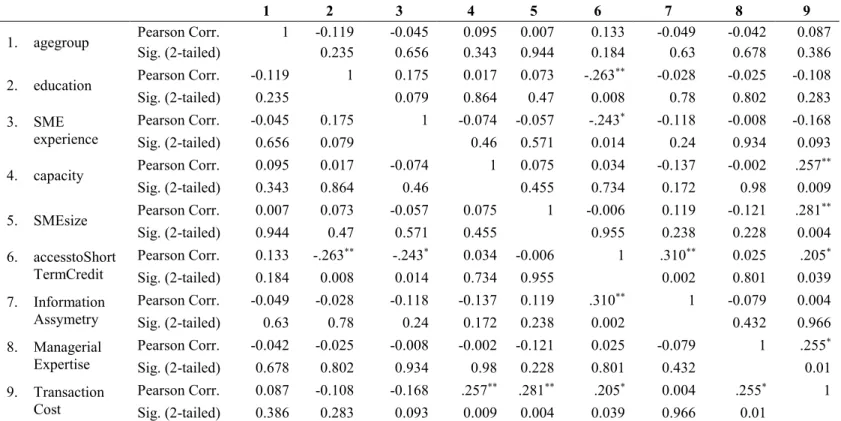
Table 7 Correlations between SMEs demographics and financing challenges ………..45
1. INTRODUCTION
1.1Background
Small and Medium Enterprises (SMEs) play a very central role in the economy by being a significant source of flexibility, innovations as well as dynamism especially in industrialized nations. More often than not, SMEs have been labelled as the prolific and efficient creators of employment, the fuel of economic developments, large employers as well as the seed of large enterprises in an economy as opposed to multinational firms. Because of their easiness of registration since in most cases they are individually owned, the number of SMEs in any given economy tend to outnumber other distinct forms of large enterprises.
Globally, SMEs play a central role in the growth of the economy. Specifically, SMEs accounted for 99% of all organisations and provided 70% of the jobs in the OECD, while in emerging economies, SMEs accounted for 45% of the jobs and contributed 33% of the GDP on average (OECD, 2017). According to the International Institute for Sustainable Development, Canada, about 80% of the formal sector is controlled by SMEs with a significant portion of total business sector (about 95%) being SMEs (Prempeh, 2015).
In Africa, SMEs play an increasingly important role in economic development. Specifically, SMEs accounted for 80% of all new jobs created in this region (World Bank, 2019). African nations such as Tanzania benefits greatly from SMEs since they depend significantly on these enterprises in stimulating developmental growth agenda and generating income both in the urban areas as well as local places in the country. Similarly, Sadiq (2016) argued that SMEs plays a very crucial role in ensuring the health of any economy, especially in developing nations such as Nigeria. As observed by Prempeh (2015) SMEs accounts for a significant percentage of most African economies (about 90%) with their locations spread across the rural and urban areas thus ensuring unbiased income distribution among the population in the country. Taking a country such as South Africa for instance, about 84% of private employment and 46% of total economic activities in the country are controlled by SMEs (Prempeh, 2015).
In Ghana, the role of SMEs cannot be overemphasized. According to Multisoft Solutions (2017) the Registrar’s General Department in Ghana, a whopping 90% of the enterprises registered in Ghana are SMEs with research conducted by Graphic Online showing that about a third of the country’s GDP is contributed to by SMEs. Consequently, SMEs are seen as a major source of promoting and developing business and entrepreneurial skills among the people in a community thus enhancing both industrial and local production sectors making them an effective engine of realizing the development goals agenda of African nations such as economic growth and poverty eradication.
Nonetheless, despite their comparatively larger number, Abimbola and Jegede (2017) argue that the majority of them (about 60%) often go into liquidation within a period of five years after their establishment. Most failures of SMEs are often attributed to the distinct challenges which impact negatively on their financial performance and growth which limits their ability to operate effectively. Some of these challenges range from lack of adequate education, managerial and technical expertise, lack of access to technological know-how, inadequate financial management skills, poor marketing strategies as well as inefficient working capital to facilitate their daily operations.
According to Forbes (2018), the major reason why most SMEs have been failing a few months into business is underestimating the power of having adequate financing. As a result, most SMEs run out of adequate cash to cater for their daily operations such as settling bills, paying employees and workers as well as suppliers among others. It is thus strongly advisable that for an SME to be successful and sustainable in the long run, it needs to use effective mechanism to accurately determine if it will require any additional cash besides the cash it is already having by either trimming down on the resources required in the firm or seeking external financial aids from investors or financial institutions like banks in time if need be. On the same tenet, Sadiq (2016) has also attributed the failure of SMEs to financial managers’ inadequate control and plan towards both current liabilities and current assets of the firms.
As a result, a number of studies have been conducted on the challenges facing the operations of SMEs around the globe with the majority of the findings pointing to lack of adequate resource to manage finance as a primary source of SMEs failure. Following
Sadiq (2016) efficient and effective financial management is most significant not only for the survival of SMEs but also for their profitability and growth. On the contrary, Farsi and Toghraee (2014) argue that the crucial issue affecting SMEs is how to foster innovation. Using exploratory factor analysis on SMEs in Iran, the authors found out that the most challenges facing SMEs in order of significance are human and managerial resource, development and research, technological innovations, regulatory and policy frameworks, and inadequate market information. On different studies, Mensah, Azinga, and Sodji (2015) conducted a study on challenges facing SMEs in gaining adequate access to capital by using a questionnaire survey to collect data from a total of 300 participants drawn from both Stanbic Bank of Ghana and SMEs in Ghana. In their findings, the authors found out the most significant challenges facing SMEs are mainly high rate of inflation, inadequate capital, high rate of interests on capital as well as fluctuations in exchange rates. The findings of the study further revealed that the challenges perceived by borrowers are strongly correlated to those perceived by bankers.
Nonetheless, despite a number of studies being conducted on the challenges facing SMEs such researches have mainly focused on the general challenges with no specific references to financing challenges. Moreover, though some advancement has been made by scholars to investigate the financing challenges as a major issue for SMEs, most of these studies have been conducted in the context of other nations with no close reference to Ghana. To this end, this current research aims to fill such research gaps by focusing specifically on the elements of financing that present challenges for SMEs in Ghana so as to gain a broader and deeper context of the issue.
1.2.1 Research Rationale
The rationale behind the study of SMEs is that these enterprises form the backbone of most economies around the globe, more so in developing countries like Ghana where the gap between the poor and the rich is still very high. As noted by Multisoft Solutions (2017) the social and economic development of Ghana for the past few decades have been majorly driven by SMEs. For example, SMEs in the country are the significant force in creating employment opportunities, generating incomes, offering services and producing goods in the country. Therefore, the study on financing challenges affecting the operations
and growth of SMEs in Ghana warrant investigation so as to come up with better suggestions on how such challenges can be mitigated or solved.
Secondly, Ghana is selected as a result of the persistent financing problems that have faced SMEs in the country which limits the role of SMEs in enhancing the macro-economic performance of the country’s economy (Prempeh, 2015). Moreover, Ghana is ranked the 10th largest economy in the entire Africa and 2nd in West Africa after Nigeria. The strong
economy of the country has been as a result of the abundance of natural resources, better governance structures, democracy coupled with a favourable business climate which are attractive to various foreign investors thus boosting the economic growth of the nation. Such realities make the study into financing in the context of the nation very important as it will provide a better insight into how SMEs which forms the backbone of the nation can further be improved to enhance the economic growth of the country.
Moreover, this study is also justified because, as shown above, findings by previous studies have identified an increasing gap in the financial assistance easily available for SMEs in Ghana. On the basis of such unanimous findings, the research on the various facets of financing that results in SMEs failure in Ghana warrants investigations.
1.2.2 Aims and Objectives
The major aim of this study is to explore financing challenges facing SMEs in Ghana. To achieve the aim of the study, the following set of objectives have been developed:
To investigate the lack of access to short term credit as a financing challenge faced by SMEs
To examine Information Asymmetry as a financing challenge by SMEs
To find out how managerial expertise contributes to financing challenges faced by SMEs
To investigate the challenge of transaction costs on financing by SMEs
To make recommendations on how SMEs in Ghana can improve on their financing 1.2.3 Research Questions
Notwithstanding the critical support and efforts that have been devoted to the SMEs sector by most governments, the majority of SMEs are increasingly facing failures a few years and sometimes months immediately after the commencement of their operations. As noted
by Paul and Oketch (2014) past statistics on SMEs shows that out of every five SMEs in a country, three tends to go into liquidation just a few months after commencement of their operations. Accordingly, most of these failures are usually attributed to problems related to financial management and thus, there is an urgent need to effectively manage the financing of SMEs if solvency and liquidity of this growing and most significant sector of the economy is to be protected.
As observed by Paul and Oketch (2014) significant number of SMEs is seldom concerned with the position of financing in their firms with a majority of these firms never paying particular and detailed attention to the credit management policy of their firms. Additionally, the majority of SMEs managers and owners often run their enterprises by emphasizing on the position of cash at banks and cash receipts of the business with little regards to the financing policy of the firm. Consequently, such practices make it impossible for SMEs to maintain an effectively established accounting or financial systems, credit history and unavailability of standard processes of business operations which increase the perceived risks of offering financial assistance to SMEs due to unclear financial picture of the SMEs. This leads us to the first research question:
What are the impacts of information asymmetry on SMEs Financing in Ghana?
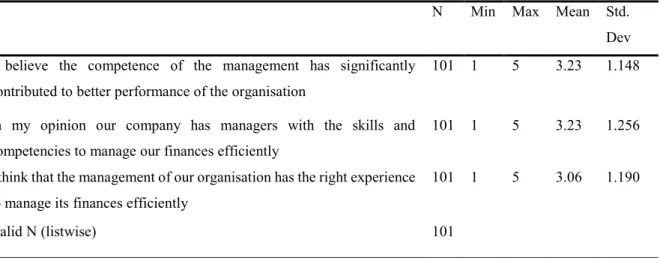
On a different tenet, Kambwale, Chisoro and Karodia (2015) have attributed the major challenges of SMEs to management challenges in both financing, inventory, marketing as well as competition. Even though it is has become increasingly hard to effectively determine what constitute poor management, it is clear that various managers of SMEs require certain skills in planning, organizing, controlling and organizing the resources of a firm in a more efficient manner so as to avoid failure even in the face of turbulent times. This leads us to the second research question:
What is the impact of managerial expertise on the financing of SMEs in Ghana?
Further, despite SMEs having unmet financial needs to carry out their activities such as meeting their long term and short-term obligations, most financial institutions often develop strict financial transaction costs due to the financial risks associated with SMEs. Such risks often result from the fact that SMEs tend to have relatively lower revenue base
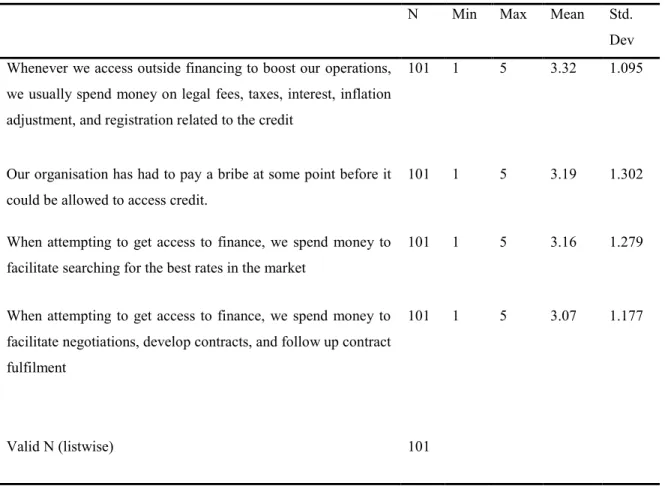
per customer, high risks of credit default which deter financial institutions from offering adequate credit facilities. However, in cases where financial institutions grant financial facilities to SMEs, the credit facility often comes with a lot of transaction costs in the form of high interests, shorter repayment periods, and legal fees among others. This leads us to the third research question;
How do transaction costs pose as a Financing challenge to SMEs in Ghana?
Lastly, inadequate access to loans and financial credits has been a major global challenge facing SMEs. Due to their low credit rating coupled with high siphoning of funds, most financial institutions often decline to offer credit facilities to SMEs or in other cases ask for high collateral which SMEs cannot offer despite their business model efficiency and good performance. Such factors coupled with the experience of the credit crunch in 2008/2009, has significantly affected SMEs access to credit as more financial institutions have become more reluctant to offer financial facilities to these firms so as to reduce the risks associated with defaults. This leads us to the last research question;
What are the impacts of the lack of access to short term credit on SMEs financing? 1.3 Delineation of the study
This current study is dived into five major sections; Introduction chapter as chapter 1, literature review section as chapter 2, research methodology as chapter 3, Research Findings and analysis as chapter 4 and conclusions and recommendation as chapter 5. Under chapter 1, the background information on financing as a challenge faced by SMEs, research rationale for the study on financing challenges of SMEs in Ghana, aims, objectives and research questions that this study aims to answer are delineated. Moreover, the statement of the problem is also discussed in this chapter.
In the literature section of this study, various theories of SMEs, theoretical discourses on financing as a challenge facing SME’s are discussed. Moreover, major terminologies, as well as financing models and conceptual framework, are also developed in this section. The methodology sections delineate and justify the various methodologies that are utilized
in the collection, tabulation, and analysis of data. Additionally, the section also examines the various ethical issues that are likely to arise in the study and how they are dealt with.
The fourth chapter which is the data tabulation and analysis is where various data collected or gathered are presented and analysed with close references to current theoretical discourses so as to identify the level in which they approve or disapprove the existing theoretical discourses on financing as a major challenge faced by SMEs in Ghana. Finally, the study ends with a conclusion and recommendation where brief findings of the study, limitations are presented and recommendation offered. Moreover, based on the conclusions and limitations of the study, the various suggestions for further researches are suggested under this section of the research.
2. LITERATURE REVIEW
As already mentioned in the first chapter of this research, the aim of this current study is to investigate the financing challenges faced by SMEs in Ghana. In increasingly developing nations in Africa, the share of SMEs business activity has increased considerably during recent decades. Thus, with the negligible contributions of these SMEs towards the revenue budget of the national government in the form of direct and indirect taxes makes their inability to manage their own finances effectively is a very worrying trend. Consequently, this calls for an urgent need for an inquiry into some of the financing challenges faced by SMEs so as to identify some of the essential factors influencing the management of finance in these SMEs. In this chapter, the literature is reviewed on the subject, starting with an overview of the concepts of SMEs and financing as well as the meanings of access to short term financing, information asymmetry, managerial expertise, and transaction costs. Later sections of the chapter present an overview of the theories of financing and SME development. Further, the chapter critically reviews the past literature that contains empirical evidence on financing and its challenges for SMEs, followed by the theoretical framework for the study.
2.1 Conceptual overview
2.1.1. The Definition of SME
Since the upsurge in the development of SMEs in the world, several researchers have made significant attempts to come up with various descriptions and definitions regarding what constitute small and medium enterprises (SMEs). As noted by Donkor (2015), a number of criteria have been utilized in defining the term SMEs; including annual sales or receipts of the company, product values, the total and net worth of the firm as well as a number of employees among other criterions and varies from one nation to another. In North America, the term SMEs in Canada is used to refer to enterprises which employ less than 500 workers with a good-producing SME being those with less than 50 workers. Further, SMEs is defined in the context of the USA as enterprises consisting of the employee base of 100 employees (Cela and Gaspari, 2015).
In Europe, the definitions differ from that of North America and Germany regards SMEs as enterprises with an employee base of less than 250. In Belgium, the limit of employees in an SME is only 100 in number. In New Zealand, the limit of employee base in an SME is little as 19 workers. One international standard commonly used to define SMEs is the European Union (EU) commission recommendation of May 6, 2003. The EU defined an SME in European Union as an enterprise that employees a total of 250 employees or workers or less with a turnover not exceeding 50 million Euros and less than 43 million Euros in its balance sheet. Moreover, the enterprise must be having not more than 25% of its shares in ownership of another distinct enterprise (Hauser, 2005).
In Africa, the definition of SMEs is even narrower in terms of employees and revenues, which, according to (Olayinka, Wynn, and Bechkoum, 2016), is understandable considering the region’s generally low economies, the small number of businesses and lower revenues compared to their counterparts in America, Europe, and Asia. According to the World Bank, SMEs are organisations that have not more than 300 employees and a turnover that does not surpass $15 million per year with an asset portfolio that does not exceed $15 million, which is close to the definition by UN.
In Ghana, the Ghana Statistical Services released an updated definition, which defines SMEs using three categories. Organisations which employ less than six people are considered micro, while firms that employ between six and nine people are considered very small and distinct from firms which employ between 10 and 29 people, which are considered small enterprises. Comparatively, organisations which employ between 30 and 99 people are considered medium-size enterprises (GSS, 2016).
Thus, this study uses the Ghanaian Statistical Services (2016) national definition of SMEs, which according to the international definition, would actually fit into the category of small organisations. In terms of assets, SMEs were defined as institutions whose assets do not surpass Ghanaian cedi equivalent of one million US dollars, excluding land and buildings (Venture Capital Trust Fund Act, 2004). Thus, the present study will define an SME based on these two definitions from Ghana’s authoritative institutions as follows: an institution that employs less than 100 people and whose total assets, excluding land and buildings, does not surpass cedi equivalent of one million US dollars.
This definition is important for two main reasons. Firstly, its scope is within the context of Ghana’s economy, which is an emerging economy. Secondly, this revised definition does not put into consideration the value of assets since Ghana’s foreign exchange is very volatile and the currency fluctuates erratically, making it a challenge to value assets effectively from year to year in Ghanaian currency (Fang, Randolph, Memili, 2016).
2.1.2. The concept of SME financing
Financing refers to the process of availing funds for a specific purpose. In the context of SMEs, SME financing is the funding of small and medium-sized businesses, such as bank loans, equity arrangements, hire-purchase deals, and other arrangements, as well as the costing and pricing involved in the process. Sadiq (2016) argues that SME financing is underserved in the overall financing sector of the global economy as well as of individual countries, thus creating the need for more programs and better methods to improve it. Compared to larger businesses, SMEs have bigger problems in the issue of financing, thus the area of SME financing remains with a huge gap that has continued to attract research interest over the past decade, especially in emerging economies. Before discussing the issues related to SME financing, it is first necessary to discuss the types and sources of SME financing.
2.1.3. Types of financing for SMEs
SMEs, like most business entities, rely on two types of financing. These are debt financing and equity financing. According to Atrill (2006), debt financing refers to the use of borrowed funds by a business with the understanding that the funds will be repaid at a future date, possibly with interest. Adding to this, Donkor (2015) avers that interests on debt are usually agreed upon prior to the issuing of debt, and is independent of whether the business makes profits or losses, and is often calculated as a fraction of the principal debt amount and sometimes compounded based on the duration of the debt. Sadiq (2016), points out the various debt mechanisms that SMEs use frequently as long-term bank loans based on collaterals, bank overdrafts, hire-purchase agreements with suppliers, leases, as well as corporate bonds.
On the other hand, equity financing refers to the use of funds contributed by business owners and investors in business with the understanding that the contributors will get a share of the business in return (Bandi, 2012). Thus, the investors and owners do not expect to be repaid as debtors do, but instead, they share the profits made from the business on the basis of their contributions. One major difference between equity and debt financing is that equity financing does not have an interest, and the financier is not guaranteed a return if the business fails to make a profit (Muroki, 2010). For SMEs, the most commonly used equity channels include friends and family, angel investors and hedge fund investment institutions. This is different from sources of equity for large corporations, which typically include banks, other companies and, where the corporation is publicly traded, the public shareholders (Bandi, 2012).
Further, SMEs can also rely on internal sources of funding, which include retained earnings from previous income, capital from liquidated assets as well as accounts receivables (Fama & French, 2002). According to Mensah (2012), another emerging popular type of SME funding is government grants. However, the qualification criteria for some funding channels make it harder for owners and managers of SMEs to access these funds. These issues can be discussed based on three main theories.
2.1.4 Theories of SME financing
Transaction cost economics theory
Transaction Cost Economics theory posits that it is necessary for an organisation to consider the complexity of the transactions, including the frequency of their recurrence, the reversibility of commitments, uncertainties associated with the transactions and the risks involved (Ghoshal and Moran, 1996). The theory argues that understanding these consequences makes it possible to determine if a transaction is worth undertaking at all, and in case it is worth it, how best to implement it at the least cost (Grover and Malhotra, 2003). TCE theory is important for SMEs because, considering their small sizes, controlling and limiting transaction costs can be a challenge for inexperienced managers and poorly informed business owners (Michaelowa and Jotzo, 2005).
According to Macher and Richman (2008), while the theory was most fundamental in deciding whether to do transactions internally or outsource, which is especially important decision for SME considering their limited resources, need to focus on core business as well as lack of multiple divisions to handle a wide range of operations compared to MNCs. Williamson (2008) agrees, arguing that transaction cost economics theory influences the firm’s operations, strategic management as well as corporate governance. Proponents of this theory in the studies of funding in SMEs argue that it is relevant because it considers the role of trust, reputation, information asymmetry, and experiences of the stakeholders in the transaction (Kang, Mahoney and Tan, 2009). On the other hand, critics of the theory argue that TCE fails to explain how value is created in e-commerce, which brings new ways of resource sharing and innovative processes of doing business. They also add that the theory also fails to explain how governance can be implemented in the virtual business environment (Amit and Zot, 2001).
Despite these criticisms, the theory is still increasingly being used to explain internal and outsourcing transactional decisions in both MNCs and SMEs (Wendy et al., 2014). In so doing, managers who use this theory as an approach may, therefore, minimize transaction costs while at the same time increasing operational efficiency and this can lead to better performance in one SME compared to the other. This is especially important as SMEs have limited funding and it is critical to saving as much of it as possible, while also maximizing the value of other business resources using this capital (Fama & French, 2002).
The resource-based view of the firm
According to Barney (1991) and Makadok (2001), a firm derives competitive advantages from its internal resources and in order to achieve this, the resources ought to be rare, inimitable, valuable, and non-substitutable. This means that the resources that provide a competitive advantage to the organisation need to be specific to the firm for the organisation to do better than its competitors. Agreeing with these conclusions, Makadok (2001) pointed out that the most notable resources that should fit these criteria include relational, informational, human, legal and financial resources. Despite its popularity, critics pin down this theory on three main grounds. Firstly, they argue that the theory
ignores the role of markets. Secondly, the theory has been criticized for lacking focus on how resources are connected, created, and developed (Rumelt, 1991; Barney, 2001). In the context of funding in SMEs, capital becomes an important source of competitive advantage because many SMEs lack it. Further, the management skills necessary to make good decisions regarding capital generation and use become another source of competitive advantage. Factors like information, firm attributes and processes also play a role as they influence the extent to which an organisation can be considered strategic. According to Bandi (2012), this theory is different from the transaction cost economics theory in that it emphasizes the significance of internal resources over costs, which is necessary since strategic management as an organisational resource should be concerned with checking least costs and alternative costs for the organisation prior to each transaction.
Strategic Network theory of the Firm
The strategic network theory is a response to the criticisms of the RBV theory of the firm, and it shifted focus from the notion that strategic resources can only be found within the firm by introducing actors that function outside of a company’s boundaries (Gulati et al., 2000). Gulati et al. (2000) explained the strategic network theory by arguing that organisations in any industry necessarily have strategic networks both horizontal and vertical to their supply chains, which makes it possible to be operational in the market. Explaining further, Cartwright and Oliver (2000) add that strategic networks refer to the collaborations between two organisations or more with the aim of increasing their individual benefits from the arrangement and increasing their overall competitive advantage. Strategic advantages come from different forms of partnerships, and that the most notable ones include joint ventures, long-term relationships between suppliers and buyers, strategic alliances, mergers, acquisitions, and licensing (Muroki, 2010).
In the context of SMEs, this theory is relevant because one of the major determinants for the decision to act on or outsource activity was noted earlier to be costs (Jensen, 2002). However, this theory shows that organisations can still gain competitive advantages through strategic partnerships, and this can lead to increased gain for both firms both of which may lack sufficient capital to implement the strategies on their individual capacities.
2.2. Sources of Financing available to SMEs
There are numerous sources of funding to companies; ranging from letters of credit, bank loans, factoring, leasing, debt financing, equity financing. However, due to the unique nature of Small and medium companies, most of these sources of financing are not applicable to them.
Personal funds have been one of the major sources of funding for SMEs. Owners personal resources that are committed to the business most especially at the initial stages. When starting a business, most SMEs entrepreneurs try to fund the business either with their own cash or with collateral on their assets. This in most cases proves to investors and bankers that they have a long-term commitment to their project and that they are ready to take risks as supported by Longenecker et al. (1994).
Family and friends is yet another important sources of funding for SMEs. This is money loaned by a spouse, parents, family or friends. This is alternatively referred to as patient capital by some investors and bankers. Mostly these monies are lent out with the aim of retrieving back when the businesses start making some turnovers. This source of funding has not been reliable as family and friends don’t have much capital to contribute and in most of the cases, they request for an equity stake in the businesses and interfere with the corporate policies and programs, (Kuriloff, Hemphill, & Cloud: 1993).
Venture Capital is also one important source of financing for Small and Medium Enterprises. Venture Capitalists are a group of individual investors who invest in corporate start-ups with the view of having an equity stake in the business. Venture capitalists take an equity position in the company to help it carry out a promising but higher risk project. This involves giving up some ownership or equity in the business to an external party which is the venture capitalist. Most Venture capitalists also expect a healthy return on their investment, often generated when the business starts selling shares to the public.
According to Stevenson et al., (1999), Venture capitalist is a group of individuals who contribute capital into a pool of funds managed professionally by general partners for a fee and a percentage stake in the gains on the investments. These individuals are usually
wealthy investors who come together as limited partners and target start-ups companies to invest. However, due to the perceived risk level of SMEs, Venture capitalists demand high returns on their investments with some ranging as high as 60% ( Stenvenson et al. 1999). One of the key conditions for venture capital funding is that the targeted companies should be ready to go public within some time frame so that they can cash in their investments through the Initial Public Offerings (IPOs), Tuller (1994).
Venture capitalist doesn’t just provide only the funding for SMEs but they also offer professional advisory services to these enterprises in their area of operations. They also provide additional support to the companies they fund in case they run into financial difficulty.
The issue of Venture Capital became known in Ghana in 1992 when the Ghana Venture Trust Capital Fund (GVTCF) was established in November 1992. A management Company was subsequently set up to manage the funds. With initial Investee companies of 13, Venture Fund Management Company (VFMC) had an average investment of $250,000 (Mensah, 2005).
The VFMC was awarded the management of a $4 million Enterprise Fund, promoted by the European Union. However, due to high perceived risk nature of SMEs, these funds have been targeted towards large corporations, therefore, defeating the primary purpose of establishing the Ghana Venture Capital Trust Fund (GVCTF).
Trade credit is also one of the major sources of funding available to Small and medium enterprises. According to Broom, Longenecker, & Moore (1983), trade credit is when a purchaser is given a few days usually ranging from 30 to 120 days to settle the debt. Suppliers see trade credit as an important and a major source of funding for SMEs due to the flexibility it offers compared to bank loans, Broom et al. (1983); Moyer, McGuigan, and Kretlow (1992). However, trade credit comes with its own cost; ranging from forfeited trade discounts and offer of goods to suppliers on credit terms which becomes an implicit cost that is ultimately passed on to the price of the merchandise.
2.3. Financing challenges facing SMEs
2.3.1 Lack of access to short term credit as a Finance challenge facing SMEs
Despite the crucial role played by these SMEs to the socio-economic development of the country, it has become difficult for them to get access to a short and flexible source of credit. As indicated by Cuevas et al. (1993), one of the fundamental problems facing SMEs is access to short term financing in the form of bank loans. This has been mainly due to the inability of these enterprises to offer good quality collateral as a pledge to secure these loans.
In the view of Cuevas et al (1993), the lack of huge capital base in terms of the fixed assets in the form of landed properties and building offers a great disadvantage for these SMEs to access short term credit from banks. Most of these enterprises don’t have proper titles to the land on which they are situated. These make it difficult for banks to accept them as collateral for borrowing because the banks cannot create proper encumbrances on them in case of default.
Even when these properties are leased with clear and acceptable titles, the banks have to go through rigorous transfer processes to enable them to relinquish their interest in the said property in case of default. Banks have to secure court decisions in almost all the circumstances to enable them to liquidate these properties. This makes it very unattractive as the primary source of collateral to secure credit. This makes it impossible for banks to accept loan applications from these enterprises as asserted by Aryeetey et al. (1994). About a whopping 75% of bank loan applications are either rejected or the amount reduced by banks based on lack of proper and acceptable collateral. Their studies also affirmed that of Cuevas et al. (1993) that finance-related problems dominate the constraints faced by the private sector in their quest to expand.
Though the access to credit as a result of the lack of collateral has been labeled as one of the major constraints for SMEs growth, the situation can be improved if banks and other financial institutions accept other forms of security to grant credit to SMEs. According to Aryeetey et al (1994), banks could accept guarantee, liens on financed equipment as well as sales contract as an alternative to property collateral.
In the work of Kauffmann C. (2005), a four-legged approach was proposed to the issue of SMEs access to finance which are; Improving business conditions, boosting the capacity of SMEs, expanding the financial sector and strengthening links between the firms. According to her, banks could rely on data from the credit bureau to get information about the solvency of these firms so as to enhance their decision-making processes when it comes to granting of credit to SMEs. To reduce the risk of business failures among SMEs, Kauffmann C. (2005) proposed that firms should use other sources of financing such as leasing, factoring as well as the use of brand names to reduce their failure risks. SMEs can also form clusters to enable them to benefit from vertical integrations with each other. This will give them access to the export market and also offer collective guarantees to themselves, as their main source of capital which is in the form of retained earnings and informal savings and cooperative lending schemes are inadequate, unsecure and offer little scope for risks sharing among themselves.
2.3.2. Information Asymmetry as a challenge faced by SMEs
The second challenge is information asymmetry. Information asymmetry refers to the state in the market in which one party to a transaction within the market has greater material knowledge than another party (Saxton and Anker, 2013). Supporting this definition, Garmaise and Natividad (2010) add that in an ideal situation, buyers and sellers ought to have the same information regarding the products and services they are purchasing, as well as the other factors in the market, such as availability of better or worse options. However, in reality, it is common to find that sellers have secret information that buyers lack, giving them a superior hand in making better decisions, although having buyers with better information than sellers is not uncommon.
Further, Hoppe and Schitz (2013) bring this to the context of private funding, arguing that equity investors and lenders are buyers while organisation owners and managers are sellers, and information asymmetry occurs when the investors and lenders lack full information to make their investment decisions. According to Marwala and Hurwitz (2017), this is a major problem as it may lead to problems of moral hazard and adverse selection, where individuals with poor information make worse transaction decisions because of lack of symmetric information.
According to Saxton and Anker (2013), studies on information asymmetry and its impacts on financing are in few. However, there are several studies which focus on information asymmetry and financing, which is closely related to the issue of financing as shown in the definitions of SME financing in an earlier section. Studies on information asymmetry and SMEs focus mostly on comparing information asymmetry among SMEs and publicly traded or larger private companies, determining sources of information asymmetry within the SME sector, measuring the impacts of information asymmetry on an organisation’s performance, and finding ways to lower information asymmetry among SMEs.
Various studies have shown that information asymmetry directly brings challenges to accessing capital by SMEs (BBA, 2002, World Bank, 2003). The studies also pointed out that information asymmetry makes lead financiers to label SMEs as high risk. Berger and Udell (2002) studied the impacts of information asymmetry to the ability of SMEs to access finance. The study determined that there are two main types of lending which are hard lending and relationship lending that SMEs use. In both cases, organisations with a high level of information asymmetry are at a disadvantage. To minimize the impact of this issue, various measures are put in place, which includes a screening of organisations for past loan contracts, credit history as well as the performance of the organisation. Agreeing, Nyamao et al. (2012) add that some financiers hire underwriters to appraise the state of the organisation before it can receive funding. However, Mensah (2012) found out that in most cases, SMEs lack substantial background for the screening procedures and in some cases, the financial and credit background of the owner is used instead.
Villalobos and Payne (2007) studied the impact of information asymmetry on access to capital for small businesses. The study determined that there is a strong relationship between the two where increased information asymmetry leads to lower access to finance as the trust gap widens. Supporting this point of view, Stuart et al. (2007) added that some SMEs have no way of improving their position as they are often relatively new and therefore lack any credit history and financial background, and at the same time, their managers lack experience. To deal with the challenge of information asymmetry in such firms, the SMEs often consider the inputs of angel investors, who are generally more willing to take risks with a start-up and provide seed funding (Ernst and Young, 2014).
Beck (2007) studied the challenges of information asymmetry among SMEs in developing countries. The study was based on an analysis of 70 countries and it determined that one major compounding factor of information asymmetry was poor regulatory frameworks and financial systems. For this reason, lending organisations could not easily determine the risk profile of businesses, and businesses lacked any way of organising their information in a useful manner. For this reason, there was a huge risk, which in turn led to huge interests charged on SMEs that got funded. Supporting these conclusions, Foltz (2004) argue that the huge interests are a big challenge as it disincentivises the SMEs from borrowing to support their SME financing requirements. Fatoki and Smit (2011), who studied the South African SME market, also confirmed these findings. Leffileur (2009), who studied SMEs in Sub-Saharan Africa and their capital access challenges caused by information asymmetry, concluded that it is indeed a major problem. The study concluded that one way in which this situation can be reversed is through creating sustainable guarantee funds, which will be used to reduce risks on the lender’s side while increasing access to capital on the SMEs side.
Taking a different approach, Falkena et al. (2001) studied the impacts of information asymmetry on access to finance of SMEs in South Africa by focusing on regulatory systems of the region. The study showed that the organisation that needs financial boost also suffers from information asymmetry. This is because information about the best financiers is not always available and SMEs may now know which financial organisations provide the strongest incentives, low interest and favourable terms. The lack of information also leads to a lack of awareness about the opportunities of funding in the market as illustrated by Agostino et al (2008). This is further supported by the findings of Othieno (2010), who argued that SMEs may not know about all the banks, microfinance institutions, private lenders, angel investors and other sources of funding in order to determine the most appropriate. One way to deal with this challenge is for financiers to give regular updates to the market so that SMEs can know how to make these decisions.
2.3.3. Managerial expertise as a challenge faced by SMEs
Thirdly, managerial expertise has also been found to present a major challenge. Managerial expertise refers to the ability of managers to employ their skills, competencies, and experiences towards the set goal in a manner that leads to effective and efficient execution of the required functions (Black, 2005). Within the confines of an organisation, managerial expertise, therefore, refers to the competencies, skills, and experiences of managers and the ability to use them to implement organisational strategies such as marketing, product development, monitoring and evaluation, financing, and other related functions (Majid and Yasir, 2012). It is an integral factor that influences an organisation’s performance because lack of managerial expertise may lead to poor strategic decisions, which in turn may lead to negative performance in different areas of the organisation, including market failure, failed IT implementation, poor product choices, and lack of alignment between the organisation’s operations and long-term goals, among others. According to Huang (2014), managers with higher managerial expertise tend to be fewer, and thus highly in demand, making them very expensive, thus making it a challenge for SMEs to hire competent managers.
Afrifa (2013) studied the impacts of various factors on financing management, including education and work experience. The study focused on SMEs in the UK and collected data on 72 SMEs in that region. It concluded that these factors were all important to the management of SME finances and that managers who had more education were better placed to manage finances than managers without the same. However, the study focuses on a developed economy and its findings and implications may fail to be reliable when considering African markets.
Tabot (2015) studied SME financing and focused their study on Cape Metropole in Cape Town South Africa. Their study targeted 200 SMEs within the region and data was collected using questionnaires and analyzed using binomial tests and mean analysis. The findings showed that concluded that most organisations lacked adequate financing. Their view was supported by the earlier views presented by Monks (2010), Yeboah, 2013 and Afrifa (2013). However, this study concluded that access to working capital was not the main problem for SMEs, but rather financing was the main issue why SMEs recorded failure and poor performance.
Studies in Ghana have also mostly focused on studying financing as a challenge to SMEs. For instance, Yiadom and Agyei (2006) found that some 88.3% of all Ghanaian entrepreneurs had training directly related to financing, while 74% stated that they indeed needed training on mobilisation for finances in order to eliminate some of the problems of financial management they were facing. This study was supported by that of Nketsiah
(2015), who further noted that 80% of SMEs in Ghana had poor financing management
capabilities, including the use of manual records as opposed to computerized records to record working capital transactions. It was also confirmed by Mensah (2012) who concluded that SMEs in Ghana attempted to lower their expenses by using manual labour.
Similarly, Juan García-Teruel and Martinez-Solano (2007) investigated the impact of inadequate financing on the performance of 8,872 small and medium enterprises in Spain. The study used regression and correlation analysis which showed that managers’ expertise is very important in increasing available finances as it can help in the creation of value through efficient management of receivables, cash, and inventories. However, the findings of this study may not be relevant to SMEs in Ghana since Spain is a developed country. Nevertheless, similar findings were demonstrated by the study undertaken by Turyahikayo (2015) which studied the challenges facing small and medium enterprises in regards to financing in Uganda. The study used a sample of 60 SMEs that are operating in the manufacturing sector. The data were collected using a questionnaire which was followed by descriptive statistics so as to evaluate the data. Management expertise or skill was among the challenges investigated and the findings revealed that the existence of expertise in terms of management results in good financial planning and efficient corporate governance. Additionally, findings by (Turyahikayo, 2015) also showed that a lack of management expertise hinders the ability of the firm to receive and manage the funds efficiently.
While investigating the challenges faced by SMEs in the process of accessing credit facilities from financial institutions, Mensah, Azinga and Sodji (2015) identified lack of management expertise that can manage the funds as one of the challenges. The study focused on SMEs in Ghana and showed that the developing nature of economy results in
less skilled managers as the few that exists are attracted by large corporations. This is also supported by the findings of Kumari (2008) who found that there is less supply of managerial expertise that can match the high number of small and medium enterprises existing in developing economies. Moreover, skilled managers who have the capability to efficiently manage the funds especially when the funds are sourced from financial institutions, are poached by multinational corporations through handsome wages and better allowances that SMEs cannot afford (Mensah, Azinga & Sodji, 2015; De Beer & Nhleko, 2008). However, this can be mitigated through managerial training and development skills of existing employees.
2.3.4. Transaction costs as a financing challenge faced by SMEs
Additionally, it has been argued that transaction costs also directly affect SME financing by various authors (Michaelowa and Jotzo, 2005; Tate, Ellram and Dooley, 2014). The simplest definition of transaction costs is that they are expenses incurred to buy or sell a product or service by an individual organisation (Grover and Malhotra, 2003). In a financial sense, this includes expenses such as commissions for brokers, spreads in the price, closing costs, governments costs, transport costs to transport goods, service costs as well as search fees and appraisal fees, among others depending on the type of transaction. However, Michaelowa and Jotzo (2005) point out that transaction costs go beyond the financial costs, and to capture all of them, three broad categories can be used. Firstly, search and information costs refer to the category of costs that go towards determining the availability of an item in the market, comparison with other items in terms of price and value, as well as switching costs involved. The second group is bargaining costs, which refers to costs of negotiations between the parties involved, contract development as well as ascertaining that the contract is as per the agreement. Finally, policing costs refers to the costs of ensuring the parties do what the contracts say they will do and the cost of taking action, such as legal action, if the said party fails (Beck, Demirguc-Kunt and Levine, 2005). According to Tate, Ellram and Dooley (2014), transaction costs directly affect SMEs because if not managed carefully, it can rise to the extent of making the transaction non-profitable and in some cases even leading to losses on a transaction that should have been profitable.
Chuluunbat, Daashinkhuu and Zagdbazar (2017) conducted a study on the transaction costs borne by SMEs. The study focused on non-market transaction costs that SMEs bear in the course of their operations. They defined non-market costs as costs involved in getting permission and licenses to do business, legal registration of the organisation, time and required to overcome registration bureaucracies as well as bribes and “gifts” given to bureaucrats to move things along. The study found that non-market transaction costs in the emerging economies are much higher than that of developed economies, and it is mainly borne by SMEs. They sampled 1541 SMEs located in Ulaanbaatar city, as well as Orkhon and Darkhan provinces. They found that all SMEs incur various types of transaction costs, which can be grouped into three categories. The transaction cost of government regulations, which include costs of business registration, getting permits and passing inspections, constrict enforcement, dealing with government agencies and SME policies implemented. The second category of transactions is the transaction cost of taxes and customs, and this involves the costs of tax compliance, customs, and international trade. The third category is transaction costs related to the financial environment and infrastructure, which include costs of infrastructure connection such as roads, water, telecommunication, and electricity. It also includes the costs of dealing with financial institutions such as banks especially since SMEs may lack collaterals to insure their loans. Overall, the study found that 20% of organisations incurred a total of 10% or more of their revenue to cater for non-market transaction costs, making it a major burden to SMEs. These findings are supported by earlier studies by Abe et al. (2012) and Gwartney et al. (2013).
Gichuki, Njeru and Tirimba (2014) studied the challenges that micro and small enterprises in accessing credit in Nairobi City County, Kenya. The study focused on several variables with the cost of credit being among the variables investigated. Under the credit cost, some of the costs factored include taxation, inflation and interest rates costs. The study sampled 241 SMEs located in Kangemi within Nairobi County. The research found that costs such as negotiation fees, interest rates, legal fees, taxation, and inflation increases the cost of acquiring and servicing loans acquired. As such, all these cost results in high transaction cost which increases the borrowing cost as well as limit access to external funding from certain borrower groups. The findings also demonstrated that the diverse characteristics and relative opaqueness of the SMEs lead to increased monitoring and assessment costs.
They found that, unlike other credits such as mortgage lending or consumer credit, SMEs lending is still viewed as a high-cost lending product because it still heavily depends on the relationship between lenders and borrowers. Generally, the study found that the cost of credit increases transaction cost that influences the funds available in the SMEs. These findings were supported by earlier studies by Berger and Udell (2006) and Mwangi and Bwisa (2013).
Similar to Gichuki, Njeru and Tirimba (2014), Evans, Josephine and Yeboah (2015) also undertook a study on the challenges faced by small and medium enterprise in regards to accessing credit in Tamale as well as mitigation measures that can be adopted. The study showed that organizations need to borrow so as to boost their operations, however, the borrowed funds result in high transaction cost which is unsustainable to the SMEs. They also argued that small and medium enterprises face more challenges compared to large corporations in terms of transaction cost due to challenges of funding expansions and start-ups. Additionally, the findings demonstrated that transaction cost is exceptionally high in developing countries such as Ghana because the financial institutions are reluctant to supply credit due to their small portfolios and high risks. This results in high transaction cost as few SMEs that manage to access the credit do it at a steep interest rates that is difficult to maintain. These findings were in agreement with those found by Kwaning, Nyantakyi and Kyereh (2015) and Bowen, Morara and Mureithi (2009).
2.4. Research framework
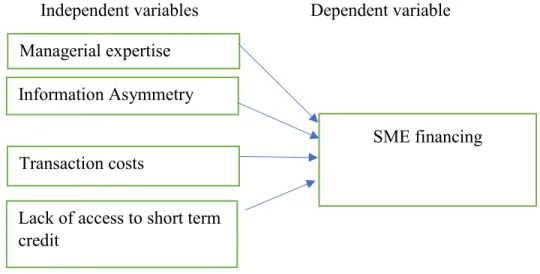
Based on the literature reviewed on this section, the independent variables for this research include transaction costs, managerial expertise, information asymmetry and lack of adequate access to short term credit which influences financing of SMEs. As such, the figure below demonstrates the research framework based on the purpose of the study.
Independent variables Dependent variable
Figure 1: The research framework
To summarise, this literature review has demonstrated that SMEs in Ghana as companies that employ less than 29 employees and that its investment apart from land, vehicles, and building does not surpass an equivalent of $1 million US dollars. The literature reviewed has also shown that SME financing can be vividly explained through transaction cost economics theory, resource-based theory, and strategic network theory. Critique of the literature has indicated that the challenges that face SMEs have an impact on SME financing. For instance, there is a significant negative influence of lack of adequate access to short term credit on SME financing. That is, lack of access to capital makes it hard to attract investors, inability to convert short-term assets into cash and hinders the growth of the business thereby reducing the number of funds available to the organization to cover its operations.
The review has also revealed that information asymmetry as challenge impacts the finances available to of SMEs because increased information asymmetry which is synonymous with SMEs results to lower access to finance since the trust gap between the financiers and SMEs widens. Moreover, it has also been shown that managerial expertise as a challenge negatively influences financing in SMEs. This is because efficient management of the SME financing process requires a manager with competencies or highly skilled which the SMEs cannot access either due to affordability or lack of
SME financing Managerial expertise
Transaction costs Information Asymmetry
Lack of access to short term credit
Information Asymmetry
Managerial expertise
existence in developing economies such as Ghana. Lastly, transaction cost has been found to negatively influence the management of SME financing. This is because SMEs incurs 10% more costs compared to the large corporations when catering for transaction costs. Moreover, the SMEs are considered high risk leading to increase cost of credit thereby making transactions costly. Therefore, the literature review has shown that the challenges identified as facing SMEs have significant negative impact on SME financing.
3. METHODOLOGY
This chapter engages in a systematic delineation of the methods and tools that I used during the study. Firstly, the section begins with the clarification of the philosophy that was applied during the study and this is followed with an explanation on the research approach especially why the chosen approach is suitable for this particular study. The chapter expounds on the type of data collection tools selected for this research, the sampling process and sample size. Lastly, the section elaborates on the data analysis technique applied and ethical considerations observed during data collection process as well as the whole research process. The chapter concludes by highlighting the main points discussed.
3.1. Data collection tools
According to Kumar (2010), a questionnaire is commonly used when the data being collected is quantitative and from a large population sample. However, questionnaires do not give the participants an opportunity to give their views on the issue being investigated but rather choose from the options given.
Questionnaire was considered more appropriate for various reasons. Firstly, this study had a large target population that could only be covered fully if the questionnaire is applied. Zikmund et al. (2013) argue that questionnaire is beneficial because it makes use of questions which are highly objective and structured thereby giving little room for biases. Moreover, questions provided on the questionnaire are easy to respond thereby saving time. More importantly, this study is quantitative in nature thereby making the questionnaire more suitable compared to interview (Hancock & Algozzine, 2015). The questionnaire was in four parts, and in the third and fourth parts, a calibrated Likert scale with five points was used in order to score each answer given. The first part of the questionnaire sought to find out general information about the demographics of the firms such as; education level of the firm’s managers, the activity of the firm; the number of employees of the firm and the gender of the firm’s managers. The second part of the questionnaire looked at the sector of the firm, duration of business existence in the industry, the third part looked at SME financing whiles the last part was devoted to
questions that are geared answering the research questions of the studies, specifically the SME financing challenges.
3.2. Sampling process
In this research, non-probability sampling was used, specifically, convenience sampling in order to settle on the population sample. Essentially, convenience sampling entails choosing a population sample by relying on the availability and willingness of the participants to take part in the study (Saunders et al., 2016). To this end, the time I spent to access the participants was reduced because I only engaged the participants who were willing and available to take part in the study. Since my aim was to collect quantitative data from SMEs in Ghana, the questionnaires were administered to a sample size of 150 participants so as to get at least 100 questionnaires returned.
In order to access the respondents, I sent formal requests to selected SMEs in Ghana that explained the objectives and aim of the research via email as recommended by Blumberg et al. (2014). The email also explained how the findings from the study are to be handled and how the findings can be used by the SMEs to improve financing with the aim of convincing them. More importantly, I also assured through the mail the potential participants that the information revealed would only be used for the purpose of this particular research and no third party will be privy to such information. Moreover, the participants' anonymity will be protected as they will not be required to put down their names on the questionnaires.
3.3. Data analysis
After the collection of the data from the respondents, I did a data analysis to determine the prevailing patterns. Since data is quantitative, I used SPSS to analyse the data. More specifically, I applied descriptive analysis and regression analysis to analyse the data. According to Denscombe (2014), descriptive and regression analysis is important when evaluating quantitative data as it allows the researcher to make summaries with regards to the average demographics of the data set being used. As such, the data set in this research
will consist of employees and owners in the managerial positions of the selected SMEs in Ghana.
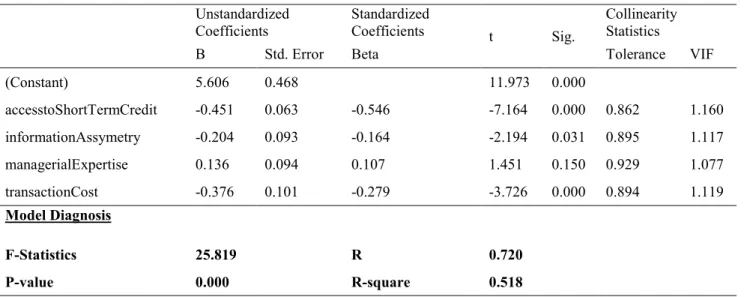
Most importantly, Treiman (2014) alludes that regression analysis is an important statistical method which enables the researcher to evaluate the relationship between two or more variables of specific interest to the researcher. As such, regression analysis enabled me to examine the relationship between the SMEs challenges and financing of the same firms. After the analysis, comparisons were made between the findings obtained from my study and the specific works of literature relating to the research so as to make the conclusions valid and relevant.
To recapitulate, this chapter has discussed the most suitable methods and tools for this research as well as how they were applied in the study. For instance, the chapter has revealed that the most suitable philosophy is interpretivism as it allows the researcher to be part of the study when collecting data. Secondly, the research has applied inductive approach as it enables the researcher to evaluate the aspect of financing and then relate it to the SMEs challenges facing the firms. Thirdly, this research uses a case study as a strategy because it enables the researcher to investigate the phenomenon in the context of Ghana thereby realizing findings unique to the country or those in the same calibre. Fourthly, the study has applied the questionnaire as a data collection instrument due to the large sample size being covered and its ability to minimize biases from the researcher. Subsequently, the researcher has applied frequency analysis and regression analysis to analyse the data collected. Lastly, I have observed all ethical practices such as informed consent, confidentiality, anonymity, and respect for participants among others.
4. RESULTS
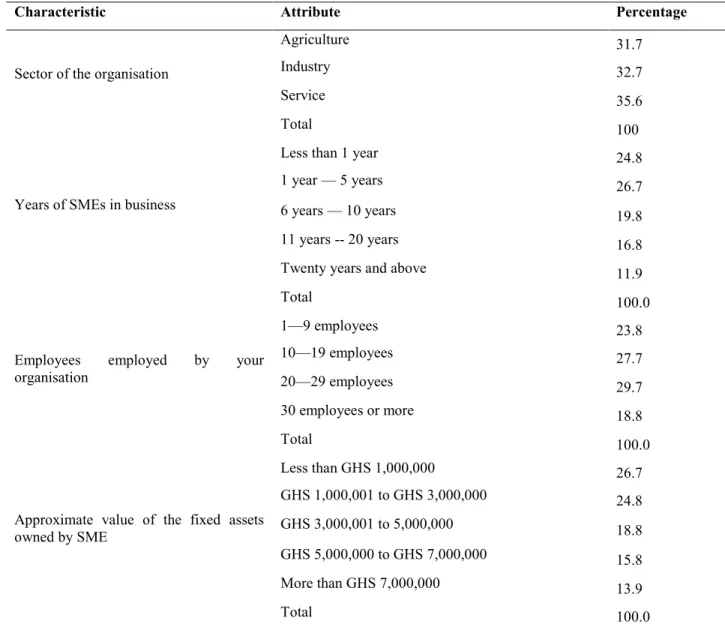
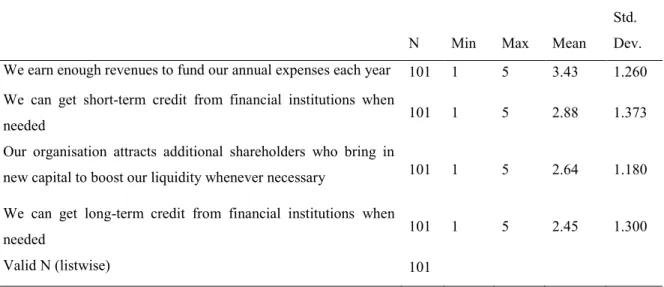
This chapter presents the data and analyses the findings from the data based on the objectives as presented in chapter 1. The first section of the chapter is concerned with the demographics of the respondents. This is followed by an analysis of the characteristics of the SMEs sampled in this study, including industry, size, age, and value. Later, the chapter presents the perspectives of the respondents regarding how different factors affect their access and management of SME finance. These factors include those discussed in chapter two, namely, access to working capital, managerial expertise, information asymmetry, and transaction costs. Notably, out of the 150 participants targeted for the study, 101 valid respondents were retrieved back.
4.1 Demographic profile
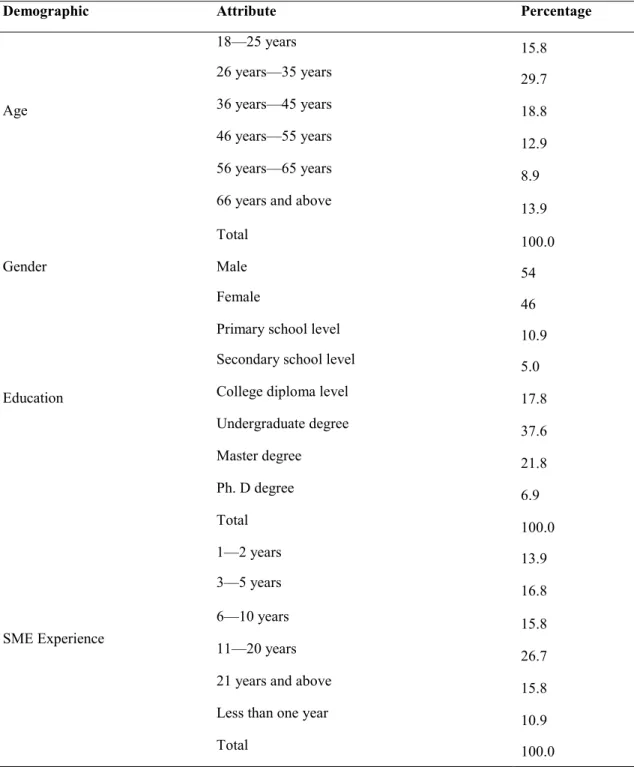
The first item in the questionnaire was concerned with the age group of the participants. The responses were divided into six age brackets as shown in table 1. This included people aged between 18 years and 25 years, and a ten-year age bracket thereafter for the next four age groups, with the last group being for respondents aged 66 years or more. From the table, it is evident that the largest age group among the respondents was for those aged between 26 years and 35 years, who accounted for 29.7%. The second and third largest groups were 36 years - 45 years and 18 years – 25-year-olds respectively, whereas the smallest group was of those aged between 56 years and 65 years, with 8.9% representation.
The findings also showed that a majority of the people who start or manage small businesses in Ghana are youth, aged between 18 years and 35 years (45%), followed by the middle aged who make up 41 %, and the elderly who occupy less than 14%. The age distribution represents the population in Ghana and other African countries, where the youth are the majority (Agostino, 2008). It was found that one in every three respondents had an undergraduate degree with 37.6%, followed by master and diploma level education with 21.8% and 17.8% respectively. Secondary school had the least representation with 5%, followed by Ph.D. with 6.9%. This implies that 84.2% of all respondents had at least
an A level education. Male respondents made up 54% of the population, whereas the female respondents occupied 46%.
Table 1: Demographic data
Demographic Attribute Percentage
Age 18—25 years 15.8 26 years—35 years 29.7 36 years—45 years 18.8 46 years—55 years 12.9 56 years—65 years 8.9
66 years and above 13.9
Total 100.0
Gender Male 54
Female 46
Education
Primary school level 10.9 Secondary school level 5.0 College diploma level 17.8 Undergraduate degree 37.6 Master degree 21.8 Ph. D degree 6.9 Total 100.0 SME Experience 1—2 years 13.9 3—5 years 16.8 6—10 years 15.8 11—20 years 26.7
21 years and above 15.8
Less than one year 10.9
Total 100.0