The Influence of Erasmus Mundus
Action 2 Program on the
Internationalization in Serbia
A Case Study of Two Serbian Universities
MASTER THESIS
Program: Erasmus Mundus - Master in Research and Innovation in Higher Education - MARIHE
Author: MILOŠ MILUTINOVIĆ
Submitted: 22 June 2015
3
STATUTORY DECLARATION
I, Milos Miluinovic, born the 23 November 1979 in Novi Sad, Serbia hereby declare,
1. that I have written my Master Thesis myself, have not used other sources than the ones stated and moreover have not used any illegal tools or unfair means,
2. that I have not publicized my Master Thesis in my domestic or any foreign country in any form to this date and/or have not used it as an exam paper,
3. that, in case my Master Thesis concerns my employer or any other external cooperation partner, I have fully informed them about title, form and content of the Master Thesis and have his/her permission to include the data and information in my written work.
4
RESTRICTION OF ACCESS
ATTENTION:
The exclusion of utilization of the Master’s Thesis may be applied for to the Director of Studies (the officer responsible for the administration and enforcement of study law). A maximum of 5 years can be applied for, based on substantiated grounds that the student’s legal or economic interests are endangered if it would be published immediately.
The approval document of the accepted exclusion of utilization must be included in the bound and electronic versions of the final Master’s Thesis instead of this page.
The application should be made with enough time to allow processing and return of the official document from the Director of Studies (minimum 2 months).
5
Acknowledgments
I will at this moment like to take a few words to express my thanks to the following persons without whom this Thesis would not be possible. First of all, I would like to say how grateful I am to Prof. Fuada Stanković for giving me the opportunity to embark on the journey of internationalization in the first place. I would also want to thank my dear colleague Ivana Vujkov for her passion and for being the role model that she is, as well as all the colleagues at the University of Novi Sad for their help and support over the years.
On a more personal note I would like to thank my family for their encouragements. Michi, thank you for your patience and understanding.
Last but not least, I would like to express my gratitude to my supervisor, Prof. Fiona Hunter, for her advice, guidance and for challenging me to take that extra step on this short, but exciting journey.
6
Abstract
Globalization and internationalization have become important topics in higher education context due to the influence of various government and intra-government policies directed towards internationalizing higher education institutions (HEIs). Mobility is considered to be an important and often used tool in internationalization process. In recent years research on the influence of mobility programs such as Erasmus has moved the understanding of influence these policies and measures have on the practice of internationalization at HEIs. This thesis approaches this topic from the institutional perspective as the case study of two Serbian universities and their participation in Erasmus Mundus Action 2 (EM) program. Davies’ matrix of internationalization and Lewin’s three-step change theory will be used to measure the progress and changes taking place in internationalization practice or explain their absence. The result of the research is that both institutions remain fairly limited in their internationalization practice. University of Novi Sad has been able to achieve greater progress compared to University of Nis due to its better organizational climate and larger number of internationalization proponents.
Keywords: Internationalization, Erasmus Mundus, institutional change, mobility, internationalization practice, enablers and blockers of internationalization, Serbia, case study
7
Table of Contents
1. Introduction ... 11
1.1. Setting the stage ... 11
1.2. Serbian participation in Erasmus Mundus ... 12
1.3. Research gap and significance ... 12
1.4. Overview of the thesis ... 13
2. Literature Review ... 15
2.1. Globalization and internationalization as phenomena in higher education ... 15
2.2. Internationalization of Higher Education in Europe ... 18
2.3. Internationalization of Higher Education Institutions in Serbia ... 21
2.3.1. Overview of Higher Education in Serbia ... 21
2.3.2. Higher Education Reform and Rationales for Internationalization ... 25
2.4. Internationalization of higher education in practice ... 28
2.4.1. Rationales ... 28
2.4.2. Misconceptions ... 30
2.5. Theory of organizations and change ... 30
2.5.1. Universities as open and loosely coupled systems ... 30
2.5.2. Managing change ... 32
2.4.3. Enablers and blockers of internationalization ... 33
2.5.3. Lewin’s Change Model... 34
3. Methodology ... 37
3.1. Research questions... 37
3.2. Research design ... 37
3.3. Construction of case studies ... 38
3.3.1. Choice of case institutions ... 38
3.3.2. Interview process and participants ... 39
3.3.3. Documentary analysis ... 40
3.4. Validation procedures ... 40
3.5. Limitations ... 40
3.6. Insider role and bias ... 41
3.7. Ethical issues ... 41
4. Case study findings: results, analysis, and synthesis ... 43
8
4.2. Case institution: University of Novi Sad ... 45
4.2.1. Description of case university and its participation in Erasmus Mundus ... 45
4.2.2. Interpreting change ... 47
4.2.2.1. ‘Unfreezing’ ... 48
4.2.2.2. Moving to a new reality ... 51
4.2.2.3. ‘Re-freezing’ ... 55
4.3. Case institution: University of Nis ... 58
4.3.1. Description of University of Nis and its participation in Erasmus Mundus ... 58
4.3.2. Interpreting change ... 60
4.3.2.1. ‘Unfreezing’ ... 60
4.3.2.2. Moving to a new reality ... 62
4.3.2.3. ‘Re-freezing’ ... 65
4.4. Discussion and comparison of the two case institutions ... 66
5. Conclusions ... 69
5.1. Further research possibilities ... 70
5.2. Recommendations... 70
References ... 72
Appendixes ... 85
Appendix 1: List of questions for semi-structured interviews ... 85
9
Table of Figures
Figure 1: Student population in Serbia ... 24
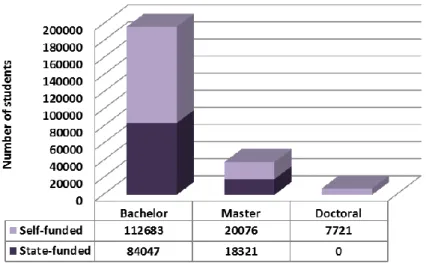
Figure 2: Student population for 2013/2014 dependng on funding and level of study ... 24
Figure 3: Adapted from Davis, 1995 ... 33
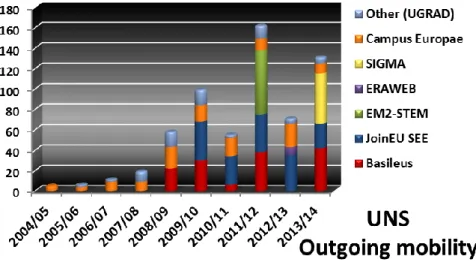
Figure 4: Outgoing credit mobility at UNS between 2004-2014 ... 47
Figure 5: Incoming credit moblity at UNS between 2004-2014 ... 47
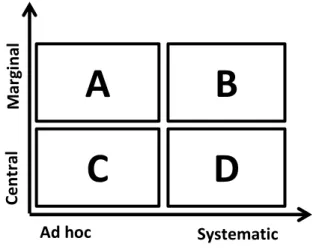
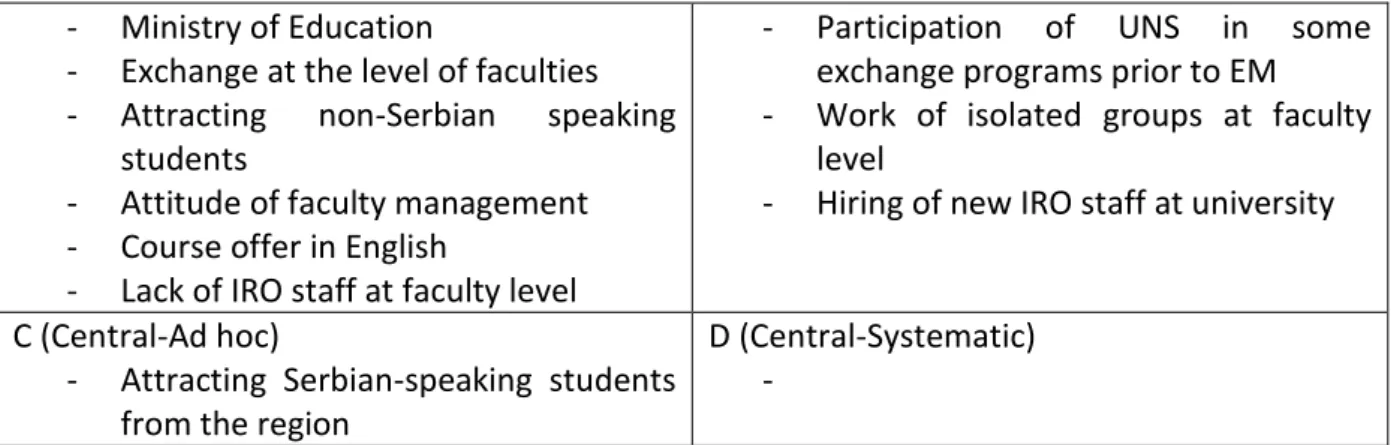
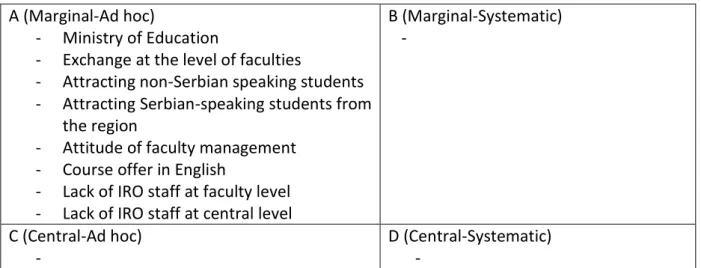
Figure 6: Matrix of internationalization at University of Novi Sad at at the beginning of EM program 48 Figure 7: Position of UNS prior to participation in EM ... 48
Figure 8: Matrix of internationalization at University of Novi Sad at at the end of EM program ... 58
Figure 9: Position of UNS after to participation in EM ... 58
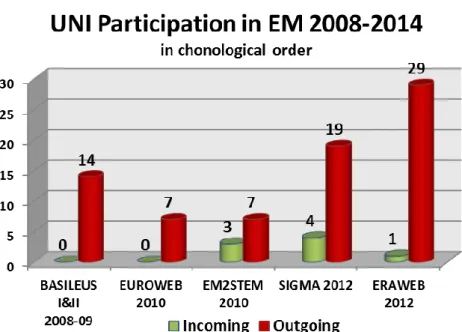
Figure 10: Participation of UNI in EM projects ... 59
Figure 11: Matrix of internationalization of University of Nis at the start of EM program ... 60
Figure 12: : Position of UNI at the start of EM program ... 60
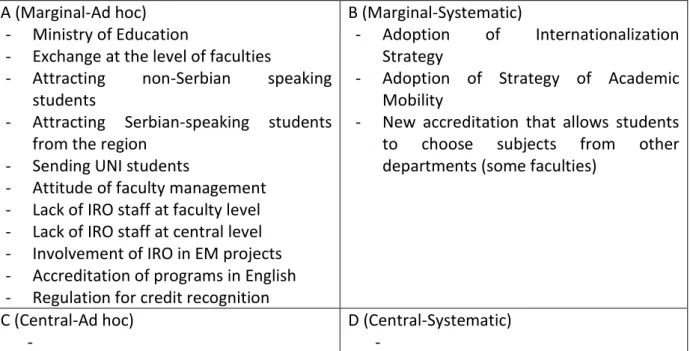
Figure 13: Matrix of internationalization of University of Nis at the end of EM program ... 66
10
List of Abbreviations
HE: Higher Education
HEIs: Higher Education Institutions
CAQA: Commission for Accreditation and Quality Assurance of Serbia Strategy 2020: Strategy of Development of Education in Serbia until 2020 UNS: University of Novi Sad
11
“Cheshire Puss”, asked Alice timidly, “would you tell me, please, which way I ought to go from here?”
“That depends a good deal on where you want to get to”, said the Cat. “I don't much care where—“, said Alice.
“Then it doesn't matter which way you go”, said the Cat. “--so long as I get somewhere”, Alice added as an explanation.
“Oh, you're sure to do that”, said the Cat, “if you only walk long enough.” Lewis Carroll, Alice in Wonderland
1.
Introduction
1.1.
Setting the stage
Serbian universities find themselves on the crossroads of change. The real question they are asking themselves is not whether, but how: how to change? How to reconcile the conflicting forces that on one side strive for sameness and on the other ask for uniqueness? How to internationalize, but retain your specificity and not be just one of the thousand other higher education institutions (HEIs) in the world or Europe? It is not an easy question to answer and this thesis proposes no definite answer. What it aims to do is to explain in more detail how two HEIs in Serbia have reacted to mostly external pressures of internationalization and how it impacted their reality; what choices they made along the way, and where did they finally arrive – if they have arrived anywhere.
There is no denying that the forces that shape our world also influence the HE landscape imposing restraints on HEIs and forcing HEIs to adapt to this fast changing environment. In that respect universities around the globe are being ranked and measured, coerced into harmonization, and submitted to global HE market. On one hand they are expected to collaborate in order to produce more knowledge, but simultaneously they are facing increased global competition (Foskett, 2012). They are also expected to serve national pride and preserve national identity. Modern HEIs are becoming more and more influenced by the market forces of global economy and submitted to tools they themselves devised for the business sector. However, to use the analogy from Altbach and Peterson (1998, p. 36), internationalization, globalization, mobility, New Public Management, Massive Online Open Courseware (MOOC) are more like some of the buzzwords we have been hearing lately, than a reality of university campuses. The more academics, politicians, HE experts and policy makers make use of them, the more diluted their meaning becomes with the tendency to mean anything and everything all the while the extent, as well as the quality of their practices are in many cases not fully understood.
Bologna process and reforms that followed it, including the increase in mobility between European HEIs, have profoundly influenced HE systems and put the internationalization in the spotlight (Brandenburg et al., 2014). The HE systems on the periphery, such as Serbian,
12
could choose to follow or be left behind. Internationalization has become a constant topic of discussion in Serbia, but at the same time it is questionable how much has it contributed to the change of the internationalization reality at HEIs. In the last 10 years Serbian HEIs have undergone major changes since Serbia joined the Bologna process, part of which is also participation in academic mobility programs in Europe. However, Serbia was not able to participate in the Erasmus program and lacked funding for own programs, which kept the mobility rate low. First opportunity for participation in organized and well-funded mobility program presented itself when Union decided to expand Erasmus Mundus (EM) program to include credit mobility.
1.2.
Serbian participation in Erasmus Mundus
Erasmus Mundus was one of the European Union’s flagship programs in the area of higher education policy with third countries and as such was part of the much wider Lifelong Learning Program. Originally established only to offer full degree master studies and thus boost attractiveness of Europe as study destination, it was expanded in 2006 with the so called ‘External cooperation window’ program (EMECW). EMECW established two-way exchange networks between EU and third country HEIs. Later the EMECW program was rebranded EM Action 2 in an effort to create a more cohesive platform (EACEA, 2013a, 2013b). For the reason of simplicity, all references to Erasmus Mundus in this thesis –unless otherwise stated – denote only Action 2 and no other part of EM program.
The region of Western Balkans (WB) and thus Serbia was included in the EMECW in 2007 and the first network was selected in 2008. Since then in total of 19 projects were selected with an estimated budget of over 40 million Euros between 2008 and 2014. The propositions of the program allowed bidirectional short-term exchanges of all levels of students, as well as academic and non-academic staff. Most networks were not focused on a particular field, but later projects were encouraged to do so and thus several projects focused on engineering, medicine or life sciences. At least 70 percent of all mobilities were reserved for participants from WB countries to go to one of the EU project member institution, while not more than 30 percent was foreseen for the mobility from EU towards WB countries.
The ability to host EU students and staff should have served as preparation for participation in Erasmus (now Erasmus+) program by enabling them to improve their capacity and raise awareness of the importance of mobility, as well as by confronting challenges that come with mobility and internationalization. Additionally, EU was hoping that the EM program will foster existing and build new this between EU and WB HEIs thereby creating new opportunities for collaboration in joint study programs, joint research projects, and best practice exchange (EACEA, 2013a, 2013b).
1.3.
Research gap and significance
HE in countries of the Western Balkans (WB), are under-researched compared to some other countries that are part of Bologna process and European Higher Education Area (EHEA) due
13
to their being “quite unique cases” (Branković, Kovačević, Maassen, Stensaker, & Vukasović, 2014, p. 10) making them less interesting for mainstream researchers. Being considered a peripheral system they are often overlooked in comparative studies (Branković et al., 2014). In general research on the topic of Higher education in Serbia is limited due to lack of financing of such research on the side of the government as policy driver. Researchers also complain of the general lack of data, which is rarely collected systematically (Branković et al., 2014; Turajlić, 2009). As of yet no university in Serbia has either a study program on any level that focuses on HE or research center apart from the independent Center for Education Policy (CEP). CEP has conducted several research projects mostly dealing with the most pressing issues: governance, financing, Bologna reforms and research in general (Babin & Lažetić, 2009; Branković et al., 2014; Vukasović, 2014). Several master theses also explore these topics (see Branković, 2010).
One recent, study on the social and economic conditions of students in Europe also included Serbia. The study was part of the Europe-wide EUROSTUDENT project survey (Hauschildt, Gwosc, Netz, & Mishra, 2015) and it also contained information about students’ view on internationalization and mobility. Recently Erasmus Impact Study was published that covered both impact on individual, as well as institutional level (Brandenburg et al., 2014). In Slovenia one recent study was conducted on the impacts of Erasmus program on Slovenian universities (Klemenčič & Flander, 2013) that could prove to be useful for comparison purposes. Author did was not able to find any studies that were directed towards examining internationalization of Serbian universities, nor studies that would explore the factors influencing internationalization process.
Considering the growing importance of internationalization for Serbian HEIs as Serbia strives for full EU membership and becomes part of the increasingly competitive European Higher Education Area (EHEA) and European Research Area (ERA) this thesis could offer some insight into the practice of internationalization and the influence EU programs have had on its development on the example of two Serbian universities. Perhaps their experiences can offer guidance for further policy development on both system and institutional level, as well as advance the debate on the future development of HE in Serbia.
1.4.
Overview of the thesis
Considering the general broadness of the topic such as internationalization, the first part of the thesis will provide review of current research regarding globalization and internationalization, as well as their influence on the HEIs. Since the focus of this study is EM program and its influence on the internationalization practice the European perspective will also be discussed. Furthermore, the internationalization process at HEIs, as well as rationales behind it will be presented. In the focal point of this study are two Serbian universities. In order to better understand the current situation a general overview of Serbian HE system and its recent developments such as Bologna reform and recent changes in the Law on HE will be presented. After providing the context, the current state of internationalization of
14
Serbian HEIs and main issues they are facing will be offered. The last part of the literature review will be devoted to theory of change and strategy of internationalization. Considering the formal structure of Serbian state HEIs the loosely coupled theory will be discussed. In order to better understand the changes taking place Lewin’s change theory (Lewin, 1947) and Davies’ two-dimensional perspective on the institutionalization of internationalization strategy (Davies, 1995) will be presented as well as views on the enablers and blockers of internationalization (Green, 2007; Knight & de Wit, 1995).
In the second part the methodology, choice of case institutions and data collection and interpretation process will be explained in more detail. Continuing, the main research results will be presented for each case institution separately using the Lewin’s change theory (Lewin, 1947) as the structure and Davies’ (1995) internationalization matrix to explain changes in the internationalization practice. Finally, the theis will present conclusions, as well as make recommendations that could facilitate successful and accelerated internationalization of Serbian HEIs.
15
2.
Literature Review
2.1.
Globalization and internationalization as phenomena in
higher education
Globalization might not always be understood but more often than not it is perceived as a negative force that disrupts our idealistic existence or as one Thai peasant said “We don’t know what globalization is, but we have to act!” (as quoted in Scholte, 2005, p. 1). In that respect, both the term globalization and the internationalization have been prominent topics in every-day, as well as HE-related discourse in the last few decades. Numerous academics have thoroughly examined and discussed their meanings, aspects, and consequences. In layman, and academic circles alike, it has been noticed the occasional interchangeable use of the terms ‘globalization’ and ‘internationalization’ or presenting them as one being the consequence or intensification of the other (Hirst, Thompson, & Bromley, 2015, pp. 13–14; Scholte, 2002), but most agree that they are actually two separate, albeit closely related and intertwined, processes.
Obviously, globalization would then have to entail more than mere intensification of cross-border activities by the individual states or indeed universities (Chumakov, Mazur, & Gay, 2014) as it is usually defined. Scholte (2005, pp. 54–60) critiqued views of globalization as either internationalization, univerlization, liberalization or westernalization as they are all based on the notion of nation states and their interactions and proposed a shift in the scale to a truly global: “suprateritorial”. Globalization is “the spread of transplanetary [..]connections between people” (Scholte, 2005, p. 59). Altbach (2004) believes that we have now entered a new age where profits and market-driven policies dominate the politics and worldview.
Despite its proliferation in everyday use the exact meaning of the word globalization, as well as its consequences remain elusive as quicksilver. Simply put: globalization means different thing to different people, but it revolves around the notion of quickening, broadening, as well as intensifying of the pace in which the world is being interconnected (Marginson, 2006, p. 2). In one of his pivotal works The Consequences of Modernity Giddens described globalization “as the intensification of worldwide social relations which link distant localities in such a way that local happenings are shaped by events occurring many miles away and vice versa” (Giddens, 1990, p. 65). Again, there is this notion of “intensification” and as Waltz (1999) argued the straightforward intensification of interdependency does not, however denote that the world is truly globalized; it requires a degree of integration and it is guided by the invisible hand of the ‘global’ “herd” (Waltz, 1999, p. 694).
This premise, however, stands in sharp contrast with the increased disparity and wealth gap all over the world between those that have and those that have not (see Altbach, 2004). However, at the same time Altbach (2004) claims the teaching universities of the developing world are mainly dependent for those at the top for new knowledge. The competition of
16
individual countries in this global league table of elite, well-off, aspiring, and countries lagging behind brings in mind the comparison with European football Champions League where the elite top never changes – indeed the rules are such that that is practically impossible – and only volatility is in the lower middle and bottom half of the pack. “The price of entry has risen” (Altbach, 2004, p. 8). Likewise, we could draw a parallel to the increased importance of university rankings for HEIs world-wide and perhaps pose a question: how many universities can there be in the top 500 exactly? Moreover, looking at these rankings and their change over time researchers concluded that the top 20 hardly ever change and notice increased instability of those ranked 300 and below (Slaughter & Taylor, forthcoming).
As Altbach (2004, p. 5) concludes, we can observe similar trends with regards to globalization and internationalization of HEIs throughout the history, but the difference is in the pace of the changes and their reach. In that respect the universities from the periphery, such as Serbian, are more reacting than acting in an effort to remain on the world map of HE.
From the university perspective, globalization can be defined as a world-wide competition between universities for students and research grants that pushes the higher education institutions towards commodification (van Vught, van der Wende, & Westerheijden, 2002; Williams & Evans, 2005, p. 76). As opposed to internationalization, which is viewed as steerable process, globalization trends are spilling across the borders and questioning the national sovereignty in education (van der Wende, 2002). Internationalization, on the other hand, promotes cooperation and harmonization through joint projects and research; it emphasizes academic mobility; it serves to enhance quality, and internationalize curricula – including the introduction of digital learning (European Commission, 2007, 2013). From the globalization standpoint, students are increasingly viewed as customers and higher education as product they consume. The rise of for-profit HE service providers such as University of Phoenix, which is traded on the New York Stock Exchange, only provides more argument to those that are concerned with the excessive monetization of HE.
As Altbach (2006, p. 16) notices, HEIs from the epistemological North are increasingly becoming more business-like in their engagement on the HE market, whereas institutions from the middle-income and developing countries – mainly placed in the epistemological South or East – are on the receiving end of their services. Such arrangements are there to exploit the rise in demand for post-secondary education in these countries and the inability of those countries to provide it. Moreover, many argue that the use of technology will influence the spread of multinational cross-border institutions (see Altbach, 2006). MOOCs may not have revolutionized the HE in the way some have predicted, but that does not mean that HE has not been profoundly affected or as Bill Gates (Gates, Myhrvold, & Rinearson, 1996) asserted: “We always overestimate the change that will occur in the next two years and underestimate the change that will occur in the next ten.”
17
In Altbach’s (2004, p. 5) opinion globalization cannot be and should not be avoided and defined globalization as a broad force outside of HEIs’ influence that is manifested on economic, technological or research scope. This definition focuses mainly on effects the globalization of the world economy has on the HEIs. Universities are more and more trying to monetize their scientific output, hindering scientific progress. Altbach and Knight (2007) view globalization as “the economic, political, and societal forces pushing 21st century higher education toward greater international involvement.” They indicate that one of the key drivers for globalization was higher investment of global capital in tertiary sector and emergence of so called “knowledge society”. Some aspects of globalization in HE, as they see it, include: adoption of English as lingua franca for scientific communication, growing international competitive labor market for academics and researchers, and growing use of IT. Globalization is increasing both demand and supply of new ideas.
Globalization affects each country differently due to its history and culture (Knight, 1999). This means that what is for some countries considered positive, other may perceive as negative effect of globalization. In context of HE negative effects usually manifest itself by brain drain, marketization of knowledge, liberalization, and export-import orientation of education services or increased revenues from tuition fees, higher research output, and franchising on the other side of the globalization spectrum (European Commission, 2007, 2013; Knight & de Wit, 1995). Alongside the technological progress in recent decades, we have also witnessed further enlargement of the gap between developed and developing countries.
Since the notion of collaboration is deeply embedded in the core of HEIs from their inception, the proposition to collaborate internationally has received generally more positive reception compared to globalization. It is believed that internationalization respects the national competency in education and promotes cooperation (van der Wende, 2002). However Hans de Wit and Uwe Brandenburg ask for caution as
“Internationalization is claimed to be the last stand for humanistic ideas against the world of pure economic benefits allegedly represented by the term globalization. Alas, this constructed antagonism between internationalization and globalization ignores the fact that activities that are more related to the concept of globalization (higher education as a tradable commodity) are increasingly executed under the flag of internationalization”(Brandenburg & de Wit, 2011, p. 16).
Government policies are increasingly pushing HE towards commercialization and are promoting both cooperation, as well as competition (Framework Program, Horizon, SOCRATES, Erasmus+ i.e.). Under the veil of internationalization HEIs are in fact actively strengthening their competitiveness on the global market. “Internationalisation over the years has moved from a reactive to a pro-active strategic issue, from added value to mainstream” (de Wit, 2013, p. 14). Internationalization includes – but it is not limited to – such actions as internationalization of curricula and teaching and learning process, participation in student or staff exchanges, networking, and cooperation in research (Knight,
18
2008; Williams & Evans, 2005), but it also “means different thing to different people” (Knight, 1999: p. 13).
The word is also sometimes used for partial explanation of what internationalization can encompass (de Wit, 2013). That being said, one can view the globalization and its effects as a change of environment, something you can hardly have any influence over, as opposed to internationalization which is an answer or an adjustment to that changing environment. Knight (1999) and Altbach (2004) both asserted that globalization offers the incentive for the purposeful and planned internationalization that HEIs can exploit. In Internationalisation: Elements and Checkpoints, Knight (1994, p. 3) proposes a comprehensive and neutral definition of internationalization of HE as “the process of integrating an international/intercultural dimension into the teaching, research, and service functions of the institution.” The Key word in this definition is process, which denotes set of coherent and interrelated measures with a specific aim and not just a random collection of various activities.
A more recent attempt expands the former and defines internationalization as “the intentional process of integrating an international, intercultural or global dimension into the purpose, functions and delivery of post-secondary education, in order to enhance the quality of education and research for all students and staff and to make a meaningful contribution to society” (Hunter & de Wit, forthcoming). The novelty here is mentioning of quality, inclusion of students and staff, and the purpose of the internationalization process: the contribution to the overall society. In summary, internationalization is more often perceived as a deliberate process initiated and executed by HEIs, as opposed to globalization which affects HEIs indirectly through rapid changes of environment.
Similarly, these processes can also be observed in EU, which has been increasingly directing its attention to internationalization as method of promoting excellence and innovation worried about its competitiveness on the global market.
2.2.
Internationalization of higher education in Europe
For centuries Europe has been considered the center of excellence in HE. Europe, or more precisely the EU, has been facing hard competition for talent from the US and more recently from growing HE powers like Japan, China, India or Brazil. EU’s increased competences in the education department have been the consequence of those struggles.
While universities around the world have been dealing with the effects of globalization and formulating their own approaches to internationalization, HEIs in Europe have “confronted an additional challenge in the form of various European integration efforts aimed ultimately at creating European Higher Education Area (EHEA) and European Research Area (ERA)” (Maassen & Musselin, 2009, p. 3). Although officially not an EU-led initiative, central to these efforts is the Bologna Declaration or the Bologna Process as it is also referred to – signifying
19
its open-endedness. The initial spiritus movens of the initiative was the growing competition in the world and fear that Europe might be losing its importance when it comes to HE, research, and innovation. It is truly remarkable how EU member states, as well as HEIs, which were previously reluctant in increasing Community competences or harmonization of national education systems, have accepted Bologna process openhandedly (Garben, 2012). Bologna process has its roots in the broader ‘soft law’ policies of EU and has been largely affected by SOCRATES and Erasmus programs, which are among the oldest and most effective examples of such EU policy. The experiences and solutions from the Erasmus program, which started in 1987, widely influenced the initiatives that would become integral parts of the Bologna process (such as European Credit Transfer System - ECTS). Erasmus has, however, expanded to include not only student and staff exchange, but curriculum development, thematic networks, and many other initiatives. “The Erasmus program is important because it has shaped some of the thinking that underlies the Bologna Process and because it remains a vehicle for improved mobility within Europe” (Terry, 2008, p. 123), it can be considered as antecedent of programs such as EM Action 2, which are now all joined under the brand-name Erasmus+.
Broadly speaking there are two set of policies: one that increase the competitive advantage of the national HE systems; and those that promote strong national HEIs that would contribute to the national economy (European Commission, 2007). All these policies at the national level are increasingly being linked and connected to the Bologna Process pushing for harmonization and convergence. Yet, as studies show, the actual experiences of HEIs in this process, are equally fragmented and diverse as any other European process (Elken, Gornitzka, Maasseen, & Vukasovic, 2011). When it comes to internationalization, the strategy of most EU countries is to increase mobility flows and not enough attention is given to internationalizing curricula, creating lasting partnerships, and linking initiatives to complement institutional or national strategies (European Commission, 2013).
As previously demonstrated, internationalization encompasses much more than just mobility of students, but it remains an important factor and, from EU point of view, an important driver of internationalization (de Wit, 2013). There are two types of mobility: short-term exchange or credit mobility, when students spend a portion of their studies at other institution and come back to finish at home institution and degree mobility, when students go abroad for full duration of the studies. The former has been the cornerstone of EU policy for decades and will receive 13,7 billion Euro between 2013 and 2020 (Klemenčič & Flander, 2013). By 2013 three million students have benefited from Erasmus mobility and it is expected that by 2020 five million will take part in this European mobility scheme. EU also proposes to enhance intra-European degree mobility with proposed Erasmus Masters Degree Mobility Scheme that would provide loans for students and lift barriers for short-term mobility. EU acknowledges that investment in education is needs to be increased and that the reform in HE funding is needed that would enable diversification of funding, allow
20
HEIs to set their own strategies, and modernize their human resource management practices, thus increasing attractiveness of EU HEIs (European Commission, 2011). These data provide evidence for the importance the EU has been giving to mobility as part of its HE internationalization strategy.
Although studies show that both types of mobility have been increasing lately in absolute numbers, they are still relatively low in terms of percent of the total student population, which is about stable 2 percent for degree and 5 percent for credit mobility (de Wit, 2013; UNESCO Institute for Statistics, 2014). The Leuven Communique set the target that by 2020 at least 20 percent of students in Europe will have spent some period of their studies abroad. However, even the Commission doubts the attainability of this target saying that “mobility will always be limited to a relatively small percentage of the student and staff population” and urges HEIs to engage in internationalization of curricula, which should enable larger student population to become internationally aware (European Commission, 2013, p. 6). This policy is also known as ‘internationalization at home’.
The effects of participation in Erasmus program have become an interesting topic for researchers and funding bodies alike. Two such studies will be mentioned here one pan-European and other focusing on Slovenia’s experience. The Erasmus Impact Study concluded that vast majority of HEIs considered Erasmus as very important factor for internationalization and internationalization at home. Participation in mobility raised awareness and improved knowledge of academic staff that used the opportunity and the least important factor was financial gain. Still, the main complaint regarded lack of recognition at their home institution for the work they have done. Study concluded that cooperation and number of mobilities are positively correlated. Cooperation would often start with exchange and develop into joint degree program or joint research project. Being able to rely on Erasmus for funding also enabled some HEIs to focus their internationalization strategy on cooperation with EU partners (Brandenburg et al., 2014). The effects of increased mobility flow through participation in Erasmus had strong symbolic meaning for Slovenia, but the direct effects to the internationalization HEIs were less visible according to the recent study (Klemenčič & Flander, 2013). Most effects of Erasmus on Slovenian HEIs could be described as indirect: strengthening of international offices, capacity building to cope with international students, and building cooperation networks. There are few direct effects on the course offer, quality of teaching and research or increase in foreign staff. The study has also found that even within one institution there were substantial differences in the internationalization process (Klemenčič & Flander, 2013). In that respect, the participation in Erasmus program per se did not internationalize Slovenian HEIs, but it did provide opportunity for those institutions that were ready to make use of it. The concluded that “it is not Erasmus that drives the internationalisation of Slovenian higher education, but it is a strong internationalisation strategy (both national and especially
21
institutional) that creates enabling conditions for the full utilisation of Erasmus and its contribution to and impact on internationalization” (Klemenčič & Flander, 2013, p. 10). Considering the shared past and similarities of HE systems between Serbia and Slovenia this study will be important indicator when considering the impact of Erasmus Mundus on the internationalization practice of Serbian HEIs.
2.3.
Internationalization of higher education institutions in Serbia
Serbia as a country is currently still in a state that could be described as transition from the planned to the free-market economy. This system-wide instability, coupled with frequent change of government, devastated industry and chronic lack of funding, deeply impacted the HE system. As a result Serbia is one of the countries with the highest brain drain in the world (World Economic Forum, 2013), its graduates’ prospects of finding employment are slim at best (SSSS, 2013), and its innovation stagnating as funding for research is scarce. In such a country the HE is expected to drive the development of the rest of society forward (Branković et al., 2014) and manage the tensions that inevitably come with the process of change. Serbia is, therefore facing both internal and external pressures. However, quite significant push factor is definitely coming from the process of EU accession and Bologna reforms, which are forcing HEI in Serbia into competition on the international HE market. Serbia is, depending on the EU policy, sometimes considered third country (provider of talents) and sometimes EU country, but in any case policies considering HE and mobility have had considerable impact on Serbian HEIs.
Frolich and Vega (2005, 169-170) remark that the internationalization as a multifaceted process is on the institutional level often influenced by a diverse range of factors that are depending on the history and culture, tradition of teaching, institutional profile, national policies and regulations, financial situation, international circumstances. Vukasović (2014, p. 27) states that “variation in domestic characteristics may lead to a diversity of Europeanization outcomes.” Therefore, I will also include those aspects into the consideration when presenting the findings.
2.3.1. Overview of higher education in Serbia
In order to understand the current situation in Serbian HE one important factor is the recent history. Serbia has a relative young tradition of HE; its humble beginnings dating back to its liberation movement in the early 1800s. The first ‘Liceum’ (something resembling higher education institution) was established in 1838 and grew steadily in the course of the next decades. In 1905 the University Act was passed in the parliament and the University of Belgrade – consisting of 4 faculties, 36 academic staff and 778 students – was officially established. The founding of other universities in Serbia only began during the HE expansion period of the 1960s and 1970s in the former Yugoslavia. Thus, in 1957 what is today University of Arts in Belgrade is established, in 1960 the University of Novi Sad was founded,
22
followed by the University of Niš in 1965, University of Priština (1970), and University of Kragujevac in 1976. After 2000 two new state universities were established: University of Novi Pazar in 2006 and Defense University in 2011. Apart from universities there are 47 state vocational HEIs. Since 1990s numerous private HEIs were founded: now there are 10 accredited private universities and 22 vocational HEIs (CAQA, 2013).However, over 85 percent of students study at state institutions (Statistical Office of Republic of Serbia, 2014); private institutions are usually small and focused on teaching intensive and profit-making study programs even though they are officially non-profit organizations. Gross enrollment ratio for 2013 was 46 percent (Statistical Office of Republic of Serbia, 2014). This review the focus will be on the state universities as they enroll the vast majority of students and are the only HEIs that participated in Erasmus Mundus.
The legacy of the communist Yugoslavia is important to mention, since this was the time of rapid growth of HEIs. An important factor to consider is the concept of ‘workers’ self-management’ that was introduced during the communist regime of Tito’s Yugoslavia (1945-1990). It allowed workers to exert control over the management in a form that could be described as quasi democratic process with a core system being highly political, as well as fragmented (Hillman & Milanović, 1992, p. 55; Liotta, 2001). Burton Clark (1983) noted the effect this decentralization of power had on the HEIs, which enjoyed more autonomy than their counterparts in the Eastern Block. The power to decide is shifted to the lowest levels of organization – which in this case were faculties as they had a high degree of discipline focus. In exchange for their limited financial autonomy (direct funding from the state), faculties would only focus on their narrow field of study and not meddle in the greater social affairs (Turajlić, 2009). This financial independence became even more important with the introduction of tuition fees during the 1990s: about half of all freshmen students in public HEIs pay tuition fees, but the actual ratio varies from faculty to faculty. Some faculties were able to use this greater autonomy to not only attain more funding from fees by offering sought-after study programs, but also develop ties and provide services to the industry. This resulted in a uneven development of faculties and reduced the university as a whole to something between “a voluntary association and confederation” (Clark, 1983, p. 46). In a situation in which the HEI is left to its own devices, only a sense of solidarity and care of institution’s well-being can bring about positive effects (Turajlić, 2009, p. 19). However, no subsequent change of law has been able to promote integration due to lobbying power of fee-heavy faculties (Branković, 2010). Indeed as EUA reports states that “such a move [integration] must come from a top-down legislative decision, since there are too many vested interests in the current fragmented structures for this radical change to be possible as an initiative from within the university only (EUA, 2002, p. 6). The main argument was that the integrated university would not improve the management and that Serbian universities, University of Belgrade chiefly among them, are too large and complex to be successfully managed from one central point (Branković, 2010).
23
Since the 1990 there were 4 major changes of the law that governs HEIs. First major change was the 1992 University Act, which introduced fees and allowed the establishment of private HEIs. Second major change was the 1998 Law which was widely seen as attack on the autonomy of the university by the regime of Slobodan Milošević (Ministry of Education and Sport, 2003). In 2002, after the change of government, a new bridge legislation was adopted that reverted to 1992 Law. The Law on HE passed in 2005 introduced some major changes in the HE sector as a whole due to the fact that Serbia has become part of the Bologna Process. Firstly, it integrated both universities and vocational HEIs in one legislation. Secondly, it reformed degree structure according to Bologna principles and lastly, it required, for the first time in history, that all institutions and study programs (public and private alike) be accredited. For this purpose it introduced independent buffer bodies such as Commission for Accreditation and Quality Assurance (CAQA), Council for Higher Education, and Serbian Rectors’ Conference to steer these processes and oversee them. Still, without changing the Decree on financing of university activities and providing no extra funding for these purposes, HEIs were essentially left to their own devices in order to cover the additional costs of both study reform and accreditation (Vukasovic, 2009). The initial accreditation process was conducted in several waves between 2007 and 2010 utilizing accreditation procedure that established minimum quality standard for HEIs to reach (CAQA, 2013).
Indeed, the financing – or lack thereof – is perhaps the leitmotif of most of the issues Serbian HE system has been facing (Turajlić, 2009); and not only Serbian as researchers from former Yugoslav republics complain about the almost identical issues (Kurelić & Rodin, 2012; Zgaga, 1998). Since the 1990s Serbian state was facing three major problems when it came to financing: rise in unemployment due to sanctions, greater need for HE, and lack of funding to finance it (Babin & Lažetić, 2009). The legislation was therefore passed to introduce study fees and relieve state budget while allowing for increase in enrollment (see Figure 1 and Figure 2). Serbian model of financing HE is heavily input-based line-item budget where individual faculties receive their funding directly from the state budget. Additionally, they can earn funds through charging study fees, whose amounts and number of fee-paying students are approved by the state, thus creating a quasi-market in which faculties not only compete with private HEIs but against faculties of the same university that offer similar program (Turajlić, 2009). HEIs are completely autonomous to spend that self-earned money and decide how much will the contribute to the overall university budget (Vukasovic, 2009). This policy, creates noticeable disparities between faculties based on their ability to attract students, with some faculties earning as much as 35 percent of their total funding from fees (Vukasovic, 2009). However, the additionally earned funds are rarely used to improve study condition and are mostly used to hire additional staff and raise salaries (Turajlić, 2009).
24
Figure 1: Student population in Serbia (Source: Vukasovic, 2010 and Statistical Office of Republic of Serbia)
Figure 2: Student population for 2013/2014 dependng on funding and level of study (Source: Statistical Office of Republic of Serbia, 2013)
The introduction of 3-tier study system (bachelor, master and doctoral level) can certainly be considered as one of the biggest reforms of Serbian HE. The reform-minded 2005 Law on HE also needed to address the pressing issues of Serbian HE: harmonizing HE system with Europe, promoting efficiency of studies, initiating more market-oriented study programs, and incorporating students as partners in the educational process (Ministry of Education and Sport, 2003, p.1). The 2005 Law on HE conferred HEIs substantial autonomy, as well as obligation to implement these reforms, without foreseeing any additional funding from the state. HEIs in Serbia had, thus, to rely on their internal sources of funding or EU funding mostly done through TEMPUS program. The Bologna reform was, therefore, implemented with healthy dose of skepticism and critique on the side of academics; many of whom argued the superiority of the existing system, danger of half-hearted reforms and unquestioning acceptance of Bologna reforms as such (Ružić-Dimitrijević & Nikolić, 2010;
25
Stević, 2009). Vukasović (2014) suggests that the overall similarities between the HE systems of the former Yugoslavia allow for policy transfer between countries in Western Balkans, thus allowing draw direct comparison between Croatia and Serbia when it comes to perceived outcomes of Bologna reforms. “The system created by the reform is a bastard combining some elements of the old system with some concepts of the Bologna Process in a model that is in sync with neither the European surroundings nor Croatian society” (Kurelić & Rodin, 2012, p. 31).
2.3.2. Higher education reform and rationales for internationalization
The following section will discuss the recent development of HE system in Serbia focusing on strategy for development of HE and current state of internationalization of HEIs in Serbia in order to demonstrate current practice and issues that HEIs face.
Following European Council meeting in Thessaloniki in June 2003 conclusions that “the Western Balkan countries will become an integral part of the EU, once they meet the established criteria” (European Council, 2003), WB countries, including Serbia, began a series of sweeping reforms and harmonization with EU. In the field of higher education this meant accepting the Bologna reforms and Lisbon Strategy (Vukasović, 2014), which are regarded as two integral parts in the process of European integration (Maassen & Musselin, 2009). In order to qualify for EU funding (state) HEIs have, despite some reservations, largely accepted the reforms to become eligible for EU funding made available through programs such as TEMPUS, IPA and later on Erasmus Mundus (Vukasović, 2014). Together they have been the mobilizing force for change of Serbian HE system mostly through policy of Open Method of Coordination implemented by the EU. These programs were instrumental drivers of reform and internationalization process, as well as harmonization with EU regulations. The HEIs participate in these programs seemingly on a completely voluntary basis, but the purse string of EU funding is creating a critical mass for the support for reforms at the institutional and departmental levels by funding of specific desirable actions (see Tempus Office Serbia, 2010).
The Law on HE clearly states that it aims at expanding the number of citizens with HE degree, which is currently at 21 percent (Statistical Office of Republic of Serbia, 2014). It also proclaims for one of its principles to be harmonization with the EHEA and promotion of mobility of both students and teaching staff (Law on Higher Education, 2005, Art. 4). However, apart from this general statement there is no provision in the Law or any other bylaw on how this might be achieved. Additionally, as one of the integrative functions of the university (rectorate) the Law states international cooperation and as Branković (2010) claimed this provision made little or no impact on the functioning reality of Serbian state universities as the input-based financing was not changed with any kind of stimulating output-based funding. Therefore, I might conclude that the new Law expanded the role and mission of HEIs without providing funding for it, as well as indicators to measure the success in fulfilling this mission.
26
Following up on the previously said, apart for the chronic lack of funding, HE in Serbia has been also facing some system and policy issues and instability that were and to a certain degree are still affecting its ability to perform to a higher standard. Since 2005 the Law on HE was amended 6 times and the position of the minister was changed 8 times in total with the addition of 2010 merger of Ministry of Education and Ministry of Science, which despite its rationality did cause certain disruption in the functioning of the whole system due to delays and personnel changes. In the document written just after Serbia’s joining of Bologna declaration the Ministry states that when it came to governance and policy implementation it “lacked the necessary expertise to accomplish these tasks efficiently”(Ministry of Education and Sport, 2003). Indeed, the task of the Ministry was more to politically control and subordinate universities to the will of the ruling party than to assure quality teaching or deal with issues of financing of HE (Turajlić, 2004). Hence, researchers frequently complain about the lack of data (Babin & Lažetić, 2009; Vukasovic, 2009) for research on HE in Serbia. Ministry, on the other hand, lacks information on which data would be necessary for HEIs to provide for evidence-based decision making (Turajlić, 2004, 2009).
The Strategy of Development of Education in Serbia until 2020 (Strategy 2020) was only adopted in 2012 and states the enormous challenges the globalization and increased mobility of capital, goods, and people is placing upon Serbia and its HE (Ministry of Education, Science and Technological Development (MESTD), 2012). It states that the education system in today’s circumstances in the Republic of Serbia is closed on itself; separated from its surroundings; shaped by commercial interests; exposed to political influences; altered on the short-turn with the aim to satisfy all interests no matter what the long-term consequences of that kind of problem-solving might be (MESTD, 2012, p. 2). Yet, universities are more open to international influences because they also can acquire additional funding for the reform of HE from international sources.
In the absence of clear-cut strategy (i.e. Internationalization strategy, mobility strategy) the measures and initiatives from the Ministry are largely externally influenced, top-down implemented, and politically motivated. An example of this is the campaign to get the University of Belgrade listed on the Academic Ranking of World Universities (ARWU) list or so called ‘Shanghai List’. As for improving mobility and internationalization, projects like ‘The World in Serbia’ are openly described by the Ministry of Foreign Affairs (MFA) as scholarship project for students of all levels to study at the University of Belgrade (MFA, 2012), which should lead us to conclude that Belgrade equals Serbia. Ministry of Youth and Sports sponsors up to 500 students yearly to study on master and doctoral studies abroad (Ministry of Youth and Sports, 2014).
Despite these and other efforts the overall mobility of students and teachers in Serbia is still very low (Besic, 2009). A report made with support of King Baudain Foundation (Besic, 2009) examined academic mobility in Western Balkans and concluded that more opportunities from EU side is needed. Furthermore, the study revealed that less than 1 percent of Serbian
27
students have studied abroad, but also that only about 28 percent have considered or are considering studying abroad. Overall mobility is still very low in terms of percentage of the student population and the majority of existing mobility is in fact degree mobility completed within the boundaries of ex-Yugoslav republics and could, therefore, more be described as regionalization, than internationalization. Serbia is still popular destination for students from Montenegro and Bosnia and Herzegovina (UNESCO Institute for Statistics, 2014). Key obstacle to the mobility is still is financial (Orr, Gwosć, & Netz, 2011). Short-term academic mobility in Serbia in general is highly dependent on outside funding, primarily from the EU, due to lack of any governmental support.
What is striking is the absence of formulated strategy of development of HE during the period after the passing of the 2005 Law on HE and adoption of the Strategy 2020 in late 2012. The current percentage of population between 30 and 34 with tertiary education of 21 percent (RZS, 2014) is lagging behind the EU average of 33,7 percent in the EU for the same year (2010) (Eurostat, 2014). Strategy 2020 foresees an increase to 30 percent by the year 2020. The state expenditures on HE in 2011 were only 0,68 of the GDP compared to EU average of 1,12 percent in 2007 (Bojković, 2011).
The Strategy 2020 recognizes this reality and identifies several key problem areas that are hampering academic mobility and internationalization: lack of English-taught or joint-degree programs, administrative barriers (visa, health insurance i.e.), and difficulties in recognition of prior studies abroad (MESTD, 2012). However, the resolution of these issues in left to the HEIs themselves as Serbian government neither rewards good practice nor discourages such behavior with funding. The Strategy 2020 advocates an increase of mobility in Serbia and development of Mobility strategy on the national level (MESTD, 2012), which has so far not yet been adopted. According to the Strategy 2020 HEIs should be stimulated to cooperate in joint doctoral studies which would result in higher quality of studies and be able also to attract students from abroad. By 2020 20 percent of all students will have participated in mobility abroad, at least 10 percent of study programs should be in English and at least students are foreigners (MESTD, 2012). Doctoral students should have supervisors from abroad and should be included in international research projects. Mobility is, hence, viewed as tool for the increase of quality of HE, however without change in funding it is questionable how HEIs will be able to achieve these goals.
In the absence of clear-cut objectives (in the form of Strategy and implementation) from the government and funding to follow it up, public universities have embraced international funding as de facto only mechanism for funding of both internationalization and mobility among other things. Since 2010 there is an increase in interest and funding for joint studies through the TEMPUS program (Tempus Office Serbia, 2010). Between 2008 and 2014, in total 19 networks (projects) in Western Balkans have received funding from the EU within Erasmus Mundus Action 2 (EMA2) program (EACEA, 2013b). Taking into the account the
28
planned number of mobilities and per country budgets, this would amount to almost 2000 outgoing and 200 incoming students and staff.
By participating in the aforementioned programs HEIs in Serbia were being prepared for future full participation in the current Lifelong Learning Program (Erasmus+) and were also exposed to internationalization issues creating an debate over the form, pace, and rationale for internationalization at the institutional level.
2.4.
Internationalization of higher education in practice
2.4.1. RationalesMost approaches to internationalization, however, still focus on either establishing international degree programs or integrating some forms of international element (student exchange, teaching in English, revised curricula) in those programs and attracting foreign students. That means that the key aim of an internationalized curriculum would – in theory if not in practice – be to prepare students to think in a global context, to see change as positive, and to manage it effectively. Pervasive motives for internationalization can vary according to the institution, but can generally be divided into four categories: economic, academic, political, and social (Knight, 1999; Williams & Evans, 2005). As de Wit (2013) pointed out these rationales are by no means mutually exclusive and their individual importance and weight may differ from country to country and depend of the current context.
Economic motives are probably the most pervasive, as well as rational and unambiguous. HEIs in developed countries, but not only there, have been facing ever growing financial pressure from the governments that have been reducing their funding for HE (OECD, 2013; Oliff, Palacios, Johnson, & Leachman, 2013) and have been demanding more accountability from universities. The sharp decrease in US public spending on HE has led to a substantial increase in tuition fees (Oliff et al., 2013; Williams & Evans, 2005). Some researchers hypothesize that following the trend of budget cut in the US, state funding for HE is heading towards zero (Mortenson, 2012) or to quote James Duderstadt, former president of the University of Michigan: “[Public universities] used to be state-supported, then state-assisted and now we are state-located“ (Daily Texan Editorial Board, 2011). While this scenario has been largely avoided in Serbia, it should not be excluded.
Between 2000 and 2011 the overall number of international students soared from 2,1 to 4,3 million (OECD, 2013) and is expected to grow to 7 million by 2020 (European Commission, 2013). The increase of marketability of mobile students in the late 20th century, coupled with decrease in state spending on HE meant that more and more were encouraged to take advantage of this growing revenue source by raising tuition fees for foreign students and thus achieving short-term profit. On the other hand, some countires (i.e. Germany, Austria,
29
and France) have kept tuition fees low or do not charge them for the hope of long-term gain from attracting and later employing HE graduates. Regardless of the tuition fee policy, studies have proven that having international students supports economic growth and revives labor market in the host country (Altbach & Knight, 2007; European Commission, 2013).
Apart from attracting foreign students universities are increasingly looking at exporting their know-how either through franchising or partnership agreements. Internationalization is increasingly being used as a foreign policy measure (Altbach & Knight, 2007). British Council report (2014) urges UK universities to take advantage of anticipated expansion of India’s post-secondary education sector. Universities from developed countries are, therefore, looking at these markets to expand and attract additional revenue. These kind of arrangements are seen as potentially benefitting the future commercial relations between countries.
Political motives for internationalization are mostly visible on the state level. Free trade agreements, EU enlargement and expansion of its influence and competences over the national governments are just some of the influences which were shaping the national policies of large and small countries alike. As previously stated the effects of globalization are twofold: it reinforces homogenization of societies – also referred to as “McDonaldization“ (Ritzer, 1993), but it creates trends of division and increased inequity (Dreher & Gaston, 2006) that distances those who have, from those who have not. “With massification of higher education increasing at an exponential rate, there is strong interest on the part of large and small countries to make the export of education products and services a major part of their foreign policy” (Knight, 1999, p. 18). This then translates to the economic pull factor as Williams and Evans (2005, p. 81) demonstrate claiming that the main focus of most partnerships it to provide access to students that would translate in increased revenues.
Socio-cultural dimension of internationalization should not be forgotten, but here too the economic interests are becoming increasingly dominant. Williams and Evans (2005, p. 78) report that for UK universities EU students more now than before present a way “to fill gaps left by weaknesses in UK student recruitment” as opposed to more traditional cultural enrichment experience. As universities adopt policy of participation from diverse social groups, the pressure to maintain high course completion rates is mounting and in this respect EU students are used as leverage – considering their average higher completion rate as opposed to local students from under-privileged social background – enabling universities to maintain cultural diversity and score high completion rates (Williams & Evans, 2005). Acquiring skills in intercultural competences is still identified by many academics as the single most important motive for pursuing internationalization of students, faculty and non-academic staff due to the nature of the interconnected global world, in which we are all living. Internationalization not only enables individuals to grow, but institution as well since
30
they are keen to attract foreign talents to internationalize their teaching and research. This does leave us with the issues like global competition for talents and brain drain (Altbach & Knight, 2007; Knight, 1999).
2.4.2. Misconceptions
How does one measure internationalization? Does having 30 percent of international students instead of 20 percent, make HEI more international? Those are the questions that are rarely asked as many take internationalization for granted striving for numbers and statistics – in which internationalization pursued for the sake of internationalization itself – instead of insisting on content and outcomes and how it contributes to improvement in teaching, research or third mission (de Wit, 2013; Redden, 2011). In that sense de Wit (2013) references nine misconceptions of internationalization like that HE is by nature international, that more partnerships or more international students equal internationalization, that internationalization is studying abroad or that internationalization equals teaching in English to name most important. Thus, he argues “the means appear to have become the goal” (p. 29). Merely increasing the number of mobilities without deliberating the impact on the students’ learning, introducing English teaching without paying attention to the actual language skills of both students and teachers or attracting foreign students but then not integrating them does not make a HEI international and recent studies agree (de Wit, 2013).
2.5.
Theory of organizations and change
Theories lay the ground for researchers and practitioners in finding best solutions to overcome their challenges by making better sense of what is happening in their organization, as well as outside of it, in the surrounding environment that influences it. In the use of theories and conceptual abstractions, is very much highlighted the understanding of the problems and the new situations that appear, and appropriate ways or courses of action that can be identified and applied to bring success in any organizational setting. This section will examine the literature on organization theory and change theory which will help us understand and correlate the changes that happened at two case HE institutions in Serbia in respect to the external inputs (in the form of Erasmus Mundus).
2.5.1. Universities as open and loosely coupled systems
North defines organizations as “groups of individuals bound by some common purpose to achieve an objective” (North, 1990, p. 5). However, Scott and Davis (2007) expand this definition to certain extent claiming that organizations are also “actors in their own right” (p. 6). There are, indeed, numerous definitions of organizations depending on the perspective from which we decide to observe them; and the most popular are those that view organizations as either rational, natural or open systems.
31
Universities as organizations have so far shown great resilience and longevity. First universities in the form resembling today’s model started appearing in the Middle Ages. Despite several crises they survived and are regarded as the dominant form of higher learning in the world. In the open systems theory this ability to rejuvenate and improve the system by utilizing the environment is commonly referred to as the “negative entropy” (Bess & Dee, 2008, p. 107; Katz & Kahn, 1978). The open system perspective emphasizes the open-nature of the organization, which interacts with its environment (Scott & Davis, 2007). As connections with the external environment become more important, the organizations and its parts interact with the environment and adapt to the changes.
“That a system is open means, not simply that it engages in interchanges with the environment, but that this interchange is an essential factor underlying the system's viability, its reproductive ability or continuity, and its ability to change.” (Buckley, 1998, p. 44)
For Scott and Davis (2007, p. 32), the organizations from open systems perspective are “congeries of interdependent flows and activities linking shifting coalitions of participants embedded in wider material resource and institutional environments.” Simply put: the organizations are highly influenced by the environment they are in. That en