S T U D Y P R O T O C O L
Open Access
An educational intervention to reduce pain and
improve pain management for Malawian people
living with HIV/AIDS and their family carers: study
protocol for a randomised controlled trial
Kennedy Nkhoma
1, Jane Seymour
1*and Antony Arthur
2Abstract
Background:Many HIV/AIDS patients experience pain often due to advanced HIV/AIDS infection and side effects of treatment. In sub-Saharan Africa, pain management for people with HIV/AIDS is suboptimal. With survival extended as a direct consequence of improved access to antiretroviral therapy, the prevalence of HIV/AIDS related pain is increasing. As most care is provided at home, the management of pain requires patient and family
involvement. Pain education is an important aspect in the management of pain in HIV/AIDS patients. Studies of the effectiveness of pain education interventions for people with HIV/AIDS have been conducted almost exclusively in western countries.
Methods/design:A randomised controlled trial is being conducted at the HIV and palliative care clinics of two public hospitals in Malawi. To be eligible, patient participants must have a diagnosis of HIV/AIDS (stage III or IV). Carer participants must be the individual most involved in the patient’s unpaid care. Eligible participants are randomised to either: (1) a 30-minute face-to-face educational intervention covering pain assessment and
management, augmented by a leaflet and follow-up telephone call at two weeks; or (2) usual care. Those allocated to the usual care group receive the educational intervention after follow-up assessments have been conducted (wait-list control group). The primary outcome is pain severity measured by the Brief Pain Inventory. Secondary outcomes are pain interference, patient knowledge of pain management, patient quality of life, carer knowledge of pain management, caregiver motivation and carer quality of life. Follow-up assessments are conducted eight weeks after randomisation by palliative care nurses blind to allocation.
Discussion:This randomised controlled trial conducted in sub-Saharan Africa among people living with HIV/AIDS and their carers will assess whether a pain education intervention is effective in reducing pain and improving pain management, quality of life and carer motivation.
Trial registration:Current Controlled Trials ISRCTN72861423.
Keywords:HIV/AIDS, Trial, Pain, Carers, Educational intervention, Palliative care
* Correspondence:[email protected]
1Sue Ryder Care Centre for the Study of Supportive, Palliative and End of Life
Care, School of Nursing, Midwifery and Physiotherapy, University of Nottingham, Queen’s Medical Centre, Nottingham NG7 2UH, UK Full list of author information is available at the end of the article
Background
It is estimated that 34 million people were living with HIV/AIDS at the end of 2010 [1]. In 2010, there were 1.8 million deaths from AIDS, and 2.7 million people newly infected globally. In the same year, 1.4 million people commenced HIV medication, an increase of 27% in the number of people receiving treatment from the previous year. Greater access to effective treatment has led to a 19% decline in deaths among people living with HIV/AIDS between 2004 and 2009.
Sub-Saharan Africa has 10% of the world’s popula-tion, but it is home to 67% of all people living with HIV/AIDS, making it the region worst-affected by HIV/AIDS [1,2]. Antiretroviral therapy can dramatic-ally increase survival and years of healthy life, but is unavailable in some parts of the region [2]. In 2009 in sub-Saharan Africa, 37% of the population eligible for HIV medication were treated, compared with 2% seven years earlier [3].
In Malawi the prevalence of HIV/AIDS is estimated at 11% of the population aged between 15 and 49 years, with around 920,000 people living with HIV/AIDS at the end of 2010 [1,2]. Approximately 250 people are newly infected each day, and at least 70% of Malawi's hospital beds are occupied by HIV/AIDS patients, making Malawi the 12thworst-affected country with HIV/AIDS worldwide [4]. Substantial progress has been made in the provision of HIV medication. By the end of 2010, an estimated 250,000 people had commenced HIV treatment representing 52% of those in need [1]. However, due to inequities within Malawi’s health system, access to HIV medication is sub-optimal [5-8]. One initiative to help deal with the challenge of accessing HIV medication has been the involvement of nurses in the prescription and administration of medica-tions. Trained health assistants now provide HIV counsel-ling services to patients, and this has resulted in a greater proportion of patients starting HIV medication within three weeks of diagnosis [1].
Advanced HIV disease infection and its treatment with HIV medication are associated with physical and psy-chological symptoms. These require focused assessment and management using locally available resources and interventions to optimise quality of life for patients and their carers [9]. The negative impact of pain on quality of life has been documented in many studies [10,11]. Pain is a major problem for people living with HIV/ AIDS [12-14]. Pain is the most frequent and main cause of psychological distress [15,16]. Experiencing pain can reduce adherence to drugs and quality of life for HIV/ AIDS patients [17-21].
Inadequate pain control remains a challenge for HIV/ AIDS patients and has an impact on their quality of life [19,20]. Pain is experienced throughout the disease trajectory, severity being associated with later World
Health Organisation (WHO) clinical stage, [22-24] with an estimated 80% of people with advanced HIV infection experiencing severe pain [25]. Pain is also experienced due to the effects of HIV medication [26,27]. With ad-vances being made in improving access to HIV drugs in resource poor countries, HIV patients are living longer, and, therefore, experiencing pain over a longer period [28,29]. For cost-related reasons there is rarely the op-portunity for second-line antiretroviral medication to be prescribed when first-line antiretroviral therapy is poorly tolerated [30]. There is a need to provide effective interventions to HIV/AIDS patients in alleviating and managing pain. Previous trials conducted in western countries of interventions to improve medication adher-ence have produced conflicting results; one found evi-dence that medication adherence and knowledge can be improved [31] and another suggested that quality of life outcomes were worse in the intervention group [32]. In a trial of a symptom management manual for people with HIV/AIDS, symptom frequency was reduced but only a small number of trial centres were in sub-Saharan Africa [9]. The majority of centres were in the United States where the healthcare context is very different. None of these trials directly involved unpaid carers, a group likely to play a key role in the management of pain of those for whom they care.
Aim
The aim of this trial is to evaluate the effect of an educa-tional intervention for patients with HIV/AIDS and their carers. The study will test the following hypotheses:
1. Compared with usual care, patients with HIV/AIDS who receive a pain education intervention will report less severity of pain.
2. Compared with usual care, patients with HIV/ AIDS who receive a pain education intervention will report less interference of pain in their daily activities.
3. Compared with usual care, patients with HIV/ AIDS who receive a pain education intervention will have a greater knowledge of pain
management.
4. Compared with usual care, patients with HIV/AIDS who receive a pain education intervention will have a better quality of life.
5. Compared with usual care, carers of patients with HIV/AIDS who receive the pain education intervention will have greater knowledge of pain management.
7. Compared with usual care, carers of patients with HIV/AIDS who receive the pain education intervention will have a better quality of life.
Methods/design Overview of study design
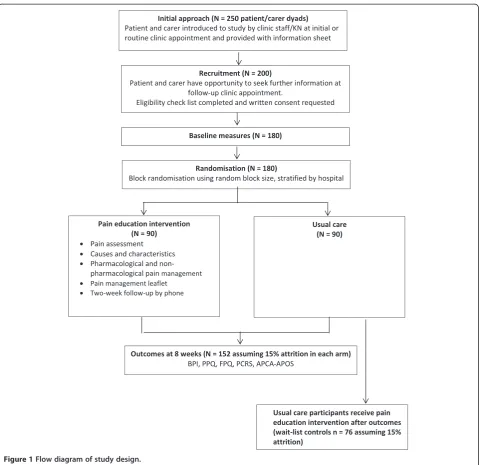
The study is a two-centre randomised wait-list con-trolled trial. Participants (patients with HIV/AIDS and their carers) randomly allocated to a pain education intervention group receive a leaflet-based educational intervention and verbal instructions for approximately 30 minutes on pain assessment and management in addition to usual care. Participants randomly allocated to the usual care group receive standard care, but re-ceive the leaflet-based educational intervention on completion of follow-up measures for both treatment groups (wait-list control). Participants are assessed at baseline after providing informed consent and then randomly allocated to either the pain education inter-vention or usual care arm of the trial. Follow-up as-sessments are conducted after eight weeks.
Setting
The trial setting is that of HIV and palliative care clinics within two public hospitals in northern Malawi. Both hospitals (Ekwendeni and Mzuzu Central) pro-vide in-patient, clinic-based and home-based care for people with HIV/AIDS that includes active treatment and palliative care. Ekwendeni Hospital provides ser-vices funded by the government. It was one of the first hospitals in Malawi to provide free HIV/AIDS medication. Mzuzu Central Hospital is government-funded and the largest referral hospital in north Malawi for people with HIV/AIDS. The population served by these hospitals includes people from both rural and urban areas.
Study participants
Participants are people living with HIV/AIDS and their carers. All participants need to be able to read and write in English or Tumbuka (the vernacular language used in the northern part of Malawi). They must be adults aged 18 years or over.
Inclusion criteria for people living with HIV/AIDS
To be eligible for the trial, participants must have received a diagnosis of HIV/AIDS. Participants with other conditions, such as cancer and tuberculosis, are included if these conditions present alongside a diag-nosis of HIV/AIDS. Eligible participants with HIV/ AIDS must be at WHO clinical stages III or IV of HIV/AIDS, or with a CD4 cell count of less than 350 cells, when the presence of pain and other symptoms are more likely due to opportunistic infections or side
effects of HIV treatment. Staging for trial eligibility is assessed from the medical records if recorded or through assessment by clinic staff if this information is not available.
Inclusion criteria for carers
To be eligible for inclusion, carers must be living with the person with HIV/AIDS and be identified as the indi-vidual most involved in their care.
Exclusion criteria for people living with HIV/AIDS
People living with HIV/AIDS will be excluded if they have health problems that may hinder cognition and communi-cation, such as HIV-associated dementia. This is assessed by the attending clinical officer during history-taking at the initial assessment or at clinic review.
Recruitment
People living with HIV/AIDS in Malawi typically visit the hospital (palliative care clinics and HIV clinics) with their family members. Posters about the study entitled
‘Pain Education Study’ are prominently displayed and potential participants have the opportunity to be given further information about the study directly from KN or from clinic staff.
The study is introduced either during the first appoint-ment at the HIV clinic for newly registered patients or during routine appointments at the HIV clinics or pallia-tive care clinics for those who are already receiving HIV medication (see Figure 1). KN or the staff in these clinics inform patients about the study and provide them with information sheets. Potential participants are encouraged by KN or the clinic staff to discuss with family members before making a decision to take part.
Potential participants have between two and four weeks to consider taking part in the study. During their next appointment those who are interested in taking part in the study are asked to provide written informed consent by KN. A checklist is administered to confirm that all criteria for study eligibility are met.
Randomisation
recruiting hospital. KN is not involved in the preparation of the envelopes and is blind to block size.
Interventions Usual care
Assistance with pain management for patients with HIV/AIDS is currently provided by hospital-based tive care nurses and typically delivered in either a pallia-tive care clinic or HIV clinic. Information relating to pain medication is typically responsive rather than pro-active andad hocrather than systematic. Information is provided when requested by patients or carers. The focus is mostly restricted to pharmacological treatment of pain. Pain assessments are not usually conducted in a
systematic way and not recorded routinely. It is unusual for this information to be shared with patients and/or their carers.
Pain education intervention
The pain education intervention is informed by a biopsychosocial approach [34] to management of pain among people with HIV/AIDS. This conceptual frame-work has guided the development of the intervention in targeting adequate and effective use of analgesia (biological), providing support and knowledge to min-imise distress associated with poorly controlled pain (psychological), and targeting the intervention at the level of the patient/carer dyad (social). The
• • •
[image:4.595.59.539.86.551.2]• •
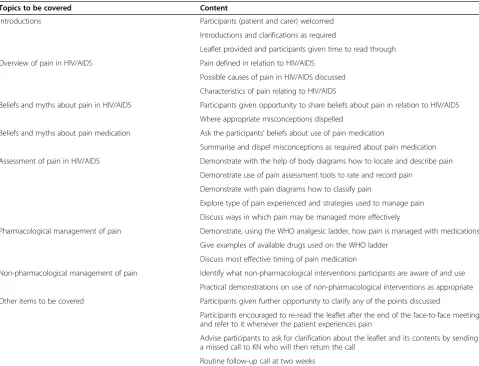
intervention consists of a leaflet and health education session delivered face-to-face by KN to the participants at the HIV clinic or palliative care clinic. The face-to-face session takes approximately 30 minutes wherein KN explains the intervention to the patient and carer and both are given a copy of the leaflet and allowed to browse through it briefly. KN then discusses the con-tents of the leaflet with the participants and they are both encouraged to ask questions. After two weeks, participants receive a phone call reminder to enquire whether they have any further questions after reading the leaflet. The details of the session are reported in Table 1.
Measures Baseline
After recruitment and obtaining written consent from par-ticipants, but prior to randomisation, baseline assessments are conducted by KN. Baseline assessments include rele-vant details from medical notes (date of diagnosis, current
treatments) and demographics. Other measures taken at baseline are those used as outcomes for the trial.
The primary outcome is pain severity measured using the Brief Pain Inventory [35]. A range of secondary out-comes have been chosen due to the complex nature of the intervention. The time point between delivery of the intervention and follow-up assessments was chosen to be consistent with other studies of pain education [36,37]. Patients are assessed in terms of pain severity, pain inter-ference with daily activities, knowledge of pain manage-ment, and quality of life. Carers are assessed in terms of knowledge of pain management, caregiver motivation and quality of life. These are measured as follows:
1. Pain severity is measured using the single item of the Brief Pain Inventory (BPI-PS) [35] where patients are asked to rate the severity of their pain on average over the last week. A rating is made on a 0 to 10 point scale with higher scores indicating greater severity of pain. This is consistent with the
Table 1 Components of the pain education intervention
Topics to be covered Content
Introductions Participants (patient and carer) welcomed
Introductions and clarifications as required
Leaflet provided and participants given time to read through
Overview of pain in HIV/AIDS Pain defined in relation to HIV/AIDS
Possible causes of pain in HIV/AIDS discussed
Characteristics of pain relating to HIV/AIDS
Beliefs and myths about pain in HIV/AIDS Participants given opportunity to share beliefs about pain in relation to HIV/AIDS
Where appropriate misconceptions dispelled
Beliefs and myths about pain medication Ask the participants’beliefs about use of pain medication
Summarise and dispel misconceptions as required about pain medication
Assessment of pain in HIV/AIDS Demonstrate with the help of body diagrams how to locate and describe pain
Demonstrate use of pain assessment tools to rate and record pain
Demonstrate with pain diagrams how to classify pain
Explore type of pain experienced and strategies used to manage pain
Discuss ways in which pain may be managed more effectively
Pharmacological management of pain Demonstrate, using the WHO analgesic ladder, how pain is managed with medications
Give examples of available drugs used on the WHO ladder
Discuss most effective timing of pain medication
Non-pharmacological management of pain Identify what non-pharmacological interventions participants are aware of and use
Practical demonstrations on use of non-pharmacological interventions as appropriate
Other items to be covered Participants given further opportunity to clarify any of the points discussed
Participants encouraged to re-read the leaflet after the end of the face-to-face meeting and refer to it whenever the patient experiences pain
Advise participants to ask for clarification about the leaflet and its contents by sending a missed call to KN who will then return the call
measurement of pain severity in a number of clinical trials [38]. The BPI has been used with patients with cancer and other chronic illnesses such as HIV/ AIDS [15,39] and to study the management of pain in South Africa [40].
2. Pain interference with daily activities is measured using the mean score of the seven pain interference items of the Brief Pain Inventory (BPI-PI). These items measure, on a scale of 0 to 10, the degree to which the patient reports pain interfering with each of seven activities (general activity, walking, work, mood, enjoyment of life, relations with others and sleep) and is the recommended method of
assessment of pain-related functional impairment in clinical trials [41].
3. For patients, knowledge of pain management is measured using the knowledge subscale of the Patient Pain Questionnaire (PPQ-K) [42]. The PPQ-K is made up of nine items asking the patient to disagree or agree with statements about the
effectiveness, timing of pain medication dosage, and adequacy of pain medication dosage. Agreement/ disagreement is rated on a scale of 0 to 10. Scores range from 0 to 90 with higher scores indicating greater patient knowledge of pain management. 4. For patients, quality of life is measured using the
APCA African POS [43]. The APCA African POS consists of seven items directed at patients addressing pain and symptom assessment, psychological and emotional concerns. Possible scores range from 0 to 35 with higher scores indicating worse outcomes/quality of life. The tool has been developed and tested in three African countries [44].
5. For carers, knowledge of pain management is measured using the knowledge subscale of the Family Pain Questionnaire (FPQ-K) [45]. Like the PPQ-K, the FPQ-K is made up of nine items asking the carer to disagree or agree with statements about the effectiveness, timing of pain medication dosage, and adequacy of pain medication dosage. Agreement/ disagreement is rated on a scale of 0 to 10. Scores range from 0 to 90 with higher scores indicating greater carer knowledge of pain management. 6. Carer motivation is measured using the Picot
Caregiver Rewards Scale (PCRS) [46]. The PCRS is a 16-item scale measuring the positive consequences of caregiving. Respondents rate the degree to which items describe positive consequences of their caregiving on a 5-point Likert scale. Possible scores range from 0 to 64 with higher scores indicating more positive caregiving experience.
7. For carers, quality of life is measured using the APCA African POS [43]. The APCA African POS
consists of three items directed at carers addressing the adequacy of information the family has received, confidence in caring, and level of worry. Possible scores range from 0 to 15 with higher scores indicating worse outcomes/quality of life.
While the BPI [40] and APCA African POS [43] have both been used previously in Sub-Saharan African Popula-tions, use of the PPQ, FPQ and PCRS has been restricted to populations in western countries. Our experience imme-diately prior to trial recruitment of piloting these scales as part of the questionnaires among 10 patients and 10 carers suggests that they are acceptable to and understood by members of the population of patients and carers from which our sample is being recruited.
Follow-up
Follow-up measures are conducted after eight weeks fol-lowing delivery of the intervention. Nurses blind to treat-ment group conduct the follow-up assesstreat-ments. This is implemented during the routine appointments to the HIV or palliative care clinic.
Sample size
We wish to be able to detect a mean difference of 10% between the treatment groups in the primary outcome measure (average pain severity in the BPI). A 10% im-provement is the lower limit of changes considered clin-ically important [47]. Using a P-value cut-off of 0.05 to determine a statistically significant result, 76 people per arm of the trial will be needed to complete the study to give 80% power to detect such a difference. This is based on a review [48] that suggests that education-based in-terventions are able to produce this level of improve-ment in pain reduction, and that a standard deviation of 2.2 points is a liberal estimate of variability. To allow for 15% attrition, we will attempt to recruit 180 participants to the trial.
Statistical analysis
conditional on the value of the outcome at baseline. Sen-sitivity analysis will be reported and performed as fol-lows: we will conduct secondary analyses that (1) adjust for variables that are potential predictors of outcome (for example, age, gender, stage of HIV/AIDS, medi-cation use at baseline) and (2) make worst-case and best-case scenario assumptions about participants lost to follow-up using the Stata command ‘rctmiss’ [49]. Ana-lysis will be conducted using Stata version 12 [33].
Ethical approval
The study has been approved by the University of Nottingham Medical School Research Ethics Committee (SNMP 11042012) and National Health Sciences Research Committee of Malawi (NHSRC 1023).
Discussion
Findings from this trial will inform the management of pain experienced by people living with HIV/AIDS. Previous trials of interventions designed to enhance self-management for people living with HIV/AIDS have been conducted either exclusively [31,32,50] or predom-inantly [9] in western countries. Differences in terms of culture and healthcare systems mean it is unwise to un-critically apply evidence for non-pharmacological inter-ventions from resource rich countries to those that are resource poor. Our trial also differs from these studies in intervening at the level of the patient/carer dyad. Family carers are a crucial component in the delivery of care for people living with HIV/AIDS in Malawi and other similar African countries. Most pain management educational intervention studies have been conducted in cancer pop-ulations [36,51-53]. Our intervention is targeted at pain experienced by people living with HIV/AIDS. The inter-vention is simple and fits within a model of care where most healthcare contact is between patients and nurses and is supported by trained health assistants.
Trial status
The trial commenced recruiting in September 2012. We anticipate reaching our recruitment target by June 2013.
Abbreviations
AIDS:Acquired immunodeficiency syndrome; APCA: African palliative care association; ART: Antiretroviral therapy; BPI: Brief pain inventory; FPQ: Family pain questionnaire; PCRS: Picot caregiver rewards scale; POS: Palliative care outcomes scale; PPQ: Patient pain questionnaire; RCT: Randomised controlled trial; UNAIDS: United Nations Program of HIV and AIDS; WHO: World Health Organisation.
Competing interests
The authors declare that they have no competing interests.
Authors’contributions
KN, JS and AA were responsible for the development and refinement of the protocol. KN is the principal investigator and trial manager. KN will conduct data analysis under the supervision of AA. KN and AA wrote the initial draft
of the manuscript. KN, JS and AA contributed to, edited and approved the final manuscript.
Acknowledgements
KN is funded by a doctoral scholarship from the School of Nursing, Midwifery and Physiotherapy, University of Nottingham; with additional financial support provided by the Malawi Government.
We thank all the patients and carers for their participation in the trial. We thank the clinic staff at both sites for assistance in recruitment. We thank Oscar Moyo and Amin Gondwe for conducting follow-up assessments.
Author details 1
Sue Ryder Care Centre for the Study of Supportive, Palliative and End of Life Care, School of Nursing, Midwifery and Physiotherapy, University of Nottingham, Queen’s Medical Centre, Nottingham NG7 2UH, UK.2School of Nursing Sciences, University of East Anglia, Norwich Research Park, Norwich NR4 7TJ, UK.
Received: 12 March 2013 Accepted: 3 July 2013 Published: 13 July 2013
References
1. World Health Organisation:Global HIV/AIDS Response–Epidemic Update and Health Sector Progress Towards Universal Access–Progress Report.Geneva: World Health Organization; 2011.
2. UNAIDS:Global Report: UNAIDS Report on the Global AIDS Epidemic 2010.
Geneva: Joint United Nations Programme on HIV/AIDS (UNAIDS); 2010. 3. Callaghan M, Ford N, Schneider H:A systematic review of task- shifting for
HIV treatment and care in Africa.Hum Resour Health2010,8:8. 4. Lawson M, Mazengera S, Nkhoma-Mbawa F, Noel T:Malawi Essential Health
Services Campaign - Oxfam International Research Report.Oxford, UK: Oxfam; 2008.
5. Makombe SD, Hochgesang M, Jahn A, Tweya H, Hedt B, Chuka S, Yu JK, Aberle-Grasse J, Pasulani O, Bailey C, Kamoto K, Schouten EJ, Harries AD: Assessing the quality of data aggregated by antiretroviral treatment clinics in Malawi.Bull World Health Organ2008,86:310–314.
6. Ministry of Health and Population Malawi:The Two Year Plan to Scale Up Antiretroviral Therapy in Malawi.Llongwe, Malawi: Ministry of Health; 2004. 7. McCoy D:HIV Care and Treatment in Southern Africa: Addressing Equity.
EQUINET Discussion Paper Number 10.EQUINET and OXFAM GB: Harare, Zimbabwe; 2003.
8. Sabin CA:The changing clinical epidemiology of AIDS in the highly active antiretroviral therapy era.AIDS2002,16(Suppl 4):S61–S68. 9. Wantland DJ, Holzemer WL, Moezzi S, Willard SS, Arudo J, Kirksey KM,
Portillo CJ, Corless IB, Rosa ME, Robinson LL, Nicholas PK, Hamilton MJ, Sefcik EF, Human S, Rivero MM, Maryland M, Huang E:A randomized controlled trial testing the efficacy of an HIV/AIDS symptom management manual.J Pain Symptom Manage2008,36:235–246. 10. Wahab KW, Salami AK:Pain as a symptom in patients living with HIV/
AIDS seen at the outpatient clinic of a Nigerian tertiary hospital.J Int Assoc Physicians AIDS Care (Chic)2011,10:35–39.
11. Oldham L, Kristjanson LJ:Development of a pain management programme for family carers of advanced cancer patients.Int J Palliat Nurs2004,10:91–99.
12. Newshan G, Sherman DW:Palliative care: pain and symptom management in persons with HIV/AIDS.Nurs Clin North Am1999,34:131–145.
13. Newshan G:Pain in human immunodeficiency virus disease.Semin Oncol Nurs1997,13:36–41.
14. Harding R, Powell RA, Kiyange F, Downing J, Mwangi-Powell F:Provision of pain- and symptom-relieving drugs for HIV/AIDS in sub-Saharan Africa.
J Pain Symptom Manage2010,40:405–415.
15. Vogl D, Rosenfeld B, Breitbart W, Thaler H, Passik S, McDonald M, Portenoy RK: Symptom prevalence, characteristics, and distress in AIDS outpatients.J Pain Symptom Manage1999,18:253–262.
16. Marcus KS, Kerns RD, Rosenfeld B, Breitbart W:HIV/AIDS-related pain as a chronic pain condition: implications of a biopsychosocial model for comprehensive assessment and effective management.Pain Med2000, 1:260–273.
18. Hughes A:Symptom management in HIV-infected patients.J Assoc Nurses AIDS Care2004,15(5 Suppl):7S–13S.
19. Hudson A, Kirksey K, Holzemer W:The influence of symptoms on quality of life among HIV-infected women.West J Nurs Res2004,26:9–23. discussion 24–30.
20. Brechtl JR, Breitbart W, Galietta M, Krivo S, Rosenfeld B:The use of highly active antiretroviral therapy (HAART) in patients with advanced HIV infection: impact on medical, palliative care, and quality of life outcomes.J Pain Symptom Manage2001,21:41–51.
21. Holzemer WL, Hudson A, Kirksey KM, Hamilton MJ, Bakken S:The revised Sign and Symptom Check-List for HIV (SSC-HIVrev).J Assoc Nurses AIDS Care2001,12:60–70.
22. Grant L, Brown J, Leng M, Bettega N, Murray SA:Palliative care making a difference in rural Uganda, Kenya and Malawi: three rapid evaluation field studies.BMC Palliat Care2011,10:8.
23. Namisango E, Harding R, Atuhaire L, Ddungu H, Katabira E, Muwanika FR, Powell RA:Pain among ambulatory HIV/AIDS patients: multicenter study of prevalence, intensity, associated factors, and effect.J Pain2012, 13:704–713.
24. Selwyn PA:Why should we care about palliative care for AIDS in the era of antiretroviral therapy?Sex Transm Infect2005,81:2–3.
25. Solano JP, Gomes B, Higginson IJ:A comparison of symptom prevalence in far advanced cancer, AIDS, heart disease, chronic obstructive pulmonary disease and renal disease.J Pain Symptom Manage2006, 31:58–69.
26. Peltzer K, Preez NF, Ramlagan S, Fomundam H:Use of traditional complementary and alternative medicine for HIV patients in KwaZulu-Natal. South Africa.BMC Publ Health2008,8:255.
27. Heath KV, Montaner JS, Bondy G, Singer J, O'Shaughnessy MV, Hogg RS: Emerging drug toxicities of highly active antiretroviral therapy for human immunodeficiency virus (HIV) infection.Curr Drug Targets2003, 4:13–22.
28. Harding R, Higginson IJ:Palliative care in sub-Saharan Africa.Lancet2005, 365:1971–1977.
29. Harding R, Karus D, Easterbrook P, Raveis VH, Higginson IJ, Marconi K:Does palliative care improve outcomes for patients with HIV/AIDS? A systematic review of the evidence.Sex Transm Infect2005,81:5–14. 30. Long L, Fox M, Sanne I, Rosen S:The high cost of second-line
antiretroviral therapy for HIV/AIDS in South Africa.AIDS2010,24:915–919. 31. Goujard C, Bernard N, Sohier N, Peyramond D, Lancon F, Chwalow J,
Arnould B, Delfraissy JF:Impact of a patient education program on adherence to HIV medication: a randomized clinical trial.J Acquir Immune Defic Syndr2003,34:191–194.
32. Wu AW, Snyder CF, Huang IC, Skolasky R, McGruder HF, Celano SA, Selnes OA, Andrade AS:A randomized trial of the impact of a programmable medication reminder device on quality of life in patients with AIDS.
AIDS Patient Care STDS2006,20:773–781.
33. StataCorp:Stata Statistical Software: Release 12.College Station, TX: StataCorp LP; 2011.
34. Engel GL:The need for a new medical model: a challenge for biomedicine.
Science1977,196:129–136.
35. Keller S, Bann CM, Dodd SL, Schein J, Mendoza TR, Cleeland CS:Validity of the brief pain inventory for use in documenting the outcomes of patients with noncancer pain.Clin J Pain2004,20:309–318. 36. Clotfelter CE:The effect of an educational intervention on decreasing
pain intensity in elderly people with cancer.Oncol Nurs Forum1999, 26:27–33.
37. Hudson PL, Aranda S, Hayman-White K:A psycho-educational intervention for family caregivers of patients receiving palliative care: a randomized controlled trial.J Pain Symptom Manage2005,30:329–341.
38. Cleeland CS:The Brief Pain Inventory User Guide.Houston: The University of Texas M.D. Anderson Cancer Center; 2009.
39. Breitbart W:Pain management and psychosocial issues in HIV and AIDS.
Am J Hosp Palliat Care1996,13:20–29.
40. Beck SL, Falkson G:Prevalence and management of cancer pain in South Africa.Pain2001,94:75–84.
41. Dworkin RH, Turk DC, Farrar JT, Haythornthwaite JA, Jensen MP, Katz NP, Kerns RD, Stucki G, Allen RR, Bellamy N, Carr DB, Chandler J, Cowan P, Dionne R, Galer BS, Hertz S, Jadad AR, Kramer LD, Manning DC, Martin S, McCormick CG, McDermott MP, McGrath P, Quessy S, Rappaport BA, Robbins W, Robinson JP, Rothman M, Royal MA, Simon L,et al:Core
outcome measures for chronic pain clinical trials: IMMPACT recommendations.Pain2005,113:9–19.
42. Ferrell BR, Ferrell BA, Ahn C, Tran K:Pain management for elderly patients with cancer at home.Cancer1994,74(7 Suppl):2139–2146.
43. Harding R, Selman L, Agupio G, Dinat N, Downing J, Gwyther L, Mashao T, Mmoledi K, Moll T, Sebuyira LM, Panjatovic B, Higginson IJ:Validation of a core outcome measure for palliative care in Africa: the APCA African Palliative Outcome Scale.Health Qual Life Outcomes2010,8:10. 44. Powell RA, Downing J, Harding R, Mwangi-Powell F, Connor S:Apca:
Development of the APCA African Palliative Outcome Scale.J Pain Symptom Manage2007,33:229–232.
45. Ferrell BA, Rhiner M, Rivera LM:Development and evaluation of the Family Pain Questionnaire.J Psychosoc Oncol1993,10:21–35.
46. Picot SJ, Youngblut J, Zeller R:Development and testing of a measure of perceived caregiver rewards in adults.J Nurs Meas1997,5:33–52. 47. Dworkin RH, Turk DC, Wyrwich KW, Beaton D, Cleeland CS, Farrar JT,
Haythornthwaite JA, Jensen MP, Kerns RD, Ader DN, Brandenburg N, Burke LB, Cella D, Chandler J, Cowan P, Dimitrova R, Dionne R, Hertz S, Jadad AR, Katz NP, Kehlet H, Kramer LD, Manning DC, McCormick C, McDermott MP, McQuay HJ, Patel S, Porter L, Quessy S, Rappaport BA,et al:Interpreting the clinical importance of treatment outcomes in chronic pain clinical trials: IMMPACT recommendations.J Pain2008,9:105–121.
48. Bennett MI, Bagnall AM, Jose Closs S:How effective are patient-based educational interventions in the management of cancer pain? Systematic review and meta-analysis.Pain2009,143:192–199.
49. White IR, Horton NJ, Carpenter J, Pocock SJ:Strategy for intention to treat analysis in randomised trials with missing outcome data.BMJ2011, 342:d40.
50. Gifford AL, Laurent DD, Gonzales VM, Chesney MA, Lorig KR:Pilot randomized trial of education to improve self-management skills of men with symptomatic HIV/AIDS.J Acquir Immune Defic Syndr Hum Retrovirol
1998,18:136–144.
51. Lai YH, Guo SL, Keefe FJ, Tsai SL, Chien CC, Sung YC, Chen ML:Effects of brief pain education on hospitalized cancer patients with moderate to severe pain.Support Care Cancer2004,12:645–652.
52. Du Pen SL, Du Pen AR, Polissar N, Hansberry J, Kraybill BM, Stillman M, Panke J, Everly R, Syrjala K:Implementing guidelines for cancer pain management: results of a randomized controlled clinical trial.J Clin Oncol1999,17:361–370.
53. Lovell MR, Forder PM, Stockler MR, Butow P, Briganti EM, Chye R, Goldstein D, Boyle FM:A randomized controlled trial of a standardized educational intervention for patients with cancer pain.J Pain Symptom Manage2010, 40:49–59.
doi:10.1186/1745-6215-14-216
Cite this article as:Nkhomaet al.:An educational intervention to reduce
pain and improve pain management for Malawian people living with HIV/AIDS and their family carers: study protocol for a randomised controlled trial.Trials201314:216.
Submit your next manuscript to BioMed Central and take full advantage of:
• Convenient online submission
• Thorough peer review
• No space constraints or color figure charges
• Immediate publication on acceptance
• Inclusion in PubMed, CAS, Scopus and Google Scholar
• Research which is freely available for redistribution