This is a repository copy of
Case-finding for common mental disorders in primary care
using routinely collected data: a systematic review
.
White Rose Research Online URL for this paper:
http://eprints.whiterose.ac.uk/148644/
Version: Published Version
Article:
Larvin, Harriet, Peckham, Emily Jane orcid.org/0000-0002-9377-1968 and Prady,
Stephanie Louise orcid.org/0000-0002-8933-8045 (2019) Case-finding for common mental
disorders in primary care using routinely collected data: a systematic review. Social
psychiatry and psychiatric epidemiology. pp. 1-15. ISSN 0933-7954
https://doi.org/10.1007/s00127-019-01744-4
[email protected] https://eprints.whiterose.ac.uk/ Reuse
This article is distributed under the terms of the Creative Commons Attribution (CC BY) licence. This licence allows you to distribute, remix, tweak, and build upon the work, even commercially, as long as you credit the authors for the original work. More information and the full terms of the licence here:
https://creativecommons.org/licenses/
Takedown
If you consider content in White Rose Research Online to be in breach of UK law, please notify us by
Vol.:(0123456789)
1 3
Social Psychiatry and Psychiatric Epidemiologyhttps://doi.org/10.1007/s00127-019-01744-4
REVIEW
Case‑inding for common mental disorders in primary care using
routinely collected data: a systematic review
Harriet Larvin1 · Emily Peckham1 · Stephanie L. Prady1
Received: 31 January 2019 / Accepted: 24 June 2019 © The Author(s) 2019
Abstract
Purpose Case-inding for common mental disorders (CMD) in routine data unobtrusively identiies patients for mental health research. There is absence of a review of studies examining case-inding accuracy in routine primary care data. CMD-case deinitions include diagnostic/prescription codes, signs/symptoms, and free text within electronic health records. This systematic review assesses evidence for case-inding accuracy of CMD-case deinitions compared to reference standards.
Methods PRISMA-DTA checklist guided review. Eligibility criteria were outlined prior to study search; studies compared CMD-case deinitions in routine primary care data to diagnostic interviews, screening instruments, or clinician judgement. Studies were quality assessed using QUADAS-2.
Results Fourteen studies were included, and most were at high risk of bias. Nine studies examined depressive disorders and seven utilised diagnostic interviews as reference standards. Receiver operating characteristic (ROC) planes illustrated overall variable case-inding accuracy across case deinitions, quantiied by Youden’s index. Forest plots demonstrated most case deinitions provide high speciicity.
Conclusion Case deinitions efectively identify cases in a population with good accuracy and few false positives. For 100 anxiety cases, identiied using diagnostic codes, between 12 and 20 will be false positives; 0–47 cases will be missed. Sensi-tivity is more variable and speciicity is higher in depressive cases; for 100 cases identiied using diagnostic codes, between 0 and 87 will be false positives; 4–18 cases will be missed. Incorporating context to case deinitions may improve overall case-inding accuracy. Further research is required for meta-analysis and robust conclusions.
Keywords Systematic review · Electronic health records · Anxiety · Depression · Adults
Introduction
Internationally, it is estimated that one in ive people meet criteria for anxiety or depressive disorders (common mental disorders, CMD) [1]. Depression is the leading cause for global disability, and anxiety disorders are within the top 10 [1]. Research into the causes and consequences of CMD, and the efects of interventions, requires accurate case ascer-tainment for study recruitment [2, 3]. The high costs and
participant burden associated with diagnostic interviewing and follow-up make unobtrusive identiication using rou-tinely collected data attractive [4]. There are also inancial and resource beneits to recruitment using automated algo-rithms compared to manually identifying participants [5].
Most healthcare systems in the developed world make at least partial use of electronic data [1]. Data contained in electronic health records (EHR) typically comprise of a problem list detailing clinically important diagnoses and concerns, treatments including prescriptions, referrals, and other relevant encounter details. Structured coding systems allow for eicient searching and record retrieval and may be accessed by health researchers through a variety of ways. For example in the UK, some primary care research databases can be accessed by accredited researchers for a fee [6, 7] or care providers may be approached directly by researchers for data use [8].
Electronic supplementary material The online version of this article (https ://doi.org/10.1007/s0012 7-019-01744 -4) contains supplementary material, which is available to authorized users.
* Harriet Larvin
1 Department of Health Sciences, The University of York,
Social Psychiatry and Psychiatric Epidemiology
1 3
Mental health researchers may use EHR data to sam-ple individuals for trial recruitment, identify and match cases and controls for observational studies or follow par-ticipants’ progress and outcomes [9]. The efective use of these data in research is heavily reliant on accurately identifying patients using markers of a disorder, otherwise known as case-inding.
CMD-case deinitions in EHR include current codes relating to speciic depressive and anxiety diagnoses, signs or symptoms [10]. Researchers can also choose to inter-rogate treatment codes or mental health referrals, codes for antidepressant or anxiolytic prescriptions or codes indicating an historical depressive or anxiety observation [11, 12].
There are some pitfalls to re-purposing primary care EHR data which may limit its effectiveness as a data source for mental health research. Poor EHR uniformity and maintenance can reduce reliability and primary care practitioners (PCP) rates of depression diagnosis are usu-ally lower than rates examined in epidemiological studies [11], as they do not usually record codes with research purposes in mind [13]. Diagnostic coding can also difer signiicantly between clinicians and practices over time, making the identiication of patients using a speciic case deinition more diicult [10, 14]. Free text within EHR may be extensively used for clinical management, but is rarely available to researchers due to conidentiality concerns. Free-text extraction can also be diicult given variations in terminology and writing style—such data are unedited and often hastily written [15]. Stigma attached to mental disorder diagnoses can also prevent coding of free text [9]. This is problematic for research purposes when free text contains relevant information that is not otherwise coded in the record, such as signs, symptoms, or management plans [16].
Given concerns related to the re-purposing of data, it is important to understand the accuracy of case-inding CMD within EHR. Comparison to a reference standard ascertains case deinition accuracy [17]; in mental health, such standards could be diagnostic interviews, screening instruments, or clinician judgement. Reviews of studies that compared routinely recorded case deinitions against reference standards have indicated acceptable accuracy in secondary care settings [18], but there are no such reviews of accuracy within primary care.
The aim of this study was to systematically review stud-ies that utilise case deinitions for identifying CMD within routinely collected primary care data and independently verify the presence or absence of CMD against a reference standard. The indings of this review will inform the selec-tion of CMD-case deiniselec-tions for accurate case-inding in routine primary care data in mental health research.
Method
The review design and report follow the Preferred Reporting Items for Systematic Reviews and Meta-analyses extension for Diagnostic Test Accuracy (PRISMA-DTA) guidelines [19].
Eligibility
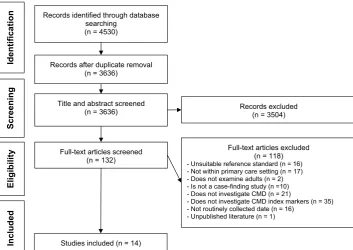
For inclusion, the study had to be set within an OECD state as of July 2018 and examine an adult population, or results of adults reported separately. CMD identiied in papers com-prised diagnostic sub-categories of depressive disorders, such as major depressive disorder and dysthymia or anxiety disorders, including generalised anxiety disorder and post-traumatic stress disorder, or both, as deined by WHO [1]. We excluded papers investigating severe mental disorders such as schizophrenia and bipolar disorder. Case-inding conirmation by reference standard (diagnostic interviews, screening instruments, or clinician judgement) was required to be within 1 year either side of the baseline, where this was not clear the study was considered at risk of bias. Studies had to examine registers managed by PCP and identify CMD in routinely recorded databases such as EHR and insurance claims data. Due to resource constraints, only studies pub-lished in English were reviewed. Exclusion criteria are out-lined in Fig. 1.
Search strategy
Searches were carried out in MEDLINE, CINAHL, Cochrane and PsycINFO databases between 5th July 2018 and 6th July 2018. The search was not limited by publica-tion date. The search string was a hybrid of the previous similar systematic review searches comprising methodo-logical, case-inding index and condition terms, plus MeSH headings, subject keywords, synonyms, alternate phrasing and necessary adaptations depending on database to prevent overlooking relevant studies [20, 21].
Components of the search string were organised by (a) conditions of interest (CMD), (b) data source, (c) reference standard, and (d) methodological terms in the combination: (a and b) and (c or d). This algorithm considers CMD clas-siication and medium of interest to be essential to appropri-ate publication search [20], see Supplement 1 for the search strategy.
Study identiication
Social Psychiatry and Psychiatric Epidemiology
1 3
the inclusion and exclusion criteria and full texts of poten-tially eligible studies were screened by one author (HL). The reference lists from studies meeting all eligibility criteria were searched for additional potentially eligible studies.
Data extraction
One author (HL) undertook data extraction using a data extraction form developed for this study. Data were collected on: author, year, and country of study, number of patient entries, CMD sub-category, patient population demograph-ics, details of case deinition and reference standard and out-comes of study including: true positive, true negative, false positive and false negative values, sensitivity, speciicity, positive predictive value (PPV), negative predictive value (NPV) and Youden’s index (YI). In cases where the required information could not be calculated from the presented data, primary authors were contacted once by email where pos-sible for the missing information.
Quality assessment
The Quality Assessment of Diagnostic Accuracy Studies II (QUADAS-2) tool [23] measures risk of bias and was used to assess quality of included studies. Following quality assessment, an overall risk of bias rating was determined. Studies were classiied with “high risk of bias”, where one or more domain was categorised as high/unclear risk of bias.
Narrative synthesis
The review narrative irst summarises quality assessment results. Following the overview of study characteristics, case-finding accuracy was presented by case definition investigated by the study: codes for diagnosis and symptoms, prescription codes, free text, and their combinations. ROC planes graphically display these indings to indicate overall case-inding accuracy [17]. Diagnostic codes refer to coded data describing diagnosis or deined problem, symptom, or sign.
Where there was more than one-case deinition examining more than one disorder, studies are grouped by diagnostic sub-category and ordered by reference standard. Studies of case–control design [indicated by (*)] are not applica-ble for PPV/NPV reporting as representative incidence and prevalence cannot be determined when number of cases is contrived to the number of controls [24]. Where sensitivity, speciicity, or YI was not reported or could not be calcu-lated, studies are examined by available case-inding accu-racy information.
Data synthesis
We examine the data initially by contrasting sensitivity and speciicity. Sensitivity examines the proportion of true positive cases for CMD found by a case deinition out of the number of positive cases identiied by the reference stand-ard; speciicity determines the proportion of true negative CMD cases among those identiied as negative by the ref-erence standard. Sensitivity or speciicity are considered
Fig. 1 Study selection low chart
Identification
Screening
Include
d
Eligibilit
y
Records identified through database searching
(n = 4530)
Records after duplicate removal (n = 3636)
Title and abstract screened
(n = 3636) Records excluded (n = 3504)
Full-text articles screened (n = 132)
Full-text articles excluded (n = 118)
- Unsuitable reference standard (n = 16) - Not within primary care setting (n = 17) - Does not examine adults (n = 2) - Is not a case-finding study (n =10) - Does not investigate CMD (n = 21)
- Does not investigate CMD index markers (n = 35) - Not routinely collected date (n = 16)
- Unpublished literature (n = 1)
[image:4.595.187.541.56.306.2]Social Psychiatry and Psychiatric Epidemiology
1 3
high when values exceed 0.67; values below 0.30 represent limited sensitivity or speciicity [25]. YI provides a global measure of case deinition performance and power in a sin-gle statistic, by combining true positive (sensitivity) and true negative (speciicity) rates; an accurate marker is close to 1, while a poor marker has YI of closer to 0.
The most accurate case deinitions are located in the top left quarter of a receiver operating curve (ROC) plane, where sensitivity and speciicity are closest to 1. Forest plots dem-onstrate paired sensitivity and speciicity of case deinitions. Tabulations and calculations were prepared using Microsoft Excel and igures using MetaDiSc [26].
Study Selection
4530 papers were retrieved in the search. Following duplicate removal (n = 326), title and abstract screening
(n = 3636) revealed 132 studies eligible for full text
screen-ing. Fourteen studies met eligibility criteria (Fig. 1) [28–41]. A meta-analysis was planned providing at least 20 studies were identiied, with more than 10 of the studies being at low risk of bias according to QUADAS and with minimal clinical and methodological heterogeneity across extracted information [27]. Meta-analysis was not conducted due to insuicient quantity (n ≤ 20) and large proportion of studies
at high risk of bias (n = 10; 71%).
Quality assessment
Four studies (29%) were at low risk of bias across all domains [30, 33, 39, 40] and the remaining studies (71%) were at risk of bias in one or more domains (S2.1). Of the studies at high risk of bias, the most common domain at risk was low and timing; in all cases, this was due to unclear interval of time between case-inding index and reference standard baseline [31, 33–37, 43].
Overview of included studies
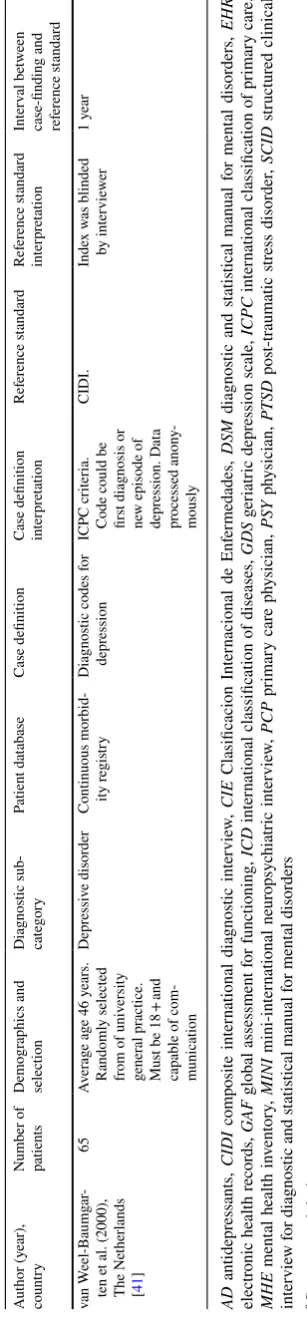
Table 1 summarises data extraction. All studies were pub-lished between 1994 and 2016 and were from USA (n = 6),
UK (n = 3), The Netherlands (n = 2), Canada (n = 1), Spain
(n = 1), and Sweden (n = 1). There was large variation in
population demographics. For example, two studies exam-ined older populations [37, 38], while another investigated patients aged 25–65 years [31]. One study investigated a population of mostly male veterans [32] and another a popu-lation with 63% women [30]. There were some absences of information for comprehensive population demographics in many studies, e.g., absent gender data [29, 31, 37].
Of 14 included studies, eight studies (57%) examined depressive disorders [28, 31, 35–38, 40, 41] and one addi-tionally investigated both anxiety and depressive disorders
[34]. The remaining ive studies examined anxiety disorders only [29, 30, 32, 33, 39, 42]. All included papers examined accuracy of codes incorporated within algorithms; therefore, case deinition accuracy can only be interpreted as codes within algorithms rather than accuracy of individual codes. Seven studies compared case deinitions to a reference stand-ard of diagnostic interview [29, 30, 33, 35, 37, 39, 41] and ive compared to results from self-reported questionnaires [31, 32, 34, 36, 38]. Two studies examined case-inding accuracy compared to researcher and clinician reviewed EHR [28, 36] and one utilised a questionnaire completed by a physician [40]. Four studies were of case–control design and, therefore, increased risk of bias [28, 30, 32, 33].
Study design and reporting
We contacted four authors for raw data to populate contin-gency tables; none responded [28, 32, 33, 40]. Most studies investigated diagnostic codes only (n = 10) [28, 29, 31–34, 37, 38, 40, 41], four investigated prescription codes only [34–36, 40], and one free text with codes [30]. Five studies examined combinations within case deinitions [30, 34–36,
40]. Studies are grouped more than once if they examined more than one-case deinition.
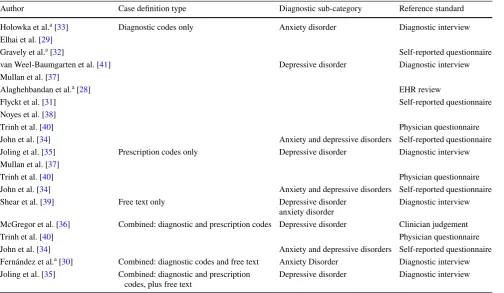
ROC planes are grouped by type of case deinition. Forest plots illustrate possible variation in sensitivity and speciic-ity by CMD and reference standard utilised. Study group-ings are outlined in Table 2. One-case deinition examined diagnostic and prescription codes with free text combined and is, therefore, not illustrated graphically [26].
Diagnostic codes only
Eight of the ten studies examining diagnostic codes were at high risk of bias [28, 29, 31, 32, 34, 37, 38, 41] and two were at low risk of bias [33, 40].
Figure 2a illustrates overall variable case-inding accu-racy of diagnostic codes. Most points follow closely to the line of no efect; however, there are three case deinitions located in the top left quartile indicate high sensitivity and speciicity: two from Elhai et al. and one from van Weel-Baumgarten et al. [29, 41].
Social P
sy
chia
tr
y and P
sy
chia
tric Epidemiology
1 3
Table 1 Summary of included studies
Author (year), country
Number of patients
Demographics and selection
Diagnostic sub-category
Patient database Case deinition Case deinition interpretation
Reference standard Reference standard interpretation
Interval between case-inding and reference standard
Alaghehbandan et al. (2012)a,
Canada [28]
253 Patients aged 18+ with diagnosis of depressive disorder. Around 70% male. Recruited from 3 family practices in Newfoundland and Labrador. Data collected between January and July 2007. Bipolar disorders excluded. Controls were matched by age/ gender
Depressive disorder Administrative data-bases; Medical care plan data.
5 case deinitions developed using ICD 9/10 edi-tion codes. (> 1 hospital or > 2 PSY visits within 1 year; > 1 hospital or > 2 PSY visits within 2 years; (> 1 hospital or > 1 PSY visits within 1 year) or > 2 PCP within 1 year; (> 1 hospital or > 1 PSY) or > 2 PCP within 2 years; (> 1 hospital or > 1 PSY) or > 3 PCP within 3 years
Variables for devel-opment: diagno-ses, date, service provider type
Diagnosis in EHR reviewed by researchers
Excluded cases were reviewed by psychiatrist
Unclear
Elhai et al. (2009), USA [29]
5692 Adults and
ado-lescent samples separated. Of 5692 patients in sample, only those with traumatic event comprising initial fear/helplessness/ horror criterion were queried for remaining DSM-IV PTSD symptoms
Anxiety disorder— PTSD
National Co-morbidity Survey Replication
Current DSM-IV classiication of PTSD plus King, Simms extensions of DSM-IV PTSD models compared; all to have symp-toms A1 and A2, E and F. King: at least 1 re-experi-encing symptom (B1–B5); at least 2 hypera-rousal symptoms (D1–D5) + at least 1 avoidance symptom C1–C2. Simms: at least 1 re-experiencing symptom (B1– B5); at least 1 avoidance symptom C1–C2; at least 1 hypera-rousal symptom (D4–D5) + at least 3 dysphoria symptoms (C3– C7, D1–D3)
King model sepa-rates criterion C. Simms model 3 hyperarousal symptoms combined with emotional numbing factor symptoms to form ‘dysphoria’
CIDI: at least 1 re-experiencing symptom (B1– B5); at least 3 avoidance symp-toms (C1–C7) + at least 2 hypera-rousal symptoms (d1–D5)
Interviewer: unclear training and inter-rater independ-ence
[image:6.595.71.751.65.543.2]Social P
sy
chia
tr
y and P
sy
chia
tric Epidemiology
1 3
Table 1 (continued)
Author (year), country
Number of patients
Demographics and selection
Diagnostic sub-category
Patient database Case deinition Case deinition interpretation
Reference standard Reference standard interpretation
Interval between case-inding and reference standard
Fernández et al. (2012), Spaina
[30]
3815 Mean
age = 54.3 years. 63% females. Patients from 77 primary care cen-tres in Catalonia, randomly selected and invited to join the study
Anxiety disorder Diagnosis and treat-ment of treat-mental disorders study
Codes ICPC-II: p01, p02, p74, p79. CIE-9: 300.0 and 300.00, 300.01, 300.02, 300.09, 300.2 and 300.20, 300.22, 300.23, 300.29, 300.3. CIE-10: F40, F40.0, F40.1, F40.2, F40.8, F41, F41.0, F41.1, F41.2, F41.3, F41.8, F41.9, F42. Also mention of anxiety disorder/ anxiety symptoms in EHR not coded
Previous 12 month EHR examined and extracted by blinded interview-ers into dichoto-mous variable
Structured Clinical Interview for DSM, face-to-face
Trained clinical psychologists
1 year
Flyckt et al. (2014), Sweden [31]
90 Adults, sampled from a doctors waiting room in a wealthy catchment area with 50% pop. between 25 nd 65. Age and gender matched. All par-ticipants must have had primary care contact within the past year
Depressive disorder EHR from primary practices
One or more of the following ‘cues’. Signs of depres-sion: note in medi-cal record by PCP that described 1/9 depressive criteria. Also included number of physician-rated signs/symptoms, e.g., tearfulness and excessive worrying. Also decreased func-tioning (low GAF score). A case was exhibiting one or more of these cues
Experienced psy-chiatrist analysed the cues and signs retrieved in EHR
Montgomery-Asberg Rating Scale score > 12 and diagnostic interview (as determined by interview in wait-ing room)
Not reported 1 week
Gravely et al. (2011), USAa [32]
4777 Veterans, mostly male and middle aged (45-64). At least 1 new PTSD diagnosis, recruited over 30 weeks
Anxiety disorder— PTSD
Veterans Adminis-tration administra-tive data from National Patient Care Database
ICD-9 codes of one PTSD diagnosis (309.81), verses at least 2 PTSD diagnoses
Second PTSD diag-nosis found within 4 months of irst
PTSD checklist score > 50
PTSD checklist self-reported through national survey
[image:7.595.64.761.61.501.2]Social P
sy
chia
tr
y and P
sy
chia
tric Epidemiology
1 3
Table 1 (continued)
Author (year), country Number of patients Demographics and selection Diagnostic sub-category
Patient database Case deinition Case deinition interpretation
Reference standard Reference standard interpretation
Interval between case-inding and reference standard
Holowka et al. (2014), USAa [33]
1649 Iraq/Afghanistan veterans, average 37.5 years of age and 50% men; 50% women. Random sample, participants with PTSD (pres-ence of 2 PTSD diagnosis in ICD-9: code 309.81) and without diagnosis (3:1). Consecutive sampling to acquire necessary numbers Anxiety disorder— PTSD Project VALOR National patient care database
PTSD status by ICD-9 diagnoses in Encounter (ser-vices provided for condition) records and Patient Prob-lem list (codes for diagnoses). Codes examined as cur-rent and within lifetime
Indicators of PTSD in problem list and encounter data abstracted by trained research assistants
Structured clinical interview for DSM over telephone
Trained doctoral-level diagnosti-cians. Blind to diagnostic status and interrater reli-ability examined by random sub-sample
1 year
John et al. (2016), UK [34]
2799 Welsh between 18
and 74. Baseline survey sent to population
Anxiety and depres-sive disorders collectively
General practice database at Swan-sea University
12 algorithms for Read codes ver-sion 2; current and historical (addi-tional iles) plus drug treatment
In waves (wave one = baseline survey); wave two = follow-up postal survey
5-item MHI Self-reported
ques-tionnaire
Unclear
Joling et al. (2011), The Netherlands [35]
816 Aged between 18
and 65. Screening questionnaires sent to random sample who consecutively consulted Primary care practitioner for 4 months; screen positives followed up with CIDI
Depressive disorder The Netherlands Study of Depres-sion and Anxiety
ICPC codes, medication data (anatomical thera-peutic chemical classiication), referral data (working commit-tee for information and automation) codes and fee text in EHR
2 scorers for 36 cases before total agreement across all cases
CIDI by telephone Interviewers blind to diagnosis
Unclear
McGregor et al. (2010), UK [36]
168 Patients of 5 general practices in Swan-sea. 10% random sample of eligible patients
Depressive disor-der—at least mod-erate to severe
Secure anonymised information link-age database
Algorithm of inclu-sion/exclusion cri-teria. Recent AD therapy, diagnosis of moderate to severe depression in medical history. Plus speciic study exclusion criteria
Not reported Clinical diagnosis in EHR
Psychiatrist judge-ment
[image:8.595.74.753.63.476.2]Social P
sy
chia
tr
y and P
sy
chia
tric Epidemiology
1 3
Table 1 (continued)
Author (year), country
Number of patients
Demographics and selection
Diagnostic sub-category
Patient database Case deinition Case deinition interpretation
Reference standard Reference standard interpretation
Interval between case-inding and reference standard
Mullan et al. (1994), UK [37]
186 Aged 65 years plus. Consecutive attend-ers to the practice
Depressive disorder Lower Clapton Health Centre
Primary care depres-sion diagnosis in EHR
EHR traced for info on: PCP detected depression, PCP recorded depres-sive symptom, currently on AD, past history of depression and past history of AD
15-item GDS by brief interview with researcher
By psychiatrist blind to 15-item GDS data
Unclear
Noyes et al. (2011), USA [38]
1551 19 counties, in New York, West Virginia and Ohio states. A random sample of elderly primary care patients was taken. Average age 77 years; more than 66% female and < 4% non-white
Depressive disorder Medicare claims database
Base was ICD-9— clinical modiica-tion codes 296.20-24 and 296.30-34 (depression). Extended to dysthymic, adjust-ment disorders with depressed mood, depressive order not else-where classiied (300.4, 309.0 and 311)
Not reported 2 self-reported depression scales. MINI and GDS
No interviewer judgement required for these scales. Adminis-tration of refer-ence standard was baseline
1 year before and after baseline
Shear et al. (2000), USA [39]
164 Aged between 18
and 65, urban and rural clinics. 68% female. Consecu-tive recruitment for non-psychotic patients who were seen at a rural or urban community treatment facility
Mood, anxiety or adjustment disorders
Two community health facilities, Pennsylvania
Primary diagnosis in EHR
Primary diagnosis, demographics and insurance coverage
SCID One of 2 researchers
lead interview (non-physician), reviewed by SCID trainer. Unre-solved questions or disagreements discussed at weekly visits from supervisor and resolved
3 months
Trinh et al. (2011), USA [40]
82 Patients selected from representative group of primary care practices
Depressive disorder Research Patient Data Registry
EHR ield codes. Depression in billing diagnosis, depression in problem list and antidepressant in medication list. Compared with combinations
EHR ields tested against PCP assessment of survey
PCP survey PCP assessment
posted
[image:9.595.58.747.64.502.2]Social Psychiatry and Psychiatric Epidemiology
1 3
alterations and not case-finding accuracy using current diagnostic criteria. Current DSM-IV classiication of PTSD was also compared to reference standard in this study; case-inding accuracy was signiicantly lower with YI of 0.38.
The case deinition with the lowest case-inding accu-racy in this group, illustrated by YI of 0.05 and 0.04 were examined by John et al. incorporating Read codes for current diagnosis plus a range of signs and symptoms of anxiety or depressive disorders—treated or untreated in two waves, respectively. These codes encompass case deinitions for both anxiety and depressive disorders and utilised a self-reported questionnaire as comparison [34].
Sensitivity and speciicity of diagnostic codes was vari-able when grouped by disorder sub-category (Supplement 3). Speciicity was high across most diagnostic codes rang-ing from 0.82 (95% CI 0.68, 0.92) to 1.00 (1.00, 1.00). The most sensitive diagnostic codes were for anxiety disorders (PTSD), ranging from 0.80 (0.75, 0.83) to 0.88 (0.84, 0.91). Sensitivity was low in depressive disorders, not exceeding 0.38 (0.24, 53). Case deinitions using ICPC codes for diag-nosis or episode of depression compared to clinical inter-view as reference standard in the van Weel-Baumgarten’s (2000) study exhibited considerably higher sensitivity than other studies of depressive disorders at 1.00 (0.87, 1.00). Diagnostic codes for anxiety and depressive disorders com-bined demonstrated low sensitivity, not exceeding 0.06 (0.05, 0.08).
Prescription codes only
Three of the four studies examining prescription codes only were at high risk of bias [35–37]; one was at low risk of bias [40].
Figure 2b illustrates overall variable case-inding accu-racy of prescription codes. All points are above or on the line of no efect.
The most accurate case deinition with YI of 0.44 was ICD-9 codes for antidepressant prescriptions in medication list for depressive disorders compared to a physician ques-tionnaire (S2.3); however, absence in contingency table data hinders estimates of overall accuracy for this case deinition [40]. Joling et al. investigated ICPC codes for antidepres-sants in current medication lists and in EHR history as case deinition for depressive disorders giving a similar YI value of 0.41 [35].
The least accurate case deinition in this group illustrated YI of 0.0 [37]. This study by Mullan et al. (1994) investi-gated current and historical prescriptions for antidepressants as case deinitions for depressive disorders in an older popu-lation compared to brief diagnostic interview.
[image:10.595.61.215.59.724.2]Sensitivity was variable and speciicity moderately high for prescription codes when grouped by disorder sub-cat-egory (Supplement 3). Speciicity did not fall below 0.72
Table 1 (continued) A ut hor (y ear), countr y N umber of patients Demog raphics and selection Diagnos tic sub-categor y P atient dat abase Case deinition
Case deinition inter
pr et ation R ef er ence s tandar d R ef er ence s tandar d inter pr et ation Inter v al be tw een
case-inding and ref
er ence s tandar d v an W eel-Baumg ar -ten e t al. (2000), The N et her lands [ 41 ] 65 A v er ag e ag e 46 y ears. R andoml y selected fr
om of univ
ersity g ener al pr actice. Mus t be
18 + and
capable of com- munication
Depr
essiv
e disor
der
Continuous morbid- ity r
egis
tr
y
Diagnos
tic codes f
or depr ession ICPC cr iter ia.
Code could be irs
t diagnosis or
ne
w episode of
depr ession. Dat a pr ocessed anon y -mousl y CIDI. Inde x w as blinded b y inter vie w er 1 y ear AD antidepr essants, CIDI com posite inter national diagnos tic inter vie w , CIE Clasiicacion Inter
nacional de Enf
er
medades,
DSM
diagnos
tic and s
tatis
tical manual f
or ment al disor ders, EHR electr onic healt h r ecor ds, GA F g
lobal assessment f
or functioning,
ICD
inter
national classiication of diseases,
GDS g er iatr ic depr ession scale, ICPC inter
national classiication of pr
imar y car e, MHE ment al healt h in v ent or y, MINI mini-inter national neur opsy chiatr ic inter vie w , PCP pr imar y car e ph y sician, P SY ph y sician, PT SD pos t-tr aumatic s tr ess disor der , SCID s tr uctur ed clinical inter vie w f or diagnos
tic and s
tatis
tical manual f
or ment
al disor
ders
a Case–contr
ol
Social Psychiatry and Psychiatric Epidemiology
1 3
(95% CI 0.68, 0.75). Sensitivity was variable across in pre-scription codes for depressive disorders and anxiety/depres-sive disorder combined. This ranged from 0.14 (0.07, 0.25) to 0.69 (0.63, 0.75) in depressive disorders and 0.33 (0.29, 0.36) to 0.48 (0.43, 0.53) in anxiety/depressive disorders combined. There were insuicient data to examine prescrip-tion codes as a case deiniprescrip-tion for anxiety disorders.
Free text only
The single study by Shear et al. examining free text only for anxiety and depressive disorders was at low risk of bias [39]. Accuracy of free-text primary diagnosis recorded by PCP as case deinitions was determined for separate anxi-ety and depressive disorder diagnoses compared to clinical interview.
Figure 2c illustrates overall variable accuracy. One-case deinition is located in the top left quarter, indicating high case-inding accuracy. This case deinition identiied depres-sive disorder as primary diagnosis by PCP.
Comparison of YI values in illustrates accuracy of free text was higher in depressive disorders with 0.35, compared to 0.13 in anxiety disorders (S2.4).
There was variable sensitivity and moderately high speci-icity of free text as case deinition (Supplement 3). Sensi-tivity ranged from 0.20 (95% CI 0.12, 0.29) to 0.58 (0.47, 0.68) in. Speciicity was highest in the case deinition for identifying anxiety disorders at 0.94 (0.85, 0.98).
Combined: diagnostic and prescription codes
Two studies examining diagnostic and prescription codes combined were at high risk of bias [34, 36] and the third was at low risk [40].
Figure 2d illustrates overall variable case-inding accu-racy in using diagnostic and prescription codes to identify CMD. Most points do not follow closely to the line of no efect indicating minimal threshold efect. Two points are located in the top left quartile suggesting high accuracy. These case deinitions are reported by McGregor et al. and developed in a trial recruitment context, comprising Read codes for antidepressant prescription, lifetime depression diagnosis; exclusion Read codes: folate deiciency, preg-nant, taking Lithium/anticonvulsants and life expectancy less than 1 year; clinician 1 judgement as reference standard; Read codes for antidepressant prescription, lifetime depres-sion diagnosis; excludepres-sion Read codes: folate deiciency,
Table 2 Summary of paper groupings
CMD common mental disorder, EHR electronic health records, PTSD post-traumatic stress disorder
a Case–control design
Author Case deinition type Diagnostic sub-category Reference standard
Holowka et al.a [33] Diagnostic codes only Anxiety disorder Diagnostic interview
Elhai et al. [29]
Gravely et al.a [32] Self-reported questionnaire
van Weel-Baumgarten et al. [41] Depressive disorder Diagnostic interview
Mullan et al. [37]
Alaghehbandan et al.a [28] EHR review
Flyckt et al. [31] Self-reported questionnaire
Noyes et al. [38]
Trinh et al. [40] Physician questionnaire
John et al. [34] Anxiety and depressive disorders Self-reported questionnaire
Joling et al. [35] Prescription codes only Depressive disorder Diagnostic interview
Mullan et al. [37]
Trinh et al. [40] Physician questionnaire
John et al. [34] Anxiety and depressive disorders Self-reported questionnaire
Shear et al. [39] Free text only Depressive disorder
anxiety disorder
Diagnostic interview
McGregor et al. [36] Combined: diagnostic and prescription codes Depressive disorder Clinician judgement
Trinh et al. [40] Physician questionnaire
John et al. [34] Anxiety and depressive disorders Self-reported questionnaire
Fernández et al.a [30] Combined: diagnostic codes and free text Anxiety Disorder Diagnostic interview
Joling et al. [35] Combined: diagnostic and prescription
codes, plus free text
[image:11.595.51.556.70.363.2]Social Psychiatry and Psychiatric Epidemiology
1 3
pregnancy and life expectancy less than 1 year; clinician 2 judgement as reference standard [36].
Comparison of YI values illustrate case deinitions in McGregor et al. as the most accurate diagnostic codes with YI of 0.99 and 0.88, respectively [36]. Low-case-inding accuracy was illustrated in case deinitions for anxiety and depressive disorders combined in John et al., as illustrated by YI not exceeding 0.04 [34] (S2.5).
Supplement 3 shows variation in sensitivity and speci-icity of diagnostic and prescription codes combined when grouped by disorder sub-category. Specificity was high across case deinitions, YI at least 0.96 (95% CI 0.89, 0.99). Case deinitions of at least moderate severity depression used by McGregor et al. (2010) were more sensitive rang-ing from 0.92 (0.84, 0.97) to 0.99 (0.87, 1.00) [36], than the algorithm used by John et al. for depression and/or anxiety disorders, where sensitivity did not exceed 0.38 (0.24, 53) [34].
Combined: diagnostic codes and free text
A single study by Fernández et al. examined diagnostic codes (ICPC and CIE codes) combined with free text for
case-inding anxiety disorders and anxiety with or without symptoms of depression. This study compared case-inding accuracy to diagnostic interview and was at low risk of bias [30].
Figure 2e illustrates low-case-finding accuracy with points following closely to the line of no efect.
YI values across these case deinitions were low, and the highest was 0.25 for identifying anxiety associated with depression. The case deinition for any anxiety disorder has similar YI value of 0.22. Case-inding accuracy when the case deinition was for generalised anxiety disorder, YI was 0.02 (S2.6).
There was highly variable sensitivity and speciicity in this group of case deinitions. Sensitivity was low, ranging from 0.04 (95% CI 0.01, 0.09) to 0.47 (0.38, 0.56). Speci-icity of all case deinitions were above 0.90 (0.89, 0.91), except for anxiety associated with depression which was moderate (0.50; 0.39, 0.61) (Supplement 3).
Fig. 2 ROC planes of case deinitions. a Diagnostic codes, b prescription codes, c free text, d diagnostic and prescription codes combined, e
[image:12.595.54.541.56.369.2]Social Psychiatry and Psychiatric Epidemiology
1 3
Combined: diagnostic and prescription codes, plus free text
Only Joling et al. examined case deinitions comprising diagnostic and prescription codes plus free text. One-case deinition was examined: ICPC codes for depressive dis-order/depressive feelings, with antidepressant prescription, free text and mental health referral, compared to diagnostic interview as reference standard. This study was at high risk of bias [35].
Sensitivity and PPV of this marker were moderately low at 0.41 (95% CI 0.36, 0.45) and 0.65 (0.60, 0.71), respec-tively; PPV in this study increased compared to prescription codes alone which was 0.54 (0.49, 0.59). Speciicity was high at 0.90 (0.83–0.96). YI illustrated moderately low-case-inding accuracy of 0.30 (S2.7).
Discussion
Summary of indings
Most of the fourteen studies included in the review were at risk of bias. ROC planes illustrated variable overall accuracy across case deinitions, while forest plots indicated gener-ally high speciicity but variable sensitivity. Meta-analysis was not conducted due to variability in demographics, study design, and overall high risk of bias.
The most accurate case deinition assessed in this review comprised diagnostic and prescription Read codes along with contextual trial exclusion criteria [36]. The least accu-rate case deinitions appeared to be current antidepressant prescription for PTSD in an older population and ICD-9 codes for identifying depression in older age groups.
Combining diagnostic codes and free text and diagnos-tic plus prescription codes and free text appeared to have low-case-inding accuracy in the one study that examined it; however, free text combined with diagnostic and prescription codes marginally increased PPV compared to prescription codes alone in one study (35). Combining case deinitions for anxiety and depressive disorders did not demonstrate markedly high case-inding accuracy.
Limitations
Only fourteen studies met our inclusion criteria. Search-ing grey literature databases may have increased quantity of included studies, but not impact [42]. Meta-analysis was not conducted as the requirements were not met. Most stud-ies in the present review were at high risk of bias which also impedes reliability of indings.
Threshold efect occurs when a signiicant change is observed following a quantitative limit. Many case deini-tions incorporated only one type of marker (e.g., diagnostic or prescription codes or free text) compared to a reference standard which varied greatly in reliability and conduct. This restricts outlook of potential threshold efect [27] and con-tributes to signiicant heterogeneity across studies making direct comparisons diicult to interpret.
Limitations to case deinition types examined in this review include undeined location within EHR (e.g., pre-scription or problem lists) and potentially unreliable free-text extraction due to terminology and contextual variations [10]. Many studies included antidepressant prescription codes as markers for CMD; this does not consider CMD patients who refuse or are unsuitable for treatment [43], or patients taking antidepressants for other conditions such as chronic pain. Where marker types have been combined within case deini-tions, e.g., diagnostic and prescription codes, the efects of ‘AND’ and ‘OR’ within deinitions has not been explored. It is possible that these combinations may greatly difer in their case-inding accuracy. The case-inding accuracy of encoun-ter information and psychiatric referrals as case deinitions in primary care EHR has also not been explored.
While utilising EHR routine primary care data is an unobtrusive method for identifying cases for mental health research, a large proportion of CMD in primary care is undi-agnosed [1]. Patients with CMD identiied by case-inding may, therefore, not be representative of community cases. This may bias generalisability of indings from mental health research that use EHR.
There is an argument that case–control designs can over-estimate test accuracy and should not be compared with cohort studies in diagnostic accuracy systematic reviews [3]. While including these studies in the present review may limit reliability of conclusions, case–control design studies are identiied in the narrative and potential bias outlined.
Studies were screened by a single author, introducing potential bias; around 8% of studies may be missed by sin-gle screening [44]. Due to time and resource constraints grey literature was not examined contributing to publication bias risk. Studies published in languages other than English were also not explored.
Interpretation with existing literature
An existing review examining efectiveness of case-inding for COPD in primary care found notable heterogeneity across studies [45]. This was shared as a signiicant barrier in the present review and could be causative of much of the variability in accuracy across case deinitions.
Social Psychiatry and Psychiatric Epidemiology
1 3
diagnoses inding that case-inding markers for depressive disorders were more accurate than those for anxiety disor-ders [18]. Their indings do not relect the indings of the present review in that case-inding of depression and anxiety disorders appear equally variable using routine data within a primary care setting. Factors such as setting and care type may inluence the case-inding accuracy between disorder types.
Fiest et al. examined accuracy of ICD codes for identify-ing depression in administrative data and conclude case-inding accuracy is dependent on amount context provided by case deinition [45]. In the present review, the study uti-lising a detailed case deinition: trial recruitment criteria also appeared to have higher case-inding accuracy.
The present review indicates combining free text with diagnostic codes and diagnostic plus prescription codes only marginally improves case-inding accuracy compared to pre-scription codes alone. The previous research in non-CMD conditions indicates free text signiicantly augments case-inding accuracy [15, 46]. Accuracy of free-text mining in EHR may be dependent on disease which could explain the diferences in indings of the present review.
In this review, lower case-inding accuracy for depres-sive disorders was observed in studies within older popula-tions. Older age group patients can have higher prevalence of comorbidities which can inluence CMD diagnoses and prevent accurate case-inding [47]. Examining studies by age ranges may demonstrate the impact age can have on CMD-case-inding.
Implications for practice
The predominantly high speciicity of CMD-case deini-tions suggests they may be more useful for identifying CMD patients as cases in mental health research with marginally low levels of false positives. To identify true positives, it may be necessary to utilise further screening or diagnostic assessments to conirm CMD cases as sensitivity was not consistently high.
Most of the evidence in our review came from studies examining diagnostic codes only. The indings suggest that CMD-case-inding accuracy using diagnostic code algo-rithms may be influenced by disorder. Further research is required to examine the diferences between disorder sub-categories.
Case deinitions incorporating the context of the research purpose may improve case-finding accuracy. Research-ers may wish to prioritise contextual markResearch-ers in case-inding. For example, using case deinitions to encompass trial eligibility or classify a speciic disorder within CMD classiication.
Our indings also suggest case-inding for CMD using case deinitions combining codes with free text resulted in variable accuracy; however, the previous evidence indicates free text signiicantly improves case-inding accuracy [48]. Researchers may choose to caveat free text as a marker of CMD in future practice.
Recommendations for future research
Accuracy of contextual case deinitions should be investi-gated further, so thresholds and optimal markers for CMD may be determined. Lower case-inding accuracy in stud-ies examining older populations and diferences in CMD manifestation for this age group [47] indicates results by age ranges may produce more reliable results. Improved quality case-inding studies using reliable reference stand-ards and structured case deinitions is key to improve clar-ity of indings and enable meta-analysis. Further studies examining the addition of free-text data to case-inding algorithms are needed to understand whether and how the exclusion of these data in research extracts impacts on the accuracy of coded data.
Routine primary care databases used in the present review may have variable accuracy [49]. Developments to improve concordance of EHR coding for mental health research will enhance study reliability and synthesis precision.
Conclusion
The lack of high-quality studies included in this review prevents robust conclusions; however, high speciicity and low sensitivity across case deinitions indicates case-inding routine primary care data could efectively dis-tinguish non-CMD cases but lacks suicient sensitivity to accurately identify CMD cases. Presently, in mental health research, CMD-case-inding may need additional screening tools or diagnostic assessments for conirmation.
Acknowledgements The authors would like to thank the reviewers for their helpful comments which considerably strengthened the review.
Compliance with ethical standards
Conflict of interest On behalf of all authors, the corresponding author states that there is no conlict of interest.
Social Psychiatry and Psychiatric Epidemiology
1 3
credit to the original author(s) and the source, provide a link to the Creative Commons license, and indicate if changes were made.
References
1. World Health Organisation (2017) Depression and other com-mon mental disorders. global health estimates. http://apps.who. int/iris/bitst ream/handl e/10665 /25461 0/WHO-MSD-MER-2017.2-eng.pdf;jsess ionid =EEF85 21C51 88C4D 578E6 B3A7A 66B85 81?seque nce=1. Accessed 2 Aug 2018
2. Howe LD et al (2013) Loss to follow-up in cohort studies: bias in estimates of socioeconomic inequalities. Epidemiology 24(1):1–9
3. Smeeth L, Donnan PT, Cook DG (2006) The use of primary care databases: case-control and case-only designs. Fam Pract 23(5):597–604
4. Crossan C et al (2017) Cost efectiveness of case-inding strate-gies for primary prevention of cardiovascular disease: a modelling study. Br J Gen Pract 67(654):e67–e77
5. Callard F et al (2014) Developing a new model for patient recruit-ment in recruit-mental health services: a cohort study using Electronic Health Records. BMJ Open 4:e005654
6. National Institute for Health Research (2018) Clinical Practice Research Datalink. https ://www.cprd.com/home/. Accessed 2 Aug 2018
7. ResearchOne (2018) Transforming data into knowledge for evi-dence-based care. http://www.resea rchon e.org/. Accessed 2 Aug 2018
8. Foster JM et al (2015) Barriers and facilitators to patient recruit-ment to a cluster randomized controlled trial in primary care: lessons for future trials. BMC Med Res Methodol 15:18 9. Perera et al (2016) Cohort proile of the South London and
Maud-sley NHS Foundation Trust Biomedical Research Centre (SLaM BRC) case register: current status and recent enhancement of an electronic mental health record-derived data resource. BMJ Open 6:e008721
10. Rait G et al (2009) Recent trends in the incidence of recorded depression in primary care. Br J Psychiatry 195(6):520–524 11. Cornish RP et al (2016) Deining adolescent common mental
disorders using electronic primary care data: a comparison with outcomes measured using the CIS-R. BMJ open 6(12):e013167 12. Christensen KS, Sokolowski I, Olesen F (2011) Case-inding and
risk-group screening for depression in primary care. Scand J Prim Health Care 29(2):80–84
13. Wright A, Maloney FL, Feblowitz JC (2011) Clinician attitudes toward and use of electronic problem lists: a thematic analysis. BMC Med Inform Decis Mak 11:36
14. Gulliford MC et al (2009) Selection of medical diagnostic codes for analysis of electronic patient records. Application to stroke in a primary care database. PloS one 4(9):e7168
15. Ford E et al (2016) Extracting information from the text of elec-tronic medical records to improve case detection: a systematic review. J Am Med Inform Assoc 23(5):1007–1015
16. Graber M (2013) The incidence of diagnostic error in medicine. BMJ Qual Safety 22:ii21–ii27
17. Centre for Reviews and Dissemination (2009) Systematic reviews: CRD”s guidance for undertaking reviews in health care, system-atic reviews. University of York, York
18. Davis KAS, Sudlow CLM, Hotopf M (2016) Can mental health diagnoses in administrative data be used for research? A system-atic review of the accuracy of routinely collected diagnoses. BMC Psychiatry 16:263
19. McInnes MDF et al (2018) Preferred reporting items for a system-atic review and meta-analysis of diagnostic test accuracy studies: the PRISMA-DTA statement. JAMA 319(4):388–396
20. Glanville J et al (2018) Diagnostic accuracy. https ://vorta l.htai. org/?q=node/339. Accessed 4 July 2018
21. Chapman D (2009) Health-related databases. J Can Acad Child Adolesc Psychiatry = Journal de l’Academie canadienne de psy-chiatrie de l’enfant et de l’adolescent 18(2):148–149
22. Clarivate Analytics (2017) Endnote (TM). https ://www.myend notew eb.com/. Accessed 4 July 2018
23. Whiting PF et al (2011) QUADAS-2: a revised tool for the qual-ity assessment of diagnostic accuracy studies. Ann Intern Med 155(8):529–536
24. Sauerbrei W, Blettner M (2009) Interpreting results in 2 × 2 tables: part 9 of a series on evaluation of scientiic publications. Deutsches Arzteblatt Int 106(48):795–800
25. Power M, Fell G, Wright M (2013) Principles for high-quality, high-value testing. Evid-based Med 18(1):5–10
26. Zamora J et al (2006) Meta-DiSc: a software for meta-analysis of test accuracy data. BMC Med Res Methodol 6:31
27. Takwoingi Y et al (2017) Performance of methods for meta-anal-ysis of diagnostic test accuracy with few studies or sparse data. Stat Methods Med Res 26(4):1896–1911
28. Alaghehbandan R et al (2012) Using administrative databases in the surveillance of depressive disorders–case deinitions. Popul Health Manag 15(6):372–380
29. Elhai JD et al (2009) Diagnostic alterations for post-traumatic stress disorder: examining data from the National Comorbidity Survey Replication and National Survey of Adolescents. Psychol Med 39(12):1957–1966
30. Fernández A et al (2012) Recognition of anxiety disorders by the general practitioner: results from the DASMAP Study. Gen Hosp Psychiatry 34(3):227–233
31. Flyckt L et al (2014) Clinical cues for detection of people with undiscovered depression in primary health care: a case–control study. Primary Health Care Res Dev 15(3):324–330
32. Gravely AA et al (2011) Validity of PTSD diagnoses in VA admin-istrative data: comparison of VA adminadmin-istrative PTSD diagno-ses to self-reported PTSD Checklist scores. J Rehabil Res Dev 48(1):21–30
33. Holowka DW et al (2014) PTSD diagnostic validity in Veterans Afairs electronic records of Iraq and Afghanistan veterans. J Con-sult Clin Psychol 82(4):569–579
34. John A et al (2016) Case-inding for common mental disorders of anxiety and depression in primary care: an external validation of routinely collected data. BMC Med Inform Decis Mak 16(1):35 35. Joling KJ et al (2011) Do GPs’ medical records demonstrate a
good recognition of depression? A new perspective on case extraction. J Afect Disord 133(3):522–527
36. McGregor J et al (2010) The Health Informatics Trial Enhance-ment Project (HITE): using routinely collected primary care data to identify potential participants for a depression trial. Trials 11:39 37. Mullan E et al (1994) Screening, detection and management of
depression in elderly primary care attenders. II: Detection and it-ness for treatment: a case record study. Fam Pract 11(3):267–270 38. Noyes K et al (2011) Medicare beneiciaries with depression:
comparing diagnoses in claims data with the results of screening. Psychiatric Serv 62(10):1159–1166
39. Shear MK et al (2000) Diagnosis of nonpsychotic patients in com-munity clinics. Am J Psychiatry 157(4):581–587
40. Trinh N-HT et al (2011) Using electronic medical records to determine the diagnosis of clinical depression. Int J Med Inform 80(7):533–540
Social Psychiatry and Psychiatric Epidemiology
1 3
42. Hopewell S et al (2007) Grey literature in meta-analyses ofran-domized trials of health care interventions. Cochrane Database Syst Rev. https ://doi.org/10.1002/14651 858.MR000 010.pub3
43. Keller MB (2004) Remission versus response: the new gold stand-ard of antidepressant care. J Clin Psychiatry 65(Suppl 4):53–59 44. Beahler CC, Sundheim JJ, Trapp NI (2000) Information retrieval
in systematic reviews: challenges in the public health arena. Am J Preventive Med 18(4, Supplement 1):6–10
45. Fiest KM et al (2014) Systematic review and assessment of vali-dated case deinitions for depression in administrative data. BMC Psychiatry 14:289
46. Haroon SM et al (2015) Efectiveness of case inding strategies for COPD in primary care: a systematic review and meta-analysis. NPJ Prim Care Respir Med 25:15056
47. Killinger LZ (2012) Diagnostic challenges in the older patient. Chiropract Man Therapies 20(1):28
48. Price SJ et al (2016) Is omission of free text records a possible source of data loss and bias in Clinical Practice Research Datalink studies? A case-control study. BMJ Open 6(5):e011664 49. Stewart R, Davis K (2016) ‘Big data’ in mental health research: