D E B A T E
Open Access
Transcreation: an implementation science
framework for community-engaged
behavioral interventions to reduce health
disparities
Anna María Nápoles
1*and Anita L. Stewart
2Abstract
Background:Methods for translating evidence-based behavioral interventions into real-world settings seldom account for the special issues in reaching health disparity populations.
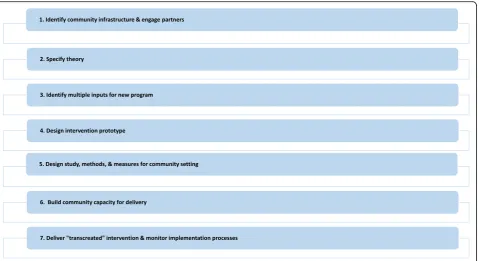
Main text:The objective of this article is to describe an innovative“transcreational”framework for designing and delivering interventions in communities to reduce health disparities. We define transcreation as the process of planning, delivering, and evaluating interventions so that they resonate with the community experiencing health disparities, while achieving intended health outcomes. The Transcreation Framework for Community-engaged Behavioral Interventions to Reduce Health Disparities comprises seven steps: 1) identify community infrastructure and engage partners; 2) specify theory; 3) identify multiple inputs for new program; 4) design intervention prototype; 5) design study, methods, and measures for community setting; 6) build community capacity for delivery; and 7) deliver transcreated intervention and evaluate implementation processes. Communities are engaged from the start and interventions are delivered by community-based interventionists and tested in community settings. The framework applies rigorous scientific methods for evaluating program effectiveness and implementation processes. It incorporates training and ongoing technical assistance to assure treatment fidelity and build community capacity.
Conclusions:This framework expands the types of scientific evidence used and balances fidelity to evidence and fit to the community setting. It can guide researchers and communities in developing and testing behavioral interventions to reduce health disparities that are likely to be sustained because infrastructure development is embedded in the research.
Keywords:Evidence-based interventions, Intervention adaptation, Translation, Health disparities, Community-engaged research, Implementation science
Background
Health disparities in the United States (U.S.) based on race, ethnicity, socioeconomic status, geography, gender, sexual orientation, and disability status continue to per-sist. According to the Centers for Disease Control and Prevention (CDC) Health Disparities and Inequalities Report—U.S. 2013, the risk of premature death due to
cardiovascular disease, the leading cause of death, was at least 50% higher among African Americans than Whites [1]. African Americans, Latinos, and those who are poor, less educated or disabled experienced a higher preva-lence of diabetes and obesity, compared to their counter-parts [1]. Risk of uncontrolled hypertension was higher among Mexican Americans, immigrants and the unin-sured [2], and rates of HIV diagnosis were eight-fold higher among African Americans and two-fold higher among Latinos and Native Hawaiians/other Pacific Is-landers compared to Whites [3]. Regional variations
* Correspondence:[email protected]
1National Institute on Minority Health and Health Disparities, 9000 Rockville
Pike, Building 3, Floor 5, Room E08, Bethesda, MD 20892, USA Full list of author information is available at the end of the article
were also notable, with Southeastern African American and Whites experiencing shorter life expectancy than their counterparts from other U.S. regions [1]. Between 1992 and 2006, mortality rates among women increased in 42.8% of U.S. counties while only 3.4% of counties experienced mortality increases among men [4]. Sexual and gender minority (SGM) groups experienced higher incidence and mortality rates due to chronic disease, more depression, anxiety and suicidal ideation, and greater substance use than non-SGM groups [5]. Adults with a disability were more likely to have cardiovascular disease, be obese, be a current smoker, be physically in-active, and less likely to receive preventive health screen-ings than those without a disability [6].
To address these inequities, the National Institutes of Health (NIH) Health Disparities Strategic Plan recom-mends translating scientific discoveries including effective behavioral interventions to reach disparity populations, de-fined as subgroups that have worse health compared to the general population [7]. Evidence-based interventions (EBIs) are research-tested behavioral interventions found to be ef-fective in achieving desired outcomes [8]. Most EBIs were developed and tested in academic settings for mainstream, highly selected populations. Fewer EBIs were designed for or have been applied in disparity populations, thus they are not reaching those most likely to benefit [9,10].
To address health disparities, we need translational models/frameworks that can address the special issues of communities experiencing such disparities, and pro-vide methodological guidelines to researchers. The NIH Stage Model describes six general stages of translation (from basic research to implementation), but does not provide methodological details for implementing interventions [11]. Another model, the Consolidated Framework for Implementation Research focuses on a taxonomy used to classify characteristics of the interven-tion, the inner and outer settings, individuals, and imple-mentation processes, rather than specifying practical methodological steps [12].
We identified five models for disseminating EBIs into real-world settings from the fields of implementation science and public health that describe methodological steps. These include Intervention Mapping [13], the Center for Disease Control and Prevention’s (CDC) Rep-licating Effective Programs (REP) [14], CDC’s Division of HIV/AIDS Prevention (DHAP) Framework [15], the Exploration, Preparation, Implementation, Sustainment Framework (EPIS) [16], and the Evidence Driven Com-munity Health Improvement Process (EDCHIP) [17]. Strengths of these frameworks are that most address multilevel influences on program implementation, emphasize late-stage translation in real-world settings, and attempt to balance scientific evidence with fit to the context. Some emphasize involving communities in the
process [15–17]. However, none of these translational models focus on the special methodological issues per-taining to reducing health disparities or recognize the product as a new intervention. Methods for transferring scientific knowledge into programs to reduce health dis-parities have just begun to receive attention. Chinman and colleagues consider addressing disparities as a“ spe-cial case” of implementation science and suggest blend-ing methods from health disparities research and implementation science [9]. To reduce disparities in hypertension, Mueller and colleagues recommend “ de-signing and testing pragmatic interventions in real-world settings using implementation research methods” (p. 712) [18]. Lopez-Class and colleagues argue that “late stage” translation research (T4), i.e., efficacy and effect-iveness trials in community settings, holds potential for reducing health disparities [19]. These recent papers provide a starting point for systematic efforts to advance translation of EBIs to reduce health disparities.
Why we need a new implementation science framework to address health disparities
Addressing health disparities requires delivering effective interventions that are acceptable, practical, and designed to address the health needs of at-risk populations. Transla-tional models need to account for large differences between the original EBI conditions (academic setting, mainstream population, professionals as interventionists) and the health disparity population and community [9,10]. Interventions need to be delivered in community as well as health care settings to reach disparity populations that tend to have limited access to health care. Transla-tion models should account for community strengths and incorporate the resourceful solutions they have devel-oped. The communities’knowledge of the populations and the drivers of disparities can inform development of effect-ive programs. To address resource constraints, interven-tions need to strategically build on existing infrastructure and develop new infrastructure to facilitate sustainability [20]. Efforts to bolster community resources and capacity increase the likelihood of success and sustainability [17]. To take full advantage of these resources and address dispar-ities in a sustainable way, translational models need to in-corporate methods for engaging communities throughout the entire process.
To address these issues, we need a paradigm that en-ables us to design and evaluate interventions delivered in real-world community settings from the outset. There are numerous EBIs that have been shown to be effica-cious under optimal conditions. We can expedite the successful translation of these interventions to new set-tings and populations experiencing health disparities, but this process involves unique methodological steps. These steps help to ensure that the intervention reflects relevant scientific evidence (including EBIs) and simul-taneously fits the target audience and community from the start.
In this paper, we propose a new paradigm that we refer to as“transcreation” for designing and implementing be-havioral interventions specifically for communities experi-encing health disparities. We present the Transcreation Framework for Community-engaged Behavioral Interven-tions to Reduce Health Disparities (referred to henceforth as the transcreation framework) that describes methods for designing, delivering, and evaluating interventions to reach disparity populations in community settings. Our methods are intended to address limitations of traditional research-to-practice models for translation of scientific knowledge, specifically when implementing behavioral in-terventions to reduce health disparities.
Main text
The transcreation framework
The term transcreation has been applied widely in the field of marketing. Among global marketing profes-sionals, transcreation is recognized as the process whereby messaging and content are developed or adapted for an audience so that they resonate in local markets and yet deliver the same impact as the original [21]. Use of the term“transcreation” in the health arena has had a narrower scope, referring to the adaptation of health education materials for improved understanding and cultural relevance to specific language and ethnic groups [22]. We define transcreation as the processes of planning and delivering interventions to reduce health disparities so that they resonate with the targeted com-munity, while achieving intended health outcomes.
The transcreation framework aims to guide researchers and community partners to reduce health disparities by developing and testing behavioral interventions that are grounded in scientific evidence and build on community strengths. It shifts the emphasis from adapting and trans-lating one EBI for delivery in a new setting, to the design of a new intervention that better fits local needs and con-texts. Our transcreation framework calls for research in which evidence building starts with interventions that are tested initially in community settings and disparity popu-lations, rather than beginning with an efficacy trial con-ducted under optimal but constrained circumstances.
Onken and colleagues suggest that this type of research lies somewhere between traditional efficacy research (tested using optimal conditions) and effectiveness re-search (tested in real world settings) [11]. Chinman and colleagues refer to this as a“hybrid”design that can accel-erate the pace for translating EBIs into the real world [9].
Our framework emphasizes scientific rigor, starting with theory, integrating scientific evidence in interven-tion design, utilizing scientific methods to evaluate ef-fectiveness of interventions delivered in community settings, and applying stringent methods of evaluating implementation processes. It involves engaging commu-nities throughout the research process - researchers work with community stakeholders to transcreate EBIs to be meaningful and deliverable with fidelity in commu-nity settings. This includes methods for capitalizing on community resources and building capacity by engaging community members in intervention delivery, and even in recruitment and evaluation. This strategy increases the likelihood that interventions will be culturally sensi-tive, appealing, and sustainable. The seven steps of the transcreation framework are listed in Fig.1.
This framework builds on our prior methodological framework and training resource for adapting behavioral interventions to address health disparities [23]. We have made several major advances in our framework. We now include two types of theory: a socio-ecological the-ory of the determinants of the health disparity being tar-geted, and an appropriate behavior change theory. We place a greater emphasis on balancing fit to the context with fidelity to scientific evidence. We have incorporated methods for hiring and training community members as interventionists and study staff, including developing standardized intervention manuals. Finally, we specify methods for three types of evaluation: formativeto de-velop the intervention,processto understand factors that affect implementation, and summative after the trial to inform future implementation and dissemination efforts. Perhaps the most important advance is shifting away from the concept of translation and adaptation of EBIs to transcreation, since it has become apparent to us that application of our framework results in a new interven-tion designed specifically with community partners to re-duce a targeted disparity.
We have tested several types of behavioral interventions (cognitive stress management, physical activity, and diet), using a variety of delivery modes (trained peers, groups led by public health practitioners, mobile phones, health coaches) that have improved health behaviors, physical and emotional well-being, and other outcomes [24–26].
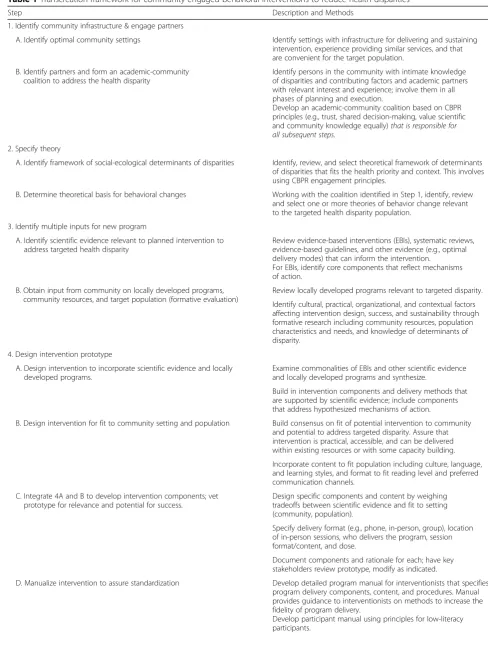
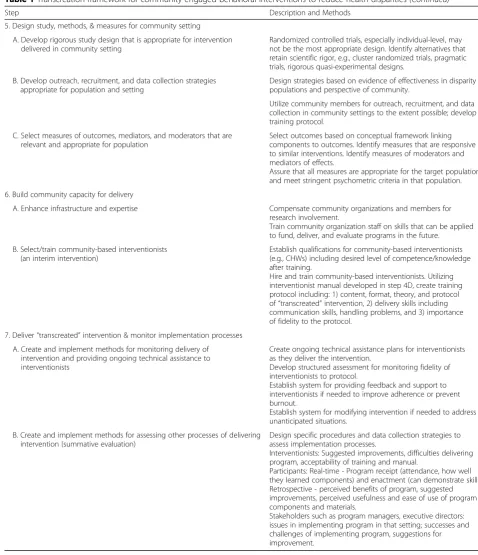
Use of the framework assumes that an academic/com-munity partnership has been established. Prior to using the framework, there should be a shared understanding of the specific health disparity that will be addressed by the partnership and intervention, e.g., higher prevalence of a risk factor in a disparity population group or lack of access to culturally competent services for a specific condition that are a shared concern. In Table 1, we present a detailed description of the seven steps. Al-though these steps are described sequentially, in prac-tice, they may be iterative or occur at multiple time points in the transcreation process.
Step 1: Identify community infrastructure and engage partners
Transcreation research builds on existing community infrastructure and expands it for implementation. Step 1A is to identify intervention delivery settings and academic partners that share a targeted health priority and have appropriate infrastructure and experience. The composition of the academic-community coali-tion that is formed in this step will vary depending on the health priority being addressed, community
needs, infrastructure and the ability to convene groups and individuals [17]. This infrastructure might include organizations or public health departments fo-cused on chronic diseases and academic institutions. Settings serving disparity populations can include community-based organizations, government entities, community-based health care clinics, senior centers, public health departments, faith-based organizations, and other systems. Optimal settings can include those already delivering an intervention to address the tar-geted problem, e.g., to develop a stress management intervention for Latinas with breast cancer, we part-nered with a community organization that provided cancer support programs for low-income Latinos [27]. Step 1B focuses on identifying individuals who are stakeholders with deep knowledge of the targeted health disparity and population and who are inter-ested in implementing an intervention to reduce the targeted disparity. Partners can include multisector representatives, e.g., administrators, staff members, clients, community residents, and civic and private sector partners.
[image:4.595.61.541.87.348.2]Table 1Transcreation framework for community-engaged behavioral interventions to reduce health disparities
Step Description and Methods
1. Identify community infrastructure & engage partners
A. Identify optimal community settings Identify settings with infrastructure for delivering and sustaining
intervention, experience providing similar services, and that are convenient for the target population.
B. Identify partners and form an academic-community coalition to address the health disparity
Identify persons in the community with intimate knowledge of disparities and contributing factors and academic partners with relevant interest and experience; involve them in all phases of planning and execution.
Develop an academic-community coalition based on CBPR principles (e.g., trust, shared decision-making, value scientific
and community knowledge equally)that is responsible for
all subsequent steps. 2. Specify theory
A. Identify framework of social-ecological determinants of disparities Identify, review, and select theoretical framework of determinants
of disparities that fits the health priority and context. This involves using CBPR engagement principles.
B. Determine theoretical basis for behavioral changes Working with the coalition identified in Step 1, identify, review
and select one or more theories of behavior change relevant to the targeted health disparity population.
3. Identify multiple inputs for new program
A. Identify scientific evidence relevant to planned intervention to address targeted health disparity
Review evidence-based interventions (EBIs), systematic reviews, evidence-based guidelines, and other evidence (e.g., optimal delivery modes) that can inform the intervention.
For EBIs, identify core components that reflect mechanisms of action.
B. Obtain input from community on locally developed programs, community resources, and target population (formative evaluation)
Review locally developed programs relevant to targeted disparity.
Identify cultural, practical, organizational, and contextual factors affecting intervention design, success, and sustainability through formative research including community resources, population characteristics and needs, and knowledge of determinants of disparity.
4. Design intervention prototype
A. Design intervention to incorporate scientific evidence and locally developed programs.
Examine commonalities of EBIs and other scientific evidence and locally developed programs and synthesize.
Build in intervention components and delivery methods that are supported by scientific evidence; include components that address hypothesized mechanisms of action.
B. Design intervention for fit to community setting and population Build consensus on fit of potential intervention to community
and potential to address targeted disparity. Assure that intervention is practical, accessible, and can be delivered within existing resources or with some capacity building.
Incorporate content to fit population including culture, language, and learning styles, and format to fit reading level and preferred communication channels.
C. Integrate 4A and B to develop intervention components; vet prototype for relevance and potential for success.
Design specific components and content by weighing tradeoffs between scientific evidence and fit to setting (community, population).
Specify delivery format (e.g., phone, in-person, group), location of in-person sessions, who delivers the program, session format/content, and dose.
Document components and rationale for each; have key stakeholders review prototype, modify as indicated.
D. Manualize intervention to assure standardization Develop detailed program manual for interventionists that specifies
program delivery components, content, and procedures. Manual provides guidance to interventionists on methods to increase the fidelity of program delivery.
providing inputs to program design, formative re-search, creation and vetting of a prototype, implemen-tation processes, summative (post-implementation) evaluation, and dissemination of results and successful programs [28]. Partners need to be compensated through direct funding in proportion to the time and
[image:6.595.52.531.93.649.2]effort expended on the project. Employing CBPR principles to ensure equitable partnerships throughout and remunerating community partners and stake-holders helps build trust over time and ensures that ongoing community input is integrated and culturally appropriate approaches are discussed [28].
Table 1Transcreation framework for community-engaged behavioral interventions to reduce health disparities(Continued)
Step Description and Methods
5. Design study, methods, & measures for community setting
A. Develop rigorous study design that is appropriate for intervention delivered in community setting
Randomized controlled trials, especially individual-level, may not be the most appropriate design. Identify alternatives that retain scientific rigor, e.g., cluster randomized trials, pragmatic trials, rigorous quasi-experimental designs.
B. Develop outreach, recruitment, and data collection strategies appropriate for population and setting
Design strategies based on evidence of effectiveness in disparity populations and perspective of community.
Utilize community members for outreach, recruitment, and data collection in community settings to the extent possible; develop training protocol.
C. Select measures of outcomes, mediators, and moderators that are relevant and appropriate for population
Select outcomes based on conceptual framework linking components to outcomes. Identify measures that are responsive to similar interventions. Identify measures of moderators and mediators of effects.
Assure that all measures are appropriate for the target population and meet stringent psychometric criteria in that population.
6. Build community capacity for delivery
A. Enhance infrastructure and expertise Compensate community organizations and members for
research involvement.
Train community organization staff on skills that can be applied to fund, deliver, and evaluate programs in the future.
B. Select/train community-based interventionists (an interim intervention)
Establish qualifications for community-based interventionists (e.g., CHWs) including desired level of competence/knowledge after training.
Hire and train community-based interventionists. Utilizing interventionist manual developed in step 4D, create training protocol including: 1) content, format, theory, and protocol
of“transcreated”intervention, 2) delivery skills including
communication skills, handling problems, and 3) importance of fidelity to the protocol.
7. Deliver“transcreated”intervention & monitor implementation processes
A. Create and implement methods for monitoring delivery of intervention and providing ongoing technical assistance to interventionists
Create ongoing technical assistance plans for interventionists as they deliver the intervention.
Develop structured assessment for monitoring fidelity of interventionists to protocol.
Establish system for providing feedback and support to interventionists if needed to improve adherence or prevent burnout.
Establish system for modifying intervention if needed to address unanticipated situations.
B. Create and implement methods for assessing other processes of delivering intervention (summative evaluation)
Design specific procedures and data collection strategies to assess implementation processes.
Interventionists: Suggested improvements, difficulties delivering program, acceptability of training and manual.
Participants: Real-time - Program receipt (attendance, how well they learned components) and enactment (can demonstrate skills). Retrospective - perceived benefits of program, suggested improvements, perceived usefulness and ease of use of program components and materials.
Step 2: Specify theory
Beginning with a strong theoretical basis for the targeted disparity and intervention aids in understanding mecha-nisms of action [29], assuring that core components are included. Step 2A focuses on theoretical frameworks specifying social-ecological determinants of health, health behavior, and health disparities [19,30, 31]. Aca-demic researchers and community stakeholders work to-gether to identify, review and select appropriate health disparities and health behavior change theories and frameworks [28]. Selection of these frameworks will be based on their relevance to the health priority, popula-tion and context. For example, working with community partners in one of our studies, we identified important determinants of poor emotional well-being in the target population as marital/family discord due to miscommu-nication and financial hardship, so these became part of our larger health disparity framework. Selection of the appropriate theories is based on both scientific and com-munity data and knowledge about the health priority and population. Western-based theoretical approaches can be blended with indigenous-based theories [28].
Step 2B is to apply theories of behavior change that account for individual and social factors; this assures that the intervention will be theory-based. For example, Social Cognitive Theory [32] has been applied in behav-ioral interventions for disparity populations [33,34], be-cause of the potency of its principles of self- monitoring, goal setting, and problem solving that can increase self-efficacy, which often mediates improved outcomes. Delineating the theory underlying the program may in-clude a logic model describing how the program works. A compendium of health behavior change theories can guide these discussions [35].
Step 3: Identify multiple inputs for new program
Two basic types of inputs to the planning process include scientific evidence and input from the community includ-ing locally developed programs and knowledge. Step 3A includes identifying and reviewing scientific evidence, which can include EBIs as well as other types of evidence. EBIs can be identified via articles and reviews, meta ana-lyses, and websites. Of importance is to determine whether any minority or other disparity groups were in-cluded in EBI testing. It is helpful to secure program ma-terials for candidate EBIs via websites or by contacting program developers. For each EBI, identifying core com-ponents that reflect specific mechanisms of action is key [11]. This should result in a conceptual framework of how each component leads to hypothesized outcomes, i.e., pathways/key mechanisms of effects.
Other types of scientific evidence can be as important as EBIs, including systematic reviews and evidence-based guide-lines. Examples include evidence-based recommendations
about community preventive services and interventions to improve health [17], and a synthesis of evidence on the role of self-efficacy for achieving optimal outcomes of self-man-agement interventions [36].
Of special importance to health disparities is the siz-able amount of scientific evidence supporting the effect-iveness of interventions delivered by community health workers (CHWs). CHW interventions can improve pre-ventive behaviors and health outcomes in disparity pop-ulations, most notably in under-resourced areas. Systematic reviews of CHW interventions have substan-tiated their effectiveness in improving glucose and lipid levels, systolic and diastolic blood pressures, physical ac-tivity, dietary behaviors, and mental health outcomes [37, 38]. CHWs can enhance intervention effectiveness and reach because they are trusted by and share the ex-periences of individuals in disparity communities. Evi-dence on the value of the roles of other community practitioners (e.g., social workers, community health care providers) needs to be considered.
Step 3B is to use formative research to obtain input from the community and the disparity population to be served to understand cultural, practical and contextual factors that might affect intervention design, implemen-tation, and sustainability [39]. Community stakeholder inputs include locally developed programs, deep know-ledge of the specific health disparity, frameworks and measures, and organizational and community resources that can be harnessed to increase the likelihood of suc-cess and sustainability [28]. Interventions that build on existing programs and resources will enhance the fit of the intervention to the setting. A review by the academic-community coalition of organizational struc-tures, staff, skills, and inter-organizational networks within which agencies deliver interventions helps iden-tify resources (e.g., community asset mapping). A thor-ough assessment of the target population, its risk profile, and determinants of health disparities that incorporates the knowledge and experience of local community mem-bers and practitioners is needed. Formative research can include focus groups and semi-structured interviews with community key informants.
Step 4: Design intervention prototype
quality of life, namely, strategies to enhance self-efficacy for managing cancer, and peer support from a Latina cancer survivor [27]. Use of peer delivery was based on evidence of the effectiveness of CHWs in diverse com-munities and on a specific peer support model devel-oped by one of the partner community agencies. In another study, evidence that action plans were effective in improving self-efficacy [40] was the basis for using them in a diabetes risk reduction intervention for lower-socioeconomic status and minority adults [33]. When translating interventions for sexual and gender minority older adults, Fredriksen-Goldsen and col-leagues suggest including components directly address-ing the higher rates of relevant risk factors in these populations (e.g., stigma, discrimination, victimization), which also need to be included in the relevant health disparity framework [41].
Step 4B includes designing the intervention to fit the population and community, and involves utilizing pro-gram delivery methods, staffing models, and community assets identified in Step 3B. Again, this involves iterative processes by the academic-community coalition mem-bers to review all candidate sources of knowledge and scientific evidence thus far, until consensus is reached on core components. Materials and strategies need to accommodate cultural and language/literacy issues, con-venience, and accessibility, to improve participation. For example, knowing that the target population has limited transportation and discretionary time can result in a de-sign in which group-based components are delivered in neighborhood settings to increase access [33]. Step 4B can involve applying methodological frameworks for cul-turally adapting interventions such as identifying mes-sages that support ethnic practices or the unique contexts of persons with disabilities [42]. Low-literacy materials and visual aids can improve knowledge among individuals with a range of literacy levels [43]. Regarding fit to the community, practical issues can affect imple-mentation, adoption and sustainability [44], requiring strategies to address resource needs. For example, to re-duce costs, translation of a caregiver support program for Area Agencies on Aging resulted in fewer sessions than the original [45].
Step 4C is for the coalition to integrate 4A-B into a prototype and vet the components. The integration can involve comparing form (key elements/components) and function (mechanisms and processes that lead to desired outcomes) of the EBIs [46]. Such an approach allows “context level adaptation” of the intervention form, e.g., varying the literacy level of materials, while preserving the function, e.g., mechanisms of action specified by the intervention’s underlying behavior change theory [46]. The academic-community coalition considers and de-cides together what aspects of, and how, EBIs need to be
adapted to maximize potential effectiveness and adop-tion, while preserving their scientific integrity. Typically, for interventions aimed at reducing health disparities, this step is heavily influenced by community members and stakeholders that include individuals struggling with the specific disparity being targeted.
Nápoles and colleagues describe the entire process of integrating an EBI tested in white women, a locally de-veloped program for Latinas, and formative research to create Nuevo Amanecer, a stress management interven-tion for Latinas with breast cancer [27]. Mejia and col-leagues describe a variety of programs that have resulted from processes of adapting EBIs to local contexts, ran-ging from minor surface structure changes to substantial adaptations [47]. In another case, they describe adapting evidence-based principles (functions) selected by com-munity stakeholders from a number of EBIs, rather than the standard model of adapting a single EBI [47]. This step may result in a new program that “may bear little resemblance to the original EBI as local consumers make decisions as to what aspects of existing EBIs they deem relevant to their local communities”(p. 691) [48].
Step 4D is to operationalize the program by defining the specific components. Examples of components in-clude small-group introductory session, written program manuals, one-on-one planning sessions, telephone coun-seling/coaching, audio-visual materials, and group work-shops [27, 33]. Each component or session can be described in terms of its objectives, content, format (e.g., phone, in-person), timing, dose (number and duration of sessions), location, and who delivers it. The program de-scription should include behavioral change strategies being used such as education, skills training, and motivational strategies [33,34]. This step includes manualizing the inter-vention to assure standardization of key core components and functions. Standardization of the manual and materials provides a basis for training interventionists and assuring fi-delity of delivery to the transcreated intervention [11]. Con-sultations with the community allow for vetting of program components and final adaptations.
Step 5: Design study, methods, and measures for community setting
Step 5A concerns finding the most rigorous study design that is acceptable to the community and practical. Identify-ing acceptable control groups requires special consideration. Designs in which individuals are the unit of randomization may not be appropriate for community-based interventions due to practical concerns (e.g., health system-level changes that may not be under investigator control), ethical reasons (e.g., minority communities experiencing unequal treatment may resist the intentional withholding of a treatment to indi-viduals), or scientific considerations (e.g., contamination). Implementation science uses a range of study designs that allow for causal inferences and approximate experimental designs, with tradeoffs between internal and external valid-ity, e.g., group randomized trials, interrupted time series de-signs. For example, group randomized trials address potential bias by matching groups on stable correlates of the outcome, such as age, in contexts where individual randomization is culturally unacceptable or not feasible. An interrupted time series design is indicated when the specific time point that an intervention occurs is known, longitu-dinal outcome data are available for a period of time before and after intervention onset, and randomization is not feas-ible. Interrupted time series allows assessment of trends be-fore, during and after implementation [50]. Excellent overviews of the issues involved and alternative designs are available [50,51].
Step 5B pertains to development of study methods such as recruitment and data collection that provide sci-entific rigor and also meet community needs. Because convenience for participants implies conducting recruit-ment and data collection in the community, methods need to be well designed and clear, including monitoring to assure consistency with protocols. There is much lit-erature on recruitment of disparity populations. Strat-egies with demonstrated effectiveness include using a conceptual framework of determinants of recruitment to guide efforts and engaging community change agents [52]. For studies targeting participants with specific risk factors, one strategy is to conduct community-based health education and screening and then recruit those identified as “at risk” [53]. Step 5B includes identifying strategies for overcoming common barriers to data col-lection in the community. For example, we developed language and literacy-level appropriate videos demon-strating self-collection procedures for repeated salivary samples to assess diurnal cortisol rhythms among rural Latinas with breast cancer. Conducting data collection in the community is feasible and increases retention of disparity populations, but requires considerations such as obtaining space in community centers and having portable data collection materials or home-based assess-ment technologies [25].
Step 5C focuses on identifying outcome measures that are responsive to change, linked specifically to
intervention components, and appropriate for the popu-lation. Once academic and community partners have worked together to identify the health priority and popu-lation being targeted, the health disparity and health be-havior frameworks that will guide measures selection, and the appropriate intervention components that are cul-turally appropriate, feasible and acceptable, outcomes are selected, or developed and pretested if no relevant mea-sures exist. This occurs through a review of candidate measures, discussion of alternatives, and co-selection of final measures so that they will be sensitive to changes tar-geted by the intervention and can be collected in commu-nity settings given resource and time constraints.
Selecting measures requires attention to hypothesized mechanisms, thus a mechanism and its measure should be stated for how each component is linked to a desired outcome. A peer-delivered stress management program for Latinas with breast cancer included components to increase social support and self-efficacy, thus measures of social support and self-efficacy were used to evaluate these as mediators of change [34]. The theoretical framework underlying an intervention may also point to the need to measure potential moderators of interven-tion effects, e.g., characteristics of subgroups that may respond differentially to treatment effects.
All measures need to be culturally appropriate and meet stringent psychometric criteria in the targeted pop-ulations [54]. This involves defining concepts from the perspective of the target population, locating measures of those concepts, reviewing whether measures reflect the concept and have good psychometric properties in the target population, and choosing the best measure(s) and adapting them if needed [54]. Measures may need to be culturally adapted, translated into other languages, and pretested using cognitive interviewing methods. Measures may need to be modified or simplified in for-mat to accommodate limited literacy or low socioeco-nomic status. It is important to obtain written permission to use or modify existing measures.
Step 6: Build community capacity for delivery
Building capacity focuses on enhancing community in-frastructure (identified in Step 3B) by developing a community-based workforce that can blend community knowledge with scientific principles. Community staff can obtain training in research and evaluation methods, while researchers gain knowledge of a community’s best practices, assets, and processes of implementing success-ful programs. Together, this shared exchange of informa-tion enhances opportunities to expand transcreainforma-tion of effective programs.
being addressed) who can deliver the intervention. Hir-ing interventionists from the community promotes cul-tural sensitivity and trust, and builds community capacity [55]. Training these interventionists is an inter-vention in itself, requiring a training protocol and evalu-ation, as well as ongoing technical assistance (step 7A) to assure competency. Training community interven-tionists involves using active learning strategies (e.g., role playing and modeling) and detailed interventionist and participant program manuals [45]. Training may be needed on organizational and delivery skills, communica-tion skills, role playing, role modeling desired behavior change, troubleshooting implementation problems, main-taining confidentiality, and tracking program activities [56]. Training needs to cover special considerations when working with disparity populations, such as limited Eng-lish proficiency, low literacy, and financial hardship. It is important to provide interventionists with information on community resources so they can make appropriate refer-rals. Interventionists need to learn how to track partici-pant receipt of the intervention (see step 7), e.g., attendance, receipt of components, and problems experi-enced by participants with program activities. To assure adequate preparation to deliver the intervention, core competencies need to be defined and assessed [45]. Redu-cing health disparities usually requires training commu-nity practitioners and researchers in patient-centered research and CBPR approaches. For CHWs located in rural areas, videoconferencing can be used for training and technical assistance support.
Step 7: Deliver“transcreated”intervention and monitor implementation processes
Step 7 involves having trained interventionists deliver the transcreated program to participants, and monitor-ing implementation processes. When testmonitor-ing the inter-vention first in a community setting, the process of monitoring its delivery, termed implementation fidelity [57], is crucial to its success due to the influence of fac-tors outside of researchers’control. We have built on the methods for monitoring these processes developed by the NIH Behavior Change Consortium [58], noting how these methods apply to health disparity interventions.
Step 7A is to design and implement methods for monitor-ing intervention delivery with feedback loops. Demonstrat-ing that an intervention was delivered as intended (treatment fidelity) is important in any effectiveness trial, but is essential when interventions are delivered by trained com-munity members, practitioners or clinicians. Structured fi-delity assessments can occur through ratings of directly observed, audiotaped or videotaped sessions. This step in-cludes plans for ongoing technical assistance and/or training to interventionists to assure fidelity and prevent unantici-pated implementation challenges [57]. Interventionists need
a way to contact researchers or community partners to re-port problems and obtain help or suggestions. Regular phone calls with interventionists can help. An evaluation of a church-based nutrition program for African Americans noted the importance of providing ongoing technical assist-ance to assure effectiveness [59]. Issues can be substantive (procedures for dealing with extremely depressed partici-pant) or logistical (difficulty reaching participants). Re-searchers and community partners can provide help in the form of ideas or resources that are available. For example, similar to our experiences, community interventionists re-ported needing more information on how to manage partic-ipants who were not attending sessions [56]. In some situations, problems may necessitate modifying the interven-tion protocol.
Should fidelity assessments identify concerns, this step includes a plan to provide sensitive yet direct feedback to interventionists to improve protocol ad-herence. A feedback mechanism can improve practi-tioners’ performance and inform ongoing coaching and supervision [57]. A foundation of trust between academic and community partners is needed when academic personnel provide feedback to intervention-ists who are not directly employed by the study. Community organizations often retain control of transcreated programs, thus need to feel engaged and responsible for insuring that the program is imple-mented according to protocol.
session with a weigh-in) as important to program suc-cess [56].
Stakeholders such as administrators, program direc-tors, and staff from the community settings hosting the intervention can provide “system-level” feedback [44]. This can be done regularly throughout the implementa-tion to enable course correcimplementa-tions, such as reducing the amount of telephone support provided to participants due to organizational burden.
Conclusions
The Transcreation Framework for Community-engaged Behavioral Interventions to Reduce Health Disparities includes the major advantages of other implementation science frameworks while adding important methodo-logical steps critical for reducing health disparities. Per-haps the most novel feature is recognizing that when researchers address social determinants and health dis-parities with the full engagement of community partners experiencing the disparity, the intervention produced is not an adapted EBI, but a new intervention because of the extensive adaptations required to fit the community context in the presence of these disparities.
We discuss five defining features of our framework: 1) balances fidelity to scientific evidence and fit to develop a new“transcreated”intervention, (2) tests the transcre-ated intervention in community settings, 3) engages the community throughout and builds capacity, 4) uses rigorous scientific methods in community settings, and 5) expands the types of evidence used for transcreation of behavioral interventions. We also highlight differences between our framework and the other implementation science models that we reviewed.
Balances fidelity to scientific evidence and fit to community setting
Our framework includes attention to treatment fidelity as well as focusing on the fit of the intervention to the community and testing the intervention in the commu-nity from the outset. Our approach shifts the focus from translation of a single tested EBI to the synthesis process we call transcreation in which varying stakeholders build new programs that retain the core components of successful programs and community knowledge, while making adaptations that improve the fit to local contexts. A major difference between our framework and the other implementation frameworks with methodological steps that we reviewed is that they view the resulting program as a translation or adapta-tion of one EBI, and not a new program that integrates various EBIs and other types of evidence, along with community knowledge.
Tests the transcreated intervention in community settings Our framework calls for research in which interventions are tested initially in community settings and disparity populations rather than beginning with an efficacy trial conducted under optimal but constrained circumstances. This approach means focusing on later stages (T3 and T4) of translation to circumvent the extensive and itera-tive adaptations that might result as researchers proceed through earlier translation stages (T1 and T2). As stated by Onken and colleagues, “The intervention develop-ment process is incomplete until an intervention is opti-mally efficacious and implementable with fidelity by practitioners in the community” (p. 22) [11]. An import-ant consideration in late stage translation is that com-munity partners are the foundation and need to be funded for these efforts. Broad community involvement on the part of affected communities was emphasized in only two of the five frameworks that offered methodo-logical steps [13,17].
Engages the community throughout and builds capacity Primarily, our model differs from other translation models in that we propose starting the transcreation process with the full integration of the community’s knowledge, local programs, and participants from the beginning, which is necessary to address social determi-nants of health and maximize feasibility. This approach recognizes that EBIs may not demonstrate the same level of efficacy as originally tested unless we include commu-nity members and practitioners in ensuring their fit to local contexts. Our framework adheres to CBPR princi-ples and integrates these with implementation processes. Other implementation frameworks tend to include com-munity representatives in limited or early stages of inter-vention adaptation to design and pretest the program prototype. Similar to two of the models with methodo-logical steps that we reviewed, we emphasize building on existing community resources such as locally developed programs and services, thus increasing sensitivity to the local culture and the likelihood of sustainability [15,16]. This includes training qualified community members or practitioners as interventionists or as research staff (helping with recruitment and data collection). With on-going training and technical assistance, this unique fea-ture builds community capacity.
populations experiencing health disparities. The most prominent models either focus on engaging communi-ties in the process of implementation and capacity build-ing to address multilevel determinants of behavior, [14– 17] or emphasize health behavior theory, core compo-nents, and mechanisms of action [13]; none address all of these features or health disparities frameworks. Also, we feature prominently state-of-the-art methods for monitoring implementation, sometimes referred to as process evaluation or summative evaluation. We have emphasized the need for carefully designed yet practical qualitative and quantitative strategies that fit the context. Formative evaluation serves to secure input from experi-enced stakeholders prior to and during transcreation processes, while summative evaluation assesses imple-mentation processes to inform subsequent implementa-tion efforts. Such evaluaimplementa-tion is critical, especially when EBIs are being tested in vulnerable populations typically underrepresented in clinical research [9]. Three of the five implementation science models that specify meth-odological steps mention stakeholder input at different stages, but most often stakeholders tend to be agency planners or delivery system representatives, and not the community individuals faced with the health disparities; these frameworks also do not emphasize the greater need for rigorous evaluation in the context of health dis-parities settings because adaptations tend to be extensive [13,14,16].
Expands the types of evidence used for transcreation of behavioral interventions
Our model redefines the term “evidence” in “ evidence--based.” The term “evidence-based” usually is applied to describe research-tested programs for which there is em-pirical evidence that they improve outcomes. This nar-row interpretation of “evidence” impedes our ability to reduce disparities because it discounts the equally valu-able evidence and knowledge that public health and community sectors contribute. We encourage health dis-parities research that integrates evidence from system-atic reviews, community guidelines, and best practices. Only two of the five implementation science frameworks that specify steps consider these additional sources of evidence [13, 15] and they assume that only one EBI is being translated or do not specify that components from more than one EBI can be utilized.
Implications for reducing health disparities
Progress on reducing health disparities in the U.S. has been slow due to growing income inequality, systemic dis-crimination, and unequal access to resources, as well as ineffective translation models. Achieving population-level reductions in health disparities will involve concerted ef-forts that focus onwhere we intervene, how we intervene,
and how we sustain effective programs. Based on emer-ging literature and our experience, we note some research and policy implications of our framework for reducing health disparities through transcreation research on be-havioral interventions.
Accelerate progress toward reducing health disparities by using transcreation and beginning with later translation stages
Community-engaged transcreation takes behavioral in-terventions to the communities where they are needed. Applying our transcreation framework in the communi-ties experiencing pernicious health disparicommuni-ties can en-hance the design of interventions to maximize fit to the population, while preserving the scientific basis of be-havioral interventions, and rigorously evaluating pro-gram outcomes and implementation processes. The goal is to create programs and design implementation strat-egies that reduce health disparities. Once programs and implementation strategies for delivery in community set-tings are shown to be effective, they can be scaled up and disseminated.
Build community capacity to address health disparities through transcreation of behavioral interventions
Embedding programs within existing community services and health care delivery networks can extend their reach and acceptability in communities with disparity popula-tions. Implementation strategies that build on community assets and infrastructure maximize potential scalability and impact. Engaging communities that are experiencing dis-parities at each stage of the translational process“considers culture and diversity from a community-engaged research perspective” (p. 115) [20]. Training community practi-tioners or community health workers on cutting-edge EBIs and evaluation methods can enhance their ability to tran-screate effective programs for local communities.
using mobile technology tend to be most effective, and the types of additional support needed to maximize their effectiveness in specific disparity populations.
Funding models that support sustainability of community programs
One of the biggest challenges to reducing health disparities by harnessing the potential of transcreated community-en-gaged interventions is sustainability funding. Sustainability funding and reimbursement opportunities are practically non-existent. State-level programs that utilize innovative funding models could significantly reduce disparities if im-plemented more broadly, but they require substantial re-sources and concerted effort to set up, and may require special legislation [64]. For example, the state of Montana partnered with Medicaid to reimburse community sites de-livering an adapted Diabetes Prevention Program, achieving excellent enrollment and weight reduction targets [10]. The state of Delaware financed universal community-based screening, treatment, and patient navigation for colorectal cancer, resulting in the elimination of statewide disparities in colorectal cancer screening, incidence, and mortality between whites and African Americans [65]. In New Mexico, use of Medicaid-funded CHWs to provide naviga-tion services to complex, high-need patients has been cost-effective, reducing emergency room visits, hospital admissions, and prescriptions [64]. Greater community-and population-level funding of effective transcreated pro-grams could help reduce health disparities.
Our failure to identify effective implementation strat-egies of proven interventions contributes to the persist-ence of health inequities. Conversely, identifying highly effective implementation methods that consider the so-cial determinants of health and community-based solu-tions may contribute significantly to achieving health equity. Working together, scientists, community practi-tioners, community organizations, and consumers can develop and test transcreated programs that are sensitive to contextual factors in communities experiencing dis-parities, build on and strengthen community assets, and are practicable and acceptable. Detailed evaluation of transcreated program processes and outcomes using rigorous methods can identify components and contextual factors that lead to desired behavioral changes and health improvements. Such methods for implementing behav-ioral interventions in real-world communities harness sci-entific evidence and community knowledge, apply it directly in community settings, and build community cap-acity to implement and evaluate interventions, thereby ac-celerating progress in reducing health disparities.
Abbreviations
CBPR:Community-based participatory research; CDC: Centers for Disease
Control and Prevention; CHW: Community health worker; EBI: Evidence-based intervention; HIV/AIDS: Human immunodeficiency virus/ acquired
immunodeficiency syndrome; NIH: National Institutes of Health; T1 research: Translation to humans; T2 research: Translation to patients; T3 research: Translation to practice; T4 research: Translation to population health; U.S.: United States
Funding
This research was supported by the Division of Intramural Research, National Institute of Minority Health and Health Disparities, National Institute on Aging grant no.1 P30 AG15272, and California Breast Cancer Research Grants Program Office of the University of California grant no. 21OB-0135. None of the funding sources were involved in the design of the study and collection, analysis, and interpretation of data and in writing the manuscript.
Disclaimer
The contents and views in this manuscript are those of the authors and should not be construed to represent the views of the National Institutes of Health.
Authors’contributions
AMN and ALS contributed equally to the conception, writing, and editing of this manuscript. Both authors read and approved the final manuscript.
Authors’information
AMN, Scientific Director, Intramural Research Program, National Institute on Minority Health and Health Disparities.
ALS, Professor, Institute for Health & Aging, Center for Aging in Diverse Communities, University of California San Francisco.
Ethics approval and consent to participate Not applicable.
Consent for publication Not applicable.
Competing interests
The authors declare that they have no competing interests.
Publisher’s Note
Springer Nature remains neutral with regard to jurisdictional claims in published maps and institutional affiliations.
Author details
1National Institute on Minority Health and Health Disparities, 9000 Rockville
Pike, Building 3, Floor 5, Room E08, Bethesda, MD 20892, USA.2University of
California San Francisco, 3333 California Street, Suite 350E, San Francisco, CA 94118, USA.
Received: 23 May 2018 Accepted: 4 September 2018
References
1. Frieden TR, Centers for Disease Control and Prevention. CDC health disparities and inequalities report - United States, 2013. Foreword. MMWR Suppl. 2013;62(3):1–2.
2. Gillespie CD, Hurvitz KA, Centers for Disease Control and Prevention. Prevalence of hypertension and controlled hypertension - United States, 2007-2010. MMWR Suppl. 2013;62(3):144–8.
3. Johnson AS, Beer L, Sionean C, Hu X, et al. HIV infection - United States, 2008 and 2010. MMWR Suppl. 2013;62(3):112–9.
4. Kindig DA, Cheng ER. Even as mortality fell in most US counties, female mortality nonetheless rose in 42.8 percent of counties from 1992 to 2006. Health Aff. 2013;32(3):451–8.
5. Maingi S, Bagabag AE, O’Mahony S. Current best practices for sexual and gender minorities in hospice and palliative care settings. J Pain Symptom Manag. 2018;55(5):1420–7.
6. Krahn GL, Walker DK, Correa-De-Araujo R. Persons with disabilities as an unrecognized health disparity population. Am J Public Health. 2015; 105(Suppl 2):S198–206.
nih.gov/docs/2009-2013nih_health_disparities_strategic_plan_and_budget. pdf. Accessed 14 Aug 2018.
8. Brownson RC, Fielding JE, Maylahn CM. Evidence-based public health: a fundamental concept for public health practice. Annu Rev Public Health. 2009;30:175–201.
9. Chinman M, Woodward EN, Curran GM, Hausmann LRM. Harnessing implementation science to increase the impact of health equity research. Med Care. 2017;55(Suppl 9 Suppl 2):S16–23.
10. Purnell TS, Calhoun EA, Golden SH, Halladay JR, et al. Achieving health equity: closing the gaps in health care disparities, interventions, and research. Health Aff. 2016;35(8):1410–5.
11. Onken LS, Carroll KM, Shoham V, Cuthbert BN, et al. Reenvisioning clinical science: unifying the discipline to improve the public health. Clin Psychol Sci. 2014;2(1):22–34.
12. Hill JN, Locatelli SM, Bokhour BG, Fix GM, et al. Evaluating broad-scale system change using the consolidated framework for implementation research: challenges and strategies to overcome them. BMC Res Notes. 2018;11(1):560.
13. Highfield L, Hartman MA, Mullen PD, Rodriguez SA, et al. Intervention mapping to adapt evidence-based interventions for use in practice: increasing mammography among African American women. Biomed Res Int. 2015;2015:160103.
14. Kilbourne AM, Neumann MS, Pincus HA, Bauer MS, et al. Implementing evidence-based interventions in health care: application of the replicating effective programs framework. Implement Sci. 2007;2:42.
15. McKleroy VS, Galbraith JS, Cummings B, Jones P, et al. Adapting evidence-based behavioral interventions for new settings and target populations. AIDS Educ Prev. 2006;18(4 Suppl A):59–73.
16. Becan JE, Bartkowski JP, Knight DK, Wiley TRA, et al. A model for rigorously applying the exploration, preparation, implementation, sustainment (EPIS) framework in the design and measurement of a large scale collaborative multi-site study. Health Justice. 2018;6(1):9.
17. Layde PM, Christiansen AL, Peterson DJ, Guse CE, et al. A model to translate evidence-based interventions into community practice. Am J Public Health. 2012;102(4):617–24.
18. Mueller M, Purnell TS, Mensah GA, Cooper LA. Reducing racial and ethnic disparities in hypertension prevention and control: what will it take to translate research into practice and policy? Am J Hypertens. 2015;28(6):699– 716.
19. Lopez-Class M, Peprah E, Zhang X, Kaufmann PG, et al. A strategic framework for utilizing late-stage (T4) translation research to address health inequities. Ethn Dis. 2016;26(3):387–94.
20. Graham PW, Kim MM, Clinton-Sherrod AM, Yaros A, et al. What is the role of culture, diversity, and community engagement in transdisciplinary translational science? Transl Behav Med. 2016;6(1):115–24. 21. Ray R, Kelly N. Reaching new markets through transcreation: when
translation just isn’t enough. Lowell: Common Sense Advisory, Inc; 2010. 22. Rivera YM, Velez H, Canales J, Jimenez JC, et al. When a common language
is not enough: transcreating cancer 101 for communities in Puerto Rico. J Cancer Educ. 2016;31(4):776–83.
23. Nápoles AM, Santoyo-Olsson J, Stewart AL. Methods for translating evidence-based behavioral interventions for health-disparity communities. Prev Chronic Dis. 2013;10:E193.
24. Nápoles AM, Santoyo-Olsson J, Stewart AL, Ortiz C, et al. Evaluating the implementation of a translational peer-delivered stress management program for Spanish-speaking Latina breast cancer survivors. J Cancer Educ. 2017;
25. Kanaya AM, Santoyo-Olsson J, Gregorich S, Grossman M, et al. The live well, be well study: a community-based, translational lifestyle program to lower diabetes risk factors in ethnic minority and lower-socioeconomic status adults. Am J Public Health. 2012;102(8):1551–8.
26. Stewart AL, Gillis D, Grossman M, Castrillo M, et al. Diffusing a research-based physical activity promotion program for seniors into diverse communities: CHAMPS III. Prev Chronic Dis. 2006;3(2):A51.
27. Nápoles AM, Santoyo-Olsson J, Ortiz C, Gregorich S, et al. Randomized controlled trial of Nuevo Amanecer: a peer-delivered stress management intervention for Spanish-speaking Latinas with breast cancer. Clin Trials. 2014;11(2):230–8.
28. Dickerson D, Baldwin JA, Belcourt A, Belone L, et al. Encompassing cultural contexts within scientific research methodologies in the development of health promotion interventions. Prev Sci. 2018;
29. Chambers DA, Norton WE. The Adaptome: advancing the science of intervention adaptation. Am J Prev Med. 2016;51(4 Suppl 2):S124–31. 30. Ockene JK, Edgerton EA, Teutsch SM, Marion LN, et al. Integrating
evidence-based clinical and community strategies to improve health. Am J Prev Med. 2007;32(3):244–52.
31. Hill CV, Perez-Stable EJ, Anderson NA, Bernard MA. The National Institute on Aging health disparities research framework. Ethn Dis. 2015;25(3):245–54. 32. Bandura A. Social foundations of thought and action: a social cognitive
theory. Englewood Cliffs: Prentice-Hall; 1986.
33. Delgadillo AT, Grossman M, Santoyo-Olsson J, Gallegos-Jackson E, et al. Description of an academic community partnership lifestyle program for lower income minority adults at risk for diabetes. Diabetes Educ. 2010;36(4): 640–50.
34. Nápoles AM, Ortiz C, Santoyo-Olsson J, Stewart AL, et al. Nuevo Amanecer: results of a randomized controlled trial of a community-based, peer-delivered stress management intervention to improve quality of life in Latinas with breast cancer. Am J Public Health. 2015;105(Suppl 3):e55–63. 35. Kok G, Gottlieb NH, Peters GJ, Mullen PD, et al. A taxonomy of behaviour change methods: an intervention mapping approach. Health Psychol Rev. 2016;10(3):297–312.
36. Marks R, Allegrante JP, Lorig K. A review and synthesis of research evidence for self-efficacy-enhancing interventions for reducing chronic disability: implications for health education practice (part II). Health Promot Pract. 2005;6(2):148–56.
37. Barnett ML, Gonzalez A, Miranda J, Chavira DA, et al. Mobilizing community health workers to address mental health disparities for underserved populations: a systematic review. Admin Pol Ment Health. 2018;45(2):195– 211.
38. Ramchand R, Ahluwalia SC, Xenakis L, Apaydin E, et al. A systematic review of peer-supported interventions for health promotion and disease prevention. Prev Med. 2017;101:156–70.
39. Nápoles-Springer AM, Ortiz C, O'Brien H, Diaz-Mendez M. Developing a culturally competent peer support intervention for Spanish-speaking Latinas with breast cancer. J Immigr Minor Health. 2009;11(4):268–80.
40. Lorig K, Laurent DD, Plant K, Krishnan E, et al. The components of action planning and their associations with behavior and health outcomes. Chronic Illn. 2014;10(1):50–9.
41. Fredriksen-Goldsen KI, Kim HJ, McKenzie GL, Krinsky L, et al. Plan of action for real-world translation of LGBTQ health and aging research. LGBT Health. 2017;4(6):384–8.
42. Williams AS, Moore SM. Universal design of research: inclusion of persons with disabilities in mainstream biomedical studies. Sci Transl Med. 2011; 3(82):82cm12.
43. Seligman HK, Wallace AS, DA DW, Schillinger D, et al. Facilitating behavior change with low-literacy patient education materials. Am J Health Behav. 2007;31(Suppl 1):S69–78.
44. Stewart AL, Grossman M, Bera N, Gillis DE, et al. Multilevel perspectives on diffusing a physical activity promotion program to reach diverse older adults. J Aging Phys Act. 2006;14(3):270–87.
45. Burgio LD, Collins IB, Schmid B, Wharton T, et al. Translating the REACH caregiver intervention for use by area agency on aging personnel: the REACH OUT program. Gerontologist. 2009;49(1):103–16.
46. Hawe P, Shiell A, Riley T. Complex interventions: how“out of control”can a randomised controlled trial be? BMJ. 2004;328(7455):1561–3.
47. Mejia A, Leijten P, Lachman JM, Parra-Cardona JR. Different strokes for different folks? Contrasting approaches to cultural adaptation of parenting interventions. Prev Sci. 2017;18(6):630–9.
48. Gonzales NA. Expanding the cultural adaptation framework for population-level impact. Prev Sci. 2017;18(6):689–93.
49. Nápoles-Springer AM, Stewart AL. Overview of qualitative methods in research with diverse populations. Making research reflect the population. Med Care. 2006;44(11 Suppl 3):S5–9.
50. Mercer SL, DeVinney BJ, Fine LJ, Green LW, et al. Study designs for effectiveness and translation research: identifying trade-offs. Am J Prev Med. 2007;33(2):139–54.
51. Henry D, Tolan P, Gorman-Smith D, Schoeny M. Alternatives to randomized control trial designs for community-based prevention evaluation. Prev Sci. 2017;18(6):671–80.
53. Santoyo-Olsson J, Cabrera J, Freyre R, Grossman M, et al. An innovative multiphased strategy to recruit underserved adults into a randomized trial of a community-based diabetes risk reduction program. Gerontologist. 2011; 51(Suppl 1):S82–93.
54. Stewart AL, Nápoles-Springer AM. Advancing health disparities research: can we afford to ignore measurement issues? Med Care. 2003;41(11):1207–20. 55. Krok-Schoen JL, Weier RC, Hohl SD, Thompson B, et al. Involving
community health workers in the centers for population health and health disparities research projects: benefits and challenges. J Health Care Poor Underserved. 2016;27(3):1252–66.
56. Krukowski RA, Lensing S, Love S, Prewitt TE, et al. Training of lay health educators to implement an evidence-based behavioral weight loss intervention in rural senior centers. Gerontologist. 2013;53(1):162–71. 57. Breitenstein SM, Gross D, Garvey CA, Hill C, et al. Implementation fidelity in
community-based interventions. Res Nurs Health. 2010;33(2):164–73. 58. Bellg AJ, Borrelli B, Resnick B, Hecht J, et al. Enhancing treatment fidelity in
health behavior change studies: best practices and recommendations from the NIH behavior change consortium. Health Psychol. 2004;23(5):443–51. 59. Allicock M, Campbell MK, Valle CG, Carr C, et al. Evaluating the
dissemination of Body & Soul, an evidence-based fruit and vegetable intake intervention: challenges for dissemination and implementation research. J Nutr Educ Behav. 2012;44(6):530–8.
60. Ard JD, Carson TL, Shikany JM, Li Y, et al. Weight loss and improved metabolic outcomes amongst rural African American women in the deep south: six-month outcomes from a community-based randomized trial. J Intern Med. 2017;282(1):102–13.
61. Prezio EA, Pagan JA, Shuval K, Culica D. The community diabetes education (CoDE) program: cost-effectiveness and health outcomes. Am J Prev Med. 2014;47(6):771–9.
62. Perez-Escamilla R, Damio G, Chhabra J, Fernandez ML, et al. Impact of a community health workers-led structured program on blood glucose control among Latinos with type 2 diabetes: the DIALBEST trial. Diabetes Care. 2015;38(2):197–205.
63. Lopez L, Grant RW. Closing the gap: eliminating health care disparities among Latinos with diabetes using health information technology tools and patient navigators. J Diabetes Sci Technol. 2012;6(1):169–76. 64. Albritton E. Health equity and health system transformation: how states can
fund community health workers through Medicaid to improve people’s health, decrease costs, and reduce disparities. Families USA. 2016;http:// familiesusa.org/sites/default/files/product_documents/HE_HST_Community_ Health_Workers_Brief_v4.pdf. Accessed 14 Aug 2018.