International Journal of Innovative Technology and Exploring Engineering (IJITEE) ISSN: 2278-3075, Volume-8 Issue-8, June, 2019
Performance Comparison of DSR and DSSR
Protocols With and Without False Data Injection
Attack Based on Two Fish Algorithm using Manet
Rajat, Naveen Hemrajani
Abstract: The arrangement of remote applications or conventions with regards to Mobile Ad-hoc Networks (MANETs) frequently requires a venture through a recreation stage. For the consequences of the re-enactment to be significant, it is very much essential to have a model which is based on test system that coordinates as intently as conceivable the truth. However, the distributed service provisioning over MANETs need sufficient assistance for the discovery of service and also invocation. Numerous existing protocols for service discovery have been proposed to be efficient for the wireless environment, and are found to be focused mainly on infrastructure-based 1-hop ad hoc wireless networks. This proposed method demonstrates the performance comparison of DSR and DSSR protocol that has been dissected and identified and their simulation results are obtained based on the two fish algorithm using MANET. It is a decentralised network with most encouraging and quickly developing innovation which is the self-sorted out and also it is quickly conveyed system.
Index Terms: DSR, DSSR, MANET, Attack
I. INTRODUCTION
Mobile Ad Hoc Networks (MANETs) has been projected as one amongst the most pervasive areas of research in the on-going years due to certain difficulties it postures to various related protocols. MANET is the new developing innovation which empowers users to convey with no physical framework regardless of their geographical area that is the reason which in some cases it is suggest as infrastructure less network [11]. The multiplication of less expensive, little furthermore, increasingly ground-breaking gadgets make MANET quickest developing network. A significant problem in MANET is the availability of resources. Giving secure communication in such evolving condition just as assurance against explicit dangers and assaults prompts to advancement of different security plans and structures. Resource availability is one of MANET’s major challenges. Rendering a secure communication in such a variable environment, and providing protection against particular threats and attacks, results to the development of different types of security schemes and architectures.
Wireless network is the network of mobile computer nodes or stations that are not physically wired. The main advantage of this is communicating with rest of the world while being mobile. The disadvantage is their limited bandwidth is memory processing capabilities and open medium are the issues that are faced in accordance with various parametric metrics [12].
Revised Manuscript Received on June 05, 2019
Rajat, CSE, JECRC University, Jaipur, India.
Dr. Naveen Hemrajani, CSE, JECRC University, Jaipur, India.
Based on Two Fish Algorithm using Manet Then the parts of right and left are exchanged for the
following round with the exclusion of the final round and all the four words are XORed with four key words to deliver the figure content.
II. RELATED WORKS
Kavitha et al. (2019) [1] proposed during the time period of DS construction that had been used in accordance with a selection of nodes having more energy, minimum residual energy with less degree than its coefficient for a maximum effective degree. The results had shown that this CDS-SDS QoS had a higher jitter for having a high count of nodes and good efficiency when compared to QoSAOMDV and AOMDV. In this point of view, the QoS could have been established by including the energy constraint combined with timestamp as well as the link of a life time.
Verma et al. (2012) [11] experimented in resource perspective according to the proposed algorithm concluded that will gain extra memory while comparing with other state-of-the-art algorithms While considering CPU utilisation was same for all the other algorithms. So the proposed algorithm was simpler and faster when were compared to other experimental algorithms.
Muchtar et al. (2018) [3] demonstrated in this new suggestion four strategies were proposed to overcome the energy efficiency problems in the previous research content. It greatly reduces the routing and flooding traffic activities that were used in bio-inspired approach to create content more adaptive and efficient routing that had a better use of data structure.
Canning et al. (2012) [10] proposed the verification that were taking place in DSR components structure was required through assurance in other samples for enabling its generalisation to wider populations. Moreover, the recruited PMS sufferers for this research were diagnosed by using 30% increase in criterion. Energy efficiency, PDR, and also other parameters were analysed and were then compared with other State of art algorithms and their methods were reported.
Goulden et al. (2018) [6]proposed the detailed sequence concerning the limitations of the user visions, and the capability of industry to approach beyond the limit towards a more distinguished view. They concluded it by broadening the landscape carried out by delivering DSR, in order to foster an extensive diversity of roles of the end user, and finally getting higher demand response from a broader user base.
Kang et al. (2018) [5] proposed to allow ORGMA to attain high PDR in dynamically changing MANET environments. Reliable multi-hop packet delivery in MANETs becomes efficient. ORGMA performs better than the state-of-the-art routing protocol to a great extent, and also its performance reaches close to the performance of an ideal routing method with global data.
Kumari et al. (2018) [4] proposed algorithm further enhanced the system and made the system work smartly and in an energy efficient manner. There were antennas involved in terms of performance and evaluation.
Muchtar et al. (2018) [3] experimented the process to have a good energy efficient one must totally avoid retransmission in order to have a better energy efficient. There was a critical view assumption in an energy consumption study with MANET.
Omran et al. (2017) [7] demonstrated the control power flow to alleviate and gets overloaded due to high power transfer compared and used to demonstrate the effectiveness of DSR control in load growth handling. Only the impedances which were unbalanced were addressed, but the impacts of impedance unbalance were presented to be important on the resulting DSR design.
Saraswat et al. (2015) [9] proposed presented the results of the simulation for the purpose of choosing the efficient routing algorithm to provide an effective performance when implemented over the target mobile grid application.
Shabut et al. (2018) [2] proposed model, the performance of the network was evaluated using average throughput in the network, packet loss and energy consumption in the presence of nodes that are dishonest/malicious. It also increases the network’s overall performance.
Upadhyay et al. (2016) [8] experimented provisions for security mechanism in routing were essential in WSN. Proposed solutions had a long network life because of the malicious nodes and also the shutdown takes place for further research in battery chargers and also in case of other networks.
III. COMPARATIVE STUDY
International Journal of Innovative Technology and Exploring Engineering (IJITEE) ISSN: 2278-3075, Volume-8 Issue-8, June, 2019 Besides, changing algorithms that the matrix administrators
are utilized to and have picked up huge involvement with isn't daintily done. All the more regularly than not, new calculations are first presented as research and advancement models and are not appointed for generation use until the administrators increase some involvement and get alright with utilizing the new algorithm. Comparison of both the DSR and DSSR is carried out in this proposed article using NS2.
The parameters on which we will analyse are end to end delay, throughput, energy spent, PDR and routing overhead Topology of mobile adhoc networks with more no. of nodes and transmission of packets between them is routed using Dynamic Source Routing Technique [DSR protocol], parameters such as end to end delay, throughput, energy spent, PDR and routing overhead will be calculated and output are shown. Topology of mobile adhoc networks with more no. of nodes and transmission of packets between them is routed using Dynamic Source Routing Technique [DSR Protocol] and Wormhole Attack is introduced in the network, to check the performance parameters such as end to end delay, throughput, energy spent, PDR and routing overhead will be calculated and their output is shown in graphs. So for every DSR and DSSR protocol each attack will be introduced and for each attack the parameters will be analysed and results will be shown. Dynamic Source Secure Routing with Digital Signature and Dydog Mechanism integrated with Two fish algorithm [DSSR protocol] and this will also have all three attacks that are to be will be introduced to the protocol and the parameters are analysed and the results will be shown in graph.
IV. RESULTS AND DISCUSSION
A. Simulation Results
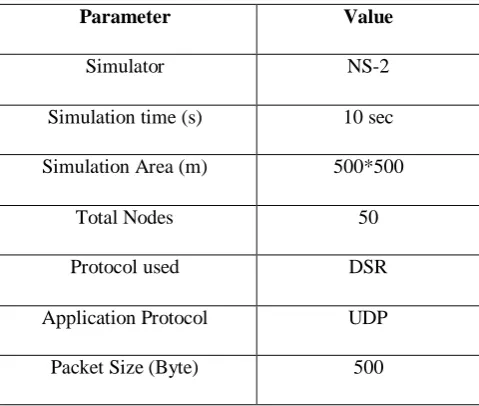
[image:3.595.312.542.187.327.2]A simulation environment is created using NS-2 simulator, and the parameters are defined in Table 1. In order to obtain the performance of a proposed scheme, various QoS parameters such as Delay, PDR, Energy spent, throughput and routing overhead are considered in the evaluation. The DSSR is implemented with attacks in the NS-2 simulator. The following figures in this section describe the various attacks with the proposed protocol.
Table 1: Simulation Parameters
Parameter Value
Simulator NS-2
Simulation time (s) 10 sec
Simulation Area (m) 500*500
Total Nodes 50
Protocol used DSR
Application Protocol UDP
Packet Size (Byte) 500
B. DSR and DSSR protocols under false data injection attack
The data packets in the MANET are prone to various attacks. In this research work false data injection attack is considered in DSR and DSSR protocols. And different performance parameters are monitored for comparing the performance of DSR and DSSR protocols under false data injection attack.
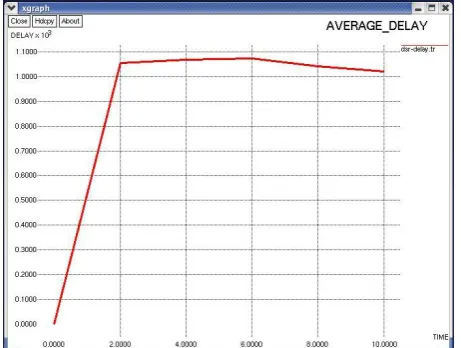
[image:3.595.309.545.355.496.2]Fig 1 and 2 represent the comparative plots for the average delay of DSR and DSSR protocols under attack.
Fig 1: Average delay for DSR Protocol under attack
Fig 2: Average delay for DSSR Protocol under attack
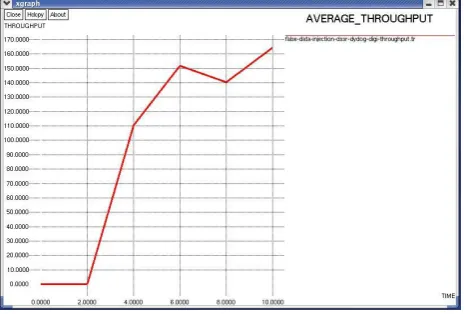
[image:3.595.311.543.574.729.2]Fig 3 and 4 represent the comparative plots for the average throughput obtained for DSR and DSSR protocols under attack.
[image:3.595.50.290.586.789.2]Based on Two Fish Algorithm using Manet
Fig 4: Average Throughput for DSSR Protocol under attack
[image:4.595.310.542.51.207.2]Fig 5 and 6 represent the comparative plots for the energy spent on DSR and DSSR protocols under attack
Fig 5: Energy spent for DSR Protocol under attack
Fig 6: Energy spent for DSSR Protocol under attack
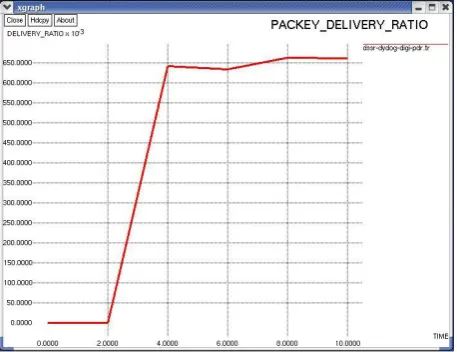
Fig 7 and 8 represent the comparative plots for PDR obtained for DSR and DSSR protocols under attack.
[image:4.595.311.541.234.406.2]Fig 7: PDR for DSR Protocol under attack
[image:4.595.53.288.281.433.2]Fig 8: PDR for DSSR Protocol under attack
Fig 9 and 10 represent the comparative plots for the routing overhead obtained for DSR and DSSR protocols under attack.
[image:4.595.54.285.461.616.2] [image:4.595.312.541.471.626.2]International Journal of Innovative Technology and Exploring Engineering (IJITEE) ISSN: 2278-3075, Volume-8 Issue-8, June, 2019
Fig 10: Routing Overhead for DSSR Protocol under attack
C. DSR and DSSR protocols without attacks
The average delay, average throughput, energy spent, PDR, and routing overhead are calculated for DSR and DSSR protocol without any attacks and the results of simulation are provided in this section.
[image:5.595.316.539.81.242.2]Fig 11 and 12 represent the comparative plots for the average delay obtained for DSR and DSSR protocols without attacks.
Fig 11: Average delay for DSR Protocol without attacks
Fig 12: Average delay for DSSR Protocol without attacks
[image:5.595.314.539.273.450.2]Fig 13 and 14 represent the comparative plots for the energy spent on DSR and DSSR protocols without attacks.
Fig 13: Energy for DSR Protocol without attack.
Fig 14: Energy for DSSR Protocol without attacks
Fig 15 and 16 represent the comparative plots for the PDR obtained for DSR and DSSR protocols without attacks.
[image:5.595.54.285.365.539.2] [image:5.595.316.540.533.714.2] [image:5.595.53.287.571.750.2]Based on Two Fish Algorithm using Manet
[image:6.595.55.284.50.226.2]Fig 16: PDR for DSSR Protocol without attacks
[image:6.595.312.541.93.272.2]Fig 17 and 18 represent the comparative plots for the routing overhead obtained for DSR and DSSR protocols without attacks
Fig 17: Routing Overhead for DSR Protocol without attacks
Fig 18: Routing Overhead for DSSR Protocol without attacks
[image:6.595.54.286.301.484.2]Fig 19 and 20 represent the comparative plots for the average throughput obtained for DSR and DSSR protocols without attacks.
[image:6.595.316.538.317.492.2]Fig 19: Throughput for DSR Protocol without attacks
[image:6.595.306.544.507.711.2]Fig 20: Throughput for DSR Protocol without attacks
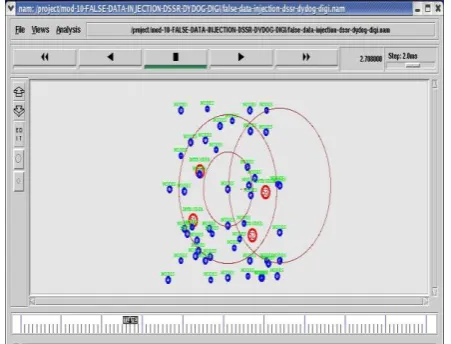
[image:6.595.52.288.525.708.2]International Journal of Innovative Technology and Exploring Engineering (IJITEE) ISSN: 2278-3075, Volume-8 Issue-8, June, 2019 In the above diagram the simulation results of false
[image:7.595.308.547.49.206.2]detection attack are detected and are monitored with the correspondent DSR protocol and are then analysed with various parametric metrics.
Fig 22: False data injection with DSSR protocol
In the above diagram the simulation results of false detection attack are detected and are monitored with the correspondent DSSR protocol and are then analysed with various parametric metrics. These simulation results clearly show about the malicious attacks that are taking place in both the protocols and the results are analysed. The values of the performance metrics for DSR and DSSR protocols with and without attacks are tabulated in the Table 2.
Table 2: Performance comparison of DSR and DSSR protocols with and without attacks
Perform ance Metrics Tim e (sec ) Without attack With attack (False data injection attack) DSR Protoc ol DSSR Protoc ol DSR Protoc ol DSSR Protoc ol Delay
0 0 0 0 0
2 1054.9
9 0
628.85 0
4 1069.0
4 8.80
693.32 8.87
6 1073.0
8 9.79
1297.1 6
11.66
8 1042.7
1 9.67
1912.0 4
12.53
10 1021 9.93 1988.4 2
13.25
Energy
0 0 0 0 0
2 23.52 3.62 49.12 3.62 4 27.26 12.77 74.88 12.76 6 30.99 13.01 84.44 13.03 8 31.12 13.19 86.79 13.29 10 31.24 13.45 87.34 13.60
PDR
0 0 0 0 0
2 0.6076 0 0.0317 0 4 0.5341 0.6429 0.0109 0.7193 6 0.5267 0.6343 0.0099 0.6 8 0.5539 0.6641 0.0144 0.6263
10 0.5725 0.6622 0.0128 0.6290
Routing
0 0 0 0 0
2 12 0 1.895 0
4 3.61 0.310 4.526 0.270 6 4.452 0.374 4.614 0.338 8 5.96 0.494 2.315 0.518 10 7.516 0.491 2.137 0.501
Through put
0 0 0 0 0
2 27.74 0 151.02 0
4 29.35 104.13 194.14 110.48 6 28.22 146.56 184.96 151.99 8 24.77 130.66 162.48 140.2 10 22.59 146.69 144.43 164.48
V. CONCLUSION
In this paper discussion and comparison the encryption algorithm, Data security and also the protocols are monitored with and without attacks of false data injection attack there are some more malicious attack that are very hazardous to the wireless sensor network. In this paper we have discussed about the novel two fish encryption algorithm in both the DSR and DSSR attacks and are then monitored for a certain node with and without false data injection attack using MANET domain. Even though the two-fish algorithm is selected as the top five cryptographic algorithms chosen by NIST to become the AES standard, it can only support up to 256-bit block. The future work will be enhancement of the block size with varying key length. The simulation results compare the values of both the protocols and proposes a better result when are compared with the other state of art algorithms.
REFERENCES
1. Kavitha, V. R., & Moorthi, M. (2019). A Quality Of Service Load Balanced Connected Dominating Set-Stochastic Diffusion Search (Cds-Sds) Network Backbone For Manet. Computer Networks. 2. Shabut, A. M., Kaiser, M. S., Dahal, K. P., & Chen, W. (2018). A
multidimensional trust evaluation model for MANETs. Journal of Network and Computer Applications, 123, 32-41.
3. Muchtar, F., Abdullah, A. H., Hassan, S., & Masud, F. (2018). Energy conservation strategies in Host Centric Networking based MANET: A review. Journal of Network and Computer Applications.
4. Kumari, N., Kumar, R., & Bajaj, R. (2018). energy efficient communication using reconfigurable directional antenna in MANET. Procedia Computer Science, 125, 194-200.
5. Kang, D., Kim, H. S., Joo, C., & Bahk, S. (2018). ORGMA: Reliable opportunistic routing with gradient forwarding for MANETs. Computer Networks, 131, 52-64.
6. Goulden, M., Spence, A., Wardman, J., & Leygue, C. (2018). Differentiating ‘the user’in DSR: Developing demand side response in advanced economies. Energy policy, 122, 176-185.
7. Omran, S., Broadwater, R., Hambrick, J., Dilek, M., Thomas, C., & Kreikebaum, F. (2017). Load growth and power flow control with DSRs: Balanced vs unbalanced transmission networks. Electric Power Systems Research, 145, 207-213.
8. Upadhyay, R., Bhatt, U. R., & Tripathi, H. (2016). DDOS attack aware DSR routing protocol in WSN. Procedia Computer Science, 78, 68-74.
[image:7.595.56.282.106.278.2]Based on Two Fish Algorithm using Manet 10. Canning, S. E., Waterman, M. G., Simpson, N., & Dye, L. (2012).
Reliability and component structure of the modified Daily Symptom Report (DSR-20). Journal of Affective Disorders, 136(3), 612-619. 11. Verma, H. K., & Singh, R. K. (2012). Performance analysis of RC6,
Twofish and Rijndael block cipher algorithms. International Journal of Computer Applications, 42(16), 1-7.
12. Ouni, S., Bokri, J., & Kamoun, F. (2009). DSR based Routing Algorithm with Delay Guarantee for Ad Hoc Networks. JNW, 4(5), 359-369.
13. Tamilselvan, L., & Sankaranarayanan, V. (2007, August). Prevention of blackhole attack in MANET. In The 2nd international conference on wireless broadband and ultra wideband communications (AusWireless 2007) (pp. 21-21). IEEE.
14. Schneier, B., Kelsey, J., Whiting, D., Wagner, D., Hall, C., Ferguson, N., Stay, M. (2000). The Twofish team’s final comments on AES Selection. AES round, 2, 7.
AUTHORSPROFILE
Rajat pursuing PhD from JECRC University. He has completed B.Tech (H)-M.Tech in computer science and engineering from LPU and has academic experience of 6 years. The area of research is Mobile adhoc networks.