FORMULATION DEVELOPMENT AND EVALUATION OF MOUTH DISSOLVING TABLETS OF DILTIAZEM HYDROCHLORIDE BY DIRECT
COMPRESSION METHOD
A dissertation submitted to
THE TAMILNADU Dr.M.G.R MEDICAL UNIVERSITY CHENNAI- 600 032.
In partial fulfillment of the requirements for the award of the Degree of
MASTER OF PHARMACY IN
BRANCH I - PHARMACEUTICS
Submitted By
REGISTRATION No:261511153
Under the guidance of
Prof.Dr.M.Murugan, M.Pharm., Ph.D.,
Department of Pharmaceutics
DEPARTMENT OF PHARMACEUTICS
FORMULATION DEVELOPMENT AND EVALUATION OF MOUTH DISSOLVING TABLETS OF DILTIAZEM HYDROCHLORIDE BY DIRECT
COMPRESSION METHOD
A dissertation submitted to
THE TAMILNADU Dr.M.G.R MEDICAL UNIVERSITY CHENNAI- 600 032.
In partial fulfillment of the requirements for the award of the Degree of
MASTER OF PHARMACY IN
BRANCH I - PHARMACEUTICS
Submitted By
SAJU.R
REGISTRATION No: 261511153
Under the guidance of
Prof.Dr.M.Murugan, M.Pharm., Ph.D.,
Department of Pharmaceutics
DEPARTMENT OF PHARMACEUTICS
Prof.Dr.M.Murugan, M.Pharm., Ph.D., Directo r cum Professor Head,
Department of Pharmaceutics,
Edayathangudy.G.S.Pillay College of Pharmacy,
Nagapattinam – 611 002.
CERTIFICATE
This is to certify that the dissertation entitled “Formulation Development and Evaluation of Mouth Dissolving Tablets of Diltiazem Hydrochloride by Direct Compression method” submitted by SAJU.R (Reg No:261511153) in partial fulfillment for the award of degree of Master of Pharmacy to the Tamilnadu Dr. M.G.R Medical University, Chennai is an independent bonafide work of the candidate carried out under my guidance in the Department of Pharmaceutics, Edayathangudy.G.S.Pillay College of Pharmacy during the academic year 2016-2017.
Prof.Dr.D.BabuAnanth, M.Pharm., Ph.D., Prin cipa l,
Edayathangudy.G.S.Pillay College of Pharmacy,
Nagapattinam – 611 002.
CERTIFICATE
This is to certify that the dissertation entitled “Formulation Development and Evaluation of Mouth Dissolving Tablets of Diltiazem Hydrochloride by Direct Compression method” submitted by SAJU.R (Reg No:261511153) in partial fulfillment for the award of degree of Master of Pharmacy to the Tamilnadu Dr. M.G.R Medical University, Chennai is an independent bonafide work of the candidate carried out under the guidance of Prof.Dr.M.Murugan, M.Pharm.,Ph.D., Director cum Professor Head, Department of Pharmaceutics, Edayathangudy.G.S.Pillay College of Pharmacy during the academic year 2016-2017.
ACKNOWLEDGEMENT
I would like to express profound gratitude to Mrs.Jothimani G.S.Pillay, Chairman, E.G.S.Pillay College of Pharmacy, and Thiru. S.Paramesvaran, M.Com., FCCA., Secretary, E.G.S.Pillay College of Pharmacy.
I express my sincere and deep sense of gratitude to my guide Prof.Dr.M.Murugan, M.Pharm., Ph.D., Directo r cum Professor Head, Department of Pharmaceutics, E.G.S.Pillay College of Pharmacy, for his invaluable and extreme support, encouragement, and co-operation throughout the course of my work.
It is my privilege to express my heartfelt thanks to Prof.Dr.D.BabuAnanth, M.Pharm, Ph.D., Principal, E.G.S.Pillay College of Pharmacy, for providing me all facilities and encouragement throughout the research work.
I wish to express my great thanks to Prof.K.Shahul Hameed Maraicar, M.Pharm., (Ph.D), Director cum Professor , Department of Pharmaceutics, E.G.S.Pillay College of Pharmacy, for his support and valuable guidance during my project work.
I would like to extend my thanks to all the Teaching Staff and Non-Teaching Staff, who are all, supported me for the successful completion of my project work.
Last but not least i express my deep sense of gratitude to MyParents,
Family members and Friends, especially my beloved wife Mrs. Snehajyothi
INDEX
S.NO CONTENTS PAGE NO
1 INTRODUCTION 1
2 LITERATURE REVIEW 21
3 AIM & OBJECTIVE 28
4 PLAN OF WORK 29
5 DRUG PROFILE 30
6 MATERIALS & METHODS 46
7 RESULTS & DISCUSSION 58
8 SUMMARY 81
9 CONCLUSION 82
LIST OF TABLES Table
No.
Title Page No.
1 Comparison of Some Patented Technologies For Fast Dissolving Tablets
08
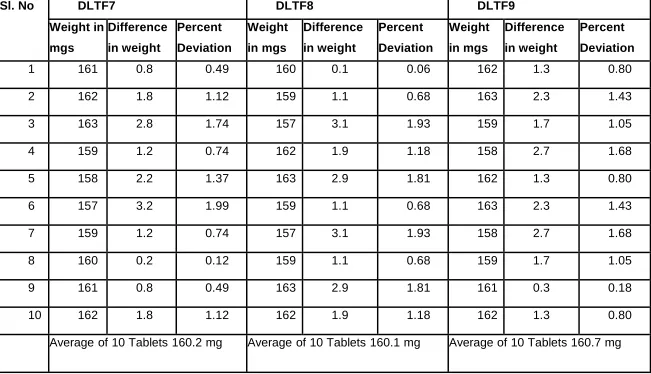
2 Concentrations of talc to be used in various applications 42 3 Materials Used for Formulation of Diltiazem Hydrochloride 46 4 Equipment Used for Formulation of Diltiazem
Hydrochloride
47
5 Standard calibration curve of Diltiazem Hydrochloride in pH 6.8 phosphate buffer
48
6 Materials used in the study with their property 50 7 Parameters fixed for the Fast Dissolving Tablets 50 8 Relationship between angle of repose (θ) and flow
properties.
51
9 Percentage deviation in weight variation 54 10 Formulation of Diltiazem Hydrochloride Fast Dissolving
Tablets Prepared By Direct Compression Method
56
11 Formulation of Diltiazem Hydrochloride Fast Dissolving Tablets Prepared By Direct Compression Method
57
12 Granule Parameters for Diltiazem Hydrochloride Formulation
58
13 Hardness Test for Diltiazem Hydrochloride Formulation 59 14 Friability test for Diltiazem Hydrochloride Formulation 59 15 In Vitro Dispersion Time for Diltiazem Hydrochloride
Formulation
60
19 Drug Content of Diltiazem Hydrochloride Formulation 66 20 In-vitro Drug Release of Diltiazem Hydrochloride Fast
dissolving Tablet DLTF1
67
21 In-vitro Drug Release of Diltiazem Hydrochloride Fast dissolving Tablet DLTF2
68
22 In-vitro Drug Release of Diltiazem Hydrochloride Fast dissolving Tablet DLTF3
69
23 In-vitro Drug Release of Diltiazem Hydrochloride Fast dissolving Tablet DLTF4
70
24 In-vitro Drug Release of Diltiazem Hydrochloride Fast dissolving Tablet DLTF5
71
25 In-vitro Drug Release of Diltiazem Hydrochloride Fast dissolving Tablet DLTF6
72
26 In-vitro Drug Release of Diltiazem Hydrochloride Fast dissolving Tablet DLTF7
73
27 In-vitro Drug Release of Diltiazem Hydrochloride Fast dissolving Tablet DLTF8
74
28 In-vitro Drug Release of Diltiazem Hydrochloride Fast dissolving Tablet DLTF9
75
29 In-vitro Drug Release of Diltiazem Hydrochloride Fast dissolving Tablet DLTF1 to DLTF9
76
30 Time required to dissolve 70% of the drug with various Diltiazem Hydrochloride fast dissolving tablet
LIST OF FIGURES
Sl.No Title Page No.
1 Calibration Curve of Diltiazem HCl in pH 6.8 phosphate buffer
49
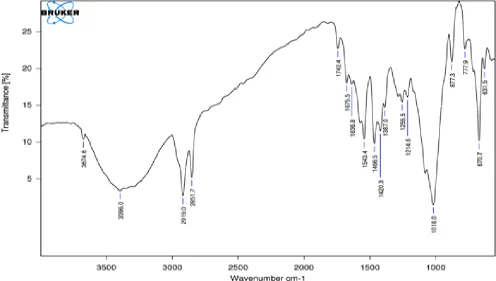
2 IR Spectrum of Pure Drug Diltiazem Hydrochloride 64
3 IR Spectrum of Formulation DLTF6 65
4 In-vitro Drug Release of Diltiazem Hydrochloride Fast Dissolving Tablet DLTF1
67
5 In-vitro Drug Release of Diltiazem Hydrochloride Fast dissolving Tablet DLTF2
68
6 In-vitro Drug Release of Diltiazem Hydrochloride Fast dissolving Tablet DLTF3
69
7 In-vitro Drug Release of Diltiazem Hydrochloride Fast dissolving Tablet DLTF4
70
8 In-vitro Drug Release of Diltiazem Hydrochloride Fast dissolving Tablet DLTF5
71
9 In-vitro Drug Release of Diltiazem Hydrochloride Fast dissolving Tablet DLTF6
72
10 In-vitro Drug Release of Diltiazem Hydrochloride Fast dissolving Tablet DLTF7
73
11 In-vitro Drug Release of Diltiazem Hydrochloride Fast dissolving Tablet DLTF8
74
12 In-vitro Drug Release of Diltiazem Hydrochloride Fast dissolving Tablet DLTF9
75
13 In-vitro Drug Release of Diltiazem Hydrochloride Fast dissolving Tablet DLTF1 to DLTF9
1. INTRODUCTION
The tablet is the most widely used dosage form because of its convenience in
terms of self-administration, compactness, and ease in manufacturing. However,
geriatric and pediatric patients experience difficulty in swallowing conventional tablets,
which leads to poor patient compliance.
To overcome this weakness, scientists have developed innovative drug delivery systems known as “melt in mouth” or “mouth dissolve (MD)” tablets. These are novel
types of tablets that disintegrate/dissolve/disperse in saliva.
Their characteristic advantages such as administration without water, anywhere,
anytime, lead to their suitability to geriatric and pediatric patients. They are also suitable
for the mentally ill, the bedridden, and patients who do not have easy access to water.
The benefits, in terms of patient compliance, rapid onset of action, increased
bioavailability, and good stability, makes these tablets popular as a dosage form of
choice in the current market.
A broad range of drugs cardiovascular, analgesics, narcoleptics, antihistamines,
and antibiotics can be considered candidates for this dosage form.
Fast dissolving tablets are formulated by techniques like tablet molding, spray
drying, lyophilization, sublimation and addition of disintegrants. Some of the patented
technologies for preparation of fast dissolving tablets are Zydis,OraSolv, DuraSolv,
Flash Dose, Wow tab (Without Water), and Flashtab1.
These are novel types of tablets that dissolve/disintegrate/ disperse in saliva within
few seconds without water. According to European pharmacopoeia, these MDTs should
dissolve/disintegrate in less than three minutes. The formulation is more useful for the
bed-ridden and patients who have the swallowing problem.
The benefits of MDTs is to improve patients compliance, rapid onset of action,
increased bioavailability and good stability which make these tablets popular as a
Mouth dissolving tablets are also called as orodispersible tablets, fast
disintegrating tablets, orally disintegrating tablets, quick disintegrating tablets, fast
dissolving tablets, rapid dissolving tablets, porous tablets, quick melt tablets and rapid
melt tablets.
However, of all the above terms United States Pharmacopoeia (USP) approved
these dosage forms as ODTs. United States Food and Drug Administration (FDA) defined ODTs as “A solid dosage form containing medicinal substances or active
ingredients which disintegrates rapidly within a few seconds when placed up on
tongue2.
DEFINITION
The Centre for Drug Evaluation and Research (CDER), US FDA defined Oral Disintegrating Tablets (ODT) as “A solid dosage form containing medicinal substances,
which disintegrates rapidly, usually within a matter seconds, when placed up on the tongue”. FDTs disintegrate and/or dissolve rapidly in the saliva without the need for
water.
Some tablets are designed to dissolve in saliva remarkably fast, within a few
seconds, and are true fast-dissolving tablets. Others contain agents to enhance the rate
of tablet disintegration in the oral cavity, and are more appropriately termed
fast-disintegrating tablets, as they may take up to a minute to completely disintegrate. When
put on tongue, this tablet disintegrates instantaneously, releasing the drug, which
dissolves or disperses in the saliva.
Some drugs are absorbed from the mouth, pharynx and oesophagus as the
saliva passes down into the stomach. In such cases, bioavailability of drug is
significantly greater than those observed from conventional tablet dosage form.
SALIENT FEATURES OF FAST DISSOLVING DRUG DELIVERY SYSTEM:
1. Ease of administration for patients who are mentally ill, disabled and uncooperative.
2. Requires no water.
3. Quick disintegration and dissolution of the dosage form.
4. Overcomes unacceptable taste of the drugs.
5. Can be designed to leave minimal or no residue in the mouth after administration and also to provide a pleasant mouth feel.
6. Allows high drug loading.
7. Ability to provide advantages of liquid medication in the form of solid preparation. Adaptable and amenable to existing processing and packaging machinery.
8. Cost-effective.
SIGNIFICANCE OF ORAL DISINTEGRATING TABLETS
Oral Disintegrating Tablets offer dual advantages of solid dosage forms and liquid dosage forms along with special features which include:
Accurate dosing - Being unit solid dosage forms, provide luxury of accurate dosing, easy Portability and manufacturing, good physical and chemical stability and an ideal alternative for pediatric and geriatric patients.
Enhanced bioavailability -
Bioavailability of drugs is enhanced due to absorption from mouth, pharynx and oesophagus.
Rapid action –
Patient compliance -
No need of water to swallow the dosage form. Hence, it is convenient for patient who are travelling and do not have immediate access to water.
Ease of administration -
Convenient to administer especially for geriatric, paediatric, mentally disabled and bed ridden patients who have difficulty in swallowing.
Obstruction free -
No risk of suffocation in airways due to physical obstruction when swallowed, thus providing improved safety and compliance.
Enhanced palatability -
Good mouths feel, especially for paediatric patients as taste masking technique is used to avoid the bitter taste of drug.
Simple packaging -
No specific packaging required. It can be packaged in push through blisters.
Business Avenue -
Provide new business opportunities in the form of product differentiation, line extension, uniqueness and life cycle management.
Cost effective -
Conventional processing and packaging equipment’s allow the manufacturing of tablets at low cost.
CHARACTERISTICS OF FAST DISSOLVING DELIVERY SYSTEM
1. Ease of administration: Fast Dissolving Delivery Systems are easy to administer and handle hence, leads to better patient compliance. Usually, elderly people experience difficulty in swallowing the conventional dosage forms (tablets, capsules, and dysphasia.
3. Hygroscopicity: Several fast dissolving dosage forms are hygroscopic and cannot maintain physical integrity under normal condition from humidity which called for special packaging.
4. Friability: In order to allow fast dissolving tablets to dissolve in the mouth, they are made of either very porous and soft-molded matrices or compressed into tablets with very low compression force, which makes the tablets friable and/or brittle which are difficult to handle, often requiring specialized peel-off blister packaging.
5. Mouth feel: Mouth feel is critical, and patients should receive a product that feels pleasant. Any large particles from the disintegrating tablet that are insoluble or slowly soluble in saliva would lead to an unpleasant gritty feeling. This can be overcome by keeping the majority of the particles below the detectable size limit 3.
BENEFITS OF FAST DISSOLVING TABLETS:
Administered without water, anywhere, any time.
Suitability for geriatric and pediatric patients, who experience difficulties in swallowing and for the other groups that may experience problems using
conventional oral dosage form, due to being mentally ill, the developmentally disable and the patients who are uncooperative, or are on reduced liquid intake plans or are nauseated.
An increased bioavailability, particularly in cases of insoluble and hydrophobic drugs, due to rapid disintegration and dissolution of these tablets.
COMMON CONDITIONS FOR ODTS INDICATIONS
Pain, fever, heartburn, diarrhea, migraine, anxiety, insomnia for fast faction.
Parkinson’s disease, Alzheimer’s disease, psychosis, Schizophrenia,
Hypertension, Cholesterol, Transplantation to improve patient’s compliance.
Cough, cold, allergy, pain, fever, ADHD that can be associated with pediatrics4.
ADVANTAGES OF ODTS AS DRUG DELIVERY SYSTEM 4, 5, 6
It is useful for some conditions that need a rapid action such as motion sickness, sudden episodes of allergic attack or coughing
Highly convenient for patients who are traveling anywhere, anytime and do not have instant access to water 7, 8, 11, 10, 12, 13.
Provide a suitable drug delivery for some drugs that have low molecular weight and are highly permeability13.
Due to rapid disintegration and dissolution time, orally dissolving tablets increase the bioavailability of insoluble and hydrophobic drugs
Improve patient safety administration by avoiding the risk of chocking or suffocation during oral administration due to physical obstruction 7,9,12,13,16,17.
ODTs have a unique feature by combining the advantage of solid and liquid dosage forms. They provide long term stability for the solid dosage form and high bioavailability as a liquid dosage form when placed on the mouth 7, 8, 10, 12.
Useful for pediatric, geriatric and psychiatric patients because there is no need for chewing 8.
Medications with a bitter taste have taken advantage of ODT technologies by the use of flavors and sweeteners to make them as pleasing as possible when they dissolve in the mouth
ODT technologies show multipurpose utilization, therefore they are suitable for the development of enhanced products for veterinary medicines, OTC, as well as prescription medicines17.
Limitation of Mouth Dissolving Tablets 8
Insufficient mechanical strength that make ODTs difficult to handle.
Drug Selection Criteria 12, 19
Dose should be lower than 20 mg for FDT.
Drug should be partially nonionized at pH in oral cavity.
Drug should be diffuse and partition into the epithelium of the upper GIT (log P > 1, or preferably >2)
Drug should have to permeate through oral mucosal tissue.
Ideal Properties of MDTs20
They should
Not require water to swallow and should dissolve or disintegrate in the mouth
within a few seconds.
Be compatible with taste masking and other excipients. Have a pleasing mouth feel.
Leave minimal or no residue in the mouth after oral administration.
Have sufficient strength to withstand the rigors of the manufacturing process and Exhibit low sensitivity to environmental conditions such as humidity and
temperature.
Techniques of MDT Formulation
The fast-dissolving property of the MDTs is attributed to quick ingress of water
into tablet matrix resulting in rapid disintegration. Hence, the basic approaches to
develop MDTs include:
Maximizing the porous structure of the tablet matrix.
Incorporating the appropriate disintegrating agent/agents.
Using highly water-soluble excipients in the formulation.
So far, several techniques have been developed on the basis of different
principles. The resulting dosage forms vary on grounds like mechanical strength of the
final product, drug and dosage form stability, mouth feel, taste, rate of dissolution and
Table No:1 Shows the List of Some Patented Technologies. Patented Technology Basis of Technology Technology developed by Company Active Ingredient (Brand Names)
Zydis Lyophilization R.P.Scherer Loratidine (Claritin Reditab and Dimetapp Quick
Dissolve)
Quicksolv
Lyophilization Janssen pharmaceutics
Cisapride monohydrate (Propulsid Quicksolv), Risperidone (Risperdal MTab)
Orasolv
Direct Compression
Cima Labs,Inc. Paracetamol (Tempra
Quicklets), Zolmitriptan (Zolmig Repimelt), Hyoscyamine
Sulfate.
Durasolv Direct
compression
Cima Labs, Inc. (NuLev) Zolmitriptan
(Zolmig ZMT)
Flashtab Direct
compression
Ethypharm Ibuprofen (Nurofen
FlashTab) Wowtab Direct compression Yamanouchi Pharma Tech. Inc.
Famotidine (Gaster D)
Advatab Microcaps and diffuscap CR Technology Eurand International AdvaTab cetrizine, AdvaTab Paracetamol Flashdose Cotton Candy Process Fuisz Technology, Ltd. Tramadol HCl (Relivia Flash dose)
Oraquick Micromask
taste masking
KV Pharm.Co.,Inc.
Hyoscyamine SulfateODT
Ziplets Direct
compression
Eurand International
Ibuprofen (Cibalgina DueFast)
Lyoc Lyophilization Farmalyoc Phloroglucinol Hydrate
(Spasfon Lyoc)
Various manufacturing techniques for MDDDS include:
1. Lyophilization
2. Moulding
3. Direct Compression
4. Cotton Candy Process
6. Sublimation
7. Mass Extrusion
8. Nanonization
9. Fast Dissolving Films
Freeze-Drying or Lyophilization21
In freeze-drying process, the water is sublimed from the product after it is frozen.
This technique forms the basis of Zydis, Quicksolv and Lyoc technologies which are
used to manufacture MDTs. Jaccard and Leyder used lyophilization to develop an oral
formulation that not only dissolved rapidly but also exhibited improved bioavailability of
several drugs such as spironolactone and trolendomycin. Corveleyn and Remon studied
various formulation and process parameters by using hydrochlorothiazide as a model
drug.
Zydis technology (ZT) is a patented technique which had been used for drugs
like famotidine, loperamide, piroxicam, oxazepam, lorazepam, domeperidone,
brompheniramine, olanzepine, ondansetron and rizatriptan. Thirteen products are
currently available in the market, which had been manufactured using this technology.
In U.S., the MDT products available are: Claritin Reditab, Dimetapp Quick Dissolve,
Feldene Melt, Maxalt- MLT, Pepcid RPD, Zofran ODT and Zyprexa Zydis. In the
worldwide market, Zydis formulations are also available for oxazepam, lorazepam,
loperamide, and enalapril 23.
ZT utilizes a unique freeze-drying process to manufacture finished dosage units
which significantly differ from conventional oral systems 24. The process involves the following steps:
Stage 1 - bulk preparation of an aqueous drug solution or suspension and its
subsequent precise dosing into pre-formed blisters. It is the blister that actually forms
the tablet shape and is, therefore, an integral component of the total product package.
Stage 2 - passing the filled blisters through a specially designed cryogenic
freezing process to control the ultimate size of the ice crystals which ensures that the
frozen units are then transferred to large-scale freeze dryers for the sublimation
process, where the majority of the remaining moisture is removed from the tablets.
Stage 3 - sealing the open blisters using a heat-seal process to ensure stability and
protection of the product from varying environmental conditions.
Lyoc is a porous and solid galenic form obtained by lyophilization of an
oil-in-water emulsion placed directly in the blister alveolus 14,25. Its unusual properties are the result of its unique method of preparation, which involves freezing a thickened (paste
like) emulsion containing the active as bulk or as coated microparticles. This product is
capable of accommodating high dose and disintegrates rapidly but possesses poor
mechanical strength.
Quicksolv is a porous solid form obtained by freezing an aqueous
dispersion/solution of the drug containing matrix and then drying it by removing the
water using excess of alcohol (solvent extraction)26. The final form disintegrates very rapidly but is limited to low drug content and can be used only for those drugs that are
insoluble in the extraction solvent. The ideal drug characteristics required for this technology are relative low aqueous solubility, fine particle size < 50 μm 27, 28
and good
aqueous stability in the suspension.
The maximum drug loading capacity for water insoluble and soluble drugs are
400 mg and 60 mg, respectively 12, 27. The primary problems associated with water soluble drugs are the formation of eutectic mixtures resulting in freezing-point
depression and the formation of a glassy solid on freezing which might collapse on
drying due to loss of supporting structure during sublimation process 12, 13, 27.
MDTs manufactured using lyophilization process, usually contain excipients like
polymers (e.g., gelatin, alginates and dextrin) to provide strength and rigidity to tablets;
polysaccharides (e.g., mannitol and sorbitol) to impart crystallinity and hardness to the
matrix and to improve palatability; collapse protectants (e.g., glycine) to prevent the
product from shrinking in its packaging during manufacturing or storage; flocculating
agents (e.g., xanthan gum and acacia) to provide uniform dispersion of drug particles;
preservatives (e.g., parabens) to prevent microbial growth; permeation enhancers (e.g.,
acid etc.) to optimize chemical stability; flavors and sweeteners to improve patient
compliance and water to ensure formation of porous units.
Advantages
The major advantage of using this technique is that the tablets produced by this
technology have very low disintegration time and have great mouthfeel due to fast
melting effect.
Disadvantages
Although being a fairly routine process, lyophilization has some disadvantages
like it is a relatively expensive and time consuming process. Furthermore, the product
obtained is poorly stable and fragile, rendering conventional packaging unsuitable.
Tablet Moulding
Moulded tablets invariably contain water-soluble ingredients due to which the
tablets dissolve completely and rapidly. Following are the different tablet moulding
techniques:
Compression Moulding Process
This manufacturing process involves moistening the powder blend with a
hydroalcoholic solvent followed by pressing into mould plates to form a wetted mass
(compression moulding). The solvent is then removed by air drying, a process similar to
the manufacture of tablet triturates. Such tablets are less compact than compressed
tablets and possess a porous structure that hastens dissolution 15.
Heat-Moulding Process
Heat-moulding process involves setting the molten mass containing a dispersed
drug . This process uses agar solution as a binder and a blister packaging well as a
mould to manufacture the tablet. A suspension containing drug, agar and sugar is
prepared followed by pouring the suspension into the blister packaging well, solidifying
the agar solution at room temperature to form a jelly and finally drying at approximately
30 °C under vacuum.
Moulding by Vacuum Evaporation without Lyophilization 30
This process involves pouring of the drug excipient mixture (in the form of a
solidified matrix and finally subjecting it to vacuum drying at a temperature within the
range of its collapse temperature and equilibrium freezing temperature. This results in
the formation of a partially collapsed matrix. This method differs from the lyophilization
technique, as in the former the evaporation of free unbound solvent occurs from a solid
through the liquid phase to a gas, under controlled conditions, instead of the sublimation
which takes place in the latter process. Unlike lyophilization, vacuum drying helps to
densify the matrix and thereby improves the mechanical strength of the product. Pebley
et al. evaporated the frozen mixture containing a gum (e.g., acacia, carageenan, guar,
tragacanth or xanthan), a carbohydrate (e.g., dextrose, lactose, maltose, mannitol or
maltodextrin) and solvent in a tablet-shaped mould to design a MDT with a disintegration time of about 20 – 60 secs.
Tablets produced by moulding are solid dispersions. The drug, depending on its
solubility in the carrier, exists either as discrete particles or microparticles dispersed in
the matrix and is dissolved totally/partially to form a solid solution/dispersion in the
carrier matrix.
Advantages
As the dispersion matrix is made from water-soluble sugars, moulded tablets
disintegrate more rapidly and offer improved taste. These properties are enhanced
when tablets with porous structures are produced or when components that are
physically modified by the moulding process are used. In comparison to lyophilization
process, tablets produced by moulding technique are easier to adapt to the industrial
scale.
Disadvantage
As the moulded tablets have poor mechanical strength, they may undergo
erosion and breaking during handling. Though hardening can increase the strength of
the tablets but it would be at the cost of their disintegration time.
Direct Compression (DC)
DC is the simplest and most cost effective tablet manufacturing technique for
MDTs as they can be fabricated using conventional tablet manufacturing and packaging
compressibility and disintegration properties, especially tablet disintegrants,
effervescent agents and sugar based excipients.
Disintegrants
In many MDT products based on DC process, the disintegrants mainly affect the
rate of disintegration and hence dissolution which is further enhanced in the presence of
water soluble excipients and effervescent agents.
The introduction of superdisintegrants has increased the popularity of this
technology 27. Tablet disintegration time can be optimized by focusing on the disintegrants concentration. Below a critical disintegrant concentration, tablet
disintegration time becomes inversely proportional to disintegrant concentration.
However, above the critical concentration level of disintegrant, disintegration time
remains approximately constant or the decrease is insignificant 22.
Another DC based technology; Flashtab contains coated crystals of drug and
microgranules along with disintegrants30. In this technology, two types of disintegrants are used: a disintegrating agent (e.g., modified cellulose), which has a high swelling
force and a swelling agent (e.g., starch) which has a low swelling force 30.
Bi et al. and Watanbe used microcrystalline cellulose (MCC) and low substituted
hydroxypropyl cellulose (HPC) to manufacture MDTs wherein the ratio of MCC to HPC
varied from 8:2 to 9:1. Ito and Sugihara investigated the application of agar powder as a
disintegrant due to its property of absorbing water and considerable swelling without
forming a gel at physiological temperature.
Effervescent Agents
The evolution of CO2 as a disintegrating mechanism forms the basis of the
patented Orasolv technology (OT) and is frequently used to develop over-the-counter
formulations 26–30. The product contains microparticles and is slightly effervescent in nature. Saliva activates the effervescent agent which causes the tablet to disintegrate.
The OT had been utilized in fabrication of six marketed products: four Triaminic
Softchew formulations, Tempra FirsTabs and Remeron SolTab.
The present technology uses the concept of effervescence to achieve
into a suitable polymer (ethyl cellulose, methyl cellulose, acrylate or methacrylic acid
resins) along with other excipients (mannitol and magnesium oxide).
The drug and mannitol are added to the polymeric dispersion under stirring,
followed by addition of magnesium oxide. Here, mannitol and magnesium oxide are
known as release promoters as they aid in drug release from the polymeric coating.
This mixture is then dried for one hour at 50 °C, delumped and dried for another hour at
the same temperature.
The material is then screened (8-mesh) and dried for one hour at 60 °C. The
formed microparticles, effervescent agents and other excipients are blended and compressed into tablets at 1.0–2.0 kg hardness. The tablets obtained are fragile with
in-vivo disintegration time of less than one minute. As the tablets are very soft, they are
packed into aluminium blisters using a specially designed packaging system.
To reduce their friability, a novel method, known as particulate effervescent
couple, had been developed. In this method the organic acid crystals are coated using a
stoichiometrically low quantity of base material as compared to acid. The particle size of
the organic acid crystals is carefully chosen to be greater than the base material so that
base gets uniformly coated onto the acid crystals.
The coating process is initiated by the addition of a reaction initiator, which in this
case, is purified water. The reaction is allowed to proceed only to an extent of
completion of base coating on organic acid crystals. The required end-point for the
reaction termination is determined by measuring CO2 evolution. The resulting
effervescent couple can be used in tablet preparation by mixing with polymer-coated
drug particles and other required excipients 31.
Though, the Orasolv tablet has the appearance of a traditional compressed
tablet, they are lightly compressed and are weaker and more brittle than the
conventional tablets. Therefore, a special handling and packaging system for Orasolv
was developed 30. An advantage of low degree of compaction is that the particle coating used for taste masking is not compromised by fracture during compression.
Durasolv, a second-generation technology was developed to produce robust
of higher compaction pressure during compression. It is thus produced in a much faster
and cost effective manner and can be packed in either traditional blister packs or vials.
The limitations of Durasolv is its low drug loading capacity and high compaction
pressure which are not suitable for incorporation of taste masked coated pellets.
Therefore, the Durasolv technology is best suited for relatively small doses of drug .
This technology has been applied in the fabrication of two products: NuLev and
Zomig ZMT. However, the major drawback of effervescent excipients is their
hygroscopicity which require control of humidity during processing and protection of the
final product resulting in increase in the cost of the product.
Sugar-Based Excipients
Another approach to manufacture MDTs by DC is the use of sugar-based
excipients (e.g., dextrose, fructose, isomalt, lactitol, maltitol, maltose, mannitol, sorbitol,
starch hydrolysate, polydextrose and xylitol) which display high aqueous solubility and
sweetness and hence, imparts taste masking and a pleasing mouth feel.
Mizumoto et al., have classified sugar-based excipients into two types based on
their mouldability and dissolution rate.
Type I saccharides (e.g., lactose and mannitol) exhibit low mouldability but high
dissolution rate.
Type II saccharides (e.g., maltose and maltitol) exhibit high mouldability but low
dissolution rate.
Mouldability is defined as the capacity of the compound to be compressed/
moulded and to dissolve. It does not refer to the formation of a true mould by melting or
solvent wetting process. The mouldability of Type I saccharide can be improved by
granulating it with a Type II saccharide solution.
The above technology forms the basis of WOWTAB which involves the use of
fluidized bed granulation for the surface treatment of Type I saccharide with Type II
saccharide. This technique has been used in the production of Benadryl Fast melt
tablets. Here, two different types of saccharides are combined to obtain a tablet
formulation with adequate hardness and fast dissolution rate. Due to its significant
than the Zydis or Orasolv and is suitable for both conventional bottle and blister
packaging.
The taste masking technology utilized in the WOWTAB is proprietary and claims
to offer superior mouthfeel due to the patented smooth-melt action 26.
In the process of granulation, low mouldable sugar was coated with high
mouldable sugar followed by a specific humidity treatment, to achieve fast disintegration. The resulting tablet had a hardness of 1.0–2.0 kg (tablet-size dependent) and presented a preferable disintegration time of 1–40 secs. Various classes of drugs
can be incorporated into the above sugar combination to achieve a MDT with optimum performance characteristics. A preferable ratio of 5–10% w/w of high mouldable sugar
was found to be sufficient to achieve the desired hardness and disintegration property
25
.
A series of experiments had been conducted to develop a MDT using a
combination of starch/cellulose and one or more water-soluble saccharides27. Erythritol was found to be the best saccharide because it displayed rapid disintegration, good
tolerability, sweetening and a refreshing mouth feel due to its negative heat of solution.
Recently, the Ziplet technology was developed, which can be used for water
insoluble drugs or drugs as coated microparticles. It was found that the addition of a
suitable amount of a water-insoluble inorganic excipient combined with one or more
effective disintegrants imparted an excellent physical resistance to the MDT and
simultaneously maintained optimal disintegration even at low compression force and
tablet hardness.
In fact, breakage of the tablet edges or formation of powder during manufacturing
and opening of the blister pack is avoided because of its superior mechanical
resistance. The use of water-insoluble inorganic excipients also offers better
enhancement of disintegration characteristics in comparison to the most commonly
used water-soluble sugars or salts. In fact, tablets composed primarily of water-soluble
components often tend to dissolve rather than disintegrate, resulting in much longer disintegration time. As the soluble components dissolve on the tablet’s outer layer, a
concentrated viscous solution is formed, which reduces the rate of water diffusion into
Cotton Candy Process
The FLASHDOSE® is a MDDDS manufactured using Shearform™ technology in association with Ceform TI™ technology to eliminate the bitter taste of the medicament. The Shearform technology is employed in the preparation of a matrix known as ‘floss’,
made from a combination of excipients, either alone or with drugs.
The floss is a fibrous material similar to cotton-candy fibers, commonly made of
saccharides such as sucrose, dextrose, lactose and fructose at temperatures ranging between 180–266 °F.
However, other polysaccharides such as polymaltodextrins and polydextrose can be transformed into fibers at 30–40% lower temperature than sucrose. This modification
permits the safe incorporation of thermolabile drugs into the formulation.
The tablets manufactured by this process are highly porous in nature and offer
very pleasant mouthfeel due to fast solubilization of sugars in presence of saliva. The
manufacturing process can be divided into four steps as detailed below.
I. Floss Blend
In this step, 80% sucrose in combination with mannitol/dextrose and 1%
surfactant is blended to form the floss mix. The surfactant acts as a crystallization
enhancer in maintaining the structural integrity of the floss fibers. It also helps in the
conversion of amorphous sugar into crystalline form from an outer portion of amorphous
sugar mass and subsequently converting the remaining portion of the mass to complete
crystalline structure. This process helps to retain the dispersed drug in the matrix,
thereby minimizing migration out of the mixture 29.
II. Floss Processing
The floss formation machine uses flash heat and flash flow processes to produce matrix from the carrier material. The machine is similar to that used in ‘cotton-candy’
formation which consists of a spinning head and heating elements.
In the flash heat process, the heat induces an internal flow condition of the carrier material. This is followed by its exit through the spinning head (2000–3600 rpm) that
flings the floss under centrifugal force and draws into long and thin floss fibers, which
III. Floss Chopping and Conditioning
This step involves the conversion of fibers into smaller particles in a high shear
mixer granulator. The conditioning is performed by partial crystallization through an
ethanol treatment (1%) which is sprayed onto the floss and subsequently evaporated to
impart improved flow and cohesive properties to the floss .
IV. Blending and Compression
Finally, the chopped and conditioned floss fibers are blended with the drug along
with other required excipients and compressed into tablets. In order to improve the
mechanical strength of the tablets, a curing step is also carried out which involves the
exposure of the dosage forms to elevated temperature and humidity conditions, (40 °C
and 85% RH for 15 min). This is expected to cause crystallization of the floss material
that results in binding and bridging to improve the structural strength of the dosage
form.
Spray-Drying
Allen et al.,have used spray-drying for the production of MDTs. The formulations
contained hydrolyzed and unhydrolyzed gelatin as a supporting agent for the matrix,
mannitol as a bulking agent and sodium starch glycolate/croscaramellose as a
disintegrant.
Disintegration and dissolution were further enhanced by adding an acid (e.g.,
citric acid) or an alkali (e.g., sodium bicarbonate). The suspension of above excipients
was spray-dried to yield a porous powder which was compressed into tablets. Tablets
manufactured by this method disintegrated in < 20 secs in an aqueous medium.
Sublimation
Sublimation has been used to produce MDTs with high porosity. A porous matrix
is formed by compressing the volatile ingredients along with other excipients into
tablets, which are finally subjected to a process of sublimation.
Inert solid ingredients with high volatility (e.g., ammonium bicarbonate,
ammonium carbonate, benzoic acid, camphor, hexamethylene tetramine, naphthalene,
Solvents such as cyclohexane and benzene were also suggested for generating
the porosity in the matrix. Makino et al., reported a method using water as a
pore-forming material.
Mass-Extrusion
This technology involves softening of the active blend using the solvent mixture
of water soluble polyethylene glycol and methanol and expulsion of softened mass
through the extruder or syringe to get a cylindrical shaped extrude which are finally cut
into even segments using heated blade to form tablets. This process can also be used
to coat granules of bitter drugs to mask their taste 25.
Nanonization
A recently developed Nanomelt technology involves reduction in the particle size
of drug to nanosize by milling the drug using a proprietary wet-milling technique .
The nanocrystals of the drug are stabilized against agglomeration by surface
adsorption on selected stabilizers, which are then incorporated into MDTs. This
technique is especially advantageous for poorly water soluble drugs.
Other advantages of this technology include fast disintegration/dissolution of
nanoparticles leading to increased absorption and hence higher bioavailability and
reduction in dose, cost effective manufacturing process, conventional packaging due to
exceptional durability and wide range of doses (up to 200 mg of drug per unit).
Fast Dissolving Films
It is a new frontier in MDDDS that provides a very convenient means of taking
medications and supplements. In this technique, a non-aqueous solution is prepared
containing water soluble film forming polymer (pullulan, carboxy methylcellulose,
hydroxypropyl methylcellulose, hydroxyl ethylcellulose, hydroxyl propylcellulose,
polyvinyl pyrrolidone, polyvinyl alcohol or sodium alginate, etc.), drug and other taste
masking ingredients, which is allowed to form a film after evaporation of solvent. In case
of a bitter drug, resin adsorbate or coated microparticles of the drug can be incorporated
into the film.
This film, when placed in mouth, melts or dissolves rapidly, releasing the drug in
solution or suspension form. The features of this system include paper thin films of size
MDTs with Patented Taste Masking Technology
There are number of patented taste masking technologies which had been
utilized to manufacture MDTs with acceptable taste. CIMA Labs’ taste masking
technique involving coating of drug with dissolution retarding excipient, Microcaps
process involving microencapsulation by coacervation-phase seperation technique ,
Solutab technology involving coating of drug with sustained release agent
followed by coating with enteric polymer and finally with mannitol [68] and blending of
drug with cyclodextrins are some of the taste masking approaches applied in fabrication
of MDTs.
One more formulation in this category is OraQuick formulation which produces
microspheres, known as MicroMask, which has superior mouthfeel over other
taste-masking alternatives. This process does not involve the use of solvents and therefore,
leads to faster and more efficient production.
Moreover, relatively lower heat of production makes OraQuick appropriate for
heat-sensitive drugs. The matrix that protects the drug in microencapsulated particles is
more pliable which enables the tablets to be compressed with significant mechanical
strength without disrupting the taste-masking property.
Alongwith good taste-masking ability, OraQuick also claims quick dissolution (in
secs) of the MDT. This technology had also been utilized in the development of MDTs
containing Hyoscyamine sulfate, which is a bitter tasting anticholinergic/antispasmodic
drug.
AdvaTab technology utilizes a combination of Microcaps technology for taste
masking and Diffuscap controlled release technology for the development of a highly
2. REVIEW OF LITERATURE
1. Neena Bedi et.al, developed Formulation and Evaluation of Mouth Dissolving Tablets
of OxcarbazepineTablets produced by direct compression method contain crospovidone
as a superdisintegrant and aspartame as a sweetener. Solid dispersions of
oxcarbazepine with polyvinylpyrrolidone K-30 and polyethylene glycol 6000 in different
weight ratios were prepared with a view to increase its water solubility32.
2. B. P. Patel et.al, developed Formulation and Evaluation of Mouth Dissolving Tablets of Cinnarizine by effervescent, superdisintegrant addition and sublimation methods. All
the three formulations were evaluated for disintegration time, hardness and friability,
among these superdisintegrant addition method showed lowest disintegration time;
hence it was selected for further studies. Further nine batches (B1-B9) were prepared
by using crospovidone, croscarmellose sodium and L-HPC in different concentrations
such as 5, 7.5 and 10%. All the formulations were evaluated for weight variation,
hardness, friability, drug content, in vitro disintegration time, wetting time, in vitro dissolution. Formulation with 10% L-HPC showed the less disintegration time (25.3 s) and less wetting time (29.1 s). In vitro dissolution studies showed total drug release at the end of 6 min.
Keywords: Cinnarizine, In vitro disintegration time, mouth dissolving tablets, sublimation, wetting time33.
3. Sharma V et.al, developed mouth dissolving tablet that disintegrates rapidly in mouth
by using tasteless complex of Levocetirizine and Tulsion-335. Effect of different
parameters such as swelling time, resin activation, drug resin ratio as well as stirring
time was optimized by taste and percentage drug loading. Formulated DRC (Drug Resin
Complex) was characterized by infrared spectroscopy, thermal analysis and X-ray
diffraction pattern. Tablets were formulated by wet granulation with PVP as binder,
Sodium Starch Glycolate (SSG) and Crospovidone as super disintegrants. In these
batches optimum hardness was achieved but disintegration time was found to be very high as ≥ 70 second, so further trials were planned by using different superdisintegrants
Crospovidone by wet granulation method. Tablets formulated with 7.5% crospovidone
showed comparatively low disintegration time (25 sec), wetting time (20 sec) and
friability (0.60 %) than the other batches. In present study we optimized the conditions
required for maximum drug loading of Levocetirizine with Tulsion-335. Among different
superdisintergants, crospovidone was found suitable with drug-resin complex to get the
low disintegration time, wetting time and friability of tablets.
Keywords: Drug-resin complex; Levocetirizine; Superdisintegrant; Tulsion-33534
4. Goel H et.al, studied a variety of dosage forms like tablets, films, wafers, chewing
gums, microparticles, nanoparticles etc. have been developed for enhancing the
performance attributes in the orally disintegrating systems. Advancements in the
technology arena for manufacturing these systems include the use of freeze drying,
cotton candy, melt extrusion, sublimation, direct compression besides the classical wet
granulation processes. Taste masking of active ingredients becomes essential in these
systems because the drug is entirely released in the mouth. Fluid bed coating,
agglomeration, pelletization and infusion methods have proven useful for this purpose. It
is important to note that although, freeze dried and effervescent disintegrating systems
rapidly disintegrate in contact with fluids, they do not generally exhibit the required
mechanical strength. Similarly, the candy process cannot be used for thermolabile
drugs. In the light of the paradoxical nature of the attributes desired in orally
disintegrating systems (high mechanical strength and rapid disintegration), it becomes
essential to study the innovations in this field and understand the intricacies of the
different processes used for manufacturing these systems. This article attempts at
discussing the patents relating to orally disintegrating systems with respect to the use of
different formulation ingredients and technologies35.
5. Chachin M et.al,studied pharmacological effect of Telmisartan (Micardis) is a potent,
long-lasting, nonpeptide angiotensin II type-1 (AT(1)) receptor blocker (ARB) that is
indicated for the treatment of essential hypertension. In receptor binding studies,
compared with AT(2) receptors and a slower dissociation rate from the human AT(1)
receptor than those of ARBs. In isolated aorta rings, telmisartan was shown to be an
insurmountable antagonist of AII-induced contractions. The inhibitory effects of
telmisartan on AII-induced contraction persisted even after wash-out procedures. In
animal models such as spontaneous hypertension rats and renovascular hypertensive
rats, telmisartan produced the consistent reduction of blood pressure. Furthermore,
there were no rebound phenomenon and no tolerance to the drug developed in the
repeated oral administration. Telmisartan has a longer terminal elimination half-life
(about 24 h) than the other ARBs. In patients with mild-moderate hypertension,
trough/peak ratios for telmisartan were above 80%. In Japanese patients with
mild-moderate hypertension, telmisartan produced a significant reduction in blood pressure
(effective rate: 76.0%) with a good safety profile. Therefore, telmisartan is expected to
be effective in the treatment of hypertension, producing sustained 24-h blood pressure
control36.
6.Chaudhari PD et. al, Studied the bitter taste of famotidine was masked using
Eudragit in different ratio. The different superdisintegrants like Ac-di-sol and
polyplasdone with their varying concentration used for disintegration of tablet in mouth.
After dissolution study he concluded that all formulation showed faster release rate
than marketed formulation37 .
7.Takao M et. al., Tried to developed novel fast-disintegration tablet as a user
friendly dosage form for the aged. Used mannitol, lactose, glucose, magnesium
stearate as excipient. Prepared many formulations using different exicipients in
different formulation, various parameters checked and compare. They concluded
that tablet contain mannitol, glucose and lactose showed quick disintegration time,
but very low hardness and tablet contain maltose and mannitol having high hardness
but slow disintegration time38.
8.Zhao N et. al., Compared disintegration efficiency and to developed a discriminating
polyplasdone X L 10. The study were thus provides a closer look at the functionality
of superdisintegrants in promoting tablet disintegration and development of model
formulation with examinated by videography and dissolution profile. AC-Di-Sol
was found to disintegrate tablet rapidly into apparently primary particles. 3
disintegrants representing each of the 3 main classes of superdisintegrants differed
in their ability to disintegrate model tablets into their primary particles39.
9.Desai SA et. al., prepared o r d i s s o l v i n g tablets of promethazine
hydrochloride were prepared by using superdisintegrant sodm starch glycolate and
cross carmellose sodium by direct compression method. The prepared tablets were
evaluated for uniformity of weight, tensile strength, content uniformity, hardness,
friability, wetting time, invitro and invivo dispersion time and invitro drug release40.
10.Nandgude TD et. al., Prepared diphenhydramine tannate fast dissolving tablet by
wet granulation method after incorporating superdisintegrants like sodium
glycolate and crospovidone in different concentration. The tablets are subjected to
evaluation with post compressional parameters like weight variation, hardness and
friability, tensile strength, water absorption ratio, in-vitro dispersion time, in vivo
dispersion time. Concluded that conventional tablet show 100% release after 7 hrs
where as mouth disintegration tablet achieved maximum release 3-4 hrs. Tablet
containing SSG show superior organoleptic properties along with excellent in-vitro
dispersion time41.
11.Uddhav S et. al., Described manufacturing technologies for mouth dissolving
tablets showing that incorporation of an existing medicine into a new drug delivery
system can significantly improve its performance in terms of efficacy, safety
and improved patient compliance. In these s t u d i e s th e y h a d described different
types of technologies employed for the formulation of mouth dissolving tablets i.e.
freeze drying, spray drying, sublimation and comparison of sugar based excipients
12.Shishu et. al., Prepared taste masked granules using aminoalkyl methacryl
atecopolymer by the extrusion method and formula rapidly disintegrating tablet by
direct compression method. The tablet prepared by using microcrystalline cellulose
and sodium starch glycolate ate as disintegrant. Concluded that tablet had a
good taste and rapidly disintegrated in the mouth were useful and practical for pediatric
and geriatric population43.
13.Sharma S et. al., Formulated promethazine theoclate solid dispersion with
PEG 4000 by using optimized amount of superdisintegrant.A phase solubility method
was used to evaluate the effect of various water-soluble polymers on aqueous
solubility of promethazine theoclate.PEG 4000 was selected and solid dispersion
were prepared by method of fusing44 Chaudhari PD et. al., Formulated and evaluated taste masked orodispersible dosage form of levocetirizine. An attempt was
made to mask the taste, by complexation technique using ion-exchange resin, tulsion
335 formulate in to a orodispersible dosage form. The drug loading onto ion exchange
resin was optimized for concentration of resin, swelling time of resin, stirring time, pH
of resin solution, stirring temperature. Shows bitter drug successfully taste masked
using suitable ion exchange resin. The drug resin complex orodispersible tablets
were formulated and the evaluated for drug content, content uniformity, weight
variation, hardness, friability, water absorption ratio, in-vitro and in-vivo drug
release45.
14.Raghu NB ET. al., Studied on taste masking of drotaverine hydrochloride by the
complexation technique. The drug loading process was optimized for taste masking
and drug: resin ratio, the resinate was evaluated for bulk density, tap density, t a s te
and characterization w a s d o n e u s i n g D S C . The t a s t e m a s k e d drotaverine
complex was incorporated into palatable melt in mouth tablet and evaluated various
quality control parameters. The mouth dissolve tablets had optimum physiochemical
15.Swamy PV et. al., Developed or dispersible tablet of meloxicam using different
superdisintegrants. Combinations of sodium starch glycolate- croscarmellose sodium or sodium starch glycolate–crospovidone were used along with directly compressible
mannitol. The prepared batches evaluated for hardness, friability, wetting time,
water absorption ratio like various parameters. He concluded that the formulation
prepared using 2% w/v sodium starch glycolate and 15% croscarmellose sodium
was found better formulation compare to conventional tablet47.
16.He X et.al.,Developed the rapidly dispersing tablet of a poorly wettable compound–
formulation DOE and mechanistic study of effect of formulation excipient on
wetting of celecoxib. In this work a tablet was placed in water and the turbidity of the
resulting “dynamic” suspension was measured. They describe the novel method to
enhance the dissolution rate for poorly soluble compounds by reduction in particle
size, with screening formulation statistical design o f experiments, mechanistic
studies, optimization design of experiments and analytical methods like turbidity
test, contact angle analysis, microscopic test48.
17.Adamo F et. al., Developed eight formulations containing Ibuprofen in the form of
orally disintegrating tablets. To prevent bitterness of drug he masked the taste of
drug using taste masking agents. Aspartame used as a sweeter in formulation,
mannitol used as a binder and explotab were added as superdisintegrant and
compacted under low compression force. Dissolution profile suggest that the
combined action of hydrophobic lecithin and coating delay the release of the drug from
tablets with respect to when it is free or in the form of simple granules49.
18.Setty CM et. al.,Developed fast dispersible Aceclofenac tablets and study the
effect of superdisintegrants on wetting time, disintegration time, drug content, in-vitro release and stability parameter using direct compression technique. The parameters were tested for significance by using analysis of variance
(ANOVA:Single factor). The stability study showed that tablet containing
although functional differences existed between the superdisintegrants, the fast
dispersible aceclofenac tablets could be prepared by using any of the
superdisintegrants used50.
19.Mulla JA et. al., Prepared promethazine hydrochloride mouth disintegrating tablet
that have been used for prevention of emesis and nausea using disintegrants like
Ac-di-sol, explotab, polyplasdone and MCC along with other additives by directly
compression techniques. It was observed that the concentration of the
superdisintegrants had an effect on disintegration time and in-vitro dissolution time and
in-vitro dissolution characteristics. Ac-di-sol was found to be better as compared to other superdisintegrants used in study51.
20.Rampure MV et. al., Prepared rapidly disintegrating tablet at Alfuzosin by
effervescent method using sodium bicarbonate and citric acid. Crospovidone, sodium
starch glycolate and croscarmellose sodium used as superdisintegrants. The
prepared tablet evaluated for different parameters and compare market product.He
showed that the formulation containing crospovidone along with mixture at 24%
3. AIM & OBJECTIVE
3.1 AIM:
Formulation Development and Evaluation of Fast Dissolving Tablets of Diltiazem
Hydrochloride by Direct Compression method.
3.2. Objectives:
In the present work, fast dissolving tablets of Diltiazem Hydrochloride are
planned to prepare with an intention to improve disintegration, dissolution rate and
bioavailability of drug by using some Superdisintegrants.
The fast dissolving tablet will be prepared by direct compression method are
evaluated for various quality control tests for tablets such as hardness, friability,
weight variation, drug content uniformity, disintegration and dissolution.
Fast dissolving tablets will also help in ease of administration because fast
dissolving tablets give uniform dispersion product.
3.3 Justification:
Diltiazem is well absorbed from the gastrointestinal tract, and is subject to an
extensive first-pass effect. When given as an immediate release oral formulation, the
absolute bioavailability (compared to intravenous administration) of Diltiazem is
approximately 40%.
Diltiazem undergoes extensive hepatic metabolism in which 2% to 4% of the
unchanged drug appears in the urine.
Fast dissolving tablets are formulated with an objective of improving
disintegration and dissolution rate of the drug. Fast dissolving tablets are planned to
prepare by using some super disintegrants. Super disintegrants are excipients used
4. PLAN OF WORK
Preformulation Studies:
Determination of Melting Point
Determination of Solubility
To Perform Drug -Excipients Compatibility
To Perform Calibration By U.V
To Perform Pre-Compression Studies.
Formulation studies:
To formulate optimized formula
Formulation of tablets by direct compression
Evaluation studies:
Weight Variation
Hardness
Friability
Percentage Porosity
Drug Content Estimation
Dispersion Time
5. DRUG PROFILE
DILTIAZEM HYDROCHLORIDE53
Chemical Name:
Chemically, Diltiazem hydrochloride is 1,5-Benzothiazepin-4(5H)one,3-(acetyl
oxy)-5-[2- dimethylamino)ethyl] -2,3-dihydro-2-(4-methoxy phenyl) mono
hydrochloride.
Molecular Formula: C22H26N2O4S.HCl
Molecular Weight: 450.99.
Structural Formula:
Description:
Diltiazem Hydrochloride - Clinical Pharmacology:
The therapeutic benefits of Diltiazem hydrochloride are believed to be related
to its ability to inhibit the influx of calcium ions during membrane depolarization of
cardiac and vascular smooth muscles.
Mechanism of Action:-
Hypertension
Diltiazem HCl produces its antihypertensive effect primarily by relaxation of
vascular smooth muscle with a resultant decrease in peripheral vascular resistance.
The magnitude of blood pressure reduction is related to the degree of hypertension;
thus hypertensive individuals experience an antihypertensive effect, whereas there
is only a modest fall in blood pressure in normotensives.
Angina
Diltiazem HCl has been shown to produce increases in exercise tolerance,
probably due to its ability to reduce myocardial oxygen demand. This is
accomplished via reductions in heart rate and systemic blood pressure at
submaximal and maximal workloads.
Diltiazem has been shown to be a potent dilator of coronary arteries, both
epicardial and subendocardial. Spontaneous and ergonovine-induced coronary
artery spasms are inhibited by Diltiazem.
Hemodynamic and Electrophysiologic Effects
Like other calcium antagonists, Diltiazem decreases sinoatrial and
atrioventricular conduction in isolated tissues and has a negative inotropic effect in
isolated preparations. In the intact animal, prolongation of the AH interval can be