
Pandora's box and the delphic oracle : EU cohesion policy and state aid compliance
78
0
0
Full text
(2) European Policies Research Centre University of Strathclyde Graham Hills Building 40 George Street Glasgow G1 1QE United Kingdom Tel: +44 (0) 141 548 3908 Fax: +44 (0) 141 548 4898 E-mail: [email protected] [email protected] www.eprc.strath.ac.uk/eprc/default.cfm www.eprc.strath.ac.uk/iqnet/default.cfm. June 2009 The University of Strathclyde is a charitable body, registered in Scotland, number SC015263.
(3) EU Cohesion Policy and State Aid Compliance. PREFACE The research for this paper was undertaken in preparation for the 26th IQ-Net meeting held in Steiermark, Austria, on 3-5 June 2009. The paper was written by Fiona Wishlade and Rona Michie. This paper is the product of desk research and fieldwork visits during Spring 2009. The fieldwork involved interviews with all of the partners in the IQ-Net consortium, as well as with State aid specialists outside the Managing Authorities at both national and regional level. In addition, interviews were conducted with European Commission staff in DG Competition and DG Regio. Given the nature of the topic under discussion, an explicit commitment was given at interview that confidentiality would be respected and sensitive material or comments would not be attributed to particular respondents or institutions. The field research team comprised: . Stefan Kah (Austria, Slovenia). . Dr Martin Ferry (Poland). . Prof. Douglas Yuill (Belgium). . Prof. Henrik Halkier (Denmark). . Lucie Jungwiertová, Marie Macešková (Czech Republic). . Dr Sara Davies (Germany). . Heidi Vironen (Finland, Sweden). . Laura Polverari (Italy). . Fiona Wishlade (France, European Commission). . Carlos Mendez (Portugal, Spain). . Victoria Chorafa, Dimitris Lianos (Greece). . Rona Michie, Dr Martin Ferry (United Kingdom). This paper was revised following the Schloss Seggau meeting in line with the comments of the partners and the substance of discussions at the meeting. EPRC thanks all those who participated in the research. EPRC also gratefully acknowledges the financial support provided by participating Member States and regions, whose contributions are co-financed by technical assistance from the European Structural Funds. The report is, however, the responsibility of the authors alone. The partners in the IQ-Net network are as follows: Austria. . State Government of Niederösterreich, Economic and Tourism Department. . State Government of Steiermark, Economic Policy Department. Belgium . Agency for the Economy of Vlaanderen, Europe Economy. Czech Republic Ministry for Regional Development. IQ-Net Thematic Paper 24(2). i. European Policies Research Centre.
(4) EU Cohesion Policy and State Aid Compliance. Denmark Finland. France. . Alliance of Länsi-Suomi. . Ministry of Employment and the Economy. . Délégation interministérielle à l’aménagement et à la compétitivité des territoires (DIACT). Germany Greece. Italy. Danish Enterprise and Construction Authority. Nordrhein-Westfalen, Ministry of Economy, SMEs and Energy, EU Affairs Unit Sachsen-Anhalt, Ministry of Finance. . CSF Management Organisation Unit, Ministry of Economy and Finance. . Lombardia Region, Presidency, Central Directorate for Integrated Programming Ministry of Economic Development Institute for Industrial Promotion (IPI). . Śląskie Voivodeship (Marshal’s Office). Poland. Portugal Spain. . Slovenia . Sweden . Financial Institute for Regional Development (IFDR). País Vasco, Provincial Council of Bizkaia, Department of Economy and Finance Government Office for Local EU Cohesion Policy Department. Self-Government. and. Regional. Policy,. Tillväxtverket, Swedish Agency for Economic and Regional Growth. United Kingdom Department of Communities and Local Government ONE NorthEast Scottish Government Welsh European Funding Office For further information about IQ-Net, and access to the full series of IQ-Net Papers, please visit the IQ-Net website at: www.eprc.strath.ac.uk/iqnet/default.cfm Disclaimer: It should be noted that the content and conclusions of this paper do not necessarily represent the views of individual members of the IQ-Net Consortium. IQ-Net Thematic Paper 24(2). ii. European Policies Research Centre.
(5) EU Cohesion Policy and State Aid Compliance. PANDORA’S BOX AND THE DELPHIC ORACLE: EU COHESION POLICY AND STATE AID COMPLIANCE TABLE OF CONTENTS 1.. INTRODUCTION .............................................................................. 1. 2.. DEFINING STATE AID........................................................................ 2 2.1 What is a State aid? ............................................................................ 3 2.1.1 Benefit or advantage ....................................................................... 4 2.1.2 State and State resources.................................................................. 5 2.1.3 Favouring certain undertakings or the production of certain goods................ 6 2.1.4 Distorts or threatens to distort competition ........................................... 8 2.1.5 Affects trade between Member States .................................................. 9 2.1.6 Some practical consequences of definitional problems..............................10 2.2 De minimis support ...........................................................................12. 3. 3.1 3.1.1 3.1.2 3.2 3.2.1 3.2.2 3.2.3 3.2.4 3.2.5. THE SCOPE OF ADMISSIBLE AID......................................................... 17 Treaty provisions ..............................................................................17 Mandatory exceptions to the general ban..............................................17 Discretionary exceptions to the general ban ..........................................18 Admissible aid – some key policy areas ....................................................19 Regional aid .................................................................................20 SME aid .......................................................................................22 Research, development and innovation (R&D&I)......................................24 Risk capital ..................................................................................26 Temporary measures in response to the economic crisis ............................28. 4.1 4.1.1 4.1.2 4.1.3 4.2 4.2.1 4.2.2 4.2.3. MANAGING COMPLIANCE................................................................. 31 The EU Framework ............................................................................32 General Block Exemption Regulation ...................................................36 Notification..................................................................................39 Simplification package ....................................................................42 Managing compliance: domestic arrangements ..........................................45 Structures for managing compliance ....................................................45 Training and capacity building ...........................................................48 Procedures to help ensure compliance within programmes.........................50. 4.. 5.. ISSUES AND CONCLUSIONS .............................................................. 52. IQ-Net Thematic Paper 24(2). iii. European Policies Research Centre.
(6) EU Cohesion Policy and State Aid Compliance. IQ-Net Thematic Paper 24(2). iv. European Policies Research Centre.
(7) EU Cohesion Policy and State Aid Compliance. PANDORA’S BOX AND THE DELPHIC ORACLE: EU COHESION POLICY AND STATE AID COMPLIANCE. EXECUTIVE SUMMARY This paper explores the issues surrounding the conceptual and practical difficulties involved in reconciling EU Cohesion and competition policies; specifically, how State aid compliance issues coincide or otherwise with the requirements of the Structural Funds Regulations. It examines which issues are most relevant to Structural Funds Managing Authorities, and how they are addressing compliance. It focuses on three core aspects: (i) the definition of State aids (ii) interpretation of the exceptions to the general prohibition on State aid; and (iii) the mechanisms operated at EU and domestic levels to ensure compliance. The paper draws on a mix of desk research and interviews with staff working on the implementation of Structural Funds programmes and in State aid compliance. The deskbased research focused on EU legislation and guidelines, case law and Commission decisions as well as documentation available at the national level. The interviews were undertaken in fifteen Member States with a range of Managing Authorities, Intermediate Bodies, Certifying Authorities, programme secretariats, national coordination bodies and State aid compliance units and individual State aid specialists. In addition, interviews were carried out with DG Regio and DG Comp. Although not selected as a representative sample, the range of national and regional authorities interviewed for this research reflects experiences from most parts of the EU and encompasses programmes accounting for a sizeable share of total Structural Funds expenditure in 2007-13. Definitional issues associated with State aid In principle, the granting of State aid is prohibited, subject to certain exceptions and any plans to offer aid must first be notified to the Commission. The EU Treaty does not, however, define precisely what a State aid actually is. The challenge for domestic authorities is to decide which measures require notification. Failure to notify a measure which is subsequently found to involve aid may result in the repayment of aid granted. Although a clear and consistent definition of what constitutes a State aid has yet to emerge, the terms of the Treaty provide a starting point (the main provisions on State aid control are set out under Articles 87 to 89). Building on these, a working definition has emerged from extensive case law and decision practice. The Treaty provisions are based round five cumulative criteria which must be met for a measure to involve aid; these criteria are explored in the paper. Key definitional issues which are crucial for the identification of State aid and which have been identified as problematic among IQ-Net partners include: the concept of ‘advantage’, the interpretation of ‘State resources’, the definition of ‘undertakings’ and ‘economic activity’ and the lack of tangible criteria for assessing whether a given measure could affect trade between Member States.. IQ-Net Thematic Paper 24(2). v. European Policies Research Centre.
(8) EU Cohesion Policy and State Aid Compliance. Irritation was expressed over the ‘reach’ of competition policy in areas considered to have no significant competition impact, the resource implications of considering whether State aid was involved and the uncertainty arising in borderline cases. The practical consequences of this evolving definition of State aid and its lack of ‘sharp edges’ for Structural Fund Managing Authorities are found in the problems they have experienced cofinancing particular project types through the Structural Funds. The most problematic project types include: infrastructure projects; urban regeneration; projects with social objectives; and cross-sectoral projects. With a view to focusing its resources on the most distortive cases of aid, the Commission has determined that so-called de minimis aid can be said to fall outside the scope of the prohibition. The de minimis facility has come to be widely used in many Member States, and is commonly viewed as a relatively straightforward way to ensure compliance. However, it is widely acknowledged that its use may be less straightforward than it might appear, particularly in relation to the required monitoring of the level of aids received by beneficiaries from all State sources. IQ-Net partner programmes take different approaches to monitoring the use of de minimis, some of these are described in the paper. The scope of admissible aid In spite of the general ban on State aid control, State aid discipline is characterised by a large body of hard and soft law setting out exceptions to the prohibition, enabling aid measures to be used in a range of policy areas relevant to Structural Fund programmes, such as regional development, research, development and innovation aid and SME support: . For some of the IQ-Net partner countries/regions the Regional Aid Guidelines provide considerable flexibility, while elsewhere, coverage is much more fragmented and in many regions is significantly lower than in the previous planning period.. . SME aid is widely used under the Structural Funds programmes, with few compliance or compatibility issues among the IQ-Net partners.. . State aid rules for R&D&I were cited as being more problematic, with limitations arising from the large role played by the State in research activity, constraints on the commercialisation of the R&D activities of universities, problems with the funding of clusters and difficulties with the interpretation of the different phases of the R&D process. More generally, there was a perception that the State aid rules made the ‘Lisbon objectives’ more difficult to address, notably because of the emphasis on funding research projects rather than research infrastructure. In addition, the rules are perceived to be complex to administer, and the levels of aid which can be offered and scope of eligible expenditure is widely considered to be too low to be attractive.. . In the context of financial engineering measures, there was a widespread degree of exasperation among the IQ-Net partners. While on the one hand DG Regio has actively promoted the use of more innovative instruments, the requisite degree of. IQ-Net Thematic Paper 24(2). vi. European Policies Research Centre.
(9) EU Cohesion Policy and State Aid Compliance. coordination with respect to ensuring the compliance of measures such as JESSICA and JEREMIE has not been in evidence. The final part of this section of the paper discusses the temporary framework for State aid measures adopted by the Commission in December 2008 to support access to finance in the financial and economic crisis. The temporary framework comprises both new instruments and the (temporary) modification of existing instruments. Since the introduction of the Framework a large number of measures has been approved by the Commission, but it remains to be seen precisely what impact this new facility will have on the Structural Funds programmes. Institutional and procedural arrangements for ensuring compliance with the State aid rules There is considerable evidence that State aid issues are being taken more seriously in the current planning period that previously and that there is greater awareness of, and expertise in, the rules than before. This trend is partly a result of the change in the Structural Funds regulations which makes compliance with the State aid rules the responsibility of the Managing Authority (although the formal position under the Treaty remains unchanged). In parallel, there has been a seismic shift in approach to compliance at the European level with scrutiny of individual measures by the Commission increasingly replaced with a ‘self certification’ approach. There is a range of actors with a vested interest in State aid compliance – the European Commission, national governments (as formal addressees of decisions), Managing Authorities and beneficiaries (who may have to reimburse aid). Beyond this, there is a large number of intermediaries involved in actually or potentially providing aid co-financed by the Structural Funds, whose policy is shaped by the State aid rules and whose policy objectives may be frustrated by them. Last, but by no means least, in many jurisdictions, there are specialised State aid units, fulfilling an important guidance, advisory and training role, although rarely a statutory function. The General Block Exemption Regulation (GBER) which entered into force on in 2008 obviates the need for prior notification and approval of aid schemes in areas where the Commission has defined the circumstances in which it will find aid to be compatible with the common market. The principal rationale for this approach is to reduce the administrative burden on the Commission which, in the past, had committed considerable resources to ‘rubber stamping’ aid schemes that were in line with the guidelines. In those IQ-Net partner programmes which do make use of the GBER, there is positive response to the flexibility and ‘room for manoeuvre’ offered. Others, however, viewed the GBER as simply a compilation of existing rules providing no real benefit and still requiring considerable interpretation. There may be circumstances in which aid requires notification. Notification to the Commission is often preceded by informal contact with a view to ascertaining the main issues likely to arise before the formal process begins; this may help to shorten the decision-making process. IQ-Net partner show very different attitudes to the notification. IQ-Net Thematic Paper 24(2). vii. European Policies Research Centre.
(10) EU Cohesion Policy and State Aid Compliance. process: for some IQ-Net partners, it is the ‘last resort’ after de minimis, GBER and existing schemes have been explored; for others, it is seen as the safest way for aid schemes in doubt. Programmes which have gone down the route of making many formal notifications of aid schemes to the Commission, however, reported a significant resultant administrative burden. In April 2009 the Commission adopted a so-called “Simplification Package” aimed at improving the transparency, effectiveness and predictability of State aid procedures; in particular, the package partly formalises the prenotification stage for certain types of aid. The key elements of this package are described in the paper, but its practical implications remains to be seen. The final part of this section describes Managing Authorities’ structures and processes to ensure compliance with State aid rules, including the role played by national competition authorities, the availability of State aid expertise within programmes, and the training and capacity building activities that are taking place within IQ-Net partner regions. Conclusions A number of key trends and tensions emerge from the paper: . State aid principles drafted over half a century ago are often difficult to apply today.. . In practice, the definition of State aid has become increasingly conflated with issues of compatibility.. . There is greater awareness of State aid compliance issues in the current planning period than in the past.. . Compliance with the State aid rules is a major source of anxiety for many domestic policymakers.. . There are significant asymmetries of risk in the compliance process.. . The technical demands of compliance are considerable.. . The constraints imposed by State aid compliance may frustrate the achievement of the objectives of Cohesion policy.. . State aid compliance under the Structural Funds may be greater than under purely domestic policies.. IQ-Net Thematic Paper 24(2). viii. European Policies Research Centre.
(11) EU Cohesion Policy and State Aid Compliance. PANDORA’S BOX AND THE DELPHIC ORACLE: EU COHESION POLICY AND STATE AID COMPLIANCE 1.. INTRODUCTION. The relationship between EU Competition policy and EU Cohesion policy is at best one of ambiguity and at worst one of direct conflict. While EU Cohesion policy explicitly intervenes to alter economic outcomes, EU Competition policy aims to ensure that State intervention does not interfere with the smooth functioning of the internal market or distort competition to an extent contrary to the common interest. EU Competition policy predates EU Cohesion policy by several decades. EU Cohesion policy in its current form dates back to the end of the 1980s, which saw the radical restructuring and upgrading of a policy that had until then largely been an adjunct to national regional policies. By contrast, EU Competition policy was enshrined in the Treaty from the outset. It is clear that, back in the 1950s, the authors of the Treaty perceived the risks to the common market that lay in allowing Member States unfettered use of subsidies. Moreover, although the original provisions have been subject to extensive interpretation, the fundamental principle has remained unchanged since the outset: State aid which distorts or threatens to distort competition in the EU is prohibited, subject to certain exceptions. Given this background, EU-sponsored intervention in the form of the Structural Funds arguably sits uneasily with the precepts of State aid control. Indeed, the scope for conflict was clearly recognised in the 1988 Structural Funds reforms under which the Regulation specified that the Funds should, among other things, comply with competition policy. 1 Notwithstanding this early and explicit requirement, there remain significant conceptual and practical difficulties in reconciling EU Cohesion and Competition policies. In the late 1980s, these were thrown into sharp relief by the high-profile dispute between the Commissioners for Regional and Competition policies over the lack of coincidence between the national and Structural Fund assisted area maps. Of course, such difficulties are by no means restricted to transactions involving the Structural Funds, although the scope for conflict between two spheres of EU policy certainly adds poignancy. However, the Structural Funds Regulations impose specific requirements on the Member States which make State aid compliance issues of particular relevance to Structural Fund Managing Authorities. The aim of this paper is to explore those issues and examine how they have been addressed in practice. It draws on a mix of desk research and interviews with staff working on the implementation of Structural Funds programmes and in State aid compliance. The deskbased research focused on EU legislation and guidelines, case law and Commission decisions as well as documentation available at the national level. The interviews were undertaken in. 1 Council Regulation (EEC) No 2052/88 of June 1988 on the tasks of the Structural Funds and their effectiveness and on coordination of their activities between themselves and with the operation of the European Investment Bank and the other existing financial instruments, OJEC No. L 185/9 of 15 July 1988.. IQ-Net Thematic Paper 24(2). 1. European Policies Research Centre.
(12) EU Cohesion Policy and State Aid Compliance. fifteen Member States with a range of Managing Authorities, Intermediate Bodies, Certifying Authorities, programme secretariats, national coordination bodies and State aid compliance unit and individual State aid specialists. In addition, interviews were carried out in DG Regio and DG Comp. Although not selected as a representative sample, the range of national and regional authorities interviewed for this research reflects experiences from most parts of the EU and encompasses programmes accounting for a sizeable share of total Structural Funds expenditure in 2007-13. The structure of this report is driven by the architecture of the regulatory framework for State aid, and draws on specific issues of concern to IQ-Net partner countries/regions. . Section 2 examines definitional issues associated with State aid. This is a crucial matter since, in principle, State aid is prohibited, subject to certain exceptions and any plans to offer aid must first be notified to the Commission. The Treaty does not, however, define precisely what a State aid actually is. The challenge for domestic authorities is to decide which measures require notification.. . Section 3 reviews the scope of admissible aid. In spite of the general ban on State aid control, State aid discipline is characterised by a large body of hard and soft law setting out exceptions to the prohibition enabling aid measures to be used in policy areas such as regional development, research, development and innovation aid and SME support. This section focuses on the exceptions of most relevance to Structural Fund programmes, highlighting particular issues or difficulties experienced in implementation.. . Section 4 is primarily concerned with the institutional and procedural arrangements for ensuring compliance with the State aid rules. It begins with an outline of the EU framework, but focuses on the structures and mechanisms operated both formally and informally within the Member States and especially within the Managing Authorities.. . Section 5 concludes by highlighting some key areas of difficulty where tensions remain unresolved.. 2.. DEFINING STATE AID. The notion of what constitutes a State aid is clearly fundamental to being able discipline it, but the EC Treaty presents domestic policymakers with a conundrum insofar as it contains no precise definition of what is subject to control. It has been argued that this was probably deliberate 2 – if Member States knew the exact scope of the notion of aid, they could easily devise measures which would not satisfy all of the requirements, and the absence of an exact definition allows the Commission and the Courts to interpret the notion in a wide and flexible way. It is plausible to believe that such a view prevailed at the time, but it is also questionable whether the authors of the Treaty envisaged the extensive scope. 2. Schina, D. (1987) State Aids under the EEC Treaty Article 92 to 92, ESC Publishing, Oxford.. IQ-Net Thematic Paper 24(2). 2. European Policies Research Centre.
(13) EU Cohesion Policy and State Aid Compliance. of the definition which has emerged. Nevertheless, the definitional issue is crucial since it determines whether or not a given measure requires to be notified to the Commission. As a result, domestic policymakers must make some a priori assessment of whether a measure involves aid in order to decide if it needs to be notified. Moreover, failure to notify a measure which is subsequently found to involve aid may result in the repayment of aid granted. A clear and consistent definition of what constitutes a State aid has yet to emerge from Commission and Court decision-making. Nevertheless, the terms of the Treaty provide a starting point which, through extensive case law and decision practice, has resulted in a working definition. The first part of this section explores the various dimensions of the definition of State aid before examining the practical consequences of the current state of play for Structural Fund Managing Authorities (see 2.1). The wide scope of the definition of State aid has had considerable resource implications for the Commission, not least since the Court has held that there is no level below which aid can be said not to have any effect – simply that, the smaller the amount of aid, the less its negative effects are likely to be: “Where the benefit is limited, competition is distorted to a lesser extent, but it is still distorted.” 3 Nevertheless, with a view to focusing its resources on the most distortive cases of aid, the Commission has determined that so-called de minimis aid can be said to fall outside the scope of the prohibition. The second part of this section sets out the main criteria for de minimis aid, considers the implications of the rules and outlines IQ-Net partner approaches to their implementation (see 2.2).. 2.1. What is a State aid?. The main provisions on State aid control are set out in the EC Treaty under Articles 87 to 89. Article 87(1) establishes a basic, though not unqualified, prohibition of State aid: Save as otherwise provided in this Treaty, any aid granted by a Member State or through State resources in any form whatsoever which distorts or threatens to distort competition by favouring certain undertakings or the production of certain goods shall, in so far as it affects trade between Member States, be incompatible with the common market. This provision gives rise to five criteria which are summarised in Box 1. These criteria are cumulative – all must be met for a measure to involve aid – and each has given rise to a vast body of case law and legal literature. 4 An in-depth discussion of each of these is well beyond the scope this short paper, but some exploration of these elements is clearly in order as a backdrop to the compliance of the Structural Funds with the State aid rules.. 3. T-214/95 Vlaamse Gewest v European Commission [1998] ECR-II 71, para 46. Recent examples include Nicolaides, P., Kekelekis, M. and Kleis, M. (2008) State Aid Policy in the European Community, Kluwer Law International, The Netherlands, and Bacon, K. (2009) European Community Law of State Aid, Oxford University Press, Oxford.. 4. IQ-Net Thematic Paper 24(2). 3. European Policies Research Centre.
(14) EU Cohesion Policy and State Aid Compliance. Box 1: Criteria for measures to involve State aid . The measure must confer a benefit or advantage on the recipient which it would not otherwise have received;. . it must be granted by the State / through State resources;. . it must favour certain undertakings or the production of certain goods;. . it must distort or threaten to distort competition;. . it must affect trade between the Member States.. The sections that follow discuss each of these criteria in turn before considering their practical implications across a range of projects types identified in discussion with the IQNet partner countries/regions.. 2.1.1 Benefit or advantage In order to be caught by Article 87(1), a measure must provide a benefit or advantage which the recipient would not have received under normal market conditions. In the case of ‘classic’ forms of aid – such as grants or loans at below market rates – the benefit is easy to identify. However, complex issues may arise in the case of other forms of intervention, such as capital injections or equity participation by the public sector, the provision or sale of assets or services by public authorities or the procurement of public services. A number of principles have been developed over time to deal with such transactions, but the notion of a benefit or advantage cannot yet be considered to have been defined conclusively. As a result a detailed, case-by-case examination may be required to determine whether a benefit exists. The so-called private investor principle 5 has become an important criterion in assessing whether particular transactions – notably, but not exclusively, loans, guarantees and capital injections - involve State aid; according to this, if a public authority acts in the same way as a private investor would conceivably have done in the same circumstances, then no benefit is conferred. This can include the possibility of accepting short-term losses if this consistent with longer-term gains, but would exclude wider policy considerations such as regional development or job maintenance, for example. The Commission has also issued guidance on land sales 6 by public authorities which sets out the procedures for ensuring that a normal market price is paid, and no aid is therefore involved. Essentially, such sales must either be the subject of an open and unconditional bidding process or follow an independent valuation of the assets in order for there not to be a benefit to the purchaser. A further issue which has given rise to a growing body of case law concerns whether there is an ‘advantage’ inherent in the compensation paid by public authorities for the execution of. 5 This has been elaborated through a series of cases dating back to the 1980s – see Bacon op cit, pp 41-50 for a detailed consideration of the relevant case law. 6 Commission communication concerning aid elements in land sales by public authorities, OJEC No C 209/3 of 10 July 1997.. IQ-Net Thematic Paper 24(2). 4. European Policies Research Centre.
(15) EU Cohesion Policy and State Aid Compliance. services of general economic interest (SGEI). 7 The precise contours of the ‘advantage’ continue to evolve, but in a landmark decision (the Altmark case), 8 the Court concluded that compensation for the fulfilment of public service obligations does not constitute an advantage provided that the following four conditions are met: . the public service obligations are clearly defined;. . the compensation is calculated in an objective and transparent manner;. . the compensation does not exceed the cost of discharging the relevant public service obligations, plus a reasonable profit;. . the level of compensation is based on an analysis of the costs which a typical, wellrun undertaking would have incurred, unless the undertaking is chosen following a public procurement procedure.. The key questions to address in considering whether there is an advantage to the recipient are highlighted in Box 2. Box 2: Checklist: is there an advantage to the recipient? . Does the measure reduce the costs that the recipient would normally have to bear? If no, there is no advantage.. . Where the public authority provides or sells assets or services, does this take place on an open and competitive basis? If yes, there is no advantage.. . Where the public authority invests, lends or guarantees funds, does it do so on the same basis as a private investor would? If yes, there is no advantage.. . Where the public authority compensates an undertaking for carrying out public service obligations, does this compensation meet the Altmark criteria? If yes, there is no advantage.. 2.1.2 State and State resources Article 87(1) is concerned with the actions of the State and State resources. However, somewhat contrary to the precise wording of the Treaty, it is now clear that State and State resources are cumulative requirements, not alternatives. 9 This means that the measure must be the action of the State and involve a transfer of funds. For example, a regulatory measure which reduces the costs to an undertaking but which does not involve a cost to the State is not State aid.. 7. SGEI are not defined in EU law but generally concern services that either the market does not provide or not to the extent and or quality desired by the public authorities, and which are in the general interest – examples include public transport, postal services, public service broadcasting and utilities. 8 C-280/00 Altmark Trans GmbH, Regierungspräsidium Magdeburg v Nahverkehrsgesellschaft Altmark GmbH, ECR I-7747. 9 C-397/98 PreussenElektra AG v Schleswag AG [2001] I-2099. IQ-Net Thematic Paper 24(2). 5. European Policies Research Centre.
(16) EU Cohesion Policy and State Aid Compliance. ‘State’ is broadly defined and includes subnational authorities and agencies acting on behalf of public authorities. It may also include the actions of private undertakings in which the State has a holding, if those actions can be attributed to the State. ‘State resources’ clearly include central government and subnational authority budgets derived from taxation; they also include funds from compulsory levies over which the public authorities have control, revenues foregone and resources such as lottery funding where the public authorities have scope to control their distribution. The treatment of Community resources – and the Structural Funds specifically – has been a vexed question for some. Formally, Community resources are not State resources; 10 however, the legal services of the Commission have confirmed that once the Structural Funds come under the control of the Member States, they become State resources and the decisions on how they are expended are attributable to the State. 11 From a rational perspective it could, arguably, hardly be otherwise. 12 The differential treatment of Structural Funds and ‘national’ resources in the context of funding State aid would lead to divergent aid intensities depending on the origin of the monies concerned. Nevertheless, historically, at least, there is considerable evidence of decidedly uneven interpretations of the status of Structural Funds as State aid among the Managing Authorities. The main issues to consider in determining whether a measure is provided by the State and through State resources are summarised in Box 3. Box 3: Checklist: is the measure provided by the State and through State resources? . Is there a cost to the public purse, including the Structural Funds, whether in budgetary terms or revenue foregone? If yes, there are State resources involved.. . Can the action be attributed to national or subnational government, agents acting on their behalf or bodies in which the State has a controlling interest? If yes, the action is attributable to the State.. . Are both the above conditions met? If yes, the measure is provided by the State and through State resources.. 2.1.3 Favouring certain undertakings or the production of certain goods The notion of ‘undertaking’ is neutral as to ownership or legal status. The term is not defined in EU law, but it is established that it may be public or private, voluntary, charitable or not-for-profit, involve a group of organisations or a public-private partnership. 10. This stems from a case concerning tariff quotas where the Court held that “The financial advantage which traders derive from receiving a share in a Community tariff quota is not granted through State resources because the levy which is waived is part of Community resources… it may not be regarded as State aid or aid granted through State resources”; Cases 213-215/81 Norddeutsches Vieh- und Fleischkontor Herbert Will and others v Bundesanstalt für landwirschaftliche Marktordnung [1982] ECR 3582. 11 Moreover, this extends to resources under the EEA/Norwegian Financial Mechanism; see Commission Decision N 220/2008 - Latvia: EEA/Norwegian Financial Mechanism priority "Conservation of European cultural heritage" – SIA BC GROUP individual project "Second Life: Restoration of Wooden Cultural Heritage at Kalnciema/Melnsila quarter in Riga", 2 October 2008. 12 But for an alternative view see Nicolaides, P. (2005) ‘Puzzles of State Aid: Structural Funds, Cumulation and De minimis,’ European State Aid Quarterly, 3, pp433-440. IQ-Net Thematic Paper 24(2). 6. European Policies Research Centre.
(17) EU Cohesion Policy and State Aid Compliance. or indeed a self-employed individual; the key is not the status of the organisation, but rather that it must be engaged in an economic activity in order for Article 87(1) to apply. Economic activity is broadly defined as ‘any activity consisting in offering goods or services on a given market’. 13 Some activities are ‘non-economic’ owing to the exclusive competence of the State – the issuing of passports is an example. Similarly, the social nature of the activity may render it non-economic – the provision of national health, social security or education systems are regarded as non-economic activities. On the other hand, the status of an activity as economic or not also depends on the terms on which the goods or services are supplied – healthcare and pensions are obvious examples. Even if an entity provides services totally free-of-charge to users or customers and is financed entirely by the State, it can still be an undertaking – museums and libraries, for example, cannot be excluded from the scope of ‘undertaking’ on this basis. On the other hand, where such beneficiaries do not qualify as undertakings (because of the nature of the activity), then the financing involved is a transfer of funds within the State, which does not constitute State aid. 14 The notions of ‘undertaking’ and, related, ‘economic activity’ emerged as particularly problematic from discussions with the IQ-Net partners, but there is also evidence of a shift in perceptions between the previous and current programme periods. For some, ‘undertaking’ has, historically, been viewed as synonymous with ‘private firm’, with the result that unless a private enterprise was involved in a given project or scheme, consideration was not really given as to whether a measure might involve State aid. There is evidence that this perception still persists in some quarters – particularly at the subregional level. However, in general there is a recognition that ‘undertaking’ relates not to the legal status or form of the organisation, but rather to whether it is involved in an economic activity. The widening of the concept of ‘undertaking’ places more emphasis on the definition of ‘economic activity’. This was widely viewed as a difficult issue among the IQ-Net partners since it has the scope to include aspects of social and public services, as well as charitable and voluntary activities; even if an entity provides its services totally free of charge and is entirely financed by the State, it can still be regarded as undertaking in respect of those activities that are regarded as economic. Although in practice State aid could often be ruled out, many IQ-Net partners expressed the view that State aid issues should not enter into the analysis of such projects at all and that the potential ‘reach’ of competition policy in this respect was too extensive. Moreover, there was a degree of irritation at the resource implications of considering whether State aid was involved in what were perceived, from a ‘common sense’ point of view, to be instances with no significant competition implications. In addition, there were often concerns at the uncertainty arising in borderline cases where. 13. C-222/04 Ministero dell’Economia e delle Finanze v Cassa di Risparmio di Firenze [2006] ECR I-289, para 108. 14 It follows that an entity can be regarded as an undertaking for some of its activities and not for others. For example, a museum organising a exhibition on a commercial basis would be regarded as an undertaking, but in its involvement in the provision of educational activities for primary school children would not. IQ-Net Thematic Paper 24(2). 7. European Policies Research Centre.
(18) EU Cohesion Policy and State Aid Compliance. policymakers decided to rely on their own judgement – that a measure did not constitute aid - rather than notify for certainty. In order for a measure to involve State aid, it must be selective. Aid is selective if it applies to a particular type of activity, a sector of the economy, a particular geographical area or to firms with the same characteristics. In this way, a line is drawn between measures of general economic policy – such as the rate of corporation tax or bank base rates – and measures which directly or indirectly assist a particular class of undertaking. The selectivity test has spawned a large of body of case law and is arguably the most difficult of the tests to apply. However, in practice, it presents fewer problems in the context of the Structural Funds. This is because, in most cases, funding will concern either specific projects or measures that are restricted to the programme area concerned; in other words, the nature of the intervention is by definition selective. Box 4 identifies the main factors which determine whether a measure fulfils the selectivity criterion. Box 4: Checklist: does the measure favour certain undertakings or the production of certain goods? . Does the measure benefit an economic activity – i.e. an activity in which there is a market for the goods or services concerned? If yes, the beneficiary is an undertaking, irrespective of its legal status.. . Does the measure discriminate between undertakings on the basis of their size, location, activity or other characteristics? If yes, the measure is selective.. . Do decisions about eligibility involve administrative or policymaker discretion? If yes, the measure is selective.. 2.1.4 Distorts or threatens to distort competition The requirement that a measure must distort or threaten to distort competition in order to be caught by Article 87(1) is not a seriously limiting factor in the definition of a State aid. Indeed, it could be argued that, if the measure fulfils the selectivity criterion, then it is also likely to have the capacity to improve the competitive position of a given undertaking, and therefore to distort competition. In short, there is a virtual presumption of an impact on competition; while the Court has held that an impact on competition cannot simply be assumed by the Commission without any consideration of the likely effects of a measure, 15 the level of proof required is low; the Commission is: “not required to carry out an economic analysis of the actual situation on the relevant market, of the market share of the undertakings in receipt of the aid, of the position of competing undertakings and of trade flows of the services in question between Member States.” 16. 15. T-34/02 Le Levant 001 and others v Commission [2006] ECR II-267. T-55/99 Confederación Española de Transporte de Mercancías (CETM) v European Commission [2000] ECR II-3207, para 102.. 16. IQ-Net Thematic Paper 24(2). 8. European Policies Research Centre.
(19) EU Cohesion Policy and State Aid Compliance. As a result, domestic policymakers would be ill-advised to conclude that a measure did not constitute State aid simply on the basis that it did not, or did not have the potential to, distort competition. This characteristic has contributed to the broad nature of the definition of State aid and made it difficult to eliminate from the scope of the general prohibition measures that would widely be viewed as innocuous from a competition perspective. This in turn had resource implications for the Commission, whose response was to introduce a de minimis rule – i.e. a level of aid below which Article 87(1) could be said not to apply. This is discussed in more detail in section 2.2 below.. 2.1.5 Affects trade between Member States The impact of a measure on trade between Member States is closely linked to its capacity to distort competition – a measure which affects trade will certainly be viewed as distorting competition, although the converse is not necessarily true. As a result, only measures that support activities in which the trade is purely local are likely to fall outside the definition of State aid – such as a single business engaged in local services (e.g. hairdressing) or household trades (e.g. painting and decorating). In practice, most goods and services are traded between Member States, and this criterion applies whether or not the recipient itself is actually involved in intra-EU trade. Moreover, the Commission and Court have been reluctant clearly to define the circumstances in which trade is not affected. In consequence, such examples are relatively few and far between. They include a German swimming pool used by local residents, 17 a small museum in Alsace 18 and the restoration of Brighton Pier (in the United Kingdom). 19 By contrast, the Court did find an impact on trade in respect of tax credits paid to Austrian dentists on the basis that “it is not inconceivable that… …medical practitioners specialising in dentistry… …might be in competition with their colleagues established in another EU Member State.” 20 In short, the very small number of cases in which there has been a finding of ‘no effect’ on trade, coupled with the absence of any quantitative test – there is no threshold below which trade can be said not to be affected - means that an effect on trade can usually be presumed. As will be seen, the Commission has attempted to sharpen this criterion in the so-called ‘simplification package’ (see 4.1.3 below), but it is as yet unclear what practical difference the cited precedents will make. Several IQ-Net partners expressed frustration at the lack of tangible criteria for assessing whether a given measure could affect trade between Member States. Some observed that a finding of State aid could hinge on small differences between projects – including proximity to national borders - which in turn could make the difference between a project being viable (because Structural Funds cofinancing rates could be used) or abandoned (because the prevailing State aid rate applied). Moreover, the decisions published by the Commission. 17. Commission Decision N 258/00 - Germany: Freizeitbad Dorsten, 12 January 2001. Commission Decision NN136/A/02 - France: Mesures concernant l’Ecomusée d’Alsace, 21 January 2003. 19 Commission Decision N560/01 and NN17/02 - United Kingdom: Brighton west Pier, 9 April 2002. 20 C-172/03 Wolfgang Heiser v Finanzamt Innsbruck, [2005] ECR-I 1627, para 35. 18. IQ-Net Thematic Paper 24(2). 9. European Policies Research Centre.
(20) EU Cohesion Policy and State Aid Compliance. in the form of letters to the Member State concerned were often insufficiently precise to be used as precedents. A recent example concerns aid for culture in Hungary. 21 The Commission makes clear just how broad the concepts of ‘undertakings’ and ‘economic activity’ can be, noting that cultural centres could qualify as undertakings even if they are directly managed by the municipality and their operation is not contracted out, that libraries may be classed as undertakings since they compete with bookshops and that museums in general should be viewed as undertakings. The Commission acknowledges that many of the activities concerned are of a purely local nature – for example, it notes that the upgrading of a community centre in a small village is unlikely to affect intra-community trade. However, in its decision, the Commission does not distinguish between those parts of the measure that affect trade between Member States and those that do not. This might be regarded as a missed opportunity to provide guidance for domestic policymakers since the “objectives [of the measure in question] are very narrowly and precisely defined in the form of a quasiexhaustive list of eligible projects”. Instead, the Commission concludes that “certain parts of the scheme do not qualify as aid within the meaning of Article 87 of the EC Treaty, while the parts that do qualify as aid in the same sense are compatible under Article 87 3) d) of the Treaty.” This was clearly a positive outcome for the Hungarian scheme as a whole, but since the decision effectively blurred the boundaries between the definition of State aid under Article 87(1) and the compatibility of aid with the Treaty under Article 87(3), it provides scant guidance to other policymakers as to which measures require approval.. 2.1.6 Some practical consequences of definitional problems The evolving definition of State aid and its lack of ‘sharp edges’ have practical consequences for particular project types which are frequently cofinanced through the Structural Funds. Infrastructure projects were cited by a number of IQ-Net respondents as presenting particular difficulties in State aid assessment. Examples include small-scale tourist infrastructure, where the effect on trade is difficult to gauge in a way that definitively rules out the possibility of State aid. Also perceived as problematic is the lack of a working definition of the difference between general and specific infrastructure; one region cited difficult issues arising from the operation of a conference centre owned by a local authority and another called for a more precise definition of ‘firm-specific infrastructure’. Investments such as incubator units for firms continue to cause problems in domestic policymaker assessments of whether State aid is involved and, if so, how compliance can be achieved. A key difficulty here is in determining the different level(s) of potential aid beneficiary – e.g. the operator of the incubator and/or its tenants – especially if complex public private partnership arrangements also pertain. Some partners take a very cautious line on definitional issues relating to infrastructure, notifying cases which they perceive ought to fall outside the scope of State aid; the resulting scrutiny, however, fuels a degree of resentment at the reach of Commission intervention in this sphere. Others take a more pragmatic approach, preferring to develop. 21. Commission Decision N293/2008 – Hungary: Aid for multifunctional community cultural centres, museums, public libraries, 26 November 2008.. IQ-Net Thematic Paper 24(2). 10. European Policies Research Centre.
(21) EU Cohesion Policy and State Aid Compliance. and document a robust defence as to why a particular project does not involve State aid (in the event of a challenge) rather than involve the Commission at all. A ‘third way’, which is considerably more risky, but nevertheless in evidence, is a passive assumption that no State aid issues arise. Partly related to the issue of State aid and infrastructure, several IQ-Net partners mentioned difficulties with urban regeneration projects. Urban regeneration is not explicitly provided for by the Commission under the exceptions to the general ban. 22 Instead, there is a ‘Staff working document’ 23 which argues that “a formal regeneration framework based upon limited experience can quickly turn out to restrict choices and options.” It opts instead to set out aspects of the State aid rules of relevance to urban regeneration with respect to definitional issues, the role of services of general economic interest and the scope for urban regeneration measures to be handled under the derogations related to other policy areas, such as training, culture and heritage, SMEs and regional aid; 24 it also lists a number of regeneration schemes which it has approved. As with other definitional aspects, however, the guidance is insufficiently precise for domestic policymakers to conclude with certainty that no State aid issues arise. The United Kingdom government has argued for a more formal and predictable framework for dealing with land and property market failures. 25 This position is partly the legacy of the Commission’s 1999 decision on the United Kingdom’s English Partnerships PIP scheme, 26 the loss of which was widely viewed as a “disaster” at the time since the replacement schemes which the Commission would allow were viewed as inadequate. 27 In this context, the United Kingdom authorities identified a number of projects perceived to be ‘put at risk’ by the State aid rules. These include projects in pockets of deprivation or derelict land outside the assisted areas map (which means that regional aid ceilings do not apply) or projects comprising multiple elements – e.g. land remediation, historic buildings, new build and development - where the lack of clarity in the rules and the complexity in applying different rules to different elements of the project makes administration costly and complicated. More generally, the fact that ‘direct development’ by public authorities falls outside the State aid rules even where it arguably impinges on private sector markets, but that support payments for private sector led regeneration falls within them is arguably anomalous given the higher public cost of the former and the principle of equal treatment of public and private undertakings enshrined in the Treaty. This position was reiterated in a recent United Kingdom response to a Commission consultation where it was claimed that: “In areas like this the Commission “winks at” non-notification from most Member States on. 22. Exceptions to the prohibition are discussed in Section 3, below. State aid control and regeneration of deprived urban areas - Vademecum, undated document, available at: http://ec.europa.eu/competition/state_aid/studies_reports/vademecum.pdf 24 Many of these have been revised since the Vademecum was published. 25 State aid support for land and property development in sustainable communities- UK proposals for reform, URN 06/1661 available at: www.berr.gov.uk/files/file32867.pdf 26 Commission Decision of 22 December 1999 on aid scheme C39/99 - United Kingdom: English Partnerships (EP) under the Partnership Investment Programme (PIP), OJEC No L 145/27 of 20 June 2000. 27 House of Commons, Transport, Local Government and the Regions Committee (2002) ‘The Need for a New European Regeneration Framework’ Twelfth Report of Session 2001-2, HC 483-I. 23. IQ-Net Thematic Paper 24(2). 11. European Policies Research Centre.
(22) EU Cohesion Policy and State Aid Compliance. a massive scale despite the strong possibility that many such grants would be found to be State aid if the cases ever came to Court.” 28 In several IQ-Net partner countries/regions, projects with social objectives have also become ensnared by State aid considerations. This appears to have become more commonplace with the growing appreciation of the breadth of ‘undertaking’. Examples cited include support for youth centres and elderly day care centres, charitable organisations selling second-hand goods and employing disabled people. The social objectives of these projects are clear; however, the extensive reach of the State aid definition has meant that active consideration has had to be given to whether or not aid is involved and, if so, whether it can be accommodated within either the GBER or de minimis provisions. Cutting across these issues, is the matter of what might be termed cross-sectoral projects – those which comprise economic and non-economic elements. These typically arise in the context of projects with social objectives, as mentioned above, and cultural projects. Examples include museums that include a commercial element such as accommodation, retail or catering outlets or community facilities that are intended to serve local people, but include services for businesses. Projects of this type are not only more complicated to scrutinise for State aid purposes, but if State aid is present for one element but not another (for instance, because a local community facility can be deemed not to have any impact on trade) then support is considerably more complicated to administer: different intervention rates may apply to different parts of the project and different sets of accounts might need to be kept to verify that there is no cross-subsidisation.. 2.2. De minimis support. Distinct from the Treaty provisions themselves in terms of aid definition and derogation from the general ban on State aid, the Commission has defined a level of aid below which Article 87(1) can be said not to apply – so-called de minimis aid. This arguably sits rather uneasily with the view of the Court of Justice, 29 which historically has taken the view that even very small amounts of aid can have an impact on competition, but was driven by the need to reduce the administrative burden on the Commission and to focus resources on larger cases of aid. The de minimis principle has been enshrined in a Commission Regulation. 30 This applies to aid to all sectors except agriculture and fisheries, 31 coal, aid for the acquisition of vehicles by road transport undertakings, aid for export and aid for firms in difficulty. The essence of the de minimis rule is that aid of up to €200,000 per undertaking 32 in any three-year period. 28. BERR (2008) State Aid – UK Response to Procedural Questionnaire, URN 08/628, January 2008. See Bacon, K. (2009) European Community Law of State Aid, Oxford University Press, Oxford at para 2.146. 30 Commission Regulation (EC) No 1998/2006 of 15 December 2006 on the application of Articles 87 and 88 of the Treaty to de minimis aid OJEU 379/5 of 28 December 2006. 31 Separate de minimis rules apply to these sectors. 32 The ceiling is €100,000 in the transport sector; some activities are excluded altogether, notably agriculture and fisheries, export aid, rescue and restructuring aid and the acquisition of road freight transport vehicles. 29. IQ-Net Thematic Paper 24(2). 12. European Policies Research Centre.
(23) EU Cohesion Policy and State Aid Compliance. can be considered to fall outside Article 87(1), provided that the criteria of the Regulation are met. Of particular importance, aid must be transparent. This means that it must be possible to calculate ex ante the gross grant-equivalent of aid without needing to undertake a risk assessment: loans may be regarded as transparent if the grant-equivalent is calculated on the basis of prevailing market interest rates; capital injections and risk capital measures are not considered transparent unless the capital provided is less than the de minimis ceiling. Aid provided under a guarantee scheme may be considered transparent if the underlying loan does not exceed €1.5 million per undertaking. Also important, de minimis aid cannot be cumulated with other State aid in respect of the same eligible costs. Nevertheless, the absence of restrictions on how de minimis aid is spent makes it a very flexible instrument. It is, however, important to note that in principle the facility carries with it quite stringent monitoring requirements. In particular: recipients must be explicitly informed that aid is being offered on the basis of the de minimis Regulation; Member States must obtain a declaration from recipients about any other de minimis aid received during the current and two previous fiscal years; and they must record all the information necessary to show that the Regulation has been complied with – these records must be maintained for 10 years. The Regulation makes reference to the establishment of a central register of de minimis aid containing complete information on all de minimis aid granted by any authority within the Member State, but there is no obligation to set up such a system. Nevertheless, in the absence of register of this type, it is difficult to imagine that compliance with the de minimis rule can be assured. In this situation, compliance depends essentially on the declaration by the undertaking about the amount of de minimis aid received in the relevant period. The notion of ‘undertaking’ is not defined in the Regulation, and it is unclear what information is provided to beneficiaries by awarding bodies about the nature of the declaration – i.e. on whose behalf it is made. However, in the Dutch service stations case, the Commission took the view that: 33 “the de minimis rule could only apply if each service station could be seen as a separate enterprise. A service station cannot be regarded as a separate enterprise if one owner possesses several service stations, which may be the case with company-owned/company operated service stations (Co/Co) or where the freedom of ‘independent’ operators is circumscribed to such an extent by exclusive purchasing and rental agreements that they are controlled de facto by the large oil companies, as in the case of company-owned/dealer operated service stations.” The implication of this decision is that in order to be certain of complying with the Regulation, Member States need to have a complete overview of all the beneficiaries of aid. 33. Commission Decision of 20 July 1999 on the state aid implemented by the Netherlands for 633 Dutch service stations located near the German border, OJEC No L 280/87 of 30 October 1999.. IQ-Net Thematic Paper 24(2). 13. European Policies Research Centre.
(24) EU Cohesion Policy and State Aid Compliance. purporting to be de minimis, including ownership and other ties (such exclusive contracts) in order to establish that there is no cumulation in excess of the ceiling. An approach to addressing the cumulation problem has been put forward in the legal literature, 34 but there is little evidence that the model guidelines proposed are reflected in current practice. Of crucial importance from a strictly legal perspective, aid is only considered de minimis if all the conditions of the Regulation are met; it is not sufficient that the amount of aid is transparent and below the ceiling – it is also necessary to comply with the monitoring requirements. Failure to do this means that the general prohibition in Article 87(1) and the notification requirement will apply; in other words, aid which is below the threshold, but does not meet all the criteria of the Regulation would, in principle, be treated as unnotified aid by the Commission. Nevertheless, reflecting the apparent flexibility of the mechanism, the de minimis facility has come to be widely used in many Member States, not least since de minimis aid can be employed to avoid a detailed consideration of whether a measure actually involves State aid at all. Indeed, many IQ-Net partners reported that they were encouraged to resort to the de minimis facility by the Commission for this very reason. Its use has been described variously as a ‘safe harbour’ and a ‘get out of jail free card’. The de minimis categorisation is commonly viewed as a relatively straightforward way to ensure compliance – or, at least, the appearance of compliance. However, it is widely acknowledged that this may just be a veneer – that is to say, its use may in reality conceal a multitude of problems, particularly relating to the requirement to monitor the level of aids (from all State sources) being received by beneficiary firms over a three-year period. IQ-Net partner programmes take different approaches to monitoring the use of de minimis. The beneficiaries’ responsibilities are generally met by requiring the submission of some form of ‘de minimis declaration’, either providing information on any other de minimis aid already received, or declaring that they remain within the allowed threshold. The conditions surrounding de minimis are generally described to the applicant on several occasions e.g. in the commitment letter. However, few IQ-Net partners have formal arrangements in place to monitor applicants’ de minimis declarations closely, and they must rely on applicant honesty and understanding of the rules and conditions. Almost all recognise that it is impossible to check all other possible sources of funding which a beneficiary may have received. This uncertainty can be seen as a source of risk. For example, in Sachsen-Anhalt, de minimis projects are often selected for on-the-spot project checking visits because they are categorised as being of potentially higher risk, and, in fact, the MA advises against using de minimis due to the additional administrative burden and risk associated with it. In the United Kingdom, Regional Development Agencies and other awarding bodies are counselled to use de minimis only “as a last option where it is not possible to provide cover for the funding under a block exemption scheme or an approved aid scheme”; 35 this partly reflects the administrative difficulties associated with de. 34. Nicolaides, P. Kleis, M. and Kekelekis, M. (2008) ‘Cumulation of de minimis aid to enterprises that form a single economic unit’, European State Aid Law Quarterly, 1, pp48-54. 35 OFFPAT (2007) Desk Instructions on Administrative Procedures when using de minimis Regulation, available at: http://www.offpat.info/publications.aspx IQ-Net Thematic Paper 24(2). 14. European Policies Research Centre.
(25) EU Cohesion Policy and State Aid Compliance. minimis, but also the perception that the threshold could become exhausted quite quickly. On the other hand, in Greece, audits carried out during the 2000-06 period revealed very few cases of aid exceeding de minimis limits. The use of formal monitoring procedures for overseeing the use of de minimis varies widely. A number have developed databases which attempt to capture the aid granted to individual beneficiaries to help monitor de minimis levels (for example, the SHRIMP (System for Collection, Reporting and Monitoring Aid) database in Poland and the BDA (Banca Dati Anagrafica) in Italy) 36 , while others either have concrete plans (e.g. the Czech Republic envisages a national database for all public support, including de minimis, to be operational from 2010) or are discussing this as a potential development. However, even where information systems are used to monitor Structural Funds aid, few Structural Funds management information systems have cross-over with national aid systems, meaning that a full picture of aid cumulated cannot be obtained. Some IQ-Net partners have concluded that de minimis support is too marginal for the purpose of setting up a separate database, or that it would be too costly to develop. Two interesting examples of databases which have been developed to capture de minimis levels can be found in Slovenia and Portugal, operating at Member State level. To monitor de minimis aid in Slovenia, the Slovenian State Aid Monitoring Department maintains a database allowing grantors to check whether potential recipients have already reached the ceiling. To allow the data on previously granted de minimis aids to be checked, the identification number of the recipient is entered resulting in a detailed overview of the aid according to individual recipient over the previous three-year period (see Figure 1 below). The database is considered by the SAMD to be a very good support tool, which has worked well since its introduction in 2001.. 36. It should be noted, however, that the database is not as effective as was initially foreseen. The BDA was included in each NOP from 1989 (1989-93, 1994-99 and 2000-06) but the design of the database was too ambitious – i.e. the goal was to check all investments at single invoice level, to generate a national overview of all aids given out with public resources from national and sub-national authorities. There is now an attempt to simplify the BDA and concentrate it on de minimis. An interesting development is the linkage with the databases of the chambers of commerce (which manage the register of enterprises), so that all the information on a firm can be automatically obtained by inserting its VAT number. There should also be a link to the Ministry of Finance’s CUP – Codice Unico di Progetto (a unique project code given to each project). IQ-Net Thematic Paper 24(2). 15. European Policies Research Centre.
(26) EU Cohesion Policy and State Aid Compliance. Figure 1: Slovenian State Aid Monitoring Department de minimis database Detailed overview of the aids according to individual potential recipient in the previous 3-year period:. Overview of all granted de minimis aids by recipient in the previous 3- year period:. Source: Slovenian State Aid Monitoring Department presentation (2008). In Portugal, support is only granted to projects falling within the de minimis rules when they have been checked through the national de minimis database, which was set up in 2002. It was subsequently adapted in 2006 to conform to the new regulatory requirements, and then again in 2009 following the changes to the award limits in the context of the Commission’s crisis measures. The IFDR is responsible for managing the database, which functions in a fully computerised form. The database functions in two stages. First of all, the body responsible for awarding the aid has to fill in a form covering a series of information fields: company name, tax number, validation of control of exceptions (e.g. if the company is in financial difficulty), code of economic activity, the amount of aid and the date of the award decision. This information is transmitted via the internet to the database. The database produces a first report to detect errors or inconsistencies in the entries. The second stage involves a verification check on whether the award complies with the eligible thresholds (in terms of the volume and cumulation of aid). Within 3-5 days, an electronic report is automatically produced and sent to the body that is responsible for awarding the aid, verifying whether the aid can be granted. A manual has been prepared to support the aid awarding bodies in inputting data to the system. The Portuguese system is considered to have three key strengths. First it automates the de minimis rules into the decision-making process. Second, it provides for greater legal certainty in awarding support. Lastly, is provides a speedy and reliable mechanism for identifying the de minimis support granted to a recipient.. IQ-Net Thematic Paper 24(2). 16. European Policies Research Centre.
(27) EU Cohesion Policy and State Aid Compliance. 3.. THE SCOPE OF ADMISSIBLE AID. There is a presumption under Article 87(1) that measures fulfilling the criteria (benefit, State and State resources, selectivity, distortion of competition and impact on intra-EU trade) are prohibited. The wide interpretation of these criteria means that the reach of State aid control into economic development activities is extensive. However, the basic prohibition of State aids is tempered by a number of derogations which define the circumstances in which State aid is, or may be, compatible with the Treaty. This section focuses on the circumstances in which State may be admissible. 37 It begins by outlining the Treaty provisions derogating from the basic prohibition (see 3.1) and goes on to discuss the substance of derogation in a number of keys areas of relevance to the operation of the Structural Funds (see 3.2).. 3.1. Treaty provisions. Article 87(1) gives the initial impression of a draconian approach to subsidies because the prohibition is apparently cast so wide. However, Articles 87(2) and (3) set out a number of exceptions to the general ban. Article 87(2) is of relatively limited application (and offers little discretion to the Commission), but Article 87(3) has been extensively interpreted by the Commission to provide a basis for finding measures targeting a wide range of policy objectives compatible.. 3.1.1 Mandatory exceptions to the general ban Article 87(2) provides that the following shall be compatible with the common market: (a) aid having a social character, granted to individual consumers, provided that such aid is granted without discrimination related to the origin of the products concerned; (b) aid to make good the damage caused by natural disasters or exceptional occurrences; (c) aid granted to the economy of certain areas of the Federal Republic of Germany affected by the division of Germany, in so far as such aid is required in order to compensate for the economic disadvantages caused by that division. Measures that address these objectives must be notified to the European Commission in advance of implementation, but the Commission does not have the discretion to decide whether or not to authorise them, rather it must determine whether the conditions set out above are met. Article 87(2) is not of major importance for Structural Funds programmes since the types of measure for which it provides are unlikely to fall within the scope of EU Cohesion policy. Nevertheless, it is worth noting in passing that this provision has been used, for example, to authorise passenger travel grants for internal flights in Guyane (Article 87(2)(a)) 38 and reconstruction loans following flooding in Hungary (Article. 37. The focus of this is on the general Treaty provisions in relation to State aid, rather than the specific sectoral provisions eg in relation to transport and agriculture. 38 Commission Decision N 912/2006 – France : Régime d’aides à caractère social sur certaines liaisons aériennes intérieures en Guyane, 19 March 2007. IQ-Net Thematic Paper 24(2). 17. European Policies Research Centre.
Figure

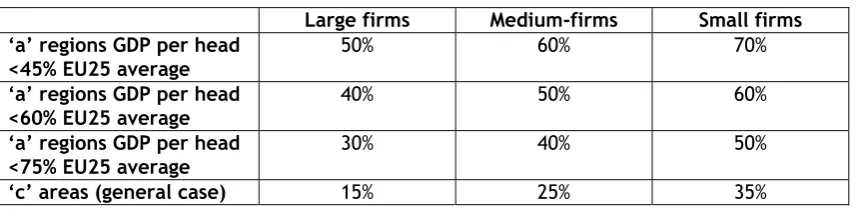
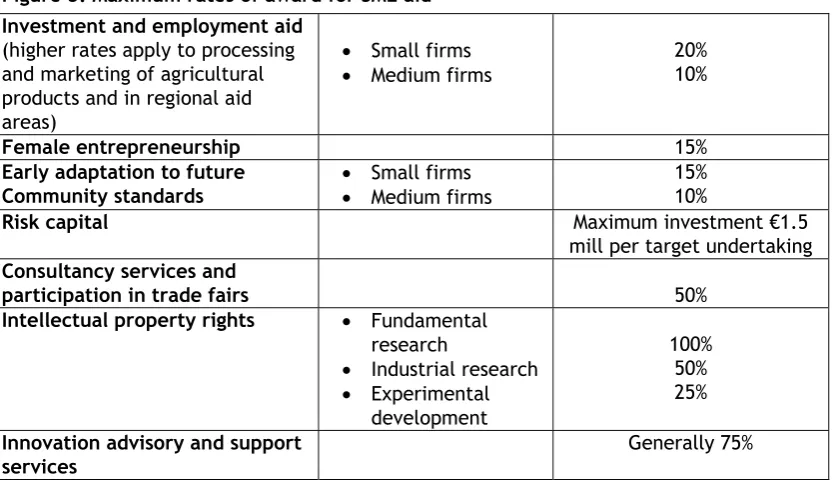
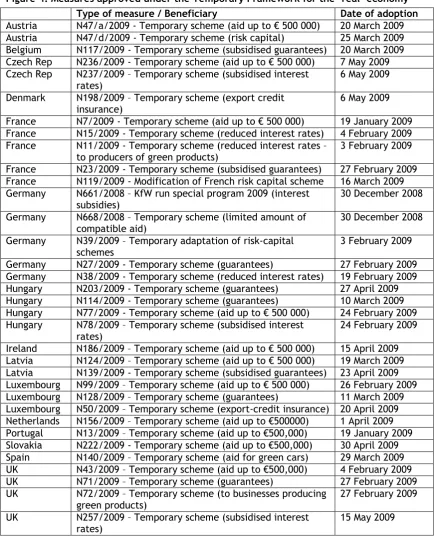
+4
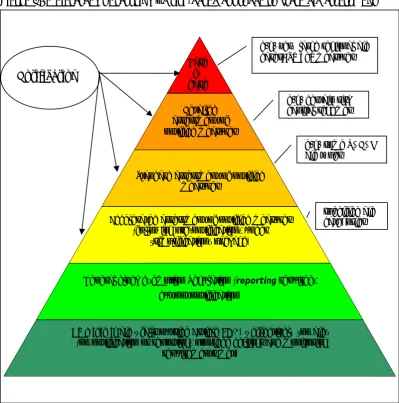
Outline
Research, development and innovation (R&D&I)
Risk capital
Temporary measures in response to the economic crisis
General Block Exemption Regulation
Notification
Simplification package
Structures for managing compliance
Training and capacity building
Procedures to help ensure compliance within programmes
ISSUES AND CONCLUSIONS
Related documents