Application of palladium complexes bearing acyclic amino(hydrazido)carbene
ligands as catalysts for copper-free Sonogashira cross-coupling
Svetlana A. Timofeeva,a Mikhail A. Kinzhalov,a Elena A. Valishina,b
Konstantin V. Luzyanin,a,c* Vadim P. Boyarskiy,a* Tatyana M. Buslaeva,b Matti Haukka,d Vadim Yu. Kukushkina,e
a Institute of Chemistry, Saint Petersburg State University, Universitetsky pr. 26, 198504 Saint
Petersburg, Russian Federation. E-mails: [email protected], [email protected];
b Moscow State University of Fine Chemical Technologies,Vernadsky Pr. 86, 119571 Moscow,
Russia;
c Department of Chemistry, University of Liverpool, Crown Street, Liverpool L69 7ZD, United
Kingdom;
d Department of Chemistry, University of Jyväskylä, P.O. Box 35, FI-40014, Finland; e Institute of Macromolecular Compounds of Russian Academy of Sciences, Bolshoii Pr. 31,
Abstract
Metal-mediated coupling of one isocyanide in cis-[PdCl2(CNR1)2] (R1 = C6H11 (Cy) 1, tBu 2,
2,6-Me2C6H3 (Xyl) 3, 2-Cl-6-MeC6H3 4) and various carbohydrazides R2CONHNH2 [R2 = Ph 5,
4-ClC6H4 6, 3-NO2C6H4 7, 4-NO2C6H4 8, 4-CH3C6H4 9, 3,4-(MeO)2C6H3 10, naphth-1-yl 11,
fur-2-yl 12, 4-NO2C6H4CH2 13, Cy 14, 1-(4-fluorophenyl)-5-oxopyrrolidine-3-yl 15,
(pyrrolidin-1-yl)C(O) 16, 3-(3,5-di-tert-butyl-4-hydroxyphenyl)propane-1-yl 17, EtNHC(O) 18] or sulfohydrazides R3SO2NHNH2 [R3 = Ph 19, 4-MeC6H4 20] led to a series of
(hydrazido)(amino)carbene complexes cis-[PdCl2{C(NHNHX)=N(H)R1}(CNR1)]; X = COR2,
SO2R3 (21–48, isolated yields 60–96%). All prepared species were characterized by elemental
analyses (C, H, N), HR ESI+-MS, IR, 1H and 13C{1H} NMR spectroscopy, and by a single-crystal X-ray diffraction for 38. Complexes 21–48 demonstrated excellent activity as catalysts in copper-free Sonogashira coupling of aryl iodides and a variety of aromatic terminal alkynes. Catalytic system runs in environmentally benign EtOH ensuring product yields of up to 75–96% and TONs of up to 104. Mechanism of the copper-free Sonogashira catalytic cycle involving 21– 48 as catalysts was proposed upon identification of key intermediates using HRESI-mass-spectrometry.
Keywords
Acyclic diaminocarbenes; Palladium-(acyclic diminocarbene) catalysts; Copper-free Sonogashira coupling; Mechanism of catalytic action of Pd-ADCs
Highlights
• Palladium complexes with amino(hydrazido)carbene ligands as catalysts for copper-free
Sonogashira reaction
• Optimized catalytic system affords the target internal alkynes in 75–96% yields and with
TONs of up to 104
• Identification of key intermediates led to establishing of the full catalytic cycle for this
copper-free Sonogashira protocol
• Catalyst deactivation in this system is accompanied by the generation of small palladium
Introduction
In the last decade, complexes bearing acyclic diaminocarbene ligands (ADCs)1,2 attracted attention as intriguing alternative to complexes with N-heterocyclic species (NHCs) in the place of catalysts in several cross-coupling processes.3,4 Thus, palladium complexes with ADCs ligands were successfully employed in Suzuki–Miyaura,5-7 Heck,3,4,7 Buchwald–Hartwig,3,4 and Sonogashira reactions.3,4,7-11 Among them, Sonogashira coupling is typically performed in the presence of a copper co-catalyst (that improves reaction efficiency but brings about the generation of undesired by-products), 12-17 although a few copper-free systems, that are free from above disadvantages, are also known. Those include pioneering reports by Dhudshia and Thadani7 (catalyst loading: 1.5 mol%; product yields up to 91%; TONs up to 60), and by Luzyanin and Boyarskiy10,11 (catalyst loading: 0.1 mol%; product yields up to 99%; TONs up to
3.7×10⁴).
While application of palladium-ADCs as catalysts for copper-free Sonogashira reaction is recognized, to the best of our knowledge the mechanism of their action and the details of the corresponding catalytic cycle remain unclear. Indeed, in one of our recent works,11 we were able to establish for the first time the identity of the real catalytic species, derived from palladium-ADCs as precatalysts. However, we were unable to establish the mechanism of the catalytic process employing palladium-ADC catalysts, and no other data regarding the mechanism of their action emerged up to date.
Recently, we reported that palladium complexes bearing amino(hydrazido)carbene ligands (Figure 1) act as excellent catalysts of Suzuki–Miayura reaction performed in aqueous or
organic medium (yields up to 94%, TONs up to 9.4×10⁴).6 Motivated by an outstanding catalytic
Pd C
Cl R1NC
Cl HN N H R1 H
N C O
R2 Pd
C
Cl R1NC
[image:5.595.159.473.57.138.2]Cl HN N H R1 H N S O R2 O
Figure 1. Palladium complexes bearing acyclic amino(hydrazido)carbene ligands.
Our studies are partitioned in three parts. In the first, we expand the series of palladium complexes with amino(hydrazido)carbene ligands as unexplored type of palladium-ADC species. In the second, we evaluate catalytic properties of these complexes in Sonogashira reaction, and finally, we attempt to identify catalytic intermediates and to shed light on mechanism of the Sonogashira process involving catalysts of this type. Our results are disclosed below.
Results and Discussion
In the previous study, a series of known6 palladium-(hydrazido)(amino)carbene complexes cis -[PdCl2{C(NHNHY)=N(H)R1}(CNR1)]; Y = COR2, SO2R2 (21–32, 35–38, and 41–44; 60–96%
isolated yields) were prepared via the metal-mediated coupling of one isocyanide ligand in cis -[PdCl2(CNR1)2] [R1 = C6H11 (Cy) 1, tBu 2, 2,6-Me2C6H3 (Xyl) 3, 2-Cl-6-MeC6H3 4] and various
carbohydrazides R2CONHNH2 [R2 = Ph 5, 4-ClC6H4 6, 3-NO2C6H4 7, 4-NO2C6H4 8, 4-CH3C6H4
9, 3,4-(MeO)2C6H3 10, naphth-1-yl 11, fur-2-yl 12, 4-NO2C6H4CH2 13; Cy 14,
1-(4-fluorophenyl)-5-oxopyrrolidine-3-yl 15, (pyrrolidin-1-yl)C(O) 16)] or sulfohydrazide PhSO2NHNH2 (19) (Scheme 1, Table 1).6 We have now extended this synthetic procedure by
employing new carbohydrazides [R2 = 3-(3,5-di-tert-butyl-4-hydroxyphenyl)propane-1-yl 17, EtNHC(O) 18] and one sulfohydrazide [R2 = 4-MeC6H4 20] as reactants. Thus, we observed that
the reaction between equimolar amounts of 1 or 2] and carbohydrazides 17 and 18 proceeds in refluxing CHCl3 for ca. 4 h. The subsequent workup provided the aminocarbene species cis
isolated yields. Furthermore, the coupling of equimolar amounts of any of one 1–4 and 4-MeC6H4SO2NHNH2 (20) occurs under similar conditions and affords the aminocarbenes cis
-[PdCl2{C(NHNHS(O)2R2)=N(H)R1}(CNR1)] (45–48; 84–91%).
Scheme 1. Synthesis of the (hydrazido)(amino)carbene-palladium complexes.
Characterization of 21–48. The authenticity of known species 21–32, 35–38, and 41–44 was established upon comparison of their 1H NMR spectra with those previously reported by some of us,6 whereas new complexes 33, 34, 39, 40, and 45–48 were characterized by elemental analyses (C, H, N), high resolution ESI+-MS, IR, 1H and 13C{1H} NMR spectroscopies. In
addition, the structure of one species (38) was elucidated by a single-crystal X-ray diffraction (Figure 2).
The HR-ESI+ mass spectra of 33, 34, 39, 40, and 45–48 display an ion due to [M + H]+ and/or a fragmentation corresponding to the loss of HCls from the molecular ion, viz. [M− Cl]+
and [M – 2Cl – H]+, with the characteristic isotopic distribution. The IR spectra exhibit from one to three weak to medium intensity broad bands in the 3282−3042 cm−1 region that correspond to the NH stretches. The medium/weak intensity bands in the range of 2983–2833 cm–1 are characteristic of νs(C–H) and νas(C–H) vibrations. The examination of the IR spectra revealed the
Pd CNR1
Cl CNR1
Cl Pd
Cl CNR1
Cl N H HN H N R1 R2 NH O
H2N
R2
O
Pd Cl CNR1
Cl N H HN H N R1 S R2 CHCl3, reflux, 4 h
R2
S NH H2N
O O
O O
5–18
R1 = Cy, tBu
R1 = Cy, tBu, Xyl, 2-Cl-6-MeC 6H3
1–4 21−40
41−48 19−20
presence of one strong stretching vibration in the range between 2229 and 2224 cm–1 (R1 = Cy, t
-Bu) or 2210 and 2204 cm–1 (R1 = Xyl, 2-Cl-6-MeC6H3) from ν(C≡N) of unreacted isocyanide
ligands. One strong band between 1590 and 1565 cm–1 was attributed to ν(Ccarbene–N) in the
[image:7.595.79.556.246.582.2]newly formed ADC-moiety.
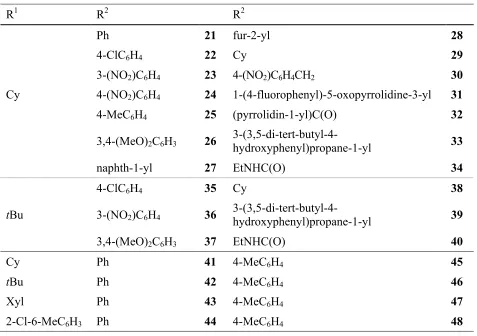
Table 1. Numbering scheme for palladium-ADC complexes derived from the addition of carbo- (21–40) and sulfohydrazides (41–48) to isocyanides in cis-[PdCl2(CNR1)2] (1–4).
R1 R2 R2
Ph 21 fur-2-yl 28
4-ClC6H4 22 Cy 29
3-(NO2)C6H4 23 4-(NO2)C6H4CH2 30
Cy 4-(NO2)C6H4 24 1-(4-fluorophenyl)-5-oxopyrrolidine-3-yl 31
4-MeC6H4 25 (pyrrolidin-1-yl)C(O) 32
3,4-(MeO)2C6H3 26 3-(3,5-di-tert-butyl-4-hydroxyphenyl)propane-1-yl 33
naphth-1-yl 27 EtNHC(O) 34
4-ClC6H4 35 Cy 38
tBu 3-(NO2)C6H4 36 3-(3,5-di-tert-butyl-4-hydroxyphenyl)propane-1-yl 39
3,4-(MeO)2C6H3 37 EtNHC(O) 40
Cy Ph 41 4-MeC6H4 45
tBu Ph 42 4-MeC6H4 46
Xyl Ph 43 4-MeC6H4 47
2-Cl-6-MeC6H3 Ph 44 4-MeC6H4 48
The 1H NMR spectra of 33, 34, 39, 40, and 45–48 display a peak in the range of δ 7.6–
10.3 assigned to the Pd–Ccarbene=N(H)R1 proton. In addition, 1H NMR spectra exhibit two broad
peaks from Pd–Ccarbene=N(H)N(H)Y protons in the range of δ 8.8–11.0. Addition of 5–21 to 1–4
in all possible combinations is accompanied by a pronounced downfield δ13C shift of one of the isocyanide quaternary C atom to the range specific for ADC Pd–Ccarbene (δ 160–224 ppm).5,6,18-25
ppm, that is ca. 65 ppm downfield shifted vs. 1 (e.g. 115 ppm for C≡N in cis-[PdCl2(CyNC)2]).
These are the typical patterns observed for the related complexes with(hydrazido)(amino)carbene ligands.6
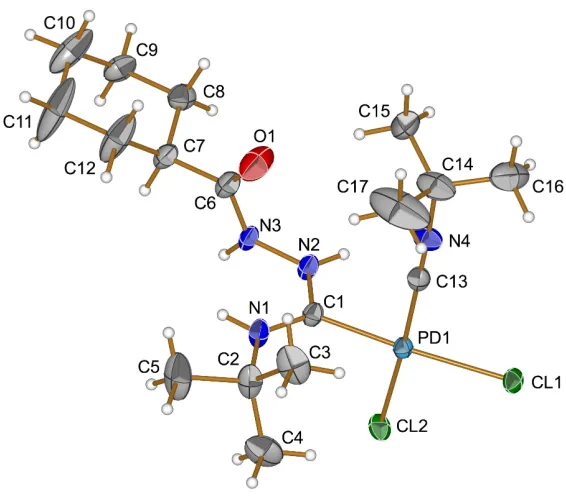
[image:8.595.175.458.255.504.2]The crystallographic data and processing parameters for 38 are listed in Table S1 (see Supporting Information), the plot for the structure can be found in Figure 2, and bond lengths and angles are given in the figure legend.
Figure 2. View of 38 with the atomic numbering schemes. Thermal ellipsoids are drawn with the 50% probability level. Hydrogen labels are omitted for simplicity. Selected bond lengths (Å) and angles (°): Pd1–C13 1.942(4); Pd1–C1 1.978(3); Pd1–Cl2 2.3234(8); Pd1–Cl1 2.3520(8); O1–
C6 1.209(4); N1–C1 1.313(4); N1–C(2) 1.503(4); N2–C1 1.340(4); N2–N3 1.389(4); N3–C6
1.353(4); N4–C13 1.140(4); N4–C14 1.464(4); C6–C7 1.510(5); C13–Pd1–C1 88.6813; C13–
Pd1–Cl2 177.04(10); C1–Pd1–Cl2 88.49(9); Cl2–Pd1–Cl1 92.10(3); C1–N1–C(2) 129.3(3); C1–
N2–N3 122.0(2); C6–N3–N2 120.6(3); C13–N4–C14 177.3(4); N1–C1–N2 117.6(3); N1–C1–
Pd1 129.3(2); N2–C1–Pd1 113.1(2); O1–C6–N3 122.2(3); O1–C6–C7 124.9(3); N3–C6–C7
In 38, the chlorides are mutually in the cis position [Cl2–Pd1–Cl1 92.10(3)°] and a slightly distorted square planar environments around the metal center is completed with one unreacted isocyanide ligand and one carbene ligand, viz. C(NHNHCOC6H11)=NHR1. The Pd–
Ccarbene bond lengths [Pd1–C1 1.978(3) Å] is nearly similar to those in related Pd–NHC
complexes (typically 1.99–2.00 Å)26 suggesting comparable binding strength of the ligand to the metal. The Pd–Ccarbene bond lengths is comparable to those reported for the related palladium
aminocarbene complexes cis-[PdCl2{C(N(H)N=CPh2)=N(H)Xyl}(CNXyl)] (1.924(3) Å),5 cis
-[PdCl{C(N=C(C6R2R3R4R5CON))=N(H)Cy}(CNCy)] (2.001(3) Å),27 and cis
-[PdCl{C(N=C(C6H4CNHN))=N(H)Xyl}(CNXyl)] (2.015(9) Å).28 In 38, the carbene moiety is
roughly planar and the angles around the carbene C1 atoms range from 113.1 to 129.3° therefore sustaining the sp2 hybridization of this atom. The two Ccarbene–N bond lengths of the carbene
fragment are slightly different [N1–C1 1.313(4), N2–C1 1.340(4) Å]. This observation indicates
substantial pπ–pπ interactions within the N1–C1–N2 fragments, as detected in the
abovementioned palladium-aminocarbene complexes.5,27,28 In the isocyanide ligand, the C≡N triple bond (N4–C13 1.140(4) Å) has a normal value for the typical triple CN bond (1.136–
1.144 Å) and is coherent with that observed in the related isocyanide palladium complexes, e.g. cis-[PdCl2(CNR)2] [R = Cy (1.128–1.142 Å), tBu (1.108–1.149 Å), Xyl (1.145–1.156 Å)].29-31
observed that the conversion of 4-iodoanisole is essentially complete after ca. 1 h. No visible catalyst decomposition was observed.
Comparison of the catalytic activity of complexes 21–48 in the model Sonogashira reaction shows that all of them exhibit elevated and comparable efficiencies (Table 2 contain results for the most active catalysts; for the full data set see Table 2S of Supporting Information). The discrepancy in observed activity between 21–48 is lower than a medium value of 89±5% with an exception of precatalysts 21, 27, 30, and 39. Slightly lower activity of
[image:10.595.78.384.336.583.2]these species can be at least partially explained by their lower solubility in ethanol even at 80 °C.
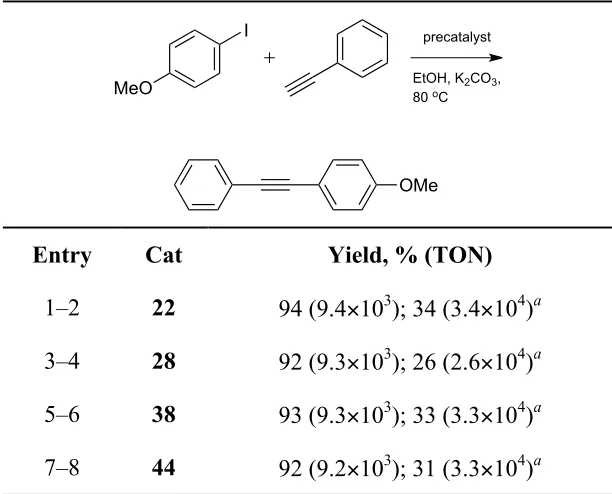
Table 2. Comparison of the catalytic activity of 21–48.
Entry Cat Yield, % (TON)
1–2 22 94 (9.4×10³); 34 (3.4×10⁴)a
3–4 28 92 (9.3×10³); 26 (2.6×10⁴)a
5–6 38 93 (9.3×10³); 33 (3.3×10⁴)a
7–8 44 92 (9.2×10³); 31 (3.3×10⁴)a
K2CO3 (2.5×10⁻⁴ mol, 2.5 equiv), 4-iodoanisole (1.0×10⁻⁴ mol, 1.0
equiv), phenylacetylene (1.5×10⁻⁴ mol, 1.5 equiv); selected catalyst
(1×10⁻⁸ mol); EtOH (1 mL), 80 °C, 1 h.a Yields at catalyst loading 0.001 mol% (reaction time increased to 5.5 h).
Indeed, with the majority of 21–48, the coupling product was obtained in 75–96% yields (catalyst loading of 0.01 mol%). Complexes 22 (entry 1, Table 2, product yield 94%), 28 (entry 3, 92%), 38 (entry 7, 93%), and 44 (entry 7, 92%) as the most active were tested at lower catalyst loading (0.001 mol% instead of 0.01 mol%). Moderate catalytic activity was observed, and the
MeO
I precatalyst
EtOH, K2CO3,
80 oC
product yield was 26–34% (entries 2, 4, 6 and 8, Table 2), with the maximum yield of 33% for complex 38. No product formation was observed upon further decreasing the catalyst loading to 10–10 mol (0.0001 mol%).
Table 3. Product scope for the copper-free Sonogashira system employing 21–48.
Products and yields,% with the selected (catalyst)
97 (28) 86 (44) 75 (38) 89 (38)
92 (44) 93 (38) 86 (38) 79 (44)
74 (28) 83 (38) 99 (38, 44) 98 (38, 44)
98 (28) 74 (38) 99 (28, 38) 86 (44)
Base K2CO3 (2.5×10⁻⁴ mol, 2.5 equiv), aryl iodide (1.0×10⁻⁴ mol, 1 equiv), alkyne (1.5×10– 4 mol, 1.5 equiv); selected catalyst (1
×10–8mol); EtOH (1 mL), 80 °C, 1 h.
As the next step, we examined the scope of our catalytic system using representative catalysts 28, 38, and 44. Aryl iodides and aromatic terminal alkynes containing both electron-donating and electron-withdrawing substituents can be successfully transformed into the target products in good to excellent yields (Table 3 and 3S). No formation of undesired homocoupling products were detected in any of these trials. Attempts to employ aryl bromides as substrates, e.g.
R4
I catalyst
EtOH, K2CO3, 80 oC
R5
R4
4-bromoanisol and 1-bromo-4-nitrobenzene under studied conditions were unsuccessful, however, we were able to transform those species under more drastic conditions (see Supporting Information for more details). Thus, moderate to good yields of the corresponding products were obtained starting from 4-bromoanisol (58%) and 1-bromo-4-nitrobenzene (95%) at 130 °C for 24 h of reaction using 1 mol% of precatalyst.
All prepared palladium complexes 21–48 were evaluated as catalysts for Sonogashira coupling of aryl iodides and aromatic terminal alkynes containing both electron-donating and electron-withdrawing substituents showing excellent activity (products yields up to 75–96%, TONs up to 104).
Comparison of our results with those previously reported by Dhudshia and Thadani7 indicate that Pd-ADC catalysts from this study are significantly more efficient than former, although they are only slightly better than the system based on related palladium complexes with amino(hydrazido)carbene ligands reported previously by some of us.11
Approaches to identification of catalytic species. Despite the fact that Sonogashira coupling is one of the most extensively explored cross-coupling reactions, its mechanism remains unclear even in case of an apparently more transparent copper-free process.32 Furthermore, the replacement of the catalyst with one of a different type alters dramatically and unpredictably the nature of the catalytic intermediates. While application of popular palladium-NHC species in Sonogashira reaction is well documented,32-34 only limited evidence on the nature of the catalytically active species and mechanism were obtained, and the key step of the process
involves the π-coordination of an alkyne to a unsaturated palladium-NHC center followed by
homogeneous. We were, however, unable to identify other intermediates of the catalytic cycle (e.g. products of the oxidative addition or alkyne binding to the palladium center) and to confirm the proposed catalytic cycle.
In pursuit of this study, we resumed our previous attempts of identification of catalytic species that are formed throughout the catalytic cycle. In the first set of experiment, we performed several catalytic runs of the model system in the presence of metallic Hg (the mercury drop test35) using five representative precatalysts 22, 28, 38, 42, and 44. Similar reaction rates for the corresponding processes both in the absence and in the presence of metallic Hg for any combination of substrates were detected. Furthermore, using representative precatalysts time-dependent reaction profiles for a model reaction system were acquired (see Supporting Information). On basis of those, no induction period in the system was detected, and the accumulation of the product in the initial period followed nearly linear time-dependence. Both observations suggest that no formation of palladium nanoparticles occurs during the reaction and that the catalytic system operates under typically homogeneous conditions.
In the second set of experiments, HRESI-MS monitoring (see Figures 1S–4S, Supporting Information) of the reaction mixture for the model catalytic system [data with representative precatalyst 42, viz. cis-[PdCl2{C(NHNHS(O)2Ph)=N(H)tBu}(CNtBu)];
C16H26N4Cl2O2PdS, M = 514.0183 g/mol] allowed the identification of intermediates formed in
the course of our palladium-ADC-catalyzed process (Scheme 3).
Indeed, we initiated our reaction by addition of K2CO3 to the model reaction mixture at
RT. Immediately after the addition, the signal corresponding to the [M(carbene)(CNR)]2+ species
Upon heating of the mixture several new peaks emerged in the HRESI-MS spectra. Indeed, the first group of signals with m/z of 701.0287 [M – 2Cl + MeOC6H4I + Na]+ (m/z:
701.0245, calcd.) matches to the product of oxidative addition of MeOC6H4I to the pre-formed
[M(carbene)(CNR)]0 (Figure 2S; Oxidative addition step from Scheme 3). Unfortunately, the latter species was not evident in the spectra at any stage of the catalytic process, hence, we believe that [M(carbene)(CNR)]0, being coordinatively unsaturated, reacts promptly with the
MeOC6H4I substrate. The signal due to the oxidative addition remains present until full
disappearance of the substrates and we believe in this case, it represents the catalyst resting state. Second set of the signals with m/z of 675.1680 detected in the model catalytic reaction corresponds to the product of the alkyne binding to the metal center with subsequent coordination of the isocyanide [M – 2Cl + MeOC6H4 + CCPh + Na]+ (m/z: 675.1592, calcd.)
(Proton removal/Alkyne binding step, Figure 3S).
To bring additional evidence on the mechanism of the process, step-by-step formation of the catalytic intermediates, was explored. Thus, the HRESI-MS spectra of the reaction mixture in the absence of phenyl acetylene (addition of MeOC6H4I and K2CO3 to the solution of 42 in
EtOH followed by heating of the resulting mixture) brought about the emergence of similar signal due to oxidative addition in HRESI-MS (m/z of 701.0287 [M – 2Cl + MeOC6H4I + Na]+;
m/z: 701.0245, calcd.). Subsequent addition of phenylacetylene to this solution and heating led to appearance of the signal with m/z of 675.1680 (product of the alkyne binding to the metal center with subsequent coordination of the isocyanide [M – 2Cl + MeOC6H4 + CCPh + Na]+; m/z:
Scheme 3. Proposed mechanism for the copper-free Sonogashira coupling catalyzed by 21–48 based upon identification of catalytic intermediates.
Throughout the catalytic run, we detected the gradual deceleration of the process. After 1 h (typical time for one catalytic experiment), the addition of the fresh substrates and the base to the system does not lead to generation of a new portion of product. In the HRESI-MS spectra taken at this time (Figure 4S), we detected the disappearance of the signals from [M(carbene)(CNR)]2+ and oxidation addition product [M – 2Cl + MeOC6H4I + Na]+ along with
the accumulation of the palladium clusters containing several palladium atoms. Despite the previous reports on catalytic activity of small palladium clusters (see Ref.38 and references therein), in our case these compounds are apparently not catalytically competent. Indeed, we consider their formation as one of the plausible catalyst deactivation pathways. It was previously reported39 that the generation of the catalytically active clusters from the corresponding
Pd Cl Cl CNR1 ADC Pd ADC C N R1 Pd ADC C N R1 I OMe OMe I Oxidative addition Pd ADC I OMe C C Ph H C N R1 C C Ph H Pd ADC C N R1 OMe C C Ph Pd ADC OMe C C Ph C N R1 Reductive elimination C N R1 base base HI
Pd ADC C N R1 n Catalyst deactivation π-Coordination of alkyne
Cis/trans
isomerization Formation of active species OMe C C Ph
complexes is inhibited in the presence of the carbene ligands presumably due to their strong binding to the metal core.
Conclusions and Final Remarks
In pursuit of the studies, we prepared several new amino(hydrazido)carbene-palladium complexes via the metal-mediated addition of carbo- and sulfohydrazides to one of the coordinated isocyanides in cis-[PdCl2(CNR1)2]. Evaluation of the catalytic properties of prepared
palladium-ADC species in Sonogashira coupling indicated that all of them exhibit high catalytic activity. Indeed, with catalyst loading as low as 0.01 mol%, catalytic system that runs in environmental benign EtOH under copper-free conditions afforded the target internal alkynes in 75–96% yields and with TONs up to 104. We were also able to propose the full catalytic cycle for this copper-free Sonogashira protocols upon identification of key intermediates, including catalytically active [M(carbene)(CNR)] species, and intermediates formed upon oxidative addition of aryl halide and alkyne binding. Catalyst deactivation in this system is accompanied by the generation of small Pd clusters that are not catalytically competent.
Experimental Section
Materials and Instrumentation
Solvents, PdCl2, and all organic compounds were obtained from commercial sources and used as
received, apart from chloroform, which was purified by the conventional distillation over calcium chloride. The complexes cis-[PdCl2(CNR1)2] (1–4)15, 16 and 22–33, 36–39, and 42–456
The instrument was operated at positive ion modes using m/z range of 50–3000. The capillary voltage of the ion source was set at –4500 V (ESI+) and the capillary exit at +(70–150) V. The nebulizer gas pressure was 0.4 bar and drying gas flow was 4.0 L/min. The most intensive peak in the isotopic pattern is reported. Infrared spectra were recorded on a Shimadzu FTIR 8400S instrument (4000–400 cm–1) in KBr pellets. 1H, 13C{1H}, and DEPT NMR spectra were acquired on a Bruker 400 MHz Avance spectrometer at ambient temperature.
X-ray Structure Determination. The crystal of 38 was immersed in cryo-oil, mounted in a MiTeGen loop, and measured at a temperature of 123 K. The X-ray diffraction data was
collected on an Agilent Technologies Supernova diffractometer using Cu Kα radiation (λ =
1.54184 Å). The CrysAlisPro40 program package was used for cell refinements and data
reductions. The structure was solved by charge flipping method using the SUPERFLIP41 program. An analytical absorption correction (CrysAlisPro)40,42 was applied to the data. Structural refinement was carried out using SHELXL-9743 with the Olex244 and SHELXLE45 graphical user interfaces. Solvents of crystallization (CHCl3, iPr2O, CH2Cl2) were severely
disordered and partially lost. Only one CHCl3 molecule could be located from the difference
Fourier map. However, even that was partially lost and therefore refined with occupancy of 0.25. Other solvent molecules could not be located. The contribution of solvent to the calculated structure factors was taken into account by using a SQUEEZE routine of PLATON.46 The crystal under investigation was weakly diffracting and the cyclohexyl and tert-butyl groups were slightly disordered. However, no disorder model was applied in the final refinement. Therefore, the Ueq for one of the cyclohexyl carbon (C11) remained high. Also, the poor diffraction power
was the reason for missing of some reflections. The hydrogen atoms were positioned geometrically and constrained to ride on their parent atoms, with C–H = 0.98–1.00 Å, N–H = 0.88 Å, and Uiso = 1.2–1.5 Ueq(parent atom). The crystallographic details are summarized in
33. Yield 86%. Anal. Calcd for C31H50N4Cl2O2Pd: C, 54.11; H,
7.32; N, 8.14. Found: C, 54.14; H, 7.31; N, 8.13. HR-MS (ESI+, 70 V, MeOH), m/z: calc 687.2418 for C31H51N4Cl2O2Pd+, found
687.2421 [M + H]+, calc 651.2652 for C31H50N4ClO2Pd+ found
651.2658 [M – Cl]+. IR (KBr, selected bands, cm–1): ν(O–H) 3642 (s), ν(N–H) 3240 (m),ν(C–H)
2962–2870 (m),ν(C≡N) 2227 (s), ν(C=O) 1708 (s), ν(Ccarbene–N) 1565 (s). 1H NMR (CDCl3, δ):
1.14–3.00 (m, 42H, CH2, CH3), 3.84–4.00 (m, 1H, CHNC), 4.38–4.57 (m, 1H, NHCH), 7.04 (s,
2H, aryls), 7.69 (s, broad, 1H, Ccarbene–NH–Cy), 8.88 (s, broad, 1H, Ccarbene–NH–NH), 9.36 (s,
broad, 1H, Ccarbene–NH–NH). 13C{1H} NMR (CDCl3, δ): 23.2 (2C, CH2), 24.6 (CH2), 24.8 (2C,
CH2), 24.9 (CH2), 30.4 (6C, CH3), 31.0 (CH2), 31.7 (2C, CH2), 34.3 (2C, C(CH3)), 36.1 (CH2),
42.6 (CH), 55.7 (CH), 59.1 (CH), 118.6 (C≡N), 125.2 (CH, aryls), 131.1 (C, aryls), 135.5 (C, aryls), 151.9 (C, aryls), 169.7 (CO), 177.9 (Ccarbene).
34. Yield 91%. Anal Calcd for C18H31N5Cl2O2Pd: C, 41.04; H, 5.93; N,
13.29. Found: C, 41.18; H, 5.92; N, 13.25. HR-MS (ESI+, 70 V, MeOH),
m/z: calc 490.1196 for C18H31N5ClO2Pd+, found 599.2344 [M – Cl]+, calc
454.1429 for C18H30N5O2Pd+, found 454.1435 [M – 2Cl – H]+. IR (KBr, selected bands, cm–1):
ν(N–H) 3245–3063 (m), ν(C–H) 2962–2853 (m), ν(C≡N) 2229 (s), ν(C=O) 1680 (s), ν(Ccarbene–
N) 1580 (s). 1H NMR (DMSO-d6, δ): 0.96–2.20 (m, 23H, CH2 + CH3), 3.06–3.27 (m, 2H, CH2),
4.08–4.20 (m, 1H, CHNC), 4.28–4.45 (m, 1H, NHCH), 7.80 (d, 3J
H,H = 8.9 Hz, 1H, Ccarbene–NH–
Cy), 8.73 (t, 3JH,H = 5.9 Hz, 1H, NHEt), 10.26 (s, broad, 1H, Ccarbene–NH–NH), 10.77 (s, broad,
1H, Ccarbene–NH–NH). 13C{1H} NMR (DMSO-d6, δ): 14.8 (CH3), 22.3 (3C, CH2), 24.8 (CH2),
25.4 (4C, CH2), 31.5 (2C, CH2), 34.1 (2C, CH2), 54.6 (CH), 59.8 (CH), 159.0 (CO), 159.3 (CO),
39. Yield 96%. Anal. Calcd for C27H46N4Cl2O2Pd: C, 50.99; H,
7.29; N, 8.81. Found: C, 51.07; H, 7.28; N, 8.77. HR-MS (ESI+, 70 V, MeOH), m/z: calc 599.2339 for C27H46N4ClO2Pd+, found
599.2344 [M – Cl]+, calc 563.2572 for C27H45N4O2Pd+, found
563.2579 [M – 2Cl – H]+. IR (KBr, selected bands, cm–1): ν(O–H) 3641 (s), ν(N–H) 3242 (m), ν(C–H) 2957–2871 (m), ν(C≡N) 2227 (s), ν(C=O) 1707 (s), ν(Ccarbene–N) 1566 (s). 1H NMR
(CDCl3, δ): 1.41 (s, 18H, CH3), 1.54 (s, 9H, CH3), 1.68 (s, 9H, CH3), 2.34–3.10 (m, 4H, CH2),
7.10 (s, 2H, aryls), 7.77 (s, broad, 1H, Ccarbene–NH–tBu), 8.88 (s, broad, 1H, Ccarbene–NH–NH),
9.55 (s, broad, 1H, Ccarbene–NH–NH). 13C{1H} NMR (CDCl3, δ): 29.8 (CH3), 30.4 (CH3), 31.3
(CH2), 31.4 (CH3), 34.3 (C), 36.3 (CH2), 55.2 (C), 59.5 (C), 118.3 (C≡N), 125.4 (CH, aryls),
131.4 (C, aryls), 135.4 (C, aryls), 151.9 (C, aryls), 174.2 (CO), 177.4 (Ccarbene).
40. Yield 90%. Anal. Calcd for C14H27N5Cl2O2Pd: C, 35.42; H, 5.73; N,
14.75. Found: C, 35.47; H, 5.78; N, 14.68. HR-MS (ESI+, 70 V, MeOH), m/z: calc 438.0883 for C14H27N5ClO2Pd+, found 438.0890 [M – Cl]+. IR
(KBr, selected bands, cm–1): ν(N–H) 3241–3042 (m), ν(C–H) 2983–2833 (m), ν(C≡N) 2224 (s),
ν(C=O) 1680 (s), ν(Ccarbene–N) 1576 (s). 1H NMR (DMSO-d6, δ): 1.08 (t, 3JH,H = 7.2 Hz, 3H,
CH3), 1.49 (s, 9H, CH3), 1.60 (s, 9H, CH3), 3.09-3.27 (m, 2H, CH2), 7.66 (s, 1H, Ccarbene–NH–
tBu), 8.74 (t, 3JH,H = 5.9 Hz, 1H, NHEt), 10.40 (s, broad, 1H, Ccarbene–NH–NH), 10.72 (s, broad,
1H, Ccarbene–NH–NH). 13C{1H} NMR (CDCl3, δ): 14.8 (CH3), 29.7 (CH3), 31.3 (CH3), 34.1
(CH2), 55.0 (C), 59.3 (C), 159.0 (CO), 159.5 (CO), 176.0 (Ccarbene), C≡N were not detected.
45. Yield 86%. Anal. Calcd for C21H32N4Cl2O2PdS: C, 43.35; H, 5.54;
N, 9.63. Found: C, 43.38; H, 5.57; N, 9.61. HR-MS (ESI+, 70 V, MeOH), m/z: calc 581.0731 for C21H33N4Cl2O2SPd+ found 581.0736
[M + H]+, calc 545.0964 for C
Cl]+. IR (KBr, selected bands, cm–1): ν(N–H) 3272–3124 (m), ν(C–H) 2933–2856 (m), ν(C≡N)
2225 (s), ν(Ccarbene–N) 1590 (s), νas(SO2) 1345 (s), νs(SO2) 1169 (s). 1H NMR (DMSO-d6, δ):
1.00–1.97 (m, 20H, CH2), 2.43 (s, 3H, CH3), 4.17–4.42 (m, 2H, CH), 7.45 (d, 3JH,H = 8.0 Hz, 2H,
aryls), 7.74 (d, 3JH,H = 8.0 Hz, 2H, aryls), 8.36 (d, 3JH,H = 9.4 Hz, 1H, Ccarbene–NH–Cy), 10.03 (s,
1H, Ccarbene–NH–NH), 10.42 (s, 1H, Ccarbene–NH–NH). 13C{1H} NMR (DMSO-d6, δ): 21.5 (C,
CH3), 22.1 (3C, CH2), 24.8 (CH2), 25.2 (3C, CH2), 31.5 (3C, CH2), 54.7 (CH), 59.8 (CH), 128.5
(2C, CH, aryls), 130.0 (2C, CH, aryls), 135.2 (C, aryls), 144.3 (C, aryls), 178.8 (Ccarbene), C≡N
were not detected.
46. Yield 91%. Anal. Calcd for C17H28N4Cl2O2PdS: C, 38.54; H, 5.33;
N, 10.57. Found: C, 38.62; H, 5.37; N, 10.55. HR-MS (ESI+, 70 V, a
mixture of MeOH and DMSO), m/z: calc 493.0651 for C17H28N4ClO2PdS+, found 493.0651 [M – Cl]+. IR (KBr, selected
bands, cm–1): ν(N–H) 3282–3128 (m), ν(C–H) 2950–2830 (m), ν(C≡N) 2227 (s), ν(Ccarbene–N)
1580 (s), νas(SO2) 1345 (s), νs(SO2) 1168 (s), δ(C–H from Ar) 730 (m).1H NMR (DMSO-d6, δ):
1.48 (s, 9H, CH3), 1.56 (s, 9H, CH3), 2.44 (s, 3H, CH3), 7.47 (d, 3JH,H = 8.0 Hz, 2H, aryls), 7.69
(s, 1H, Ccarbene–NH–tBu), 7.76 (d, 3JH,H = 8.0 Hz, 2H, aryls), 10.13 (s, 1H, NH), 10.69 (s, 1H,
NH). 13C{1H} NMR (DMSO-d6, δ): 21.5 (CH3), 29.7 (3C, CH3), 31.0 (3C, CH3), 54.7 (C), 61.0
(C), 128.5 (2C, CH, aryls), 130.1 (2C, CH, aryls), 135.0 (C, aryls), 144.6 (C, aryls), 178.9 (Ccarbene), C≡N were not detected.
47. Yield 84%. Anal. Calcd for C25H28N4Cl2O2PdS: C, 47.97; H, 4.51;
N, 8.95. Found: C, 48.06; H, 4.53; N, 8.91. HR-MS (ESI+, 70 V, a mixture of MeOH and DMSO), m/z: calc 589.0651 for C25H28N4ClO2PdS+, found 589.0655 [M – Cl]+. IR (KBr, selected
bands, cm–1): ν(N–H) 3270–3154 (m), ν(C≡N) 2210 (s), ν(C
νs(SO2) 1170 (s). 1H NMR (DMSO-d6, δ): 2.23 (s, 6H, CH3), 2.33 (s, 6H, CH3), 2.40 (s, 3H,
CH3), 7.06–7.44 (m, 8H, aryls), 7.74 (d, 3JH,H = 8.0 Hz, 2H, aryls), 10.20 (s, 1H, NH), 10.38 (s,
1H, NH), 10.89 (s, 1H, NH). 13C{1H} NMR (DMSO-d6, δ): 18.5 (2C, CH3), 19.3 (2C, CH3), 21.6
(C, CH3), 125.6 (C≡N), 128.2 (CH, aryls), 128.5 (CH, aryls), 128.6 (CH, aryls), 128.8 (CH,
aryls), 129.9 (CH, aryls), 131.0 (CH, aryls), 135.3 (C, aryls), 135.9 (C, aryls), 136.0 (C, aryls), 136.7 (C, aryls), 137.9 (C, aryls), 144.3 (C, aryls), 182.9 (Ccarbene).
48. Yield 88%. Anal. Calcd forC23H22N4Cl4O2PdS: C, 41.43; H, 3.33; N,
8.40. Found: C, 43.46; H, 3.31; N, 8.37. HR-MS (ESI+, 70 V, MeOH), m/z: calc 628.9558 for C23H22N4Cl3O2PdS+, found 628.9562 [M – Cl]+.
IR (KBr, selected bands, cm–1): ν(N–H) 3240–3064 (m), ν(C≡N) 2204 (s), ν(C
carbene–N) 1565 (s),
νas(SO2) 1340 (s), νs(SO2) 1170 (s), δ(C–H from Ar) 775 (m).1H NMR (DMSO-d6, δ): 2.36 (s,
3H, CH3), 2.37 (s, 3H, CH3), 2.40 (s, 3H, CH3), 7.26–7.36 (m, 5H, aryls), 7.46–7.59 (m, 3H,
aryls), 7.81 (d, 3JH,H = 8.0 Hz, 2H, aryls), 10.32 (s 1H, Ccarbene–NH–Ar), 10.36(s, 1H, Ccarbene–
NH–NH), 11.05 (s, 1H, Ccarbene–NH–NH). 13C{1H} NMR (DMSO-d6, δ): 18.9 (2C, CH3), 19.8
(2C, CH3), 21.6 (C, CH3), 124.5 (C≡N), 127.5 (CH, aryls), 128.2 (CH, aryls), 128.8 (CH, aryls),
129.7 (CH, aryls), 130.0 (CH, aryls), 130.1 (CH, aryls), 132.2 (C, aryls), 132.6 (C, aryls), 135.1 (C, aryls), 136.4 (C, aryls), 137.9 (C, aryls), 139.0 (C, aryls), 140.7 (C, aryls), 144.4 (C, aryls), 183.7 (Ccarbene).
General procedure for the catalytic Sonogashira cross-coupling. K2CO3 (2.5×10⁻⁴ mol, 2.5
equiv), aryl iodide (1.0×10⁻⁴ mol, 1.0 equiv), and alkyne (1.5×10⁻⁴ mol, 1.5 equiv) were mixed
in a 10-mL vial, followed by addition of a solution of the selected catalyst (1×10⁻⁸ mol) in EtOH
reaction mixture with three 0.20-mL portions of CDCl3. All fractions were joined and analyzed
by 1H NMR spectroscopy. The product peak assignments were based on authentic samples or on published data,47-53 whereas quantifications were performed upon integration of the selected peak of the product relatively to the peak of the standard.
Acknowledgements
References
(1) Boyarskiy, V. P.; Bokach, N. A.; Luzyanin, K. V.; Kukushkin, V. Y. Chem. Rev. 2015, 115, 2698–2779.
(2) Vignolle, J.; Catton, X.; Bourissou, D. Chem. Rev. 2009, 109, 3333–3384.
(3) Boyarskiy, V. P.; Luzyanin, K. V.; Kukushkin, V. Y. Coord. Chem. Rev. 2012, 256, 2029–2056.
(4) Slaughter, L. M. ACS Catal. 2012, 2, 1802–1816.
(5) Luzyanin, K. V.; Tskhovrebov, A. G.; Carias, M. C.; Guedes da Silva, M. F. C.; Pombeiro, A. J. L.; Kukushkin, V. Y. Organometallics 2009, 28, 6559–6566.
(6) Kinzhalov, M. A.; Luzyanin, K. V.; Boyarskiy, V. P.; Haukka, M.; Kukushkin, V. Y. Organometallics 2013, 32, 5212−5223.
(7) Dhudshia, B.; Thadani, A. N. Chem. Commun. 2006, 668−670.
(8) Mikhailov, V. N.; Savicheva, E. A.; Sorokoumov, V. N.; Boyarskii, V. P. Russ. J. Org. Chem. 2013, 49, 551−554.
(9) Khaibulova, T. S.; Boyarskaya, I. A.; Boyarskii, V. P. Russ. J. Org. Chem. 2013, 49, 360−365.
(10) Savicheva, E. A.; Kurandina, D. V.; Nikiforov, V. A.; Boyarskiy, V. P. Tetrahedron Lett. 2014, 55, 2101–2103.
(11) Valishina, E. A.; Silva, M. F. C. G. d.; Kinzhalov, M. A.; Timofeeva, S. A.; Buslaeva, T. M.; Haukka, M.; Pombeiro, A. J. L.; Boyarskiy, V. P.; Kukushkin, V. Y.; Luzyanin, K. V. J. Mol. Catal. A 2014, 395, 162–171.
(12) Chinchilla, R.; Najera, C. Chem. Rev. 2007, 107, 874–922. (13) Chinchilla, R.; Nájera, C. Chem. Rev. 2013, 114, 1783–1826.
(16) Yoo, E. J.; Chang, S. Org. Lett. 2008, 10, 1163−1166.
(17) Houpis, I. N.; Choi, W. B.; Reider, P. J.; Molina, A.; Churchill, H.; Lynch, J.; Volante, R. P. Tetrahedron Lett. 1994, 35, 9355−9358.
(18) Wanniarachchi, Y. A.; Slaughter, L. M. Chem. Commun. 2007, 31, 3294–3296.
(19) Luzyanin, K. V.; Guedes da Silva, M. F. C.; Kukushkin, V. Y.; Pombeiro, A. J. L. Inorg. Chim. Acta 2009, 362, 833–838.
(20) Wanniarachchi, Y. A.; Subramanium, S. S.; Slaughter, L. M. J. Organomet. Chem. 2009, 694, 3297−3305.
(21) Hashmi, A. S. K.; Lothschutz, C.; Boohling, C.; Rominger, F. Organometallics 2011, 30, 2411–2417.
(22) Tskhovrebov, A. G.; Luzyanin, K. V.; Dolgushin, F. M.; Guedes da Silva, M. F. C.; Pombeiro, A. J. L.; Kukushkin, V. Y. Organometallics 2011, 30, 3362–3370.
(23) Tskhovrebov, A. G.; Luzyanin, K. V.; Kuznetsov, M. L.; Sorokoumov, V. N.; Balova, I. A.; Haukka, M.; Kukushkin, V. Y. Organometallics 2011, 30, 863–874.
(24) Martı́nez-Martı́nez, A. J.; Chicote, M. T.; Bautista, D.; Vicente, J. Organometallics 2012, 31, 3711−3719.
(25) Kinzhalov, M. A.; Boyarskiy, V. P.; Luzyanin, K. V.; Dolgushin, F. M.; Kukushkin, V. Y. Dalton Trans. 2013, 42, 10394−10397.
(26) Herrmann, W. A. Angew. Chem., Int. Ed. 2002, 41, 1290–1309.
(27) Luzyanin, K. V.; Pombeiro, A. J. L.; Haukka, M.; Kukushkin, V. Y. Organometallics 2008, 27, 5379–5389.
(28) Chay, R. S.; Luzyanin, K. V.; Kukushkin, V. Y.; Guedes da Silva, M. F. C.; Pombeiro, A. J. L. Organometallics 2012, 31, 2379–2387.
(29) Kitano, Y.; Hori, T. Acta Crystallogr. B 1981, 37, 1919–1921.
(31) Drouin, M.; Perreaul, D.; Harvey, P. D.; Michel, A. Acta Crystallogr. C 1991, 47, 752– 754.
(32) Chinchilla, R.; Najera, C. Chem. Soc. Rev. 2011, 40, 5084–5121. (33) Fortman, G. C.; Nolan, S. P. Chem. Soc. Rev. 2011, 40, 5151–5169.
(34) Díez-González, S.; Marion, N.; Nolan, S. P. Chem. Rev. 2009, 109, 3612−3676.
(35) Whitesides, G. M.; Hackett, M.; Brainard, R. L.; Lavalleye, J.-P. P. M.; Sowinski, A. F.; Izumi, A. N.; Moore, S. S.; Brown, D. W.; Staudt, E. M. Organometallics 1985, 4, 1819–1830. (36) Sikk, L.; Tammiku-Taul, J.; Burk, P. Organometallics 2011, 30, 5656−5664.
(37) García-Melchor, M.; Pacheco, M. C.; Nájera, C.; Lledós, A.; Ujaque, G. ACS Catalysis 2011, 2, 135–144.
(38) Ananikov, V. P.; Beletskaya, I. P. Organometallics 2012, 31, 1595–1604.
(39) Oliver-Meseguer, J.; Leyva-Pérez, A.; Al-Resayes, S. I.; Corma, A. Chem. Commun. 2013, 7782–7784.
(40) Agilent CrysAlisPro; Agilent Technologies inc.: Yarnton, Oxfordshire, England, 2013. (41) Palatinus, L.; Chapuis, G. J. Appl. Cryst. 2007, 40, 786–790.
(42) Clark, R. C.; Reid, J. S. Acta Cryst. 1995, A51, 887–897. (43) Sheldrick, G. M. Acta Cryst. 2008, A64, 112–122.
(44) Dolomanov, O. V.; Bourhis, L. J.; Gildea, R. J.; Howard, J. A. K.; Puschmann, H. J. Appl. Cryst. 2009, 42, 339–341.
(45) Hübschle, C. B.; Sheldrick, G. M.; Dittrich, B. J. J. Appl. Cryst. 2011, 44, 1281–1284. (46) Spek, A. L. Acta Cryst. 2009, D65, 148–155.
(47) Zhang, X.; Li, P.; Ji, Y.; Zhang, L.; Wang, L. Synthesis 2011, 2975–2983. (48) Li, P.; Wang, L.; Li, H. Tetrahedron 2005, 61, 8633–8640.
(49) Pan, D.; Zhang, C.; Ding, S.; Jiao, N. Eur. J. Org. Chem. 2011, 4751–4755. (50) Csekei, M.; Novak, Z.; Kotschy, A. Tetrahedron 2008, 64, 975–982.