Monograph:
Stein, M and Morris, M (2010) Increasing the Number of Care Leavers in 'Settled, Safe Accommodation'. Research Report. Knowledge Review, 3 . C4EO , London.
[email protected] https://eprints.whiterose.ac.uk/ Reuse
Items deposited in White Rose Research Online are protected by copyright, with all rights reserved unless indicated otherwise. They may be downloaded and/or printed for private study, or other acts as permitted by national copyright laws. The publisher or other rights holders may allow further reproduction and re-use of the full text version. This is indicated by the licence information on the White Rose Research Online record for the item.
Takedown
If you consider content in White Rose Research Online to be in breach of UK law, please notify us by
VULNERABLE CHILDREN
KNOWLEDGE REVIEW
3
Centre for Excellence and Outcomes in Children and
Young People’s Services
The Centre for Excellence and Outcomes in Children and Young People’s
Services (C4EO) identifies and coordinates local, regional and national
evidence of ‘what works’, to create a single and comprehensive picture of
effective practice in delivering children’s services. Using this information,
C4EO offers support to local authorities and their partners, working with them
to improve outcomes for children, young people and their families.
It is focusing its work on nine themes:
• Early Years
• Disability
• Vulnerable (looked-after) Children
• Child Poverty
•
Safeguarding
• Schools and Communities.
• Youth
• Families, Parents and Carers
• Early Intervention, Prevention and Integrated Delivery
C4EO works with a consortium of leading national organisations: National
Children’s Bureau, National Foundation for Educational Research, Research
in Practice and the Social Care Institute for Excellence.
The Centre is also supported by a number of strategic partners, including
Local Government and Development, the Family and Parenting Institute, the
National Youth Agency and the Institute of Education.
There is close and ongoing cooperation with the Association of Directors of
Children’s Services, the LG Association, the NHS Confederation, the
Children’s Services Network, the Society of Local Authority Chief Executives
and Ofsted.
Increasing the number of care leavers in
‘settled, safe accommodation’
Mike Stein (Social Policy Research Unit, University of York)
First published in Great Britain in September 2010
by the Centre for Excellence and Outcomes in Children and Young People’s Services (C4EO)
© Centre for Excellence and Outcomes in Children and Young People’s Services All rights reserved
Written by Mike Stein. Data annexe written by Marian Morris
This report is available online www.c4eo.org.uk
Centre for Excellence and Outcomes in Children and Young People’s Services (C4EO)
Wakley Street London
EC1V 7QE
Contents
Foreword
Summary 1
1. Introduction 6
2. Context 10
3. The evidence base 14
4 The accessibility, acceptability and effectiveness of policies, services and interventions for looked-after
children and young people 17
5. Views on what constitutes ‘settled, safe accommodation’ 31
6. The contribution of attitudes, skills and abilities of carers, staff and families to ‘settled, safe accommodation’ 42
7. Characteristics of young people not in suitable
accommodation at age 19 49
8. Conclusions and main messages 54
Data annexe 59
References 61
Appendix 1: Knowledge review methods 74
Appendix 2: Scoping study process 75
Appendix 3: Parameters document 107
Appendix 4: National indicators and key data sources 112
Appendix 5: Validated local practice process and assessment
criteria 114
Foreword
I am delighted to introduce this knowledge review. It is one of three reviews that aim to help all those working with and for children and young people to improve the life chances of vulnerable ‘looked-after’ children. C4EO started its work on this theme in 2009, some time before the new Coalition Government was elected in May 2010. The review process we undertake in order to distil the very best learning and evidence from national literature and data, combined with effective local practice is cumulative, resulting in our full
knowledge reviews. Policy priorities are currently being determined by the Coalition
Government and we have amended the review in order to ensure that it reflects the current political context.
I am confident that the evidence of ‘what works’ contained in this review and in the other two reviews –with their clear and unremitting focus on improving outcomes for vulnerable children – will help all those working with children and young people throughout the public, voluntary and private sectors.
1
Summary
This knowledge review tells us what works in increasing the number of care leavers in ‘settled, safe accommodation’. It is based on a rapid review of the research literature involving
systematic searching, analysis of key data, validated local practice examples and views from service users and providers. It summarises the best available evidence that will help service providers to improve services and, ultimately, outcomes for looked-after young people and their families.
Reviews on improving looked-after children’s emotional outcomes and emotional and behavioural health are also available on the C4EO website.
Mike Stein of the Social Policy Research Unit at the University of York carried out this review on behalf of the Centre for Excellence and Outcomes in Children and Young People’s Services (C4EO). The National Foundation for Educational Research (NFER) conducted the data work.
What did we find out?
Key messages from our knowledge review
• Being in safe, settled accommodation is associated with increased wellbeing and engagement in education, employment or training.
• Young people leave care at an earlier age, on average, than other young people leave home. Those who leave care at a later age are more likely to have a successful
transition to adulthood, including being in ‘settled, safe accommodation’.
• Young people are likely to be in safe, settled accommodation after leaving care when they (i) have good-quality care that provides them with stability and pays attention to their education, health and wellbeing and (ii) are supported to leave care gradually, at an older age.
• Care leavers want and benefit from support services matched to their needs, including leaving care services, out-of-hours support, opportunities to become looked after again when under 18 years of age and return to their previous placements, mentoring and positive family and kinship contact. Care leavers also need practical support with moving and setting up in accommodation.
• Young people leaving kinship care placements made by the local authority, including extended family and friends placements, see their placements as very positive, though there is limited evidence on this.
• Leaving care services work well in assisting most young people in accessing accommodation and supporting them in managing their accommodation, although there is evidence of wide variations between local authorities in the provision of ‘suitable accommodation’.
2
• More attention should be given to: the accommodation and support needs of young parents; the community and family links of black and minority ethnic young people when they leave care; asylum-seeking young people; and vulnerable young people returning from ‘out of authority’ placements.
• The contribution of foster and residential carers, birth families and other family members in supporting young people into adulthood should be addressed in the pathway planning process. The use of family group conferences may be an effective way of identifying supportive family networks.
• The role, training and support needs of former foster carers and residential carers in providing ongoing personal and practical support to care leavers should be reviewed further and formalised.
• Local authorities should have clear policies in respect of the financial assistance and support they provide to foster carers who offer extended placements and ongoing support to young people after they reach 18 years of age.
• Effective service provision requires good communication between leaving care
services, adult services and accommodation providers and carers; it should include the young person in decisions.
• It is important to identify groups who are at particular risk of poor housing outcomes early on: young people who leave care at 16 and 17 years of age; those with social, emotional and behavioural problems; offenders, including those with a history of violence; young people who run away from care; young disabled people who do not meet the threshold for adult services; and young asylum seekers with unmet mental health needs who may be particularly vulnerable during transition, when placed in independent accommodation and when their asylum claims are being made.
• Housing and children’s services need to identify problems with accommodation early on, have clear contingency arrangements – including sufficient emergency
accommodation to prevent homelessness – and specialist accommodation for young people with higher support needs.
Who are the key stakeholders?
• looked-after children and care leavers
• carers (including foster carers, residential carers, kinship carers, housing support workers and those who provide supported accommodation)
• birth families
• personal advisers (appointed to work with care leavers under the Children (Leaving
Care) Act 2000 (GB. Statutes 2000) and accompanying Guidance) and social workers
• managers working at a strategic level delivering services that include housing and children’s services
3
Their contributions are valuable in the process of
improvement
• For care leavers, being in ‘settled, safe accommodation’ is the outcome of a process involving a number of different stages: choosing when to leave care; being well prepared; having a choice of accommodation; being safe; being supported by leaving care services, family, friends and mentors; having an income or receiving financial assistance; and being involved in all these different stages. Leaving care to live in settled, safe accommodation is connected with continuing in education or employment, wellbeing and achieving the Every Child Matters outcomes, placed on a statutory footing by the Children Act 2004 (England and Wales. Statutes 2004).
• Carers are responsible for looked-after people until they leave care. These may be foster and kinship carers (including extended family members and friends), residential carers, housing support workers, and those assisting young people in supported
accommodation before they leave care. The evidence suggests that young people who develop a good relationship with their carer are more likely to be in stable and better housing after leaving care. Carers need to be well supported and their role formalised – through the pathway planning process – in providing this support to young people after they have left their care.
• Birth family contact is sometimes re-established by the young person when they leave
care. This can be a positive source of both practical and emotional support for the young person. But for some young people, past difficulties can mean that
re-establishing contact makes it harder for them to settle down and some young people may regress educationally or suffer harm as a result. The use of family group
conferences may contribute to identifying positive family networks.
• Personal advisers, leaving care workers and social workers are responsible for assisting young people in moving on from care to their own accommodation. This will involve them in assessing the needs of the young person and agreeing a pathway plan with them. In carrying out these responsibilities they should pay particular attention to the different stages of ‘being in settled, safe accommodation’ identified above – problems arising in any of these stages may alert them to difficulties young people have in accessing and managing their accommodation. Strong commitment and positive relationships with young people are associated with good outcomes for care leavers.
• Managers working at a strategic level deliver services that include: leaving care services, access to supported accommodation and independent accommodation, homeless strategies, and bridging the gap between children’s and adult services. • Local authorities, acting as ‘corporate parents’, have a strategic role to play in
managing care leavers’ access to ‘settled, safe accommodation’. This will require a framework of services with related funding underpinned by formal relationships
4
• An integrated approach with children’s services, housing services, health and
adult services is essential in preparing young people for adulthood – not just at the
time of leaving care: this should be the main purpose of multi-agency working. The success of leaving care is strongly associated with good relationships between the leaving care team and the young person and also with good communication between the leaving care team and housing providers. The variability of the range and quality of services needs to be addressed.
What data is available to inform the way forward?
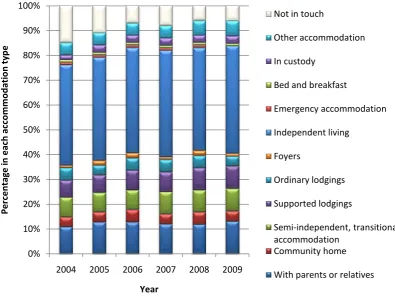
DCSF (Department for Children Schools and Families; now the Department for Education) data is available on the accommodation types of young care leavers who had been looked-after continuously for at least 12 months and who were still in care aged 16 in April of their final year of compulsory education. The most recent dataset, however, does not distinguish between accommodation deemed suitable and that deemed unsuitable.
C4EO’s interactive data site enables local authority managers to evaluate their current position in relation to a range of key national indicators and to easily access publicly available comparative data on disabled children.
The evidence base
Research relating to increasing the numbers of care leavers in ‘settled, safe accommodation’ is mainly descriptive, non-experimental and included within more general ‘outcome’ studies of care leaver’s experiences. In particular, there is a need for:
• more information on young people’s views of the accessibility and acceptability of the services and interventions offered
• information on services for young people who have left care and subsequently experience housing difficulties
• a review of the skills and behaviours of foster carers, residential workers, other carers and birth family members that best help young people find and sustain a home
• research that makes the link between housing and social care and the agencies that must work together to help a young person find settled, safe accommodation.
Knowledge review methods
This knowledge review is the culmination of an extensive knowledge gathering process. It builds on a scoping study and research review, which are available on the C4EO website.
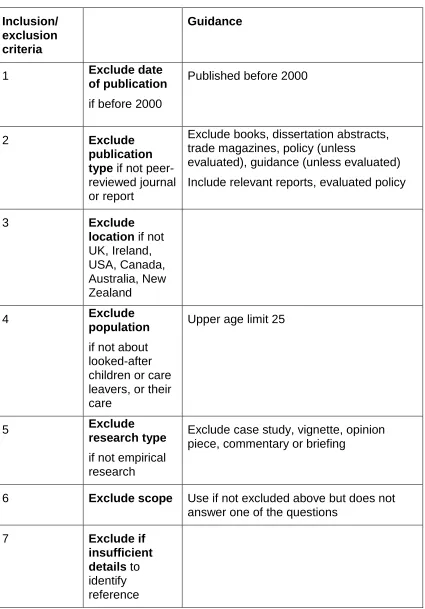
5 looked-after children or care leavers, aged 13 to 25, published since 2000 and relating to studies in the UK, Ireland, USA, Canada, Australia or New Zealand was included.
Data contained within the data annexe was obtained by a combination of search methods but primarily by obtaining online access to known government publications and access to data published by the Office for National Statistics.
The knowledge review also contains two examples of local practice sent in from the sector that have been assessed and validated by specialists in leaving care. The full versions of all the practice examples contained within this review, and those published since the review was written, are available on the C4EO website at www.c4eo.org.uk.
6
1. Introduction
This review aims to draw out the key ‘what works?’ messages on increasing the number of care leavers in ‘settled, safe accommodation’. It addresses four questions, which were set by the C4EO Theme Advisory Group (TAG), a group of experts in leaving care policy, research and practice. These questions are:
1. What do we know about the accessibility, acceptability and effectiveness of policies, services and interventions initiated by central, regional and local government and independent sector, including housing services and housing support services, for looked-after children and young people (LACYP)?
2. What are LACYP’s views on what constitutes safe and settled accommodation and how do they compare to those of policy-makers, housing and children’s services personnel and independent sector providers?
3. What do we know about the contribution made to being in safe, settled accommodation of LACYP by the attitudes, skills and abilities of foster, residential, kinship carers, supported housing staff and birth families, and interventions to support this contribution?
4. What do we know about the 12.6 per cent of young people not in suitable accommodation at age 19 (as defined by national indicator 147)?
Reviews on improving looked-after children’s emotional outcomes and emotional and
behavioural health are available on the C4EO website. C4EO is also undertaking work on cost-effectiveness (which is outside the remit of these reviews). This will place a cost on the
interventions and services local authorities deliver to children, young people and their families. The work includes the design of an outcomes-based model that can be applied to individual services. The model is being applied to a number of validated practice examples and work on this will be published from autumn 2010 onwards.
The reviews are based on:
• the best research evidence from the UK – and where relevant from abroad – on what works in improving services and outcomes for children and young people
• the best quantitative data with which to establish baselines and assess progress in improving outcomes
• the best validated local experience and practice on the strategies and interventions that have already proved to be the most powerful in helping services improve outcomes, and why this is so
• service user and provider views on ‘what works?’ in terms of improving services and outcomes.
7
Definitions of key terms
The following definitions were agreed by the TAG.
‘Settled, safe accommodation’
The definition of ‘settled, safe accommodation’ is drawn from both legislation and young people’s views. According to the 2010 draft Planning transition to adulthood for looked-after
childrenregulations and guidance to the Children (Leaving Care) Act 2000 (GB. Statutes 2000;
DCSF 2010a) ‘suitable accommodation’ required by the Act includes the following elements: • accommodation which, so far as is reasonably practicable, is suitable in the light of a
child’s needs, including their health needs
• accommodation where the responsible authority has satisfied itself as to the character and suitability of the landlord or other provider
• accommodation that complies with health and safety requirements related to rented accommodation
• accommodation where the responsible authority has, so far as is reasonably practicable, taken into account the child’s wishes and feelings, and educational, training or employment needs
• accommodation which must take into account factors listed in Schedule 6 of the Care
Planning, Placement and Case Review England Regulations 2010. These are: the
general state of repair; safety; location; personal support; tenancy status; and the views of the young person about suitability.
Certain accommodation is not deemed suitable for 16- and 17-year-olds, including ‘unsupported accommodation’ and ‘bed and breakfast’, although it is acknowledged that the latter may be ‘very occasionally’ used in an emergency. The Homelessness Act 2002 (GB. Statutes 2002) placed a duty on local authorities to make suitable accommodation available, including for a person who is in priority need. The Homelessness (Priority Need for Accommodation) (England)
Order 2002 extends ‘priority need’ to care leavers aged 18 to 20 years old and national
indicators that contribute to this (NI 147) include an understanding that accommodation also needs to be affordable: ‘accommodation is to be regarded as suitable if it provides safe, secure and affordable provision for young people’.
To young people who have been in care ‘getting your own place to live’ is top of the list of ‘best things about leaving care’ (Morgan and Lindsey 2006 p 6). They want a ‘secure and safe place to live in’ (NCAS 2010a p 10) and ‘somewhere that was their own’ (Centrepoint 2006 p 7). They also want a say about where they live, rent that is affordable, help in budgeting and in managing their accommodation, including when they get into financial difficulties (A National Voice 2005; Harris and Broad 2005).
The following groups of young people have been included in this review:
8
• thirteen to 25-year-olds who are or have been looked-after for several short-term (up to six months) periods in local authority care
• sixteen to 25-year-olds who have left or are preparing to leave medium-term or long-term local authority care.
The focus on young people aged up to 25 years old reflects the journey from care planning to adulthood.
The accessibility, acceptability and effectiveness of
interventions
The ‘accessibility of interventions’ refers to how easily people can access services or
interventions. The ‘acceptability of interventions’ refers to how acceptable interventions are to people and carers who use services, and to other people (staff, for example) involved in
delivering them. Accessibility and acceptability of some interventions may be affected by practicalities, such as lack of transport in rural areas, but also by cultural and attitudinal issues such as language barriers, stigma and other barriers or facilitators to participation. The
‘effectiveness of interventions’ refers to how effective interventions are (in a practice setting), usually assessed by measuring outcomes in various dimensions. Only those studies that report some type of evaluation (as opposed to descriptions) of interventions can tell us something about ‘effectiveness of interventions’. Studies which involve a comparison or control group or that measure characteristics before and after an intervention are more persuasive. The study considered items from England, Scotland, Wales, Northern Ireland, Ireland, USA, Canada, Australia and New Zealand. Publication dates were from 2000. The type of literature considered includes published research studies only.
Types of evidence used
The research included in this review was identified through systematic searching of key
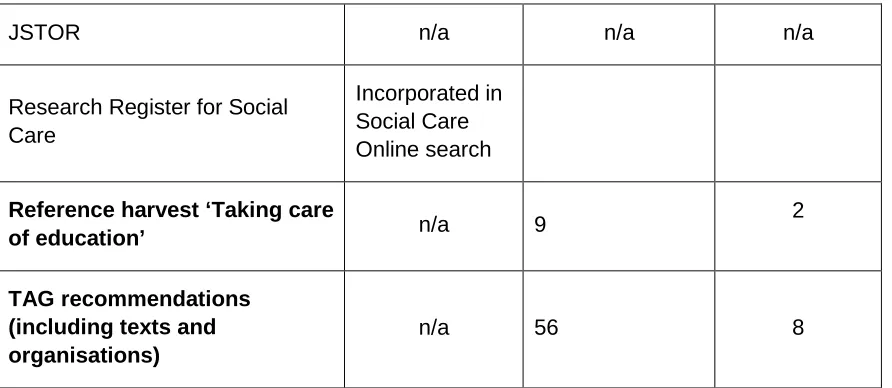
databases, reference harvesting or recommendations from the TAG. All research included has been appraised to ensure that the evidence presented is the most robust available.
The review also contains two examples of local practice that have been gathered from the sector and assessed as having a positive impact on outcomes by specialists in vulnerable children and young people. (See Appendix 5 for C4EO’s validated local practice assessment criteria.) The full versions of all of the practice examples contained within this review, and those published since the review was written, are available on the C4EO website at www.c4eo.org.uk. Evidence has also been gathered from service providers during discussion groups at C4EO knowledge workshops (events at which the authors presented the findings from the Vulnerable Children reviews). Evidence has also been collected from the C4EO parents and carers panel run by the Family and Parenting Institute; through consultation with birth parents; and from a group of nine young people involved in two Action for Children projects, who participated in podcasting workshops (see Appendix 6 for more details of the process).
9
Strengths and limitations of the review
Strengths of the review include: identifying the best available evidence from research and
national datasets to inform specific questions; comprehensive and documented searching for relevant information; an analysis of the quality and strength of evidence; guidance from an advisory group on the issues of greatest importance in leaving care policy, research and practice.
Limitations of the review include: the very tight deadlines that the review had to meet, which
10
2. Context
Policy context
For most young people today, being ‘in settled, safe accommodation’ of their choice,
represents an important landmark on their journey to adulthood. However, for young people leaving care, achieving this goal may be more difficult than for other young people. They may feel they have been forced to leave care before they are ready, often at just 16 to 17 years of age, whereas most young people leave their family home in their mid-to-late 20s. Some young care leavers are also likely to be living in unsuitable accommodation, move frequently and become homeless (A National Voice 2007; DCSF 2007). Being in ‘settled, safe
accommodation’ also has to be considered in the context of connected and reinforcing pathways to adulthood: entering further and higher education or training, finding satisfying employment, and achieving good health and a positive sense of wellbeing – all pathways where there is evidence of care leavers being disadvantaged in comparison to other young people (Stein 2004).
Specific provisions in response to the accommodation needs of care leavers – as detailed below – as well as more general provisions in recognition of their wider and connected range of needs are reflected in the current legal and policy framework, including the Children Act
2004 and revisions to guidance and regulations (DCSF 2010a). Local authorities acting as
‘corporate parents’ and the Every Child Matters universal outcomes are central to this framework: What if this was my young person, would it be good enough for them?
The Children (Leaving Care) Act 2000 (GB. Statutes 2000) was introduced in England and
Wales in October 2001 against a background of wide variations between local authorities in the range and quality of services for care leavers. The Act’s main aims are to: delay young
people’s transitions from care until they are prepared and ready to leave; strengthen the assessment, preparation and planning for leaving care; provide better personal support for young people after care; and improve the financial arrangements for care leavers. The key responsibilities are: a duty to assist young people until they are at least 21, or longer if they are in approved programmes of education or training; a duty to assess and meet the needs of young people in and leaving care; pathway planning; financial support; maintenance in suitable accommodation; and a duty to keep in touch by the ‘responsible authority’. Guidance to the Act, currently under revision, outlines how local authorities might be expected to apply the legal requirements so that young people can access suitable accommodation (DH 2001; DCSF 2010a).
The Homelessness Act 2002 (GB. Statutes 2002) places a duty on housing and social services departments to develop joint strategies to prevent homelessness among vulnerable groups, including care leavers. The Homelessness Code of Guidance for Local Authorities (2006) identifies both housing and children’s services’ roles in addressing the high risk of
homelessness for care leavers (NCAS 2009). The non-statutory guidance, Joint working
between housing and children’s services: preventing homelessness and tackling its effects on children and young people (CLG and DCSF 2008), provides examples of good practice,
11 leavers’ transition to adulthood; and a joint protocol to ensure a quick, safe and supportive response to care leavers at risk of homelessness.
In May 2009, the House of Lords made a landmark judgement in the case of R (G) v London
Borough of Southwark. The Lords ruled that the primary duty to a homeless 16- or 17-year-old
is under the Children Act 1989 (GB. Statutes 1989) and that the ongoing duty to accommodate and support that young person will normally fall to the children’s services authority. The
judgement made it clear that children’s services cannot avoid their duty to accommodate a homeless 16 -or 17-year-old under Section 20 of the Children Act 1989 by claiming they were providing assistance by using their powers under Section 17 of the Act, or by helping the young person to get accommodation through homelessness legislation. Young people who are accommodated under Section 20 are ‘looked-after ‘children who will in due course become entitled to services under the Children (Leaving Care) Act 2000 (GB. Statutes 2000) (as detailed above).
The Children and Young Persons Act 2008 (GB. Statutes 2008) provisions (due for staged
implementation from 2011) include a new statutory requirement that ‘a local authority cannot move a looked-after child to independent living arrangements without first conducting a statutory review of the care plan and that, where such a move takes place, it does not automatically result in the child leaving care. That is an entirely separate decision that must also be reviewed’ (NCAS 2008). There will be a presumption that young people will continue to be looked-after up to the age of 18. The Act will also extend entitlement to the support of a personal adviser up to the age of 25 for care leavers who start or resume a programme of education or training after the age of 21. In a similar vein, the government has enabled local authorities to pilot: young people ‘staying put’ with foster carers until age 21; the involvement of young people in deciding when they move to independence through Right2BeCared4; and social pedagogic approaches in children’s homes. Revisions to the Children Act 1989
regulations and guidance are currently being made (GB. Statues 1989; DCSF 2008a, 2010a).
Also, the consultation process on the Planning transition to adulthood for looked after children
guidance and on the amended children (leaving care) (England) regulations was closed on 25
March 2010, and the final guidance and amended regulations are awaited (DCSF 2010a).
The allocation of social housing through choice-based lettings (to be in place by 2010) recognises those in priority need, including certain care leavers, and there are new government targets for increasing social rented accommodation. Also, the government
provided funding through the ‘Co-location Fund’ for nine projects to encourage local authorities to develop a range of housing options for care leavers.
Finally, in terms of the dynamic policy context: in April 2010 (in response to R (G) v
London Borough of Southwark detailed above) the government issued guidance to
children services and local housing authorities to secure or provide accommodation for homeless 16- and 17-year-old young people (Provision of accommodation for 16 and 17
year old young people who may be homeless and/or require accommodation (2010)
(DCSF and CLG 2010); the (then) DCSF have funded Journeys to home: care leavers’
successful transition to independent accommodation, a good-practice guide prepared by
12
NCAS has carried out a survey of young people’s views of ‘What is suitable
accommodation?’, to contribute to the government’s consultation on Schedule 6 of the Care Planning regulations (see page 6 above) (NCAS 2010a); NCAS also made proposals for local authorities, acting as ‘corporate parents’ to provide financial support to care
leavers in further education until they are aged 21 – so they do not have to access the benefits system earlier than their peers. This will include financial support to maintain accommodation (NCAS 2010b).
Research context
The contribution of different theoretical perspectives to a greater understanding of the main findings from empirical studies of young people leaving care, including those discussed in this review, has received some attention. Set in the context of social exclusion, work on
attachment, transitions and resilience builds upon important earlier empirical and theoretical foundations that have particular relevance to this review (see Stein (2006b) for seminal works and references on these perspectives).
Social exclusion has come to mean both material disadvantage and marginalisation.
Whereas the former is usually associated with low income and relative poverty, the latter refers to the way groups may be excluded, omitted or stigmatised by the majority, due to personal characteristics or experiences, such as being in care. In this context, international research from the mid-1980s has shown the high risk of social exclusion, on both these dimensions, for young people leaving care, including the high risk for them of homelessness and poor housing outcomes. This evidence has contributed to a greater awareness of their reduced life chances, their links with other excluded groups of young people and variations in services, as well as providing a focus for interventions.
Attachment theory is relevant to understanding the experiences of young people whose
early family relationships have been disrupted, often by their experience of abuse and neglect, and who require compensatory attachments, stability and continuity in their lives. However, studies from the mid-1980s show that some of these young people may go on to experience a lot of further placement disruption while in care. This may contribute to some young people becoming more detached from their carers and other social relationships and institutions, moving a lot after they leave care for negative reasons and being unable to settle in their accommodation.
Research on transitions shows that many young people who leave care may have a very short and severe journey to adulthood. They have to cope with major changes in their lives – including leaving care and settling in accommodation, often in a new area, leaving school and finding work, or going to college – far younger, as well as in a far shorter time, than many other young people. These accelerated and compressed transitions may deny care leavers the psychological opportunity of dealing with these major issues over time, which is how most young people are able to cope with their journey into adulthood.
Resilience can be defined as the quality that enables some young people to find fulfilment in
14
3. The evidence base
This section provides an overview of the extent of the evidence base. For this knowledge review, the evidence base consisted of four main sources:
• A literature harvest updating the existing research review (Stein 2009a). • Stakeholder views gained through C4EO organised consultation with: service
providers; birth parents who have, or have had, children in care; members of the parent and carers panel; and young people participating in the podcasting workshops.
• Two validated practice examples assessed by experts as relating to increasing the numbers of care leavers in ‘settled, safe accommodation’, and as having a positive impact on outcomes.
• Data from national datasets, including data from known government publications and data published by the Office for National Statistics.
Twenty-one new references were assessed as relevant and incorporated into the knowledge review, resulting in 119 references in total. This included literature that was intended to fill gaps identified in the research review (Stein 2009a), or related to relevant literature published after the review. The following updates were incorporated:
• four new references were included in the policy context
• nine new references were included in answer to the first review question
• four new references were included in answer to the second review question (one also included in the policy context)
• three new references were included in answer to the third review question • one new reference was included in answer to the fourth review question.
The research review details the evidence base (Stein 2009a). In respect of the updates incorporated in the research questions, these are as follows:
What do we know about the accessibility, acceptability and effectiveness of policies, services and interventions initiated by central, regional and local government and independent sector, including housing services and housing support services for looked-after children and young people (LACYP)?
The nine new references in answering this question include:
• The effect of support services for transition to adulthood/leaving care on the adult outcomes of looked-after young people (a systematic research review).
• A literature review and new findings from the Young People from a Public Care Background Pathways to Education in Europe project (YIPPEE).
15 Overall, as identified in the research review, most of the studies are empirical, non-evaluative and based on interviews. The inclusion of the additional research review and new empirical material is helpful in addressing this question.
What are LACYP’s views on what constitutes safe and settled accommodation and how do they compare to those of policy-makers, housing and children’s services personnel and independent sector providers?
The four new references used in answering this question include a 2010 survey carried out by the National Care Advisory Service (NCAS) of young people’s views about ‘suitable
accommodation’, and surveys of young people’s experiences of care and leaving care carried out by the Children’s Rights Director for England. As identified in the research review, there are still gaps in the research evidence: of young people’s experiences of extended placements; what young people value about continued support from carers; and young people’s contact with birth families.
What do we know about the contribution made to being in safe, settled accommodation of LACYP by the attitudes, skills and abilities of foster, residential, kinship carers, supported housing staff and birth families, and interventions to support this contribution?
As identified in the research review there is very little published research evidence that relates directly to interventions, training, assessment and support that makes any difference to the skills and behaviours of foster carers or residential workers in helping young people find and sustain a home. The role of birth families is also largely overlooked in the literature. Three new references were identified in response to this question, including a survey of family and friends care, early research on family involvement in supporting young people leaving care, and peer research on the views of care leavers.
What do we know about the 12.6 per cent of young people not in suitable accommodation at age 19 (as defined by national indicator 147)?
Only one further reference, a policy paper, was incorporated within the answer to this question. Overall, as for the research review, the evidence is a mix of descriptive and evaluative studies, with evaluations of services to homeless care leavers largely North American-based. Both the UK and US literature emphasise the importance of independent living schemes.
Gaps in the evidence base
• Methodologically, there is a lack of variety in the types of studies available. The
majority are descriptive, non-experimental empirical studies using small samples and a qualitative methodology.
• Where effectiveness studies are available, they tend to be North American-based and do not capture young people’s views on accessibility and acceptability of services and intervention.
16
subsequently experience homelessness or housing difficulties are only identified in a small number of studies.
• There is a lack of material to review the interventions, training, assessment and support that makes any difference to the skills and behaviours of foster carers, residential workers or kinship carers in helping young people find and sustain a home – as well as little material on the role of birth families.
• There is some literature on care leavers’ experience of homelessness within care leavers’ research and some within the literature on youth homelessness (the latter beyond the scope of this review).
• While housing is included in many of the studies, the housing perspective is often less evident. This may be due to disciplinary distinction with studies largely classed as ‘social care’ rather than ‘housing’ research. This may contribute to less attention being paid to the impact of structural and inter-agency dynamics on care leavers’ ability to find safe, settled accommodation.
17
4. The accessibility, acceptability and effectiveness of
policies, services and interventions for looked-after
children and young people
This section seeks to identify what we know about the accessibility, acceptability and effectiveness of policies, services and interventions initiated by central, regional and local government and independent sector, including housing services and housing support services, for looked-after children and young people (LACYP).
Key messages
• How young people fare in respect of their housing is in part connected to the quality of care they receive, their transitions from care, the services they receive and the reinforcing and connected pathways to adulthood, including education, employment and wellbeing.
• Leaving care services work well in assisting most young people in accessing housing, in supporting them in managing their accommodation and in helping them when they get into difficulties. However, there is evidence of wide variations between local authorities in the provision of ‘suitable accommodation’.
• The experience of being in higher education can assist young people in being in ‘settled, safe accommodation’, by providing them with the opportunity of moving into, and then on from, more sheltered accommodation to independent
accommodation during their course. In this way, they will gain experience of looking after themselves, budgeting and negotiating with landlords, before moving to their own accommodation.
• More attention should be given to the accommodation and support needs of: young parents; the community and family links of black and minority ethnic young people when they leave care; asylum-seeking young people; and vulnerable young people returning from ‘out of authority’ placements.
• More attention should be given to the preparation skills of young men.
• Services for disabled care leavers should be coordinated and planned better with mainstream leaving care services.
• Services for young people with mental health problems need to be better coordinated, particularly in the transition between child and adult mental health services and across local authorities, or NHS boundaries.
This section of the review, incorporating nine new references, is based on 73 items. This includes, first, UK studies that focus on leaving care services, including the implementation of the Children (Leaving Care) Act 2000 (GBN. Statlutes 2000), and the outcomes of leaving care services. Second, it includes North American-based evaluations of independent living
18
frameworks, services and care contexts between the UK and the US, suggest the need for caution in making comparisons, including the implications for policy and practice (Stein and Munro 2008; Courtney and Thoburn 2009).
The development of leaving care services (UK) and
independent living programmes (US)
The material included in this sub-section is contextual and mainly descriptive. It is drawn from the references cited in the text.
Leaving care services
In the UK specialist leaving care schemes have been introduced, particularly since the mid-1980s, to respond to the core needs of care leavers for assistance with accommodation, finance, education and careers, life skills, and personal support networks. The early schemes were, in the main, provided by the third sector, had small numbers of staff and access was limited to selected young people leaving children’s homes within a local authority. However, the pioneering work of the early individual schemes and projects contributed to the
development of authority-wide leaving care provision (Stein 2004).
Organisational models of leaving care services in the UK include: • a centrally organised specialist service
• a geographically dispersed specialist service • a non-specialist leaving care service
• a centrally organised integrated service for a range of vulnerable young people including care leavers, homeless young people and young offenders.
(Dixon et al 2004; Dixon and Stein 2005)
Variations of these models include specialist dual-system arrangements, where the young person is assisted by a specialist leaving care team but statutory responsibility is retained by the social worker and looked-after adolescent teams (Vernon 2000).
Research completed since the introduction of the Children (Leaving Care) Act 2000 (GB. Statutes 2000) in England and Wales, suggests the emergence of a ‘corporate parenting case model’. Its main features are twofold: first, case responsibility is held by the designated
19
Independent living programmes
In the United States, also from the mid-1980s, Congressional concern about the extent to which young people ‘aging out of care’ were prepared to manage their lives led to the passage of the Independent Living Initiative Law in 1985. This law authorised funds for states to
establish and carry out programmes to assist young people aged 16 and older to make the transition to independent living, leading to the development of a national network of
independent living programmes (ILPs).
Since then the legal and policy framework has been strengthened, most recently by the
Fostering Connections to Success and Increasing Adoptions Act 2008, which extended the
Chafee Foster Care Independence Program to include young people who after the age of 16 leave foster care for kinship care, guardianship or adoption. It also introduces a new
requirement for a ‘personalised transitions plan’ (Collins and Clay 2009). The strengthening of the legal framework can be seen in the context of growing evidence of the poor outcomes for care leavers (Courtney et al 2001; Courtney and Dworsky 2006; Pecora et al 2006). Research evidence from Canada is being used to recommend similar changes (Tweddle 2007).
ILPs may include life-training skills, mentoring programmes, transitional housing, health and behavioural health services, educational services and employment services. They generally employ social skills techniques such as instruction, modelling, role play and feedback:
approaches that have been shown to improve skills for young people in clinical and non-clinical settings (Montgomery et al 2006). It has been suggested by Courtney and Terao (2002) that focusing on the range of services may detract from common programme elements including: case management and their underlying philosophy – many adopt a youth development philosophy that emphasises opportunities for young people to contribute to their community, increase their personal confidence and provide guidance to other young people. They also suggest that ILPs may be provided as one part of a wider range of services and there is
evidence of variation in local state policies – for example, in allowing young people to remain in care longer or providing financial support for college education (Courtney and Terao 2002).
The implementation of the Children (Leaving Care) Act 2000
There have been a small number of research studies and surveys evaluating the work of leaving care services in England and Wales since the introduction of the Children (Leaving
Care) Act 2000 (Vernon 2000; Broad 2003, 2005; Dixon et al 2004; Hai and Williams 2004;
Barn et al 2005; Harris and Broad 2005; Wheal and Matthews 2007; Simon 2008). These studies suggest the legislation is contributing to a number of positive changes:
• the increases in the percentages of young people living in supported accommodation and shared or transitional support accommodation
• the increased take-up of further education and reductions in those not in education, employment and training, directly linked to improvements in financial support for young people provided by local authorities
• a strengthening of leaving care responsibilities, especially through the introduction of needs assessment and pathway planning
20
• increased funding for leaving care teams.
However, there is also evidence that:
• young people continue to leave care at a younger age than other young people leave the family home
• divisions between better and poorer funded leaving care services before and after the Act are likely to remain
• young people’s healthcare remains a low priority within leaving care teams
• services for young parents, young unaccompanied asylum and refugee seekers, and young people from care remanded in custody, were predominantly reported as ‘remaining the same’ since the introduction of the Act.
Research on the experiences of specific groups of young people since the introduction of the
Children (Leaving Care) Act shows:
• Black and minority ethnic young people, including those of mixed heritage, face similar challenges to other young people leaving care. However, they may also experience identity problems derived from a lack of knowledge of their background, or contact with family and community, as well as the impact of racism and discrimination (Barn et al 2005).
• Young disabled people may experience inadequate planning and poor consultation, and their transitions from care may be abrupt or delayed by restricted housing and employment options and poor support after care (Priestley et al 2003).
• Earlier research, prior to 2003, showed that unaccompanied asylum-seeking young people were likely to receive poorer housing (including bed and breakfast
accommodation) and other services than looked-after young people, especially in respect of support from leaving care teams (Stanley 2001; Hai and Williams 2004). Subsequent research identified distinctive care pathways for unaccompanied young people according to age, with younger children tending to enter foster or residential care under Section 20 of the Children Act 1989 and a much larger group of older young people (mostly aged 15 to 17 at arrival) being supported in the community under
Section 17 provisions. This latter group were found to be significantly disadvantaged with respect to quality of accommodation, educational progress and social work support, including access to leaving care services (Wade et al 2005). Evidence suggests that young people placed in independent settings continue to face greater adversity than those in more highly supported accommodation. This includes evidence of high levels of unmet mental health needs and transitions being affected by their asylum claims (Chase et al 2008).
Department of Health (2003) guidance on the appropriate use of Section 17
accommodation and the findings of the Hillingdon Judicial Review have led to improved access to Section 20 accommodation and leaving care services.1
1
Hillingdon Judgement: R (Behr and others) v Hillingdon Borough Council (2003) EWHC 2075 (Admin).
21 suggest there is now a predominant use of Section 20 accommodation and that most young people are able to access leaving care services, at least until their right to remain is removed.2
• Leaving care teams and, in particular, personal advisers play an important role in assisting young people with mental health problems. However, there is evidence of the need to better coordinate services, particularly in the transition between child and adult mental health services, and across local authorities or NHS boundaries. Young people with mental health problems require a higher level of support between 16 and 21 years of age and there is also evidence of a lack of appropriate accommodation for care leavers with mental health difficulties (Lamont et al 2009).
However, whether these welcome juridical reforms are leading to substantive changes in the range of supported accommodation options available for this group of young people needs to be the subject of further research.
• Although the numbers are small, young women who have been in care are more likely to become teenage parents than other young people and many have short-term
difficulties in finding suitable accommodation, as well as accessing additional personal and financial support. Where leaving care services are involved they tend to offer a wide range of support and young parents appreciate this. For some young people parenthood is a very positive experience and it can also contribute to an improvement in family relationships (Barn et al 2005; Chase and Knight 2006; Lewis 2006; Wade 2008).
This picture has been added to by a recent Ofsted survey (2009) based on visits to six local authorities, four secure provisions, and the views of 103 care leavers. This suggests
improvements have been made in:
• transitional planning for care leavers with disabilities
• building links between ethnic minority care leavers and their local community groups, assisted by interpreters, the training of carers and workforce recruitment
• meeting the needs of unaccompanied asylum-seeking young people by additional specialist training, targeted support and interventions to meet their additional needs • providing access to additional personal and financial support for young parents.
(Ofsted 2009)
There is also evidence in the survey of improvements in access to health services by the greater flexibility and informal approaches adopted by looked-after children’s nurses. This includes nurses being based part-time in leaving care teams, visiting young people in their homes, offering advice to personal advisers and developing access to other services, including substance abuse, drug and alcohol, sexual health, and child and adolescent mental health services. In respect of the four secure establishments, the survey revealed an absence of pathway plans from young people’s home-area local authority, although, by contrast, there was evidence of good support to young people while in secure accommodation from the local
2
Personal correspondence provided by Jim Wade, SPRU, University of York. The fostering project is being funded by
the Big Lottery and undertaken in partnership with the British Association for Adoption and Fostering and the University
22
authorities, integrated working with youth-offending teams, and clear exit strategies for young people on release (Ofsted 2009).
The outcomes of independent living programmes (US) and
leaving care services (UK)
The outcomes of independent living programmes
Concerns about the lack of evidence of the effectiveness of ILPs, despite their widespread use in the United States, led to the first systematic review with rigorous inclusion criteria. This found no randomised or quasi-randomised controlled studies worldwide evaluating the
effectiveness of ILPs (Donkoh et al 2006; Montgomery et al 2006). However, as Montgomery
et al suggest ‘despite a lack of randomisation, the available research evidence may still provide
informative data to researchers and practitioners’ (Montgomery et al 2006 p 1437). Eight papers were identified from the systematic review that met all the inclusion criteria apart from random assignment. These assessed the effectiveness of ILPs by comparing them to usual care, no intervention or another intervention.
This review shows that in almost every study, ILP participants did better than non-participants for housing, educational attainment, employment, health and life skills outcomes. In the areas of housing and educational attainment, the findings were statistically significant in some of the studies. All eight studies examining housing report more favourable outcomes for ILP
participants, including:
• a significantly higher proportion of young people living independently at follow-up • young people moving significantly fewer times and experiencing less homelessness.
However, although ILP participants did better than the population of care leavers, they were still poorer than the general population of young people. The review evidence did not allow reviewers to identify which elements of ILPs are most effective, which young people may benefit most from ILPs, or the mechanisms by which ILPs may influence outcomes (Montgomery et al 2006).
Everson-Hock et al (2010) carried out a systematic review of ‘the effectiveness of support services for transition to adulthood/leaving care for improving a range of adult outcomes for looked-after young people, compared with no intervention or usual care’ (p 6). The transitional support services were delivered to young people aged between 15 and 19 who were about to leave full-time care. They identified seven studies that met their inclusion criteria. These were carried out between 1991 and 2005; six were conducted in the United States, with one UK study. Data on education, employment, offending behaviour,
pregnancy and parenthood, housing and homelessness and health were considered ‘sufficiently measured across studies’ for the data to be integrated in the review (p 8).
The review found there was ‘moderate evidence’ (p 8) that transitional support services had a positive effect on housing and independent living, in that those that received support services were more likely to have a place to live and be living independently than those who did not receive services. The evidence as regards homelessness (four studies
23 were less likely to have had a homeless episode at discharge or to have ever been without a place to sleep, where as two other studies showed no difference between those who had and had not received support services. The review also suggested that transition support services can have a beneficial effect on the adult outcomes for looked-after young people for education, employment and parenthood. Finally, the lack of detail on individual
components of interventions and services meant that it was not possible to assess their impact.
Naccarato and DeLorenzo (2008) reviewed 19 studies on independent living in order to identify their practice implications. The main implications for ILPs in relation to housing include:
• encouraging young people to maintain long-term relationships with foster carers and other supportive adults so they have a place to live during difficult times
• building links with the range of housing providers
• the development and funding of transitional living programmes, including ongoing support counselling and assistance.
Several non-randomised studies have evaluated individual ILPs using, in the main, interviews with staff and young people and different outcome measures (Reilly 2003; Rashid 2004; Georgiades 2005a and b; Freundlich and Avery 2006; Freundlich et al 2007; Geenen et al 2007; Giffords et al 2007; Goyette 2007; Naccarato and DeLorenzo 2008). The main focus of these studies has been to identify the key messages for service providers and – given the methodological restraints – they should be viewed as providing pointers. These include: • the importance of early preparation and consistent attendance at ILPs and preparation
being geared to the real challenges young people face
• involving young people and different agencies more in transitional planning
• personalising planning arrangements to meet the individual needs of young people • encouraging social experimentation to allow young people to put the skills they have
gained into practice.
• providing supported transitional living programmes for homeless care leavers, as a route into stable accommodation
• paying more attention to parenting skills, sexual behaviour and risks, and substance abuse
• being in employment before leaving care and providing ongoing support in the community
• developing more specialised responses to the needs of young people with disabilities and mental health problems
• providing interdisciplinary case management services: counselling; adult and peer mentors; employment advice
24
There is some evidence that many young people learn their independent living skills from their foster or residential carers, before joining an ILP, and some of these young people maintain contact with their past caseworkers. The same study emphasises the importance of
collaboration between ILPs and foster, residential and family carers (Lemon et al 2005). There is also limited evidence that the positive outcomes of extended aftercare services for young people represents a cost saving, when taking into account the costs associated with dropping out of school, becoming a drug user or criminal (Kerman et al 2004).
The literature on ILPs, discussed in the wider context of research evidence of normative youth transitions in the United States shows: first, how parental support (emotional and financial) continues well into adulthood; second, the large percentages of young people who return to their family home at some time after they leave; and third, the contribution of social policy in supporting or inhibiting successful youth transitions (Collins 2001). It is suggested that services for young people leaving care should be more integrated with the child welfare system and youth policy more generally (Collins 2004).
The outcomes of leaving care services
In the UK, since 1995, there have been a small number of studies evaluating the outcomes of leaving care services. These include follow-up studies adopting outcome measures, policy surveys and studies of young people’s views and experiences. The studies drawn on are cited within the text and include material related to accommodation, education, employment and training, and ‘doing well’. Outcome evidence from the Care Matters: Ministerial Stocktake
Report 2009 and Ofsted inspection is also used (DCSF 2009a; Ofsted 2009). However, there
are no randomised or quasi-randomised controlled studies.
Accommodation
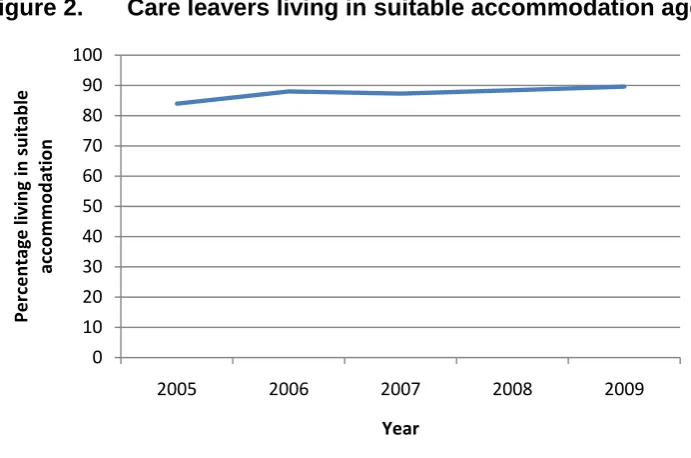
The numbers of care leavers living in suitable accommodation after moving on from their care placement has steadily increased from 77 per cent in 2004 to 90 per cent in 2009 (DCSF 2009a). The studies adopting outcome measures show that leaving care services can make a positive contribution to specific outcomes for care leavers. In relation to accommodation these studies show:
First, leaving care services are effective in assisting most young people leaving care in accessing housing. This includes:
• Setting up a young person’s accommodation on leaving care and liaising with housing providers (housing officers and departments, housing associations and voluntary sector housing projects) as advocates for care leavers.
• The success of this process is underpinned by good relationships between the care leaver and the leaving care team and good communication between leaving care teams and housing providers.
• It is also assisted by corporate housing strategies, formal arrangements and agreed protocols between leaving care services and housing providers.
25 Implicit in this process is the approval of the ‘suitability of the provider’ by the ‘responsible authority’ (as detailed in the regulations and guidance to the Children (Leaving Care) Act 2000, see Introduction) although there is little specific reference to this in the research literature.
Second, studies of initial access to housing and follow-up studies, show that most young people receive the accommodation they want on leaving care and have good outcomes after leaving care (Dixon and Stein 2005; Wade and Dixon 2006; Cameron et al 2007; Simon 2008). In these studies positive outcomes were associated with:
• having access to ‘good’ housing on leaving care: those who failed to secure good housing arrangements early on tended to fare worse over the follow-up period • having good-quality support in accommodation after leaving care
• receiving adequate planning and preparation prior to leaving care, so they had developed strong life and social skills
• being engaged in education, employment or training • having a positive sense of their own wellbeing
• having a network of informal support, including family and friends.
Third, there is evidence that being settled and happy in accommodation after leaving care is associated with an enhanced sense of wellbeing, which is to some extent independent of young people’s past care experiences or being unsettled at the point of leaving care (Wade and Dixon 2006). This suggests that housing has a very important and positive mediating role for young people leaving care.
Fourth, there is evidence, particularly in rural areas of a shortage of housing and increased dependency on the private sector for provision (Ofsted 2009). Bed and breakfast
accommodation is being used as a short -term measure to accommodate asylum-seeking young people and those whose behaviour is described as ‘chaotic’ (Ofsted 2009).
Fifth, the Care Matters stocktake showed evidence of wide variations between local authorities in the provision of ‘suitable accommodation’: 17 local authorities had all their care leavers in suitable accommodation, but 18 local authorities only had between 60 to 79 per cent (DCSF 2009a).
Sixth, and discussed in more detail below, many young people with emotional and behavioural difficulties, mental health problems, persistent offending or substance-misuse problems and young disabled people are likely to have the poorest housing outcomes.
26
Education, employment and careers
Studies have also consistently shown poor educational and employment outcomes for young people leaving care (Barn et al 2005; Dixon and Stein 2005; Mallon 2005; Stein 2005b; Wade and Dixon 2006; Cameron et al 2007; Cashmore et al 2007; Stein and Munro 2008). These studies suggest that successful educational outcomes are more closely associated with: • placement quality – feeling loved and part of the family
• stability and continuity
• being looked-after longer, more often – although not exclusively – achieved in foster care placements
• being female
• high carer expectations and a supportive and encouraging environment for study.
Without these foundations post-16 employment, education and training outcomes are also likely to be very poor.
Validated local practice example
Maintaining young people in stable placements and providing them with support and continuity
Southampton City Council has introduced the Dreamwall’s ‘Time Out’ programme for young people within or at risk of entering the care system. This provides young people deemed to be at risk of placement breakdown with a four-day residential activity break during the summer and a subsequent package of 12 weekends throughout the year. It provides longevity of service for young people (an assured four years) and extended service provision for young people aged 16 to 18 years of age. The programme was initially designed to prevent foster care placement breakdown and excessive use of respite care. Since 2004, 182 young people have taken part and participated in a range of leisure activities, including sports, outdoor, drama, arts and crafts, as well as group discussions and team games. Since its introduction Southampton has experienced: a 95 per cent reduction in foster carers leaving the service as a result of discontent or burn out; improvements in placement stability; and improvements in educational attainment. It is also seen by young people as ‘a non-stigmatising programme, widening their opportunities. It has had success in engaging and retaining ‘hard to reach’ young people. The longevity of the programme, through working with the same young people over time, enhances integrated working with other providers including: colleges, employers, health services; crime prevention and the children’s trust.