Enhancing athletic performance through high-intensity interval
training and sodium bicarbonate supplementation
Matthew W. Driller
B.Sp.Ex.Sci (Hons)
A thesis submitted in fulfilment of the requirements for the degree of
Doctor of Philosophy
School of Human Life Sciences, University of Tasmania, Australia.
February 2012
ii
Statement of Originality and Ethical Conduct
I, Matthew Driller certify that this work is entirely my own effort except where otherwise
acknowledged. I also certify that, to the best of my knowledge and belief, the work is
original and has not been previously submitted for any other award, nor does the thesis
contain any material that infringes copyright. This thesis may be made available for loan
and limited copying in accordance with the Copyright Act 1968.
The research associated with this thesis abides by the international and Australian codes on
human and animal experimentation, the guidelines by the Australian Government's Office
of the Gene Technology Regulator and the rulings of the Safety, Ethics and Institutional
Biosafety Committees of the University.
Matthew Driller Date: 27/02/2012
iii
Abstract
Introduction: Metabolic acidosis is a by-product of the energy production process required during high-intensity exercise, and it is thought to play a part in influencing muscle function and fatigue. Consequently, the efficacy of an athlete‟s intra- and
extra-cellular buffering systems may influence their performance during an exercise task. These
buffering systems can be enhanced through exercise training and nutritional
supplementation. Therefore, the purpose of this series of studies was to investigate
combined training and sodium bicarbonate (NaHCO3) supplementation techniques for
enhancing performance in well-trained athletes.
Study 1. The aim of this study was to evaluate high-intensity interval training (HIT) for improving performance in already well-trained athletes. To achieve this we compared
traditional rowing training (CT) to HIT in state-representative rowers. Following baseline
testing (2000 m rowing test, incremental rowing test) 10 rowers were randomly allocated
to HIT or CT, which they performed seven times over a 4-week period, after
post-treatment testing the rowers were allocated to the alternative training method, completing a
cross-over design. The HIT produced significantly greater improvements in 2000 m time,
2000 m power and relative VO2peak when compared to CT (P < 0.05). It was concluded that four weeks of HIT improves 2000 m time-trial performance and relative VO2peak in
competitive rowers, more than CT.
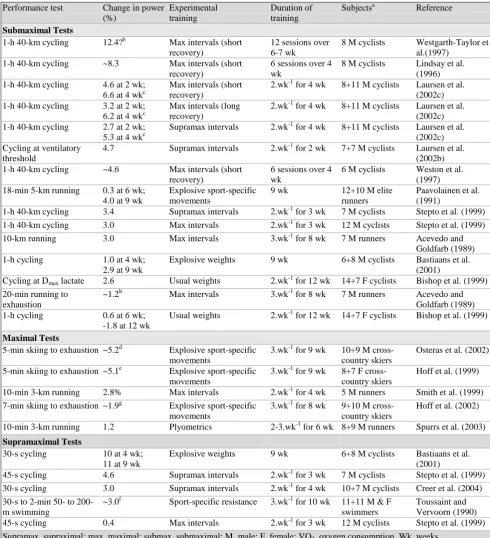
Study 2. After establishing that HIT was effective in improving rowing performance the next step was to investigate if the combination of HIT and NaHCO3 supplementation could
further enhance performance. However, the research literature was still equivocal as to the
iv to compare acute NaHCO3 loading with serial NaHCO3 loading (split doses over three
days) in well-trained cyclists to establish which method was best for producing
performance improvements and enhanced acid-base balance with minimal side effects.
Eight male cyclists completed three tests in a double blind, randomised design over a three
week timeframe: acute NaHCO3 loading (AL), serial NaHCO3 loading (SL) and a placebo
loading condition (P). Following each loading protocol, cyclists completed a 4-min
performance test on a cycling ergometer. Both the AL and SL trials produced a
significantly higher average power in the 4-min test when compared to the P trial (P < 0.05), with no significant difference between AL and SL trials (P = 0.29). The improvements in performance associated with the SL trial were despite any changes to the
measure blood-gas variables (pH and HCO3-). It was concluded that SL may provide a
convenient and practical alternative approach for athletes preparing for competition;
however, AL was the most effective for altering acid-base balance as well as improving
performance with minimal negative side-effects, and was deemed the most appropriate
method to use when combing HIT and NaHCO3.
Study 3. With appropriate protocols for both HIT and NaHCO3 loading in well-trained athletes confirmed, the aim of Study 3 was to combine these two strategies and investigate
whether there was any additive benefit when used in a chronic training setting. Subjects
were 12 elite rowers preparing for international competition. Following baseline testing,
rowers were allocated to either NaHCO3 (ALK) or a placebo (PLA) group (sodium
chloride matched for equimolar sodium content). Both groups performed 8 HIT sessions
over a 4-week period. Prior to each HIT session, subjects were required to ingest NaHCO3
or a placebo substance. The 2000 m time-trial performance improved after 4 weeks of HIT;
v attributable to the NaHCO3 supplementation during HIT training of fixed volume and
intensity.
Study 4. Due to the results from Study 2 and 3, along with some inconsistencies in the literature regarding the influence of NaHCO3 loading on athletic performance, it was
hypothesised that a possible reason for lack of performance improvements after NaHCO3
supplementation was the use of sodium chloride (NaCl) as a placebo. The sodium content
has been proposed to provide some performance benefits, possibly through blood volume
shifts, obscuring some of the benefits associated with NaHCO3 supplementation, limiting
its use as a valid placebo substance. Therefore the aim of Study 4 was to compare NaHCO3
and NaCl to a physically inert substance by evaluating the haematocrit changes and their
influence on high-intensity cycling performance. Subjects undertook three tests in a
random, double-blind design over a one week timeframe: NaHCO3 loading (SB), NaCl
loading (SC) and dextrose loading (D). Following each loading protocol, subjects
completed a 2-min performance test on a cycling ergometer. The SB trial produced a
significantly higher (P < 0.01) mean power (W) in the 2-min test when compared to the SC and D trial with no significant difference between SC and D trials (P > 0.05). It was concluded that the HCO3- not the Na+ was primarily responsible for providing any
ergogenic benefit during high-intensity exercise performance.
Conclusions: The findings from these studies suggest that independently, both HIT and NaHCO3 supplementation can improve high-intensity exercise performance in well-trained
athletes. However, this thesis provides the first study to investigate the combination of
these two techniques in highly-trained athletes and provides evidence that such an
approach does not lead to additional performance gains in this population; however, further
research is warranted. The findings from the final study of the thesis suggest that it is the
vi the Na+ content. The findings of the studies included in this thesis are applicable to
high-intensity exercise performance in the context of high-level athletic competition. The
research adds to the knowledge base regarding practical information for athletes and
coaches in terms of novel NaHCO3 loading and interval training protocols while providing
vii
Publications Arising From This Thesis
The publishers of the papers included in this thesis hold the copyright for that content, and access to the material should be sought from the respective journals. The remaining non published content of the thesis may be made available for loan and limited copying and communication in accordance with the Copyright Act 1968.
Driller, M., Fell, J., Gregory, J., Shing, C. and Williams, A. (2009). The effects of high-intensity interval training in well-trained rowers. International Journal of Sports Physiology and Performance, 4 (1).
Driller, M., Gregory, J., Williams, A. and Fell, J (2012). The effects of serial and acute NaHCO3 loading in well-trained cyclists. Journal of Strength and Conditioning Research, (Published Ahead of Print).
Driller, M., Williams, A., Bellinger, P., Howe, S. and Fell, J. (2012). The effects of NaHCO3 and NaCl loading on haematocrit and high-intensity cycling performance.
Journal of Exercise Physiology (online), 15 (1).
Driller, M., Gregory, J., Williams, A. and Fell, J. The effects of chronic sodium bicarbonate loading and interval training in highly-trained rowers. Under review –
International Journal of Sports Nutrition and Exercise Metabolism.
Shing, C, Driller, M, Williams, A, Webb, J and Fell, J. The effects of high-intensity interval training on plasma adiponectin in well-trained rowers. Under
viii
Peer Reviewed Conference Proceedings
Driller, M., Fell, J., Gregory, J., Shing, C. and Williams, A. (2008). The effects of high-intensity interval training in well-trained rowers. Australian Association for
Exercise and Sports Science. Melbourne, Australia.
Driller, M., Fell, J., Gregory, J., Shing, C. and Williams, A. (2008). The effects of high-intensity interval training in well-trained rowers. National Elite Sports Council
Forum. Canberra, Australia.
Driller, M., Gregory, J., Williams, A. and Fell, J. (2009). The effects of serial vs acute NaHCO3 loading in highly-trained cyclists. Sports Medicine and Science.
Rotorua, New Zealand.
Driller, M., Gregory, J., Williams, A. and Fell, J. (2010). The effects of serial vs acute NaHCO3 loading in highly-trained cyclists. Exercise and Sports Science
Australia. Gold Coast, Australia.
Driller, M., Gregory, J., Williams, A. and Fell, J. (2010). The effects of chronic sodium bicarbonate loading and interval training in highly-trained rowers. National
ix
Awards/Grants
Australian Association for Exercise and Sports Science Young Investigator Award.
Melbourne, Australia. Driller, M., Fell, J., Gregory, J., Shing, C. and Williams, A. (2008). The effects of high-intensity interval training in well-trained rowers.
x
Statement of Candidate Contribution
This thesis comprises four research investigations which have been completed almost
entirely by Matthew Driller (the candidate). The candidate designed the studies,
coordinated and supervised all data collection, analysed the data, and prepared all
manuscripts. The contributions of all parties to each of the four studies are detailed below.
Study one: The effects of high-intensity interval training in well-trained rowers
Mr Matthew Driller: lead role in study design, data collection, statistical analysis and first author on manuscript (70%)
Dr James Fell: assisted with study design, data collection and manuscript revision (20%)
Dr Andrew Williams: assisted with study design, data collection, statistical analysis and manuscript revision (5%)
Mr John Gregory: assisted with data collection (2.5%)
Dr Cecilia Shing: assisted with data collection and manuscript revision (2.5%)
Study two: The effects of serial and acute NaHCO3 loading in well-trained cyclists
Mr Matthew Driller: lead role in study design, data collection, statistical analysis and first author on manuscript (80%)
Dr James Fell: assisted with study design and manuscript revision (10%)
Mr John Gregory: assisted with data collection (5%)
xi
Study three: The effects of chronic sodium bicarbonate loading and interval training in highly-trained rowers
Mr Matthew Driller: lead role in study design, data collection, statistical analysis and first author on manuscript (80%)
Dr James Fell: assisted with study design, statistical analysis and manuscript revision (10%)
Mr John Gregory: assisted with data collection (5%)
Dr Andrew Williams: assisted with statistical analysis (5%)
Study four: The effects of NaHCO3 and NaCl loading on performance
Mr Matthew Driller: lead role in study design, data collection, statistical analysis and first author on manuscript (65%)
Dr James Fell: assisted with study design, statistical analysis and manuscript revision (10%)
Mr Sam Howe: assisted with data collection and manuscript revision (10%)
Mr Phillip Bellinger: assisted with data collection and manuscript revision (10%)
xii There was one further study that was directly related to this thesis and it appears in the
appendices (Appendix I). The study was derived from blood collected during the conduct
of study one. Therefore, the candidate completed all data collection but did not perform the
first draft of the final manuscript and as such has not been included as part of the body of
the thesis. The contribution to the study is listed below:
Study five: The effects of high-intensity interval training on plasma adiponectin in well-trained rowers
Dr Cecilia Shing: data collection, statistical analysis and first author (40%)
Mr Matthew Driller: assisted with data collection and manuscript revision (30%)
Dr James Fell: assisted with data collection and manuscript revision (15%)
Ms Jess Webb: assisted with data collection, analysis of blood, and manuscript
revision (10%)
Dr Andrew Williams: assisted with data collection and manuscript revision (5%)
We the undersigned agree with the above stated “proportion of work undertaken” for each of the above published (or submitted) peer-reviewed manuscripts contributing to this thesis:
Signed: Candidate _____________________
Signed: __________________ ______________________
Dr. James Fell Professor Madeleine Ball Supervisor Head of School
School Of Human Life Sciences School of Human Life Sciences
University of Tasmania University of Tasmania
xiii
Acknowledgements
Firstly, I would like to thank all of the athletes (and their coaches) who have taken part in
all of my studies, without you, this would not have been possible. It was a pleasure
working with so many driven individuals who were always willing to give 100% in each
test they completed. I have gained a new level of respect for the level of dedication and
sacrifice involved in being a top-class athlete. Good luck to all the subjects from my
studies as you strive to reach your goals, especially those who are competing in the London
Olympics this year. I feel very lucky to work in an area that I am passionate about and look
forward to going to work every day. With this, I would like to acknowledge my current
employer, the Australian Institute of Sport (AIS). It is an honour to work in such an elite
environment and be surrounded by so many experts in their field. Thank you for allowing
me to continue work on my PhD while being employed full-time.
To my primary supervisor, James – what a ride! Thank you for taking a risk and giving the
scholarship position to a Kiwi. Thank you for your brilliant supervision and for always
making time for me no matter how busy you are. I have learnt so much over the last 5
years and I am lucky to have had a supervisor with so many different areas of expertise. I
really appreciate the opportunities and experience that you offered me in Tassie, and for
making the transition over the ditch an easy one. Thank you also for your patience,
perseverance, humour and understanding throughout my PhD. I look forward to our
collaborations in the future!
To my other University supervisors, Andrew Williams and Cecilia Shing - thank you for
xiv made available to read and discuss my work. Ceils – thanks for giving me the opportunity
to be involved with your research and teaching at uni and for the insight you provided to
my studies. Andy – thanks for sharing your expertise in statistical analysis and for the
revisions of my manuscripts and thesis.
To my practical supervisor, John Gregory, and all the staff at the Tasmanian Institute of
Sport – I am very appreciative of the experiences in applied sport science I have gained
while completing my PhD with you. It was fantastic being able to complete my PhD while, at the same time, gaining experience working with some of Australia‟s top athletes. Thank
you, John, for your support in helping me find subjects for my studies and for teaching me
all the practical skills required for testing athletes over a range of sports. Your passion for
helping athletes improve is infectious.
I would like to acknowledge Dr Johann Edge. Johann‟s work provided the inspiration for
some of the studies in this thesis. Johann was kind enough to provide me with advice when
I was designing some of my studies. Unfortunately, in March 2010, Johann passed away in
a cycling accident. I feel honoured to have known him and privileged that I could carry on
some of the work he started.
To my parents, thank you for supporting me in pursuing my career in sports physiology, even if you didn‟t know there was such a thing and would prefer I got a “real job”. Thank
xv Lastly, I would like to thank my wife, Kirsty. It‟s been a trying journey over the last 5
years - but we made it! Thank you for encouraging me to finish this thing and for letting
Table of Contents
Statement of Originality and Ethical Conduct ... ii
Abstract ... iii
Publications Arising From This Thesis ... vii
Peer Reviewed Conference Proceedings ... viii
Awards/Grants ... ix
Statement of Candidate Contribution ... x
Acknowledgements ... xiii
List of Tables ... 4
List of Figures ... 5
Abbreviations ... 6
Overview ... 8
Thesis Organisation ... 11
Chapter One: ... 15
Introduction ... 15
General Introduction ... 16
Importance of muscle buffer capacity ... 19
Muscle buffer capacity in response to exercise ... 22
Extracellular buffering ... 23
Summary ... 23
Chapter Two: ... 25
Literature Review: ... 25
PART A - The effect of high-intensity interval training on physiology and performance .. 25
High-intensity interval training (HIT) ... 26
Physiological rationale for HIT ... 27
Peripheral adaptations to HIT ... 27
HIT induced changes to muscle buffer capacity ... 27
Other peripheral adaptations to HIT ... 31
Central adaptations to HIT ... 33
The influence of HIT in trained and untrained populations ... 36
Untrained ... 36
Trained ... 37
Summary ... 40
PART B - The effect of NaHCO3 supplementation on physiology and performance ... 41
Background ... 42
2
NaHCO3 and Exercise Performance ... 45
NaHCO3 dosing and loading regimens ... 53
Acute NaHCO3 loading ... 53
Serial NaHCO3 loading ... 55
Chronic NaHCO3 loading ... 57
Effects on blood variables ... 58
Gastro-intestinal side effects ... 61
Summary ... 64
Literature Review: Conclusion ... 65
Chapter Three: ... 68
The effects of high-intensity interval training in well-trained rowers ... 68
Abstract ... 69
Introduction ... 70
Methods ... 71
Results ... 80
Discussion ... 84
Practical Applications ... 87
Conclusion... 87
Chapter Four: ... 89
The effects of serial and acute NaHCO3 loading in well-trained cyclists ... 89
Abstract ... 90
Introduction ... 91
Methods ... 94
Results ... 99
Discussion ... 104
Practical Applications ... 107
Chapter Five: ... 108
The effects of chronic sodium bicarbonate ingestion and interval training in highly-trained rowers ... 108
Abstract ... 109
Introduction ... 110
Methods ... 112
Results ... 118
Discussion ... 122
3
Chapter Six: ... 127
The effects of NaHCO3 and NaCl loading on haematocrit and high-intensity cycling performance ... 127
Abstract ... 128
Introduction ... 129
Methods ... 131
Results ... 135
Discussion ... 140
Conclusions ... 143
Chapter Seven: ... 145
Thesis Summary ... 145
Limitations ... 153
Practical Applications ... 155
Future Directions ... 159
REFERENCES ... 161
APPENDICES ... 175
APPENDIX I: ... 175
Circulating adiponectin concentration is altered in response to high-intensity interval training ... 175
APPENDIX II: ... 195
Participant Information Sheets and Informed Consent ... 195
APPENDIX III: ... 214
Questionnaires ... 214
APPENDIX IV: ... 222
4
List of Tables
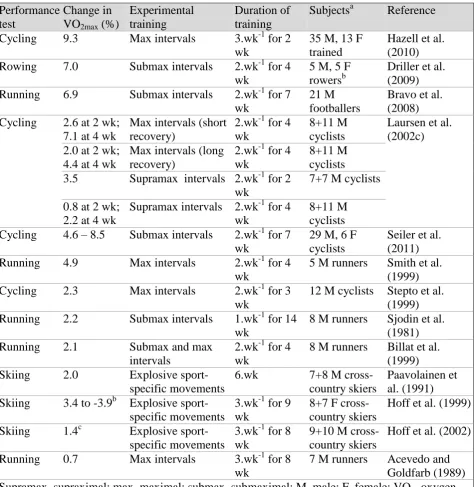
Table 1 – Effects of high-intensity interval training on maximum oxygen consumption (VO2max) in competitive athletes. ... 35 Table 2 – Effects of high-intensity training on measures of endurance performance in competitive athletes.. ... 39
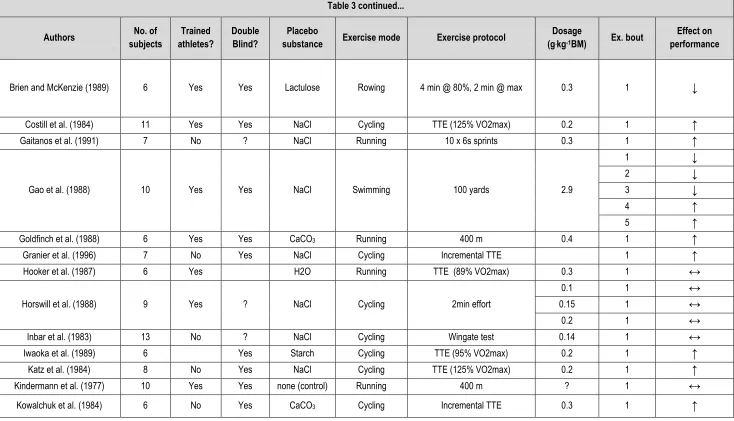
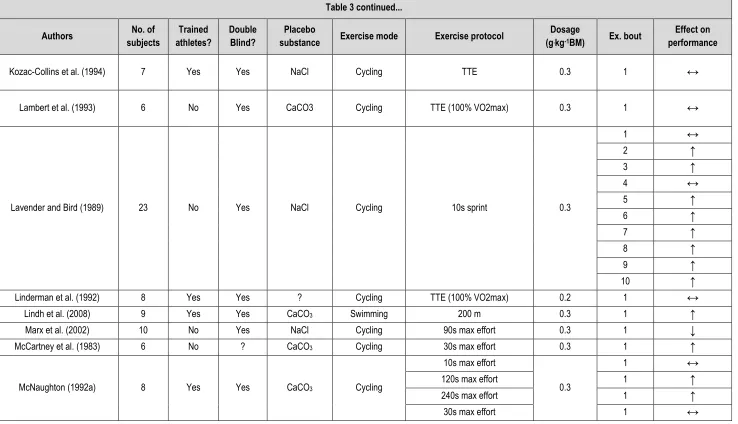
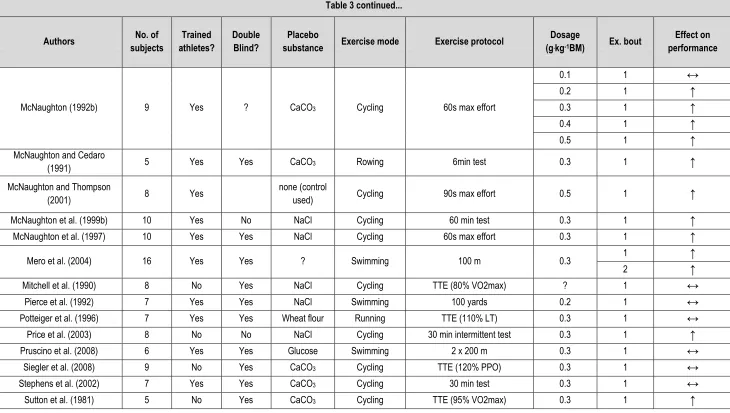
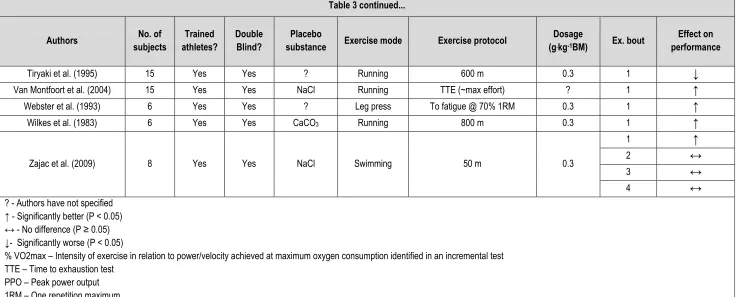
Table 3 – Summary of the acute NaHCO3 literature with regard to methods and protocols used and the effect on exercise performance. ... 47
Table 4 – The post-ingestion changes in blood pH and HCO3- following acute NaHCO3 loading. ... 60
Table 5 – Phase-interval training protocols used during the CT trial. Individual power outputs corresponding to target blood lactate concentrations were prescribed based on results from the progressive exercise test. ... 78
Table 6 – 2000 m performance trial and progressive exercise test results pre- and post- HIT and CT trials, including the effect of HIT relative to CT and likelihoods of clinically substantial differences. ... 82
Table 7 – The effect of intervention order on 2000 m time-trial (TT) performance.. ... 83
Table 8 – Physiological and performance variables for the three trials, including the likelihoods of clinically meaningful differences between the AL and SL trials when compared to the P trial. ... 101
Table 9 – 2000 m performance trial and graded exercise test (GXT) results pre- and post- training in ALK and PLA groups, including the effect of ALK relative to PLA and likelihoods of clinically substantial differences. ... 120
5
List of Figures
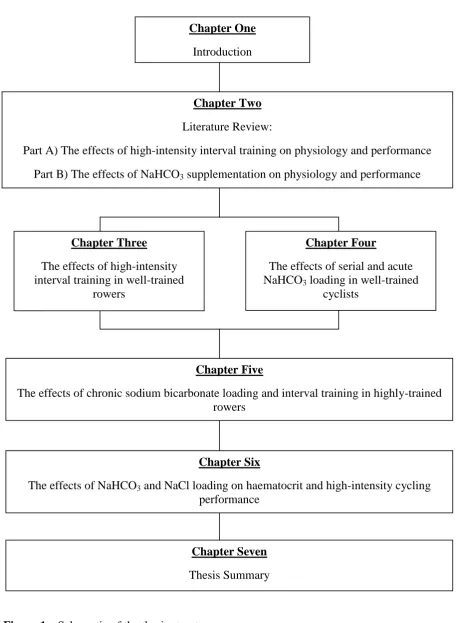
Figure 1 – Schematic of the thesis structure. ... 14
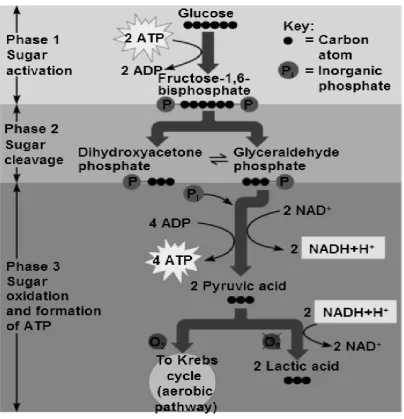
Figure 2 - Diagram of the glycolysis process that occurs during exercise. ... 17
Figure 3 – In-vitro muscle buffer capacity (βmin-vitro) in major muscles of the thoroughbred horse, greyhound dog and man. ... 20
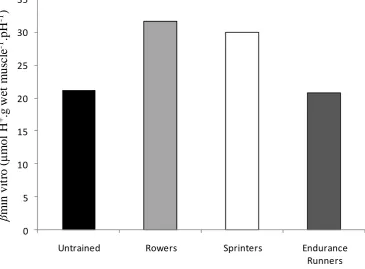
Figure 4 - In-vitro muscle buffering capacity (βmin-vitro) in the vastus lateralis of untrained subjects, rowers, sprinters and marathon runners. ... 21
Figure 5 - The absolute scores for bicarbonate concentration (HCO3-) (a) and pH (b) after nine different supplement loading protocols. ... 59
Figure 6 - The absolute scores for gastro-intestinal symptoms following nine different supplement loading protocols. ... 63
Figure 7 – Percentage change in measured variables after both HIT and CT. The figure demonstrates a significantly greater improvement following HIT when compared to CT for 2000 m time, 2000 m power and relative VO2peak. ... 80 Figure 8 – Experimental design for the three trials: Acute Loading (AL), Serial Loading (SL) and Placebo loading (P). ... 95
Figure 9 – Mean and SD for blood [HCO3-] concentration pre- and post-loading and following the performance trial (TT) for the three conditions; Acute Loading (AL), Serial Loading (SL), and Placebo Loading (P). ... 102
Figure 10 – Percentage difference in mean 4-min power for each individual cyclist in the Acute Loading (AL) and Serial Loading (SL) trials when compared to the Placebo trial. 103
Figure 11 – a) Mean blood [HCO3-] and b) mean blood pH pre- and post-loading and following high-intensity interval training for the NaHCO3 supplemented (ALK) and placebo (PLA) groups ... 121
Figure 12 - Individual percentage differences as identified by mean power output in the 2-min cycling performance trial when comparing both Sodium Bicarbonate (SB) and Sodium Chloride (SC) to the Placebo trial (D). ... 138
6
Abbreviations
ADP adenosine di-phosphate
ATP adenosine tri-phosphate
ºC degrees celcius
CI confidence intervals
CL confidence limits
Ca2+ calcium ions
CV coefficient of variation
GI gastrointestinal
g.kg-1 BM grams per kilograms of body mass
[H+] hydrogen ion concentration
H+ hydrogen ions
Hct haematocrit
HIT high-intensity interval training
[HCO3-] bicarbonate ion concentration
Pi inorganic phosphate
kg kilograms
kJ kilojoules
[K+] potassium ion concentration
[La-] lactate ion concentration
m metres
min minutes
mL millilitres
mL.kg-1.min-1 millilitres per kilogram of body mass per minute
mmol.L-1 millimoles per litre
7
βm muscle buffer capacity
Na+ Sodium
NaCl sodium chloride
NaHCO3 sodium bicarbonate
NH4Cl ammonium chloride
PPO peak power output
PV plasma volume
RPE rating of perceived exertion
SD standard deviation
SEM standard error of measurement
TEM typical error of measurement
2 O
V max maximal oxygen uptake
2 O
V peak peak oxygen uptake
W watts
Watts.kg-1 BM watts per kilogram of body mass
8
Overview
The adaptation of skeletal muscles in response to exercise has been a focus of decades of
research. Advances in the sport sciences have resulted in the ability of humans to become
faster, stronger, more powerful and have enhanced endurance capabilities, as evidenced by
world-record breaking performances that continue to occur in most sports. The beneficial
effects of exercise on health and sports performance highlight the extraordinary ability of
the human body to adapt to external stimuli. In particular, the ability of skeletal muscle to
adapt in response to exercise has become a major focus for sports scientists and medical
professionals worldwide. While advances in exercise physiology have greatly enhanced
our understanding of skeletal muscle adaptation to exercise, many questions remain
unanswered. Sport scientists have become interested in the manipulation of skeletal muscle
fibres in athletes, aiming to gain advantage over their opponents. The search for any
improvement, even as small as 1%, in elite athletes has caused sports scientists and
coaches to look at optimal training methods and nutritional supplementation to enhance
skeletal muscle adaptation. Therefore, the main purpose of this thesis is to examine the
optimal application of some of these training methods and nutritional supplementation
techniques in an athletic population.
Physical exercise causes a number of changes within the body. These changes include both
metabolic and ionic changes within both the intracellular and extracellular environment.
The demand placed on the body during high-intensity exercise elicits an increase in energy
production for the working muscles. The production of this energy during high-intensity
exercise is largely achieved through the resynthesis of a metabolite known as adenosine
9 causes changes to the ionic environment and contributes to an increase in hydrogen ion
concentration ([H+]). While the effects of changes to [H+] on muscular fatigue remain
controversial, a number of studies (Parkhouse, McKenzie, Hochachka, & Ovalle, 1985;
Sahlin & Henriksson, 1984) show the athletic benefits of an improved ability to remove
hydrogen ions (H+), and it has been suggested that the accumulation of H+ within the
muscle cell may inhibit the muscle contraction process (Linderman & Gosselink, 1994).
The ability to reduce the negative effects associated with the accumulation of H+ can be
achieved through a number of methods. The methods employed tend to focus on improving
the intracellular buffering capacity and thereby reducing the impact that the [H+] has on
muscle function during exercise. Improved muscle buffer capacity (βm) can be achieved through exercise training-induced adaptation to muscles (Edge, 2006a). However, while
exercise training is known to improve muscle buffer capacity, the optimal methods and
protocols to bring about these benefits are still largely unknown. Improving the
extracellular buffering capacity has also become a focus and can be achieved through
nutritional supplementation.
Researchers have identified the role of the body‟s extracellular buffering mechanisms as
being a key component in reducing the consequences associated with an increase in [H+]
(Linderman & Gosselink, 1994; Sahlin, 1978). One of the most effective extracellular
buffering mechanisms in the body is the bicarbonate ion concentration ([HCO3-]),
accounting for some 15-18% of total buffer capacity (Sahlin, 1978). Therefore, the
ingestion of sodium bicarbonate (NaHCO3) has proven to be an effective means for
enhancing the muscle buffering systems during exercise. The mechanism by which
NaHCO3 loading exerts its influence may be through the elevation of the extracellular
10 effects of NaHCO3 on exercise performance are well known; however, there is limited
research examining the application of NaHCO3 in a chronic setting. Furthermore,
alternative protocols of NaHCO3 supplementation need to be examined to provide a more
practical method for athletes when preparing for competition and to reduce the negative
side effects associated with traditional methods of NaHCO3 loading (Burke & Pyne, 2007).
While there is a plethora of research investigating both training methods and acute
NaHCO3 supplementation to improve muscle function and consequently, exercise
performance (Burke & Pyne, 2007; Laursen & Jenkins, 2002a), there remain unanswered
questions pertaining to their combined effects, and their effects in a highly-trained athletic
population. The purpose of this series of studies is to answer some of the questions related
to the optimal application of NaHCO3 supplementation and high-intensity interval training
11
Thesis Organisation
This thesis consists of seven chapters (Figure 1). Chapter one provides a general
introduction to the thesis. Chapter two outlines a review of the literature and is separated
into two main sections: A) the effect of high-intensity interval training (HIT) on
physiology and performance, and B) the effect of NaHCO3 supplementation on physiology
and performance. Chapters three, four, five and six are all experimental studies, which are
described below. Finally, chapter seven consists of the thesis summary and also discusses
practical applications, limitations and future directions from the thesis.
Each experimental chapter is presented in paper format with its own introduction,
methodology, results and discussion section. Experimental chapters appear in the format
required by the individual journal guidelines that they have either been published or are
currently under review in; however; slight formatting changes have been made to assist
with the thesis flow. Additionally, for the ease of the reader, a single reference style was
used throughout the thesis and all references have been placed together at the end of the
thesis rather than at the end of each chapter.
The overall aim of this thesis was to investigate the performance effect of combining HIT
and NaHCO3 supplementation in highly-trained athletes. Given the physiological demands
of both track-cycling and rowing are very similar, coupled with the fact that it is often
difficult to access the same group of athletes from the same sport for multiple studies, the
thesis alternated between cyclists and rowers with the intention that the results achieved for
both modes could be relevant to the other population.
12
Study One (chapter three):
“The effects of high-intensity interval training in well-trained rowers”
The purpose of chapter three was to firstly establish an effective interval training protocol
for improving performance in well-trained rowers. The study implemented an interval
training protocol similar to ones used in cycling studies and compared it to a more
traditional method of rowing training.
Study Two (chapter four):
“The effects of serial and acute NaHCO3 loading in well-trained cyclists”
With an effective interval training protocol determined in study one, study two aimed to
establish an effective method of NaHCO3 supplementation. The study compared acute
NaHCO3 loading with serial NaHCO3 loading (split doses over three days) in well-trained
athletes.
Study Three (chapter five):
“The effects of chronic sodium bicarbonate loading and interval training in highly-trained rowers"
With effective protocols for both HIT and NaHCO3 loading now established, the aim of
study three was to combine these two strategies in a chronic training setting and investigate
whether there was any additional benefit in highly-trained rowers.
Study Four (chapter six):
“The effects of NaHCO3 and NaCl loading on haematocrit and high-intensity cycling
13 Given the results from our previous studies, along with the inconsistencies in the literature
regarding the success of NaHCO3 loading and athletic performance, it was hypothesised
that a possible reason for conflicting results was the use of NaCl as a placebo substance.
Study four compared NaHCO3 and NaCl to a physically inert substance on high-intensity
14
Figure 1– Schematic of the thesis structure.
Chapter One
Introduction
Chapter Two
Literature Review:
Part A) The effects of high-intensity interval training on physiology and performance Part B) The effects of NaHCO3 supplementation on physiology and performance
Chapter Three
The effects of high-intensity interval training in well-trained
rowers
Chapter Four
The effects of serial and acute NaHCO3 loading in well-trained
cyclists
Chapter Five
The effects of chronic sodium bicarbonate loading and interval training in highly-trained rowers
Chapter Six
The effects of NaHCO3 and NaCl loading on haematocrit and high-intensity cycling performance
Chapter Seven
15
Chapter One:
16 General Introduction
During exercise, the skeletal muscles transfer from a resting to a contracted state, resulting
in a number of changes to both the intracellular and extracellular environment. These
changes are dependent on the intensity of the exercise and the physiology of the individual.
The cellular energy required to produce the excitation-contraction process of the skeletal
muscles can be achieved through the breakdown of glycogen, protein and fat stored within
the muscle, blood, liver and adipose tissue. During intense exercise, the primary source of
energy for muscle contraction is derived from the breakdown of muscle glycogen and
uptake of plasma glucose (Hargreaves, 1995). The process that derives energy from the
breakdown of glucose and glycogen in the muscle cell, called glycolysis, results in the
production of pyruvate and resynthesis of adenosine tri-phospate (ATP). Every time ATP
is broken down to adenosine di-phosphate (ADP) and inorganic phosphate (Pi), a hydrogen
ion (H+) is released. The increase in glycolytic rate required to match ATP demand during
high-intensity exercise results in an accumulation of pyruvate, which is readily altered to
lactate by the lactate dehydrogenase enzyme. The formation of lactic acid has long been
suggested to be the main cause of H+ release during muscle contraction. In support of this
hypothesis, both pyruvate and lactate have been identified as acids that have a low pKa and
therefore, become fully dissociated/ionised and result in the release of H+ (Hultman &
Sahlin, 1980). When the ATP demand of muscle contraction is met by mitochondrial
respiration (during lower intensity exercise), a portion of pyruvate is converted to acetyl
coenzyme A and enters the Krebs cycle for further production of ATP (Figure 2). During
mitochondrial respiration, the H+ that are produced during metabolism are utilised (in the
electron transport chain) to further produce ATP for exercise (Robergs, Ghiasvand, &
Parker, 2004). The metabolic by-products of these reactions include carbon dioxide (CO2)
17 aerobically, H+ production exceeds the rate of use by the mitochondria, resulting in H+
accumulation within the cell.
[image:32.595.129.534.136.556.2]18 As depicted in Figure 2, pyruvic acid, the end result of glycolysis, may proceed in one of
two directions; 1) it can be shuttled into the mitochondria (Krebs cycle); or 2) it can be
converted to lactate. When pyruvate is converted to lactate, ATP resynthesis occurs at a
faster rate, but is limited in duration. This process is sometimes called anaerobic glycolysis
(or fast glycolysis). However, when pyruvate is shuttled into the mitochondria to enter the
Krebs cycle, the ATP resynthesis rate is slower, but can occur for a longer duration if the
exercise intensity is low enough. This process is often referred to as aerobic glycolysis (or
slow glycolysis) (Marieb & Hoehn, 2010).
While not necessarily being the direct cause (Robergs, Ghiasvand, & Parker, 2005), the
accumulation of lactate produced from glycolysis is associated with the accumulation of
H+ (Sahlin, Harris, Nylind, & Hultman, 1976). The increase in lactate and [H+] coincides
with cellular acidosis. Associated with these metabolic changes is a decrease in muscle pH.
The literature suggests that muscular fatigue resulting from high-intensity exercise is due,
partly, to this decrease in intramuscular pH (Costill, Verstappen, Kuipers, Janssen, & Fink,
1984). Furthermore, recovery has been associated with the rapid removal of lactate and H+
from muscle cells (Costill, et al., 1984). Support for the contention that decreased pH
(whether intra- or extracellular) may be performance-limiting in high-intensity exercise
comes from many sources. The lowering of pH levels is thought to hinder sarcoplasmic
reticulum function (Nakamura & Schwartz, 1970), glycolytic flux (Newsholme & Start,
1973), myofilament interaction and force generation (Chase & Kushmerick, 1988). More
specifically, the ability of troponin (a myofibrillar protein) to bind to calcium is inhibited
as pH decreases, resulting in a reduced ability for actin to bind to myosin which is
ultimately responsible for muscle contraction (Fuchs, Reddy, & Briggs, 1970).
19 decrease in pH (Trivedi & Danforth, 1966). Therefore, while it is not fully understood how
an increase in [H+] contributes to peripheral fatigue, there are many likely contributing
factors as discussed above.
Importance of muscle buffer capacity
The buffering capacity of skeletal muscle (βm) appears to depend on the metabolic demands placed on the tissue, with extensive variation across different animal species
(Figure 3) (Harris, Marlin, Dunnett, Snow, & Hultman, 1990). Animals that are regularly
exposed to hypoxia and/or involved in very intense physical activity have a higher βm (Abe, Dobson, Hoeger, & Parkhouse, 1985). High-speed land animals, including the horse
and dog, have been reported to have elevated βm above that of foraging animals (e.g sheep and cows) (Harris, et al., 1990). The greater βm is suggested to be due to the intense physical efforts performed by these animals, often to escape from predators or capture prey
(Harris, et al., 1990). Humans have a low βm compared to a number of animal species that are designed for fast locomotion (e.g dogs, horses), but have a greater βm than some foraging animals such as cows and pigs (Abe, 2000; Harris, et al., 1990). Even within
species, there appears to be subtle differences in the buffering capacity (Harris, et al.,
1990). Differences in βm have been reported in studies comparing trained and untrained human subjects (Parkhouse, et al., 1985). Furthermore, there seems to be a difference in
20
Figure 3 – In-vitro muscle buffer capacity (βmin-vitro) in major muscles of the thoroughbred
horse, greyhound dog and man (adapted from Harris et al., 1990).
0 20 40 60 80 100 120 140
Man Dog Horse
β
min
v
it
ro
(μ
m
ol
H
+ .g
d
ry
m
us
cl
e
21
Figure 4 - In-vitro muscle buffering capacity (βmin-vitro) in the vastus lateralis of untrained subjects, rowers, sprinters and marathon runners (Adapted from Parkhouse et al., 1985).
0 5 10 15 20 25 30 35
Untrained Rowers Sprinters Endurance
Runners
β
m
in v
it
ro (
μ
m
ol
H
+ .g
w
et
m
us
cl
e
22 Muscle buffer capacity in response to exercise
Perhaps one of the most important peripheral adaptations associated with HIT, is the effect
that this kind of training has on muscle buffer capacity. A number of studies have
compared the βm between different types of athletes, as well as the comparison of βm between trained and untrained subjects. Furthermore, several studies have investigated
both the acute and chronic changes to βm following exercise bouts and periods of training, respectively. An elevated βm in humans has been associated with better performance in a number of athletic settings. Recreational runners with the highest βmin-vitro had the fastest 200 m times, highest peak power output and largest increases in muscle lactate during a
treadmill sprint (P < 0.05) (Nevill, Boobis, Brooks, & Williams, 1989). Enhanced βm has also been associated with endurance performance and recovery between repeated sprints.
Bishop et al. (2004) showed that βmin-vitro was related to work decrement during repeated sprints (P < 0.05). Superior βmin-vitro has also been associated with enhanced 40-km time-trial cycling performance in well-trained subjects (P < 0.05) (Weston, et al., 1997). This would suggest that βm may not only be important for short-duration exercise bouts, but also for exercise that requires sustained periods of high-intensity exercise. Furthermore,
athletes in sports involving short sprints with little recovery time (such as most
team-sports), may also benefit from having an enhanced βm. Some of the aforementioned studies evaluating changes in βm after a period of high-intensity training also showed performance improvements in the experimental group when compared to the control group
(Bell & Wenger, 1988; Christensen, Bagger, Juel, Hojlund, & Pedersen, 2000; Troup,
Metzger, & Fitts, 1986; Weston, et al., 1997). The corresponding peripheral adaptations to
23 Extracellular buffering
A popular method of improving buffer capacity in sports performance, is supplementation
with NaHCO3, which increases extracellular pH and HCO3- levels (Burke & Pyne, 2007).
The increase in these extracellular concentrations act to enhance the bodies buffering
systems during exercise by increasing the rate of efflux of H+ from inside the muscle cell
(Linderman & Gosselink, 1994). However, not all studies on NaHCO3 and sports
performance have reported successful applications in the athletic arena and these
inconsistencies may be due to the different loading/dosage strategies employed and also
the training status of the subjects used.
There is some recent evidence to suggest that a combination of HIT and NaHCO3
supplementation may produce positive performance results in recreationally-trained
subjects through enhancing muscle buffering capacity. However, it is unknown whether
these same benefits could be applied to their highly-trained counterparts. The effects of
extra-cellular buffering will be further examined in Part B of the literature review.
Summary
The tolerance of high-intensity exercise may be limited by the ability of the body to
counteract decreases in intracellular (muscle) and extracellular (blood) pH through its intrinsic buffering systems. Thus, it has been hypothesised that increasing the body‟s
buffering capacity would protect against acidosis and thereby delay the onset of muscle
fatigue during exercise (Costill, et al., 1984). The intracellular content of protein, HCO3-, Pi
and carnosine have been identified as important physical/chemical buffers within humans
24 also been shown to improve βm and [H+] regulation (Bell & Wenger, 1988). However, not all training studies have reported improved βm (Harmer, et al., 2000; Pilegaard, et al., 1999). These findings may be the result of the subjects and/or the training methods
employed. It seems that HIT sessions are the most beneficial for βm adaptation, when compared to either low-moderate endurance training or resistance training.
The purpose of the following review of literature is to outline the aforementioned strategies
in improving intra- and extracellular buffering capacity during exercise and to outline the
effects these strategies have on both the physiology and performance in highly-trained
athletes. Accordingly, the review will be divided into two sections A) The effect of
high-intensity interval training on physiology and performance, and; B) The effect of NaHCO3
supplementation on physiology and performance. Conclusions will then be made with
regard to the possibility of combining these two strategies to further enhance performance
25
Chapter Two:
Literature Review:
26 High-intensity interval training (HIT)
A number of definitions exist for HIT. According to Daniels & Scardina (1984), HIT
involves repeated bouts of exercise (~95-100% of VO2max) lasting between 30 s-5 min,
with rest periods the same length or slightly shorter than the work period (Daniels &
Scardina, 1984). Billat (2001a) stated that HIT is repeated short to long bouts of
high-intensity exercise (equal or superior to the maximal lactate steady-state velocity)
interspersed with recovery periods of light exercise or even rest (Billat, 2001a). Similarly,
Laursen & Jenkins have defined HIT as repeated bouts of short-moderate duration exercise
lasting between 10-s and 5-min completed at an intensity that is greater than anaerobic
threshold with the rest period allowing for a small amount of recovery prior to the next
repetition (Laursen & Jenkins, 2002a). The only point of agreement among scientists,
coaches and athletes regarding the definition of HIT is that it includes alternate periods of
exercise and recovery. The early work of Åstrand et al. (1960) and Christensen et al.
(1960) began investigation into what has become a popular research topic within the sports
sciences. The important findings from those early studies showed that the length of the
work bouts is the critical factor in determining the body‟s adaptation to exercise.
Additionally, they found that intermittent exercise allowed much more high-intensity work
to be performed when compared to continuous exercise. By exposing the body to high
amounts of stress in short bursts, researchers found that similar or even greater gains in
fitness could be achieved through lower volumes of training. Indeed, this needed to be
balanced by appropriate periods of recovery, allowing some level of waste removal, and
fuel replenishment in order to perform the next high-intensity bout (Daniels & Scardina,
1984). Since the early research on HIT, numerous studies have shown that varying the
intensity of exercise and the work to rest ratio during HIT can result in different degrees of
27 research that there was a need for a high degree of specificity, emphasising the importance
of the development of both peripheral and central adaptations to exercise training (Saltin,
1976).
Physiological rationale for HIT
The primary purpose of HIT is to repeatedly stress the physiological systems involved
during exercise. This form of training is commonly used to load the training stimulus by
using maximal or supra-maximal sport specific activity to induce a training response. The
benefits associated with HIT can be attributed to both peripheral and central adaptations.
The magnitudes of peripheral and central adaptations are highly dependent on the intensity,
duration and frequency of the training bout (Laursen, 2010; Laursen & Jenkins, 2002a).
Peripheral adaptations to HIT
Peripheral adaptations refer to the ability of the skeletal muscles to produce and use ATP
during exercise. Additionally, as alluded to in the introduction, a major peripheral
adaptation to HIT is the βm capacity, and therefore, will be the main focus for this section of the literature review.
HIT induced changes to muscle buffer capacity
28 possibly be attributed to the loss of carnosine from the contracting muscle during exercise
(Dunnett, Harris, Dunnett, & Harris, 2002). Carnosine is a dipeptide and it has proven to be
a powerful buffering agent to maintain acid-base balance during high-intensity exercise
(Suzuki, Ito, Takahashi, & Takamatsu, 2004). Therefore, it seems plausible that the
metabolic acidosis associated with intense exercise may be a contributing factor in
reducing βm after an acute exercise bout.
In contrast to the observed changes in βm after an acute exercise bout, chronic training appears to increase βm. However, research relating to the changes in βm following a period of training have highlighted that it is likely to be the training intensity, not the volume that
is the most important factor in increasing βm. The findings from Parkhouse et al. (1985) support this theory (Figure 4). Parkhouse et al. (1985) reported that sprint and rowing
athletes were more likely to have enhanced βm when compared to the endurance or untrained subjects because of the regular, intense interval-type nature of training.
Furthermore, there was no difference in βm between the endurance-trained and untrained subjects, suggesting that high-volume, moderate-intensity training does not improve βm above that of untrained subjects (Parkhouse, et al., 1985). Sahlin and Henriksson (1984)
evaluated the βm in team-sport athletes (ice-hockey, soccer, basketball) and found that the athletes had significantly elevated βm when compared to untrained subjects (Sahlin & Henriksson, 1984). These results suggest that athletes involved in sports of an intense
nature, are likely to have a greater βm due to type of training they perform; however, rather than studying the βm in a cross-section of different athletes, longitudinal training studies are required in order to truly evaluate training-induced changes in βm.
Bell and Wenger (1988) investigated the effects of sprint-cycling training (15-20 x 20 s
29 weeks on βmin-vitro in untrained subjects. The results showed significant improvements in
βmin-vitro of around 15% (Bell & Wenger, 1988). Sharp et al. (1986) showed even greater improvements in βm following eight weeks of sprint-interval training on a cycle ergometer. The previously untrained group performed 8 x 30-s sprints, separated by 4-min rest (4 days
a week) and increased their βmin-vitro by 37% at the end of the training intervention (Sharp, Costill, Fink, & King, 1986). Improvements have also been seen in trained athletes after
increasing the intensity of their training. Christensen et al. (2000) had well-trained runners
increase their training intensity by 30%, 60% or no change (control) from their normal
training and matched groups on training volume. The researchers found that after 4-weeks
of training both the control group and the 30% group had no significant improvements in
βmin-vitro; however, the 60% group showed a significant improvement of 24% (P < 0.05) in
βmin-vitro after the training intervention when compared to the control (Christensen, et al., 2000). Similarly, Weston et al. (1997) recruited well-trained cyclists and replaced some
regular endurance training sessions with high-intensity intervals at 80% of peak-power (60
s rest). After just six interval-sessions over a four-week period, they reported significant
improvements in βmin-vitro (~16%) (Weston, et al., 1997). This suggests that well-trained endurance athletes may also be able to improve βm by increasing the intensity of training. While there is limited research on the effect of training on βm in humans, animal studies have given further insight into βm changes with exercise. For example, Troup et al. (1986) showed an improved βmin-vivo of ~10% following six weeks of sprint interval training in rats (Troup, et al., 1986). The improved βmin-vivo was seen in all muscle groups including the soleus, extensor digitorium longus and the vastus lateralis muscle groups following
sprint treadmill running (4.5 min x 6, separated by 2.5 min rest).
30 Mannion et al. (1994) studied the effects of resistance training (25 max reps x 6 sets
separated by 30 s, 3 x a week for 16 weeks) and found no significant change in βmin-vitro (Mannion, Jakeman, & Willan, 1994). Pilegaard et al. (1999) also investigated the use of
resistance training (leg extensions, 3-5 x per week for 8 weeks) and found no change in
βm. Additionally, studies evaluating the effect of low-moderate intensity training have also found negligible changes to βm (Weston, Wilson, Noakes, & Myburgh, 1996). Therefore, it can be assumed that the key variable in increasing βmis the exposure to repeated high-intensity exercise training. Furthermore, athletes involved in high-high-intensity sports, with
already well-developed βmmay find it harder to attain any further increases in βm through high-intensity training alone (Edge, Bishop, & Goodman, 2006b). Edge et al. (2006b)
evaluated changes in βm after 8-weeks of high-intensity interval training in recreational subjects. They found a significant correlation between pre-training βm and percent change in βm after training (r = -0.70; P < 0.05). Because of this relationship between pre-training
βm and percent change in βm, they then placed subjects into either a high (≥160 μmol H+.g muscle dry wt-1pH-1) or low (≤140 μmol H+.g muscle dry wt-1pH-1) pre-training βm group in order to analyse the changes. There was a significant improvement in βm for the
low-βm group (31%), with no-change in the high- βm group (4%). These results support the notion that athletes with less-developed βm systems can gain further improvements in βm when adding HIT to their program. While various methods of HIT seem to be effective in
improving βm when compared to continuous low-moderate intensity exercise; there are also many other peripheral adaptations that occur in response to HIT, of which only a few
31 Other peripheral adaptations to HIT
A large focus in the literature on the peripheral adaptations to HIT in athletic populations
has investigated the effect that this type of training has on βm. While somewhat less focus has been given to other peripheral adaptations, especially amongst trained human subjects,
there are still a number of peripheral mechanisms that lead to performance improvements
in an athletic setting. HIT has been proven to increase both oxidative and glycolytic
enzyme activity coupled with an improved exercise capacity in untrained and
recreationally active individuals (Linossier, Denis, Dormois, Geyssant, & Lacour, 1993;
MacDougall, et al., 1998; Rodas, Ventura, Cadefau, Cussa, & Parra, 2000). More
specifically, training intensities above VO2max have shown to increase both glycolytic and
oxidative enzymes (MacDougall, et al., 1998). Much of the focus on peripheral HIT
adaptation has been on the changes associated with phosphocreatine, adenosine
triphosphatase and mitochondrial enzymes such as succinate dehydrogenase, citrate
synthase and malate dehydrogenase as well as glycolytic enzymes such as hexokinase and
phosphofructokinase following exercise (Bogdanis, Nevill, Boobis, Lakomy, & Nevill,
1995; Burgomaster, Heigenhauser, & Gibala, 2006; Gaitanos, Williams, Boobis, &
Brooks, 1993; MacDougall, et al., 1998). Some of the other peripheral adaptations
following HIT are thought to be greater skeletal muscle oxidative capacity, greater use of
fatty acids as a fuel during exercise (Shepley, et al., 1992), the improved efficiency of Na+
-K+ cation pumps (Laursen & Jenkins, 2002a), the increases in myoglobin (Green, 2000),
capillary density (Bishop, Jenkins, McEniery, & Carey, 2000) and changes in fibre type
characteristics (Esbjörnsson, Hellsten Westing, Balsom, Sjödin, & Jansson, 1993;
32 The ability of HIT to elicit rapid changes in skeletal muscle oxidative capacity is likely to
be related to its potential to stress type II fibres in particular, but the mechanisms are still
unclear. From a cell-signalling perspective, exercise is typically classified as either
strength or endurance, with short-duration high-intensity work usually associated with
increased skeletal muscle mass and prolonged low intensity work associated with increased
mitochondrial mass and oxidative enzyme activity (Baar, 2006). Relatively little is known
regarding the intracellular signalling that elicits skeletal muscle changes in response to
HIT. It seems likely that metabolic adaptations to this type of exercise could be mediated
through pathways normally associated with endurance training (Gibala & McGee, 2008).
A key regulator of oxidative enzyme expression in a number of cell types including
skeletal muscle, is peroxisome proliferator-activated receptor-γ coactivator 1 alpha
(PGC-1α). PGC-1α is partly responsible for inducing a fast to slow fibre-type conversion (Lin, et
al., 2002). This change in phenotype is accompanied by enhanced mitochondrial enzyme
expression and an increase in time to fatigue when electrically stimulated (Lin, et al.,
2002). Endurance exercise increases PGC-1α activity and expression, suggesting that
PGC-1α could be a critical component of the adaptive response to low-intensity endurance
training (Gibala & McGee, 2008). However, Burgomaster et al. (2008) found that six
weeks of low-volume HIT (4-6 x 30 s intervals with ~4 min recovery, 3 times a week)
increased PGC-1α protein content in human skeletal muscle similar to high-volume
endurance training (40-60 min at 65% VO2peak, 5 times a week), suggesting that the same
33 Central adaptations to HIT
As mentioned, there are many different peripheral adaptations that occur in response to
HIT, one of the major ones being the changes to βm. However, there are also a number of central adaptations that occur with HIT that are worth investigating. Central adaptations to
HIT include the ability to deliver oxygen to working skeletal muscles. Improvements in
oxygen delivery to exercising muscles during high-intensity exercise can be attributed to
an increase in stroke volume (Rowell, 1993). The increase in stroke volume following HIT
has also been shown to increase VO2max in 69 healthy males (Fox, et al., 1975). The
authors suggested that 13-wk of HIT led to an improved VO2max, stroke volume, and
lower circulatory stress as evidenced by decreased heart rate during sub-maximal exercise.
Furthermore, Wisløff et al. (2007), found superior cardiovascular effects following HIT
when compared to continuous training in heart failure patients. The study showed that HIT
aided in the improvement of left ventricular function, endothelial function and VO2max in
post-infarction heart failure patients (Wisloff, et al., 2007). There is a plethora of research
supporting the claim that HIT improves VO2max in trained athletes (Table 1), which of
course, may be attributed to a number of both central and peripheral adaptations. The table
presents the variety of HIT studies that have shown a benefit to VO2max with
improvements of 0.7-7.1% after 2-14 weeks of HIT.
Plasma volume expansion has been regarded as the single most important event in
promoting cardiovascular stability and improving thermoregulation during prolonged
exercise (Convertino, 1991). A possible mechanism by which HIT may improve central
adaptations is by improving the cutaneous blood flow and sweat rate during exercise
(Pandolf, 1979). HIT can elicit improved work-heat tolerance in physically active
34 For the purpose of this review and indeed, this thesis, the numerous benefits that HIT has
on both the peripheral and central adaptations is only discussed briefly, as the main focus
of HIT in this thesis will be on athletic performance. However, even though these areas
could have been explored in much more detail, they need to be acknowledged as they play
a major role in the understanding of the physiological mechanisms behind the performance
35
Table 1 – Effects of high-intensity interval training on maximum oxygen consumption
(VO2max) in competitive athletes (Adapted from Paton & Hopkins, 2004). Performance
test
Change in VO2max (%)
Experimental training
Duration of training
Subjectsa Reference
Cycling 9.3 Max intervals 3.wk-1 for 2
wk
35 M, 13 F trained
Hazell et al. (2010)
Rowing 7.0 Submax intervals 2.wk-1 for 4
wk
5 M, 5 F rowersb
Driller et al. (2009)
Running 6.9 Submax intervals 2.wk-1 for 7
wk
21 M footballers
Bravo et al. (2008) Cycling 2.6 at 2 wk;
7.1 at 4 wk
Max intervals (short recovery)
2.wk-1 for 4 wk
8+11 M cyclists
Laursen et al. (2002c) 2.0 at 2 wk;
4.4 at 4 wk
Max intervals (long recovery)
2.wk-1 for 4 wk
8+11 M cyclists 3.5 Supramax intervals 2.wk-1 for 2
wk
7+7 M cyclists
0.8 at 2 wk; 2.2 at 4 wk
Supramax intervals 2.wk-1 for 4 wk
8+11 M cyclists Cycling 4.6 – 8.5 Submax intervals 2.wk-1 for 7
wk
29 M, 6 F cyclists
Seiler et al. (2011)
Running 4.9 Max intervals 2.wk-1 for 4
wk
5 M runners Smith et al. (1999)
Cycling 2.3 Max intervals 2.wk-1 for 3
wk
12 M cyclists Stepto et al. (1999)
Running 2.2 Submax intervals 1.wk-1 for 14
wk
8 M runners Sjodin et al. (1981)
Running 2.1 Submax and max
intervals
2.wk-1 for 4 wk
8 M runners Billat et al. (1999)
Skiing 2.0 Explosive
sport-specific movements
6.wk 7+8 M
cross-country skiers
Paavolainen et al. (1991) Skiing 3.4 to -3.9b Explosive
sport-specific movements
3.wk-1 for 9 wk
8+7 F cross-country skiers
Hoff et al. (1999)
Skiing 1.4c Explosive
sport-specific movements
3.wk-1 for 8 wk
9+10 M cross-country skiers
Hoff et al. (2002)
Running 0.7 Max intervals 3.wk-1 for 8
wk
7 M runners Acevedo and Goldfarb (1989) Supramax, supraximal; max, maximal; submax, submaximal; M, male; F, female; VO2, oxygen
consumption.
Changes based on VO2 in L.min-1. a
Numbers are experimental + control. b
Indicates a cross-over design. c
Wide inconsistency between VO2 in L.min-1, ml.min-1.kg-1 and ml.min-1.kg-0.67 probably due to ~3% increase in body mass in resistance group.
d
[image:50.595.83.558.112.600.2]