City, University of London Institutional Repository
Citation
:
Waters, C. S., Frude, N., Flaxman, P. and Boyd, J. (2018). Acceptance and commitment therapy (ACT) for clinically distressed health care workers: Waitlist-controlled evaluation of an ACT workshop in a routine practice setting. British Journal of Clinical Psychology, 57, pp. 82-98. doi: 10.1111/bjc.12155This is the accepted version of the paper.
This version of the publication may differ from the final published
version.
Permanent repository link:
http://openaccess.city.ac.uk/18240/Link to published version
:
http://dx.doi.org/10.1111/bjc.12155Copyright and reuse:
City Research Online aims to make research
outputs of City, University of London available to a wider audience.
Copyright and Moral Rights remain with the author(s) and/or copyright
holders. URLs from City Research Online may be freely distributed and
linked to.
City Research Online: http://openaccess.city.ac.uk/ [email protected]
Paper accepted for publication in British Journal of Clinical Psychology (2017)
Running head:
ACT for distressed healthcare workers
Acceptance and commitment therapy for clinically distressed healthcare
workers: Waitlist controlled evaluation of an ACT workshop in a routine
practice setting
Cerith S. Waters
1, 2,
Neil Frude
1, 2,
Paul E. Flaxman
3and
Jane Boyd
21
South Wales Doctoral Program in Clinical Psychology, School of Psychology,
Tower Building, Park Place, Cardiff, Wales, United Kingdom
2
Psychology and Counselling, Whitchurch Hospital, Whitchurch, Cardiff,
Wales, United Kingdom
3
Psychology Department, City, University of London, London, United
Kingdom
Word count (exc. figures/tables): 4979
*Requests for reprints should be addressed to Dr Cerith S. Waters, School of Psychology, Tower Building, Park Place, Cardiff, Wales, United Kingdom, CF10 3AT. (e-mail: [email protected]).
Acknowledgements
Abstract
Objectives. To examine the effects of a one-day acceptance and commitment therapy (ACT)
workshop on the mental health of clinically distressed healthcare employees; and to explore
ACT’s processes of change in a routine practice setting.
Design. A quasi-controlled design, with participants block allocated to an ACT intervention
or waiting list control group based on self-referral date.
Methods. Participants were 35 healthcare workers who had self-referred for the ACT
workshop via a clinical support service for staff. Measures were completed by ACT and
control group participants at preintervention and 3 months postintervention. Participants
allocated to the waitlist condition went on to receive the ACT intervention and were also
assessed 3 months later.
Results. At 3 months postintervention, participants in the ACT group reported a significantly
lower level of psychological distress compared to the control group (d = 1.41). Across the 3
month evaluation period, clinically significant change was exhibited by 50% of ACT
participants, compared to 0% in the control group. When the control group received the same
ACT intervention, 69% went on to exhibit clinically significant change. The ACT
intervention also resulted in significant improvements in psychological flexibility, defusion,
and mindfulness skills, but did not significantly reduce the frequency of negative cognitions.
Bootstrapped mediation analyses indicated that the reduction in distress in the ACT condition
was primarily associated with an increase in mindfulness skills, especially observing and
nonreactivity.
Conclusions. These findings provide preliminary support for providing brief ACT
Practitioner points
A one-day ACT workshop delivered in the context of a routine staff support service
was effective for reducing psychological distress among healthcare workers.
The brief nature of this group intervention means it may be particularly suitable for
staff support and primary care mental health service settings.
The findings indicate that the beneficial effects of an ACT workshop on distressed
employees’ mental health were linked to improvements in specific mindfulness skills.
Study limitations include nonrandom allocation of participants to the ACT and control
groups; and measurement of mediators and outcome at the same time point (3 months
Acceptance and commitment therapy for clinically distressed healthcare workers: Waitlist controlled evaluation of an ACT workshop in a routine practice setting
There has been widespread concern about the individual, organisational, and societal impact
of common mental health difficulties among working populations (Hardy, Woods, & Wall,
2003; Health and Safety Executive (HSE), 2016; Kerr, McHugh, & McCrory, 2009; Kessler,
Merikangas, & Wang, 2008). In the UK alone, it is estimated that some 25% of the general
working population is experiencing a common mental health problem at any one time,
resulting in approximately 10 million lost working days per annum (HSE, 2016; Stride, Wall,
& Catley, 2007). Across different occupations, healthcare (e.g., nursing) staff have been
consistently identified as experiencing above average rates of stress, anxiety, and depression
(Clegg, 2001; HSE, 2016). However, a surprisingly small proportion of clinically distressed
workers are thought to gain access to evidence-based psychotherapeutic interventions (Hilton
et al. 2008; Seymour & Grove, 2005).
In response to this challenge, there has been longstanding interest in applying
developments in clinical psychology theory and practice to help improve mental health in
workplace settings (e.g., Bunce, 1997; Meichenbaum, 1985; Murphy, 1996; Richardson &
Rothstein, 2008; van der Klink et al., 2001). One intervention model that has been attracting
recent interest from occupational health researchers and practitioners is acceptance and
commitment therapy (ACT). Commonly referred to as a “contextual” or mindfulness-based
behaviour therapy, ACT places particular emphasis on the function (rather than the form or
frequency) of psychological events—such as thoughts, feelings, sensations, and behavioural
impulses (Hayes, Luoma, Bond, Masuda, & Lillis, 2006). Unlike more traditionalCBT
approaches, which tend to focus on modifying psychological events directly (e.g.,by
influence of those events through a combination of mindfulness and values-based behavioural
activation strategies (Hayes et al. 2006; Hayes, Villatte, Levin, & Hildebrandt, 2011).
The stated aim of ACT is to enhance psychological flexibility, which is technically
defined as the ability to contact the present moment fully as a conscious human being, and to
persist or change behaviour in the service of chosen values (Hayes, Strosahl, Bunting,
Twohig, & Wilson, 2004). In simpler terms, ACT seeks to help people pursue and expand
personally valued patterns of behaviour, even while experiencing difficult or unhelpful
thoughts, feelings, sensations, and urges. To enhance psychological flexibility, ACT
interventions target six interrelated therapeutic processes: contact with the present moment,
acceptance, cognitive defusion, self-as-context, values clarification, and committed action
(Hayes et al., 2006).
A large body of research supports the utility of ACT as a treatment for various clinical
presentations (for reviews see A-Tjak et al., 2015; Graham, Gouick, Krahe, et al., 2016;
Hayes et al. 2006; Öst, 2008, 2014; Powers, Vörding, & Emmelkamp, 2009; Pull, 2008;
Ruiz, 2010; Swain, Hancock, Hainsworth, & Bowman, 2013; Veehof, Oskam, Schreurs, &
Bohlmeijer, 2011; Vøllestad, Nielsen, & Nielsen, 2012). In the workplace context, ACT has
been translated into brief, skills-based, and group format training programmes that can be
delivered to general working populations (e.g., Brinkborg, Michanek, Hesser, & Berglund,
2011; Flaxman & Bond, 2006, 2010a; Flaxman, Bond, & Livheim, 2013). Several previous
workplace studies have demonstrated that brief ACT-based training programmes can elicit
significant improvements in employees’ general mental health and reductions in work-related
burnout (e.g., Bond & Bunce, 2000; Brinkborg et al., 2011; Flaxman & Bond, 2010b; Frögéli,
Djordjevic, Rudman, Livheim, & Gustavsson, 2015; Lloyd, Bond, & Flaxman, 2013;
The present study seeks to contribute to this emergent strand of intervention research
and practice in two ways. First, most previous evaluations of ACT-based training in the
workplace have been efficacy studies (i.e., RCTs) that were initiated and orchestrated by
research teams external to the participating organisations. This means that (a) the ACT
interventions being evaluated were typically delivered by external practitioners, who had
been specifically trained to deliver the study’s intervention protocol; and (b) the workplace
ACT interventions that have been evaluated thus far were (as far as we are aware) not
routinely available to the participating organisations’ employees before or after the research
studies were completed. Notwithstanding the strengths and influence of this type of
intervention efficacy research, it is important to gather supplementary evidence of an
intervention’s effectiveness within more routine practice settings (e.g., Barkham &
Mellor-Clark, 2000, 2003; Barkham & Margison, 2007; Barkham et al., 2008; Borkovec,
Echemendia, Ragusea, & Ruiz, 2001; Cahill, Barkham, & Stiles, 2010; Shadish, Navarro,
Matt, & Phillips, 2000).
Accordingly, the first aim of the present study is to adopt a practice-based approach,
by evaluating a full-day ACT workshop being offered as a routine and integral part of an
organisation’s clinical support provision for psychologically distressed staff. This
practice-based approach may help to address calls for research that exhibits greatest relevance to how
therapeutic interventions are likely to be delivered in routine practice settings (Barkham &
Margison, 2007). In addition, by evaluating an ACT program offered by an established
clinical service for staff, we anticipated attracting a sample of employees with a clinical level
of psychological distress, thereby avoiding the “dilution” effect encountered in previous
studies of ACT in the workplace that have attracted heterogeneous groups of workers (Bond
The second aim of this study is to assess the specificity of ACT’s putative processes
of change within this clinical practice setting. In particular, we test a central theoretical
assumption of the ACT approach: that ACT interventions operate primarily by altering the
function--rather than the form or frequency--of negative or difficult psychological content
(Hayes et al., 2006). To this end, we explore the degree to which beneficial effects of an ACT
workshop on employees’ mental health are related to: (a) a reduced influence of difficult
psychological content over behaviour (i.e., increased psychological flexibility); (b) a change
in employees’ relationship with their negative or difficult cognitive and emotional
experiences (i.e., reduced cognitive fusion and enhanced mindfulness skills); or (c) a
reduction in the frequency of negative cognitions. Evidence that an ACT intervention’s
beneficial effects are being transmitted through changes in (a) and/or (b)--and not (c)--would
be congruent with ACT theory (Hayes et al., 2006).
We utilised a quasi-controlled design in which healthcare employees were allocated in
blocks, according to self-referral date, to a one-day ACT workshop or to a waiting list control
group. We predicted that the ACT workshop would lead to significant improvements in the
mental health of clinically distressed employees over a three month evaluation period. We
further hypothesised that the anticipated beneficial effects of ACT on employees’ mental
health would be mediated through improvements in “ACT-consistent” therapeutic processes
(i.e., enhanced psychological flexibility, cognitive defusion, and/or mindfulness skills), and
not viaa reduction in the frequency of negative automatic thoughts.
Method
Participants and procedure
Participants were employees of a large healthcare organisation in Wales, UK. An
advertisement for the ACT intervention was posted on an intranet page by the staff support
waiting list, and received a provisional booking for the ACT workshop, along with an
invitation to participate in the research study. The initial pack sent to interested employees
contained information about the intervention (e.g., basic aims, dates, and venue), and the
research study (e.g., how to provide consent), preintervention (baseline) surveys, and a
prepaid envelope for returning completed surveys. There were no inclusion or exclusion
criteria for attending the ACT intervention or participating in the research.
During the period of the study, a total of 50 employees were booked in to attend the
ACT workshop. Out of these 50 employees, 35 (70%) consented to participate in the
research, completed preintervention measures, and were allocated to the ACT workshop or to
a waiting list control group. There were no significant differences between those who did/
didn’t consent to participate in level of psychological distress or on any of the collected
demographic variables (i.e., gender, age, job role, job tenure, marital status, or educational
level).
The staff support service’s management committee expressed concern about holding
distressed members of staff on a waiting list for evaluation purposes. In consultation with this
committee, the organisation’s research and development (R&D) department, and a local
ethics review panel, it was agreed that allocation to study condition could be conducted in
blocks according to self-referral date. Thus, the first 8 employees who had referred
themselves for the intervention were allocated to the next batch of ACT workshops, the next
8 were allocated to the waiting list, and so on, until 17 participants had been allocated to the
ACT workshop and 18 to the waiting list control group (see Figure 1 for participant flow
through the study). There were no significant differences found on any study or demographic
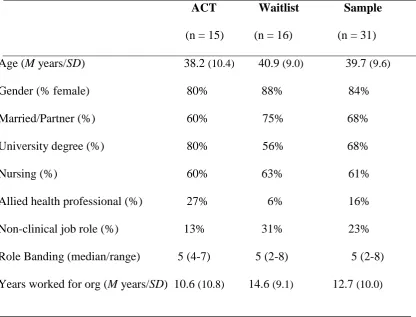
variable between the ACT and control groups (see Table 1 for more detailed sample
To assess the degree of psychological distress in the sample, each participant’s
baseline caseness score was calculated on the general health questionnaire (GHQ-12). Using
the caseness scoring method, a score of 4 or more on the GHQ-12 indicates a probable case
of minor psychiatric disorder (typically anxiety and/ or depression) in a working population
(e.g., Stride et al., 2007; Wall et al., 1997). Of the 15 participants in the ACT group who went
on to receive the intervention, 14 (93%) had a preintervention GHQ-12 caseness score of 4 or
above. Similarly, 13 of the 18 (72%) control group participants had a baseline GHQ-12 score
≥ 4. Thus, as anticipated, offering ACT within a clinical service for staff attracted a sample of
employees with an above average and clinically relevant level of psychological distress
Measures
General health questionnaire-12 (GHQ-12; Goldberg & Williams, 1988).
This 12-item scale is one of the most widely used and validated measures of general
psychological distress, defined in terms of cognitions (e.g., worry), emotions (e.g., feeling
constantly under strain), and day-to-day functioning (e.g., feeling able to play a useful part in
things). The Likert scoring method was used for all main analyses (Goldberg et al., 1997).
This method assigns values of 0, 1, 2 and 3 to the GHQ’s four response options. Higher
scores indicate greater psychological distress. The GHQ-12 exhibited high internal
consistency in the current study: Cronbach alphas () were .91 at preintervention and = .92
at 3 months postintervention.
Acceptance and action questionnaire–II (AAQ-II;Bond et al. 2011).
The 7-item AAQ-II is a widely used measures of psychological flexibility in the ACT
literature. The scale captures a person’s (lack of) willingness to experience undesirable
psychological content (e.g., “I worry about not being able to control my worries and
feelings”); and the extent to which difficult thoughts and feelings are having an unhelpful
the scale was reverse scored, so that higher scores indicated greater psychological flexibility.
Alpha coefficients were = .84 at preintervention and = .88 at 3 months postintervention.
Five facet mindfulness questionnaire (FFMQ; Baer, Smith, Hopkins, Krietemeyer, & Toney,
2006).
This 39-item scale measures a combination of five mindfulness skill facets: observing (e.g.,
“When I’m walking, I deliberately notice the sensations of my body moving”); describing
(labelling with words; e.g., “I’m good at finding the words to describe my feelings”); acting
with awareness (e.g., “I find it difficult to stay focused on what’s happening in the present”);
nonjudging of experience (e.g., “I make judgments about whether my thoughts are good or
bad”); and nonreactivity to difficult inner experience (e.g., “When I have distressing thoughts
or images, I am able just to notice them without reacting”). In the current study, Cronbach
alphas for FFMQ total score were = .89 at preintervention and = .94 at 3 months
postintervention. A higher score indicates a greater degree of mindfulness.
Automatic thoughts questionnaire(ATQ; Hollon & Kendall, 1980).
The ATQ is a 30-item scale of negative (depressogenic) cognitive content (e.g., “I can’t get
things together”; “I’m a failure”). In its original form, the ATQ measures the frequency
(ATQ-F) of such thoughts, with a response scale ranging from 1 (not at all) to 5 (all the
time). ACT researchers extended the original scale to create a measure of believability in
negative thought content (ATQ-B; Zettle & Hayes, 1986). The ATQ-B uses the same set of
30 negative automatic thoughts, but respondents are asked to rate how strongly, if at all, they
believe the listed thoughts, when they occur (with a response scale ranging from 1 not at all
to 5 totally). The ATQ-B is used as a proxy measure of cognitive fusion (Hayes et al., 2006).
In the current sample, reliability coefficients for the ATQ-F were = .95 at preintervention
and = .98 at 3 months postintervention; ATQ-B = .94 at preintervention and = .97 at 3
ACT intervention
The one-day ACT workshop was already being routinely delivered by the organisation’s
in-house staff support service on frequent occasions, between 9am-5pm, to groups of between 8
and 12 participants. All of the workshops evaluated in this study were delivered by the same
in-house counsellor/ ACT therapist, who had extensive experience of delivering individual
and group psychotherapy. The therapist had previously attended training in an ACT for the
workplace by one of the programme’s originators, and received regular clinical supervision
throughout the study.
The content of the workshop was based on an ACT for the workplace training
approach described by Flaxman and Bond (2006; see also Flaxman & Bond, 2010a; Flaxman,
et al., 2013). The workshop sought to offer participants an integration of mindfulness and
values-based action skills. Participants were introduced to various techniques that were
designed to: (1) raise awareness of psychological barriers (such as “unhelpful” thoughts) to
engagement in personally valued action; (2) undermine the use of internal control efforts as a
way of managing unwanted thoughts and emotions; (3) raise awareness of the distinction
between strategies that work inside the skin/ outside the skin; (4) cultivate defusion through
mindfulness practices that involve noticing the process of thinking; and (5) help participants
clarify personal values that could be used as a meaningful guide to daily action. The trainer
made use of two of ACT’s well-known metaphors--passengers on the bus and the polygraph
metaphor (Hayes, Strosahl, & Wilson, 1999)--to help convey key messages and summarise
the approach. Towards the end of the workshop, participants were invited to reflect and share
within the group how they might transfer the learning, and further cultivate mindfulness and
valuing skills, in their daily lives.
Data were analyzed in two stages. First, we examined the effects of the ACT intervention on
employees’ general mental health (i.e., GHQ-12), psychological flexibility (AAQ-II),
mindfulness skills (FFMQ), and on the frequency (ATQ-F) and believability (ATQ-B) of
negative automatic thoughts across the 3 month evaluation period. These outcome analyses
were performed on an intent-to-treat (ITT) basis, following multiple imputation (MI) of
missing data (using SPSS version 22 multiple imputation procedure). All 35 participants who
had been allocated to condition were included in the ITT analyses. Results were pooled
across five imputations for each variable. Because SPSS reports pooled MI results for linear
regression but not ANCOVA, we present unstandardized regression coefficients for each
between-group comparison at 3 months postintervention, controlling for the relevant
preintervention scores.
Second, we computed a series of bootstrapped multiple mediation models using the
PROCESS macro and syntax for SPSS (Hayes, 2013; Preacher & Hayes, 2008).This
bootstrapped analysis was based on 5000 iterations, and was utilised to test for indirect
effects of the ACT intervention on employees’ mental health via ACT-consistent processes of
change (i.e., psychological flexibility, defusion, and/or mindfulness skills), above and beyond
any change in the frequency of negative automatic thinking.
Results
Participant attrition
As indicated in Figure 1, two participants allocated to the ACT group did not attend
the intervention. One other participant in the ACT group attended the workshop but failed to
return postintervention measures. In the control group, two participants did not return
postintervention measures. As a result, the completer sample comprised of 30 participants.
ITT outcome analyses
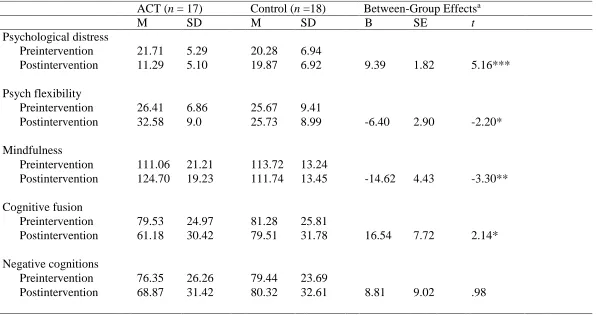
Table 2 displays pooled descriptive statistics for the ITT sample (N = 35), along with
between-group effects evident at 3 months postintervention (after controlling for
preintervention scores on the variable of interest). Consistent with our first hypothesis, the
ACT group reported a significantly lower level of psychological distress at 3 months
postintervention compared to the control group: B = 9.39, p < .001, d = 1.41.
Clinical significance
The clinical relevance of this improvement on the GHQ-12 was assessed using Jacobson et
al.’s two criteria for establishing clinically significant change (e.g., Jacobson, Roberts, Berns,
& McGlinchey,1999; Jacobson & Truax, 1991).At 3 months postintervention, 50% (7 out of
14) of the initially distressed participants who had attended the ACT intervention met the
criteria for reliable and clinically meaningful change, and were therefore defined as
“recovered”. The remaining 50% of ACT participants were classified as the “same”. In
contrast, none of the initially distressed control group participants exhibited clinically
significant improvement across the same 3 month assessment period. One participant in the
control group reported a significant increase on the GHQ-12 across the study period, and was
classified as “reliably deteriorated”.
The control group participants subsequently received the intervention following three
months on the waiting list. Three months after receiving the same ACT intervention, 9 out of
the 13 initially distressed participants (69%) who had been on the waiting list met the criteria
for clinically significant change on the GHQ-12, and were classified as recovered. The
remaining 4 participants were classified as the same.
Effects of ACT on psychological flexibility (AAQ-II), mindfulness (FFMQ), defusion
(ATQ-B), and frequency of negative automatic thoughts (ATQ-F).
The effects of ACT on the potential process of change variables were assessed in the ITT
had significantly higher levels of psychological flexibility (B = -6.40, p = .03), mindfulness
skills (B = -14.62, p = .001), and exhibited less fusion with negative cognitions (B = 16.54, p
= .04).In contrast, the ACT workshop did not result in a statistically significant reduction in
the frequency of negative automatic thoughts (B = 8.81, ns). The same pattern of results was
found in the ITT and the completer data, suggesting that participant drop-out had little impact
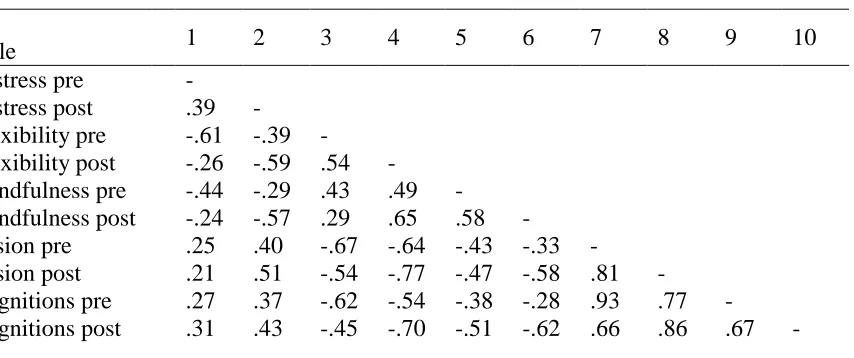
on study findings. Table 3 displays the correlations between the study variables.
Bootstrapped mediation analyses
To test the hypothesis that ACT operates primarily by altering the function of difficult
thoughts and feelings, and not by altering their form or frequency, we constructed three
bootstrapped multiple mediator models. In these models we tested for indirect effects of the
ACT workshop on employees’ mental health (i.e., pre to post change on the GHQ-12)
through each of the ACT-consistent processes, while controlling for any change in the
frequency of negative cognitions (i.e., the ATQ-F).
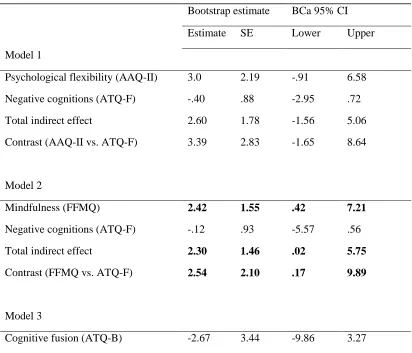
Table 4 summarises the results. Only one of the three models showed statistically
significant total and specific indirect effects. There was a specific indirect effect of the ACT
intervention on the GHQ-12 via an increase in employees’ mindfulness skills from pre to
postintervention: estimate = 2.42, BCa 95% [CI .42, 7.21]. In addition, there was a significant
contrast comparing the relative influence of change in mindfulness skills and change in the
frequency of negative cognitions: estimate = 2.54, BCa 95% [CI .17, 9.89]. This latter finding
suggests that ACT’s effect on employees’ mental health via an increase in mindfulness was
significantly larger than the effect occurring through a reduction in the frequency of negative
thoughts.
Given that mindfulness was found to be the most influential mediator of GHQ-12
change, we explored whether the ACT workshop was having a particularly strong effect on a
the FFMQ’s observing and nonreactivity subscales. In addition, at 3 months postintervention
(while controlling for preintervention scores on each facet), the ACT group had significantly
higher scores than the control group on observing (B = -3.53, SE = 1.60, t = -2.21, p = .04)
and nonreactivity (B = -3.05, SE = 1.01, t = -3.01, p = .006). We therefore entered the
observing and nonreactivity facets together in a multiple mediator model alongside the
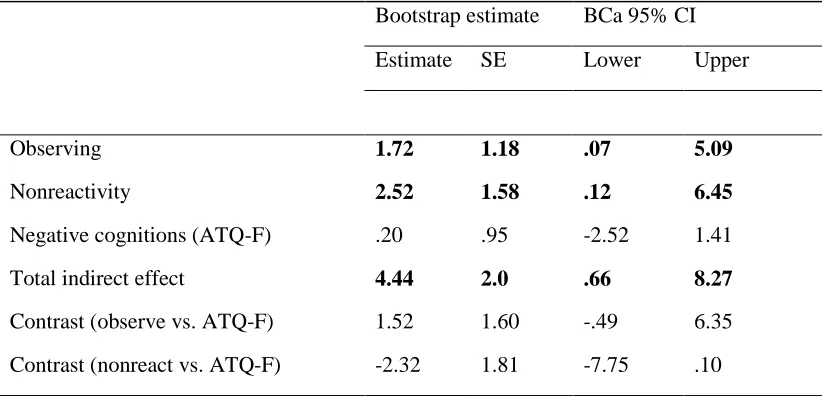
ATQ-F (see Table 5). This model’s total indirect effect was statistically significant. There were also
significant specific indirect effects of ACT on employees’ mental health via the increase in
observing (estimate = 1.72, BCa 95% CI .07, 5.09) and via the increase in nonreactivity
(estimate = 2.52, BCa 95% CI .12, 6.45). The specific indirect effect of ACT on the GHQ-12
via change in the frequency of negative thinking was not significant.
Discussion
The aims of this study were to: (1) assess the effects a one-day ACT workshop being
delivered in a routine practice setting for clinically distressed healthcare employees, and (2)
explore the specificity of ACT’s processes of change. Our results indicate that ACT was
effective in improving the general mental health of a sample of self-referred employees
across a three month evaluation period. Moreover, and despite the brevity of the intervention,
between one-half and two-thirds of initially distressed employees who attended the ACT
workshop exhibited clinically significant improvement on the GHQ-12. This is an
encouraging finding, given the prevalence (and costs) of common mental health problems,
and poor access-to-treatment rates, being found among working populations (Hardy et al.,
2003; Hilton et al., 2008).
Our outcome findings are consistent with previous studies of ACT in workplace
settings, which have also reported moderate to large improvements in mental health
(including on the GHQ-12) following similarly brief ACT-based training programmes (e.g.,
to this strand of research, by showing that similar effects are found when ACT is delivered
within a routine staff support setting, and not just when ACT is being offered to organisations
as part of standalone and externally orchestrated RCTs.
It is worth noting how our practice-based evaluation approach differs from previous
studies of ACT in the workplace. By offering ACT via a clinical support service for staff, we
attracted a sample of employees with a significantly higher average level of psychological
distress than has been observed in previous studies (Bond and Bunce, 2000; Brinkborg et al.,
2011. Flaxman and Bond (2010b) noted that around 50% of employees recruited to a similar
ACT worksite intervention offered as part of an RCT were presenting with clinically relevant
levels of psychological distress (compared to 90% in the present study). Thus, we believe that
offering this type of ACT programme within a workplace clinical service is a useful way of
attracting those employees who are most in need of psychotherapeutic assistance.
A second contribution of this study stems from our assessment of various potential
psychological processes of change when a one-day ACT workshop is offered in a staff
support setting. Consistent with ACT’s underlying theory, we found that the ACT workshop
resulted in significant improvements in psychological flexibility, defusion, and mindfulness,
but had less impact on the frequency with which distressed employees’ were experiencing
negative automatic thoughts. Moreover, when we allowed each of the ACT-consistent
processes to “compete” with change in the frequency of negative thinking in multiple
mediator models, ACT was found to be improving mental health primarily by strengthening
employees’ mindfulness skills (i.e., via pre to post change on the FFMQ). This finding
suggests that ACT, similar to other mindfulness-based interventions (MBIs), works in part by
modifying people’s relationship with negative or difficult psychological content.
The significant indirect effect through mindfulness also lends some support to those
underpinned by different theories and characterised by different techniques--are targeting
some fundamentally similar psychological processes (e.g., Baer, 2010; Hayes et al., 2011). In
terms of practicality, it is noteworthy that workplace ACT programmes are typically briefer
than some other workplace MBIs (e.g., the 8-week MBSR programme), and involve less
formal meditation practice. Thus, we tentatively suggest that ACT may offer an alternative
for some distressed employees who may benefit from enhancing their mindfulness skills, but
are unlikely (or unable) to engage in more lengthy meditation-based interventions. One useful
avenue for future research in this area would be to directly compare the effects of brief ACT
programmes with more elaborate MBIs in a workplace setting.
Further analyses revealed that two specific mindfulness skills seemed to be operating
as especially influential processes of change in the present study: an increased ability to
notice bodily sensations and sensory input across the five senses (i.e., the FFMQ’s observing
skill facet), and the development of a less reactive stance toward difficult thoughts and
feelings (i.e., the FFMQ’s nonreactivity skill facet). At a theoretical level, it is not difficult to
see the congruence between these two mindful skill facets and the set of mindfulness/
acceptance processes in ACT’s model of psychological flexibility (Hayes et al., 2004, 2006).
Specifically, the capacity to observe one’s direct, present moment experience mirrors ACT’s
“aware” processes (i.e., present moment awareness and self-as-context); while the
nonreactivity facet aligns with ACT’s “open” processes (i.e., defusion and acceptance; Hayes
et al., 2011; see also Baer et al., 2006).
From a more practical perspective, the finding that the ACT workshop was
influencing these two mindful skills supports the use of techniques that raise people’s
awareness of present moment physical sensations (e.g., by learning to shift one’s attention
into the body); as well as the various strategies ACT employs to help people notice that they
urges, or emotions, which can instead come to be viewed as a natural part of the human
condition (Flaxman et al., 2013).
When interpreting these findings, it is important to note several limitations in the
design of the current study. Our sample size is relatively small, and our study provides only a
pilot and snapshot evaluation of an ACT programme that was being delivered to larger
numbers of employees within the host organisation. Although we were able to make use of a
waiting list comparison group, participants were not randomly allocated to condition. This
may detract from the study’s internal validity. However, we found no significant differences
between the ACT and control groups on any of the study variables. Our method of
recruitment bore a close resemblance to how the staff support service operated, with
employees being allocated to ACT workshops until they were full, and others placed on a
waiting list and given dates for the next round of training in a few months’ time. Thus, while
the non-randomised design may reduce the study’s internal validity, we believe the study
exhibits strong external validity. By nesting the research within the routine clinical service,
we hope to have addressed calls for evaluations of psychological interventions under usual
service conditions (Barkham & Margison, 2007; Shadish et al., 2000).
The study design is further limited by the lack of an active control condition. As a
result, any non-specific intervention effects were not controlled for. It is possible that the
improvement in mental health in the ACT condition was partly attributable to feelings of
group support, the interpersonal warmth of the therapist, or participants’ own individual
characteristics (e.g., motivation to change). In addition, the same therapist delivered all the
ACT workshops being evaluated; thus, we cannot rule out the possibility that the therapist
had particular skills or characteristics that may have influenced the outcomes.
Because the study focuses on only two assessment occasions, mediator and outcome
would need to show that hypothesised mediating variables are changing prior to change in the
outcome. Thus, future studies of ACT in the workplace would benefit from having additional
and repeated measurement occasions in the first few weeks following the workshop (cf. Arch,
Wolitsky-Taylor, Eifert, & Craske, 2012; Gloster et al., 2017; Hayes, Orsillo, & Roemer,
2010).
Another limitation is that we focused primarily on ACT’s mindfulness and acceptance
processes, and not on the values and committed action elements of the ACT model. Although
we included a general measure of psychological flexibility, we did not examine whether the
ACT workshop resulted in an increase in employees’ capacity to engage in values-based
behaviour. Recent research has demonstrated that values-based action can function as an
influential process of change during longer ACT treatments (Gloster et al., 2017). Hence,
future studies of ACT in the workplace may benefit from including measures of values-based
behavioural activation. Finally, we used a “proxy” measure to capture cognitive defusion
(operationalised as degree of belief in negative thought content). Although other ACT
researchers have used the ATQ-B for the same purpose (see Hayes et al., 2006 for a review),
it would be useful to assess the impact of this type of ACT-based training on more recently
developed measures of defusion (e.g., Gillanders et al., 2014).
Despite these methodological limitations, the present study provides some preliminary
practice-based evidence that a brief ACT intervention can be effective in improving the
mental health of distressed healthcare employees. It is encouraging that, when evaluated
within a more routine clinical (staff support) service, ACT’s beneficial influence on
employees’ mental health was found to be equivalent to that reported in previous worksite
RCTs. In addition, we found some support for the notion that ACT’s effects on mental health
are transmitted (at least in part) via mindfulness and acceptance processes, and not via change
encourage other researchers to conduct evaluations of ACT-based interventions as they are
being delivered in real-world practice settings.
References
Arch, J. J., Wolitsky-Taylor, K., Eifert, G. E., & Craske, M. G. (2012). Longitudinal
treatment mediation of traditional cognitive behavioral therapy and acceptance and
commitment therapy for anxiety disorders. Behaviour Research and Therapy, 50,
469-478. doi: 10.1016/j.brat.2012.04.007.
A-Tjak, J. G., Davis, M. L., Morina, N., Powers, M. B., Smits, J. A., & Emmelkamp P. M.,
(2015). A meta-analysis of the efficacy of acceptance and commitment therapy for
clinically relevant mental and physical health problems. Psychotherapy and
Psychosomatics, 84(30), 30-36. doi: 10.1159/000365764
Baer, R. A. (Ed.) (2010). Assessing mindfulness and acceptance processes in clients:
Illuminating the theory and practice of change. Oakland, CA: New Harbinger.
Baer, R. A., Smith, G. T., Hopkins, J., Krietemeyer, J., & Toney, L. (2006). Using self-report
assessment methods to explore facets of mindfulness. Assessment, 13, 27-45. doi:
10.1177/1073191105283504
Baer, R. A., Smith, G. T., Lykins, E., Button, D., Krietemeyer, J., & Sauer, S. (2008).
Construct validity of the five facet mindfulness questionnaire in meditating and
non-meditating samples. Assessment, 15, 329-342. doi: 10.1177/1073191107313003
Barkham, M., & Margison, F. (2007). Practice-based evidence as a complement to
evidence-based practice: From dichotomy to chiasmus. In C. Freeman & M. Power (Eds.),
Handbook of evidence-based psychotherapies (pp. 443–476). Chichester: Wiley.
Barkham, M. & Mellor-Clark, J. (2000). Rigour and relevance: practice-based evidence in the
and Psychological Therapies: Research and Applications (pp. 127–144). London:
Routledge.
Barkham, M. & Mellor-Clark, J. (2003). Bridging evidence-based practice and practice-based
evidence: developing a rigorous and relevant knowledge for the psychological
therapies. Clinical Psychology and Psychotherapy, 10, 319–327. doi:
10.1002/cpp.379
Barkham, M., Stiles, W. B., Connell, J., Twigg, E., Leach, C., Lucock, M., et al. (2008).
Effects of psychological therapies in randomized trials and practice-based studies.
British Journal of Clinical Psychology, 47, 397–415.
doi:10.1348/014466508X311713
Bond, F. W., & Bunce, D. (2000). Mediators of change in emotion-focused and
problem-focused worksite stress management interventions. Journal of Occupational Health
Psychology, 5, 156-163.
Bond, F. W., Hayes, S. C., Baer, R. A., Carpenter, K. M., Guenole, N., Orcutt, H. K., Waltz,
T., & Zettle, R. D. (2011). Preliminary psychometric properties of the Acceptance and
Action Questionnaire – II: A revised measure of psychological inflexibility and
experiential avoidance. Behavior Therapy, 42, 676–688. doi:
10.1016/j.beth.2011.03.007
Borkovec, T. D., Echemendia, R. J., Ragusea, S. A., & Ruiz, M. (2001). The Pennsylvania
practice research network and future possibilities for clinically meaningful and
scientifically rigorous psychotherapy effectiveness research. Clinical Psychology:
Science and Practice, 8, 155–167. doi: 10.1093/clipsy.8.2.155
Brinkborg, H., Michanek, J., Hesser, H., & Berglund, G. (2011). Acceptance and
controlled trial. Behaviour Research and Therapy, 49, 389-398. doi:
10.1016/j.brat.2011.03.009
Bunce, D. (1997). What factors are associated with the outcome of individual-focused
worksite stress management interventions? Journal of Occupational and
Organizational Psychology, 70, 1-17. doi: 10.1111/j.2044-8325.1997.tb00627.x
Bunce, D., & Stephenson, K. (2000). Statistical considerations in the interpretation of
research on occupational stress management interventions. Work & Stress, 14,
197-212. doi: 10.1080/02678370010016126
Cahill, J. L., Barkham, M., & Stiles, W. B. (2010). Systematic review of practice-based
research on psychological therapies in routine clinic settings. British Journal of
Clinical Psychology, 49(4), 421-453. doi: 10.1348/014466509X470789.
Clegg, A. (2001). Occupational stress in nursing: a review of the literature. Journal of
Nursing Management, 9, 101-106. doi: 10.1046/j.1365-2834.2001.00216.x
Flaxman, P. E., & Bond, F. W. (2006). Acceptance and commitment therapy in the
workplace. In R. A. Baer (Ed.), Mindfulness-based treatment approaches (pp.
377-402). San Diego, CA: Elsevier.
Flaxman, P. E., & Bond, F. W. (2010a). Acceptance and commitment training: Promoting
psychological flexibility in the workplace. In R. A. Baer (Ed.), Assessing mindfulness
and acceptance processes in clients: Illuminating the theory and practice of change
(pp. 281-308) Oakland, CA: New Harbinger.
Flaxman, P. E., & Bond, F. W. (2010b). Worksite stress management training: Moderated
effects and clinical significance. Journal of Occupational Health Psychology, 15,
Flaxman, P. E., & Bond, F. W. (2010c). A randomised worksite comparison of acceptance
and commitment therapy and stress inoculation training. Behaviour Research and
Therapy, 48, 816-820. doi: 10.1016/j.brat.2010.05.004
Flaxman, P. E., Bond, F. W., & Livheim, F. (2013). The mindful and effective employee: An
acceptance and commitment therapy training manual for improving well-being and
performance. Oakland, CA: New Harbinger.
Frögéli, E., Djordjevic, A., Rudman, A., Livheim, F., & Gustavsson, P. (2015). A randomized
controlled pilot trial of acceptance and commitment therapy (ACT) for preventing
stress-related ill-health among future nurses. Anxiety, Stress and Coping,29(2),
202-218. doi: 10.1080/10615806.2015
Gillanders, D., Bolderston, H., Bond, F. W., Dempster, M., Flaxman, P. E., Campbell, L.,
Kerr, S., Tansey, L., Noel, P., Ferenbach, C., Masley, S., Roach, L., Lloyd, J., May,
L., Clarke, S., & Remington, B. (2014). The development and initial validation of
The Cognitive Fusion Questionnaire. Behavior Therapy, 45(1), 83-101. doi:
10.1016/j.beth.2013.09.001.
Gloster, A. T., Klotsche, J., Ciarrochi, J., Eifert, G., Sonntag, R., Wittchen, H-U., & Hoyer, J.
(2017). Increasing valued behaviors precedes reduction in suffering: Findings from a
randomized controlled trial using ACT. Behaviour Research and Therapy, 91, 64-71.
doi: 10.1016/j.brat.2017.01.013
Goldberg, D.P., Gater, R., Sartorius, N., Ustun, T.B., Piccinelli, M., Gureje, O., & Rutter, C.
(1997). The validity of two versions of the GHQ in the WHO study of mental illness
in general health care. Psychological Medicine, 27, 191-197. doi:
10.1017/s0033291796004242
Graham, C. D., Gouick, J., Krahe, C., & Gillanders, D. (2016). A systematic review of the
use of Acceptance and Commitment Therapy (ACT) in chronic disease and long-term
conditions. Clinical Psychology Review, 46, 46-58. doi: 10.1016/j.cpr.2016.04.009.
Hardy, G. E., Woods, D., & Wall, T. D. (2003). The impact of psychological distress on
absence from work. Journal of Applied Psychology, 88, 306-314. doi:
10.1037/0021-9010.88.2.306
Hayes, A. F. (2013). Introduction to mediation, moderation, and conditional process
analysis. New York: The Guilford Press.
Hayes, S. A., Orsillo, S. M., & Roemer, L. (2010). Changes in proposed mechanisms of
action during an acceptance-based behavior therapy for generalized anxiety disorder.
Behaviour Research and Therapy, 48, 238-245. doi: 10.1016/j.brat.2009.11.006
Hayes, S. C., Luoma, J., Bond, F., Masuda, A., and Lillis, J. (2006). Acceptance and
Commitment Therapy: Model, processes, and outcomes. Behaviour Research and
Therapy, 44, 1-25. doi: 10.1016/j.brat.2005.06.006
Hayes, S. C., Strosahl, K. D., Bunting, K., Twohig, M., & Wilson, K. (2004). What is
acceptance and commitment therapy? In S. C. Hayes & K. D. Strosahl (Eds.), A
practical guide to acceptance and commitment therapy. New York: Springer.
Hayes, S. C., Strosahl, K., & Wilson, K. G. (1999). Acceptance and commitment therapy: An
experiential approach to behavior change. New York: Guilford Press.
Hayes, S. C., Villatte, M., Levin, M. & Hildebrandt, M. (2011). Open, aware, and active:
Contextual approaches as an emerging trend in the behavioral and cognitive therapies.
Annual Review of Clinical Psychology, 7,141-168. doi:
Health and Safety Executive (HSE) (2016). Work-related stress, anxiety and depression
statistics in Great Britain 2016. Retrieved from
http://www.hse.gov.uk/statistics/causdis/stress/stress.pdf
Hilton, M. F., Whiteford, H. A., Sheridan, J. S., Cleary, C. M., Chant, D. C., Wang, P. S., &
Kessler, R. C. (2008). The prevalence of psychological distress in employees and
associated occupational risk factors. Journal of Occupational and Environmental
Medicine, 50, 746-757. doi: 10.1097/jom.0b013e31817e9171
Hollon, S.D., & Kendall, P.C. (1980). Cognitive self-statements in depression: Development
of an automatic thoughts questionnaire. Cognitive Therapy and Research, 4, 385-395.
doi: 10.1007/bf01178214
Jacobson, N. S., Roberts, L. J., Berns, S. B., & McGlinchey, J. B. (1999). Methods for
defining and determining the clinical significance of treatment effects: Description,
application and alternatives. Journal of Consulting and Clinical Psychology, 3,
300-307. doi: 10.1037//0022-006x.67.3.300
Jacobson, P., & Truax, N. S. (1991). Clinical significance: A statistical approach to defining
meaningful change in psychotherapy research. Journal of Consulting and Clinical
Psychology, 59, 12-19. doi: 10.1037//0022-006x.59.1.12
Kerr, R., McHugh, M., & McCrory, M. (2009). HSE management standards and
stress-related work outcomes. Occupational Medicine, 59, 574-579. doi:
10.1093/occmed/kqp146
Kessler, R. C., Merikangas, K. R., & Wang, P. S. (2008). The prevalence and correlates of
workplace depression in the National Comorbidity Survey Replication. Journal of
Occupational & Environmental Medicine, 50, 381-390. doi:
Lloyd, J., Bond, F. W., & Flaxman, P. E. (2013). The value of psychological flexibility:
Examining psychological mechanisms underpinning a cognitive behavioural therapy
intervention for burnout. Work & Stress, 27(2), 181-199. doi:
10.1080/02678373.2013.782157
McConachie, D. A. J., McKenzie, K., Morris, P. G., & Walley, R. M. (2014). Acceptance and
mindfulness-based stress management for support staff caring for individuals with
intellectual disabilities. Research in Developmental Disabilities, 35, 1216-1227.
https://doi.org/10.1016/j.ridd.2014.03.005
Meichenbaum, D. (1985). Stress inoculation training. New York: Pergamon.
Murphy, L. R. (1996). Stress management in work settings: A critical review. American
Journal of Health Promotion, 11, 112-135. doi: 10.4278/0890-1171-11.2.112
Öst, L. (2008). Efficacy of the third wave of behavioral therapies: A systematic review and
meta-analysis. Behaviour Research and Therapy, 46(3), 296-321.
doi: 10.1016/j.brat.2007.12.005
Öst, L. (2014). The efficacy of Acceptance and Commitment Therapy: An updated
systematic review and meta-analysis. Behaviour Research and Therapy, 61, 105-121.
doi: 10.1016/j.brat.2014.07.018
Powers, M. B., Vörding, M. & Emmelkamp, P. M. G. (2009). Acceptance and commitment
therapy: A meta-analytic review. Psychotherapy and Psychosomatics, 8, 73-80.
doi: 10.1159/000190790
Preacher, K. J., & Hayes, A. F. (2008). Asymptotic and resampling strategies for assessing
and comparing indirect effects in multiple-mediator models. Behaviour Research
Methods, 40, 879-91. doi: 10.3758/brm.40.3.879
Pull, C. B. (2008). Current empirical status of acceptance and commitment therapy. Current
Richardson, K. M., & Rothstein, H. R. (2008). Effects of occupational stress management
intervention programs: a meta-analysis. Journal of Occupational Health Psychology,
13, 69-93. doi: 10.1037/1076-8998.13.1.69
Ruiz, F. J. (2010). A review of Acceptance and Commitment Therapy (ACT) empirical
evidence: Correlational, experimental psychopathology, component and outcome
studies. International Journal of Psychology and Psychological Therapy, 10,
125-162.
Seymour, L., & Grove, B. (2005). Workplace interventions for people with common mental
health problems: Evidence review and recommendations. London: British
Occupational Health Research Foundation.
Shadish, W. R., Navarro, A. M., Matt, G. E., & Phillips, G. (2000). The effects of
psychological therapies under clinically representative conditions: A meta-analysis.
Psychological Bulletin, 126, 512–529.
Stride, C., Wall, T. D., & Catley, N. (2007). Measures of job satisfaction, organisational
commitment, mental health and job-related well-being: A benchmarking manual.
Chichester: Wiley.
Swain, J., Hancock, K., Hainsworth, C., & Bowman, J. (2013). Acceptance and commitment
therapy in the treatment of anxiety: a systematic review. Clinical Psychology Review,
33(8), 965-978. doi:10.1016/j.cpr.2013.07.002
van der Klink, J. J. L., Blonk, R. W. B., Schene, A. H., & van Dijk, F. J. H. (2001). The
benefits of interventions for work-related stress. American Journal of Public Health,
91, 270-276. doi: 10.2105/ajph.91.2.270
Veehof, M. M., Oskam, M-J., Schreurs, K. M. G., & Bohlmeijer, E. T. (2011).
Acceptance-based interventions for the treatment of chronic pain: A systematic review and
Vøllestad, J., Nielsen, M. B., & Nielsen, G. H. (2012). Mindfulness- and acceptance-based
interventions for anxiety disorders: a systematic review and meta-analysis. British
Journal of Clinical Psychology, 51(3), 239-60. doi: 10.1111/j.2044-8260.2011.02024
Wall, T. D., Bolden, R. I., Borrill, C. S., Carter, A. J., Golya, D. A., Hardy, G. E., Haynes, C.
E., Rick, J. E., Shapiro, D. A., & West, M. A. (1997). Minor psychiatric disorder in
NHS trust staff: occupational and gender differences. The British Journal of
Psychiatry, 171(6), 519-523.
Zettle, R.D., & Hayes, S.C. (1986). Dysfunctional control by client verbal behaviour: The
Figure 1. Participant Flow
Self-referrals for ACT workshop during study period (n = 50)
Declined to participate (n = 15)
Completer sample (n = 14)
ITT sample (n = 17)
Lost to follow-up (did not return 3 month postintervention measures; n = 3) Allocated to ACT intervention (n = 17) Received intervention (n = 15)
Did not receive intervention (no reasons given; n = 2)
Lost to follow-up (did not return 3 month postintervention measures; n = 2)
Allocated to waiting list control group (n = 18)
Completer sample (n = 16)
ITT sample (n = 18)
Allocation
Follow-Up
Non-random allocation (n = 35)
Enrollment
Analysis
Received intervention (n = 16)
Table 1
Completer Sample Baseline (Preintervention) Characteristics
ACT Waitlist Sample
(n = 15) (n = 16) (n = 31)
Age (M years/SD) 38.2 (10.4) 40.9 (9.0) 39.7 (9.6)
Gender (% female) 80% 88% 84%
Married/Partner (%) 60% 75% 68%
University degree (%) 80% 56% 68%
Nursing (%) 60% 63% 61%
Allied health professional (%) 27% 6% 16%
Non-clinical job role (%) 13% 31% 23%
Role Banding (median/range) 5 (4-7) 5 (2-8) 5 (2-8)
Years worked for org (M years/SD) 10.6 (10.8) 14.6 (9.1) 12.7 (10.0)
Table 2
Intention-to-Treat (ITT) Sample Means, Standard Deviations, and Between-Group Effects at Three Months Postintervention
Note.N = 35. Means and SDs were pooled across five imputations. aPooled (unstandardized) regression coefficients (B) testing differences between
the ACT and control group at 3 months postintervention, while controlling for preintervention scores. ACT (n = 17) Control (n =18) Between-Group Effectsa
M SD M SD B SE t
Psychological distress
Preintervention 21.71 5.29 20.28 6.94
Postintervention 11.29 5.10 19.87 6.92 9.39 1.82 5.16***
Psych flexibility
Preintervention 26.41 6.86 25.67 9.41
Postintervention 32.58 9.0 25.73 8.99 -6.40 2.90 -2.20*
Mindfulness
Preintervention 111.06 21.21 113.72 13.24
Postintervention 124.70 19.23 111.74 13.45 -14.62 4.43 -3.30**
Cognitive fusion
Preintervention 79.53 24.97 81.28 25.81
Postintervention 61.18 30.42 79.51 31.78 16.54 7.72 2.14*
Negative cognitions
Preintervention 76.35 26.26 79.44 23.69
Postintervention 68.87 31.42 80.32 32.61 8.81 9.02 .98
Table 3
Bivariate Correlations Between Study Variables
Variable 1 2 3 4 5 6 7 8 9 10 1. Distress pre -
2. Distress post .39 - 3. Flexibility pre -.61 -.39 -
4. Flexibility post -.26 -.59 .54 - 5. Mindfulness pre -.44 -.29 .43 .49 -
6. Mindfulness post -.24 -.57 .29 .65 .58 - 7. Fusion pre .25 .40 -.67 -.64 -.43 -.33 -
8. Fusion post .21 .51 -.54 -.77 -.47 -.58 .81 - 9. Cognitions pre .27 .37 -.62 -.54 -.38 -.28 .93 .77 -
10.Cognitions post .31 .43 -.45 -.70 -.51 -.62 .66 .86 .67 -
Note. Based on ITT data (N = 35). Correlations were pooled across five imputations. Distress = psychological distress (GHQ-12); flexibility =
psychological flexibility (AAQ-II); mindfulness (FFMQ total score); fusion = cognitive fusion (ATQ-B); cognitions = frequency of negative
Table 4
Bootstrapped Multiple Mediator Models Testing Indirect Effects of ACT on Employees’
Mental Health (GHQ-12)
Bootstrap estimate BCa 95% CI
Estimate SE Lower Upper
Model 1
Psychological flexibility (AAQ-II) 3.0 2.19 -.91 6.58
Negative cognitions (ATQ-F) -.40 .88 -2.95 .72
Total indirect effect 2.60 1.78 -1.56 5.06
Contrast (AAQ-II vs. ATQ-F) 3.39 2.83 -1.65 8.64
Model 2
Mindfulness (FFMQ) 2.42 1.55 .42 7.21
Negative cognitions (ATQ-F) -.12 .93 -5.57 .56
Total indirect effect 2.30 1.46 .02 5.75
Contrast (FFMQ vs. ATQ-F) 2.54 2.10 .17 9.89
Model 3
Negative cognitions (ATQ-F) 1.77 2.97 -1.89 9.15
Total indirect effect -.90 1.39 -3.76 2.02
Contrast (ATQ-B vs. ATQ-F) -4.43 6.28 -18.50 4.51
Note. Preintervention scores on each variable were entered as covariates in each model.
BCa = bias corrected and accelerated confidence intervals. Results based on 5000 bootstrap
Table 5
Bootstrapped Multiple Mediator Model Testing Indirect Effects of ACT on Employees’
Mental Health (GHQ-12) via Observing and Nonreactivity
Bootstrap estimate BCa 95% CI
Estimate SE Lower Upper
Observing 1.72 1.18 .07 5.09
Nonreactivity 2.52 1.58 .12 6.45
Negative cognitions (ATQ-F) .20 .95 -2.52 1.41
Total indirect effect 4.44 2.0 .66 8.27
Contrast (observe vs. ATQ-F) 1.52 1.60 -.49 6.35
Contrast (nonreact vs. ATQ-F) -2.32 1.81 -7.75 .10
Note. Preintervention scores on each variable were entered as covariates in each model.
BCa = bias corrected and accelerated confidence intervals. Results based on 5000 bootstrap