International Journal of Innovative Technology and Exploring Engineering (IJITEE) ISSN: 2278-3075, Volume-9 Issue-2, December 2019
Is It Feasible to Include Ready-Made Garments
Sector in Badajoz Zone under Science and
Technology Park of Extremadura, Spain?
Samsul Alam, Gouranga Chandra Debnath, Md. Ariful Islam
Abstract: The Ready-Made Garments (RMG) might have a remarkable contribution to a country’s economy once it possesses an understandable application of technology and innovation in its style attractiveness, healthier aspects of body and its environmental settings. The primary purpose of this study is to explore the relevance of including RMG sector in the Science and Technology Park of Extremadura (PCTEx) in Badajoz province of Spain. For this purpose, a case study based on face to face interview method is followed where primary data was collected through an unstructured open ended questionnaire. The author’s observation in this case is also used. The findings of this qualitative study support that it is relevant to include the sector in this particular zone. It concludes with the statement that PCTEx has the opportunity to include the sector in this area which can ensure greater impact in social and financial gain in this region. The findings also support that if this proposal is implemented and is supervised by the PCTEx authority in Badajoz, with the influence of this non-government association, it will flourish with its superior performance and in turn will contribute to the development of the region by creating employment opportunity for a number of unemployed people especially for women as well as to the country economy as a whole. The availability of low cost human resources especially high tech infrastructure and industry-friendly environment all work behind the motivation of the sector inclusion in this region.
Keywords: Badajoz, ready-made garments, science and technology park of Extremadura, Spain.
I. INTRODUCTION
RMG sector is ready-made finished textile merchandise of the vesture trade. It’s not custom tailored rather it’s generalized in nature. They’re made of various materials and yarns. Their characteristics deem in the fibers used for production method. The primary RMG mill was established in 1831 in the city of New York. Throughout the civil war of United States of America (USA), the necessity for ready-made uniforms helped the sector grow in USA [15]. The sectors of textiles and clothing are necessary in economic and social terms, in short by providing financial gain and job notably for girls as well as in the long-term by providing countries the chance for achieving sustained economic development [7]. Many scholars have researched on RMG sector and revealed its impacts on economic system [11].
Revised Manuscript Received on December 05, 2019.
* Correspondence Author
Samsul Alam*, Senior Lecturer (MIS), Daffodil International University, Dhaka, Bangladesh, Email: [email protected]
Gouranga Chandra Debnath, PhD, Associate Professor, Daffodil International University, Dhaka, Bangladesh, Email:
Md. Ariful Islam, Assistant Professor, University of Dhaka, Dhaka, Bangladesh, Email: [email protected]
According to statistical data of 2002, textile and attire producing accounted for €380 billion in international exports, representing 6% of world trade wherever 8% of them were factory-made product.
Close to the end of the 19th century, there have been changes in social group views towards RMG. They were now not seen as just for the lower categories however, additionally it had been seen for the middle categories of people. Within the late 1860s, USA manufactured 25% RMG products among the textile goods which had risen to 60% by 1890. By 1951, USA produced 90% clothing inside its territory that was more than necessary. Throughout a similar time, 2/3 of clothes sold in France were RMG [15]. At the beginning of 21st century, the most important commercialism and mercantilism countries were developed countries together with the European Union (EU), USA, Canada and Japan. The Multi Fibre Arrangement (MFA) dominated the world in exchange of textiles and garments from 1974 through 2004, imposing quotas on the developing countries in export to developed countries that ended on 1st January of 2005. At the Uruguay round of Agreement on Tariffs and Trade (GATT), it had been set to bring the textile trade beneath the jurisdiction of the World Trade Organization (WTO) that is beneficiary arrangement for European and different developed countries to this sector expansion [16].
While China has started losing their attractiveness in, a number of Chief Purchasing Officers of USA and Europe moved and scrutinized their sourcing decision toward Bangladeshi RMG sector which has achieved a substantial development in this sector for this country [1]. Bangladesh experienced its worst ever industrial disaster on 24th April 2013 after the collapse of Rana Plaza building leading to death of more than 1,100 people. After that devastating disaster, numerous pledges were made for the improvement of factory standards however, during the restructuring process; improvements were seen in a very slow pace leaving notable challenges like ensuring standards of labor, infrastructural development, ease of doing business etc. [4]. Bangladeshi RMG sector has experienced a formidable challenge for the liberation of textiles and vesture trade. Relying heavily on foreign supplies, turbulent economy, political instability, high rate of interest, lack of incentives, lack of information, port downside and trade are some of the inner issues of this sector. However, in Asian country, RMG growth is overwhelming. There were solely 5 RMG companies in 1971 that grew enormously and reached to 12,000 between 2005 and 2012 with a rate of 6.77% growth. This sector contributes 17.9% to Gross Domestic Product (GDP) throughout 2006-2012.
It is interesting to see the contribution of Bangladeshi women folks in RMG sector to
make it healthy and handsome
Park of Extremadura, Spain?
Traditionally they are excluded from taking part in outside jobs for various superstitious reasons. The rise of this sector in this country since 1970s has opened up scopes for them to participate in jobs outside home for wages in one hand and in the other hand it has increased emphasis on education for girls’ education and campaigns to women’s health improvement and reduced fertility rate. Thus their social exclusion has reduced significantly contributing to a great impact on their lives. They have more economic independence, social standing, respect as well as voice than earlier time although no change of exploitation and harassment. To keep up with positive changes in women’ lives, stakeholders need focusing on preparing the sector not only more humane rather more sustainable for them. Data of 2012 shows female participation of 83% in Bangladeshi RMG sector. From the very starting phase, Bangladeshi poor women have been playing major role in this sector prosperity [10] - [11]. According to Bangladesh Garment Manufacturers and Exporters Association (BGMEA), in 2013, about 2 million female workers were directly involved with this sector where more than 10 million people were indirectly involved. Averagely, most of the export earnings of Bangladesh (about 80% of total exports) come from this sector [8]. Despite sturdy economic development and creation of huge job opportunities, employment condition is still backward in nature for this sector. They work for as little as €50 per month whereas the cost of living is higher that should be at least €133 in Bangladesh. However, as low-cost labor is one in all the most factors behind the boost of this sector, too high wage could damage it severely [9].
Contribution of textile sector in Pakistan economy found to be 46% share in manufacturing, 54% in export earnings, 8.5% in Gross Domestic Product (GDP) and 38% in employment creation [12]. Every year about 3.25 million tons of textiles and clothing product transact through the United Kingdom (UK) – or so about 55kg for each person. Of these transactions, almost 1/2 is textile merchandise that is imported, ¼ are intermediate products and the remaining is fiber which are produced in UK or imported. About 2/3 of imported fibers, yarns and fabrics are ready-made. Every year, the country exports about 1.15 million tons of textiles and clothing comprising of fibers, fabric and some ready-made products – especially clothing and carpets. UK’s 1/5 annual textile and clothing merchandise consumption is factory-made within its territory. Consumers spent around €1,130 per person each year purchasing about 2.15 million tons (35kg per person) of which 1/8 is sent back for charities and the remaining is discarded. In 2004, this sector in UK employed about 182,000 people in 2004 [6].
In the earlier 5 decades, the European textile industry had been declining considerably due to the increasing international competition and relocation of manufacturing unit to countries with low income. Regarding product quality, stitching production and high-end fashion offer a mixed image. In case of high-end fashion, eco-labels and eco-friendly product considered as opportunities for niche market approach, not for mass markets because of high environmental and social standards lead to higher costs of production [2]. As the economic panorama was worsening, unemployment rate was rising, purchasing power was reducing, political uncertainty was rising in Spain, even though about 300 small manufacturers of textiles and clothing
companies shut down their businesses as well as other international companies shortened their presence in this country, consumers were likely to purchase clothing, both in fast, low-cost fashion or for the international brand names, as their savings for clothing expenditure was unlikely to enhance rushly [5]. Since the manufacture costs were so low in other countries, this sector has been disappearing day by day from the region. Though large expansion of RMG sector is seen in world economy, Spain rarely emphasizes on this sector though it has the potential to get advantage by allowing and giving investors opportunities and support.
Although, a number of studies seen in the field of RMG sector in developing countries and some are in developed countries, very few can be found on Spanish economy as the sector gets inferior importance by the policy makers. The Association of Science and Technology Parks of Spain (APTE) is spread throughout the nation, it has tremendous importance in economy that encourage developing, innovating and marketing techno-based products where textile and RMG industries are omitted. Due to demand of techno based RMG products and the need for innovation in the industry, there is the need of studying to find the feasibility of RMG inclusion in APTE. However, PCTEx is one of the parks of APTE, realizing the socio-economic condition of the region as well as the importance of techno-based RMG products as one of the authors reside in the particular province for research and study purpose having opportunity to observe and study the park at Badajoz; the researchers chose that particular arena (Badajoz) to find out the relevance of RMG inclusion at PCTEx.
This descriptive study is organized as firstly, the theoretical background in introduction section. Here, the motivation and scope are discussed. Then, the next section discusses the general and specific objectives consequently the contribution of the study, then the methodology used in the study described. The remaining parts describe the APTE and PCTEx briefly. In the fifth section, the relevance of including RMG sector in PCTEx is discussed. Furthermore, after data analysis, the final section focuses on the concluding remarks and the actions recommended for the target audience.
II. RESEARCHOBJECTIVEANDSIGNIFICANCE
No study found that is based on the proposal for including RMG sector in the Science and Technology Park in Spain. The researchers tend to show the relevance of adding this prominent sector in Badajoz region under PCTEx that will produce techno-based RMG products to meet the needs of the age by having opportunity to run their business profitably which can pursue technological innovation in its operation and thus contribute to the economy as a whole that is the primary objective. The specific objectives include: (i) giving guide to the established and emerging RMG companies from home and abroad having chance in doing business in the Badajoz province, (ii) creating employment opportunity especially for the women in the specified area, (iii) making wealth maximization by expanding the scopes of the PCTEx, (iv) bringing scopes for expanding business for RMG companies from home and abroad and creating opportunity to create innovation in RMG
products.
International Journal of Innovative Technology and Exploring Engineering (IJITEE) ISSN: 2278-3075, Volume-9 Issue-2, December 2019
PCTEx as well as The APTE will have the opportunity to enlarge their strategic plan of innovation. This study would be helpful in playing role by PCTEx, APTE, RMG company policy makers to the development of these particular areas as well as the country economy.
III. RESEARCHQUESTIONANDMETHODOLOGY
Based on the previous section, the researchers seek to find answer of some questions. Thus, the study seeks to answer the questions of whether or not - Is it feasible to include RMG sector in Badajoz province under PCTEx? And if included, how can this sector contribute to the park and the economy?
To answer these questions, the study followed a qualitative approach in the form of case study. The study is done based on data collected from primary source by interviewing the associates working in the association of PCTEx based on open ended unstructured questionnaire and observation. The primary data are collected in two phases, first by interviewing face to face and second, collecting filled in questionnaire through email. The secondary data are collected from the association website, different journal articles, working papers, internet, government & non-government sources. The study result is made based on the information gathered from primary and secondary source.
IV. BRIEFDESCRIPTIONOFAPTEANDPCTEX
APTE is a non-profit association where technology based companies are registered to conduct their business operations in support of the park authority. According to association website [13], the ins and outs of the association found are discussed in this section. The main objective of the association is to collaborate through empowerment and dissemination of science and technology parks, renew and diversify productive activity as well as technological and economic development. It is an important part of the Spanish system of science and technology company. The members of the APTE are science and technology parks located throughout Spain’s 17 different autonomous regions. The companies situated at the parks are the best reference of Spanish system of innovation. Different universities in Spain sponsored 24 of these parks where 46 Spanish universities collaborate with them. In 2015, these parks located 7,736 companies that billed for €24.427 million. These companies provide for employment opportunities to over 158,950 people, of which 31,243 are engaged in Research and Development (R&D). The diversity through autonomous regions, universities, state-owned and private companies converts the APTE in a network. The headquarters of APTE is the Technology Park of Andalusia (Malaga) that was created in 1989 by the first 6 managers of Spain. It is an affiliate member of the International Association of Science Parks and Areas of Innovation (IASP). Currently, it has 64 member parks scattered throughout the Spanish geography of which 48 are full members, 15 are affiliates that are under development and finally 1 member is collaborator. It had 500 member companies, 13,000 employees and 4,777 R&D employees with €1,064,000 turnovers in 1997 which reached to 6,452 companies, 151,562 employees and 30,968 R&D employees with turnover €22,327,000 in 2014. During 2014, the APTE have invested €1,112 million in R&D activities. The main sectors of the companies located in the parks are:
(i) Aeronautics and automotive - 2.6 %, (ii) Training and human resources - 3.8 %,
(iii) Information, computing & telecommunications - 22 %, (iv) Medicine and health - 6.2 %,
(v) Agriculture, feeding and biotechnology - 4.6 %, (vi) Electronics - 2.3 %,
(vii) Industries - 4.6 %,
(viii) Engineering, consultancy and advising - 14.8 %, (ix) Energy and environment - 4.1 %,
(x) Centers of companies - 1 %,
(xi) Technology centers and R&D - 43%.
The FUNDECYT-PCTEX, is the Spanish not for profit organization based in Extremadura State aiming at supporting and exploiting technology, innovation and advancement merged with FUNDECYT and PCTEx running from 1999. PCTEx, Badajoz zone is located at University of Extremadura, Badajoz campus, Spain founded in 1996. It’s a public company. Here, they developed new products and processes to be transferred to the market in collaboration with researchers of the University of Extremadura and other technological centers. PCTEx is a community where the interaction and transfer of knowledge between researchers and entrepreneurs, with a clear focus on innovation is enhanced. It works as the generator of wealth and employment in the region of Extremadura. Near 80 companies are registered in this park. These companies employ more than 1,200 workers. There aren´t any RMG company in PCTEx till now.
According to the article No. 6 of APTE statutes, the physical or legal entities, state-owned or private-owned companies interested in the promotion and the development of science and technology parks, are suitable to become members. APTE has two types of members one is full member and the other is affiliated member. The full members are active parks and the associated members are parks in project. The full member registration fee is €1,500 plus value added tax (TVA) to be paid only once. These members have to pay €3,446.59 plus TVA in two half yearly installments of €1,723.29. The Affiliated member’s fee is €1,723.29 plus TVA to be paid in two installments of €861.64. The association has achieved an important position in the science and technology system of Spain and in the process of new economy integration and the new society of knowledge. For this reason, APTE invite the companies and institutions with interest in the development of science and technology parks to join the APTE. R&D organizations, projected parks or business companies interested in developing science and technology parks that wish to become affiliate/associate members of the APTE require submitting a presentation of the project, together with the documents: (i) must be a suitable site for the park, (ii) name of the initiative, (iii) name of the promoters, (iv) articles of incorporation, if drawn up, (v) information about target sectors, (vi) information regarding links with the scientific sector and (vii) non confidential information related to the business plan and others.
Five actions need to be carried out in this project are: (i) tasks of knowledge transfer, (ii) tasks of company support, (iii) internationalization of business activities, (iv) control of project submitted to ministry of
Park of Extremadura, Spain?
excellence program. The objective of APTE Cooperation Program between Trading States and Technology Parks (COPIT) project is increasing the competitiveness and the business opportunities for companies located in technology parks and trading states by a cooperation program. The ministry of industry, tourism and trade, School for Industrial Organization (EOI), APTE, Spanish Coordinating Committee of Trading States (CEPE) and Spanish National Cyber Security Strategy (ENISA) participate in this program. Four actions need to be carried out in this project are: (i) cooperation between enterprises located in technology parks and trading states, (ii) trading states census and analysis, (iii) common services supply to trading states and (iv) new enterprises support.
V. RELEVANCEOFRMGINCLUSIONINPCTEX
In 2000, the world’s consumers spent around €0.92 trillion through purchasing clothes worldwide of which around 1/3 portion of sales occurred in Western Europe, 1/3 in North America and ¼ in Asia. Now a days, textiles and clothing represent around world exports of 7%. In 2000, production of this sector experienced around 26.5 million workforces globally. More than ¼ of production held in China that has its own rapid improving market and the largest world share. In case of clothing and textiles exporting, western countries are still vital exporters particularly in case of clothing Germany and Italy where USA in textiles. The sector’s output is increasing in volume although prices are dropping, as is employment, because of new technology and vertical integration that support enhanced productivity. The sector is freer than before after following the ending out of international quota agreements in 2005 that opened out new amenities and scopes for Spain in this sector though a number of agreements exist that distort the free-market e.g., subsidies from USA govt. for cotton farmers is one of them [6]. To gain competitive advantage in European textile and clothing industry, investment in R&D is needed vis-à-vis it’s required to have enough financial resources and skilled staffs. Thus, the cost of production is expected to decrease, quality of product needs to be improved and impact of environment should be improved [2].
The PCTEx currently has 64 member companies included in various sectors. It is located in 2 different provinces in Badajoz and Cáceres where Badajoz alone has 59 companies and the other one has 5 only. In collaboration with the International Association of Science Parks (IASP), the
network of technicians enhances cooperation among companies situated in countries like Brazil, China and Eastern Europe and Span. Brazil enjoys the best access to Latin American market where China offers great opportunities to Spanish companies and Eastern Europe is in the starting phase of collaboration with companies of Estonia, Latvia and Lithuania. APTE works conjointly with three organizations in each of these countries in order to promote cooperation. This program allows Spanish companies create international technology and transfer knowledge, develop new business and arrange trade agreements. APTE is considered as Knowledge Transfer Office (KTO) since 2004 and in consequence, it promotes and builds stronger relationship between R&D organizations and business entities. The KTO helps companies look for new technology and fulfills their demands by R&D to promote cooperation and thus to obtain fiscal benefits.
Ms. Belén Talavera, the interviewee, has been working for 10 years started her career in 2006 working for the foundation FUNDECYT scientific and technological park of
Extremadura then in 2009 for PCTEx to
FUNDECYT-PCTEx in 2013. She has completed degree in Industrial Engineering and diploma in Electronic Engineering. Her role in the park is to provide advance services for companies and research groups in the business development and innovation areas; foster the creation and development of technology based companies and technology transfer activities; support to new spin off companies of research centers; implementation of strategies and plans of advanced services to foster R&D as well as she participate in various European projects. In the filled in questionnaire, she mentioned that since the manufacture costs were so low in other countries, this sector disappears completely in the region. In the question of inclusion necessity, the interviewee’s opinion is that:
‘It could be a possibility, linked with two factors: (i) new designers in the region with very good ideas and with high potential of ready-made scalable products to the international markets and (ii) the generation of our mothers have engaged in sewing and textile industry from their childhood, so there is an experience and know-how in the sector.’
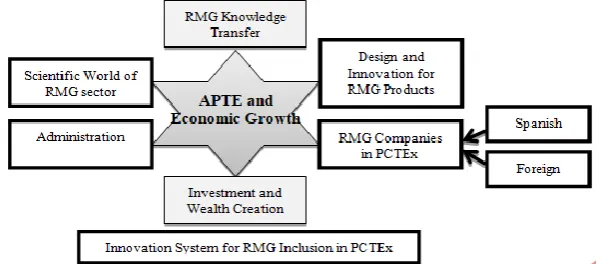
[image:4.595.152.460.610.742.2]The following figure (figure 1) shows the growth prospects of APTE and the economy by RMG sector inclusion:
International Journal of Innovative Technology and Exploring Engineering (IJITEE) ISSN: 2278-3075, Volume-9 Issue-2, December 2019
When the RMG company whether from Spain or from abroad are included in PCTEx, they might foster on innovative ideas in the design and manufacturing and in this way knowledge transfer occur in the scientific world of RMG sector. The proper administration of these companies may tend to further investment in this sector which results in wealth creation. All these procedures must foster the promotion of APTE and economic development of the country. Thus there are possibilities of gaining if RMG sector is included in PCTEx, Badajoz.
The availability of low cost manpower in Badajoz helps the RMG sector to make available the main factor of production that can instigate the concept of RMG inclusion in PCTEx. Again, PCTEx can ensure much capability to ensure proper product quality requiring the demand fulfillment of international consumers of the global market. The strong technology base in Spain has the promising power to develop the innovative garments in this area. The free trade opens up the market of collecting intermediate goods too which will in turn provide payoff by exporting the finished techno-based garments products in international market.
VI. DISCUSSIONANDDATAANALYSIS
The EU textile and clothing sectors’ main competitive challenges involve to be flexible, sustainable and competitive; adaptation to sector specific standards closely linked with other industries; difficulty in credit assessment and valuation of Euro. The difficulties in financing are linked to investment intensive textile sub-sectors and technical textiles field. In the last decade, this sector experienced fundamental restructuring and double growth of exports and since 2009 has been benefiting from full quota and license free markets. It has also focused on reorientation towards specializing in high end products and more technical and textiles apparel by emphasizing on more and more R&D activities which is referred to as ‘smart textiles’ that include an additional technical function such as baby romper suit with pulse measuring transmitter fibers [17].
From the report of Euromonitor International [6], it is found that the in case of buying decision, price is a vital factor where consumers search for value for the money side by side the best prices and deals. There are a number of companies providing a lot of discounts and promotions to stimulate demand in Spain. Companies are bound to apply new strategies to respond to buying habits of Spanish consumers. Successful companies generally adopt their own strategy to promote sales and achieve a good position. In 2012, many stores managers stated that their sales discount increased by 10% on an average. Nevertheless, discounting policies vary from products to products with trousers, jeans, t-shirts and women’s dresses having big discounted garments. Off-price retailers, retailers who sell products that are often premium at lower price points, on the internet are also spreading while until 2011, this included mainly international websites from 2012, the number of Spanish off-price retailers increased enormously. In the long-term, the situation is hard to sustain for companies. Indeed, consumers are spoiled by low prices and promotions and would have difficulty in accepting that they may have to purchase the same quality for a higher price. As a result, retailers and manufacturers may see their margins decrease.
Getting ready to face this situation, companies are changing their strategies and structures by customizing their offers, exclusive promotions and attentive communication, especially through the support of mobile devices. According to Commission of Telecommunications Market (CMT), clothing represents a 70% of the purchases, followed by shoes with 20% and leather accessories with 8%. According to the Spanish association of shopping centers, online fashion sales are expected to increase again. While imports registered a fall of 9% in the fashion industry, exports showed a record performance growing by nearly 9% in value in 2012 and reaching more than €10 billion. Despite Europe coping with 65% of Spanish exports, this market grew by just 7% in 2012. They are the markets of Asia and the US which present the fastest growth rates of more than 20% in value terms.
Mexico, Brazil, Morocco, United Arab Emirates (UAE), Russia, China, India and the USA are dynamic markets for Spanish apparel companies. Parallel to the increment of Spanish exports and the decrease in domestic sales goes the reduction of imports, especially from China. While this country still covers 47% of total import of fabrics and clothing, the importance of European countries, mainly Portugal, Romania and Turkey is rapidly increasing. Zara, Mango and Shana have been pursuing a global marketing strategy. Yet, behind these companies there are important numbers of medium-sized and even small businesses that are clearly oriented towards international markets. At the end of the review period, there were more than 3,000 regular exporters in the Spanish fashion industry. The positive effects of the internationalization strategy of Spanish manufacturers is expected to last in time due to the solid basis and reputation of Spanish brands overseas. Structural investments in this sector would help to restart Spanish economies, creating new working places. New markets, such as the fast growing economies of South America, mainly Peru and Colombia, represent further opportunities to generate new revenue. According to Nair [3], it is important to do an extensive research prior to crafting a business plan accordingly.
Upon researcher’s observation while staying at the specified region, it is found that PCTEx, Badajoz is the ideal zone to include RMG sector. The observed result is prepared based on the experience and comparison with other nations that are promoting in this sector drastically. The observed scenario is shown in tabular form here:
Table 1: The RMG sector scope and opportunity found based on observation
Scope Contribution
Availability of personnel
1. In Badajoz zone, there are a number of unemployed people whom can be employed in the sector when the sector included here. Thus they might have given opportunity to live better life by being employed.
Park of Extremadura, Spain?
Scope Contribution
Women empowerment
There are many unemployed women who have the ability to work in RMG sector perfectly. Thus, the women can be empowered in this way.
Availability of Hi-Tech facility
The park is furnished with up-to-date technology which has impact in RMG products.
Viable infrastructure
The park in this zone is based on well-equipped infrastructure where the sector can adapt well to produce technologically sophisticated products to meet the needs of the customers in markets of home and abroad.
Collaboration with other nations
There are countries where companies are capable of producing low cost RMG products like China, Bangladesh, India and more. The capable companies of these countries can be given opportunity to expand their business here. The collaboration with companies of other nations can contribute to the both nations economic development by creating win-win situation.
Source: Authors
VII. RECOMMENDATIONANDCONCLUSION
Based on the above discussion, the researchers tend to recommend several aspects in this case. The recommended aspects are mentioned here consecutively. Firstly, the responsible personnel of PCTEx should become conscious on thinking out of the box and give emphasize on the sector inclusion in the discussed zone of APTE. Secondly, realizing the growing need of high-tech RMG products, considering the conducive business atmosphere having high-tech infrastructure and low cost labor, it is recommended to include this promising sector in PCTEx. Thirdly, prior to do so, it is necessary to make an in-depth research to see the real situation and the suitability and contribution made by RMG sector by its inclusion. Fourthly, if research supports this sector’s inclusion with sufficient empirical findings, PCTEx authority can permit their entrance of those companies which have world class recognition primarily so that innovation of their operation can be seen. Fifthly, selected companies that are technically fast and innovative in nature should be allowed. Sixthly, in primary phase national companies can be added. Subsequently, internationally prominent companies with high reputation can be permitted to conduct their business operations from the region. Seventhly, in case of companies added herein, must comply the park protocol and concentrate on the aspects such as having the utmost interest in technology and innovation that needs to be ensured by the PCTEx authority. Eighthly, the internationalization of their products should be given emphasize. Ninthly, other attributes that can be added to ensure quality for RMG companies may include promotion of commercial counselors, streamline inspection regime, simplify procedures, establish sensible quality testing laboratories as well as enhance capabilities of current laboratory, assist trade missions, develop information services, support in trade fair participation, develop mechanisms of financing for sustained training, buyer-seller match making and training etc. Finally, continuous advocacy and monitoring of these companies on regular basis are required by the park authority for bringing success particularly for ensuring economic gain.
At the ending point, it can be concluded with the fact that if RMG sector is included in the park PCTEx of Badajoz province, it will be helpful in fulfilling the park purpose through contributing to the association APTE in proper way of transferring knowledge. This knowledge transfer will be helpful in creating value for the RMG products that might be in greater deal technical in nature which is the increasing need of the people of today’s modern age. So, the concluding remark draws the attention of the primary stakeholder of this study, the authority of the park in Badajoz should take initiative to add the sector as it has the potential to contribute to the association and the economy as a whole by solving social issues like unemployment problem and demand of users. Realizing the fact, this study can be used as a basis for future study in this related field that has contribution. An inclusive research by using holistic approach on APTE can be done with a large sample size to see the real feasibility in macro environment. Studies may be conducted based on Bangladeshi science and technology parks to consider this sector inclusion with high emphasize as RMG is the promising sector that needs innovation. Thus, the existing limitation of the study like small sample size, specific area and limited resource can be solved.
APPENDIX
A: Table
A.1: Operation of Garments Manufacturing
Sl. No.
Operati on
Job Method
01 Designin g/sketchi ng
It is provided by consumers to makers containing sketches together with measurements of explicit designs
Computeriz ed 02 Basic
block
Basic block is a personal element of clothes with any type of style
Computeriz ed 03 Working
pattern
When a pattern is created for a selected style with web dimension concerning the fundamental block at the side of allowance then it's referred to as operating pattern.
Computeriz ed
04 Sample garments
To make a sample, this may be approved by consumer. When creating a sample, it's sent to consumer for approval to rectify the faults
Manual
05 Approve d sample
After rectifying the faults, sample is once again sent to consumers. If it's ok, then it's known as approved sample
Manual
06 Costing Fabric costs
Manufacturing costs
Trimmings
Profit
Manual
07 Producti on pattern
Make allowance for net dimension for mass production
Computeriz ed 08 Grading If the consumer requires various
sizes, it should be graded as S, M, L, XL, XXL
Manual/Co mputerized 09 Marker
making
Marker could be a skinny paper that contains all the elements for various sizes for a specific variety of clothes
Computeriz ed
10 Fabric spreadin g
To unfold the fabrics on table properly for cutting
International Journal of Innovative Technology and Exploring Engineering (IJITEE) ISSN: 2278-3075, Volume-9 Issue-2, December 2019
11 Cutting To cut fabrics in accordance with marker dimension
Computeriz ed 12 Sorting
and bundling
Sort out the fabrics in accordance with size and for every size create in individual bundles
Manual
13 Sewing To assemble the full garments Manual/ Computeriz ed 14 Ironing
and finishing
After stitching, firms get a whole garment that is treated with steam ironing & conjointly many finishing processes are done up
Manual/ Computeriz ed 15 Inspectio
n
To approve as initial sample Manual
16 Packing Treated by polythene bag Manual/ Computeriz ed 17 Cartooni
ng
After packing, it ought to be placed in cartooning for export
Manual/ Computeriz ed 18 Despatc
hing
Ready for export Manual
[image:7.595.46.291.46.361.2]Source: [14]
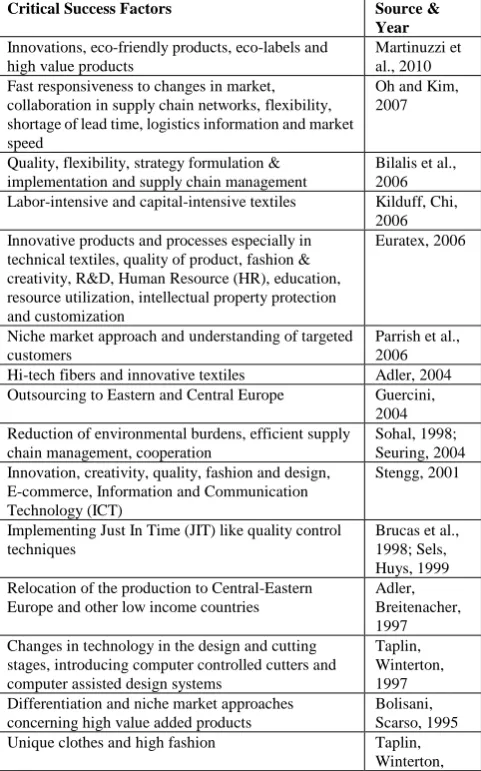
Table A.2: Literature of Textile Sector Critical Success Factors
Critical Success Factors Source & Year
Innovations, eco-friendly products, eco-labels and high value products
Martinuzzi et al., 2010 Fast responsiveness to changes in market,
collaboration in supply chain networks, flexibility, shortage of lead time, logistics information and market speed
Oh and Kim, 2007 Quality, flexibility, strategy formulation &
implementation and supply chain management
Bilalis et al., 2006 Labor-intensive and capital-intensive textiles Kilduff, Chi,
2006 Innovative products and processes especially in
technical textiles, quality of product, fashion & creativity, R&D, Human Resource (HR), education, resource utilization, intellectual property protection and customization
Euratex, 2006
Niche market approach and understanding of targeted customers
Parrish et al., 2006 Hi-tech fibers and innovative textiles Adler, 2004 Outsourcing to Eastern and Central Europe Guercini,
2004 Reduction of environmental burdens, efficient supply chain management, cooperation
Sohal, 1998; Seuring, 2004 Innovation, creativity, quality, fashion and design,
E-commerce, Information and Communication Technology (ICT)
Stengg, 2001 Implementing Just In Time (JIT) like quality control
techniques
Brucas et al., 1998; Sels, Huys, 1999 Relocation of the production to Central-Eastern
Europe and other low income countries
Adler, Breitenacher, 1997 Changes in technology in the design and cutting
stages, introducing computer controlled cutters and computer assisted design systems
Taplin, Winterton, 1997 Differentiation and niche market approaches
concerning high value added products
Bolisani, Scarso, 1995 Unique clothes and high fashion Taplin,
Winterton,
Critical Success Factors Source & Year
2004 R&D expenditures and export experiences Eusebio et al.,
2007
[image:7.595.49.290.400.786.2]Source: [2, p. 7]
Table A.3: Literature of Future Trends of Textile Sector
Trends and Future Prospects Source & Year
Production location, choice of public-policy, EU and USA markets, lean retailing model, quotas and trade costs
Abernathy, Volpe, Weil, 2006 International trade relations, breakthrough
technologies, industrial organization and structure, HR, international rules and conventions
Keenan, Saritas, Kroener, 2004 Agenda of European technology platform and main
strategies to defend European clothing industry
Lutz, 2005 European Commission and outward processing
arrangements and role of Bulgaria and Slovakia
Smith, Pickles, Begg, Rouka, Bucek, 2005
Source: [2, p. 18]
B: Questionnaire Design
The Association of Scientific and Technological Parks of Spain (APTE)
Science and Technology Park of Extremadura Avda. de la Investigacións/n 06006 Badajoz This questionnaire is designed to find out some relevant
information regarding the park in an attempt to see the feasibility to include RMG sector in it.
Interviewee Information [Please fill in the option below]
i. Name:
ii. Designation: iii. Organization:
iv. Background (both academic and experience): v. How long have you been working in this
organization? vi. Contact:
Organizational Information
[Please fill in the option regarding Science and Technology Park of Extremadura stated below]
1. Date of Establishment (both APTE and PCTEX): 2. Number of branches:
3. Area of the park (PCTEX in square meter): 4. Organizational Type:
5. Sources of fund: 6. Number of Employees:
7. No. of companies enlisted and doing operations: 8. Specify name of sectors currently involved in the park: 9. What contribution are APTE and PCTEX playing in the
economy and in general?
10.Is there any RMG company in the APTE and in PCTEX? If any, how many?
11.Why this sector is or is not included?
12.Do you think it is necessary to include in Badajoz? Why or Why not?
13.Give some suggestion regarding my research.
Park of Extremadura, Spain?
with some data that will help in doing this research work? Mention
May we use your name?
Thank you very much for your devotion, precious time and cooperation. Your involvement will assist and contribute a lot to shape the research work.
On behalf of Researchers, Samsul Alam
ACKNOWLEDGMENT
The researchers convey their profound gratitude towards Tomás M. Bañegil Palacios, Professor, School of Economics and Business Sciences, University of Extremadura who assisted a lot in preparing the paper. Again, Belén Talavera, research associates in R&D who participated in the interview and assisted by providing valuable information to prepare the study. It is also appreciable the 3 anonymous Reviewers comments that contributed to develop the article further.
REFERENCES
1. A. Berg, S. Hedrich, S. Kempf and T. Tochtermann, "Bangladesh's ready-made garments landscape: The challenge of growth", McKinsey & Company, Frankfurt, 2011.
2. A. Martinuzzi, R. Kudlak, C. Faber and A. Wiman, "CSR Activities and Impacts of the Textile Sector", Research Institute for Managing Sustainability, Vienna, 2011.
3. A. Nair, "Garment manufacturing | profitable small business idea", 99businessideas.com, 2015. [Online]. Available: http://99businessideas.com/garment-manufacturing-profitable-small-business-idea/. [Accessed: 30- May- 2016].
4. Amp Capital Investors Limited, "The ready-made garment sector at crossroads: Bangladesh field trip", AMP Capital Investors Limited, 2014.
5. Euromonitor International, "Apparel in Spain", Euromonitor International, 2013.
6. J. Allwood, "Well dressed?: The present and future sustainability of clothing and textiles in the United Kingdom", University of Cambridge Inst. for Manufacturing, Cambridge, 2006.
7. J. Keane and D. Te Velde, "The role of textile and clothing industries in growth and development strategies", Overseas Development Institute, 2008.
8. M. Ahamed, "A report on readymade garment industries of Bangladesh", Research department, JBBC Corporation, Tokyo, 2014. 9. M. Salam and G. Mclean, "Minimum wage in Bangladesh’s ready-made garment Sector: Impact of imbalanced rates on employee and organization development", in UFHRD Conference, Edinburgh Napier University, Scotland, 2014, pp. 1-31.
10. N. Khosla, "The ready-made garments industry in Bangladesh: A means to reducing gender-based social exclusion of women?", Journal of International Women's Studies, vol. 11, no. 1, pp. 289-303, 2009. [Accessed 15 May 2016].
11. R. Jahan, F. Zaman and M. Kamal, "Future Impact Prediction of Women Empowerment in Ready Made Garment Industry under Computational Methodology", Global Journal of Management and Business Research Interdisciplinary, vol. 13, no. 16, pp. 1-7, 2013. [Accessed 10 June 2016].
12. S. Shah, A. Syed and F. Sheikh, "Impact of textile industry on Pakistan economy", Revista Română de Statistică, vol. 3, pp. 43-59, 2014. [Accessed 10 May 2016].
13. "Association of Science and Technology Parks of Spain - APTE", Apte.org. [Online]. Available: http://www.apte.org/en. [Accessed: 26- May- 2016].
14. "Process Flow Chart of Garments Manufacturing | Sequence of Garments Production Process", Textilelearner.blogspot.com.es. [Online]. Available: http://textilelearner.blogspot.com.es/2012/02 /process-flow-chart-of-garments.html. [Accessed: 31- May- 2016].
15. "Ready-made garment", En.wikipedia.org, 2014. [Online]. Available: https://en.wikipedia.org/wiki/Ready_Made_Garment. [Accessed: 05- May- 2016].
16. "Textile industry", En.wikipedia.org, 2005. [Online]. Available: https://en.wikipedia.org/wiki/Textile_industry. [Accessed: 31- May- 2016].
17. "The textile and clothing sector and EU trade policy", 2011.
AUTHORSPROFILE
Samsul Alam has been serving Daffodil International University as a Senior Lecturer of MIS. He completed MSc. (Master by Research) from University of Extremadura, Spain in 2016 through full funded scholarship awarded by ERASMUS MUNDUS LEADER project. He completed his MBA in 2014 with major in Management Information Systems from University of Dhaka with a brilliant academic records and a considerable experience in IT. He got Dean’s honor list award from Faculty of Business Studies, University of Dhaka. He has research interest in the field of IS including ICT for Education, industry 4.0, MIS in developing countries, e-government, ethics in business, big data analysis, IoT and topic related to information systems and business administration. By this time, he has published some articles in reputed national and international journals.
Gouranga Chandra Debnath, PhD is an Associate Professor of Management Studies and Head of the department of Business Administration, Daffodil International University. He has completed his PhD in 2019. He also completed his MBA in International Business from United Kingdom and another in Human Resource Management from University of Dhaka. His current research interest is management, human resource management, supply chain management, leadership and more.