2006
The paleopolyploid nature of the soybean genome:
duplicate gene identification, regional sequence
characterization and expression studies
Jessica Ann Schlueter
Iowa State UniversityFollow this and additional works at:https://lib.dr.iastate.edu/rtd Part of theBioinformatics Commons, and theGenetics Commons
This Dissertation is brought to you for free and open access by the Iowa State University Capstones, Theses and Dissertations at Iowa State University Digital Repository. It has been accepted for inclusion in Retrospective Theses and Dissertations by an authorized administrator of Iowa State University Digital Repository. For more information, please [email protected].
Recommended Citation
Schlueter, Jessica Ann, "The paleopolyploid nature of the soybean genome: duplicate gene identification, regional sequence characterization and expression studies " (2006).Retrospective Theses and Dissertations. 3020.
sequence characterization and expression studies
by
Jessica Ann Schlueter
A dissertation submitted to the graduate faculty
in partial fulfullment of the requirements for the degree of
DOCTOR OF PHILOSOPHY
Major: Genetics
Program of Study Committee: Randy C. Shoemaker, Co-major Professor
Volker Brendel, Co-major Professor Jonathan Wendel
Patrick Schnable E. Charles Brummer
Phillip Dixon
Iowa State University
Ames, Iowa
INFORMATION TO USERS
The quality of this reproduction is dependent upon the quality of the copy
submitted. Broken or indistinct print, colored or poor quality illustrations and
photographs, print bleed-through, substandard margins, and improper
alignment can adversely affect reproduction.
In the unlikely event that the author did not send a complete manuscript
and there are missing pages, these will be noted. Also, if unauthorized
copyright material had to be removed, a note will indicate the deletion.
UMI
UMI Microform 3229122Copyright 2006 by ProQuest Information and Learning Company.
All rights reserved. This microform edition is protected against
unauthorized copying under Title 17, United States Code.
ProQuest Information and Learning Company 300 North Zeeb Road
Graduate College
Iowa State University
This is to certify that the doctoral dissertation of
Jessica Ann Schlueter
has met the dissertation requirements of Iowa State University
Co-major Professor
For the Major Program Signature was redacted for privacy.
Signature was redacted for privacy.
Dedicated to:
My husband Shannon who has always encouraged me to do the best I could with honesty and
TABLE OF CONTENTS
CHAPTER 1. GENERAL INTRODUCTION
Introduction 1
Dissertation Organization 3
Literature Review 5
References 24
CHAPTER 2. MINING EST DATABASES TO RESOLVE EVOLUTIONARY
EVENTS IN MAJOR CROP SPECIES
Abstract 38
Introduction 39
Materials and Methods 40
Results and Discussion 43
Acknowledgments 51
References 51
Appendices: Additional Figures 63
CHAPTER 3. SEQUENCE CONSERVATION OF HOMEOLOGOUS BACS AND
EXPRESSION OF HOMEOLOGOUS GENES IN SOYBEAN (iGLYCINE MAX L
MERR.)
Abstract 67
Introduction 68
Materials and Methods 71
Results 76
Discussion 86
Acknowledgments 93
References 93
CHAPTER 4. THE FAD2 GENE FAMILY OF SOYBEAN: INSIGHTS INTO THE
STRUCTURAL AND FUNCTIONAL DIVERGENCE OF A PALEOPOLYPLOID
GENOME
Abstract 122
Introduction 123
Materials and Methods 125
Results 130
Discussion 139
Acknowledgments 144
References 144
Appendices 166
CHAPTER 5. GENERAL CONCLUSIONS
Conclusions 171
Future Directions 173
References 174
CHAPTER 1. GENERAL INTRODUCTION
Introduction
Polyploidy is widespread in the plant kingdom, with estimates of 70 to 100% of
angiosperms and upwards of 95% of pteridophytes having a polyploid history (Masterson,
1994; Lockton and Gaut, 2005). Most of the major crop species belong to this group (wheat,
corn, potato, soybean, peanut, sugar cane, alfalfa, coffee, cotton, etc.; Wendel, 2000) as well
as model species, Arabidopsis, rice, Medicago and Lotus (TAGI2000; Vision et al., 2000;
Lynch and Conery, 2000; Simillion et al., 2002; Blanc et al., 2003; Yu et al., 2003; Goff et
al., 2002; Young et al., 2005; Shoemaker et al., 2006). While some of these species are more
recent polyploids or neopolyploids, most are ancient polyploids or paleopolyploids with their
genomes having undergone cyclic rounds of duplication and diploidization (Schlueter et al.,
2004; Blanc and Wolfe, 2004). Most plant genomes have likely experienced polyploidy
followed by major genome rearrangements that allow the genome to revert to a near diploid
state (Stebbins, 1966). The general belief in the existence of a simple diploid plant species is
likely a false one, with most all plant genomes having undergone extensive duplication and
reshuffling.
Genome duplication has been implicated as a driving force in the evolution and
expansion of eukaryotic genomes (Stebbins, 1950; Ohno, 1970, Lewis, 1980; Petrov, 2001).
Most plant genes are members of gene families, indicating that gene duplication is
widespread in the origin and formation of diverse gene functions (Wendel 2000; Adams and
Wendel, 2005). Gene and genome duplication is also seen as a mechanism for the creation of
genetic diversity and as a source of new genes and gene functions as well as leading to
silenced genes or pseudogenes (Ohno, 1970; Pickett and Meeks-Wagner, 1995; Long et al.,
2003).
Studies in soybean (Glycine max L. Merr.) have suggested that the genome has
experienced cyclic rounds of this process of genome duplication and diploidization
that the 'diploid' Glycine have 2n=40 chromosomes while other papilionoids have 2n=10 or
11 suggesting at least one large-scale genome duplication (Lackey, 1980). While soybean
functionally behaves as a diploid, haploid genome analysis have suggested that soybean is a
diplodized ancient tetraploid (Hadley and Hymowitz, 1973). Evidence for at least two
distinct sub-groups in soybean multigene families also support this hypothesis (Nielson et al.,
1989). Mapping studies in soybean were able to identify homeologous regions as well as
nested duplications within the genome suggesting multiple rounds of duplication (Shoemaker
et al., 1996; Lee et al., 1999; Lee et al., 2001). Further, these mapping studies revealed that
more than 90% of the RFLP probes hybridized to two or more genomic fragments,
suggesting conserved duplicated regions (Shoemaker et al., 1996).
In addition to mapping studies, analysis of B AC-end sequences has suggested that the
retained duplicate regions of the soybean genome still share sequence homeology (Marek et
al., 2001; Foster-Hartnett et al., 2002). Similarly, hybridization based approaches showed
fairly extensive sequence homeology between RFLP anchored paralogous BACs (Yan et al.,
2003; Yan et al., 2004). Fluorescent in situ hybridization studies (FISH) using BACs as
probes has shown cross-hybridization of BACs to more than one chromosome (Pagel et al.,
2004). These results suggest that conserved duplicated segments in the soybean genome may
retain sequence similarity.
These studies have laid the foundation to ask questions as to the structural and
functional evolution of the paleopolyploid soybean genome. This dissertation is an
investigation of retained duplicate genes identified from ESTs as well as structural/functional
divergence and conservation of homeologous regions in the soybean genome. While whole
genome sequence is not available for many plant genomes, it is possible to utilize EST
resources and BAC-based sample sequencing to gain knowledge about the organization,
structural and functional evolutionary history of a genome. The purpose of my doctoral
research is to identify and describe preserved duplicated genes, sequence and characterize
homeologous regions anchored by duplicate genes, and study the possible functional
difference between conserved homeologs to gain an understanding of the mechanisms and
Dissertation Organization
This dissertation is organized into five chapters. Chapter 1 contains a literature review
documenting the current state of research in polyploidy and gene duplication, fates of
duplicate genes, genome restructuring and diploidization, the paleopolyploid nature of the
soybean genome, comparative genomics of duplicated genomes, and gene expression in
polyploids as they relate to this dissertation. Chapters 2, 3 and 4 each consist of a manuscript,
published, accepted for publication or in preparation for publication, respectively. Chapter 5
is a summary of conclusions reached during the course of this dissertation research as well as
recommendations for further research in these areas.
Chapter 2, entitled "Mining EST databases to determine evolutionary events in major
crop species" was published in volume 47, 2004 issue of Genome (Schlueter et al., 2004).
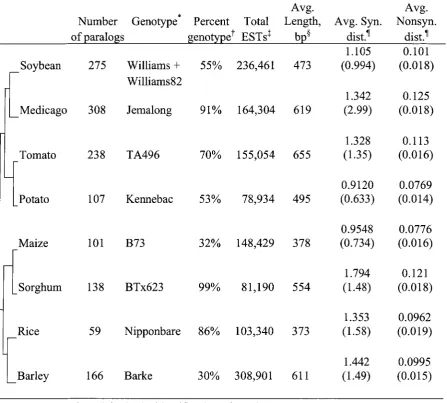
Potential duplicate genes were identified from the extensive EST collection in soybean as
well as for maize, barley, sorghum, rice, tomato, potato, and Medicago. An analysis of
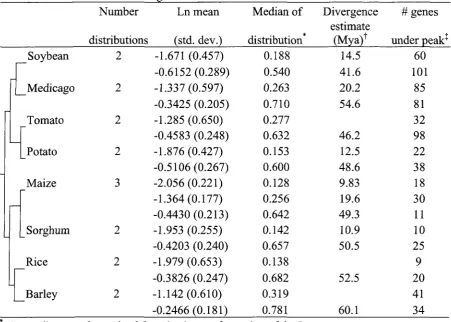
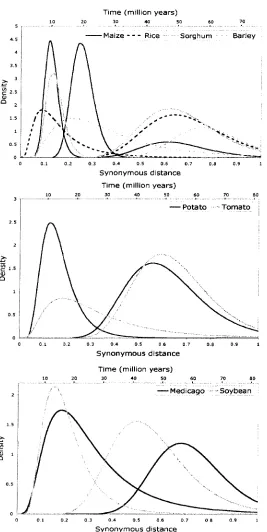
synonymous distances between conserved duplicates allowed the authors to cluster them into
groups with similar synonymous distances. Under the assumption of a molecular clock, dates
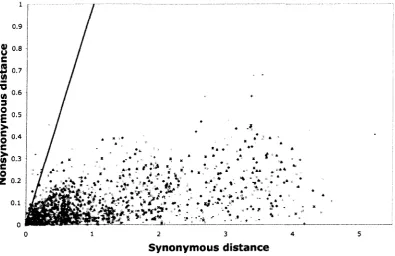
were assigned to major genome duplication events. Using a ratio of nonsynonymous to
synonymous distances, the authors showed that selection pressures between duplicate genes
are generally negative. Additionally, Pearson correlation coefficients were calculated
between pairs to measure how gene expression patterns have changed between duplicate
pairs, and relative to their evolutionary distances. Contributions from co-authors include:
Phillip Dixon was instrumental in determining the mixtures of normal distributions as well as
text, Cheryl Granger began this analysis prior to moving forward with her career, David
Grant provided support for the Pearson correlation coefficients for tomato and potato, and
Lynn Clark and Jeff J. Doyle both provided significant background knowledge and writing of
the evolutionary history of the grasses and legumes, respectively. All other analysis and
writing was done by Jessica Ann Schlueter with editorial addictions from Randy Shoemaker.
Chapter 3, entitled " Sequence conservation of homeologous BACs and expression of
homeologous genes in Glycine max" has been accepted to Genetics and is currently under
between the genomes contained within a paleopolyploid had not been observed. Utilizing a
pair of duplicated genes from Schlueter et al., 2004, we identified BACs (bacterial artificial
chromosomes) representing homeologous regions in soybean that were subsequently
sequenced to investigate the evolution and sequence conservation between duplicate regions
in a paleopolyploid. The authors found that sequence conservation between homeologs in
soybean is stronger than expected with most genes conserved in both order and orientation.
An interrupted network of synteny to Arabidopsis and Medicago was identified between
these regions. Finally, a subset of these identified duplicate genes were used to study how
expression patterns between paleohomeologs have diverged across a variety of
developmental stages and tissues. BAC sequencing was performed by Brian Scheffler as well
as methods text. Visualization of the gene structures done with the xGDB system
implemented by Shannon D. Schlueter. All other analysis and writing was done by Jessica
Ann Schlueter with editorial changes from Randy Shoemaker.
Chapter 4, entitled "The FAD2 gene family of soybean: insights into the structural
and functional divergences of a paleopolyploid genome" has been prepared for submission to
The Plant Genome. This study looks at four BACs anchored by co-6 fatty acid desaturase
genes (FAD2). High sequence homeology was observed between two BACs, while the other
two BACs had only the FAD2 genes in common. Expression patterns between the FAD2
genes was investigated specifically to look temperature dependent increase in expression in
developing pods to correlated with temperature dependent increases in linoleic acid. Only
one gene, FAD2-2C, showed evidence for increase in expression in developing pods from
cool conditions. Sequencing of BACs was performed by Iryna F. Sanders, Shweta
Deshpande, Jing Yi, Bruce Roe, and Brian Scheffler. Bruce Roe and Brian Scheffler
provided methods text. Shannon Schlueter provided the xGDB system as an annotation tool.
All other analysis and writing was done by Jessica Ann Schlueter with editorial changes from
Literature Review
Polyploidy and gene duplication
Gene duplication can occur by a variety of mechanisms: duplication of regions or
segments of chromosomes, tandem duplication, reverse-transcriptase mediated duplication,
and whole genome (polyploidy) duplication (Schmidt, 2002; Bennetzen, 2002; Wendel,
2000; Lawton-Rauh, 2003). Regional duplications, often called dispersive processes, can
occur through abnormal crossing over events. Tandem duplications are frequently the result
of replication slippage or transposon activity (Bennetzen, 2002: Lawton-Rauh, 2003). While
single gene or regional duplication is seen in all plant species, whole genome duplication or
polyploidy, has likely played the largest role in the evolution of plant genomes
(Lawton-Rauh, 2003).
Gene duplication, arising from region-specific duplication or genome-wide
polyploidization, is a prominent feature in plant genome evolution. All currently
characterized eukaryotic genomes exhibit evidence of gene duplications, which continues to
shape genomic diversity (Lynch, 2002). Most genes are members of multigene families,
indicative of the prevalence of gene duplication in the origin and formation of diverse gene
functions (Wendel, 2000). Although found across eukaryotic lineages, gene duplication
appears to occur at an elevated rate in plants (Muller, 1925; Mable, 2004). The high
incidence of gene duplication in plants could be due to its potential impact on genetic
diversity and adaptation (Lawton-Rauh, 2003). Differential patterns of gene silencing
following polyploidy may provide the genetic context to facilitate speciation (Werth and
Windham, 1991). In Arabidopsis thaliana, 65% of all genes belong to gene families, 37.4%
of which have at least five genes in their families.
Regional events of gene duplication include local duplications and dispersive
mechanisms (Schmidt, 2002). Local duplications occur through transposable element activity
or replication slippage resulting in tandem duplications whereas dispersive processes result in
the transfer of genes or chromosomal segments to more distant chromosomal locations.
duplications of chromosomal regions of various sizes through aberrant crossing over events
(inversion, translocation, unequal recombination, non-reciprocal translocation) (Bennetzen,
2002). A significant proportion of A. thaliana genes (17%) are arranged as tandemly repeated
segments indicating that regional duplication and persistence are common in A. thaliana, and
perhaps in most plant species (TAGI, 2000).
Studies focusing on duplicated genes and genome segments in Arabidopsis have
provided insights into its evolutionary history. In 1994, Kowalski et al. found that single
copy markers in Brassica oleracea mapped to duplicate regions in the Arabidopsis genome.
Comparative genomics between Arabidopsis and soybean (Grant et al., 2000; Lee et al.,
2001) and Arabidopsis and tomato (Ku et al., 2000) showed strong evidence for segmental
and possible whole genome duplication in Arabidopsis. Blanc et al. (2000) suggested that
Arabidopsis might be a degenerate tetraploid. Analysis of the whole Arabidopsis genome
sequence using dot-plots indicated that upwards of 60% of the genome is duplicated and
probably more than one large-scale genome duplication has occurred, although the exact
number of rounds is still debated (TAGI, 2000; Vision et al., 2000; Lynch and Conery, 2000;
Simillion et al, 2002; Blanc et al., 2003). As data from the rice genome sequencing projects
have been compiled, it has become apparent that the rice genome also shows extensive
evidence of gene duplication, likely the result of a major genome duplication event (Goff et
al., 2002; Yu et al, 2003; Vandepoele et al., 2003). Two studies considering duplicated genes
identified from EST collections has found evidence that most major plant species show
evidence of retained duplicate genes with similar synonymous distances indicative of major
duplication events (Blanc and Wolfe, 2004a; Schlueter et al., 2004).
Polyploidy was originally termed in 1916 by Winkler to describe organisms whose
genomes have a greater amount of genetic material and chromosomes than their ancestors.
There exist two main paths for a polyploid event to occur; either a doubling of unreduced
gametes from a single species (autopolyploid) or the hybridization of unreduced gametes or
somatic doubling from two different genomes (allopolyploid; Pikaard, 2001; Lawton-Rauh,
2003). The most common mechanism for polyploid formation is the fusion of unreduced
gametes containing a diploid rather than haploid chromosome number and subsequence
allopolyploid can be identified and the type of polyploidy event determined, as with cotton
and Brassica (Wendel and Cronn, 2002; Parkin et al., 2003). However, if the polyploid event
is not recent or the species has undergone multiple rounds of duplication and rearrangement,
determining whether the event was alio- or autopolyploid can be very complex, as with
soybean (Doyle et al., 2003; Straub et al., 2006).
The prevalence of polyploids in the plant kingdom suggests some sort of advantage
over diploids; this is likely due to a heterotic effect generated by homeologous gene
combinations (Comai, 2000). For example, within cultivated strawberries (Fragaria. X
ananassa Ouch.), octaploid strawberries were found to be morphologically favored over
diploid strawberries (Bringhurst and Voth, 1984). Additionally, Bringhurst and Voth found
that the octaploid strawberries were highly polymorphic whereas the diploids were not; the
polyploids were likely able to adapt to more diverse environments with greater ease (1984).
This observation was in agreement with that of Stebbins (1971) in that polyploids seem to
tolerate more extreme climates better than diploids.
Polyploids often are formed on multiple occasions from the same or similar diploid
progenitors, i.e. recurrent formation (Soltis and Soltis, 2000; Soltis and Soltis, 1999).
Recurrent origins of a polyploid are seen as "the rule, not the exception" (Soltis and Soltis,
1999). Doyle et al. found that there were at least six hybridizations that led to Glycine
tabacina (1990). Isozyme studies have shown that there were multiple origins of the Glycine
tomentella polyploid (Kollipara et al., 1994). Similar examples are seen with Heuchera
grossulariifolia, Draba norvigica, Tragopogon miscellus and T. mirus (Segraves et al., 1991;
Brochmann and Elven, 1992; Cook et al., 1998). Recurrent formation may account for the
large array of genetic diversity found within polyploid species (Soltis and Soltis, 1995).
Further, gene flow between genetically different polyploids allows for recombination events
and increased genotypes (Soltis and Soltis, 1999).
The increased genomic activity that occurs after a polyploid event often leads to
difficulty in discerning ancient duplication events due to chromosomal shuffling and
epigenetic silencing that arise from genomic coping mechanisms and the increased
and allows for multiple rounds of polyploidy to occur in the genomic history of a plant
(Stebbins, 1966; Grant, 1981).
Fates of duplicate genes
There are various models for the fate of duplicated genes. The classical model
predicts that after duplication, one member accumulates mutations and eventually becomes
nonfunctional (Haldane, 1933). Ohno (1970) proposed that gene duplication was an efficient
means to create new genes, and that whole genome duplication would enable the duplication
of major biochemical pathways. Ohno proposed a model of gene duplication where, after
duplication, one gene copy will retain the original function allowing the second "additional"
copy to begin accumulating mutations. Since most mutations would be deleterious, they
would lead to silencing of one gene copy. However, on occasion an advantageous mutation
will become fixed and both gene copies will be retained (Ohno, 1970). Ohno's model
suggests that most secondary gene copies should become nonfunctional in a relatively few
number of generations as determined by the mutation rate (Force et al., 1999).
Kimura extended these models by suggesting that after duplication, purifying
selection is lessened in one or more of the copies allowing mutations to accumulate that
would normally be selected against (1983). Most mutations would lead to pseudogene
formation of one copy; occasionally a mutation would be beneficial and both copies would
be retained. This model suggests that redundancy exists early in duplicate gene evolution and
relaxation of selection allows the mutations to be nearly neutral in both copies. Studies done
by Ohta in 1991 and 1994 found that accelerated amino acid substitutions are correlated with
functional diversification of duplicate genes. These results implicated positive selection as
having a role in duplicate gene fate.
In 1995, Walsh showed that if population size is large enough, even though
advantageous mutations are relatively rare, there is a greater probability for a duplicate gene
to acquire a new function than to be lost as a pseudogene thereby showing that the rates of
gene silencing are lower than originally predicted. Further, when considering that whole
duplicate genes were estimated to be not only retained but have undergone functional
divergence (Nadeau and Sankoff, 1997, Wagner, 1998). Using doubles and quadruples from
human and mouse gene families with known chromosomal positions Nadeau and Sankoff
(1997) were able to determine the rate of gene loss. Their results showed that there is a lower
rate of gene loss than predicted under the classical model for duplicate gene evolution. They
resolved this by postulating that after duplication more neutral mutations than deleterious
mutations accumulate allowing for higher duplicate gene retention (Nadeau and Sankoff,
1997).
This classical model however lacks a mechanism through which new gene copies are
retained and how they might survive the level of neutral mutations. Other studies have shown
that the retention of duplicate genes is higher than expected under Ohno's classical model of
duplicate gene fate. Mapping studies between maize and sorghum showed that 72% of the
probes were duplicated in maize and 38% were duplicated in sorghum (Whitkus et al., 1992).
Both of these species are now considered to be paleopolyploids (Gaut and Doebley, 1997;
Blanc and Wolfe 2004a; Schlueter et al., 2004). Additionally, in soybean, combined data
from nine mapping populations uncovered extensive homoeologous relationships among
linkage groups, with 90% of soybean RFLP probes detecting more than two fragments
(Shoemaker et al. 1996). In fact, nested duplications were observed, suggesting that one of the
soybean genomes involved in recent tetraploidization may have undergone duplication prior
to tetraploidization (Shoemaker et al., 1996; Lee et al., 1999, Lee et al., 2001; Schlueter et
al., 2004).
The higher preservation of duplicated genes than predicted under the classical model
led Force et al. in 1999 to develope the duplication-degeneration-complementation (DDC)
model for duplicate gene preservation. Their model incorporates the complexity of gene
structure and regulation of gene expression by breaking down expression of a gene into
subfunctions. Following duplication, mutations begin to accumulate across the sequence.
These mutations can cause duplicate genes to begin loosing subfunctions and functionally
degenerating. The DDC model allows for three different outcomes for duplicate genes: 1)
One copy may acquire a deleterious mutation in the coding region or in an essential
gene loss. 2) One copy may acquire a mutation that allows it to gain new function and is
selectively swept to fixation a process referred to as neofunctionalization, the other outcome
possible under Ohno's classical model. 3) Both copies begin to degenerate and lose
expression of particular subfunctions and both copies are required to compliment ancestral
function, a process called subfunctionalization. Of course, this model has an added layer of
complexity due to overlapping and embedded regulatory regions. Force et al. showed
examples of their model in zebrafish engrailed genes and in maize ZAG1 and ZMM2 genes
(1999). Altschmied et al. has also found plausible evidence for subfunctionalization if mitf
genes in teleost fish species (2002). In plants, excellent examples of subfunctionalization
following duplication in Arabidopsis are the APETALA 1 (API), CAULIFLOWER (CAL)
and FRUITFUL (FUL) genes. These genes are found in syntenic regions of the Arabidopsis
genome and are likely the result of a large-scale duplication (Prince and Pickett, 2002).
Studies in cotton have also seen potential evidence for subfunctionalization (Adams et al.,
2003)
Large-scale genomics project have allowed estimates to be derived as to the
preservation of duplicate genes as well as the fate of these duplicate genes (Lynch and
Conery, 2000). In C. elegans, S. cerevisiae, and D. melanogaster, synonymous mutations
were used to determine the rate of duplicate gene loss post duplication. By estimating the
half-life of duplicate genes, their results suggest that in the span of 50 million years more
than 90% of genes that were duplicated are lost. From the ratio of synonymous to
nonsynonymous distances, Lynch and Conery suggested that early in duplicate gene
evolution the pairs experience a brief period of relaxed selection or even near-neutrality
allowing for accelerated evolution (2000).
Determination of synonymous and nonsynonymous distances allowed Kondrashov et
al. to study the selection pressures acting on preserved duplicated genes (2002). Using
relative-rate tests, they were able to determine in Archaea, Baceria, S. cerevisiae, C. elegans,
D. melanogaster, and Mammalia that most paralogs evolved under similar levels of purifying
selection. However, they did find that duplicated genes evolved faster than unduplicated
either relaxation of purifying selection and/or positive selection, a similar result to those of
Lynch and Conery (2000; Kondrashov et al., 2002).
After duplication, there may be a short-term fitness advantage for duplicated genes
(Kondrashov et al., 2002). A relaxation of purifying selection is likely the main mechanism
behind the acceleration of evolution after duplication. Those duplicates that are retained aid
in the adaptation to various environmental conditions, primarily through a protein dosage
effect. Kondrashov et al. (2002) suggested a two-stage evolutionary model of gene
duplication: 1) Immediately after duplication and during the early phase of their evolution,
paralogs are retained and are subject to purifying selection because of the gene duplications
are likely to proved a long-term advantage by enabling the creation of new functions. 2)
Later in duplicate gene evolution, gene duplications are likely to proved a long-term
advantage by enabling the creation of new functions.
Recently, Francino (2005) has taken the DDC concept and combined it with the
results of Kondrashov et al., (2002). He suggests that the development of new gene functions
is in response to the environment. A new situation arises, the original genes try to interact
and something seems to work, so that particular product (gene) is amplified in expression
and/or copy number until a mutation arises that actually does fit the new situation. As a
result, it is fixed in the population. These amplifications and mutations are the result of
positive selection. This is called the adaptive radiation model. Through gene duplication, the
secondary copies allow for the retention of the initial product and allowing the secondary
copy to be free of the purifying selection on the original copy. There are three predictions of
this model: 1) the evolution of new functions after short bursts of gene amplification and
gene fixation in response to specific selection pressures; 2) an initial period of positive
selection on the paralogous gene, including those that eventually become pseudogenes; and
3) generation of numerous pseudogenes and eventual pseudogene loss accompanying the
successful establishment of a new gene function or group of related functions. The fixation
probabilities of gene duplication and loss during rapid adaptive periods will be very different
from the long-term rates estimated from genome comparisons or from the silent substitutions
between fixed duplicate pairs (Lynch and Conery, 2000). An example that fits this model is
over 60% pseudogenes. Copy number and functionality is polymorphic between humans and
some copies have high nucleotide substitution indicative of positive selection, suggesting
ongoing adaptive radiation (Francino 2005).
Genome restructuring and diploidization
After a polyploidy event, duplicated regions begin to diverge from one another at
both the sequence and chromosomal levels either through mutational or epigenetic means
such that the polyploid becomes genetically diploidized (Stebbins, 1966; Grant, 1981; Pickett
and Meeks-Wagener, 1995). Diploidization is likely a response to the stress or "genomic
shock" experienced by a plant while in a polyploid state (Stebbins, 1966; McClintock, 1984).
Allopolyploids have been shown to undergo numerous physical changes ranging from DNA
sequence elimination, heterchromatin expansion, and reciprocal chromosome segment
translocations and inversions, all thought to have a role in diploidization (Pikaard, 2001).
Additionally, diploidization is not simply chromosomal/structural in nature, it also involves
the diploidization of gene expression (Leipoldt and Schmidtke, 1982). In other words, RNA
content in a diploidizing tetraploid is thought to be reduced to the level of the related diploids
(Leipoldt and Schmidtke, 1982). On a genie level, diploidization involves the silencing of
one copy or a divergence leading to a change in function of a copy (Pickett and
Meeks-Wagner, 1995).
Following polyploidy there seems to be a genome-wide removal of some but not all
of the redundant genomic material. It has been suggested that "differential gene loss" after a
major duplication event may be responsible for much of the differences between closely
related plants (Adams and Wendel, 2005). Diploidization at the chromosomal level is caused
by additions, deletions, mutations, and rearrangements that rapidly inhibit non-homologous
pairing of chromosomal tetravalents (Ohno, 1970). The primary effect of diploidization is the
switch from tetrasomic to disomic inheritance in meiosis (Wolfe, 2001). Gilles and Randolph
(1951) observed a reduction of quadrivalents and an increase in bivalents in synthetic
autotetraploid maize stocks studied across a 10-year period. Allotetraploids derived from 4N
macro-rearrangements of chromosomes in polyploids (1963). Shaver found that in the
allotetraploid, there is increased preferential pairing that would influence diploidization
(1963).
Diploidization was first observed in Nicotiana tobacum (Clausen, 1941). Clausen
created an artificial amphidiploid of Nicotiana tobacum. Utilizing both the natural and
synthetic Nicotiana, he was able to study chromosome behavior in response to
polyploidization. He observed widespread changes such as genomic deficiencies in the
natural Nicotiana that allowed it to appear and behave as a diploid. These results were a first
glance at the process of diploidization (Clausen, 1941).
In 1958, Riley and Chapman identified a gene in polyploid wheat, Phi, which is
involved in diploid chromosome pairing. Expression of Phi was found to be associated with
a reduction in the number of quadrivalents and trivalents in meiosis (Riley and Chapman,
1958). This gene contributes to diploidization by inhibiting multivalent formation and
suppression of homeologous pairing (Riley and Chapman, 1958).
Genomic reorganization often occurs rapidly after polyploidy and is extensive in most
polyploids (Soltis and Soltis, 1999). Utilizing both nuclear and mitochondrial RFLP probes
against synthetic polyploids in Brassica, Song et al. (1995) found an acceleration of genomic
changes in the polyploid after formation, specifically chromosomal rearrangements.
Although they considered that the observed banding patterns may have resulted from DNA
methylation pattern changes or gene conversion, there was not overwhelming evidence to
support these hypotheses. This led them to conclude that they were observing structural
rearrangements leading to different RFLP banding patterns (Song et al., 1995). They
concluded that rapid genomic changes might allow for greater genetic variation and possibly
an acceleration of evolution in polyploid progeny (Song et al., 1995). Interestingly, some of
the changes that were observed had a directionality bias toward the paternally inherited
genome. Comparative mapping studies showed that when compared to the diploid
progenitors, the natural Brassica allopolyploids showed extensive genomic rearrangements
(Lagercrantz and Lydiate, 1996). These results along with those of Song et al. (1995)
suggested that when the diploid progenitors are more divergent, the resulting genomic
have shown that resynthesized Brassica napus lines show extensive variation for traits in
seemingly genetically homozygous lineages selected for one trait that differentiated between
them (2004). This study utilized the synthetic polyploid lines from the study of Song et al.
(1995). Schranz and Osborn (2004) showed the significant role of genetic and environmental
interactions in the evolution of polyploids.
Results similar to those in Brassica have been observed in wheat; after
allopolyploidy, sequence elimination is rapid and nonrandom for specific sequences. This
results in a divergence of homeologous chromosomes (Feldman et al., 1997). Their analysis
was done by comparing the pattern of loss of specific genomic sequences in hexaploid wheat
to those of synthetic hexaploid wheat. They found the sequence elimination pattern was
similar in wild and cultivated hexaploid wheat as well as synthetic hexaploid wheat. They
were able to exclude methylation and intergenomic recombination as a means for genomic
change since the observed changes were well conserved across many different lines
(Feldman et al., 1997). These results suggested that the genomic changes after polyploidy
might provide the physical basis for the diploid-like meiotic behavior of polyploid wheat
(1997). Work looking at genomic rearrangements in tobacco in a synthetic polyploid showed
that not only do genomic changes occur rapidly, within the first few generations, but that
these changes are repeatable and consistent between synthetic and naturally occurring
polyploids (Skalickâ et al., 2005).
It should be noted however that in synthetic Gossypium polyploids the rapid changes
observed by Song et al. (1995) and Feldman et al. (1997) were not observed (Cronn et al.,
1999; Liu et al., 2001). When comparing 16 loci in the diploid progenitors and both copies in
the allopolyploid, there was little to no interaction between loci with little to no rate
differences either (Cronn et al., 1999). Additionally, these results suggested that in cotton,
duplicated genes evolve independently in the polyploid and at the same rate as the diploid
progenitors (Cronn et al., 1999). There was evidence however for changes in repeated
sequence copy number and activation of transposable elements in synthetic cotton polyploids
(Liu et al., 2001). Similar results of polyploid genomic stability were found with Tragopogon
those of Song et al. (1995) and Feldman et al. (1997) show that the concept of rapid genomic
change may not hold true for all plant species.
A recent study looking at preserved paralogs from Arabidopsis revealed that some
gene classes, such as transcription and signal transduction, may have been preferentially
retained while other gene families have been preferentially lost (Blanc and Wolfe, 2004b).
Seoighe and Gehring (2004) have similarly suggested that there is a functional bias of genes
involved in transcriptional regulation and signal transduction to have been preserved in
Arabidopsis following successive paleopolyploid events and that if a gene is retained after
one round of duplications, that it is more likely to continue being retained in further
duplications. This suggests that the birth and death process of gene duplication and
rediploidization is not a random process (Seoighe and Gehring (2004).
The paleopolyploid nature of the soybean genome
Glycine Wild, is a member of the papilionoid Leguminosae tribe Phaseoleae, subtribe
Glycininae. The north Asian subgenus Soja comprises the cultigen G. max (L.) Merr.
(soybean) and its wild progenitor (G. soja; Doyle et al., 2003). Most genera of the Phaseolae
have a genome complement of 2n=22, suggesting that soybean may have been derived from
a diploid ancestor (n=l 1) that underwent aneuploid loss to n=10 and subsequent
tetraploidization followed by diploidization (Lackey, 1980). Soybean (Glycine max (L.)
Merrill) has a chromosome number of 2n=40 with a haploid genome size of 1115 Mbp
compared with Arabidopsis (145 Mbp) and rice (415 Mbp) (Arumuganathan and Earle
1991). The physical to genetic distance ratio in soybean could be up to 400Kb/cM (Song et
al, 2004). It has been reported that 40 to 60% of the soybean genome is made up of repetitive
sequences (Goldberg 1978; Gurley et al., 1979). Heterochromatic DNA in pachytene
chromosomes accounts for about 35% of the genome and appears to be clustered in distinct
regions (Singh and Hymowitz, 1988). Sixty to seventy percent of the low copy sequences are
thought to have interspersed repetitive elements of 0.3 to 0.4 kb in size (Gurley et al., 1979).
Further, work of Polzin et al., 1998 showed by hybridization of genomic DNA to clones that
and not dispersed through the genome. Marek et al., (2001) conducted a genome survey
analysis, where mapped RFLP and SSR markers were used to identify BAC clones across the
genome. Analysis of the BAC-end sequences suggested that gene organization in soybeans
seems to follow the pattern where genes are more or less evenly distributed over long
genomic stretches (Marek et al., 2001). FISH analysis with a highly repetative BAC shows
that a large fraction of the repetitive sequence in soybean is concentrated in the
pericentromeric regions (Lin et al., 2005).
Haploid genome studies have suggested that soybean is a diploidized ancient
tetraploid (Hadley and Hymowitz, 1973). Study of relationships within soybean gene
families has long supported this hypothesis (Lee and Verma 1984; Hightower and Meagher
1985; Grandbastien et al., 1986; Nielsen et al., 1989; Shoemaker et al., 2002). Shoemaker et
al., (1996) compared the relative positions of RFLP probes across nine different mapping
populations of soybean and reported that the soybean genome is highly duplicated. More than
90% of the probes detected two or more hybridizing genomic fragments and ~ 60% detected
three or more fragments. By comparing the markers duplicated across different linkage
groups they observed that each chromosome segment is duplicated on an average 2.55 times.
This high level of duplication can be explained as, besides the tetraploidization, soybean
genome would have undergone an additional round of genomic duplication for large parts of
the genome (Shoemaker et al., 1996). In fact, nested duplications were observed, suggesting
that one of the soybean genomes involved in recent tetraploidization may have undergone
additional duplication prior to tetraploidization (Shoemaker et al., 1996; Lee et al., 1999; Lee
et al., 2001). A study of 256 duplicated genes identified with EST sequences showed that
soybean has undergone at least two major rounds of duplication at approximately 14.5 and 45
million years ago (Schlueter et al., 2004).
Whether the soybean genome is the results of an alio- or autotetraploid event is still
not resolved. Utilizing the duplicated chloroplast-expressed glutamine synthetase gene in
soybean Doyle et al. (2003) has shown that the duplication occurred subsequent to the
divergence of Glycine from the extant Glycininae. The phylogeny of ncpGS further suggests
that this duplication is the result of either an autopolyploid event or simple gene duplication
suggestive of autopolyploidy does not eliminate the possibility of allopolyploidy. A more
recent study investigating the question of alio- versus autopolyploid in soybean utilized a
low-copy nuclear gene for phylogenetic analysis and further supports an autopolyploid event
(Shannon et al., 2006).
A large scale BAC-end sequencing project allowed Marek et al., (2001) to study the
microsynteny between duplicated soybean regions identified by RFLP or BAC-end probes.
On average, each RFLP probe identified 2.9 homoeologous regions. Of 34 contigs between
duplicated regions, a total of 22 contigs (64.7%) showed microsynteny between potential
paralogous regions (Marek et al., 2001). While only a sample of the genome, this number
suggests that retained duplicated regions in soybean still share structural synteny.
Foster-Hartnett et al. (2002) utilized BACs to study homeologous regions in soybean.
Twenty-eight BACs spanning a total of 1 Mbp spread throughout a 10 cM segment of
soybean linkage group-G were identified with RFLP or PCR-based markers as well as
fifty-nine homoeologous BACs in seventeen contigs elsewhere in the genome. To compare
homoeologous regions they utilized DNA fingerprinting, DNA hybridization, and BAC-end
sequence analysis (Foster-Hartnett et al., 2002). Fingerprinting patterns between
homeologous BACs were sufficient enough to distinguish between loci. Cross-hybridization
between BACs showed that 46% of the contigs showed extensive conserved microsynteny.
Homoeologous BACs also demonstrated 98% sequence identity in several short segments
(BAC-end sequences) that were compared in detail (Foster-Hartnett et al., 2002).
Similarly, by utilizing a hybridization-based approach, microsynteny was further
found between paralogous genomic regions in soybean originally identified from RFLP
probes (Yan et al., 2003). Yan et al. (2003) found that 86.5% of the 37 duplicated BAC
contigs exhibited hybridization-based microsynteny. Restriction maps between eight soybean
BAC contigs identified by RFLP's show extensive genomic structure conservation between
homoeologous regions in soybean (Yan et al., 2004). Chromosome level homeology has been
seen with BAC-based FISH to soybean chromosomes; more often than not a BAC will
hybridize to another chromosome (Walling et al., 2006). These results combined with those
conserved duplicated segments in the soybean genome retain highly similar genome and
sequence organization.
Two recent studies looking at BAC sequences identified from duplicated genes
suggests that while the soybean genome is a diploidized paleopolyploid, an astounding
amount of sequence is conserved (Schlueter et al., in press; Schlueter et al., unpublished
results). These results seem to follow the predictions of selective sequencing and mapping
studies that there is still strong conservation in the coding regions of the soybean genome.
Comparative genomics of duplicated genomes
Colinearity between most plant species has traditionally been shown with mapping
studies using probes from one species in another species. In the grasses, these studies have
suggested that colinearity is highly conserved (Ahn and Tanksley, 1993; Devos et al., 1994;
Gale and Devos, 1998; Devos and Gale, 2000). The sequencing of the rice genomes, both
indica and japonica, has provided a new resource to the grass community for comparative
analysis (Goff et al., 2002; Yu et al., 2002). What has come to light is that the conservation
observed at the genetic map level is not necessarily conserved at the sequence level
(Bennetzen and Ramakrishna, 2002; Feuillet and Keller, 2002; Bennetzen and Ma 2003). In
other words, colinearity does not necessarily reflect microcolinearity. Sequence similarity in
orthologous regions between species has recently been utilized across the grasses to further
understand microcolinearity (Tarchini et al., 2000; Iliac et al., 2003). By studying a
microcolinear region from many species, it has been possible to gain insight in how sequence
evolution has changed since the major grass radiation (Iliac et al., 2003).
Colinearity of the sh2-homologous region in maize, rice, and sorghum suggests that
although gene arrangement is conserved across these three species, the intergenic DNA
content varies greatly (Chen et al., 1997). Another example of such study is the Adhl locus
across the grasses. Adhl exists in duplicate, Adh2, and was likely duplicated prior to the grass
radiation (Gaut et al., 1999). The Adhl genes from maize and sorghum are not colinear with
those in rice, but showed interrupted colinearity with deletions, insertions and translocations
the expansion of the Adhl region in maize occurred in the last 3-6 million years likely caused
by retrotransposon insertions (Tarchini et al., 2000; SanMiguel et al., 1998).
Ilic et al. (2003) expanded the study of the Adhl orthologous regions to include the
-homoeologous region in maize, a documented paleotetraploid (Gaut and Doebley,
1997; Schlueter et al., 2004). Homeologous genomic segments in maize have been found to
cover approximately 60-82% of the genome (Gaut, 2001) Illiac et al.'s analysis revealed
several genie rearrangements, and demonstrated different evolutionary trajectories of this
region in maize, sorghum, and rice. Sequence comparison of homoeologous regions in maize
showed local genomic structure of the diploid progenitors of maize, as well as the nature and
timing of numerous subsequent genomic rearrangements. Between these homoeologous Adhl
regions, only four predicted genes/gene fragments were colinear in order and orientation.
Sequence similarity between the homoeologous regions allowed the detection of small
fragments of residual gene sequences. In maize, over 40% of the total genes in the two
homoeologous regions were deleted. Further, there did not seem to be preferential deletion
from one subgenome over the other subgenome. As expected by the mobile nature of the
maize genome, in both regions transposable element insertions and deletions were
widespread. It appears from this analysis that the maize genome has undergone extensive
rearrangements and gene loss while rediploidizing (Ilic et al., 2003). This was the first
published studies of homoeologous sequences in a rediploidized monocot genome.
To additionally homeologous regions have been sequenced since Ilic's analysis; the
the lg2Hrsl loci and the Orp loci (Langham et al., 2004; Ma et al., 2005). Although the
homeologous Adhl regions retained four predicted genes/gene fragments, the lg2/lrsl loci
and the Orp loci, only the duplicated gene that anchored each region was retained. It appears
from these analyses that the maize genome have undergone extensive rearrangements,
transposable element insertions, and gene loss after duplication (Ilic et al., 2003; Langham et
al., 2004; Ma et al., 2004). Conversely, an analysis of homologous CesAl regions in cotton, a
relatively recent allotetraploid, found extensive genie as well as intergenic sequence
conservation with variation only in small insertion and deletions and transposable elements
(Graver et al., 2004). Much as with maize and cotton, analyses of homeologous regions in
et al., in press). Surprisingly, sequencing of homeologs in soybean has shown that there is
still much sequence retention although the last duplication event is thought to have occurred
at a similar time as maize (Schlueter et al., in press).
An analysis of the bzl region in two maize lines (McC and B73) has revealed high
levels of deletions in this region between the two lines (Fu and Dooner, 2002). Interestingly,
analysis of this same region in several maize inbreds indicated polymorphism for these
deletions. That is, some haplotypes still contained genes that were deleted from other
haplotypes. By hybridizational criteria, all of the genes that were sometimes missing from the
bzl region still had at least one copy elsewhere in the maize genome (Fu and Dooner, 2002).
These results suggest that the bzl region is undergoing the same gene-loss events that were
detected in Adhl orthologous segments, but that the deleted state is not fixed near bzl. Their
analysis demonstrated that within a single species, sequence microcolinearity might not be
conserved at the same locus.
Evidence for conserved microsynteny in the dicots has been found between soybean,
Medicago, and Arabidopsis thaliana (Grant et al., 2000; Yan et al., 2003) Utilizing RFLP
sequences mapped to the soybean genetic map, Grant et al. was able to show conserved
syntenic regions between soybean and Arabidopsis (2000). Further, by reconstructing
putative ancestral chromosomes between the two species, evidence for a major genome
duplication in Arabidopsis was found (Grant et al., 2000). A hybridization strategy using
both whole BACs and probes derived from soybean BACs was able to show approximately
54% microsynteny between soybean BAC contigs and Medicago (Yan et al., 2003). In
addition, 86.5% of the contigs showed conservation within the soybean genome, further
evidence for the paleopolyploid nature of the soybean genome. Yan et al. also found that two
of their probes provided evidence for a conserved ancient duplication in both soybean and
Medicago and most likely predates the divergence of the two species (2003). Similar results
were found by an analysis of EST's in soybean and Medicago (Schlueter et al, 2004; Pfeil et
al., 2005). A phylogenetic approach used by Pfeil et al. determined that the ancient
duplication in soybean was shared between soybean and Medicago and likely with all of the
legumes approximately 50 MYA. (2005). Significant marker colinearity with EST-based
Comparative mapping studies in the legumes have shown that there is some
conservation at the genomic level across species. Within Phaseoleae, mungbean (Vigna
radiata), cowpea (Vigna unguicalata) exhibit conserved linkage blocks (Menancio-Hautea et
al., 1993). Similarly, within the Vicieae tribe, pea and lentil (Lens culinaris) exhibit a
conserved genetic structure (Weeden et al, 1992). Gualtieri et al, (2002) analyzed
microsynteny between pea and Medicago at the SYM2 locus, and concluded that the gene
content and order are largely conserved between the two species at this region. They also
showed that the microsynteny is conserved throughout a significant portion of the
corresponding linkage group in both species.
Boutin et al, (1995) conducted a comparative mapping study among soybean,
mungbean and cowpea using 219 DNA probes derived from theses species. Genome
conservation between soybean and mungbean or commonbean restricted to short and
dispersed linkage blocks. Colinearity among these species was evident, but many conserved
linkage blocks exhibited large differences in genetic distance between the markers. It appears
that across the legume species, synteny is high among the closely related species and the
degree of synteny decreases with increasing phylogenetic distance. Sequence comparisons
revealed a high level of genome conservation between the Medicago and Lotus japonicus
whereas lower levels of conservation between Medicago and soybean (Choi et al, 2004).
All these reports provide evidence of conservation in genome macrostructure among
the legume species. But the level of conservation is not always perfect. Often, structural
divergence including insertion or deletion of gene or groups of genes disrupts the conserved
genome macrostructure. (Choi et al, 2004) and the colinearity may be apparent only over
small chromosome segments (Paterson et al, 1996).
Gene expression in polyploids
Relatively little is known about the functional consequences and evolutionary
importance of expression changes after genome doubling, although previous studies predict
duplicates (Force et al., 1999; Lynch and Connery, 2000; Lynch et al., 2001). Galitski et al.
(1999) approached the question of gene expression changes related to ploidy levels by
utilizing oligoarrays in Saccharomyces cerevisiae. They found that there were particular
genes identifiable whose expression relative to total gene expression either increased or
decreased in response to ploidy levels. The identified genes were assumed to be
ploidy-regulated genes. Two mechanisms were thought to play a role in the transcriptional response
to ploidy changes: 1) an overall increase in gene number per cell causing transient
homologous pairing and 2) and increase in the DNA content per cell affecting the import and
nuclear concentration of regulatory proteins (Galitski et al., 1999). In Arabidopsis, a recent
study utilizing microarrays and synthetic allopolyploids found evidence for differential
expression and that this expression is nonadditive (Wang et al., 2006).
Studies done in hexaploid and tetraploid wheat suggest intergenomic suppression of
expression after polyploidy (Galili and Feldman, 1984). Protein bands where seen in the
tetraploid that were not observed in the hexaploid. These bands where attributed to
suppression by the D genome in the hexaploid of particular genes usually expressed in the A
and/or B genomes. This suppression was reestablished in a synthetic hexaploid as well
suggesting that this process occurs rapidly after polyploidy and is directional, i.e. can be
repeated experimentally (Galili and Feldman, 1984).
Duplicated genomes have also been shown to exhibit dosage effects in the level of
expression of duplicated genes. In general, as ploidy increases, the levels of proteins also
increase (Guo et al., 1996). A study in maize using a series of plants with increasing ploidy
levels (monoploid, diploid, triploid and tetraploid) followed 18 genes and their relative levels
of expression. In general, as there are more gene copies, the overall expression in the cell
increases. However, they also found evidence of dosage effects, dosage compensation, and
down-regulation of a gene as dosage increased (Guo et al., 1996). Polyploidy allows for a
greater range of variation in expression levels in genes showing allele-dosage effects (Osbom
et al., 2003). This larger range of variation is another possible explanation for the
preservation of duplicate genes over time (Osbom et al., 2003; Lynch and Conery, 2000).
Another effect of polyploidy on gene expression is at the level of regulatory elements.
network itself. Regulatory factors from each progenitor genome interact and affect the
resulting expression (both promoters and inhibitors of gene expression) (Osbom et al., 2003).
This is amplified when considering interactions between transcription factors that are dimers,
trimers, etc. As discussed above, models for the fates of duplicated genes now consider
changes in regulatory elements as having a strong role in functional differentiation (Force et
al., 199).
The use of synthetic polyploids provides an excellent resource to study the immediate
consequences of polyploidy as well as comparative to the natural polyploid. A synthetic
allopolyploid between Arabidopsis thaliana and Cardaminopsis arenosa, supposed to
reconstruct Arabidopsis suecica, found that of 700 genes examined using cDNA-AFLP
techniques 20 were suppressed (Cornai et al., 2000). There was evidence for activation of
genes in the tetraploid, although less frequently than suppression of expression. This
suggested to them that approximately 0.4% of the genes in the allotetraploid are silenced. As
expected, the phenotypes of the allopolyploid showed a wide range between the parental
phenotypes. Lee and Chen (2001) using cDNA-AFLP in the same synthetic allotetraploid
Arabidopsis were able to show silencing of one diploid progenitor gene in the polyploid.
Their results implicated epigenetic mechanisms for gene silencing in a polyploid.
Similar screens in have been performed in hexaploid wheat, Triticum aestivum, as
well as the diploid, Aegilops tauschii, and tetraploid, T. turgidum, progenitors using
cDNA-AFLP techniques (He et al., 2003). Their results showed reduced expression of genes in the
hexaploid relative to the diploid and tetraploid individuals, often the products of silencing of
one homeolog versus the other (He et al., 2003). They also found evidence for a few genes
where expression was activated in the hexaploid. Replication of these experiments in
different synthetic hexaploids as well as natural hexaploids showed that these gene
expression alterations are not random and likely associated with the increase in genomic
complexity (He et al., 2003).
A study by Adams et al., (2003) aimed to identify genes in allotetraploid cotton as
well as in the synthetic allotetraploid that showed evidence for silencing, biased expression,
or tissue-specific expression. They found evidence of reciprocal organ specific silencing of
results support subfunctionalization or partitioning of ancestral function in a polyploid
species. They did not however find evidence for preferential accumulation of transcripts from
one genome versus the other. Adams et al. (2003) implicated epigenetic changes as a major
factor for the observed gene expression differences. Because cotton is a relatively recent
polyploid, it was unlikely that mutational forces had played a strong role in the observed
expression differences (Adams et al., 2003). Further work in cotton has shown that
expression differences or silencing between duplicated genes is often organ-specific (Adams
et al., 2004).
Another similar study looked at the changes in gene expression in flowers via
differential display during the early stages of autopolyploidy in Paspalum notatum, or bahia
grass (Martelotto et al., 2005). They found out of the 9614 transcripts they surveyed, only 48
were shown to have differing expression between the diploid and the tetraploid. This
constituted -0.49% of the genes altering their expression following polyploidy (Martelottoe
et al., 2005).
A study of recent duplicated genes in Arabidopsis by Blanc and Wolfe (2004b) found
that more than half of the pairs had significantly different expression patterns. They found
evidence that perhaps some of the duplicate genes underwent "concerted divergence", where
duplicate genes evolve together in metabolic networks. They also found evidence that over
half of the retained recent duplicates have some sort of functional change.
REFERENCES:
Adams, K.L., Cronn, R., Percifield, R., and Wendel, J.F. 2003. Genes duplicated by
polyploidy show unequal contributions to the transcriptome and organ-specific
reciprocal silencing. Proc. Natl. Acad. Sci. U.S.A. 8: 4649-4654.
Adams, K.L. and Wendel, J.F. 2005a. Novel patterns of gene expression in polyploid plants.
Trends in Genetics 10: 539-543.
Adamn, K.L., Percifield, R., Wendel, J.F., 2004. Organ-specific silencing of duplicated genes
Ahn, S., and Tanksley, S.D. 1993. Comparative linkage maps of the rice and maize genomes.
Proc. Natl. Acad. Sci. U.S.A. 90: 7980-7984.
Altschmied, J., Delfgaauw, J., Wilde, B., Duschl, J., Bouneau, L., Volff, J.-N. and Schartl,
M. 2002. Subfunctionalization of duplicate mitf genes associated with differential
degeneration of alternative exons in fish. Genetics 161: 259-267.
Arabidopsis Genome Initiative. 2000. Analysis of the genome sequence of the flowering
plant Arabidopsis thaliana. Nature 408: 796-815.
Baumel, A. Ainouche, M., Kalendar, R., and Schulman, A H. 2002. Retrotransposons and
genomic stability in populations of the yough allopolyploid species Spartina anglica
C.E. Hubbard (Poaceae). Molecular biology and evolution 19:1218-1227.
Bennetzen, J.L. 2002. Mechanisms and rates of genome expansion and contraction in
flowering plants. Genetica 115: 29-36.
Bennetzen, J.L. and Ramakrishna, W. 2002. Exceptional haplotypes variation in maize. Proc.
Natl. Acad. Sci. U.S.A. 99: 9093-9095.
Bennetzen, J.L. and Ma, J. 2003. The genetic colinearity of rice and other cereals on the basis
of genomic sequence analysis. Current Opinion in Plant Biology 6: 128-133.
Blanc, G., Barakat, A., Guyot, R., Cooke, R., and Delseny, I. 2000. Extensive duplication
and reshuffling in the Arabidopsis genome. Plant Cell 12: 1093-1101.
Blanc, G., Hokamp, K., and Wolfe, K.H. 2003. A recent polyploidy superimposed on older
large-scale duplications in the Arabidopsis genome. Genome Research 13: 137-144.
Blanc, G. and Wolfe, K.H. 2004a. Widespread paleopolyploidy in model plant species
inferred from age distributions of duplicate genes. Plant Cell 16: 1667-1678.
Blanc, G. and Wolfe, K.H. 2004b. Functional divergence of duplicated genes formed by
polyploidy during Arabidopsis evolution. Plant Cell 16: 1679-1691.
Boutin, S., Young, N.D., Olson, T., Yu, Z.H., Schoemaker, R.C. andVallejos, C.E. 1995.
Genome conservation among three legume genera detected with DNA markers.
Genome 38: 928-937.
Bringhurst, R.S. and Voth, V. 1984. Breeding octoploid strawberries. Iowa State Journal of
Brochmann, C. & Elven, R. 1992. Ecological and genetic consequences of polyploidy in
arctic Draba (Brassicaceae). - Evolutionary Trends in Plants 6: 111-124
Chen, M., SanMiguel, P., deOliveria, A.C., Woo, S.S., Zhang, H., Wing, R.A. and
Bennetzen, J.L. 1997. Microcolinearity in sh2-homologous regions of the maize, rice,
and sorghum genomes. 94: 3431-3435.
Choi, H.-K., Kim, D., Uhm, T., Limpens, E., Lim, H., Mun, J.-H., Kalo, P., Penmetsa, R.V.,
Seres, A., Kulikova, O., Roe, B.A., Bisseling, T., Kiss, G.B., and Cook, D R. 2004. A
sequence-based genetic map of Medicago truncatula and comparison of marker
colinearity with. Genetics 166: 1463-1502.
Clausen, R.E. 1941. Polyploidy in Nicotiana. The American Naturalist. 75: 291-306.
Comai, L. 2000. Genetic and epigenetic interactions in allopolyploid plants. Plant Molecular
Biology 43:387-399.
Comai, L., Madlung, A., Josefsson, C., and Tyagi. A. 2003. Do the different parental
heteromes; cause genomic shock in newly formed allopolyploids? Phil. Trans. R. Soc.
Lond. B 358: 1149-1155.
Cook, L.M., Soltis, P.S., Brunsfeld, S.J., and Soltis, D.E. 1998. Multiple independent
formations of Tragopogon tetraploids (Asteraceae): evidence from RAPD markers.
Molecular Ecology 7: 1293-1302.
Cronn, R.C., Small, R.L., and Wendel, J.F. 1999. Duplicated genes evolve independently
after polyploid formation in cotton. Proc. Natl. Acad. Sci. U.S.A. 96: 14406-14411.
Devos, K.M., Chao, S., Li, Q.Y., Simonetti, M.C., Gale, M.D. 1994. Relationship between
chromosome 9 of maize and wheat homoeologous group 7 chromosomes. Genetics
138:1287-1292.
Devos, K.M. and Gale, M.D. 2000. Genome relationships: The grass model in current
research. Plant Cell 12: 637-646.
Doyle, J. J., Doyle, J.L., Brown, A.H.D., and Grace, J.P. 1990. Multiple origins of polyploids
in the Glycine tabacina complex inferred from chloroplast DNA polymorphism. Proc.
Doyle, J.J., Doyle, J.L. and Harbison, C. 2003. Chloroplast-expressed glutamine synthetase
in Glycine and related Leguminosae: phytogeny, gene duplication, and ancient
polyploidy. Systemic Botany 28:567-577.
Feldman, M., Liu, B., Segal, G., Abbo, S., Levy, A.A., and Vega J.M. 1997 Rapid
elimination of low-copy DNA sequences in polyploid wheat: a possible mechanism
for differentiation of homoeologous chromosomes, Genetics 147: 1381-1387.
Feuillet, C. and Keller, B. 2002 Comparative genomics in the grass family: molecular
characterization of grass genome structure and evolution, Annals of Botany, 89:3-10.
Force, A., Lynch, M., Pickett, F.B., Amores, A., Yan, Y.-L., and Postlethwait, J. 1999.
Preservation of duplicate genes by complementary, degenerative mutations, Genetics
151:1531-1545.
Foster-Hartnett, D., Mudge, J., Danesh, D., Yan, H., Larsen, D., Denny, R., and Young N.D.
2002. Comparative genomic analysis of sequences sampled from a small region on
soybean molecular linkage group 'G'. Genome 45: 634-645.
Francino. M.P. 2005. An adaptive radiation model for the origin of new gene functions.
Nature Genet. 37: 573-577.
Fu, H.H. and Dooner, H.K. 2002. Intraspecific violation of genetic colinearity and its
implications in maize. Proc. Natl. Acad. Sci. U.S.A. 99: 9573-9578.
Gale, M.D. and Devos, K.M. 1998. Comparative genetics in the grasses. Proc. Natl. Acad.
Sci. U.S.A. 95: 1971-1974.
Galili, G. and Feldman, M. 1984. Intergenomic suppression of endosperm protein genes in
common wheat. Can. J. Genet Cytol. 26: 651-656.
Galitski, T., Saldanha, A.J., Styles, C.A., Lander, E.S., and Fink, G.R. 1999. Ploidy
regulation of gene expression. Science 285: 251-254.
Gaut, B.S. and Doebley, J.F. 1997. DNA sequence evidence for the segmental allotetraploid
origin of maize. Proc. Natl. Acad. Sci. U.S.A. 94: 6809-6814.
Gaut, B.S., Peek, A.S., Morton, B.R., and Clegg, M.T. 1999. Patterns of genetic
diversification within the Adh gene family in the grasses (Poaceae). Mol. Biol. Evol.
Gaut, B.S. 2001. Patterns of chromosomal duplication in maize and their implications for
comparative maps of the grasses. Genome Res. 11: 55-66.
Gilles, A. and Randolph, L.F. 1951. Reduction of quadravalent frequency in auto tetraploid
maize during a period of 10 years. American Journal of Botany 38: 12-17.
Goff, S.A., Ricke, D., Lan, T.-H., Presting, G., Wang, R., Dunn, M., Glazebrook, J.,
Sessions, A., Oeller, P., Varma, H., Lange, B.M., Moughamer, T., Xia, Y., Busworth,
P., Zhong, J., Miguel, T., Paszkowski, U., Zhang, S., Colbert, B., Sun, W.L., et
al. 2002. A draft sequence of the rice genome (Oryza sativa L. spp. Japonica). Science
(Washington, D.C.), 296: 92-100.
Goldberg, R.B. 1978. DNA sequence organization in the soybean plant. Biochem. Genet. 16:
45-68.
Grandbastien, M.A., Berry-Lowe, S., Shirley, B.W., and Meagher, R. 1986. Two soybean
ribulose-1,5-bisphosphate carboxylase small subunit genes share extensive homology
even in distant flanking sequences. Plant Mol. Biol. 7: 451-465.
Grant, D. Cregan, P., and Shoemaker, R.C. 2000. Genome organization in dicots: genome
duplication in Arabidopsis and synteny between soybean and Arabidopsis. Proc. Natl.
Acad. Sci. U.S.A. 94: 4168-4173.
Grant, V. 1981. Plant Speciation. Columbia University Press, New York.
Grover, C.E., Kim, H., Wing, R.A., Paterson, A.H., and Wendel, J.F. 2004. Incongruent
patterns of local and global genome size evolution in cotton. Genome Res. 14:
1474-1482.
Gualtieri, G., Kulikova, O., Limpens, E., Kim, D.J., and Cook D R. 2002 . Microsynteny
between pea and Medicago truncatula in the SYM2 region. Plant Mol. Biol.
50:225-235.
Guo, M., Davis, D., and Birchler, J.A. 1996. Dosage effects on gene expression in a maize
ploidy series. Genetics 142: 1349-1355.
Gurley, W.B., Hepburn, A.G., and Key, J.L. 1979. Sequence organization of the soybean