Creating and Sustaining Effective
Professional
Learning Communities
Ray Bolam**, Agnes McMahon*, Louise Stoll***, Sally Thomas*
and Mike Wallace**, with Angela Greenwood*, Kate Hawkey**,
Malcolm Ingram**, Adele Atkinson*
and Michele Smith*
Universities of Bristol*, Bath** and London, Institute of
Education***
Research Report No 637
Creating and Sustaining Effective Professional
Learning Communities
Ray Bolam**, Agnes McMahon*, Louise Stoll***, Sally Thomas*
and Mike Wallace**, with Angela Greenwood*, Kate Hawkey**,
Malcolm Ingram**, Adele Atkinson*
and Michele Smith*
Universities of Bristol*, Bath** and London, Institute of
Education***
The views expressed in this report are the authors’ and do not necessarily reflect those of the Department for Education and Skills.
© University of Bristol 2005
Contents
Acknowledgments
Page
Executive Summary i
Chapter 1 Introduction 1
Chapter 2 The Literature Review 5
Chapter 3 The Survey Findings 28
Chapter 4 The Case Study Findings 58
Chapter 5 Summary of Main Findings 131
Chapter 6 Conclusions and Implications 145
References 158
Appendices
Glossary 176
1.1 Diagram: Revised Framework 177
3.1 Sample questionnaire 178
3.2 Sampling Frame for EPLC questionnaires 186
3.3 National and EPLC school and pupil sample sizes 187
3.4 EPLC survey part 1 Items comparison between PLC stage and
phase of education 188
3.5 EPLC survey part 3 Items comparison between PLC stage and phase of education
192
4.1 Context of the 16 case study sites in 2002/3 195
4.2 EPLC Project: Research Questions for the Case Studies 199
4.3 Interview schedule 202
4.4 Baseline - degree to which characteristics of effective PLCs were expressed
206
4.5 Major facilitatory and inhibitory factors affecting the process of PLC operation
Acknowledgments
A project of this kind depends upon a great deal of help and cooperation.
We wish to express our gratitude to the respondents to the survey questionnaires and also to the members of the Steering Group for their constructive comments and support.
Our particular thanks go to the headteachers, teachers, support staff and pupils of the 16 case study schools.
Finally, we are grateful to our sponsors, the DfES, the GTCe and the NCSL, for funding this project.
We hope that all of these individuals and groups find our report to be of practical value.
The EPLC Project Team
The team consisted of five co-directors - Ray Bolam**, Agnes McMahon*, Louise Stoll***, Sally Thomas* and Mike Wallace**; three researchers - Angela Greenwood*, Kate Hawkey** and Malcolm Ingram**; two research assistants - Adele Atkinson* and Michèle Smith*; two Research Associates - Tony Bailey and David Crandall; and the Project Secretary - Kate King*.
EXECUTIVE REPORT
This report summarises the main finding from the Creating and Sustaining Effective
Professional Learning Communities (EPLC) project, funded by the Department for Education
and Skills (DfES), the General Teaching Council for England (GTCe) and the National College for School Leadership (NCSL) from January 2002 to October 2004.
MAIN CONCLUSIONS
1. The idea of a professional learning community (PLC) is one well worth pursuing as a means of promoting school and system-wide capacity building for sustainable improvement and pupil learning.
2. An effective professional learning community (EPLC) fully exhibits eight key characteristics: shared values and vision; collective responsibility for pupils’ learning; collaboration focused on learning; individual and collective professional learning; reflective professional enquiry; openness, networks and partnerships; inclusive membership; mutual trust, respect and support.
3. Pupil learning was the foremost concern of people working in PLCs and the more developed a PLC appeared to be, the more positive was the association with two key measures of effectiveness - pupil achievement and professional learning.
4. PLCs are created, managed and sustained through four key operational processes: optimising resources and structures; promoting individual and collective learning; explicit promotion and sustaining of an EPLC; and leadership and management. Furthermore, the extent to which these four processes are carried out effectively is a third measure of overall PLC effectiveness.
5. Staff in more developed PLCs adopt a range of innovative practices to deal with the inhibiting and facilitating factors in their particular contexts. Many of these practices are potentially useful for other schools.
6. Investors in People is a useful tool and could profitably be used alongside other
approaches in the early stages of developing a more effective PLC.
7. PLCs change over time in ways and in particular aspects that may or may not be planned. The idea of three stages of development – starter, developer and mature – provides some useful insights into these changes and ways of responding to them but needs modifying to be of real help for practitioners and researchers.
8. Although PLCs have common characteristics and adopt similar processes, the practical implications for developing a PLC can only be understood and worked out in the specific conditions – like phase, size and location – of particular contexts and settings.
10. Staff in schools wishing to promote and sustain an EPLC should monitor and evaluate the development of their characteristics and the implementation of their processes over time, and take appropriate follow-up action to maximise their effectiveness.
11. The Provisional Model presented in the full report summarises findings from this
study and should prove productive in further illuminating issues associated with EPLCs for practitioners and researchers.
12. Schools wishing to promote a PLC might usefully adapt the Development Profile,
presented in the full report, for use as a practical self-audit tool, possibly within the framework of their Ofsted self-evaluation strategy.
13. Serious consideration should be given to the possibility of commissioning and carrying out further research and development work along the lines outlined in the full report.
14. Given our substantive general conclusion that the idea of a PLC is one well worth adopting in order to promote school and system wide capacity building for sustainable improvement and pupil learning, we suggest that schools, external support agencies and national policy makers should take forward the findings and conclusions contained in this report.
1. INTRODUCTION AND BACKGROUND
We were asked to find out how feasible and useful the idea of a PLC was and what practical lessons could be learned from experience here and elsewhere. Accordingly, over the 34-month period of the project, we carried out four main research activities:
• a literature review;
• an analysis of questionnaire survey responses from 393 schools – representative of nursery, primary, secondary and special schools across England - including detailed statistical comparisons of key survey items with pupil outcome data;
• case studies in 16 school settings;
• three workshop conferences for representatives from the case study schools and the project Steering Group.
In addition, we carried out an extensive range of dissemination activities, including setting up a Project website.
An effective professional learning community has the capacity to promote and sustain the learning of all professionals in the school community with the collective purpose of enhancing pupil learning.
Our overall finding was that the practitioners in the survey and case study schools generally responded positively to the idea of a PLC and, for the most part, to the working definition. Even though not many were familiar with the term, or used it in their everyday professional conversations, most appeared to find it helpful and also to understand what it conveyed. Taken together with the evidence from the survey and case studies about impact on pupil and professional learning, as summarised below, our overall, general conclusion is, therefore, that the idea of a PLC is one well worth pursuing as a means of promoting school and system-wide capacity building for sustainable improvement and pupil learning.
2. WHAT ARE THE CHARACTERISTICS OF EFFECTIVE PLCS?
Our first task was to identify and convey the characteristics of effective professional learning
communities and, implicitly, why they are worth promoting.
The Project findings all confirmed the existence and importance of the five PLC characteristics identified in the literature review - shared values and vision, collective responsibility for pupils’ learning, reflective professional inquiry, collaboration focused on learning and group as well as individual, professional learning. In addition, three more characteristics were found to be important: inclusive membership; mutual trust, respect and support; openness, networks and partnerships.
We investigated the question Are PLCs worth promoting? in terms of their effectiveness. Being a PLC is clearly not an end in itself. We argued that its ‘effectiveness’ should be judged in relation to two main outcomes: impact on the professional learning and morale of the staff – teachers, school leaders and other adult workers – and, most importantly, impact on pupils.
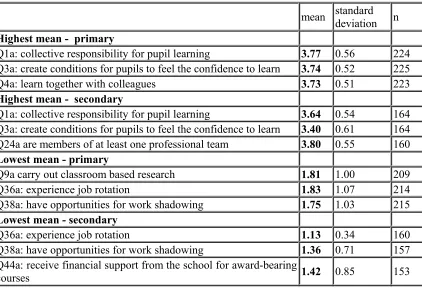
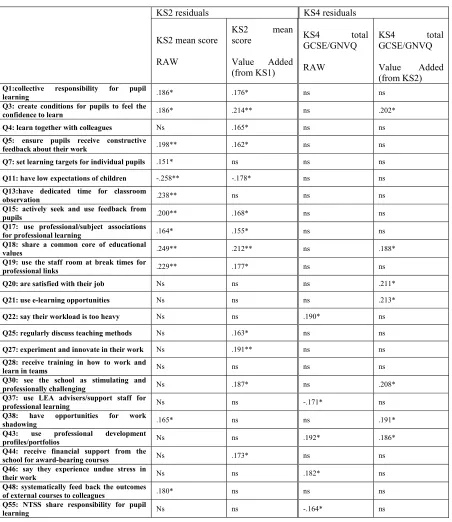
The highest mean level of teacher involvement in PLC-style activities reported by survey respondents was for two items: collective responsibility for pupil learning and create
conditions for pupils to feel the confidence to learn. More importantly, some survey findings
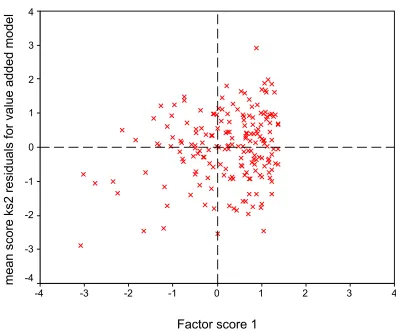
demonstrated a positive, though weak, link between full expression of PLC characteristics and pupil outcomes – in particular value-added performance. The case study findings supported the conclusion that the more fully a PLC expressed the characteristics, the more they impacted positively on pupils’ attendance, interest in learning and actual learning, as well as on the individual and collective professional learning, practice and morale of teaching and support staff.
It is important to recall the overall limitations of the survey, as discussed below in section 9, including the fact that the findings on impact are based on statistical correlations and thus do not in themselves confirm any causal links. Nevertheless these statistical relationships were all positive and none were negative. Similarly, the case study findings were generally positive, especially with respect to impact on staff learning.
Our next two, linked, tasks were to identify and convey:
• the key enabling and inhibiting factors – at national, local, institutional,
departmental/team and individual levels – which seem to be implicated in the initial creation, ongoing management and longer-term sustaining of such communities;
• innovative and effective practice in managing human and financial resources to
create time and opportunity for professional learning and development and optimise its impact.
In the light of the literature review and the case study findings, with some support from the survey findings, we identified four key PLC processes for promoting and sustaining an EPLC: optimising resources and structures; promoting individual and collective learning; specifically promoting and sustaining the PLC; leadership and management. Moreover, it was evident from the case studies that the effectiveness of these processes varied between schools, and over time in the same school, for example in terms of their impact on individual teaching-related practice and on leadership and management practice. So, a third dimension of effectiveness – process - was identified
A different mix of facilitating and inhibiting factors, both internal and external, was identified in each of the 16 case study schools, indicating the importance of both external and site-level contextual factors and underlining both the opportunities and the limitations of headteachers’ and staffs’ capacity to exercise control over factors that are often complex and dynamic. Facilitators included individual staff commitment and motivation, links with other cluster-group schools, focused cpd coordination and site facilities that helped collaborative work and professional dialogue. Inhibitors included resistance to change, staff turnover, central and local policies affecting resources and budgets and staff changes, especially at senior level. Evidence from the survey also indicated related inhibiting contextual factors at the primary level such as a high percentage of free school meals and of English as a second language.
There were many examples of innovative ideas and methods employed to make best use of human and physical resources including a competitive ‘Learning leaders’ scheme in a secondary school, ensuring that all staff in a nursery school had non-contact time, using regular staff meetings to promote collaborative work and professional learning in a primary school and three-weekly case conferences for all staff working with individual children in a special school.
We were specifically asked to look at Investors in People and did so in relation to the case study schools and at the second workshop conference, where it was found to be especially helpful in starting the process of promoting a PLC, but less helpful once schools were quite far along the process of PLC development. In summary, it was a useful, perhaps necessary, but not sufficient method for achieving a PLC.
4. DO PLCs GO THROUGH STAGES OF DEVELOPMENT?
We hypothesised that a school might be at one of three stages as a PLC – starter, developer
and mature. The survey respondents and the case study interviewees accepted these
to this pattern suggesting that the concept of developmental progress may be less appropriate to some aspects of PLCs than others. From the case studies we found a loose positive association between stage of development and the expression of the eight characteristics of PLCs, especially across the nursery phase and, to a somewhat lesser extent, the primary phase. Evidence from the case studies about differential levels of impact related to the PLC’s stage of development was inconclusive.
In the light of these findings, it is reasonable to suppose that PLCs in all types of English school – nursery, primary, secondary and special – are likely to exhibit the eight characteristics identified above, that they will do so to varying degrees and that their ‘profile’ on the eight characteristics will change over time as circumstances change in each school. However, although the face validity of the three stages of development was supported, they need to be modified if they are to be of further use to practitioners and researchers, as argued below.
5. WHAT DO PLCs LOOK LIKE IN DIFFERENT SETTINGS?
A key part of the three tasks was to find out what these characteristics and processes look like
in different kinds of school setting. Context and setting are crucial to any understanding of
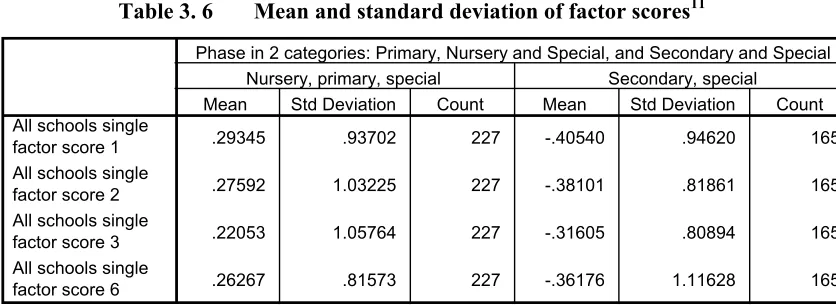
how these characteristics and processes play out in practice. For example, the survey found that primary schools were generally more likely than secondary schools to exhibit the eight characteristics to a greater extent, but not in all cases. These differences between primary and secondary schools were, broadly, confirmed in the case studies, which also indicated important similarities between nursery and special schools. For instance, nursery, primary and special support staff typically worked most closely with teachers whereas the demarcation between teaching and support staff was most apparent in secondary schools. In the latter, the departmental structure often produced small PLCs, with their own distinctive ways of working together, although one-teacher departments in smaller secondary schools faced quite different issues. Location was also sometimes crucial, for example staff in relatively remote schools found it difficult to share experience beyond their own school.
6. DEFINITIONS AND PRINCIPLES OF EFFECTIVE PLCs
Our fourth task was to:
generate models which illuminate the principles of effective professional learning communities and assess the generalisability and transferability of such models.
We began the study with a working definition, presented above, that found broad acceptance with practitioners. In the light of our findings, we now summarise our current thinking on the somewhat problematic issues embedded in the working definition.
definitions and standards. Finally, the introduction of the Workforce Agreement made it essential that support staff be considered directly as potential PLC members and this continues to be the case.
This immediately raised the question: who counts as a professional and by what criteria? We take it as axiomatic, first, that teachers and headteachers are trained, qualified, paid and held accountable for the standards of teaching and learning in a school and, second, that support staff are entirely legitimate members of a professional learning community. We were advised on several occasions that it was more productive to focus on people ‘being professional’ rather than ‘being a professional’. We agree and, therefore, suggest a way forward that depends on the adoption of professional standards as the basis for deciding what counts as professional behaviour by any and all members of a PLC.
Teachers and headteachers now have professional standards in the form of the GTCe Code of
Professional Values and Practice for Teachers and the NCSL’s National Standards for
Headteachers. We suggest that these two sets of standards should be used to inform the work
of a school staff seeing themselves as a professional learning community. We also suggest that appropriate professional standards be developed for support staff and that, when this is done, each school staff should ensure they are mutually consistent.
Our findings lead us to conclude that the view of professional learning adopted in our research rationale is broadly satisfactory. In summary, we assumed that it was focused either directly on promoting effective pupil learning or indirectly on creating conditions to enable effective pupil learning to be promoted. Such learning might arise from both intended and incidental opportunities and might be individual or collective, whether involving a group within the PLC or all members. We conceived learning from such opportunities that improved practice as entailing transfer of learning plus additional learning in and on the job in order to integrate whatever had been learned into skilful performance in the job setting. This would normally require support, for example through coaching or observation with constructive feedback on practice. Our research found the transfer of practice to be one of the least developed processes of PLCs.
When the case study interviewees spoke of their school, department or group as a community, they were usually referring, implicitly or explicitly, to such key characteristics as
inclusiveness, shared values, collective responsibility for pupil learning, collaboration
focused on learning and, most of all, a sense of experiencing mutual trust, respect and
support. We suggest that this is a useful way of summarising the community dimension of a
PLC in schools.
However, there is a further important aspect of PLC membership – namely pupil voice – that we only touched on in this project. It became clear as the project progressed, especially from the workshop conferences, that staff in the case study schools were, to varying extents and using a range of different methods, seeking to take account of pupils’ views and opinions about their own learning and about the school more generally. This was true of all types of school, including nursery and special. Hence, we suggest that this aspect be included in future thinking and practice about the membership and operation of PLCs.
A further key component of the working definition relates to an issue that has already been discussed above – the effectiveness of a PLC. In summary, we suggest that a PLC’s effectiveness should be judged on three criteria:
• its ultimate impact on pupil learning and social development;
• its operational performance as a PLC.
Our findings on sustaining a PLC indicated that this was relatively weak in most of the case study schools, although the limited time frame of the project made this more difficult to explore. In part, the relative weakness was because a number of the issues involved are often intractable and beyond the control, or even influence, of headteachers and senior staff. The most dramatic examples were the closure of one school, due to falling rolls, and the departure of the head in another, but there were several more typical occurrences, notably those arising from key staff changes, especially at senior level. Succession planning and management are familiar and notoriously difficult tasks, especially to those responsible for appointing headteachers. We found in our case study schools that, on the whole, neither governors nor LEAs were much involved in directly supporting PLCs as such, so it is unclear how far those appointing a new head would take this aspect of the school’s work and culture into account. It seems unlikely that they would, for the simple reason that the idea of a PLC, still less the terminology, is not yet familiar or widely used.
This also had consequences for new staff coming in as replacements for key staff. Of course, there is always a balance to be struck between maximising the value of ‘new blood’ and ensuring that successful practice is maintained. There were some very good examples of induction arrangements that achieved this, but the overall concept of a PLC was rarely used as the rationale. Moreover, we also found that neither the impact of professional learning nor the process of PLC operation were normally monitored or evaluated and neither, therefore, was follow-up action taken to maximise their effectiveness. Clearly, the implied question here is: How necessary is it to make explicit use of the idea of a PLC, and the terminology,
and to seek a shared understanding of it in order to promote and sustain a PLC? We suggest
that it is very necessary.
In seeking to arrive at a revised or updated definition of a PLC, we were conscious of the various issues raised in this section and that each school’s context and setting must be taken into account. It was in this spirit that, at our first workshop conference, an eminent American researcher in this field expressed the view that each school staff will probably need to formulate its own working definition of a PLC. We agree and, accordingly, we suggest that the working definition should stand as a useful trigger for this to happen.
7. A PROVISIONAL MODEL AND A DEVELOPMENT PROFILE
Earlier models used to frame the research were based, in part, on the idea that PLCs may progress through three stages of development. Although this idea is a useful starting point, the distinctions are somewhat crude. We, therefore, suggest that a revised model, together with a development profile, both based on the eight characteristics and four processes found to be important in our research findings, might offer a useful basis for practice and research. Hence, we now propose the Provisional Model of a School Operating as an Effective
Professional Learning Community as represented inDiagram 6.1 in the main report.
Each of the model’s dimensions may be exhibited to a greater or lesser extent and so the third aspect of PLC effectiveness proposed above may be usefully thought of as having 12 dimensions. Hence, we also propose an extension of the model in the form of a Development
Profile that reflects the dynamic and changing nature of a PLC. As indicated below, we
part of their self-evaluation strategy under the new Ofsted arrangements. If they do, we suggest that it would be useful to rate the effectiveness of each of the twelve dimensions on a simple but practical high/low scale, as outlined in Table 6.1 in the main report.
8. IMPLICATIONS FOR THEORY BUILDING
A PLC may usefully be seen as a complex metaphor, one that is multi-dimensional and which needs to be ‘unpacked’. The findings should, we hope, inform this ‘unpacking’ process and thus contribute to theory building as the basis for future research. In summary, they supported the importance of the five main characteristics identified in the initial literature review - shared values and vision, collective responsibility for pupil learning, reflective professional inquiry, collaboration and group, as well as individual, learning. They also indicated the importance of three further characteristics – inclusive membership, networks, partnerships and openness and mutual trust, respect and support – and four operational processes – leadership and management, optimising resources and structures, promoting individual and collectiveprofessional learning and promoting, and evaluating and sustaining the PLC.
Furthermore, PLCs and the ways in which they exhibit the twelve dimensions look very different in different phases of schooling and in different contexts and settings. They also change over time along these dimensions, sometimes as a result of deliberate planning and action by heads and senior staff but also in unplanned ways and as a result of factors beyond their control. Although it may be helpful initially to see this as progression through three stages – starter, developer and mature – it is probably more productive to see it as a continuum made up of the twelve dimensions in the Provisional Model rather than as three, uni-dimensional, discrete stages. As indicated in the Development Profile, a PLC may progress or regress on any one or more of the dimensions in a given time period. Hence, the importance of headteachers and senior staff both of having a coherent and explicit concept of a PLC, of deliberately sharing their understanding with colleagues in order to seek their interpretations of its implications, and of monitoring and evaluating its progress on each dimension so that appropriate action can be taken. Of course, a school staff that, at a particular point in time, locate their school at the high end of all or most of the 12 dimensions might find it helpful to see itself as having a more mature profile at that time, while one that rates itself at the low end could see itself as having an early starter profile.
The idea of a PLC undoubtedly overlaps with the earlier concept of a ‘learning organisation’ and with work in the school improvement tradition. We suggest that the concept of ‘community’ offers the possibility of new insights especially in conjunction with the associated characteristics of inclusive membership, mutual trust, respect and support, and the particular emphasis on the collective learning of professionals within the community. Certainly this is worthy of further investigation. We also suggest that the concept of sustainability illuminates current discussions about capacity building and school improvement more generally. The rapid nature of change facing schools indicates that it is unhelpful to think in terms of specific changes being institutionalised: rather, continuous and sustainable professional learning and improvement, sharply directed at pupils’ learning, are required.
for staff discussion or to monitor and evaluate progress in the school. Our suggestion is that they should and that this is worthy of further investigation in the context of sustaining an EPLC.
9. IMPLICATIONS FOR FUTURE RESEARCH AND DEVELOPMENT
This was an exploratory study of a relatively sophisticated and complex approach to capacity building and school improvement. Its limitations will be apparent. One survey questionnaire, designed to be completed by the headteacher or cpd coordinator, in consultation with other staff, was sent to each school. Although the response rate was low, the responses were judged to be representative. Clearly, in any future study, it would be helpful to collect survey data from other staff and, ideally, to increase the response rate (though the latter would continue to be problematic). The case study data were collected in 16 schools of various types. Although they were selected with great care, they are not, of course, representative of all schools in England. The case study headteachers undoubtedly became more aware of the nature of an EPLC from our feedback, especially via the three Workshop Conferences but in our judgement, there was insufficient time for this to make a significant difference to their schools and so the Hawthorn effect can be discounted. Overall, the findings from this study should be regarded as indicative rather than conclusive and they certainly do not offer easy solutions or quick fixes. Nevertheless, we believe them to sufficiently robust as to represent a significant step forward in understanding the idea and potential of a PLC for schools in England and to be potentially valuable in informing future research in this field.
Some important issues about becoming and developing a school as a PLC were not fully explored in the survey (eg extent of mutual trust between staff, leadership at all levels). Further development of the survey instrument would need to examine these aspects and it is also possible, if this were done, that new factors would be identified that support more fully the twelve dimensions of the Developmental Profile. The development of a new survey instrument to provide feedback to a larger sample of schools should also be useful in this context. This would require the development of the analysis and format of feedback provided to schools. Further analysis and modelling of pupil outcomes (eg in specific academic subjects and pupil attitudes) in relation to PLC characteristics and operational processes would also be productive.
In addition, a more refined version of the Development Profile could usefully be the focus of a follow-up research and development project. This would be designed to build upon the research findings in order to provide practical, self-audit instruments and tools for schools wishing to promote and sustain themselves as an EPLC, using an enquiry-oriented approach. These instruments could be developed to promote the Primary and Secondary strategy approaches to CPD and school improvement and the shift to self-evaluation by Ofsted. This study could also investigate further key questions like: ‘How far it is necessary for schools to have a secure starting base, for instance in terms of pupil behaviour or a critical mass of
committed staff as a necessary take-off platform?’ and ‘How might governors become more
integrally involved in developing and sustaining a PLC?’ At the third workshop conference it
was suggested that sets of practical ‘Source Materials’ should be developed, providing structure but not telling people ‘How to do it’. One possibility would be to explore the potential of a simulation game. Such materials could be based on the rich data from the case studies and generate key professional discussion points for schools wishing to use the
As also mentioned earlier, the timeframe for the entire project was 34 months, and the case study period took place over an 18-month period. While it was possible to get a retrospective sense from mature PLCs about how they had developed over time (as illustrated in Chapter 4 of the main report), we could not explore in depth their continued development or fluctuations. It would, therefore, be valuable to be able to return to the same schools in a few years to see what has happened to them in the interim period and whether the dimensions that seemed to be developing are still doing so.
10. CONCLUSION: MESSAGES FOR KEY STAKEHOLDERS
At the outset of the Project, the idea of a PLC was relatively new in this country; it is now central to the NCSL’s revised National Standards for Headteachers and the DfES’ Core Principles for raising standards in teaching and learning. In many ways this was a pioneering study, at least in this country. The practical implications of a concept that has gained wide currency have been investigated for the first time on a national scale using a mix of quantitative and qualitative methods. It is, by its very nature, an exploratory study but we believe the findings have significant messages for policy-makers, practitioners and researchers. The main message was contained in our first conclusion: that the idea of a PLC is one well worth pursuing as a means of promoting school and system wide capacity building for sustainable improvement and pupil learning.
Chapter 1. Introduction
This report presents the outcomes of the Creating and Sustaining Effective Professional
Learning Communities (EPLC)1 project, funded by the Department for Education and Skills
(DfES), the General Teaching Council for England (GTCe) and the National College for School Leadership (NCSL) from January 2002 to October 2004.
At the outset of the Project, the idea of a professional learning community (PLC) was relatively new in this country; it is now central to the NCSL’s revised National Standards for Headteachers (www.ncsl.org.uk) and the DfES’ Core Principles for raising standards in teaching and learning (www.dfes-uk.co.uk). Of course, the importance of professional development for raising standards through school improvement and through individual teacher development has been widely accepted for some time. Indeed, as the literature review in Chapter 2 demonstrates, the progress of educational reform appears to depend in crucial ways on teachers’ capacity, both individually and collectively, to enhance pupils’ learning. The rationale for the broader concept of a professional learning community is that, when teachers and other school staff work together collaboratively with a clear focus on learning, the school’s overall capacity to raise standards is enhanced. Moreover, effective professional learning communities seem more likely to generate and support sustainable improvements because they build the necessary professional skill and capacity. It was these ideas that the Project set out to investigate.
1. PROJECT AIMS
The overall purpose of the Project, as stated in the original specification, was to draw out credible, accessible and practically useful findings - for policy makers, coordinators/providers of professional development and school leaders (managers) - about schools as professional learning communities; and for teachers about the cultures, behaviours and structures that enable them to play an active role in the creation and sustenance of learning communities.
The Project’s broad aims were to a. identify and convey:
• the characteristics of effective professional learning communities and what these look like in different kinds of school setting;
• the key enabling and inhibiting factors – at national, local, institutional, departmental/team and individual levels– which seem to be implicated in the initial creation, ongoing management and longer-term sustaining of such communities;
• innovative and effective practices in managing human and financial resources to create time and opportunity for professional learning and development and optimise its impact;
b. generate models which illuminate the principles of effective professional learning communities and assess the generalisability and transferability of such models; c. produce and disseminate findings sufficiently compelling to practitioners to
mobilise further their practice around effective professional learning communities; d. inform leadership preparation and development programmes, and initial, induction
and CPD programmes, including those for Heads of Department and Special Educational Needs Coordinators (SENCos).
In consultation with the Steering Group, the following working definition was adopted:
An effective professional learning community has the capacity to promote and sustain the learning of all professionals in the school community with the collective purpose of enhancing pupil learning.
In accordance with the original specification, we also hypothesised that schools might be at one of three stages of development as a PLC: starter, developer or mature. This definition and the hypothetical stages were investigated in the project.
The term Effective Professional Learning Community (EPLC) was originally chosen as the project title and was therefore used for our early dissemination materials and the Survey Questionnaire. Hence, Chapter 3 uses the term EPLC in this sense. However, when we came to carry out the case studies, our deepening understanding led us to prefer the term professional learning community (PLC) because, as explained in Chapter 4 (section 3d), we assumed that all schools exhibit some PLC characteristics. From then on we tried to use the term EPLC only when specifically referring to or discussing aspects of effectiveness in a PLC.
2. METHODOLOGY
The aims were explored through four sets of research methods - a literature review, a questionnaire survey, case studies and workshop conferences.
a. The Literature Review and Draft Framework
To prepare the Project bid, an initial literature search led to the development of a draft framework of characteristics and outcome indicators, which served as a preliminary model for organising our thinking about the broad factors likely to influence the creation, development and sustenance of an effective professional learning community. This draft framework was further informed by the ongoing literature review and developed in consultation with the Steering Group and groups of practitioners as part of the process of revising and finalising the research design. The revised framework (Appendix 1.1) was used as the basis for the research design.
The broad aims of the literature review were to:
• identify models and characteristics of effective professional learning communities;
• take account of different disciplinary perspectives for understanding professional development and learning; and
• take account of experience and models in other professions.
Five broad questionswere used to structure the review:
• What are professional learning communities and how has the concept developed?
• What makes professional learning communities effective?
• What processes do professional learning communities use, and how do they contribute to the development of an effective professional learning community?
• What other factors help or hinder the creation and development of effective professional learning communities?
• Are professional learning communities sustainable?
i. in making judgements about 'rigour,' 'robustness' and 'reliability', we tried to use accepted research criteria, indicating the strengths and limitations of the literature as appropriate;
ii. in making decisions about the research framework and the research instruments we used informed professional judgements based on the best available evidence, bearing in mind its strengths and limitations.
The resultant summary literature review (Stoll et al, 2003) suggested that PLCs are characterised by:
• shared values and vision;
• collective responsibility;
• reflective professional inquiry;
• collaboration;
• group, as well as individual, learning.
These findings informed our research instruments and procedures in the questionnaire survey and case studies.
b. The Questionnaire Survey
The questionnaire was designed by the project team in consultation with the Steering Group, international colleagues and a number of teacher focus groups and was then piloted with a sample of schools. It was revised in the light of feedback obtained at different stages throughout this process.
The revised questionnaire had three parts:
• part one contained items designed to gather opinion about professional learning in the school;
• part two explored perceptions of the features of a PLC in a school and the facilitating and inhibiting factors for such communities;
• part three investigated factual items about the range and extent of professional development activities in the school.
The final version of the questionnaire was administered to two samples:
• 800 nursery, primary, secondary and special schools (one questionnaire per school) in the summer term 2002;
• 1500 primary and secondary schools in January 2003.
The questionnaire was administered to two samples because the response rate for the first sample was too low to provide sufficient data for statistical analysis. Usable replies were finally received from 393 schools. This final response rate of 17% was disappointingly low but, nevertheless, was one judged to be representative of nursery, primary, secondary and special schools across England. Details are contained in chapter 3 and Appendix 3.2.
Data analysis focused on three key areas/tasks:
• basic descriptive data on the characteristics of professional learning communities;
• factor analysis techniques to identify and examine key factors related to the processes of developing PLCs;
c. Case studies
The survey provided some very rich data but these were snapshots of perceptions at a particular point. These data were supplemented by case studies conducted in 16 school sites. Our target was to identify 16 case study sites in the categories 'early starter', 'developer', 'mature'.
As described in Chapter 4, the survey returns from the first sample were used as the starting point for selection. We prioritised those returns where the respondent had indicated willingness for the school to be included as a case study site. We also checked that the responses to individual items in these survey returns were consistent with the respondent’s identification of the school as being at a particular stage of development as a PLC. The main criteria for selection were:
a. school type: nursery, primary (ie elementary), secondary, special b. stage of development as a PLC: 'starter', 'developer', 'mature'
We also sought to ensure that the 16 sites selected would, between them, display diversity according to the additional criteria specified in Chapter 4.
d. Workshop conferences
An integral part of the project was a series of three, one-day, residential, workshop conferences for representatives from the 16 case study schools and the Project Steering Group. These aimed to supplement site data collection, review emerging case study findings and promote systematic sharing of practical experience about PLCs. They each lasted 24 hours and took place in July 2003 (Bristol), November 2003 (Birmingham) and July 2004 (Bristol). These conferences provided invaluable opportunities for enhancing the research and for strengthening the credibility of the findings in the eyes of practitioners and policy makers. For example, the concluding discussion in the November workshop reviewed the findings so far on the characteristics of a PLC. The representatives from the participating schools and Steering Group suggested important additional characteristics that were investigated in subsequent case study visits and are reflected in the findings
3. OUTLINE OF THE REPORT
Chapter 2. The Literature Review
1. INTRODUCTION
As stated in Chapter 1, this literature review is structured around five broad questions:
1. What are professional learning communities?
2. What makes professional learning communities effective?
3. What processes are used to create and develop an effective professional learning community?
4. What other factors help or hinder the creation and development of effective professional learning communities?
5. Are effective professional learning communities sustainable?
In establishing the scope of the review, several considerations were relevant. First, since literature specifically focused on PLCs has largely been published since about 1990, this was our starting point for that aspect of the review. However, we also had to make judgements about which key antecedent ideas had contributed to the development of the concept and practice of PLCs: hence, earlier studies are referred to as appropriate. Second, what appears here is a final, updated review. It should be noted that the most recent references did not appear in the initial review and, therefore, did not shape the early data collection instruments. Furthermore, as new understandings about professional learning communities have emerged in the last couple of years, these areas have also been elaborated in more detail than in the initial review completed in March 2002. Third, until the last few years, most of the directly relevant research had taken place in North America, and this is reflected in the studies reviewed here. However, once again, studies from other countries are included as we judged appropriate. Fourth, it should also be noted that the literature examined was of different types. Some was based on careful empirical research that aimed to understand PLCs, often also trying to develop knowledge that could subsequently be applied to improve practice and policy (Wallace and Poulson, 2003; Bolam, 1999). Some, however, either proposed theory about professional learning communities or provided recommendations for improving practice with limited evidence to back these up. Accordingly, we have tried to use accepted research criteria in making judgements about 'rigour,' 'robustness' and 'reliability', indicating the strengths and limitations of the literature as appropriate.
2. WHAT ARE PROFESSIONAL LEARNING COMMUNITIES?
In this section, we examine what the literature has to say about the term professional learning community, then look at how the concept has developed and ‘unpack’ the different words.
a. Defining ‘professional learning community’
. . . in which the teachers in a school and its administrators continuously seek and share learning, and act on their learning. The goal of their actions is to enhance their effectiveness as professionals for the students’ benefit; thus, this arrangement may also be termed communities of continuous inquiry and improvement.
The notion, therefore, draws attention to the potential for a range of people, based inside and outside a school, to mutually enhance each other’s and pupils’ learning as well as school development.
b. How the concept has developed
The concept of professional learning community seems to have emerged from a variety of sources. At one level, it is connected with notions of enquiry, reflection and self-evaluating schools. In this respect the idea of an effective professional learning community is not new, given that certain key features were evident in the work of education writers in the early part of the last century. For example John Dewey was committed to the view that:
…educational practices provide the data, the subject matter, which forms the
problems of inquiry.(Dewey, 1929)
A generation or so ago, Stenhouse (1975) argued that teachers ought to be school and classroom researchers and play an active part in the curriculum development process. Schön (1983) was influential in advocating the notion of the 'reflective practitioner'. From the school-based curriculum development movement of the 1970s, there emerged a series of projects and activities on the 'thinking school', the 'problem-solving school' (Bolam, 1977) and, perhaps most notably, the 'Creative School' (CERI, 1978). Later, in the 1980s came the shift to the self-reviewing or self-evaluating school (McMahon et al, 1984).
The actual term ‘professional learning community’ appears to be one that has emerged from those working within the profession and those supporting schools, for example, in a research review for practitioners by Hord (1997). Most references to ‘learning community’ are related to learning through community service, ICT, HE and other community learning. ‘Professional community’ by contrast, is a body of research starting in the 1980s largely concerned with schools and departments as mediating contexts for teaching (Talbert et al, 1993; Kruse et al, 1995):
. . .teachers’ responses to today’s students and notions of good teaching practice are
heavily mediated by the character of the professional communities in which they work . . .schools differed strikingly from one another in the strength of their professional communities – reporting clear differences, even within the same districts, in levels of collegiality, faculty innovativeness, and learning opportunities as perceived by
teachers (McLaughlin and Talbert, 1993, p.8).
In developing their framework for professional community, Louis et al (1995, p.4) explained that they used the term:
. . . to emphasize our belief that unless teachers are provided with more supporting
and engaging work environments, they cannot be expected to concentrate on
increasing their abilities to reach and teach today’s students more effectively.
Seashore and colleagues (2003, p.3) elaborate:
examining practice to improve student outcomes. . . . The hypothesis is that what teachers do together outside of the classroom can be as important as what they do inside in affecting school restructuring, teachers’ professional development, and
student learning.
c. Unpacking the concept
It is not insignificant that the word ‘learning’ appears between ‘professional’ and ‘communities’. For example, while her main focus was on teaching and its impact on student outcomes in Tennessee elementary schools, Rosenholtz (1989) distinguished between ‘learning enriched’ and ‘learning impoverished’ schools. As McLaughlin and Talbert (2001) point out, not all strong professional communities have an orientation to practice that is conducive to change or even concerned with improvement, and Little (1999) distinguished between schools with strong teacher communities in which the professional culture was either that of ‘traditional community’ (where work was co-ordinated to reinforce traditions) or ‘teacher learning community’ (where teachers collaborated to reinvent practice and share professional growth).
At the heart of the concept, however, is the notion of community. The focus is not just on individual teachers’ professional learning but of professional learning within a community context – a community of learners, and the notion of collective learning. Westheimer (1999, p.75) highlighted five features most commonly identified by contemporary theorists exploring community: shared beliefs and understandings; interaction and participation; interdependence; concern for individual and minority views (“Members of a community,
while sharing interests and a commitment to one another, don’t always agree”); and
meaningful relationships. Central to the notion of school community is an ethic of interpersonal caring that permeates the life of teachers, students and school leaders (Louis, Kruse and associates, 1995; Hargreaves with Giles, 2003).
The community focus emphasises mutually supportive relationships and developing shared norms and values whereas the focus in the literature about professionals and professionalism is towards the acquisition of knowledge and skills, orientation to clients and professional autonomy. This can lead to tensions not least in matters concerned with the regulation of teacher behaviour (Louis, Kruse and associates, 1995; McMahon, 2001) and the operation of any performance-related pay systems. In a North American context, Fullan (2001) concluded that effective schools had established professionally collaborative cultures and argued that attention should shift from focusing on individuals (eg. merit pay, career ladders etc) to developing schools as professional learning communities.
The organisation of many schools also makes it likely that professional learning communities may be operating at a number of different levels. For example, McLaughlin and Talbert (2001) found strong and weak departmental teacher learning communities in their study of 16 high schools, but also found school-wide learning communities in three of the schools.
3. WHAT MAKES PROFESSIONAL LEARNING COMMUNITIES
EFFECTIVE?
In this section we describe five characteristics of professional learning communities highlighted in the literature, and question whether professional learning communities go through different growth stages. Finally, we look at the impact of professional learning communities. It should be noted that many others researching and writing about the characteristics of professional learning communities (PLCs) from whom we derived our characteristics list were implicitly at least assuming that if the characteristics were present, these communities were ‘effective’, for example, by being “much closer to exemplary PLC practices” (Cowan et al, 2004).
a. What are the characteristics of professional learning communities?
Professional learning communities, as described in the literature, appear to share five key characteristics or features:
Shared values and vision. Having a shared vision and sense of purpose has been found to be
centrally important (Andrews and Lewis, 2004). In particular, there is “an undeviating focus” on all students’ learning (Hord, 2004) because individual autonomy is seen as potentially reducing teacher efficacy when teachers cannot count on colleagues to reinforce objectives (Newmann and Welhage, 1995; Louis, Kruse and Associates, 1995) suggest that a shared value base provides a framework for “shared, collective, ethical decision making?”
Collective responsibility. There is broad agreement in the literature that members of a
professional learning community consistently take collective responsibility for student learning (King and Newmann, 2001; Leithwood and Louis, 1998; Kruse et al, 1995). It is assumed that such collective responsibility helps to sustain commitment, puts peer pressure and accountability on those who do not do their fair share, and eases isolation (Newmann and Welhage, 1995).
Reflective professional inquiry. This includes: ‘reflective dialogue’ (Louis et al, 1995),
conversations about serious educational issues or problems involving the application of new knowledge in a sustained manner; ‘deprivatisation of practice’ (Louis et al, 1995) frequent examining of teachers’ practice, through mutual observation and case analysis, joint planning and curriculum development; the seeking of new knowledge (Hord, 2004); tacit knowledge that is constantly converted into shared knowledge through interaction (Fullan, 2001); and applying new ideas and information to problem solving and solutions that address pupils’ needs (Hord, 1997).
Collaboration. This concerns the involvement of staff in developmental activities with
2004). The link between collaborative activity and achievement of shared purpose is highlighted (Newmann and Welhage, 1995).
Feelings of interdependence are central to such collaboration: a goal of better teaching practices would be considered unachievable without collaboration, linking collaborative activity and achievement of shared purpose. This does not deny the existence of micro-politics, but conflicts are managed more effectively in some professional learning communities. Indeed, as Hargreaves (2003, p.163) notes:
Professional learning communities demand that teachers develop grown-up norms in a grown-up profession – where difference, debate and disagreement are viewed as the foundation stones of improvement.
Group, as well as individual, learning is promoted. All teachers are learners with their
colleagues (Louis et al, 1995). In Rosenholtz’s (1989) ‘learning enriched schools’, “professional self renewal” is “a communal rather than solitary happening”. Collective learning is also evident, through collective knowledge creation (Louis, 1994), whereby the school learning community interacts, engages in serious dialogue and deliberates about information and data, interpreting it communally and distributing it among them.
It is also suggested that the various characteristics are intertwined and do not operate separately (Louis et al, 1995; Hord, 2004).
b. Do professional learning communities progress through different stages over time?
School improvement and change literatures identify different phases of change (Fullan, 2001; Miles, 1998). Those studying the business world have also identified predictable and sequential patterns of stages of organisational life cycle change (Quinn and Cameron, 1983; Mulford, 1998). It is unclear, however, whether these would apply to the development and sustainability of learning communities where a key goal is continuous learning rather than the implementation of a specific change initiative. Mulford (2004) suggests that the success of organisations depends on their stage of development. Effectiveness might be considered in terms of evolution over time, such that some schools are at a very early stage of developing the characteristics of a professional learning community (early starters), others are further along the process (developers), while some are more established (mature). Dalin (Dalin with Rolff, 1993) mirrors this in his discussion of school’s life cycles.
Research on senior management teams (SMTs) (Wallace and Hall, 1994) highlighted how teams perennially evolve as their members’ experience of working together unfolds. The group learning curve was especially sharp when the membership changed. Mutual trust developed slowly, and was fragile and easily undermined if one or more members transgressed the norms of SMT colleagues. Similarly, it seems probable that professional learning communities are fluid, rather than fixed, entities, perennially evolving with accumulating collective experience.
espoused values and norms. Moving into implementation, there was a shift to focusing on students and high expectations. In the less frequent cases of institutionalisation, shared vision actually guided teaching and learning (Huffman and Hipp, 2003).
If a conception of professional learning community is adopted that allows for ineffective, starter, or cruising (Stoll and Fink, 1996) professional learning communities, then effectiveness cannot be directly created. What can be done is to create conditions that facilitate the development of effectiveness, and facilitate it from different starting points.
c. What is the impact of professional learning communities?
Impact cannot be considered separately from purpose. Professional learning communities are a means to an end: The goal is not to ‘be a professional learning community.(Morrissey, 2000). A key purpose of professional learning communities is to enhance staff effectiveness as professionals, for the ultimate benefit of students. .
Little (2001) reports that research has steadily converged on claims that professional community is an important contributor to instructional improvement and school reform. Lewis et al (1995) found that in schools with a genuine sense of community there was an increased sense of work efficacy, in turn leading to increased classroom motivation and work satisfaction, and greater collective responsibility for student learning. In Australia, Andrews and Louis (2004) also found that where teachers developed a professional learning community, it not only enhanced the knowledge base of the group, but also had a significant impact on their work in their classrooms. Bryk and colleagues (1999), however, caution that the path between professional community and instructional improvement is not necessarily direct, because instructional improvement may be only one of many purposes of the school. They note how a high performing school with a long history of providing challenging intellectual work for its pupils, that develops into more of a professional community, might be orienting its professional interaction towards conserving existing practices rather than changing them. In contrast, in high poverty settings, like Chicago where their study took place, preserving the status quo would be “likely to perpetuate substandard practice in many
cases” (P758). Bryk and colleagues’ findings lead them to suggest that “if professional
community in fact fosters instructional change, it does so by creating an environment that
supports learning through innovation and experimentation”(p.771). In this they make links
to the literature on organisational learning (Silins and Mulford, 2002). In a recent research study, Seashore and colleagues (2003), also suggest that while professional community has a role to play in changing classroom practice, its effects may be less than those suggested by some previous studies. They concluded that a possible explanation for this, put forward by Toole (2001), was that teachers’ individual mental models – the “schemas” or maps they draw on to guide their professional practice – determine whether individual teachers are actually ready to change, whilst professional community has more power in determining whether such pedagogical changes will persist over time schoolwide.
teachers in classrooms focusing on ‘authentic pedagogy’ – higher quality thinking, substantive conversations, deep knowledge and connecting with the world beyond the classroom. In a study of high schools, Wiley (2001) has found that individual student achievement in maths is positively affected by an increase in the amount of learning in a school resulting from professional community, but this is only the case in schools where teachers experience above average transformational leadership. The effects are also particularly strong in disadvantaged areas. Lee and Smith (1996), in a longitudinal follow-up study of 820 US high schools and almost 9,904 teachers, found that achievement gains for eighth and tenth grade students (in maths, reading, science and social studies) were significantly higher in schools where teachers took collective responsibility for students’ academic success or failure (one of the key characteristics of professional community). In the Netherlands, the researcherswho carried out a study exploring the link between departmental professional community and mathematics test scores of 975 students in a sample of representative junior high and senior high schools concluded that shared goals, joint decision-making, shared responsibilities, consultation and advice were important but insufficient to improve educational practice and, consequently, student achievement (Visscher and Witziers, 2004). Rather, effects resulted when departments:
. . . consistently translate their shared vision and willingness to cooperate into a system of rules, agreements and goals regarding teaching and instruction, and evolve their professional activities around this by obtaining data on student performance, which in turn serves as a feedback mechanism for improving teaching and learning. This differs from a ‘softer’ approach stressing reflective dialogue, sharing materials,
shared vision and the inner value of professional development. (p. 798)
It has been argued, however, that: “the value of community needs to be disentangled from instrumental values of improving measurable student outcomes (eg. achievement)” . . . because: “Community is really about the quality of day-to-day life in schools” (Furman-Brown, 1999) . It should be noted, however, that the aggregate of extensive research in the school effectiveness tradition suggests that intermediate variables like the professional relationships between staff and extent to which they work collaboratively are significant but account for less process (Creemers, 1994). variation in effectiveness than other in-school factors directly related to the teaching and learning
4. WHAT PROCESSES ARE USED TO CREATE AND DEVELOP
PROFESSIONAL LEARNING COMMUNITIES?
Creating and developing professional learning communities appears to depend on working on a number of processes inside and outside schools. These are described under four headings: focusing on learning processes; making the best of human and social resources; managing structural resources; and interacting with and drawing on external agents. We draw not only on specific professional community literature but also that related more broadly to professional development, school improvement and the management of change (see Hopkins, 2001 and Miles, 1998 for summaries) and capacity building (Harris, 2001; King and Newmann, 2001; Stoll, 1999).
a. Focusing on learning processes
Formal professional development opportunities
be a strong emphasis on the professionalisation of teachers’ work through increasing expert knowledge. The centrality of continuing professional development (CPD) to the improvement of educational performance is evident from the importance attached to it over several decades (Bolam and McMahon, 2004).
The DfEE adopted a broad definition of professional development in the White Paper on Learning and Teaching
“. . . any activity that increases the skills, knowledge or understanding of teachers,
and their effectiveness in schools.” (DfEE, 2001) This was elaborated further to
highlight activities regarded as particularly useful:
“Teachers’ prime concerns are their subject knowledge and pedagogical skills – they
say they learn best from observing other colleagues; collective enquiry into school improvement; taking part in coaching or mentoring; high quality training on specific skill areas, with excellent teaching materials and direct support to apply learning in
classrooms”.
In recent years the Government has invested considerable sums of money in teacher professional development in England and Wales. This money has been spent on a range of specific initiatives (eg. training for literacy and numeracy and ICT) as well as the Standards Fund and the five days that can be used for professional development.
The proposals for CPD outlined in this White Paper (DfEE, 2001) marked a change in focus in that there were a number of initiatives (eg. opportunities for secondments and sabbaticals, best practice research scholarships) which had specific funding for which teachers could apply. Two limitations of the previous strategy were that individual teacher development needs mayhave been neglected and that access to development was often very dependent on the capacity and circumstances of the particular school. Reporting on research on CPD in secondary schools McMahon (1999) concluded that provision for the majority of teachers consisted of short training courses that could do little more than raise awareness of issues; that follow up activities or coaching was very rare, although transfer and development of curriculum and instructional skills depends on ongoing peer coaching (Joyce et al, 1999); that professional education in the form of longer award bearing courses was being neglected and that the quality of school support for CPD was very variable. However, there were also many examples of teachers reporting powerful learning experiences both inside and external to the school (eg an opportunity to shadow a senior manager; a period of secondment for academic study). A later study of teachers' perceptions of CPD (Hustler et al, 2003) confirmed that most teachers felt that over the previous five years CPD had been driven by school development needs and national priorities and these had taken precedence over individual CPD needs. However, the research findings also revealed the importance of the school and local context for CPD. Some schools had developed good systems for professional development which influenced teachers’ perceptions although orientations to CPD were more likely to be shaped by the department or group to which a teacher belonged. Factors which helped teachers to develop a positive orientation to CPD were if they had positive views about the profession, and if they could see career progression possibilities linked to CPD. The role of the school CPD coordinator was crucial here.
Work-based and incidental learning opportunities
socialisation (Hart and Weindling, 1996) and learning of skilful managerial performance and associated learning support (Wallace, 1991).
Practical tools for implementing these ideas include professional development profiles (General Teaching Council, 1993) action research (McMahon, 1995), action learning (Wallace, 1991), coaching (Joyce and Showers, 1988) mentoring and peer-assisted learning (Daresh and Playko, 1992) best practice scholarships (DfEE, 2000) professional development bursaries, sabbaticals, and individual learning accounts.
Opportunities for adult learning are plentiful in schools, either through formal programmes or courses (eg. induction programme, professional development days) or more informally through day to day work with students and peers, for example joint planning or teamwork at both group and whole-school level (eg problem solving and creative activities within departments, key stage and pastoral groups, strategic leadership groups, teams developing whole-school policies or leading school improvement activities). Interestingly, Nias et al (1992) reported that the teachers in their study did not consider the workplace a centre of learning for themselves although the researchers were conscious of learning taking place. One outcome of a school determining to build a professional learning community should be to underline the importance of workplace learning and reflective practice (Claxton, 1996). The national Best Practice Research Scholarships scheme is one example of learning closely linked to the workplace. The evaluators (Furlong et al, 2003) concluded that most projects were clearly linked to school, LEA and national priorities and that they were a valuable form of professional development. There was evidence that teacher scholars gained confidence in their own professional judgement and became more knowledgeable and informed in their discussion of classroom practices due to greater use of reading and systematic collection of evidence. The evaluators concluded that mentoring was vitally important to the success of the projects, in their sample the majority of mentors were from higher education institutions (HEIs), illustrating the importance of seeking support outside as well as within the school.
Self-evaluation and enquiry as a learning source
With a broader definition of professionalism, and increased accountability, data analysis and use is now an important part of teachers’ jobs. Dudley (1999) highlighted the difficulties faced by teachers when they try to use data to improve their teaching. There is evidence to suggest that the use of evidence may work and that it deserves further exploration as a means of promoting both professional development and school improvement (Joyce et al, 1999; Sebba, 1997). Furthermore, the positive impact of shared good practice in teachers’ use of data to inform teaching strategies has been reported by Thomas and colleagues (Thomas et al, 2000) and this issue merits further investigation.
As more data and evidence becomes available to schools, the development of ‘inquiry-mindedness’ in relation to analysis and use of student and other data appears to take some time (Earl and Lee, 1998). In some schools that function as learning communities, it gradually begins to: “mature into an accepted, iterative process of data collection, analysis,
reflection, and change” (McLaughlin and Talbert, 2001).
From individual learning to collective learning: transfer of learning and creation of knowledge