A STUDY TO EVALUATE THE EFFECTIVENESS OF STRUCTURED
TEACHING PROGRAMME ON LEVEL OF KNOWLEDGE
REGARDING PROBLEMS OF SUBSTANCE ABUSE
AMONG HIGHER SECONDARY SCHOOL
STUDENTS (15 - 17 YEARS) AT SELECTED
SCHOOLS IN DINDIGUL DISTRICT
By
Mr. VINOTH CHANDRAN. V
Reg. No. 30106244
A DESSERTATION SUBMITTED TO
THE TAMILNADU DR.M.G.R MEDICAL UNIVERSITY, CHENNAI,
IN PARTIAL FULFILLMENT OF THE REQUIREMENT FOR THE
DEGREE OF MASTER OF SCIENCE IN NURSING
(PSYCHIATRIC NURSING)
CERTIFICATE
Certified that this is the bonafied work of Mr.VINOTH CHANDRAN.V, Final Year M.Sc (Nursing) Student of Sara Nursing College, Dharapuram, Submitted in Partial Fulfillment of the requirement for the degree of Master of Science in Nursing to The Tamil Nadu Dr. M.G.R Medical University, Chennai, under the Registration No. 30106244.
College seal:
Signature: ………
PROF.M.KANDASAMY, M.Sc (N)., (Ph.D).,
PRINCIPAL,
SARA NURSING COLLEGE,
PALANI MAIN ROAD, MANAKADAVU, DHARAPURAM – 638673,
TIRUPUR DISTRICT.
A STUDY TO EVALUATE THE EFFECTIVENESS OF STRUCTURED
TEACHING PROGRAMME ON LEVEL OF KNOWLEDGE
REGARDING PROBLEMS OF SUBSTANCE ABUSE
AMONG HIGHER SECONDARY SCHOOL
STUDENTS (15 - 17 YEARS) AT SELECTED
SCHOOLS IN DINDIGUL DISTRICT
Approved by the Dissertation Committee on: 03.02.2011
Signature of the Research Guide: …………..……….
Prof. M.KANDASAMY, M.Sc (N)., (Ph.D)., Principal,
Sara Nursing College, Dharapuram - 638673
Signature of the Clinical Speciality Guide: ………..………..……..…….
Mrs. S.KAVITHA, M.Sc (N)., Associate Professor,
HOD of Psychiatric Nursing, Sara Nursing College,
Dharapuram-638673.
Signature of the Medical Expert: ………..
Dr.DHEEP, M.D., Psychiatrist,
Dheep Psychiatric Clinic, Madurai
ACKNOWLEDGEMENT
“I will exolt the lord at all times; his praise will always be on my lips”
- (Psalms 34:1)
With immense joy and gratitude I raise my heart in praise and sincere gratitude to “God Almighty” for his manifold graces and blessings showered on me all throughout this study.
My sincere gratitude to Mrs.Mariam Ul Asia, Chairman, Sara Nursing college, Dharapuram for providing necessary facilities he had provided in the institution which enabled me to do this study.
It is a moment of great pleasure to place on record, my deep sense of gratitude and indebtedness to Mrs.Benazir, MBA., Vice Chairman, Sara nursing college, Dharapuram for providing necessary facilities in the institution.
I express my sincere gratitude and sense of heartful thanks to our research gudie Prof. Mr.M.Kandasamy, M.Sc(N)., (Ph.D)., Principal, Sara Nursing college, Dharapuram for her untiring efforts, valuable suggestions, constant encouragement and inspiring and illuminating guidance to make the work a successful learning experience.
I wish to place on record, my heartfelt and sincere thanks to my clinical Speciality Guide Mrs.S.Kavitha, M.Sc(N)., Associate Professor, HOD of Psychiatric Nursing, Sara Nursing college, Dharapuram for valuable suggestions, scholastic support, thoughtful comments and motivation during the course of my study.
It is my pleasure to indebt my sincere gratitude to my Medical Guide
Dr.Dheep, M.D., Psychiatrist, Dheep Psychiatric Clinic, Madurai for his guidance and support, throughout this study.
I am greatly thankful to Mr.Senthil Kumar M.phil., Statistician, Dr.G.Viswanathan Hospital, Trichy for his constructive suggestions regarding statistical analysis.
My sincere thanks to Prof. Mary Sumathi, M.Sc (N)., Mrs.Jasmin Guilda star M.Sc(N)., Mrs.Nisha Wilson M.Sc(N)., Mrs.Usha M.Sc(N)., Mrs.Manjula
M.Sc(N) for giving me motivation during the course of my study.
I extend my sincere gratitude to Prof.Mrs.Victorial Selvakumari, M.Sc(N)., Prof. Victor Devasirvadam, M.Sc(N)., (Ph.D), Prof.J.Kavitha, M.Sc(N)., (Ph.D) ., and Mr. M. Selvaraj M.Sc(N)., for their valuable suggestions and guidance throughout my study.
I extend my special thanks to the Nursing Experts Mrs.R.Kalaiselvi, M.Sc(N)., Mrs. S.Rajamani, M.Sc(N), Mrs.Heavenlin Thedor, M.Sc(N) and
Mrs.T.Kavitha, M.Phil(psy)., who have contributed with their valuable suggestion in validating the tool.
My sincere thanks goes to Mrs.Kannammal., M.A.B.Ed ., Principal and staff members of Buds Hindu Vidyala Matriculation Higher Secondary School, Oddanchatram for granting permission and guidance to conduct my research study smoothly in their esteemed institution.
My sincere thanks to Mr. C. Vijay Kumar, M.Sc., MLIS., M.Phil., Librarian, and Mr. Shakthivel, B.Lit, CLISC., Asst. Librarian, Sara Nursing collage, for their support and timely help throughout my study.
My sincere thanks to Mr.K.Koteeswaran, M.A.,B.Ed (English) for editing my research content successfully.
My extend my appreciation to Krishna Computer Centre for helping me in shipping this manuscript.
I also take this opportunity to extend my sincere thanks to my beloved wife
V.Tamizharasi and my beloved Parents Mr.R.Veluchamy and Mrs.Mylathal and my loving Brothers V.Paul and V.Sundar for their great blessings, affections, encouragement and supportand help to me in the successful completion of my thesis.
TABLE OF CONTENTS
CHAPTER CONTENT PAGE NO
I INTRODUCTION 1-15
• Need for the study
• Statement of the problem
• Objectives
• Hypothesis
• Operational Definitions
• Assumptions
• Delimitations
• Conceptual framework
4 11 11 12 12 13 13 13
II REVIEW OF LITERATURE 16-26
• Literature related to problems of Substance abuse
• Literature related to the Effectiveness of
Structured Teaching Programme on knowledge regarding Problems of Substance abuse.
16 21
III METHODOLOGY 27-31
• Research approach
• Research Design
• Variables
• Description of settings
• Population
• Sampling
• Description of the tools
• Validity and reliability
• Pilot study
• Method of data collection
• Plan for data analysis
27 27 27 27 27 28 28 29 29 30 31
IV DATA ANALYSIS AND INTERPRETATION 32-38
V DISCUSSION 37-41
VI SUMMARY, CONCLUSION, IMPLICATIONS AND RECOMMENDATIONS
42-46
BIBLIOGRAPHY 47-52
LIST OF TABLES
TABLE
NO
TITLE PAGE NO
4.1 Distribution of samples according to their demographic variables
33
4.2 Comparison of Mean, Standard deviation and Mean difference on the level of knowledge among higher secondary school students before and after intervention
36
4.3 Association between the level of knowledge among Higher Secondary School Students and their selected demographic variables.
LIST OF FIGURES
FIGURE
NO
TITLE PAGE NO
1.1 Conceptual Frame work on King’s goal attainment Model modified (1989)
15
4.1(i) Distribution of samples according to their Level of knowledge among Higher Secondary School Students before and after intervention.
35
LIST OF ANNEXURE
ANNEXURE TITLE PAGE NO.
A Letter seeking permission to conduct a research study
i
B Tool for data collection iii C Letter requesting opinion and suggestion of experts
for content validity of the research tool
xxix
D Certificate of validation xxx
E List of experts xxxi
F Certificate of editing xxxii
ABSTRACT
A study to evaluate the effectiveness of Structured Teaching Programme on level of Knowledge regarding Problems of Substance Abuse among Higher Secondary School Students (15-17 years) at Selected Schools in Dindigul District .
The study was conducted at Buds Flourishing Hindu Vidyalaya Matriculation Higher Secondary School, Oddanchatram in Dindigul District. The study was conducted from 29.06.11 to 28.07.11. Preexperimental one group pretest and posttest design was used in this study. The total period of data collection was 4 weeks. 50 samples were selected using convenience sampling technique. Oral consent was obtained. . During the first week, assessment of the level of knowledge on problems of substance abuse among Higher Secondary School Students was done. The Structured Teaching Programme regarding problems of substance abuse was provided. After 15 days of Structured Teaching Programme the level of knowledge among Higher Secondary School Students were assessed by using Structured knowledge questionnaire. The descriptive statistics was used for categorical data, mean and standard deviation, inferential statistics , Paired‘t’ test was used to evaluate the effectiveness of Structured Teaching Programme regarding Problems of Substance abuse among Higher Secondary School Students and Chi square was used to find out association between the level of knowledge regarding Problems of Substance abuse among Higher Secondary School Students and their demographic variables.
CHAPTER- I
INTRODUCTION
“ Substance abuse is injurious to health and our family and our nation ” and
“Prevention is better than cure”
Substance abuse is growing problem throughout the world and unfortunately this is more common among young children and adolescents, where they are about to begin their career but get involved in this problems due to various reasons. Substance abuse refers to use of drugs, alcohol and any other mind – altering agent to such an extent that it interferes with the person’s biological, psychological, or social integrity.
Use and abuse of drugs and alcohol by teens is very common and can have serious consequences. In the 15-24 years age range, 50% of deaths (from accidents, homicides, and suicides) involved. Possible stages of teenage experience with substance abuse include abstinence (non-use), experimentation, regular use (both recreational and compensatory for other problems), abuse, and dependency. Repeated and regular recreational use can lead to other problems like anxiety, depression. Some teenagers regularly use drugs or alcohol to compensate for anxiety, depression, or a lack of positive social skills. Teen use of tobacco and alcohol should be minimized because they can be “gate way drugs” for other drugs (marijuana, cocaine, hallucinogens, inhalants, and heroin). (Dr.lalitha.k,2010)
Teenage Drug Abuse - Effects on Schooling:
whose relationships, reputations, futures, wallets, self-images and especially grades suffer as a direct result of the teen drug abuse.
One might readily argue that teenage drug abuse has reached epidemic proportions on some college campuses and high school facilities. Alcohol – one of the most misused drugs today – is also one of the most popular and readily available of all types of drugs and controlled substances found on high school campuses.
Waking in a stupor after the previous night's party, missing classes, falling behind and ultimately losing whatever funding may have accompanied one's higher education is but a single representation of how drugs and/or alcohol can detrimentally impact one's academic experience. Many teens think college is just one big party now that they are on their own at school.
WHO study (2004) on One barrier to developing a national alcohol policy for India, experts say, is the woeful lack of data and research on its national health, social, and economic effect. What is known is that alcohol-related problems account for more than a fifth of hospital admissions; 18% of psychiatric emergencies; more than 20% of all brain injuries and 60% of all injuries reporting to India's emergency rooms. The role of alcohol in domestic violence is substantial: a third of violent husbands drink. Most of the violence took place during intoxication. There is evidence even to suggest that the poor are beginning to drink more than they earn—a deadly spiral of alcohol and debt.
The National Institute of Mental Health and Neuro Sciences (NIMHANS)
that the average monthly expenditure on alcohol for patients with alcohol addiction is more than the average monthly salary.
Vivek Benegal (2003-2004) one of the authors of the report and assistant professor of psychiatry at NIMHANS says that the Indian constitution includes the prohibition of alcohol among its directive principles, alcohol policy is devolved to individual states—as is the levying of taxes on it. Since most states derive around a fifth of their revenue from alcohol taxation-the second largest source after sales tax-they are generally ambivalent towards stemming its flow. Using their findings in the Bangalore study, researchers from NIMHANS have calculated that the direct and indirect costs attributable to alcohol addiction is more than triple the profits of alcohol taxation and several times more than the annual health budget of Karnataka. Extrapolating their findings to the whole of India they estimate the total alcohol revenue for 2003—04 of 216 billion rupees falls 28 billion rupees short of the total cost of managing the effects of alcohol addiction. These included the tangible costs of health care, occupational, financial, social, and legal factors.
The official response to India's problem remains focused on those in acute need rather than on prevention. This situation means that official policy concentrates on just the 4% of the alcohol-dependent adult male population-and ignores the 20% of the population who are “at risk” of serious alcohol abuse.
alcohol-related harm through evidence-based policy intervention, says that the key is to break the stranglehold of state revenue departments who see increasing consumption of alcohol as a boon to treasury coffers.
NEED FOR THE STUDY:
Adolescents give many reasons for using drugs: to experiment, to get high, to have fun, to understand more about life. Adolescents may also use drugs to cope with feelings of worthlessness or loneliness, or to avoid uncomfortable feelings.
National Survey on Drug Use and Health (NSDUH), (2010) an annual
survey sponsored by the Substance Abuse and Mental Health Services
Administration (SAMHSA). Conducted a survey among 67,500 persons regarding problems of substance abuse in America and India stated the following statistical informations:
Illicit Drug Use:
Alcohol Use:
Slightly more than half of Americans aged 12 or older reported being current drinkers of alcohol in the 2010 survey (51.8 percent). This translates to an estimated 131.3 million people, which was similar to the 2009 estimate of 130.6 million people (51.9 percent).
Tobacco Use:
In 2010, an estimated 69.6 million Americans aged 12 or older were current (past month) users of a tobacco product. This represents 27.4 percent of the population in that age range. In addition, 58.3 million persons (23.0 percent of the population) were current cigarette smokers; 13.2 million (5.2 percent) smoked cigars; 8.9 million (3.5 percent) used smokeless tobacco; and 2.2 million (0.8 percent) smoked tobacco in pipes.
Youth Prevention-Related Measures:
The percentage of youths aged 12 to 17 perceiving great risk in smoking marijuana once or twice a week decreased from 54.7 percent in 2007 to 47.5 percent in 2010. Between 2002 and 2008, the percentages who reported great risk in smoking one or more packs of cigarettes per day increased from 63.1 to 69.7 percent, but the percentage dropped to 65.8 percent in 2009 and remained steady at 65.5 percent in 2010.
Substance Dependence, Abuse, and Treatment:
classified with dependence or abuse of both alcohol and illicit drugs, 4.2 million had dependence or abuse of illicit drugs but not alcohol, and 15.0 million had dependence or abuse of alcohol but not illicit drugs.
Between 2002 and 2010, the number of persons with substance dependence or abuse was stable (22.0 million in 2002 and 22.1 million in 2010).
The Centres for disease control & prevention (2008) developed the YRBSS to focus attention on specific behaviours that place adolescents at risk for the most significant health problems: Motor vehicle accident, injuries, homicide, suicide, heart disease, and cancer.
Unintentional and intentional injury, including wearing a seatbelt in a car or truck, attempting suicide, tobacco use, alcohol and other drug use.
Use and abuse of substances such as cigarettes, alcohol, and illegal drugs may begin in childhood or the teen years.
Certain risk factors may increase someone's likelihood to abuse substances. Adolescents give many reasons for using drugs: to experiment, to get high, to “get inside my head” , to have fun, to understand more about life. Adolescents may also use drugs to cope with feelings of worthlessness or loneliness, or to avoid uncomfortable feelings.
Group influence and peer pressure frequently induce people to experiment with drugs. This is particularly important factor for adolescents who are developmentally in a stage of concern about peer group acceptance.
The vast majority of high school students disapproved of legalizing the private use of LSD (63%), heroin (71%), amphetamines and barbiturates (56%), and
marijuana (39%).
The percentage of high school students favoring prohibitive laws on the private
use of marijuana fell dramatically from 1990 to 1997 (from 56% to 39%). Nearly 33 percent of high school seniors in the year 2000 believed that marijuana use should be legalized, and nearly one quarter (23%), believe it should be treated as a minor violation, rather than a crime. Three in ten feel that marijuana should be treated as a crime.
Parents and families face one of the most difficult battles in today’s society – that of raising drug free children. Communication is one of the most powerful tools we have at our disposal in keeping our kids off drugs. We as parents, educators, and supportive organizations, must set the tone, set the standards, and set the societal norm. We must talk to our children on a continuing basis about the dangers of drugs, and be active participants in their lives. Together we can change the face of drug addiction in our communities.
Drug Abuse in India
June 26 is celebrated as International Day against Drug Abuse and Illicit
trafficking and drug addiction. Millions of drug addicts, all over the world, are leading miserable lives, between life and death.
UN report, India too is caught in this vicious circle of drug abuse, and the numbers of drug addicts are increasing day by day. One million heroin addicts are registered in India, and unofficially there are as many as five million. What started off as casual use among a minuscule population of high-income group youth in the metro has permeated to all sections of society. Inhalation of heroin alone has given way to intravenous drug use, that too in combination with other sedatives and painkillers. This has increased the intensity of the effect, hastened the process of addiction and complicated the process of recovery. Cannabis, heroin, and Indian-produced pharmaceutical drugs are the most frequently abused drugs in India.
Elnager et al., (2010) reported a prevalence rate of 13 per 1000 in West Bengal, while Nandi et algave a figure of 0.94 per 1000 of the total population for the same state. Similarly in Uttar Pradesh, Dube and Handa reported that 22.8 per 1000 were dependent on alcohol and drugs while Thacore from Lucknow gave a figure of 18.55 per 1000. Important finding of these studies is that alcohol was the commonest substance used (60-98%) followed by cannabis use (4-20%).
Epidemiological surveys also revealed that 20-40% of subjects above 15 years are current users of alcohol and 10% of them are regular or excessive users. In a rural population of Uttar Pradesh alcohol was found to be the commonest substance abused (82.5%) followed by cannabis (16.1%). Deb and Jindalin a survey of 4 villages in Punjab found that 78.28% of the population used alcohol whereas in the same state
Varma et.al., found that rates of current use of alcohol in Punjab were 45.9% in Jalandhar and 27.7% in Chandigarh whereas it was 28.1% in rural areas of Punjab.
Shukla reported that 38.3% of the rural population in Uttar Pradesh was habitual users. In a study conducted in rural community in Bihar prevalence of alcohol/drug use was found to be 28.8% of the study population. Meena et.al., in an urban population in Haryana revealed a prevalence rate of 19.78% of the study population. In a meta-analysis of 13 psychiatric epidemiological studies it was found that the prevalence rate of alcohol/drug use was 6.9 per 1000 population.
(Stockwell, 2001): There was once a time when college students represented some of America's most lively, ambitious and energetic population. However, the teenage drug abuse and alcohol abuse of today has severely tarnished that image. "…Attitudes toward society among college students today have changed beyond recognition".
(Alcid, 1998, p. PG): Being that college and high school is one of the most stressful of all periods in a person's life, students claim that removing their ability to blow off steam has proven even more detrimental than the activities caused by drinking. "When the Man comes along and denies students the right to have fun (like tailgating at Munn field) they're going to be pissed off. It's like taking away some people's purpose in life. It's sad to think that it's the only thing that people do, but that's what's important to them and they'll fight for it".
The International Narcotics Control Board in its (2002) report the intravenous injections of analgesics like dextropropoxphene etc are also reported from many states, as it is easily available at 1/10th the cost of heroin. The codeine-based cough syrups continue to be diverted from the domestic market for abuse.
abuse. Apart from affecting the financial stability, addiction increases conflicts and causes untold emotional pain for every member of the family. With most drug users being in the productive age group of 18-35 years, the loss in terms of human potential is incalculable. The damage to the physical, psychological, moral and intellectual growth of the youth is very high. Adolescent drug abuse is one of the major areas of concern in adolescent and young people's behavior. It is estimated that, in India, by the time most boys reach the ninth grade, about 50 percent of them have tried at least one of the gateway drugs.
India also is signatory to the following treaties and conventions:
1961 U.N. Convention on Narcotic Drugs
1971 U.N. Convention on Psychotropic Substances
1988 U.N. Convention Against Illicit Traffic in Narcotic Drugs and Psychotropic Substances
2000 Transnational Crime Convention
Practically every country has its own substance abuse problem to face.
STATEMENT OF THE PROBLEM:
“A study to evaluate the effectiveness of Structured Teaching Programme on level of Knowledge regarding Problems of Substance Abuse among Higher Secondary School Students (15-17 years) at Selected Schools in Dindigul District” .
OBJECTIVES:
1. To assess the level of knowledge regarding Problems of Substance Abuse among Higher Secondary School Students before and after intervention. 2. To evaluate the effectiveness of Structured Teaching Programme on the level
3. To associate the post-test score on knowledge regarding Problems of Substance abuse with their selected demographic variables.
HYPOTHESES:
H1: There will be a significant difference on the level of knowledge regarding
Problems of Substance abuse among Higher Secondary School Students before and after Structured Teaching Programme at p<0.05 level of significance.
H2: There will be a significant association between the post test scores on the
level of knowledge regarding Problems of Substance abuse and their selected demographic variables at p<0.05 level of significance .
OPERATIONAL DEFINITIONS:
Effectiveness:
It refers to the statistical significant change in knowledge regarding problems of substance abuse among higher secondary school students.
Structured Teaching Programme:
It refers to planned teaching programme given through lectures to increase the level of knowledge regarding Problems of Substance abuse.
Knowledge:
Problems of substance abuse:
In this study refers to use of alcohol, nicotine, tobacco and illicit drugs such an extent that it interferes with the person’s physical, behavioural, psychological problems.
Higher Secondary School Students:
This study refers to the Students of age group (15-17) years, both boys and girls studying in 11-12thstd at Buds Flourishing Hindu Vidyalaya Matriculation Higher Secondary School at Oddanchatram in Dindigul District.
ASSUMPTIONS:
1. Structured Teaching Programme may help the students to improve their level of knowledge regarding Problems of Substance abuse.
2. Students may have less knowledge regarding problems of substance abuse. 3. Level of knowledge on problems of substance abuse may differ in between
males and females.
DELIMITATIONS:
1. The study was limited to Higher Secondary School students who are studying in Buds Flourishing Hindu Vidhyalaya Matriculation Higher Secondary School, Oddanchatram in Dindigul District.
2. Data collection period was limited to 4 weeks.
CONCEPTUAL FRAME WORK
The conceptual framework selected for this study was based on “Kings Theory of Goal Attainment Model” proposed by Imogene King in the year 1989, the concepts of theory are perception, judgement, action and reaction, interaction and transaction.
Perception refers to each person’s representation of reality. Perceptions are related to past experiences, concept of self, socio- economic group, educational background. In this study, the investigator perceives the higher secondary school students sex, religion, education of parents, occupation of parents, family income, area of stay, place of staying, family members habits of smoking ,alcoholism and drug addiction.
Judgement or decision making is a dynamic and systematic process by which goal directed choice of perceived attention is made and acted upon by individuals or groups to answer a question and attain a goal. In this study, action of the investigator, to assess the level of knowlrdge regarding problems of substance abuse among higher secondary school students. Reaction meant to be the outcome of the action is classified as inadequate, moderately adequate and adequate.
Interaction or implementation is a process of perception and is communicated between person and environment and between person and person represented by verbal and non verbal behaviour that are goal directed. In this study the investigator provide intervention Structured Teaching Programme to the higher secondary school students.
CHAPTER II
REVIEW OF LITERATURE
Review of literature is a key step in the research process. A review of literature is comprehensive and covers all relevant research and supporting documents in print. Literature review is essential to locate similar or related studies that have already been completed which helped the investigator to develop deeper insight into the problem and gain information on earlier studies. Review of literature is a systematic identification, location, scrutiny and summary of written materials that contain information on research and the problem.
The literature reviewed related to the present study is organized and presented under the following headings.
1. Literature related to Problems of Substance abuse.
2. Literature related to the Effectiveness of Structured Teaching Programme on knowledge regarding Problems of Substance abuse.
1. Literature related to Problems of Substance abuse:
being able to meet school responsibilities were the common alcohol-related adverse outcomes reported by the participants.
Kingendo, Dr Madrine.PhD, (2010) conducted study was to find out the incidence and extent of drug abuse among secondary school students in Nairobi Province, Kenya. 20% of adolescents aged between 12 and 22 years smoke cigarettes, 9% smoke bhang while 23% drink commercial beer and spirits. An expost-facto research design was used. The study population comprised of all public secondary schools in Nairobi Province.
Using stratified sampling to obtain different categories of schools, and the status of each school. The questionnaires were administered to the respondents by the researcher. Findings showed that peer pressure, school and family stress, and drug availability contributed to students’ drug abuse. The study also found that most students, 81%, who abused drugs did this often. The study concludes that stringent measures should be put in place urgently so as to address the problem of drug abuse.
friends (39% in boys, 16.9% in girls). The most used drug was alcohol among boys (11.4%) and sedative tablets among girls (12.2%). The first reason for using drugs was socializing with unsavory friends (29.4%) and the second one was domestic problems (21.4%). The results of this study indicated dangerously increase of drug abuse among teenagers.
Fallu JS, Bondy SJ, Taylor B, Adlaf, Monga N, Rehm J, (2005) conducted study on alcohol related problems among secondary school students. The 2003 cycle of the Ontario student drug use Survey obtained self-administered questionnaires from a representative classroom- based survey of 2455 Ontario secondary school students (grades 9-12) from 74 schools. Average volume of alcohol consumption was assessed using a quantity-frequency measure. Alcohol –related problems were measured by using seven items of the Alcohol Use Disorders Identification Test. Future prevention of alcohol-related problems in adolescents should consider both the average volume and patterns of drinking. Both prevention and research should also try to include environmental determination of alcohol- related problems.
cannabis was used. It is concluded that the use of illicit and socially acceptable drugs may pave the way for the abuse of illicit ones.
Pela O. A. and Ebie J.C, (2004) conducted study on knowledge and pattern of drug use among school children in Benin city. A questionnaire, which sought to gather information on personal on personal and family background, drug knowledge, usage and academic achievements, among other variables, was administered to 350 boys and girls randomly selected from three of 13 secondary schools in Benin city. The age of respondents between 11-21 years. 181 (56%) were males. They reported knowledge of alcohol 215 (66.6%), 283 were heard of cannabis, 71 (22%) having seen or handled it. 110 were knowledge of stimulants. A knowledge of sedatives and hypnotics were 141(43.4%) with more females having used them.67.6% of the drug users were adjudged to be introverts.
Pires M.,Kupek E, Baus J, (2002) conducted study to assess prevalence and risk factors associated with drug abuse among public elementary and high school students in the southern city of Florianopolis, Brazil. A descriptive cross-sectional study wascarried out using a standardized questionnaire created during the 4th national survey on drug abuse. 478 students were interviewed by trained college students. Of the interviewers 43% aged 13-15 years and 32% aged 16-18 years and they had a higher socioeconomic status. Use of alcohol, marijuana, solvent drugs and amphetamines was 86.8%, 19.9%, 18.2% and 8.4% respectively. Age,sex, social status and living with both parents were significantly associated with drug abuse. Cigarette and marijuana smoking, respectively were 84% and 67% more likely among students whose parents were separated. There is a high prevalence of drug use among elementary and high school students in Florianopolis.
Rydberg U.Kuhlhor n E,Borschos B, (1999) Conducted study of alcohol and drug habits among 734 medical students at the Karolinska Institute in Stockholm were randomly selected for inclusion in a postal questionnaire study of alcohol and drug habits. The response rate was over 80%. 12% of the male and 4% of medical students were considered to be at risk of alcohol problems. About 7% of the medical students reported having used illegal drugs such as marijuana and cocaine and 9% to have used sedative and / or hypnotic drugs.
professionals was higher than that among females, rural students and children of non-professionals.
Gordon, Floris, (1995) conducted study to assess knowledge, attitude and practice of students with regard to drug use was undertaken in schools in Jamaica.The study was conducted among 200 students in four all age schools, in the metropolitan area. Random sample was selected and a self administered questionnaire was used to collect the data. The results revealed that drug abuse was rising and was more common in males. Alcohol was the most commonly used drug, followed by tobacco, cannabis and inhalants. 90 percent of alcohol users became regular users. The illicit drugs, cannabis was most prevalent. 24% of students believed there was no risk involved in taking drugs. Study concluded that the problem of drug use and abuse had risen and made recommendations, including that institutions deal with drug abuse in adolescents and existing educational programmes be strengthened and lower age groups.
2. Literature related to the Effectiveness of Structured Teaching Programme on
knowledge regarding Problems of Substance abuse.
problems varied by age. Young adults (18-25) were found to be most vulnerable to co-occurring problems.
Bramley D, Bullen C, Denny, (2011) conducted study to assess the effectiveness of a multimedia mobile phone intervention for smoking cessation. Participants had to be 16 years of age or over, be current daily smokers, have a video message- capable phone. Registration and data collection were completed online by text messages. The intervention group received an automated package of video and text messages over 6 months. The control group received a general health video message sent to their phone every 2 weeks. 226 randomized participants, 47% (107/226) were female and 24% (54/226) were maori. Their mean age was 27 years (SD 8.7), and there was a high level of nicotine addiction. Continuous abstinence at 6 months was 26.4% (29/110) in the intervention group and 27.6% (32/116) in the control group (p=.8). This study was not able to demonstrate a statistically significant.
indicated interactive training was no more effective than traditional didactic lectures in developing the knowledge and skills needed for a brief alcohol intervention.
Ringwalt CL, Shamblen SR, Hanley SM, (2011) conducted study on effects of Project SUCCESS on a range of secondary outcomes, including the program's mediating variables. Project SUCCESS, is a school-based substance use prevention program that targets high-risk students. We recruited two groups of alternative high schools in successive academic years, and randomly assigned schools in each group to either receive the intervention (n = 7) or serve as a control (n = 7). Students completed surveys prior to and following the administration of the program,and again 1 year later. Although participation in Project SUCCESS significantly increased students' perceptions of harm resulting from alcohol and marijuana use, students in the control group reported greater increases in peer support.
Maddion R, McRobbie H, Bullen C, (2008) conducted study was to develop and pilot a youth- oriented multimedia smoking cessation intervention delivered solely by mobile phone. Approximately 180 young people participated. There was a high priority placed on music relaxation (75%) and an interest in interacting with others in the program (40% would read messages, 36% would read a blog). Findings from the pretesting phase (n=41) included the importance of selecting real and honest role models with believable stories and an interest in animations (37%). Nine participants (60%) stopped smoking during the program.
coded for each. The dominant media portrayals depicted law enforcement or criminal justice action (55%), but most articles were reported in a neutral manner, in the absence of crisis framings.
Beecham J, Van der Zanden R,Smit F, (2007) conducted study an internet-based health economic evaluation of a preventive group-intervention for children of parents with mental illness or substance use disorders. A randomized controlled trial to examine the cost effectiveness of the kopstoring intervention.Kopstoring is anonline intervention for COPMI- strengthen their coping skills and prevent behavioural and psychological problems. This conducted entirely over the internet. Power calculation show that 214 participants was recruited via media announcement and banners on the internet. The main outcome is internalizing and externalizing symptoms as measured by the youth self report. For the economic evaluation, health care costs and costs outside the healthcare sector was measured at the same time as the clinical measures, at baseline 3, 6 and 9 months. An extended measure for the intervention group was provided at 12 months, to examine the long-term effects.
within a behavioural setting. Results suggested that this is a highly effective method for teaching safety skills to high-risk children who have learning difficulties.
Zaborskis A, Sumskas L, (2006) conducted study to evaluate the prevalence and trends of drug use among students of vocational schools in Klaipeda city. Two cross-sectional questionnaire surveys were carried out among first-year students. Random samples of 912 and 342 students aged 16-19 years were questioned. Questions such as marihuana, club drugs, injectable drugs, and other drugs. In 2004, 56.0% of male respondents and 42.0% of female respondents have reported any drug use during their life. Prevalence of drug use during 2004-2006: up to 65.5% in boys (P<0.05) and up to 44.0% in girls (P>0.05). Percentage of club drug users increased significantly in girls (from 21.5% to 29.8%; P=0.040) and exceeded the level of boys. The average number of drugs of different types used by boys changed slightly from 1.57 to 1.63 (P>0.05), but increased significantly in girls (from 1.49 to 1.88, P<0.001).More significant relationship between drug use and social and behavioral factors.
regard to percent of medical records with evidence of screening and intervention (17% before versus 58% after; 95% confidence interval 31 to 50; P<.001); no change was observed in the control group (n=19). These increases were significant differences within or between groups for composite scores.
White JM, Dodding CJ, Taverner D, (1997) conducted study on new medical graduates lack clinical skills in assessing and managing patients seeking drugs of dependence. A preliminary survey indicated that common problems seen by primary care practitioners included both new and known cases of benzodiazepines or opiates. A didactic small group tutorial, a video- based tutorial using professional actors and computer aided instruction package using digitized video were developed and trialed with undergraduate medical students over 2 years in a parallel-group design. Outcome was assessed by student feedback, performance on a case based written examination and by a structured evaluation of interviews with simulated patients requesting drugs. No difference was seen in written examination and simulated patient outcomes between the three groups.
CHAPTER-III
RESEARCH METHODOLOGY
RESEARCH APPROACH:
Quantitative Evaluative Research approach was used for this study.
RESEARCH DESIGN:
A Pre experimental one group pre test and post test design was used in this study.
O1 X O2
O1: Pre test to assess the level of knowledge regarding Problems of substance
abuse among Higher Secondary School Students. X: Structured Teaching Programme
O2: Post test to assess the level of knowledge regarding Problems of substance
abuse among Higher Secondary School Students.
VARIABLES:
• Independent variable : Structured Teaching Programme
• Dependent variable : Knowledge regarding Problems of Substance abuse
POPULATION
• The Population of the study comprises of Higher Secondary School Students (15-17 years).
SETTING OF THE STUDY:
District. The total strength of 11th and 12th standard students were 38 and 18 respectively, out of which 24 boys and 26 girls were selected for this study.
SAMPLING:
Sample:
The Sample of this study was Higher Secondary Students.
Sample size:
The Sample Size was 50 Higher Secondary Students.
Sampling technique:
Convenience Sampling Technique was used for this study.
SELECTION CRITERIA:
Inclusion Criteria:
• Students who are willing to participate in this study. • Both male and female students
Exclusion criteria:
• Students who are Physically ill and absent during data collection period. • Students who are not willing to participate in this study.
DESCRIPTION OF THE TOOL:
The data collection tool consists of two parts. Part – I:
family, area of stay , place of staying, family members habits of smoking, alcoholism and drug addiction .
Part – II:
• It consists of Structured knowledge questionnaires regarding Problems of Substance abuse. There was one correct answer and 3 distracters for each question. For every correct answer a score of one awarded and for every wrong answer a score of zero awarded. The total possible score was 20. The total score of each item was calculated and converted in to percentage and interpreted as follows,
0-10 50 % and below - Inadequate knowledge
11-15 51- 74 % - Moderately adequate knowledge
15-20 75 % and above - Adequate knowledge
VALIDITY:
The tool was evaluated by 5 experts (Three experts from the department of Mental health Nursing, one from Psychiatrist and one from Psychologist). The suggestions were incorporated.
RELIABILITY
To ensure the reliability of the tool, it has been administered to 5 students who met the inclusive criteria. The reliability of the tool established by test-retest method and reliability was r=0.88.
PILOT STUDY
Dindigul District among 5 students on knowledge regarding problems of substance abuse. The study was found feasible to conduct.
METHOD OF DATA COLLECTION:
Ethical considerations:
The Study was conducted after the approval from the Dessertation committee of Sara Nursing College, Manakadavu, Dharapuram and Permission from Principal, Buds Flourishing Hindu Vidyalaya Matriculation Higher Secondary School, Oddanchatram, Dindigul District. Samples were assured of anonymity and confidentiality of the information provided by them.
Period of data collection
The Main study was conducted in Buds Flourishing Hindu Vidyalaya Matriculation Higher Secondary School, Oddanchatram, Dindigul District for 4 weeks from 29.06.2011 to 28.07.2011.
DATA COLLECTION PROCEDURE:
Secondary School Students were assessed by using Structured knowledge questionnaire.
PLAN FORDATA ANALYSIS:
The descriptive statistics was used for categorical data. Paired‘t’ test was used to evaluate the effectiveness of Structured Teaching Programme on knowledge regarding Problems of Substance abuse and Chi square was used to find out association between Problems of Substance abuse and their demographic variables.
CHAPTER IV
ANALYSIS AND INTERPRETATION
Analysis is the process of organizing and synthesizing data in such a way, that question answered the hypothesis ( Polit,D,F.Huggler 2003).
In this chapter, the data collected were systemically processed, tabulated and made suitable for analysis and Interpretation.
Sections in data analysis:
The data analysis is presented in the following section: Section-A:
Distribution of Samples according to their demographic variables. Section-B:
i) Distribution of samples according to the level of knowledge regarding Problems of Substance abuse among Higher Secondary Students before and after Structured Teaching Programme
ii) Comparison of Mean, Standard deviation and Mean difference in the level of knowledge among higher secondary school students before and after intervention
Section-C:
Association between the post test scores on the level of knowledge among Higher Secondary Students and their selected demographic variables.
SECTION- A
Table- 4.1: Distribution of samples according to their demographic variables:-
(n=50) S.NO DEMOGRAPHIC VARIABLES f %
1. Sex:
a. Male b. Female 24 26 48 52 2. Religion:
a. Hindu. b. Christian c. Muslim. d. Others
47 3 - - 94 6 - - 3. Education of father:
a. No Formal Education b. Primary School c. Higher Class d. Higher Secondary e. Graduates 2 10 24 7 7 4 20 48 14 14 4. Education of mother:
a. No Formal Education b. Primary School c. Higher Class d. Higher Secondary e. Graduates 4 12 28 3 3 8 24 56 6 6 5. Occupation of father:
a. Un employee
b. Professional worker. c. Business.
d. Self employee
1 10 26 13 2 20 52 26 6. Occupation of mother:
a. Un employee
b. Professional worker. c. Business.
d. Self employee
7. Family income: a. Below Rs.4000/- b. Rs.4001 - Rs.8000/-
c. Above Rs.8001- Rs.12000/- d. Above Rs.12001/-
2 15 18 15 4 30 36 30 8. Type of family:
a. Joint Family b. Nuclear Family c. Extended Family
19 31 --- 38 62 --- 9. Area of stay:
a. Urban area b. Rural area
24 26
48 52 10. Place of staying:
a. Home (with parents) b. Hostel
38 12
76 24 11. Family members habits of smoking, alcoholism, and
drug addiction: a. Yes b. No
22 28
44 56
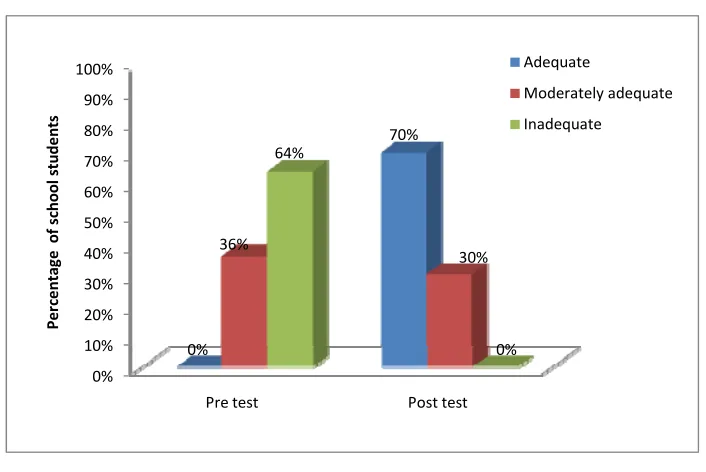
SECTION-B 0% 10% 20% 30% 40% 50% 60% 70% 80% 90% 100% Pre test Post test 0% 70% 36% 30% 64% 0% Per ce n tag e of sc hool stude n ts Adequate Moderately adequate Inadequate
Figure 4.1 (i) .Distribution of samples according to the level of knowledge
regarding Problems of Substance abuse among Higher Secondary Students
before and after Structured Teaching Programme.
[image:46.612.128.481.102.338.2]SECTION-B
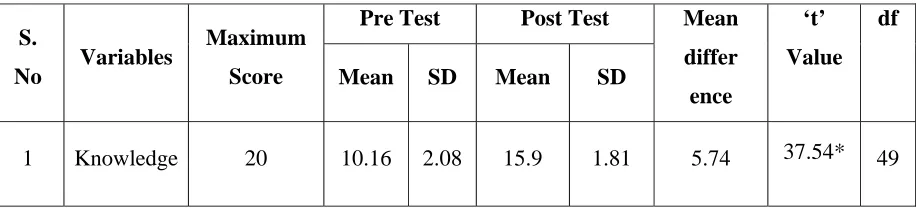
Table 4.2:(ii). Comparison of Mean, Standard deviation and Mean difference in
the level of knowledge among Higher Secondary School Students before and
after intervention
(n=50)
*(P<0.05)
Effectiveness of Structured Teaching Programme on knowledge regarding Problems of Substance abuse.
In the pre test the mean score of knowledge was 10.16 (±2.08) and In the Post test the mean score of knowledge was 15.9 (±1.81).
The paired t’ test value was (37.54) which is greater than the Table value (1.684) at (p<0.05) level of significance. Hence the Structured Teaching Programme is more effective in changing the level of knowledge regarding Problems of Substance abuse.
S.
No Variables
Maximum Score
Pre Test Post Test Mean differ ence
‘t’ Value
df
Mean SD Mean SD
[image:47.612.96.554.220.325.2]SECTION- C
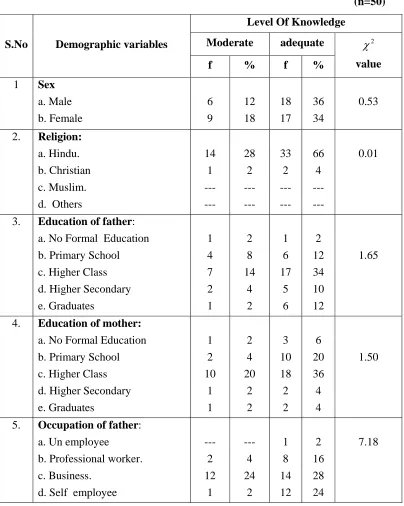
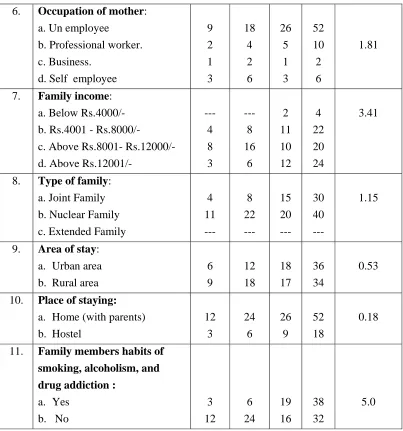
Table-4.3: Association between the level of knowledge among Higher Secondary
School Students and their selected demographic variables.
(n=50)
S.No Demographic variables
Level Of Knowledge Moderate adequate χ2
value
f % f %
1 Sex
a. Male b. Female 6 9 12 18 18 17 36 34 0.53
2. Religion:
a. Hindu. b. Christian c. Muslim. d. Others
14 1 --- --- 28 2 --- --- 33 2 --- --- 66 4 --- --- 0.01
3. Education of father: a. No Formal Education b. Primary School c. Higher Class d. Higher Secondary e. Graduates 1 4 7 2 1 2 8 14 4 2 1 6 17 5 6 2 12 34 10 12 1.65
4. Education of mother:
a. No Formal Education b. Primary School c. Higher Class d. Higher Secondary e. Graduates 1 2 10 1 1 2 4 20 2 2 3 10 18 2 2 6 20 36 4 4 1.50
5. Occupation of father: a. Un employee b. Professional worker. c. Business.
d. Self employee
6. Occupation of mother: a. Un employee
b. Professional worker. c. Business.
d. Self employee
9 2 1 3 18 4 2 6 26 5 1 3 52 10 2 6 1.81
7. Family income: a. Below Rs.4000/- b. Rs.4001 - Rs.8000/-
c. Above Rs.8001- Rs.12000/- d. Above Rs.12001/-
--- 4 8 3 --- 8 16 6 2 11 10 12 4 22 20 24 3.41
8. Type of family: a. Joint Family b. Nuclear Family c. Extended Family
4 11 --- 8 22 --- 15 20 --- 30 40 --- 1.15
9. Area of stay: a. Urban area b. Rural area
6 9 12 18 18 17 36 34 0.53
10. Place of staying:
a. Home (with parents) b. Hostel 12 3 24 6 26 9 52 18 0.18
11. Family members habits of smoking, alcoholism, and drug addiction :
a. Yes b. No
[image:49.612.115.518.64.495.2]3 12 6 24 19 16 38 32 5.0 Table 4.3 shows that there was a no significant association between the level
of knowledge regarding problems of substance abuse among Higher Secondary School Students and their demographic variables.
CHAPTER-V
DISCUSSION
This chapter presents the interpretation to the statistical findings. It has been discussed based on the objectives of the study.
The first objective of the study was to assess the level of knowledge regarding
Problems of Substance Abuse before and after Structured Teaching Programme
among Higher Secondary School Students.
Among 50 students, in the pretest 32(64%) of them had inadequate knowledge, 18(36%) had moderate knowledge regarding Problems of Substance Abuse. In the post test 35(70%) of them had adequate knowledge, 15(30%) of them had moderate knowledge regarding Problems of Substance Abuse.
The Second objective of the study was to evaluate the effectiveness of Structured
Teaching Programme on the level of Knowledge regarding Problems of
Substance abuse among Higher Secondary School Students.
In the pretest the mean score of knowledge was 10.16 and In the Post test the mean score of knowledge was 15.9. Paired ‘t’ test was used to find the difference between the pre and post test knowledge score was significant. The analysis showed that the ‘t’ value (37.54) is greater than the table value (1.684) at (p<0.05) level of significance. Hence the Structured Teaching Programme is more effective in changing the level of knowledge.
H1: There will be a significant difference on the level of knowledge regarding
Problems of Substance abuse among Higher Secondary School Students before and after Structured Teaching Programme at p<0.05 level of significance.
Therefore Hypothesis 1 was accepted.
The third objective of the study was to associate the post-test scores the level of
knowledge regarding Problems of Substance abuse with their selected
demographic variables:
There was a no significant association between the level of knowledge regarding Problems of Substance abuse and selected demographic variables.
H2: There will be a significant association between post test score on the level of
knowledge regarding Problems of Substance abuse and their selected demographic variables at p<0.05 level of significance.
Therefore Hypothesis 2 was retained.
Summary:
CHAPTER- VI
SUMMARY, CONCLUSION, IMPLICATIONS, RECOMMENDATIONS AND
NURSING IMPLICATIONS
This chapter deals with summary of the study and conclusions drawn. It clarifies the limitations of the study, the implication and recommendations given for different areas like nursing education, administration for health care delivery system and nursing research.
The study was conducted at Buds Flourishing Hindu Vidyalaya Matriculation Higher Secondary School, Oddanchatram in Dindigul District. The study was conducted from 29.06.11 to 28.07.11. Preexperimental one group pretest and posttest design was used in this study. The total period of data collection was 4 weeks. 50 samples were selected using convenience sampling technique. Oral consent was obtained. During the first week assessment of the level of knowledge on problems of substance abuse among Higher Secondary School Students was done. The Structured Teaching Programme regarding problems of substance abuse was provided. After 15 days of Structured Teaching Programme the level of knowledge among Higher Secondary School Students were assessed by Structured knowledge questionnaire.
There was a significant difference (p<0.05) found between the pretest 10.16 (±2.08) and posttest 15.9 (±1.81) mean score on level of knowledge regarding Problems of Substance abuse among Higher Secondary School Students . There was no significant association on demographic variables. The finding of the study shows that Structured Teaching Programme more effective to improve the level of knowledge regarding Problems of Substance abuse among Higher Secondary School Students.
Major findings of the study:
It is Summarized as follows,
Among 50 samples, 26 (52%) of them were Female.47 (94%) of the samples were Hindu, 24(48%) of the mother had higher school education. 28(56%) of the fathers had higher school education , 26(52%) of them were doing business, 35(70%) of them were unemployed, 18(36%) of them have monthly income of Rs.8,001 to Rs.12,000. 31(62%) of them belongs to Nuclear family, 26(52%) of them were belongs to rural area.38 (76%) of them were staying along with their parents and 28(56%) of them not having habits of substance abuse.
In the pretest 32(64%) of them had inadequate knowledge, 18(36%) had moderate knowledge regarding Problems of Substance Abuse. In the post test 35(70%) of them had adequate knowledge, 15(30%) of them had moderate knowledge regarding Problems of Substance Abuse.
The paired ‘t’ test value was (37.54) which is greater than the Table value (1.684) at (p<0.05) level of significance. Hence the Structured Teaching Programme is more effective in changing the level of knowledge regarding Problems of Substance abuse.
The findings of this study had implications in various areas of Nursing i.e., Nursing Practice, Administration, Education and Nursing research.
Nursing Practice:
¾ Psychiatric Nurses should play an vital role in understanding the Psychological Problems of the Substance abuse.
¾ Psychiatric Nurses should be able to identify the Problems of Substance abuse which helps the Students to improving their knowledge and avoid using substance abuse.
¾ Psychiatric Nurses can provide an Structured Teaching Programme on knowledge regarding Problems of Substance abuse.
Nursing Education:
¾ Nurse educators must be specially trained to provide Structured Teaching Programme , regarding Problems of Substance abuse.
¾ The Nurse educator can create awareness about knowledge regarding Problems of Substance abuse among Higher Secondary School Students.
Nursing Research:
¾ The understanding of this study helps health professionals and researchers to identify Problems of Substance abuse among Higher Secondary School Students in Indian perspective.
¾ Nurse researcher should challenge to perform scientific work and take part in research application and evaluation of Structured Teaching Programme , regarding Problems of Substance abuse among Higher Secondary School Students.
Nursing Administration:
¾ The Nurse administrators can motivate the Psychiatric Nurses to assess the level of knowledge regarding Problems of Substance abuse.
¾ The Nurse administrator should arrange for Education Programme to disseminate the research findings and emphasis about the benefits of Structured Teaching Programme regarding Problems of Substance abuse.
¾ The Nurse administrator can prepare skilled Nurses who can spend time with people in solving Psychological and Physiological disequilibrium of Students
Recommendations:
¾ A Similar study can be replicated with larger sample size and in various other settings.
¾ A similar study can be carried out regarding knowledge on substance abuse among adults.
¾ Comparative study may be conducted between students studying technical courses and professional courses.
¾ A study may be conducted to find out factors that influences substance abuse and preventive aspects among students.
Conclusion:
BIBLIOGRAPHY
Books:
• Basavanthappa. B.T (2007) “Psychiatric Mental Health Nursing”, 1st edition New Delhi, Jaypee Publications.
• Batia M.S.(2010), “Aids of Psychiatry”, 2nd edition, New Delhi: CBS Publications
• Dr.Bimlakapoor (2005) “Textbook of Psychiatry Nursing”, volume II, 2nd edition, Kumar Publishing house.
• Gali.W.Stuart Michele,T.Lararia.(2005), “Principles and practice of Nursing”, 7th edition “Kundrli, Mosby Publications.
• Harold I Kaplan, Benjami.J, Saduck,Jack A, Grebb (1991) “synopsis of psychiatry”,7th edition , Maryland,Williams & Wilking company.
• Harold I, Benjamin, J.Saduck. (2000) “Concise text book of clinical Psychiatry” 1st edition, India; Lippincott Publication.
• Iron Bar & Hooper (1991) “Mental health Nursing”,2nd edition , Philadelphia, Bailliere Tindal Publication.
• Judith Haber; Anita M. Leach, Sylvia., Barbara Plynn Side Leax (1978).
“Comprehensive Psychiatric Nursing” 1st edition, New york, Blaviston Publication.
• Julia I, Booking (1994), “A Textbook of Psychiatric and Mental Health”, 3rd edition, Singapore, Longman Publisher.
• Katherine M.Fortinash; Patricia A.Holoday Worret (2004) “Psychiatric Mental Health Nursing” 3rd edition , Missari, Mosby Publication.
• Louise Rebrace Shives., Ann Issacs(2002). “Basic Concepts of Psychiatric Mental Health Nursing” 5th edition, Philadelphia, Lippincott Publication.
• Mary C.Townsend (2007) “ Psychiatric Mental Health Nursing” 5th edition Jaypee Brothers Publications.
• Mohan D. Sethi HS “Current research in abuse in India”. 3rd edition, Gemini Printers: New Delhi; 1981. p. 18-31.
• Neeraja K.P. (2008) “ Essentials of Mental Health and Psychiatric Nursing”,
Volume 2 ,1st edition ,Karnataka,” Jaypee Brothers Publications.
• Niraj Ahuja(2008) “ A Short Text Book of Psychiatry”,5th edition ,Mumbai, Jaypee Brothers Publications.
• Polit O.F.& Hanger B.P.(1989). “Nursing Research Principles and Methods”, 3rd edition, Philadelphia, JB Lippincott Publications.
• Ruth Parmelee. Rwlins Sopronia R William (1993) “Mental Health Psychiatric Nursing”, 3rd edition, Philadelphia, Mosby Publications.
• Shah L.P (1993), “A Handbook of Psychiatry”, 3rd edition, Vora Medical Publications.
• Sreevani.R. (2010), “A Guide to Mental Health & Psychiatric Nursing” 1st edition, Kolar, Jaypee Publications.
• Sundar Rao. P.S.S., Richard J.C. (1997), “An Introduction to Biostatistics” 3rd edition, New Delhi, Prentice Hall of India PVT. Ltd.
Journals:
• Cox RG, Zhang L, Johnson WD, Bender DR. Academic performance and substance use: findings from a state survey of public high school students. Journal Sch Health. 2007;77(3):109–115.
• Deb PC, Jindal RB. Drinking in rural areas A study in selected villages of Punjab. Monograph submitted to Punjab Agricultural University: Ludhiana; 1974.
• Dube KC, Handa SK. Drug use in health and mental illness in an Indian population. Br Journal of Psychiatry 1971;118:345-6.
• Dube KC, Kumar A, Kumar N, Gupta SP. Prevalence and pattern of drug use amongst college students. Acta Psychiat Scand 1978;57:336-46.
• Elnagar MN, Maitra P, Rao MN. Mental health in an Indian rural community. BrJ Psychiatry 1971;118: 499-503.
• Ghulam R, Rahman I, Naqi S, Gupta SR. An epidemiological study of drug abuse in urban population of Madhya Pradesh. Indian Journal of Psychiatry 1996; 38:160-5.
• Grant JD, Scherrer JF, Lynskey MT, Lyons MJ, Eisen SA, Tsuang MT, et al.
Adolescent alcohol use is a risk factor for adult alcohol and drug
dependence: evidence from a twin design. Psychol Med. 2006; 36(1): 109–118.
• Jena R, Shukla TR, Hemraj P. Drug abuse in a rural community in Bihar: Some psychosocial correlates. Indian Journal of Psychiatry 1996;38:43-6.
• Kendler, K.S., et al., (1994). A twin family study of alcoholism in women. In: American Journal of Psychiatry 151, (pp707-715).
• Lal B, Singh G. Drug abuse in Punjab. Br Journal of Addict 1979;74:441
• Meena, Khanna P, Vohra AK, Rajput R. Prevalence and pattern of alcohol and substance abuse in urban areas of Rohtak city. Indian Journal of Psychiatry 2002;44:348-52.
• Mohan D. Current research in abuse in India. In : Mohan D, Sethi HS, Tongue E, editors. Gemini Printers: New Delhi; 1981. p. 18-31.
• Nandi DN, Ajmany S, Ganguli H, Banerjee G, Boral GC, Ghosh A, et al.
Psychiatric disorders in a rural community in West Bengal. An
epidemiological study. Indian Journal of Psychiatry 1975;17:87.
• Nutt, King, Saulsbury, & Blakemore (2007). Development of a rational scale to assess the harm of drugs of potential misuse. Lancet, 369, 1047-1053.
• Prevalence of alcohol and drug dependence in rural and slum population of
Chandigarh: A community survey Year (2007),Volume 49,Issue:1,
Page:44-48
• Ramachandran V. The prevention of alcohol related problems. Indian Journal of Psychiatry 1991;33:3-10.
• Ray R, Mondal AB, Gupta K, Chatterjee A, Bajaj P. The extent, pattern and trends of drug abuse in India: National Survey. New Delhi. United Nations Office on Drugs and crimes and Ministry of Social Justice and Empowerment, Government of India 2010;32:7-9.
• Reddy MV, Chandrashekhar CR. Prevalence of mental and behavioural
disorders in India: A metaanalysis. Indian Journal of Psychiatry
1998;40:149-57.
• Shukla BR. Drinks and drugs in a north Indian village-an anthropological study. Ethnographic and Folk culture Society: Lucknow, India; 1979.
• Siu EC, Tyndale RF (2007). "Non-nicotinic therapies for smoking cessation". Annu. Rev. Pharmacol. Toxicol. 47: 541–64.
• Steinhausen HC, Metzke CW. The validity of adolescent types of alcohol use. J Child Psychol Psychiatry. 2003;44(5):677–686.
• Thacore VR. Drug abuse in India with special reference to Lucknow. Indian Journal of Psychiatry 1972;14:257-61.
• Varma VK, Singh A, Singh S, Malhotra AK. Extent and pattern of alcohol use in North India. Indian Journal of Psychiatry 1980;22:331-7.
• Vlahov, D., et al. (2002). Increased use of cigarettes, alcohol, and marijuana among Manhattan, New York, residents after the September 11 terrorist attacks. American Journal of Epidemiology 155(11): 988-996, (2002).
• World Health Organisation. The ICD-10 Classification of mental and behavioural disorders: Clinical descriptions and diagnostic guidelines.
Geneva; 1992.
Net reference:
• Chambless et al., D.L. (1998). “An update on empirically validated therapies”. Clinical psychology (American psychological Association) 49:5-14.retrived from www. Apa.org on 2008.
• Drugs and Teens Substance Abuse. Retrived from www. Focusas.com.
• Kattie Payne, RN, PhD (September 9, 2002) British Medical Association BMA, article Alcohol and Young People, Received from www. Ncadi.samhsa.gov.in
• O'Donohue, W; K.E. Ferguson (2006). “evidence based practice in psychology and behaviour analysis” The Behavior Analyst Today (Joseph D. Cautilli) 7(3): 335–350. Retrieved on 2008-03-24. www. Baojournal.com
• Stafstrom M. Kick back and destroy the ride: alcohol-related violence and associations with drinking patterns and delinquency in adolescence. Subst Abuse Treat Prev Policy. 2007 2:18. Available from: www. Substanceabuse policy. com
• The National Clearinghouse for alcohol and Drug Information retrieved from www. Drugfree.com
• United States Department of Health and Human Services, Centers for Disease Control and Prevention (CDC) Involvement by young drivers in fatal alcohol-related motor-vehicle crashes—United States, 1982 –2001. Morb Mortal Wkly Rep. 2002 51(48):1089–1091. Available from: www.cdc.gov.in.
ANNEXURE-A
LETTER REQUESTING PERMISSION TO CONDUCT A RESEARCH PROJECT
F
rom:The Principal, Sara Nursing college, Dharapuram.
To :
The Principal,
Buds Flourishing Hindu Vidyalaya Matriculation Hr.Sec.School, Oddanchatram.
Respected madam,
Mr.V.Vinoth Chandran is a bonafide student of Sara Nursing college, Dharapuram, doing his M.Sc.(N) programme in Nursing. He is conducting a research on
“ A Study to evaluate the effectiveness of Structured Teaching Programme on level of knowledge regarding Problems of Substance abuse among Higher Secondary School Students(15-17 years) at selected Schools in Dindigul District”. The research project is to be submitted to “ The Tamilnadu Dr.M.G.R.Medical University” as a partial fulfillment of the university requirements for the award of M.Sc(N) Degree. The Researcher is anticipating that this project will be beneficial in terms of knowledge among Higher Secondary School Students regarding problems of Substance abuse at your esteemed institution.
As part of the study he needs to observe the selected subjects in term of the effectiveness of Structured Teaching Programme on level of knowledge regarding Problems of Substance abuse and document the collected data for analysis and report. Hence I request your kind consent for him to conduct the study from 29.06.11 to 28.07.11 at your esteemed institution. Further details of the proposed project outcome will be furnished by the researcher in person. The institution norms, policies and ethics will be respected and strictly adhered by the researcher throughout the study period.