18. Practical evaluation of cleaning methods that could be
implemented in livestock buildings
T. 8anhazi1and B. Santhanam2
1National Centre for Engineering in Agriculture (NCEA), University ofSouthern Queensland, West Street, Toowoomba, QLD 4530, Australia; 2Livestock Systems Alliance, South Australian Research and Development Institute, Roseworthy Campus, Adelaide University, Roseworthy, SA 5371; [email protected]
Abstract
(
A number of studies have demonstrated improved production efficiency and reduced respiratory problems in pigs reared in a clean building. There are a limited number of investigations in the literature that specifically evaluate different cleaning methods and their efficiency in reducing bacterial load on floor surfaces in livestock buildings. Studies were therefore initiated to assess cleaning procedures and surface hygiene improvement techniques, to examine if animal welfare could be improved and farm productivity maintained. As part of this study, controlled experiments were implemented to assess the effects of different cleaning methods on the resultant microbiological load of floor surfaces. The experiments clearly demonstrated the benefits of specific cleaning practices. The utilisation of degreasers and flaming of pen floors proved to be the most beneficial practices both on-farm and in laboratory settings.
Keywords: hygiene, disinfection, building management, pollutants
18.1 Introduction
One of the aims of any livestock production system is to minimise the prevalence of diseases and their impact on the herd, thus improving animal welfare and health as well as the health of stockpersons working in the system. Hence, there is need to improve livestock management practices, as well as housing systems, to enhance the physical environment oflivestock buildings including hygiene levels.
18.2 Brief literature review
have been many studies in Australia on air hygiene in livestock buildings (Banhazi et aI., 2008a,b,c,d,e). Evidence for the harmful effects of poor air quality on animal and human health has been demonstrated over the last 15 years (Banhazi et ai., 2009a,b; Cargill et al., 1996). Epidemiological studies prOVided strong field evidence for the negative effects of poor air quality on the incidence and severity of respiratory diseases in pigs such as pleuriSY (Robertson et aI., Skirrow et al., 1995). Poor air quality in piggery buildings has also been associated with problems in farm workers (Donham et aI., 1989, 1990, 2000), as well as pig health and growth rate problems (Lee et aI., 2005). Cleaning the facilities between batches of pigs is suggested as one method of improving air quality. For example, one ofthe benefits of applying all-in/all-out (AIAO) management in pig facilities is the extra 'pig free' time gained, which can be allocated
A. Aland and T. Banhazi (eds.) Livestock housing: modern management to ensure optimal health and welfare of farm animals
DOl 10.3920/978-90-8686-771-4_18, © Waaeninaen Academic Publishers 2013 355
T. Banhazi and B. Santhanam
for thorough cleaning between batches (Cargill and Banhazi, 1998). Dirty pigs and pens are one of the major sources of respiratory dust, airborne bacteria and ammonia (Banhazi et 2008d; Takai et al., 1998). The faecal material smeared onto pigs and pens dries quickly, shedding micro-organisms, producing ammonia and very fine particles of dried faecal material, which stays airborne for long periods of time. Pen fouling causes extra labour for cleaning, increases the risk ofhealth problems and increases the emission of ammonia to the environment (Banhazi and Cargill, 1997; Banhazi et al., 2002).
However there are few investigations in the literature that specifically examine the efficacy of cleaning in an intensive livestock building and its effects on surface hygiene. Hygiene in livestock buildings is often less than satisfactory and potentially poses a constraint to improved production
ill
effiCiency in intensive animal husbandry systems (Wathes, 1994). All surfaces within livestock buildings may harbour thriving populations of micro-organisms (Wathes, 1994). These micro organisms flourish in the moist, warm microenvironments ofbedding) particularly in the cracks and crevices of the building's structure and equipment, which are coated with a ready supply of nutrients made up of dust and manure. In the first few weeks after the weaning of pigs, problems often appear, manifested by poor feed intake, reduced growth) post-weaning diarrhoea and increased mortality. The effects of pen hygiene on production were evaluated in a study (Rantzer et aI., 1998). Mortality and morbidity among pigs raised in poor hygiene pens were higher than among the good hygiene pigs. After weaning, there were Significantly more treatments given for Escherichia coli-associated post-weaning diarrhoea among the poor hygiene pigs. It is apparent that even a little difference in hygiene level may have a negative effect. The morbidity and mortality of the poor hygiene pigs was higher than the good hygiene pigs.Normally a variety ofphysical cleaning processes are used prior to the use of chemical disinfectants. Piggery buildings are normally washed) by using either high-pressure cleaners or a low pressure hose followed by the application of a degreaser and/or a disinfection agent (Roelofs et ai., 1993). Surface hygiene may also be improved in buildings by applying some common-sense principles, such as the elimination of unnecessary horizontal and uneven vertical surfaces. Choice of building material may also have some Significant effects on surface hygiene (De Belie et al., 2000). Efficient and purposeful application of sanitation measures requires knowledge about the devitalisation effect of disinfectants on the target micro-organisms in their respective ~nvironment (Ondrasovic et al.) 2000). Equally important is the knowledge about the negative effects of disinfectants, such as toxicity) corrosive effects, irritant properties, and residual action. The development of new chemical disinfectants based on combination of various active ingredients with the addition of detergents or other potentiating substances increased conSiderably in recent years (Ondrasovic et al.) 2000).
In summary) cleaning standards and methods are increasingly being recognised as the most important components of good livestock management (Madec) 2013; Wathes, 1994). Often in
'I
the past) cleanliness and building hygiene issues have been under-estimated, but are emerging as one of the key factors affecting air quality) livestock health and production (Algers, 2000; Tiden) 2000). Despite the evidence presented by a number of authors (Duchaine et al.) 2000;Madec et ai.) 1998; Rantzer and Svendsen, 2001), there are few investigations in the literature that specifically evaluated different cleaning methods and their efficiency in redUCing bacterial
356 Livestock housing
g;:-
18. Practical evaluation of cleaning methods that could be implemented in livestock buildings
load on the floor surface in livestock buildings. Studies were therefore initiated and implemented at the University of Adelaide, Roseworthy Research Piggery with the aim of assessing cleaning methods and surface hygiene improvement techniques on-farm to ensure a high level of animal welfare and production.
18.3 Materials and methods
A number of controlled experiments were performed. The individual experiments were conducted on concrete 'hygiene-pavers' using pig manure to mimic pen fouling. The cleaning effect was evaluated based on reduction in the original bacterial load on the paver surface.
18.3.1 Experimental tools - 'hygiene pavers'
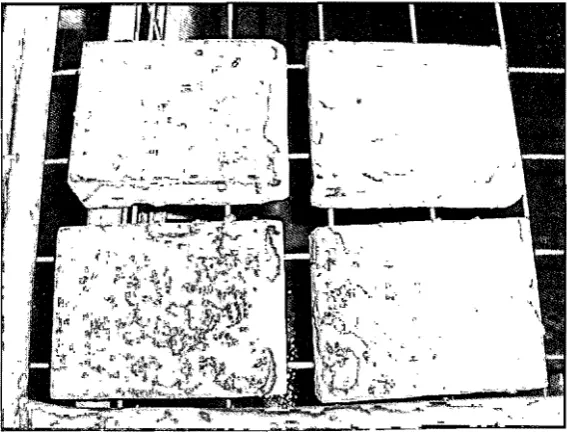
To facilitate easy and controlled assessment of cleaning methods, a special experimental tool was developed. Concrete hygiene pavers (80x80x45 mm) were manufactured using Silica fume concrete to replicate the flooring material normally used in piggeries (Figure 18.1). This experimental tool enabled the researchers to use the required number of identical replicates for different treatments and also conduct the experiments under controlled conditions. However, it was also recognised that follow-up, farm based experiments had to be implemented to complement the results of these essentially laboratory based results. The results of the farm based experiments (validation trials) are also presented in this article.
,-;-'"
,I
:,
[image:3.510.103.387.347.566.2]-II ,~
.
Figure 78.7. Hygiene pavers are prepared for the experiments.
Livestock housing 357
T. Banhazi and B. Santhanam
18.3.2 Microbiological tools
In our experimental study, we used swabbing and plating technique to determine microbial loads before and after each cleaning method as a means of evaluating the cleaning efficiency. The technique involved swabbing the experimental surface with a 150 mm sterile cotton tipped swab (Rowe Scientific, South Australia) and transferring the swab onto a sterile Colombia horse blood agar (HBA) plate (Oxoid scientific, South Australia). HBA as a basal medium contains caesin hydrolysate supporting growth of large colonies of a broad range of Gram positive and Gram negative bacteria and a meat infusion with horse blood providing means for isolation of clinically significant pathogens such as Staphylococcus. After 48 hour incubation, any bacteria which have been transferred would grow and could then be counted. The Australian Standard Method suggests that 6 organismslsq cm is an acceptable level of detection (NATA, 1992; ASM, 1996).
18.3.3 Manure preparation and application
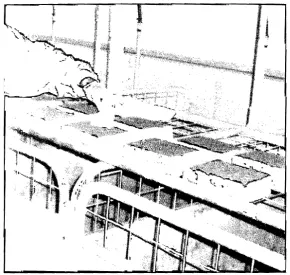
1he 'hygiene-pavers' used during the study were individually pressure washed and disinfected with Virkon S· prior to use. Faecal material was collected from pig pens, mixed with water volume ratio), homogenised and 150 g of mix was placed on each paver. The faecal material was evenly distributed over each paver with a spatula (Figure 18.2) and left for 8 h to mimic the natural baking effect occurring in pig pens and thus the hygienic condition of dirty pen floors. The coating with manure was the starting point of all experiments reported in this chapter. The hygiene pavers were then treated accordingly to the different experimental protocols to determine the efficacy of various cleaning methods.
18.3.4 Experimental design and cleaning methods
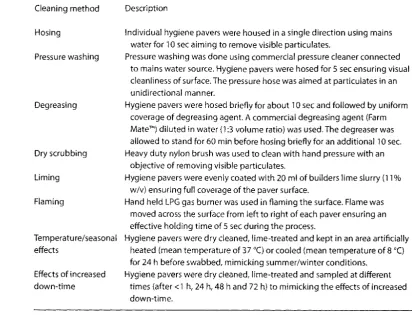
The experiments conducted under laboratory conditions are listed in Table 18.1 and the cleaning methods implemented during the study are listed in Table 18.2.
18.3.5 Sampling procedure
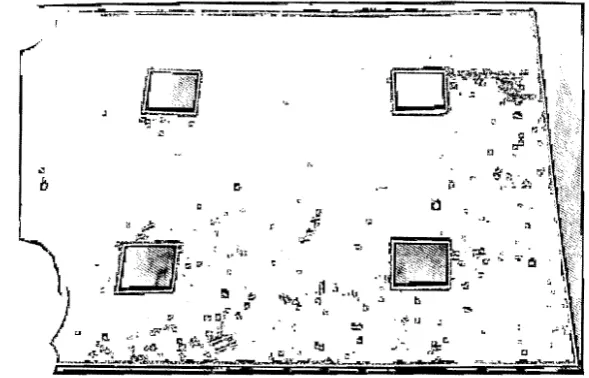
After cleaning, the hygiene pavers were swab sampled using Perspex sheets with 4 cm2 square windows (20x20 mm). Four replicates per hygiene paver were obtained to determine an accurate value for the residual viable bacterial load. The Perspex sheets were disinfected with 80% ethanol solution between each site (Figure 18.3). Aseptic swab was dipped into a sterile solution of 0.1% peptone water, the Perspex sheet was placed on the paver and the 4 cm2 area was swabbed by firmly rolling the swab tip back and forth (Figure 18.4). 'The swab tip was then cut off into 0.1 % peptone water and serially diluted four times 0:104) to prepare an inoculums stock. Finally, 100
f1l
of the inoculum was uniformly spread onto a HBA plate and incubated at 37°C for 48 h. The incubated plates were placed on a light box and the colony forming units were counted.358 Livestock housing
~~
--~
18. Practical evaluation of cleaning methods that could be implemented in livestock buildings
1
'"
'1"",
i ~,
[image:5.535.125.416.69.344.2]'1'1
...
M,:~
...•....·f':.'
...··.
",i",'
Figure 18.2. Application ofpig manure on experimental pavers.
Table 18.1. Cleaning methods assessed during the study.
No Experiment
Hosing vs. pressure washing
2 Hosing vs. degreasing
3
4
5
6
7
Hosing vs. dry scrubbing
Hosing vs. dry scrubbing and flaming Dry scrubbing vs. dry scrubbing
and liming
Dry scrubbing and liming (summer vs. winter) over 24 h
Dry scrubbing and liming over varying periods (1, 24, 48 and 72 h)
Aims
assess the efficacy of hosing compared to high pressure washing
assess the efficacy of hosing compared to the utilisation of a degreaser product (Farm Mate™,
Cyndan, Inc. Garland, USA) assess the effect of dry cleaning
assess the effects of heat treatment (flaming) assess the effects of using dry cleaning methods in
combination with the application of lime-solution assess potential climatic/temperature effects on the
cleaning efficiency of using lime solution
assess the effects of using dry cleaning methods in a combination with the application of lime-solution
and increased down-time
359
[image:5.535.82.472.399.612.2]1/
Cleaning method
Hosing
Pressure washing
Degreasing
Dry scrubbing
!
I
Liming
:\
FlamingI
Temperature/seasonal effects
Effects of increased down-time
T. Banhazi and B. Santhanam
Table 78.2. Choice ofcleaning methods applied in the study piggery.
Description
Individual hygiene pavers were housed in a single direction using mains water for 10 sec aiming to remove visible particulates.
Pressure washing was done using commercial pressure cleaner connected to mains water source. Hygiene pavers were hosed for 5 sec ensuring visual cleanliness of surface. The pressure hose was aimed at particulates in an unidirectional manner.
Mate
Hygiene pavers were hosed briefly for about 10 sec and followed by uniform coverage of degreasing agent. A commercial degreasing agent (Farm
lM
) diluted in water (1:3 volume ratio) was used. The degreaser was allowed to stand for 60 min before hosing briefly for an additional 10 sec. Heavy duty nylon brush was used to clean with hand pressure with an
objective of removing visible particulates.
Hygiene pavers were evenly coated with 20 ml of builders lime slurry (11 % wlv) ensuring full coverage of the paver surface.
Hand held LPG gas burner was used in flaming the surface. Flame was moved across the surface from left to right of each paver ensuring an effective holding time of 5 sec during the process.
Hygiene pavers were dry cleaned, lime-treated and kept in an area artificially heated (mean temperature of 37°C) or cooled (mean temperature of 8°C) for 24 h before swabbed, mimicking summer/winter conditions.
Hygiene pavers were dry cleaned, lime-treated and sampled at different times (after <1 h, 24 h, 48 hand 72 h) to mimicking the effects of increased down-time.
18.3.6 On farm validation studies
A validation study was conducted on-farm in order to verify the efficacy of the cleaning techniques evaluated under 'laboratory conditions: 1he two best techniques were then selected for on-farm evaluation and two experiments were conducted at the University of Adelaide, Roseworthy Research Piggery weaner facility. As both experiments were conducted as a 'before! after validation' study; the untreated floor covered with dried faecal material was used as control. A total of32 swab samples were collected during each experiment (16 control and 16 experimental samples) and sampling was done as described above in relation to the laboratory experiments.
360 Livestock housing
[image:6.544.68.481.97.412.2]fi"""'II'
~~---
II18. practical evaluation of cleaning methods that could be implemented in livestock buildings
-~-""""""~ !"'::"'"-..::::-..~.... ~
il
"
d .
~
D·
"13' ". l:"
~
"
Ii c.~
:",",
..
of,
,
.•
::j...~
,:,
\
p ~:nc;" ~. 0
. ,~ .i •• ~. ~
I
i:!I ~ I> ..
.11
-
,
""'4 '\, ~ .."r-:oi:'"' ~ . ,,'i. U
.f lI::o
) " : : 1:~
I l . "
~
u
l~. .'.~. ID~,.
i
~;< ~ ' .• l'll .,tl J'" .Il="'-~4.."-' '~~~,,,.,,,,,,,-~ r'..,-"~_,!"~,,,,....~
~~~~_J
:1 [image:7.540.120.415.70.259.2] [image:7.540.129.416.296.516.2],
Figure 18.3. Perspex sampler sheet used during sample collection,
~;l
...
~
..•
,;..~.)} ... ;'.,
. . \'
~I
Figure 18.4. Taking swab samples from hygiene pavers,
III
''fill'''''""
r
·11
18. Practical evaluation of cleaning methods that could be implemented in livestock buildings
I
~
I
" ,;II
& ~
;!(,
" .,::
:"}
'"
" ~'l":
'"
< ~ l ' I:!I ~ (,
",R
~,
" tl<:. ~
(;~p"" '\'I '!'
~ or.;! ~
{ ! ! . " p.:'~ ~ Q
;,~.-:; 1" ~a > ~ ~ :~~ ,,! t?t _ I~
-.~~.,.~"",~.~.~~....~qo4Ii-"'~_"""-""-~ "
o
r.
o
~~C' . . Ca
[image:8.526.113.401.66.261.2] [image:8.526.113.403.297.518.2]~
Figure 18.3. Perspex sampler sheet used during sample collection,
~
',
..",-' "";"""':"';"" ... \,
I
'"
Figure 18.4. Taking swab samples from hygiene pavers,
"'\;11:
II
;1
I'
~
I
I, :
I.I:!:
dl
H
II
ill
I
II
II I
i1
Iii
i~ ~ !
llli
." I'·
, I
jill
II
I'
,I
... ',(Ii
' . ' " t"t'"
T. Banhazi and B. Santhanam
Experiment one: dried untreated/dirty floor vs. degrease 1hour and wash
This experiment was done to validate the efficacy of using degreaser for 1 h and washing the floor after that. Exactly the same experimental procedure was followed as described in Table 18.1 and 18.2. Degreasing of floors was done with 1:3 diluted degreaser (Farm mate~) for 60 min. before hosing off the degreaser using mains water.
Experiment two: dried untreated/dirty floor vs. dry scrubbing and flaming
This experiment was done to validate the efficacy of dry scrubbing and flaming the floor. Flaming was done after dry scrubbing with a wire brush to remove visible particles as described in Table 18.1 and 18.2. Flaming was evenly conducted over the surface to ensure a minimum of 5 sec contact time.
18.3.7 Statistical methods
Statistical evaluation of the results were undertaken using one-way ANOVA (StatSoft, 2001) as the experimental and control hygiene pavers were under exactly the same environmental and experimental conditions. Indeed, one of the benefits of using the described methodology was that all potential interference with the experiments was eliminated during the laboratory and to large extent during the on-farm phases of the project.
, 8.4 Results and discussion
18.4.1 Laboratory studies
Figure 18.5 shows the soiled hygiene pavers undergOing various cleaning process as described in Table 18.2.
The different cleaning processes resulted in varying degrees of success with cleaning, both visually and microbiologically. Pressure washing and the degreasing process led to the best post cleaning appearance visually, while dry scrubbing alone or in combination with flaming resulted in the least appealing visual cleanliness.
Figures 18.6-18.15 show post cleaning bacterial loads for various cleaning methods studied.
The results of the first experiment are presented in Figure 18.6 and the results of a related study is presented in Figure 18.7 (Banhazi et aI., 2003). 'lbe number of colony forming units (cfu) was higher (l8x104 cfu/cm2) on the surface of the hosed hygiene pavers, compared to the high pressure washed hygiene pavers (14x 104 cfu/cm2), but the difference was not significant (P:=0.35). However, experiments conducted previously using almost identical methodology demonstrated the superior cleaning ability of pressure washers, compared to hosing (Banhazi et al., 2003). The results of the this current and the previous experiments (Banhazi et al., 2003) demonstrate that even slight differences in cleaning procedures could result in significantly different outcomes. Thus the correct use of the cleaning procedure is probably just as critical as the nature of the
Livestock housing
362
~---18.
II
I
(r
ill
~ ,
, I
n
~tJ
'"
~.
tJ'
18. Practical evaluation of cleaning methods that could be implemented in livestock buildings
~ ~fm
or nd ore
U&lu
'~~Q)l
ing
w
-~ ble
sec
as nd as to
jO!\,
J,:'.' ed
lly ng he
dy 18.5. Various cleaning methods applied to soiled floor pavers. (a) hosing; (b) pressure washing; (e)
(u)
degreasing; (d) dry scrubbing with wire brush; (e) liming using builder's lime; and (f) flaming.19h 15),
led
method itself. It is very likely that during the current experiment the non-significant~e
difference between the two cleaning methods was not the result of the underperformance of hat the pressure washing technique. Indeed, it is most likely that the cleaning method usingies.
'hosing' resulted in a better than expected microbiological cleanliness, approaching the level ofr
he pressure washing. 'n1is is hypothesised as the residual bacterial load on hygiene pavers treated'ng Livestock housing 363
.--,
~"'It'~
...
~.~li
- - I'J
, II11/ ' I11\
i
l; T. Banhazi and B. Santhanam I: IIII
22'--1- - - ,
11 ,II
r
II
,oj
I
1
.I
II di
!
r
,III
1>\:
18~
,-+
E
Ii
IiII
'1
II'I~I
I
i,1
~ 16~
111~
€
14j
1\
t\
II
IIII 1
I
~IJlil
::t
'
_ - - L . . - - - L _ - - 1Hosing Pressure washing
I
II
111 1: Figure 18.6. Post cleaning bacterial load (mean ± standard error) ofhygiene pavers (colony forming units per
~ I II i
cm2); hosing vs. pressure washing (p=0.35), 8 hygiene pavers used for each treatment.
"
I
;1;
:1; )iII!
,·1 ,I,
14,1- - -
I
I /1II
I II :1
.. 11:
I
I';
':j
.::: I
: I
I·
I
~
g
8j
II~l
I
II
I
r
;1.:,,1~
6I
II • I I , I.
u
!:,
I
.2
4~
I
"
2l
i
o~
I
[image:11.544.149.449.76.299.2] [image:11.544.156.444.355.578.2]Hosing Pressure washing
Figure 18.7. Post cleaning bacterial load (mean ± standard error) ofhygiene pavers (colony forming units per
2
cm): hosing vs. pressure washing (p<0.001), 3 hygiene pavers used for each treatment (Banhazi et aI., 2003).
364 Livestock housing
II 18. Practical evaluation of cleaning methods that could be implemented in livestock buildings
by both cleaning methods was very low. This improved performance of the hosing techniques could have been the result of higher main water pressure than usual or improved cleaning ability of the water used.
Ithas to be emphasised that the current experiment focused on the surface hygiene of the cleaned floor segments (hygiene pavers), ignoring other effects, such as the aerosol generating nature of pressure washing. Anecdotal reports of the potential drawbacks of pressure washing in poorly ventilated areas is its tendency to re-distribute small particles (in the form of very fine aerosol) in the air, which can later settle on horizontal surfaces and potentially re-infect these surfaces. The result of a related study demonstrated that even thoroughly cleaned surfaces can be easily re-infected with bacteria via dirty, dusty air (Banhazi et al., 2003).
Pressure washing can also pose an occupational health and safety hazard, ifno protective equipment is worn by workers undertaking the cleaning task. However, the experiment demonstrated, what is generally accepted in practice, that both hOSing and high pressure washing could improve both the visual and bacteriological cleanliness of floor surfaces, if correctly applied.
Experiment two (Figure 18.8) demonstrated that using a degreaser (147x104 cfu/cm2) can significantly improve cleanliness compared to hosing (542x 104 efu/cm2). Interestingly, degreasing also resulted in an excellent cleaning effect (Figure 18.9) during a previous study (Banhazi et al., 2003), confirming the results of the current study. The number of efu was significantly higher on the surface of hosed hygiene pavers, compared to the de greased hygiene pavers in both studies and the difference was about four fold. This experiment demonstrated that the use of degreaser could potentially help producers to achieve a very high level of floor cleanliness. However, this is only true, if the soiling of pen surfaces is totally removed. Any residual soiling will significantly decrease the biological cleanliness of pen surfaces. Thus, certain amount of contact time is required by degreaser products to realise their beneficial effects.
However, the results of a previous study demonstrated that the beneficial effects of degreasers do not linearly increase with increased contact time (Banhazi et al., 2003). In a previous experiment non-significant differences were detected between the concentrations of efus measured on the surface of the hygiene pavers degreased for 1, 2 or 3 hours (Banhazi et al., 2003). It appeared that after leaving the degreaser on the soiled surface of the experimental hygiene pavers for an hour, any further increase in degreasing time did not result in any improvements. We have demonstrated under experimental conditions that the degreaser needs to be left on the floor surface for at least one hour. However, imder commercial conditions, where the level of soiling could be much worse than under experimental conditions, a longer degreasing time might be warranted. Specific degreasers are also expected to work differently, resulting in a different optimal soaking time. However, producers should be aware that the benefits of degreasing do not necessarily increase in a linear fashion with increased soaking time. Based on the results of the current and previous experiments; it is most likely that an optimal soaking time exists for different degreasers, above which no extra benefits are to be gained. Observing and strictly adhering to such optimal soaking times will ensure that producers will gain the maximum benefits achievable, while minimising the downtime and therefore the expenditure associated with the cleaning method used. Overall
365
Livestock housing :1
,
-"'!llt,\
T
i:iil
.1 T. Banhazi and B. Santhanamj"
'II :,
I'
I
700.---, t
600
500
II
IIc3
E
. I
.
g
400II
j
-5
x300
illl
200
I
t
I
s
s
J
P P c c
T
°
h
Hosing Degreasing
[image:13.567.146.443.76.290.2] [image:13.567.145.442.355.574.2]
100~'---~~---L----p n
Figure 78.8. Post cleaning bacterial load (mean ±standard error) ofhygiene pavers (colony forming units per OJ
cm2) on the hygiene pavers: hosing vs. degreasing (P=O.006), 4 hygiene pavers per treatment. t~
ji!
~
II
3 0 , 0 0 0 - [ , - - - .
----.,--'
25,000
20,000
11.11
NE
~ 15,000
II'
"
-5
I
10,000
j
5,000
0-'
Hosing Degreasing
,I Figure 18.9. Post cleaning bacterial load (mean ±standard error) ofhygiene pavers (colony forming units
per cm2) hosing vs. degreasing washing (P<O.OOI), 3 hygiene pavers used for each treatment (8anhazi et F!j
:0
al.,2003). PI
Ii
II
366 Livestock housing Li
j
III
18. Practical evaluation of cleaning methods that could be implemented in livestock buildings
the use of degreaser products is highly recommended, as their beneficial effects were confirmed by two separate studies (Banhazi et ai., 2003).
Experiment three demonstrated that although visually better cleaning was achieved with hosing, the residual bacterial load of hosed hygiene pavers were 15% higher when compared to scrubbing method (390x104 cfu/cm2 vs. 33Sxl04 cfu/cm2; Figure IS.10). These results indicated
that hOSing was slightly but not significantly (P=0.12) worse than scrubbing. Therefore, dry scrubbing did not contribute to improvement of cleaning efficiency as much as was expected. Another point is that hosing during this experiment 'underperformed' highlighting the potentially varied nature ofcleaning outcomes. This is despite the fact that very strict experimental procedures were implemented during this study. Thus, it can be expected that the efficiency of cleaning methods on farms (where the implementation of cleaning procedures may be less strict) can be highly variable.
The main aim of experiment four was to assess the effects of dry scrubbing and heat treatment on the resulting surface bacterial load (Figure IS.II). Flamed hygiene pavers (597xl04 cfu/cm2) had significantly (P=O.OOS) less residual bacterial load than posed (843xl04 cfu/cm2) hygiene pavers resulting in approx. 30% reduction. Flaming seems to destroy vegetative cells but it is recognised that the elimination of spores may depend on the heat maintenance and the efficiency of heat transfer to the surface. Thus it is suggested that further studies need to be undertaken to understand and thus improve the efficiency of heat transfer. Further improvements in dry
440
420
---,-
40J
E
u 380'
0 0 0
x
360..2 u
340
320
300
Hosing Dry scrubbing
Figure lB. 1O. Post cleaning bacterial load (mean ± standard error) ofhygiene pavers (colony forming units per cm2): hosing vs. dry scrubbing (P=O.12), 3 hygiene pavers per treatment.
Livestock housing 361
'wn
II
I
I''IJ
(:
1
I·i
[image:14.528.111.408.357.580.2]950
-
I
900 , -
I
850 ,
1
__~
I:
III ,IIIJ
800~E
I
I ~ 750
1 o
g
I
1':1
X
700!
~
::lil i
II II V 650
I
600~
550-1
Hosing Dry scrubbing and flaming
Figure lB. 11. Post cleaning bacterial load (mean ± standard error) of hygiene pavers (colony forming units FigurE
per cm2): hosing vs. dry scrubbing and flaming (p=O.OOB), 4 hygiene pavers per treatment. perC!;
scrubbing and flaming techniques could also result in improved bacterial cleanliness of piggery environments, while improving the safety and efficiency of this cleaning method.
Experiment 5-7 all aimed at assessing different aspects of using dry cleaning methods in combination with the application of lime-solution on surface bacterial load of hygiene pavers (Figure 18.12-18.15). Experiment five demonstrated the effects of applying a thick lime solution to hygiene pavers as a single effect, while experiment six and seven demonstrated the effects of lime application in combination with temperature differences and increased down-time.
Liming (506x104 cfu/cm2) resulted in the detection of higher bacterial load on the surfaces of the hygiene pavers when compared to dry scrubbing (422xl04 cfu/cm2), but the difference was
not statistically (P=0.30) significant (Figure 18.12). These results are counter intuitive and likely resulted from progressive microbial growth within the microscopic crevices of the concrete hygiene pavers (Figure 18.13). Liming generally has been found to have a disinfectant affect via denaturalising bacterial cells (Heinonen-Tanski et ai., 2006; Venglovsky et al., 2006). However, the current study demonstrated that a very thick lime solution can form a protective film over contaminated surfaces thus encouraging further microbial growth underneath the protective layer that can provide a moist and relatively warm environment. Figure 18.14 shows a schematic diagram explaining the possible venue for bacterial growth in micro crevices on the paver surface.
Figufi The main aim of experiment six was to assess the potential climatic/temperature effects on perc cleaning efficiency and thus on the resulting surface bacterial load (Figure 18.13). The four
I
.!
I
il
368 Livestock housingi Iii
II
!~I
i..
._---
[image:15.589.154.447.75.295.2]
"Til"--
1111
, 8. Practical evaluation of cleaning methods that could be implemented in livestock buildings
.1
600j 580
560
I:
:::J'
§
500,§
480 Id
x
460.a
u 440:~:1
iII
I
380j
l .
_L
[image:16.521.102.398.73.295.2] [image:16.521.102.402.355.577.2]360
-'--~Dr:--:y
sc:::::-;rubb:::-ing Dry scrubbing and limingFigure 18.12. Post cleaning bacterial load (mean ±standard error) ofhygiene pavers (colony forming units
per cm2); scrubbing vs. dry scrubbing and liming (P=0.30), 4 hygiene pavers per treatment.
"I
i
"~~I
1
1-1]
l
I
1
380 I
a
'
,,'~
340j':::J
280~
-~l
260
I
Dry scrubbing and liming Dry scrubbing and liming
(summer) (winter)
Figure 78.13. Post cleaning bacterial load (mean ± standard error) ofhygiene pavers (colony forming units per cm2); dry scrubbing and liming (temperature difference) (P<O.OO 7),4 hygiene pavers per treatment.
Livestock housing 369
1/
[I
III
~b
11,;1
[1;1 18. Practical evaluation of cleaning methods that could be implemented in livestock buildings
600
1
580~
rI
'I'
:::1
1
520 ~
"'6
500Ci
:5
480o
~
x
460-6
440420
.
400380
j
360..Li_ _ _-.L.._ _ _
.L-_~
[image:17.521.104.399.73.295.2] [image:17.521.104.400.356.578.2]Dry scrubbing Dry scrubbing and liming
Figure 18.12. Post cleaning bacterial load (mean ± standard error) ofhygiene pavers (colony forming units per cm2); scrubbing vs. dry scrubbing and liming (P=0.30), 4 hygiene pavers per treatment.
460
440~
420
I;
400
1
) 380j
~ 360,~
~ 340
~ v
320
300
280
260
Dry scrubbing and liming Dry scrubbing and liming
(summer) (winter)
Figure 18.13. Post cleaning bacterial load (mean ± standard error) ofhygiene pavers (colony forming units per cm2): dry scrubbing and liming (temperature difference) (P<O.OO 1),4 hygiene pavers per treatment.
Livestock housing
1I..:....iIIIIII:
lIi'.'I·I.li.·l.~11
II'.
II
'I'ii'
~
:,llli
f!lltl
T. Banhazi and B. Santhanam,1 1
'I·'
'~
,: .1
Ii . . - - Piggery floor
! I
I
I;I!
I; I
Microbes / lim, film 0",' '"IT'"
I disinfected by
i
'['Iii
,,' lime film· II'
!i -~Microbes within pores
I ~
i
unaffected by lime film"
L
11' i·i Figure 18.14. Post liming bacterial growth on paver surface.j'
II
hygiene pavers that were dry cleaned, lime-treated and kept artificially heated at 37°C (mimicking
~
III
summer conditions) for 24 h before being swabbed had significantly (P<O.OOl) higher bacterial
"
load (425x104 cfu/cm2), when compared to hygiene pavers that were treated in the same way
,
~'"
but cooled in a fridge (mimicking winter conditions) at 8 DC (281xl04 cfu/cm2). These results Iunderpinned the results of the previous experiment, and demonstrate that underneath the thick lime solution bacterial activity could take place that is obviously enhanced at higher temperatures. Due to the slow drying of the thick lime solution, the drying effect of increased heat is reduced, thus proViding a warm and moist microclimate for bacterial growth.
·
[
,
The appearance of the lime solution used during the experiment was very thick/:riscous but the
!
solution was made up to mimic the solution used on farms (B. Lloyd, personal communication)
II
Based on these results, it will be advisable to reduce the concentration of the lime solution from the currently used (11 % w/v) to perhaps half around 5-6% weight/volume. This would result in~
I
i a number of benefits. First, the application cost would significantly decrease as less lime wouldI
I1
I,
be used per unit volume of mix.In
addition, the viscosity of the mix would decrease facilitatingi
,I.
the more even spread, deeper penetration of the thinner solution into the micro-crevices of theI
~
concrete floor. During the experiment it was relatively easy to observe visually that the very viscous lime/water mixture, did not penetrate but 'sat on the top' of the concrete floor."
' I
4 • In addition, the thinner solution would dry qUicker, that would definitely improve the disinfectant
~
,effect of the solution. Previous experiments demonstrated the beneficial effects of thoroughly
II'
.~
,l drying concrete pen floor, as even after full disinfection, further improvements was achieved by allOWing hygiene pavers to dry for 48 h (Banhazi et aI., 2003). The results of previous experiments and indirectly the current experiment are reinforcing the need for drying pens on commercial farms thoroughly before re-stocking and avoiding practices that would keep the surface of concrete floors moist for an extended period of time.I
The aim of experiment seven was to assess the effects of using dry cleaning methods in~ combination with the application oflime-solution and increased down-time on residual bacterial
I
load of hygiene pavers (Figure 18.15). The hygiene pavers that were dry cleaned, treated with lime solution and sampled almost immediately had lower concentration of residual bacteria (573x
J
370 Livestock housing
[image:18.558.116.465.76.203.2]'''!t"'?''''""'"""
18. Practical evaluation of cleaning methods that could be implemented in livestock buildings
cfu/cm2) than hygiene pavers that were sampled after 24, 48 (l,24211,I72x104 cfu/cm2) and 72
hours (3,455x104 cfu/cm2
). Again, this experiment appears to confirn1 the results of previous
lime-treatment related experiments that indicate bacterial growth might occur underneath the thick lime solution and the bacteria number can potentially increase with time (Figure 18.15)
and also with increased temperature (Figure 18.13). As indicated before, thinner lime solution that would dry quicker and would penetrate the micro-crevices of the concrete floor might be the solution for this identified problem.
18.4.2 On farm evaluation
Laboratory investigations aimed at assessing the efficacy ofcommonly employed cleaning methods in livestock buildings (as detailed above) revealed that degreasing and dry scrubbinglflaming resulted in significant reduction of residual bacterial load on the surfaces of hygiene pavers. However, the limitations of essentially small-scale laboratory based studies were acknowledged as these were based on application of a homogenous slurry from a single sample collected at a specific farm. It must be noted that several factors influence the bacterial load present on the paver surface including the microbial composition in the pig manure, category of pigs, their age group of animals and duration of animal stay in the building. Under such constraints, two follow-up experiments were initiated and executed under commercial farm conditions in weaner sheds. These follow up studies were used to verify the results of the previous laboratory
4'°°°1----:---,,-
g
2'000j'o
~
1,500 b b':::LD
~
[image:19.517.100.404.343.572.2]<1 h 24h 48 h 72h
Figure 18.15. Post cleaning bacterial load (mean ± standard error) of hygiene pavers (colony forming units per cm2); dry scrubbing vs. dry scrubbing and liming and increased down-time (p<O.OO1), 2 hygiene pavers per treatment (different letters above the columns indicate statistically significant difference).
371 Livestock housing
II
,I
!
II
II
:!
"i,'II,'f,:II.---
I I II, I i ~lill'!!I,
II!
Ill!'II "
",:: : I
:' !
,I
'
i'lIb
'J
I
I i
'i
!
I I
!' "I
1,1
j
il
I,
~
I
I
I ,I dI~
,
~i
~I] !I
l ,I
t I i~
III
I ,f
llil
11
;11,I
Iii
I!
!
/11
!.;,
II I,
'I
I
I
~,
l11
.,
,
'Ii
.,
,
I'
'1'
"
:111
~lll
.J,
T. Banhazi and B. Santhanam
based experiments. The current study may need to be replicated for site specific adoption of these techniques. _
These 'before/after' studies generated (Figure 18.16 and 18.17) results that underpinned the applicability of both the cleaning methods on farms and confirmed/validated the results achieved under laboratory conditions. Both dry scrubbing and flaming the floor (92xl04 cfu/cm2) and degreasing (Ill x 1 04 cfu/cm2) significantly reduced the residual bacterial load ofthe floor sections when compared. to the control samples (l53x104 cfu/cm2 and 183x104 cfu/cm2, respectively),
Thus these on-farm results confirmed the beneficial effects of the evaluated cleaning methods.
In summary, this study demonstrated the comparative benefits of the selected cleaning methods. Given the time and financial limitation ofthis study, it aimed at assessing the methods that were of particular interest for the Australian pig industry at the time of the study. The reported study did not aim to assess all possible cleaning methods, but provided a framework and methodology for future follow-up studies. Some additional cleaning methods, including one ofthe most commonly used decontamination methods (soaking, cleaning, disinfecting and then drying) were assessed as part of an earlier study (Banhazi et aI., 2003). In addition, the authors also acknowledge that other important aspects of the cleaning methods applied, such as appropriateness of flaming in pens with plastic floors or the possible corrosive effects of regular liming were not considered. However, the study simply wanted to demonstrate the relative benefits of selected cleaning methods and not necessarily advise for or against any particular method. 'Ihe ultimate decision of the application of specific cleaning methods used on particulars farms have to be made by
:::j
T
I
150j
iIl
i~
140.I
~_
130j
-
iI
-6
x120l
:~:l1
1l--
I
90
--LnOO<d"J
I~
-l
I
80
[image:20.562.146.443.378.592.2]Dry scrubbing and flaming
Figure 18.16. Post cleaning bacterial load (mean ± standard error) of hygiene pavers (colony forming units per cm2); control vs. dry scrubbing and flaming (p==O.002), 16 samples per treatment.
372 Livestock housing
18. Practical evaluation of cleaning methods that could be implemented in livestock buildings
220
200
180
E
~ 160
0 0 0
x
140:::l
' u
120
J
I
100
80
[image:21.530.120.432.81.292.2]Dirty floor dried Degreasing 1 h and wash
Figure 18.17. Post cleaning bacterial load (mean ± Sf) of hygiene pavers (colony forming units per cm2);
hosing vs. pressure washing (P=O.004), 16 samples per treatment.
farm managers. Equally, it was recognised that the bacterial composition of manure can vary significantly between farms. Thus the resulting bacterial load documented in this study are not absolute, but relative values. However, it was essential during this study to standardise the bacterial content of the manure used, so reliable comparison can be made between the treatments. While it is likely that different results will be achieved on other farms when using manure with different bacterial content; it is hoped that the relative reduction or the trend in reduction will be similar even on other farms. The positive results achieved during the on-farms component of this study support this assumption.
18.5 Conclusions
A study was initiated and implemented to evaluate a number of practical cleaning methods aimed at improving hygiene conditions in pig pens. The cleaning methods assessed using concrete 'hygiene-pavers' included hosing, pressure washing, degreasing, dry scrubbing and flaming, liming and dry scrubbing. It was concluded that:
The utilisation of degreasing or dry scrubbing and flaming can result in high levels of bacterial cleanliness of concreted surfaces.
Liming did not result in the expected hygiene improvement. This might be related to the fact that the currently used very thick lime solution does not allow the surfaces to dry effectively. In addition, the ability of the thick lime solution to penetrate micro-crevices of the concrete floor and therefore to maximise contact with the surface of the floor was also questioned.
373
Livestock housing
r
11;1
II
"
l'...iolli
.1
111.1
','r.·'\11r
A,r
1:11Ii
',,~
I111.III.rl .'r·
, I,' II!
,
I
.'
II II
\II!
[III
l:
,I
II
II
,I
·1 Ii
jI
II
,J~
i II
'r:1
, 1'1
, ,f
It
IT••••h.,I ••d •• S••,ha••m
Using thinner lime solution on farms to improve the disinfecting ability of the mixture was suggested based on the results of this study .
The study results also indicated that further investigation is required to optimise liming and flaming procedures.
Acknowledgements
The financial support of the South Australian Pig Industry Fund (PIF), the technical support of the Roseworthy Research Piggery staff and the Pig Industry Advisory Group (PlAG) are gratefully acknowledged.
References
Algers, B., 2000. Animal hygiene: a comer-stone in animal welfare. 10th International Congress on Animal
Hygiene, July 2-6,2000, Maastricht, the Netherlands, pp. 719-724.
ASM, 1996. Guidelines for assuring quality of medical microbiological culture media. Media Quality control special interest group, Australian society for Microbiology, Melbourne, VIC, Australia.
Banhazi, 1: and Cargill, C., 1997. The effects of general hygiene on air quality in mechanically ventilated weaner rooms. In: Cranwell, P.D. (ed.) Manipulating pig production VI, Werribee, Victoria, Australia. APSA, Corowa, Australia, pp. 296.
Banhazi, T., Hillyard, K., Murphy, T. and Kloppers, M., 2002. 1he effects of floor wetting on established dunging patterns. In: Revell, D.K. and Taplin, D. (eds.) Animal production in Australia. ASAP, QLD, Australia, pp. 373.
Banhazi, T., Murphy, T, and Hartung, J., 2003. Using 'hygiene-pavers' to evaluate cleaning procedures used
on pig farms. In: Saltieral, J.A. (ed.) XIth International Congress in Animal Hygiene (ISAH), 23-27 February 2003, Metropolitan University, Mexico City. CD publication.
Banhazi, T.M., Currie, E" Quartararo, M. and Aarnink, A.J.A., 2009a. Controlling the concentrations
of airborne pollutants in broiler buildings. In: Aland, A. and Madec, F. (eds,), Sustainable animal
production: the challenges and potential developments for professional farming. Wageningen Academic Publishers, Wageningen, the Netherlands, pp. 347-364.
Banhazi, T.M., Currie, E., Reed, S., Lee, I.-B. and Aarnink, A.J,A., 2009b. Controlling the concentrations
of airborne pollutants in piggery buildings. In: Aland, A. and Madec, F. (eds.), Sustainable animal
production: the challenges and potential developments for professional farming. Wageningen Academic Publishers, Wageningen, the Netherlands, pp. 2S5-311.
Banhazi, ]~M., Rutley, D.L. and Pitchford, W.S., 200Sa. Identification of risk factors for sub-optimal hOUSing
conditions in Australian piggeries - Part IV: Emission factors and study recommendations. Journal of Agricultural Safety and Health 14: 53-69.
Banhazi, T.M., Seedorf, J., Laffrique, M. and Rutley, D.L., 200Sb. Identification of risk factors for high airborne particle concentrations in broiler buildings using statistical modelling. Biosystems Engineering 101: 100-110.
Banhazi, T.M., Seedorf, J., Rutley, D.L. and Pitchford, W.S., 200Sc. Identification of risk factors for sub optimal housing conditions in Australian piggeries - Part I: study justification and design. Journal of
Agricultural Safety and Health 14: 5-20. /
I
18. Practical evaluation of cleaning methods that could be implemented in livestock buildings
Banhazi, T.M., Seedorf, J., Rutley, D.L. and Pitchford, W.S., 2008d. Identification of risk factors for sub
optimal housing conditions in Australian piggeries Part II: airborne pollutants. Journal of Agricultural Safety and Health 14: 21-39.
Banhazi, T.M., Seedorf, J., Rutley, D.L. and Pitchford, W.S., 2008e. Identification of risk factors for sub optimal housing conditions in Australian piggeries - Part III: environmental parameters. Journal of Agricultural Safety and Health 14: 41-52.
Cargill, C. and Banhazi, T., 1998. The importance of cleaning in all-inlall-out management systems. In: Cargill, C. and McOrist, S. (eds.) Proceedings of the 15th IPVS Congress. University of Birmingham, Birmingham, UK, pp. 15.
Cargill, c.F., Banhazi, T. and Humphris, R., 1996. Improving air quality and production by converting facilities to all-in/all-out systems. Proceedings of the 14th International Pig Veterinary Society Congress, Bologna, Italy, p. 509.
De Belie, N., Lenehan, J.J., Braam, C.R., Svennerstedt, B., Richardson, M. and Sonck, B., 2000. Durability of building materials and components in the agricultural environment, Part III: concrete structures.
of Agricultural Engineering Research 76: 3- J6.
Donham, K.J., Cumro, D., Reynolds, S.J. and Merchant, J.A., 2000. Dose-response relationships between occupational aerosol exposures and cross-shift declines of lung function in poultry workers: Recommendations for exposure limits. Journal of Occupational and Environmental Medicine 42: 260 269.
Donham, K.J., Haglind, p', Peterson, Y., Rylander, R. and Belin, L., 1989. Environmental and health studies of
farm workers in Swedish swine confinement buildings. British Journal ofIndustrial Medicine 46: 31-37. Donham, K.J., Merchant, J.A., Lassise, D., Popendorf, w.J. and Burmeister, L.F., 1990. Preventing respiratory disease in swine confinement workers: intervention through applied epidemiology, education, and consultation. American Journal of Industrial Medicine 18: 241-261.
Duchaine, C., Grimard, Y. and Cormier, Y., 2000. Influence ofbuilding maintenance, environmental factors,
and seasons on airborne contaminants of swine confinement buildings. American Industrial Hygiene Association Journal 61: 56-63.
Heinonen-Tanski, H., Mohaibes, M., KariI,len, P. and Koivunen, ]., 2006. Methods to reduce pathogen microorganisms in manure. Livestock Science 102: 248-255.
Lee, c., Giles, L.R., Bryden, W.L., Downing, J.L., Owens, P.C., Kirby, A.C. and Wynn, P.c., 2005. Performance and endocrine responses of group housed weaner pigs exposed to the air quality of a commercial environment. Livestock Production Science 93: 255-262.
Madec, E, 2013. Aiming at building cleanliness to keep livestock healthy. In: Aland, A. and Banhazi, T. (eds.) Livestock hOUSing: modern management to ensure optimal health and welfare of farm animals. Wageningen Academic Publisher, Wageningen, the Netherlands, pp. 331-354.
Madec, E, Bridoux, N., Bounaix, S. and Jestin, A., 1998. Measurement of digestive disorders in the piglet at weaning and related risk factors. Preventive Veterinary Medicine 35: 53-72.
NATA, 1992. Guidelines for the quality management of microbiological media. Technical note number 4. National Association of Testing Authorities, Silverwater, NSW, Australia.
Ondrasovic, M., Ondrasovicova, 0., Vargova, M., Dankova, J., Toropila, M. and Krajnak, M., 2000.
Conclusions based on experiments and practical knowledge concerning the selection of disinfectants
for focal disinfection. 10th International Congress on Animal Hygiene, July 2-6, 2000, Maastricht, the
Netherlands, pp. 596-601.
il
.,'
I:
I'
I
I~
,~
•
[,
!
/1
375 Livestock housing
T. Banhazi and B. Santhanam
Rantzer, D. and Svendsen, J., 2001. Slatted versus solid floors in the dung area offarrowing pens: effects on hygiene and pig performance, birth to weaning. Acta Agriculturae Scandinavica, Section A, Animal Sciences 51: 167-174.
Rantzer, D., Westrom, B. and Svendsen, J., 1998. Effects of different levels of pen hygiene from birth to 4
weeks after weaning on pig health, growth and immune parameters. 15th International Pig Veterinary
Society Congress, Bimingham,UK, pp. 55.
Robertson, J.E, Wilson, D. and Smith, w.J., 1990. Atrophic rhinitis: the influence of the aerial environment. Animal Production 50: 173-182.
Roelofs, P.EM.M., Hoofs, A.I.J. and Binnendijk, G.P', 1993. The influence of soaking procedure, water
I
pressure, water-flow and nozzle on water usage and working time to clean pig houses with a high pressure
I ~
i
I
cleaner. Verslag P 1.103, Varkensproefbedrijf'Zuid- en West-Nederland', Sterksel, the Netherlands.f
!
Skirrow, S., Cargill,c.,
Mercy, A., Nicholls, R., Banhazi, T. and Masterman, N., 1995. Risk factors forin pigs. DAW 28P, Pig Research and Development Corporation, Perth, Australia. StatSoft, 1., 2001. STATISTICA. StatSoft, Inc., Tulsa, OK, USA.
I·
Takai, H., Pedersen, S., Johnsen, J.O., Metz, J.H.M., Groot Koerkamp, P'W.G., Uenk, G.H., Phillips, v.R.,
1'1
i Holden, M.R., Sneath, R.W., Short, J.t., White, R.P., Hartung, J., Seedorf, J., Schroder, M., Linkert,
I,
K,H. and Wathes, C.M., 1998. Concentrations and emissions of airborne dust in livestock buildings in Northern Europe. Journal of Agricultural Engineering Research 70: 59-77.
11
Tielen, M.J.M., 2000. Animal hygiene: the key to healthy animal production in an optimal environment,
/:
10th International Congress on Animal Hygiene, July 2-6, 2000, Maastricht, the Netherlands, pp. 3-10.Venglovsky, J., Martinez,
J.
and Placha, 1., 2006. Hygienic and ecological risks connected with utilization ofI
animal manures and biosolids in agriculture. Livestock Science 102: 197-203.
Wathes, C.M., 1994. Air and surface hygiene. In: Wathes, C.M. and Charles, D.R. (eds.) Livestock housing. CAB International, Wallingford, Oxon, UK, pp. 123-148.
J
J
I
J