UNIVERSITI TEKNIKAL MALAYSIA MELAKA
DESIGN AND DEVELOPMENT OF PINEAPPLE LEAF CUTTER
(PLC) DEVICE IN PINEAPPLE INDUSTRY
This report submitted in accordance with requirement of the Universiti Teknikal Malaysia Melaka (UTeM) for the Bachelor of Mechanical Engineering Technology
(Maintenance Technology) with Honours.
by:
MARWAN SHAFIQ BIN MOHD LATFI B071410839
930802-05-5452
FACULTY OF ENGINEERING TECHNOLOGY
i DECLARATION
I hereby, declared this report entitled “Design and development of portable leaf cutter device in pineapple industry” is result of my own research except as cited in references
Signature :
Author’s Name : MARWAN SHAFIQ BIN MOHD LATFI
ii APPROVAL
This report is submitted to the Faculty of Engineering Technology of UTeM as a partial fulfillment of the requirements for the degree of Bachelor of Engineering Technology (Maintenance Technology) with Honour. The member of the supervisory is as follow:
………..
(Project Supervisor)
iii ABSTRAK
iv ABSTRACT
v ACKNOWLEDGEMENT
Alhamdulillah, all thanks should be praise to Allah as He help and ease me so much to complete this project successfully. This research project won't be complete without people surrounding me who give a lot support and help.
Respect, love and thanks to my family members - my father, my mother who gave so much moral support throughout this process. Not forgotten for my siblings who encourage me a lot. Thanks for your understanding and support.
I would like to thanks my supervisor, Madam Nurul Amira Binti Zainal who guide me and help me throughout this whole process of completing this research project. She has helped me so much and gives her best despite having lot of works and responsible to deliver. Without her, I do believe that this project won't complete.
vi TABLE OF CONTENT
Declaration i
Approval ii
Abstrak iii
Absract iv
Acknowledgement v
Table of Content vi
List of Tables xi
List of Figures xii
CHAPTER 1: INTRODUCTION 1
1.0 Introduction 1
1.1 Problem Statement 1
1.2 Objective 2
1.3 Work Scope 2
1.4 Result Expectation 2
CHAPTER 2: LITERATURE REVIEW 3
2.0 Introduction 3
2.1 Natural Fiber 3
2.1.1 Fiber Types 6
vii
2.1.1.2 Bast Fiber 8
2.1.1.3 Seed Hairs 9
2.1.1.4 Animal Wool Fiber 11
2.1.1.5 Animal Silk Fiber 12
2.1.2 Cell Wall Structure 13
2.2 Pineapple Plant 16
2.2.1 Leaves 18
2.2.2 Pineapple Fruits 19
2.3 Pineapple Leaf Fiber (PALF) 21
2.4 Characterization of PALF 25
2.5 Extraction Method for PALF 25
2.6 Chemical Constituents 26
2.7 Scrapping Of Pineapple Leaf 26
2.8 Retting Process 28
2.9 Pre and Post Harvesting Metabolism 28
2.10 Commercial Use after Harvesting 29
CHAPTER 3: METHODOLOGY 30
3.0 Introduction 30
3.1 Flow Chart 31
3.2 Product Idea 32
3.2.1 First Idea 32
3.2.2 Second Idea 33
viii
3.3.1 Solid Work 34
3.3.2 Auto-Cad (CAD) 35
3.3.3 Catia 38
3.3.3.1 Mechanical Engineering 38
3.3.3.2 Design 38
3.4 Material Selection 39
3.4.1 Hollow Steel 39
3.4.1.1 Rectangular Hollow Sections (RHS) 40 3.4.1.2 Square Hollow Sections (SHS) 41 3.4.1.3 Circular Hollow Sections (CHS) 42
3.4.2 Spring 43
3.4.3 Steel Plate 45
3.3.3 Bolt and Nut 46
CHAPTER 4: RESULT AND DISCUSSION 48
4.0 Introduction 48
4.1 Design And Development 48
4.1.1 Measurement 49
4.1.1.1 Handle Part of PLC 49
4.1.1.2 Stem Part of PLC 50
4.1.1.3 Cutter Part of PLC 51
4.1.1.4 Housing Part of PLC 51
4.2 Tools and Equipment Used 52
ix
4.4 Fabrication Process 57
4.4.1 Marking and Measuring Process 57
4.4.1.1 Handle and Stem 58
4.4.1.2 The Connector 58
4.4.1.3 Cutter 59
4.4.1.4 Housing 60
4.4.1.5 Hollow Cover 60
4.4.1.6 Rod 61
4.4.2 Cutting Process 61
4.4.2.1 Handle and Stem 62
4.4.2.2 Connector 62
4.4.2.3 Cutter 63
4.4.2.4 Housing 65
4.4.2.5 Hollow Cover 65
4.4.3 Drilling Process 67
4.4.3.1 Connector 67
4.4.3.2 Stem 68
4.4.3.3 Hollow Cover 69
4.4.4 Curving Process 70
4.4.5 Filling Process 71
4.4.6 Rolling Process 72
4.4.6.1 Housing 72
4.4.7 Tapping Process 73
x
4.4.8.1 Handle 74
4.4.8.2 Stem 75
4.4.8.3 Rod 76
4.4.8.4 Cutter 77
4.4.8.5 Housing 77
4.4.9 Finishing 79
4.4.9.1 Grinding 80
4.4.9.2 Sandpaper 82
4.4.9.3 Painting 84
4.5 Assembly Process 86
4.5.1 Parts of PLC Product 86
4.5.2 Procedure 89
4.6 Prototype 92
4.7 Limitation 93
CHAPTER 5: CONCLUSION AND RECOMMENDATION 94
5.0 Introduction 94
5.1 Conclusion 94
5.2 Recommendation 95
REFERENCES 96-99
xi LIST OF TABLES
TABLE TITLE PAGE
2.0 Annual Production of Natural Fibres And Sources (2015) 15
4.1 All Tools and Equipment 52-54
4.2 All Material 55-56
4.3 All Part of PLC Product 86-88
4.4 Assembling Process 89-92
xii LIST OF FIGURES
FIGURE TITLE PAGE
2.0 Overviewof Natural Fibres 5
2.1 Example For Animal Fibre Sources 6
2.2 Example For Plant Fibre Sources 6
2.3 Schematic Drawing Showing Possible Locations Of Fibres Within Stems 7 of Monocotyledonous And Dicotyledonous Plants And Trees
2.4 Different Species Of Agave 8
2.5 Photograph Of A Retted Flax Stem, Showing Bast Fibres (Bf) As They 9
Separate (↓) From Inner, Core Tissues That Make Up Shive (S) In
Processing Waste
2.6 Different Leaf Shapes In Cotton And Open Cotton Flower 10 2.7 Wool Structure and The Practical Use of Each of the Structural Elements 11 2.8 Examples of Silk Fibers Produced By Silkworms And Spiders And 12
A Schematic Illustration
2.9 Schematics of Possible Cell Wall Organisation in (A) Wood Fibres, 14
(B) Bast Fibres, (C) Monocotyledonous Plant Fibres And (D) Seed Fibres
2.10 Pineapple Plant 18
2.11 Pineapple Leaves 19
xiii 2.13 Production of Pineapple Leaf Fibre, Sequential 21 2.14 Pineapple Leaf Fibre That Extracted From Pineapple Leaf. 22 2.15 Optical Micrograph of Cross Section of PALF 25
2.16 Process Using A Plate 26
2.17 Taking Out The Fiber 27
2.18 Scrapping Operation Through Rollers 27
3.1 First Design Idea 32
3.2 Second Design Idea 33
3.3 Solid Work Interface 35
3.4 2-D CAD Drawing Example 36
3.5 3-D CAD Model Example 37
3.6 Auto Cad Software Interface 37
3.7 Catia Interface 39
3.8 Common Type of Hollow Steel 40
3.9 Rectangular Hollow Section 41
3.10 Square Hollow Section 42
3.11 Circular Hollow Section 43
3.12 Type of Spring 44
3.13 Steel Plate Example 45
3.14 Bolt And Nut Example 47
4.1 Design by SolidWorks (Solid) 48
xiv
4.3 Handle Part 50
4.4 Stem Part 50
4.5 Cutter Part 51
4.6 Housing Part 51
4.7 Tools For Marking And Measuring 57
4.8 Marking Height of Stem And Handle Of Pineapple Leaf Cutter 58
4.9 Marking The Height Of Connector 58
4.10 Measure And Marking The Cutter 59
4.11 Measure And Marking The Plate 60
4.12 Measure And Marking The Hollow Cover 60
4.13 Measure And Marking The Rod 61
4.14 Cutting Handle And Stem 61
4.15 Cutting The Connector 62
4.16 Cutting The Cutter 63
4.17 Cutting Zig Zag 63
4.18 Cutting Size 88mm X 40mm 64
4.19 Cutter After Cutting Process 64
4.20 Cutting Housing Plate 65
4.21 Cutting Cover Size 144mm 65
4.22 Cutting Cover Size 100mm 66
4.23 Hollow Cover After Cutting Process 66
4.24 Drilling The Connector 67
4.25 Speed Machine While Drilling 67
xv
4.27 Use Oil For Smooth Drilling 68
4.28 Drilling The Hollow Cover 69
4.29 Curve On Connector 70
4.30 Filing The Cutter 71
4.31 Filing The Handle And Stem 71
4.32 Rolling The Housing 72
4.33 Tapping The Rod 73
4.34 Welding The Handle On The Curved Connector 74 4.35 Welding The Stem On The Circle Plate 75
4.36 Welding The Rod Behind Stem 76
4.37 Welding The Cutter Cover 77
4.38 Tap Welding On Housing 77
4.39 Continue Welding The Housing 78
4.40 Housing After Welding 78
4.41 Welding The Housing Cover 79
4.42 Grind The Handle 80
4.43 Grind The Stem 80
4.44 Grind The Cutter 81
4.45 Grind The Housing 81
4.46 Brush The Handle 82
4.47 Brush The Stem 82
4.48 Brush The Cutter 83
4.49 Brush The Housing 83
xvi
4.51 Spray The Stem 84
4.52 Spray The Cutter 85
4.53 Spray The Housing 85
4.54 Prototype Before Painting 92
1 CHAPTER 1
INTRODUCTION
1.0 Introduction
Pineapple leaf is a plant that has 50-150cm height, elongated leaf like the sword with spiked or not spiked edge, the length of 80-150 cm. Pineapple is a Xerophyte plant and includes plants that are very resistant to drought conditions because they are classified as critically Crassulacean Acid Metabolism. Depending on the species or type of plant, pineapple leaf length is between 55cm to 75cm by 3.1cm to 5.3 cm wide and 0.18cm thick leaves of up to 0.27cm (Hidayat, 2008). Research shows that the leaves of the pineapple plant contain approximately 3% of strong white silky fibres. These valuable long fibres can be used in industrial applications in place of jute and other bast fibers. They also can be used to make heavy fabrics such as upholstery material or curtains, and in industrial applications such as tyres and conveyor belts. The aim of this project is to design and develop a machine that can facilitate the work to cut the leaves from the pineapple tree, hence the leaves can be extract as fiber which can be a new source of raw material to the industries and can be potential replacement of the expensive and nonrenewable synthetic fiber.
1.1 Problem Statement
2 mechanical machine to obtain fiber from pineapple leaf, but until now, a mechanism to cut the pineapple leaf easily to get the fiber is still unavailable. People nowadays cut the pineapple by using knife or machete and exposed to danger because they easily injured when cuts through the thorns from pineapple leaves.
1.2 Objective
The objectives of this study are:
i. To generate a concept design of pineapple leaf cutter machine ii. To develop a prototype of pineapple leaf cutter machine
1.3 Work Scope
In order to achieve the objective of this study, the scopes of this study are prepared as shown below:
i. This machine is limited to cut pineapple leaf only.
ii. The machine can cut more than a piece of leaves but not more than a bunch of pineapple tree at one time.
iii. The machine is portable and easy to use.
1.4 Result Expectation
i. The design of pineapple leaf cutter device is easy to use and portable. ii. The development of this pineapple leaf cutter can cut more than a piece
3 CHAPTER 2
LITERATURE REVIEW
2.0 Introduction
This chapter covered the study about a pineapple leaf fiber and how the extraction of pineapple fibers for making commercial product. This chapter also reviewed previous study from research or paper and article that related with fiber
2.1 Natural Fiber
4 extracted from the bast stem, leaf, and seeds from the plants in a bundle form. Therefore it is also called fibre bundles.
Natural plant fibres are cell walls that occur in stem and leaf parts and are comprised of cellulose, hemicelluloses, lignin and aromatics, waxes and other lipids, ash and water-soluble compounds. The chemistry and structure of fibres determine their characteristics, functionalities and processing efficiencies. Extraction method of fibres is similar in both bast stem and leaf, while seed fibres have many methods like cotton lint extracted from ginning process (Asim et al., 2015). The variety of fibres in nature is enormous. Depending on their function within the plant, fibres may be located in different regions of the plant. The location of fibres in the stem depends on the species. Plant fibres can be found, for example, within stems of monocotyledonous and dicotyledonous plants and dicotyledonous and gymnosperm trees at different positions. Natural fibres used for technical applications range from secondary xylem fibres such as wood fibres for paper production, phloem fibres such as hemp bast fibres, extra-xylary fibres such as sisal and seed hairs such as cotton. Figure 2.0 gives an overview of the broad range of organic and inorganic natural fibres. Natural fiber also will take a major role in the emerging “green” economy based on energy efficiency, the use of renewable materials in polymer products, industrial processes that reduce carbon emission and recyclable materials that minimize waste. Natural fibers are kind of renewable resources, which have been renewed by nature and human ingenuity for thousand years.
5 summary of various surface treatments applied to natural fibers and their effect on NFPCs properties. The properties of NFPCs vary with fiber type and fibers reinforcements thermoplastics composites were studied (Mohammed et al., 2015). The scheme subdivides the organic fibres into plant and animal fibres. Refer Figure 2.1 and Figure 2.2 below.
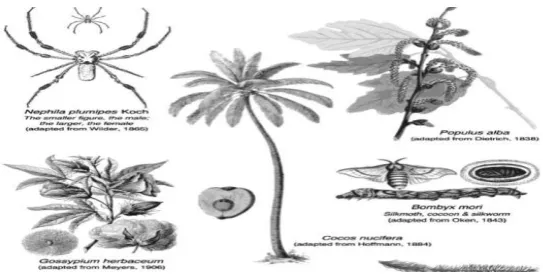
6 Figure 2.1: Example of Animal Fibre Sources
Figure 2.2: Example of Plant Fibre Sources.
2.1.1 Fiber Types
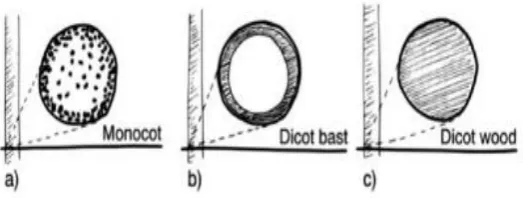
[image:23.595.180.452.234.372.2]7 Figure 2.3: Schematic Drawing Showing Possible Locations of Fibres Within
Stems of Monocotyledonous And Dicotyledonous Plants And Trees.
2.1.1.1 Fibres from Monocotyledonous Plants (leaves and stems)