The Science of Paintings
W. STANLEY TAFT, JR.
JAMES W. MAYER
T
HE
S
CIENCE
T
HE
S
CIENCE
OF
P
AINTINGS
W. S
TANLEYT
AFT, J
R.
J
AMESW. M
AYERWith Contributions from:
PETERIANKUNIHOLM
R
ICHARDN
EWMAND
USANC. S
TULIKW. Stanley Taft, Jr. James W. Mayer
Department of Art Center for Solid State Science Cornell University Arizona State University 224 Tjaden Hall P.O. Box 871704 Ithaca, NY 14853 Tempe, AZ 85287
USA USA
[email protected] [email protected]
Library of Congress Cataloging-in-Publication Data Taft, W. Stanley.
The science of paintings / Stanley Taft, James W. Mayer ; with contributions by Peter Kuniholm, Richard Newman, and Dusan Stulik.
p. cm.
Includes bibliographical references and index. ISBN 0-387-98722-3 (hardcover : alk. paper)
1. Painting—Appreciation. I. Mayer, James W., 1930– . II. Newman, Richard, 1951– . III. Stulik, Dusan, 1956– . IV. Kuniholm, Peter. V. Title.
ND 1143.T34 2000 751—dc21 99-39642
Printed on acid-free paper.
© 2000 Springer-Verlag New York, Inc.
All rights reserved. This work may not be translated or copied in whole or in part without the written permission of the publisher (Springer-Verlag New York, Inc., 175 Fifth Avenue, New York, NY 10010, USA), except for brief excerpts in connection with reviews or schol-arly analysis. Use in connection with any form of information storage and retrieval, elec-tronic adaptation, computer software, or by similar or dissimilar methodology now known or hereafter developed is forbidden.
The use of general descriptive names, trade names, trademarks, etc., in this publication, even if the former are not especially identified, is not to be taken as a sign that such names, as understood by the Trade Marks and Merchandise Marks Act, may accordingly be used freely by anyone.
Production managed by MaryAnn Brickner; manufacturing supervised by Joe Quatela. Typeset by Matrix Publishing Services, Inc., York, PA.
Printed and bound by Maple-Vail Book Manufacturing Group, York, PA. Printed in the United States of America.
9 8 7 6 5 4 3 2 1
ISBN 0-387-98722-3 Springer-Verlag New York Berlin Heidelberg SPIN 10707620
Contributors
P
REFACE
v
The beauty, mystery, joy, and inspired observation of the human spirit that paintings evoke result from a complex of intuitive and cognitive choices made by the artist. An understanding of the genesis of these choices can be as elusive as the resulting imagery, but great paintings seem to initiate in us a curiosity about the ideas, methods, and materi-als used by their creators. In the twentieth century connoisseurship has been enriched by the application of methods of scientific analysis. The results of these investigations into the physical properties of paintings have shed new light on their authenticity and individual histories as well as on the craft in general. Developments in the fields of physics and chemistry have allowed us to understand still more about how we per-ceive and interact with paintings.
The book is divided into two sections: (1) nine chapters describing the structure of paintings, the differences in painting media, and the physical properties of painting materials. The nature of light and color and their interaction lead to a view beyond the eye, enhanced by x-radiation, infrared radiation, and nuclear radiation, enabling a deeper penetration into the painting. Analysis of pigments, binders, and support materials as well as the application of dating techniques is also described; (2) a list of references and technical appendices that provide, in detail, the physics and chemistry applicable to the topics covered in the main text. The problem sets and exams used at Cornell University for the Art, Isotopes, and Analysis course, as well as a solution set, are available through the publisher, Springer-Verlag.
The authors acknowledge the help and support of our Cornell Uni-versity colleagues. Professor Donald D. Eddy, of the Department of Eng-lish, has for many years taught The History of the Book, a course that was the inspiration for Art, Isotopes, and Analysis. Eddy also partici-pated in the organization of Art, Isotopes, and Analysis and presented lectures on printing, binding, paper, and the history of books. Professor Peter I. Kuniholm, of the Department of the History of Art and Archeaol-ogy and director of the Aegean DendrochronolArcheaol-ogy Project, provided lec-tures and data on dendrochronology. Professor David D. Clark and Howard C. Aderhold, of the Department of Nuclear Science and Engi-neering, and Professor Albert Silverman, from the Department of Physics and Nuclear Science, gave support in the areas of physics and neutron-induced autoradiography. Peter Revesz provided proton-neutron-induced x-ray emission (PIXE) analysis of pigments. Debora Mayer, a private art con-servator in Bedford, New Hampshire, and formerly at the Winterthur Museum, gave lectures on beta-radiography of works of art on paper and on paper fibers. We are indebted to the students at Cornell who attended our course and those who served as our undergraduate teaching assis-tants. These teaching assistants attended the course, carried out research projects, and participated as graders, advisors, and assistants.
This book is being used at Cornell University as a text in studio paint-ing courses and at Arizona State University as a supplemental text in the course Patterns in Nature, which is intended for teachers of grades K–12.
PREFACE
C
ONTENTS
vii
Preface v
1.
T
HE
S
TRUCTURE AND
A
NALYSIS
OF
P
AINTINGS
1
1.0
Introduction
1
1.1
What Is a Painting?
2
1.2
Choices
6
1.3
Examination and Analysis
8
2.
P
AINT
12
Dusan Stulik, the Getty Conservation Institute
2.0
Paint
12
2.1
Pigment
15
2.2
Fresco
16
2.3
Tempera
19
2.4
Encaustic
22
2.5
Oil
23
3.
O
RGANIC
B
INDERS
26
Richard Newman, Museum of Fine Arts, Boston
3.0
Introduction
26
3.1
Carbohydrate-Containing Binders
29
3.1.1
Honey
29
3.1.2
Plant Gums
29
3.2
Protein-Containing Materials
31
3.2.1
Animal Glue
32
3.2.2
Egg White and Egg Yolk
33
3.2.3
Casein
35
3.3
Oils
36
3.4
Waxes
38
3.5
Natural Resins
40
4.
T
HE
P
AINTER
’
S
C
OLOR AND
L
IGHT
42
4.0
Color, Light, and Space
42
4.1
Color Characteristics
44
4.2
Afterimages
45
4.3
Simultaneous Contrast
46
5.
C
OLOR AND
L
IGHT
50
5.0
Introduction
50
5.1
Light: Photons and Waves
51
5.2
The Color of Objects
56
5.3
Color: Illumination and Metamerism
60
5.4
Additive Color
61
5.5
Subtractive Color
63
5.6
The Eye and Color Sensation
63
CONTENTS
6.
O
PTICS OF
P
AINT
F
ILMS
66
6.0
Introduction
66
6.1
Reflection
66
6.2
Refraction
69
6.3
Scattering of Light
72
6.4
Absorption of Light
73
6.5
Fluorescence
75
7.
B
EYOND THE
E
YE
76
7.0
Introduction
76
7.1
Pigment Response in the Infrared
76
7.2
Pigment Response to X-Rays: Absorption
79
7.3
Pigment Response to X-Rays: Emission
81
7.4
Pigment Response to Neutrons
82
7.5
Overview
85
8.
D
ETECTION OF
F
AKES
86
8.0
Introduction
86
8.1
A Successful Forger
87
8.2
Visual Examination
90
8.3
Dating and Pigment Identification
91
8.4
Sampling
93
8.5
Fake/No Fake
93
9.
O
BJECT OF
I
NTERACTION
95
9.0
Beyond Analysis
95
A
PPENDICES
101
A.
Photons, Electrons, and the Photoelectric Effect
103
B.
Refraction, Reflection, and Dispersion
107
B.1 Index of Refraction
107
B.2 Reflection and Scattering
110
B.3 Dispersion
113
B.4 Varnishes and Refraction
115
B.5 Hiding Power
116
C.
Photon Absorption: Visible, Infrared, and X-rays
118
C.1 Mechanism for the Absorption of Light
119
C.2 Infrared Reflectography and Hiding Thickness
125
D.
The Chromaticity Diagram
128
E.
Periodic Table and Crystal Structure
131
E.1 Electrons, Nuclei, Isotopes and Atomic Number
131
E.2 Periodic Table
133
E.3 Structure of Pigment Crystallites
135
E.4 X-Ray Crystallography
138
F.
Electron Energy Levels and X-Ray Emission
141
F.1 Yellows and Pigment Anachronisms
141
F.2 Electron Shells
142
F.3 Electron Binding Energies
145
F.4 X-Ray Emission
147
F.5 X-Ray-, Electron-, and Proton-Induced X-Ray Emission 149
G.
Nuclear Reactions and Autoradiography
156
G.1 Nuclear Reactions
156
G.2 Radioactive Decay and Decay Law
158
G.3 Counting Statistics
162
G.4 Neutron Activation Analysis and Autoradiography
163
H.
Organic Binders: Analytical Procedures
168
Contributed by Richard Newman
H.1 Introduction
168
H.2 Biological Stains
169
H.3 Fourier Transform Infrared Spectrometry
170
H.4 Chromotography
174
CONTENTS
I.
Polarized Light and Optical Microscopy
182
I.1 Polarized Light
182
I.2 Crystal Optics
184
I.3 Polarized Light Microscopy
186
J.
Cross-Section Analysis of Sample
from
Detroit Industry
by Diego Rivera
189
Contributed by Leon P. Stodulski and Jerry Jourdan
K.
Radiocarbon Dating in Art Research
192
Contributed by Dusan Stulik
K.1 Introduction
192
K.2 Radiocarbon Dating
193
K.3 Accelerator Mass Spectrometer
196
K.4 Reality of Radiocarbon Dating
198
K.5 Sampling and Sample Contamination
198
K.6 Correction for Isotopic Fractionation
200
K.7 Relations Between Measured and Calendar Age
201
K.8 Medieval Documents on Parchment
203
K.9 Conclusions
204
L.
Dendrochronology (Tree-Ring Dating) of
Panel Paintings
206
Contributed by Peter Ian Kuniholm
L.1 Method
206
L.2 Limitations
210
L.3 Examples/Case Studies
211
L.4 Summary
214
References
218
Index
229
1.0
I
NTRODUCTION
This book follows two lines (science and art) that run simultaneously. Each has been organized independently to explore a particular disci-pline or body of knowledge. The science component of the book takes ever closer views of matter and the interactions in nature that allow us to perceive paintings, from the phenomenon of light to the com-position and dynamics of the atom. Techniques of analysis, which uti-lize these scientific principles, are used in an in-depth investigation of paintings. The book also explores the processes through which paint-ings are made, the materials to make them, and the information pro-duced by scientific analysis.
The sequence of examples and topics is designed to give as clear an explanation as possible of the nature of paintings as objects. The sequence is also designed to explain the scientific laws that are at work in making it possible for the object to exist and for us to perceive it. Despite the differences in motivation on the part of artists, the social, political, and economic forces at work during the time in which the works were made, and the consequences of artistic invention, the ob-jects we are analyzing live as obob-jects and among obob-jects as a part of our world. It is part of the intention of the book to give some feeling for the relevance of the works of the past to our lives today. The ob-jects we will examine are as alive today as they were when they were made. This is not to say that the conditions under which the works were made have no consequence in our study of them. Quite the con-trary. Many of the choices made by an artist were dictated by the
cur-rent state of technology, economics, politics, and many other factors.
1
T
HE
S
TRUCTURE AND
Paintings are also repositories of history. They have been subjected to the whims of man and the forces of nature. A study of the particular way time and the elements have affected these objects can reveal to us a great deal about the properties of the materials, and the way in which they were made.
1.1
W
HAT
I
S A
P
AINTING
?
Paintings present us with images that either represent things, ideas, or events familiar to us or that have no connection to our own experience. In either case, we are often inspired, informed, and given pleasure by what we see. And what is it that we see? Paintings are essentially two-dimensional—an image painted on a flat surface. Most typically the sur-face is rectangular, and we view it hanging flat against a wall. The three-dimensional volumes of the figure and the deep space of the inte-rior in The Archangel Gabriel by Gerard David (Color Plate 1) are illu-sions. The effectiveness of these illusions is dependent upon the skill of the painter, for despite the complexities of iconography, narrative, and the attachment of the viewer to the activity being depicted, these are sim-ply images made with paint. In most cases, the paint is somewhat evenly distributed across the surface, reinforcing the two-dimensionality of the painting.
The fact that paintings have a material presence is often overlooked or is not fully appreciated. This is due in part to the profusion of art re-productions that, while providing us with the image, cannot adequately portray the surface or scale of the painting. When we view an actual painting, its material aspect can become very apparent to us. We see the image, and simultaneously we may also acknowledge that it is made with paint. The images in Easter Mondayby Willem de Kooning (Color Plate 2) are clearly made of material we associate with paint. The texture of the paint is an integral part of the image. We may see that areas of color overlap one another in some way or that some areas of paint may be thicker than others. The paint may also have different surface charac-teristics or topography. Some areas may be very smooth and others heav-ily textured.
The whole surface may be extremely smooth—resembling enamel or glass. In David’s Archangel Gabriel(Color Plate 1) we are more aware of the figure in the interior than the surface topography of the paint. We assume that the images are made with paint, but the character of the material is not as evident as the illusionistic texture of fabric, hair, and feathers. The topographical character of the paint—whether smooth, as in the David, or heavily textured in the de Kooning—is crucial to initi-ating a response from the viewer.
Paint may be manipulated to produce a wide range of reflective
qual-CHAPTER 1 THE STRUCTURE AND ANALYSIS OF PAINTINGS
ities from shiny to matte. These effects are, for the most part, imper-ceivable in reproductions, but are an integral part of the painting and carefully considered by the painter.
Paint, of whatever surface texture or reflective quality, is composed of the same basic components. The component we perceive as color is known as pigment, which is most typically a fine powder of organic or inorganic material. The pigment is dispersed in a liquid, which allows it to be spread out and which binds the individual powder granules to-gether and to the surface to which the paint is applied. This liquid, called the binder, can be one of a number of oils, egg, gum, or a synthetic poly-mer (acrylic, alkyd). The binder has the characteristic that when it dries it produces a stable paint film. A third component (sometimes absent) is the vehicle,or diluent. The vehicle is compatible with the binder: wa-ter with egg, gums, and acrylic polymers; turpentine or petroleum dis-tillate with oils. When mixed with the pigment and binder, the vehicle allows the paint to be spread more easily and makes it a bit more trans-parent. It may also assist in the drying of the film. In all cases, the ve-hicle evaporates as the film dries.
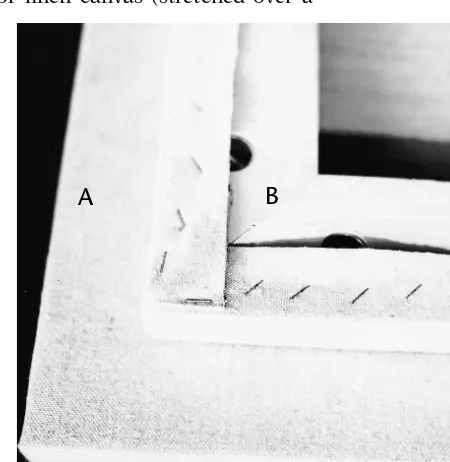
The surface upon which the paint is applied is known as the support. It may be flexible material like cotton or linen canvas (stretched over a wooden frame, the stretcher, to give it
stability as shown in Figure 1.1), or rigid panels of wood, metal, glass, or plastic. The walls and ceilings of buildings have also served as supports for paintings. Canvas has a distinct texture that in most cases can be eas-ily recognized in the painting. The na-ture of the support material influences the way we see and interpret the paint-ing. Some materials, such as coarse canvas, impart a softness to the sur-face, whereas a painting on a wooden or metal panel looks hard and smooth. The support is first prepared with an application of size. Size is a diluted glue, most typically made from ani-mal skins. The size prevents the binder in the subsequent layers of the painting from being absorbed into the support, thereby weakening the paint-ing. In addition, the size prevents the penetration into the support of binders and vehicles that may have a deleterious effect on the support ma-terial. In the case of canvas, size also
[image:16.518.225.450.307.538.2]1.1 What Is a Painting?
3
Fig. 1.1A,B. Canvas stretched over a wooden “stretcher” frame.
A: the surface that will receive the paint. B: the back of the canvas, showing how the fabric is attached to the stretcher.
shrinks the fabric to a taut, smooth membrane (held, of course, by the stretcher).
A coating, or ground, shown in Figure 1.2, covers the sized support to further protect it from the adverse effects of binders and to block the absorption of the binder into the support. The ground is essentially a paint, made of materials compatible with the support material and the paint to be used over it. Gesso—a mixture of animal glue, chalk (calcium carbonate), and at times a white pigment—has been used for centuries as a ground for both wooden panels and canvas. The most common ground preparation used today is a gesso containing a binder of acrylic polymer, which replaces the animal skin glue used in traditional gesso. Traditional gesso grounds produce a white, opaque surface. In addition to its protective function, the ground also acts as a reflective surface be-neath the paint film.
The illustration of a painting shown in Figure 1.3 is known as a cross section,which depicts the layers of a painting as seen from its edge,
per-CHAPTER 1 THE STRUCTURE AND ANALYSIS OF PAINTINGS
4
Fig. 1.2. The ground layer applied to the canvas.
This coating protects the fabric from the adverse effects of the paint. This view is called a cross section because it cuts across the layers of the painting, perpendicular to the surface view.
Fig. 1.3. Light passing through a layer of paint and reflected by the ground layer.
pendicular to the normal surface view. This view allows us to understand, in this case, how light interacts with the painting. As we will see in dis-cussing the optical properties of paint films, light passes into the film and may penetrate as far as the ground. If the light is reflected back by the dense white surface, we will perceive luminosity in the painting, a quality cherished by many painters. Some grounds are not white, how-ever. The painter may decide to add certain colors to the ground mix-ture to act as a base for overlaying colors. A cool tone (blue-gray or green) sometimes underlies the warm colors of flesh. A brilliant white ground may well impart desirable characteristics to the paint film, but to many painters it is a disturbing surface to face when starting a painting. A thin layer of color called an imprimatura may be applied over the ground to act in a way similar to a toned ground, and may also serve to seal a some-what absorbent gesso. Painters sometimes find these colors useful as the painting develops. Areas of either toned ground or imprimatura may be visible in a finished painting.
The painting may be coated after completion with a thin layer of var-nish. The varnish is a transparent liquid material that performs two pri-mary functions: It protects the paint film from abrasions, pollutants in the atmosphere, moisture, and dirt, and it can alter the reflective char-acteristics of the paint. The painter may find that certain colors have dried matte while others have dried
[image:18.518.202.443.349.553.2]glossy. If the desired effect is a glossy surface, the application of a gloss varnish will make all colors uniformly glossy.
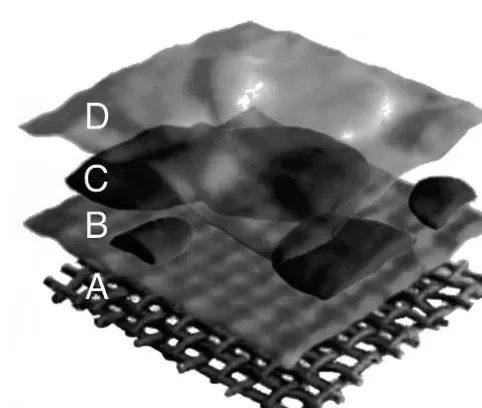
Figure 1.4 illustrates how these components of a painting fit together. Most paintings seen in cross section will re-semble this drawing. The par-ticular construction in Figure 1.4 has served the needs of many painters in the history of Western painting; however, there exist many variations on the theme. In an effort to sat-isfy the demands of the imagi-nation, artists have experi-mented with many nontradi-tional painting materials and with methods that often stretch both traditional and nontradi-tional materials to the limit (and sometimes perhaps re-grettably beyond the limit) of
1.1 What Is a Painting?
5
Fig. 1.4A,B,C,D. A typical painting in exploded view.
their abilities to produce a stable, perceivable object. Woman with Hat
(1916) by Alexander Archipenko (Color Plate 3) is a very successful ex-ample of the use of traditional materials applied in nontraditional ways. It has a rather complex support made of wood, metal, papier-maché, and gauze. The image is made partly in relief and then painted. Experimen-tation is an innate part of the painting process and will manifest itself in more or less subtle ways.
1.2
C
HOICES
What we see when we look at a painting—the image and our belief in it—is the result of choices in painting media, physical components, and the methods employed prior to and during the painting process. To a great extent, the number of choices, the way they are made, and the se-quence in which they are used are influenced by the environment of the artist. Availability of materials, training, common practice, the demand of imagery, scale, and placement of the completed painting all influence these choices. We certainly cannot discount skill and invention as con-tributing factors in the making of the object, for they guide the use of materials, and, when the artist is truly inspired, allow us to be trans-ported into the life of the painting.
The choices made to satisfy the particular requirements of one paint-ing may well provide the viewer with a distinctly different sensory ex-perience from a painting requiring different choices. In the late 1520s, the Florentine artist Jacopo Pontormo painted the Depositionaltarpiece and Annunciation (Color Plates 4 and 5) for the Capponi Chapel in S. Felicita, Florence. The altarpiece is painted in oil on a panel and has a glossy, luminous, rich surface. The colors are very intense and range from very light to very dark. On an adjoining wall in the small chapel is the
Annunciation, a fresco painting much different in character. Fresco is a method of painting on a wall while the plaster of the wall is still damp, or “fresh,” as described in Section 2.2. Part of the difference between the paintings can be attributed to the effects of nature and time on the fresco, but there is also a significant visual difference resulting from the unique method used in fresco. The method is determined in large part by the nature of the materials. Fresco also has a much drier, less reflective, and somewhat matte surface. In addition, one cannot overlook the fact that the images are a part of the wall. The Depositionis painted on a panel and is separated from the architecture of the chapel by an ornate frame. The panel support does not assert itself, so we are led through the frame into the space of the painting as through a window. The space is crowded with figures, and there is very little to indicate the particular environ-ment they occupy. We are transported from the world of the chapel into the world of the painting. By contrast, the angel and Virgin of the An-CHAPTER 1 THE STRUCTURE AND ANALYSIS OF PAINTINGS
nunciationare part of the architecture that surrounds the viewer. These figures are close to us; we see them as a part of our space. They are in-timately integrated into the space of the chapel, flanking a window—a real window, across which the communication between them takes place, and which operates as a source of light for the chapel.
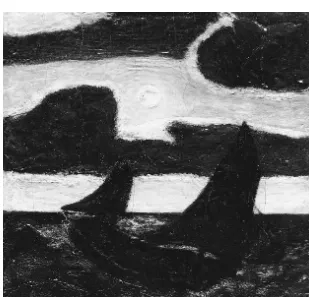
The life of the painting itself is as dependent upon these choices as the image. Albert Pinkham Ryder, a much admired American painter (1847–1917), produced paintings that are often mysterious, full of large swirling forms depicting strange landscapes or seascapes (Figure 1.5).
[image:20.518.50.359.212.509.2]1.2 Choices
7
Fig. 1.5. Moonlight Marineby Albert Pinkham Ryder, late 1890s, Metropolitan Museum of Art. Oil on canvas, 11 1/2”12”.
Many of the paintings are relatively small, and because of the scale, the texture and character of the surface are very evident when we view them either in a museum or in reproduction. Typically, passing across those painted large forms is a network of cracks. More than likely, the thick-ness of the paint, the materials used, and the process employed in build-ing the layers of paint all contributed to the crackbuild-ing. To the viewer the pattern of cracks seems to relate to the images; it is difficult to think of Ryder’s paintings without them. But it is unfortunate at the same time that the unique qualities that make Ryder’s paintings so compelling (the rich multilayer glazes, for example) also make them extremely fragile.
Painters over the centuries have been very attentive to the demands of particular materials. Methods of work have been developed to ac-commodate the characteristics of the materials used. If a pigment has proved to be unsatisfactory, it is either abandoned or used with a bind-ing medium that allows it to remain stable. Often paintbind-ings incorporate more than one binding medium because the artist needs to use a range of pigments, some compatible with one binder, others compatible with a different binder. Likewise, the effects resulting from the use of one medium might be desired in one area of a painting, while the effects gen-erated by the use of another medium are felt to be more appropriate for another part of the image.
The determination of what materials are suitable for a given situa-tion, or indeed, what are suitable for the making of paintings in the first place, is often made through the study of the work of past masters. The methods of working and the application of a wide variety of materials to the process have been well documented. However, the innovations of painters of the past often fail to meet the demands of an artist’s imagi-nation.
Many artists have adopted materials designed for industrial appli-cations. This has at times proved problematic, given the instability or impermanence of many synthetic materials, but it has also provided the artist with an ever-expanding source of permanent and easy-to-use ma-terials. Well-established practices must frequently be modified, and un-conventional materials or traditional materials used in unun-conventional ways may be called for. Experimentation of this sort is an integral part of the painting process and has advanced the craft steadily throughout its history. These investigations may also have the effect of liberating the artist’s imagination. Some ideas lie dormant, waiting for the appropri-ate mappropri-aterial to give them life.
1.3
E
XAMINATION AND
A
NALYSIS
We have described a painting as an object made from a variety of ma-terials carefully chosen by the painter. But how is it constructed, what are its materials, and how is our visual response generated by the result
CHAPTER 1 THE STRUCTURE AND ANALYSIS OF PAINTINGS
of their combination? A series of analytical techniques has been developed to help answer these questions.
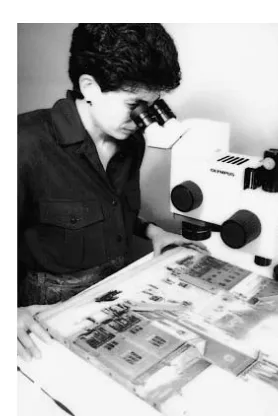
The techniques employed in the scientific analysis of paintings follow a sequence beginning with an external view with the unaided eye. Much information is avail-able from this view, and the resulting perceptions both direct and assess further investigation by other tech-niques. Assisted by the optical microscope (Figure 1.6) and various other techniques that aid the eye, we can begin to look into and through the painting.
The interior view reveals a relationship between the elemental structures within a particle of pigment, for example, and the images on the surface of the painting. The external and internal views are aspects of the same phenomenon. They reinforce and amplify each other. The scientific analysis is a window through which we gain an appreciation of the structure of a painting just as paintings themselves are windows through which we may view ourselves and our world.
A thorough scientific analysis is essential in decid-ing upon a course of treatment for an aildecid-ing work of art. The resulting information may allow one to avoid com-plications or damage resulting from the treatment itself. The success of any such treatment is, of course, depen-dent to a great extent on available technology. With the development of more sophisticated methods of assess-ing the condition of artworks, as well as determinassess-ing the component materials and how they have been used, has come a more informed, restrained, and cautionary
approach to treatment. Art historians have also benefited by the devel-opment of new applications of analytical technology. Attributions, deat-tributions, and reattributions are often more easily made after reviewing x-radiographs, infrared reflectograms, dendrochronological data, and pigment analyses. This material adds to the general knowledge about particular artists, their lives, working methods, chronologies of their work, and interrelationships with other artists.
Another benefactor of this information is the contemporary artist. Traditionally, artists learn about the craft of painting directly from mas-ters, contemporary accounts of studio practices written by artists (Gior-gio Vasari in his Lives of the Artists and The Craftsman’s Handbookby Cennino d’Andrea Cennini, for example), and from artist’s journals. The texts most used today were compiled by or with the assistance of scientists. Rutherford J. Gettens, George Stout, Ralph Mayer, and Max Doerner are a few of the modern writers on painting materials and tech-niques whose work is based on scientific investigation.
The techniques used in the analysis of works of art fall into the larger framework of analysis of the wide variety of materials that make up our
[image:22.518.311.450.55.263.2]1.3 Examination and Analysis
9
Fig. 1.6. Viewing a painting through a binocular microscope.
10
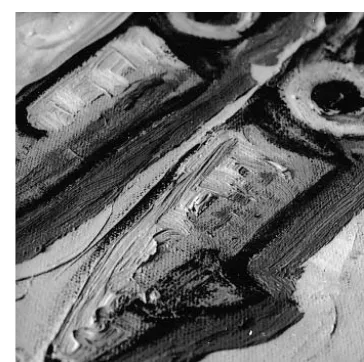
Fig. 1.7. Detail of painting 4 Squids
by Richard Birkett, 1986.
Paintings (in this case an object com-posed of oil paint on canvas) are typ-ically viewed with the unaided eye and are appreciated with no other me-diation. Additional information and an appreciation of different aspects of the object are achieved through the use of the same analytical techniques that are used to study, and therefore to appreciate, the integrated circuit shown in Figure 1.8.
Fig. 1.8. A scanning electron micrograph of an electronic circuit.
[image:23.518.109.451.288.555.2]world today, from coatings on windows to the integrated circuits in our home computers. The analysis of the layers of paint that produce the im-age of a squid in the painting shown in Figure 1.7 can be performed us-ing the same approach used in the analysis of the layers in the metal lines interconnecting electronic devices in the semiconductor surface shown in Figure 1.8. From a scientific viewpoint both the squid and the metal lines of the semiconductor are thin films with defined shapes and patterns. In terms of scale, they are vastly different, with the squid com-posed of patterns that are centimeters across and the metal lines thou-sands of times smaller. The details of the squid can be viewed with the unaided eye, while the metal lines cannot be seen without the aid of a high-powered scanning electron microscope. Yet, the analytical tech-niques developed for unraveling the structure of the components in semi-conductor transistors have their counterparts in the laboratories of museum scientists and conservators to assist them in gaining a deeper understanding of the structures and physical properties of paintings.
2.0
P
AINT
The paint used by artists to project their ideas and observations can be as simple as a mixture of pigment and binder, with pigment pro-viding the color and the binder joining the particles of pigment to-gether and to the support. A paint may also contain a vehicle that dilutes the pigment/binder mixture, allowing the paint to be spread more easily. Other materials may be added to the mixture to enhance the optical or textural characteristics, or to alter the working proper-ties, by accelerating or slowing the drying of the film or by making it more or less fluid.
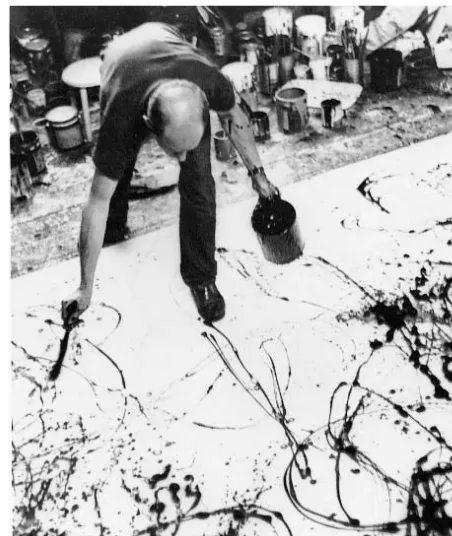
The choice of materials for these various functions is dependent upon the type of support the painter intends to use, the scale of the painting, its proposed environment, and the tactile and optical char-acteristics suitable to the artist’s vision. Although many artists have experimented extensively in the hope of developing new techniques (Figure 2.1) or adapting new materials to suit their pictorial needs, most have followed common practice or historically established pro-cedures. Innovations generally derive from these historical precedents, and the adoption of new materials such as acrylic polymers, vinyl, and alkyd resins, in their most common formulations, mimic to some ex-tent conventional paints. These synthetic media do offer the painter an expanded range of textures, consistencies, and optical effects through the use of a number of additives.
In centuries prior to the Industrial Revolution and the develop-ment of manufactured paints, a painter was not only an artist, but also a “formulator of paints.” Painters personally, or with the help of
12
P
AINT
2
assistants, made their own paints, mixing pigments with selected bind-ing media (the material that holds the pigment together and bonds the paint to a support). Hands-on expe-rience with paint preparation gave an artist a great understanding of artist’s materials and their proper-ties. Artists often followed a variety of traditional paint recipes. Differ-ences in paint formulas proliferated as painters experimented with a multiplicity of binding media, seek-ing that special combination that would give their paints the desired optical and handling properties.
After the introduction of col-lapsible paint tubes in 1841 and the development of the paint industry in the eighteenth and nineteenth centuries, artists became separated from the paint manufacturing pro-cess, and most of them lost the mo-tivation to learn the details of the paint-making trade. Artists became freer in the creative process, and the collapsible paint tubes allowed them to leave their studios and helped them to develop new styles of paint-ing. We can say that without these technological advances in artist’s
materials there would not have been such art movements as Impres-sionism, which brought the painter out into the open air. The techno-logical advances and diminishing knowledge of artist’s materials by painters had, on the other hand, some serious negative effects. Using in-adequate materials, working with poorly tested paints, and experiment-ing with paint formulas without an intimate knowledge of possible consequences sometimes had disastrous effects on the longevity of paintings.
Paint media, no matter how different they are from one another, share a common characteristic in that they are manufactured in essen-tially the same way. The pigment must be dispersed, or ground,as evenly as possible in the binding medium to take full advantage of the proper-ties of both the pigment and the binder. The grinding process does not alter the morphology of the individual particles of pigment, but simply distributes them evenly within the binder (Figure 2.2a,b). Traditionally,
[image:26.518.223.449.63.331.2]2.0 Paint
13
Fig. 2.1. Photo of Jackson Pollock, Hans Namuth.
14
Fig. 2.2a,b. (a) Pigments (irregularly shaped particles) are combined with a bind-ing medium into a stiff paste, which is then (b) ground on a flat plate to distribute the pigment particles uniformly within the binder.
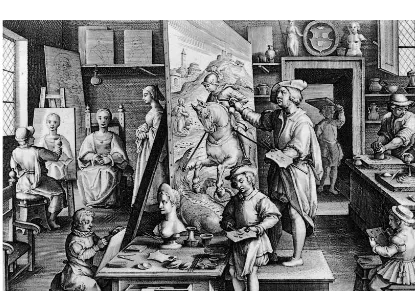
Fig. 2.3. A Dutch Studio in the Sixteenth Century, engraving, Theodor Galle after Jo-hannes Stradamus, Bibliothèque Nationale, Paris.
the pigment and binder are first mixed into a stiff paste. This is then ground on a flat plate of glass or stone with a muller, a flat-bottomed glass or stone instrument held in the hands and pushed in a cir-cular motion, demonstrated by the apprentices in the studio of a sixteenth-century painter in Figure 2.3. Although some painters today still grind their paint by hand, most purchase their paint preground by machines used by manufacturers to produce large quantities of paint (Figure 2.4) of uniform con-sistency and pigment distribution.
2.1
P
IGMENT
A leading manufacturer of artist’s paint currently lists at least 108 different colors of oil paint. The pigments selected for these colors are uniform in particle size, compatible with oil binders, are rea-sonably resistant to atmospheric gases and light,
and are for the most part permanent. These modern pigments are also relatively uniform in consistency, workability, and drying time from color to color. Even though some of the 108 colors are mixes of two or more pigments (a flesh color might be a mix of reds, yellows, and titanium white), this represents an incredibly varied and comprehensive palette for the contemporary painter.
Modern high-quality artist’s paints are manufactured to such exact-ing standards that the contemporary artist need not be terribly concerned about using impermanent or unstable colors. In fact, few painters take much notice of the pigments used in their paint and rarely have to con-sider the compatibility of the colors that they are mixing together on the palette. It is tempting to believe that whatever use is made of the paint, the results will be faultless.
By comparison, the options available to artists of the fourteenth through seventeenth centuries, for example, were very limited. The pig-ments commonly used during this period of Western painting numbered about fifteen. The most common were three blues, azurite (copper car-bonate), ultramarine blue (lazurite), and smalt (cobalt glass); and possi-bly four reds, red lead (lead tetroxide), vermilion (mercury sulfide), iron oxide red, and carmine lake (made from the dried bodies of the cochineal, a South American insect). For many painters not all of these pigments were available at all times, and some (ultramarine blue, for example, made from the semiprecious stone lapis lazuli) were so prohibitively ex-pensive that they could be used only on paintings for which the painter had received a substantial advanced sum for materials.
2.1 Pigment
15
There were other colors available, notably simple earth pigments— yellows and browns. Dyes of various kinds and minerals were continu-ally being developed for other industries. These materials were often tested for use by painters, and in some cases the palette was expanded significantly by this experimentation. The more common result was that these pigments turned out to be incompatible with other tried and true materials. They proved to be unstable in some way, either by changing color, fading, cracking, or by altering the materials placed in contact with them.
Artists tend to be experimental by nature and are willing to try untested materials or procedures that suggest an improvement in the capacity of materials to project their ideas. Along with this air of curiosity there also exists a concern for permanence and general high quality. Although periodic experimentation has been the norm throughout history, most painters have had a rather conservative attitude about their choice of pigments. Powers of invention are focused on how to maximize through mixing the limitations of a small number of trusted colors.
What follows are descriptions of several types of paint and the methods of applying them. There are nearly as many variations of these methods and formulations of materials as there have been painters, but nearly all painters have based their approach on historical models that still define the art and craft of painting.
2.2
F
RESCO
Fresco is an ancient technique of painting on ma-sonry walls. The color in Diego Rivera’s murals at the Detroit Institute of Arts (Color Plate 6) was applied to damp plaster (hence the term fresco, or “fresh” in Italian). The material used to paint frescos does not conform to our usual definition of a paint, which specifies the presence of a binder. The pigment is ground in water, which has no binding strength. Water is a vehicle, or diluent, which evaporates during the drying process. The water is used to dilute the pigment, allowing it to be spread easily over the plaster and to assist in the drying/binding process.
CHAPTER 2 PAINT
16
Fig. 2.5A,B,C. Diagram showing layers of plaster applied to a masonry substrate in the construction of a fresco painting.
The binder is the result of a chem-ical process, resulting in a mechani-cal bonding of the particles of pig-ment. The color mixture of pigment and water is brushed onto a freshly plastered surface. The plaster is a mixture of slaked lime (calcium oxide in solution with water, forming cal-cium hydroxide) and an aggregate (sand, marble dust, or a volcanic ash called pozzolana). As the plaster dries, the particles of pigment are pulled into the surface of the plaster and locked in place by particles of calcium hydroxide, which convert to calcium carbonate as the plaster dries (Figure 2.5). The plaster acts as ground, support, and binding agent. Fresco is the one painting medium in which all of the component parts merge to form a single unit. A cross section from Rivera’s mural (Figure 2.6) reveals a simple structure with pigment particles integrated within the surface of the lime mixture. (See Appendix J for an analysis of
pig-ment–plaster integration.) Underlying the apparent simplicity of this medium, however, is a process complex in its chemical interactions and demanding in its execution.
Fresco is a marvelous medium for painting large-scale works that are meant to be assimilated into an architectural space. It is compatible with masonry and is durable and quickly executed. The difficulties for the painter are that extensive preparatory work must be done (in the form of sketches, full-size drawings called cartoonsand small-scale color sketches), large areas must be painted quickly and without alteration, and the work of assistants and tradesmen must be orchestrated in the often cumbersome environment of scaffolding and restrictive architec-tural spaces.
The wall surface is built up of layers of different formulations of lime, water, and aggregate as shown in Figure 2.5. Each successive layer con-tains a greater percentage of lime, gradually increasing the binding power of the plaster. Layering ensures even, slow drying, which reduces the like-lihood of cracking. Because most frescos are large in scale, the intonacco, or surface layer, is applied in sections that can be painted in one day be-fore the plaster dries. These sections are called giornate, or a day’s work. In addition to making the painting process more manageable for the
2.2 Fresco
17
Fig. 2.6. A cross section from the fresco Detroit Industry
by Diego Rivera showing the accumulation of pigment par-ticles (thin dark band) at the surface of a layer of plaster.
painter, the seams between giornate act as expansion joints, alleviating some of the stresses on the surface that could lead to cracking. Figure 2.7 shows the arrangement of giornate for the section Vacci-nation from the mural cycle by Diego Rivera at the Detroit Institute of Arts. The seams are aligned with the edges of forms in the image. Complex color mixtures would need to be matched from day to day (nearly impossible to do given the inconstancy of pigment and plaster mixtures and the inevitable fluctuations of at-mospheric conditions) should a seam pass through a form or area of the image. The schemes for the giornate are very carefully plotted when the cartoons are drawn. The image in the cartoon (Figure 2.8) is transferred directly to the damp plaster by means of pouncing (charcoal dust or pigment forced through a se-ries of small punctures along the lines of the drawing), or by scribing along the lines in the cartoon with a pointed wooden or metal tool that incises the line into the soft plaster.
Painting of the image then proceeds in the prescribed sequence. Each giornate must be completed in 4 to 8 hours, after which time the plas-ter has dried too much to permit the adhesion of the pigment particles within its surface. The painting cannot be revived after the plaster dries to make alterations or corrections without having to chip away the in-tonacco and start over again. It is possible to paint over the fresco to make alterations, but this procedure requires the use of a binder in the paint (egg, casein, or animal glue have been used), which then produces a film on the plaster. In addition to making corrections, this technique, called secco, is sometimes used to apply pigments that are not compat-ible with lime (pigments containing copper, for example).
The finished state of a fresco has a somewhat dry, nonglossy
ap-CHAPTER 2 PAINT
18
pearance. The surface may be-come slightly more reflective with age or from having been burnished with a fine abrasive, a practice sometimes employed on Roman frescos. In most cases, there is no sense of the surface being coated with a layer of paint. The image is simply a part of the wall. Fresco has the potential to produce brilliant color as well as a feeling of monumentality through its affinities with ar-chitecture (Figure 2.9).
2.3
T
EMPERA
Tempera refers to paint con-taining a binder of egg. Its vehicle is water, which dilutes the paint but evaporates during drying. Tempera produces a very durable but somewhat brittle paint film. It is usually applied to a rigid wooden panel (Color Plate 7) that has been coated with gesso, a mixture of animal glue, water, chalk, and, at times, white pigment. The
rigid support (typically made of wood) prevents the paint film from flex-ing enough to cause crackflex-ing or flakflex-ing. In order to maintain bindflex-ing strength and avoid adhesion problems between layers, the paint must not be diluted excessively with water. As a result, tempera paint is not very fluid compared to other media. The paint dries rather quickly to an unusually luminous and brilliant film.
Tempera has sometimes been used in conjunction with other paint-ing media. In fresco, it is the secco overlypaint-ing the fresco when alterations are required, or it is used in the application of certain pigments (con-taining copper, such as azurite) that are incompatible with the alkalis in the plaster. It has also been commonly used as an underpainting, over which layers of opaque and/or transparent oil paint are applied. Because tempera dries quickly (within minutes), the painter can establish value and compositional arrangements without the delays required by the
2.3 Tempera
19
Fig. 2.8. Vaccination, Diego Rivera, 1932. Charcoal with red pig-ment, 2.552.20 m. Cartoon for south wall ofDetroit Industry, Detroit Institute of Arts.
much more slowly drying oil medium, often requiring days of drying be-fore subsequent layers can be applied. Alterations at this stage of the painting may be much easier to accomplish using the quicker-drying tem-pera. Some pigments, usually those containing high concentrations of copper (azurite or malachite), tend to discolor oil binders, so they have been ground in egg instead. Resulting paint films may have alternating layers of tempera and oil paint.
The Annunciation, by Dierick Bouts (Figure 2.10), was painted in a medium known as distemper. The binder is animal glue, usually made from the skin of rabbits. This is a very strong glue, used in gesso, and commonly used as an adhesive in the fabrication of furniture. As in the case with the egg binder used in tempera, animal glue is diluted with water. The paint is very brittle and often fragile. It must also be applied to a rigid support, or when applied to canvas, as in the case of the Bouts
Annunciation, applied very thinly, almost as a kind of stain. When painted
CHAPTER 2 PAINT
20
Fig. 2.9. Photo of Vaccinationin situ. North wall of Detroit Industry, Diego Rivera, 1932. Fresco.
on canvas, the distemper has a very matte surface. It can produce a very luminous and highly reflective surface (similar to porcelain or enamel) if applied in layers on a panel.
Other media related to tempera are gouache and casein. Gouache has a binder of gum arabic, a natural gum produced by the acacia tree. Sometimes referred to as opaque watercolor, gouache is indeed extremely
2.3 Tempera
21
Fig. 2.10. Annunciation, Dierick Bouts, c. 1450–55. Distemper on canvas, 9074.5 cm, The J. Paul Getty Museum.
opaque in normal usage. It dries very quickly to a matte surface. This, too, produces a rather brittle film. It is usually used on panels or paper. Casein (an example is given in Chapter 3) shares some of the char-acteristics of tempera and gouache. It is diluted with water and dries to a matte film. The binder in this case is the solids of skim milk. Casein glue made from these solids is extremely strong and when dry is insol-uble in water. Due to the insolubility of the dried film, casein lends it-self to work requiring layers of color or to artists who rely on making revisions by overpainting. It produces a film with slightly more luster than gouache, and like gouache is normally used as an opaque color.
2.4
E
NCAUSTIC
Wax has been used as a binding agent in paint since antiquity, and the most compelling examples of its use to date remain the famous por-traits produced at Roman settle-ments in Egypt during the first and second centuries A.D. (Figure 2.11
Portrait of a Woman, J. Paul Getty Museum). The simplest method of wax painting is called encaustic, a term derived from Latin and refer-ring to the use of heat, which is required to liquefy the colors. In modern usage, a bleached white beeswax is combined with pigment and resin (damar is commonly used). The heated, liquefied colors are applied to a rigid support by brush or palette knife. A wide range of textures is possible by varying the consistency of the paint through ma-nipulation of working temperatures, both of the colors and the support material. For some effects, the painter heats the support panel in order to maintain liquidity in the paint for extended periods of time. Heat is also applied after application from above the surface to “burn in” the layers of color, ensuring
adhe-CHAPTER 2 PAINT
22
Fig. 2.11. Portrait of a Woman, Romano-Egyptian, c. A.D. 100–125. Encaustic and gilt on wood panel wrapped in linen, 5535 cm. The J. Paul Getty Museum.
sion between layers. Encaustic paintings have a unique lustrous, rich, somewhat translucent surface.
Some of the attributes of wax have been incorporated into other me-dia as well, through the admixture of wax as a binder or extender, or as a final coating. Beeswax is soluble in turpentine and compatible with the binders used in oil paint. To some extent, the admirable qualities of wax can be utilized when combined with oil paint without the complexities inherent in traditional encaustic technique. Heat is not required in the process, and the resulting paint film is much more flexible, making it suitable for application on flexible supports.
2.5
O
IL
Oil paint, long considered the most versatile painting medium, contains a binder of oil. Typically linseed oil is used, although oils processed from other plants including poppy seed and walnut oil have also been used. The binder is diluted with spirits of gum turpentine, derived from sev-eral species of pine tree. As in the case with water-soluble paint media, the diluent evaporates as the paint dries. Many different materials, in-cluding marble dust, waxes, and thickened (polymerized) oils may be added to paint to produce a diverse range of textures and handling char-acteristics. Additives may also be used either to accelerate or retard dry-ing (various oils and resins), to alter the transparency of the paint, as well as to affect its reflective properties (matte or gloss effects).
The oil is relatively slow drying (usually taking at least a day to dry to the touch, and sometimes years to dry completely), which can be seen as an advantage to the painter. Color mixing as well as the development of a range of textures across the painting surface can be produced by mixing one color into another before the paint dries (known as working “wet into wet”). One can detect in Color Plate 8a a very thickly applied paint surface. The cross section of paint from the same painting, as shown in Color Plate 8b, reinforces our impression that the colors were mixed wet into wet.
By applying layers of uniform or different consistencies over one an-other, effects can be created unattainable by any other medium. Paint-ing in layers has been for centuries an effective way of mixPaint-ing colors. An opaque color may be overlaid with a transparent color, producing a third distinct color. The transparency of the overlay colors is obtained by ex-tending the paint with quantities of variously formulated oils and/or resins.
The film that results is very durable, water resistant, and much more flexible than many of the tempera-like paints. Oil paint can be applied both to rigid supports and to flexible supports like canvas or paper. Many painters of the fifteenth and sixteenth centuries who had adopted the oil
medium for its handling and optical qualities recognized as well the paint’s ability to retain enough flexibility in a dry state to be relatively unaffected by the expansion and contraction of a stretched canvas. The development of the use of canvas as a painting support has allowed artists to create large-scale, easily movable paintings.
Traditionally, the procedures used in making an oil painting follow those common to fresco and tempera painting. Preparatory drawings and color studies are made, and once the image is resolved, it is transferred to the prepared support. A drawing of the image may be overlaid by an underpainting followed by opaque and transparent layers of paint. Al-though this remains the most meaningful and productive approach to many painters, other means are utilized by painters whose imagery must evolve as the painting is made. Preliminary drawings, underdrawings, and underpainting may not be necessary if a more direct approach is re-quired. The careful building of the painting from one layer to another may also be reversed. The wet paint film is often wiped away, scraped, or sanded (when dry) and repainted—many times, in some cases— before the artist is satisfied with the result.
2.6
A
CRYLIC
Rivaling oil paint in versatility is a modern paint formulated from a syn-thetic polymer generally referred to as acrylic polymer emulsion. It has been in use since the 1930s. Widespread use followed commercial man-ufacture of acrylic paints in the early 1950s. From the beginning of its use, artists have been attracted by its ability to dry quickly (often within minutes) and the tough, flexible film it produces. Because acrylic paint uses water as a diluent, the toxic fumes commonly associated with sol-vents used with oil paint are eliminated from the painter’s studio. The use of water also simplifies thinning of the paint and cleanup of brushes and other equipment.
One of the most compelling qualities of acrylic paint is its uncanny resemblance (by means of manipulating the formulation of paint, dilu-ent, and various additives) to the characteristics of a broad range of traditional paint media. It is sometimes difficult, at first glance, to dis-tinguish oil paint from acrylic, or watercolor, tempera, and casein from acrylic. It can be thinned and used in washes on uncoated paper, or thick-ened and applied to gessoed canvas or panels. Additives can provide a matte or glossy surface as well as unlimited varieties of textures. The paint film is tough, flexible, and resistant to moisture. Acrylic also has unique qualities that artists have used to great advantage. It can be used as a stain on raw, unprepared canvas or when formulated to a particu-lar viscosity, applied in very uniform layers producing surfaces that show
CHAPTER 2 PAINT
an absence of texture as shown by the painting Superimposed Supremos
by David Diao (Color Plate 9).
For the mural painter, acrylic paints eliminate the complexities of building up the multilayered masonry support associated with fresco, be-ing more compatible with modern buildbe-ing materials and methods. Re-visions can be carried out directly and immediately without altering the surface of the wall. Images can also (on all supports) be developed by overpainting many layers. The painter need only wait until each layer is dry to the touch—a matter of minutes in most cases.
The acrylic polymer emulsion used as a binder is not quite as trans-parent as some other painting media and as a result produces a slightly less luminous film than that of oil paint, for example. Another disad-vantage of acrylic paints (again the result of characteristics of the poly-mer emulsion) is that the binder cannot hold as high concentrations of pigment as other binders. The result is a slight reduction in tinting strength, or the power of a color to influence other colors mixed with it. Binding media determine to a great extent a paint’s handling, dry-ing, textural, and optical characteristics. The analysis and identification of binding media is an essential part of the overall examination of paint-ings in the laboratory, and therefore we have devoted the following chap-ter to their description.
3.0
I
NTRODUCTION
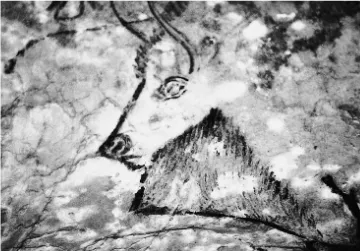
Paints almost always consist of pigments, which provide the color, and an adhesive material that binds the pigment particles together and joins them to the substrate to which they are applied. Rarely, one ma-terial could serve as both pigment and binder. For example, Paleolithic cave paintings (Figure 3.1) at least in some cases were probably done with clay-containing earth pigments; the clay component, when moist-ened, would have given the earth pigments enough stickiness to ad-here to the cave walls. But in most instances, even in the earliest times, the adhesive or binder was a separate material that had to be mixed with the pigments. Animal fat has been identified as a binder in other Paleolithic cave paintings.
Traditional binding materials are all natural substances produced by living things (plants or animals). Some require no processing, while others have to be extracted from their source by some means. In mod-ern times, naturally occurring materials have been supplemented by compounds synthesized in the laboratory, such as the resins used to bind modern acrylic paints and latex house paints. In this chapter only the natural organic binders will be discussed; Chapter 2 discusses mod-ern acrylic paints.
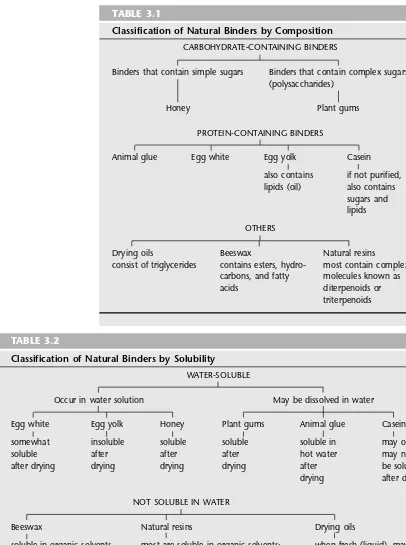
One method of classification of natural binders is by the types of organic compounds of which they consist, as shown in Table 3.1. An-other way is to group them by their solubility in water, as in Table 3.2. Paints that contain water-soluble binders can be diluted with water. Some paints that contain water-soluble binders remain soluble in
wa-26
O
RGANIC
B
INDERS
3
ter after they dry (such as modern tube watercolor paints, which con-tain gums). Others are quite insoluble after they dry (for example, egg yolk). The non-water-soluble binders are substances that cannot be put into solution in water, although many can be dissolved in organic sol-vents such as turpentine or mineral spirits. It is possible to mix various binders together, something that has often been done. Even some water-soluble binders can be mixed with water-inwater-soluble ones to produce emul-sions that have attractive handling properties or optical qualities that appeal to artists.
The solubility, application, and handling properties of the different binders is ultimately related to their general chemical composition, and thus the scheme of Table 3.1 will be used to group the binders.
[image:40.518.36.396.65.316.2]3.0 Introduction
27
Fig. 3.1. Black bison of the “Salon Noir” in the Niaux cave.
28
Classification of Natural Binders by Composition
CARBOHYDRATE-CONTAINING BINDERS
Binders that contain simple sugars Binders that contain complex sugars (polysaccharides)
Honey Plant gums
PROTEIN-CONTAINING BINDERS
Animal glue Egg white Egg yolk Casein also contains if not purified, lipids (oil) also contains
sugars and lipids OTHERS
Drying oils Beeswax Natural resins consist of triglycerides contains esters, hydro- most contain complex
carbons, and fatty molecules known as acids diterpenoids or
[image:41.518.41.447.33.578.2]triterpenoids
TABLE 3.1
Classification of Natural Binders by Solubility
WATER-SOLUBLE
Occur in water solution May be dissolved in water
Egg white Egg yolk Honey Plant gums Animal glue Casein somewhat insoluble soluble soluble soluble in may or soluble after after after hot water may not after drying drying drying drying after be soluble
drying after drying
NOT SOLUBLE IN WATER
Beeswax Natural resins Drying oils
soluble in organic solvents most are soluble in organic solvents; when fresh (liquid), may be (such as turpentine); may most become less soluble as they age dissolved in organic solvents; also be melted insoluble thereafter
3.1
C
ARBOHYDRATE
-C
ONTAINING
B
INDERS
Carbohydrates are compounds that contain carbon, hydrogen, and oxy-gen. The basic building blocks of carbohydrates are simple sugars, or (in the nomenclature of organic chemistry) monosaccharides. Some simple sugars contain five carbon atoms, others six. The six-carbon simple sugar known as glucose is probably the most abundant organic compound on the earth. Another common simple sugar is fructose, which is found in honey and many fruit juices. Simple sugars can be bonded together to form larger molecules. Disaccharides are carbohydrates that consist of two simple sugars bonded together (for the sake of convenience, we can call these individual simple sugar building blocks “units”). The most ubiq-uitous example in everyday life is table sugar (sucrose), a carbohydrate found in many plants. Each molecule of sucrose consists of one glucose unit and one fructose unit bonded together.
Many simple sugar units can be bonded together to form very large molecules, known as polysaccharides. Starch, found in grains such as wheat and corn, is a polysaccharide consisting of many glucose units bonded together. Like all natural polysaccharides, starch has no fixed chemical composition, but each “molecule” of starch appears to consist of from about one thousand to several thousand glucose units bonded together. Another common polysaccharide is cellulose, the principal structural material of plants. Like starch, cellulose consists of many glucose units bonded together, about 1,500 or more per molecule of cellulose.
3.1.1 Honey: Honey, while not a widely utilized binder, has probably found use in paintings at many times in the past. It may have been used in ancient Egypt; nearly 3,000 years later it was described as one of the binders in use by the painters of medieval European illuminated manu-scripts. Also mentioned in association with manuscript illuminations were plant or fruit juices, which owed their stickiness to simple sugars or disaccharides. Like modern table sugar, honey and the sugars of fruit or plant juices can be easily dissolved in water. Once the sticky sugar so-lution dries, it can be readily redissolved in water. It seems likely that binders containing simple sugars would not have been used on artifacts that were intended to be subjected to the elements, as the paint layers they produce are very sensitive to moisture and are quite brittle.
3.1.2 Plant Gums: Plant gums are another example of natural poly-saccharides. These are exudates from trees of many types. Although vary-ing considerably in composition from one type of tree to another, they consist of very large molecules, each probably consisting on average of several thousand simple sugar units bonded together. In addition to sim-ple sugars, gums usually contain sugar acids.
Some plant gums are soluble in cold water, some in hot water, while some are partly soluble in water and some are completely insoluble. Those that have been used as paint binders can be put into solution in water. The behaviors of starch, cellulose, and plant gums when placed in water are quite variable, and yet all of these materials are polysac-charides. The extreme variability, from the total insolubility of cellulose to the complete solubility of some gums, is related to the structure of the molecules. Simple sugars can be bonded together in several differ-ent ways, from long, chainlike molecules (as in cellulose) to highly branched, approximately spherical molecules such as the soluble plant gums. The polysaccharides with branched structures can be dissolved in water.
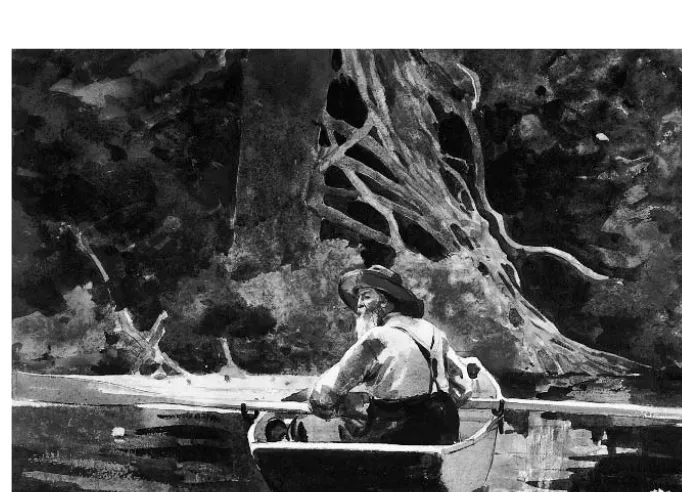
A great many types of plant gums were probably utilized in differ-ent times and places as binders for paints. Probably the most common is the material now known as gum arabic, which at this time can be found as an additive in many foods and is the binder of many modern commercial artist’s watercolor paints (Figure 3.2). Gum arabic comes
CHAPTER 3 ORGANIC BINDERS
[image:43.518.110.451.285.531.2]30
Fig. 3.2. Winslow Homer. The Adirondack Guide,1894.
from a particular variety of the acacia, a shrublike tree of which there are hundreds of individual varieties that grow in many parts of the world. Acacia was one of the few trees that grew in ancient Egypt, and it is not a surprise that acacia gums were used as paint medium at that period. Gum arabic served as a major binder in European me-dieval manuscript illuminations and in tra-ditional Indian manuscript paintings (Figure 3.3). Adding a little honey or sugar to a gum binder was recommended, probably for flex-ibility of the dried paint. Mixtures of more than one gum may have been used.
Among other gums that were used are the gums of fruit trees, such as peach, apricot, plum, cherry, and almond. All of these trees belong to the genus Prunus. Among examples of their applications are Central Asian cave paintings.
3.2
P
ROTEIN
-C
ONTAINING
M
ATERIALS
Proteins are compounds that consist mainly of carbon, oxygen, hydrogen, and nitrogen; sulfur is also found in some. Just as simple sugars are the building blocks (or units) of carbohydrates, the basic building blocks of proteins are amino acids. About two dozen different naturally occurring amino acids are known. Various types, proportions, and num-bers of amino acid units can be combined to form widely varying larger molecules. Indi-vidual amino acids are soluble in water, as
are some of the very large proteins formed by the linking of hundreds or even thousands of amino acid units. As with polysaccharides, how-ever, not all proteins are soluble; as with polysaccharides, the differences in solubility are largely due to the structure of the protein, or the man-ner in which the amino acids have been bonded together.
Individual amino acids are present in the blood of animals and in many other natural materials. Among examples of important natural pro-teins are keratin (found in skin, hair, wool, horn, and feathers),
[image:44.518.262.449.59.363.2]hemo-3.2 Protein-Containing Materials
31
Fig. 3.3. Ascribed to Bihzad. Garden Scene,late 15thcentury; Persia; Timuria period.