White Rose Research Online URL for this paper:
http://eprints.whiterose.ac.uk/136243/
Version: Published Version
Monograph:
Van Den Berg, Bernard orcid.org/0000-0002-9554-0194, Gafni, Amiram and Portrait,
France (2013) Attributing a monetary value to patients’ time: A contingent valuation
approach. Discussion Paper. CHE Research Paper . Centre for Health Economics,
University of York , York, UK.
[email protected] https://eprints.whiterose.ac.uk/ Reuse
Items deposited in White Rose Research Online are protected by copyright, with all rights reserved unless indicated otherwise. They may be downloaded and/or printed for private study, or other acts as permitted by national copyright laws. The publisher or other rights holders may allow further reproduction and re-use of the full text version. This is indicated by the licence information on the White Rose Research Online record for the item.
Takedown
If you consider content in White Rose Research Online to be in breach of UK law, please notify us by
Attributing a Monetary Value
P
T
A Contingent Valuation Approach
A
A contingent valuation approach
1
Bernard van den Berg
2
Amiram Gafni
3
France Portrait
1
Centre for Health Economics, University of York, UK
2
Centre for Health Economics and Policy Analysis and Department of Clinical
Epidemiology and Biostatistics, McMaster University, Canada
3
Department of Health Sciences, VU University Amsterdam, the Netherlands
CHE Discussion Papers (DPs) began publication in 1983 as a means of making current research material more widely available to health economists and other potential users. So as to speed up the dissemination process, papers were originally published by CHE and distributed by post to a worldwide readership.
The CHE Research Paper series takes over that function and provides access to current research output via web-based publication, although hard copy will continue to be available (but subject to charge).
Acknowledgements
We gratefully acknowledge The Netherlands Organisation for Health Research and Development for their funding (ZonMw grant number 152002032).
Disclaimer
Papers published in the CHE Research Paper (RP) series are intended as a contribution to current research. Work and ideas reported in RPs may not always represent the final position and as such may sometimes need to be treated as work in progress. The material and views expressed in RPs are solely those of the authors and should not be interpreted as representing the collective views of CHE research staff or their research funders.
Further copies
Copies of this paper are freely available to download from the CHE website www.york.ac.uk/che/publications/ Access to downloaded material is provided on the understanding that it is intended for personal use. Copies of downloaded papers may be distributed to third-parties subject to the proviso that the CHE publication source is properly acknowledged and that such distribution is not subject to any payment.
Printed copies are available on request at a charge of £5.00 per copy. Please contact the CHE Publications Office, email [email protected], telephone 01904 321405 for further details.
Centre for Health Economics Alcuin College
University of York York, UK
www.york.ac.uk/che
Abstract
It is hard to ignore the importance of patient time investment in the production of health since the influential paper by Grossman (1972). Patient time includes time to admission, travel time, waiting time, and treatment time and can be substantial. Time to admission is the time between the first referral and the moment that the treatment actually starts. Travel time is the time that a patient needs to travel between the place where the patient lives and the medical care centre where the patient is treated. Waiting time is the time that the patient waits at the medical care centre before treatment. Treatment time is the time spent getting active treatment for example by a doctor or a nurse. Patient time is, however, often ignored in economic analyses. This may lead to biased results and inappropriate policy
How to value patient time is not straightforward. It is even less straightforward for patients who are not participating in the labour market. Although there is some emerging literature on the monetary
valuation of patient time, an important challenge remains to develop an approach that can be used to monetarily value time of patients not participating in the labour market. We aim to contribute to the
time comprehensively, using the contingent valuation method. Comprehensively means including various types of patient time (time to admission, travel time, waiting time, and treatment time) as the previous literature focused mainly on valuing a particular type of patient time, for instance waiting time.
This paper describes the development of the contingent valuation survey. The survey is added as an appendix to this paper. This paper also presents the first empirical results of applying our survey
1.
Introduction and background
Time is a scarce resource and plays a significant role in the economics literature, see for instance the seminal work of Becker in 1965 and the paper of DeSerpa in 1971. Both authors emphasize that individuals use market goods and time to produce commodities that enter the utility function and that the level of utility that can be achieved depends on the time that is allocated to produce these commodities. They state that the available amount of time is a constraint for achieving higher utility levels. Consequently, individuals have to decide on the allocation of their own time to the production and consumption of commodities (DeSerpa, 1971).
The importance of time investment in the production of health was demonstrated in the influential
G G ses the production function model of consumer behaviour developed by Becker (1965) to describe the relationship between market goods and time (labelled health inputs) and health as output. Clearly, medical care is one of the market goods that can be used to produce health. For instance consumers may use general practitioner (GP) visits and their own time for visiting the GP to improve their health.
It should be noted that the type and importance of time in the health production function of Grossman (1972) might differ between preventive care, long-term care, and acute medical care. The prevention literature emphasizes the significance of, for example, time devoted to leisure activities to prevent coronary heart diseases (Sofi et al, 2008) and cancer (Anzuni et al, 2011) as a health input. Also the time investments associated with screening colonoscopy have been recognized as a relevant input (Jonas et al, 2010). The importance of time in long-term care relates mainly to informal care time and to professional care time as inputs in the production function; see for instance Norton (2000) and Van den Berg et al. (2005). The consumption of medical care obviously also involves time investments. The time investments of patients having cancer (Yabroff et al, 2007), diabetes (Russell et al, 2005), or all kinds of chronic diseases (Jowsey et al, 2012) have been shown to be substantial.
Sources of patient time related to medical care consumption include time to admission, travel time, waiting time, and treatment time. Time to admission can be defined as the time between the first referral and the moment that the treatment actually starts. Travel time is defined as the time that a patient needs to travel between the place where the patient lives and the medical care centre where the patient is treated. Waiting time is defined as the time that the patient waits at the health centre before treatment. Treatment time is defined as the time spent getting active treatment e.g. by a doctor, nurse or technician. Time to admission differs from the other types of time. In principle, when the patient is waiting to be invited for treatment they can use that time to do other things which is not true for the other categories of time. Waiting for access to treatment might however involve various degrees of psychological burden for patients (Vermeulen et al, 2005; McCormick et al, 2006) or their carers (Claar et al, 2005).
The valuation of patient time is also crucial in order to calculate the welfare implications of waiting lists (Propper, 1995). Another reason is to be able to better compare health care costs between countries, as they could be distorted by non-budgetary costs, such as differences in waiting lists (Danzon, 1992).
In the area of economic evaluations of healthcare interventions, the valuation of patient time is a topic of debate. It has been argued that ignoring time in cost-effectiveness analysis (CEA) can bias the results, especially when time costs are substantial. For instance, Russell (2009) investigates the effects of patient time in smoking cessation interventions on CEA results. She shows that, for some interventions, taking into account patient time does not affect the results of CEA, whereas, for others, it invalidates the results. For instance, in the case of group intensive counseling without nicotine replacement for smoking cessation, costs per quality-adjusted life-year (QALY) were substantially higher after inclusion of patient time. The costs per QALY were equal to $3,446 when patient time was included versus $1,108 when patient time was not included. In contrast, in the case of full counseling by a physician without nicotine replacement for smoking cessation, inclusion of patient time did not increase the costs per QALY as much: $1,975 with patient time included versus $1,515 without patient time included. Also, inclusion of patient time substantially changed the cost per QALY of screening colonoscopy and self-monitoring of blood glucose (Russell, 2009). Whether or not, and how patient time is included could therefore influence resource allocation decisions via the results of economic evaluations and may even ultimately
How to value patient time is not straightforward (Russell, 2009). Various methods are available to value patient time monetarily. In the case of patients with paid jobs, one could use the opportunity cost
Borisova & Goodman (2003) or Russell (2009)). In the case of patients not participating in the labour market, valuation of patient time is more complex. Patient groups not participating in the labour market include older (retired) individuals, housewives and men, and people of working age who are not able to work because of health problems. These subgroups are a substantial part of the demand for care in the healthcare market. Although one could consider using patients reservation wages to value their time, this seems an imperfect solution especially for the retired and people of working age who are not able to work because of health problems (Russell, 2009).
The Washington panel encouraged research to value the time of people not participating in the labour market given the potential importance of the costs of patient time in these groups (Luce et al., 1996). Apart from studies applying wages of similar people or averages in costing studies or economic evaluations (e.g. Yabroff et al. 2007 and Russell, 2009) there is a small number of papers in the health economics literature on the monetary valuation of patient time that use different approaches. Propper (1995) developed a methodology to value the disutility of time spent on a waiting list for non-urgent medical treatment. Although there was a private market for getting around queuing, analysing these choices is problematic as it is unknown how long the waiting time of these people would have been if they had stayed in the queue. Similarly, it is not known if the people who stay on the waiting list had information on their waiting time. These reasons motivated Propper to use the contingent valuation method. She opted for a random sample of the English population of age 25-70 instead of people on a waiting list as she argued that the ex-ante perspective was more appropriate for use in cost-benefit analysis than the ex-post perspective. In the ex-ante perspective, also called insurance perspective,
O B & Gafni, 1996).1 Johannesson et al. (1998) measured the willingness to pay for private insurance of a random sample of Swedes. The additional private insurance premium allows them to get surgery in private hospitals with shorter waiting times if they need it. Building on the work of Johannesson et al. (1998), B L
waiting time for cataract surgery to less than one month in Canada, Denmark and Spain. Jonas et al.
(2010) measured
screening process. As this study was in the context of screening colonoscopy, which is preventive care, the results might not be applicable for acute medical care.
Although progress has been made, an important challenge remains to develop an approach that can be used to monetarily value time consumed while undergoing medical treatment of people not participating in the labour market. Preferably the approach should not be too complex. We propose the contingent valuation method, as this
O B ien & Gafni, 1996). The advantage of this method is that it can be used to value welfare implications in the absence of a market (Propper, 1995), or via hypothetical situations in anticipation of medical innovations. The method is also less demanding for respondents than, for instance, discrete choice experiments (Van den Berg, 2005).
Ideally the developed methodology will involve a comprehensive valuation of patient time. This means that it can be applied to various types of patient time, e.g. time to admission, travel time, waiting time and treatment time. So far other studies have focused on a particular type of time and we aim to contribute to the health economics literature by developing a comprehensive method to monetarily value patient time.
In this paper we describe the development of a survey to value patient time in monetary terms of individuals not participating in the labour market, using the contingent valuation method. It is worth noting that our method can also be applied to people participating in the labour market. As we wish to , we are by definition interested in the ex-post and not in the ex-ante perspective. This paper also presents the first empirical results of applying the survey methodology in a sample of patients not participating in the labour market. Data was collected in three departments of two Dutch hospitals: Radiotherapy, Orthopedics, and Rehabilitation. They were chosen because the medical treatment of all subgroups involved a substantial amount of patient time and because a substantial number of patients were expected not to participate in the labour market. As research also indicates that contingent valuation answers could be sensitive to individual characteristics (Mitchell & Carson, 1989), we also investigate the relationships between the contingent valuation questions and various individual characteristics.
There have been concerns about using the contingent valuation method, especially with respect to its insensitivity to scope. This means that the expressed willingness to pay value is not sensitive to the magnitude of the commodity to be valued. In the environmental economics context, it has, for instance,
t 100 times
Smith & Osborne, 1996). Smith and Osborne (1996) reviewed the contingent valuation literature and showed that sometimes studies fail to satisfy scope validity but others not. The review of Smith and Osborne (1996) included mainly environmental economics studies. Olsen et al. (2004) gave two health economics examples of scope invalidity. As a consequence of this mixed evidence, it is worth including a test for scope validity when developing a contingent valuation survey. We include a scope validity test.
1
2.
Institutional context and the contingent valuation method
The enactment of the Health Insurance Act in 2006 reformulated the Dutch health insurance system in a manner according to the principles of managed competition (Enthoven, 1978; and Enthoven & Van de Ven, 2007). Under the Health Insurance Act, all citizens are required to be covered by private health insurance and all health insurers are required to accept all applicants during an annual open enrollment period. Coverage is financed by a combination of community-rated premiums, which are set by insurers, and income-related contributions set by the government. In addition, the new system includes a risk equalization mechanism to counteract incentives for risk selection (stemming from community rated premiums) with the goal of ensuring a level playing field for health insurers. Insurance products must cover a legally defined package of basic benefits, though the reform legislation gives insurers flexibility to design their products to better appeal to consumers and the ability to selectively contract with health care providers.
In this system,
time input. For instance, if health insurers believe that shorter waiting time for service in some providers
ur of these providers, they could allocate extra money to these providers enabling them to increase capacity and therefore reduce waiting times. They might also contract health care providers with shorter waiting times (defined as time to admission and time spent in the waiting room). Also in case of travel time insurers could play a role. They seem increasingly supportive of, for example, hospitals which open specialized treatment centres in the community to facilitate access to treatment of older individuals. Another example relates to severely ill people as it is quite common that health insurers have contracts with taxi companies to reduce travel time and the
T
a consequence of which patients miss their medical treatment. In this system health insurers might also be able to influence the length of time of treatment by means of financing, for example, innovative interventions.
More generally, health insurers within a system of managed competition have incentives to invest in reducing patient time inputs as long as citizens (and/or their employers) are willing to pay for these reductions. Since January 2006, all Dutch citizens are used to thinking in terms of health insurers having a role in potentially influencing healthcare providers as well as in terms of willingness to pay for health insurance and deductibles. It seems therefore reasonable to argue that because of the 2006 health care
reform,
3.
Development of the contingent valuation survey
3.1.
Development of scenarios to value patient time
The framing of the survey questions is an important component of a contingent valuation study. Contingent valuation questions are by definition about hypothetical situations. However, researchers should make a substantial effort to attempt to phrase questions realistically and reflect
perceptions (Schläpfer & Fischhoff, 2012). All scenarios included in the survey have therefore been developed in close collaboration with health care providers of the three included hospital departments.
It is well known that patient time can have negative or positive effects on health status; see for instance Luce et al. (1996). One could argue that increasing variation in patient time is likely to result in increasing negative or positive effects on health status. A crucial part of phrasing the contingent valuation questions so that their values will be used for example in CEA, is trying to abstract from the
(Drummond et al., 2005).
In general terms we have developed similar scenarios to value patient time across the three patient groups (i.e. radiotherapy, rehabilitation and orthopaedics patients). There are, however, some slight differences between the patient groups that relate to the specific context of each patient group.2
The general timeto admission scenario is:
Suppose it would be possible to reduce time to admission to the Department where you are treated (NAME) from M weeks to N weeks. This could for instance be done by employing more people. Suppose this reduction in time to admission would neither influence the effectiveness of your treatment nor the side effects of the treatment.
The general treatment time scenario is:
The total treatment time at the Department you are treated (NAME) takes typically M minutes. Most patients will be treated NUMBER of times per TIME PERIOD/IN TOTAL.
Suppose we could reduce the time necessary to undergo a treatment to T minutes instead of the typical M minutes, every treatment would now last Z minutes. Assume this reduction in treatment time would neither influence the effectiveness of your treatment nor the side effects. This has been scientifically proven.
The general waiting time scenario is:
The next questions are about the time you have to wait during the days you are undergoing TREATMENT at the NAME. You could consider waiting time in the waiting room.
Suppose it would be possible to reduce the waiting time in the NAME by half. The reduction of your waiting time does neither influence the effectiveness of your treatment nor the side effects.
2
The general travel time scenario is:
Suppose it would be possible to reduce your travel time from the place you are currently living and the treatment centre NAME during the total period of your treatment by half. This could for instance be done by opening a few small but specialised treatment centres in the community.
3.2.
Development of the payment questions
Asking for willingness to pay in a health insurance system is not straightforward. This issue relates to the payment vehicle. One could ask for increased co-payments and/or supplementary health insurance. Slightly more complicated, but more realistic in our case, might be to ask respondents to choose from different health insurance companies offering packages that differ with respect to purchased care from affiliated care suppliers. This approach was successfully adopted by Van den Berg et al. (2008) and connects most closely to current developments within the Dutch health care system (Van der Star & Van den Berg, 2011). We opted for out of pocket payments by asking the respondents to assume that their health insurer would not be willing to pay for the extra service. This was done to avoid the large sample size required when asking respondents how much extra insurance premium they would be willing to pay to get extra coverage including the new service. As the extra payments are likely to be small fractions of the existing premium, very large samples are required to be able to detect statistically significant differences between the values patients attach to various types of time difference.
There has been considerable debate on the answer formats of contingent valuation studies. We follow Johannesson et al. (1993). In this approach respondents get a follow up question about the certainty of their stated willingness to pay answer. This approach was shown to produce valid answers (Blumenschein et al, 2008). The remaining issue is whether to provide respondents with a payment card, dichotomous questions or open answer categories. There is considerable debate on the pros and cons of these various approaches in the contingent valuation literature with respect to applying answer formats. We opted for an alternative approach that has not been previously applied, by proposing a number to the respondents and subsequently asking if they would or not be willing to pay this number as well as providing them the option to pay more or less as the stated number after they had answered respectively yes or no. The number was based on the mean net hourly wage in the Netherlands.3 We encourage others to use our empirical findings to generate start bids or create payment cards in future patient valuation of time studies.
The general payment questions scheme for treatment time starts with the following questions:
Would you be willing to undergo this equally effective but shorter treatment?
Yes, I would be willing to undergo this equally effective but shorter treatment.
No, I would not be willing to undergo this equally effective but shorter treatment.
The willingness to shorten the patient time in medical consumption is not just helpful for respondents to
the time irrespective of their willingness to pay.
3
Subsequently we moved to the monetary valuation task:
This new technique which reduces your treatment time is more expensive than the normal treatment. Your health insurer will not reimburse the additional costs. As a consequence you would have to pay the extra costs out of your own pocket.
Please recall your net monthly income and your monthly expenses on rent/mortgage, food, clothes and so on, as well as other things you would like to spend your money on.
Suppose you have to undergo NUMBER treatments. Would you be willing to pay more than NUMBER euro to reduce your treatment time from NUMBER to NUMBER minutes during all planned NUMBER treatments?
Yes, what would be the maximum amount you would be willing to pay? I would be willing to pay ... euro once to reduce my treatment time during all planned NUMBER treatments from NUMBER to NUMBER minutes.
No, what would be the maximum amount you would be willing to pay? I would be willing to pay ... euro once to reduce my treatment time during all planned NUMBER treatments from NUMBER to NUMBER minutes.
How sure are you about your stated willingness to pay?
Sure
Not sure
The reduction in waiting time would cost money. Your health insurer will not reimburse the additional costs. As a consequence you would have to pay the extra costs yourself.
The general payment question schemes for the time to admission, waiting time and travel time are identical to the one described under the general treatment time scenario. For more details on the precise survey questions per time category and per patient group respectively see Appendix A (Radiotherapy), B (Rehabilitation), and C (Orthopaedics).
3.3.
Hypotheses
We also consider if the contingent valuation responses are sensitive to three key elements: (1)
We hypothesised that willingness to pay increases with:
-- the time actually spent on travelling; waiting and being treated;
and decreases with:
- health of the patients;
and correlates with other socio-demographic variables.
It would also help to confirm the validity of the developed contingent valuation questions if the patients consider the quantity of their current amount of time investments in medical care consumption in their stated willingness to pay. Although this relation is less strict in theory, it is worth testing.
T “
all P
W 2 T
time is associated with treatment outcomes or side effects, as we asked respondents to assume reductions in time would not influence the effect of treatment or side effects. We assume this difference in willingness to pay is because of the difference in the relative improvement in health. In other words the same absolute treatment effect differs in relative terms because of the difference in initial health status.
3.4.
Test for scope validity
4.
Data
4.1.
Study population
After getting the approval of the Medical Ethics committee of the VU University Medical Centre Amsterdam and of the hospitals involved, we asked patients first to give their informed consent and then to complete a written survey. As already mentioned, the patients were approached in three departments of two Dutch hospitals: Department of Radiotherapy of one hospital and departments of Rehabilitation and Orthopaedics in the second hospital. Student assistants distributed the written surveys in the waiting room of the Orthopaedics department. The patients could either complete the survey while waiting and hand it over back to the student assistant or complete the survey at home and return it by post (in a stamped envelope). In the case of the Radiotherapy and Rehabilitation departments, the medical doctors instead of the student assistants invited the patients to participate in the study.
Inclusion and exclusion criteria: All respondents had to have the mental capacity to fill in the
questionnaire (determined by the interviewer), be able to understand the Dutch language and currently not be participating in the labour market. An additional inclusion criterion at the Radiotherapy department was that the patients (with cancer) were not undergoing palliative radiotherapy. Therefore patients with very severe cancer (as a consequence of which they cannot be treated anymore) are excluded from our study.
4.2.
Survey questions
Patients first answer the demographic and socio-economic questions followed by their health characteristics. After these sections the contingent valuation questions were asked. Measures of the self-reported time patients spent undergoing treatment as well as travel time and waiting time were included before the contingent valuation questions.
Demographic and socio-economic characteristics
Involvement in the market force was measured using answering categories (1= retired; 2= unemployed; 3= disability pension/sickness leave; 4= housewife/man; 5 = students; 6= others). We also asked for
E
O
educatio I H
N /£531;
/£532 /£1270 /£1271 /£1963
/£5544 /£6236 /£6236.
Health characteristics
The patients were asked to classify their health status using a standard self assessed health question
with five answering categories: e W
Time use characteristics and contingent valuation questions
In -reported time use. These
questions had either open answering categories, asking for hours and/or minutes per treatment per day, or they had to tick a box where the answering categories ranged from 1-10 minutes up to 51-60 minutes and including a box more than 60 minutes, namely... minutes. To help the respondents to think about the time they spend on medical care consumption, especially in case of travel time, we asked them also about their residence before we asked about their usual travel time from their place of residence to get their treatment. The answering categories included home, hospital, care home, or nursing home.
Per department, we varied the order in the questionnaires of the contingent valuation questions on waiting time, travel time and treatment time as well as the order of the answering categories (Yes and No). This is to avoid response bias.
5.
Results
5.1.
Sample characteristics
We distributed surveys to 84 rehabilitation patients, to 229 radiotherapy patients and to 275 orthopaedics patients. 64 rehabilitation patients (76%), 142 radiotherapy patients (62%) and 153 orthopaedics patients (55.6%) completed our survey. 68.7% of the rehabilitation respondents, 75.3% of the radiotherapy respondents, and 56.8% of the orthopaedics respondents were not working which amounts to a total of 44 rehabilitation patients, 107 radiotherapy patients and 87 orthopaedics patients who are included in our study.
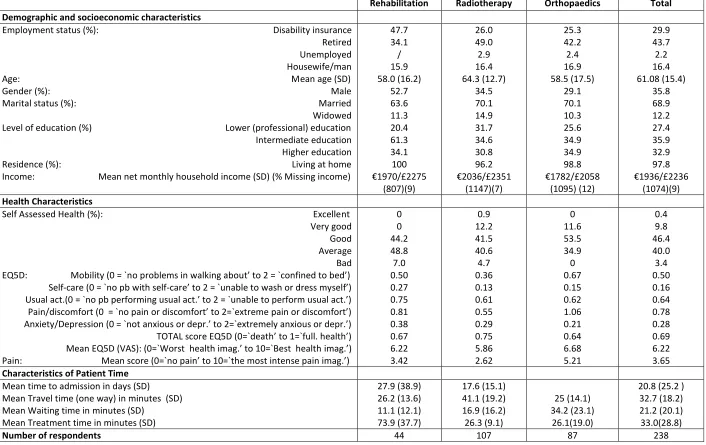
Table 1 gives the sample characteristics of the 238 patients. The key characteristics are presented in the first column starting with the demographics and socio-economics, followed by the health characteristics. The last part of Table 1 presents the self-reported time the patients spend on accessing treatment, travelling, waiting and being treated. The mean and standard deviations of the continuous variables and the percentages of the categorical variables are presented by patient group as well as for the total sample.
The 238 patients are not participating in the labour market. A very small fraction of the respondents is unemployed and around 16 percent is a housewife/man. Not surprisingly, almost half of the rehabilitation patients have a disability pension or are on sickness leave. This holds for 26 percent of the radiotherapy and orthopaedics patients. A large fraction of the patients are retired ranging from over 34 percent in case of rehabilitation to almost 50 percent in case of radiotherapy. This relates obviously to the mean age of our sample of around 61 which is quite consistent over the patient groups. The majority of patients are married and almost all patients live at home and are not staying in a hospital or nursing home. In the case of radiotherapy patients this seems a consequence of our inclusion criteria: only patients who are likely to be cured are included. The net monthly household income of the sample is around 1900/£2194 and is quite similar over the patient groups. There are no striking differences in
H EQ-5D dimensions show less mobility problems for radiotherapy patients and differences in pain.
Table 1: Characteristics sample and patient time use
Rehabilitation Radiotherapy Orthopaedics Total
Demographic and socioeconomic characteristics
Employment status (%): Disability insurance Retired Unemployed Housewife/man Age: Mean age (SD) Gender (%): Male Marital status (%): Married Widowed Level of education (%) Lower (professional) education Intermediate education Higher education Residence (%): Living at home Income: Mean net monthly household income (SD) (% Missing income)
47.7 34.1 / 15.9 58.0 (16.2) 52.7 63.6 11.3 20.4 61.3 34.1 100 /£2275 (807)(9) 26.0 49.0 2.9 16.4 64.3 (12.7) 34.5 70.1 14.9 31.7 34.6 30.8 96.2 /£2351 (1147)(7) 25.3 42.2 2.4 16.9 58.5 (17.5) 29.1 70.1 10.3 25.6 34.9 34.9 98.8 /£2058 (1095) (12) 29.9 43.7 2.2 16.4 61.08 (15.4) 35.8 68.9 12.2 27.4 35.9 32.9 97.8 /£2236 (1074)(9) Health Characteristics
Self Assessed Health (%): Excellent Very good
Good Average Bad EQ5D: Mobility (0 = `n
Self-care (0 = `no pb with self-
U
Pain/discomfort (
A D
TOTAL EQ D
M EQ D VA“ W B
P M
0 0 44.2 48.8 7.0 0.50 0.27 0.75 0.81 0.38 0.67 6.22 3.42 0.9 12.2 41.5 40.6 4.7 0.36 0.13 0.61 0.55 0.29 0.75 5.86 2.62 0 11.6 53.5 34.9 0 0.67 0.15 0.62 1.06 0.21 0.64 6.68 5.21 0.4 9.8 46.4 40.0 3.4 0.50 0.16 0.64 0.78 0.28 0.69 6.22 3.65
Characteristics of Patient Time
Mean time to admission in days (SD) Mean Travel time (one way) in minutes (SD) Mean Waiting time in minutes (SD)
Mean Treatment time in minutes (SD)
27.9 (38.9) 26.2 (13.6) 11.1 (12.1) 73.9 (37.7) 17.6 (15.1) 41.1 (19.2) 16.9 (16.2) 26.3 (9.1) 25 (14.1) 34.2 (23.1) 26.1(19.0)
20.8 (25.2 ) 32.7 (18.2) 21.2 (20.1) 33.0(28.8)
5.2.
Patient time valuation
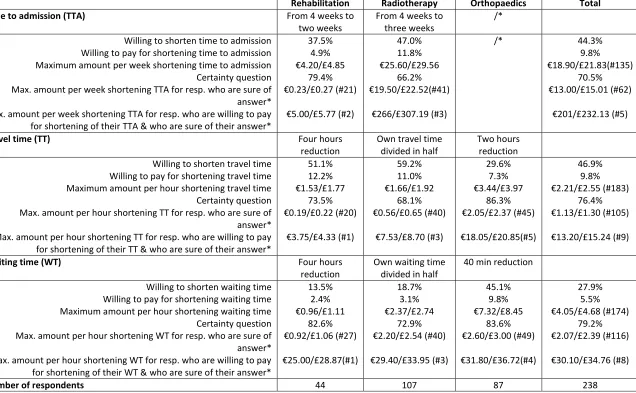
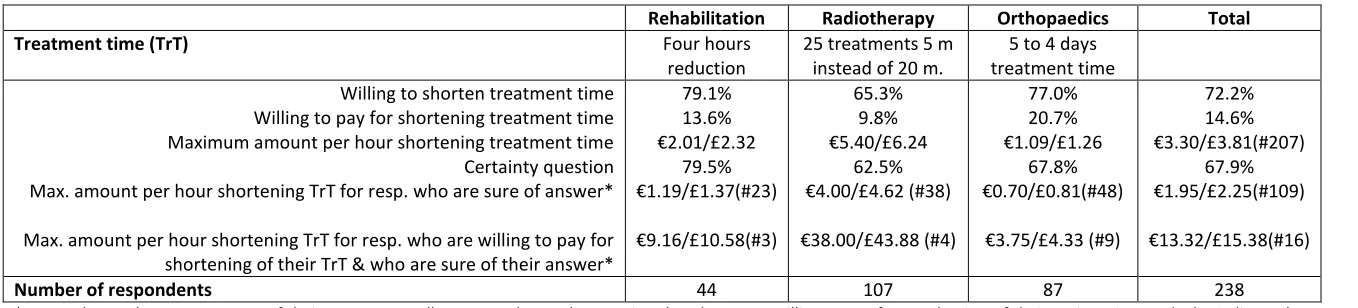
Table 2 gives the mean willingness to pay per patient time category. W
preferences with respect to shortening the patient time. Subsequently we report whether they would be willing to pay for shortening the patient time input and then we report the mean willingness to pay (WTP). To avoid overestimations in stated preferences willingness to pay answers, we also present the frequencies of patients being certain/sure about their stated willingness to pay and the means conditional on being certain and excluding the WTP equal to 0. The second to fourth columns of Table 2 give respectively the time for rehabilitation patients, radiotherapy patients and orthopaedics patients. Totals are presented in the last column of Table 2.
About 44 percent of the respondents are willing to shorten their time to admission (the percentage is substantially larger for radiotherapy patients). Over half of the patients prefer shortening in travel time except in the case of orthopaedics. This makes in total 46.9 percent of patients preferring shorter travel time.4 Almost half of the orthopaedics patients prefer shortening waiting time whereas less than twenty percent of radiotherapy and fifteen percent of rehabilitation patients prefer shortening waiting time. The large majority of almost three quarter of patients prefers shortening in treatment time. This percentage is quite consistent over the patient groups with a slightly lower percentage in case of radiotherapy.
Almost half of the patients prefer to shorten their travel time, about 25 percent prefer to shorten waiting time and almost 75 percent prefer to shorten treatment time. This does not necessarily imply they would all be willing to pay for shortening. Table 2 shows that around 10 percent of the total sample would be willing to pay for shortening on average, except for waiting time in case of rehabilitation and radiotherapy patients (here around 3%).5
The maximum willingness to pay for an hour time input reduction of our respondents ranges from 0.19/£0.22 per hour shortening in case of rehabilitation travel time, to 4.00/£4.62 per hour shortening in case of radiotherapy treatment time. The mean willingness to pay for a reduction of one week of the time to admission is low and equals 13.00/£15.01. These averages are obviously deflated by the people who are not willing to pay and by a few people who stated they would be willing to pay but subsequently reported a zero when we asked for the amount they would be willing to pay.6
4M
T M
W
M G N T
5
Some respondents give inconsistent answers in the sense that they report not willing to shorten their patient time and still indicate that they are willing to pay for a reduction in patient time: 1 out of the 33 respondents who are willing to pay for shortening their treatment time, is not willing to shorten it. 3 out of the 22 patients who are willing to pay for the shortening of their travel time are not willing to shorten it, and 3 out of the 12 respondents who are willing to pay for the shortening of their waiting time 3 are not willing to shorten it.
6
Table 2: Mean time valuation (first part)
Rehabilitation Radiotherapy Orthopaedics Total
Time to admission (TTA) From 4 weeks to
two weeks
From 4 weeks to three weeks
/* Willing to shorten time to admission
Willing to pay for shortening time to admission Maximum amount per week shortening time to admission Certainty question Max. amount per week shortening TTA for resp. who are sure of answer* Max. amount per week shortening TTA for resp. who are willing to pay for shortening of their TTA & who are sure of their answer*
37.5% 4.9% 0/£4.85 79.4% /£0.27 (#21) .00/£5.77 (#2) 47.0% 11.8% 0/£29.56 66.2% 0/£22.52(#41) /£307.19 (#3)
/* 44.3%
9.8% 0/£21.83(#135)
70.5% 0/£15.01 (#62)
/£232.13 (#5)
Travel time (TT) Four hours
reduction
Own travel time divided in half
Two hours reduction Willing to shorten travel time
Willing to pay for shortening travel time Maximum amount per hour shortening travel time Certainty question Max. amount per hour shortening TT for resp. who are sure of answer* Max. amount per hour shortening TT for resp. who are willing to pay for shortening of their TT & who are sure of their answer*
51.1% 12.2% /£1.77 73.5% /£0.22 (#20) /£4.33 (#1) 59.2% 11.0% /£1.92 68.1% /£0.65 (#40) /£8.70 (#3) 29.6% 7.3% /£3.97 86.3% /£2.37 (#45) /£20.85(#5) 46.9% 9.8% /£2.55 (#183) 76.4% /£1.30 (#105) /£15.24 (#9)
Waiting time (WT) Four hours
reduction
Own waiting time divided in half
40 min reduction Willing to shorten waiting time
Willing to pay for shortening waiting time Maximum amount per hour shortening waiting time Certainty question Max. amount per hour shortening WT for resp. who are sure of answer* Max. amount per hour shortening WT for resp. who are willing to pay for shortening of their WT & who are sure of their answer*
13.5% 2.4% /£1.11 82.6% /£1.06 (#27) 0/£28.87(#1) 18.7% 3.1% /£2.74 72.9% /£2.54 (#40) 0/£33.95 (#3) 45.1% 9.8% /£8.45 83.6% /£3.00 (#49) 0/£36.72(#4) 27.9% 5.5% /£4.68 (#174) 79.2% /£2.39 (#116) 0/£34.76 (#8)
Number of respondents 44 107 87 238
Table 2: Mean patient time valuation (second part)
Rehabilitation Radiotherapy Orthopaedics Total
Treatment time (TrT) Four hours
reduction
25 treatments 5 m instead of 20 m.
5 to 4 days treatment time Willing to shorten treatment time
Willing to pay for shortening treatment time Maximum amount per hour shortening treatment time Certainty question Max. amount per hour shortening TrT for resp. who are sure of answer* Max. amount per hour shortening TrT for resp. who are willing to pay for shortening of their TrT & who are sure of their answer*
79.1% 13.6% 01/£2.32 79.5% /£1.37(#23) /£10.58(#3)
65.3% 9.8%
/£6.24 62.5% 0/£4.62 (#38)
0/£43.88 (#4)
77.0% 20.7%
/£1.26 67.8% /£0.81(#48)
/£4.33 (#9)
72.2% 14.6% /£3.81(#207)
67.9% /£2.25(#109)
/£15.38(#16)
Number of respondents 44 107 87 238
*Respondents who were not sure of their answer as well as respondents who mention that they were willing to pay for a reduction of their patient time and who indicate that
About 25% of our respondents also report that they were not sure about the amount they stated. This is quite low compared with other studies. For instance 38 percent of respondents (n=84) in Blumenschein et al. (2001) are willing to pay for an asthma management program provided by a pharmacist. On average, 14 percent of the patients are sure (12 of the 32 willing to pay) to be willing to pay. This percentage is similar to the percentage of patients actually purchasing the program in the intervention group of the experiment. After accounting only for the patients who were sure about their willingness to pay, the willingness to pay for reduction in travel time by rehabilitation patients is still the lowest with 3.75/£4.33 per hour and with 38.00/£43.88 per hour the highest in case of radiotherapy treatment time.7 Three radiotherapy respondents are willing to pay around 266.00/£307.19 for one week reduction of their time to admission. Overall people seem to put the highest value on waiting time ( 30.10/£34.76 per hour) and they value travel and treatment time equally with respectively
13.20/£15.24 and 13.32/£15.38 per hour.
5.3.
Testing the hypotheses for correlation of patient time valuations and individual
characteristics
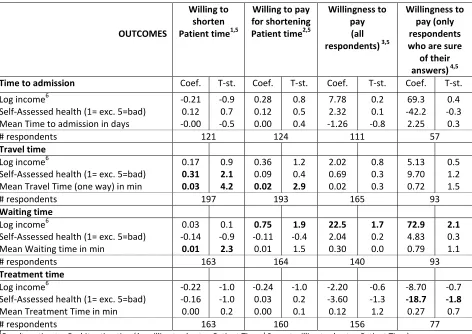
Table 3 presents the results of the regression analyses exploring if the valuations of across income groups, health status and self-reported patient time.
The first column of Table 3 gives the estimation results of three key variables: log income, self-assessed health and self-reported time per time category. Please note that the presented estimation results are controlled for gender, age, age squared, type of patient, marital status, and highest educational level attained. The results are presented for the various types of patient time.
Regression results for willingness to shorten patient time are presented in the second column of Table 3. The results show that longer self-reported travel and waiting time are statistically significantly and
The third column of Table 3 gives the results of being willing to pay for shortening the various types of patient time. Mean travel time is positively associated with being willing to pay for shortening travel time. Income is positively associated with being willing to pay for shortening waiting time.
The association between willingness to pay and being sure about willingness to pay are presented in respectively the fourth and fifth columns of Table 3. Income is positively associated with willingness to pay for shortening travel time and also with being sure about willingness to pay for shortening travel time. Worse self-assessed health is negatively associated with being sure about willingness to pay for shortening treatment time.
As income is usually positively associated with willingness to pay and because it was not often positively associated with the willingness to pay in Table 3, even after testing for various other specifications of income, we further explored the association between log income and willingness to pay for only people who stated a willingness to pay of more than zero. These results are presented in Table 4.
7
Table 3: Does valuation of patient time vary across income groups, health status and experienced patient time? Estimation results
OUTCOMES
Willing to shorten Patient time1,5
Willing to pay for shortening Patient time2,5
Willingness to pay
(all respondents) 3,5
Willingness to pay (only respondents who are sure
of their answers) 4,5
Time to admission Coef. T-st. Coef. T-st. Coef. T-st. Coef. T-st.
Log income6
Self-Assessed health (1= exc. 5=bad) Mean Time to admission in days
-0.21 0.12 -0.00 -0.9 0.7 -0.5 0.28 0.12 0.00 0.8 0.5 0.4 7.78 2.32 -1.26 0.2 0.1 -0.8 69.3 -42.2 2.25 0.4 -0.3 0.3
# respondents 121 124 111 57
Travel time
Log income6
Self-Assessed health (1= exc. 5=bad) Mean Travel Time (one way) in min
0.17 0.31 0.03 0.9 2.1 4.2 0.36 0.09 0.02 1.2 0.4 2.9 2.02 0.69 0.02 0.8 0.3 0.3 5.13 9.70 0.72 0.5 1.2 1.5
# respondents 197 193 165 93
Waiting time
Log income6
Self-Assessed health (1= exc. 5=bad) Mean Waiting time in min
0.03 -0.14 0.01 0.1 -0.9 2.3 0.75 -0.11 0.01 1.9 -0.4 1.5 22.5 2.04 0.30 1.7 0.2 0.0 72.9 4.83 0.79 2.1 0.3 1.1
# respondents 163 164 140 93
Treatment time
Log income6
Self-Assessed health (1= exc. 5=bad) Mean Treatment Time in min
-0.22 -0.16 0.00 -1.0 -1.0 0.2 -0.24 0.03 0.00 -1.0 0.2 0.1 -2.20 -3.60 0.12 -0.6 -1.3 1.2 -8.70 -18.7 0.27 -0.7 -1.8 0.7
# respondents 163 160 156 77
1
Results estimates Probit estimation (1= willing to shorten Patient Time / 0 = not willing to shorten Patient Time) 2
Results estimates Probit estimation (1= willing to pay for shortening Patient Time / 0 = not willing to pay for shortening Patient Time)
3
Results estimates Tobit estimation of Willingness to Pay for shortening Travel, Waiting, Treatment time by one hour and Time to admission by one week (All respondents)
4
Results estimates Tobit estimation of Willingness to Pay for shortening Travel, Waiting, Treatment time by one hour and Time to admission by one week (Only respondents who are sure of their answers and who give coherent answers, namely those who are willing to pay and whose WTP is positive en those who are not willing to pay and whose WTP is equal to 0.)
5
All models are corrected for gender, age, age squared, type of patients, marital status, highest educational level attained. Results of models that are not corrected for educational level are similar to the ones presented in Table 3. Estimation results are reported without correction for self-reported total patient time. This is because including this variable did not affect the main results. The results show some significant differences in valuation between the Orthopaedics patients and the other patient groups: Orthopaedics patients are less often willing to shorten travel time and more often willing to shorten treatment time and pay for shortening treatment time than others. There are also some age effects, showing that on average older individuals are less often willing to shorten travel time and are more often willing to shorten time to admission, but their willingness to pay is on average lower than the ones of younger individuals (Regarding travel time, waiting time and time to admission).
6
Table 4: Does valuation of patient time increase with income? Estimation results for subgroup patients whose willingness to pay >0
OUTCOMES
WTP>01
Time to admission Coef. T-st.
Log income6 60.2 2.2
# respondents 25
Travel time
Log income6 8.9 1.6
# respondents 6
Waiting time
Log income6 41.9 1.9
# respondents 8
Treatment time
Log income6 7.9 1.7
# respondents 15
1
Results estimates linear regression of willingness to pay for shortening travel, waiting, treatment time by one hour and time to admission by one week for respondents whose willingness to pay >0
Although the estimates are based on very small samples, Table 4 shows that there is generally speaking a positive association between log income and willingness to pay.
5.4.
Testing for scope validity
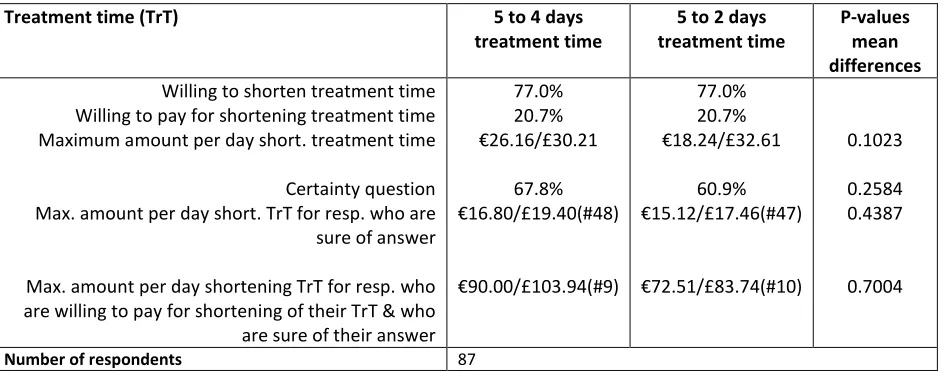
Table 5 presents the results of the test for scope validity. We calculated the willingness to pay for a shorter hospital stay for two scenarios. The hospital stay differed between the two scenarios: five versus four days compared with five versus two days. The results show that there are only minor differences between the mean willingness to pay but the differences are not statistically significant. These results support the hypothesis of scope validity.
Table 5: Does valuation of patient time vary with the scope of the reduction in treatment time? Estimation results orthopedics patients
Treatment time (TrT) 5 to 4 days
treatment time
5 to 2 days treatment time
P-values mean differences
Willing to shorten treatment time Willing to pay for shortening treatment time Maximum amount per day short. treatment time Certainty question Max. amount per day short. TrT for resp. who are sure of answer Max. amount per day shortening TrT for resp. who are willing to pay for shortening of their TrT & who are sure of their answer
77.0% 20.7% /£30.21 67.8% /£19.40(#48) 0/£103.94(#9) 77.0% 20.7% /£32.61 60.9% /£17.46(#47) /£83.74(#10) 0.1023 0.2584 0.4387 0.7004
[image:25.612.70.546.496.684.2]6.
Discussion and conclusion
This paper describes an approach to monetarily value patient time. Unlike existing studies that often focus on a particular type of patient time, we developed a more comprehensive approach distinguishing between various types of patient time: time to admission, travel, waiting and treatment time.
We opted to use the contingent valuation method as it enables us to derive monetary values of patient time, it can be used to value hypothetical situations in the absence of a market or in anticipation of a market and because the method is also less demanding for respondents than, for instance, a discrete choice experiment (Van den Berg, 2005). An important motivation for developing the survey methodology was the perceived problem of using wage rates to proxy the monetary value of patient time, particularly for a very substantial proportion of health care consumers, i.e. patients not participating in the labour market. However the proposed methodology could also be used to value the time of patients who are participating in the labour market. In this respect we also encourage further research in line with Borisova and Goodman (2003) comparing the contingent valuation survey results with valuation studies based on the wages of patients with paid jobs.
Although the contingent valuation scenarios are by definition hypothetical, researchers should make an effort to make them as realistic as possible to avoid item non-respondents or answers that do not make sense. In an attempt to be as realistic as possible, our scenarios have been developed in close collaboration with health care providers of the three hospital departments involved: Radiotherapy, Rehabilitation and Orthopaedics. Generally speaking, the contingent valuation scenarios explained that patients normally (we purposely avoided terms like on average as not everyone might understand this term) have to spend some time when consuming medical care and that there could be ways to reduce this time e.g. by organising things better, employing more people or via ICT or medical innovations. This obviously depends partly on the different types of time that were distinguished, time to admission, travel, waiting and treatment time. Therefore, the examples of how things could be done faster depended on the type of time, and the amounts of time related as much as possible to current practice according to the healthcare providers. We also described and explained the meaning of the four types of time.
Despite the fact that we emphasised in the contingent valuation scenarios that respondents should assume that shortening time would not influence the effectiveness of the treatment or its side effects, it became clear from the qualitative responses that very few people seemed to believe that this was not
O O may
have been other similar cases. However telling respondents that shortening time would not influence the effectiveness of the treatment or its side effects is only important in cases where one wishes to monetarily value patient time for use in CEA. In contingent valuation studies for other purposes, one could for instance also allow time to influence the effectiveness of the treatment or its side effects, and specify this relationship which might be a challenge for future research.
certainty of their stated willingness to pay answer. Generally speaking the answers seem to make sense. For instance the mean willingness to pay before sub-sampling on sure respondents is higher which is consistent with Blumenschein et al. (2008). Please note that there were a few inconsistencies in answers: a few responded that they were not willing to pay but then stated numbers, indicating that not everybody might have understood the questions.
We opted to apply our method to patients because they have experience with medical care. This implies that we have adopted the ex-post perspective. In principle the survey method could also be extended to elicit preferences of a representative or non-representative sample of the general population to elicit ante monetary valuations of time involved in consuming medical care. Obviously, the ante and ex-post perspectives could also complement each other. In addition the survey methodology could also be generalised to other patient groups and potentially also to areas beyond medical care like prevention, public health or long-term care.
For illustration, this paper also presents the first empirical results of applying our developed survey methodology in a sample of patients not participating in the labour market. Data were collected in three departments of two Dutch hospitals: Radiotherapy, Orthopedics, and Rehabilitation. They were chosen because all subgroups involved a substantial amount of patient time and because a substantial number of patients were expected not to participate in the labour market. The results are mainly illustrative and suggest that around half of patients prefer to spend a shorter time in the four time categories but not all of them are willing to pay to reduce their time inputs. There also seems to be some minor differences between the three patient groups. Based on the patients who would be willing to pay, and are sure about their willingness to pay, it seems fair to conclude that patients seem to put the highest value on waiting time ( 30.10/£34.76 per hour) and value travel and treatment time equally with respectively 13.20/£15.24 and 13.32/£15.38 per hour; however, these numbers are based on very small samples. The stated preferences give a slightly different picture than these monetary values as patients preferred to shorten waiting time the least (27.9%) and to shorten treatment time the most (72.2%). Although we have not checked the representativeness of our study samples because the purpose of the analyses are mainly illustrative, one should clearly check the sample representativeness if wishing to use our results.
The regressions results should be interpreted with caution because of the relatively small sample size. They are clearly not the main purpose of our study and we have included them for illustration and to encourage others to further explore the hypotheses as well as potentially testing other hypotheses. This is also true for the scope validity test included in our paper. It seems fair, however, to conclude that the regression results and the scope test results are supportive for the validity of the developed contingent valuation survey questions to monetarily value patient time.
Although we are more comprehensive than the existing literature in terms of types of patient time, we have not included time to recover. Future research could consider including this type of patient time.
Two normative arguments against using the contingent valuation method are worth discussing. First one could argue that this method conflicts with equity. As trying to guarantee equal access to health care has dominated health policy in Western countries (Cutler, 2002) and therefore healthcare should be
ty to pay.8 But it is technically possible to correct for these differences in ability to pay. However this will require making some normative assumptions (Harberger, 1978). Second, one could argue that because the contingent valuation survey questions we
8
have developed do not involve a trade-off between health and wealth, especially as we explicitly asked respondents to assume that the reduced time inputs that would be required would not affect the effectiveness of the treatment nor the side effects or recovery, it cannot be applied to inform resource allocation decisions in a fixed budget context. Even in this context, we believe that the preference questions (without the willingness to pay) can be informative within this context. In other words, it is informative to know that about half of the sample would be willing to shorten patient time. The remaining question is would they be willing to give up something else (like other types of care or quicker but less effective care) in order to get shortening of their patient time. This is a potential area for future research.
References
Anzuni, F, Battistella, A, Izzotti, A, 2011. Physical activity and cancer prevention: a review of current evidence and biological mechanisms. Journal Preventive Medicine Hygiene 52: 174-180.
Becker, GS, 1965. A Theory of the allocation of time. Economic Journal 75: 493-517.
Bishai, D, Lang, HC, 2000. The willingness to pay for wait reduction: the disutility of queues for cataract surgery in Canada, Denmark, and Spain. Journal of Health Economics 19: 219 230.
Blumenschein, K, Blomquist, GC, Johannesson, M, Horn, N, Freeman, P, 2008. Eliciting willingness to pay without bias: evidence from a field experiment. Economic Journal 118: 114-137.
Blumenschein, K, Johannesson, M, Yokoyama, KK, Freeman, PR. 2001. Hypothetical versus actual willingness to pay in the health care sector: results from a field experiment. Journal of Health Economics 20: 441-457.
Borisova, NN, Goodman, AC, 2003. Measuring the value of time for methadone maintenance clients: willingness to pay, willingness to accept, and the wage rate. Health Economics 12: 323-334.
Cauley, SD. 1987. The time price of medical care. The Review of Economics and Statistics 69: 59-66.
Claar, RL, Parekh, PI, Palmer, SM, Lacaille, RA, Davis, RD, Rowe, SK, Babyak, MA, Blumenthal, JA, 2005. Emotional distress and quality of life in caregivers of patients awaiting lung transplant. Journal of Psychosomatic Research 59: 1-6.
Cutler, DM, 2002. Equality, efficiency, and market fundamentals: The dynamics of international medical-care reform. Journal of Economic Literature XL: 881 906.
Danzon, P, H C Health Affairs 12: 21
43.
De Serpa, A, 1971. A theory of the economics of time. The Economic Journal 81: 828 846.
Dolan, P, 1997. Modelling valuations for EuroQol health status. Medical Care 35: 1095-1108.
Dolan, P, Olsen, JA, Richardson, J, Menzel, P, 2003. An inquiry into the perspectives that can be used when eliciting preferences in health. Health Economics 12: 545-551.
D C B “ G T distribution p economic evaluation: Income and the
valuation of costs and consequences of health care programs. Health Economics 11: 55-70.
Drummond, MF, Sculpher, MJ, Torrance, GW, O'Brien, BJ, Stoddart, GL, 2005. Methods for the economic evaluation of health care programmes. Third edition: Oxford: Oxford University Press.
Enthoven, AC, Van de Ven, WPMM, 2007. Going Dutch Managed competition health insurance in the Netherlands. The New England Journal of Medicine 357:2421-2423.
Grossman, M, 1972. On the concept of health capital and the demand for health. Journal of Political Economy 80: 223 255.
Harberger, AC, 1978. On the use of distributional weights in cost-benefit analysis. Journal of Political Economy 86: S87-S120.
Johannesson, M, Johansson, PO, Söderqvist, T, 1998. Time spent on waiting lists for medical care: an insurance approach. Journal of Health Economics 17: 627 644.
Johannesson, M, Johansson, PO, Kristriim, B, Gerdtham, UG, 1993. Willingness to pay for antihypertensive therapy - further results. Journal of Health Economics 12: 95-108.
Jonas, DE, Russell, LB, Chou, J, Pignone, M, 2010. Willingness-to-pay to avoid the time spent and discomfort associated with screening colonoscopy. Health Economics 19: 1193-1211.
Jowsey, T, Yen, L, Mathews, P, 2012. Time spent on health related activities associated with chronic illness: a scoping literature review. BMC Public Health 12: 1044.
Lamers, LM, McDonell, J, Stalmeier, PFM, Krabbe, PFM, Van Busschbach, JJV, 2006. The Dutch tariff: results and arguments for an effective design for national EQ-5D valuation studies. Health Economics 15: 1121-1132.
Luce, BR, Manning, WG, Siegel, JE, Lipscomb, J, 1996. Estimating costs in cost-effectiveness analysis. In: Gold, MR, Siegel, J, Russell, LB, Weinstein, MC (eds.): Cost-effectiveness analysis in health and medicine: Oxford University Press: New York & Oxford.
McCormick, KM, Naimark, BJ, Tate, RB, 2006. Uncertainty, symptom distress, anxiety, and functional status in patients awaiting coronary artery bypass surgery. Heart Lung 35: 34-45.
Mitchell, RC, Carson, RT, 1989. Using surveys to value public goods: the contingent valuation method. Resources for the Future: Washington, DC.
Norton, E, 2000. Long-term care. Handbook of Health Economics. In: Culyer, AJ & Newhouse, JP (eds.). Handbook of Health Economics Edition 1, volume 1, chapter 17: 955-994. Elsevier: Amsterdam.
O'Brien, B, Gafni, A, 1996. When do the "dollars" make sense? Toward a conceptual framework for contingent valuation studies in health care. Medical Decision Making 16: 288-299.
Olsen, JA, Donaldson, C, Pereira, J T -to- new evidence for health care. Journal of Economic Psychology. 25: 445-460.
Propper, C, 1995. The disutility of time spent on the United Kingdom's National Health Service waiting lists. The Journal of Human Resources 30: 677-700.
Russell, LB, Suh, D-C, Safford, MM, 2005. Time requirements for diabetes self management: too much for many? The Journal of Family Practice 54: 52 56.
Russell, LB, 2009. Completing costs p Medical Care 47: S89-S93.
Schläpfer, F, Fischhoff, B, 2012. Task familiarity and contextual cues predict hypothetical bias in a meta-analysis of stated preference studies. Ecological Economics 81: 44-47.
Smith, VK, Osborne, LL, 1996. Do contingent valuation estimates pass a scope test? A meta-analysis. Journal of Environmental Economics and Management 31: 287-301.
Sofi, F, Andrea, C, Cesari, F, Abbate, R, Gensini, GF, 2008. Physical activity during leisure time and primary prevention of coronary heart diseases: an updated meta-analysis of cohort studies. European Journal of Cardiovascular Prevention & Rehabilitation 15: 247-257.
Van den Berg, B, 2005. Informal care: an economic approach. Thesis Erasmus University Rotterdam.
Van den Berg, B, Bleichrodt, H, Eeckhoudt, L, 2005. The economic value of informal care: A study of willingness to pay and willingness to accept for informal care. Health Economics 14: 363-376.
Van den Berg, B, Van Dommelen, P, Stam, PJA, Laske-Aldershof, T, Buchmueller, T, Schut, FT, 2008. Preferences and choices for care and health insurance. Social Science and Medicine 66: 2448-2459.
Van der Star, SM, Van den Berg, B, 2011. Individual responsibility and health-risk behaviour: A contingent valuation study from the ex ante societal perspective. Health Policy 101: 300-311.
Vermeulen, KM, Bosma, OH, Bij Wv, Koëter GH, Tenvergert, EM, 2005 Stress, psychological distress, and coping in patients on the waiting list for lung transplantation: an exploratory study. Transplant International 18: 954-959.
Appendix A: Survey questions radiotherapy
Time to admission
The next questions are about time to admission. Usually it takes some time before you are medically ready to start treatment. The time to admission is the time between the moment that you are medically ready and the moment that the radiotherapy treatment starts.
How long did you have to wait between the moment you were medically ready for treatment and the first radiotherapy treatment?
... days
What was the most important reason you had to wait?
I had to recover from surgery Lack of capacity
Other, viz...
Suppose it would be possible to reduce the time you had to wait between the moment you were medically ready for treatment and the first radiotherapy treatment. Instead of 4 weeks you would now for example have to wait 3 weeks. This reduced time to admission does not have any impact on the effectiveness of your treatment. Reducing your time to admission would involve extra costs.
The extra costs of reducing your admission to treatment time would not be reimbursed by your health insurer. As a consequence you would have to pay the extra costs out of your own pocket.
Would you be willing to reduce the admission to treatment time, the moment between you are medically ready for treatment and the actual start of the radiotherapy treatment (reduction from 4 to 3 weeks)?
Yes, I would be willing to reduce the admission to treatment time from 4 weeks to 3 weeks. No, I would not be willing to reduce the admission to treatment time from 4 weeks to 3 weeks.
Would you be willing to pay for this reduced time to admission? Please recall that reduced time to admission does not have any impact on the effectiveness of your treatment.
Yes, I would be willing to pay for this reduced time to admission from 4 weeks to 3 weeks. No, I would not be willing to pay for this reduced time to admission from 4 weeks to 3 weeks.
Please recall your net monthly income and your monthly expenses on rent/mortgage, food, clothes and so on, as well as other things you would like to spend your money on.
Suppose your time to admission would be 4 weeks. Would you be willing to pay more than 300 euro for a time to admission of 3 weeks instead of 4 weeks?