EFFECT OF YOGA-NIDRA ON BLOOD PRESSURE AMONG
ELDERLY WITH HYPERTENSION RESIDING AT
SELECTED OLD AGE HOMES, COIMBATORE
A.DHIVYA BHARATHI
A Dissertation Submitted to
The Tamil Nadu Dr. M.G.R Medical University,
Chennai -32.
In Partial Fulfillment of the Requirement for the
Award of the Degree of
This is to certify that the dissertation entitled "Effect of
Yoga-nidra on Blood Pressure Among Elderly with Hypertension
Residing at Selected Old Age Homes
&RLPEDWRUH´
is a
bonafide work done by A. Dhivya Bharathi, College of Nursing,
Sri Ramakrishna Institute of Paramedical Sciences in partial
fulfillment of the University rules and regulations for award of
M.Sc. Nursing Degree under my guidance and supervision during the
academic year 2016.
Name and Signature of the : Mrs. Fuela Esther Thangam...
Guide
Name and Signature of the
Head of Department
: Mrs. Kanchana. K
...
EFFECT OF YOGA-NIDRA ON BLOOD PRESSURE AMONG
ELDERLY WITH HYPERTENSION RESIDING AT
SELECTED OLD AGE HOMES, COIMBATORE
LIST OF GUIDES
Subject Guide
Signature of the Guide
1.
Mrs. Fuela Esther Thangam, M.Sc (N)., PGDip BS.,«««««
Associate Professor,
Head of the Department- Fundamentals of Nursing,
College of Nursing,
Sri Ramakrishna Institute of Paramedical Sciences,
Coimbatore - 641 044.
Research
Guide
2.
Dr. T. Nirmala, M.Sc (N)., Ph.D.
«««««««««
Principal,
College of Nursing,
Sri Ramakrishna Institute of Paramedical Sciences,
Coimbatore - 641 044.
Medical
Expert
3.
Dr. S. Manoharan, M.D, D.M
«««««««««
Consultant and Interventional Cardiologist,
Head Division of Cardiology,
Certified that this is the Bonafide work of
A.DHIVYA BHARATHI
COLLEGE OF NURSING
Sri Ramakrishna Institute of Paramedical Sciences
Coimbatore - 641 044
Submitted in Partial Fulfillment of the Requirement for the Award of
the Degree of
MASTER OF SCIENCE IN NURSING
The Tamil Nadu Dr. M. G. R. Medical University, Chennai ±32.
Dr. T. NIRMALA, M. Sc (N)., Ph.D.
PRINCIPAL
ACKNOWLEDGEMENT
I express my soulful thanks to God Almighty for showering his blessings
on me throughout my research study.
I express my heartfelt thanks to honorable Shri. R. Vijayakumhar, B.E.,
MS., MBA., Managing Trustee, SNR Sons Charitable Trust for giving me an opportunity to utilize all the facilities in this esteemed institution.
I extend my sincere and deepest thanks to Dr. T. Nirmala, M.Sc (N).,
Ph.D., Principal, College of Nursing, Sri Ramakrishna Institute of Paramedical Sciences, Coimbatore, for her valuable guidance, constant support and encouragement throughout the study.
I extend my deep felt sincere thanks to Prof. S. GirijaKumari, M.Sc (N),
Vice Principal, College of Nursing, Sri Ramakrishna Institute of Paramedical Sciences, Coimbatore, for her encouragement throughout the study.
My sincere thanks to Mrs. Fuela Esther Thangam, M.Sc (N).,
PGDip BS., Associate Professor, Head of the Department, Fundamentals of Nursing, College of Nursing, Sri Ramakrishna Institute of Paramedical Sciences, Coimbatore, for her constant evaluation, encouragement and keen interest in conception, planning and execution of the study. I feel extremely privileged to have her as my subject guide.
I express my gratitude to Dr. S. Manoharan, M.D, D.M, Consultant and
I express my special and sincere thanks to Mrs. V. Brindha, M.Sc (N).,
Associate Professor, Research Co-ordinator, College of Nursing, Sri Ramakrishna Institute of Paramedical Sciences for her thoughtful guidance and constant encouragement throughout the study.
I express my sincere thanks to Mrs. Uma Devi, M.Sc (N)., and
Mrs. Yasoda. P, M.Sc (N), College of Nursing, Sri Ramakrishna Institute of Paramedical Sciences, Coimbatore, for their guidance in statistical analysis of the data.
I extend my sincere thanks to our class coordinators
Mrs. Jean Tresa, M.Sc (N)., Associate Professor, Department of Medical
Surgical Nursing & Mrs. Nithya, M.Sc (N)., Assistant Professor, Department of
Obstetrical and Gynecological Nursing for their constant encouragement and moral support in completing this research study.
I extend my special and sincere thanks to Mrs. Kanchana, M.Sc (N).,
Mrs. Jean Tresa, M.Sc (N)., Mrs. Deepa, M. Sc (N)., Mrs. Sasikala, M. Sc (N), Mrs. Adlin Pon Joy, M. Sc (N), Mrs. Annalakshmi, M. Sc (N), Mrs. Kanmani, M. Sc (N), Mrs. Pauline, M. Sc (N), Department of Medical Surgical Nursing, College of Nursing, Sri Ramakrishna Institute of Paramedical Sciences, Coimbatore, for their valuable suggestions in reviewing the study.
I extent my sincere thanks to all the Heads of the Departmentand
I am equally grateful to the Librarians and Office Staff of Sri Ramakrishna Institute of Paramedical Sciences for their support in retrieving journals and timely assistance in many ways in preparing the manuscript.
My sincere thanks to Study Participants of Universal Peace Foundation
and Ozanam Home for Aged, Coimbatore for their co-operation and support in this study.
I express my sincere thanks to my Friends and Classmates for their love
and tolerance who provided me timely support, guidance and motivation throughout my research.
There cannot be anything possible without the affection and Support of
my beloved Parents, Brother and Family Members. I extend my sincere love
and thanks for their cooperation throughout my study.
CONTENT
CHAPTER TITLE PAGE
NO
I INTRODUCTION 1-9
1.1 Need for the Study 3
1.2 Statement of the Problem 5
1.3 Objectives of the Study 6
1.4 Operational Definition 6
1.5 Hypothesis 7
1.6 Conceptual Framework 7
1.7 Projected Outcome of the Study 9
II REVIEW OF LITERATURE 10-23
2.1 Literature related to Elderly with Hypertension 10
2.2 Literature related to Yoga-nidra 16
2.3 Literature related to effect of Yoga-nidra on blood pressure among Elderly with Hypertension
22
III METHODOLOGY 24-35
3.1 Research Approach 24
3.2 Research Design 24
3.3 Setting 25
3.4 Population 25
3.5 Sampling 25
3.6 Criteria for Sample Selection 27
3.7 Variables of the study 27
CHAPTER TITLE PAGE NO
3.9 Validity and Reliability of the tool 28
3.10 Yoga-nidra Procedure Schedule 29
3.11 Ethical Committee Clearance 31
3.12 Pilot Study 31
3.13 Procedure for Data Collection 33
3.14 Techniques of Data Analysis and Interpretation 34
IV DATA ANALYSIS AND INTERPRETATION 36-69
4.1 Demographic variables and Health history among Elderly with Hypertension Residing at Selected Old Age Homes
38
4.2 Assessment on level of Blood Pressure among
Elderly with Hypertension Residing at Selected Old Age Homes
53
4.3 Effect of Yoga-nidra on Blood Pressure among
Elderly with Hypertension
57
4.4 Association between the Level of Blood Pressure before intervention with Selected Demographic Variables
64
V RESULTS AND DISCUSSION 70-78
5.1 Demographic Profile 70
5.2 Assess the level of Blood Pressure among Elderly with Hypertension Residing at Selected Old Age Homes
CHAPTER TITLE PAGE NO
5.3 Evaluate the Effect of Yoga-nidra on Blood
Pressure among Elderly with Hypertension Residing at Selected Old Age Homes.
73
5.4 Association between the level of Blood
Pressure with Selected Demographic Variables
77
VI SUMMARY AND CONCLUSION 79-83
6.1 Major findings of the study 80
6.2 Limitation 81
6.3 Recommendations 82
6.4 Nursing implications 82
6.5 Conclusion 83
REFERENCES APPENDICES
LIST OF TABLES
TABLE NO TITLE PAGE NO
4.1.1 Age of Elderly with Hypertension Residing at
Selected Old Age Homes
39
4.1.2 Gender of Elderly with Hypertension Residing at
Selected Old Age Homes
39
4.1.3 Educational status of Elderly with Hypertension
Residing at Selected Old Age Homes
41
4.1.4 Marital status of Elderly with Hypertension
Residing at Selected Old Age Homes
41
4.1.5 Stay with Spouse among Elderly with
Hypertension Residing at Selected Old Age Homes
42
4.1.6 Religion of Elderly with Hypertension Residing
at Selected Old Age Homes
44
4.1.7 Personal habits of Elderly with Hypertension
Residing at Selected Old Age Homes
44
4.1.8 Family history of Hypertension among Elderly
with Hypertension Residing at Selected Old Age Homes
46
4.1.9 Hobbies of Elderly with Hypertension Residing at
Selected Old Age Homes
TABLE NO TITLE PAGE NO
4.1.10 Elderly with Hypertension Residing at Selected
Old Age Homes based on Duration of Hypertension
48
4.1.11 Elderly with Hypertension Residing at Selected
Old Age Homes based on Duration of Intake of Antihypertensives
49
4.1.12 Elderly with Hypertension Residing at Selected
Old Age Homes based on Duration of Stay at Old Age Home
51
4.1.13 Elderly with Hypertension Residing at Selected
Old Age Homes based on Co morbid Illnesses
51
4.2.1 Level of Blood Pressure among Experimental and
Control Group Before Yoga-nidra
54
4.2.2 Level of Blood Pressure among Experimental and
Control Group After Yoga-nidra
55
4.3.1 Comparison on Level of Blood Pressure among
Experimental and Control Group Before And After Yoga-Nidra
58
4.3.2 Level of Blood Pressure among Elderly with
Hypertension in Experimental Group
TABLE NO TITLE PAGE NO
4.3.3 Level of Blood Pressure among Elderly with
Hypertension in Control Group
62
4.3.4 Effect of Yoga-nidra on Blood Pressure among
Elderly with Hypertension
63
4.4.1 Association between the Level of Systolic Blood
Pressure Before Intervention and Selected Demographic Variables among Elderly with Hypertension
65
4.4.2 Association between the Level of Diastolic Blood
Pressure Before Intervention and Selected Demographic Variables among Elderly with Hypertension
LIST OF FIGURES
FIGURE NO TITLE PAGE NO
1.1 Conceptual Framework 8
3.1 Diagrammatic Representation of Research
Process
26
3.2 Diagrammatic representation of Variables 27
4.1.1 Age of Elderly with Hypertension Residing at
Selected Old Age Homes
40
4.1.2 Gender of Elderly with Hypertension Residing at
Selected Old Age Homes
40
4.1.3 Educational Status of Elderly with Hypertension
Residing at Selected Old Age Homes
42
4.1.4 Marital status of Elderly with Hypertension
Residing at Selected Old Age Homes
43
4.1.5 Stay with Spouse among Elderly with
Hypertension Residing at Selected Old Age Homes
43
4.1.6 Religion of Elderly with Hypertension Residing
at Selected Old Age Homes
45
4.1.7 Personal habits of Elderly with Hypertension
Residing at Selected Old Age Homes
45
4.1.8 Family history of hypertension among Elderly
with Hypertension Residing at Selected Old Age Homes
FIGURE NO TITLE PAGE NO
4.1.9 Hobbies of Elderly with Hypertension Residing at
Selected Old Age Homes
47
4.1.10 Elderly with Hypertension Residing at Selected
Old Age Homes based on Duration of hypertension
50
4.1.11 Elderly with Hypertension Residing at Selected
Old Age Homes based on Duration of Intake of Antihypertensives
50
4.1.12 Elderly with Hypertension Residing at Selected
Old Age Homes based on Duration of Stay at Old Age Home
52
4.1.13 Elderly with Hypertension Residing at Selected
Old Age Homes based on Co morbid illnesses
52
4.2.1 Level of Blood Pressure among Experimental and
Control group before Yoga-nidra
56
4.2.2 Level of Blood Pressure among Experimental and
Control group after Yoga-nidra
56
4.3.1 Comparison on level of Blood Pressure Among
Experimental and Control Group Before and After Yoga-nidra
LIST OF APPENDICES
APPENDICES TITLE
I Ethical committee clearance certificate
II Yoga-nidra training programme certificate
III Permission Letter for Conducting the Study
IV Requisition Letter to validate the Research Tool and Content
V Tool for Data Collection
VI English Editing certificate
LIST OF ANNEXURES
ANNEXURES TITLE
I Effect of Yoga-nidra on Blood Pressure among Elderly with
Hypertension
I-1 Effect of Yoga-nidra on Systolic Blood Pressure among Elderly
with Hypertension
I-2 Effect of Yoga-nidra on Diastolic Blood Pressure among
Elderly with Hypertension II
II-1
II-2
II-3
II-4
III
IV
Level of Blood Pressure among Elderly with Hypertension Level of Systolic Blood Pressure among Elderly with Hypertension in Experimental Group
Level of Diastolic Blood Pressure among Elderly with Hypertension in Experimental Group
Level of Systolic Blood Pressure among Elderly with Hypertension in Control Group
Level of Diastolic Blood Pressure among Elderly with Hypertension in Control Group
Association between the Level of Blood Pressure before Intervention with Selected Demographic Variables
Abstract
The main aim of the study was to assess the effect of yoga-nidra on blood pressure among elderly with hypertension residing at selected old age homes, Coimbatore. The study was conducted at Universal Peace Foundation and Ozanam Home for Aged. Quasi experimental pretest posttest control group design was adopted for this study. Convenient sampling technique was used to select the study participants. The elderly from one old age home was assigned to experimental group (n=20) and the other to the control group (n=15). Yoga-nidra practice was given for 20 minutes once daily in the morning between 6-8AM for
15 days. Blood pressure measurements were taken on the first and 15th day and
was documented. The study showed a significant reduction of mean systolic blood pressure from 154.5 to 130.4 mm of Hg and the mean diastolic blood pressure
from 92.2 to 82.8 mm of Hg. The calculated µW¶ YDOXH IRU V\VWROLF EORRG
1
INTRODUCTION
Ageing is the organic process of growing older and showing the effects of increasing age. Ageing should be regarded as a normal, inevitable biological phenomenon which brings along two inconvenient events: physiologic decline and disease state. Ageing process is complex and multi-factorial (Park, 2007). In 2010, 100 million people were aged above 60 years and by 2020 it will be 177 million globally (World Health Organization, 2013). Elderly population contributed to 7% of total population of India in 2001 and it will rise to 9% by 2016 (Nataraj VS, 1995). Chronic morbidities like hypertension, liver diseases, heart disease, osteoporosis, gout, diabetes and cancer are becoming common health problems among the elderly population. (Lakatta, 1993)
2
,QWKHWUHDWPHQWRIK\SHUWHQVLRQVLGHHIIHFWVDQGWKHSDWLHQW¶VSHUFHSWLRQ
of them play an important role in success of therapeutic regimen. Distressing side effects of drugs affect health related quality of life of patients, often leading to non-adherence of therapy (Monane, 1996). Moreover, anti- hypertensive drug treatments are expensive and only few people manage to keep their blood pressure under control. Hence, controlling of hypertension by life style modifications are highly recommended either as a primary prevention or as therapy with or without drugs (Deepa, 2012). There are many different types of complementary and alternative treatments believed to be effective for treating hypertension. Scientific evidence indicates that following a diet which is low in saturated fat and salt and rich in complex carbohydrates (vegetables, whole grains, legumes, and fruits), increased physical activity (walking, jogging, cycling, or a combination), and regular practice of relaxation techniques such as Yoga, TaiChi or Qigong, can help to lower high blood pressure.
Yoga-nidra has widespread application in the management of diseases of
3
Blood pressure increases by sustained activation of Flight and Fight response of the body. Yoga-nidra effectively switches off the response and brings adrenaline levels down, thus reducing the blood pressure. It also relaxes the chronic stress induced sustained muscular contraction. This sustained muscular contraction sends hostile signals to the brain, it does secrete stress hormones associated with stress and high B.P. it is possibly reverted by constant yogic practices (Danilo, 2015). Regular yoga-nidra will reduce the aldosterone and vasopressin which is a potent vasoconstrictor secreted from brain. A Controlled study conducted by Lekh Raj Bali and published in med. 41 (8) Dec. 1979 at the Langley Porter Neuropsychiatry institute in California, found that there is a reduction in blood pressure and anxiety levels in hypertensive patients for 12 months after yoga-nidra training.
1.1 Need for the Study
A precise definition of hypertension is difficult to establish, however the
seventh Joint National Committee on detection, evaluation and treatment of high blood pressure (JNC VII 2003) defined hypertension as a systolic blood pressure (SBP) of 140mmHg or greater and diastolic blood pressure (DBP) of 90mmHg or
higher. The study done by Nataraj VS et al among the elderly in rural community
4
status. Only 25% rural and 38% urban are being treated for hypertension (Anchala, 2014). Prevalence of hypertension among elderly in Tamil Nadu is 26.9% and that of in Coimbatore is 36.45% (Males- 33.3%, Females- 26.2%).
Hypertension is a significant and often asymptomatic chronic disease, which requires optimal control, persistent adherence to prescribed medications and lifestyle modifications to reduce the risks of cardiovascular, cerebrovascular and renal diseases. Antihypertensives are prescribed appropriately depending on the degree of hypertension. But, many hypertensives require two or more drugs of different combinations to control blood pressure. This may lead to adverse drug interactions and side effects. The chief side effects include pedal edema, fatigue, frequent urination, insomnia, impotence, postural and post-prandial hypotension, risk of dangerous consequences and shortened life span. Although there are many relaxation and meditation techniques available to common people, yet something is lacking to deal with hypertension properly. (Monane, 1996)
5
They do not have any appreciable side-effects or symptoms. Yoga-nidra adopted either alone or as an adjunct therapy, has been found to reduce systolic readings by an average of 15-20 mm Hg and diastolic readings by 10 mmHg. This will generally happen after daily guided practice of Yoga-nidra (Kumar, 2005).
Various studies have been done to know the effect of Yoga-nidra in the field of yogic research. P.Carrington has concluded in his work, which was published in Medical magazine 2000 that, Yoga-nidra has its widespread application as a preventive measure, to be practiced by healthy and active people as a means of relieving accumulated tensions, increasing stress resistance and overall psychosomatic disease.
As hypertension is a silent- killer which is asymptomatic in the early stage it makes the people to end up in other complications or diseases. In elderly the common problem is that they may not adhere to the drug regimen regularly. Although scientific studies support the use of yoga and meditation in treatment of hypertension, it has not been standardized and fully recognized or endorsed by medical professionals. Therefore it is imperative to conduct research on Yoga-nidra for controlling hypertension among elderly population.
1.2 Statement of the Problem
6
1.3 Objectives of the Study
1.3.1. To assess the level of blood pressure among elderly with hypertension residing at selected old age homes.
1.3.2. To evaluate the effect of yoga-nidra on blood pressure among elderly with hypertension residing at selected old age homes.
1.3.3. To find an association between selected demographic variables and blood pressure.
1.4 Operational Definition 1.4.1 Effect
It refers to the change produced by yoga-nidra in blood pressure among elderly.
1.4.2 Yoga-nidra
It refers to the practice of shavasana for elderly where the elderly are asked to lie flat at the back and follow the instructions of the researcher.
1.4.3 Blood Pressure
It refers to the force exerted by the blood against the walls of the blood vessels. It is measured by using sphygmomanometer.
1.4.4 Hypertension
It refers to the sustained elevation of blood pressure. The level of blood pressure was categorized as mild hypertension, moderate hypertension and severe hypertension. In terms of systolic blood pressure, mild hypertension is
120-139mm of Hg, moderate is 140-PPRI+JDQGVHYHUHLV mm of Hg.
In terms of diastolic blood pressure, mild hypertension is 80-89mm of Hg,
7
1.4.5 Elderly
It refers to the people both men and women diagnosed with hypertension and taking treatment who are above the age of 60 years residing at Universal Peace Foundation and Ozanam Home for Aged.
1.5 Hypothesis
H1: There will be a significant difference in the level of blood pressure among elderly with hypertension residing at selected old age homes before and after yoga-nidra in experimental group.
H2: There will be a significant difference in the level of blood pressure among elderly with hypertension between experimental and control group.
1.6 Conceptual Framework
Conceptualization is a process of forming ideas which utilizes and forms a conceptual framework for the study. It is the abstract, logical structure which enables the researcher to link the findings to the nursing body of knowledge. A framework is the abstract of logical structure of meaning that guides the development of the study and the body of knowledge.
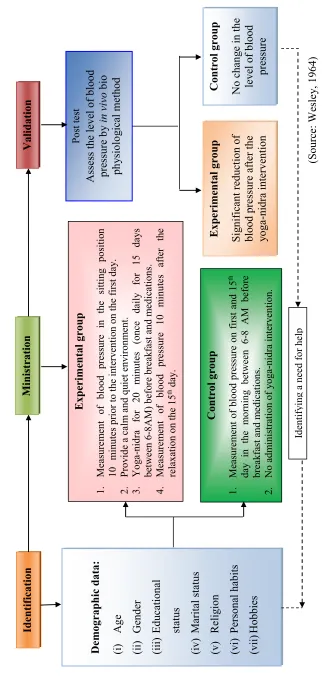
8 F igure 1.1 &RQFH SWXDOI UDP HZ RUN RQ0RGLI LHG: LGHQ%DF K¶V
helping art of cli
n ic al nursin g theor y (1964) Ministration Identification Validation Dem ographic data: (i) Age (ii) Ge nder (iii)
Educational status
(iv) Marital status (v) Relig ion (vi) Persona l habits (vii) Hobbies Experimental group 1. Meas urem
ent of b
lood p ress u re in th e sitt ing posi ti o n 10 m inutes pr io r to the in te rv entio n on the fi rst day . 2. Prov ide a calm and qu ie t en v ironm ent. 3. Yog a -n
idra for 2
0
m
inutes
(once d
aily
for 15 day
s betwee n 6-8AM) befo re b reak fast and m edic ations . 4. Meas urem ent o f b lood pres
sure 10 m
inut es aft er th e relaxa tion on the 15
th day
.
Post tes
t
Assess the leve
l of blood
pre ssure b y in vi vo bio ph y siolo g ica l method
Experimental group Sig
nificant r
eduction of
blood pressure after the yo
ga
-nidra interv
ention
Control group No c
h
an
g
e in the
leve
l of blood
pre ssure (Sourc e: W esle y , 1964) Identif y in g a need for hel p Control group 1. Meas urem ent o f b lood pre ssure on f ir st and 1 5 th day
in the m
o
rning
be
tween 6
-8 AM befor
9
1.7 Projected Outcome of the Study
10
REVIEW OF LITERATURE
Literature is an essential component of the investigator for a greater understanding of the research problem and its major aspects. It provides an opportunity to evaluate many different approaches to the problems. First it is necessary to obtain the most current facts relevant to the problem, and secondly a thorough literature review will assist the selection or development of the theoretical and methodological approaches to the problem.
The literature gathered by the researcher was discussed under the following sections.
2.1. Literature related to elderly with hypertension.
2.2. Literature related to yoga-nidra.
2.3. Literature related to effect of yoga-nidra on blood pressure among elderly
with hypertension.
2.1 Literature Related to Elderly with Hypertension
11
were 25.3%, 25.1% and 10.7% for rural Indians; and 42.0%, 37.6% and 20.2% for urban Indians. About 33% urban and 25% rural Indians are hypertensive. Of these, 25% rural and 42% urban Indians are aware of their hypertensive status. Only 25% rural and 38% of urban Indians are being treated for hypertension. One-tenth of rural and one-fifth of urban Indian hypertensive population have their BP under control.
Marchiori et al (2014) conducted a study to evaluate the effects of Zen meditation on blood pressure (BP) and quality of life in elderly subjects. A total of
YROXQWHHUVPHQDQGZRPHQDJHG\HDUVZLWKsystolic BP between 130 and 159mmHg and diastolic BP between 85 and 99mmHg were randomly divided into a meditation group (n=28) and a control group (n=31). The meditation group meditated twice a day for 20 minutes for 3 months, and the control group remained on a waiting list. The BP levels were measured monthly in both groups. The volunteers medication was kept stable. A quality of life assessment instrument was applied at the beginning and end of the study. For
systolic BP, analysis of variance showed the influence of time (F (4,228)
=4.74, P ȕ 0.98) and the interaction group×time (F (4,228) =3.07, P<0.01,
ȕ 7KHPHGLWDWLRQJURXS showed a significant decrease in systolic BP levels in the second measurement after 1 month of meditation practice when compared
with the control group (Newman±Keuls test, P<0.05). Starting at the second
12
Gupta et al (2014) conducted a community based cross- sectional study to
assess the prevalence of hypertension and its association with socio demographic
factors in geriatric population of rural Varanasi. Study sample consists of
215 persons and the subjects were from three selected villages. Pre- designed and
pre- tested schedule was used to interview the subjects. Blood pressure recording
was done at the end of interview and clinical examination so that patient becomes
relaxed and the instrument was held at the level of heart. Mean systolic blood
pressure was 132.97±19.28 and mean diastolic blood pressure was 82.44±9.94.
Overall prevalence of hypertension was 35.8% and for males and females were
40% and 32.17% respectively. Prevalence of systemic hypertension was 43.4%,
30.7% and 5.6% in the age group 60-69 years, 70-79 years and 80 years,
respectively.
13
Srinivasan & Balamurugan (2013) conducted a cross-sectional study on prevalence of diabetes and hypertension among geriatric population in a Rural community of Tamil Nadu. The study was conducted on 400 geriatric population at Attayampatti village, Rural community in Salem district by using a pre-tested, semi-structured questionnaire. House to house visit was done on simple random basis. Their height and weight was measured and body mass index was calculated. The diabetic status was confirmed by using random blood sugar estimation and hypertension was assessed by using a standard sphygmomanometer. The overall prevalence of diabetes and hypertension among study population was 36% and 59% respectively. Among diabetes, the prevalence in males and females was 22% and 15% respectively. Among hypertensives, the prevalence in males and females was 33.3% and 26.2%. Their mean blood pressure was 140/100mm of Hg and the mean random blood sugar was 180mgs/dl. Factors like age, body mass index and smoking showed statistical significant association towards diabetes and hypertension.
14
centers or a government hospital. Burden of hypertension among the elderly is high in rural areas. Strategies to detect and treat hypertension in the elderly have to be implemented early.
Virdis et al (2011) conducted an evidence based review on hypertension in the elderly. In this they stated that the progressive ageing of world population and the increasing prevalence of hypertension in elderly people are leading to the consideration for hypertension treatment. Multiple mechanisms, including stiffening of large arteries, endothelial dysfunction, cardiac remodeling, autonomic dysregulation, renal aspects, contribute to the great prevalence of hypertension in the elderly and to increased cardiovascular morbidity and mortality. Treatment of hypertension can hardly put back older patients in a low risk category, especially if target organ damage is present. Blood pressure should be lowered below 140/90 mmHg also in older patients. Drug treatment should be titrated with particular caution to adverse responses and excessive blood pressure lowering.
Joshi et al (2007) conducted a study on the elderly rural population of Delhi, showing the prevalence of hypertension as 11.25% and this showed a higher prevalence of hypertension in elderly persons in urban area compared to rural area and it also showed a mean age of detecting hypertension was to be 54.2 years. The prevalence of hypertension among males and females was 33.3% and 26.2%.
15
Kearney et al (2004) conducted a systematic review on worldwide prevalence of hypertension. The reported prevalence of hypertension varied around the world, with the lowest prevalence in rural India (3.4% in men and 6.8% in women) and the highest prevalence in Poland (68.9% in men and 72.5% in women). Significant numbers of individuals with hypertension are unaware of their condition and, among those with diagnosed hypertension, treatment is frequently inadequate. Measures are required at a population level to prevent the development of hypertension and to improve awareness, treatment and control of hypertension in the community.
Gupta et al conducted three serial epidemiological studies (Criteria:>=140/90 mm of Hg) carried out during 1994, 2001 and 2003 demonstrated rising prevalence of hypertension (30%, 36%, and 51% among males and 34%, 38% and 51% among females respectively).
Mohan et al (2001) conducted the initial study from urban Chennai and reported 8.4% prevalence of hypertension among men and women aged 20 years and above and belonging to the low socio economic group (based on household income, occupation and dietary pattern). Similarly, in the middle socio economic group had a higher prevalence (15%) during 1996-97.
16
associated with advanced age (odds ratio [OR] = 2.12, for patients 85 or older) and White race (OR = 0.55 for Blacks). There was no relationship between compliance and gender. Despite the efficacy of antihypertensive therapy in preventing cardiovascular morbidity, such high rates of noncompliance may contribute to suboptimal patient outcomes.
Nataraj et al (1995) conducted a study among the elderly in rural community in Tamil Nadu, found the prevalence of hypertension among males 7.71% and among females is 10.6%.
National Institute of Aging, U.S.A VWDWHG WKDW ³:H DUH DJLQJ- not just as
LQGLYLGXDOV RU FRPPXQLWLHV EXW DOVR DV D ZRUOG´ ,Q WKH \HDU LW ZDV
accounted that old age population is 236/10000 in the world (WHO). In 2006, almost 500 million people worldwide were 65 and older. By 2030, that total is projected to increase one billion, accounting 13 percent of the total population. Between 2006 and 2030, the number of older people in less developed countries is projected to increase by 140 percent as compared to an increase of 51 percent in more developed countries.
2.2 Literature Related To Yoga-nidra
17
pressor test reduced from 20.1 ± 3.5 mm Hg to 15.2 ± 3.7 mm Hg (P < 0.001) and diastolic rise reduced from 13.81±3.4mmHg to 10.37±2.62mmHg (P < 0.001) in hyper-reactors. Mean systolic blood pressure in all the 94 subjects reduced from 119.87±12.01 mm Hg to 117.68±11.89 mm Hg whereas mean diastolic blood pressure reduced from 77.08 ± 9.3 mm Hg to 75.11 ± 9.07 mm Hg (P<0.001). Bhramari Pranayama and Yoga nidra together can significantly alleviate stress induced changes in cardiovascular parameters.
Anand et al (2015) conducted a study on effectiveness of yoganidra on quality of sleep among cancer patients. This study assessed quality of sleep among cancer patients and the effectiveness of yoganidra intervention on quality of sleep in terms of improvement using Pittsburgh Sleep Quality Index. A survey was used in phase I (n=25) to assess the quality of sleep using PSQI. In phase II, an evaluative approach was used through one group pre-test post-test design (n=19). The participants with poor quality of sleep were given yoganidra intervention. Among the study participants, most of them (24%) suffered from breast cancer; 40% each were in stage I and stage II. Majority (75%) of the participants were receiving chemotherapy along with radiation therapy. Paired
µt¶ test was used to determine the effectiveness of yoganidra intervention on
quality of sleep, which showed that there is significant difference between pre-test and post-test mean scores on PSQI (t=3.720) (p=0.002).
Santaella et al (2014) conducted a randomized controlled trial on Yoga
18
Brazil. Sixteen hypertensive (6-women) and 14 normotensive patients (6-women) non-obese subjects participated in 2 random sessions: savasana relaxation and control. Patients remained supine for 55 minutes after interventions. Electrocardiogram, beat-to-beat blood pressure and respiration were acquired during and after interventions for posterior autoregressive spectral analysis of the R-R interval and blood pressure variability. Savasana relaxation decreases cardiac sympathetic autonomic modulation after its performance in hypertensive patients; this reduction lasts at least 35 minutes and is not blunted in hypertensive patients when compared to normotensive controls. Thus, savasana relaxation has positive effects on cardiac autonomic modulation of hypertensive patients, and may be included as a strategy for the non-drug treatment of hypertension.
19
Rani et al (2012) conducted a study on yoga-nidra as a complementary treatment of anxiety and depressive symptoms in patients with menstrual disorder. Subjects were recruited from the Department of Obstetrics and Gynecology, C.S.M. Medical University (erstwhile KGMU), Lucknow Uttar Pradesh, India. The subjects were randomly divided in to two groups: Intervention group (with yogic intervention) and control group (without yogic intervention). Assessments of all subjects were carried out by administering Hamilton anxiety scale (HAM-A) and Hamilton rating scale for depression (HAM-D) at baseline and after six months. The mean age with S.D of the intervention group was 27.67 ± 7.85 years, and for control group was 26.58 ± 6.87 years (among completed intervention group n= 65 and control group n= 61). There was significant reduction of scores in HAM-A (P<0.003) and HAM-D (P<0.02) respectively in subjects with mild to moderate anxiety and depressive symptoms after six months of yoga therapy (Yoga-nidra) in intervention group in comparison to control group. The patients with mild to moderate anxiety and depressive
V\PSWRPV LPSURYH VLJQLILFDQWO\ ZLWK µ<RJD-nidra¶ LQWHUYHQWLRQ 7KHUH LV QR
significant improvement in the patients with severe anxiety and depressive symptoms.
20
group. The study shows a significant change on the ESR level of the normal persons as the result of Yoga nidra practice. The results are significant at 0.01 level of confidence. At the end was concluded that Yoga nidra positively decreases the level of ESR in the male and female subjects.
Kumar K (2006) conducted a study on the improvement of physical and mental health through Yoga nidra. The study aimed to find out the effect of Yoga nidra on Alpha E.E.G. and G.S.R. of college going students. The study was conducted at the yoga clinic of Dev Sanskriti Vishwavidyalaya. Practice time was 30 minutes and the duration was 6 months. The sample consisted of 80 students which includes forty males and forty females. A control group of 30 students (fifteen males and fifteen female) was taken up in the study. The result shows a significant change as Yoga nidra positively increase the Alpha E.E.G. and G.S.R. of the subjects. This indicates the improvement of physical and mental health as a result of practicing Yoga nidra.
21
cohort study included 33 subjects (mean age 55 ± 11 years) both with (30%) and without (70%) established coronary artery disease (CAD). There were significant reductions in blood pressure, heart rate, and body mass index in the total cohort with yoga. None of the laboratory parameters changed significantly with yoga. For the total cohort there was no significant improvement in endothelial-dependent vasodilatation with yoga training and meditation compared with
baseline (16.7% relative improvement from 7.2±8.4%; p=0.3). In the group with
CAD, endothelial-dependent vasodilatation improved 69% with yoga training (6.38-10.78%; p = 0.09). Yoga and meditation appear to improve endothelial function in subjects with CAD.
Kumar K (2004) conducted a study on yoga nidra and its impact of
22
2.3 Literature related to effect of Yoga-nidra on blood pressure among Elderly with Hypertension.
Devi & Kala (2015) conducted a study on role of Yoga-nidra and shirodhara on hypertensive patients. The study was conducted on 32 hypertensive patients aged 30-60 years, were randomly selected from Polyclinic, Dev Sanskriti Vishwavidyalaya, Gayatrikunj, Hardwar through the method of accidental
sampling. In this study pre- post single group design´ ZDV XVHG DQG
t-test has been used for statistical analysis. There were significant reduction in mean values of systolic blood pressure and diastolic blood pressure From the present study it was observed that a significant reduction in the systolic blood pressure, diastolic blood pressure occurs in subjects practicing yoga-nidra and shirodhara (p<0.001). The finding reveals that significantly reduced the level of systolic and diastolic blood pressure of the hypertensives.
Deepa et al (2012) conducted a study to assess the effect of yoga and
23
Kumar K (2005) conducted a study to find out the effect of yoga nidra on hypertension and other psychological co-relates. The study conducted at Patliputra SevaSansthan Patna City, Patna. Practice time was 30 minutes and the duration was fifteen days. Forty people suffering with mild hypertension (30 males and 10 females) were taken for the study. Where the males were businessman and females were house wives. The means of pre and post values of
systolic blood pressure was 155 and 125mm of Hg and the µW¶ YDOXH ZDV
whereas for diastolic pressure was 98 and 76mm of Hg DQGWKHµW¶YDOXHZDV
24
METHODOLOGY
This chapter deals with the description of research approach, research design, setting, population, sampling technique, criteria for sample selection, variables of the study, tools for data collection, report of the pilot study, changes brought after pilot study, procedure for data collection and techniques of data analysis and interpretation.
3.1 Research Approach
The present study aimed to determine the effect of yoga-nidra on blood pressure among elderly with hypertension residing at old age homes, where the researcher manipulates the independent variable and measures the change in the dependent variable. Hence, in view of the nature of problem and to accomplish the objectives, quantitative evaluative research approach was adopted for the study.
3.2 Research Design
25
3.3 Setting
The study was conducted at two selected old age homes namely Universal Peace Foundation and Ozanam Home for Aged. Universal Peace Foundation is located at Karumathampatti. Drug therapies and recreational activities are rendered as routine activities for the elderly residing at this home. Ozanam Home for Aged is located at Saravanampatti. Drug therapies alone are rendered as routine activities in this home.
3.4 Population
The target population for the present study was elderly with hypertension residing at old age homes. And the accessible population was elderly with hypertension residing at Universal Peace Foundation and Ozanam Home for Aged, Coimbatore District. Elderly who are above the age of 60 years were selected for the study. Most of them are having diabetes mellitus, hypertension and arthritis and taking treatment from government hospital, Annoor. Expenses like food and clothes are managed by the trustees of the old age Homes. The normal routine activities carried out by the elderly are cooking, gardening and hand craft works.
3.5 Sampling
26
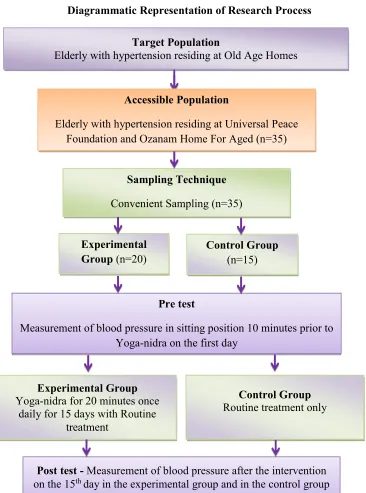
Figure 3.1
Diagrammatic Representation of Research Process
Experimental Group (n=20)
Post test - Measurement of blood pressure after the intervention
on the 15th day in the experimental group and in the control group
Evaluation of the effect of Yoga-nidra
Target Population
Elderly with hypertension residing at Old Age Homes
Sampling Technique
Convenient Sampling (n=35)
Accessible Population
Elderly with hypertension residing at Universal Peace Foundation and Ozanam Home For Aged (n=35)
Control Group (n=15)
Pre test
Measurement of blood pressure in sitting position 10 minutes prior to Yoga-nidra on the first day
Experimental Group
Yoga-nidra for 20 minutes once daily for 15 days with Routine
treatment
Control Group
27
3.6 Criteria for sample selection 3.6.1 Inclusion Criteria
1. Elderly who are able to lie flat.
2. Elderly who can follow the instructions.
3.6.2 Exclusion criteria
1. Elderly who are critically ill.
2. Elderly with hearing impairment.
3.7 Variables of the Study
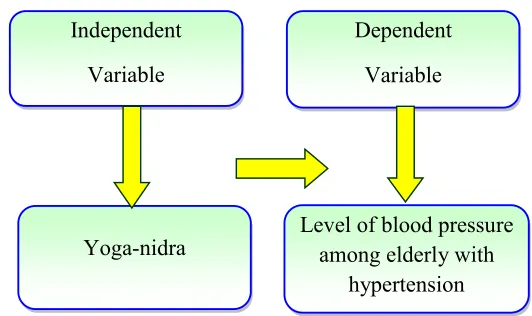
[image:45.612.182.448.393.551.2]In this study, the independent variable was yoga-nidra and the dependent variable was level of blood pressure among elderly with hypertension.
Figure 3.2
Diagrammatic Representation of Variables
3.8 Tools of data collection
The following tools were used for data collection 3.8.1 Questionnaire on demographic data and health history 3.8.2 Sphygmomanometer and stethoscope
Independent Variable
Yoga-nidra
Dependent Variable
Level of blood pressure among elderly with
28
3.8.1 Questionnaire on demographic data and health history
Demographic data consists of age, gender, educational status, marital status,
religion, personal habits and family history of hypertension.
Health history consists of duration of hypertension, hobbies, duration of intake of antihypertensive and duration of stay at old age home.
3.8.2 Sphygmomanometer and Stethoscope
The blood pressure was measured indirectly by auscultation using stethoscope and mercury sphygmomanometer. The mercury sphygmomanometer includes a standard sized cuff and mercury column pressure gauge. The study participants were allowed to sit on a bed for few minutes and the blood pressure was recorded and documented.
3.9 Validity and Reliability of the tool
It refers whether an instrument accurately measures what it is supposed to be measured. As blood pressure is the frequently changing biographic variable and the people who are on antihypertensive will have a sudden change in blood pressure due to the medicinal effect. So the researcher had selected normotensive group of people comprising of 8 members for testing the reliability of the tool. The blood pressure level was monitored with the time gap of 1 hour. The values
were recorded. The Karl- 3HDUVRQ¶V FRUUHODWLRQ FRHIILFLHQW IRUPXOD ZDV XVHG WR
29
engineering department. The prepared tool was validated by seven subject experts which included five nursing faculty and one medical expert. The experts were requested to give their opinion and suggestions regarding relevance, appropriateness, accuracy and degree of agreement in each item of the tool. Suggestions and recommendations given by the experts were accepted and necessary corrections were made. The content validity of each item of the tool was
FRPSXWHG XVLQJ /\QQ¶V LWHP ZLVH FRQWHQW YDOLGLW\ LQGH[ ,-CVI) and the values were found to be greater than 0.83. The tool was found to have a high validity based on I-CVI interpretation for six or more experts.
3.10 Yoga-nidra Procedure Schedule
i. Explanation regarding the intervention and obtaining informed oral
consent.
ii. Arrangement of conducive environment for the intervention.
iii. Measurement of blood pressure in the sitting position for the elderly in the
experimental group 10 minutes prior to the intervention on the first day.
iv. Make the elderly to lie flat and position them in comfortable manner.
Yoga-nidra intervention will be given early in the morning between 6-8AM once daily for 15 days before the intake of food and medications.
v. Yoga-nidra starts with the initial stage of relaxation, affirmation, rotation
30
vi. The intervention will be given for 20 minutes.
vii. The blood pressure is measured in the sitting position 10 minutes after the
yoga- nidra intervention on the 15th day.
vii. The elderly are made to be seated in a comfortable manner and the
measurements are recorded.
Stages of Yoga-nidra
Stage 1: Internalization/ Relaxation
Preliminary preparation of the body- lying in Shavasana, eyes are lightly closed, arms are kept with palms facing upward and the mind is concentrated on normal breathing. Slowly all the thoughts are given up.
Stage 2: Affirmation
A personal goal previously decided upon is declared silently ± the
practitioner should make a positive resolve about a particular aim in life. Eg.Everyday and in everyway I am getting better and better.
Stage 3: Rotation of Consciousness
The consciousness is taken on a tour of the whole body in a structured
fashion ± all the major and minor parts of the body are visualized i.e. mentally
viewed, their shapes are recalled and let loose one after the other continuously in the following sequence: From Right side parts of the body to the left.
Stage 4: Respiration Awareness
A period of awareness of the breath at special positions in the body ± ask
31
Stage 5: Manifestations of Opposites
Pairs of feelings and emotions are experienced ± attempt is made to bring
to memory the intense physical and emotional feelings. Practiced with pairs of two opposite feelings like heat and cold, lightness and heaviness.
Stage 6: Creative Visualization
Various archetypal images are imagined/ visualized mentally ± the
practitioner tries to visualize the objects as described by the instructor. Eg.Mountain, river, breeze.
Stage 7: Affirmation
Is repeated again and now in a highly suggestible state of consciousness and is programmed in the subconscious mind.
Stage 8: Externalization/ Return to full awareness
A careful and gradual return to a normal state.
3.11 Ethical Committee Clearance
The proposed study and tool were presented to the Institution Ethical Committee and the same was approved by the Committee.
3.12 Pilot study
32
administered in the morning between 6-8 am with the duration of 20 minutes once daily for 7 days. Then the blood pressure was measured in the sitting position 10 minutes after the intervention of each day and documented.
The mean score of the level of systolic blood pressure before and after Yoga-nidra was 134.64 and 122.89 with the standard deviation of 6.41 and
5.81 respectively. Calculated µW¶ value was 9.56, which was greater than the table
value (t=5.04, df=8) at 0.001 level of significance. Hence it shows that there is a significant difference in the level of systolic blood pressure among elderly with hypertension at selected old age home. The mean score of the level of diastolic blood pressure before and after Yoga-nidra was 90 and 82.35 with the standard deviation of
3.22 and 3.79 respectively. The calculated µW¶ value was 12.45, which was greater than
the table value (t=5.04, df=8) at 0.001 level of significance. Thus the result shows that there is a significant difference in the level of diastolic blood pressure among elderly with hypertension. Hence Yoga- nidra was effective in reducing blood pressure among elderly with hypertension.
3.12.1 Changes After The pilot study
33
3.13 Procedure for Data Collection
The main study was initiated after the pilot study. The validated tool was used for data collection and the main study was conducted over a period of one month from 27.06.2015 to 26.07.2015. The study was conducted at Universal Peace Foundation, Karumathampatti and Ozanam Home for Aged, Saravanampatti. A convenient sampling technique was used to select the study participants for this study. In Universal Peace Foundation, the number of elderly with hypertension were 29 and among them 20 elderly were selected based on the criteria and assigned for experimental group. And in Ozanam home for Aged, the number of elderly with hypertension were 16 and among them 15 elderly were selected based on the criteria and assigned to the control group. The researcher developed rapport with the elderly at the old age home and explained the benefits of the intervention. The intervention was given once daily in the morning with the duration of 20 minutes between 6-8 AM for 15 days. The blood pressure measurement was taken 10 minutes prior to the intervention in the sitting position for the elderly in the experimental group. The intervention was given in groups whereby the group consisted of 5-6 members. The blood pressure measurement was taken 10 minutes after the intervention in the sitting
position on the 15th day and measurements were recorded. The control group received
only the routine activities whereby the blood pressure was measured in the morning
between 6-8AM on the first and 15th day in the sitting position and documented.
3.14 Techniques of Data Analysis and Interpretation
34
3.14.1 Student 't' test
Student 't' test was used to analyse the effect of yoga-nidra on blood pressure (systolic and diastolic blood pressure) among elderly with hypertension between experimental and control group.
t =
SE X X1 2
Where,
SE = SD
2 1 1 1 n n
SD =
2 2 1 2 2 2 2 1 1
¦
¦
n n x x x x 1X = Mean blood pressure (systolic & diastolic blood pressure)
level of the experimental group
2
X = Mean blood pressure (systolic & diastolic blood pressure)
level of the control group SE = Standard error
SD = Combined standard deviation
n1 = Number of samples in experimental group
35
3.14.2 3DLUHGµW¶WHVW
3DLUHGµW¶WHVWZDVXVHGWRDQDO\VH the difference between pre and post test level of blood pressure (systolic & diastolic blood pressure) within both groups.
t =
SE d
where,
SE =
n SD
SD =
1
2 2
¦
¦
n n
D D
d
= Mean of difference between test scoreSE = Standard Error
SD = Standard deviation of the test score
n = Number of samples
3.14.3 Chi-Square test (with Yates correction)
Chi-Square (with Yates correction) test was used to check the association
between the level of blood pressure (systolic & diastolic blood pressure) before the intervention with selected demographic variables.
Ȥð =
¦
E E
O ) 0.5 2 (
O = Observed value
E = Expected value in corresponding category
36
DATA ANALYSIS AND INTERPRETATION
This Chapter deals with the analysis and interpretation of data collected from 35 elderly people with hypertension residing at selected old age homes. Aim of the study is to determine the effect of yoga-nidra on blood pressure among elderly with hypertension residing at selected old age homes, Coimbatore. In Universal Peace Foundation, the number of elderly with hypertension was 29 and among them 20 elderly were selected based on the criteria and assigned for experimental group who received yoga-nidra intervention. In Ozanam Home for Aged, the number of elderly with hypertension were 16 among them 15 elderly were selected based on the criteria and assigned to the control group who received routine treatment. Blood pressure measurements were taken by using sphygmomanometer in the sitting position 10 minutes prior to the intervention on the first day. Yoga-nidra was given for 20 minutes in the morning between 6-8 AM once daily for 15 days. Then the blood pressure was measured in the sitting
position 10 minutes after the intervention on the 15th day and was documented.
Descriptive and Inferential statistical methods were employed to organize and analyze the data. Descriptive statistics was used to analyse the demographic
variables. 6WXGHQW µW¶ test was used to analyse the effect of yoga-nidra on blood
pressure among elderly with hypertension between experimental and control
group. Paired µW¶ test was used to analyse the difference between pretest and
37
ORGANIZATION OF FINDINGS Section I
Demographic variables and health history of elderly with hypertension residing at selected old age homes in experimental and control group.
Section II
Assessment on level of blood pressure among elderly with hypertension residing at selected old age homes in experimental and control group.
Section III
Effect of yoga-nidra on blood pressure among elderly with hypertension residing at selected old age homes in experimental and control group.
Section IV
Association between the level of blood pressure before intervention with selected variables among elderly with hypertension residing at selected old age
38
Section I
4.1 Demographic Variables and Health History among Elderly with Hypertension Residing at Selected Old Age Homes
This section presents the demographic variables and health history collected from elderly with hypertension residing at selected old age homes. The variables collected were age, gender, educational status, marital status, religion, personal habits, family history of hypertension, hobbies, duration of hypertension, duration of intake of antihypertensives, duration of stay at old age home and co-morbid illnesses.
39
Table 4.1.1
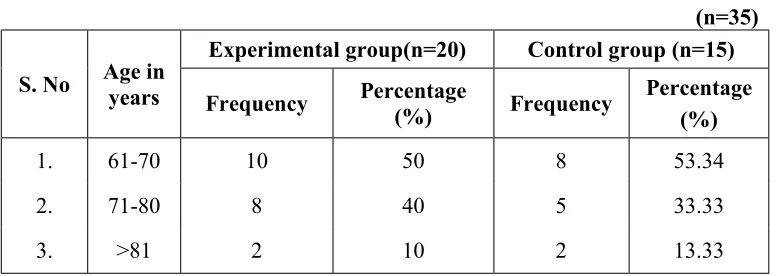
Age of Elderly with Hypertension Residing at Selected Old Age Homes (n=35) S. No Age in
years
Experimental group(n=20) Control group (n=15) Frequency Percentage
(%) Frequency
Percentage (%)
1. 61-70 10 50 8 53.34
2. 71-80 8 40 5 33.33
3. >81 2 10 2 13.33
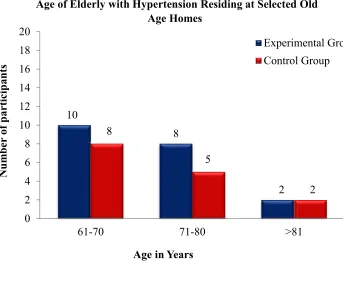
The above table 4.1.1 depicts that in the experimental group 50% of the participants were between 61-70 years of age, 40% in 71-80 years of age, 10% in 81 years and above and that of in the control group 53.34% were between 61-70 years of age, 33.33% in 71-80 years of age and 13.33% were 81 and above years. (Fig 4.1.1)
Table 4.1.2
Gender of Elderly with Hypertension Residing at Selected Old Age Homes (n=35)
S. No Gender
Experimental group (n=20)
Control group (n=15) Frequency Percentage
(%) Frequency
Percentage (%)
1. Male 6 30 2 13.33
2. Female 14 70 13 86.67
[image:57.612.122.511.463.575.2]40 Figure 4.1.1 Figure 4.1.2 10 8 2 8 5 2 0 2 4 6 8 10 12 14 16 18 20
61-70 71-80 >81
Num
ber
of
part
icipants
Age in Years
Age of Elderly with Hypertension Residing at Selected Old Age Homes Experimental Group Control Group 0 2 4 6 8 10 12 14 16 18 20 Male Female 6 14 2 13 Num ber of participants Gender
Gender of Elderly with Hypertension Residing at Selected Old Age Homes
41
Table 4.1.3
Educational status of Elderly with Hypertension Residing at Selected Old Age Homes
(n=35)
S.No Educational status
Experimental group (n=20)
Control group (n=15) Frequency Percentage
(%) Frequency
Percentage (%)
1. Illiterate 10 50 9 60
2. Primary 9 45 4 26.67
3. High School 1 5 2 13.33
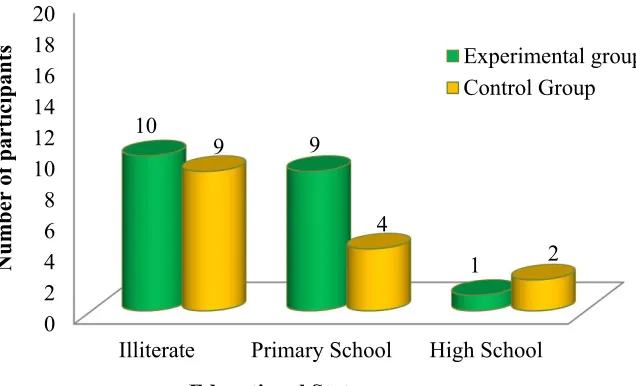
The above table 4.1.3 depicts that in the experimental group 50% were illiterates, 45% had primary level education and 5% completed high school education. In the control group 60% were illiterates, 26.67% had primary level education and 13.33% had completed high school. (Fig 4.1.3)
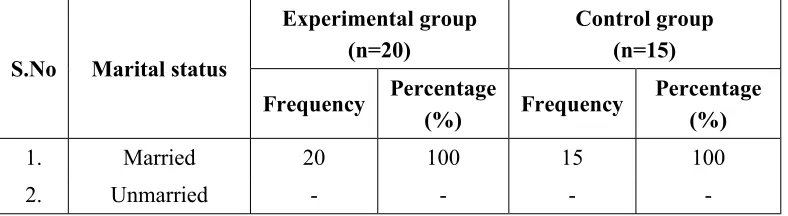
Table 4.1.4
Marital status of Elderly with Hypertension Residing at Selected Old Age Homes
(n=35)
S.No Marital status
Experimental group (n=20)
Control group (n=15) Frequency Percentage
(%) Frequency
Percentage (%)
1. Married 20 100 15 100
2. Unmarried - - - -
[image:59.612.123.517.496.604.2]42
Table 4.1.5
Stay with Spouse among Elderly with Hypertension Residing at Selected Old Age Homes
(n=35)
S.No Stay with Spouse Experimental group (n=20) Control group (n=15) Frequency Percentage
(%) Frequency
Percentage (%)
1. Accompanied
with spouse - - 1 6.67
2. Staying Alone 20 100 14 93.33
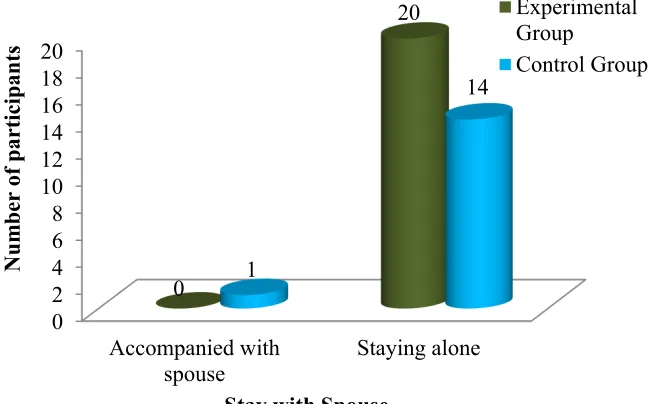
The above table 4.1.5 depicts that in the experimental group all 20 (100%) were staying alone as they are widows and widowers. In the control group 1 (6.67%) is staying with spouse and remaining 14 (93.33%) are staying alone as they are widows and widowers. (Fig 4.1.5)
Figure 4.1.3 0 2 4 6 8 10 12 14 16 18 20
Illiterate Primary School High School
10 9 1 9 4 2 Num ber of participants Educational Status
Educational status of Elderly with Hypertension Residing at Selected Old Age Homes
43 Figure 4.1.4 Figure 4.1.5 0 2 4 6 8 10 12 14 16 18 20 Married Unmarried 20 0 20 0 Num ber of participants Marital status
Marital status of Elderly with Hypertension Residing at Selected Old Age Homes
Experimental Group Control Group 0 2 4 6 8 10 12 14 16 18 20 Accompanied with spouse Staying alone 0 20 1 14 Num ber of part icipants
Stay with Spouse
Stay with Spouse among Elderly with Hypertension Residing at Selected Old Age Homes
Experimental Group
44
Table 4.1.6
Religion of Elderly with Hypertension Residing at Selected Old Age Homes (n=35)
S.No Religion
Experimental group (n=20)
Control group (n=15) Frequency Percentage
(%) Frequency
Percentage (%)
1. Hindu 20 100 3 20
2. Christian - - 12 80
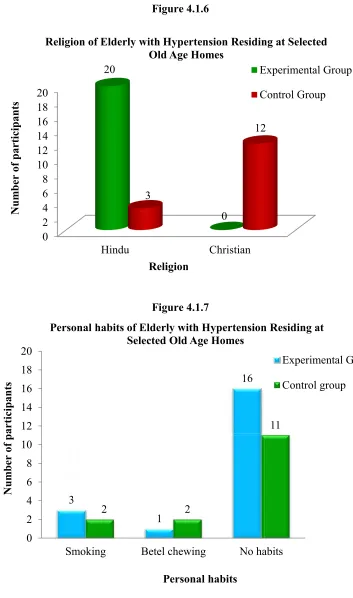
The above table 4.1.6 depicts that in the experimental group 100% belongs to Hindu religion and that of in the control group 20% belongs to Hindu religion and 80% are Christians. (Fig 4.1.6)
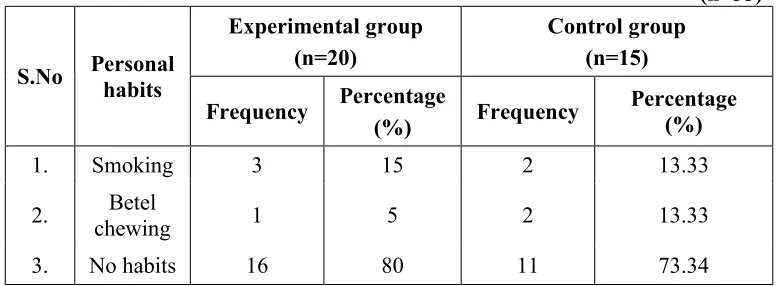
Table 4.1.7
Personal habits of Elderly with Hypertension Residing at Selected Old Age Homes
(n=35)
S.No Personal habits
Experimental group (n=20)
Control group (n=15) Frequency Percentage
(%) Frequency
Percentage (%)
1. Smoking 3 15 2 13.33
2. Betel
chewing 1 5 2 13.33
3. No habits 16 80 11 73.34
[image:62.612.120.512.413.556.2]45 Figure 4.1.6 Figure 4.1.7 0 2 4 6 8 10 12 14 16 18 20 Hindu Christian 20 0 3 12 Num ber of participants Religion
Religion of Elderly with Hypertension Residing at Selected Old Age Homes
Experimental Group Control Group 3 1 16 2 2 11 0 2 4 6 8 10 12 14 16 18 20
Smoking Betel chewing No habits
Num
ber
of
participants
Personal habits
Personal habits of Elderly with Hypertension Residing at Selected Old Age Homes
46
Table 4.1.8
Family history of Hypertension among Elderly with Hypertension Residing at Selected Old Age Homes
(n=35)
S.No
Family history of
Hypertension
Experimental group (n=20)
Control group (n=15) Frequency Percentage
(%) Frequency
Percentage (%)
1. Yes 1 5 - -
2. No 19 95 15 100
The above table 4.1.8 depicts that in the experimental group 95% do not have family history and 5% have the family history of hypertension. In the control group 100% do not have family history of hypertension. (Fig 4.1.8)
Table 4.1.9
Hobbies of Elderly with Hypertension Residing at Selected Old Age Homes (n=35)
S.No Hobbies
Experimental group (n=20)
Control group (n=15) Frequency Percentage
(%) Frequency
Percentage (%)
1. Yes 18 90 15 100
2. No 2 10 - -
47 Figure 4.1.8 Figure 4.1.9 0 2 4 6 8 10 12 14 16 18 20 Yes No 1 19 0 15 Num ber of participants
Family history of Hypertension
Family history of Hypertension among Elderly with Hypertension Residing at Selected Old Age Homes
Experimental Group Control Group 0 2 4 6 8 10 12 14 16 18 20 Yes No 18 2 15 0 Num ber of part icipants Hobbies
Hobbies of Elderly with Hypertension Residing at Selected Old Age Homes
48
Table 4.1.10
Elderly with Hypertension Residing at Selected Old Age Homes based on Duration of Hypertension
(n=35)
S.No Duration of Hypertension
Experimental group (n=20)
Control group (n=15) Frequency Percentage
(%) Frequency
Percentage (%)
1. 1-5 years 13 65 11 73.33
2. 6-10 years 7 35 1 6.67
3. 11-15 years - - 1 6.67
4. 16-20 years - - 2 13.33
49
Table 4.1.11
Elderly with Hypertension Residing at Selected Old Age Homes based on Duration of Intake of Antihypertensives
(n=35)
S. No
Duration of Intake of
Antihypertensives
Experimental
group(n=20) Control group(n=15) Frequency Percentage
(%) Frequency
Percentage (%)
1. 1-5 years 14 70 11 73.33
2. 6-10 years 6 30 3 20
3. 11-15 Years - - 1 6.67
50 Figure 4.1.10 Figure 4.1.11 13 7 0 0 11
1 1 2
0 2 4 6 8 10 12 14 16 18 20
1-5 years 6-10 years 11-15 years 15-20 years
Num
ber
of
part
icipants
Duration of Hypertension
Elderly with Hypertension Residing at Selected Old Age Homes based on Duration of Hypertension
Experimental Group Control group 14 6 0 11 3 1 0 2 4 6 8 10 12 14 16 18 20
1-5 years 6-10 years 11-15 years
Num
ber
of
participants
Duration of Intake of Antihypertensives
Elderly with Hypertension Residing at Selected Old Age Homes based on Duration of Intake of Antihypertensives
51
Table 4.1.12
Elderly with Hypertension Residing at Selected Old Age Homes based on Duration of Stay at Old Age Home
(n=35) S.
No
Duration of Stay at Old Age Home
Experimental group (n=20)
Control group (n=15) Frequency Percentage
(%) Frequency
Percentage (%)
1. < 1Year 2 10 4 26.67
2. 1-5 years 18 90 11 73.33
[image:69.612.122.509.153.270.2]The above table 4.1.12 depicts about the duration of stay at old age home and the result shows that in the experimental group 90% stay for 1-5 years, 10% stay for less than 1 year. In the control group 73.33% stay for 1-5 years, 26.67% stay for less than 1 year. (Fig 4.1.12)
Table 4.1.13
Elderly with Hypertension Residing at Selected Old Age Homes based on Co morbid Illnesses
(n=35) S.No
Co morbid Illnesses
Experimental group (n=20) Control group (n=15) Frequency Percentage
(%) Frequency
Percentage (%)
1. Present 10 50 2 13.33
2. Absent 10 50 13 86.67
52 Figure 4.1.12 Figure 4.1.13 2 18 4 11 0 2 4 6 8 10 12 14 16 18 20
< 1 year 1-5 years
Num
ber
of
participants
Duration of Stay at Old Age Home
Elderly with Hypertension Residing at Selected Old Age Homes based on Duration of Stay at Old Age Home
Experimental Group Control group 0 2 4 6 8 10 12 14 16 18 20 Present Absent 10 10 2 13 Num ber of participants
Co morbid Illnesses
Co morbid Illnesses of Elderly with Hypertension Residing at Selected