Activity Agreements
Evaluation
Synthesis Report
Research Report DCSF-RR063
Jim Hillage, Claire Johnson, Becci Newton
Institute for Employment Studies
Sue Maguire
Centre for Education and Industry
Emily Tanner, Susan Purdon
Research Report No DCSF-RR063
Activity Agreements Evaluation
Synthesis Report
Jim Hillage, Claire Johnson, Becci Newton
Institute for Employment Studies
Sue Maguire, Centre for Education and Industry
Emily Tanner, Susan Purdon, National Centre for Social Research
The views expressed in this report are the authors’ and do not necessarily reflect those of the Department for Children, Schools and Families.
the process evaluation supported by her now erstwhile colleague at CEI, Jo Thompson, and the evaluation team at IES: Claire Johnson, Linda Miller, Becci Newton, Rosie Page, Peter Bates, Tom Usher and Jim Hillage. The quantitative evaluation was conducted at the National Centre for Social Research (NatCen) by Steven Finch, Susan Purdon, Emily Tanner, John D’Souza and Juliet Michaelson. The programme evaluation was led at IES by Claire Johnson supported by Becci Newton, Rosie Page, Harriet Fearn and Tom Usher. The whole evaluation was directed by Jim Hillage, and the project administrator at IES was Gill Brown who provided invaluable support to the project team with her typical efficiency and good humour.
The project team would like to express their sincere thanks to the project managers and other stakeholders in the AA pilot areas who gave generously of their time in interviews and also to the young people who responded to surveys and interviews and provided the data on which this report is largely based.
Contents
SUMMARY V
1 INTRODUCTION 1
1.1 What are Activity Agreements? 1
1.2 How were the AA pilots evaluated? 3
1.3 What is in this report? 3
2 HOW WERE THE PILOTS SET UP? 5
2.1 Two main models of delivery 5
2.2 Staffing structure 6
2.3 Relationships with stakeholders 7
2.4 Management information 7
3 GETTING YOUNG PEOPLE TO TAKE PART 9
3.1 How many young people got involved in agreements? 9 3.2 What were the main characteristics of AA participants? 12 3.3 What was the best way of getting young people involved? 13 3.4 How long did young people stay on the programme? 16
3.5 Why did some young people leave early? 16
4 WHAT DID THE YOUNG PEOPLE DO WHILE ON THE PROGRAMME? 17
4.1 Activities 17
4.2 Was there sufficient provision? 20
4.3 Who did what? 20
4.4 What was the role of the Discretionary Fund? 21
4.5 How did the payment systems work? 22
5 MAKING PROGRESS 24
5.1 How did young people progress within the programme? 24 5.2 Did the AA programme affect young people’s attitudes to training or work? 25 5.3 What did young people do when they left the programme? 25
5.4 Self-reported impact 27
6 CONCLUSIONS 30
6.1 The diverse NEET population needs flexible, tailored solutions 30 6.2 Activity Agreements help re-engage long-term NEET 30 6.3 The lowest qualified return to education and the better qualified take-up
training 31 6.4 Getting participation from the long-term NEET is not easy 31 6.5 Do Activity Agreements work for all NEET young people? 32 6.6 The three sides of the AA triangle are equally important 32
6.7 It’s a deal! 33
6.8 Are Activity Agreements sustainable? 33
6.9 What could be done better? 33
6.10 What are the implications for raising the participation age? 34
APPENDIX 1: EVALUATION METHODOLOGY 36
Summary
Activity Agreements (AA) are designed to encourage young people who have been not in education, employment or training (NEET) for some time back into learning or help them get a job (with training). In return for completing a series of activities tailored to their individual needs and designed to move towards learning or employment, 16 and 17 year olds who have been NEET for at least 20 continuous weeks receive an allowance. The agreements were piloted in eight areas between April 2006 and March 2008, modelling different levels of financial support, managed by local Connexions Partnerships. The pilots have been subsequently extended for another 18 months and are trialling further models of eligibility and support.
The evaluation of the pilots was commissioned by DCSF and carried out by a partnership of the Institute for Employment Studies (IES), the Centre for Education and Industry (CEI) at Warwick University and the National Centre for Social Research (NatCen). The
evaluation had three main elements:
■ a process evaluation, examining the ways in which the pilots have been set up and delivered and the main issues associated with their implementation
■ a quantitative element, using surveys of young people to measure the impact of the pilots in comparison to a number of control areas
■ a programme theory element, focusing on testing some key aspects of the policy to identify what works, what does not and the reasons for this.
Key findings
■ The diverse long-term NEET population needs flexible, tailored solutions.
■ The Activity Agreement pilots generally engaged the young people who they found easiest to reach – more effective engagement processes are required to reach the hardest to reach groups.
■ It is estimated that the Activity Agreements were taken up by approximately one-fifth of the eligible NEET population
■ The £30 a week allowance to young people attracted the highest level of take-up and appeared to be the most effective variant (compared with the other variants: £20 pw allowance to young people and £20 pw to young people plus £30 pw to their family)
■ The three sides of the AA triangle are equally important – the allowance, the activities, and the Personal Adviser each reinforce the other to produce a particularly effective triangulated approach, underpinned by an agreement with the young person.
■ Some significant areas for improvement that emerged included the need for improved management information and more work experience and shadowing opportunities.
■ Looking ahead to the raising of the participation age, the evaluation shows that:
• financial incentives are an effective tool for engaging young people and retaining their participation
• intensive support is required by some young people to help them stay in a learning and developmental environment
• flexible and imaginative provision is required to meet the needs of some young people.
■ Activity Agreements can play a significant role in the lead up to raising the participation age by supporting a significant element (between 10 and 20 per cent) of the current NEET population to return to some form of recognised learning activity. Other support programmes, for young people in the most difficult circumstances, will probably also be required.
Detailed findings
The more detailed findings from the evaluation are summarised below.
Two main models of delivery
The pilots were all managed by a central team but varied in their degree of local autonomy over delivery and implementation. The pilots covering larger areas and particularly a number of local authorities generally (but not always) had separate local organisations responsible for local delivery. Smaller areas, with fewer local authorities and Connexions Partnerships tended to be more centrally managed by the project manager.
The preferred method of delivery was through teams of dedicated Personal Advisers (PAs) whose skills were not too dissimilar to those of mainstream Connexions PAs. Over the course of the pilots these roles started to be supplemented by support staff to assist with administration and managing provision.
Management information was a problem
The pilots operated three different management information systems and there were delays in producing information, some pilots found that their system did not meet their required standards of functionality and reporting and making changes was difficult. The lack of a uniform and fully operationalised MI system weakened the ability of the pilots to exchange and compare information and to manage their own performance.
Over 10,000 young people signed agreements
Less than half of the eligible population took part
Precise information on the total population of long-term NEET young people is not available, but from the survey sampling method (drawn from Connexions’ databases) an approximate population figure can be estimated. The survey data suggest a lower rate of participation than the management information – probably because young people did not recognise the description of the agreements in the survey. Taken together the two sets of data indicate a take-up rate of around 20 per cent – ie one in five of the eligible NEET population took up an agreement. While this is probably an under-estimate it does indicate that under half the eligible population took part – a finding confirmed by other evaluation evidence.
Other survey and management information data show that:
■ about half of the eligible long-term NEET young people knew about the offer
■ around half of those who knew of the agreements, took one up.
Agreements only appropriate for a proportion of the long-term NEET
There were a number of reasons why young people did not take-up the agreements in the numbers initially expected. These included:
■ over-estimates of the potential NEET population – ie the pool of potential recruits was lower than expected
■ delays in setting up the pilots and, in some cases, retaining key staff – so there were not always sufficient advisers to recruit new participants
■ the difficulties engaging with ‘hardest to reach’ young people such as the homeless
■ the difficult personal circumstances some NEET young people were in, including poor physical or mental health and, therefore, for whom the agreement was not appropriate
■ the allowance was an insufficient incentive to persuade some to take part.
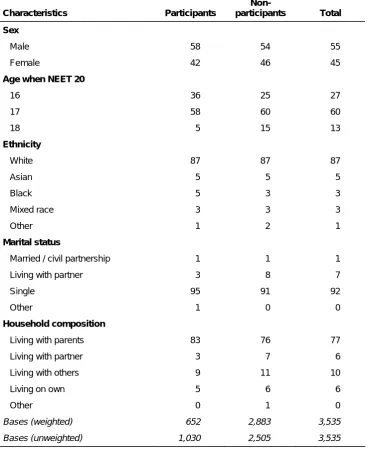
The young people who started agreements tended to be younger, less well-educated and more likely to live with their parents compared with non-participants. They were also less likely to have children or be excluded from school and in this way (and others) were generally easier to engage.
One to one engagement, the best way to secure participation
The best way of getting young people involved and to sign and start agreements was through one to one engagement by AA PAs rather than widespread marketing and publicity. As the pilots progressed, ‘word of mouth’ became an additional important method of recruitment.
The allowance helped to grab young people’s attention
Young people took part to get a job or training
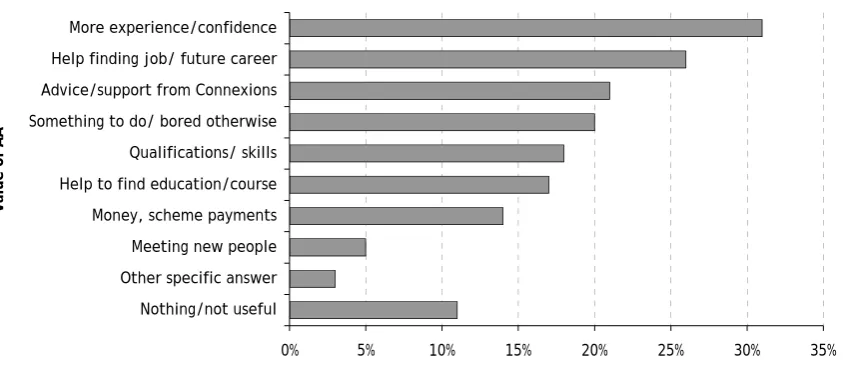
Just over 30 per cent of participants said they took up an AA because they wanted help to find a job and a further quarter wanted to learn new skills or attend training courses.
Young people engaged in a wide range of activities
There was no typical package of activities. A plan evolved from the discussions between the young person and their PA in their weekly meetings. For some young people the engagement with their Adviser was all they needed, from short initial bursts to the whole length of the agreement, to get them moving, if not actually engaged in employment or training. Nearly all the young people said their adviser was either very helpful (63 per cent) or fairly helpful (29 per cent).
Other activities tended to be focussed on:
■ personal development – eg to help cope with personal difficulties and/or boost confidence and motivation
■ skill development – either remedially filling skill gaps or more proactively seeking to acquire skills that may be relevant to potential employment. In some areas basic skills courses and short construction skills courses were not easy to find for this group
■ work-related activities – including work tasters, work shadowing and work experience and sessions about workplace behaviour, including health and safety. These activities were particularly popular with participants but could be difficult to source.
Generally young people spent about 14 weeks on the programme and were happy with their choice of activities and found them helpful.
The Discretionary Fund provided flexible support to young people
The Discretionary Fund (DF) was seen as a very useful tool by both advisers and young people. The fund was used to buy activities but also to support young people in their activities by buying equipment or helping with transport.
Local payments systems worked well
Pilots developed their own systems for paying the allowance to young people which worked well, especially as it was easy to manage (eg to suspend and restart payments to young people). Although there were initial concerns that the relationship with their adviser could be affected by withdrawal of payments (if the young person did not take part in activities for instance), these fears did not materialise as young people generally understood the ‘something for something’ approach that underpinned the agreement.
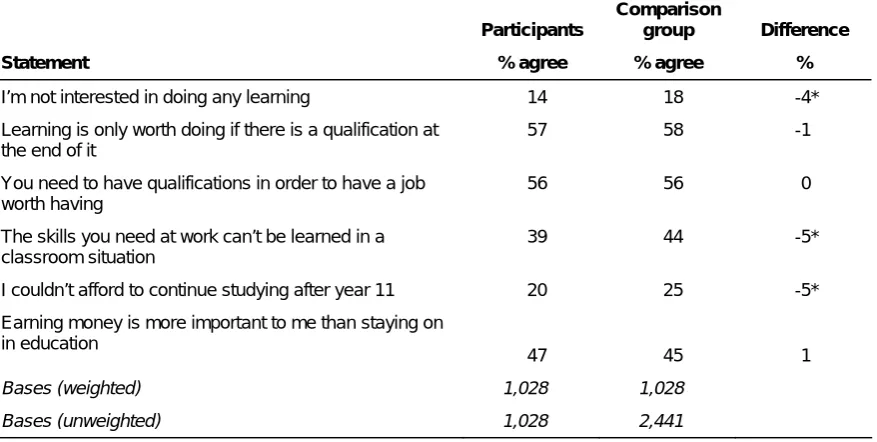
Activity Agreements have a positive impact on young peoples’ attitudes and
engagement with training and jobs
The evaluation found that young people who had been involved in agreements:
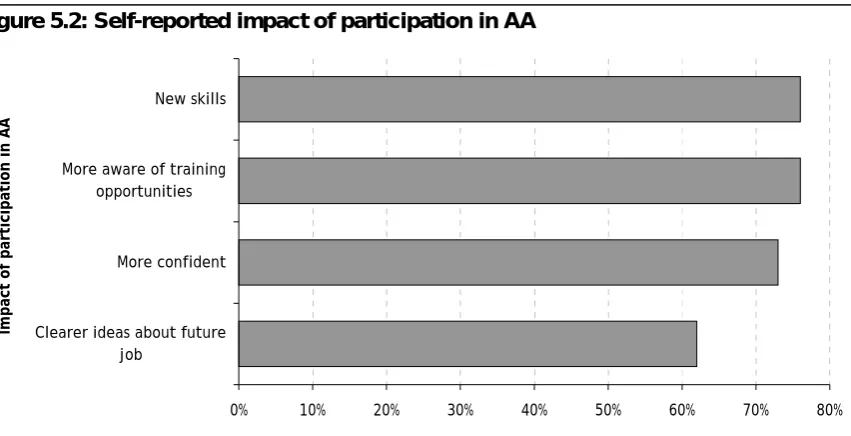
■ felt they had a better range of skills, were more confident and had better ideas about the jobs and careers they could do
1 Introduction
The United Kingdom has one of the lowest rates of post-16 participation in education or employment in Europe, with the problem being particularly acute at age 17. Just under ten per cent of 16 and 17 year olds in England, around 100,000 young people, do not
participate in any form of education, training or employment. A further 85,000, around six per cent of the cohort, are in jobs which do not offer accredited training. This pattern is found across the UK.
The 2005 Budget announced the piloting of two new initiatives aimed at extending participation in education and training among young people who are not in employment, education or training (NEET) and young people who are in jobs without training (JWT). Sixty million pounds was allocated over two years to Activity Agreements Pilots (AA) to support and encourage disengaged 16-17 year olds back into learning. In addition, £80m over two years was allocated to Learning Agreement Pilots (LAP) for 16-17 year olds in work with no training, to increase access to training options for this group. Activity Agreements and Learning Agreements were initially piloted in 12 areas of England from April 2006 for a two-year period, subsequently extended for a further 18 months in 2008.
Policy interest in the effectiveness and impact of both types of agreement has been given further impetus by the announcement of plans to raise to 18 the age at which young people have to compulsorily participate in some form of recognised education or training.
This report summarises the findings from the national evaluation of the AAs.
1.1 What are Activity Agreements?
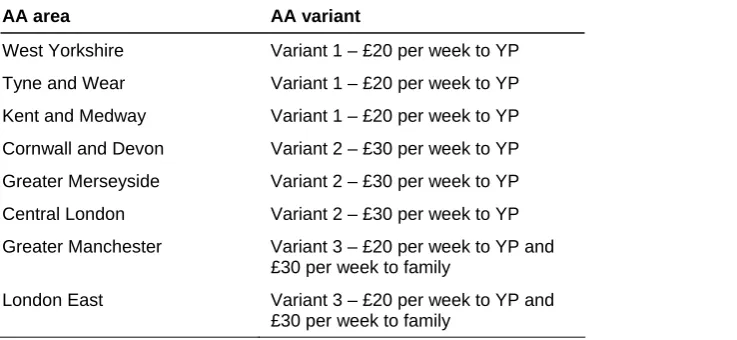
Under the terms of the original pilots, young people who had been NEET for over 20 weeks were offered a weekly allowance in return for agreeing to a plan and completing activities to help them back into learning or help them gain employment. Three variants of the allowance were piloted in eight different areas, with a view to identifying the most successful models (Table 1.1). Four of these areas also piloted learning agreements (which were also trialled in four additional parts of the country).
The Activity Allowance is payable for a period of up to 20 weeks to 16 and 17 year olds who have been continuously NEET for 20 weeks or more (referred to as the ‘long-term’ NEET in this report). Recipients are required to complete their activities and demonstrate progress towards learning in order to continue to qualify for weekly support.
Partnership and could include basic skills provision, vocational taster courses or personal development courses, as well as bespoke activities.1
Table 1.1: Pilot areas for the Activity Agreement evaluation
AA area AA variant
West Yorkshire Variant 1 – £20 per week to YP
Tyne and Wear Variant 1 – £20 per week to YP
Kent and Medway Variant 1 – £20 per week to YP
Cornwall and Devon Variant 2 – £30 per week to YP
Greater Merseyside Variant 2 – £30 per week to YP
Central London Variant 2 – £30 per week to YP
Greater Manchester Variant 3 – £20 per week to YP and £30 per week to family
London East Variant 3 – £20 per week to YP and £30 per week to family
Source: DCSF
1.1.1 Extension to the Activity Agreement Pilots
An eighteen month extended period of trialling new elements in the Activity Agreement Pilots began in April 2008. The objectives of the pilots in the extension phase are to:
■ test the effectiveness of earlier intervention
■ test the effectiveness of brokerage and AAs as a tool for re-engaging young people, notably those moving out of learning, now and within the context of Raising the Participation Age (RPA)
■ monitor and understand how the extension is managed and implemented in different areas and highlight good practice and any problems in the process, with a view to informing the current NEET situation and RPA
■ understand what works (or does not work ) within the extension: to understand how young people respond to agreements and brokerage and to understand for whom, in what circumstances, and in what respect, the intervention has worked for the ‘stock’ of NEET young people, as well as illustrating how the approach would work under RPA.
Also, from April 2008, changes were made to models operating in the pilot areas with three new variants of the AA being tested:
■ Model 1: 13 and 20 week AAs. A direct extension of the pilots which tests an earlier intervention at 13 weeks NEET whilst continuing to offer AAs to 20+ week NEET young people. Whilst participating in an AA young people will receive £30 a week (subject to completion of agreed activities) for a maximum of 20 weeks.
■ Model 2: AAs for those previously in receipt of EMA. The intention through this model is to learn more about re-engaging young people who have previously been
1
motivated to learn so as to inform policy in relation to Raising the Participation Age (RPA). This model allows those who have been in receipt of EMA immediately prior to their referral to Connexions to enter an AA at six weeks. This has the potential benefit that young people will re-engage before they have developed strategies for coping with being NEET.
■ Model 3: Vulnerable Groups AAs. This model allows particularly vulnerable young people (eg carers, travellers, homeless young people and refugees) to be fast-tracked onto an AA. Initial assessment and advice will be done by mainstream Connexions. If the young person has not re-engaged within the first five weeks they can be referred to an Activity Agreement, if suitable. Whilst participating in an AA they will receive £30 a week (subject to completion of agreed activities) for a maximum of 20 weeks.
These new variants and the extension of the pilots are the subject of a separate evaluation.
1.2 How were the AA pilots evaluated?
The Department for Children, Schools and Families (DCSF), formerly the Department for Education and Skills (DfES), has commissioned the Institute for Employment Studies (IES), the Centre for Education and Industry (CEI) and the National Centre for Social Research (NatCen) to undertake the evaluation of the Activity Agreement Pilots. The evaluation comprised three strands:
■ a quantitative evaluation, which involved the collection of quantitative data in pilot areas and a number of control areas, in order to measure the comparative impact of the pilots on the employment education and training activities of the eligible NEET population
■ a process evaluation, which explored the local implementation and delivery of the pilots in each area, based on interviews with pilot managers, personal advisers, providers and local stakeholders
■ a programme theory evaluation, which aimed to identify and test the key theories which underpinned the policy development and examine what worked or did not work, and why or in what circumstances, through a series of focused studies, three of which examined aspects of the Activity Agreements.
The evaluation method is described in more detail in Appendix 1.
1.3 What is in this report?
This report draws on all aspects of the evaluation to pull together the main findings. The main sources for these findings are the evaluation papers produced during the course of the study. These include:
■ Tanner E, Purdon S, D’Souza J, Finch S ‘Evaluation of Activity Agreement Pilots: Report of the Quantitative Evaluation’, draft report from NatCen.
Learning Agreement Pilot: Process Evaluation: Year One Report’ Research Report RW027, Department for Children, Schools and Families, January 2008.
■ Johnson C, Newton B, Usher T, Hillage J ‘Incentivising Participation in Activity Agreements’; Activity and Learning Agreement Pilot Programme Theory Evaluation Working Paper 1 RW028, Department for Children, Schools and Families, 2008.
■ Newton B, Johnson C, Fearn H ‘Activity Agreement Provision’; Activity and Learning Agreement Pilot Programme Theory Evaluation’ Activity and Learning Agreement Pilot Programme Theory Evaluation Working Paper 3, Department for Children, Schools and Families, forthcoming.
In addition, a final programme theory study examined progression among AA participants and the theory that the agreement may encourage NEET young people to at least make small steps towards learning and sustainable employment. The report from this study had not been finalised as this report was written but emerging findings from the research were incorporated in the results reported here.
1.3.1 Report structure
The report is split into five further chapters:
■ Chapter 2 examines how the pilots were established and organised including management and staffing structures and their relationship with local and national stakeholders.
■ Chapter 3 focuses on how the pilots engaged with young people who were long-term NEET, how many started agreements and why, why some eligible young people did not take part, how long young people stayed on programme and why some left early.
■ Chapter 4 explores what young people did while on the programme and whether there was sufficient provision for them. We also look at the payment of the allowance and what happened if payments were withdrawn if young people did not stick to their agreement.
■ Chapter 5 looks at the impact of the programme on young people’s attitudes to learning and work and their labour market and learning behaviour once they left the programme.
■ Finally, in Chapter 6 we draw together the conclusions of the evaluation.
2 How were the pilots set up?
In this section we look at how the pilots were organised, their staffing and management structures and the relationships that the pilots established with local and national stakeholders.
2.1 Two main models of delivery
The pilots were managed by local Connexions Partnerships, who were already working with young people who were NEET. During the course of the pilots, responsibility for working with young people was transferred from Connexions to local Children and Young People’s Partnerships run by local authorities. The transfer of staff from Connexions to local authorities created uncertainty among staff about their future employment and distracted from the delivery of the pilots. Some local authorities had already developed strategies to tackle their local NEET population which could differ in key respects from the pilots (eg by focussing on young people at risk of becoming NEET rather than the long-term NEET) which meant that they did not fully embrace the aims of the pilot.
Learning Point: working with the long-term NEET population requires the gradual establishment of
expertise and systems, which requires long-term ring-fenced funding and a clear consensus of objectives among the agencies involved.
The process evaluation identified two main ways in which the pilots were structured – largely determined in turn by the local authority structure in the area. In all cases the pilots were managed by a central team, however they differed in their degree of local autonomy over delivery and implementation.
■ Local area autonomy – most of the pilots covered large areas encompassing a number of local authorities and, therefore, Connexions partnerships. Central pilot managers liaised with local area managers who were responsible for local delivery (which included staffing, local marketing and organising provision). While pilot
managers retained responsibility for strategic direction of the pilot, local areas usually had a great deal of autonomy over implementation.
■ Central management – where the pilot area comprised a single Connexions
partnership and a small number of local authorities, project managers had the capacity for overall strategic responsibility as well as a more ‘hands on’ role. In this model staffing and delivery procedures tended to be more standardised.
Setting up the pilot generally proved less complex in areas where the contract was managed centrally and where pilot managers were working directly with Connexions Services, ie rather than through local authorities. For example in these situations it proved easier to make staff appointments and alter staffing numbers.
■ nominating one LA to lead the management and delivery of AAs across a number of LAs in a given area
■ inviting Government Offices (GOs) to assume the responsibility of coordinating AA delivery throughout their areas
■ locating the responsibility for AAs in the new clustering arrangements for local authorities within sub-regional groupings.
Grouping local authorities together would create opportunities for a wider range of provision and economies of scale in management, administration and delivery arrangements.
2.2 Staffing structure
The pilots generally had a manager responsible for running them and, depending on their size, area team managers. The key operational unit was the local team of personal advisers (PAs), generally dedicated to the delivery of the pilot. The number of staff was established with reference to the estimated size of the NEET population and based on the assumption that each adviser could cope with around 20 young people at any one time. However, due to the intensive support that is required to be given to young people, most AA PAs had a maximum caseload of between ten and 15 young people. Although caseloads were reported to be higher in some areas and grew in others towards the end of the second year of the pilot (partly due to staff turnover), pilot personnel generally felt that the original planned caseload of 20 was too great to allow the level of intensive support that many young people needed.
Learning point: Personal Advisers need a caseload that is low enough to enable them to provide
the client-centred intensive support required (both to recruit participants and to give them the support, development and activities they needed) but large enough to keep them efficiently
occupied. The maximum number of young people with which PAs could effectively cope at any one time was between 15 and 20.
Two of the pilots operated a slightly different staffing model, with dedicated AA PAs in some parts of the pilot area, while in the rest delivery of the pilot was shared among all the PAs as part of their generic caseload. While this gave some flexibility to switch resources as more or fewer young people came on to the programme, it was generally felt that the dedicated ‘AA adviser model’ was easier to manage and produced better results as staff could better focus their attention on the needs of a wider pool of young people.
Most of the advisers were recruited from the existing complement of Connexions advisers or from similar programmes (eg Positive Activities with Young People (PAYP)), although a few were from different backgrounds, as the skills required were generally thought to be broadly similar. This had the advantage at the beginning that most staff were in post fairly quickly, and, for instance, did not have to wait for Criminal Record Bureau (CRB) checks to be carried out.
centrally managed, avoiding duplication, ensuring consistency of treatment and maximising advisers’ access to provision available.
Learning point: the provision of AA requires a mix of skills, while dedicated Advisers appear to be
the most effective staffing model they can use their (relatively expensive) skills most efficiently when supported by administrative and other assistance.
The levels of training provided varied across the pilots – while all offered induction programmes, some offered tailored training programmes and in one all AA PAs were completing a foundation degree.
2.3 Relationships with stakeholders
Relations between the pilots and key stakeholders appeared to be good. In particular closer relations were established between Connexions and Jobcentre Plus, eg through staff secondments and exchanges. The relationships were important because of the need to conduct checks about whether young people were on benefits and to ensure young people on Jobseeker’s Allowance were aware of the programme and the opportunities it presented. Jobcentre Plus (JCP) personnel would have welcomed more guidance at national level about their benefit-checking role in the pilot which, at least initially, felt like an additional administrative task as young people under 18 were not a priority for them.
Learning point: while benefits were checked at the start of the Activity Agreement, young people
who reached the age of 18 during the course of programme could then claim Jobseeker’s Allowance (JSA) and there were no further checks carried out. If the aim is to preclude participants claiming JSA and receiving an allowance then further checks, by JCP, need to be put in place.
Providers were generally happy with the contractual arrangements between them and the Connexions services operating the pilots. Most of the providers had extensive experience of working with young people (eg through Entry to Employment (E2E) programmes). Some would have welcomed more information about the volume and specific needs of the young people coming to them so they could plan their provision better. Providers would also have welcomed more exchanges of information and practice with other organisations involved in the delivery of the pilots.
Learning Point: providers of activities, some of whom had not worked with the client group before,
would benefit from the opportunity to share practice in working with young people who are long-term NEET.
2.4 Management information
The provision of management information (MI) for the programme was a problem. There were a number of issues, in particular:
■ While some of the pilots, especially those using their existing systems to produce MI could produce the data required, others found their system did not meet their required standards of functionality and reporting.
■ Making changes to the MI system across the pilots while maintaining the integrity of the main Connexions Customer Information System (CCIS) was complex.
The lack of a uniform and fully operationalised MI system weakened the ability of the pilots to exchange and compare information and to manage their own performance.
Learning point: prior to any national roll-out it will be important to ensure that MI systems are able
3 Getting young people to take part
We now turn to examine how the pilots engaged with young people who were long-term NEET and specifically look at:
■ how many young people became involved in the programme
■ why some eligible young people chose not to get involved
■ what were the main characteristics of the young people who did get involved
■ what was the best way of getting them involved
■ what kept the participants on the programme, and
■ why some left early.
3.1 How many young people got involved in agreements?
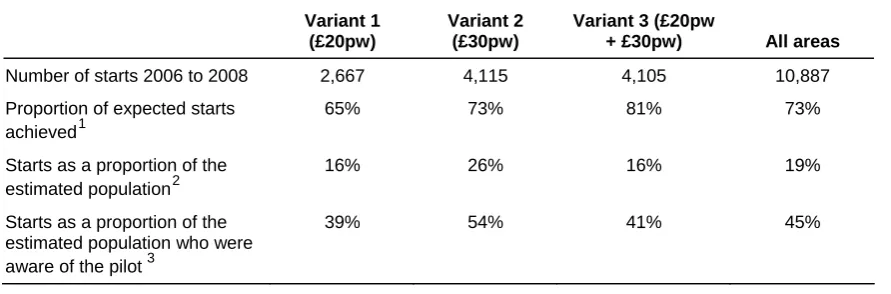
According to the management information, a total of 10,887 young people started an Activity Agreement (ie signed an agreement and began activities and therefore became eligible for a payment) between April 2006 and March 2008. The level of participation varies by pilot area and by the model or variant of the financial support on offer (see Table 3.1).
The number of pilots and the size of the areas differ between each variant of the allowance on offer, therefore the potentially eligible population similarly varies. The evaluation produced two measures which provide an approximate indication of how the number of young people actually starting an agreement compares with the potential number who could have started:
■ the profile (ie anticipated level) of starts agreed for each pilot at the outset; and
■ the survey sample population.
Did take-up match profile?
Each of the pilots had agreed a profile of starts – ie an estimated number of young people they expected to start the pilot. This was agreed at the outset between the pilot areas and the DCSF based on estimates of the potential long-term NEET population and the
proportion the pilots estimated that they could get to start an agreement. The profiles were revised for the second year of the pilot. While these figures bear some relationship to the size of the eligible population (eg a quarter or a half etc.) the precise proportion will vary between pilot areas depending on the information available and other factors affecting the detail of the pilot contractual arrangements.
Generally the pilots achieved 73 per cent of their expected profile in the two years from 2006, ie only about three-quarters of the expected numbers of young people started.
achieved 73 per cent of profile and in Variant 3 areas (£20pw plus £30pw to parents) 81 per cent of the expected number of young people started (see Table 3.1).
What proportion of the long-term NEET population got involved?
The second indicative measure we have is from the survey data. The survey sample, drawn from Connexions offices, provides a rough size guide to the potentially eligible population for the AA programme. While accepting that due to participant recall and understanding this may not be exactly the same figure as actual participation, we can use the survey findings to provide us with rough estimates of the proportion of potential young people taking part1.
The results are also presented in Table 3.1 and indicate that while roughly one in five potentially eligible young people took part in the pilots as a whole, the proportion was one in four in Variant 2 areas. This is a lower estimate than that implied by the management information (the survey data implies total participation of 5,419 between April 2006 and August 2007, compared with 7,290 according to the management information – ie a quarter lower). There are a number of potential explanations for the difference (eg survey participants not recognising AA from the descriptions in the survey) but the key point is that the pattern of responses from the survey seems broadly consistent with the MI data2.
Obviously young people can only take part if they hear about the opportunity. The records kept by local Connexions offices of the potentially eligible NEET population in their area gradually improved over the course of (and as a result of) the pilots and as a result it is likely that a higher proportion of the population were contacted towards the end than at the beginning of the pilots.
However, in the survey of the NEET population (which took place mainly in the first year that the pilots were operating), only around 43 per cent of respondents in the pilot areas recognised the description given to them of the Activity Agreements in their area. Of these, 45 per cent said they started an agreement, with a higher proportion taking part (54 per cent) in Variant 2 areas. That means around half of those who had heard of the agreement took up the offer. However, these results contrast with the management information data which show that 79 per cent of the young people to whom an agreement was offered actually started.
What can we say about take-up?
Thus a broadly consistent pattern emerges from these various data:
■ there is no consistent information on the size of the long-term NEET population from which participants were drawn and therefore comprehensive ‘penetration rate’ data are not available
■ less than half, possibly even only one-fifth, of the potential population took up an agreement
■ overall participation was lower than initially expected – or at least the agreed profile of starts
1
For details of the method used see the report of the quantitative evaluation (Tanner E et al.)
2
■ not all long-term NEET young people knew about the offer
■ half of young people who do know about the agreement offer take it up
[image:22.595.85.531.193.340.2]■ the areas with the higher levels of allowance (particularly Variant 2) appear to have the highest levels of take-up.
Table 3.1 Take-up of Activity Agreement Pilots
Variant 1 (£20pw)
Variant 2 (£30pw)
Variant 3 (£20pw
+ £30pw) All areas
Number of starts 2006 to 2008 2,667 4,115 4,105 10,887
Proportion of expected starts achieved1
65% 73% 81% 73%
Starts as a proportion of the estimated population2
16% 26% 16% 19%
Starts as a proportion of the estimated population who were aware of the pilot 3
39% 54% 41% 45%
Source: AA MI and NatCen survey
Why did young people not get involved?
There are various sources of information as to why take-up to the pilots was lower than initially expected.
The pilots collected data on why young people declined an offer of an Activity Agreement, but although the data were collected through the management information system most reasons were coded as ‘other’ and so the data are not very illuminating. Anecdotal information on take-up, or lack of it, was available from PAs and pilot managers
interviewed during the course of the process evaluation, and finally some young people who had not taken part were interviewed during the course of the programme theory.
From these various sources different reasons emerge to explain lower than expected take-up and why young people did not take part:
■ Too high expectations – the initial estimates of the target NEET population,
developed centrally, proved to be an over-estimate, eg they seemed to include young people on welfare benefits such as JSA who were not eligible to take part in the first round pilots unless they agreed to transfer from JSA to AA (an option not taken up by many).
■ Changing eligibility – young people change their circumstances – some move from NEET to short-term employment and then back again and are therefore difficult to track accurately. Some plan to start a job or a course in the near future and, therefore, were not interested in joining a 20 week programme.
1
Actual starts as a percentage of agreed planned profile.
2
Take-up rate based on total survey sample (as a proxy for eligible population).
3
■ Getting the pilots going, and keeping them going – some pilots experienced delays getting staff in place and, separately, keeping staff on their temporary contracts
towards the end of the initial two-year pilot contract, ie before the extension was announced. Also it took time for pilots to establish the best way of identifying and engaging young people.
■ Adviser capacity – the ability of the pilots was constrained by the capacity of the advisers to engage with young NEET people, particularly in some of the areas operating both the Activity and Learning Agreement pilots. While workload could fluctuate at its peak there were insufficient advisers to cope with the full population of potentially eligible young people in their area at manageable caseloads.
■ It’s hard to reach the ‘hardest to reach’ – as described above, part of the NEET population did not seem to be aware of the pilots, despite the best marketing and other efforts of the pilots. Examining the characteristics of the young people who did get engaged (see Section 3.1.3) suggest that the pilots engaged with the ‘easier’ rather than ‘harder’ cases. Part of the problem here was the difficulty local Connexions offices faced keeping track of some NEET young people (eg those who moved home or did not have a permanent address), although the pilots’ intelligence about this group did improve over the course of the programme.
■ Personal circumstances – in some cases the Activity Agreements were not
appropriate for eligible young people to join, for instance those with significant personal or contextual barriers to engagement, such as health (including mental health
problems) or caring responsibilities or other issues at home for which they needed a level of personal support that could not be provided within the programme.
■ Insufficient incentive – for a number of young people – at least 14 per cent of those who declined to take part according to the MI – the level of the allowance was thought to be insufficient.
3.2 What were the main characteristics of AA participants?
Young people who are NEET are a heterogeneous group and AA participants are similarly diverse and had found themselves not involved in education, training or employment for a wide variety of reasons.
The survey mapped out the characteristics of both the eligible NEET population and those who were participating in the AA programme. The ethnic make-up of the two groups was the same and the gender make up (with more males than females) was similar. However, compared with non-participants, participants were more likely to:
■ be younger (ie 16 rather than 17)*1
■ be living with their parents* ■ have no qualifications.
They were also less likely to:
■ have children (eight per cent of participants had a child compared with 17 per cent of non-participants)*
1
■ have been excluded from school.
The survey data largely confirm the findings from the process evaluation, that the pilots found it most difficult to involve some of the hardest to reach groups of young people, particularly those who lived independently from their parents (see Appendix 2, Table 1).
3.3 What was the best way of getting young people involved?
Potential participants were identified through the Connexions information systems and were often tracked from the point at which they had not been in employment, education or training for around 15 weeks, and the tracking of NEET young people generally improved as a result of the pilot. One-to-one engagement between AA PAs and young people by telephone or face-to-face, coupled to an increasing awareness among young people through ‘word of mouth’ appeared to be the most effective way of getting young people to sign up. While a wide range of marketing and publicity activities and materials were developed, they had a limited additional effect on take-up rates.
Learning point: any future planning for the national roll-out of Activity Agreements should seriously
consider the added value of incurring large marketing and publicity costs given their apparently limited impact on take-up rates.
Why did young people take part?
Young people mainly took part in the AA programme because they wanted either to learn new skills and/or help with finding a job. Some were more motivated by the prospect of having something to do (probably in the absence of a clear career path). Few were motivated mainly by the prospect of the allowance.
The survey asked AA participants for the most important reason why they had signed the agreement. We can link the results with the programme theory study which examined the allowance as an incentive to participate and the views of advisers and pilot managers in the process evaluation, to identify the main reasons why young people took part in the programme:
■ many young people wanted help with looking for a job (31 per cent of survey respondents) – for this group and the next the activities were the main driver of participation and the allowance was of secondary importance
■ to learn new skills/attend training courses (24 per cent)
■ something to do/to get out of the house (13 per cent) – these young people were often dependent on their family for income and so the allowance was an important source of independence and also legitimised the activities
■ one-to-one support or advice from Connexions (12 per cent)
■ the weekly payment (12 per cent) – these young people at least initially signed up for the money, although other reasons for staying on the agreement could become more important as they stayed on the programme and saw the benefits of some of the activities they undertook
■ to meet new people/ take part in enjoyable activities (eight per cent). As the
socially isolated and the agreement offered the opportunity to socialise and develop their self-confidence. The allowance was less important for these young people than for some others.(see Appendix 2, Table 2)
What was the role of the allowance in take-up?
In the process evaluation, Advisers felt that the allowance played an important role in acting as a hook to grab the young person’s initial attention and provide an opportunity to explain the activities on offer (and the value in terms of getting a job). It could also serve to legitimise their involvement and enable the young person to contribute to household income (or to draw less from it).
Three-quarters of participants who received payments said in the survey that they would have taken part in the programme even without the payments. The allowance appeared to be more of a motivator to take part for male participants than female participants.
The programme theory element of the evaluation examined in detail the role of the allowance1 in incentivising participation. It found that while some young people would have taken part in the Activity Agreement without the incentive, more said they would not have done. The weekly allowance was important in various ways for different sets of young people:
■ As an attention-grabber. These young people just needed the money: they were ‘disconnected’ from the informal labour market or could not rely on income from their parents.
■ As recognition for the young person’s commitment to doing the AA. The incentive gave a basic value to the young person’s time and signified that doing the AA was worth something. The net additional value of the incentive was not particularly important as long as the young person felt that the activities were worthwhile.
■ As an enabler, underpinning or replacing income. Again, the net additional value of the incentive was not all that important as young people ended up with the same amount of income. In this scenario ‘passported’ incentives that accompanied the Activity
Agreement, such as being told the value of a course, were critical as these allowed the young person to see beyond the value of the allowance.
■ As a way to help out parents more by contributing to the family budget. This was particularly the case among young people who had little income from their parents or informal work. The net value of the incentive to the young person was less, so understanding the value of the activities and/or seeing accompanying material incentives, such as being bought a place on a course, were important ways that the young person remained engaged.
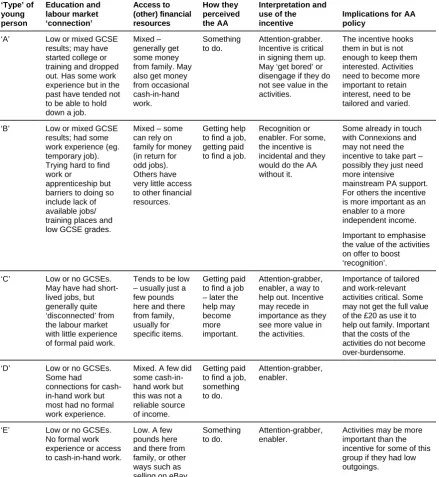
The incentive appeared to play a different role to different young people depending on their personal and dispositional circumstances (see Table 3.2). However, for many, the importance of the incentive recedes as the wider benefits of taking part in the AA are recognised. For a few, the incentive becomes more important as the AA progresses, eg if young people do not see the value of the activities and activities are not sufficiently
tailored. For some of these young people the incentive alone is not sufficient to retain their interest in the longer term and they may gradually disengage.
1
Table 3.2 How the incentive applies differently to young people in different circumstances ‘Type’ of young person Education and labour market ‘connection’ Access to (other) financial resources How they perceived the AA Interpretation and use of the incentive
Implications for AA policy
‘A’ Low or mixed GCSE results; may have started college or training and dropped out. Has some work experience but in the past have tended not to be able to hold down a job.
Mixed – generally get some money from family. May also get money from occasional cash-in-hand work. Something to do. Attention-grabber. Incentive is critical in signing them up. May ‘get bored’ or disengage if they do not see value in the activities.
The incentive hooks them in but is not enough to keep them interested. Activities need to become more important to retain interest, need to be tailored and varied.
‘B’ Low or mixed GCSE results; had some work experience (eg. temporary job). Trying hard to find work or
apprenticeship but barriers to doing so include lack of available jobs/ training places and low GCSE grades.
Mixed – some can rely on family for money (in return for odd jobs). Others have very little access to other financial resources.
Getting help to find a job, getting paid to find a job.
Recognition or enabler. For some, the incentive is incidental and they would do the AA without it.
Some already in touch with Connexions and may not need the incentive to take part – possibly they just need more intensive
mainstream PA support. For others the incentive is more important as an enabler to a more independent income. Important to emphasise the value of the activities on offer to boost ‘recognition’. ‘C’ Low or no GCSEs.
May have had short-lived jobs, but generally quite ‘disconnected’ from the labour market with little experience of formal paid work.
Tends to be low – usually just a few pounds here and there from family, usually for specific items.
Getting paid to find a job – later the help may become more important.
Attention-grabber, enabler, a way to help out. Incentive may recede in importance as they see more value in the activities.
Importance of tailored and work-relevant activities critical. Some may not get the full value of the £20 as use it to help out family. Important that the costs of the activities do not become over-burdensome. ‘D’ Low or no GCSEs.
Some had
connections for cash-in-hand work but most had no formal work experience.
Mixed. A few did some cash-in-hand work but this was not a reliable source of income.
Getting paid to find a job, something to do.
Attention-grabber, enabler.
‘E’ Low or no GCSEs. No formal work experience or access to cash-in-hand work.
Low. A few pounds here and there from family, or other ways such as selling on eBay.
Something to do.
Attention-grabber, enabler.
Activities may be more important than the incentive for some of this group if they had low outgoings.
3.4 How long did young people stay on the programme?
Only a minority of young people stayed on the programme for the full 20 weeks. The survey of participants found that two-thirds of young people with an agreement left before the 20 weeks was up1, with a quarter staying for just up to five weeks. The average time spent on the programme, according to the survey, was 14 weeks, reflecting the findings of the process evaluation. Male participants tended to stay on longer than females.
3.5 Why did some young people leave early?
Young people left the programme for both positive and negative reasons.
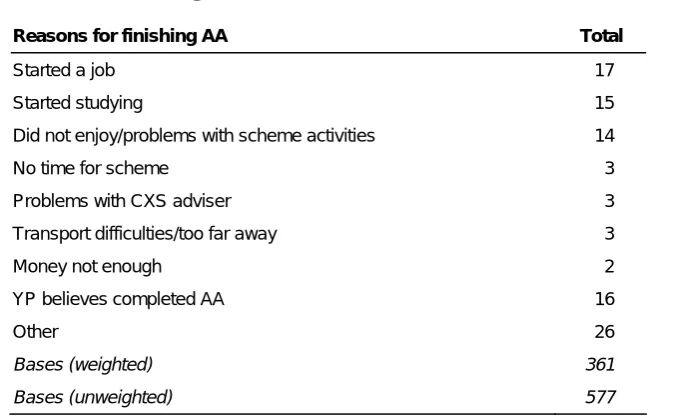
In the survey, one-third said they left to start a job or start studying (although the management information available to the pilots indicated that around a half of early
leavers left to a positive (ie in employment, education or training – EET) outcome). Almost a quarter left for what could be seen as negative reasons – such as not enjoying the activities, having problems etc. One in six said they left because they thought the programme had been completed.
Participants’ outcomes are more fully discussed in Chapter 5.
1
4 What did the young people do while on the programme?
Once they started the agreement, young people engaged in a range of activities. In this chapter we examine what young people did while on the programme and whether there was sufficient provision for them. We also look at the process of paying of the allowance and what happened if payments were withdrawn if young people did not stick to their agreement.
4.1 Activities
In their early meetings, the young people and their PA would develop a plan for the activities in which they would engage – a plan which would generally evolve during the course of the agreement.
While one pilot area operated a ‘cohort approach’ in which groups of young people started a fairly prescribed programme of group activities and individual learning packages on a form of ‘roll on roll off’ basis, all the others developed individual programmes unique to the young person.
A mix of menu-centred and young person-centred approaches was used to develop the individual programmes. Some areas tended to use a list, calendar or diary of activities with young people to prompt their choices, however they would try to source off-menu provision if the young person wanted it, while others tried to avoid starting with a list of options and tried to get young people to take the initiative.
The pilots found, or created, an impressively wide range of provision variously intended to enhance the confidence, motivation or ability of the young participants, particularly those who did not have a clear idea about their future goals and who could try out various different areas of work or learning through taster-style provision.
While there was no ‘typical’ package of activities, in addition to initial engagement
activities and meetings with advisers, subsequent activities tended to fall into one of three main types:
■ personal development activities
■ skill development activities
■ employability and work-related activities.
4.1.1 Engagement activities
The Personal Adviser played an important ‘broker’ role between the provision of activities and meeting the needs and aspirations of young people. Young people valued the support from their advisers and the opportunity to negotiate what activities they did, rather than being told what to do. In some cases these meetings were used for planning events and identifying future activities, and in others they were more activities in their own right, eg discussing the young person’s strengths and weaknesses, developing CVs, identifying potential career options or possible pathways.
How often did they meet their PA?
The survey found that 80 per cent of young people1 met their PA at least once a week a of those 71 per cent had further telephone contact at least once a week. On the other hand 13 per cent met at least monthly, ie less frequently than weekly, and five per cent only met their adviser less than once a month. Meetings lasted an average of 53 minutes. One in five participants would have liked more time with their adviser, particularly those who only met their adviser monthly.
nd
Young people thought the meetings with their adviser were helpful – in the survey of participants 63 per cent said they were very helpful and a further 29 per cent thought them fairly helpful.
Personal development activities
Many of the young people involved in the pilots had personal issues which were either a result of, or a cause of, the position in which they had found themselves. Many lacked confidence in themselves and in the support agencies that could help them, so the AA PAs’ initial task was often to redress this issue. In some cases, the Activity Agreement provided the young person with the motivation to start engaging in constructive activities that, in turn, helped them build their confidence. In other cases, the young person needed more specific confidence-building support. Other personal development activities which were provided included: personal hygiene and fitness; anger management; outward-bound and sporting activities.
According to the participant survey, 65 per cent of young people said that they had taken part in some form of personal development activity. This may under-estimate the
proportion, for example if the respondents did not recognise the activities in which they took part as ‘developmental’, eg outward-bound type provision or comedy workshops.
Four out of five (79 per cent) survey respondents who described doing some sort of personal development activity in the follow-up survey rated it as helpful (with 39 per cent saying it was very helpful). A further group of respondents also described taking part in some form of sporting or outward bound activity and only 46 per cent thought these were helpful (including 29 per cent who felt them very helpful).
1
Skill development activities
A further set of activities were more vocationally oriented, often with the aim of developing the young person’s skill set and ability to get a job.
There was widespread demand for basic skills provision, although in some areas it was difficult to find suitable venues or providers which would meet individual needs.
Learning point: in one pilot area, the Connexions partnership had staff available to carry out basic
skills assessments for AA entrants. Young people were usually referred by their AA PA after they had been on their AA for about three to four weeks. This provided sufficient time for the AA PA to identify the young person’s needs and for the young person to have developed some self-confidence as a result of working with their AA PA for a short time. An interactive IT package was used to test the young person’s level and aptitude and a PA sat alongside the young person to dispel the notion of ‘testing’. However, while this had proved to be a highly effective strategy for identifying young people’s needs, in terms of literacy and numeracy support, there was a lack of suitable provision and generally short courses in basic skills need to be more readily available to this client group.
Young people’s reluctance to attend college courses was largely attributable to negative school experiences and it had proved difficult to find provision which offered young people one-to-one support or small group teaching within community settings. In addition, while there was a ready supply of basic skills/Skills for Life provision in the area, it was targeted at young people in full-time learning or on government supported training provision, or young people over the age of 18 years of age.
Around 85 per cent of young people who described undertaking some form of basic skills training in the participants survey thought it was helpful (with 48 per cent saying it was very helpful).
There was also considerable demand for construction skills training from young people. Other examples of vocational skill development included: motor vehicle technology, driving test theory, music technology, nail art, fork lift truck driving instruction, foreign languages and swimming coaching/life guard training.
Employability and work-related activities
The third set of activities focused on giving the young person one or more of:
■ a taste of what it was like to do a particular job/occupation
■ experience of a work environment
■ the basic health and safety or other knowledge they would need at work.
Work taster and/or work experience programmes were very popular with young people, but were often hard to resource. In some cases, placements were sourced and vetted by AA PAs, while in other pilot areas the responsibility for managing work experience placements was outsourced to a third party.
was agreed that young people’s volunteering activity as part of AA should be classified as ‘volunteering opportunities’ rather than ‘volunteering’, in order to make a distinction
between paid and unpaid activities. Other work and employability related activities included: work taster courses and work experience; job seeking skills courses.
Almost three-quarters of young people took part in some form of job-related activities. Work experience placements were highly rated by AA participants in the survey with 86 per cent saying they were helpful (including 58 per cent who said they were very helpful).
4.2 Was there sufficient provision?
While AA PAs sometimes delivered job readiness provision, such as preparation of CVs and job-seeking courses either on a one-to-one basis or with groups of young people, the majority of provision was ‘bought in’ from a wide range of providers. In some cases, places for young people on AAs were purchased on existing training programmes, in particular E2E and pre E2E courses.
Provision was purchased from a wide range of private, voluntary and public sector agencies. There were many examples where AA PAs had researched and negotiated individual programmes of learning for young people. In other cases, AA PAs had worked together, sometimes within and between local authority areas, to start courses for groups of young people where a shared need for a specific course had been identified, and where group provision was needed in order to make the programme of learning viable, such as in construction skills. However, difficulties were encountered in securing provision for some young people who were unwilling to leave their immediate area (not just in rural districts), which derived from transport difficulties and/or confidence issues.
Nine out of ten young people in the survey were happy with their choice of activities. However, some gaps in provision were identified. The most consistently identified gap was a lack of work experience placements. This was a particular issue for work-focused young people (in particular if they wanted to do some work-based training). Other
consistently reported gaps included the provision of basic skills courses (sometimes due to the lack of engagement with the programme among local further education colleges).
Short construction courses were also in short supply. This was attributed to cost and to providers of construction skills in many pilot areas being colleges, which were inflexible towards offering short roll-on roll-off courses. In some cases, this was resolved through AA PAs working across local authority areas to purchase shared provision. Discretionary funds were used to buy young people clothes and equipment and to buy Site Safety Cards, so that health and safety requirements could be fulfilled.
However it is not clear whether the lack of a particular activity materially affected young people’s experience of the AA. This was often because Advisers looked for alternative and related activities that would deliver a similar skill-set or contribute to the young person’s goal in some respect.
4.3 Who did what?
mind – others started off without any clear goals at all. While the least focused of all sometimes did not travel beyond meeting with their adviser, most young people tended to follow one of four broad paths:
■ Those who followed an incremental pathway towards an agreed work or learning outcome. These were generally young people who had a work or learning focus at the start of their AA (although they might not necessarily have a very specific objective within that aim, at the start).
■ Those who were more ‘scattergun’ in their approach, with the young person trying out lots of different activities in order to form a clearer idea of what they wanted to do. This was most common among those who had no clear focus at the start of their AA. Often these maps began to crystallise into a more coherent set of activities, from around 10-12 weeks onwards, as a clearer work or learning goal emerged, but sometimes they did not.
■ Those who started off with a burst of activities (usually related to a specific course or jobsearch activity) and then appeared to ‘tail off’ into few activities bar Adviser
meetings and jobsearch activities, such as looking at vacancies and sending off CVs. This was more common among those who were set on finding a job and it could be difficult to keep some of these young people engaged if they would not consider doing any other types of activity.
■ And finally, those who took several weeks to get started on activities other than the regular Adviser meetings. Often these were young people who had severe problems with self-confidence and self-esteem, who Advisers were concerned about in terms of their general level of engagement with the AA itself, and/or who faced multiple barriers to progression.
How long did young people spend on activities each week?
The length of individual course provision varied widely, from one day courses, residential courses, work experience placements (which may have lasted several days or be
completed over several weeks), to programmes of learning which required a young person to attend one day each week over block periods of time.
The overall time spent on activities each week seemed to vary. The process evaluation interviews indicated that the time spent on activities gradually built up during the course of the programme, from one or two hours in the first week up to 20 hours a week or more. In practice PAs reported that young people involvement generally levelled off at around 10 to 15 hours per week.
4.4 What was the role of the Discretionary Fund?
The Discretionary Fund (DF) was intended to complement existing funding streams and fill gaps in provision and services. It was also intended to help young people buy the goods or services that moved them closer to learning or work and help them to overcome the final barriers to engagement. Typical purchases (which were undertaken by the PA on behalf of the young person) included travel passes, work clothes, books or equipment.
person. Young people in turn appreciated that they could get help with work or course related equipment they may need. Overall young people had a sound, if not detailed, understanding of the DF.
When examined in a focused study as part of the programme theory element of the evaluation, we found that the DF was occasionally used to buy in new provision or courses tailored to the needs of individual young people. This was a reflection on how comprehensive the ‘menu of choice’ already was in the areas studies. All Advisers felt that it was an important part of the programme as it allowed young people with very specific or unusual career goals to benefit from the AA.
In one area Advisers felt that there could be more flexibility in the ceiling of the DF as some young people did not need any money spent either on bespoke courses or
equipment. Their ‘budget’ could be offset for equipment or provision for young people who needed more financial support.
Spending the DF was not taken lightly by either young people or Advisers. Advisers expected the young people to prove that they deserved the money spent on them and young people were aware that there were limitations to what could be spent on them through the DF.
Overall the results of the evaluation indicated that the DF helped to remove specific or immediate barriers for the young people so they could progress.
4.5 How did the payment systems work?
In return for signing and keeping the terms of an agreement, young people received a weekly allowance. One in five young people in the survey who said they were part of an agreement (and reported doing activities and meeting advisers etc.) said they did not get a weekly payment1. Three out of five of these said they were ineligible because they received benefits or for other reasons (the other two-fifths said that allowances had been stopped because of problems doing the activities or for no clear reasons).
While many pilot areas reported initial concerns over setting up payment systems, the process evaluation found that these had worked extremely well as the pilot progressed. Payment systems had become established and were felt to be efficient and effective because they had been both developed and managed at a local level. This enabled staff to respond quickly to young people’s needs, in particular with regard to both activating and withdrawing payments. The absence of requirements for either household income
assessments or differential payments rates within AAs had assisted the operation and efficiency of local payment systems. In some cases the difficulty setting up bank accounts for young people meant that initial payments had to be made in cash.
1
Learning point: some respondents expressed concern about any shift towards a national payment
system, similar to that which exists for Education Maintenance Allowances (EMA). It was felt that any national payment provider would lack the flexibility and responsiveness which is needed for young people in the AA client group. In addition, it was argued that any issues or delays related to making payments would take much longer to address and would inevitably result in some young people leaving the programme.
What happens when payments are withdrawn?
Part of the AA PA’s role was to instigate the weekly payments and, if terms and conditions in the agreement had not been met, they also had the authority to withhold payment. The survey among the young people who said they received payments, suggested that one-third had weeks when they did not receive any payments, mainly because they had failed to comply with their side of the agreement.
At the outset of the pilot programme, concerns were expressed about the ways in which this responsibility may adversely affect a PA’s relationship with young people. The
traditional role of a PA is essentially to act as an advocate for the young person and it was felt that having the power to withdraw payments would threaten this role. However, AA PAs had successfully executed this responsibility without reporting any adverse effects on their relationships with young people, through effective communication between AA PAs and AA recipients. At the early stages of the programme, when an agreement was signed, young people were made aware of their rights and responsibilities within the programme, reinforced on an on-going basis through the weekly contact that the young person had with their AA PA. Connexions staff felt that there was a need for clarity and consistency in the ways in which AA payments were made, to ensure that their relationship with young people was maintained and that the programme retained credibility.
Where did the money go?
Young people spent their allowance on