Research and Information Service
Research Paper
September 2011
Caroline Perry
Sharing and collaborating in
education
NIAR 399-11
This paper considers a number of issues around sharing and collaborating in
education. It finds that while attitudes to shared education are largely positive, there
Key Points
Northern Ireland’s complex education system, falling rolls, surplus school places and a challenging financial settlement for education are factors that have been highlighted as suggesting a need for greater sharing and collaboration;
Recent research indicates that a majority of people in NI have largely positive attitudes to sharing in education, although the greatest support is for less comprehensive approaches to sharing;
The Department of Education (the Department) has a statutory duty to facilitate and encourage integrated education (specifically “the education together at school
of Protestant and Roman Catholic pupils”) and Irish-medium education, together with duties to support parental choice;
The Bain Review in 2006 called for increased sharing and collaboration,
rationalisation of the schools estate and an area-based approach to planning the schools estate, noting that the key issue for school sustainability must be the quality of education provided;
The Department adopted many of Bain’s recommendations, and published a policy setting out minimum enrolment thresholds and criteria against which school
sustainability could be assessed;
However, area-based planning was linked to the establishment of the Education and Skills Authority, and has not been fully implemented in practice;
Research suggests that a majority of schools in NI have engaged in some form of collaboration with other schools, although it is likely that this is largely ‘embryonic’ in nature;
A number of potential benefits of sharing in education have been suggested, including improved educational opportunities for pupils, increased professional development for teachers and economies of scale for schools;
However, a range of challenges can discourage schools from collaborating, including the competitive environment, collaborating across management types, policy uncertainty and logistical and financial factors;
A reluctance among schools to collaborate with those of a different religious denomination raises questions around sharing between schools of different management types in practice; and
NIAR 399-11 Sharing and Collaborating in Education
Executive Summary
Introduction
A range of contextual factors have led to calls in recent years for greater sharing in education in Northern Ireland, including the complexity of the education system (with a range of school management types essentially on a denominational basis), a
decreasing school age population leading to falling rolls and a challenging financial settlement for education.
Research indicates that many people in Northern Ireland have largely positive attitudes towards sharing in education. For example, 91% of respondents in a recent survey stated that they would support schools sharing facilities or partnering and collaborating across religious traditions; however, the greatest support was found to be for less comprehensive approaches to sharing. This paper considers a number of issues around sharing and collaborating in education.
Policy and legislative context
The Department of Education (the Department) has a statutory duty to facilitate and encourage integrated education, specifically “the education together at school of
Protestant and Roman Catholic pupils.” It also has duties to facilitate Irish-medium education and to support parental choice. In addition, the Department anticipates that post-primary schools will not be able to deliver the Entitlement Framework without collaborating with other educational institutions.
The Bain Strategic Review of Education in 2006 found that there were 53,000 surplus places in our schools, and called for rationalisation of the schools estate, increased sharing and area-based planning. Data provided by the Department indicates that there are currently 84,605 vacant places in schools here. The Review stated that the key issue for school sustainability must be the quality of education provided, indicating that small schools can often be less well equipped to offer a comprehensive curriculum. It also noted that small schools cost significantly more than their larger counterparts. The Department adopted a number of recommendations from the Bain Review in its policy on sustainable schools, setting out minimum enrolment thresholds and a range of criteria against which school sustainability can be assessed. However, the proposed area-based planning approach had been linked to the establishment of the Education and Skills Authority (ESA), and has not been fully implemented. The Department states that it is seeking to “implement the „spirit‟ of an area-based approach to planning.” Approaches to sharing and collaborating
NIAR 399-11 Sharing and Collaborating in Education
Northern Ireland Assembly, Research and Information Service 4
curriculum facilities, joint purchasing of equipment and shared delivery of the
curriculum.However, it should be noted that existing collaborations are thought to be largely ‘embryonic’ in nature, and that wider research suggests that increasingly formal collaborations can bring more lasting improvements to schools.
Models of sharing between schools are complex and tend to vary on a case-by-case basis. However, broadly, they range from informal ‘confederations’ which effectively act as a pool of expertise, to federations: a more formal approach whereby two or more schools combine to form a single school with one governing body.
A Sharing Education Programme was established in 2007 by Queen’s University Belfast and replicated elsewhere by the Fermanagh Trust and the North Eastern Education and Library Board from 2009. One of the aims of the programme is to develop transferable models of school collaboration which cut across the
denominational divide. The findings of initial evaluations of the programme were largely positive; however the findings of a current evaluation are likely to provide a better picture of the longer-term outcomes.
Benefits and challenges of sharing and collaboration
The evidence highlights a range of potential benefits for pupils, teachers and schools involved in sharing and collaboration. An enhanced educational experience for pupils, improved opportunities for training and professional development for teachers and economic advantages for schools are thought to be among the key benefits.
However, a number of challenges are also evident that can play a role in discouraging schools from collaborating with others. These include:
Competitive environment: in an environment where school funding is broadly calculated based on pupil numbers, schools may feel that they have to compete for pupils and be less inclined to collaborate;
Collaboration across different management types: research suggests that schools here can be reluctant to collaborate with schools of a different religious denomination, and particularly with schools that have a different approach to academic selection;
School ethos and culture: the ethos and culture of schools can play an important role in the success of a partnership;
Policy uncertainty: a current lack of clarity around the future of academic selection and potential school closures may be having an impact on schools’ willingness to share; and
The reluctance of many schools to collaborate with schools of a different religious denomination raises questions around sharing and collaborating between different school management types in practice. The role of the churches in integrated education may be of interest in this regard, particularly in terms of the approach of integrated schools to establishing and reflecting a religious ethos.
A recent study has shown that churches here tend to prioritise the protection of existing schools in which they have governance over involvement in the development of
integrated education. The study found that in some cases, clergy have actively
discouraged parents from sending their children to integrated schools, while in others; their level of support was described as conditional on integrated schools not impacting on the schools in which they have an interest.
Conclusion
Departmental policy, falling rolls and other questions around school sustainability and efficiency are likely to require increasing numbers of schools to explore ways of sharing and collaborating. The evidence suggests that while sharing in education may have the potential to promote community cohesion and achieve economies of scale; educational opportunities for children and young people should be central to any decision to collaborate.
While attitudes towards shared education are largely positive, there is a range of challenges that can discourage schools from sharing and collaborating in practice. In light of these findings, areas for consideration could include:
How schools might be encouraged to undertake more collaboration, including funding approaches and incentives, external support in establishing and maintaining initiatives and the role of the churches; and
Contents
Key Points ... 1
Executive Summary... 3
Contents 1 Introduction... 9
2 Public attitudes to shared education ... 9
3 Legislative context ... 10
4 School sustainability and rationalisation ... 11
5 Approaches to sharing and collaboration ... 15
6 Benefits of sharing and collaboration ... 20
7 Challenges for sharing and collaboration ... 22
8 The role of the churches ... 25
1
Introduction
Northern Ireland’s education system is complex, comprising a range of school management types and a number of official bodies managing and administering schools. A choice of schools is available essentially on a denominational basis, which can make matching supply with demand more difficult compared to a spatially
organised system. Deloitte indicates that this situation is compounded by academic selection and by single-sex schools which further expand the range of school types, and by the largely rural distribution of the population resulting in large numbers of small schools.1
In addition, many schools here are experiencing falling rolls as the school age
population declines, and the education sector as a whole faces a challenging financial settlement over the coming years. These factors, among others, have been cited as suggesting a need for greater sharing and collaboration in education.2 Oxford Economics provides a definition of shared education as:
“An approach to education where schools and teachers deliver education services to local communities in a collaborative and joined-up manner to ensure inclusion and efficient service delivery.”3
This Research Paper provides an overview of some of the key issues around sharing and collaboration in education, including public attitudes to shared education;
legislation and policy; school sustainability; approaches to collaborating in education; its benefits and challenges; and the role of the churches.
2
Public attitudes to shared education
A recent survey by Ipsos Mori of 1,007 adults in Northern Ireland found mostly positive attitudes towards sharing in education. The survey found that 91% of respondents in NI support schools sharing facilities and partnering or collaborating across different
religious traditions.4 This level of support is reflected in the Bain Review, which notes that submissions to the Review demonstrated a strong commitment to the concept of integrating education and to sharing and collaboration.5
While there was overall support in the Ipsos Mori survey (over 80%) for all levels of sharing between schools specified in the survey, the greatest support was for sharing education at a more minimal level. For example, 95% of respondents favoured sharing facilities for one-off projects; 90% supported sharing teachers and facilities at post-primary level and 88% supported integrated schools.
1
Deloitte (2007) Research into the financial cost of the Northern Ireland divide Belfast: Deloitte 2
NIAR 399-11 Sharing and Collaborating in Education
Northern Ireland Assembly, Research and Information Service 10
Support for sharing in education was found to be significantly higher among Catholics (93%) than Protestants (89%). With regard to mixed schooling, the key overall findings included:
81% of respondents believed that government should encourage more mixed schooling;
Support for encouraging more mixed schooling has increased significantly since 2001 (from 73% to 81%); and
There is greater support for encouraging more mixed schooling among Catholics (83%) than Protestants (77%).
In terms of fully integrated education, the Ipsos Mori survey found that over two-thirds would support a parental request to transform their children’s school to integrated status. It also found high levels of agreement that integrated education is important for promoting a shared future, mutual respect and peace and reconciliation.6
3
Legislative context
Parental choice
The Education (Northern Ireland) Order 1997 underpins parents’ rights to express a preference for the type of education their children avail of; however this right is not absolute. Under open enrolment, the Board of Governors is required to admit all pupils whose parents have expressed a preference for their children to be educated at the school, but only where the number of applicants does not exceed the schools’ approved admissions number.7
Integrated and Irish-medium education
The Department of Education (The Department) has a legislative duty to encourage and facilitate integrated education under the Education Reform (Northern Ireland) Order 1989, specifically „the education together at school of Protestant and Roman
Catholic pupils‟.8 Under the Education (Northern Ireland) Order 1998, the Department also has a statutory duty to encourage and facilitate the development of Irish-medium education.
The Entitlement Framework
The Education (Northern Ireland) Order 2006 provides the broad legislative context for a number of reforms, including the Entitlement Framework. This aims to provide pupils
6
Ipsos Mori (2011) Attitudinal Survey on Integrated Education Ipsos Mori 7
Pupil admissions [online] Available at: http://www.deni.gov.uk/index/85-schools/5-school-management/79- school_governors_pg/schools_79_governor-roles-and-responsibilities_pg/schools_79_chapter-10-pupil-admissions_pg.htm#compliance-with-parental-preference_alink
8
The Education Reform (Northern Ireland) Order 1989 [online] Available at:
aged 14 and over with greater choice and flexibility in the learning options available to them. The Department anticipates that it is unlikely that many schools will be available to provide the Entitlement Framework alone, and will need to collaborate with other schools and providers to do this.9
Article 21 of the Education (Northern Ireland) Order 2006 states that Boards of
Governors of grant-aided schools may enter into arrangements to secure the provision of secondary education with another grant-aided school, a Further Education institution or any other person or body approved by the Department.
Shared Board of Governors across two or more schools
The Education and Libraries (Northern Ireland) Order 1986 states the following under Article 10 in relation to Boards of Governors of controlled primary schools:10
“Two or more controlled primary schools, other than controlled integrated primary schools or nursery schools, under the management of a board may, if the board so determines and the Department approves, be grouped under one Board of Governors.”
With regard to the management of voluntary schools, Article 11 of the Order states:
“Two or more maintained primary schools, other than nursery schools, may be grouped under one Board of Governors where the trustees or Board of Governors of each school so requests and—
(a)in the case of Catholic maintained schools, the Council for Catholic
Maintained Schools, with the approval of the Department, so determines; and
(b)in the case of other maintained schools, the board, with the approval of the Department, so determines.
4
School sustainability and rationalisation
In 2006, the Bain Strategic Review of Education11 found that there were 53,000 vacant school places in Northern Ireland, and stated that while some surplus capacity is required in order to support parental choice and allow for demographic change, that the level of vacant places was disproportionate. Current data from the Department shows that there are 84,605 vacant places in schools here.12
9
Entitlement Framework [online] Available at: http://www.deni.gov.uk/index/80-curriculum-and-assessment/108-entitlement-framework.htm
10
The Education and Libraries (Northern Ireland) Order 1986 [online] Available at: http://www.legislation.gov.uk/nisi/1986/594
11
Bain, G. (2006) Schools for the Future: Funding, Strategy, Sharing Bangor: Department of Education 12
NIAR 399-11 Sharing and Collaborating in Education
Northern Ireland Assembly, Research and Information Service 12
The Review called for rationalisation of the schools estate and a more coherent approach to planning, as well as for improved sharing and collaboration between schools in order to support more efficient use of resources. However, it noted that the key issue for sustainability must be the quality of the education provided.
Impact of school size on curriculum delivery
The Bain Review asserts that school sustainability is about the quality of the educational experience provided to children and the value for money that that experience represents. It states that educationalists have long argued that larger schools are more effective than smaller schools as they tend to be better equipped to offer a comprehensive curriculum with more specialised teaching, and can do so at a lower cost per pupil.13 Nonetheless, other research highlights school ethos and provision for pastoral care as particular strengths of many smaller schools.14
Guidance from the Department notes that small schools may have greater difficulties in delivering a broad and balanced curriculum and providing extra-curricular activities, particularly in schools with fewer than four teachers (one of whom will be a teaching principal) and where there are composite classes. It suggests that there may also be fewer opportunities for pupils to work alongside peers.15 Particular difficulties for small schools can include:16
The demands of preparing a differentiated programme for classes with mixed age groups;
Difficulties in securing substitute cover for teachers;
Higher administrative burden on teachers leaving them less time for the preparation of lessons;
Difficulties in recruiting and retaining principals; and
Financial pressures and uncertainty.
Funding implications
Northern Ireland has 1,219 schools17, and a relatively large proportion of these are small schools. Under the Local Management of Schools (LMS), the level of funding schools receive is mainly determined by pupil numbers. This can present a challenge for schools with declining pupil enrolments.
13
Bain, G. (2006) Schools for the Future: Funding, Strategy, Sharing Bangor: Department of Education 14
Rural Development Council (2008) Striking the Balance: Toward a Vision and Principles for Education in Rural Northern Ireland: A Rural Proofing Study
15
Department of Education (2009) Schools for the Future: A Policy for Sustainable Schools Bangor: DE 16
Bain, G. (2006) Schools for the Future: Funding, Strategy, Sharing Bangor: Department of Education 17
Northern Ireland summary data [online] Available at: http://www.deni.gov.uk/index/32-statisticsandresearch_pg/32-
In addition, schools with low pupil numbers are less efficient than their larger
counterparts, and require additional financial support for curriculum delivery, mainly provided through the Small Schools Support Factor. This also provides release time from classroom duties for teaching principals in small primary schools to undertake management responsibilities.
Guidance from the Department shows that schools with 60 or fewer pupils cost 41% more per pupil than average.18 Indeed, there are 326 primary schools (37% of all primary schools) in NI which have 100 pupils or fewer, in which each pupil is costing £604 per year more than the average cost for all primary schools.19 In the post-primary sector, there are 107 schools (47% of all post-primary schools) with fewer than 600 pupils where each pupil is costing £124 more than the average cost for all post-primary schools.20
Department of Education policy
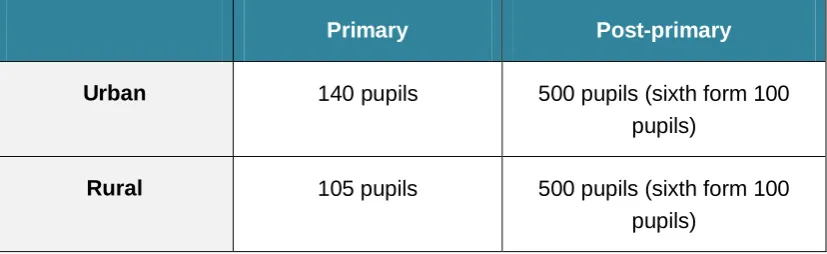
[image:15.595.96.510.405.532.2]The Department of Education adopted a number of recommendations from the Bain Review in its policy for sustainable schools, particularly around minimum enrolment requirements and other criteria for schools to be considered sustainable. The minimum enrolment numbers are outlined in Table 1.21
Table 1: Minimum enrolment thresholds
Primary Post-primary
Urban 140 pupils 500pupils (sixth form 100 pupils)
Rural 105pupils 500pupils (sixth form 100 pupils)
The sustainable schools policy also highlights a number of indicators covering factors such as enrolment trends and the quality of education that provide a framework for assessing a school’s sustainability. The aim of this is to provide a view of how
effectively a school is functioning and of the range of factors affecting its performance. The policy notes that the criteria are inter-related, for example, poor educational performance may lead to reduced school intake numbers, causing financial pressures and other problems. The criteria are as follows:22
Quality educational experience: are there indicators that the school will not be able to provide a broad and balanced educational experience?
18
Department of Education (2009) Schools for the Future: A Policy for Sustainable Schools Bangor: DE 19
NIAR 399-11 Sharing and Collaborating in Education
Northern Ireland Assembly, Research and Information Service 14
Stable enrolment trends: is the enrolment stable or decreasing year on year?
Sound financial position: is the schools expected to sustain financial viability or will it have an ongoing budget deficit?
Strong leadership and management by Boards of Governors and
Principals: is there evidence of strong leadership and effective management?
Accessibility: is the distance to school and the travel time for pupils
reasonable; in the absence of a suitable alternative in the local area should the school be retained?
Strong links with the community: are the links and relationships with parents and the local community strong?
The guidance notes that schools are considered on a case-by-case basis, taking into account the levels of social disadvantage, how the school compares to others of similar characteristics and any particular circumstances. No weightings or formulae are
applied to the criteria and indicators. It also states that the criteria do not determine whether a school should automatically be considered for closure or amalgamation; rather they provide an indication of whether action is required to address an emerging trend.23
Area-based planning
The Bain Review set out a number of weaknesses in arrangements for planning the schools estate, describing a lack of coordination and consistency, a lack of robust and consistent information on the condition of the schools estate and differences between sectors regarding how planning and development matters are resourced. In light of this, it recommended the introduction of area-based planning in order to take account of the overall projected need for provision in an area.24
The Department’s policy on sustainable schools stated that area-based planning would be rolled out in 2008, and that its aim was to anticipate the educational needs in an area and plan to meet the needs effectively through an estate of sustainable facilities.25 However, area-based planning was intended to come into effect with the establishment of the Education and Skills Authority (ESA), and as the ESA has not been established, full area planning has not happened in practice. Rather, a response from the
Department indicates that it is looking to “implement the „spirit‟ of an area-based
approach to planning, taking account of the local context.”26
23
Department of Education (2009) Schools for the Future: A Policy for Sustainable Schools Bangor: DE 24
Bain, G. (2006) Schools for the Future: Funding, Strategy, Sharing Bangor: Department of Education 25
Department of Education (2009) Schools for the Future: A Policy for Sustainable Schools Bangor: DE 26
5
Approaches to sharing and collaboration
Types of sharing and collaboration in place
Research from Queen’s University Belfast in 2008 found that 88% of post-primary schools in Northern Ireland (responding to a survey) have engaged in some form of collaboration with another educational institution. It notes that while this collaborative work is ‘embryonic’, the work schools are doing in terms of collaboration should help to form the necessary basis for longer-term, more substantive collaborations. The
research highlights the areas where schools are already collaborating or plan to collaborate, including:27
Collaboration as part of a learning partnership (61% of schools responding to the survey);
Delivery of the curriculum (59% of schools);
Pupils taking GCSE or A level subjects in another school (55% of schools);
Shared staff development activities (48% of schools); and
Cultural activities (44% of schools).
The wider literature notes that professional development and information sharing tend to be central activities in most collaborations, with many schools also working together on joint planning and school development activities and sharing staff.28
Schools also often collaborate through the sharing of facilities, for example sharing curriculum facilities (such as sports grounds), through the creation of joint facilities (such as a community meeting facility for two schools of different faith backgrounds) and the joint purchasing of equipment (for example, IT equipment).29
Extent and depth of collaboration
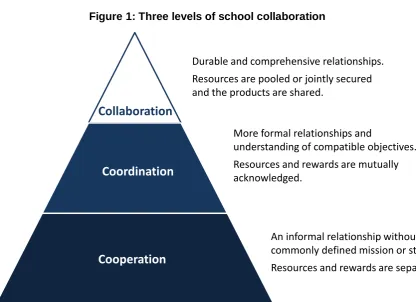
A number of authors have highlighted the complex and varied nature of collaborative arrangements, noting that they can be difficult to classify. The level of formality or the extent and depth of a collaboration between schools can provide a useful way of considering different approaches to shared education. Shinners30 sets out three levels of collaboration, as illustrated in Figure 1.
27
School of Education (2008) School Collaboration in Northern Ireland: Opportunities for Reconciliation? School of Education, Queen’s University Belfast
28
NIAR 399-11 Sharing and Collaborating in Education
[image:18.595.104.521.64.366.2]Northern Ireland Assembly, Research and Information Service 16
Figure 1: Three levels of school collaboration
Research suggests that while informal collaborations can be beneficial for schools, providing networks, the sharing of expertise and arranging joint pupil activities, they can also have disadvantages. These include:31
Key players move on and may not be replaced;
Development priorities may change;
They can lack permanence; and
There may be added pressure on a small staff team.
In regard to formal collaborations, Harris and Todman suggest that they are more likely to bring lasting improvements to schools. They note that the potential benefits of more formal collaborations include: increased long-term viability of the school; improvements in the quality of leadership and management; and broader and richer curriculum
experiences for pupils.32
Models of sharing and collaboration
Although models of inter-school collaboration are complex and tend to vary on a case-by-case basis, the literature highlights a range of broad models that schools can adopt. As outlined in the previous figure, these models each vary in the extent and depth of
31
Harris, J. and Todman, P. (2009) Better Together: Models of collaboration for small schools Nottingham: DCSF 32
Harris, J. and Todman, P. (2009) Better Together: Models of collaboration for small schools Nottingham: DCSF
Collaboration
Coordination
Cooperation
An informal relationship without commonly defined mission or structure. Resources and rewards are separate. More formal relationships and
understanding of compatible objectives. Resources and rewards are mutually acknowledged.
Durable and comprehensive relationships.
Resources are pooled or jointly secured and the products are shared.
collaboration in place. In addition, partnerships between schools may evolve over time, increasing the formality of the relationship.
Figure 2 illustrates a number of potential models for sharing and collaborating between schools, as described in the Bain Review. They range from an informal confederation, to a formal amalgamation of two or more schools through to a radical transition to a predominantly single and integrated schools sector. The following paragraphs consider these models in greater detail.33
Figure 2: Examples of options for sharing and collaboration
Confederation: In effect a pool of expertise, schools in an area work in partnership, sharing pupils or staff, while retaining their principal and governors. Pupils may be taught together for certain subjects, teachers may teach in more than one school and specialist facilities may be used by all the schools.
Co-location: Schools located within a short distance of each other collaborate. Each
retains its ethos and identity, and this model can be particularly useful for cross-phase collaboration (primary and post-primary), as well as across sectors.
Shared campus: Two or more schools share infrastructure, but retain their autonomy. The Lisanelly site at Omagh is proposed as a shared educational campus where controlled and maintained, grammar and non-grammar schools may be co-located and can collaborate together while still protecting their chosen ethos.34
Federation: A more formal approach whereby two or more schools combine to form a
single school. They are often formed to improve standards, for example through formal collaboration with one or more schools having difficulties. There are different possible models of governance for federations, in particular ‘hard governance:’ a single
governing body is shared by all schools in the federation; and ‘soft governance:’ each
school has its own governing body but the federation has a joint governance committee with delegate powers.35
Amalgamation: A new school replaces two or more schools of a similar size, usually with a new name and uniform.
Confederation Co- Federation
location
Shared
campus Amalgamation
Largely integrated
system
NIAR 399-11 Sharing and Collaborating in Education
Northern Ireland Assembly, Research and Information Service 18
Largely integrated system: A move away from the current multi-sector,
denominational schools system to a more streamlined approach.
The Department’s policy on sustainable schools highlights that as well as achieving savings through different models of sharing; there may also be additional cost, particularly at the outset. The guidance states that a thorough assessment of the options for addressing sustainability must be carried out in each case, and that the appraisal process must comply with the standards set out in the Practical Guide to the Green Book published by the Department of Finance and Personnel.
The Sharing Education Programme
The Department cooperates with the International Fund for Ireland (IFI) in the Sharing Education Programme, (SEP) which is co-funded by Atlantic Philanthropies (AP). The Programme began in 2007 with Queen’s University School of Education working with 12 partnerships collaborating on a cross-community basis to share classes and activities.36 It aims to promote reconciliation by facilitating collaboration and sharing across schools, and to develop transferable models of school collaboration which cut across the denominational divide.37
The promoters of the programme did not prescribe the focus of schools’ activities; rather they asked that partnerships contained sustainable, high quality engagement by young people from different cultural traditions and backgrounds. The models aim to allow schools to retain their distinctive ethos while providing opportunities for pupils to experience diverse teaching and learning contexts.38
The programme has been rolled out for a further three years and has been replicated elsewhere by two other providers: the Fermanagh Trust and the North Eastern
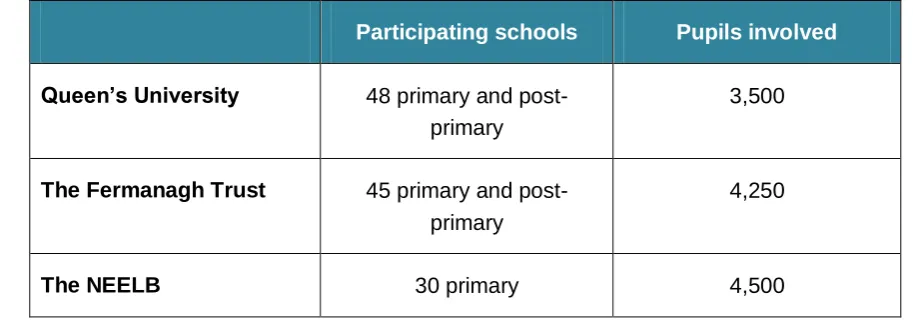
[image:20.595.79.536.550.717.2]Education and Library Board (NEELB) since September 2009. Overall, the Programme represents an investment of over £10.5m (funded by IFI and AP).39
Table 2: Schools and pupils involved in the Sharing Education Programme
Participating schools Pupils involved
Queen’s University 48 primary and post-primary
3,500
The Fermanagh Trust 45 primary and post-primary
4,250
The NEELB 30 primary 4,500
36
Knox, C. (2010) Sharing Education in Northern Ireland: Draft Policy Briefing Jordanstown: University of Ulster 37 FGS (2009) The Sharing Education Programme Consultancy Project: Final Report Belfast: Queen’s University 38 FGS (2009) The Sharing Education Programme Consultancy Project: Final Report Belfast: Queen’s University 39
The model employed by the programme involves partnerships and collaborative links being established, followed by shared classes and activities. Examples of activities include pupils completing GCSE and A-level subjects in cross-community classes, jointly provided and accredited vocational courses and science mentoring classes where primary school children from mixed backgrounds attend science classes in a post-primary school.40
Initial evaluation of the SEP
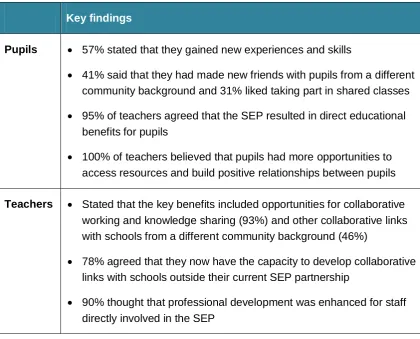
[image:21.595.95.516.313.652.2]In 2009 an initial review of the SEP (Queen’s University programme) was published. A further evaluation was underway at the time of writing on behalf of Queen’s University, the NEELB and the Fermanagh Trust with findings due in October 2011. The initial review involved research with both pupils and teachers: some of the key findings are outlined in Table 3.41
Table 3: Examples of key findings of the initial SEP evaluation
Key findings
Pupils 57% stated that they gained new experiences and skills
41% said that they had made new friends with pupils from a different community background and 31% liked taking part in shared classes 95% of teachers agreed that the SEP resulted in direct educational
benefits for pupils
100% of teachers believed that pupils had more opportunities to access resources and build positive relationships between pupils Teachers Stated that the key benefits included opportunities for collaborative
working and knowledge sharing (93%) and other collaborative links with schools from a different community background (46%)
78% agreed that they now have the capacity to develop collaborative links with schools outside their current SEP partnership
90% thought that professional development was enhanced for staff directly involved in the SEP
The Fermanagh Trust Shared Education Programme
NIAR 399-11 Sharing and Collaborating in Education
Northern Ireland Assembly, Research and Information Service 20
certain educational challenges. It provides small grants to schools to deliver elements of the curriculum jointly with a partner school from a different sector. Key findings of a recent evaluation of the programme include:42
Over 90% of primary schools in Fermanagh participated in the FSEP in 2009-10 (and five post-primary schools);
Cross-community contact has increased for almost all schools from once or twice a term to weekly;
Staff reported significant progress in breaking down barriers and improving relationships between the different sectors; and
There was a strong belief among school staff that the FSEP model has
strengthened curriculum delivery, enhanced educational opportunities for pupils and contributed to improving educational outcomes.
Nonetheless, the schools taking part in the programme reported a range of challenges, including logistics; recruiting and managing additional tutors to help build capacity; accommodation; and achieving a balance in terms of community background.
The longer-term outcomes and implications of the Sharing Education Programme are likely to be better understood through the findings of an evaluation currently underway on behalf of Queen’s University, NEELB and the Fermanagh Trust.
6
Benefits of sharing and collaboration
Many potential benefits of sharing and collaboration between schools are cited in the literature. For example, a report by Oxford Economics suggests that a more strategic, area-based approach to education could help to address community needs more effectively, avoid duplication and unnecessary competition and increase school sustainability. It also suggests that shared education in Northern Ireland has the potential to:43
Deliver ‘more for less’ by sharing resources and assets, amalgamating schools and creating new merged schools;
Deliver long-term savings through lower maintenance costs;
Correct excess capacity in the long-run;
Allow for the sharing of expertise amongst staff; and
Provide students with access to a wider choice of subjects.
Research with teachers and principals in Northern Ireland in 2008 found that they were mostly enthusiastic about the principle of collaboration, particularly around the potential
42
Clarke, A. (2010) Review of the Fermanagh Trust Shared Education Programme Enniskillen: The Fermanagh Trust 43
opportunities for building professional networks and opening up channels of
communication with other schools. Another key advantage noted by participants in the research included the potential for extending learning opportunities for pupils.44 With regard to financial savings, Deloitte has suggested that greater collaboration across the schools sectors and consolidation of the schools estate could result in savings of between £15.9m and £79.6m.45
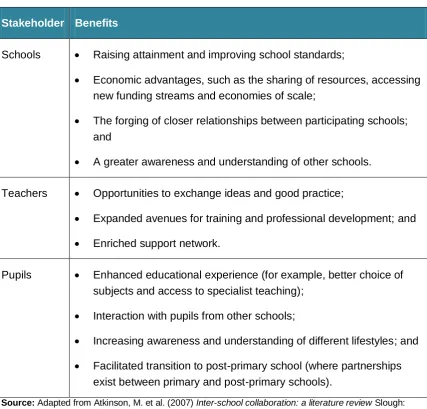
[image:23.595.98.526.260.669.2]These findings and views are broadly supported by the findings of the evaluation of the SEP (Table 3) and in the wider literature (Table 4), which outlines the main benefits from collaboration for different stakeholder groups.
Table 4: Key benefits of sharing and collaboration
Stakeholder Benefits
Schools Raising attainment and improving school standards;
Economic advantages, such as the sharing of resources, accessing new funding streams and economies of scale;
The forging of closer relationships between participating schools; and
A greater awareness and understanding of other schools.
Teachers Opportunities to exchange ideas and good practice;
Expanded avenues for training and professional development; and
Enriched support network.
Pupils Enhanced educational experience (for example, better choice of subjects and access to specialist teaching);
Interaction with pupils from other schools;
Increasing awareness and understanding of different lifestyles; and
Facilitated transition to post-primary school (where partnerships exist between primary and post-primary schools).
Source: Adapted fromAtkinson, M. et al. (2007) Inter-school collaboration: a literature review Slough: NFER
NIAR 399-11 Sharing and Collaborating in Education
Northern Ireland Assembly, Research and Information Service 22
Community cohesion
Recent research with principals and teachers here suggests that the fostering of relationships between the main communities was not thought to be a core policy objective of school collaboration.46
In an evaluation of the SEP, almost 70% of respondents agreed that the programme had encouraged schools to make cross-sectoral collaborations an integral part of school life. When asked whether the programme had achieved its aim of promoting reconciliation by facilitating collaboration and sharing between schools, 56% agreed to a large extent, 34% agreed to a moderate extent and 36% agreed to a small extent.47 These findings suggest that while the SEP has had a positive effect on reconciliation, this was viewed by many respondents as less significant than some other, primarily educational, benefits, as outlined in Table 3.
Nonetheless, a recent survey of public attitudes towards integrated education here found that the vast majority of people believe that integrated education is important for promoting a shared and better future (91%), promoting mutual respect and
understanding (91%) and for peace and reconciliation (90%). Protestants were found to be significantly less positive that integrated education is important in promoting a shared and better future than Catholics.48
7
Challenges for sharing and collaboration
The literature highlights a number of challenges or disincentives schools and
employing authorities may face in regard to sharing and collaboration. These include the following issues, which are considered in the following paragraphs:
Competitive environment;
Collaboration between schools of differing management types;
School ethos and culture;
Policy uncertainty;
Logistical and financial factors; and
External roles.
Competitive environment
School budgets in Northern Ireland are provided through Local Management of Schools (LMS) which uses a funding formula largely based on pupil numbers to
46
School of Education (2008) School Collaboration in Northern Ireland: Opportunities for Reconciliation? School of Education, Queen’s University Belfast
47 FGS (2009) The Sharing Education Programme Consultancy Project: Final Report Belfast: Queen’s University 48
determine the budget of individual schools. As a result, some schools may feel that they have to compete with other schools for pupils, making them less likely to seek to collaborate. In light of this, the Bain Review recommended that incentives should be provided to encourage sharing and collaboration between schools, for example by providing new facilities or financial support for schools that work together.49
Indeed, recent research found that many principals and teachers here believe that there is a tension between competition with other schools and collaboration, noting that a culture whereby individual schools are assessed against certain targets is at odds with sharing and collaborating.50
Collaboration between schools of differing management types
Recent research in Northern Ireland found that schools can be reluctant to share and collaborate with schools of a different religious denomination. Many school leader and teacher participants in the research stated that while they were supportive of the principle of cross-sectoral collaboration, that this approach was impossible for their particular school.51
Many schools participating in the research demonstrated even greater reluctance to collaborate with schools that have a different approach to academic selection. This was particularly the case for non-grammar schools, who believed that a perceived inequality in status and disparities in the academic and social standing between the two sectors made it difficult to collaborate.52
School ethos and culture
The ethos and culture of schools sharing and collaborating can play an important role in the success, or otherwise, of a partnership. Indeed, research from Queen’s
University Belfast found that perceived cultural differences between institutions exerted a defining influence on the way the partnership evolved, and that ‘cultural consistency’ was a concern for those involved in collaboration.53
In particular, principals participating in the research suggested that it was important to ensure that schools were selected carefully in order that pupils would be subject to the same procedures and practices as their own institution.
49
Bain, G. (2006) Schools for the Future: Funding, Strategy, Sharing Bangor: Department of Education 50
School of Education (2008) School Collaboration in Northern Ireland: Opportunities for Reconciliation? School of Education, Queen’s University Belfast
51
School of Education (2008) School Collaboration in Northern Ireland: Opportunities for Reconciliation? School of Education, Queen’s University Belfast
52
NIAR 399-11 Sharing and Collaborating in Education
Northern Ireland Assembly, Research and Information Service 24
Policy uncertainty
Research with principals and teachers in Northern Ireland found that a current lack of clarity about the future of academic selection, and concerns around school closures, had an impact on school collaboration, with many schools unsure about their future.54 Logistical and financial factors
Issues such as timetabling, distance between schools and transport costs have been cited as factors influencing a school’s commitment to collaborative activity. It has been suggested that the availability of funding is a crucial factor in driving collaboration.55 Indeed, research suggests that funding can play an important role in establishing and sustaining sharing in education. A number of participants (43% of teachers surveyed) in the evaluation of the Sharing Education Programme (SEP) suggested that activities undertaken as part of the SEP would ‘probably’ or ‘definitely’ not have happened in the absence of funding. A further 41% indicated that activities would have happened, but not to the same extent.56
This view is supported by Knox, who suggests that the LMS Common Funding Formula should include a financial weighting in favour of cross-community collaboration, and that the Department should incentivise schools tackling sustainability to explore models of collaboration on a cross-community basis.57
External roles
The literature finds that the role of outside agents, such as local authorities, varies. It notes that the roles of local authorities, which may be broadly comparable to the potential role of Education and Library Boards in supporting collaboration, include:
Providing support and advice;
Establishing or initiating collaborations;
Acting as a conduit for information exchange;
Providing funding and resources:
Brokering collaborations;
Facilitation collaborations; and
Providing leadership and management.
54
School of Education (2008) School Collaboration in Northern Ireland: Opportunities for Reconciliation? School of Education, Queen’s University Belfast
55
Atkinson, M. et al. (2007) Inter-school collaboration: a literature review Slough: NFER and School of Education (2008) School Collaboration in Northern Ireland: Opportunities for Reconciliation? School of Education, Queen’s University Belfast
56 FGS (2009) The Sharing Education Programme Consultancy Project: Final Report Belfast: Queen’s University 57
However, it highlights a number of issues around local authority involvement, such as achieving an appropriate balance between the local authority taking a lead and allowing schools to take ownership of the collaboration. A further issue highlighted is around ensuring that local authority staff have the skills to support collaborative working effectively.58
8
The role of the churches
An important area for consideration in relation to increasing sharing in education here relates to the role of the churches and faith in education. As previously discussed in this report, some schools are reluctant to collaborate with schools of other religious denominations. This raises further questions around sharing and collaborating between different school management types in practice. Integrated schools may provide a relevant example in this regard.
The churches and integrated education
A 2009 study into the relationship between the churches and integrated schools in Northern Ireland found that the churches have tended to prioritise the protection of existing schools in which they have governance over involvement in the development of integrated education. It is noted that, in some cases, clergy have sought to
discourage parents from sending their children to integrated schools, while in others, their level of support was described as conditional on integrated schools not impacting on the schools in which they have an interest.59
Nonetheless, the majority of integrated schools in NI regard links with the churches as important, and actively try to encourage them. Such links include pupil visits to
churches, conduct of worship in school and preparation and reception for Roman Catholic sacraments. The majority of integrated schools are visited by clergy at least once per term. Other key findings from this study include:60
The approach of most integrated schools is primarily Christian, but seeks to include people of different faiths as well as those of no religious faith;
The approach to Christian ethos of a particular school is often dependent on the personal views of the principal and staff of the school;
The main ways in which integrated schools reflect their Christian ethos is through Assemblies, the RE Curriculum and promoting values such as respect, tolerance and caring; and
Most integrated schools either have no policy or an open policy on the display of religious symbols.
NIAR 399-11 Sharing and Collaborating in Education
Northern Ireland Assembly, Research and Information Service 26
The study’s author suggests that there is a range of models of good practice in terms of relationships with churches and Christian ethos within integrated schools that other schools could learn from.
9
Conclusion
This paper has explored a number of issues around sharing and collaborating between schools. The evidence suggests that questions around sustainability, together with the Department’s policies for sustainable schools and post-14 education, are likely to mean that increasing numbers of schools will have to explore ways of sharing and
collaborating in order to deliver a broad and balanced curriculum in an efficient manner. While sharing in education may have the potential to promote community cohesion and to achieve savings across the education sector, the evidence indicates that the quality of educational opportunities for children and young people should be central to any moves to share and collaborate. Indeed, educational benefits were viewed as a key outcome by many of those involved in collaborative initiatives.
This paper has also found that while, in general, attitudes in NI towards shared education are positive and the potential benefits are acknowledged, in practice there are a range of difficulties that can have an impact on the willingness and capacity of schools and individuals to collaborate.
In light of these findings, consideration could be given to how schools might be encouraged to undertake more sharing and collaboration. This could include funding approaches, incentives, and external support in establishing and sustaining initiatives. Particular consideration could be given to how to encourage schools of different management types to collaborate, and the role of the churches in this.
Consideration could also be given to area-based planning for the schools estate, and whether interim or other arrangements should be put into place for this to be