International Journal of Innovative Technology and Exploring Engineering (IJITEE) ISSN: 2278-3075, Volume-8 Issue-8 June, 2019
Abstract: In modern days, recommendation system has left a huge impact on the society. It gives personalized list of items or services to its users in a shorter time. When there is a huge number of information, then it needs to be filtered to generate relevant recommendation. There are different filtering techniques used in recommendation system. To optimize its performance some soft computing techniques can also be added along with those filtering techniques. This article gives an overview of evaluation metrics, phases, challenges and how soft computing techniques are merged along with the filtering techniques. This paper also presents some statistical analysis of popularity of various filtering techniques and soft computing techniques used in recommendation system.
Index Terms: challenges and issues, filtering techniques, recommendation system, soft computing.
I. INTRODUCTION
With the advancement of the technology, the number of available choices in a particular domain is really vast. Recommendation system provides a short and informative results or a list of choices to a user. It is helpful where the search space is typically large. A recommendation system is time and energy efficient for the users. In the web, the number of available choice is typically large. To deal with this vast area of knowledge, the information needs to be filtered and prioritized so that any relevant conclusion can be made.Recommendation system generates the list of desired services or items to the users by looking over a huge amount of dynamically generated data [1]. For example, consider the website of Amazon. It deals with lots of products. But still it manages to display a list of items among all to its users, which he may require. Recommendation system plays the role behind the screen here. Recommendation system considers different sources of information to recommend services or items [33].
Revised Manuscript Received on June 05, 2019
Shreyas Das, M.Tech student at KIIT Deemed to be University in the discipline of Computer Science and Engineering.
Bhabani Shankar Prasad Mishra, Associate Professor in School of Computer Engineering at KIIT University, Bhubaneswar, Odisha since 2006 ManojKumarMishra, (BTech) and Postgraduate (MTech) students one and half years of industry experience in Mainframe Technologies. Suresh Moharana, Assistant Professor in School of Computer Engineering at KIIT Deemed to be University.
Subhashree Mishra, Assistant Professor in School of Electronics Engineering at KIIT University, Bhubaneswar since 2013.
Of late, the application domain of recommendation system is huge. It is used in health care, fraud-detection, e-commerce websites, social media, e-learning, tourism services and many more.
Based on the soft computing techniques intelligent machines are designed to provide real-time solutions to intractable problems, which are ambiguous and can‟t be solved mathematically [8]. There are lots of soft computing techniques. In this paper, we have discussed those techniques which are useful for recommendation system.
II. BASICS OF RECOMMENDATION SYSTEM
In this section, we have discussed some basics about recommendation systems.
A. Definition
“A recommender system or a recommendation
system (sometimes replacing "system" with a synonym such as platform or engine) is a subclass of information filtering system that seeks to predict the "rating" or "preference" a user would give to an item [32]”.
B. Performance evaluation of a recommendation system
In order to evaluate how a good a recommendation system is, there are certain metrics. By using those metrics, the overall performance of the recommendation systems is measured. Performance depends on its accuracy, stability, computation time and novelty [33].
Accuracy
In true sense, accuracy of a recommendation system indicates how accurately it recommends items and services to its users. In [34], authors classified the performance evaluation metrics in several ways.
Stability
Stability indicates the consistency of a recommendation system. The process of measuring this factor is basically comparing the recommendations at several intervals of time [38].
Computation time
Computation time of a recommendation time means, how much time it will take for its recommendation. It is the time difference between sending the request to server and getting output [35].
Soft-Computing Based Recommendation
System: A Comparative Study
Novelty
According to [39], a novel recommendation is a type of recommendation which is not seen beforehand. This item must be new and satisfactory from the users‟ perspective. Evaluation metrics
To measure the performance of a recommendation system, there are certain metrics. These are MAE, MSE, RMSE. In case of true binary preferences of users, classification accuracy metrics are used. It deals with the idea of recommending the items for which sufficient ratings are available. Besides all these, there are some other metrics like nDGC [36], Intra-list Similarity [37] which were found to be useful in different studies. Here, we have discussed the basic ideas about this metrics.
MAE (Mean Absolute Error): This metric calculates the
average absolute deviation between the users‟ rating and the predicted rating
MAE = 1
n |xu,i− yu,i|
n
u=1,i=1
(1)
MSE (Mean Squared Error):MSE calculates the average squared deviation between the users‟ rating and the predicted rating. This is a non-negative value.
MSE = 1
n xu,i− yu,i
2 n
u=1,i=1
(2)
RMSE (Root Mean Squared Error): RMSE calculates the squared root deviation between the users‟ rating and the predicted rating. This is also a non-negative value.
RMSE = 1
n xu,i− yu,i
2 n
u=1,i=1
(3)
In the above-mentioned equations (eq.1, eq.2, eq.3), xui
and yui are the ratings provided by user „u‟ for an item „i‟ and
the predicted rating for that user for the same item respectively. Whereas, n is the total no of alternatives in the system.
nDGC (normalized Discounted Cumulative Gain):nDCG (normalized discounted cumulative gain) is a single-number measure of effectiveness of a ranking algorithm that allows non-binary relevance judgments. It has a strong relationship to the average precision (AP), but has a discounting function with a very heavy tail that must be truncated.
DGCPp=
reli
log2(i + 1) p
i=1
(4)
The discounted cumulative gain at a particular rank position „p‟ is defined at eq.4. Here, reliis the graded
relevance of the result at ith position.
Intra-list Similarity: Intra-list similarity identifies the diversity amongst the items present in the list.
III. PHASES OF RECOMMENDATION SYSTEM
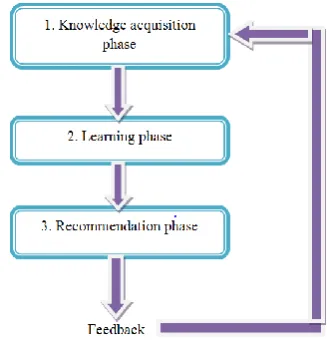
[image:2.595.344.508.143.316.2]Starting from collection of information to recommend something, a recommendation system goes through several phases. The process of recommendation is an iterative one. Fig 1 shows the pictorial representation of different phases of a recommendation system.
Fig 1: Phases of recommendation system
A. Knowledge acquisition phase
In the very first stage, related data is collected to provide its users a quality recommendation. The user profile has to be constructed very well for the recommendation agent. The system has to be fed as much as information possible right from the beginning. Without the proper knowledge regarding the same will affect on the accuracy of the recommendation engine [1]. From collected background information one can find the required attributes which can be useful to build the recommendation agent [5]. In e-learning medium, user-accounts are the storehouses of different data related to him/her. This information includes various factors like the buying habit, learning style, preferences, subjects of interest, cognitive skills and much more. Recommendation system depends on various inputs like implicit feedback and explicit feedback.
Implicit feedback: The system learns implicitly by observing the navigation and buying pattern of different users. It also considers the amount of time spent in a certain webpage by the users. Based on the similarities of buying patterns and purchasing history it generates the feedback by itself, which helps in reducing the burden of user inferring and improves the performance of the system.
Explicit feedback: Explicit feedback is much more efficient as this feedback is generated by the users. This is based on user-item interaction. This feedback is based on the ratings given by the users. The quality of the recommendation is fully dependent on the quality of the feedback provided by the user. In case of false ratings given by user the accuracy of the recommendation gets degraded.
For example, Flipkart allows its users to give optional ratings for the items he/she
International Journal of Innovative Technology and Exploring Engineering (IJITEE) ISSN: 2278-3075, Volume-8 Issue-8 June, 2019
ratings Flipkart modifies the search result for the users. Hybrid feedback: It comprises of both implicit (for finding attributes) and explicit (user rating) feedback [5].
B. Learning phase
In this phase, different filtering techniques and algorithms are applied over the dataset generated from the previous phase. We have discussed different types of filtering techniques in the next section.
C. Recommendation phase
This is the final stage of the life-cycle of a recommendation system. In this phase, the system recommends the items or services to its users. This recommendation is based on the information gathered in the knowledge acquisition phase and how well the data is trained in the learning phase. The recommended data is further used for the recommendation generation in the next iteration.
IV. CLASSIFICATION OF RECOMMENDATION SYSTEM BASED ON FILTERING TECHNIQUES
Based on different filtering techniques, recommendation system can be classified into different categories. Descriptions of different types of recommendation systems are illustrated below along with fig 2.
A. Collaborative
The concept of collaborative filtering (CF) lies on the ratings provided by different users against a certain item. This technique uses the collaborative power of those ratings to generate recommendation [2]. The genuineness of the ratings is also a major challenge in this regard. By help of this technique, a group of user-profiles is created. In a group, the people are having almost similar tastes against a certain type of product. This technique is domain dependent.
Fig 2: Recommendation system Classification
Users express their feeling towards the item by rating them in the system. The ratings determine the preferences and taste of the particular user.
The system matches the rating against other users and measures similarity between them.
The systems generate a list of items to that user, based on the preferences of other users who are having maximum similarity with that particular user. Based on working principles, collaborative filtering is sub-classified into two distinct types. These are:
1. Memory based techniques 2. Model based techniques
1) Memory based techniques
This mechanism relies on rating data to find how identical the users or items are [28]. This technique is further classified into different categories. These are:
User based approach
This approach was proposed by Jonathan L.Herlocker at the end of 1990s. Users are the backbone of this approach. Here it is assumed that, if some users have same type of choice for a certain item, then these users belong to a same group [27]. In this approach, the similarities between the users‟ profiles are calculated first by comparing their ratings on same items. It also considers the search history of the users. For example, if a person „X‟ rates 5 on an item and another person „Y‟ gives a rating of 4 on the same item, then „X‟ and „Y‟ will be clustered together.
Item based approach
This approach was proposed in 2001. Unlike user-based approach, items play the key-role here. Here it is assumed that a certain user will have the same taste for similar type of items [27]. For example, if a person rates an item by 5 and another item by 4, then these two can be considered in a same cluster.
2) Model based techniques
This method deals with the ratings provided by the past users. Then it tries to build a model based on these ratings, so that similar types of problems can be solved faster by using that model only. Different learning algorithms like association rule, clustering, Bayesian networks, decision trees, regression etc. are used to build the model [1]. It improves the prediction quality by dealing with sparsity, scalability and other problems [28].
B. Content based
Another important filtering technique used in recommendation system is content based filtering (CBF). This technique is domain dependent. Here, semantics associated with the descriptions of the items are used to generate recommendation [1]. It considers the purchase history of the user. User profile is created by web mining or information retrieval techniques [29]. The applications of this technique are seen in case of textual information, web-pages, news, publications etc [1][29]. The main advantage of using such recommendation systems which adopts content-based techniques is it recommends the items which are not rated yet [28]. CBF technique recommends the items on the basis of description of the item and user preferences. This technique is dependent upon the correlation between the items [3].
C. Knowledge based
D. Hybrid
Different techniques have its‟ own pros and cons. This technique adopts the combined power of different filtering techniques so that the shortcomings of one technique can be avoided by using the other ones. Many methods have been computed using hybrid methods. These are:
Weighted hybridization: To recommend some products or services there are several attributes to be considered. All of these attributes do not have same importance. Based on their importance various weight factors are assigned to them. This technique takes the results of various recommendation systems into its account and finally integrates the scores from those system to produce a final list of recommended items [1].
Mixed hybridization:It is a very well-known technique in this domain. It is good to have more than one recommended items other than recommending only one at a time. Different result-set can be obtained by using different methodologies [1].
Switching hybridization:It relies on switching between various recommendation techniques as per the requirements [29].
Feature combination:Differentfeatures of various recommendation systems are fed into a single recommendation system in this method [1][29].
Feature augmentation:This method adopts the output of different techniques as the input feature [29] [1].
Cascade hybridization:It is an iterative refinement process. This technique also uses different recommendation techniques. A list of items is recommended by each technique. The order of these recommended items get altered when another technique is applied. So, the output list gets refined after each iteration [1].
Meta-level:It provides the solution of sparsity problems of collaborative filtering techniques [1]. In this case, the model learned by one recommender is used as input to another [29].
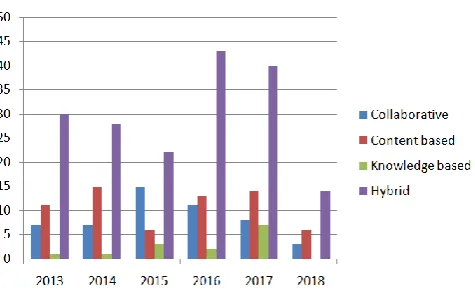
[image:4.595.49.287.511.657.2]Statistical analysis:
Fig 3: Year-wise approximate number of publications on different types of recommendation system based on filtering techniques
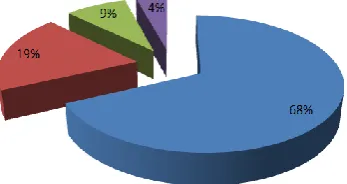
Fig 3 represents year-wise approximate number of publication on different types of recommendation system starting from starting from 2013 to 2018. Whereas, fig 4 represents the percentage of number of publications on different types of recommendation system in a form of pie chart. These data is extracted using Harzing‟s Publish or Perish version 6, based on Google Scholar references.
V. SOFT COMPUTING BASED APPROACHES IN RECOMMENDATION SYSTEM
Soft computing is a collection of computational techniques and algorithms that are designed to deal with the complex systems. Soft computing can deal with uncertainty, partial truth, imprecision and approximation. It is based on some biological inspired methodologies like neural networks, evolution, particles swarming, genetics etc.
A. Fuzzy logic
Fuzzy means which is not clear. It is an emerging approach of computing based on the „degrees of truthfulness‟. The „degrees of truth‟ is known as membership functions in this context. Fuzzy logic is a reasoning method which resembles the human reasoning.
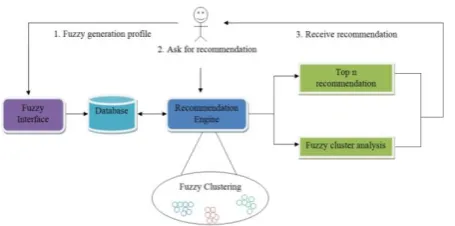
In many studies it is seen that, item ratings are mentioned in a scale of 1 to 5. Instead of this type of measurement, linguistic variables are also used to describe the order of preferences. Linguistic variables like “excellent”, “very good”, “good”, “average”, “bad” are also seen in case of recommendation system. Sometimes it is seen that the similarities between the users and the items are fuzzy, that is why fuzzy logic is being used in case of recommendation system. In a research, the authors developed a hybrid recommender system for telecomproducts/ services. This recommender system uses both the item-based and user-based collaborative filtering technique along with fuzzy techniques. The key thing for collaborative filtering is the ratings given by the users against the items or services. Here the collected ratings were linguistic terms. That is why fuzzy logic was used. The fuzzy item similarity was measured by the Pearson correlation method. The same method was adopted to calculate the fuzzy user similarity. Finally the ratings were predicted against the particular items/ services for the specific user-groups [7]. Fig 5 is the schematic diagram of recommendation generation using fuzzy logic.
In [9], a fuzzy-based intelligent recommender system was proposed. This recommendation system is about recommending the electronic products to the consumers. Unlike the previous case, the ratings for the item were not useful here. The authors emphasized on the users‟ current preferences. In order to generate recommendation, fuzzy inference rules between the products features and the customer‟s needs were setup first. The authors used triangular membership function in this study. The linguistic terms were mapped into the triangular fuzzy members. Finally, the similarities between two fuzzy members were calculated by Eucledian fuzzy distance method.
In another study, the authors implemented fuzzy logic for movie recommendation. They found two types of similarities. First one was based on the genre of the movie. To calculate the similarity for the same they used Pearson correlation method. The second one was based on the user-ratings for those movies. In this case they used cosine similarity method. To recommend a movie to a particular user, the researchers used Mamdani Fuzzy Inference System (FIS). In order to employ that, collaborative filtering technique was adopted. By
International Journal of Innovative Technology and Exploring Engineering (IJITEE) ISSN: 2278-3075, Volume-8 Issue-8 June, 2019
similar taste were found along with similar types of movies. Two inputs were considered for the FIS. First one was the average rating given for a movie by the similar users of a target user and next one was the average rating given for the similar types of movies of the target movie by the target user. They experimented with different number of similar users and different membership functions. Finally, they achieved the best result when 5 similar users were considered and the membership function was triangular [11].
[image:5.595.51.279.324.437.2]Tourism industry is considered as one of the key pillars of the growth of economy of a country. Keeping this fact in mind, the recommendation system is employed in this domain too to attract more number of people. Haymontee Khan et al. proposed a FIS based recommendation system for this purpose [12]. Authors considered different parameters as inputs. These were location type, number of people they want to travel with, safety, scenic beauty, facilities they want to avail and budget. Based on these inputs, the tourist spots along with some interesting nearby places were recommended to the users. Different membership functions were used to deal with different inputs. The authors tried with different possible fuzzy inference rules to generate the result.
Fig 5: Recommendation generation using Fuzzy logic
B. Genetic algorithm
Genetic algorithms (GAs) are adaptive heuristic search algorithm, which is based on evolutionary ideas and genetics. This is a solution to optimization problems. It is also used in case of recommendation systems. Fig 6 shows the process of recommendation generation using GA.
Govind P. Wakure and VijayalaxmiKadrolli proposed a recommendation system for music data. In „selection‟ phase, they extracted music features using CLAM software. In this study truncation selection was used, where a threshold value was set for the acceptance of the music files. In „crossover‟ stage they used BLX-alpha crossover algorithm, which generates the new progenies. The final step was „matching‟ phase. Similarities between the items were found in this stage based on the music features. This phase used Eucledian distance for similarity measurement between two progenies. Based on this, the recommendation was done [13].
One of the very popular databases for dealing with unstructured and semi-structured data is graph-oriented database. A graph database is represented in form of nodes and edges. For recommendation purpose they used the structural properties of the social networks. It is a known fact that, the graph data-structure is used in social media. Researchers proposed a friend recommendation system, which suggests new links between user nodes which are in a
same network. This recommendation system used genetic algorithm to optimize the friend-list of a user [14].
Researchers proposed a new system for music recommendation based on genetic algorithm. In the first phase, they extracted features of the music tracks and converted them into MP3 format. In this system, the users assigned their rating score to the music data. In this study, Interactive Genetic Algorithm (IGA) was used. In this study, authors didn‟t use mutation as they focused on finding the items which are most appropriate to user preferences. In the crossover stage, they used BLX-α crossover on the selected individuals. Eucledian distance was measured afterwards for recommendation [15].
We have already discussed about collaborative filtering techniques. To employ this technique, we require ratings provided by the users against the items or services. Based on the ratings, user-profiles are created. Genetic algorithm also helps in creating user-profiles. In [40], the researchers proposed a genetic algorithm-based recommendation system. This recommendation system used genetic algorithm instead of common similarity metrics to calculate the similarity between the user-profiles. The authors of [41] used similar kind of thing i.e. use of genetic algorithm to find the user-user similarity.
Fig 6: Recommendation generation using Genetic Algorithm
In case of generating recommendation, there are various challenges like cold-start problem, data sparsity problem, false rating problem etc. In [16], in order to improve the quality of recommendation, the authors proposed to apply the traditional genetic algorithm along with ontology to the recommendation process. Apart from considering the semantic features associated with the products, the importance of relational characteristics was also discussed in this research. The feature-weights were obtained using genetic algorithm. As genetic algorithm is a solution to optimization problem, the authors used it to optimize the coefficient of the related attributes. An item was most likely to be recommended when its coefficient value was high.
C. Neural network
Artificial neural network is computation technique whose principles are similar to biological neural network. Like fuzzy logic and genetic algorithms, the concept of neural networks also contributes in the domain of recommendation system. Fig 7 depicts how neural networks are employed in this domain.
Researchers proposed a recommendation algorithm based on deep neural network in their work. As we have already seen in some cases that how users‟ profiles are important in
orderto generate
[image:5.595.313.542.359.403.2]as vectors over those tags. After that, the features were extracted by implementing deep neural network over this. Finally, all the extracted features were aggregated to generate recommendation [17].
[image:6.595.44.284.179.274.2]In a study, the authors presented Hybrid recommendation system which is implemented through deep learning neural network. As it was a hybrid system it took the advantages of both the users‟ reviews and content-based features, so that the recommendation system could generate a model-based recommendation to its users [18].
Fig 7: Recommendation generation using Neural Networks
A recurrent neural network (RNN) is a network in which the output of one layer is used as an input to the previous layer. In [30], the authors proposed a recurrent neural network-based recommendation system for music recommendation. For this purpose, they divided the songs‟ genre or lyrics into sequence and converted them into vectors. After that, pair-wise comparison between songs was done. This model was based on LSTM (Long Short Term Memory) architecture.
D. Swarm Intelligence
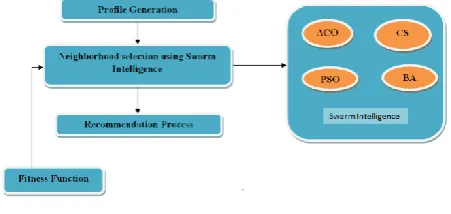
Swarm intelligence is also a biological inspired model. It is the collective behavior of decentralized, self-organized systems. The main principles of swarm intelligence are awareness, expandability, resiliency, solidarity and autonomy. Some of the well-known swarm intelligence algorithms are discussed below. Fig 8 illustrates how swarm intelligence techniques are being used in case of recommendation system.
Ant Colony Optimization:Another popular solution to the optimization problem is ant-colony optimization (ACO). It is a multi-objective technique to find the near approximate solution. It is analogous to the behavior of ants that finds the optimized paths between its colony and the food [19]. In 1992, Marco Dorigo proposed this algorithm.
In [20], a learning path recommendation system was proposed based on ACO. Learning objectives and learning units were pre-defined in the syllabus. Some crucial data and the learning content were used as the inputs.
In a study, ACO was used for course recommendation. This recommendation system used hybrid filtering technique based on ant colony optimization (ACO) technique. In their work they used three algorithms based on ACO. The first one was by choosing maximal probability. Next one was with one ant and random walking using edges‟ probabilities. And final one was by considering K ants and random walking using edges‟ probabilities [21].
Bat algorithm:It is a meta-heuristic optimization algorithm which follows the behavior of microbats. It was proposed by Xin-She in 2010. The bat algorithm takes the
idea of echolocation of bats. While moving, the bats use sonar echoes to avoid collisions with other bats.
In [22], authors proposed a fuzzy bat collaborative recommender system for movie recommendation. In this work, they used a combination of fuzzy c means clustering (FCM) with BA.
Cuckoo search algorithm: Researchers developed this algorithm as a solution of optimization problem. The cuckoo search algorithm is another solution to the optimization problem. It is analogous to the behavior of the cuckoo species, which lay eggs in the nest of some other birds. These eggs are represented as the optimized solutions. In recent studies, it is seen that, cuckoo search algorithm provides more robust results with respect to particle swarm optimization algorithm [19].
In [23], the authors used the fuzzy c means clustering for developing their recommendation system. But the problem with FCM is involved in selection of initial centroids, which leads to local optima problem. For this issue, cuckoo search algorithm was adopted by the authors. The procedure of cuckoo search algorithm commences with the initialization of arbitrary n host nests. Then levy flight equation is used to obtain a cuckoo, here levy flight is based on random walk in which step lengths follows a levy distribution. Once cuckoo egg is found, then an arbitrary nest, „j‟ is selected and compares the fitness quality of cuckoo egg in the host nest with the random nest (j) using objective function. If the fitness quality of cuckoo egg in the random nest (j) is greater than the fitness quality of cuckoo egg in the host nest ,then the cuckoo egg is replaced in the random nest otherwise it won‟t, and this process will repeat till it meet the stop criterion or maximum number of iterations. Authors considered the user as an egg and nest as cluster. Once the clusters were found from FCM, the cuckoo search algorithm was applied over it for getting the optimized clusters.
Fig 8: Recommendation generation using Swarm Intelligence In [24], the authors developed a framework for K-means clustering along with cuckoo search optimization. First, the clusters were formed by using K-means clustering and the cuckoo search algorithm was applied over those clusters later on. The working preceding was somehow similar with the previous one. But the difference lies in clustering.
Particle swarm optimization:Particle swarm optimization (PSO) is a swarm intelligence global optimization technique. In 1995, James Kennedy and
[image:6.595.321.547.490.597.2]International Journal of Innovative Technology and Exploring Engineering (IJITEE) ISSN: 2278-3075, Volume-8 Issue-8 June, 2019
convergence behavior of a group of birds.
Authors introduced a fuzzy particle swarm optimization (FPSO) approach to traditional collaborative filtering technique. In this work, the PSO was used to learn the weights of the features [25][26].
[image:7.595.80.254.181.273.2]Statistical Analysis:
Fig 9: Year-wise approximate number of publications on recommendation system using different soft computing techniques
Fig 10: Pie chart representation of approximate number of publications on recommendation system using different soft computing techniques from
2013-2018
We conducted a statistical survey on number of research articles published in 2013-2018 based on recommendation systems using various soft computing techniques. Fig 9 represents the year-wise approximate number of publications on recommendation system using different soft computing techniques. Similarly, fig 10 is the pie chart representation of publications on recommendation system using different soft computing techniques. These data is extracted using Harzing‟s Publish or Perish version 6, based on Google Scholar references.
VI. CHALLENGES AND ISSUES IN RECOMMENDATION SYSTEM
As there are different types of recommendation system, the short-comings of one can be eliminated by another. There are some challenges and issues are described below.
A. Cold-start problem
This problem takes place when new items or users are added into the system. In this case, there are lack of sufficient information for both the user and the item. This is a very
common problem in case of collaborative filtering, as it heavily depends on user ratings [1][31].
B. Synonymy
Synonymy is a most common problem in case of recommendation system. It arises when two same items are entitled differently. For example, consider two terms, “Football” and “Soccer”. Though these are having same meaning, but the recommendation system treats them differently. This problem is also seen in case of collaborative filtering-based recommendation system [31].
C. Sparsity
Data sparsity refers the problem when sufficient relevant data is not available for processing. When a user rate only a few items among all the items, it is tough for recommendation system to find the closest neighbors. This degrades the quality of recommendation [1].
D. Scalability
The scalability problem is encountered in case of such recommendation systems which deal with numerous items as well as users. There are some recommendation systems, in which the number of users and items are growing at a larger pace. This problem can be solved by reducing dimension using Singular Value Decomposition (SVD) method [1][31].
E. Privacy
In case of recommendation system, the users expose their details along with purchase behavior to the system, which may lead to privacy and security issues. In some cases, the user ratings against the items are kept in a centralized repository which may lead to the problem of data misuse. To avoid such scenarios, different cryptographic techniques are adopted [31].
F. Shilling attacks
User profile plays a major role in case of collaborative filtering. The online shopping sites uses collaborative filtering. If a company decides to inject some fake user profiles to the website of another company, then this type of attack is known as Shilling attacks. The injection of fake user profile will degrade the quality of the recommendation [10].
VII. CONCLUSION
Recommendation system is a part of modern information retrieval systems. In this paper, we have discussed various aspects of recommendation system, starting from its phases. This paper contains different filtering techniques in detail. How various soft computing techniques had been applied to increase the quality of a recommendation system, that is also been recorded in this paper. This survey also contains some fairly-known issues and challenges in this domain.
REFERENCES
1. F.O. Isinkaye, Y.O. Folajimi, B.A. Ojokoh, ”Recommendation systems: Principles, methods and evaluation”, Egyptian Informatics Journal 16, 261–273, 2015.
2. C.C. Aggarwal, “An introduction to recommendation system”, © Springer International
[image:7.595.51.281.334.473.2]3. Brook 2002, “Hybrid recommender systems: survey and experiments”, User Modeling and User-Adapted Interaction, Volume 12, Issue 4, pp 331–370, November 2002.
4. Jieun Son, Seoung Bum Kim, “Content-based filtering for recommendation systems using multi attribute networks”, Journal of Visual Languages and Computing 25, 667–675, 2014.
5. Amol Deshmukh,Aniket Kanawade,Ankush Khandare, Suraj Narwade , “Modern methodologies for recommendation system”, VJER-Vishwakarma Journal of Engineering Research, Volume 1 Issue 4, December 2017.
6. SongJie Gong, “A Collaborative Filtering Recommendation Algorithm Based on User Clustering and Item Clustering”, JOURNAL OF SOFTWARE, VOL. 5 NO. 7, JULY 2010.
7. Zui Zhang, Hua Lin, Kun Liu, Dianshuang Wu, Guangquan Zhang, Jie Lu, “A hybrid fuzzy-based personalized recommender system for telecom products/services”, Information Sciences 235, 117–129, 2013. 8. Dr. Rashid Ali and Prof. M. M. Sufyan Beg, “Applications of soft
computing for the web”, Springer, © 2017.
9. Yukun Cao , Yunfeng Li, “An intelligent fuzzy-based recommendation system for consumer electronic products”, Expert Systems with Applications 33, 230–240, 2007.
10. Ihsan Gunes, Cihan Kaleli, Alper Bilge, Huseyin Polat, “Shilling attacks against recommender systems: a comprehensive survey”, Artificial Intelligence Review, Volume 42 Issue 4, pp 767-799, December 2014.
11. Md Mahfuzur Rahman Siddiquee, Naimul Haider, Rashedur M Rahman, “A Fuzzy Based Recommendation System with Collaborative Filtering”, The 8th International Conference on Software, Knowledge, Information Management and Applications (SKIMA 2014), 2014.
12. Haymontee Khan, Noel Mannan, Shahnoor Chowdhury Eshan, Md. Mustafizur Rahman, K. M. Mehedi Hasan Sonet, Wordh Ul Hasan, Rashedur M. Rahman, “Tourist Spot Recommendation System Using Fuzzy Inference System”, 13th International Conference on Natural Computation, Fuzzy Systems and Knowledge Discovery (ICNC-FSKD 2017), 1532-1539, 2017.
13. Govind P. Wakure, Vijayalaxmi Kadrolli, “Music recommendation system using genetic algorithm”, International Journal of Engineering Research & Technology (IJERT), Vol. 2 Issue 9, September 2013. 14. Nitai B. Silva, Ing-Ren Tsang, George D.C. Cavalcanti, and Ing-Jyh
Tsang, “A Graph-Based Friend Recommendation System Using Genetic Algorithm”, IEEE Congress on Evolutionary Computation, 2010.
15. Hyun-Tae Kim, Eungyeong Kim, Jong-Hyun Lee, Chang Hook Ahn, “A Recommender System Based on Genetic Algorithm for Music Data”, 2nd International Conference on Computer Engineering and Technology, IEEE V6-414, 2010.
16. Gang Lv, Chunling Hu, Shengbing Chen, “Research on recommender system based on ontology and genetic algorithm”, Neurocomputing 187, 92–97, 2016.
17. Yi Zuo, Jiulin Zeng, Maoguo Gong, Licheng Jiao, „Tag-aware recommender systems based on deep neural networks‟, Neurocomputing 204, 51–60, 2016.
18. Tulasi K. Paradarami, Nathaniel D. Bastian, Jennifer L. Wightman, “A hybrid recommender system using artificial neural networks”, Expert Systems With Applications 83, 300–313, 2017.
19. V. Diviya Prabha R. Rathipriya, “A Study on Swarm Intelligence Techniques in Recommender System”, International Conference on Research Trends in Computer Technologies (ICRTCT - 2013) Proceedings published in International Journal of Computer Applications® (IJCA) (0975 – 8887), 2013.
20. Mengyuan Chen, Mingwen Tong, “Recommendation of learning path using an improved ACO based on novel coordinate system”, 6th IIAI International Congress on Advanced Applied Informatics, 2017. 21. Janusz Sobecki and Jakub M. Tomczak, “Student Courses
Recommendation Using Ant Colony Optimization”, N.T. Nguyen, M.T. Le, and J. Świątek (Eds.): ACIIDS 2010, Part II, LNAI 5991, pp. 124–133, 2010. © Springer-Verlag Berlin Heidelberg 2010. 22. Vimala Vellaichamy and ivekanandan Kalimuthu, “Hybrid
Collaborative Movie Recommender System Using Clustering and Bat Optimization”, International Journal of Intelligent Engineering and Systems, Vol.10 No.5, 2017.
23. B. Brahmini, A. Ramaswamy Reddy, K. Vineela, Ch. Prasad, “Novel Framework for Collaborative Filtering Using Fuzzy–c-means Cuckoo”, International Journal of Pure and Applied Mathematics, Volume 118 No. 5, 2018.
24. Rahul Katarya and Om Prakash Verma, “An effective collaborative movie recommender system with cuckoo search”, Egyptian Informatics Journal 18, 105–112, 2017.
25. Mohammed Wasid and Vibhor Kant, “A Particle Swarm Approach to Collaborative Filtering based Recommender Systems through Fuzzy Features”, Procedia Computer Science 54 440 – 448, 2015.
26. Supiya Ujjin and Peter J. Bentley, “Particle Swarm Optimization Recommender System”, Proceedings of the 2003 IEEE Swarm Intelligence Symposium. SIS'03 (Cat. No.03EX706), 2003.
27. Mukta kohar,Chhavi Rana, “Survey Paper on Recommendation System”, (IJCSIT) International Journal of Computer Science and Information Technologies, Vol. 3 (2) ,3460-3462, 2012.
28. P. N. Vijaya Kumar and Dr. V. Raghunatha Reddy, “A Survey on Recommender Systems (RSS) and Its Applications”, International Journal of Innovative Research in Computer and Communication Engineering, Vol. 2 Issue 8, August 2014.
29. Nymphia Pereira and SatishKumar Varma, “Survey on Content Based Recommendation System”, (IJCSIT) International Journal of Computer Science and Information Technologies, Vol. 7 (1), 281-284, 2016.
30. Miao Jiang, Ziyi Yang and Chen Zhao, “What to play next? A RNN-based music recommendation system”, 51st Asilomar Conference on Signals, Systems, and Computers, 2017.
31. Shah Khusro, Zafar Ali and Irfan Ullah, “Recommender Systems: Issues, Challenges, and Research Opportunities”, Information Science and Applications (ICISA) 2016 pp 1179-1189, 2016.
32. Francesco Ricci and Lior Rokach and Bracha Shapira, Introduction to Recommender Systems Handbook, Recommender Systems Handbook, Springer, pp. 1-35, 2011.
33. J. Bobadilla, F. Ortega, A. Hernando, A. Gutiérrez, “Recommender systems survey”, Knowledge-Based Systems 46, 109–132, 2013. 34. JONATHAN L. HERLOCKER, JOSEPH A. KONSTAN, LOREN G.
TERVEEN, and JOHN T. RIEDL, ”Evaluating Collaborative Filtering Recommender Systems”, ACM Transactions on Information Systems, Vol. 22, No. 1, Pages 5–53, January 2004.
35. Sean Michael Mcnee, “Meeting user information needs in recommender systems”, Department of Computer Science, Ph.D Thesis, University of Minnesota, Pubic pre-print, 2006.
36. Kalervo Järvelin , Jaana Kekäläinen, “Cumulated gain-based evaluation of ir techniques”, ACM Trans. Inf. Syst. 20, 422–446, 2002. 37. Cai-Nicolas Ziegler, Sean M. McNee, Joseph A. Konstan, Georg Lausen, “Improving Recommendation Lists Through Topic Diversification”, Proceedings of the 14th International Conference on World Wide Web, WWW 2005, pp. 22–32, 2005.
38. Gediminas Adomavicius and Jingjing Zhang, “Stability of Collaborative Filtering Recommendation Algorithms”, ACM Transactions on Information Systems (TOIS), Volume 30 Issue 4, Article No. 23, November 2012.
39. Liang Zhang, “The Definition of Novelty in Recommendation System”, Journal of Engineering Science and Technology Review 6 (3), 141 – 145, 2013.
40. Bushra Alhijawi, Yousef Kilani, “Using Genetic Algorithm for Measuring the Similarity Values between Users in Collaborative Filtering Recommender Systems”, 2016 IEEE/ACIS 15th International Conference on Computer and Information Science (ICIS), 2016.
41.Yilmaz A, Erkan Bostanci, “A genetic algorithm solution to the collaborative filtering problem”, Expert Systems With Applications 61 (2016) 122–128, 2016.
AUTHORS PROFILE
Shreyas Dasis an M.Tech student at KIIT Deemed to be University in the discipline of Computer Science and Engineering. He has done his Bachelors‟ degree in Computer Science and Engineering in 2013. His research domain includes Machine Learning, Data Science, Cloud Computing, Artificial Intelligence and Soft Computing.
Dr. Bhabani Shankar Prasad Mishrais working as an Associate Professor in School of Computer Engineering at KIIT University, Bhubaneswar, Odisha since 2006. He has received his PhD degree in Computer Science from F.M.University, Balasore, Odisha in 2011. He completed his Post
International Journal of Innovative Technology and Exploring Engineering (IJITEE) ISSN: 2278-3075, Volume-8 Issue-8 June, 2019
Laboratory, Yonsei University, Seoul, South Korea under the Technology Research Program for Brain Science through the National Research Foundation, Ministry of Education, Science & Technology, South Korea. His research interest includes Evolutionary Computation, Neural Networks, Pattern Recognition, Dataware housing and Mining, and Big Data. He has already published about 70 research papers in refereed journals and conferences, has published one book and edited four books in his credit. He is also acting as an editorial member of various journals.
Dr. Manoj Kumar Mishrahas fifteen years experience in imparting education to undergraduate (BTech) and Postgraduate (MTech) students one and half years of industry experience in Mainframe Technologies. He holds a PhD degree in Computer Science and
Engineering, MBA degree in Marketing and Finance, MTech degree in Computer Science and Engineering and BE degree in Computer Science and Engineering. Till now, twenty seven scholars have completed their MTech under his guidance and currently there are two MTech and three PhD scholars under his guidance. He has many research publications to his credit including International Conferences, Journals, Book Chapters and Edited Books. His area of specialization includes Parallel & Distributed Computing, Grid Computing, Cloud Computing, Algorithm Design, Big Data, Machine Learning, etc.He is a life time society member of ISTE and Indian Science Congress.
Dr. Subhashree Mishrais working as an Assistant Professor in School of Electronics Engineering at KIIT University, Bhubaneswar since 2013. She has received her PhD degree in Electronics and Communication from KIIT University. She has already published several research articles in referred journals. Her research interest includes Soft Computing, Cognitive Radio, Recommendation System and Image Processing.