Abstract:Background/Objectives: Recently, as the semi-conductor industry makes rapid progress, semi-conductor production equipment is developed and manufactured as an efficient and flexible system. However, because the supply does not meet the demand and the number of requests for bringing forward the deadline for manufacturing semi-conductor equipment is increasing rapidly, the problem with this is that manufactured products are not tested properly. In this paper, virtual equipment that can be used for testing programs was manufactured to bring solutions to the following cases: the case where it is difficult to conduct a test because the manufacturing of production equipment is more delayed than the manufacturing of the program for testing production equipment, and the case where it is required to remotely test the equipment installed on site.
Methods/Statistical analysis: In the process of manufacturing the program for testing conductor equipment, variables capable of operating IO and motor compatible with virtual equipment were defined, and shared memory was used to create a connection with virtual equipment so that the equipment program can be used to operate the virtual equipment. In addition, TCP/IP Server and Client were used to implement a client server to create an environment identical to reality.
Findings: When it comes to semi-conductor equipment, its program plays a very significant role and is one of the items that require frequent improvements. In the early stage of equipment development, it is possible to test the program instead of the actual equipment. However, in the case where improvements such as modified server communication and operation are made, without the actual equipment to be measured, it is difficult to run the verification process. In particular, in the case where it is impossible to directly verify the equipment because the equipment is at a distance, virtual equipment can be utilized to verify operation, and virtual equipment can play an important role in manufacturing or verifying operation algorithms required for manufacturing reliable equipment. In addition, since virtual equipment contains a built-in server, it can be utilized to not only implement communication with the server, but also verify the program in an environment almost identical to the environment in which the actual equipment operates. As a result of implementing a simulation model and operating a clamp cylinder on the IO screen, it was able to confirm the operating status and sensor status of the involved cylinder.
Revised Manuscript Received on May 22, 2019.
Dong-su Kim, Dept. of Computer Engineering, Kongju National University, 31080, Rep. of Korea
Koo-Rack Park, Dept. of Computer Science & Engineering, Kongju National University, 31080, Rep. of Korea
Dong-Hyun Kim Dept. of Computer Engineering, Kongju National University, 31080, Rep. of Korea
Jae-woong Kim, Dept. of Computer Science & Engineering, Kongju National University, 31080, Rep. of Korea
E-mail :[email protected]
Through the test result log associated with the system’s IO operation, it was confirmed that the log associated with On/Off was logged as if the cylinder was actually connected. As a result of testing all the cylinders, it was confirmed that all the tested cylinders operated properly.
Improvements/Applications: In the future comparative study, to make it possible to apply virtual equipment to inline facilities as well, it is necessary to continuously examine not only the implementation of SMEMA(Surface Mount Equipment Manufacturers Association) communication, but also the implementation of a server compatible with SECS/GEM communication.
Keywords: Semiconductor Production Equipment, Shared Memory, Virtual Machine, Cylinder, Sensor, Motor
I. INTRODUCTION
In the semi-conductor industry, there are 3 important processes: wafer manufacturing, fabrication and packaging.
Wafer manufacturing is a process where silicon ingots are cut into thin plates, fabrication is a process where multiple layers of designed electric circuits are inserted on a wafer through a certain process for pattern adjustments, and packaging is a process where the wafer is cut and semi-conductor chips are assembled[1]. In particular, fabrication is a process that requires a number of chemical substances and is a process that can be classified into the following phases: oxidation, photolithography, etching and stripping[2-4]. Recently, as the semi-conductor industry makes rapid progress, semi-conductor production equipment is developed and manufactured as an efficient and flexible system. In particular, it is very import to conduct the following engineering activities: to process engineering products that serve as prototypes, to improve production processes, and to conduct maintenance and tests on the availability of production equipment[4]. As the semi-conductor industry makes rapid progress, the recent supply fails to meet the demand and this is what causes semi-conductor manufacturers to require a great quantity of production equipment and make a request for shortening the deadline for manufacturing production equipment. Therefore, it is frequent that manufactured production equipment is not tested properly. In addition, although it is necessary to develop the program and GUI for operating and monitoring the equipment prior to
manufacturing the actual semi-conductor production equipment in order to
A Comparative Study on Virtual Machine Model
for Testing Semi-conductor Production
Equipment
A Comparative Study on Virtual Machine Model for Testing Semi-conductor Production Equipment
sufficiently test the production equipment to be delivered, conducting such pilot test continues to seem impossible in reality. In the case where there is no equipment that can be used for program verification prior to completing the manufacturing of the production equipment to be delivered, or where there is a request for equipment improvements, but the involved equipment is at a distance for delivery deadline reasons, it is very difficult to not only verify the operation of the equipment, but also stabilize the production system. In this thesis, to resolve such problems, a virtual equipment program was prepared and a model capable of confirming or simulating the operation of actual equipment was proposed. Since the proposed model not only is compatible with high-quality programs through completing the verification process within a short deadline, but also uses a virtual machine that does not require equipment at a distance to be directly verified, it is expected to contribute to the prompt stabilization of semi-conductor production equipment.
II. RELATEDWORK
2.1 Simulation
Simulation refers to a process where an actual process or actual system are imitated on computer, and is used for system prediction and learning based on changes made to variables[5]. In addition, simulation refers to a strong tool used to recommend remodeling the pre-existing system as well as to recommend modifying the operating rule[6].
Particular problems that require such simulation include evaluating the following operational phases: determining facilities and input personnel, analyzing bottleneck phenomenon and performance evaluation, planning inventory policies and control strategies, planning production, analyzing reliability[7]. Such simulation is a process where a model for engineering system is developed, scientific methods are used for calculations, and physical events and reactions are predicted. In particular, virtual simulation is significant in that it is applicable to not only science and engineering, but also diverse fields that use a dynamic model for tests. Simulation is advantageous in that it can be used for making optimized decisions, since it predicts the performance of a physical model that exists in the real world by reproducing it in the digital world[8]. Semi-conductor fabrication is divided into three fields: process, arrangement and distribution. Studies are continuously conducted to examine these three fields, but the most actively examined field is the process field. The process field is divided into two: scheduling and dispatching. The scheduling field divided into optimization approach method and heuristic approach method is being actively studied[9-11].
2.2Generic Simulator
The semi-conductor industry is known as a technology- and capital-intensive industry, and semi-conductor companies are making a lot of efforts to hold a dominant position in the global market. To do so, these companies are optimizing their scheduling and real-time dispatch logic to
improve their semi-conductor manufacturing system. In addition, studies are conducted to introduce new manufacturing systems such as high-performance in-line system[12].
[image:2.595.303.552.331.402.2]Prior to introducing an actual system to improve the semi-conductor manufacturing system, it is necessary to evaluate potential problems and profits as well as to identify related problems. Simulation is one of the tools mainly used during this process, and is a tool diversely used[13-15]. One of the methods for reducing modeling time is to use a general simulator. Through using a general simulator, it is possible to reduce the time it takes to set up the simulation process. As far as the target domain is concerned, a general data-based simulator can simulate diverse systems in the domain and shares common sections with the domain[16]. Accordingly, through using a general simulator, simulations analysts can shorten the time it takes to construct models such as manufacturing system, and the higher reusability of a code means that it is possible to construct a more reliable model[17]. [Figure 1] shows simplified phases of simulation analysis[18].
Figure 1: Simplified Phases of Simulation Analysis
III. PROPOSEDSYSTEM
3.1. System Configuration
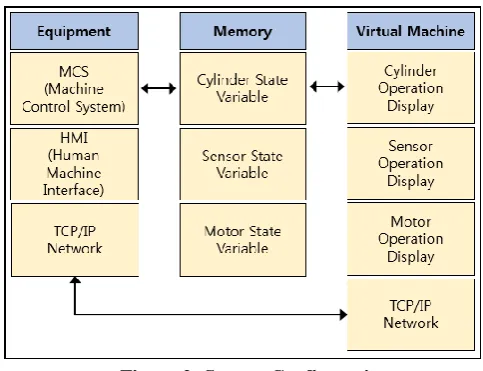
[Figure 2] shows how the proposed system is configured.
Figure 2: System Configuration
The proposed system consists of 3 components. The first component consisting of MCS(Machine Control System), HMI(Human Machine Interface) and TCP/IP Network serves as the equipment operating
[image:2.595.304.546.492.677.2]component serves as the shared memory and is in charge of data generated from the cylinder, sensor and motor between the equipment operating system and virtual machine. The third component serves as the virtual machine and consists of the followings: a program that displays the cylinder operation and motor operation on the screen instead of on the actual equipment, and TCP/IP Network that implements a virtual server to send a normal reply after receiving the same LOT received by the actual equipment.
[image:3.595.47.290.325.489.2]3.2. System Process
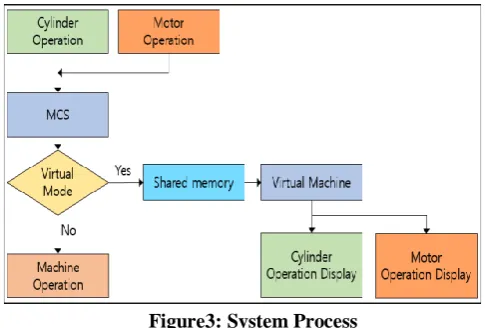
[Figure 3] shows the process of the proposed system. Initially, the cylinder or motor will be operated. Secondly, prior to operating the cylinder or motor through MCS, whether or not the virtual mode is activated will be confirmed. Thirdly, when the virtual mode is activated, the status will be delivered to the virtual machine through the shared memory and the virtual machine will display the cylinder’s operating status or motor’s operating status on the screen. When the virtual is not activated, the actual cylinder or motor mounted on the equipment will be operated.
Figure3: System Process
When operating IO through the equipment, the input will be received through the sensor or switch, and the output will be sent through the cylinder or lamp. When the IO function is used to operate the cylinder through the equipment, the Io interface card will send a command to the slave through communication, and the port that receives the command will activate the solenoid and move the cylinder. When examining the status of a particular sensor, the function will be used to read in the current status of the involved port from the IO interface card. As far as the motor is concerned, it will move to the origin by default and memorize the position values set by workers. When moving the motor to the required position, the move function will be used, and the pulse will be delivered from the motor interface care to the servo pack, and the servo pack will command the motor to move to the preferred position, and the motor will be operated. Because the operating motor is equipped with an encoder, the current distance traveled by the motor will be delivered to the motor interface card. TCP/IP will be mainly used for the communication between the equipment and
work server, and the protocol will be provided from the work server.
As far as the simulation process is concerned, there is a header and a body. The header contains the length of the body, and will either be on standby until the length of the delivered body matches the length of the header or conduct parsing through acquiring the length of the body. In addition, as far as the simulation process is concerned, since there is a set length for each protocol factor, once the protocol type is confirmed, each factor value will conduct parsing by acquiring only the length set for that factor.
The role of this server is to conduct track-in when there is a new LOT input. In addition, when there is a tester, this server delivers LOT ID to the tester. When the size is different from that of the previously used material, this server brings new setting values and suitably adjusts the motor position during operation. Shared memory is memory that can be accessed by various programs within a computer. It was designed for communication between programs. According to the environment, a program can be executed in one process or a number of processes.
3.3. Network Process
[Figure 4] shows the server/client and communication process implemented in the HMI and virtual machine in charge of communication.
Since the equipment’s server and client are implemented through receiving TCP/IP Protocol, these can be used as the basis for implementing the company’s server and client to verify TCP/IP Communication without requiring the company to have the actual equipment. In addition, even when protocols and related operations are added and modified in the future, it will be possible to respond to such additions and modifications flexibly.
Figure 4: Network Process
IV. TESTANDRESULT
A Comparative Study on Virtual Machine Model for Testing Semi-conductor Production Equipment
Figure 5: Virtual Machine System
[image:4.595.95.543.529.790.2]Because the virtual machine mode is selected in the equipment program, when it is selected to start the initialization process, the equipment program will use the virtual machine functions to start the initialization process. Then, the virtual machine will display the equipment’s initialization progress status. In addition, when the position of each motor is moved on the motor manual screen, that motor will actually move on the virtual machine screen, and the equipment program will confirm whether or not the move value of that motor is displayed. On the IO screen, each IO can be turned on/off to confirm whether or not the lamp operates. When the cylinder is in operation, the sensors located at the end of that cylinder will be detected and displayed on the IO screen.
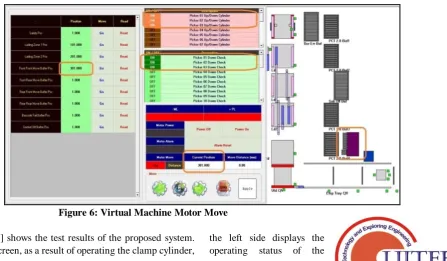
[Figure 6] shows the test results of the proposed model. This Robot X’s screen confirms whether or not Robot X
moves to the preferred position. On the virtual machine screen, it can be confirmed that Robot X moved to the preferred position, and the motor’s position value(encoder value) displays the involved position.
In addition, among the cylinders connected with Robot, by commanding Picker Up/Down Cylinder to move down, it can be confirmed on the virtual machine screen that Picker Up/Down Cylinder moved down, and that the sensors attached to that cylinder are properly moved down as well. As if each motor is manually operated to be moved to the preferred position, each motor operates properly even when the equipment is in operation, and the operating status of each motor can be displayed on the virtual machine screen. Whether or not each motor operates in accordance with the given sequence and whether or not each motor is moved to the preferred position can be confirmed.
Figure 6: Virtual Machine Motor Move
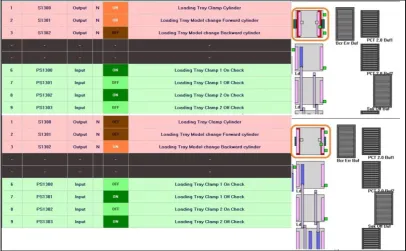
[Figure 7] shows the test results of the proposed system. On the IO screen, as a result of operating the clamp cylinder,
cylinder as well as the sensor status of the involved cylinder, and the right side is the virtual machine screen displaying the on/off status of the clamp as well as the sensor status of the involved cylinder. The screen also shows the on/off status of the loading tray model change forward/backward cylinder. When there is an actual movement or any object is detected,
[image:5.595.94.501.140.391.2]the involved sensor will be displayed in green. Because the clampuses one output to operate the cylinder located at its both ends, the sensor confirmation takes longer than other cylinders. By confirming the inputs displayed in green, it can be confirmed that Clamp1 and Clamp2 operated properly.
Figure 7: Virtual Machine Cylinder Move
[Figure 8] shows the test result log associated with the IO operation and motor. It was confirmed that the log associated with On/Off was logged as if the clamp cylinder was actually connected. It was also confirmed that the log associated with operation was logged as if the motor was actually operated in the JOG mode. As a result of testing the on/off status and sensor status of all the cylinders, it was confirmed that all the cylinders operated properly. In addition, it was confirmed that all the motors properly moved to the preferred position and properly operated in the JOG mode, and that the motor position values were properly displayed.
Figure 8: Virtual Machine Log
V. CONCLUSION
Recently, as the semi-conductor industry makes rapid
progress, semi-conductor production equipment is developed and manufactured as an efficient and flexible system. In particular, it is very import to conduct the following engineering activities: to process engineering products that serve as prototypes, to improve production processes, and to conduct maintenance and tests on the availability of production equipment. As the semi-conductor industry makes rapid progress, the recent supply fails to meet the demand and this is what causes semi-conductor manufacturers to require a great quantity of production equipment and make a request for shortening the deadline for manufacturing production equipment. Therefore, it is frequent that manufactured production equipment is not tested properly, causing the production efficiency of semi-conductors to fall. In this thesis, to verify semi-conductor production equipment, a model that can be used to confirm cylinder operation, motor operation and server communication through a virtual machine program was proposed. Through using shared memory to operate the cylinder and motor, the operation results can be confirmed. In the case where there is no actual equipment to be verified, it is difficult to accurately confirm environments related to the operation and operating status of equipment. However, the proposed model can be used in the virtual machine mode to visualize and set required environments. Therefore, the proposed model is expected
to contribute to developing
and improving
[image:5.595.47.291.570.736.2]A Comparative Study on Virtual Machine Model for Testing Semi-conductor Production Equipment
equipment. In the future comparative study, it is necessary to continuously examine not only the implementation of an IO connection applicable to SMEMA communication equipment, but also the implementation of a server compatible with SECS/GEM communication.
REFERENCES
1. Jang, M., Yoon, C., Park, J., & Kwon, O [Internet]. Evaluation of Hazardous Chemicals with Material Safety Data Sheet and By-products of a Photoresist Used in the Semiconductor-Manufacturing Industry. Safety
and Health at Work. 2018; 1-8. Available from:
https://www.sciencedirect.com/science/article/pii/S2093791117302366. DOI :10.1016/j.shaw.2018.08.001
2. Marano D. E., BoiceJr J. D., Munro H. M., Chadda B. K., Wiliams M. E.,
McCarthy C. M., et al. Exposure assessment among US workers employed in semiconductor wafer fabrication. Journal of occupational environmental
medicine. 2010;52(11):1075-1081. DOI:
10.1097/JOM.0b013e3181f6ee1d
3. Quirk M, Serda J [Internet]. Semiconductor manufacturing
technology(Vol. 1). Upper Saddle River, NJ: Prentice Hall;
2001.Available from:
http://jupiter.math.nctu.edu.tw/~weng/courses/IC_2007/PROJECT_MA TH_CLASS3/device/integrated%20circuit%20technique/integrated%20c ircuit%20technique/%A5b%BE%C9%C5%E9%BBs%B5%7B%C2%B2 %A4%B64.pdf.
4. Ziarnetzky, T., Mönch, L., Ponsignon, T., &Ehm, H. A Reduced
Simulation Approach for Wafer Fabs with Engineering Activities. In Proceedings of the 2015 International Symposium on Semiconductor
Manufacturing Intelligence (ISMI 2015). 2015. DOI:
10.13140/RG.2.1.2240.3286
5. Banks, J. Introduction to Simulation. Proceedings of the 2000 Winter Simulation Conference, Orlando, Florida, 2000;1:9-16.
6. CARSON, I. I., JOHN, S. Introduction to modeling and simulation.
In Proceedings of the 37th conference on Winter simulation. Winter Simulation Conference, 2005;16-23.
7. Law, A. M., &McComas, M. G. Simulation of manufacturing systems.
In Simulation Conference Proceedings, 1998. Winter. IEEE.
1998;1:49-52. Available from:
http://citeseerx.ist.psu.edu/viewdoc/download?doi=10.1.1.58.5933&rep= rep1&type=pdf.
8. Sokolowski, John, and Catherine Banks(Editors), “Principles of Modeling
and Simulation: A Multidisciplinary Approach”, John Wiley& Sons. 2011.
Available from:
https://epdf.tips/principles-of-modeling-and-simulation-a-multidisciplinar y-approach.html
9. Mokhtari, H., and M. Dadgar. Scheduling Optimization of a Stochastic Flexible Job-shop System with Time-varying Machine Failure Rate.
Computers & Operations Research. 2015;61:31~45. DOI:
10.1016/j.cor.2015.02.014
10.Wang, S., and M. Liu. Multi-objective Optimization of Parallel Machine
Scheduling Integrated with Multi-resources Preventive Maintenance Planning. Journal of Manufacturing Systems.2015;37:182~192. DOI: 10.1016/j.jmsy.2015.07.002
11.Huang, J., and G. A. Suer. A Dispatching Rule-based Genetic Algorithm
for Multi-objective Job Shop Scheduling Using Fuzzy Satisfaction Levels.
Computers& Industrial Engineering. 2015;86:29-42. DOI:
10.1016/j.cie.2014.12.001
12.E. Song, B.K. Choi and B. Park. Event Graph Modeling of a Homogeneous
Job Shop with Bi-inline Cells. Simulation Modelling Practice and Theory, 2012;20(1):1-11.DOI: 10.1016/j.simpat.2011.08.002
13.M. Dachyar. Simulation and Optimization of Services at Port in Indonesia.
International Journal of Advanced Science and Technology.
2012;44:25-32.
14. M. Z. A. Rashid, M. S. M. Aras, M. A. Kassim, Z. Ibrahim and A. Jamali,
“Dynamic Mathematical Modeling and Simulation Study of Small Scale Autonomous Hovercraft”, International Journal of Advanced Science and Technology, 2012;45:95-114.
15.S. Taktak, W. Hachicha and F. Masmoudi. A Computer-assisted
Performance Analysis and Optimization (CPAO) of Manufacturing Systems based on ARENA® Software. International Journal of Advanced Science and Technology. 2012;39:93-106.
16.B. Kim, S. Jeong, J. Shin, J. Koo, J. Chae and S. Lee. A Layout- and Data-Driven Generic Simulation Model for Semiconductor Fabs. IEEE
Transactions on Semiconductor Manufacturing.
2009;22(2):225-231.DOI:10.1109/TSM.2009.2017624
17. G. T. Mackulak, F. P. Lawrence and T. Colvin. Effective simulation reuse:
A Case Study for AMHS Modeling. Proceedings of the 30th Conference on
Winter Simulation Conference. 1998: 979-984.