
Citric acid production using Aspergillus niger by solid substrate fermentation : a thesis presented in partial fulfilment of the requirements for the degree of Doctor of Philosophy in Process and Environmental Technology at Massey University
254
0
0
Full text
(2) CITRIC ACID PRODUCTION USING ASPERGILLUS NIGER BY SOLID SUBSTRATE FERMENTATION. A thesis presented in partial fulfilment of the requirement for the degree of Doctor of Philosophy in Process and Environmental Technology at Massey University. MINYUANLU 1995.
(3) To My Mother.
(4) Abstract. The aim of this work was to investigate solid substrate fermentation for citric acid production using Aspergillus niger, in an attempt to provide systematic infonnation and an understanding of the process. Initial experiments were performed to select an appropriate substrate and organism. Thus, kumara and a strain of Aspergillus niger, Yang No.2 were found favourable for citric acid production, while potato was a poor substrate due to its excessive nitrogen content. The fennentations were carried out under various conditions, i.e. inoculum size, moisture content and particle size of the substrate to optimize these parameters. Inoculum sizes between 1 04 and 1 06 spores/40 g kumara, moisture contents between 65 and 7 1 % and particle sizes between 4 and 6. mm. were. optimal for citric acid production. It was found that the organism takes up nutrient by penetrating into the substrate, thus the fermentation had a direct relationship with the available surface area. The solid substrate was found to have the potential ability to overcome the adverse effect of high concentrations of metal ions. Addition of 1 50 mglkg substrate of Fe2+, 25 mg/kg substrate of Cu2+, 75 mg/kg substrate of Zn2+ and 1 50 mg/kg substrate of Mn2+ had slightly stimulatory effects on citric acid production rather than inhibitory effects. Based on the optimized conditions, the kinetics of the solid substrate fermentation in flasks were studied. The maximum observed gravimetric rate, maximum observed specific rate and overall productivity of citric acid production were 1 .5 g/kg.h, 1 22 mg/g.biomass.h and 0.48 g/kg.h, respectively.. To develop the solid substrate fermentation process, experiments were perfonned in different types of reactors, including a gas-solid fluidized bed, a gas-liquid-solid fluidized bed, a rotating drum and a packed bed. Except for the packed bed reactor, these systems were found to be unsuitable for the fennentation, due to harsh conditions of abrasion, friction, low moisture supply, or combinations of these factors. The fermentation in the packed bed reactor was optimized with respect to air flow rate, bed loading and particle size. Based on these optimized conditions, the kinetics were studied,.
(5) ii and it was determined that the fennentation allowed much higher rates of citric acid production than were observed in flasks, i.e. a maximum observed gravimetric rate of 1 .9 g/kg.h and an overall productivity of 0.82 glkg.h. In an attempt to understand mass. and heat transfer in the solid substrate fennentation, experiments were conducted in a multi-layer packed bed reactor. However, because of the complexity of mass transfer in solid substrate fennentation, the understanding of this aspect in this process was rather limited. Nevertheless, the multi-layer packed bed reactor improved the mass transfer considerably compared with the single layer packed bed with the same bed loading, and allowed precise measurement of the gradients for gases, citric acid, biomass and starch. The results suggest that the multi-layer packed bed reactor is a suitable reactor for further investigations, and has the possibility of being used for large scale production of citric acid in solid substrate fennentation.. This systematic investigation of solid substrate fennentation for citric acid production, which is the first reported, provides detailed infonnation and understanding of this fermentation technology..
(6) III Acknowledgements. The author wishes to acknowledge the following people:. Chief supervisor, Associate Professor, Dr. Ian S. Maddox for his remarkable guidance and supervision. His encouragement, patience and enthusiasm throughout the course of this Ph.D. study was greatly appreciated.. Supervisors, Associate Professor, Dr. John D. Brooks and Professor, Dr. S.M. Rao Bhamidimarri, the Head of the Department of Process and Environmental Technology, for their supervision and interest in this project.. Professor R. L. Earle, the former Head of the Department of Process and Environmental Technology for his encouragement throughout the project.. Associate Professor Bob Chong, Dr. John Mawson and Dr. Brian Wilkeson for their guidance and support in this project.. Mr. Graham Manderson and Mr. Ross Davies for their support and kindness during the study.. Mr. John Alger, Mr. Bruce Collins and Mr. Don Mclean for their willing and excellent assistance with all the related technical matters and laboratory equipment fabrication requirements that arose during this project.. Mr. John Sykes, Mrs Ann-marie Jackson and Mr. Mike Sahayam for their laboratory support.. Mr. Mike Steven for his availability to supply the required chemicals during this project..
(7) iv Mr. Wayne Mallet for his support in the related computer work.. The New Zealand Ministry of External Relations and Trade for the financial support of this study.. Mrs. N . Arnott & Mr. R. Arnott, Mrs. B . Williams & Mr. A . Williams, Mrs. B. Sanson & Mr . T. Sanson for their kindness and friendship.. Fellows of the Associate of Chinese Students of Massey University, Feng Yu, Hailong Wang and Li Ouyang for their assistance and kind consideration.. Postgraduate fellows, Ms. Tania Ngapo, Mr. David Oldfield, Ms. Pinthita Mungkarndee, Ms. Sirichom Leangon, Ms. Bongkot Noppon, Mr. Edgar Rushizha for sharing their time and friendship.. Chinese friends, Zhang Lin & Huiting Ma, Hong Chen & Xingjun Xu, Patrick Xiao Ping Li & Susan Qing Su, Jian Peng Gu & Pei Zhong, Xiao Ping Pan & Liang Li Kong, Ms. Wen Luo and Mr. Shirnin Fu for their friendship, sharing time, kindness and support. Their kind considerations on me, willing and availability of help are deeply appreciated.. Little friends, Aster Yi Lin, John Linan Chen and Jiesi Gu for sharing their naive time.. My Father, sister and brothers for their constant support and encouragement throughout this study.. My father-in-law and mother-in-law for their support and encouragement.. My wife Jing Wang for her typing and advising on the thesis, and for her love, patience and encouragement..
(8) v. Contents. Abstract. .. .. .. .. .. .. .. .. Acknowledgements Contents. .. .. .. .. List of Figures List of Tables. .. .. .. . .. .. .. .. .. . .. .. .. .. .. .. .. .. .. .. .. .. .. .. .. .. .. .. .. .. .. .. .. .. .. .. .. .. .. .. .. .. .. .. .. .. .. .. .. .. .. .. .. .. .. i. . . . . . . . . . . .. . . . ... . . . . . . . . . . . . . . . . . . . . . . . . . iii .. .. .. . .. .. .. .. .. .. .. .. .. .. .. .. .. .. .. .. . . . . .. .. .. .. .. .. .. .. .. .. .. .. .. .. .. .. .. .. .. . . . . . . . . . . . . . . . . . . . . . . . . . . . . . .. . . . . . . . . . .. v xii. xvii. . . . . . . . . . . . . . .. . . . . . . . . . . . . . . . . .. . . . . . . . . . .. .. Nomenclature . . . . . . . . . . . . . . . . . . . . .. . . . . . . . . . . .. . . . . . . . . . . . . . xix. Chapter. 1. Introduction. Chapter. 2. Literature Review. .. .. .. .. .. .. .. .. ... .. .. .. .. .. .. .. .. .. .. .. .. .. .. .. .. .. .. .. .. .. .. ... 2. 1. Introduction .. 2.2. History of Citric Acid Production. 2.3. Organisms. 2.4. Nutritional Status of the Medium. 2.5. 2.6. .. .. .. .. .. .. . . . .. . . .. .. .. .. .. .. .. .. .. .. .. .. . . ... ... .. .. .. .. .. .. .. .. .. .. .. .. .. 2.4.2. Nitrogen and phosphate. 2.4.3. Metal ions. 2.4.4. Other additives .. .. .. .. .. .. .. Environmental Factors .. .. .. .. .. Carbohydrate. .. .. .. .. .. .. .. .. .. .. .. .. .. .. .. . . . . . . . . . . . . . . . .. 2. .. . .. .. .. .. .. .. .. .. .. . . .. .. . .. . .. .. .. .. .. .. .. .. .. .. .. ... ... .. .. .. .. .. . .. .. .. . . .. .. . . . ...... .. .. .. .. .. . . .. .. .. . .. .. Aeration. 2.5.4. Other factors. .. .. .. .. . .. . .. .. .. 5. 7. . . . . . . . . . . . . . . . . . . . . . . . .. 9. 2.5.3. .. 4. . . . . . . . . . . . . . . . . . . . . . . . . . . 8. Temperature . . . . . . . . . . . . . . . . . . . . .. . . . .... .. 3. . . . . . . . . . . . . . .. . . . . . . 6. 2.5.2. .. .. .. . . .. . .. pH. .. 1. . 2. . .. 2.5 . 1. .. .. . . . . . . . . . . . . . . . . . . . . . . . . . . . . . . . . 2. 2.4. 1. .. .. .. .. .. .. .. .. .. .. .. .. .. .. .. .. .. .. ... .. . . . .. . .. . .. .. .. . . ... .. .. . . .. .. .. .. .. .. ... . ... .. .. .. .. .. .. .. ... .. .. .. .. .. .. .. .. .. .. .. . .. 9 10 10. 11. Fundamental Biochemistry of Citric Acid Production. 2.7. .. .. .. .. .. ... .. .. .. .. .. .. .. .. .. .. .. .. .. .. . ... ... ... .. .. .. .. .. .. ... .. .. 11. Fennentation Technologies for Citric Acid Production. 2.7. 1 2.7.2 2.7.3. .. .. .. .. .. .. .. .. .. .. .. .. .. .. . . .. . . .. .. .. ... .. .. .. . .. Introduction . . ... . . . . ..... .. . . . . . . . .. . . . Liquid surface fennentation . . Submerged fermentation. .. ... .. ... . .. .. ... . .. . .. .. .. .. .. .. . . . . . . .. .. .. .. 14 14 14. .. 16.
(9) VI. 2.7.4 Solid substrate fermentation . . . . . . . . . . . . . . . . . . 2.8. 2.9. Chapter 3. 18. The General Solid Substrate Fermentation .. .... . . . .. . 20. 2.8. 1. Introduction .. . ........ .... .............. 2.8.2. Filamentous fungi in solid substrate. 20. fermentation . . . . . . . . . . . . . . . . . . . . . . . . . . . .. 20. 2.8.3. Substrate .. ... ...... ... ... ... ... ... ..... 21. 2.8.4. Environmental factors .. ..... .. .. ... .. . . .... 23. 2.8.4. 1. Moisture content .. .. ..... .. . ... 23. 2.8.4.2. pH . . .. . ......... ........... 24. 2.8.4.3. Temperature .................. 24. 2.8.5. Kinetics .. .. .. ........ ......... .... ... . 26. 2.8.6. Reactors for solid substrate fermentation ......... 27. Summary ... .... . ..... ..... .. .............. ,. 32. Materials and Methods ... ... . ... .............. . . . . . 33 Materials . . . . . . . . . . . . . . . . . . . . . . . . . . . . . . . . . . .. 33. 3. 1 . 1. Microbiological media . . . . . . . . . . . . . . . . . . . . .. 33. 3 . 1 .2. Chemicals. 3 . 1 .3. Raw substrates . ........ . . . . . . . . . . . . . . . . .. 3 . 1 .4. Gases .. ......... ... ...... ..... .. .. . . 33. 3 . 1 .5. Organism. ..... ...... .. ....... .......... 35. 3.2. Media Sterilization .... .. . ... . ............... 36. 3.3. Cleaning of Glassware . . . . . . . . . . . . . . . . . . . . . . . . . .. 36. 3.4. Avoidance of Wall Growth in Flasks and Reactors .... .. 36. 3.5. Analytical Methods . . . . . . . . . . . . . . . . . . . . . . . . . . . .. 36. 3.5 . 1. pH measurement.. . . . . . . . . . . . . . . . . . . . . . . .. 36. 3.5.2. Spore count ... .... .. .. ............... . .. 36. 3.5.3. Treatment of samples. 3. 1. .. . .... .. . ...... ...... ... .. . 33 .. .. 33. .. .. 3.5.3. 1. .. .. . ........ .... ...... . 37 .. Treatment process for raw substrate .. ... ............. . .. 3.5.3.2. 37. Treatment process for fermentation samples. .. ........... 38.
(10) vii. Contents 3.5.4. Determination of fungal biomass. . . . . . . . . . . . .. 38. 3.5.5. Analysis of starch . . . . . . . . . . . . . . . . . . . . . . . .. 3 .5.6. Determination of glucoamylase activity. 38. and free glucose . . . . . . . . . . . . . . . . . . . . . . . . .. 39. 3.5.7. Determination of citric acid . . . . . . . . . . . . . . . . .. 40. 3.5.8. Determination of carbon. 3.5.9. Determination of carbon dioxide . . . . . . . . . . . . . .. . . . . . . . . . . . . ... . . . . 4 1 41. 3.5. 1 0 Determination of oxygen . . . . . . . . . . . . . . . . . . . 42 3.5. 1 1 Determination of temperature . . . . . . . . . . . . . . . . 43 3.5 . 1 2 Measurement of air flow rate . . . . . . . . . . . . . . . . 43 3.5. 1 3 Measurement of air pressure 3.6. 3.7. Culture Conditions. . . . . . . . . . . . . . .. . 43. . . . . . . . . . . . . . . . . . . . . . . . . . . . . 43. 3.6. 1. Preparation of substrate . . . . . . . . . . . . . . . . . . . .. 43. 3 .6.2. Preparation of inoculum for fermentations . . . . . . .. 45. 3.6.3. Flask culture. 3.6.4. Tube culture . . . . . . . . . . . . . . . . . . . . . . . . . . . .. 45. 3.6.5. Gas-solid fluidized bed reactor culture . . . . . . . . . .. 46. 3.6.6. Liquid-solid-gas fluidized bed reactor culture . . . . .. 49. 3.6.7. Rotating drum reactor culture . . . . . . . . . . . . . . . .. 49. 3.6.8. Packed bed reactor culture . . . . . . . . . . . . . . . . . .. 53. 3.6.9. Multi-layer packed bed reactor culture . . . . . . . . . .. 56. . . . . . . . . . . . . . . . . . . . . . . . . . . . 45. Discussion of Methods .. . . . . .. . . . .. .. . .. .. . .... . . . . 59. 3.7. 1. Organism .................... .... ...... 59. 3.7.2. Raw substrate . . . . . . . . . . . . . . . . . . . . . . . . . . .. 59. 3.7.3. Treatment of samples. 59. 3.7.4. Determination of fungal biomass. 3.7.5. Determination of carbon dioxide using 0.2 M NaOH. . .. . . . . . . . . . . . . . . . . . . . .. . . . . . .. . . .. 59. solution . . . . . . . . . . . . . . . . . . . . . . . . . . . . . . .. 60. 3.7.6. Gas-solid fluidized bed reactor culture . . . . . . . . . .. 60. 3.7.7. Liquid-solid-gas fluidized bed reactor culture .. . . .. 61. 3.7.8. Packed bed reactor culture . . . . . . . . . . . . . . . . . .. 61. 3.7.9. Multi-layer packed bed reactor culture . . . . . . . . . .. 61.
(11) viii. Contents Chapter 4. Selection of Substrate and Organism for Citric Acid Production 63 4. 1. Introduction . . . . . . . . . . . . . . . . . . . . . . . . . . . . . . . . .. 63. 4.2. The Basic Parameters of the Substrate .. . . . . . . . .. . . ... 64. 4.3. Comparison of Citric Acid Production among Potato, Kumara and Taro. 4.4. ... ... ... ... ... ... ... ... ... ... ... ... ... ... ... ... ... ... ... ... ... ... ... ... ... ... ... ... Reason(s) for poor Citric Acid Production from Potato. 4.4. 1. 4.4.2. ... ... ... ... ... ... ... ... ... ... ... ... ... ... ... ... ... ... ... 71. ... ... ... ... ... ... ... ... ... ... ... ... ... ... ... 71. Effect of nitrogen addition on citric acid production from kumara. 4.4.4. 70. Effect of nitrogen and phosphate addition on citric acid production from potato. 4.4.3. 67. Time course of citric acid production in solid substrate fermentation. ... ... ... ... ... ... ... ... ... ... ... ... ... ... ... ... ... ... ... ... ... ... ... ... ... ... ... 74. Effect of inoculum size on citric acid production from potato. Chapter 5. ... 4.5. Discussion. 4.6. Conclusions. ... ... ... ... ... ... ... ... ... ... ... ... ... ... ... ... ... ... ... ... ... ... ... ... ... ... ... ... ... ... ... ... ... ... ... ... ... ... ... ... ... ... ... ... ... ... ... ... ... ... ... ... ... ... ... ... ... ... ... ... ... ... ... ... ... ... ... ... ... ... ... ... ... ... ... ... ... ... ... ... ... ... ... ... ... ... ... ... ... ... ... ... ... ... ... Optimization of Citric Acid Production from Komara. . . . .. .. 76 76 77. . 78. 5. 1. Introduction . . . . . . . . . . . . . . . . . . . . . . . . . . . . . . . . .. 5 .2. Effect of the Initial Moisture Content of the Substrate on. 78. Citric Acid Production . . . . . . . . . . . . . . . . . . . . . . . . . .. 79. 5 .3. Effect of Inoculum Size on Citric Acid Production . . . . . .. 83. 5 .4. Effect of Particle Size of the Substrate on Citric Acid Production. 5.5. . . . . . . . . . . . . .. . .. .. . . . . . . .. .. . . .. Effect of Surface Area to Weight of the Substrate on Citric Acid Production . . . . . . . . . . . . . . . . . . . . . . . . . .. 5.6. 86. Measurement of Ability of Organism to Penetrate into Substrate. 5.7. 86. . . . .. . . . . . . . . . . . . . . . . . . . . . . . . . . . . . .. 89. Effect of Metal Ions on Citric Acid Production .. . . . . . . .. 93. 5 .7. 1. The fractional factorial design for estimation of effects of metal ions on citric acid production. . . . . 94.
(12) lX. Contents 5.7.2. Estimated Effects of metal ions on citric acid production and yield . . . . . . . . . . . . . . . . . . . . . .. 5 .7.3. Estimated Effects of metal ions on biomass production and yield . ... .. ... ... ... . . . . . . .. 5.7.4. 97. Estimated Effects of metal ions on starch utilization .......... ....... ....... .. .... 5.7.5. 97. 99. Estimated Effects of metal ions on ratio of citric acid to biomass production .... ......... 99. Chapter 7. Discussion ...... .. .. .. ..... .......... .. 99. 5.7.7. Conclusion of effects of metal ions on citric acid production . .. . ...... . . . . . . . . . . . . . . . . . .. 1 05. . ....... ... ... .. .. ....... ... .. ,. 1 05. Kinetics of Citric Acid Production from Kumara in Flasks ... 1 07. 6. 1. Introduction .. . . . . . . . . . . . . . . . . . . . . . . . . . . . . . .. 1 07. 6.2. Results and Discussion ...... .. . . .... .... .. ... .. 1 08. 6.2. 1. Time course and kinetic characteristics ..... .. .. 1 08. 6.2.2. An alternative unit for the expression of the. 5.8. Chapter 6. 5.7.6. Conclusions. .. reaction kinetics .... .. . .... . .... ... ...... 1 17. 6.3. Discussion .. . . . . . . . . . . . . . . . . . . . . . . . . . . . . . . .. 1 20. 6.4. Conclusions . . . . . . . . . . . . . . . . . . . . . . . . . . . . . . . .. 1 24. Selection of Reactors for Citric Acid Production . . . . . . . . . . . . . . . . . . . . .. 1 25. 7. 1. Introduction :. . . . . . . . . . . . . . . . . . . . . . . . . . . . . . .. 1 25. 7.2. Gas-solid Fluidized Bed Reactor .. . . . . . . . . . . . . . . . .. 1 26. 7.2. 1. Introduction ...... ..... .. ... ... ....... .. 1 26. 7.2.2. Preparation of experiments . . . . . . . . . . . . . . . . .. 1 27. 7.2.3. Results and discussion. . . . . . . . . . . . . . . . . . . .. 1 27. 7.2.4. Conclusion ... ...... .............. ...... 1 29. Liquid-solid-gas Fluidized Bed Reactor . . . . . . . . . . . . .. 1 29. by Solid Substrate Fermentation. 7.3. 7.3 . 1. .. Introduction ..... ... .. .. .. .... ...... .. .. 1 29.
(13) x. Contents. 7.4. 7.5. 7.6. Chapter 8. Preparation of experiments . . . . . . . . . . . . . . . . .. 1 30. 7.3.3. Results and discussion . . . . . . . . . . . . . . . . . . . .. 131. 7.3.4. Conclusion . . . . . . . . . . . . . . . . . . . . . . . . . . . .. 131. Rotating Drum Reactor . . . . . . . . . . . . . . . . . . . . . . . .. 1 32. 7.4. 1. Introduction . . . . . . . . . . . . . . . . . . . . . . . . . . .. 1 32. 7.4.2. Preparation of experiments . . . . . . . . . . . . . . . . .. 1 32. 7.4.3. Results and discussion . . . . . . . . . . . . . . . . . . . .. 1 33. 7.4.4. Conclusion . . . . . . . . . . . . . . . . . . . . . . . . . . . .. 1 33. Packed Bed Reactor. . . . . . . . . . . . .. 1 34. 7.5 . 1. Introduction . . . . . . . . . . . . . . . . . . . . . . . . . . .. 1 34. 7.5.2. Preparation of experiments . . . . . . . . . . . . . . . . .. 1 34. 7.5.3. Results and discussion . . . . . . . . . . . . . . . . . . . .. 1 35. 7.5.4. Conclusion . . . . . . . . . . . . . . . . . . . . . . . . . . . .. 1 35. Overall Conclusions. . . . . . . . . . . . . .. .. . . . . . . . . . . . . . . . . . . . . . . . . . .. 1 39. Optimization of Packed Bed Reactor for Citric Acid Production 1 40 8.1. Introduction . . . . . . . . . . . . . . . . . . . . . . . . . . . . . . . .. 1 40. 8.2. Experimental Design . . . . . . . . . . . . . . . . . . . . . . . . . .. 141. 8.3. Statistical Analysis of Responses in the Full Factorial Design . . . . . . . . . . . . . . . . . . . . . . . . . . . . .. 1 45. 8.3. 1. Estimated effects for citric acid production. . . . . .. 1 45. 8.3.2. Estimated effects for biomass production .. . . . . .. 151. 8.3.3. Estimated effects for carbon dioxide production . .. 1 60. 8.3.4. Estimated effects for Starch utilization. . . . . . . . .. 1 66. Discussion and Conclusion . . . . . . . . . . . . . . . . . . . . . .. 171. Citric Acid Production in Packed Bed Reactor . . . . . . . . . . .. 1 73. 9. 1. Introduction . . . . . . . . . . . . . . . . . . . . . . . . . . . . . . . .. 173. 9.2. Kinetics of Solid Substrate Fermentation for Citric Acid. 8 .4. Chapter 9. 7.3.2. .. Production in Packed Bed Reactor . . . . . . . . . . . . . . . .. 173. 9.2. 1. Introduction . . . . . . . . . . . . . . . . . . . . . . .. . . .. 173. 9.2.2. Results and discussion . . . . . . . . . . . . . . . . . . . .. 1 74.
(14) xi. Contents 9.3. Axial Concentration Gradients within the Substrate Layer in Packed Bed Reactor. 9.4. 9.5. .. . . . . . . . . . . . . . . . . . . . . . .. 181. 9.3 . 1. Introduction . . . . . . . . . . . . . . . . . . . . . . . . . . .. 181. 9.3.2. Results and discussion . . . . . . . . . . . . . . . . . . . .. 1 82. .. Comparison Fermentations with the Multi-layer Packed Bed Reactor. 191. Conclusions. 1 95. Final Discussion and Conclusions . . . . . . . . . . . . . . . . . . . . .. 1 97. Reference . . . . . . . . . . . . . . . . . . . . . . . . . . . . . . . . . . . . . . . . . . . . . . . . .. 200. Chapter 1 0. Appendices Appendix 1 Processing of Regression Equations to Create Response Surfaces. 217. Appendix 2. Calculation of Carbon Balance . . . . . . . . . . . . . . .. . . . . . . . .. 225. Appendix 3. Publications . . . . . . . . . . . . . . . . . . . . . . . . . . . . . . . . . . . . .. 232. ..
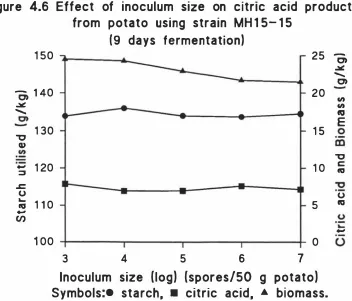
(15) xii. List of Figures. Figure 2. 1. The tricarbxylic acid cycle with glyoxylic acid cycle and carbohydrate input (Dawson, 1 986) . . . . . . . . . . . . . . . . . . .. 13. 3. 1. Diagram of gas-solid fluidized bed reactor . . . . . . . . . . . . . . . . .. 47. 3.2. Schematic diagram of gas-solid fluidized bed reactor system . . . .. 48. 3.3. Schematic diagram of gas-liquid-solid reactor system. . . .. 50. 3.4. Diagram of gas-liquid-solid reactor . . . . . . . . . . .. . . . . . . . . . .. 51. 3.5. Schematic diagram of rotating reactor system . . . . . . . . . . . . . . .. 52. 3.6. Diagram of Agee jar (reactor) . . . . . . . . . . . . . . . . . . . . . . . . . .. 52. 3.7. Schematic diagram of packed bed reactor system . . . . . . . . . . . .. 54. 3.8. Diagram of packed bed reactor . . . . . . . . . . . . . . . . . . . . . . . . .. 55. 3 .9. Diagram of multi-layer packed bed reactor . . . . . . . . . . . . . . . . .. 57. 3.10. Schematic diagram of multi-layer packed bed reactor system . . . .. 58. 4. 1. Time profiles of substrate hydrolysis using enzymes . . . . . . . . . .. 66. 4.2. Time course of citric acid production from potato using strain. .. .. . . . .. .. MH 1 5- 1 5 . . . . . . . . . . . . . . . . . . . . . . . . . . . . . . . . . .. . . . . . . 4.3. Effect of addition of nitrogen on citric acid production from potato using strain MH 1 5- 1 5 (6 days fermentation) . . . . . . . . . . .. 4.4. 5. 1. . . . .. 75. potato using strain MH 1 5- 1 5 (6 days fermentation) . . . . . . . . . . .. 75. .. . . . .. .. Effect of inoculum size on citric acid production from. Effect of initial moisture content on citric acid production (6 days fermentation) . . . . . . . . . . . . . . . . . . . . . . . . . . . . . . . .. 5.2. 80. Effect of initial moisture content on yields of citric acid and biomass (6 days fermentation). 5.3. 73. Effect of addition of nitrogen on citric acid production from kumara using strain MH 1 5- 1 5 (6 days fermentation). 4.6. 73. Effect of addition of phosphate on citric acid production from potato using strain MH 1 5- 1 5 (6 days fermentation) . . . . . . . . . . .. 4.5. 72. . . . . . . . . . . . . . . . . . . . . . . .. .. 80. . . . . . . . . . . . .. 81. .. Effect of initial moisture content on ratio citric acid to biomass (6 days fermentation). . . . . . . . . . . . .. ..
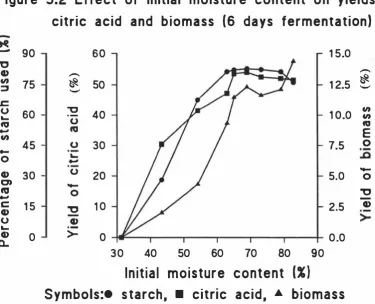
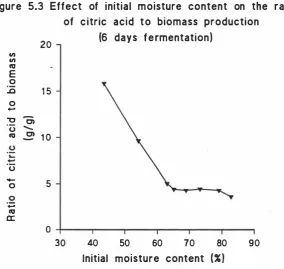
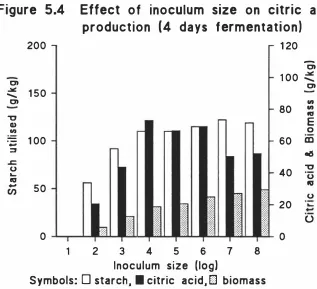
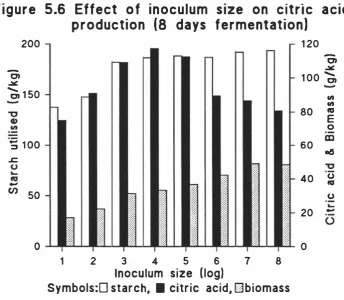
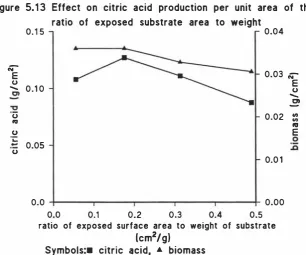
(16) List of Figures. xiii. Figure 5 .4. Effect of inoculum size on citric acid production (4 days fermentation) . . . . . . . . . . . . . . . . . . . . . . . . . . . . . . . .. 5.5. Effect of inoculum size on citric acid production (6 days fermentation) . . . . . . . . . . . . . . . . . . . . . . . . . . . . . . . .. 5.6. 87. Effect of particle size on citric acid production (5 days fermentation) . . . . . . . . . . . . . . . . . . . . . . . . . . . . . . . .. 5. 10. 85. Effect of particle size on citric acid production (4 days ferme!1tation) . . . . . . . . . . . . . . . . . . . . . . . . . . . . . . . .. 5 .9. 85. Effect of inoculum size on ratio of citric acid to biomass (6 days fermentation) . . . . . . . . . . . . . . . . . . . . . . . . . . . . . . . .. 5.8. 84. Effect of inoculum size on citric acid production (8 days fermentation) . . . . . . . . . . . . . . . . . . . . . . . . . . . . . . . .. 5.7. 84. 87. Effect of particle size on citric acid production. ( 6 days fermentation) . . . . . . . . . . . . . . . . . . . . . . . . . . . . . . . . 88 5. 1 1. Ratio of citric acid to biomass production varying on substrate particle size. 5.12. . . . . . . . . . . . . . . . . . . . . . . . . . . . . .. Effect on citric acid production of the ratio of exposed surface area to the weight of substrate on substrate size . . . . . . . . . . . . .. 5. 1 3. 91. Measurement o f penetrating ability o f organism i n solid substrate fermentation . . . . . . . . . . . . . . . . . . . . . . . . . . . . . . .. 6. 1. 91. Effect on citric acid production per unit area of the exposed surface area to the weight of substrate on substrate particle size . .. 5. 14. 88. 92. Time course of the solid substrate fermentation for citric acid production . . . . . . . . . . . . . . . . . . . . . . . . . . . . . . . . . . . . 1 10. 6.2. The morphological observation of A. niger growth on kumara paste (day 1 ) . . . . . . . . . . . . . . . . . . . . . . . . . . . . . . . . III. 6.3. The morphological observation of A. niger growth on kumara paste (day 2) . . . . . . . . . . . . . . . . . . . . . . . . . . . . . . . . 1 1 1. 6.4. The morphological observation of A. niger growth on kumara paste (day 3) . . . . . . . . . . . . . . . . . . . . . . . . . . . . . . . . 1 12.
(17) XIV. List of Figures Figure 6.5. The morphological observation of A. niger growth on kumara paste (day 4) . . . . . . . . . . . .. . . . . . . . . . . . . . . . . . . . . . . . . . . . . . 1 1 2. 6.6. The morphological observation of A. niger growth on kumara paste (day 5) . . . . . . . . . . . . . . . . . . . . . . . . . . . . . . . . . . . . . . . . . . 1 1 3. 6.7. Time course of free glucose and glucoamylase activity . . . . . . . . 1 1 3. 6.8. Gravimetric rates during solid substrate fermentation process . . . . 1 1 5. 6.9. Specific rates during solid substrate fermentation process . . . . . . . 1 1 5. 6. 1 0. Relationship between free glucose, glucoamylase activity and gravimetric rate of starch utilization. 6. 1 1. . . . . . . . . . . . . . . . . . . . . . 1 16. Gravimetric rates of the solid substrate fermentation represented by basing on residual starch . . . . . . . . . . . . . . . . . . . . . . . . . . . 1 19. 6. 1 2. Plot of specific citric acid production rate against specific growth rate in solid substrate fermentation. 7. 1. Morphological observation of fungal growth in a packed bed reactor (6 days fermentation). 7.2a. . . . . . . . . . . . . . . . . . . . . . . 1 22. . . . . . . . . . . . . . . . . . . . . . . . . . . 137. Morphological observation of fungal growth in a packed bed reactor, in packed situation (6 days fermentation) . . . . . . . . . . . . 1 3 8. 7 .2b. Morphological observation of fungal growth in. a. packed bed. reactor, in a radius section view (6 days fermentation) . . . . . . . . . 1 3 8 8. 1 a, b , c. Response surfaces of citric acid concentration in packed bed reactor (keeping particle size constant) . . . . . . . . . . . . . . . . . . . . 148. 8.2a, b, c. Response surfaces of citric acid concentration in packed bed reactor (keeping bed loading constant) . . . . . . . . . . . . . . . . . . . . 149. 8.3a, b, c. Response surfaces of citric acid concentration in packed bed reactor (keeping air flow rate constant). 8.4a, b, c. . . . . . . . . . . . . . . . . . . . 1 50. Response surfaces of biomass concentration in packed bed reactor (keeping particle size constant) . . . . . . . . . . . . . . . . . . . . 1 54. 8.5a, b, c. Response surfaces of biomass concentration in packed bed reactor (keeping bed loading constant) . . . . . . . . . . . . . . . . . . . . 155. 8.6a, b, c. Response surfaces of biomass concentration in packed bed reactor (keeping air flow rate constant). . . . . . . . . . . . . . . . . . . . 1 56.
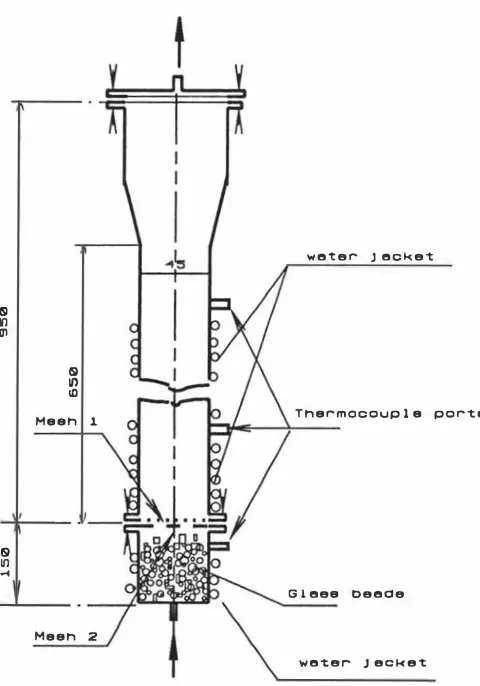
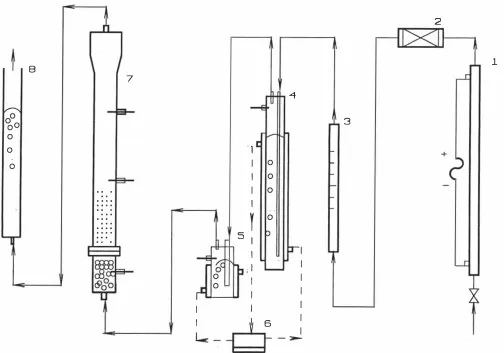
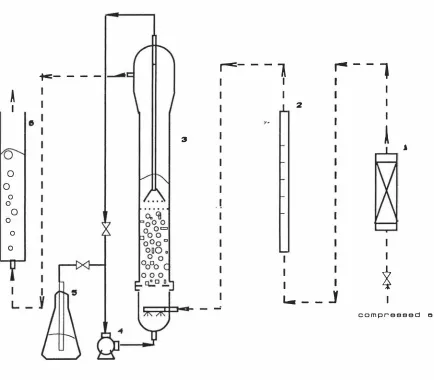
(18) xv. List of Figures Figure 8.7a, b, c. Response surfaces of biomass yield in packed bed reactor (keeping particle size constant) . . . . . . . . . . . . . . . . . . . . . . . . . 1 57. 8 .8a, b, c. Response surfaces of biomass yield in packed bed reactor (keeping bed loading constant) . . . . . . . . . . . . . . . . . . . . . . . . . 1 58. 8.9a, b, c. Response surfaces of biomass yield in packed bed reactor (keeping air flow rate constant) . . . . . . . . . . . . . . . . . . . . . . . . . 1 59. 8. 1 0a, b, c. Response surfaces of amount of carbon dioxide production in packed bed reactor (keeping particle size constant) . . . . . . . . . 1 62. 8. 1 1 a, b, c. Response surfaces of carbon dioxide yield in packed bed reactor (keeping particle size constant) . . . . . . . . . . . . . . . . . . . . 1 63. 8. 1 2a, b, c. Response surfaces of carbon dioxide yield in packed bed reactor (keeping bed loading constant) . . . . . . . . . . . . . . . . . . . . 1 64. 8. 1 3a, b, c. Response surfaces of carbon dioxide yield in packed bed reactor (keeping air flow rate constant). 8 . 14a, b, c. . . . . . . . . . . . . . . . . . . . 1 65. Response surfaces of percentage of starch utilization in packed bed reactor (keeping particle size constant) . . . . . . . . . . . . . . . . . 1 68. 8 . 1 5a, b, c. Response surfaces of percentage of starch utilization in packed bed reactor (keeping bed loading constant) . . . . . . . . . . . . . . . . . 1 69. 8. 1 6a, b, c. Response surfaces of percentage of starch utilization in packed bed reactor (keeping air flow rate constant). . . . . . . . . . . . . . . . . 1 70. 9. 1. Time course of citric acid fermentation in packed bed reactor . . . . 1 76. 9.2. Gravimetric rates of citric acid fermentation in packed bed reactor 1 77. 9.3. Specific rates of citric acid fermentation in packed bed reactor . . . 1 77. 9.4. Air flow pressure drop along the substrate layer in packed bed reactor . . . . . . . . . . . . . . . . . . . . . . . . . . . . . . . . . . . . . . . . . . 1 80. 9.5. Plot of specific rate of citric acid production versus specific growth rate of fermentation in packed bed reactor . . . . . . . . . . . . 1 80. 9.6. Time profiles of CO2 production in multi-layer packed bed reactor 1 83. 9.7. Time profiles of temperature in multi-layer packed bed reactor.. . 1 83. 9.8. Time profiles of starch utilization in multi-layer packed bed reactor . . . . . . . . . . . . . . . . . . . . . . . . . . . . . . . . . . . . . . . . . . 1 84.
(19) xvi. List of Figures Figure 9.9. Time profiles of biomass production in multi-layer packed bed reactor . . . . . . . . . . . . . . . . . . . . . . . . . . . . . . . . . . . . . . . . . . 1 84. 9. 1 0. Time profiles of citric acid production in multi-layer packed bed reactor . . . . . . . . . . . . . . . . . . . . . . . . . . . . . . . . . . . . . . . . . . 1 85. 9. 1 1. Morphological observation of the fermentation in multi-layer packed bed reactor (5 days fennentation) . . . .. .. . . . . . . . . . . . . . 1 85. 9. 1 2. Gravimetric rates o f layer 1 i n multi-layer packed bed reactor. 9. 1 3. Gravimetric rates of layer 2 in multi-layer packed bed reactor. 9. 1 4. Gravimetric rates o f layer 3 i n multi-layer packed bed reactor. 9. 1 5. Gravimetric rates of layer 4 in multi-layer packed bed reactor. 9. 1 6. Time profiles o f O2 and CO2 i n multi-layer packed bed reactor. . . 1 93. 9. 1 7. Time profiles of temperature in multi-layer packed bed reactor. . . 1 93. ·. ·. ·. ·. . . 1 88 .. .. 188. . . 1 89 . . 1 89.
(20) xvii. List of Tables. Table 2. 1. Application of reactors in solid substrate fermentation . . . . . . . . . . . . . .. 28. 2.2. Characteristics of reactors for solid substrate fermentation . . . . . . . . . . .. 29. 3.1. Sucrose-beef extract medium. . . . . .. . . . . . . . . . . . . . . . . . . . . . . . . .. 33. 3.2. Chemicals and suppliers . . . . . . . . . . . . . . . . . . . . . . . . . . . . . . . . . . .. 34. 4. 1. Starch contents of substrates as determined following acid or enzymatic hydrolysis . . . . . . . . . . . . . . . . . . . . . . . . . . . . . . . . . . . . .. 4.2. Starch contents of substrates based on wet and dry weight of the substrate . . . . . . . . . . . . . . . . . . . . . . . . . . . . . . . . . . . . . . . . .. 4.3. 65. 65. Citric acid production from kumara, taro and potato using. A. niger strain Yang No.2 and MH 1 5- 1 5 . . . . . . . . . . . . . . .. . . . . . . . 68 4.4. Nutrients compositions of kumara, taro and potato . . . . . . . . . . . . . . . . .. 4.5. Comparison of ratio carbohydrate to other nutrients for potato,. 5.1. 69. kumara, taro and a liquid medium . . . . . . . . . . . . . . . . . . . . . . . . . . . .. 69. The matrix of the fractional factorial design . . . . . . . . . . . . . . . . . . . . .. 95. 5 .2. The added concentrations of metal ions . . . . . . . . . .. 5.3. Responses of citric acid production affected by the added metal ions. .. . . . . . . .. _.. . . . . .. 95. after 6 days fermentation . . . . . . . . . . . . . . . . . . . . . . . . . . . . . . . . . .. 96. 5.4. Estimated effects and coefficients for citric acid production . . . . . . . . . .. 98. 5.5. Estimated effects and coefficients for yield of citric acid . . . . . . . . . . . .. 98. 5.6. Estimated effects and coefficients for biomass production . . . . . . . . . . . .. 99. 5.7. Estimated effects and coefficients for yield of biomass . . . . . . . . . . . . . .. 99. 5.8. Estimated effects and coefficients for starch utilized concentration. . . . . . 101. 5.9. Estimated effects and coefficients for percentage of starch utilized. . . . . . 101. 5.10. Estimated effects and coefficients for ratio of citric acid to biomass. 6. 1. Comparison of kinetic characters among different fermentation. . . . . 1 02. technologies . . . . . . . . . . . . . . . . . . . . . . . . . . . . . . . . . . . . . . . . . . . 1 23 7. 1. Fermentation parameters for citric acid production from kumara in a packed bed reactor. 8. 1. . . . . . . . . . . . . . . . . . . . . . . . . . . . . . . . . . . . . . . 1 36. Matrix of full factorial design and decoded value . . . . . . . . . . . . . . . . . 1 43.
(21) xviii. List of Tabies Table 8.2. Responses of experiments for the full factorial design (after 4 days fermentation) . . . . . . . .. .. . . . . . . . . . . . . . . . . . .. .. .. .. . .. .. 144. 8.3. Estimated effects for citric acid concentration . . . . . . . . . . . . . . . .. 8 .4. Estimated effects for citric acid yield. 8.5. Estimated effects for biomass concentration . . . . . .. 8.6. Estimated effects for biomass yield . . . . . . . . . . . . . . . .. 8.7. Estimated effects for amount of carbon dioxide produced . . . . . . . . . . . . 1 6 1. 8.8. Estimated effects for yield of carbon dioxide. 8 .9. Estimated effects for percentage of starch utilised . . . . . . . . . . . .. 9. 1. Comparison of fermentations in packed bed reactor and flasks .. 9.2. Carbon balance of the fermentation in a multi-layer packed bed reactor (4 days fermentation). 9.3. .. . . . . .. .. . . . . . . . . . .. . .. .. .. .. . . . . . . . . . .. .. . . . . . . . .. .. . .. .. .. .. . . . . . .. .. .. . . .. .. .. 147 147 1 53. . . . . . . . 1 53. . . . . . . .. .. .. .. .. . . .. . . . . . . . . . . . . . . . . . . . . . . . . .. .. .. .. .. .. .. .. .. .. .. 161 1 67. . 1 79. . 1 90. Fermentation in single layer packed bed reactor with 400 g bed loading (5 days fermentation). .. . . . . . . . . . . . . . . . . . . . . . . . .. .. 1 94.
(22) XIX. Nomenclature. bar. 2 atmospheric pressure, 1 kg/cm 2 pressure, 1 .02 kg/cm. BM. Biomass concentration, in glkg initial wet substrate. CA. Citric acid concentration, in g/kg initial wet substrate. cm. Centimetre( s). °C. Degree Celsius. g. Gram(s). h. Hour(s). kcal. 1 000 Caloric. kg. kilogram. kj. 1 000 joule. ATM. Litre(s) M. Mole concentration. mg. Milligram( s). mm. Minute(s). ml. Millitre(s). mm. Millimetre( s). NAD+, NADH. Nicotinamide adenine dinucleotide, and its reduced form. ppm. Parts per million. q. Specific rate, in gIg biomass.h. r. Rate of production or utilization, in glkg.h. rpm. Revolutions per minute. RS. Resident starch concentration, in g/kg initial wet substrate. t. time, in hour or day. 11. Specific growth rate, in h-I. Jll. Microlitre(s). % (w/w). Percentage weight by weight. % (w/v). Percentage weight by volume. % (v/v). Percentage volume by volume.
(23) 1. Chapter 1. Introduction. Since the introduction of submerged fermentation technology, this technique has dominated commercial production of citric acid and, consequently, research activities in this. area.. Our understanding of this fermentation technology is much. more. comprehensive than that of other technologies, such as liquid surface and solid substrate fermentations. However, with increasingly strict environmental requirements, the dominant position of submerged fermentation has been challenged, due mainly to the large amount of waste water. released from the process, the limited range of substrates which can be used, and the high energy requirement. Solid substrate fermentation, because of its environmental friendliness, the wide range of substrates which can be used, its potentially higher productivity and smaller energy requirement, is becoming of interest worldwide. For citric acid production using solid substrate fermentation, Yamada ( 1 977) reported that large scale production using starch residues was used in Japan, but no detailed description was provided. There are also several other reports where solid substrate fermentation has been described for citric acid production, and potential advantages, including the use of cheap substrates and production of high concentrations of citric acid, have been claimed. However, understanding of this fermentation technology appears very limited.. The work described in this thesis was undertaken to provide systematic information on a solid substrate fermentation process using a selected substrate which allowed easy biomass measurement. The investigation included attempts to optimize the process, and to understand the kinetics of the solid substrate fermentation both in flasks and in a packed bed reactor. The latter was chosen as an appropriate technology for the process, and preliminary studies on heat and mass transfer were conducted to provide some basic knowledge for future investigations..
(24) 2. Chapter 2 Literature Review. 2.1 Introduction. At present, citric acid is the largest tonnage organic acid produced by commercial fermentation.. Since the invention of production by fermentation late last century,. development of citric acid production has progressed greatly. A prerequisite of this development has been the collaborative contributions from physiology, which provides knowledge of the fermentation mechanism, from genetics, which provides better strains of organisms, and from biochemical engineering, which provides fennentation technologies, including fermentation processes and reactors. In the past 30 years, an extensive body of literature has accumulated, including more than 500 reports published worldwide. Amongst these reports are some comprehensive reviews written from different aspects (Prescott and Dunn, 1 959; Lockwood and Schweiger, 1 967; Miall, 1 978; Kapoor et aI, 1 982; Rohr et aI, 1 983; Milson and Meers, 1 986; Dawson, 1 986). However, these reviews have placed little emphasis on the development of fennentation technologies for citric acid production, despite the fact that since the first isolation of citric acid from lemon juice, its production has had a very close relationship with the development of these technologies. Every improvement in the basic technology has spurred citric acid production, particularly the development of submerged fermentation.. In this chapter, an attempt has been made to overview fermentation technologies for citric acid production, associated with an understanding of the organism and its biochemistry .. 2.2 History of Citric Acid Production. The history of fermentation technologies for citric acid production can be divided into three phases. The first phase began in 1 893 when Wehmer found that citric acid was.
(25) 3. Literature Review. excreted by some strains of fungi, and a new era of citric acid production was commenced. However, Wehmer's efforts did not achieve successful commercial production due to problems of contamination and the long duration of the fennentation process. Currie solved these problems and optimized the fennentation medium, and brought citric acid production by fennentation into commercial use in 1923. Liquid surface fennentation was the technology used, and large amounts of citric acid were produced using this technology, until submerged fennentation was introduced. Although there were some early reports describing submerged fennentation for citric acid production (Shu and Johnson, 1948a, 1948b), application of this technology on an industrial scale, the second phase, did not come into operation until the early 1950s. Since it was introduced, however, submerged fennentation technology has dominated citric acid production. Many investigations have been carried out in submerged fennentation, and this technology has been improved considerably, with a corresponding improvement in citric acid productivity. Although the development of submerged fennentation is continuing, particularly in the development of new reactors, the third phase of development of fennentation technology may now have begun with the emergence of solid substrate fennentation. More and more research attention is being paid to solid substrate fennentation technology, because it is friendly to the environment and has other potential advantages. During this third phase, however, the submerged fennentation process will continue its dominant position in citric acid production, but it will coexist with surface and solid substrate fennentation.. 2.3 Organisms. Many different groups of fungi have been found to accumulate citric acid, particularly the genera Aspergillus and Penicillium. Many strains of these two genera have been used for studies of citric acid production; Loesecke (1945), Foster (1949), and Kapoor et al (1982) have provided extensive reviews about them. However, only selected strains of. Aspergillus niger, mainly mutants, have been reported to be used in commercial fennentation. Strain improvement programs have used a variety o. fttechniques, such as. induced mutation.
(26) Literature Review. 4. ultraviolet light, but recently some more novel approaches have been reported. Kirimura. et al ( 1 988a, b) reported on diploid strains of A. niger obtained by protoplast fusion. Later, this group obtained 2-deoxyglucose-resistant mutant strains (Kirimura et ai, 1 992) and autodiploid strains for citric acid production from starch (Sarangbin et ai, 1 994). Islam et al ( 1 986) isolated mutants of A. niger using gamma-ray induced mutagenesis for citric acid production from molasses. These strains were reported to have high tolerance to metal ions. No doubt, continuous efforts will be made to obtain mutant strains for use on different substrates and in different conditions.. Various yeasts, particularly those of the genera Candida and Saccharomycopsis, have been shown to accumulate citric acid, and some bacteria, such as Bacillus licheniformis,. Bacillus subtilis and Brevibacterium flavum have been found to possess this property. Kapoor et al ( 1 982) and. Milson and Meers ( 1 986) have provided comprehensive. reviews of this subject. As stated above, yeasts of the genera Candida and. Saccharomycopsis have been used in most investigations, e.g. Souw et al (1976, 1 977) used a strain of Candida, with n-alkane as the substrate, while Tani et al ( 1 990) used a strain of Candida, with methanol as the substrate. A strain of S.lipolytica was used by Maddox and Kingston ( 1 983), while a strain of Yarrow lipolytica was used by Kautola. et al ( 1 99 1 ). Yeasts have the advantage over A. niger of producing citric acid at higher rate but are unable to use such a wide spectrum of substrates. Apparently, only a few commercial plants produce citric acid using yeasts, most preferring to use A. niger.. 2.4 Nutritional Status of the Medium. Growth of organism in an appropriate medium, in association with optimum levels of several environmental factors, is a prerequisite for citric acid accumulation. In the medium, there is, firstly, carbohydrate, which is the carbon source to meet the needs of organism growth and citric acid production. Also, nitrogen and phosphate, and a range of metal ions and mineral ions are required. The amount of each individual component will affect both the organism growth and citric acid production..
(27) Literature Review. 5. 2.4.1 Carbohydrate It is generally accepted that any polysaccharide used for citric acid production by fungi, must be converted into monosaccharide by the organism. Therefore, the organism must possess the necessary enzymes to hydrolyse the polysaccharide. Many sugars can be used by Aspergillus niger for citric acid production. Among these, sucrose has been reported to be the most favoured carbon source (Hossain et ai, 1984), while other sugars were favoured in the order of glucose, fructose and lactose. Galactose was found to be a poor substrate for citric acid production except in the presence of 1-3% (v/v) methanol (Maddox et ai, 1986) and has been reported to be an inhibitor of citric acid production from glucose (Hossain et ai, 1985). Xu et ai (l989a) reported a similar order of preference, i.e. maltose, sucrose, glucose, mannose and fructose, but little citric acid production was observed from starch. Begum et ai (1990) concluded that a combination of sugars, at 50% each, e.g. sucrose/glucose, glucose/sorbitol, glucose/xylose and xylose/sorbitol, could improve the citric acid yield over that obtained when using single sugars.. In present commercial practice, the raw materials which are generally used are cane or beet molasses and starch hydrolysate/glucose syrup. Rohr et al (1983) sorted these carbohydrates as follows:. a) materials with low ash content, such as types of cane sugar, beet sugar and com sugar. These materials are mainly used in submerged fermentation. b) materials with high ash content, such as types of cane molasses, beet molasses and starch hydrolysate. These materials are usually used in surface fermentation after appropriate treatment to remove contaminating metal ions.. Due to the high cost and limited supply of substrate, more and more new carbohydrates have been investigated for citric acid production, most of them in solid substrate fermentation. Starch residues have been used in Japan for large scale production of citric acid by solid substrate fermentation (Yamada, 1977). Many agricultural and food industrial solid wastes, such as apple pomace (Hang and Woodams, 1984, 1987; Hang,.
(28) Literature Review. 6. 1988), grape pomace (Hang and Woodams, 1985), cellulose hydrolysate from sugar cane bagasse (Manonmani and Sreekantiah, 1987) and wheatbran (Shankaranand and Lonsane, 1 994), have also been used for citric acid production in solid substrate fermentation, where the process can be viewed as a waste treatment operation.. The optimum concentration of carbohydrate in the fermentation medium has been reported to be between 100-200 gil, while 160 gil is used in current commercial practice in submerged fermentation (Berry et ai., 1977).. 2.4.2 Nitrogen and phosphate. Nitrogen and phosphate are generally used as the growth-limiting nutrients during citric acid production so that the fermentation operates under nitrogen andlor phosphate exhaustion during the production phase. Kristiansen and Sinclair (1978, 1979) reported that nitrogen or phosphate exhaustion was a prerequisite for citric acid accumulation in both batch and continuous fermentation. Dawson et al (1988, 1989) reported that nitrogen or phosphate limitation were necessary to obtain higher citric acid productivity values during fed-batch and batch fermentations. These reports suggested that nitrogen limitation was more favourable than phosphate limitation for citric acid production. However, Honecker et al (1989) reported that phosphate limitation had more pronounced effects on citric acid production using immobilized cells than did nitrogen limitation. There are no generally accepted data showing the exact relationship between exhaustion of either nitrogen or phosphate and the initiation of citric acid production. Rohr et al (1983) attempted to reveal the role of nitrogen metabolism in citric acid accumulation. However, it is likely that the effects of nitrogen and phosphate may be related to not only the physiology but also to the morphology of the organism. Furthermore, the actual limiting concentrations may vary among different strains of organism, and different fermentation conditions.. In practical terms, the limiting concentrations of nutrients to maximize citric acid production, with minimum biomass production, probably require more attention..
(29) Literature Review. 7. 2.4.3 Metal ions It is well established that the metal ion requirements for citric acid production must be investigated whenever a new strain or substrate is used (Berry et ai, 1 977; Jennings, 1 988). Fe2+, Cu2+, Zn2+ and Mn2+ are the most sensitive metal ions with regard to citric acid production. They have received much research attention. Clark et ai ( 1 966) studied the effects of various metal ions on citric acid production, and concluded that very low levels of Fe2+, Cu2+ and Zn2+, and total absence of Mn2+ were required for high yields of citric acid. Kubicek, Rohr and their coworkers concluded that the physiological and metabolic changes of A. niger during citric acid production under Mn2+ deficiency are as follows:. a) lower levels of pentose phosphate pathway and tricarboxylic acid cycle enzymes (Kubicek and Rohr, 1 977). b) higher levels of pyruvate and oxaloacetate (Kubicek and Rohr, 1 978); c) elevated levels of amino acids during idiophase (Kubicek et ai, 1 979). d) elevation of cell wall chitin and decreased �- 1 ,3-glucan (Kisser et ai, 1 980). e) increased monosome portion of ribosomes and elevated proteinase activity as well as rate of protein degradation (Ma et ai, 1 985). f) no influence on cyclic AMP, which has been realised to have a direct influence on citric acid production (Xu et ai, 1 989c).. Jemejc et al ( 1 989) found that in the presence of Mn2+, the amount of total lipids in mycelia was up to two times higher than in conditions favouring citric acid production.. The metal ions, Fe2+, Cu2+ and Zn2+ have been reported to have a critical influence on citric acid production. Several reports indicate that some or all of these metal ions should be absent from the medium or present in very low concentration (Shu and Johnson , 1 948a, 1 948b; Prescott and Dunn, 1 959; La Nauze, 1 966; Kapoor et ai, 1 982). Jemejc et ai ( 1 982) reported that no more than 40 mgll of CuS04.5H20 in the medium resulted in high yields of citric acid. It is generally accepted that a high concentration of Cu2+ can eliminate the negative effect of Fe2+ (Rohr et ai, 1 983). Zn2+ was reported.
(30) Literature Review. 8. to be critical for initiation of citric acid accumulation by Wold and Suzuki (1976).. In current practice, due to the complex composition of the commercial substrates used, particularly molasses, the presence of individual metal ions is always in excess rather than in deficit. Therefore, many investigations are related to methods for removing metal ions and to the organisms' tolerance to excessive amounts. The most used removal agent is ferrocyanide which can precipitate or complex ferrous and other ions. For example, it has been used to treat beet molasses (Horitsu and Clark, 1966), black strap molasses (Sanchez-Marroquin et ai (1970) and tamarind seed powder hydrolysate (Purohit and Daginawaha, 1986), with a subsequent improvement in citric acid yield. However, excessferrocyanide has a toxic �ffect on citric acid accumulation. Thus other agents, such as sodium dithionite, potassium pyrosulphate and sodium bisulphite have been added to eliminate the toxic action offerrocyanide(Ilczuk, 1983). Other chelating agents, such. as. tricalcium phosphate, hydrochloric acid (Kundu et ai, 1984), sodium malonate, iodoacetate, sodium azide, sodium arsenate and sodium fluoride (Agrawal et ai, 1983) have been described. Ion exchange resins have been widely used to remove the excess metal ions even in commercial practice (Kapoor et ai, 1982), but the application is limited by the large requirement of the substrate used.. All these investigations were performed either in submerged or surface fermentations. Very few investigations have been related to solid substrate fermentations, where effects of these metal ions could be different, and the removal of excess ions would be very difficult. Shankaranand and Lonsane (1994) demonstrated that citric acid production in a solid substrate fermentation using wheat bran was resistant to high concentrations of metal ions, but the understanding of the effects appeared to be limited.. 2.4.4 Other additives In addition to metal ions, other additives have been reported to improve citric acid production. The addition of methanol to whey substrate (Hossain et ai, 1983), apple pomace (Hang and Woodams, 1987), beet molasses (Roukas et ai, 1987), and galactose (Maddox et ai, 1986) have been reported to increase citric acid production. Ethanol and.
(31) Literature Review. 9. isopropyl-alcohol (Moyer, 1953a, b) and acetate (Nowakawska-Waszczuk et ai, 1984) have been reported to have similar effects.. 2.5 Environmental Factors. The environmental factors required for successful citric acid production vary for different strains of organism, different media, and possibly for different fermentation technologies. There have been some comprehensive reviews of the environmental factors, e.g. Kapoor et ai ( 1 982), Rohr et ai (1983) and Dawson (1986). However, the difference among fermentation technologies has not been taken account, e.g. moisture content of substrate and relative humidity (RR) of air in solid substrate fermentation. To focus on these, the environmental factors which are applicable to only one fermentation technology, have not been discussed in this section.. 2.5.1 pH. The influence of the culture pH value was originally seen to be contradictory. Wehmer tried to optimize the fermentation medium for citric acid production at the beginning of this century, because low pH values inhibited citric acid production (partly due to the limitation of the strains used), while high pH values led to oxalic acid production and increased the risk of microbial contamination. With the development of mutant strains, however, the contradiction has been solved. A pH value between 2.0 to 3.0 was suggested by Berry et al( 1977) to favour citric acid production. However, the optimum initial pH of the medium varies depending on the substrate used; a pH value of 2.5 to 4.0 was reported to be optimum for chemically defined media (Jemejc et ai, 1982) while an initial pH value of 6.0 to 7.5 was required in molasses medium (Berry et ai, 1977). Hossain et al (1983) observed that an initial pH of 4.5 was optimal in whey permeate for citric acid production, while Roukas and Alichanidis (1991) suggested an initial pH value of 3.0 in beet molasses. Control of the pH value during different fermentation phases was suggested by Kapoor et ai (1982), where a higher pH is maintained in.
(32) Literature Review. 10. growth phase, thereafter the pH is permitted to drop during citric acid production. The low pH value, on the other hand, can prevent bacteria contamination.. The pH value in submerged and surface fermentation media can be adjusted according to the particular situation, or even controlled during the period of fermentation process. However, in solid substrate fermentation, this is very difficult, and normally the pH value is allowed to change naturally with the progress of the fermentation.. 2.5.2 Temperature. The incubation temperature is very important for citric acid production. The generally accepted optimum temperature ranges from 25 to 30°C to achieve high yields and rapid rates of citric acid production (Prescott and Dunn, 1 959; Kapoor et at, 1 982). Temperatures above 30°C could decrease the citric acid yield and increase oxalic acid production, while temperature below 25°C slow the organism growth and fermentation rates (Kapoor et at, 1 982). In commercial practice using liquid media, heat exchange facilities, such as snake tubes and water jackets, are used to control the temperature. In the initial stage, warm water is supplied to maintain the required temperature, while in later stages, cool water is supplied to remove fermentation heat, thus keeping the temperature in the required range. However, the control of temperature in solid substrate fermentation becomes very difficult, due to the nature of the substrate and lack of effective reactors.. 2.5.3 Aeration. Citric acid is an oxidation product of hexose sugar, and therefore, during the fermentation process, it is essential to ensure a supply of oxygen exceeding that required for the organism growth alone. Kubicek et al ( 1 980) suggested that the minimum dissolved oxygen tension (DOT) in submerged fermentation for citric acid accumulation was about 25 mbar. Production increased steadily when the DOT was raised from 40 to 1 50 mbar, and the interruption of aeration or the lowering of DOT caused an irreversible.
(33) Literature Review. 11. alteration in both citric acid production and respiration of the organism. In contrast, Dawson et al ( 1 987) showed that above a DOT value of 20% of saturation there was no gross effect on citric acid production, and even if the oxygen supply was interrupted for as long as 85 minutes, during which time the culture DOT value was at zero, citric acid production recommenced after restoration of the oxygen supply. Roukas ( 1 99 1 ) observed that increasing the DOT of the culture by raising the speed of the impeller did not lead to increased citric acid yields.. In surface fermentation, it is interesting that Sakurai and Imai ( 1 992) concluded that the citric acid yield was constant when the dissolved oxygen tension was less than 74 % of saturation, but that it decreased in the range of 74 to 1 00 % (v/v). For a solid substrate fermentation, Hang ( 1 988) reported that a high air flow rate through a packed bed reactor could improve citric acid production from apple pomace.. 2.5.4 Other factors The effects of some other factors on citric acid production have been also studied, e.g. Berovic et al ( 1 982) suggested that the redox potential of submerged fermentation cultures could be related to citric acid production. Later, this group found that there was a relationship between the rheological characteristics of the culture and citric acid production (Berovic et ai, 199 1 ).. 2.6 Fundamental Biochemistry of Citric Acid Accumulation. Biochemistry, or the mechanism of citric acid accumulation, has received much research attention since the beginning of citric acid production by fermentation, and there are many extensive reviews on this subject (e.g. Prescott and Dunn, 1 959; Kapoor et al ,. 1 982; Rohr et ai, 1 983; Dawson, 1 986). However, due to the complex nature of the mechanism, there still may be a considerable gap in our knowledge. The purpose of this section is to summarize the recent reports on this subject..
(34) 12. Literature Review. It is generally accepted that the final step in the synthesis of citric acid i s the condensation of acetyl CoA and oxaloacetate, as this is the major route of citric acid synthesis (Kapoor et ai, 1982), as shown in Fig 2.1. A number of reports have been published to explain the operation of TCA cycle, and much effort has been spent to reveal the operating functions of the enzymes. Rohr et al ( 1 983) and Dawson (1986) have made extensive reviews of these systems. They concluded that citric acid accumulation commences due to the incomplete operation of the TeA-cycle, when the activities of 2-oxoglutarate dehydrogenase, isocitrate dehydrogenase and succinic dehydrogenase were severely inhibited.. Recently, Legisa and Mattey ( 1 986a) suggested that glycerol accumulation, present in the early stage of the fermentation, is capable of inhibiting mitochondrial NADP+ dependent. isocitrate. dehydrogenase,. which. subsequently. leads. to. citric. acid. accumulation. Further, these authors reported that glycerol accumulation in the early stages may trigger the change of carbohydrate metabolism from the pentose phosphate pathway to the glycolysis pathway (Legisa and Mattey, 1986b). Later, however, they found that the decrease of the pentose phosphate pathway was due to inhibition of 6phosphogluconate dehydrogenase by intracellular citrate. This decrease occurred simultaneously with an increase in the activity of 6-phosphofructokinase, which regulates the glycolysis pathway (Legisa and Mattey, 1988). Legisa and Kidrie (1989) reported that there was a relationship between glycerol and the change in pH value during the fermentation.. From the technology viewpoint, understanding of the biochemistry of citric acid production is very meaningful to investigations of the kinetics, and subsequently to reactor designs. However, there are insufficient data to support this approach; only Szczodrak (1981) reported that the activities of some citrate accumulation related enzymes were much higher in submerged fermentation than in surface fermentation. However, the implications of these are unclear..
(35) 13. Literature Review. Figure 2.1 The tricarboxylic acid cycle with glyoxylic acid cycl� and carbohydrate input (Dawson, 1986). Sugars. � �. Fructose-6-phosphate (C6) phosphofructokinase. (C6). Fructose- 1,6-diphosphate. �. Phosphoenolpyruvic acid (C3). �. pyru ate. :. curate synthase. -.,.. Ox al oacetlc aCI'd (C4) ' pxaloacetic hydrolase malic dehydrogenase O �alic aCId (�. (. \ ". Malic acid (C4). ' .\. I x h.. aCId (�. Fumaric acid (C4) dehydrogenase. � O2 �. Acetyl CoA (C:J. �. •. •. •. CItrIC aCId (C6). \ aconitase. Isocitric acid (C6). ...� NAD -linked and NADP-linked. C O2--. /_. J. isocitrate dehydrogenases. 2-o xog lutaric acid (Cs). 2-oxoglutarate dehydrogena��. Succinyl CoA (Cs) Succinyl thiokinase Suc cinic acid (C4). ~. succinic. carboxykinase. _ _ _ _ _ _. GIyo y .. fuma rase. phosphoenolpyruviate. Pyruvic acid (C3). CO. carboxylase. .. I t. 4. CO2. -.
(36) Literature Review. 14. 2.7 Fermentation Technologies for Citric Acid Production. 2.7.1 Introduction As generally described, there are three different fermentation technologies: a) liquid surface fermentation; b) submerged fermentation; c) solid substrate fermentation, the so called "koji" process. There are many differences among the three fermentation technologies, including the organism morphological characteristics and the substrates used. These differences can lead to different mass transfer characteristics, nutrient requirement and environmental conditions, which can subsequently lead to different reactor designs. However, although there are some extensive reviews describing the different fermentation technologies (Kapoor et aI, 1982; R5hr et ai, 1 983; Dawson, 1 986), detailed analyses associated with these differences have been rarely found. The purpose of this section is to analyze the fermentation technologies in the aspects of: substrate, morphological characteristics, mass transfer, kinetics and reactors, but to neglect the inoculation, sterilization and citric acid recovery processes.. 2.7.2 Liquid surface fermentation. Liquid surface fermentation was the first used fermentation technology for citric acid production. The fermentation is generally carried out in shallow pans where the fungal mycelium develops on the surface of the medium. The system consists of, in general, fermentation rooms, in which a number of pans are mounted one over the other in stable racks. The pans, as reactors, are made of aluminium or of stainless steel, with sizes ranging from 2mx2.5mxO. 15m to 2.5mx4mx0.30m, filled with medium depths of 0.08 to 0.25 m (Rohr et aI, 1 983).. After inoculation with spores, the medium is covered with a mycelial film after 2 to 3 days. During the fermentation, moist air is introduced into the room, and evenly distributed at all levels of the room. The organism is well aerated because it is in direct contact with the air. The organism takes up nutrients from the medium, and accumulated citric acid is secreted and dissolves in the medium. In this way, any product inhibition.
(37) ------. --. -------. Literature Review. 15. is reduced considerably. The temperature is controlled b y adjusting the air flow temperature, while the heat released during fermentation is removed by means of water evaporation, with the help of air circulation. During the intensive fermentation period, gentle mixing of the medium is necessary to reduce the temperature gradient in the medium. Therefore, in surface fermentation, the organism grows in conditions free of shear stress and product inhibition, with good aeration and nutrients supply although the contact between the organism and the medium is limited.. Beet or cane molasses, diluted to a sugar concentration of 1 5 to 20% (w/v), is used as a raw material for surface fermentation. Due to the presence of impurities, particularly of excessive metal ions con!ent, the molasses are normally treated with potassium hexacyanoferrate (Rohr et ai, 1 983), or other chelating agents, including ferrocyanide salts (Clark et ai, 1 966; Ilczuk, 1 983; Kundu et ai, 1 984), to precipitate or complex the metal ions. Recently, other substrates have been investigated for surface fermentation for citric acid production. Roukas and Kotzckidou ( 1 987) used brewery wastes, and showed that the addition of metal ions (Mn2+, Fe2+, and Zn2+) could improve citric acid production. Soluble starch (Sakurai and Imai, 199 1 ) and cotton waste (Kiel et ai, 198 1 ) have also been tested as the carbon source, at least on a laboratory scale.. The pans, as the reactors for surface fermentation, have undergone no major changes since their first use. However, an innovation has been to incorporate the pans with appropriate overflow devices, so that the operation can be carried out in fed-batch and continuous culture (Rohr et ai , 1 983). A similar process was developed by Roukas and Alichanidis ( 1 99 1 ) to retain the mycelium while replacing the fermented medium with fresh materials up to 7 times. Sakurai et ai ( 199 1 ) studied the kinetics of citric acid production, and concluded that a lower citric acid production rate is attained in surface fermentation than in all other fermentation technologies.. Due to intensive labour requirements, the high risk of contamination and the limitation of large scale production, the practical use of surface fermentation for commercial citric acid production is declining..
(38) Literature Review. 16. 2.7.3 Submerged Fermentation. Since its introduction, submerged fermentation has dominated commercial citric acid production. Fermentation is carried out in an enclosed vessel, and the organism grows throughout the medium. Therefore, there are many differences from the surface fermentation, including morphological characteristics, mass transfer and substrates used.. The conventional process of submerged fermentation consists of a stirred vessel with an air supply system, incorporating a heat exchange facility, such as snake tubes and water jacket. A typical process is described thus: the organism, after 1 to 2 days, grows as pellets of approximately 0.5 cm diameter. These pellets are suspended freely in the medium, thus the organism has a huge contact surface area with the medium to take up the nutrients and oxygen if the dissolved oxygen tension (DOT) is high enough. The air flow is introduced into the vessel at high speed, and the agitation equipment mixes and breaks the air bubbles, to increase DOT levels. The heat exchange system is used to control the medium temperature at 28 to 30°C by supplying warm water or cool water depending on the fermentation requirement.. Substrates used in submerged fermentation include cane sugar, beet sugar and com sugar. Starch hydrolysate from sweet potato and cassava are also used. The sugar concentration of the medium ranges from 1 5 to 27 % (w/v) (Rohr et ai, 1 983), while other nutrients, such as nitrogen, phosphate and metal ions, and even the pH value of the medium, can be controlled easily by addition or removal.. The conventional reactors used in submerged fermentation are the stirred vessel and tower fermenter, and their commercial capacity can be up to 1 ,000 m3 (Brown, 1 988). To increase the DOT value of the medium, the ratio of the reactor's height to diameter is up to 6: 1 in the stirred vessel, and the reactor is sometimes operated under pressure to ensure higher DOT values. Another way to increase the DOT value is to raise the stirrer speed. However, this not only increases the huge energy input, but is also harmful to the organism pellets (Brown, 1 988). Roukas ( 199 1 ) observed that increasing.
(39) Literature Review. 17. the DOT by raising the impeller speed led to decreased citric acid production. The air lift tower reactors were introduced for citric acid production after the 1 970s. Here, the higher ratio of height to diameter, up to 1 0: 1 , can increase the DOT in the medium, and its relatively large surface area for heat exchange makes the control of temperature more precise. It is possible to practise continuous operation by incorporating the vessels with feeding and draining systems.. In submerged fermentation, the filamentous organism becomes pellets which are suspended in the medium. Although the organism can take up nutrients easily, its morphological characteristics are very different from those in its natural environment. There are some published reports about these changes, e.g. Clark et ai ( 1 966) and Heinrich and Rehm ( 1 982). However, the relationship between these changes and citric acid production is unknown. Nevertheless the morphological characteristics of the pellets have been reported to have a relationship with metal ions, including Mn2+ (Clark et aI,. 1 966; Heinrich and Rehm, 1 982) and/or Fe2+, Zn2+, Cu2+ (Honecker et ai, 1 992), and the nitrogen nutrient (Eikmeier et ai, 1 984).. One disadvantage of these free pellets is that it is difficult to practice continuous operation, e.g. in the air lift reactor, since the pellets are removed by the medium drainage. Recently, much research effort has been spent on cell immobilization. Anderson et al ( 1 980) fixed the filamentous organism on a disc, while Vaija et ai ( 1 982) entrapped A. niger in calcium alginate beads and used them in an air-lift stirred reactor. In the latter, a 5 times higher productivity of citric acid than in batch fermentation was reported. Heinrich and Rehm ( 1 982) immobilized A. niger in a glass-carrier, and used it in a fixed bed reactor for citric acid production. Eikmeier and Rehm ( 1 984, 1 987) studied the morphological characteristics of A. niger immobilized on calcium alginate, and developed an immobilization apparatus for use on a laboratory scale. Recently, this group has studied the influence of metal ions on the immobilized cells (Honecker et aI,. 1 992). Lee et ai ( 1 989) developed a method for immobilizing A. niger on polyurethane foam, while Chung et al ( 1 988) reported immobilization in hollow-fibres, and achieved continuous operation for up to 40 days, with high productivity of citric acid..
(40) -----. --. ----. 18. Literature Review. Other submerged fermentation technologies which have been developed using free pellets include repeated batch with repeated use of mycelium. On a laboratory scale, Dawson et al ( 1 988) conducted fed-batch fermentation in a stirred tank reactor, while Kristiansen and Sinclair ( 1 979) and Dawson et al ( 1988) have reported a continuous fermentation in a stirred tank reactor, but it is unclear if these techniques are used commercially.. For the kinetics of citric acid production, Kristiansen and Sinclair studied the kinetics of batch ( 1 978) and continuous ( 1 979) processes for citric acid production, while Roehr. et al ( 1 98 1 ) investigated the kinetics of a batch process on a pilot plant scale. Dawson ( 1 986) systematically studied the kinetics of batch, fed-batch and continuous processes citric acid production. Briffaud and Engasser ( 1 979) studied the kinetics of citric acid production in a trickle flow reactor.. 2.7.4 Solid substrate fermentation. Traditionally, solid substrate fermentation has received little attention. 10. western. countries. But its use in oriental countries can be traced back more than 2000 years. For citric acid production, using starch residues from sweet potato and cassava, this solid substrate technology has been used in China, Japan and other oriental countries. It has been reported that a total of 5,400 tons/year of citric acid is produced by using solid substrate fermentation in Japan, mainly using starch waste and rice bran as substrate (Yamada, 1977). Unfortunately, no description of the process or reactor was provided by the author. The conventional solid substrate fermentation is described as follows: conidia, which are produced from rice bran or wheat bran by mixing with a spore suspension and cultivating for 3 to 4 days, are usually used for inoculation, by mixing with the substrate. The moisture content of the substrate is adjusted to 50-70%, and this inoculated substrate is conducted into trays in layer depths of 5 to 1 5 cm. These trays are the reactors, and have screen bottoms, allowing aeration by air diffusion across the substrate layers. They are incubated in incubation rooms similar to these used for surface fermentation. The room's temperature and atmosphere is controlled by air circulation,.
(41) Literature Review. 19. and the fennentation is completed after 4-6 days. The fennented substrate is treated by water extraction for the recovery of citric acid. The extracted residues, with a rich microbiological protein content, are used as stockfeed. In this way, the solid substrate fennentation process releases little waste water during citric acid production.. One of the remarkable characteristics of solid substrate fennentation is that it is a process with no free water . Therefore, the filamentous organism is close to its natural situation, and takes in oxygen from the surrounding atmosphere and nutrients from the substrate.. The trays, as the reactors, have changed little during their history. Their temperature and aeration control is poor, so that the depth of the substrate is limited. Aidoo et al ( 1 982) reported that heat generation from solid substrate fennentation for citric acid production using molasses, starch cake or rice bran ranged from 540 to 570 kcalJkg substrate. Based on these data, steep temperature gradients could exist in the substrate layer. However, according to an indirect report (Rohr et aI, 1 983), the substrate layer could be up to 1 m depth in the solid substrate fennentation process for citric acid in Japan.. A few investigations of solid substrate fennentation for citric acid production have been reported. However, the reactors used were mostly flasks, although Lakshminarayana et. al ( 1 975) used a conventional tray, while Hang ( 1 987) used a packed bed reactor. Most of the investigations emphasized the development of new substrates for citric acid production, with the substrates used being: cane bagasse impregnated with sucrose (Lakshminarayana et aI, 1975), cellulose hydrolysate (Manonnani and Sreekantiah,. 1 987), or cellobiose (Sarangbin et aI, 1 993), apple pomace (Hang and Woodams, 1 984), grape pomace (Hang and Woodams, 1 985), kiwifruit peel (Hang et al. 1 987) and wheat bran (Shankaranand and Lonsane, 1 994). Hang and Woodams ( 1 987) suggested that a moisture content of apple pomace between 65 and 75% (w/w) was optimal for citric acid production. Skankaranand and Lonsane ( 1 994) claimed a high tolerance of the solid substrate fennentation process to the adverse effects of metal ions on citric acid production. There are no published reports about the effects of other nutrients, e.g. nitrogen or phosphate, on citric acid production in solid substrate fennentation, possibly.
Figure
+7

Related documents
In conclusion, this study showed that in a patient group with mainly moderate and severe COPD experience a loss of peripheral muscle strength and endurance, exercise capacity
Conclusions: Compared with non-Xp11.2 translocation RCCs, the Xp11.2 translocation RCCs seemingly showed a higher tumor grade and pathologic stage and have similar
The use of sodium polyacrylate in concrete as a super absorbent polymer has promising potential to increase numerous concrete properties, including concrete
Due to the continued interest and debate in this area, we conducted a scoping systematic literature review and meta-analysis of all observational studies
Summary of Findings Factors Influencing Nutritional Risk of Older New Zealanders Rose Carr The interviews During 2006, 51 people aged between 80 and 85 years living in the community
Radio and TV broadcast music related programmes which provide opportunities not just. to listeners but also to the
This study investigates the influence of the skip fire cycle method for applied CDA to small displacement engine on specific fuel consumption and exhaust emissions
Key Words: DC-DC converter, High step-up, coupled inductor, ground leakage current, Induction motor
