This is a repository copy of PLATOON: Premature Loss of bAby Teeth and its impact On Orthodontic Need - protocol.
White Rose Research Online URL for this paper: http://eprints.whiterose.ac.uk/146119/
Version: Accepted Version
Article:
Brown, LR, Barber, S, Benson, PE et al. (9 more authors) (2019) PLATOON: Premature Loss of bAby Teeth and its impact On Orthodontic Need - protocol. Journal of
Orthodontics, 46 (2). pp. 118-125. ISSN 1465-3125 https://doi.org/10.1177/1465312519843305
© 2019, SAGE Publications. This is an author produced version of a paper published in Journal of Orthodontics. Reprinted by permission of SAGE Publications.
[email protected] https://eprints.whiterose.ac.uk/
Reuse
Items deposited in White Rose Research Online are protected by copyright, with all rights reserved unless indicated otherwise. They may be downloaded and/or printed for private study, or other acts as permitted by national copyright laws. The publisher or other rights holders may allow further reproduction and re-use of the full text version. This is indicated by the licence information on the White Rose Research Online record for the item.
Takedown
If you consider content in White Rose Research Online to be in breach of UK law, please notify us by
PLATOON: Premature Loss of bAby Teeth and its impact On
Orthodontic Need - protocol.
Brown L
1, Barber S
2, Benson PE
3, Littlewood SJ
4, Gilthorpe M S
5, Wu J
6,
Nikolova S
7, Al-Nunuaimi E
1, Mason D
8, Waiblinger D
8, McEachan R C
8,
Day PF
1.
1. Paediatric Dentistry Department, University of Leeds, Leeds, UK.
2. Orthodontic Department, University of Leeds, Leeds, UK.
3. Academic Unit of Oral Health, Dentistry & Society, University of Sheffield,
UK.
4. Orthodontic Department, Bradford Teaching Hospitals NHS Foundation Trust,
Bradford, UK.
5. Leeds Institute for Data Analytics, School of Medicine, University of Leeds,
Leeds, UK.
6. School of Dentistry, University of Leeds, Leeds, UK.
7. Leeds Institute of Health Sciences, University of Leeds, Leeds, UK.
8. Bradford Institute for Health Research, Bradford Teaching Hospitals NHS
Foundation Trust, Bradford, UK.
Corresponding author: L.R Brown Email: [email protected] Telephone: 0113 343 6228
Brown L
Lucy Brown is an Academic Clinical Fellow in Paediatric dentistry and is currently completing her post-CCST training in Leeds and Hull. Her research interests are dental general anaesthesia and patients care pathways.
Barber S
Sophy Barber is an NIHR Doctoral Research Fellow and her research interests are health preference research and shared decision making. Sophy is currently completing post-CCST training in Orthodontics in Leeds and Bradford.
Benson PE
Philip Benson is Professor and Honorary Consultant in Orthodontics at the University of Sheffield. His primary research interest is investigating the effectiveness of contemporary orthodontic techniques and practice. He is the principal or co-author on five systematic reviews published in the Cochrane Library and he has planned, coordinated and completed several randomised controlled clinical trials. He is also interested in oral health-related quality of life and the development of patient reported outcomes (PROs) to measure the impact of
malocclusion and orthodontic treatment on young peoples’ everyday lives.
Littlewood SJ
Simon Littlewood is a consultant orthodontist and specialty lead at St Luke’s Hospital,
Bradford, and honorary senior clinical lecturer at Leeds Dental Institute. He is an elected board member of the Faculty of Dental Surgery, Royal College of Surgeons of England and Chair of
Examiners of the UK’s Intercollegiate Specialty Fellowship in Orthodontics. He co-founded the
Gilthorpe M S
Mark is Professor of Statistical Epidemiology in the School of Medicine and the Leeds Institute for Data Analytics (LIDA), and a Fellow of the Alan Turing Institute for Data Science and Artificial Intelligence.
Trained as a mathematical physicist, Mark's driving interest centres on improving our understanding of the observable world through modelling. After his PhD, he spent time as a consultant data analyst before being recruited into academia. Mark has since fashioned a programme of interdisciplinary research that spans the gap between theoretical and applied data analytics, focussing particularly on modelling complexity and highlighting and solving common analytical problems in observational research. Mark's research and teaching interests have converged around the insights and utility of causal inference methods, and how these might be integrated with machine learning and AI; he is also a recognised expert in latent variable modelling and the analysis of longitudinal data. As Deputy Director for LIDA (Research and Innovation), Mark is especially keen on further developing and promoting the unique
collaborative and cross-disciplinary opportunities provided by LIDA. As a Turing Fellow, Mark is actively engaging across the Turing network to promote the development and application of causal inference methods.
Wu J
Nikolova S
Dr Silviya Nikolova is a Lecturer in Health Economics at the Academic Unit of Health Economics. She holds a PhD in Economics from the University of North Carolina at Chapel Hill, USA. Her research focuses on health and social care services evaluation. Her research utilises advanced quantitative methods applied to large data sets including routine NHS data. She is a member of NIHR HS & DR panel since July 2018.
Al-Nunuaimi E
Eman Alnuaimi is a Lecturer and Specialist in Paediatric Dentistry at Mohammed Bin Rashid University of Medicine and Health Sciences. She is currently a postgraduate research student at the University of Leeds, School of Dentistry. Her research interests are oral health promotion and preventive interventions and dental care for special needs and medically compromised children.
Mason D
Dan Mason is Head of Research Analytics at the Bradford Institute for Health Research (BIHR) and is the senior data manager for the Born in Bradford family of longitudinal health studies (BiB). He is responsible for facilitating seamless access to BiB data assets for UK and international researchers. He leads a team of 11 full-time technical and analytics staff, and is responsible for maintenance and development of BiB data assets with respect to data
availability, quality, comparability, annotation and harmonisation with external data assets, along with documentation of data standards and the creation of new data assets.
Waiblinger D
McEachan R C
Rosie McEachan is the Programme Director for Born in Bradford, and co-Director of the Better Start Bradford Innovation Hub. Rosie is an experienced behavioural scientist with particular research interests in: the development and evaluation of complex interventions, environmental determinants of health, green space, and applied health research. She has a wide array of research skills including advanced qualitative and quantitative methods, intervention
development, and behaviour change methodology. She has attracted income of £3.5 million as Principal Investigator, and over £11 million as co-applicant since 2012 from a range of funders including: NIHR, MRC, ESRC, Wellcome Trust, Big Lottery, British Heart Foundation, and EU funders. She is also a visiting Associate Professor with the School of Psychology at the
University of Leeds.
Day P
PLATOON: Premature Loss of bAby Teeth and its impact On
Orthodontic Need - protocol
Abstract:
Objective: To investigate the impact of premature extraction of primary teeth (PEPT) on
orthodontic treatment need in a cohort of children participating in the Born in Bradford (BiB) longitudinal birth cohort.
Design: Observational, cross sectional cohort.
Participants: We aim to recruit 1000 children, aged 7 to 11 years, 500 with a history of PEPT,
and 500 matched non-PEPT controls.
Methods: Following informed consent/assent orthodontic records will be collected, including
extra and intra-oral photographs and alginate impressions for study models. Participants will also complete a measure of oral health-related quality of life (COHIP-SF 19). The records will be used to quantify space loss, identify other occlusal anomalies and assess orthodontic
treatment need using the Index of Orthodontic Treatment Need. For each outcome, summary statistics will be calculated and the data for children with and without PEPT compared. The records of the children identified to be in need of orthodontic treatment will be examined by an expert orthodontic panel to judge if this treatment should be undertaken at the time of the records or delayed until the early permanent dentition.
Collecting robust records in the mixed dentition provides the clinical basis to link each stage of the causal chain and enable the impact of PEPT on orthodontic need to be
Key words: premature extraction; premature loss; primary teeth; orthodontic need, IOTN,
Introduction:
Extraction of carious primary teeth is the most common reason for young children to
have a general anaesthetic in England. In 2015/ 2016 over 45,000 children (NHS Digital
2015-2016) underwent this procedure at an estimated cost of £50.5 million to the NHS
(Public Health England 2017). In addition to the financial cost, these have a significant
impact for children and their families with associated anxiety, reduced school
attendance and post-operative morbidity (Rodd et al. 2014; Wong et al. 2015; Knapp et
al. 2016).
Professional bodies (Fayle et al. 2001; American Academy Of Paediatric Dentistry
2014; American Academy of Pediatric Dentistry 2014; Faculty of Dental Surgery 2015)
urge clinicians to restore primary teeth where feasible, to maintain the space for the
permanent dentition and thereby reduce malocclusion and the potential future need for
orthodontic treatment. A systematic review by Bhujel et al (2016) examined the impact
of premature extraction of primary teeth with orthodontic treatment need in the
permanent dentition. Bhujel et al (2016) found six short-term studies, (Clinch and Healy
1959; Ronnerman 1965, 1977; Leighton 1981; Kau et al. 2004; Sayın and
Türkkahraman 2006) which examined the impact of premature extraction of primary
teeth (PEPT) in the mixed dentition, with each study identifying space loss as a sequela.
One longitudinal case-control study was identified, (Hoffding and Kisling 1978) which
reported a 10% increase in the frequency of at least one feature of malocclusion in
children with a history of PEPT, compared to children with no history of PEPT
(non-PEPT). None of the previous studies used a validated index to measure orthodontic
Tooth loss has been shown to have a negative impact on Oral Health Related Quality of
Life (OHRQoL) in the permanent dentition (Gerritsen et al. 2010). However the impact
of PEPT on the quality of life of children has received very little attention. Monte-Santo
et al. (2018) recently published their study, which used the child OHRQoL to
investigate the impact of untreated caries and PEPT on a Brazilian cohort of 667
children aged 8-9 years old. Children with PEPT presented with significantly greater
OHRQoL scores especially in the domains of oral symptoms, functional limitation and
emotional well being.
The aetiology of malocclusion is complex involving both genetic and environmental
factors. To date, the literature to support and characterise the contribution of PEPT to
malocclusion is very limited. Robust longitudinal studies are required, which include
data collection in both the mixed and permanent dentitions.
In Bradford, approximately 800 children a year undergo extraction of primary teeth
under general anaesthetic with each child having an average of eight primary teeth
extracted (Bradford District Care NHS Foundation Trust 2015). There is substantial
heterogeneity in the number of teeth extracted, thereby providing a natural experiment
in which to explore the impact of PEPT, as well as the contribution of the number and
the type of primary teeth extracted. An earlier retrospective study in Bradford showed
association between the number of teeth extracted and orthodontic need; however, the
study design and small numbers (116 children with 66 having a history of PEPT)
limited the external validity of the findings (Bhujel et al. 2014).
The Born in Bradford birth cohort (BiB) offers a unique chance to examine the impact
need. BiB is a population-based, longitudinal, prospective study (Wright et al. 2012)
developed to provide evidence about the causes of health and disease, by following the
lives of 13,858 children born between 2007 and 2011.
This paper describes the protocol for a study that will explore the effect that PEPT has
on malocclusion and subsequent orthodontic need. This study will improve on previous
study designs by collecting robust records of space loss and occlusal anomalies in the
mixed dentition and providing the clinical basis to link each stage of the causal chain
and enable the impact of PEPT on orthodontic need to be characterised. It will also
provide the base for further longitudinal data collection to examine the effects of PEPT
Aim: To investigate the impact of premature extraction of primary teeth (PEPT) on
orthodontic treatment need.
Objectives
To compare a group of children aged 7 to 11 years, who have undergone premature
extraction of primary teeth (PEPT) with a similar cohort of children who have not
undergone premature extraction of primary teeth (non-PEPT) in regard to:
-The effect on space loss and other occlusal anomalies;
-The proportion of children judged to need orthodontic treatment;
-The timing of future orthodontic treatment. Children deemed to need orthodontic
treatment will be categorised into those who require treatment in either the mixed
dentition or in the early permanent dentition. This will be judged by a panel of specialist
orthodontists.
-To explore the impact of PEPT on children’s Oral Health Related Quality of Life.
Methods
Design: This stage of the study is an observational, cross sectional design involving a
sample from the Born in Bradford (BiB) longitudinal birth cohort. The study will
provide baseline data for a prospective, longitudinal cohort study. During development
of the project representatives from BiB parents group met the research team to discuss
the project design, child and parent information sheets and recruitment strategy. This
Study Population: The Born in Bradford birth cohort (BiB): A total of 13,858 children
were recruited to the BiB cohort over a five-year period, 11,711 of whom are known
currently to be attending primary schools in Bradford. The cohort is predominantly from
a multi-ethnic origin with 45% Pakistani, 39% White British and 15% from other ethnic
groups. Following ethics and appropriate research permissions, we will recruit at least
500 BiB children aged 7-11 years old who have undergone dental extractions. An
on-going dental data linkage feasibility study, funded by the Wellcome Institutional
Strategic Support fund, has identified BiB children who have received extraction of
primary teeth under general anaesthesia. To date, this study has recruited 1,139 BiB
children and identified information such as age at the time of the operation, number and
type of teeth extracted.
An equal number of BiB children (at least 500) with no history of dental extractions will
be recruited for a non-PEPT control group. To ensure control group children have not
undergone PEPT with local anaesthetic, parents and children will be asked about any
previous extractions. The control group will be matched for academic year group and
where possible by the school they attend.
Outcomes:
Primary outcome:
- To quantify the proportion of children who are assessed as having a need for
orthodontic treatment
- Space loss and occlusal anomalies in the mixed dentition
- To assess the proportions who would be treated in the mixed dentition or in the
early permanent dentition
- To explore the impact of PEPT on children’s Oral Health Related Quality of
Life.
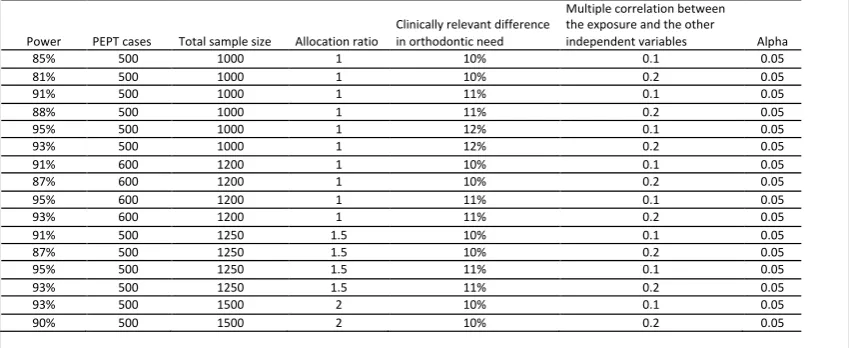
Power calculation: The primary outcome is a binary outcome of Need/No Need for
orthodontic treatment using the current NHS threshold Index of Orthodontic Treatment
Needs (IOTN) score of 4 or 5 in the Dental Health Component (DHC) or 3 (DHC with a
score of 6-10 in the Aesthetic Component (AC) (Brook P 1989). Based on this we have
used the raw data from the 2008 Dental Epidemiology Survey for Bradford to evaluate
statistical power. A sample size of 1000 subjects (of which 50% are PEPT cases) could
achieve at least 81% of power at a 5% significance level to detect a difference of 10% in
the orthodontic treatment need (see Table 1).
Recruitment: Identification of potential participants in both groups will be
undertaken by the BiB research team. Lists of children taking part in the BiB
cohort, the school they attend and their contact details will be collated. These
details will only be available to the BiB research team and the Clinical Research
Network (CRN) team who will initially send out recruitment letters. Invitation
letters will be sent to family addresses alongside information sheets. To enhance
the understanding of the data collection process for children and their families,
and to reduce anxiety about unfamiliar procedures, an information video has been
produced (https://www.youtube.com/watch?v=eY9LAwunaBY). This explains the purpose of the research and shows how the examination, impressions and
information for those with low literacy or English as a second language and
enhance the consent process. The use of an information video is relatively novel
in dental research recruitment and the research team plan to evaluate the efficacy
of this tool. Evaluation will be undertaken through questions embedded into the
YouTube video and a questionnaire (Figure 1 & 2) during the recruitment process.
The questionnaire aims to evaluate the number of potential participants watching
the video, whether it encouraged their participation and whether it alleviated any
anxieties about taking part.
Consent:
Informed consent will be collected from BiB children’s parents or legal guardians. The
CRN staff or member of the BiB team who collect the consent are all trained in Good
Clinical Practice and highly skilled in collecting informed consent. Verbal assent will be
gained from the children prior to data collection.
Setting: Data collection will be undertaken in primary schools in Bradford. A
designated private area away from the normal classroom will be used for the dental
assessment. Requests to visit schools will be made in advance and the number of visits
will be kept as low as possible to minimise disruption.
Data collection: Overarching protocols from the National Child Dental Health Survey,
which is conducted in a school setting, will be followed (HSCIC 2015). The research
team (1x dentist or dental therapist, 1x dental nurse) will complete a dental examination.
study models. The number of teeth present as well as obvious dental findings e.g.
cavitated dental caries and molar incisor hypo-mineralisation will also be recorded.
The team will take standardised intra and extra-oral orthodontic photographs. Alginate
impressions will be taken and scanned to facilitate the production of digital study
models, with the articulation validated by intraoral photographs. Children will be asked
to complete the Child Oral Health Impact Profile–Short Form 19 (COHIP-SF 19)
questionnaire (Broder et al. 2012).
Training of examiners: The research team will undertake bespoke training in
orthodontic photography and impression taking. During the early stages of data
collection an orthodontist will accompany the research team to ensure consistency in
Ethical considerations: Full ethical approval via the Health Research Authority
and an NHS Research Ethics Committee will be sought. Data will be hosted in
the BiB data warehouse at Bradford Teaching Hospitals NHS Foundation Trust
and managed in accordance with well-established BiB data access and security
protocols. Consultation with the Health Research Authority ensured that patient
information sheets complied with the new General Data Protection Regulation
(GDPR) guidance (Local Government Association 2018) introduced in May 2018.
Children will provide verbal assent to data collection and will be informed that
they can stop at any point if they wish. Dental staff collecting records will receive
tailored training. Safeguarding principles will be followed and children with
extensive untreated caries or signs of dental infection will be highlighted with a
letter sent to their parents.
Analysis
Statistical Methods
The exposure, premature extraction of primary teeth (PEPT) or no premature
extractions (non-PEPT) will be captured as a single event. Confounders in the two
groups will be identified within a directed acyclic graph, and appropriate minimally
sufficient adjustment sets of confounders will be accommodated in all subsequent
analyses (Greenland et al. 1999), allowing appropriate causal inferences to be made.
Analysis of Secondary Outcomes
To characterise space loss and occlusal anomalies in the mixed dentition
For each child, the following information will be recorded from the clinical photographs
skeletal pattern and the degree of crowding or spacing. From the study models further
measurements will be calculated for each arch and will include: arch perimeter and
hemi-perimeter, arch length, arch width and E and D space as defined by Northway
(Northway and Wainright 1980).
This analysis will be required in order to allow the primary outcome to be evaluated.
For each measurement, an appropriate summary statistic will be calculated for children
in the PEPT and non-PEPT groups. The groups will be compared either descriptively or
through appropriate statistical test to detect any differences.
Analysis of the Primary Outcome
To quantify the proportion of children who are assessed as having a need for
orthodontic treatment
Using the study models and photographs (but with no access to radiographs) each
child’s records will be assessed by the research team following appropriate training,
using the IOTN Dental Health Component.
Orthodontic indices, including the Index of Orthodontic Treatment Need (IOTN), the
Index of Complexity, Outcome and Need (ICON) and the Dental Aesthetic Index
(DAI), have been used in the mixed dentition to measure prevalence of malocclusion
and estimate orthodontic treatment need (Tausche et al. 2004; Mohamed et al. 2014;
Rauten et al. 2016) and to assess changes in occlusal features and treatment need over
time (Lagana et al. 2013; Boronat-Catala et al. 2016). The IOTN was more stable than
other indices for estimating treatment need across different age groups (Tarvit and Freer
not developed specifically to predict future treatment need, IOTN may be used as a
guide to estimate this. To date, no studies have observed a single group of participants
longitudinally to quantify the predictive ability of any index in the mixed dentition.
After discussion within the research team IOTN was judged to be the most appropriate
objective measure of orthodontic need that is currently available.
Analysis of Secondary Outcomes
To assess the proportions who would be treated in the mixed dentition or in the
early permanent dentition
An expert panel of three specialist orthodontists will independently examine the clinical
photographs and digital study models for those children who have an orthodontic
treatment need according to IOTN DHC or are deemed by the expert panel to require
interceptive orthodontic treatment. A decision will be made as to whether they would
recommend orthodontic treatment to be undertaken at the time that the records were
taken (e.g. in the mixed dentition) or to wait and treat in the early permanent dentition.
A standardised data collection form will provide a systematic and objective format for
evaluating records and determining the timing of any orthodontic need. Disagreements
will be resolved through discussion.
To explore the impact of PEPT on children’s Oral Health Related Quality of Life
Several measures are available to assess Children’s Oral Health Related Quality of Life
including Child Perceptions Questionnaire (CPQ), the Child Oral Impacts on Daily
Performances (C-OIDP), and the Child Oral Health Impact Profile (COHIP (Broder et
al. 2012; Gilchrist et al. 2014). Each self-reported measure has been validated and has
specific age groups (Humphris et al. 2005; Gilchrist et al. 2014).
The Child Oral Health Impact Profile-Reduced Questionnaire (COHIP-SF 19) (Broder
et al. 2012)will be used to assess any impact PEPT has on children’s oral health related
quality of life. Although CPQ 8-10 (Humphris et al. 2005) was used to measure
children’s OHRQoL in previous PEPT studies (Monte-Santo et al. 2018), COHIP-SF 19
was felt to be most appropriate for this study for several reasons. This tool has been
validated for use in children aged 7-15 years old (Broder et al. 2012; Gilchrist et al.
2014). This is crucial to allow the continuous use of this OHRQoL measurement tool in
the planned longitudinal data collection of this cohort. The COHIP-SF 19 is also short
to complete thus allowing ease of use and reducing the impact on participants during
data collection.
The results of the COHIP-SF 19 will be computed by summing the values of each
question. The total score will range from 0 to 76. The distribution of the total score will
be assessed. If normally distributed, the total COHIP-SF 19 score will be compared
between PEPT and non-PEPT groups using two-sided two-sample t-test; otherwise
nonparametric Mann-Whitney U test will be used. Generalized linear model will be
used to assess the difference in oral health related quality of life between PEPT and
non-PEPT groups adjusting for other explanatory variables (e.g. presence of decayed
teeth). If statistical significance is found for PEPT then the significance of different
sub-domains will be explored.
Multiple factors affect the development of malocclusions and subsequent orthodontic
need. There is also no accepted single measure of malocclusion. As such, designing a
study to evaluate the effect that PEPT has on the developing occlusion is challenging. A
multi-disciplinary approach has been required to overcome these challenges to develop
a robust research methodology to answer the research questions.
Embedding a dental study within an existing longitudinal birth cohort provides both
exciting opportunities and logistical challenges. A strong relationship with the BiB
research team has been crucial in developing the protocol, which is considerate of wider
research projects, participant burden and goodwill of local primary schools. Ultimately
the study is only possible as a result of the research funding and infrastructure
established for other studies involving the cohort.
The research team aim to utilise the opportunities of working within a longitudinal birth
cohort. An additional aim to the study is to provide the foundation for future
longitudinal data collection, when children are in the permanent dentition. Future data
collection will allow the accuracy of the IOTN prediction analysis to be examined and
enable the effects of PEPT to be studied. The impact of PEPT on current and future
orthodontic need will also be characterised. A decision tree, based on the predicted care
pathways, will be constructed and this will allow the costs associated with different
clinical outcomes (need or no need for orthodontic treatment) to be estimated.
Dissemination of the study findings will aim to engage all important stakeholders
including 1) Participants, their families and the wider BiB community; 2) Dental
professionals; 3) Commissioners and policy-makers involved in children’s dental
and innovative methods to share research findings will be explored in collaboration with
University of Leeds School of Dentistry public engagement champions. Professional
dissemination will include publication in peer-reviewed journals, presentation at
relevant international conferences and sharing of the key findings through appropriate
social media channels.
Acknowledgments:
This research is supported by a grant from the British Orthodontic Society Foundation. The initial dental data linkage was supported by grants from the Oral Dental Research Trust and the Wellcome Institutional Strategic Support Fund. Two of the authors of this paper (PD, RM) were supported by the NIHR CLAHRC Yorkshire and Humber. www.clahrc-yh.nihr.ac.uk. The views and opinions expressed are those of the author(s), and not necessarily those of the NHS, the NIHR or the Department of Health and Social Care.
Born in Bradford is only possible because of the enthusiasm and commitment of the Children and Parents in BiB. We are grateful to all the participants, health professionals and researchers who have made Born in Bradford happen. The BiB New Wave project is supported by a number of grants including:
• A joint grant from the UK Medical Research Council (MRC) and UK Economic and Social Science Research Council (ESRC): MR/N024391/1
• The British Heart Foundation (BHF) (CS/16/4/32482)
• A Wellcome Trust infrastructure grant (WT101597MA)
• The NIHR Clinical Research Network which provided research delivery support for this study
Many thanks to Adam Jones, Joshua Thornton, Colin O’Sullivan and Tim Zoltie for their help
in producing the patient information video.
Declaration of interest statement: The authors declare no conflict of interests.
Figure 1: Questions asked electronically immediately after the video via a pop-up question box.
[image:23.595.87.512.335.509.2]Figure 2: Questions on the consent form.
Table 1: Power calculation for a combination of parameters.
References:
American Academy Of Paediatric Dentistry. 2014. Guideline on Management of the Developing Dentition and Occlusion in Paediatric Dentistry.
http://www.aapd.org/media/Policies_Guidelines/G_DevelopDentition.pdf; [accessed 23/10/18].
American Academy of Pediatric Dentistry. 2014. Guideline on Management of the Developing Dentition and Occlusion in Pediatric Dentistry.
http://www.aapd.org/media/policies_guidelines/g_developdentition.pdf.
Baubiniene D, Sidlauskas A, Miseviciene I. 2009. The need for orthodontic treatment among 10-11- and 14-15-year-old Lithuanian schoolchildren. Medicina (Kaunas). 45(10):814-821.
Bhujel N, Duggal M, Munyombwe T, Godson J, Day P. 2014. The effect of premature extraction of primary teeth on the subsequent need for orthodontic treatment. European archives of paediatric dentistry : official journal of the European Academy of Paediatric Dentistry. 15:393-400.
Power PEPT cases Total sample size Allocation ratio
Clinically relevant difference in orthodontic need
Multiple correlation between the exposure and the other
independent variables Alpha
85% 500 1000 1 10% 0.1 0.05
81% 500 1000 1 10% 0.2 0.05
91% 500 1000 1 11% 0.1 0.05
88% 500 1000 1 11% 0.2 0.05
95% 500 1000 1 12% 0.1 0.05
93% 500 1000 1 12% 0.2 0.05
91% 600 1200 1 10% 0.1 0.05
87% 600 1200 1 10% 0.2 0.05
95% 600 1200 1 11% 0.1 0.05
93% 600 1200 1 11% 0.2 0.05
91% 500 1250 1.5 10% 0.1 0.05
87% 500 1250 1.5 10% 0.2 0.05
95% 500 1250 1.5 11% 0.1 0.05
93% 500 1250 1.5 11% 0.2 0.05
93% 500 1500 2 10% 0.1 0.05
Bhujel N, Duggal MS, Saini P, Day PF. 2016. The effect of premature extraction of primary teeth on the subsequent need for orthodontic treatment. Eur Arch Paediatr Dent. 17(6):423-434. eng.
Boronat-Catala M, Bellot-Arcis C, Montiel-Company JM, Catala-Pizarro M, Almerich-Silla JM. 2016. Orthodontic treatment need of 9, 12 and 15 year-old children according to the Index of Orthodontic Treatment Need and the Dental Aesthetic Index. J Orthod. 43(2):130-136.
Bradford District Care NHS Foundation Trust. 2015. Service evaluation of dental extractions under general anaesthetic. Bradford.
Broder HL, Wilson-Genderson M, Sischo L. 2012. Reliability and validity testing for the Child Oral Health Impact Profile-Reduced (COHIP-SF 19). Journal of public health dentistry. 72(4):302-312.
Brook P SW. 1989. The development of an index of orthodontic treatment priority. European Journal of Orthodontics. 11:309-320.
Clinch L, Healy M. 1959. A longitudinal study of the results of premature extraction of deciduous teeth between 3–4 and 13–14 years of age. . Dent Pract. 9:109–27.
Costa RN, Abreu MH, Magalhaes CS, Moreira AN. 2011. Validity of two occlusal indices for determining orthodontic treatment needs of patients treated in a public university in Belo Horizonte, Minas Gerais State, Brazil. Cadernos de saude publica / Ministerio da Saude, Fundacao Oswaldo Cruz, Escola Nacional de Saude Publica. 27(3):581-590.
mFaculty of Dental Surgery. 2015. The state of children's oral health in England. London: Royal College of Surgeons of England.
Fayle SA, Welbury RR, Roberts JF, British Society of Paediatric Dentistry B. 2001. British Society of Paediatric Dentistry: a policy document on management of caries in the primary dentition. International journal of paediatric dentistry / the British
Paedodontic Society [and] the International Association of Dentistry for Children. 11(2):153-157.
Gerritsen AE, Allen PF, Witter DJ, Bronkhorst EM, Creugers NHJ. 2010. Tooth loss and oral health-related quality of life: a systematic review and meta-analysis. Health and quality of life outcomes. 8:126-126.
Gilchrist F, Rodd H, Deery C, Marshman Z. 2014. Assessment of the quality of
measures of child oral health-related quality of life [journal article]. BMC Oral Health. 14(1):40.
Greenland S, Pearl J, Robins JM. 1999. Causal diagrams for epidemiologic research. Epidemiology (Cambridge, Mass). 10(1):37-48. eng.
Hoffding J, Kisling E. 1978. Premature loss of primary teeth: part I, its overall effect on occlusion and space in the permanent dentition. ASDC journal of dentistry for children. 45(4):279-283.
HSCIC. 2015. Children’s Dental Health Survey 2013. Summary.
http://digital.nhs.uk/catalogue/PUB17137; [accessed 23/10/18].
Humphris G, Freeman R, Gibson B, Simpson K, Whelton H. 2005. Oral health-related quality of life for 8-10-year-old children: an assessment of a new measure. Community Dent Oral Epidemiol. 33(5):326-332. eng.
Kau CH, Durning P, Richmond S, Miotti FA, Harzer W. 2004. Extractions as a form of interception in the developing dentition: a randomized controlled trial. Journal of Orthodontics. 31(2):107-114.
management of dental caries: a systematic review. International Journal of Paediatric Dentistry.
Lagana G, Masucci C, Fabi F, Bollero P, Cozza P. 2013. Prevalence of malocclusions, oral habits and orthodontic treatment need in a 7- to 15-year-old schoolchildren population in Tirana. Prog Orthod. 14:12.
Leighton B. 1981. Longitudinal study of features which might influence space loss after early extraction of lower deciduous molars. . Proc Finn Dent Soc. 77:95–103.
Local Government Association. 2018. General Data Protection Regulation (GDPR).
https://local.gov.uk/our-support/general-data-protection-regulation-gdpr; [accessed 23/10/18].
Mohamed AM, Ariffin WFM, Rosli TI, Mahyuddin A. 2014. The feasibility of Index of Orthodontic Treatment Need (IOTN) in labial segment malocclusion among 8-10 years old. Arch Orofac Sci. 9:76-84.
Monte-Santo AS, Viana SVC, Moreira KMS, Imparato JCP, Mendes FM, Bonini G. 2018. Prevalence of early loss of primary molar and its impact in schoolchildren's quality of life. Int J Paediatr Dent. 28(6):595-601. eng.
mNHS Digital. 2015-2016. Hospital Admitted Patient Care.
Northway WM, Wainright RW. 1980. D E space--a realistic measure of changes in arch morphology: space loss due to unattended caries. Journal of dental research.
59(10):1577-1580.
Public Health England. 2017. Health Matters: Child Dental Health.
www.gov.uk/government/publications/health-matters-child-dental-health/health-matters-child-dental-health; [accessed 23/10/2018].
Rauten AM, Georgescu C, Popescu MR, Maglaviceanu CF, Popescu D, Gheorghe D, Camen A, Munteanu C, Olteanu M. 2016. Orthodontic Treatment Needs in Mixed Dentition - For Children of 6 and 9 years old. Rom J Oral Rehab. 8:28-39.
Rodd H, Hall M, Deery C, Gilchrist F, Gibson BJ, Marshman Z. 2014. 'I felt weird and wobbly.' Child-reported impacts associated with a dental general anaesthetic. British Dental Journal. 216(8):E17. eng.
Ronnerman A. 1965. Early extraction of deciduous molars and canines--its incidence and influence on spacing. Report of the congress European Orthodontic Society. 41:153-168. eng.
Ronnerman A. 1977. The effect of early loss of primary molars on tooth eruption and space conditions. A longitudinal study. Acta odontologica Scandinavica. 35(5):229-239. eng.
Sayın M, Türkkahraman H. 2006. Effects of Lower Primary Canine Extraction on the Mandibular Dentition. The Angle Orthodontist. 76(1):31-35.
Tarvit DJ, Freer TJ. 1998. Assessing malocclusion--the time factor. Br J Orthod. 25(1):31-34.
Tausche E, Luck O, Harzer W. 2004. Prevalence of malocclusions in the early mixed dentition and orthodontic treatment need. Eur J Orthod. 26(3):237-244.
Wong M, Copp PE, Haas DA. 2015. Postoperative Pain in Children After Dentistry Under General Anesthesia. Anesthesia Progress. 62(4):140-152. eng.