A STUDY ON
SOBAI
Dissertation submitted to
THE TAMILNADU DR. M.G.R MEDICAL UNIVERSITY
Chennai-32
For the partial fulfillment of the requirements to the Degree of
DOCTOR OF MEDICINE (SIDDHA)
(Branch IV - Kuzhanthai Maruthuvam)
DEPARTMENT OF KUZHANTHAI MARUTHUVAM
GOVERNMENT SIDDHA MEDICAL COLLEGE
PALAYAMKOTTAI – 627 002.
ACKNOWLEDGEMENT
First of all I wish to register my deep sense of gratitude to god the
Almighty and my parents for their abundant blessings and immeasurable
grace which enabled me to complete my dissertation work successfully.
I gratefully record my debtness to the vice chancellor, The
TamilNadu Dr. M.G.R. Medical University, Chennai and to the
Commissioner of Indian System of Medicine and Homeopathy, Chennai.
I owe my debt of gratitude to Dr. R. Devarajan M.D(S)., The
Principal and Dr. S.Soundarajan M.D(S). The Vice Principal for
permitting me to do this dissertation work.
I place on record my deep sense of thankfulness to
Dr. N. Chandra Mohan Doss M.D(S), Head of the Department of
Kuzhanthai Maruthuvam Govt. Siddha Medical College, Palayamkottai
for having imparted necessary guidelines which helped me in the
successful completion of this dissertation.
With a deep sense of gratitude I thank Dr. R.Patturayan M.D(S),
HOD, Department of Kuzhanthai Maruthuvam, National Institute of
Siddha Chennai.for his valuable guidance.
It gives me great pleasure to thank Dr. K.Shyamala M.D(S),
Assistant Lecturer, P.G. Department of Kuzhanthai Maruthuvam, Govt.
I am very happy to express my gratitude to
Dr. D. K. Soundararajan M.D(S), Lecturer, PG Department of
Kuzhanthai Maruthuvam, Government Siddha Medical College,
Palayamkottai for the valuable suggestions and great help in my
dissertation.
I express my special and science thanks to Dr. Kathir
Subramaniyam M.D. D.CH., HOD and Dr. Mathivanan M.D., D.C.H.
Assistant Professor, Department of Pediatrics, Tirunelveli Medical
College, Palayamkottai for their kind opinions in the dissertation work.
Pleasure will be mine if my thanks goes to Mr. M. Kalaivannan
M.Sc., HOD and all the technicians of the Department of Pharmacology
for having helped me in several ways in my dissertation study.
My sincere thanks goes to Prof. Mrs. N. Nagaprema M.Sc., HOD
and the technical experts of Department of Biochemistry, Govt. Siddha
Medical College, Palayamkottai for their help in Biochemical analysis.
My thanks goes to Dr. S. Bagirathi M.B.B.S., Department of
Clinical pathology, Govt. Siddha Medical College, Palayamkottai for her
guidance in doing laboratory studies.
My thanks to Dr.V.S. Padma M.B.B.S., DMRD, and other staffs,
Department of Radiology, Govt. Siddha Medical College, Palayamkottai
I express my thanks to our Librarian Mrs. Poonkodi M.A,
B.Lib.Sc., and all library staffs, Govt. Siddha Medical College,
Palayamkottai for their help in literary collections.
My special thanks to my friends and colleagues who gave me the
constant support and kind co-operation during my study.
My thanks goes to Broad Band Net cafe (BBNC) staffs for their
INTRODUCTION
Siddha system of Medicine is as old as mankind and dominated the
civilisation of the southern peninsula of India. It is a treasure – house of
secret science. Its origin is traced far back to the vedic times, about
5000BC. During this period medical history was associated with
mythological figures. Siddha system can be considered as the crown of
traditional arts of the ancient world owing to its richness and simplicity.
According to this system, the human body is the replica of the
universe and so are the food and drugs irrespective of origin.
The siddhars were those, who had renounced the world after
experiencing its instability and uncertainity.
In a nut shell, Thirumoolar the father of Siddha system defines
medicine as follows.
‘kWg;gJ cly;Neha; kUe;njd yhFk;
kWg;gJ csNeha; kUe;njd rhYk;
kWg;gJ ,dpNeha; thuh jpUf;f
kWg;gJ rhit kUe;njd yhNk”.
By this means, our ancient siddhars noted that the definition for
medicine and this shows their dynamic knowledge about the human body
and various disorders affecting it.
Siddhars formulation are based under the theory of Pancha
fundamental principles of creation, protection and destruction. The three
humoural forces behind the above three are referred to as Vatha, Pitha
and Kabha respectively. Any imbalance in their ratio causes diseases.
Hence in the diagnosis of the diseases trihumoural pathology,
analysis of naadi and envagai thervugal plays an important role.
This siddha medical science has its own well developed chemistry.
The tireless striving in the direction of the development of alchemy has
resulted in the genesis of thousands of plants, minerals and metallic
preparation. The treatment also includes dietary modifications and
lifestyle modifications.
Kuzhandai Maruthuvam:
Kuzhandai Maruthuvam i.e. siddha pediatrics an important branch
in siddha system of medicine. It deals with the diseases of children
according to paruvangal, their essential nature and description of various
treatments with specific medicines.
Children are the feature citizens of a nation and as such their health
are paramount importances to the nation. Hence a good and well
sophisticated society can be formed only when the children in that society
are taken care of right from the time of birth.
According to “Bala Vagadam”, SOBAI NOI is started from the day
Nutritional disorders are more common in developing countries
like India. Sobai is one of the Nutritional disorder, is more prevalent in
infants and children, and also been clearly described in Siddha literatures.
According to the WHO, hunger and malnutrition is the gravest
single threat to the world’s public health and malnutrition is by far the
biggest contributor to child mortality, present in half of all cases.
The author selected “Nelli Vadagam”and “Sobai Kudineer” as
the drug of choice for this study, which is easily palatable for the
children. All the patients were treated with this drug and results are dealt
AIM AND OBJECTIVES
SOBAI is one of the major nutritional disorders of children. It is
more common in the developing tropical countries like India, in which
people of different socio – economic status are found. Nutrition is the
provision, to cells and organisms, of the materials necessary to support
life. Many common health problems can be prevented or alleviated with
good nutrition. Malnutrition is globally the most important risk factor for
illness and death, contributing to more than half of deaths in children
worldwide. Prevention of malnutrition in children starts with an
emphasis on prenatal nutrition and good prenatal care. If the necessary
steps have been taken to literate people about malnutrition the incidence
of SOBAI would have been reduced.
OBJECTIVES
¾ To collect the literary evidences regarding the disease
“SOBAI”.
¾ To have a clinical trial on SOBAI affected children with the
selected medicine viz, NELLI VADAGAM and SOBAI
KUDINEER.
¾ To evaluate the disease SOBAI clinically by careful
examination on etiology, clinical features, treatment, prognosis
¾ To have a complete study of the disease SOBAI under the
heading of mukkutram, Udal kattugal, Envagai Thervugal etc.,
¾ To study the extent of correlation of SOBAI as explained in the
siddha literatures with “Nutritional dropsy” in modern
literatures.
¾ To utilize the possible diagnostic measures in the confirmation
of the diagnosis of the disease.
¾ To analyse the trial medicine Bio-chemically and
pharmacologically for complete evaluation of the medicine.
¾ To make an awareness among the parents about the prevention
SIDDHA ASPECTS
(SOBAI)
Eyal (Definition):
Sobai vitiates blood and causes paleness of body, abnormal
swelling of upper limb, lower limb, face and abdomen.
Veru Peyarkal (Synonyms):
Sohai, Sovai, Thommai, Athaippu, Surappu, Oothal.
Since it causes swelling it is known as Sobai. Since Sobai causes
inactiveness, it is also known as Sovai. Since it causes abnormal swelling
of body it is also known as Oothal or Athaippu or Surappu.
NOI VARUM PARUVAM:
1. Vatha sobai - At the commencement of third year of age.
2. Pitha sobai - At the second year of age
NOI VARUM VAZHI (ETIOLOGY):
1. According to Siddha Maruthuvam, sobai is due to,
¾ Anaemia
¾ Intake of toxic materials
¾ Intake of contaminated food and improper food habits
¾ Exposure to chillness causes imbalance of three dhoshas,
2. ‘ghq;fhd rd;dpghjr; Ruq;fs;
gfh;rpj;jg; gpuik rd;dp gutyhYk;
Njq;fhd gd;dhfe; jPz;l yhYk;
rpy;tplq;fs; Njfj;jpy; CwyhYk;
Mq;fhd rpiwapUj;j ybgLj yhYk;
mNef top elf;if kiy apUf;ifahYe;
jhq;fhd ryf;fiufs; jdpypUj;jy;
rhk;gy; kz;kh jtplhy; Nrhig ahNk”
- A+fp rpe;jhkzp (ghly; - 547, gf;fk; - 176)
By this verse, it is understandable that, sobai is caused by sanni,
especially siddha bramai sanni, snake bite, insect bite, imprisonment,
staying in hill stations, living close to the water storages and intake of ash
(Sambal), soil and hay (thavidu).
3. ‘MnkDk; thjNrhif aZfpLk; tifiaf; Nfsha;
ghnkDk; gioaJz;L igq;fpsp NahL jhDk;
thnkDk; GzHr;rp nra;J ky;Ynra;j ENghfpj;J
fhnkDk; utpapNyfp ele;Jjhd; nrd;w gpd;Ng
‘gpd;GNk uhf;fhyj;jpy; grpj;Jld; Gz;Hr;rp nra;jhy;
md;GNk itj;Jgpj;j uhrD nkOk;gpNkNy
Jd;gkha; %yk; Gf;fpj; Njhd;wpLk; td;dpjhDk;
,d;gkha; thjq;$b apizgphp ahJghNu.”
‘,izgphp ahjpuz;L kpUe;jhy; Fzj;ijf; Nfsha;
fdjdk; tw;wpg;NghFk; fghyNk #ljhFk;
%isr;rlk; nghq;fpg; NghF %yNk fUfpg; NghFk;
‘mZFNk thj#l;lh yhj;Jk kope;J NghFk;
,ZFNk khjNuhNl apak;gpa GzHr;rp nra;jhy;
mZfptpe; J}wpf; fHg;gk; tapw;wpdpw; rdpf;Fk; ghyd;
Kzq;nfdg; gpwe;j gpd;G %d;whz;bw; NrhifahNk.”
- ghythflk;
According to Bala Vaagadam, vatha sobai is caused by the coitus
immediately after the breakfast (intake of rice cooked the day before),
exposure to sunlight after the sexual act and sex immediately after the
dinner on that day will result in increase of pitham, which reaches the
moolatharam. The action of pitham generates heat and this heat doubles
the vatham and travels upwards and produces heat inside the skull.
Since this heat generates from the moolatharam, moolam is singed
and the whole body emits heat, resulting in denaturizing the semen. If the
coitus at this time results in child birth, the child will develop “Vatha
Sobai” at the commencement of the third year.
4. ‘ehafd; Fzj;ijf; Nfsha; ehKiu gphptpe; E}ypy;
fhaff; fhud;fhk Nghfj;jhy; tpufQ; #o;e;J
Nraf khjpNdhNl NrHe;Jjhd; GzHr;rp nra;J
fhaNk tpaHit fl;lf; fisf;fNt Nghfpj;jhNy
fisf;fNt ape;jtPjk; fd;dpNah lErhpj;J
tpisf;fNt jhJel;l NktpNa nra;Nth uhfpy;
Jisf;fNt ad;dKz;zj; JbJbj; JapHg rpf;fpy;
ele;jeh afDk; ngz;zhs; ehbNa aENghfj;jpy;
glHe;Jjhd; fUtpyhfpg; ghh;jdpy; gpwf;Fk; ghyd;
nrlkJ gpj;jePuhy; njspj;jjhy; Njf nkq;Fk;
flkJ fdf;f T+jpf; fz;ZNk ntSf;Fe; jhNd.”
- ghythflk;
According to this verse, the coitus with excessive excitement and
increased perspiration causes “Pitha sobai”. It will leads to denaturizing
the semen. If this coitus will lead to birth of a child, when the man has
sex with hunger, the baby is likely to suffer with “Pitha Sobai” at his
second year of age.
NOI ENN (CLASSIFICATION)
1. According to Bala vaagadam, sobai is classified into two types.
They are
1. Vatha Sobai
2. Pitha Sobai
2. Theraiyar Vaagadam classified the sobai into three types.
1. Varal sobai
2. Oodhu sobai
3. Sura sobai
3. As expressed in Yugi Chinthamani, sobai is classified into four types.
'jhdhd NrhigaJ ehYtpj khFQ;
rhw;wplNt thjj;jpd; Nrhig NahL
Njdhd gpj;jj;jpd; Nrhif ahFk;
rpNyl;Lkj;jpd; Nrhig jphpNjhl Nrhig.”
1. Vatha Sobai
2. Pitha Sobai
3. Kaba Sobai
4. Thirithoda Sobai
4. Aathma Rakshamirthamennum Vaithiya Saara Sangiragam
(Page: 142) Agasthiyar Guru Naadi(Page No: 116) classify Sobai into
two, namely,
1. Vatha sobai
2. Pitha sobai
5. Anubava Vaithiya Devaragasiyam (Page No: 147) Jeeva
Rakshamirtham (Page No: 185)Roga Nirnaya Saaram (Page No: 90)
classify the sobai into nine types on the basis of vitiation of individual
dhoshas.
They are,
1. Vatha sobai
2. Pitha sobai
3. Kaba sobai
4. Vatha pitha sobai
5. Vatha kaba sobai
6. Pitha kaba sobai
7. Thirithoda sobai
8. Abikatha sobai
The first three types occur due to single dhosha. The next three
varieties occur due to the combination of either two or three dhoshas.
Local swelling due to abscess formation and trauma is termed as
“Abikatha sobai”. The “Vida sobai”, is due to toxic causes.
6. ‘fhZNk thjk; gpj;jq; fgRuQ; rd;dpuj;jk;
fhZNk Nrhif ahW.……
- guuhr Nrfuk; - ghyNuhf epjhdk;
Based on this, sobai is classified into six types.
1. Vatha sobai
2. Pitha sobai
3. Kaba sobai
4. Sura sobai
5. Sanni sobai
6. Ratha sobai
7. According to T.V. Sambasivam Pillai Agarathy, sobai is classified in
the following way,
1. Vatha sobai
2. Pitha sobai
3. kaba sobai
4. Ratha sobai
6. Vida sobai
7. Pandu sobai
8. Kamalai sobai
9. Enburukki sobai
10. Kana sobai
11. Virana sobai
12. Eeral sobai
13. Sarvaanga sobai or Nisha sobai
14. Theera sobai
15. Soothaga sobai.
8. In Rathina Churukkam – 500 (Page No: 15), sobai is classified into
16 types. This is inferred from the following verse.
‘NrhigaJ gjpdhWf;Fk;.”
MURKURIGAL (PERMONITORY SYMPTOMS):
1. The symptoms produced in the initial stages are paleness of the
body and loss of vigor.
2. Swelling of the ankle joints even in a little walk, dizziness,
dyspnoea, vertigo, and fainting.
3. With the passage of time, it causes edema of the lower limbs,
POTHU KURIGAL (GENERAL SIGNS AND SYMTPOMS)
1. According to Bala Vaagadam,
thj Nrhig:
‘Nrhifjh dZFk; NghJ Jbf;fNt Ruk;te; nja;Jk;
jhfNk ajpf khFk; rykJ rpurpw; Nfhh;f;Fk;
Njhifahs; jdf;Fg; ghwhd; Rz;bNa rykjhFk;
Ntfkha; kyj;jpy; thA Gf;fpdhy; tpidjhd; ghNu
tpidaJ tUF Neh;ik tpgukh Aiuf;ff; Nfsha;
midaJ thfj;jhD kghddhk; thA $b
GidaJ fPo;%yj;jpw; Gf;fpdhy; jbf;Fk; Njfk;
fdyJ nkj;jf; fhZk; fz;zJ ntSf;Fe; jhNd
ntSj;jpL KjL jhDk; ntbf;FNk jiyjhd; NehFk;
fidj;jpLQ; Nrhgkhfpf; iffhy; fsrjp fhZk;
gOj;jpLk; Kfk; NtwhFk; ghukha; grpnalhjhk;
cSj;jpLQ; rpRTf; NfjhDl;lz kjpf khNk
cl;lz kjpf khdh nyhLq;fpLe; jhJ ehb
cl;lz kjpfe; jd;dh YlyJ tw;wpf; fhZk;
cl;lz kjpfj; jhNy %yNk fLg;Gz;lhFk;
cl;lz FwpNa fz;lhy; NkhrNk tUFe; jhNd.”
- ghythflk;
Fever, excessive thirst and accumulation of fluid in the skull and
oliguria are present. When mixing of Abanan with faeces in the
moolatharam, produces swelling of the body, the body become feverish,
loss of energy, puffiness of the face and loss of appetite with feeling of
body heaviness are the symptoms of vatha sobai. With the increased
temperature, the baby becomes emaciated and onset of dysentry, finally
leading to fatal consequences.
gpj;j Nrhig:
“………
nrlkJ gpj;j ePuhy; njspj;jjhy; Njf nkq;Fk;
flkJ fzf;f T+jpf; fz;ZNk ntSf;Fe; jhNd
ntSj;jpL kpuz;lhz; lhdhy; tpidao R+of;Nfsha;
fisj;jpL rlye; jd;dpy; fdyjhy; twl;rp fhZk;
gOj;jpLe; Njf%jpg; ghz;L fhkhiy Nghyhk;
nfhSj;jpL Flq;fs; Nghyf; FwptapW ngUFe;jhNd
tapwJ ngUfpw; Nwjhd; tw;wpLq; fhy;fs; ifAk;
japuJ NghNyNgjp jdpj;jbf; fbf;Fg; ghAk;
JauNk ajpfkhFk; Jtz;bL krjp fhZk;
gawJ NghNy Gz;fs; glUq;fh khiyahNk.”
- ghy thflk;.
In Pitha sobai the baby has excess bile secretion, swelling of the
body and pale eyes. At the age of two years the baby will be emaciated,
bloated and have dryness of the body with paleness and jaundice. The
baby becomes potbelly with muscle wasting in the limbs, curd like
diarrhea, excessive fatigue and grains like eruptions over the body will
2. According to Theraiyar Vaagadam:
m. RuNrhig:
‘neQ;Rtw;W Klk;nghpf;Fk; NeaKlNd jtdKkhk;
gQ;R Nghy tpopgue;J gfU Kd;Nd RuKz;lhk;
eQ;rhkkph;j khdnjy;yhk; elf;Fq;iffh nyhpntLf;Fk;
JQ;rh nkhopaPh; klkhNd Ja;a Nrhigr; RukpJNt”
- Njud; thflk; (ghly; - 376, gf;fk; - 109)
Dryness of the chest, burning sensation over the body, eager to
drink cold water, paleness of the eyes, fever and burning sensation of the
limbs are present in Sura sobai.
M. tws; Nrhig:
‘clk;gJ ntSf;Fkhfp YWjpnfl; Ljpuk; tw;Wk;
tplkJ NghyNtwp NkdpAk;; ntSj; jijf;Fk;
,lk;glf; fhYq;ifA kpOj;Jld; fLj;J epw;Fk;
tlkNj nahj;jkhNd tws; Nrhigapd; FzkpjhNk”
- Njud; thflk; (ghly; - 377, gf;fk; - 109)
Paleness of the skin, anaemia, anasarca and puffiness of the face
are seen in Varal sobai.
,. CJ Nrhig:
‘nkj;j Tlk;G kpfT+Jk; ntSf;Fq; iffhyg; gbNa
ej;jQ; Rz;bg; gRepwkhk; ey;yead kQ;rspf;Fk;
gpj;jq; $bf; FspUz;lha; ngUj;JkpfNt alh;e;JtUk;
epj;jk; Gijf;Fq; FzkhNd mwpfhD}J NrhigapNj”.
- Njud; thflk; (ghly; - 378, gf;fk; - 109)
Anasarca, paleness of the body, yellowish discolouration of the
3. On the basis of (Yugi Chinthamani):
a. Vatha Sobai:
‘Nrhigjhd; tUKd;Nd cly;jhd; tw;Wk;
Rfeuk;G jhd;ntSf;Fk; rPuz khFk;
J}igjhd; ngy\akha; eLf;f yhFQ;
RuNkhLkpf ntSg;G kpisg;G khFk;
khigjhd; kaph;Kidfs; rpte;J NghFk;
kfj;jhd epj;jpiuA ke;j khFk;
Nrhigjhd; mq;FypNy rlnkq; Fe;jhd;
nfhLtypahk; thjj;jpd; Nrhig ahNk.”
- A+fp rpe;jhkzp (ghly; - 548, gf;fk; - 176)
The body becomes emaciated with the onset of sobai, paleness of
the body and indigestion occurs. The strength of the body decreases.
Dyspnoea and insomnia are present. The body becomes edematous day
by day.
b. Pitha sobai:
‘typahf kaph;kQ;r dpj;jp Uf;Fk;
kfj;jhd rapj;jpaNk kpftp Uk;Gk;
jypahfj; jhgnkhL ,isg;G fhZk;
rhPue;jhd; kpfr;rptg;ghe; jiyt ypf;Fk;
Gypahf tpUe;jJNgha;g; ngytP dj;jhy;
Gfyhpa kaf;fnkhL tpah;it ahFk;
eypahff; fz;GUt %f;Fj; jz;L
eyq;FNk gpj;jj;jpd; Nrhig jhNd”
In pitha sobai, the body, eyes, eyebrow, nose and hair become
yellow, Vomiting, excessive thirst, fatigue, dyspnoea and head ache are
present. The strength of the body decreases and unable to walk. In
addition dizziness, sweating and chillness are present.
c. Kaba Sobai:
‘eyq;FNk tbnty;yhe; jpdTz; lhFk;
ey;ykaph;f; fhy; ntSg;G cly;nt Sg;G
jpyq;FNk Njfnkq;FQ; rur ug;G
jpLf;fpNa kpff; FspUk; epj;jpiu apy;iy
tpyq;FNk tpopadyhq; Fuy;nehp thFk;
tp#opaha;g; Ngjp jiy fpWfp Wg;G
rpyq;FNk uj;jq;fs; Rue;J tPq;Fk;.
rpNyl;Lkj;jpd; Nrhignad;Nw nrg;g yhNk”
- A+fp rpe;jhkzp (ghly; - 550, gf;fk; - 177)
In kaba sobai, itching all over the body, paleness of the body, fever
with chills, insomnia, irritation in the eyes, hoarseness of the voice,
frequent diarrhea such as cholera, dizziness and edema are present. The
edema increases day by day.
d. Mukkutra Sobai:
‘nrg;gNt nky;ypah;Nky; kpFe;j Nfhgk;
nrlk;tPf;f KghjpAkha;r; RuKz; lhFk;
mg;gNt mjprhuk; tapw;f Lg;G
Mrdj;jpy; kpff;fLg;G mrdQ; nry;yh
elg;gNt fhy;ifAe; Jz;L fhZk;
elf;fNt ngU%r;rha;f; fpWfp Wf;Fk;
jpg;gNt ckpo;ePh;jhd; kpfNt CWk;
jphpNjhr Nrhigrhj; jpakha;r; nrhy;Ny”.
- A+fp rpe;jhkzp (ghly; - 551, gf;fk; - 177)
In mukkutra sobai edema, fever, diarrhea, tenesmus, irritation in
the anus, anorexia, weakness of the limbs, dyspnoea on exertion,
dizziness and excessive salivary secretion are present.
4. According to Jeeva Raksamirtham (Page No: 185 – 187), Anubava
Vaithiya Devaragasiam (Page No: 147) and Roga Nirnaya saaram
(Page No: 90)
a. Vatha sobai:
The pain decreases at night and increases in day time. The hair
becomes rigid, tremor, feels like crawling of ant in the body; excessive
sleepiness and alternate in mood are present. The swelling appears and
disappears rapidly. Indigestion, fever and fatigue are also present.
b. Pitha Sobai:
Desires in the cool foods, sometimes sweating, bramai, unmatham
are present. The swelling first appears at the centre of the back and will
disappear easily. Cough, irritation, dyspnoea, head ache, dizziness,
change in colour of the eyes, eyebrows and nose are the associated
c. Kaba Sobai:
The body becomes pale, chill, shining and dyspnoea are present.
Itching all over the body, nausea, vomiting and excessive sleepiness are
also present. The swelling becomes all over the body. Prognosis is bad.
d. Vatha Pitha sobai:
The symptoms of vatha sobai and pitha sobai occur at the same
time.
e. Vatha kaba sobai:
The symptoms of vatha sobai and kaba sobai occur at the same
time.
f. Kaba pitha sobai:
The symptoms of kaba sobai and pitha sobai occur at the same
time.
g. Mukkutra sobai:
The symptoms of vatha sobai, pitha sobai, and kaba sobai are present at
the same time. The associated symptoms are fever with edema, tenesmus,
anorexia, weakness of the limbs, dyspnoea on exertion and excessive
salivary secretion.
h. Abikatha sobai:
This is due to weapon injury, chill weather, walks opposite to the
direction of the wind, intake of impure Semecarpus anacardium
i. Vida sobai:
Contact with the poisonous creatures, touch the urine of the
poisonous animals, touch the nails of non poisonous animals, weaning the
wet dresses and inhalation of the air from the poisonous trees like
semecarpus anacardium, produce vida sobai due to irritation.
5. ‘CjpL Klk;G fhA Klw;Fiy fUfpahq;Nf
Ntjpid kpfNt Az;lha; nte;jpLk; thAehTk;
jPjpid A+JNuhfQ; nra;Fz kpitNa nad;g
……….”
- guuhr Nrfuk; (ghly;> gf;fk; - 68)
According to this verse, the symptoms of sobai are swelling and
dryness of the body, excessive irritability and oral ulcers.
6. ‘Nrhifap dpyf;fzq; Nfs;
NrhHT iffhy; fl;Fz;lhk;
NrhW Ntz;lhik J}f;fk;
Nrhsp Nghyz;lk; tPq;Fk;
Nrhjpdp nadf; fhjhFk;
Nrhq;flH fhfkhq; fz;
Nrhk;gYf; FiwAsh nka;
Nrhzpj; nkq;Nf NghNkh
Nrhj;jpuq; ftpia nahg;gr;
Nrhyp nra;ape;j Neha;f;F
Nrhif nad;nwhU Nuhk;”
According to Theran Karisal, the symptoms of sobai are,
¾ Anorexia
¾ Weakness of the limbs
¾ Edema
¾ Scrotal swelling like a bag
¾ Thinning of the ear lobes like a monkey
¾ Partial squint of eyes like a crow
¾ Dyspnoea, cough, dizziness and dimness of vision occur
¾ Constipation alternate with diarrhea, suppression of urine
will also occur.
7. ‘jhfKWk; grp jzpe;J iffh NyhAQ;
rz;lhs Fzq;fs; nra;Ak; Nrhif jhNd”
- mfj;jpaH FUehb
According to this, the symptoms of sobai are,
¾ Thirst
¾ Anorexia
¾ Fatigue
THRIDHOSHA THEORY
In Siddha System, the manifestations of all diseases are the result
of derangement of three dhoshas i.e. VAATHA, PITHTHA and KABHA.
According to the theory of siddhars, the human body is composed
system of medicine is based on the Thridhosha theory. This includes the
three humours, they are Vaatha, Piththa and Kabha. These three humors
are primarily and essential constitutional factors of the human body.
These factors exist in 1: 1/2 : 1/4 ratio respectively in the normal body.
This normal existence is responsible for the proper functioning of the
body. Any alteration in the above ratio can cause disease in the body like
Vaatha disease, Piththa disease and Kabha disease.
VAATHA: (VAYU)
Vayu is classified into ten types according to its origin and
function.
1. PRAANAN:
This is located in heart and lungs to nose. Its functions are controls
mind and five objects of sense, useful for breathing, expectoration,
coughing and sneezing.
2. ABAANAN:
It is located in lower abdomen and extremities. Its functions are
responsible for passing urine, stools, sperm, menstrual flow and fetus.
And also responsible for the proper mobilization of digestive extracts.In
3. SAMAANAN:
It is located in the stomach. It is responsible for proper digestion,
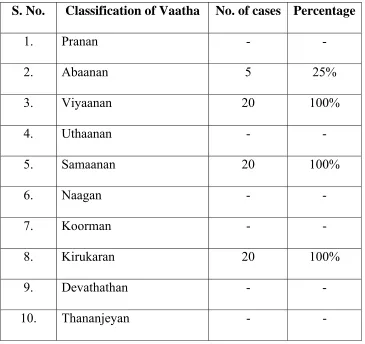
and distributes the digestive extract to all parts of the body.In Sobai,
Samanan is affected. Loss of appetite is present.
4. VIYAANAN:
It is located mainly in the heart. Its functions are responsible for
movements of all parts of the body. In Sobai, Viyanan is affected.
Swelling of the body, pallor of eyes is present.
5. UTHAANAN:
It is located in the chest. Its functions are responsible for speech
and also for complexion, mental strength and hard work.
6. NAAGAN:
It is located in the eyes. It is responsible for opening and closing of
the eyes.
7. KOORMAN:
It is located in heart and eyes. It is responsible for vision and
yawning and also for lacrimation.
8. KIRUKARAN:
It is located in the tongue. It is responsible for salivation, nasal
secretion, appetite and also for sneezing and cough. Kirukaran is affected
9. THEVATHATHAN:
It is located in rectum and genitalia. It is responsible for laziness,
sleep and anger.
10. THANANJEYAN:
It is located in nose. It is responsible for swelling of the body,
makes noise in the ear, separate the suture of the skull after death.
PITHTHA:
Piththa represents “Theyu”. It is classified into 5 types.
1. ANALAM:
This gives appetite and responsible for the change of liquid state
into solid state of food substances and for proper digestion.In Sobai,
analam is affected. Loss of affected.
2. RANJAGAM:
Converts the food extracts into blood and gives red colour to blood.
It is also stimulating the synthesis of blood.In Sobai, Ranjagam is
affected.
3. SAATHAGAM:
It is situated in the heart and determines its work according to mind
knowledge and devotion.
4. AALOSAGAM:
5. PIRASAGAM:
Gives complexion and brightness to the skin. In SOBAI Pirasagam
is affected due to pallor of the body.
KABHA:
Kabha is divided into 5 types.
1. AVALAMBAGAM:
It is located in the lungs. It is named “Avalambagam”, because it is
being the co-ordination of other four types of kabha.
2. KILETHAM:
It is located in the tongue and makes the food moist and soft.In
Sobai, Kiletham is affected. Loss of appetite.
3. POTHAGAM:
It is located in the tongue and responsible for the sensation of taste.
4. THARPAGAM:
Situated in the head and responsible for the coolness of eyes.
5. SANTHIGAM:
Situated in the joints and responsible for the lubrication and free
movements of the joints.
Combination of five elements in Thridhosha:
Vaatha - Vali + Vinn
Piththa - Thee
TASTE
Taste involved in the development of disease, and also in
treatment.
The five elemental combinations of tastes:
Sweet - Mann + Neer
Sour - Mann + Thee
Salt - Neer + Thee
Bitter - Vali + Veli
Pungent - Vali + Thee
Astringent - Mann + Vali
UDAL KATTUGAL:
Our body consists of seven Udal Kattugal. They are,
1. SAARAM:
It is the final product of the digestive process, which strengthens
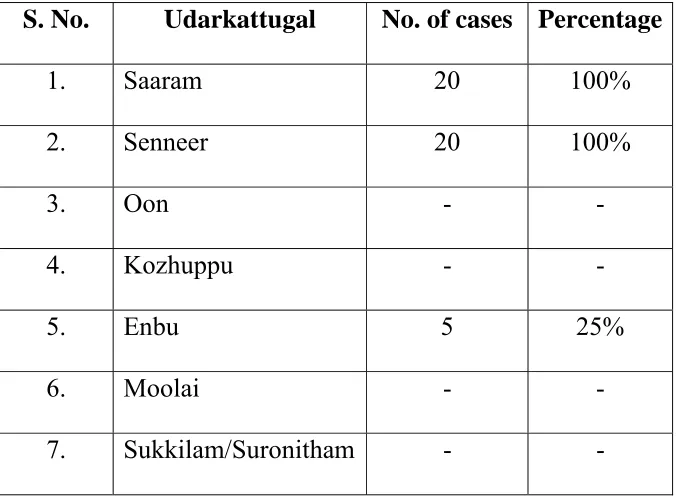
the body and mind and nourishes the blood.In Sobai, Laziness and
tiredness are present.
2. SENNEER:
The saaram after absorption is converted into senneer. It is
responsible for knowledge, strength, boldness and healthy complexion.
Imparts colour to body and nourishes the muscles.In Sobai,pallor of
3. OON:
The musculature will give structure and shape of the body.
The well built or thin built is due to the muscle formations.
4. KOZHUPPU:
Lubricates the organs and thus facilitates their functions and
maintains oily matter of the body.
5. ENBU:
Forms the basic skeletal structure of the body. Responsible for
locomotion and protection of vital organs.
6. MOOLAI:
Present inside the bones which strengthen and maintain the normal
conditions of the bone.
7. SUCKILAM (OR) SURONITHAM:
Responsible for the propagation of species.
PARUVAKAALAM (Season)
The whole year is constructed by 6 seasons as perumpozhuthu.
They are known as.
1. Karkaalam - Auvani and Purattasi - August and September.
2. Koothirkaalam - Iyppasi and Karthigai - October and November.
3. Munpanikaalam - Markazhi and Thai - December and January.
4. Pinpanikaalam - Masi and Panguni - February and March.
5. Elavenilkaalam - Chithirai and Vaigasi - April and May.
The Sirupozhuthu, the minor classifications of time of a day has
been divided into Vaikarai, Kalai, Munpagal, Pinpagal, Maalai, Iravu and
Yaamam.
The diseases were triggered in a specific time period of a season
and of a day. The siddhars have been anticipated the seasonal changes
and advised certain measures in the name of “Kaala Ozhukam” to avoid
the onset of such ailments.
NILAM
It is divided into 5 types
S. No. Nilam Areas
1.
2.
3.
4.
5.
Kurinji
Mullai
Marutham
Neithal
Palai
Hill regions and surroundings
Forest regions and surroundings
Cultivating regions and surroundings
Coastal regions and surroundings
Desert regions
According to Siddha texts, the peoples who live in Kurinji, Neithal
and Palai nilam acquire kaba diseases. So they have increased chance to
get SOBAI NOI, as it is a KABHA disease.
MUKKUTRA VERUPADUGAL(PATHOLOGY)
“fgkhd ePuJTkpd;wpr; Nrhig tuhJ”
According to this, oedema occurs due to vitiation of kabam. Blood
is vitiated in its nourishing content and the vitiation of kabam leads to
oedema of the body. It also conduces to unhealthy swelling of the body
with water logging.
Corollary to the above vitiation the Abanan responsible for
defaecation is disturbed resulting in diarrhea. Besides the vitiated
Viyanan disturbs the circulation of the blood and results in disorders of
mukkutram.
PINIYARI MURAIMAI (OR) ENVAGAI THERVUGAL (Diagnosis)
Piniyari muraimai is the method of diagnosing the disease. It is
based upon the following principles. They are,
1. Poriyaalarithal.
2. Pulanaltherthal
3. Vinaadhal.
1. Poriyaalarithal:
Pori is the five organs of Perception. They are nose, tongue, eyes,
ears and skin. Poriyalarithal is examining the pori of the patient by the
Physician.
2. Pulanaltherthal:
Pulan is the five object of sense namely smell, taste, sight,
sensation and sound. Pulanaltherthal is the examination of the pulan of
3. Vinaadhal:
By Interrogation the physician knows about the patients name, age
occupation, native place, socio-economic status, family history, diet
habits, prone for any allergens, period of illness, history of previous
episode, frequency of attacks by change of season, relevant history of
treatment and habits etc.
Envagai Thervugal (OR) Piniyari Muraimai.
Envagai Thervugal is the siddhars diagnostic methods. This is
described as,
‘ehbg;ghprk; ehepwk; nkhoptpop
kyk; %j;jpukpit kUj;JtuhAjk;”
- Neha;ehly; Neha;Kjdhly; jpul;L - ghfk; I
‘juzpAs;s tpahjp jd;id al;lhq;fj;jhy;
jhdwpa Ntz;LtJ NaNjh ntd;dpy;
jpuzpaNjhh; ehb fz;fs; rj;jj;NjhL
Njfj;jpdJ ghprk; tUzk; ehf;F
apuzky %j;jpukh kpitf nsl;Lk;
Ajk;glNt jhd; ghh;j;Jf; Fwpg;Gf;fz;L
GudUshy; nghpNahh;fs; ghjk; Nghw;wpg;
gz;G jtwhky; gz;bjw; nra;tPNu”
Envagai thervugal are,
1. Naa
2. Niram
3. Mozhi
4. Vizhi
5. Sparisam
6. Malam
7. Moothiram
8. Naadi
1. Naa (Tongue)
The tongue is the organ of taste and speech. We perceive taste,
through the tongue when it is wet. Dry tongue cannot perceive taste.The
tongue is also the vital organ of speech, used to convey in words, the
thoughts, concepts, ideas and feelings. Examination of this important
organ reveals the totality of what is happening in the body.
Look the patients tongue, observe the size, shape, surface, margins
and colour.As there is loss of appetite and anaemia, coated tongue and
pallor are found out in Sobai.
2. Niram (Colour of the skin)
Colour indicating Vaatha, Piththa, Kabha and Tridhosas, yellow or
pallor or black or redness of the skin, any bluish discolouration of the
face, conjunctiva and nail beds.In Sobai, pallor of skin, conjuctiva and
lips are noted.
3. Mozhi (Voice)
Clarity of speech (or) any disturbances, loud voice, slurring,
crying, talk induced by hallucination, breathlessness can be made out.
4. Vizhi (Eye)
Any abnormal change of colour, shape of eye, size of the pupil,
lacrimation, bleeding, eyelashes and eyebrows must be noted. In Sobai,
pallor of conjuctiva is noted.
5. Sparisam
Dryness of the body, temperature state of the body, sweating,
malnutrition, any palpable mass, tenderness, touch sensation, roughness
of the skin, ulcer, emaciation and oedema are noted.In Sobai, dryness of
skin is present.
6. Malam (Faeces)
Quantity, colour, odour, froth, consistency including indigestion,
blood stained, mucus content, frequency, constipation etc.In Sobai,
diarrhea is present.s
7. Moothiram
Quantity, colour, froth, frequency, retention, deposit, heaviness,
presence of abnormal constituents like albumin, sugar and deposits etc.
8. Naadi
The three ‘Uyir thathukkal’ are formed by the combination of three
Naadi with three Vayu.
Idakalai + Abanan - Vatham
Pingalai + Piranan - Pitham
Naadi can be felt one inch below the wrist on the radial side by
means of palpation with tips of index, middle and ring fingers. The verse
is as follows,
‘fhpKfdbia tho;j;jpf; ifjdpy; ehb ghHf;fpy;
ngUtpuyq; Fyj;jpy; gpbj;jb eLNt njhl;lhy;
xU tpuNyhby; thjKaH eLtpuypw; gpj;jk;
jpUtpuy; %d;wpNyhby; Nrj;Jk ehbjhNd’
- Neha; ehly; Kjy; ghfk;
But it is stated in sathaga Nadi that the correct Naadi for children cannot
be felt.
The verse is as follows,
‘nfhz;blNt faNuhfp fhrNuhfp
Fwpg;ghf rpw;wpd;gk; nra;j NgHfs;
mz;blNt jhpj;jpuHfs; tpUj;jH ghyH
md;ghfj; jz;zPhpy; %o;fpNdhHfs;s
nfhz;blNt ,tHfsJ cWg;gpd; jhJ
$wNt KbahJ vtHf;Ff; ,l;Lk;
gz;blNt apg;ghPl;ir ahHjhd; fhz;ghH
guhguj;jpd; kfpikapJ ghUghNu”
- Neha; ehly; Kjy; ghfk;.
In Sobai noi, most of the cases have kaba pitha naadi.Some of the
NEERKURI AND NEIKURI
Based upon the clinical features of a disease and Naadi, the
diagnosis is further confirmed by the support of Neerkuri and Neikuri
‘mUe;Jkh wpujKk; mtpNuhjkjha;
m/fy; myh;jy; mfhyT+z; jtph;e;jow;
Fw;wstUe;jp cwq;fp itfiw
Mbf;fyrj; jhtpNa fhJ nga;
njhU K$h;j;jf; fiyf;Fl;gL ePhpd;
epwf;Fwp nea;f;Fwp epUkpj;jy; flNd”
- rpj;j kUj;Jthq;;fr; RUf;fk;
The patient must take well-cooked food in the previous day. The
intake must be proportionate to the degree of his appetite. Food intake
should be taken, at appropriate time. He must have sound sleep on the
previous night. The urine is collected on the dawn of the next day in a
glass container and closed immediately to prevent from the contact of
external atmosphere. This specimen must be examined within 1 1/2
hours. This procedure should be followed strictly in order to get accurate
reading of Neerkuri and Neikuri.
NEIKURI:
The diagnosis and prognosis of dhosha, derangement of the
diseases are studied on the basis of the behaviour by drop of gingely oil
Methods for the determination of three dhosha’s derangement by
adding a drop of oil in the urine as follows.
‘epwf;Fwpf; Fiuj;j epUkhz ePhpw;
rpwf;f ntz;nzNahh; rpWJsp eLtpLj;
njd;Wwj; jpwe;jnjhyp Nafh jike;jjp
dpd;w jptiyNghk; newptpopawpTk;
xd;wJ GfYQ; nra;jpia AzNu”.
- Neha;ehly; Neha;Kjy;ehly; - ghfk; 1
The process of oil indication:
The urine specimen is collected and analysed as follows.
The specimen is kept in a glass dish, well exposed to sunlight. It
should not be disturbed by the wind. Then add one drop of gingely oil by
a glass rod. Observe keenly about the position and spreading of the oil
drop.
‘muntd ePz;bd/Nj thjk;”
‘MopNghw; gutpd; m/Nj gpj;jk;”
‘Kj;njhj;J epw;fpd; nkhoptnjd; fgNk”
If a drop of oil spreads likes a snake it indicates the Vaatha
disease, it spreads like a ring it indicates Pitha disease, and it
spreads like a pearl it indicates Kabha disease. In Sobai, oil looks
like a pearl and indicates kabha neer.
THODAR NOIGAL (COMPLICATIONS)
SOBAI MAHOTHARAM‘$whd mbtapW Fioe;J cg;gpf;
$g;gpl;L Nky; tapw;wpy; gpFT khFk;
Njwhd tz;l nkhLf; fhy;fs; iffs;
rpije;Jnkj;j tPq;fpNa nrOk;g yhFk;
tPwhd Nky; %r;R ,Uky; jhfk;
tpf;fpNa rhPunky;yhq; Fsph;r;rp ahFk;
E}whd %j;u kyQ; RUq;fpf; fhZk;
Nrhig kNfh junkd;W nrg;g yhNk”
- A+fp rpe;jhkzp ( ghly; - 583 > gf;fk; - 188)
The following symptoms are seen in “Sobai Mahotharam”.
Distension of the abdomen
Pain in the upper abdomen
Swelling in both limbs
Dyspnoea
Cough and excessive thirst
Hypothermia
Constipation and oliguria.
FATE OF THE DISEASE(NOI MUDIVU)
1. ‘Jluhd gpj;jkjpw; Nrhig ahfh
NrhigapNy thA ntOe;J njhe;jpg;ghfh
,luhd thAtjpNy ghz;L thfh
jplkhd fLg;gjpNy rPj khfh
rPjkjp nyOe;J fgQ; Nruyhfh
jlkhd fge;jdpNy kaf;fk; tpf;fy;
jhpj;jpLfpy; kuznkd;W jatha;r; nrhy;Ny”
- rjf ehb .
2. ‘nrhy;Y gpj;jj;jpw; Nrhigjdpy; thA njhe;jk;
ty;y tjpw; ghz;Ltd; ghz;by; - ey;y
tapw;Wf; fLg;G tsh;fLg;gpw; rPjk;
gapypw; nfLjpnadg; gd;
rPje;jdpw; fgKQ;NrH fgj;jpy; tpf;fYl
NdhJ kaf;fkpit Aw;wpD - khNjNfs;
NfhJjid ePf;fpf; $WyNfhh; jhk;Nghw;wj;
jPJyF GFe;Njh;”
- fz;Zr;rhkpak; .
In pitha sobai, vaayu, anaemia, dysentery, kabam, faintness and
PROGNOSIS OF SOBAI (NOI NITHANAM)
Curable type:
According to Jeeva Rakshamirtham, if oedema alone without
any associated disorders will have good prognosis.
Incurable type:
According to Jeeva Rakshamirtham and Siddha Maruthuvam ,
the following types are incurable.
1. Mukkutra sobai
2. If the swelling subsides, but recurs again and again, the condition
of the affected person is incurable.
3. If the body is swollen and the skin cracks with oozing out of the
fluid, the condition of the affected person is incurable.
4. If the swelling of the body subsides suddenly, chillness of the nasal
septum, excessive vomiting and diarrhea, flatulence and swelling
of the back are the symptoms, which tell us the affected is beyond
the cure.
5. In addition to this, if the swelling spreads from foot to face, it is
known as “Earu Veekam” and from the face to foot is known as
NOI NEEKAM(TREATMENT)
Treatment is of two kinds,
1. Restoration of balance of Mukkutram and Udal kattugal.
2. Internal medicine: Administration of medicine should be
accompanied with the vehicle (mDghdk;), adjuvant
(JizkUe;J), and diet( gj;jpak;).
Treatment of sobai:
1. Rejuvenation of the blood.
2. Excess fluid has to be removed out by the administration of
diuretics.
3. Intake of rich nutritious food is also an important part of the
treatment.
4. Supports with iron supplements for nourish the blood.
Diet:
‘czNt kUe;J
kUe;Nj czT”
Diet should strengthen the body and rejuvenate the blood. It must
also be contribute to increase the urination. They are twice cooked rice
for easy digestion and dishes made up of radish, greens, snake gourd and
tender brinjal. Soup prepared from the liver of a goat may be given to
Greens like Karisalai, Murungai, Ponnanganni, Arukeerai,
Sirukeerai and Manathakkali keerai should be given.
High calorie foods prepared from cereals, pulses and nuts like
groundnut and fruits like amla and papaya should be given.
Hen’s egg, ghee and butter like foods of animal sources are the
main energy supplements for children.
After normal diet is restored, meat of kaadai, gowthari and udumbu
may be given to tone up the system debilited and for rejuvenation.
Drug of choice:
The author took Nelli Vadagam and Sobai kudineer as the trial
drug for Sobai because herbal drugs are potent and safer than metallic
MODERN ASPECT
DROPSY
Definition:
It is defined as abnormal and excessive accumulation of fluid in the
interstitial tissue spaces and serous cavities. The accumulation of fluid
may be inside or outside the cell.
Based on the site of accumulation of fluid, edema is classified into
two types.
1. Intracellular edema – Fluid accumulates inside the cell.
2. Extracellular edema – Fluid accumulates outside the cell.
Intracellular edema because of three reasons,
1. Malnutrition
2. Poor metabolism
3. Inflammation of the tissues
Extracellular edema occurs because of four reasons,
1. Heart failure
2. Renal disease
3. Decreased amount of Plasma proteins
Types:
There are two main types of edema.
1. Localised edema – In the organ or limb.
2. Generalised edema-When it is systemic in distribution, particularly
noticeable in the subcutaneous tissues.
The edema may be classified as follows.
Edema
1. Localised 2. Generalised 3. Special
Inflammatory Nutritional Pulmonary
Lymphatic Cardiac Cerebral
Toxic-allergic Renal
Besides, there are a few special forms of edema. In the case
of edema in the subcutaneous tissues, momentary pressure of finger
produces a depression, known as “Pitting edema”. The other variety is
“Non-pitting edema” or “Solid edema”, in which no pitting is produced
on pressure.
MECHANISM OF EDEMA
PHYSIOLOGY:
The three major types of proteins in the plasma are albumin,
colloid osmotic pressure. The globulin is mainly responsible for both the
natural and acquired immunity. During blood coagulation, the fibrinogen
polymerises into fibrin threads thereby forming blood clots to avoid the
leaks in the circulatory system.
Proteins:
The three major types of proteins present in the plasma are
albumin, globulin and fibrinogen. The principal function of albumin is to
provide colloid osmotic pressure.
Albumin is responsible for the maintenance of plasma osmotic
pressure. Osmotic pressure due to albumin is greater than globulin
because of lower molecular weight and higher concentration. Osmotic
pressure of plasma must be maintained for the proper distribution of
water between blood and tissues.
NORMAL FLUID PRESSURES
Osmotic Pressure:
¾ This is the pressure exerted by the chemical constituents of the
body fluids.
Hydrostatic Pressure:
This is the capillary blood pressure. There is a considerable
pressure gradient at the two ends of capillary loop being higher at the
arterial end (average 32mm Hg) than at the venous end (average 12mm
Tissue tension is the hydrostatic pressure of interstitial fluid and is
lower than hydrostatic pressure in the capillary at the either end (average
4mm Hg).
Normal Fluid Exchange:
At the arterial end of the capillary, the balance between the
hydrostatic pressure (32mm Hg) and plasma osmotic pressure (25mmHg)
is thehydrostatic pressure of 7 mmHg which is the outward driving force
so that a small quantity of fluid and solutes leaves the vessel to enter the
interstitial space.
At the venous end of the capillary, the balance between the
hydrostatic pressure (12mm Hg) and plasma osmotic pressure (25mm Hg)
is the osmotic pressure of 13 mm Hg. This is the inward driving force so
that the fluid and solutes re-enters the plasma.
The tissue fluid left after exchange across the capillary wall
escapes into the lymphatics from where it is finally drained into venous
circulation.
Tissue factors i.e., osmotic pressure of interstitial fluid and tissue
tension are normally small and insignificant forces opposing the plasma
PATHOGENESIS OF EDEMA:
The following six mechanisms may be operating singly or in
combination to produce edema.
1. Decreased plasma oncotic pressure.
2. Increased capillary hydrostatic pressure.
3. Lymphatic obstruction.
4. Tissue factors (Increased oncotic pressure of interstitial fluid
and decreased tissue tension)
5. Increased capillary permeability.
6. Sodium and water retention.
1. Decreased Plasma oncotic pressure:
The plasma oncotic pressure exerted by the total amount of plasma
proteins tends to draw fluid into the vessels normally. A fall in the total
plasma protein level (hypoproteinemia less than 5 gm/dl), results in
lowering of plasma oncotic pressure in a way that it can no longer
counteract the effect of hydrostatic pressure of blood. This results in
increased outward movement of fluid from the capillary wall and
decreased inward movement of fluid from the interstitial space, causing
edema.
Hypoproteinemia usually produces generalised edema out of
pressure than globulin, so that it is hypoalbuminemia (albumin below
2.5gm/dl), that results in edema more often.
2. Increased capillary hydrostatic pressure:
The hydrostatic pressure of the capillary is the force that normally
tends to drive fluid through the capillary wall into the interstitial space by
counteracting the force of plasma oncotic pressure. A rise in the
hydrostatic pressure at the venular end of the capillary, which is normally
low (average 12mm Hg) to a level more than the plasma oncotic pressure,
results in minimal or no reabsorption of fluid at the venular end,
consequently leading to edema.
3. Lymphatic obstruction:
Normally the interstitial fluid in the tissue spaces escapes by way
of lymphatics, so that obstruction to outflow of these channels causes
localised edema, known as lymphedema.
4. Tissue factors:
The forces acting in the interstitial space – oncotic pressure of the
interstitial space and tissue tension are normally quite small and
insignificant to counteract the effects of plasma oncotic pressure and
capillary hydrostatic pressure respectively. However, in some situations,
the tissue factors in combination with other mechanisms play a role in
5. Increased capillary Permeability:
An intact capillary endothelium is a semi permeable membrane
which permits the free flow of water and crystalloids, but allows minimal
passage of plasma proteins normally. However, when the capillary
endothelium is injured by “Capillary Poisons” such as toxins and their
products, histamine, anoxia, venoms, certain drugs and chemicals the
capillary permeability to plasma proteins is enhanced due to development
of gaps between the endothelial cells.
This, in turn, causes reduced plasma oncotic pressure and elevated
oncotic pressure of interstitial fluid which consequently produces edema.
6. Sodium and Water retention:
Normally about 80% of sodium is reabsorbed by the proximal
convoluted tubules under the influence of intrinsic renal mechanism.
Excessive retention of sodium and water and their decreased renal
excretion occur in response to hypovolaemia and lowered concentration
of sodium in the renal tubules by stimulation of intrinsic renal and extra –
PATHOPHYSIOLOGIC CATEGORIES OF EDEMA
I. Increased Hydrostatic Pressure
A. Impaired Venous Return:
1. Congestive heart failure
2. Constrictive pericarditis
3. Cirrhosis of liver (ascites)
4. Obstruction or Narrowing of Veins
a. Thrombosis
b. External pressure
c. Inactivity of the lower extremities with long periods of
dependency.
B. Arteriolar Dilatation:
1. Heat
2. Neurohumoral excess or deficit
II. Reduced Oncotic Pressure of Plasma
Hypoproteinemia
A. Protein losing glomerulopathies – nephrotic syndrome
B. Cirrhosis of liver (ascites)
C. Malnutrition
III. Sodium Retention
A. Excessive salt intake with reduced renal function
B. Increased tubular reabsorption of sodium.
1. Reduced renal perfusion
2. Increased Renin – Angiotensin – Aldosterone
secretion.
IV. Lymphatic Obstruction
A. Inflammatory
B. Neoplastic
C. Post surgical
D. Post irradiation
INTRODUCTION TO NUTRITIONAL DROPSY
Food is a major concern of the mankind beginning from the time of
conception and extending through the entire life span of the individual.
Nutrients are necessary for maintaining growth of the individual and for
repair of the aging tissues.
The energy obtained from the food is usually expressed in terms of
thermo chemical kilocalories. These are often loosely referred to as
calories. The calorie is defined as the quantity of heat required to raise the
temperature of 1 gm of water from 14.5°C to 15.5°C. A thermo chemical
kilocalorie is equal to 1000 calories.
Protein is the second most abundant substance in the body, second
only to water. These are made up to twenty different amino acids. A few
while others must be supplied in the diet (essential or semiessential).
Essential amino acids include leucine, isoleucine, lysine, methionine,
phenyl alanine, threonine, tryptophan and valine.
Functions of Protein:
¾ Protein helps the child to grow, as the constituent amino acids
are necessary for the synthesis of tissues in the body.
¾ Protein is essential for the formation of digestive juices,
hormones, plasma proteins, enzymes, vitamins and
haemoglobin etc.
¾ Protein is also act as powerful buffers to maintain acid base
equilibrium in the body.
¾ It is also a source of energy for the body.
¾ Excess protein not used for building tissues or providing energy
is converted by the liver into fat and stored in body tissues.
PROTEIN QUALITY
A complete protein contains all of the essential amino acids in
relatively the same amount as humans require for maintenance of good
health and optimal growth. The proteins of animal origin generally have a
higher content of essential amino acids. These are therefore classified as
“Biologically complete protein”. Proteins from vegetable sources are
often “Biologically incomplete” as these usually lack one or more of the
essential amino acids. Proteins of rice and potato are considered as good
A high quality protein should be complete as well as digestible.
This is measured best by the biological value of protein. Biological Value
(BV) is calculated as the fraction of absorbed nitrogen retained in the
body for growth or maintenance.
Egg protein is considered a Reference Protein as it is complete and
well digested. The Biological value of egg protein is 100. Biological
value of milk, rice and fish are 75, 67 and 75 respectively. The
combination of vegetable proteins may provide all the essential amino
acids as in the reference protein.
PROTEIN REQUIREMENT
Age Protein gm / Kg / day of egg or milk Protein equivalent
1 – 2 months 2.25
2 – 3 months 1.82
3 – 4 months 1.47
4 – 5 months 1.34
5 – 6 months 1.30
6 – 9 months 1.25
9 – 12 months 1.15
1 – 2 years 1.25
2 – 3 years 1.13
3 – 4 years 1.09
4 – 5 years 1.06
5 – 6 years 1.00
6 – 9 years 1.48
These protein requirements are given in terms of mixed vegetable
protein, contained in the Indian diets, the Net Protein Utilization (NPU)
of which is assumed to be 65. If the protein in the diet is obtained from
animal sources like egg, meat, fish or milk, lower intake of protein will
usually be sufficient.
The NPU of a protein is the proportion of ingested nitrogen that is
retained in the body under specified conditions. NPU is a combined
measure of digestibility and the efficiency of utilization of the absorbed
amino acids.
PROTEIN ENERGY MALNUTRITION (PEM)
PEM is probably the most widespread health and nutritional
problems of the developing countries including India. The calorie and
protein requirements of young children are larger relative to their size
than in older children and adults. Protein calorie deficiency is therefore
seen more commonly among these groups and associated with infection
contributes to high child mortality in under privileged communities.
Further, early malnutrition can have lasting effects on growth and
functional status.
The frequency of under nutrition cannot be easily estimated from
the prevalence of commonly recognized clinical syndromes of
malnutrition such as “Marasmus” and “Kwashiorkar”. But the author
ETIOLOGY
The deficiency may be primary or secondary in origin.
1. Primary - due to primary to dietary deficiency
2. Secondary - It is related to factors that interfere with the
ingestion, absorption or utilization of nutrients.
In a considerable proportion of cases, both the factors may be
operative.
PRIMARY CASUES
1. Poverty:
Poor socio-economic status of the family contributes a lot to
development of malnutrition in the developing regions. With very low
income, it is a tough task to provide nutritious diet to the children. It is
estimated that among the downtrodden, hardly 10% of the money is spent
on foods obtained from animal sources i.e., egg, milk, curd, meat etc.
2. Ignorance, Faulty food habits, Feeding:
Many deep – rooted beliefs, customs, practices, superstions, food
taboos and ignorance join hands to cause malnutrition.
3. Medical Causes:
Infections and disorders such as diarrhoea, malaria or measles may
prove major contributory factors in development of malnutrition,
indirectly or directly. Besides the deliberate restriction of food by the
same time, there may result more catabolism to produce the heat energy
lost during a febrile episode.
Intestinal parasitic may either deprive the host of nutrients or lead
to malnutrition by reducing appetite, causing diarrhoea or by producing
absorptive defect.
4. Low birth weight (LBW):
Malnourished mothers have a high incidence of low birth weight
and growth retarded babies with poor nutritional reserve. The mothers
may also show poor lactational performance.
5. Large families:
Nutritional status is adversely affected by the large size of the
family. It has been convincingly demonstrated that malnutrition is much
higher among children of birth order fourth and higher than in the first
three children of a sibship. When there are too many children, the family
has to do with whatever food it can manage. The burnt of the suffering
falls on the preschool children and the mother.
6. Social factors:
Repeated pregnancies, inadequate child spacing, food taboos,
broken homes and separation of a child from his parents are the important
social factors that may play a part in etiology of PEM.
Natural disorders such as floods, earthquakes and droughts, shift
7. Population growth:
Increase in the birth rate is disproportionate to the increase in food
production. Countries with maximum population growth do not have
improved agricultural production. This has lead to uneven distribution of
food and malnutrition.
8. Feeding habits:
Lack of exclusive breast feeding for first 6 months makes the child
prone to early onset malnutrition. Lack of confidence in the mother
coupled with non – availability of the skilled help and social pressures
make mother think that her breast milk supply is not sufficient to satisfy
the nutritional needs of the infant.
Artificial feeding is employed in these situations, which is often
disastrous for the baby because of the poor quality of the substitute milk,
excessive dilution and use of unhygienic feeding bottles and nipples.
SECONDARY CAUSES:
Secondary nutritional inadequacy is caused by a variety of factors
other than a poor diet. Factors that may be involved are as follows.
1. Infection - Like HIV.
2. Metabolism - Inborn errors of metabolism.
3. Gastro intestinal tract - Cleft lip, Cleft palate,
Malabsorption, Gastro Esophageal
4. Liver - Cirrhosis, Chronic liver disease,
Hepatitis.
5. Pancreas - Pancreatic insufficiency.
6. Renal - UTI, Chronic Renal Failure, Renal
tubular Acidosis.
7. Respiratory - Asthma, Recurrent respiratory
tract Infections.
8. Endocrine - Diabetes mellitus, Hypothyroidism,
Addison’s Disease, Growth hormone
deficiency.
9. Neurological - Mental retardation, Degenerative
diseases, Cerebral palsy.
10. Collagen vascular diseases
PATHOGENESIS OF NUTRITIONAL DEFICIENCY DISEASES:
Primary (dietary)
Inadequacy Nutrient reserves
Nutritional deficieny Tissue depletion
Biochemical lesions
Secondary Inadequacy
Functional Changes
Anatomic lesions
After a nutritional inadequacy begins, there is a time lapse before
the onset of a Nutritional deficiency disease. The time intervel may
depend on the degree of nutritional inadequacy and the level of nutrient
reserves.
Biochemical lesions develop as a consequence of tissue depletion.
Such lesions can best be illustrated by deficiencies of vitamins that are
involved with enzyme systems dealing with the release of energy and
other metabolic reactions. Biochemical alterations develop and may result
in the accumulation of certain metabolites and in the altered metabolism
of others.
Functional changes in tissues and organs may then occur.
Anatomic lesions develop and often are specific for or related to the
has been presented in a step wise manner, no nutritional inadequacy to
anatomic lesions need necessarily be complete before the next begins.
Edema due to Malnutrition
Malnutrition occurs because of poor intake of food or poor
circulatory system through which the nutritive substances are supplied.
Due to the lack of nutrition, the function of the cell membrane is
depressed leading to poor exchange of ions. Especially the sodium ions
leaking into the cells can not be pumped out. It causes endosmosis
resulting in intracellular edema.
Causes of edema in PEM:
1. Hypoproteinemia – Hypoalbuminaemia
2. Increased ADH secretion
3. Increased Rennin, Angiotensin and Aldosterone secretion.
4. Decreased hepatic functions leads to hypoalbuminaemia and
decreased degradation of Aldosterone, which leads to
increased Aldosterone levels thereby retention of sodium and
water.
5. Increased ferritin
6. Congestive heart failure
7. Anaemia
Nutritional marasmus and Kwashiorkor are two extreme forms of
malnutrition. In marasmus there is no edema. Edema is one of the
KWASHIORKAR
The term was more aptly interpreted to the sickness of the older
child when the next baby is born. It was said to mean the “red boy”,
because of the characteristic pigmentary changes.
CONDITIONS WHICH PRECIPITATE KWASHIORKOR:
¾ Acute gastroenteritis
¾ Measles
¾ Whooping cough
¾ Tuberculosis
¾ Malaria
¾ Repeated lower respiratory tract infections
¾ Fever
¾ Increased dietary needs during rapid growth, illness, infections
and anaemia.
CLINICAL FEATURES OF KWASHIORKOR
Essential Features:
I. Markedly retarded growth
II.Edema of dependent parts
III.Mental changes
I. Growth retardation:
Deficit in height is less than that in Marasmus. Muscles of the
upper limbs are wasted, but the lower extremities appear swollen. Muscle
II. Edema
Edema is the clinical manifestation of expansion of extra cellular
fluid volume caused by pre – renal diversion of fluid from the capillary
bed to extra cellular space. Edema may be caused by,
1. Hypoalbuminemia
2. Retention of fluid and water due to increased capillary permeability
as a result of infection; potassium deficiency being a major
contributing factor.
3. Free radical induced damage to cell membrane.
Edema is characteristically pitting. It usually occurs initially above
the ankles and is detected by pressing firmly over the lower third of the
medial surface of the tibia, rarely puffiness of dorsum of the feet or round
the eyes, occurs even earlier.
In later stage the whole face, hands and body may be edematous,
but ascites is rarely due to kwashiorkor alone.
In a previously malnourished child, edema is precipitated by
debilitating illness such as measles or diarrhoea. A child with edema may
also be having severe dehydration concurrently.
III. Mental Changes:
With the onset of kwashiorkor, the previously peevish and irritable
undernourished child becomes lethargic, listless and apathetic. He takes
little interest in the environment and does not play with his toys. The
kwashiorkor patient appears miserable, appetite is impaired and it is
Other Usual Clinical Features
1. Hepatomegaly:
The liver is enlarged with rounded lower margin and soft
consistency in about one third of cases. Histological examination shows
fatty infiltration.
2. Hair Changes:
The hair is turn, dry, brittle, easily pluckable, sparse and devoid of
their normal sheen. It becomes straight and hypopigmented. The length of
the hair that grows during the period of nurtitional deprivation appears
reddish brown .During the phases of better nutrition, the growing part of
the hair lets appropriately pigmented. This gives appearance of alternate
bands of hypopigmented and normally pigmented hair (Flag sign). Hair
changes are related more to the duration of under nutrition and are absent
in acute PEM.
3. Skin changes:
Large areas of skin show erythema, followed by
hyperpigmentation. Hyper pigmented patches may desquamate to expose
raw hypopigmented skin. It gives appearance of old paint flaking off the
surface of the woods (Flaky paint dermatosis). Lesions are more marked
on extremities. The underlying raw skin is easily infected
The skin lesions are marked in body areas most exposed to
continuous pressure and irritation. Petechiae or ecchymosis appear in
severe cases. The skin may become dry, inelastic, mosaic in appearance.