Playing the changes:
An expanded view of higher music education through
the use of collaborative learning and teaching
Melissa Forbes
BA (Hons), LLB (Hons), B Mus, Grad Cert Music Studies
Submitted in fulfilment of the requirements of the degree of
Doctor of Philosophy
Abstract
In Australia, higher music education faces challenging times— university reform has ushered in an era of public accountability and budget cuts; the sector has become portfolio career-focussed and a university education must prepare students for uncertain futures. Within higher music education, collaborative learning has been identified as one way to address these types of challenges. There has recently been increased interest in the use of collaborative learning in a variety of higher music education contexts. To date, however, collaborative learning for music practice or performance in higher music education remains little used and under-researched.
Situated within a practitioner inquiry framework, this study employed narrative approaches to discover participants’ experiences of collaborative learning in first year music practice courses at the University of Southern Queensland, a regional Australian university. The participants in this study were students who completed the first year music practice courses in 2014 and the teacher/researcher. Preliminary research during 2012 and a pilot study in 2013 shaped the focus and design of the study. Data were collected from students’ essays, journals and short answer questionnaires. Teacher’s data took the form of a teacher/researcher diary. Thematic analysis of students’ essays and journals established the ways in which collaborative learning built students’ individual and collective agency. Narrative analysis of the entire data set was undertaken to develop a robust picture of the value created through learning music practice collaboratively.
for musical and personal development. Learning through informal social participation within heterogeneous peer groups built students’ individual agency. Student learning outcomes included the acquisition of new musical skills, but also extended to shifts in identity and personal transformation. Furthermore, collaborative learning built collective agency. As collaborative musical action and a shared focus on practice were established, students developed mutual musical goals and thereby discovered new ways of knowing the world through exploring and affirming collective identity. In addition to increasing student agency, collaborative learning created value for students and the teacher/researcher. The primary source of value creation for students was social relationships with peers. This finding supported the findings on agency. The value created for the teacher/researcher was also linked to increased teacher agency. The teacher/researcher experienced collaborative learning as highly creative and improvisatory. As a pedagogical model rooted in improvisation, collaborative learning was likened throughout the study to playing the changes in jazz. This metaphor was extended to refer to collaborative learning’s potential to creatively and constructively respond to the systemic, institutional and cultural challenges facing higher music education.
In response to these findings, the teacher/researcher engaged in paradigm reflection on the nature and purpose of teaching and learning music practice in this context. This reflection revealed that collaborative learning expanded learning and teaching practice by constructively
teaching, this study recommends that collaborative learning in this location be more accurately described as collaborative learning and teaching. Reflection also resulted in an expansion of the ends or purpose of music practice education to include and value non-musical outcomes such as shifts in personal identity and transformative personal experiences.
Context is acknowledged as a limitation to the broader applicability of these findings, however, given the challenges facing higher music education they may be of interest to researchers of collaborative learning and
practitioners teaching in a range of higher music education contexts. Due to collaborative learning’s ability to address both issues of cost and
pedagogical challenges, future research in this area might focus on the use of collaborative learning for music practice in higher music education contexts different to the study site, such as conservatoria and large metropolitan institutions.
development.
Participants’ experiences of collaborative learning in this study reflected the essential characteristics of collaborative learning as described in the literature and in terms of learning outcomes, demonstrated social learning theory in action. However, beyond merely confirming existing knowledge about collaborative learning, the significance of this study lies in the use and investigation of collaborative learning within an educational context where collaborative processes have not been prominent. In light of the challenges facing higher music education today, participants’
Statement of Originality
This work has not previously been submitted for a degree or diploma in any university. To the best of my knowledge and belief, the thesis contains no material previously published or written by another person except where due reference is made in the thesis itself.
The referencing and citing system used in this thesis follows the Publication Manual of the American Psychological Association (6th ed.).
Melissa Forbes
Table of Contents
Abstract ... i
Statement of Originality ... v
Table of Contents ... vii
List of Figures ... xi
List of Tables ... xiii
Glossary of Acronyms and Terms ... xv
Acknowledgements ... xix
Prologue ... xxiii
Chapter 1. Introduction ... 1
1.1 Rationale and focus ... 3
1.2 Aim, objectives and goal ... 8
1.3 Research questions ... 11
1.4 Scope and limitations ... 11
1.5 Significance ... 13
1.6 Overview of thesis ... 15
Chapter 2. Positioning the Study ... 17
2.2 Theoretical framework ... 30
2.3 Collaborative learning ... 44
2.4 Chapter summary ... 62
Chapter 3. Methodology ... 64
3.1 Qualitative research in music education ... 64
3.2 Philosophical assumptions and interpretive framework ... 77
3.3 Overview of research approaches and limitations ... 80
3.4 Practitioner inquiry ... 83
3.5 Narrative inquiry ... 86
3.6 Researcher’s position ... 90
3.7 Chapter summary ... 99
Chapter 4. Research Design ... 101
4.1 Participant selection and ethics ... 101
4.2 Methods—data collection, collation and analysis ... 106
4.3 Credibility framework ... 120
4.4 Chapter summary ... 128
Chapter 5. Individual and Collective Agency ... 131
5.2 Introduction to themes ... 132
5.3 Individual agency ... 133
5.4 Collective agency ... 155
5.5 Chapter summary ... 165
Chapter 6. Value Indicators ... 168
6.1 Overview ... 168
6.2 Value indicators by cycle ... 174
6.3 Chapter summary ... 196
Chapter 7. Value Creation Stories ... 199
7.1 Overview ... 199
7.2 Overall value creation stories ... 202
7.3 Specific value creation stories ... 220
7.4 Chapter summary ... 229
Chapter 8. Discussion ... 233
8.1 Musical agency ... 234
8.2 Value creation ... 240
8.3 The means and ends of HME—an expanded view ... 255
9.1 Implications for practice ... 279
9.2 Directions for further research ... 282
9.3 Concluding remarks ... 283
References ... 287
Appendix A: Peer and Self-Assessment Rubrics ... 313
Appendix B: Assessing Value Creation ... 315
Appendix C: Ethics ... 327
List of Figures
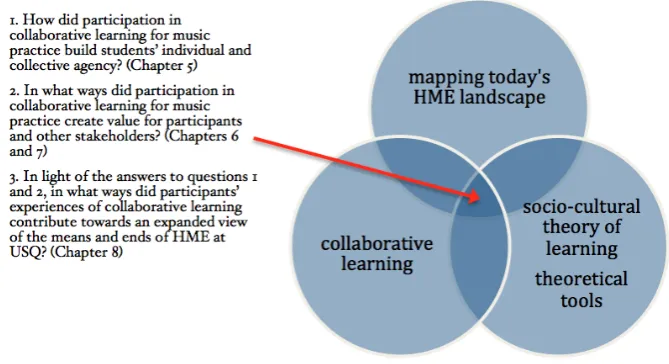
Figure 1—Themes in Chapter 2 and relationship to research questions ... 18
Figure 2—A sociologically inspired understanding of musical agency as a lens (Karlsen, 2011, p. 118) ... 41
Figure 3—Productive tensions between aspirational and everyday narratives (Wenger, Trayner, & de Laat, 2011, p. 17) ... 197
Figure 4—Summary of value indicators ... 197
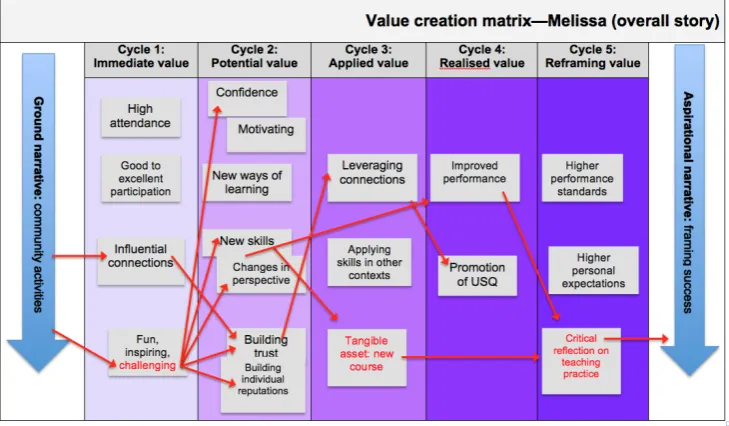
Figure 5—Value creation matrix for teacher (overall story) ... 211
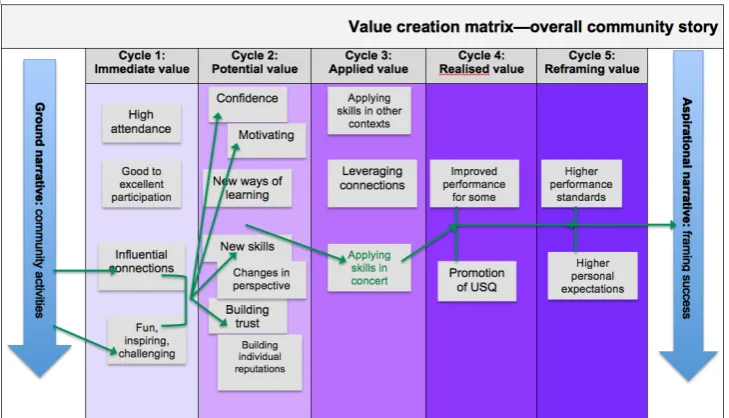
Figure 6—Value creation matrix for community (overall story) ... 214
Figure 7—Value creation matrix for Jack (overall story) ... 218
Figure 8—Value creation matrix for Cate (overall story) ... 220
Figure 9—Value creation matrix for Maddie (specific story) ... 224
Figure 10—Value creation matrix for teacher (specific story) ... 226
Figure 11—Value creation matrix for Shane (specific story) ... 228
Figure 12—Final value creation matrix for students ... 242
List of Tables
Table 1—Overview of study ... 10
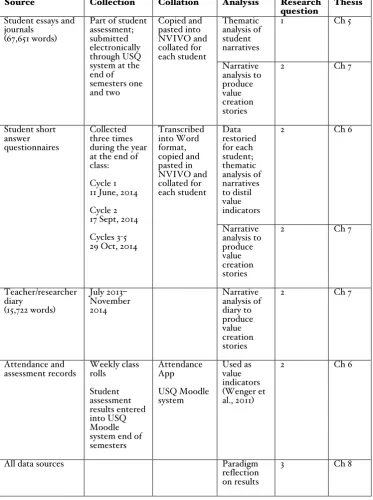
Table 2—Data collection, collation and analysis ... 108
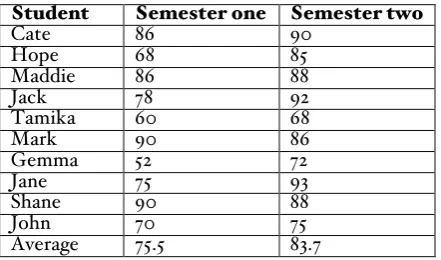
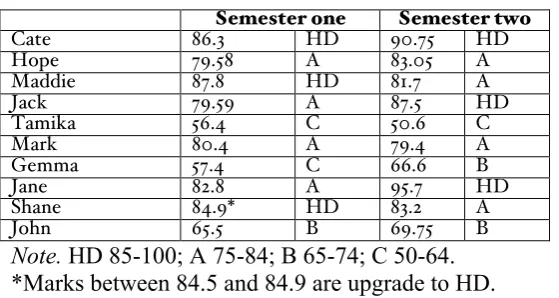
Table 3—Student results for essay and journal tasks ... 111
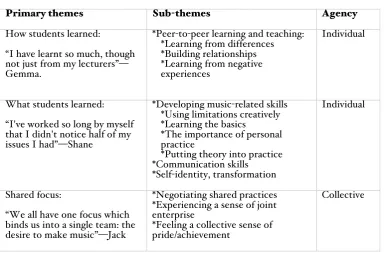
Table 4—Themes and their relationship to Karlsen's (2011) lens ... 133
Glossary of Acronyms and Terms
BCA Bachelor of Creative Arts
B Mus Bachelor of Music
collaborative learning More than simply working in small groups, collaborative learning recognizes that knowledge is socially constructed within a community of knowledgeable peers. The authority of knowledge is shared among community members and members learn from their interactions with each other (Bruffee, 1999).
Collaborative learning is the pedagogical model upon which the learning
community of 2014 was based. community of practice “a learning partnership among people
who find it useful to learn from and with each other about a particular domain” (Wenger, Trayner, & de Laat, 2011, p. 9; see also Wenger (1998))
the conservatoire model A model for music education which originated in Paris at the Conservatoire Nationale de Musique et d’Art
Dramatique (founded in 1783), whereby students learned an instrument, voice or composition in a master-apprentice setting. Later adapted by English schools of music in the 19th century
(“Conservatory: Musical institution”, 2015).
the framework OR
the Wenger, Trayner, and de Laat (2011) framework
Promoting and Assessing Value Creation in Communities and Networks: A
Conceptual Framework by Etienne Wenger, Beverly Trayner and Maarten de Laat
HME Higher music education—refers to music
The 2014 learning community The community of participants in MUI1001 and MUI1002
MUI1001 Music Practice 1, the semester one
course in which student participants were enrolled
MUI1002 Music Practice 1, the semester two
course in which student participants were enrolled
music practice The applied aspects of studying music. Practice in this context involves, amongst other things, playing an instrument or singing within a small group; rehearsing for performances; arranging music; preparing lead sheets. Music practice, as defined here, is
differentiated from but admittedly related to an individual’s personal practice of music in order to improve performance.
one-to-one A pedagogical model where students
learn an instrument, singing or composition from a teacher on an individual basis
participants Students enrolled in MUI1001 and
MUI1002 in 2014 who completed both semesters of study and me, their teacher
program A university degree offer, for example,
the Bachelor of Creative Arts program
USQ University of Southern Queensland,
Toowoomba, Queensland, Australia— the study site
value The learning that is enabled by
participation in a learning community value indicators Events, experiences, metrics,
value creation matrix A conceptual representation of the combination of value indicators and value creation stories. Designed to provide a robust depiction of the value created by participating in a community of practice.
value creation stories A genre of story depicting the ways in which learning is enabled by
Acknowledgements
Thank you to my supervisors Professor Don Lebler and Associate Professor Gemma Carey for your guidance and encouragement. It has been a pleasure working with you and a wonderful learning experience.
Thank you to the University of Southern Queensland, and in particular to the first year music students who agreed to participate in this study and share their experiences of collaborative learning.
Thank you to colleagues, past and present, for your support in
bringing this study to fruition—to my supervisors Rhod and Janet; to Phillip for his support and encouragement during the first year of collaborative learning; to Bruce for being an excellent “critical friend”; and to Bruce, Helen and Mark for holding the fort while I was on leave. I’m very grateful to work in such a collegial atmosphere.
Many thanks to those who read drafts and offered advice and assistance.
Final thanks go to Jim and Vivi. You are the best little family I could ever hope for. No doubt Jim is very pleased to now be an expert in
[W]e should begin to think about college and university education in a way that is quite different from the way we have thought about it in the past. We should think of it as a process of cultural change. And we should think of college and university teachers as agents of cultural change . . . to serve effectively as agents of cultural change, teachers have to organize students to learn collaboratively. And for
collaborative learning to work, college and university teachers have to examine and revise longstanding assumptions that we all hold about what teachers do and why they do it.
Kenneth Bruffee, Collaborative learning: Higher education, interdependence, and the authority of knowledge, (1993), p. vii
l'd been getting bored with the stereotyped changes that were being used all the time at the time, and I kept thinking there's bound to be something else. I could hear it sometimes but I couldn't play it . . . I found that by using the higher intervals of a chord as a melody line and backing them with appropriately related changes I could play the thing I'd been hearing. I came alive.
Prologue
The University of Southern Queensland (USQ) is an Australian regional university which first offered a Bachelor of Music (B Mus) in 1994 (University of Southern Queensland Faculty of Arts, 2001). The content and pedagogy of the B Mus were based on the conservatoire model, with
instrumental and vocal students receiving an hour per week of one-to-one tuition.
In 2009, the B Mus was replaced by a Bachelor of Creative Arts (BCA), in which students could major in one of four creative arts
disciplines—music, theatre, creative media or visual arts. The BCA and B Mus had different program objectives. The B Mus emphasised advanced performance or instrumental teaching, whereas the BCA focused on more generic discipline-based skills and knowledge (University of Southern Queensland, 2009). From an administrative perspective, the purpose of the BCA was to reduce the overall number of courses offered in the creative arts. Funding for one-to-one tuition was not specifically an issue. Courses involving one-to-one tuition were therefore retained within the BCA.
received, in some cases, extensive individual tuition prior to tertiary music studies (e.g. Daniel, 2001; Lebler, Burt-Perkins, & Carey, 2009). Some students auditioned by playing or singing original material. In addition, due to the inter-disciplinary options built into the BCA, some first year students were theatre majors who took the music practice courses as electives. It was again common for these students to have no prior formal music training. More generally, USQ’s student profile includes many first-in-family and lower socio-economic students who may have had limited learning
opportunities prior to commencing at USQ (Thomas, 2013; see also Forbes, 2013). Taking all these factors into account, it had become unreasonable at USQ to expect students to “fit neatly into the traditional expectations” of conservatoire training (Lebler et al., 2009, p. 232).
Given many BCA music students’ interest in and practice of popular music, the use of the traditional one-to-one model tuition seemed an unusual fit. Learning popular music in self-directed, self-motivated ways is not unusual (Green, 2001) and this is frequently conducted in informal settings such as school rehearsal rooms, at home, or now, with the advent of smart phones and other devices, anywhere. The more formal learning environment of one-to-one was at odds with students’ experiences of learning music informally. The issue was not the one-to-one model itself. Rather, there was a disconnect between the immediate educational context of the BCA and the one-to-one model for music practice.
was referred to as a performance workshop model (Gearing & Forbes, 2013). Students were taught as a cohort through weekly classes. I taught these classes with a colleague. Classes were a combination of “all-in” workshops and rehearsal time for small student ensembles. The repertoire morphed from being classical to popular in focus. We provided instrument-specific group classes to support students on their instruments or voice and this is still a feature of the classes at the time of writing. There were no individual lessons for first years starting in 2012 though students in higher year levels still received lessons.
The introduction of collaborative learning created a cultural shift at USQ. Research conducted during 2012 with a colleague indicated that the performance workshop model had created many positive effects (Gearing & Forbes, 2013). Collaboration had created a sense of excitement and musical purpose, both individual and collective and students had begun to take responsibility for their own learning (Gearing & Forbes, 2013).
Prior to commencing this study, my experience with collaborative learning at USQ was that it involved more than just learning to play music together. Participation affected students in ways I found difficult to
articulate. Aspects of collaborative learning also challenged my beliefs, assumptions, values and practices as an educator. I commenced this study to discover, describe, analyse and critically reflect upon our experiences of collaborative learning for first year music practice at USQ. These
Chapter 1.
Introduction
This study arose from my desire to better understand the complexities of collaborative learning within one higher music education (HME) context. Working within a practitioner inquiry framework, I use narrative approaches to discover participants’ experiences of collaborative learning for first year music practice courses during 2014 at USQ. The participants in this study are students who completed the music practice courses in 2014 and myself as teacher/researcher.
As practitioner research, context—both broad and specific—is of critical relevance in this study (Cochran-Smith & Lytle, 2009). Music education is viewed in this study as a local community, with its own sense of place, time, processes and purposes (Jorgensen, 1995). Such a view places the emphasis on the individual participants in music education—both teachers and students—in relation to, rather than isolated from, the world around them. Viewing music education as community enables us to situate a particular learning community temporally, geographically, socially and culturally and to view that community in relation to both the tradition of music education and its “here-and-now” demands. An understanding of context enables us to highlight and appreciate differences and similarities, but perhaps more importantly, to better understand the ways in which “our very notion of music and music education is conditioned” (Westerlund, 2002, p. 19).
educational research (Barrett & Stauffer, 2009b; Clandinin & Connelly, 2000; Connelly & Clandinin, 1990; Polkinghorne, 1995; Webster & Mertova, 2007) and is a useful tool for professional development (Conle, 2000, 2001). Narrative inquiry has been identified as a research approach which is “deeply relational and committed to the pursuit of questions of educational significance—questions that challenge taken-for-granted notions of the nature of life and learning in and through music” (Barrett & Stauffer, 2009b, p. 16). Stories are one of the most powerful ways to make sense of the world around us because they provide rich, thick descriptions of human experiences as situated action (Polkinghorne, 1995). The stories presented here emphasise the intensely social nature of learning music collaboratively (Cangro, 2015; Jorgensen, 1993). In telling these stories, I seek to illuminate how these complex interactions contribute to learning (Gaunt & Westerlund, 2013b; Wenger, 1998). I search for connections and commonalities amongst these stories, but I also recognise that “different perspectives, voices, and experiences exist and can inform” (Barrett & Stauffer, 2009a, p. 2).
Narrative inquiry is used in this study to interrogate commonplaces (Jorgensen, 2003b), trouble certainty (Clandinin, 2009) and examine
In order to better understand the complexities of collaborative learning, I use two theoretical tools—Karlsen’s (2011) sociologically-inspired musical agency lens and the conceptual framework of Wenger, Trayner, and de Laat (2011) for promoting and assessing value in networks and communities. These theoretical tools and their relationship to Wenger’s (1998) social theory of learning are discussed in Chapter 2. The results of their application are presented in Chapters 5, 6 and 7.
1.1 Rationale and focus
2013b).1 This study adopts a social theory of learning to highlight factors within the ecology of learning and teaching beyond content or skills
transmission from teacher to student (Wenger, 1998). Theory is thus used as a lens through which to view, describe and analyse a different way of learning and teaching within HME for other practitioners in the field.
The recently published Collaborative Learning in Higher Music Education is both a catalyst and scaffold for change in HME (Gaunt & Westerlund, 2013b), but it is also an inspiration for further research in this field. HME today faces systemic, institutional and cultural challenges (Daniel, 2001; Gaunt, 2013; Gaunt & Westerlund, 2013b; Sloboda, 2011). One of the greatest challenges facing HME is the high cost of delivering one-to-one tuition. Cost reduction was achieved at USQ by reducing the number of courses offered within the creative arts, including music. Perhaps due to its regional location and relatively small student numbers, funding for one-to-one tuition was not specifically targeted at USQ. However, the high cost of individual tuition has been a significant challenge at other
institutions in Australia, the most recent and high profile examples being the School of Music at the Australian National University and the Elder
Conservatorium in Adelaide, South Australia (Australian National University, 2012; Loussikian, 2015). Whilst collaborative learning is less costly to deliver than one-to-one tuition, this should not be its sole point of
1 Examples of socio-cultural models of learning in HME in the literature are discussed in
recommendation to educators and administrators. Pedagogically,
collaborative learning has been identified as one way to deal with these and other challenges “creatively and constructively” (Gaunt & Westerlund, 2013b, p. 3). The nature and potential of collaborative learning for HME has however remained on the margins and little researched (Gaunt &
Westerlund, 2013b). This study contributes to this emerging body of knowledge on the use of collaborative learning in HME.
Given the strong relationship between HME and the conservatoire tradition,2 the relative absence of collaborative learning in HME is understandable and explains why research on collaborative learning is limited. Pedagogical practices for music practice or performance within HME are largely based on established conservatoire practices which emphasize the development of the individual’s contribution through the one-to-one model (Bjøntegaard, 2015; Carey & Grant, 2015; Carey, Grant, McWilliam, & Taylor, 2013; Gaunt & Westerlund, 2013b; Lebler, 2007; Virkkula, 2015). Ensemble studies such as orchestras, choirs, bands, and chamber groups within the conservatoire have also tended to mimic the one-to-one model in a group setting (Gaunt & Westerlund, 2013b), however it is acknowledged that some student-led, non-conducted ensembles and
chamber groups in conservatoires can display at least some characteristics
2 Sloboda (2011) notes in relation to the British context that conservatoires do not have a
of collaborative learning.
Virkkula (2015) recently examined the role of communities of practice in Finnish conservatories. He concludes that communities of practice “appear very interesting” (p. 12) for arts education and that further research could seek to explain the ways in which formal music education is bound up in tradition: “What kind of outcomes would the communal
development of conservatory activities lead to as an expansive process from the viewpoint of competence development in both teachers and students?” (p. 12). This study responds to the question raised by Virkkula (2015), albeit using a different focus to “competence development”.3 This study focuses
on understanding the complexities of participants’ experiences, rather than competence development per se. Nonetheless, these findings provide a source for critical reflection on the ways in which formal music education— in this case, HME at USQ—is influenced by tradition.
Undertaking this critical reflection responds to Gaunt and
Westerlund’s (2013b) call for HME practitioners to adopt an inquiry stance (Cochran-Smith & Lytle, 2009) towards their practice. Gaunt and
Westerlund view an inquiry stance as requiring practitioners to not only constantly improve existing practices, but to extend “preexisting realities through reflection and challenging established forms of education and
3 Given the nature of Virkkula’s (2015) study, I assume that because he refers to
expertise [in HME] creatively and constructively” (p. 3). Gaunt and Westerlund link the concept of an inquiry stance—“the tension between reflection within and beyond professional cultures” (p. 3)—with Sloboda’s (2011) professional and paradigm reflection. Professional reflection
involves looking at ways to better achieve agreed goals and paradigm reflection requires a review of the goals themselves.4 Sloboda contends that most professionals should be engaged in professional reflection most of the time. In times of rapid social change, however, Sloboda argues that
paradigm reflection becomes particularly important. From a methodological perspective, Barrett and Stauffer (2009a) contend that narrative inquiry is a way to re-conceptualise how we think about engagement in music, music education and music education research itself. Narrative inquiry thus affords the researcher a useful research approach as well as a means of critical reflection on practice. In this study, I use my understanding of our
experiences of collaborative learning as a source for both professional and paradigm reflection (Gaunt, 2013; Gaunt & Westerlund, 2013b; Sloboda, 2011).
In terms of the focus of this study, the literature identifies the need for more music education research from the angle of experience (Karlsen, 2011; Westerlund, 2008). The literature in support of this focus is discussed in more detail in Chapter 3. This focus on experience, which includes my own
4 Gaunt (2013) notes that historically, neither type of reflection has been prominent within
experiences as teacher, reveals the broader philosophical assumptions which I hold as researcher—that reality is multiple and seen or experienced
through many different perspectives (Barret & Stauffer, 2009c; Guba & Lincoln, 1994); that human experience is central to the generation of new knowledge and knowledge is a human construct (Cochran-Smith & Lytle, 2009; Creswell, 2013; Dewey, 1938; Wenger, 1998); that this study is value-laden (Creswell, 2013) and methodologically, the processes are inductive, emergent and shaped by my own experience as teacher and researcher (Braun & Clark, 2013; Creswell, 2013). Given these philosophical assumptions, the study sits within a social constructivist interpretive framework, as such a framework recognises the complexity of subjective experience and the validity of seeking to understand the world through such experience (Creswell, 2013; Guba & Lincoln, 1994).
1.2 Aim, objectives and goal
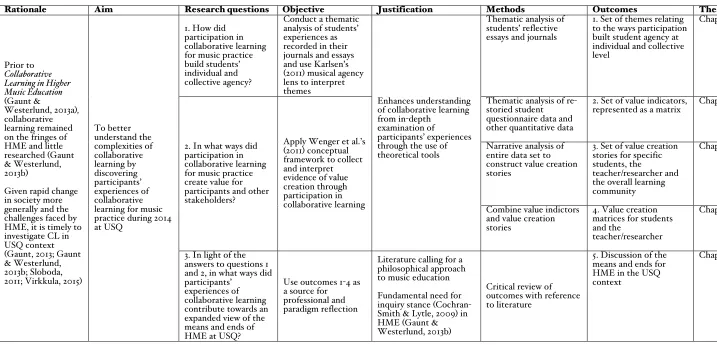
Table 1 provides an overview of this study. The aim of this study is to better understand the complexities of collaborative learning by discovering participants’ experiences of collaborative learning for music practice during 2014 at USQ. In order to achieve this aim, I will:
1. conduct a thematic analysis of students’ experiences as recorded in their journals and essays and use Karlsen’s (2011) musical agency lens to interpret these themes;
3. use the outcomes from 1 and 2 as a source for professional and paradigm reflection about the ways in which HME is delivered—the means—and the purpose of HME—the ends—in the USQ context.
Table 1—Overview of study
Rationale Aim Research questions Objective Justification Methods Outcomes Thesis
Prior to Collaborative Learning in Higher Music Education
(Gaunt &
Westerlund, 2013a), collaborative learning remained on the fringes of HME and little researched (Gaunt & Westerlund, 2013b)
Given rapid change in society more generally and the challenges faced by HME, it is timely to investigate CL in USQ context
(Gaunt, 2013; Gaunt & Westerlund, 2013b; Sloboda, 2011; Virkkula, 2015)
To better understand the complexities of collaborative learning by discovering participants’ experiences of collaborative learning for music practice during 2014 at USQ
1. How did participation in collaborative learning for music practice build students’ individual and collective agency?
Conduct a thematic analysis of students’ experiences as recorded in their journals and essays and use Karlsen’s
(2011) musical agency lens to interpret themes
Enhances understanding of collaborative learning from in-depth
examination of
participants’ experiences through the use of theoretical tools
Thematic analysis of students’ reflective essays and journals
1. Set of themes relating to the ways participation built student agency at individual and collective level
Chapter 5
2. In what ways did participation in collaborative learning for music practice create value for participants and other stakeholders?
Apply Wenger et al.’s
(2011) conceptual framework to collect and interpret evidence of value creation through participation in collaborative learning
Thematic analysis of re
-storied student questionnaire data and other quantitative data
2. Set of value indicators,
represented as a matrix Chapter 6
Narrative analysis of entire data set to construct value creation stories
3. Set of value creation stories for specific students, the
teacher/researcher and the overall learning community
Chapter 7
Combine value indictors and value creation stories
4. Value creation matrices for students and the
teacher/researcher
Chapter 7
3. In light of the answers to questions 1 and 2, in what ways did participants’
experiences of collaborative learning contribute towards an expanded view of the means and ends of HME at USQ?
Use outcomes 1-4 as a source for professional and paradigm reflection
Literature calling for a philosophical approach to music education
Fundamental need for inquiry stance (Cochran
-Smith & Lytle, 2009) in HME (Gaunt & Westerlund, 2013b)
Critical review of outcomes with reference to literature
5. Discussion of the means and ends for HME in the USQ context
1.3 Research questions
In response to this aim, I pose the following questions regarding the
experiences of participants during 2014 at USQ:
1. How did participation in collaborative learning for music practice
build students’ individual and collective agency? (Chapter 5)
2. In what ways did participation in collaborative learning for music
practice create value for participants and other stakeholders?
(Chapters 6 and 7)
3. In light of the answers to questions 1 and 2, in what ways did
participants’ experiences of collaborative learning contribute
towards an expanded view of the means and ends of HME at USQ?
(Chapter 8)
1.4 Scope and limitations
The participant pool was comprised of first year students who
completed the 2014 academic year and me, as teacher/researcher. Based on
previous experience, it took the full academic year for relationships between
students and teachers to establish effectively. By focussing on one cohort
across one academic year, the objective is to present a rich, detailed and
thick depiction of participants’ experiences of collaborative learning for first
year music practice students. However, it is acknowledged that by adopting
such an approach, the voices of students who did not complete either
semester are absent from this study. The implications of this are discussed
Within the music practice courses at USQ, students participate in
weekly workshops which involve all students, including instrumentalists
and singers and weekly tutorials for instrument, voice, or song writing.
Workshops are two hours each in length and tutorials each one hour.
Approximately half the workshops are dedicated to ensembles presenting
and receiving feedback on work in progress. All students and teacher/s are
present. The remainder of the workshops is used to divide the class into
ensembles for rehearsals. Because there are always at least three and
sometimes five or six ensembles in each semester, teachers will spend a
certain amount of time with each ensemble. Some of this rehearsal time is
therefore unsupervised. In addition to rehearsals during class, students
independently arrange extra rehearsal time. A teacher does not supervise
this extra rehearsal time, however, students will sometimes request the
assistance of a teacher. This study focuses on participants’ experiences of
the workshops and extra rehearsals, not the tutorials, as the tutorials are
taught by a range of teachers, each with their own teaching style. Any data
regarding the instrument-specific tutorials were excluded from analysis.
As previously emphasized, the results of this study can be viewed
within both the specific and broader contexts. The research was conducted
within a very specific time and place. This work is therefore characterised as
a study rather than a case study, as I will not attempt to extrapolate from the
findings to make observations about more general phenomena (Evans,
Gruba, & Zobel, 2011), for example, that the collaborative model under
examination here would be appropriate in all HME contexts. The results are
(Cochran-Smith & Lytle, 2009). Rather than constituting a one size fits all
pedagogical model, the collaborative learning environment and participants’
experiences of it are intended to show how context was responded to. This
response may take a different form, depending on the circumstances.5
This study focuses on participants’ experiences (Karlsen, 2011;
Westerlund, 2008). Unlike several other recent experiment-style studies into
collaborative learning in music (e.g. Brandler & Peynircioglu, 2015; King,
2008),6 this study will not evaluate the effectiveness of collaborative
learning by examining musical outcomes. The term musical outcomes refers
to traditional markers of progress in music practice such as the ability to
play in tune and in time, memorization, proficiency in technical exercises or
scales, the ability to successfully perform particular repertoire or reach a
certain standard on an instrument. Musical outcomes are relevant here only
to the extent that they relate to students’ experiences and their perceptions
of what they learned.
1.5 Significance
This study seeks to contribute to the field of collaborative learning in
HME as conceptualized by Gaunt and Westerlund (2013b) in a variety of
5 As Dewey (2011) noted in relation to his experimental elementary school at the
University of Chicago, a working educational model is not something to be copied, necessarily, but is an example of what is feasible.
6 Brandler and Peynircioglu (2015) conducted an experiment to discover whether
ways. This research captures one attempt to cultivate shared goals and
problem solving within a learning context which has traditionally used the
one-to-one model. Further, exploring participants’ experiences of
collaborative learning at USQ seeks to illuminate how complex social
interactions contribute to learning. On an aspirational level, I hope to
provide inspiration to other practitioners about the improvisatory and
creative aspects of teaching within collaborative learning (Gaunt &
Westerlund, 2013b) and to present collaborative learning as an expansive
process for the musical and personal development of students and as a
valuable source of paradigm reflection for HME practitioners.
Consequently, the findings are intended to be of interest to a wide
range of stakeholders including higher music institutions—both USQ and
other HME providers—and private music studios wishing to investigate the
use of collaborative learning, music educators at all levels of education and
music education researchers. The study may also be of broader interest to
educators and researchers of collaborative and social models of learning and
teaching. USQ is not alone in addressing the challenges for HME presented
by a rapidly changing educational landscape.7 These challenges are
discussed in Chapter 2. The findings of the study are potentially transferable
to other educational contexts, particularly those with a similar profile to
USQ, namely small or regional universities.
7Some other Australian examples include the Queensland Conservatorium, Griffith
Wenger et al.’s (2011) conceptual framework Promoting and
assessing value creation in communities and networks has not yet been
applied to its fullest extent in an HME context. The framework has been
applied in other contexts as will be discussed in Chapter 2 and is referenced
in music education research (see e.g. Gaunt & Westerlund, 2013a; Partti &
Westerlund, 2013; Partti, Westerlund, & Lebler, 2015; Rikandi, 2012). In
this study, however, I use the framework to its fullest extent, as both a
conceptual framework for understanding the role of communities in
facilitating learning and as a research tool to collect, collate, analyse data
and present findings on the value created by participating in a community of
practice based on collaborative learning. The application of the framework
in this study provides a useful starting point and a worked example for other
institutions, educators and researchers wishing to launch similar
investigations.
Finally, fulfilling the aim of this study will produce knowledge from
practice on practice, which may be of use or interest to other practitioners in
similar contexts. As a practitioner researcher, I wish to make my work open
to scrutiny and critical evaluation, so that implications for practice can be
assessed and disseminated (Cochran-Smith & Lytle, 2009).
1.6 Overview of thesis
Chapter 2 considers the broader context and positions the rationale
and aim for the study within the literature. The research questions are
presented conceptually at the intersection of three themes from the
theoretical basis for the study, namely Wenger’s (1998) social theory of
learning. I also discuss the specific theoretical tools used in this study.
Chapter 3 outlines the research methodology and discusses the two research
approaches—practitioner and narrative inquiry. Chapter 4 presents the
research design and proposes a credibility framework for this study. The
findings are presented in Chapters 5, 6 and 7. These findings address the
aim of the study to better understand the complexities of collaborative
learning through discovering participants’ experiences of the 2014 learning
community. In Chapter 8 I discuss the findings and use them as a source for
paradigm reflection on the means and ends of HME in the USQ context.
Chapter 9 concludes the study by claiming its significance and noting
Chapter 2.
Positioning the Study
The purpose of this chapter is to position the rationale and aim for the
study outlined in Chapter 1 within the literature. I begin with an explanation
of the metaphor “playing the changes” used in the study’s title. I then
broadly map the rapidly changing landscape within which HME currently
exists. By positioning the events at USQ within the wider field of change
and challenge in HME, the USQ response can be viewed as both
contextually specific but potentially transferable to other contexts. Against
this backdrop, the theoretical framework for the study is presented. This
section discusses the social theory of learning adopted, along with the two
theoretical tools chosen to explore participants’ experiences of collaborative
learning—Karlsen’s (2011) musical agency lens and the conceptual
framework by Wenger et al. (2011). The final section examines
collaborative learning more generally and recent research into collaborative
learning in HME. The research questions are located conceptually at the
Figure 1—Themes in Chapter 2 and relationship to research questions
An explanation of the metaphor for this study’s title “playing the
changes” provides a convenient introduction to the key themes in this
chapter. The phrase is borrowed from jazz, where musicians improvise or
play over the “changes”—the harmonic structure of the music.
Collaborative learning at USQ operates in a similar way to improvising or
playing the changes. With the introduction of collaborative learning at USQ
in 2012, a classroom laboratory for experimentation emerged (Allsup &
Westerlund, 2012). Given the diverse range of students’ backgrounds,
abilities and interests, classes were not so much planned as responded to and
staff were challenged each week to draw on their expertise as professional
needed to be able to improvise in both the pedagogical and musical senses8
and respond in any given moment to what was required by the students,
rather than being wedded to a rigid lesson plan or lecture.
The improvised nature of these classes is dependent on the social
relationships present within the class at any given time. Students work
together in small groups on focused, open-ended tasks, problem solving,
negotiating, and learning from their interactions with each other (Bruffee,
1999; Gaunt & Westerlund, 2013b). As teachers, we create the conditions
for collaboration to take place (Folksestad, 2006; Gerlach, 1994). No longer
the “sage on the stage”, nor the “guide on the side”, teachers in such a
learning environment become the “meddler in the middle” (McWilliam,
2009, p. 281). Staff must gauge when to intervene in students’ work and
when to leave them to find their own solutions. At USQ, one of our main
meddling tasks as teachers is to place students strategically into groups—
based mostly on instrument and personality, to strike a balance—to optimise
student learning. We then set certain tasks, for example, to prepare certain
types of repertoire, or to rehearse for workshops and performances. If
students are absent or un-enrol from the class, we work with the affected
ensemble to improvise a solution.
8 Referring to the work of Sawyer on the links between improvisation, creativity and
Connecting these experiences to the literature, two key passages have
inspired the use of the metaphor “playing the changes” for the title of this
study. The first comes from Jorgensen (2003a), who describes a dialectical
approach to teaching and learning as follows:
Dialogical or conversational teaching relies on improvised responses
of showing and telling. There are many ways of conversing through
such means as rehearsals, discussions, teacher presentations, or
demonstrations. Whatever the specific approach, the teacher is
reflecting in the midst of action, devising strategies on the spot, and
attempting to take advantage of the present moment, no matter how
unexpected the particular circumstances. This improvisational or
rhapsodic quality of transforming teaching extends to how music is
taught, and the explicit connection between music and teaching as
improvisation represents a fresh and forward-looking approach
pointing the way to models of teaching that reflect the subject matter
more closely than traditional, prescriptive, corseted, and
teacher-directed methods can do. In this way, teaching more closely
approximates the nature of music making itself, and the medium more
clearly reflects the message. (pp. 130–131)
As both an educator and a jazz musician, in my experience, collaborative
learning for music practice does reflect the creative, improvised and
inherently social nature of much music-making. It also reflects many
professional contexts in which much music is made.
character of the collaborative learning environment, Gaunt and Westerlund
(2013b) identify the potential for the creative and improvisatory aspects of
collaborative learning to “break/interrupt the routines of canonized
professional interactions” (p. 4). Traditionally, the roles of teacher and
student are “institutionally regulated” within the one-to-one model
(Bjøntegaard, 2015, p. 24). Later chapters describe the ways in which
collaborative learning at USQ has constructively disrupted (Cochran-Smith
& Lytle, 2009) the traditional roles of student and teacher in this context.
On a higher level of abstraction, the metaphor represents collaborative
learning as a way to playfully, creatively and constructively respond to the
challenges facing HME. The following section broadly maps these
challenges and argues that it is timely to engage in paradigm reflection
within HME.
2.1 Mapping today’s HME landscape
As outlined in the Introduction, this study uses an understanding of
the complexities of participants’ experiences of collaborative learning as a
source for professional and paradigm reflection. Whilst professional
reflection should be part of everyday practice for educators (Sloboda, 2011),
Gaunt (2013) suggests that by definition, Sloboda’s paradigm reflection
requires a more fundamental re-thinking which can result in major shifts or
even a reconceptualization about content or approach.
(Sloboda, 2011). Sloboda broadly outlines three current trends which
warrant paradigm reflection within HME: changes within the employment
market for musicians, the changing cultural and ethnic makeup of society
and changes in the education and training sectors. In the last two decades,
changes within higher education in Australia and rapid cultural shifts have
prompted some higher music educators and researchers to reconsider the
role and relevance of curriculum and pedagogical practices (e.g. Carey &
Lebler, 2012; Daniel, 2005; Latukefu, 2010). However, in the main, HME
has been slow to adapt to broader social and cultural changes (Carey &
Lebler, 2012; Gaunt & Westerlund, 2013b; Regelski, 2009). In order to
contextualise both the circumstances giving rise to this study, as well as its
findings, the following section provides a broad overview of the challenges
for HME as identified in the literature.
2.1.1 Institutional and systemic challenges
The Australian higher educational landscape changed radically during
the 1990s. In 1988, the Dawkins Review, conducted by the Federal minister
for education John Dawkins, heralded sweeping changes in Australian
higher education. These changes included new funding models and student
fee contributions, the amalgamation of institutions and increased
accountability measures for universities in relation to courses and research
(Dawkins, 1988). These reforms were criticised for, amongst other things,
creating an uneven playing field in which newly amalgamated
universities—mostly new regional universities formed from amalgamating
institutes of advanced education—had to compete with sandstone
More recently, the Review into Australian Higher Education (Bradley,
Noonan, Nugent, & Scales, 2008) introduced further reforms, including
increased targets for the number of students studying at tertiary level.
University restructuring in Australia introduced by Dawkins resulted
in the gradual “academization” of HME whereby conservatoires and
institutes of advanced education were subsumed into universities in both
regional and metropolitan areas. Carey et al. (2013) describe these reforms
as “a shift in the cultural logic of higher education teaching and learning”
(p. 149) which introduced greater demands across all disciplines for
financial accountability and consequently, evidence-based justification for
pedagogical models. One-to-one is the primary pedagogical model through
which students learn music practice in HME (Carey et al., 2013; Carey,
Bridgstock, Taylor, McWilliam, & Grant, 22013; Carey & Grant, 2015;
Gaunt, 2008; Gaunt & Westerlund, 2013; Virkkula, 2015).9 The one-to-one
model has a longstanding tradition (Abeles, Hoffner, & Klotman, 1984;
Bjøntegaard, 2015; Johansson, 2013). Since the reforms in Australia and
elsewhere10 there has been an increase in research into the one-to-one model
(e.g. Bjøntegaard, 2015; Carey & Grant, 2015; Carey et al., 2013; Collens &
9
Harrison, O’Bryan, & Lebler (2013) refer to the four traditional pillars of music learning within the conservatoire as solo studies, ensemble studies, music literature studies, and musicianship. Despite ensemble studies being one of the four pillars of the conservatoire model, ensemble studies are an adjunct to, rather than the primary vehicle for, the development of individual skills. Ensemble studies are usually led by a teacher or ensemble director and the pedagogical style tends to mirror that of the one
-to-one model, but transferred to a group context (Cangro, 2015; Gaunt & Westerlund, 2013b).
10 These reforms are responsible, according to some commentators, for creating the
Creech, 2013; Johansson, 2013; Gaunt, 2008; Gaunt, 2010; Gaunt, 2011;
Gaunt, Creech, Long, & Hallam, 2012; Presland, 2005). The increase in
research into the one-to-one model demonstrates that there is momentum
within the academy to make the practices of one-to-one explicit by
illuminating its unique character as an effective pedagogical model for the
development of an individual’s practical skills. Despite increased research,
there are concerns that the funding model now in place for Australian
institutions fails to take into account the special requirements of high quality
music education such as one-to-one tuition and that as a result some
Australian music faculties are “at breaking point” (Global Access Partners,
2011, p. 5).11 As Fautley and Murphy (2015) observe, it is during times of
economic stress that debates about the nature and purpose of music
education often come to the fore.
Whilst some institutions are confronting the challenges to HME
funding through more research on existing pedagogical models, a different
approach was taken at USQ. The decision was made at USQ to try a
different model, despite the fact that funding for one-to-one tuition was
never specifically under threat. The purpose of replacing the B Mus and
other discipline-specific degrees with the BCA was to reduce the overall
number of courses offered in the creative arts. The course rationalisation
meant that that the vestiges of the B Mus retained in the BCA were a poor
11 This report was compiled by a task force of academics, industry professionals and
fit within the new context. In the case of USQ, it was course rationalization
which led to changes in pedagogical models, in order to align courses with
program objectives. This, combined with the range of other contextually
specific factors discussed in the Prologue, highlights the challenging nature
of delivering music education within the contemporary context of a regional
Australian university.
In addition to these challenges at the institutional level, there is an
increasing awareness in the literature that pedagogical approaches within
HME should help prepare students for portfolio careers (Bartleet et al.,
2012; Carey, 2004; Department of Communications, Information
Technology and the Arts & Strong, 2005; Gaunt et al., 2012; Harrison et al.,
2013; Sloboda, 2011). Music graduates are increasingly maintaining
portfolio careers which combine a broad range of employment activities
(Bartleet et al., 2012; Brown, 2009; McWilliam, Carey, Draper, & Lebler,
2006; Carey & Lebler, 2012; Feichas, 2010; Gaunt et al., 2012; Harrison et
al., 2013; Mills, 2006). Some reviews of HME undergraduate programs
have taken place in response to these changes (e.g. Carey & Lebler, 2012).
At the very least, Gaunt (2013) argues that such factors warrant reflection
on the purpose of HME and the ways in which HME might need to adapt to
prepare students for their likely futures.
Carey and Lebler (2012) and Sloboda (2011) identify a changing
cultural landscape as a further challenge for today’s HME. The following
section argues that the emergence of a participatory culture is one of the
most relevant cultural developments for HME and that features of
contextually responsive pedagogical methods.
2.1.2 Cultural challenges
The current technological revolution is rewiring the very ways we
think and interact with each other and the world around us (Turkle, 2015).
The rapid evolution of technology has created the situation in which
“today’s students are no longer the people our educational system was
designed to teach” (Prensky, 2001, p. 2). In addition to strong participation
in informal learning which is discussed further below,12 today’s students
participate in creating art as well as consuming it and rarely question their
right to do so, for example on the basis that their skills are not yet
sufficiently developed. Jenkins, Purushotma, Weigel, Clinton, and Robison
(2006) refer to this phenomenon as participatory culture13 and argue that
today’s educational environments need to accommodate students’
involvement in participatory culture, defined as follows:
A participatory culture is a culture with relatively low barriers to
artistic expression and civic engagement, strong support for creating
and sharing one’s creations, and some type of informal mentorship
whereby what is known by the most experienced is passed along to
12 In a recent report conducted in partnership with the Royal Philharmonic Society in the
UK, Derbyshire (2015) reports that almost half the children currently playing an instrument in the UK do not have lessons and almost a fifth of children who play an instrument have never had any lessons.
13 Dewey (2011) describes a similar phenomenon in relation to the democratization of
novices. A participatory culture is one in which members believe their
contributions matter, and feel some degree of social connection with
one another (at the least they care what other people think about what
they have created). (p. 3)
Jenkins et al. (2006) write specifically about the ways in which educational
systems need to prepare students to be literate in new media, however, the
underlying tenets of a participatory culture are especially relevant
considerations for the teaching and learning of music practice and
performance in HME. As Lebler (2007) notes, being a member of a
participatory culture has a democratizing effect on the notions of
expert/novice which has implications for the traditional power dynamic
between teacher and student, or master and apprentice. In such contexts, the
emphasis for teachers shifts from the transmission of knowledge from
expert to novice, to designing learning environments within which students
are co-creators of learning (Lebler, 2007).
In contrast to participatory culture, bars to participation in HME have
traditionally been high. Students are expected to have a certain level of
formal training and in Australia, this is usually undertaken through the
Australian Music Examinations Board exams (Daniel, 2005). Many of
today’s prospective music students do not travel this path prior to university,
particularly if they are contemporary musicians. The very fact of
institutionalising music learning is itself a potential bar to participation, in
“master teachers”—and the “storehouse of knowledge” (Luce, 2001, p. 21)
students bring with them is undervalued.14 These students learn music in
myriad ways, including participating in social media, computer games and
making content for YouTube. They possess expertise not traditionally
recognised as valuable within formal learning environments. Success for
such students is measured not by an exam mark but by how many “likes”
they receive for their latest SoundCloud post. Engaging with and learning
music in informal ways has become the common way of learning and
increasingly, sitting formal examinations less common (Folkestad, 2006), at
least in the context of applicants wishing to study at USQ. Opening the
doors to HME for such applicants values their ability to demonstrate
musicianship in different ways at any stage of development (Jorgensen,
2003a). Jorgensen writes that doing this
challenges the validity of bifocal music education, that is, one for the
relatively few musically talented and another for the majority (those
whose musical aptitude and achievement are assumed to be low and
therefore restricted to listening or comparatively low levels of
performance). Christopher Small (1980) argues that musicality may be
far more widespread than is commonly believed in the West. If this is
true, all students need to be taken seriously in terms of musical
14 There are exceptions. Regelski’s (2008) action learning concept of music education
instruction, and many more are capable of demonstrating
musicianship than may have been traditionally believed. (p. 205)
Rethinking bars to entry is not a lowering of standards, but an interrogation
of commonplace thinking in HME (Jorgensen, 2003b) and, others would
argue, an ethical act.15 On a practical level, given the changes to university
funding and the removal of student quotas across the board in Australian
higher music education, opening HME up to broader participation in certain
contexts seems inevitable.
Recent music education research has explored the democratising
potential of participatory culture (Partti, 2012; Partti, 2014; Partti &
Karlsen, 2010; Westerlund & Partti, 2012). Participatory culture embraces
the values of musical open-mindedness, cross-genre flexibility and mobility
(Westerlund & Partti, 2012). Notions of authentic expression are
subordinate to shared ownership and hybrid aesthetics; individual and
shared goals co-exist; participatory culture enables people—anyone, not just
those deemed fit—to explore who they are and how they might express
themselves through music (Westerlund & Partti, 2012). Westerlund and
Partti (2012) speculate that the characteristics of participatory culture may
be instructive for HME.
15 Väkevä & Westerlund (2007) suggest an alternative viewpoint to that which sees music
and music education as only for the gifted or for those who have reached certain standards in specific musical traditions. Such a viewpoint “emphasizes the dynamism of the
The challenges faced by today’s HME are not insurmountable. As
Westerlund and Partti (2012) suggest, there may be guidance on the way
forward within the very nature of the challenges themselves, particularly in
participatory culture with its emphasis on learning as social participation.
The following section outlines the theoretical framework adopted for this
study, with the over-arching lens being Wenger’s (1998) social theory of
learning. Wenger’s theory views learning as a fundamentally social activity.
It places the emphasis on learning as becoming, or identity formation and
transformation, rather than on the transmission of content or skills from
master to apprentice. By adopting such a view, participants’ experiences of
collaborative learning at USQ during 2014 can be contextualized,
characterized, better understood and valued in different ways.
2.2 Theoretical framework
In an increasing trend, recent studies into pedagogical approaches in
HME have adopted socio-cultural views of learning (e.g. Barrett, 2005;
Ilomaki, 2011, 2013; Kenny, 2014; Latukefu, 2010; Latukefu & Verenikina,
2013; Rikandi, 2012, 2013; Virkkula, 2015). Gaunt and Westerlund (2013b)
connect the recent increase in interest in collaborative learning in HME to
the paradigmatic shift in education theory which views learning as social:
The shift towards the potential of the collaborative aspects of learning
in helping to tackle some of these contemporary challenges goes hand
in hand with the increasingly accepted understanding of learning as
social endeavour, and of teachers being facilitators and co-learners
democratizing knowledge production therefore involves significant
reorganization of our thoughts concerning expertise and agency in
higher music education. (p. 1)
Gaunt and Westerlund trace the origins of these developments in
educational theory to the educational psychology and philosophy of John
Dewey. They view the work of Lave and Wenger (1991) and Wenger
(1998) as breaking new ground in developing our understanding of the
social nature of learning and the development of expertise more generally.
In addition to outlining Wenger’s social theory of learning,16 the
following section discusses two additional theoretical tools used in this
study—Karlsen’s (2011) musical agency lens and Wenger et al.’s (2011)
conceptual framework for promoting and assessing value in networks and
communities. The links between these two tools and Wenger’s social theory
of learning are discussed, in order to explain and justify their use.
2.2.1 Social theory of learning
Wenger (1998) argues that institutions base their views of learning on
the assumption that learning occurs as the result of teaching, which is an
individual process, separate and distinct from the rest of our lives. In such
16 Throughout this study, I refer to Wenger’s social theory of learning as the theoretical
learning environments, teachers transmit knowledge to learners, learners are
expected to demonstrate their knowledge out of context and collaboration is
tantamount to cheating (Wenger, 1998). Wenger’s social theory of learning
is based on an entirely different assumption “that learning is, in its essence,
a fundamentally social phenomenon” (p. 3). Wenger does not claim that his
social theory of learning is a blanket theory of learning—it takes for granted
and is compatible with other neurological and psychological theories of
learning. A social theory of learning offers a different perspective on
learning, whilst acknowledging that learning is a result of a broad and
complex range of social, biological, neurological, cultural, linguistic and
historical factors (Wenger, 1998).
Communities of practice. The primary focus of Wenger’s theory is
learning as social participation (Wenger, 1998). This concept of
participation is more than simply being involved in certain activities—it
encompasses “practices of social communities and constructing identities in
relation to these communities” (Wenger, 1998, p. 4). At the heart of
Wenger’s theory is the concept of communities of practice, which provides
a framework for thinking about knowing and learning as a process of social
participation (Wenger, 1998; Wenger, 2011). Lave and Wenger (1991) first
articulated the concept of a community of practice when they discovered a
complex set of social relationships surrounding apprenticeship training (see
also Wenger, 2011). Wenger then expanded the concept in his 1998 book
Communities of Practice. As an analytical concept, communities of practice
provides an entry-point into a broader conceptual framework on the nature
broader framework characterizes learning as social participation, constituted
by community (learning as belonging), practice (learning as doing),
meaning (learning as experiences) and identity (learning as becoming)
(Wenger, 1998).
In addition to being an analytical tool, there are actual communities of
practice everywhere (Wenger, 1998). Not all communities are communities
of practice (Wenger, 1998). For a community to be a community of practice
it must possess three characteristics—domain, community and practice
(Wenger, 1998, 2011). First, it must have an identity defined by a shared
domain of interest. Members “value their collective competence and learn
from each other” (Wenger, 2011, p. 2). Second, in pursuing their interest
within this domain, learners act as a community though interactions, joint
activities, discussions, helping each other and sharing information (Wenger,
1998, 2011). Finally, community members are engaged in practice,
developing a shared repertoire of resources, tools, experiences and
information (Wenger, 1998, 2011). Recognising that a community of
practice has formed within a particular learning environment provides an
entry-point into understanding learning from the perspective of social
participation.
Wenger (1998) differentiates between communities of practice and
learning communities. For Wenger, a community of practice which keeps
alive the tensions between experience and competence can become a
learning community. For a learning community, learning is “not only as a
matter of course in the history of its practice, but at the very core of its