AN EXPERIMENTAL EVALUATION OF THE
PRINCIPLES AND FRAMEWORKS FOR
INTERPRETING THE FUNCTION OF
ARCHAEOLOGICAL STONE ARTEFACTS
Sophie Jane Collins
A thesis submitted in total fulfillment of the requirements for the Degree of Doctor of Philosophy of The Australian National University.
March 2007
Except where otherwise stated in the text, this thesis is based entirely on my own research.
Sophie Jane Collins
ACKNOWLEDGEMENTS
'Ibis thesis would not have been possible without the support and assistance I have received from others.
First and foremost, I would like to thank my primary supervisor Dr Peter Hiscock. Peter's supervision, support and encouragement throughout not only this research, but also my honours, and undergraduate years, has been incalculable. I have greatly appreciated the ti.me he has given me, his endless patience and his inspirational enthusiasm. I feel honoured to count Peter and his wife Alison as friends, and will treasure their friendship always.
Many thanks must also go to my advisory panel Dr Richard Fullagar was kind enough to spend several months with me in Sydney, teaching me how to identify and interpret use-wear dat.a and discussing early ideas and concepts with me. Dr Glenn Summerhayes was always available to discuss problems and aid in finding solutions. A special and enormous debt of gratitude goes to Dr Ann Cowling for her patience and tolerance in explaining complicated statistical concepts to a very non-statistical person! Ann made herself available to me at all times and ensured that all statistical analyses carried out in this thesis were accurate. I cannot thank her enough for all her assistance. Finally, I would like to thank Dr Chris Clarkson whose support, over many years now, has been invaluable. Chris has been a constant source of good advice, amazing ideas and has always been extremely generous with his time -often at the expense of his own research. He has inspired me both academically and personally and I will be grateful to him always.
I would also like to thank the outstanding staff responsible for running and maint.aining the School of Archaeology and Anthropology at the ANU. Sue Fraser is the departmental font of knowledge for all administrative
things
and has assisted me countless ti.mes in administrative tasks. Liz Walters has been departmental 'mum' and always available with a sympathetic ear and to assist wherever possible. I cannot thank her enough for all her support. A special thanks to Dave McGregor for organising storage of all my rocks and for building me a hide drying cage over night! I went to Dave to request permission to use the departmental tools, only to find that when I came to my office the next day the rack was built and at my desk.Thanks also to my boss Dr Sue O'Connor for all her support and encouragement over the last few months and for allowing me the extra time I needed to complete this thesis. Sue is an incredible and inspiring person and I feel extremely lucky to have had the opportunity to both to learn from her and work for her.
I am greatly indebted to Dr Robert Gresham, Ben Nash, Joel Gresham and Zbigniev St.achurski from the Department of Engineering at the ANU for building the machine used to perform all the experiments discussed in this research. I am aware that the project was widely regarded as a 'nightmare' in the department and I am extremely grateful for their perseverance, dedication and assistance.
Enormous thanks must go to the blokes in the mechanical workshop at the Research School of Earth Sciences at the ANU, for housing and maintaining my machine. Workshop Manager Andrew Wilson, Geoff Woodward, Carl Were, Brendan Taylor, Jeanne Pierre Robbie, Wal Valther, Baek Hansen, Dean Scott and especially Dave Thomson, provided me with ongoing assistance throughout experiment.ation and dropped whatever they were doing to solve whatever problem I approached them with. I am sincerely grateful to all of them for their invaluable contribution to this research.
The Brandon Flint flakes experimented with in this research was generously provided by master flintknapper Mr. Tom Fuller. Tom welcomed me into his home and spent the day showing me his trade and allowing me to sift through his produce to select what I felt was most suitable. I am most grateful for his generosity of time, skill and a brilliant pub lunch! Mr Drew Brophy and Mr Russell Grainger from CAA Timbers, Queanbeyan provided the wood used in experimentation - free of charge. Drew and Russell gave freely of their time, discussing the types of timber available to me, their treatment, storage, hardness, moisture content etc.. As one of the busiest timber flooring suppliers in the Canberra region, I am extremely grateful to them not only for their time, but for giving me the samples when they had far bigger and more profitable clients to take care of.
Dr Nina Kononenko spent many hours supplementing Dr Richard Fullagar's assistance, in interpreting and identifying use-wear under the microscope. I am sincerely grateful to her for all her assistance.
Thanks must go to my friend and colleague Mr Adam Brumm for reading and commenting on drafts of this thesis. Though trying to submit himself, Adam gave me many hours of his precious time to give feedback and valuable comment for which I am very grateful. I have also benefited greatly from many discussions with my dear friend Oliver Macgregor, who has always lent an ear when needed and provided excellent and knowledgeable advice. I have received support and assistance in many and varied forms from Dr Janelle Stevenson, Dr Cassandra Rowe, Dr Pat Faulkner and Geoff Hunt in relation to graphics and formatting problems - many thanks to you all for your time and support.
I would also like to show my appreciation to those who have not directly aided the completion of this research, but who have provided me with continued support and encouragement. In particular, those friends who have lent a patient ear and welcome distraction in times of need: Andrea McCarron-Benson, Sarah Scroope, Alison Mercieca, Dr Emma Grubb, Andrew Mayo, Ricca Roghan and Thomas Abraham-James. A big thanks to Dave Cambell for keeping me well stocked with coffees in the final stages of completion.
Finally, I would like to thank my family. To the whole Sutherland Family - Mrs S, Flick, Vic and Claire, whom I adore and consider an extension of my family - goes enormous thanks. I have lost count of the number of times they've listened supportively to thesis-related melt-owns and responded with hugs, donuts and hot cuppas. They have always been there in times of need and I will never be able to thank them enough for all they have done to support our family, or tell them how much we love and appreciate them.
To my lovely boyfriend Liam - I owe you big time!! Liam has ensured that for the last few months all the washing, cooking and cleaning has been taken care of and allowed me the time I've needed to finish this thesis. Not only did Liam spend many a night quietly next to me while I finished writing, but he catered to my every whim, including a kitten when it wasn't exactly ideal! I am quite sure that I have been utterly unbearable during various stages of writing and your love and patience with me has been remarkable. Thank you for everything,
In loving memory of my father Michael F. Collins
1939-1999
whom we miss every day.
ABSTRACT
The ability to understand and identify the functions of stone artefacts recovered from archaeological assemblages has been a long term goal of lithic technologists and
archaeologists world wide. As one of the primary means by which prehistoric hunter-gatherers negotiated the environment around them, understanding stone artefact functions is central to understanding and reconstructing the prehistoric subsistence and settlement
patterns that depended upon them and, therefore, to meeting the objectives of archaeology
as a field. Two broad approaches to inferring stone artefact function currently dominate the literature. The first examines macro- and microscopic use-wear preserved on
archaeological specimens, seeking to identify specific artefact functions through analogies with experimental replication of hypothesized prehistoric tasks. The second approach explores stone artefact function within a broader, behavioural context, hypothesizing that
tools functioned as a means of increasing efficiency in subsistence strategies by reducing the costs associated with resource procurement, through the organisation of technology. Both approaches have gained widespread acceptance within the discipline and form the
basis of countless interpretations of archaeological sites world wide. Yet, to date, neither approach has been systematically evaluated and tested. Such an evaluation forms the basis
of the research presented here.
Evaluation of the principles underlying each approach reveals their dependence upon a number of untested assumptions about stone artefact function. In particular, the relationship between artefact morphology and function is revealed to be based largely upon assumed, rather than demonstrated, knowledge of stone tool use. Failure to explore the
key area of performance in investigations of artefact function and to identify the morphological attributes responsible for stone artefact performance, has contributed to
technologists' current inability to explain the relationship between form and function in stone artefacts.
The controlled experimental program carried out in this thesis was designed to address these issues, both by systematically testing the interpretive ability of the current frameworks
for identifying stone artefact function and also by exploring the relationship between artefact form and function through an understanding of stone artefact performance. The
results contradict many previous assumptions, revealing a number of misconceptions in current views on the identification and interpretation of stone artefact function. The
consistent relationship between use and the scarnng-wear produced does not exist. Instead, the features of scars produced through use are shown to be the product of multiple complex interactions between previously untested variables and relate to both use and the morphological features of the working edge. This observation is a direct contradiction of the principles upon which wear analyses are based and, necessarily, calls into question the interpretive value of this technique. Likewise, the illustration that form and function are not uniquely connected challenges current assumptions that equate morphological difference with difference in functional utility. Instead, it is demonstrated that stone artefact manufacture and performance are responsive to a wide range of interactions between use and morphological variables, which allows them to respond to different circumstances by compromising forms, balancing trade-offs and performing a wide range of functions. The emerging view of the relationship between artefact form and function is that of a dynamic and interactive system in which adjustments in one aspect of morphology affect a number of other aspects, each with important consequences for the subsequent use and later interpretation of stone artefact function.
The ability for this research to produce results which contradict current approaches to the interpretation of stone artefact function indicates that many of the processes and mechanisms acting upon prehistoric stone artefact manufacture and use have been misunderstood. These misconceptions highlight inadequacies in previous investigations of stone artefact function, emphasise the value of adopting more rigorous theoretical and methodological approaches to the analysis and interpretation of stone artefacts and highlight the need for archaeologists to embrace a more dynamic view of the relationship between stone artefact manufacture and use.
TABLE OF CONTENTS
Page Number
Acknowledgements ill
Abstract vu
List of Tables xiv
List of Figures xv1
Chapter 1- Understanding Stone Artefact Function 1
Introduction 1
The identification, interpretation and explanation of artefact function 1
Thesis Aims 8
Conclusions 12
Chapter 2-The Principles of Wear-Analysis 13
Introduction 13
The development of wear analyses 14
Experimental research 20
Identifying and testing use-wear variables 24
Use motion and contact material 24
Raw material, edge-angle and use variables 27
Unidentified variables 32
Conclusion 36
Chapter 3- Use-Wear in Archaeological Interpretation 39
Introduction 39
Frameworks for interpreting artefact function 39
Typological systems 39
Testing typology 48
The 'Frison Effect' and Sequence Models 52 Functional Implications of Sequence Models 56
Sequence models and wear-analyses 60
Conclusions 61
Chapter 4 -The Organisation of Technology and Artefact Function 63
Introduction 63
The development and concepts of organisation of technology models 63
Optimising variables through technology 68
Energy, time and risk 69
Functional implications of time, energy and risk reduction
models 73
Mobility patterns 76
Functional implications of mobility models 78
Raw material quality and availability 79
Functional implications of raw material quality/ availability
models 81
The organisation of technology and 'toolness' -what is a stone tool? 81
Chapter 5 - Understanding Stone Artefact Efficiency and Identifying Performance
Characteristics 85
Introduction 85
Previous investigations of artefact perfonnance 85
Casual observations of edge performance 86
Identifying Variables from Previous Performance Studies 88
Modeling stone artefact efficiency 94
Establishing a framework for exploring stone artefact performance
96
Primary performance characteristics
100
Secondary performance characteristics
101
Trade-offs and design compromise 102
Summary and Conclusions
103
Chapter 6 - Experimental Investigation of Artefact Performance and
Efficiency
105
105
105
107
107
108
109
111
115 115119
120
120
121
122
122
123
128
IntroductionFrameworks for experimentation Scientific validity
Experimental program Research aims Experimental design Variables The equipment Mechanisation Scales Specimen preparation Recording edge-scarring Measuring performance Measuring longevity Limitations
Predicted outcomes and implications Discussion
Chapter 7- Scarring and Use-Wear: Experimental Results Introduction
x
Edge scarring features Scar orientation
Scraping
Relief-angle Edge-angle
Sawing
Longitudinal profile and contact material Edge plan and contact material
Inferences of Use from Scar Orientation Scar initiation
Scraping
Sawing
Longitudinal profile and edge-angle Longitudinal profile and relief-angle Longitudinal profile and contact material Relief-angle and contact material
Plan and longitudinal profile Plan and edge-angle
Plan and contact material.
Inferences of use from scar initiations
Scar termination Scraping
Sawing
Plan and contact material
Relief-angle and contact material Plan and edge-angle
Edge-angle and relief-angle Plan and longitudinal profile
Plan and longitudinal profile
Plan and contact material
Longitudinal plan and edge-angle
Plan and edge-angle
Inferences of use from scar termination Scar size
Scraping
Sawing
Relief-angle and contact material Plan and contact material
Plan and longitudinal profile
Longitudinal profile and contact material
Edge-angle and relief-angle Plan and relief-angle
Plan and longitudinal profile
Longitudinal profile and contact material Plan and edge-angle
Plan and contact material Edge-angle and contact material Inferences of use from scar size
Scar Frequency
Comparing scar frequencies between actions
Conclusions
Chapter 8 - Morphology and Function: Experimental Results
Introduction
Artefact longevity/ use-lives Scraping
Sawing Artefact performance
Scraping
Edge plan
Longitudinal profile Edge-angle
Relief-angle
Contact material
Statistical analyses - Scraping 100-1200 strokes Edge-plan and duration
Edge-angle and contact material Edge-plan and longitudinal profile
Edge-angle and relief-angle
Longitudinal profile and contact material with duration
Statistical analyses - Scraping 1200-2400 strokes
Edge-plan and longitudinal profile with duration Longitudinal profile and contact material with duration
147 147 147 148 149 150 151 151 152
153
Edge-angle and contact material 195
Swnmary 195
Sawing 196
Edge plan 197
Longitudinal profile 197
Edge-angle 198
Contact material 199
Statistical analyses -Sawing 100-1200 strokes 199
Edge-plan and contact material 200
Edge-plan and edge-angle with duration 201
Summary 202
Conclusions 203
Chapter 9 - Compromises and Trade-Offs 207
Introduction 207
Exploring trade-offs 207
Scraping 208
Edge plan with use duration 208
Edge-angle and contact material 209
Edge plan and longitudinal profile 209
Edge-angle and relief-angle 211
Longitudinal profile and contact material with use duration 212
Summary 213
Combined effects 214
Scraping hard wood 214
Scraping soft wood 219
Sawing 223
Edge plan and contact material 224
Edge plan and edge-angle with use duration 225
Summary 226
Combined effects 226
Sawing hard wood 227
Sawing soft wood 229
Summary and Conclusions 231
Chapter 10 - Scarring and Performance 235
Introduction 235
Scarring and use 235
Use scarring and edge performance 23 7
Quality or quantity? 238
Scar quantity 239
Scarring and artefact use-life 240
Scarring and morphology 242
Scar quality 246
Significant features 246
Conclusions 250
Chapter 11- Research Outcomes, Implications and Conclusions 253
Introduction 253
Question 1: How robust are the principles of use wear/
microwear analysis? 254
Question 2. Have wear analysts explored all of the key
issues necessary for understanding artefact function? 255
Question 3. How well do models of the organization of technology contribute to an understanding of artefact function? 256 Question 4. How should investigations into artefact
function proceed? 258
Question 5. What are the morphological and use variables
affecting artefact function? 259
Fallacies in wear analyses 260
Causes of variation in scar patterning 260
Differences in artefact functions are reflected in the
development of distinctive patterns of use scarring 265 Site function is reflected in stone artefact assemblage composition 266
Moving beyond the fallacies 266
Myths of functionally efficient tools 267
Straight is great? Edge morphology and performance 267
Edge scarring reduces performance? 269
Artefact morphology or edge morphology? 270
Reduction and artefact use-lives? 271
Future explorations of efficiency 272
The Unforeseen Dynamism of Stone Tools 272
Functional Dynamism 273
The identification of form from function 275
Conclusions and Future Research 276
LIST OF TABLES
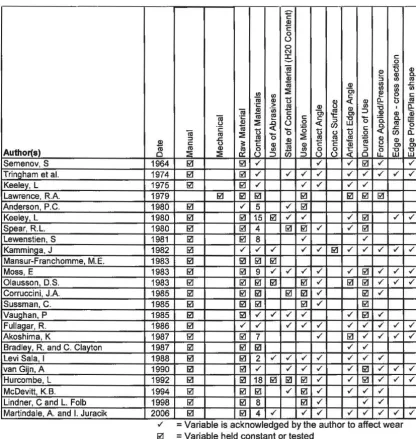
Table 1. Variables identified as impacting upon wear relative to those systematically investigated in experimental of use-wear.
Table 2. Variables identified to impact upon stone artefact performance and the development of wear according to technological component. Table 3. Effect of Useage and Morphology variables on determination of scat features
Table 4. Effect of various aspects of artefact use on generation of edge-scarring in Scraping Activities
Table 5. Estimated values of the coefficients of the explanatory values on fitting a proportional hazards model to the sawing data Table 6. Number of artefacts contributing to data points at each 200 stroke interval.
Table 7. Number of artefacts contributing to data points at each 200 stroke interval.
Table 8. Number of artefacts contributing to data points at each 200 stroke interval.
Table 9. Number of artefacts contributing to data points at each 200 stroke interval.
Table 10. Number of artefacts contributing to data points at each 200 stroke interval.
Table 11. Number of artefacts contributing to data points at each 200 stroke interval.
Table 12. Number of artefacts contributing to data points at each 200 stroke interval.
Table 13. Number of artefacts contributing to data points at each 200 stroke interval.
Table 14. Number of artefacts contributing to data points at each 200 stroke interval.
Table 15. Morphologies for most productive artefacts for scraping hard wood (mean cumulative material loss).
Table 16. Morphologies of mid-range performers for scraping hard wood (mean cumulative material loss).
Table 17. Morphologies oflowest performers for scraping hard wood (mean cumulative material loss).
XIV
Page Number
Table 18. Morphologies of the most productive artefacts for scraping soft wood (mean cumulative material loss).
Table 19. Morphologies of mid-range performers for scraping soft wood (mean cumulative material loss).
Table20. Morphologies of lowest performers for scraping soft wood (mean cumulative material loss).
Table 21. Morphology performance for significant variables in sawing hard wood (mean cumulative cut depth).
Table 22. Morphologically dissimilar functional equivalents for sawing hard wood.
Table 23. Morphology performance for significant variables in sawing soft wood (mean cumulative cut depth).
Table 24. Morphologically dissimilar functional equivalents according to performance group for sawing soft wood
Table 25. Linear equations for the effect of specific scar numbers on log(material loss) and log( cut depth)
Table 26. Effect of various aspects of artefact use on generation of edge scarring in Scraping activities
220
222
222
227
229
230
232
239
LIST OF FIGURES
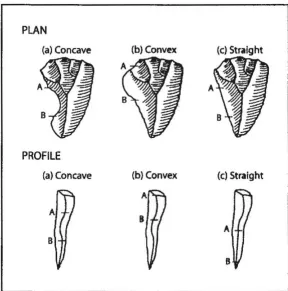
Figure 1. Differences in edge shape relative to plan and profile.
Figure 2. Points of contact for concave, convex and straight edges.
Figure 3. Types of Edge Rejuvenation
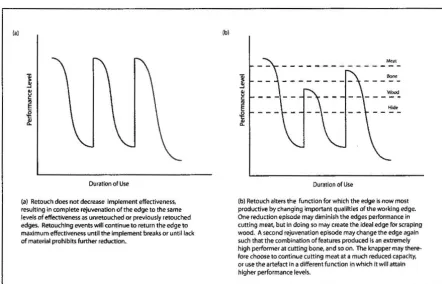
Figure 4. Predictive models of changing performance levels and functions with progressive edge rejuvenation event
Figure 5. Identification of important morphological features controlled in this experimental program
Figure 6. The Butler 26" supercrank. Built by the Butler Machine Tool Company Ltd. 1951, England.
Page Number
33
35
57
58
113
116
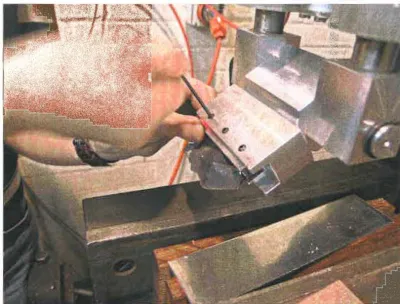
Figure 7. Steel head attachment enabling control of relief-angle, pressure and action. 117
Figure 8. Fastening artefacts into specially manufactured holding device
to ensure artefacts were in an identical position for the entire experimental run. 118
Figure 9. Adjusting the rotatable head to obtain desired relief angle. 118
Figure 10. Electronic panel enabling control of pressure, number of
strokes and constancy of pressure (uni-directional or bi-directional force). 119
Figure 11. Material removed from a 200 stroke run, scraping hard wood. 121
Figure 12. Schematic diagram of the effects of increased penetration on
the contact area of the edge in sawing activities. 123
Figure 13. Photographs and cross-sectional diagrams of scar
termination types caused through use 131
Figure 14. Effect of Relief-angle on the predicted proportion of V-D
orientated scars when scraping. 134
Figure 15. Effect of Edge-angle on the predicted proportion ofV-D
orientated scars when scraping 135
Figure 16. Effect of interaction between Profile and Contact Material
on the predicted proportion ofV-D orientated scars when scraping 136
Figure 17. Effect of interaction between Plan and Contact Material
on the predicted proportion of V-D orientated scars when scraping. 137
Figure 18. Effect of interaction between Plan and Profile on the predicted
proportion ofV-D orientated scars when sawing 138
Figure 19. Effect of interaction between Profile and Edge-angle on
predicted bending initiation frequencies when scraping. 140
Figure 20. Effect of interaction between Profile and Relief-angle on
predicted bending initiation frequencies when scraping 141
Figure 21. Effect of interaction between Profile and Contact Material
on predicted bending initiation frequencies when scraping 142
Figure 22. Effect of interaction between Relief-angle and Contact Material
on predicted bending initiation frequencies when scraping 143
Figure 23. Effect of interaction between Plan and Profile on predicted
bending initiation frequencies when sawmg 144
Figure 24. Effect of interaction between Plan and Edge-Angle on
predicted bending initiation frequencies when sawing 145
Figure 25. Effect of interaction between Plan and Contact Material
on predicted bending initiation frequencies when sawing 146
Figure 26. Effect of interaction between Plan and Contact Material
on predicted feather termination frequencies when scraping 148
Figure 27. Effect of mteraction between Relief-angle and Contact Material
on predicted feather termination frequencies when scraping 149
Figure 28. Effect of interaction between Plan and Edge-angle on
predicted feather termination frequencies when scraping 150
Figure 29. Effect of interaction between Edge-angle and Relief-angle
on predicted feather termination frequencies when scraping 151
Figure 30. Effect of mteraction between Plan and Longitudinal Profile
on predicted feather termination frequencies when scrapmg 152
Figure 31. Effect of interaction between Plan and Longitudinal Profile on
predicted feather termination frequencies when sawing 153
Figure 32. Effect of interaction between Plan and Contact Material
on predicted proportions of feather terminations when sawing 154 Figure 33. Effect of interaction between Longitudinal Profile and Edge-Angle
on predicted proportions of feather terminations when sawing 155 Figure 34. Effect of interaction between Plan and Edge-angle on predicted
proportions of feather terminations when sawing 156
Figure 35. Effect of mteraction between Relief-angle and Contact Material
on predicted proportions of scar sizes when scraping 158
Figure 36. Effect of interaction between Plan and Contact Material
on predicted proportions of scar sizes when scraping 158
Figure 37. Effect of mteraction between Plan and Longitudinal Profile
Figure 38. Effect of interaction between Profile and Contact Material
on proportions of scar sizes when scraping 161
Figure 39. Effect of interaction between Edge-angle and Relief-angle on
proportions of scar sizes when scraping 162
Figure 40. Effect of interaction between Plan and Relief-angle on proportions
of scar sizes when scraping 163
Figure 41. Effect of interaction between Plan and Longitudinal Profile on
proportions of scar sizes when sawing 165
Figure 42. Effect of interaction between Longitudinal Profile and
Contact Material on predicted proportions of scar sizes when sawing 166
Figure 43. Effect of interaction between Plan and Edge-angle on predicted
proportions of scar sizes when sawing 167
Figure 44. Effect of interaction between Plan and Contact Material
on predicted proportions of scar sizes when sawing 168
Figure 45. Effect of interaction between Edge-angle and Contact Material
on predicted proportions of scar sizes when sawing 169
Figure 46. The interaction between edge-angle and relief-angle on predicted
frequencies of edge-scarring in scraping actions 172
Figure 47. The interaction between Edge Plan and Longitudinal Profile
on predicted frequencies of edge-scarring in scraping actions 173
Figure 48. Effects of Edge-angle and Contact Material on predicted
frequencies of edge-scarring in sawing actions. 17 4
Figure 49. Predicted ranges of proportions of scar features, produced
by both actions. 176
Figure 50. Predicted ranges of proportions scar sizes produced by both actions 177
Figure 51. Predicted probabilities for artefact survival rates relative to
edge-plan and angle on hard wood, when sawing. 182
Figure 52. Predicted probabilities for artefact survival rates relative to
edge-plan and angle on soft wood, when sawing. 183
Figure 53. Mean cumulative material loss according to edge-plan in
scraping activities. 185
Figure 54. Mean cumulative material loss according to longitudinal
profile in scraping activities. 186
Figure 55. Mean cumulative material loss according to edge-angle in scraping activities.
Figure 56. Mean cumulative material loss according to relief-angle in scraping activities.
XV111
187
Figure 57. Mean cumulative material loss according to contact material
hardness in scraping activities. 188
Figure 58. Predicted log( cumulative material loss) for interaction between
edge-plan and duration. 189
Figure 59. Predicted log( cumulative material loss) for the interaction between
edge-angle and contact material hardness. 190
Figure 60. Predicted log( cumulative material loss) for the interaction betwee1
edge-plan and longitudinal profile. 191
Figure 61. Predicted log( cumulative material loss) for the interaction
between edge-angle and relief-angle. 192
Figure 62. Predicted log( cumulative material loss) for the interaction between
longitudinal profile and contact material with duration. 193
Figure 63. Predicted log(cumulative material loss) for the interaction between
plan and longitudinal profile with duration (12-2400 strokes). 194
Figure 64. Predicted log( cumulative material loss) for the interaction between
longitudinal profile and contact material with duration (12-2400 strokes). 195
Figure 65. Predicted log( cumulative material loss) for the interaction between
edge-angle and contact material with duration (12-2400 strokes). 196
Figure 66. Mean cumulative cut depth according to edge-plan in sawing activities.
Figure 67. Mean cumulative cut depth according to longitudinal profile in sawing activities.
Figure 68. Mean cumulative cut depth according to edge-angle in sawing activities.
Figure 69. Mean cumulative cut depth according to edge-angle in sawing
197
198
198
activities. 199
Figure 70. Predicted log( cumulative cut depth) for the interaction between
plan and contact material in sawing activities. 200
Figure 71. Predicted log( cumulative cut depth) for the interaction between
plan and edge-angle with duration in sawing activities. 201
Figure 72. Changing effects of plan and edge-angle combinations on cumulative
cut depth when sawing hard wood. 228
Figure 73. Changing effects of plan and edge-angle combinations on cumulative
cut depth when sawing soft wood. 231
Figure 74. The predicted effect of scarring on material loss over ti.me
during Scraping 238
Figure 76. Predicted effect of scar number on material loss for Sawing activities 240
Figure 77. Rate of extension of artefact use-life per scar incurred in Scraping
and Sawing 241
Figure 78. The interaction between edge-angle and relief-angle on frequency
of edge scarring in scraping actions 243
Figure 79. The interaction between edge plan and longitudinal profile on
frequency of edge scarring in scraping actions 244
Figure 80. Effects of edge-angle and contact material on frequency of edge scarrmg
Figure 81. Mean log(cutdepth) relative to scar sizes in sawing
xx
245
Understanding Stone Artefact function Chapter 1
CHAPTER!
UNDERSTANDING STONE ARTEFACT FUNCTION
INTRODUCTION
Archaeologists have long been concerned with the identification and interpretation of stone artefacts and the roles they may have fulfilled in prehistoric hunter-gatherer subsistence. The capacity of stone artefacts to enhance survival by increasing the past human ability to negotiate environmental and situational circumstances means that the nature of artefact use had important consequences for hunter-gather survival and over-all fitness. This thesis examines and challenges current approaches to investigating stone artefact function and the underlying assumptions about human behaviour upon which they are based. Through controlled experimentation, this thesis identifies alternative ways of thinking about artefact use that have, to date, been largely neglected. In particular it focuses upon understanding the relationship between artefact morphology and function by explaining how an artefacts morphological properties impact upon its ability to perfonn particular tasks and on recognising the effect that changing morphology has on performance. The purpose of this thesis is to increase the accuracy of interpretations of stone artefact functions and the construction of broad level behavioural theories of the past that rely upon an understanding of artefact function.
THE IDENTIFCATION, INTERPRETATION AND EXPLANATION OF
ARTEFACT FUNCTION
Understanding Stone Artefact Fwiction Chapter 1
Typological classifications were originally adopted in artefact analysis as a means of
systematising artefact · description and of understanding similarities in implement
morphology. They fulfilled a descriptive rather than an interpretive role in artefact analysis.
However, by the mid-twentieth century, morphologically defined types were seen to be
culturally and historically 'real', imbued with social meaning that simply needed to be
'discovered,' causing artefact description to become conflated with interpretation.
Similarities and differences between assemblages, based on the presence or absence of
identified 'types,' were interpreted within a culture-historical framework, and seen to
indicate spatial or temporal difference between the cultures that produced them (e.g.
Ritchie 1961; Bordes 1969; Thomas 1981; Hill and Evans 1972; Brown 1982; see also
Flenniken and Wilke 1989; Bamforth 1991a; Cross 1999). However, where
inter-assemblage variation was noted in inter-assemblages thought to have been produced by the same
cultural group and to encompass a similar temporal span, morphological variation was
instead explained as a product of functional difference (e.g. Posnansky 1959; Clark 1959,
1967; Kleindienst 1961; Binford and Binford 1966, 1969; Freeman 1966; Mason 1967; S.R.
Binford 1968; Coles and Higgs 1969; L.R. Binford 1972). The explicit belief that the 'types'
identified by archaeologists represented the intended forms of the lmapper by conforming
to a 'mental template' (e.g. Ritchie 1961; Cowgill 1967; Chang 1967; Gallus 1968, 1977;
Thomas 1981; Mellars 1989; Hester 1993), implied that all members of a particular 'type'
were the same and could therefore be given the same interpretation. Likewise, the belief
that each form had been specifically designed by the lmapper implied that their
manufacture was to fulfill a specific purpose. Where behavioural correlates were available
for observation in the form of tool-using indigenous groups (particularly in Australia),
direct correlations were made between artefact form and function, with functional
ascriptions based upon direct analogy with ethnographic observations (e.g. McCarthy et al.
1946; Bordes 1969; Tindale 1968; Mulvaney 1977).
A fundamental assumption of typological classification was that discrete artefact 'types'
successfully performed the task for which they were intended; therefore implying different
tasks were performed by different morphologies (e.g. Mitchell 1949; Clark 1959, 1967;
Posnansky 1959; Kleindienst 1961; Mason 1967; Gallus 1971, 1977; Binford 1972; Sackett
1977; Dickson 1976; Brown 1982; Read 1982). The assumption that artefact form was tied
to function is typified by the ascription of type labels such as 'scraper,' 'saw' and 'points'
which imply specific functions (e.g McCarthy et al. 1946; Spaulding 1953; Bordes 1961;
Ritchie 1961; Gallus 1971, 1977). Retouch, its presence or absence at a given location, was
Understanding Stone Artefact Function Chapter 1
also regarded as one of the more common reflections of prehistoric intent and function
(e.g McCarthy et al. 1946; Spaulding 1953; Bordes 1961; Ritchie 1961; Gallus 1971, 1977).
In recent times, the use of typology has become less explicit in the archaeological literature. Nevertheless typological notions remain deeply embedded in archaeological interpretations
and represent the most long lasting and pervasive framework for thinking about artefact
function (e.g. Dumont 1987; Neumann 1988; Shea 1993; Crombe et al. 2001). While
typological classifications sought to identify the functions of stone artefacts from their morphology, alternative investigations into artefact function were developing and continue
to develop in parallel, based on the work of Semenov (1964) who sought to identify artefact function by characterizing the macroscopic wear patterns generated on a tool edge through use.
Since its inception by Semenov in 1964, use-wear and, later, microwear analyses became
established as one of the most common methods for identifying stone artefact functions.
Research revealed that the process of artefact use resulted in the development of
macroscopic and microscopic wear along the working portion of the edge. As such,
analysts have replicated a wide range of actions on multiple contact materials (i.e. bone, antler, wood) thought to be relevant to prehistoric hunter-gatherer survival (e.g. Semenov 1964; Tringham et al. 1974; Keeley 1975; Hartmann 1980; Vaughan 1985; Kamminga 1982; Moss 1983a; Walker 1983; Bettison 1985; Bienenfield 1985; Fullagar 1986; Grace et al 1987; Aldenderfer 1990; Hayden 1990; Shea 1992; Shultz 1992; McDevitt 1994; Lindner
and Folb 1998; Korobkova 1999; Skakun 1999). These experiments are argued to have
enabled the characterisation of use-wear types which include edge scarring/ damage, polish, striations and rounding and the connection of these types to function. Wear types are
argued to appear in differing magnitudes, orientations and locations relative to the materials worked and actions involved, such that the type of patterning produced through use may
be considered distinctive of the function responsible for its development (see Semenov 1964; Keeley 1975; 1980; Odell 1975; Vaughan 1981, 1985, 1987; Hayden 1979b, 1990;
Odell and Odell-Vereecken 1980; Sussman 1985, 1988; Grimaldi and Lemorini 1992; van
den Dries and van Gijn 1997). Having observed the formation of wear patterning under
Understanding Stone Artefact Function Chapter 1
However, criticisms and problems associated with distinguishlng between different types of wear have raised questions regarding the extent to which particular wear features may be regarded as being distinctive of action and contact material (e.g. Gendel and Pirnay 1982; Unrath et al. 1986; Newcomer et al. 1986; Grace 1989; Bamforth et al 1990; Young and Bamforth 1990). The inconsistent development of striations with use (e.g. Tringham et al. 1974; Odell 1975; Corruccini 1985; Levi Sala 1988; Shultz 1992), ability of post-depositional processes and other non-use related mechanisms to produce edge scarring (e.g. Tringham et al. 1974; Keeley 1975; Rottlander 1975; Keeley 1980; Holmes 1987; Gifford- Gonzales et al. 1985; van Gijn 1990; Knuttson et al. 1988; Pryor 1988; Shea and Klenck 1993; McBrearty et al. 1998), inconsistent development of scar patterning with use (e.g. Keeley 1975; Cahen et al. 1979; Moss 1983a, b; Fullagar 1984; Bienenfield 1985; Dumont 1987; Levi Sala 1986b, 1988; McDevitt 1994) and observations that overlaps exist between the appearances of polishes generated by different materials (e.g. Vaughan 1981; Unger-Hamilton 1984; Grace et al. 1985, 1988; Driskell 1986; Fullagar 1986; Levi Sala 1986a, 1988; Newcomber et al. 1986, 1987; Knuttsson et al. 1988; Holmes 1987; Odell 1975; van Gijn 1990; Shea 1992; van den Dries and van Gijn 1992) has led many to question the ability of various wear patterns to identify artefact functions (e.g. Gendel and Pirnay 1982; Newcomer et al. 1986; Grace 1988). However, while analysts have sought to clarify these issues by identifying problems in experimental processes (e.g. Bienenfield 1985; Newcomer et al. 1986; Knuttsson et al 1988; van Gijn 1990; Moss 1997; Gonzalez-Urquijo and Ibanez-Estevez 2003) and exploring in greater detail the processes of polish formation (e.g. Witthoft 1967; Diamond 1979; Kamminga 1979; Anderson 1980; Unger-Hamilton 1984; Fullagar 1986), the confusion surrounding the accuracy of wear to identify function, raises questions about the robusticity of the principles of use and microwear analyses.
Archaeologists have nevertheless continued to use interpretations of use-wear patterning to infer site functions and the location of specific activity areas (e.g. Lewenstein 1981; Aldenderfer 1990; Knutsson 1990; Caneva et al 1996; Shen 2000; Fullagar and Jones 2004). Differences in site functions have been argued to be evidenced by variations in the morphological and functional composition of assemblages. Sites that exhibit a wide range of functional (and therefore morphological) diversity have been considered to represent 'base camps' (e.g. Bienenfield 1985; Aldenderfer 2000; Shen 2000; Hogberg 2004), where hunter-gatherers regrouped in order to perform the wide range of subsistence tasks necessary for survival (Binford 1979). By comparison, those sites that show minimal morphological, and therefore functional, variation have tended to be viewed as 'activity
Understanding Stone Artefact Function Chapter 1
specific' sites (e.g. Conkey 1980; Binford 1983; Aldenderfer 2000) in which a small group of individuals are attributed with performing a small number or, in some cases, a single task (Binford 1979). Different activity areas within individual sites have also been implied (e.g. Lewenstein 1981; Knutsson 1990; Caneva et al. 1996; Shen 2000; Fullagar and Jones 2004) and broad scale comparisons made between sites on the basis of spatial and temporal variations in the functional composition of assemblages (e.g. Keeley 1975; Cahen et al. 1979; Moss 1983a; Vaughan 1985; Kazatjan 1990). Some wear analysts have also attempted to quantify the amount of use edges are capable of withstanding in various functions before requiring retouch (e.g. Bienenfield 1985; Korobkova 1981, 1999; Richter 1996; Skakun 1999). However, implicit in each of these arguments is the assumption that the artefacts used to complete a particular task were chosen for their superior ability to perform that task. Yet wear analysts have made no attempt to explain correlations between function and morphology in terms of performance. Knowledge of the suitability of these artefacts for the functions ascribed to them and the specific features that lend it to a particular task is entirely absent. The possibility that particular morphologies may be more, or less, productive in certain tasks than are others or may perform equally well but incur different functional advantages on tool users, remains untested. This current inability to explain why a particular morphology is suited to a given function necessarily begs the question "have wear analysts explored all of the key issues necessary for the understanding of artefact function?"
Another approach to understanding artefact function has developed over the last 20 years with the creation of a series of synthetic concepts emphasising interrelationships between artefact manufacture and use within broad behavioural systems. In this approach technology is seen to contribute to, and be influenced by, a wide range of behaviours and circumstances, related to environmental adaptations and settlement patterns including
variation in foraging practices (e.g. Kuhn 1994), time allocation and scheduling (e.g. Jeske 1989; Torrence 1983, 1989a,b; Bright 2002; Ugan et al. 2003), patterns of mobility (e.g. Kelly 1983, 1992; Kelly and Todd 1988; Kuhn 1991, 1994; Andrefsky 1994; Ingbar 1994; Hiscock 1996a; Milliken 1998; Brantingham et al. 2000) and risk (e.g. Torrence 1989b; Bousman 1993; Shea 2003; Hiscock 1994a, 2002; Ugan et al 2003) associated with uncertainty of resource availability (e.g. Hiscock 1984, 1996a; Bamforth 1985, 1986; Jeske 1989; Jochim 1989; Lurie 1989; Kuhn 1991; Andrefsky 1994; Ingbar 1994; Holdaway et al. 1996; Milliken 1998; Ricklis and Cox 1993; Brantingham et al. 2000). In these models,
Understanding Stone Artefact Function Chapter 1
'organisation of technology' (Kelly 1988; Nelson 1991), that enhance various aspects of
artefact performance. These strategies are argued to maximise efficiency in subsistence,
both by reducing the costs, or increasing the benefits associated with tool use and subsistence artefacts. Where environments were unfamiliar and resources unreliable, artefacts could be manufactured to be multifunctional, facilitating the exploitation of a wide
range of resources (e.g. Bleed 1986; Kelly 1988; Kelly and Todd 1988; Hiscock 1994b). Likewise, constraints on time or energy could be minimised by the manufacture of
specialised artefacts that enhanced the speed with which resources could be procured (e.g.
Torrence 1983, 1989b;Jeske 1989; Bousman 1993) or reduced the risk of failing to procure crucial resources (e.g. Torrence 1989a; Myers 1989; Hiscock 1994a; Bleed 1996; Bamforth and Bleed 1997; Fitzhugh 2001). For highly mobile groups the adoption of either a range of small specialised tools ( e.g Kuhn 1994) or larger, multifunctional tools could function to
relieve transport costs associated with moving stone raw material around the landscape (e.g
Andrefsky 1986, 1994; Odell and Cowan 1986; Parry and Kelly 1987; Kelly 1988; Kelly and Todd 1988; Nelson 1991; Hiscock 1994; Cowan 1999; Bamforth and Becker 2000). These concepts characterise the functional life of stone tools by drawing on cost/benefit models of economic efficiency to explain the use of certain tools or morphologies in particular circumstances.
In any given situation, the hunter-gatherer is expected to implement the technological strategy best able to minimise cost and maximise benefit. However, the dependence of
these models on a number of currently untested assumptions of artefact performance is problematic. First, an inherent assumption is that hunter-gatherers always had access to
the right tool at the right time regardless of circumstance which implies that all used tools attained high performance levels. The second assumption is that changes in artefact morphology are accompanied by, or reflect, improvements in the performance levels of the artefact. It is therefore implicitly assumed that all changes to artefact edges are progressive and improve performance, rather than creating a tool that attains similar or lower performance levels by selecting to enhance some qualities at the expense others. A further implication is that any number of changes to artefact morphology may be made without compromising their capacity to achieve the maximum performance levels in the specific
tasks required of them. A third assumption is that the different technological strategies
explored each present unique morphological signatures which enables them to be recognised in an archaeological context. At present, each of these assumptions about stone
artefact performance is yet to be tested, despite the dependence of models of the
organisation of technology upon their validity. As such, the extent to which organisation
Understanding Stone Artefact Function Chapter 1
of technology models currently contribute to the accurate understanding of artefact function may be questionable.
Current knowledge of stone artefact performance often derives from casual statements made by rnicrowear analysts during use experimentation (e.g. Keller 1966; Kamrninga 1982; Moss 1983a, b, 1986a, b; Vaughan 1985) as well as a handful of studies which specifically target tool performance. Wear analysts have noted a number of morphological and use variables which they consider contribute to artefact perfonnance. These include raw material (Semenov 1964; Straus 1980; Kamrninga 1982; Moss 1983a; Olausson 1983; Patterson 1981; Sussman 1985, 1988; Vaughan 1985; Fullagar 1986; Knutsson and Taffinder 1986; van Gijn 1990; Hurcombe 1992), heat treatment of raw material (Olaussen 1983), edge shape in both plan and profile (Moss 1983a, 1983b, 1997; Van Gijn 1990), and edge angle (I<.eller 1966; Tringham, et al. 1974; Keeley 1980; Kamrninga 1982; Moss 1983a; Patterson 1981; Vaughan 1985; van Gijn 1990). Variations in these traits are argued to affect the resistance of working edges to edge damage, which has been argued to adversely affect the performance of working edges by inducing more frequent resharpening and replacement (Moss 1983a; Olaussen 1983; van Gijn 1990). However, while attempts have been made at control in such studies, experimentation has typically been focused on the speed and development of wear and not on the effectiveness of the edges themselves.
Studies specifically targeting artefact performance are also limited, both in number and scope, with a tendency to focus upon the effects of single variables only. Research by Keller (1966) explored the effects of edge damage on flaked edges and revealed that certain modes of use are more efficient than others. Sirnilarly, explorations of the effect of raw material on tool performance revealed marked variation in resistance to edge attrition with varying properties
in raw material (Greiser and Sheets
1979). Variations in the effect of morphology on performance have been explored (Bleed and Bleed 1987). Whilst experimentation focused on the performance of modem saws, rather than archaeological artefacts, the results demonstrated that only very slight morphological differences in the tool may be required to create dramatic differences in performance (Bleed and Bleed 1987). The one class of artefact on which multiple performance studies have been undertaken is edge-ground stone axes. Commonly, these studies compare the effectiveness of stone versus steel axes in tree felling (Town send 1969; Saraydar and Shimada 1971; Coles 1979) or measuring the ease and time required to fell individual trees or entire forests using stoneUnderstanding Stone Artefact Function Chapter 1
of tree. However, the levels of control over relevant variables exercised in these experimental programs are generally quite poor (with the exception of Mathieu and Meyer 1997).
While limited in the range of motor actions and tools examined, these studies identify a nwnber of important variables with broad implications for understanding performance relative to a wide range of artefacts. However the rarity of experiments conducted means that experimental data and analyses on artefact performance are distinctly lacking. Morphological variables specific to stone artefacts such as edge shape, edge angle, contact angle, and any possible interactions between them, have never been investigated.
The lack of knowledge regarding this aspect of artefact function and the widespread dependence of current approaches to artefact function upon assumptions of artefact performance, means it is necessary to ask, "how well would current approaches stand up to independent testing?'' Further, the importance of being able to understand and identify differences in artefact performance levels in an archaeological context means intensive investigations into artefact performance are. a necessity for future research and leads us to ask "how should investigations into artefact performance proceed?"
It is clear frotn the previous discussion that current approaches to the interpretation of stone artefact functions are dependent upon a number of assumptions about artefact performance that have not been tested. The extent to which current approaches may be regarded as reliable indicators of stone artefact function is therefore dependent upon understanding artefact perfonnance and testing relevant assumptions. The ways in which this thesis begins to address these problems is detailed below.
THESIS AIMS
This thesis seeks to address the following problems: How do we dete17lline the functions
of
stone artefacts? And how well do stone artefacts perform the tasks requiredof
them?In answering these questions it is necessary to first ask a number of more specific questions
relevant to the current approaches advocated for investigating stone artefact function. This enables the identification of gaps in current knowledge, areas in need of additional research
and important principles that are able to be built upon in order to better understand stone artefact function and its role in broader behavioural systems.
Understanding Stone Artefact Function Chapter 1
1. How robust are the principles of use-wear/ microwear anafyses?
Wear analyses have been the focus of much debate due to widespread confusion regarding the extent to which wear patterns can be regarded as distinctive of specific types of use. Problems surround the interpretation of each type of wear used to identify artefact function including striations, edge damage and polish. Analysts themselves point to insufficient use of the artefact, differences between experimental programs and the effects of additional variables as the source of much of this confusion. However, the existence of contradictory evidence invariably implies that the principles of use-wear analyses may not have been adequately tested. The principles of wear analyses and the experimental programs responsible for their development are discussed in chapter two in order to determine the interpretive strength of functional ascriptions of stone artefacts based on wear analyses.
2. Have wear anafysts explored all of the kry issues necessary for understanding artefact function?
The specific focus of wear analysts has been stated as the attempts 'to see if artefacts which have the same shape are all used for the same task and to discover what that task was' (Hurcombe 1992:79). Establishing direct one to one correlations between fonn and function has been the basic goal. As a consequence experimental programs into artefact function tend to be restricted to repetitive use of stone edges in specific actions in order to generate distinctive types of wear (e.g. Semenov 1964; Keeley 1975; Kamminga 1982; Hayden 1990; Korobkova 1999) and calculate amounts of material worked/removed (e.g. Skakun 1999). The construction of site/assemblage interpretations from the identification of individual artefact functions are discussed in chapter three, and reveal performance as a crucial area of artefact function that has absent from previous investigations of stone artefacts. Implicit in these interpretations is the assumption that artefacts were well suited to performing the tasks to which they were applied. Yet variations in the performance levels of different artefacts and the features which contribute to performance success have been almost entirely ignored in the use-wear literature. As a consequence, wear analysts
claim to be able to identify which tools were used to perform particular functions, but are unable to explain why a tool lends itself to a given function or how well it is able to
Understanding Stone Artefact Function Chapter 1
3. How well do models of the Oflanisation of technology contribute to an understanding of artefact Junction?
Models based on the organisation of technology or provisioning systems view artefact functions in a broader sense than that proposed by wear analysts. In addition to performing activities such as cutting or scraping, artefacts are seen to function as a crucial means by which hunter-gatherers could enhance the speed and efficiency of important subsistence activities. Circumstances in which time or energy are constrained, risk of resource procurement failure is high or constraints exist on the transport of raw materials are each predicted to be managed by adjustments to technological provisioning systems. Central to these models is the belief that hunter-gatherers will always have access to the right tool for any function and at the right time. They therefore operate under two basic assumptions: that artefacts will consistently function well irrespective of how much change the edge incurs to accommodate requirements such as multifunctionality, and that the best performing morphologies for each function can be identified in artefact assemblages. Current models of the organisation of technology and their relative merits are the focus of chapter four. However, we can briefly demonstrate these problems here using the mobility strategies example mentioned above.
In order to reduce transport costs hunter-gatherers are argued to carry either a number of small specialised tools (e.g. Torrence 1989) or fewer larger more multifunctional tools (e.g. Kuhn 1994). The first argument assumes that size does not contribute substantially to artefact function, allowing artefact sizes to be reduced to accommodate transport requirements without adversely affecting the artefact's ability to perform its intended task. The second assumes that multifunctional tools exist and that any compromises in performance that may occur from utilising the one tool for many tasks will not be sufficient to make the tool less functionally valuable. However in order to test these models, archaeologists must understand the relationship between stone artefact morphology and performance. The capacity for a tool to be multifunctional and/ or reshaped to suit mobility requirements is necessarily dependent upon which specific features of the artefact contribute to its performance. If archaeologists are going to discuss artefact function in this way it is first necessary to know how well artefacts perform, how they function, when they will be best used and how to identify them in the archaeological
Understanding Stone Artefact Function Chapter 1
Models of organisation of technology therefore accompany wear analyses m being predicated upon assumptions of artefact functionality that are, to date, untested.
4. How should investigations into artefact function proceed?
The previous discussions demonstrate that the current literature fails to grapple adequately with the problem of identifying and interpreting the functions of stone artefacts. Two important problems with current approaches are revealed in the literature. The first is that present concepts of artefact function may not to stand up to rigorous independent testing. Existing confusion surrounding the identification and interpretation of wear may be a product of poor experimental protocols and failure to identify important variables contributing to wear development. Likewise, the dependence of models of the
organisation of technology upon untested assumptions of artefact function may mean that
notions of artefact effectiveness and their implications for artefact functionality may change with greater knowledge of artefact performance. The second is the. lack of a coherent conceptual framework within which to explore artefact function. This is evidenced by the dearth of previous investigations into artefact performance. Chapter jive fills this void in methodology by exploring appropriate ways in which to study artefact performance and effectiveness. Additional insight is drawn from ceramics analysts and a methodological framework appropriate to understanding stone artefact performance is forwarded. This framework is used to guide experimentation and a program designed to both independently test current approaches as well as provide much needed new data on artefact performance is constructed in chapter six.
The failure of more traditional approaches to explain basic notions of artefact use and performance highlights the need for a different experimental approach. The program outlined in chapter six advocates experimentation under highly controlled circumstances.
This allows results to be quantified and subject to systematic repetition, as well as enabling the specific roles of different use and morphological variables to be understood. By mechanizing the tool use actions tested all relevant variables are able to be controlled allowing interactions between variables to be systematically monitored and analysed. The value of the methodological approach and controlled experimentation of artefact functionality carried out in this thesis is threefold:
Understanding Stone Artefact Function Chapter 1
2. It offers a new way of investigating ideas of functionality and tool use that avoids
the assumptions of previous approaches, and
3. It facilitates an understanding of interactions between useability /functionality and
tool form, which represents the primary means of differentiating tools and
functions &om one another.
5. What are the important morphological and use variables affecting artefact function?
The isolation of individual variables contributing to artefact performance made possible by
the experimental program detailed in chapter six enables the identification of those variables
have a statistically significant effect on artefact performance and those that do not, relative
to each tool function tested. It is also possible to determine exactly what is required for an
edge to perform successfully and how much morphological variation is feasible before
artefact function becomes compromised. These results are discussed in chapter seven. The
ability for specific variables to prolong the number of strokes for which an edge remains
productive or to enhance the short term performance of the edge can also be explored; the
results of which are detailed in chapters eight, nine and ten.
CONCLUSIONS
In order to meet the goals outlined for this thesis, discussion will proceed with an
examination of each of the three interrelated aspects of tool function and functionality
discussed above; wear analyses, organisation of technology/provisioning systems and the
assumptions about tool performance upon which they are dependent. Supplementing the
minimal research previously conducted into stone artefact performance is a new and
innovative approach to experimentation which is outlined and conducted in relation to the
use of unretouched edges of flaked stone artefacts. The data developed and discussed in
this thesis aims to contribute to the understanding, interpretation and identification of
artefact function in archaeological assemblages and therefore to our ability to construct
accurate interpretations of the past. An examination of the identification and ascription of
tool function through wear analyses is the focus of the following chapter and begins this
The Principles of Wear Analysis Chapter 2
CHAPTER2
THE PRINCIPLES OF WEAR ANALYSIS
INTRODUCTION
This chapter examines the principles under which wear analyses operate. The widespread
use of wear analyses to ascribe functions to stone artefacts and the subsequent use of this
data to construct site and regional interpretations of tool use implies that analysts are
confident of their ability to identify and interpret wear data accurately. Wear analyses are
prolific in the archaeological literature and continue to be one of the most common
approaches for the determination of artefact function currently available. However,
examination of the microwear literature reveals that faith in the current ability of wear
analyses to interpret artefact function has been misplaced. Problems with the
distinctiveness of polish and edge-scarring as wear types indicative of artefact function have
long been recognised in the use-wear literature throughout the world (for polish examples
see Vaughan 1981; Unger-Hamilton 1984; Grace et al. 1985; Driskell 1986; Levi-Sala 1986,
1988; Newcomer et al. 1986; Holmes 1987; Odell 1990; Shen 2000; for edge-scarring
examples see Keeley 1975; Moss 1983a; 1986a; Bienenfield 1985; Fullagar 1984, 1986;
Sussman 1985, 1988 Dumont 1987). While attempts have been made to resolve some of
these issues, in general analysts have agreed to draw on all available wear types in an
attempt to circumvent problems specific to one or other type. However, the following
discussion identifies multiple problems in the development of current perceptions, which
includes inadequate experimental control of the variables deemed critical to the
development of use-wear and a widespread failure to systematically test each variable. As a
consequence, analysts have potentially failed to identify some of the most important
variables likely to affect wear and are currently unable to adequately quantify the effects of
specific variables upon wear development. These discoveries may have serious
implications for the validity of the most fundamental principle in use-wear analyses; that
variations in artefact function are uniquely reflected in the combinations and patterns of
wear produced by that use. The widespread failure of wear analysts to identify interpretive
difficulties at an experimental level has meant that several generations of wear analysts have
investigated wear using the same problematic approaches, reinforcing the mistakes of
The Principles of Wear Analysis Chapter 2
characterize the current use of wear analyses to ascribe functions to prehistoric stone
artefacts.
THE DEVELOPMENT OF WEAR ANALYSES
Prior to and continuing on in conjunction with, the discovery of wear analyses,
interpretations of the functions of stone artefacts occurred within a formalised typological
framework. The belief that formalised types were manufactured to a specific prehistoric
design and to fulfil a specific purpose enabled early typologists to group artefacts of similar
morphology together and ascribe them the same intended function (e.g. Roth 1904;
McCarthy et al. 1946; Spaulding 1953; Ritchie 1961; Tindale 1968; Gallus 1971, 1977 see
also Dunnell 1986). Recurring tool types were easily recognised and where ethnographic
parallels existed, it meant identification of artefact function required only a visual
assessment of the archaeological material. It was expected that prehistoric tools would
have performed a similar range of functions as those required of modem tools and
artefacts were thought to function in much the same way as their modern equivalents (e.g.
McCarthy et al. 1946; Ritchie 1961; Tindale 1968; Bordes 1969). Corrunents by Bordes
(1969:3) illustrate this approach: 'a backed blade (or a blade with a blunted edge) resembles
a penknife blade that one can deduce the function 'knife,' likening the unretouched edge to
a cutting edge and the edge blunted by steep retouch to the back.' However, in the 1960s
and onwards, researchers of technology identified alternative explanations for artefact
form. These included the role of differing properties of the raw materials used (e.g.
Tringham 1971; Hill and Evans 1972; Jelinek 1976; Sackett 1977), stylistic difference (e.g.
Jelinek 1976; Sackett 1977; Brown 1982; Read 1982) maintenance and rejuvenation
activities (Frison 1968; Mellars 1970; Jelinek 1976) adaptive behaviour and changes in
circumstances (e.g. Mellars 1970; Binford 1972) and differences in mobility patterning (e.g.
Binford 1979, 1980). These studies represent early examples of the functional
interpretation of different tool types within broader based models of hunter-gatherer
subsistence strategies. More recent approaches are discussed in detail in chapter 4.
In 1964 (translated to English in 1968) Semenov's published his seminal use-wear study
entitled Prehistoric Technology which marks the beginning of use-wear analyses in their present
form. Using low-level magnifications of up to 60X, Semenov (1968) identified patterns in
the orientation and distribution of striations, abrasion and scarring wear types on the edges
of stone tools. These were argued to be indicative both of the motion in which the artefact
was used and the relative hardness of the material worked. Semenov (1968) saw the
identification of artefact functions through use-wear as a means of challenging typological