Volume 2, No. 4, July-August 2011
International Journal of Advanced Research in Computer Science
TECHNICLE NOTE
Available Online at www.ijarcs.info
Knowledge Management and Software Engineering: an exploratory Study
Ripu R. Sinha*
Research Scholar, NIMS University Rajasthan
Dr C.S Lamba
Research Supervisor, Professor &HOD, RIET Jaipur, Rajasthan [email protected]
Abstract:Nowadays, Knowledge became superpower for organizational growth and software is the tools which can manage knowledge with efficient manner; if application framework is appropriate made by the software engineering practices. Many knowledge management frameworks and tools are available in the form of software but still need a theoretical framework for organizational knowledge by the knowledge communities. In this global business economy era each and every activity to be recorded for future reference and this reference leads better decision for organizational growth. In this paper we are doing exploratory study for the organizational knowledge management and software engineering. The basic reason of this study is to find out the appropriate way to make a theoretical framework for Knowledge management prop up for software engineering
Keywords:KM, SE, MAS, MABKM, OKMP
I. INTRODUCTION
Knowledge management (KM) is a process that helps organizations identify, select, organize, disseminate, and transfer important information and expertise that are part of the organization’s memory and that typically reside within the organization in an unstructured manner. This structuring of knowledge enables effective and efficient problem solving, dynamic learning, strategic planning, and decision making. Knowledge management initiatives focus on Identifying knowledge, explicating it in such a way that it can be shared in a formal manner, and leveraging its value through reuse. Through a supportive organizational climate and modern information technology, an organization can bring its entire organizational memory and knowledge to bear upon any problem anywhere in the world and at any time. For organizational success, knowledge, as a form of capital, must be exchangeable among persons, and it must be able to grow. Knowledge about how problems are solved can be captured, so that knowledge management can promote organizational learning, leading to further knowledge creation In the information technology context, knowledge is very distinct from data and information (see Figure 1). Whereas data are a collection of facts, measurements, and statistics, information is organized or processed data that are timely (i.e., inferences from the data are drawn within the time frame of applicability) and accurate (i.e., with regard to the original data) [1]. Knowledge is information that is contextual, relevant, and actionable. For example, a map giving detailed driving directions from one location to another could be considered data. An up-to-the-minute traffic bulletin along the freeway that indicates a traffic slowdown due to construction several miles ahead could be considered information. Awareness of an alternative, back-roads route could be considered knowledge. In this case, the map is considered data because it does not contain current relevant information that affects the driving time and conditions from one location to the other. However, having the current conditions as information is useful only if the individual has knowledge
[image:1.595.333.541.423.529.2]that will enable him or her to avert the construction zone. The implication is that knowledge has strong experiential and reflective elements that distinguish it from information in a given context. Having knowledge implies that it can be exercised to solve a problem, whereas having information does not carry the same connotation. An ability to act is an integral part of being knowledgeable. For example, two people in the same context with the same information may not have the same ability to use the
Figure 1: Data, Information and Knowledge
Information to the same degree of success. Hence there is a difference in the human capability to add value. The differences in ability may be due to different experiences, different training, different perspectives, and so on. While data, information, and knowledge may all be viewed as assets of an organization, knowledge provides a higher level of meaning about data and information. It conveys meaning, and hence tends to be much more valuable, yet more ephemeral. Knowledge has the following characteristics that differentiates it from an organization’s other assets [1] : a. Extraordinary Leverage and Increasing Returns.
Knowledge is not subject to diminishing returns. When it is used, it is not consumed. Its consumers can add to it, thus increasing its value.
c. Uncertain Value. It is difficult to estimate the impact of an investment in knowledge. There are too many intangible aspects.
d. Uncertain Value of Sharing. Similarly, it is difficult to estimate the value of sharing the knowledge, or even who will benefit most.
e. Rooted in Time. The utility and validity of knowledge may vary with time; hence, the immediacy, age, perishability, and volatility of knowledge are important attributes.
There is a vast amount of literature about what knowledge and knowing means in epistemology (study of the nature of knowledge), the social sciences, philosophy, and psychology[2]. Though there is no single definition of what knowledge and knowledge management specifically mean, the business perspective on them is fairly pragmatic. Information as a resource is not always valuable (i.e., information overload can distract from the important); knowledge is a resource when it is clear, relevant, and important to an individual processing the knowledge [1]. Knowledge implies an implicit understanding and experience that can discriminate between its use and misuse. Over time, information accumulates and decays, while knowledge evolves. The word knowledge tends to carry positive connotations [3]. However, because knowledge is dynamic in nature, today’s knowledge may well become tomorrow’s ignorance if an individual or organization fails to update knowledge as environmental conditions change. For more on the potential drawbacks of managing and reusing knowledge,. Intellectual capital (or intellectual assets) is another term often used for knowledge, and it implies that there is a financial value to knowledge[4]. Though intellectual capital is difficult to measure, some industries have tried. For example, the value of the intellectual capital of the property casualty insurance industry has been estimated to be between $270 billion to $330 billion [5]. The Organization for Economic Co-operation and Development (OCED) has scored its 30 member nations according to their investments in intellectual capital such as R&D, education, and patents. According to OCED, those countries with the most intellectual capital activities will be the winners of future wealth [5]. Knowledge evolves over time with experience, which puts connections among new situations and events in context. Given the breadth of the types and applications of knowledge, we adopt the simple and elegant definition that knowledge is information in action [6].
A. Tacit and Explicit knowledge
Polanyi [4] first conceptualized and distinguished between an organization’s tacit and explicit knowledge. Explicit knowledge deals with more objective, rational, and technical knowledge (data, policies, procedures, software, documents, etc.). Tacit knowledge is usually in the domain of subjective, cognitive, and experiential learning; it is highly personal and difficult to formalize[7]). Explicit knowledge is the policies, procedural guides, white papers, reports, designs, products, strategies, goals, mission, and core competencies of the enterprise and the information technology infrastructure. It is the knowledge that has been codified (documented) in a form that can be distributed to others or transformed into a process or strategy without requiring interpersonal interaction. For example, a
description of how to process a job application would be documented in a firm’s human resources policy manual.
Moreover, there is a simple relationship between the codification of knowledge and the costs of its transfer: the more that knowledge is made explicit, the more economically it can be transferred[8]. Explicit knowledge has also been called leaky knowledge because of the ease with which it can leave an individual, document, or the organization, after it has been documented [9]. Tacit knowledge is the cumulative store of the experiences, mental maps, insights, acumen, expertise, know-how, trade secrets, skill sets, understanding, and learning that an organization has, as well as the organizational culture that has embedded in it the past and present experiences of the organization’s people, processes, and values. Tacit knowledge, also referred to as embedded knowledge [10], is usually either localized within the brain of an individual or embedded in the group interactions within a department or a branch office. Tacit knowledge typically involves expertise or high skill levels. It is generally slow and costly to transfer and can be plagued by ambiguity[8]. Sometimes tacit knowledge is easily documentable but has remained tacit simply because the individual housing the knowledge does not recognize its potential value to other individuals. Other times, tacit knowledge is unstructured ,without tangible form, and therefore difficult to codify. Polanyi [2] suggests that it is difficult to put some tacit knowledge into words. For example, an explanation of how to ride a bicycle would be difficult to document explicitly, and thus is tacit. Tacit knowledge has been called sticky knowledge because it may be relatively difficult to pull it away from its source. Successful transfer or sharing of tacit knowledge usually takes place through associations, internships, apprenticeship, conversations, other means of social and interpersonal interactions, or even through simulations[11]. [7] and Takeuchi (1995) claim that intangibles like insights, intuitions, hunches, gut feelings, values, images, metaphors, and analogies are the often-overlooked assets of organizations. Harvesting this intangible asset can be critical to a firm’s bottom line and its ability to meet its goals.
II:RELATED WORK
A. Boisot’s Knowledge Category Models
1987). Indeed, this model suggests that there is a spread or diffusion of knowledge across organization as reflected in the horizontal dimension of the model. However, the codified and uncodified categories in the model are discrete categories of knowledge. In addition, the concept of diffused knowledge is rather general and lack clarity if it includes gathering knowledge within the organization or the idea of spreading it.
Figure 2: Boisot’s Knowledge Category Model
B. Nonaka’s Knowledge Management Model
Nonaka’s knowledge management model (Nonaka & Takeuchi, 1995) presumes that knowledge consists of tacit and explicit elements. In this aspect, tacit knowledge is defined as nonverbalised, intuitive and unarticulated, whilst, explicit knowledge is articulated and can be specified in writing, drawings, computer programming and others. This model believes tacit knowledge can be transferred into tacit knowledge in others by socialization and tacit knowledge can be transferred into explicit knowledge by formalizing a body of knowledge or through externalization process. The model also believe that explicit knowledge can be transferred into tacit knowledge in others by translating theory into practice also known as a process of
internalization and explicit knowledge can be transferred to explicit knowledge in others by combining various existing theories – known as combination process. This simple matrix model presume that knowledge transfer in organizations is simple and straightforward but it was argued that it can be complicated and complex than it seems (McAdam & McCreedy, 1999). Even though each of these modes may independently create knowledge, the organizational knowledge creation processes only occur when all the four modes are organizationally managed and dynamically interacted. This process which is highly iterative constitutes ‘knowledge spiral’ which happens mainly through informal networks of relations in the organization starting from the individual level, then moves up to the group (collective) level and eventually to the organizational level. It creates a ‘spiraling effect’ of knowledge accumulation and growth which promotes organization innovation and learning (Nonaka, 1994; Nonaka and Takeuchi, 1995). There are several similarities between Nonaka’s and Boisot’s knowledge management models. First, Boisot’s codified and uncodified knowledge has some degree of similarity with Nonaka’s category of tacit and explicit knowledge. Second, both models assume that there is a spread or diffusion of knowledge across the organizations as indicated by the horizontal dimension of the model. Finally, in correspondence with Boisot’s model, Nonaka’s tacit and explicit knowledge are two separate categories of knowledge.
Figure 3: Nonaka’s Knowledge Management Model
C. Hedlund and Nonaka’s Knowledge Management Model
[image:3.595.325.540.433.480.2]Knowledge transfer in organizations is not as simple as Nonaka’s simple matrix suggests. Knowledge transfer can be very complicated and complex hence, a more elaborate version of Nonaka’s model was developed to describe the four levels of carriers or agents of knowledge in organizations. This four levels of ‘carriers’ perspective assumes that knowledge is categorized into the individual, the group, the organization and the interorganizational domains. In this aspect, the interorganizational domain includes important customers, suppliers, competitors and others. Even though, this model is supportive as it relates the carriers to the types of knowledge, it is complicated as the carriers are segregated and related with the limited types of knowledge, which is consistent with Nonaka’s externalization and combination knowledge management process (McAdam & McCreedy, 1999). Indeed, Hedlund and Nonaka (1993) argue that knowledge management characteristics can have serious implications for the various types of activities such as innovation and strategies and this can affect organizations’ success or failures. Hence, this suggests that the essence of organizations’ survival and success can depend on how they create, transfer and exploit their knowledge resources.
Figure 4: Hedlund and Nonaka’s Knowledge Management Model
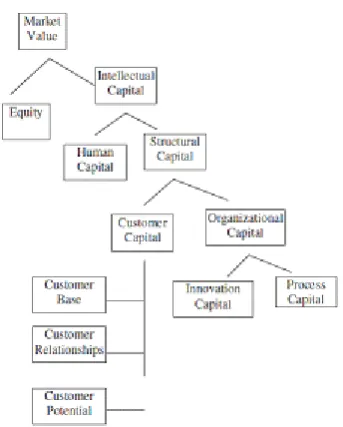
D. Skandia Intellectual Capital Model of Knowledge Management
knowledge management assuming that it can be tightly controlled. However, this approach can result in attempts to fit objective measures to subjective elements. Hence, this mechanistic approach to measurement is more consistent with Nonaka’s process of externalization and combination (Lank, 1997).
[image:4.595.50.222.124.338.2]Figure 5: Skandia Intellectual Capital Model of Knowledge Management
Figure .6 Demerest’s Knowledge Management Model
E. Demerest’s Knowledge Management Model
Demerest’s knowledge management model emphasize on the construction of knowledge within an organization. This Construction is not limited to scientific inputs but is seen as including the social construction of knowledge. The model assumes that constructed knowledge is then embodied within the organization, not just through explicit programs but through a process of social interchange (McAdam and McCreedy, 1999) Figure 4 showed that there is a process of dissemination of the espoused knowledge throughout the organization and its surrounding. Ultimately the knowledge is seen as being of economic use in regard to organizational outputs. The solid arrows in figure 1 show the primary flow direction while the plain arrows show the more recursive flows. The model is attractive in that it does not assume any given definition of knowledge but rather invites a more holistic approach while, in reality, the flows of knowledge transfer may be extremely rapid and circulatory, as in the case for some forms of action learning . Demerest’s model has been slightly modified of which seeks to address these limitations by explicitly showing the influence of both social and scientific paradigms of knowledge construction. The model also extends the “use” element to cover both business and employee benefits. If knowledge management is to have the support and commitment of all stakeholders in an organization then employee emancipation must be addressed along with the business benefits. These issues should not be
[image:4.595.333.552.176.278.2]seen as mutually exclusive but as complementary. Also more recursive arrows are added to figure 5 to show that knowledge management is not seen as simple sequential process. Figure 6 is a useful means for structuring further research into field of knowledge management as it represents a balanced view. It allows knowledge management to be associated with the emerging social paradigm while at the same time contributing to the current paradigm.
Figure 7: Demerest’s Knowledge Management Model
F. Frid’s Knowledge Management Model
Figure 8: Frid’s Knowledge Management Model
management into process engineering; provide initial knowledge management infrastructure, services and training; support early adopters and knowledge community; monitor and report on management indices and finally include knowledge management in budgets. However, the
fourth level termed as knowledge managed adopt the fundamental activities suggested in level one, two and three other than organizations should attempt to embed knowledge management in performance reviews and also in business plans apart. Finally, knowledge centric as the last level is the highest of all knowledge management implementation maturity level based on Frid’s model. The distinctive and differentiating activities that organizations should focus on are institutionalizing successful initiatives and valuing intellectual assets. These activities differentiate knowledge from other levels. Moreover, all knowledge management activities should be given equal emphasis at this level.
G. Stankosky and Baldanza’s Knowledge Management Framework
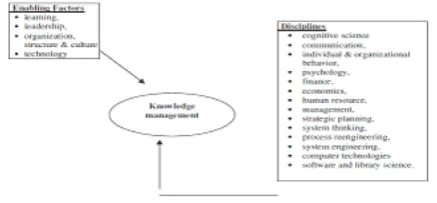
Stankosky and Baldanza (2001) developed a knowledge management framework which addresses enabling factors such as learning, culture, leadership, organization and technology. This framework presents that knowledge management encompasses a wide range of disciplines that include cognitive science, communication, individual and organizational behavior, psychology, finance, economics, human resource, management, strategic planning, system thinking, process reengineering, system engineering, computer technologies and software and library science.
Figure 9: Stankosky and Baldanza’s Knowledge Management Framework
In addition, it was suggested that the four major foundations of an organization which is important for knowledge management are leadership, organization structure, technology infrastructure and learning. First, leadership is responsible for practicing strategic planning and systems
thinking approaches, making best use of resources, fostering a culture that encourages open dialogue and team learning, and for encouraging and rewarding risk taking, learning and knowledge sharing. Key element for leadership is strategic planning, communication, system thinking and business culture. Second, organization structure should facilitate personal interactions and support communities of practice to capture tacit and explicit knowledge within the organization. Organizational structure in an organization should instill trust among people within the organization and encourage free exchange of knowledge. It should also be concerned with managing change in order to achieve better results. The key elements of organizational structure are processes, procedures, performance management system and communication. Third, technology infrastructure makes it possible to exchange information without formal structures. Technology infrastructure should promote the efficient and effective capture of both tacit and explicit knowledge. It should also support knowledge sharing in the entire organization. Communication, electronic mail, intranet, internet, data warehousing and decision support systems are some of the key elements. Fourth and final pillar of learning is leveraging knowledge. The role of learning is to manage information in order to build enterprise wide knowledge and use that knowledge to organizational learning, change and performance improvement. Learning communities, virtual teams, communication and a culture of trust can be identified as some of the key elements.
H. Kogut and Zander’s Knowledge Management Model
[image:5.595.45.264.596.697.2]asserting that individuals are “unsocial sociality” where they have both a desire to become a member of community and at the same time also have a desire to retain their own individuality (Kogut and Zander, 1996). As firms provide a normative territory to which members identify, costs of coordination, communication, and learning within firms are much lower which allow more knowledge to be shared and created within firms.
Figure 9. Kogut and Zander’s Knowledge Management Model
III.THENEEDFORKNOWLEDGEMANAGEMENT SYSTEMS
The goal of knowledge management is for an organization to be aware of individual and collective knowledge so that it may make the most effective use of the knowledge it has [12]. Historically, MIS has focused on capturing, storing, managing, and reporting explicit knowledge. Organizations now recognize the need to integrate both explicit and tacit knowledge in formal information systems. Knowledge management systems (KMSs) refers to the use of modern information technologies (e.g., the Internet, intranets, extranets, LotusNotes, software filters, agents, data warehouses) to systematize, enhance, and expedite intra- and interfirm knowledge management[9]. KMSs are intended to help an organization cope with turnover, rapid change, and downsizing by making the expertise of the organization’s human capital widely accessible. They are being built in part from increased pressure to maintain a well-informed, productive workforce. Moreover, they are built to help large organizations provide a consistent level of customer service,
IV. KNOWLEDGE MANAGEMENT SYSTEM CYCLE
A functioning knowledge management system follows six steps in a cycle (see Figure 10). The reason the system is cyclical is that knowledge is dynamically refined over time. The knowledge in a good KM system is never finished because, over time, the environment changes, and the knowledge must be updated to reflect the changes. The cycle
Figure 10 : Knowledge Management System Cycle
Works as follows:
A. Create knowledge. Knowledge is created as people determine new ways of doing things or develop know-how. Sometimes external knowledge is brought in. B. Capture knowledge. New knowledge must be identified
as valuable and be represented in a reasonable way. C. Refine knowledge. New knowledge must be placed in
context so that it is actionable. This is where human insights (tacit qualities) must be captured along with explicit facts.
D. Store knowledge. Useful knowledge must then be stored in a reasonable format in a knowledge repository so that others in the organization can access it.
E. Manage knowledge. Like a library, the knowledge must be kept current. It must be reviewed to verify that it is relevant and accurate.
F. Disseminate knowledge. Knowledge must be made available in a useful format to anyone in the organization who needs it, anywhere and any time. As knowledge is disseminated, individuals develop, create, and identify new knowledge or update old knowledge, which they replenish into the system. Knowledge is a resource that is not consumed when used, though it can age. (For example, driving a car in 1900 was different from driving one now, but many of the basic principles still apply.) Knowledge must be updated. Thus, the amount of knowledge grows over time.
V.KNOWLEDGEMANAGEMENTINITIATIVES
A. Knowledge Creation
Knowledge creation is the generation of new insights, ideas, or routines. It may also be referred to as knowledge acquisition[12]. It is helpful to distinguish between the creation of fundamentally new knowledge versus the acquisition of existing knowledge [16]. [7]describes knowledge creation as interplay between tacit and explicit knowledge and as a growing spiral as knowledge moves among the individual, group, and organizational levels. There are four modes of knowledge creation: socialization, combination, externalization, and internalization. The socialization mode refers to the conversion of tacit knowledge to new tacit knowledge through social interactions and shared experience among organizational members (e.g., mentoring). The combination mode refers to the creation of new explicit knowledge by merging, categorizing, reclassifying, and synthesizing existing explicit knowledge (e.g., statistical analyses of market data). The other two modes involve interactions and conversion between tacit and explicit knowledge. Externalization refers to converting tacit knowledge to new explicit knowledge (e.g., producing a written document describing the procedures used in solving a particular client’s problem). Internalization refers to the creation of new tacit knowledge from explicit knowledge (e.g., obtaining a novel insight through reading a document). These final two modes of knowledge creation deal less with the creation of new knowledge than with the conversion of existing knowledge to a new mode.[12] suggest that there are two important dimensions to the acquisition of knowledge: one is the identification of existing knowledge from external sources and the other, the selection of needed knowledge from an organization’s existing knowledge resources. These two activities require different skills, levels of effort, and costs.
B. Knowledge Sharing
Knowledge sharing is the willful explication of one’s ideas, insights, solutions, experiences (i.e., knowledge) to another individual either via an intermediary, such as a computer-based system, or directly. However, in many organizations, information and knowledge are not considered organizational resources to be shared, but individual competitive weapons to be kept private [15]. Organizational members may share personal knowledge with a certain trepidation—the perceived threat that they are of less value if their knowledge is part of the organizational public domain. Also, a primary constraint on individual’s knowledge sharing behaviors might simply be time. Moreover, sharing knowledge is a risky proposition since one does not know how that knowledge might be reused [16]. Research in organizational learning and knowledge management suggests that some facilitating conditions include trust, interest, and shared language (Hanssen- Bauer and [17], fostering access to knowledgeable members (Brown and [18], and a culture marked by autonomy, redundancy, requisite variety, intention, and fluctuation [7]. Several organizations have made knowledge sharing a guiding principal for the organization [19]. Johnson & Johnson has knowledge fairs designed to promote new relationships among colleagues in order to facilitate knowledge transfer. The World Bank includes such factors as openness to new ideas, continual learning, and sharing of
knowledge as part of their annual performance evaluation of employees [19].
C. Knowledge seeking
Knowledge seeking, also referred to as knowledge sourcing [20]is the search for and use of internal organizational knowledge. While the lack of time or the lack of reward may hinder the sharing of knowledge, the same can be said of knowledge seeking. Individuals may sometimes feel compelled to come up with new ideas, rather than use tried-and-true knowledge, if they feel that their own performance review is based on the originality or creativity of their ideas. Such was the case for marketing employees in a global consumer goods organization described in Alavi et al. (2003). Individuals may engage in knowledge creation, sharing, and seeking with or without the use of information technology tools. We next describe two common approaches to knowledge management.
VI.APPROACHESTOKNOWLEDGE MANAGEMENT
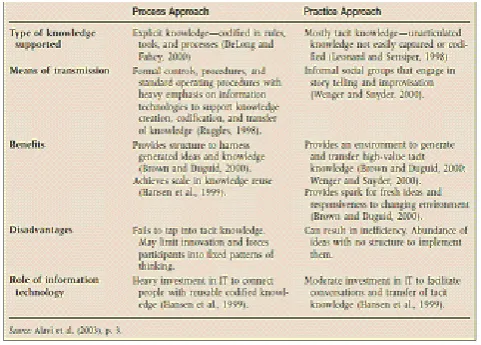
There are two fundamental approaches to knowledge management: the process and the practice approaches.
A. Process Approach
Repository and help consultants find and use information. Specialists write reports and analyses that many teams can use. And each of Ernst & Young’s more than 40 practice areas has a staff member who helps codify and store documents. The resulting area databases are linked through a network (Hansen et al., 1999). Naturally, people-to-documents are not the only way consultants in firms like Ernst & Young and Accenture share knowledge; they talk with one another as well. But they do place a high degree of emphasis on the codification strategy (Hansen et al., 1999).
B. Practice Approach
[image:8.595.39.280.571.743.2]In contrast, the practice approach to knowledge management assumes that a great deal of organizational knowledge is tacit in nature and that formal controls, processes, and technologies are not suitable for transmitting this type of understanding. Rather than building formal systems to manage knowledge, the focus of this approach is to build the social environments or communities of practice necessary to facilitate the sharing of tacit understanding (Brown and [18], 2000; DeLong and Fahey, 2000; Gupta and Govindarajan, 2000; Wenger and Snyder, 2000; Hansen et al., 1999). Communities of practice are groups of individuals with a common interest who work together informally. Within such a community, individuals collaborate directly, teach each other, and share experiences (Smith and McKeen, 2003). The practice approach is typically adopted by companies that provide highly customized solutions to unique problems. The valuable knowledge for these firms is tacit in nature, which is difficult to express, capture, and manage. In this case, the environment and the nature of the problems being encountered are extremely dynamic. For these firms, knowledge is shared mostly through person-to-person contacts. Collaborative computing methods (for example, Lotus Notes/Domino Server or e-mail) help people communicate. Because tacit knowledge is difficult to extract, store, and manage, the explicit knowledge that points to how to find the appropriate tacit knowledge (people contacts, consulting reports) is made available to an appropriate set of individuals who might need it. To make their practice approach work, firms like Bain invest heavily in building networks of people and communications technology such as telephone, e-mail, and videoconferencing. Also they commonly have face-to-face meetings (Hansen et al., 1999).
Figure 11: Process and Practice Approaches to knowledge Management
Figure 11 summarizes the process and practice approaches. In reality, a knowledge management initiative can, and probably will, involve both process and practice approaches. The two are not mutually exclusive. Alavi et al. (2003) describe the case of an organization that began its KM effort with a large repository but evolved the knowledge management initiative into a community-of-practice approach that existed side-by-side with the repository. In fact, community members would pass information from the community forum to the organizational repository when they felt that the knowledge was valuable outside their community. Figure 12 illustrates how Monsanto successfully manages its knowledge using a combination of the two approaches.
VII.KNOWLEDGEMANAGEMENTINSOFTWARE ENGINEERING
reports are more suited to client relationships and interaction. Rus and Lindvall [30] declare organizations must facilitate both formal and informal knowledge sharing between software developers. They assert that KM complements existing approaches to software process improvement, rather than seeking to replace them. KM activities designed to support SE is grouped into three categories: purpose of outputs, scope of inputs and effort required to process inputs. A number of options for implementing and using KM systems for SE are advanced, such as expert identification, the creation of KM champions, document management and using predictive modeling to direct decision-making. Companies developing information systems have failed to learn effective means for problem solving to such an extent that they have learned to fail, according to an article by Lyytinen and Robey [31]. One suggested mean to overcome this problem is an increased focus on knowledge management. There are many approaches to how software should be developed, which also affect how knowledge is managed. A main difference between methods here is if they are plan-based or traditional, which rely primarily on managing explicit knowledge, or agile methods, which primarily rely on managing tacit knowledge [3]. In software engineering, there has been much discussion about how to manage knowledge, or foster ‘‘learning software organizations”. In this context, Feldmann and Althoff have defined a ‘‘learning software organization” as an organization that has to ‘‘create a culture that promotes continuous learning and fosters the exchange of experience” [33]. Dybå places more emphasis on action in his definition: ‘‘A software organization that promotes improved actions through better knowledge and understanding” [34]. In software engineering, reusing life cycle experience, processes and products for software development is often referred to as having an ‘‘Experience Factory” [35]. In this framework, experience is collected from software development projects, and are packaged and stored in an experience base. By packing, we mean generalising, tailoring, and formalising experience so that it is easy to reuse. In 1999, the first workshop on ‘‘learning software organizations” was organized in conjunction with the SEKE conference. This workshop has been one of the main arenas for empirical studies as well as technological development related to knowledge management in software engineering. The May 2002 issue of IEEE Software [36] was devoted to knowledge management in software engineering, giving several examples of knowledge management applications in software companies. In 2003, the book ‘‘Managing Software Engineering Knowledge” [37] was published, focusing on a range of topics, from identifying why knowledge management is important in software engineering [38], to supporting structures for knowledge management applications in software engineering, to offering practical guidelines for managing knowledge. However, Edwards notes in an overview chapter in the book on Managing Software Engineering Knowledge [39] that knowledge management in software engineering is somewhat distanced from mainstream knowledge management. Several PhD theses have also been published on aspects of knowledge management that are related to software engineering [40, 41, 42, and 43]. In addition, a number of overviews of work on knowledge management in software engineering have previously been
published. Rus et al. [44] present an overview of knowledge management in software engineering. The review focuses on motivations for knowledge management, approaches to knowledge management, and factors that are important when implementing knowledge management strategies in software companies. Lindvall et al. [45] describe types of software tools that are relevant for knowledge management, including tools for managing documents and content, tools for managing competence, and tools for collaboration. Dingsøyr and Conradi [46] surveyed the literature for studies of knowledge management initiatives in software engineering. They found eight reports on lessons learned, which are formulated with respect to what actions companies took, what the effects of the actions were, what benefits are reported, and what kinds of strategy for managing knowledge were used. Despite of the previously published overviews of the field, there is still the lack of broad overviews which involves the concepts of multi agent as a tool of knowledge management that leads to the efficient working of Software engineering organization. Our motivation for this study was thus, to give a more thorough and broader overview in the form of a systematic review for multi agent. This study also covers recent work, and assesses the quality of the research in the field.
VIII.KNOWLEDGEMANAGEMENTFRAMEWORK FORSOFTWAREENGINEERING
consist of, and how we could improve organizational knowledge processes. The first dimension, therefore, is conceptual. We have to develop a set of integrated constructs that can be used to discuss knowledge in organizations. The theoretical and conceptual basis for knowledge management requires a multi-disciplinary approach and rather sophisticated theoretical discussion. Therefore, a knowledge management framework has to say something about institutions and their evolution. Before new knowledge changes knowledge structures and systems of activity within an organization, knowledge has to be accessed, understood, and accepted. Knowledge management framework, to change the organization, needs to include concepts for change management. One major aspect of change management is migration of old forms of activity into new forms. This requires coexistence of activities that are different versions of each other. In most cases this means that new activities are piloted as limited and isolated experiments, which in due course can be deployed more extensively within the organization. Change often creates resistance. I would argue that in many cases this resistance actually, in itself, is a knowledge management problem, which results from problems with accessibility, acceptability, understanding, but also from problems in the management of attention. In effective organizations, people are busy doing those activities that they have understood to be the most relevant and urgent. Therefore any suggestions for new activities are competing with an existing set of relevant and urgent activities. In many cases, the newness of novel contributions of knowledge management is sufficient to make them less relevant and less urgent than items on the current agenda. This means that in practice there has to be some re-evaluation of priorities in the organization if the organization is going to deploy knowledge management practices. This, in turn, requires that the organization changes its vision so that it explicitly includes some aspects of knowledge management. For example, the organization can relate a vision of itself as an intelligent organization, and look back from its strategic needs to see how it should prioritize its organizational development activities. In research organizations, one commonly used approach to deal with the problem of change is to keep the number of possible projects so large that there exists an alternative if the priorities change. This approach is used to make it easier for the researchers to develop their work identity around a strategic vision of the organization instead of specific “pet-projects” that for various reasons may change their priority. A similar management problem exists also for organizational development and innovation. To overcome this problem, the organization may develop a strategic vision from which manageable portfolios of knowledge development projects are selected. At the sometime there have to be processes that re-evaluate priorities from time to time. In knowledge management programs it is often reasonable to generate a set of high-priority implementation projects, and develop organizational knowledge management systems using a portfolio of strategically selected projects. Within each such project, change management, however, needs also to be addressed separately. When organizations need to change, often the most scarce resource is time. Knowledge management is therefore also bout management of time. This is so both at
the macro-level and at the micro-level. At the organizational level, there has to be time to reflect on the organizational priorities and practices.
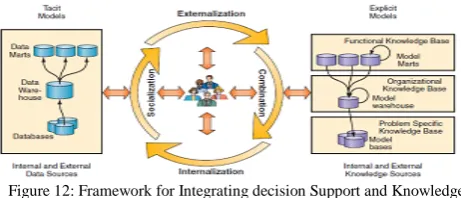
[image:10.595.319.550.226.325.2]If the organization is overloaded with current activities and existing initiatives, there is not much that can be done to manage organizational attention, and focus it toward knowledge management. Time is critical also at the individual level. Learning requires that there is time for cognitive re-arrangement. Often, however, the drive for efficiency means that there is not much time devoted for reflection.in other side various knowledge artifacts way in which they are rendered, their degree of abstraction and their ability to enable actions and decisions. Knowledge artifacts also vary in their degree of articulation; simple
Figure 12: Framework for Integrating decision Support and Knowledge Management Systems (Source Oblique et al 2001)
knowledge artifacts can be explicit, implicit or tacit. Most artifacts, however, are not simple but complex, and contain a combination of explicit, implicit and tacit components. As per the information concern Knowledge artifacts do not perform actions and make decisions. Actions and decisions are undertaken by agents: people, organizations, or in some cases, technology. Agents carry out all the actions and exhibit all the behaviors within a knowledge flow. And knowledge flow depends the organization face value. Often, analysts attempt to apply the same behavioral models to all agents in a system. More appropriately, agents can be placed in three categories:
a. Individual agents b. Automated agents c. Organizational agents.
A. Individual Agents
These agents sit at the center of almost every knowledge flow. For most analysts, the individual (human) serves as the prototypical active force for affecting change. In this paper, the term individual is used in the collective sense and is not meant to imply that every specific individual is capable of the full range of behaviors attributed to this class of agent. Individual agents are capable of working with knowledge and knowledge artifacts in all degrees of abstract articulation. They are limited, however, in their ability to deal with Artifacts that are codified in ways that falls outside the range of human perception (radio waves, for example). The individual agent is the only agent capable of performing all aspects of knowledge development, retention, transfer and utilization without the need for intervention by either of the other two agents.
B. Automated Agents
representation of the visual world through chemical changes to the surface of a film could act as an automated agent, supporting knowledge creation and capture.
C. Organizational Agents
These agents exist in situations in which knowledge retention and transfer cannot be fully attributed to individuals or specific automated agents. In these cases, the organization itself serves as an agent in the retention and dissemination of knowledge. As with tacit knowledge artifacts, current tools and concepts do not account very well for the roles of organizational agents in knowledge flows. Organizational value systems provide strong evidence for the existence of organizational agents. Much has been written about the ability of organizations and communities to establish value systems that outlive the involvement of specific individuals and the power that these value systems have to influence the behavior of individuals and groups (Krogh and Roos, 1995; Kuhn, 1996). The principles and practices that make up these value systems are almost never codified. In fact, when individuals attempt to describe the organization’s value system, the descriptions are usually incomplete, reflecting either an interpretation of the organization’s values or a blending of organizational and individual values. The terms acknowledge that organizations are repositories of tacit knowledge. Individual, organizational and automated agents have different behavioral models. Unlike computerized agents, for example, most individuals don’t perform a given task exactly the same the way every time. If human-based knowledge transfer processes are designed to work as software processes do and the designers fail to leave sufficient room for the factor of human variability, the system is unlikely to perform as intended. Individual and automated agents also differ in their ability to handle implicit knowledge artifacts. For example, the ability of individuals to infer meaning of book titles usually allows them to accept a wide variety of formats and styles and even recognize titles inside streams of text (for example, The Bible). Anyone who has built filters to convert documents knows that automated agents are not skilled at supplying context. Agents also differ in the how well they use tacit knowledge. Individual and organizational agents can handle tacit knowledge, but because automated agents can only deal with codified artifacts, and tacit knowledge by definition defies codification, automated agents seem destined to be unable to follow suit.
IX.CONCLUSION
Software engineering has long recognized the need of knowledge management. we have various knowledge management practice for information retrieval, reuse and apply but in this collaborate environment information is prime concern and organization need to store each and every data captured by the organizational people should be stored in knowledge base of the organization. Knowledge base to be monitored by the Management or as per the authority issued by the management. In the software engineering many life cycle approach run parallel like Software development life cycle, Software test Life cycle, Organizational process Improvement Life cycle and management life cycle itself. So, it is vary difficult to manage organization knowledge life cycle flow. So we need
a frame work of knowledge management which should be based on the multi agent system(MAS). These multi agents can acts as a organizational activity monitor and it should be responsible for knowledge management practice like identify, capture, store, reuse etc for entire organizational life cycle in individual and after collaboratelly mananer. In my previous Study[21] we have already explain the meaning of knowledge and it’s important and requirement of multi agent system through online survey as well as importance of knowledge management practice and in this paper after exploratory study many of researcher and industry personal have long recognized the importance of multi agent concepts in software engineering. In software engineering knowledge or optimum knowledge management practice (OKMP)can be occur if multi agent concepts based knowledge management practice (MABKM)carried out for whole organization life cycle and information of organization life cycle to be stored in the center database or organizational knowledge base. In further work we would like to create a theoretical framework for knowledge management based on the multi agents for the support of software engineering as well as its operational ideology.
X.REFERANCE
[1] Holsapple, C. W , “Knowledge and its Attributes,” in Handbook on Knowledge Management, Volume 1k (ed. C. W. Holsapple). New York: Springer-Verlag, 2003, pp. 165–188.
[2] Polanyi, M., Personal Knowledge. Chicago: University of Chicago Press, 1958.Polanyi, M., The Tacit Dimension. London: Routledge & Kegan Paul, 1966. [3] Schultze, U. and D. E. Leidner, “Studying Knowledge
Management in Information Systems Research: Discourses and Theoretical Assumptions,” MIS Quarterly, 26(3), September, 2002, pp. 213–242
[4] Mooney, S. F., “P-C ’Knowledge Capital’ Can be Measured,” National Underwriter, 104(51–52), December 25, 2000. “Most Admired Knowledge Companies Recognized,” Knowledge Management Review, January–February 1999.
[5] Edvinsson, L., “The Intellectual Capital of Nations” in Handbook on Knowledge Management, Volume 1k (ed. C. W. Holsapple). New York: Springer-Verlag, 2003, pp. 153–163.
[6] O’Dell, C., et al., If Only We Knew What We Know: The Transfer of Internal Knowledge and Best Practice. New York: Free Press, 1998.
[7] Nonaka, I., “A Dynamic Theory of Organizational Knowledge Creation,” Organization Science, 5(1), Feb. 1994, pp. 14–37. Nonaka, I., and H. Takeuchi, The Knowledge-Creating Company: How Japanese Companies Create the Dynamics of Innovation. New York: Oxford University Press, 1995.
[8] Teece, D. J., “Knowledge and Competence as Strategic Assets,” in Handbook on Knowledge Management, Volume 1k (ed. C. W. Holsapple). New York: Springer-Verlag, 2003, pp. 129–152.
[9] Alavi, M., “Managing Organizational Knowledge,” Chapter 2 in Zmud, W. R. (ed.), Framing the Domains of IT Management: Projecting the Future. Cincinnati, OH: Pinnaflex Educational Resources, 2000.
Development as Knowledge Management,” Journal of Marketing, 62(4), October 1998
[11] Robin, M., “Learning by Doing,” Knowledge Management, March 2000.
[12] Bennet, A., and D. Bennet, “The Partnership-between Organizational Learning and Knowledge Management,” in Handbook on Knowledge Management, Volume 1k (ed. C. W. Holsapple). New York: Springer-Verlag, 2003, pp. 439–460.
[13] Alavi, M. and D. Leidner, “Knowledge Management Systems: Emerging Views and Practices from the Field,” Proceedings of 32nd Annual HICSS, Maui, HI, January 1999, available at computer .org / proceedings / hics s / 0001 / 00017 / 00017009.pdf?SMSESSION_NO (accessed July 2003).
[14] KPMG Management Consulting, Knowledge Management: Research Report, 1998. KPMG Consulting
(kpmgconsulting.com/kpmgsite/service/km/publications .htm), press release 2000.
[15] Davenport, T. H., and L. Prusak, Working Knowledge: How Organizations Manage What They Know. Boston: Harvard Business School Press, 1998. Davenport, T. et al., “Successful Knowledge Management Projects,” Sloan Management Review, 39(2), Winter 1998.
[16] Ford, D. P., “Trust and Knowledge Management: The Seeds of Success,” in Handbook on Knowledge Management, Volume 1k (ed. C. W. Holsapple). New York: Springer-Verlag, 2003, pp. 553–576.
[17] Hanssen-Bauer, J., and C. C. Snow, “Responding to Hypercompetition: The Structure and Processes of a Regional Learning Network Organization,” Organization Science, 7(4), 1996, pp. 413–427.
[18] Brown, S. J., and Duguid, P., “Balancing Act: How to Capture Knowledge Without Killing It,” Harvard Business Review, May–June 2000, 73–80.
[20] Gray, P., “Tutorial on Knowledge Management,” Proceedings of the Americas Conference of the Association for Information Systems, Milwaukee, WI, August 1999.
[21] SE-MABKM: Support for Software Engineering Via Multi Agent Based Knowledge Management, Accepted at International journal of Computer Science and technology vol 2 issues 3. Dr.C.S Lamba, Ripu R Sinha [22] Kess, P., Haapasalo, H. (2002) “Knowledge creation
through a project review process in software production”, International Journal of Production Economics, Vol. 80, No. 1, pp. 49-55
[23] Aurum, A., Jeffery, R., Wohlin, C., Handzic, M. (2003) “Managing Software Engineering Knowledge”, Springer, Germany
[24] Basili, V.R., Caldiera G., Rombach, H.D. (1994) , “Experience Factory”. In Marciniack, J.J. (Ed.) Encyclopedia of Software Engineering, John Wiley and Sonss, Hoboken, NJ, USA
[25] Basili, V., Costa, P., Lindvall, M., Mendonca, M., Seaman, C. (2001) ,“An Experience Management System for a Software Engineering Research Organisation”, Proceedings of 26th Annual NASA Goddard Software Engineering Workshop, pp. 29-35 [26] Johansson, C., Hall, P., Coquard, M. (1999), “Talk to
Paula and Peter – They are Experienced”, Proceedings
of the Workshop of Learning Software Organizations, Kaiserslautern, Germany, pp 69-76
[27] Dingsøyr, T., Brede Moe, N., Nytro, O. (2001), “Augmenting Experience reports with Lightweight Postmortem Reviews”, Third International Conference on Product Focused Software Process Improvement, PROFES 2001, Kaiserslautern, Germany, 10-13 September 2001
[28] Rus, I., Lindvall, M. (2002), “Knowledge Management in Software Engineering”, IEEE Software, Vol. 19, No. 3, pp. 26-38
[29] K.Lyytinen, D.Robby, “Learning failure in information system development”, Information system Journal 9(2), (1999)85-101
[30] S Nerur, V Balijepally, “Theoretical Reflaction on agile development methodologies”, Communication on the ACM 50 (2007) 79-83.
[31] R.L Feldmaan, K-D .Althoff, on the status of learning software organizations in the year 2001, In: Proceeding of the learning software organization workshops, Springer Verlag, Kaiserslauterm, Germany, 2001, pp2-6 [32] T.Dyba,”enabling process Improvement: an
investigation on the importance of organizational issues”, PhD Thesis, Norwegian University of Science and Technology, Department of Computer and Information Science, 2001
[33] V.R Basili ,G Caldiera,H D Rambach ,”The Experience Factory”, : in J.J Marciniak(Ed),Encyclopedia of Software engineering “,1.john Wiley ,New York 1994 pp-469-476.
[34] M.Lindvll, I.Rus, “Knowledge Management in Software engineering”, IEEE Software 19(3) (2002) 26-38
[35] H.D Doran ,”Agile Knowledge Management in Practice “ , In: Proceeding of the sixth international workshops on Learning software organizations, Springer Verlag,Banff,Canada 2004, pp-137-143
[36] M.Lndvall, I Rus, “knowledge management in software organization”, in an Aybuke et al (Eds)” managing software engineering knowledge”, Springer Verlag, berlin, 2003, pp 73-96
[37] J.S Edwards, “Managing Software engineers and Their Knowledge”, in: A Aurum et al (Eds), Managing software engineering Knowledge “, Springer Verlag, Berlin, 2003, pp 76-81.
[38] A Birk,”A knowledge management infrastructure for systematic improvement in Software engineering “, Dr. Ing Thesis, University of Kaiserslautern, Department of Informatics, 2000.
[39] F.O Bjornson, “Knowledge management in software process Improvement”, PhD Thesis, Norwegian University of Science and Technology, Department of Computer and Information science, 2007.
[40] T. Dingsoyr , “Knowledge management in Midium Sized software Cunsulting Companies” ,PhD thesis ,Norwegian University of Science and Technology ,Department of Computer and Information Science,2002.
[41] J-W van Aalst, “Knowledge management in courseware development”, PhD Thesis, Technical University delft 2001.
Reports,DoD Data Analysis Center for Software, Rome 2001. .
[43] M. Lindvall, I Rus ,R. Jammalamadaka,R Thakker , “Software tools for knowledge management” ,In Technical reports ,DoD Data analysis center for software ,Rome ,NY ,2001.
[44] T. Dingsoyr, R Conradi, “A survey of case studies of the use of Knowledge management in software engineering”, international Journal of Software engineering and Knowledge engineering 12(4) (2002) 391-414
[45] Alavi, M. .and Leidner, D. (1999) Knowledge Management System: Issues, Challenges and Benefits. Communications of the Association for Information System, 1(7), 2-41.
[46]Alavi, M. and Leidner, D., (2001) Knowledge Management and Knowledge Management Systems: Conceptual Foundations and Research Issues. MIS Quarterly, 25(6), 95-116.
[47] Beckman T.J., (1999) The Current State of Knowledge Management, In the Knowledge Management Handbook, (ed). J. Liebowitz, CRC Press.
[48] Blackler, F. (1995) Knowledge, Knowledge Work and Organizations. Organization Studies, 16(6)
[49] Boisot, M. (1987) Information and Organizations: The Manager as Anthropologist, Fontana/Collins, London Chase, R. (1997) The Knowledge based Organization: An International Survey. Journal of Knowledge Management, 1(1)
[50] Davenport, T.H. & L. Prusak, L. (2000). Working Knowledge: How Organizations Manage What They Know. Harvard Business School Press, Boston, MA. [51] Frid, R (2003) A Common KM Framework For The
Government Of Canada: Frid Framework For Enterprise Knowledge Management, Canadian Institute of Knowledge Management, Ontario.
[52] Grey, D (1999) Knowledge mapping: A practical overview .Available at:
[53] Hedlund, G. and Nonaka, I. (1993) Models of Knowledge Management in the West and Japan. In Lorange, B., Chakravarthy, B., Roos, J. and Van de Ven, H. (Eds) Implementing Strategic Process, Change, Learning and Cooperation, Macmillan, London, pp. 117-44
[54] Herschel, R., Nemati, H., and Steiger, D. (2001) Managing the Tacit to Explicit Knowledge Conversion Problem: Knowledge Exchange Protocols Managing the
Tacit Knowledge Problem. Journal of Knowledge Management, 5(1), pp. 107-116.
[55] Kogut, B. & Zander, U. (1992) Knowledge of the Firm, Combinative Capabilities, and the Replication of Technology, Organization Science, 3(3), 383-97.
[56] Kogut, B. & Zander, U. (1993) Knowledge of the Firm and the Evolutionary Theory of the Multinational Corporation. Journal of International Business Studies, 24(4), p. 625-646.
[57] Kogut, B. & Zander, U. (1996) What Firms Do? Coordination, Identity, and Learning, Organization Science, 7(5), p. 502-23.
[58] Lank, E. (1997) Leveraging Invisible Assets: The Human Factor, Journal of Long Range Planning, 30(3), pp. 406-12
[59] McAdam and McCreedy, (1999) A critical review of Knowledge Management models. The Learning Organization, 6 (3), pp. 91-101.
[60] Malhotra, Y. (2000) Knowledge Assets in the Global Economy: Assessment of National Intellectual Capital. Journal of Global Information Management , Vol. 8, No. 3, pp.5-15.
[61] Malhotra, Y. (2001) Knowledge Management and Business Model Innovation, Idea Group Publishing, London
[62] Nonaka, I. and Takeuchi, K. (1995) The Knowledge Creating Company: How Japanese Companies Create the Dynamics of Innovation, Oxford University Press, Oxford
[63] Nonaka, I. (1994). A Dynamic Theory of Organizational Knowledge Creation. Organization Science, 5, p. 14–37.
[64] Quintas, P. Lefrere, P. and Jones, G. (1997) Knowledge Management: A Strategic Agenda, Journal of Long Range Planning, 30(3), pp. 385-91
[65] Roos, G. and Roos, J. (1997) Measuring your Company’s Intellectual Performance, Journal of Long Range Planning, 30(3), pp. 413-26
[66] Skyrme, D. J. (2001). Capitalizing on Knowledge: From E-business to K-business.Butterworth-Heinemann Skyrme, D.J, Amidon, D.M (1998) New measures of success, Journal of Business Strategy, 19 (1), pp. 20-4. [67] J. Davies, D. Fensel, and F. V. Harmelen, Towards the
Semantic Web: Ontology Driven Knowledge Management, John Wiley & Sons Ltd., England, 2003. [68] W. Applehans, A. Globe, and G. Laugero, Managing