Electronic Thesis and Dissertation Repository
7-23-2012 12:00 AM
To Leave or To Stay? The Decision Context, Self-Images, and
To Leave or To Stay? The Decision Context, Self-Images, and
Owner-Managers' Persistence Decisions
Owner-Managers' Persistence Decisions
Fei Zhu
The University of Western Ontario Supervisor
Stewart Thornhill
The University of Western Ontario
Graduate Program in Business
A thesis submitted in partial fulfillment of the requirements for the degree in Doctor of Philosophy
© Fei Zhu 2012
Follow this and additional works at: https://ir.lib.uwo.ca/etd
Part of the Entrepreneurial and Small Business Operations Commons
Recommended Citation Recommended Citation
Zhu, Fei, "To Leave or To Stay? The Decision Context, Self-Images, and Owner-Managers' Persistence Decisions" (2012). Electronic Thesis and Dissertation Repository. 700.
https://ir.lib.uwo.ca/etd/700
TO LEAVE OR TO STAY? THE DECISION CONTEXT, SELF-IMAGES, AND
OWNER-MANAGERS’ PERSISTENCE DECISIONS
(Spine title: Owner-managers’ Persistence Decisions)
(Thesis format: Monograph)
by
Fei Zhu
Richard Ivey School of Business
Graduate Program in Business Administration
A thesis submitted in partial fulfilment of the requirements for the degree of
Doctor of Philosophy
The School of Graduate and Postdoctoral Studies The University of Western Ontario
London, Ontario, Canada
ii
CERTIFICATE OF EXAMINATION
Supervisor
______________________________ Dr. Stewart Thornhill
Supervisory Committee
______________________________ Dr. J. Robert Mitchell
Examiners
______________________________ Dr. Simon Parker
______________________________ Dr. Glenn Rowe
______________________________ Dr. Barbara Decker Pierce
______________________________ Dr. Charlene Zietsma
The thesis by
Fei Zhu
entitled:
To Leave Or To Stay? The Decision Context, Self-images, and
Owner-managers’ Persistence Decisions
is accepted in partial fulfillment of the requirements for the degree of
Doctor of Philosophy
______________________ _______________________________
iii
Underperforming ventures are those whose performance falls short of the owner-manager’s expectations for a long period of time but whose future is not a clear failure.
Persistence decisions about underperforming ventures are influenced by the environment and owner-managers’ individual characteristics. Previous research leaves two research gaps. First, our knowledge about which and how individual characteristics may affect owner-managers’ persistence decisions is still limited. Furthermore, owner-managers
assume multiple roles in society and have opportunities to imagine a different future. Their decisions thus are affected by role demands and perceptions of the future. The growing interest in contextualizing entrepreneurship suggests the importance of putting persistence decisions in a broad social context and investigating the complexity of
owner-managers’ persistence decisions when owner-managers are facing multiple influences from the decision context.
To fill in the above two research gaps, I put persistence decision making in a decision context consisting of venture attachment, family time pressure, social approval
pressure, and personal options outside the venture. In this dissertation, I strive to address one research question: how do the decision context and two self-images—psychological capital and fear of failure—jointly influence owner-managers’ persistence decisions? I designed a metric conjoint experiment to answer this question. The experiment consists
iv
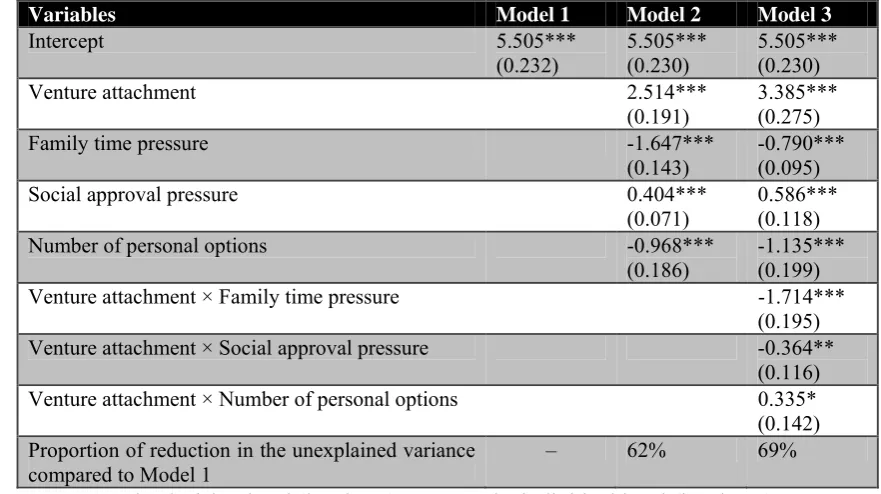
The analysis yielded three important findings. First, owner-managers’ persistence decisions are influenced by all four decision context factors, but in different manners. Venture attachment and social approval pressure are positively related to the likelihood of persistence, whereas family time pressure and the number of personal options are
negatively associated with the likelihood of persistence. Owner-managers give the highest weight to venture attachment, followed by the number of personal options, family time pressure, and social approval pressure. Second, owner-managers’ persistence decision making is a balancing act between different present roles and between the
present roles and perceptions of the future. For example, family time pressure weakens the relationship between venture attachment and the likelihood of persistence, whereas social approval pressure strengthens the relationship between venture attachment and the likelihood of persistence. The opportunities for imagining a different future, represented
by the number of personal options, also attenuate the positive impact of venture attachment on the likelihood of persistence. Finally, psychological capital and fear of failure do interact with the decision context to influence owner-managers’ persistence decisions after controlling for several personal and environmental factors. More
importantly, different components of psychological capital and fear of failure play different roles in explaining the heterogeneity of owner-managers’ persistence decision policies. Whereas psychological capital is an approach-oriented factor and functions as a set of psychological resources that owner-managers can draw upon to strengthen the
v
This dissertation makes important contributions to entrepreneurial persistence research, venture attachment research, the fear of failure literature, and the psychological capital literature.
Key Words: Persistence, underperforming venture, venture attachment, role pressure,
vi
I always feel I am the luckiest person in the world, surrounded by people who guide me, help me, support me, and love me.
First, I would like to thank my supervisor, Dr. Stewart Thornhill, for guiding me into storytelling research and persistence research, which has become my major research interest, for constructively challenging my ideas, for giving me great feedback on my projects and thesis, for getting me funded by the Pierre L. Morrissette Entrepreneurship
scholarship at Ivey, for giving me my first teaching assistant job, for helping me in the job search process, and for supporting me since the first day I joined the PhD program. I am deeply grateful to him for his guidance and mentorship throughout the program. I would also like to thank my co-supervisor, Dr. J. Robert Mitchell, for leading me to the
conjoint analysis world, guiding me through research design and data analysis, giving me great feedback on my working papers, and helping me in the job search process. I really appreciate his every effort to help me to become a better researcher. I am also indebted to
Dr. Simon Parker, for giving me my first teaching opportunity, which reinforced my confidence in teaching, for giving me constructive feedback on my thesis proposal, for getting me funded by our Entrepreneurship Centre for my final year of PhD study, and for helping me in the job search process. I am also grateful to my thesis committee
members, Dr. Clenn Rowe, Dr. Barbara Decker-Pierce, and Dr. Charlene Zietsma, for the advice that I received from all of them.
vii and makes me proud to say I am from Ivey.
Another special group of people I am indebted to are the 90 small- and medium-business owner-managers who did not know me but who were willing to use their time to help me with my dissertation research. I am really, really grateful to these 90 people
because I would not have been able to finish my PhD study and learn so much about Canadian small-business owners’ real lives without their help and encouragement. By making the effort to participate in my study, they are giving back to society. So I deeply appreciate their help.
I would also like to thank my master’s thesis supervisor, Dr. Donghong Ding, who guided me into the field of entrepreneurship research—the fascinating field that has become an important part of my identity. I am and will always be an entrepreneurship scholar. I am passionate about this field and I will dedicate my whole academic career to
this field. He funded me to go to the first academic conference of my life. That experience was a great fortune in my life because it opened my eyes and established my social identity—I want to be one of the great entrepreneurship scholars. I am really lucky to have had him as my first academic mentor. Without such guidance, help, and support, I
would not be able to taste the sweetness of doing what I truly believe in and love. Another person I would like to thank is Dr. Yuanxu Li, for connecting me to Ivey. Without his help, I would not be so lucky as to get my PhD training at Ivey, to discover my passion in my life, and to meet so many great people who are always there to help
viii
Ramezani Tehrani, Dr. Huanglin Wang, Juan Wang, Michael Wood, and Majid Eghbali-Zarch. I will miss the days we spent together in our “basement of knowledge”, encouraging each other to achieve all the milestones of PhD study. I will also miss the nights when we walked home together and told jokes to add a little fun to the day. I am so
grateful to have this supporting network that enriched my life. I would also like to thank a few of my friends outside of Ivey, Dr. Dan Kai Hsu, Pei-Chi Huang, and Ying Zhou. I am deeply grateful to my life-time friends for always being there to help me, support me, and cheer me up when I am down. A special thank-you is dedicated to our PhD program
coordinator, Linda Dittmer-Pino, for taking care of the time-consuming administration stuff so that our lives could be easier.
Last but most importantly, I would like to thank my family. To my wonderful, supportive, understanding, and caring parents: thank you for giving me life and teaching
me to be a humble, honest, independent, hardworking, and caring person. Thank you for supporting me to come across the Pacific Ocean to pursue my dream, for supporting my every decision in life, and for always being there for me. To my grandparents: thank you for bringing me up since I was a one-year-old girl. Thank you for giving me all your love
and nurturing in me the best qualities to be a great person. To my dearest husband: thank you for being part of my life, for staying up late at night to accompany me working on my thesis, and for cheering me up when I felt exhausted and stressed out. I feel very lucky to have met you in this world and to be able to spend the rest of my life with you.
ix
CERTIFICATE OF EXAMINATION ... ii
ABSTRACT ... iii
ACKNOWLEDGEMENTS ... vi
TABLE OF CONTENTS ... ix
LIST OF TABLES ... xii
LIST OF FIGURES ... xiii
CHAPTER 1: INTRODUCTION ... 1
1.1 Research Motivation ... 1
1.2 The Current Research ... 3
1.3 Dissertation Structure ... 6
CHAPTER 2: LITERATURE REVIEW... 7
2.1 Underperforming Ventures: Definition ... 7
2.2 Persistence: Definition ... 8
2.3 Prior Research on Persistence ... 10
2.3.1 Threshold of performance model ... 10
2.3.2 Cognitive biases resulting in escalation of commitment ... 11
2.3.3 The affect perspectives ... 13
2.3.4 Family-embeddedness perspective ... 16
2.3.5 Founder role identity perspective ... 17
2.3.6 Social cognitive theory ... 18
x
3.1 Theoretical Framework ... 22
3.1.1 Role theory ... 24
3.1.2 Mental simulation ... 26
3.1.3 Self-images ... 27
3.2 Hypothesis Development ... 31
3.2.1 Venture attachment and persistence decisions ... 31
3.2.2 Family time pressure and persistence decisions ... 35
3.2.3 Social approval pressure and persistence decisions ... 37
3.2.4 Number of personal options and persistence decisions ... 40
3.2.5 Venture attachment, family time pressure, and persistence decisions ... 42
3.2.6 Venture attachment, social approval pressure, and persistence decisions ... 44
3.2.7 Venture attachment, the number of personal options, and persistence decisions ... 45
3.2.8 Influence of psychological capital ... 46
3.2.9 Influence of fear of failure ... 52
CHAPTER 4: METHODS ... 58
4.1 Sample ... 58
4.2 Research Task ... 61
4.2.1 Conjoint analysis ... 61
4.2.2 Research instrument ... 68
4.3 Manipulations and Measures ... 71
4.3.1 Dependent variable ... 71
4.3.2 Level-one (decision-level) variables ... 72
4.3.3 Level-two (individual- and environmental-level) variables ... 77
4.4 Experimental Design ... 81
xi
5.2 Hypothesis Testing ... 85
5.3 Exploratory Analyses ... 95
5.3.1 Impact of individual components of psychological capital ... 96
5.3.2 Impact of individual components of fear of failure ... 102
CHAPTER 6: DISCUSSION ... 109
6.1 Implications for Theory ... 110
6.1.1 Implications for entrepreneurial persistence research ... 110
6.1.2 Implications for psychological capital research ... 114
6.1.3 Implications for fear of failure and affect research ... 116
6.1.4 Implications for venture attachment research ... 119
6.2 Implications for Practice ... 120
6.3 Limitations and Future Research ... 123
CHAPTER 7: CONCLUSION... 129
REFERENCES ... 132
APPENDIX A. INVITATION LETTER ... 154
APPENDIX B. ASSUMPTIONS FOR THE CONJOINT EXPERIMENT ... 155
APPENDIX C. POST-EXPERIMENT QUESTIONNAIRE ... 156
APPENDIX D. SAMPLE DECISION SCENARIO ... 159
xii
Table 2. Previous theoretical perspectives on persistence ... 18
Table 3. Entrepreneurship studies that have used conjoint analysis ... 64
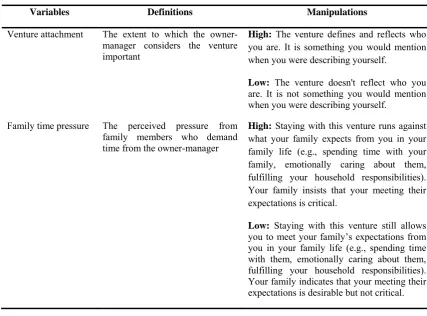
Table 4. Independent variable list ... 76
Table 5. Means, standard deviations, and correlations at level two ... 84
Table 6. Results of HLM estimation for likelihood of persistence (Hypotheses 1-4, 5a-5c) ... 87
Table 7. Estimation of variance components ... 91
Table 8. Results of HLM estimation for the likelihood of persistence ... 94
Table 9. Results of HLM estimation for the likelihood of persistence ... 101
xiii
Figure 2. Venture attachment × Family time pressure ... 88
Figure 3. Venture attachment × Social approval pressure ... 89
Figure 4. Venture attachment × Number of personal options ... 90
Figure 5. Social approval pressure × Psychological capital ... 92
Figure 6. Family time pressure × Optimism ... 97
Figure 7. Venture attachment × Family time pressure × Optimism ... 98
Figure 8. Social approval pressure × Entrepreneurial self-efficacy ... 99
Figure 9. Venture attachment × Social approval pressure × Entrepreneurial self-efficacy ... 100
Figure 10. Venture attachment × Fear of shame and embarrassment ... 103
Figure 11. Venture attachment × Family time pressure × Fear of shame and embarrassment ... 104
Figure 12. Attachment × Social approval pressure × Fear of devaluating self-estimate 105 Figure 13. Venture attachment × Family time pressure × Fear of an uncertain future ... 106
CHAPTER 1: INTRODUCTION
1.1 Research Motivation
Underperforming ventures are those whose performance falls short of the owner’s
expectations for a considerable period of time (DeTienne, Shepherd, & De Castro, 2008), yet whose future is not a clear failure (Bourgeois & Eisenhardt, 1987). Persistence decisions about an underperforming venture indicate the extent to which an owner-manager, who owns, manages, and makes decisions for his or her venture (Shepherd,
Wiklund, & Haynie, 2009b), wants to continue committing to the underperforming venture. As such, owner-managers’ persistence decisions are the decisions to act. Given
that individuals’ behaviour is influenced by the environment and individual cognitions and personalities (Bandura, 1986), and that entrepreneurs’ decisions and behaviour are a
result of the interplay of the environment (i.e., social networks) and certain individual characteristics (De Carolis & Saparito, 2006; Holland & Shepherd, 2011), it is reasonable to expect that owner-managers’ persistence decisions are affected by decision contexts
and individuals’ self-images—a set of beliefs and attitudes about the self that regulate one’s behaviour, that are constructed based on one’s identity, that are influenced by environmental feedback regarding one’s performance, and that is subject to changes (Burke, 1980).
Existing research has suggested some contextual factors and individual characteristics as predictors of owner-managers’ persistence decisions. Contextual factors
et al., 2008), firm- and opportunity-related factors such as past organizational success and personal options (DeTienne et al., 2008), as well as social factors such as collective efficacy (DeTienne et al., 2008). Individual characteristics consist of human capital (Gimeno, Folta, Cooper, & Woo, 1997), personal values (Holland & Shepherd, 2011),
and entrepreneurs’ passion for and attachment to their ventures (Cardon, Wincent, Singh, & Drnovsek, 2009; Cardon, Zietsma, Saparito, Matherne, & Davis, 2005; Shepherd et al., 2009b).
While insightful, previous research on owner-managers’ persistence decisions leaves two main research gaps, hence two avenues for future research. First, individuals’
decisions and actions are shaped not only by the context but also by how individuals evaluate themselves (Franks & Marolla, 1976). Entrepreneurs are an active self. They have been found to demonstrate a high level of self-efficacy (Chen, Greene, & Grick, 1998) and optimism (Busenitz & Barney, 1997; Fraser & Greene, 2006; Lowe &
Ziedonis, 2006), which play important roles in entrepreneurs’ investment decisions (Cassar & Friedman, 2009) and venture performance (Hmieleski & Baron, 2008). Although studies by DeTienne et al. (2008) and Holland and Shepherd (2011) have investigated the impact of some individual characteristics (i.e., extrinsic motivation and
personal values) on entrepreneurs’ persistence decisions, we still know little about how other important individual characteristics (e.g., self-efficacy, optimism) may influence such decisions; thus more research is needed in this regard (Holland & Shepherd, 2011). Second, owner-managers assume multiple roles in society (e.g., business owner, family
relationships (Aldrich & Cliff, 2003; Aldrich & Zimmer, 1986; Fauchart & Gruber, 2011; Jennings & McDougald, 2007; Kahn, Wolfe, Quinn, & Snoek, 1964). The call for more research on the implications of owner-managers’ venture attachment (Cardon et al., 2005; DeTienne, 2010), the role of family conditions in entrepreneurs’ venture exit decisions
(Justo & DeTienne, 2008), as well as the influence of social networks and social interactions on entrepreneurs’ decisions, behaviour, and new venture performance (Davidsson & Honig, 2003; Down & Reveley, 2004; Lechler, 2001) suggests the
importance of examining owner-managers’ persistence decisions in a broader social context. The complexity of the decision context enables researchers to capture the complexity of owner-managers’ decision policies by investigating how they make persistence decisions when confronted with multiple influences from the decision context.
1.2 The Current Research
To fill in the above two research gaps, I draw on social cognitive theory as the overarching theoretical framework for this research and aim to answer the following
research question: how do the decision context and self-images jointly influence owner-managers’ persistence decisions? I further draw upon role theory and the mental simulation literature to conceptualize the decision context. I examine the impact of two distinctive types of self-images on owner-managers’ persistence decisions: psychological
and self-images interact in a complex way to influence owner-managers’ persistence decisions.
This research makes three important contributions. First, it contributes to the entrepreneurial persistence research by putting persistence decision making in a broad social context and exploring the complexity of owner-managers’ persistence decision
policies. Entrepreneurship scholars advocate the contextualization of entrepreneurship (Welter, 2011) and have adopted some relevant theoretical lenses (e.g., social-embeddedness perspective, family-social-embeddedness perspective) to explain the entrepreneurial process (Aldrich & Cliff, 2003; Aldrich & Zimmer, 1986). Following and
extending this line of research, I put persistence decisions in a broad context consisting of the influences of the venture, the family, the business community, and personal options. Such a context is characterized both by different types of relationships (intrapersonal versus interpersonal) and by time (present roles versus perceptions of the future). By
examining the impact of these contextual factors, especially the interactions among them, I am able to explore the complexity of owner-managers’ persistence decisions.
Second, this research extends previous research on the relationship between owner-managers’ venture attachment and persistence by providing empirical support for this relationship and by identifying some moderators for this relationship, such as family
answered this call and furthered our understanding of the attachment-persistence relationship.
Third, this research also deepens our understanding of how owner-managers’ persistence decisions are influenced by two important self-images: psychological capital and fear of failure. Owner-managers are active agents in daily activities—they form their
own evaluations of the self and actively affect the environment through their actions (Franks & Marolla, 1976). Owner-managers, however, also have a vulnerable aspect of self that affects their decisions (Mitchell & Shepherd, 2010). By examining the influence of these two qualitatively different self-images, I am able to extend previous research on
the effect of individual characteristics on owner-managers’ persistence decisions (DeTienne et al., 2008; Holland & Shepherd, 2011) and enrich our knowledge in this field. The findings that different dimensions of fear of failure and psychological capital interact with different decision context factors to influence persistence decisions deepen
our understanding of the effect of fear of failure and psychological capital, thereby contributing to the fear of failure literature, the psychological capital literature, and affect research in the entrepreneurship context.
It should be noted that the unit of analysis for this research is the decision about a venture. I follow DeTienne et al. (2008) and Holland and Shepherd (2011) in viewing
investigating how owner-managers make persistence decisions thus can contribute to the individual-level entrepreneurship research.
1.3 Dissertation Structure
The remainder of this dissertation is structured as follows. In Chapter 2, I start with defining the two key constructs of this research—underperforming ventures and persistence. I then review previous entrepreneurship research on persistence. I end this chapter by identifying some gaps in previous research in a manner that highlights the two
key components of the theoretical framework for this research—the decision context and self-images. In Chapter 3, I draw upon social cognitive theory, role theory, the mental simulation literature, fear of failure literature, and psychological capital literature to form the theoretical framework of this research. I then develop testable hypotheses about the
impact of decision context factors and their interactions with self-images on the likelihood of persistence. In Chapter 4, I outline the methods of this research, including the sample, the conjoint analysis method, the research instrument, manipulations and
measures of variables, as well as the data analysis approach. Chapter 5 reports the results of this research, including descriptive statistics, hypothesis testing results, and some exploratory analysis results. Chapter 6 discusses the implications for theories and practice, limitations of this dissertation research, and possible future research avenues. This
dissertation ends with a conclusion in Chapter 7.
CHAPTER 2: LITERATURE REVIEW
As the focus of this research is owner-managers’ persistence decisions—in particular, what influences owner-managers to choose to continue operating an underperforming venture, I start the literature review by defining two key constructs in this research: underperforming ventures and persistence. I then review existing research
on entrepreneurial persistence and end this chapter with potential gaps in existing research.
2.1 Underperforming Ventures: Definition
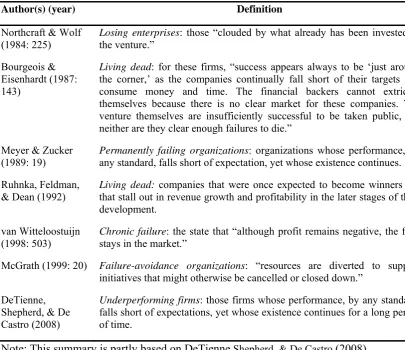
Underperforming firms are also referred to as permanently failing organizations (Meyer & Zucker, 1989), chronic failures (van Witteloostuijn, 1998), the living dead (Bourgeois & Eisenhardt, 1987; Ruhnka, Feldman, & Dean, 1992), and failure-avoidance organizations (McGrath, 1999). Table 1 provides a summary of the terms used and
definitions of underperforming firms in previous research.
Based on the definitions of underperforming firms given by Meyer and Zucker
(1989), DeTienne et al. (2008), and Bourgeois and Eisenhardt (1987), in this research, I define underperforming ventures as business ventures whose performance falls short of the owner-managers’ expectations (either financially or strategically) for a long period of time, and whose future is not a clear failure. By adopting this definition, I lose the
Table 1. Definitions of terms used for underperforming firms
Author(s) (year) Definition
Northcraft & Wolf (1984: 225)
Losing enterprises: those “clouded by what already has been invested in
the venture.” Bourgeois &
Eisenhardt (1987: 143)
Living dead: for these firms, “success appears always to be ‘just around
the corner,’ as the companies continually fall short of their targets and consume money and time. The financial backers cannot extricate themselves because there is no clear market for these companies. The venture themselves are insufficiently successful to be taken public, but neither are they clear enough failures to die.”
Meyer & Zucker (1989: 19)
Permanently failing organizations: organizations whose performance, by
any standard, falls short of expectation, yet whose existence continues. Ruhnka, Feldman,
& Dean (1992)
Living dead: companies that were once expected to become winners but
that stall out in revenue growth and profitability in the later stages of their development.
van Witteloostuijn (1998: 503)
Chronic failure: the state that “although profit remains negative, the firm
stays in the market.”
McGrath (1999: 20) Failure-avoidance organizations: “resources are diverted to support
initiatives that might otherwise be cancelled or closed down.” DeTienne,
Shepherd, & De Castro (2008)
Underperforming firms: those firms whose performance, by any standard,
falls short of expectations, yet whose existence continues for a long period of time.
Note: This summary is partly based on DeTienne Shepherd, & De Castro (2008).
2.2 Persistence: Definition
Persistence generally refers to the continuance of business operations despite setbacks, impediments, or enticing alternatives (Gimeno et al., 1997; Holland & Shepherd, 2011). Persistence emphasizes two aspects of such continuance: the actions taken in response to negative feedback from the environment (Gimeno et al., 1997;
selected action despite other attractive options (Holland & Shepherd, 2011). In this research, I also infuse the notions of commitment and engagement (Chalofsky & Krishna, 2009) in the definition of persistence. Persistent owner-managers are those who are willing to stay with the venture, and to engage in it by investing physical and
psychological resources. Owner-managers who are not dissatisfied enough to leave the venture but who are biding their time and not committed to the venture, and those who are still in the venture but who are actively searching for alternative opportunities to leave
the venture are not considered as persistent in my research.
It should be noted that I do not take a normative perspective of persistence in this
research. Persistence can result in both beneficial and detrimental consequences. For instance, by being persistent with a previously selected course of action, individuals may enhance their self-efficacy, become more resourceful than before (Youssef & Luthans, 2007), and gain psychic income (Gimeno et al., 1997). These individuals thus may be
more able to achieve entrepreneurial success than those who can easily quit entrepreneurial endeavours (Markman, Baron, & Balkin, 2005). In contrast, some individuals escalate commitment to a failing course of action, with the result of throwing good money after bad (Staw, 1981). Such persistence is an inefficient and ineffective way
of deploying one’s own and society’s resources (DeTienne et al., 2008), and may result in decreased psychological well-being (Winnen, 2006). Whether persistence with an underperforming venture is a bad decision, however, is not the focus of this research. The focus of this research, instead, is on the antecedents and boundary conditions of
owner-managers’ persistence decisions by exploring the positive and negative outcomes of such decisions.
2.3 Prior Research on Persistence
Scholars have adopted a variety of theoretical lenses to study persistence. As my research focuses on how owner-managers as individuals make persistence decisions, I only review research conducted on the individual level. The following theoretical perspectives will be covered: the threshold of performance model, cognitive biases
resulting in escalation of commitment, the affect perspectives including procrastination, passion and attachment, the family-embeddedness perspective, the founder role identity perspective, and social cognitive theory.
2.3.1 Threshold of performance model
Gimeno and colleagues (1997) provided the first theoretical explanation regarding why some entrepreneurs continued running underperforming firms. They posited that entrepreneurs’ exit decisions and organizational survival were a function of both firm
economic performance and entrepreneurs’ performance thresholds. The performance threshold served as a reference point used by entrepreneurs to decide whether to exit a firm. Entrepreneurs would stay with a firm as long as the firm’s performance was above their performance thresholds, which were affected by human capital (Gimeno et al, 1997).
underperforming firms survive. The notion of psychic income also provides one motivation for the current dissertation research to examine how owner-managers’ venture attachment may affect their persistence decisions.
2.3.2 Cognitive biases resulting in escalation of commitment
Escalation of commitment is also referred to as entrapment (Brockner, Houser, Birnbaum, Lloyd, & Deitcher, 1986), the sunk cost effect (Northcraft & Wolf, 1984), and the too-much-invested-to-quit effect (Teger, 1980). Escalation of commitment is often
studied in contexts with three characteristics (Brockner, 1992; Staw, 1997): (1) negative outcomes occur, such as whether to invest additional funds in a losing stock; (2) there is an opportunity to persist or withdraw; and (3) individuals who escalate have not attained their goals, nor are they certain that additional investment will help them achieve their
goals.
Over the past three decades, a large body of research in psychology has focused on the factors driving individuals to escalate commitment to a losing course of action or a losing project. For example, Brockner and colleagues (1986) explored the effect of individuals’ identification with previous outcomes on entrapment using two experiments.
They argued that individuals were reluctant to give up a losing course of action which hurt their identity (Brockner et al., 1986). Their research showed that entrapment was greater when subjects were told that their ineffective performance revealed their abilities and skills than when they were told that it did not. Zhang and Baumeister (2006) found
commitment in a losing course of action that was detrimental to individuals’ financial well-being. Dietz-Uhler (1992) investigated the role of social identity in political situations where an escalation of commitment might occur. Social identity was found to be strongly related to the group’s escalation of commitment to a failing project, and the
effect of social identity did not show until some critical threshold determined by the severity of the project’s problems was reached. Similarly, Liao and colleagues (2004) found that group responsibility and cohesiveness increased the tendency for group
- - J H H Ĉ̷jᄀ
In the entrepreneurship context, DeTienne and colleagues (2008) extended
Gimeno’s (1997) threshold of performance perspective by employing Staw’s (1981) escalation of commitment model to explain entrepreneurs’ persistence decisions with underperforming firms. These researchers selected decision factors that represented the major determinants of Staw’s (1981) model, including the perceived probability and the
value of future outcomes, motivation to justify previous decisions, and norms for consistency. They found that entrepreneurs’ persistence decisions were positively related to environmental munificence (representing the probability and perceived value of future outcomes), personal investment (representing the motivation to justify previous
high extrinsic motivation were more likely to be influenced by personal investment in their persistence decisions than those low in extrinsic motivation.
2.3.3 The affect perspectives
Some entrepreneurship scholars theorize entrepreneurs’ or owner-managers’ persistence decisions using theoretical lenses related to affect. Three major theoretical perspectives are procrastination, passion, and attachment.
Procrastination
“Procrastination occurs when present costs are unduly salient in comparison with future costs, leading individuals to postpone tasks until tomorrow without foreseeing that when tomorrow comes, the required action will be delayed yet again” (Akerlof, 1991: 1).
Procrastination occurs because individuals may feel anxious or frustrated when anticipating threats from the environment. Therefore, to reduce anxiety and frustration, individuals choose to escape from the current situation (Anderson, 2003; Milgram, Sroloff, & Rosenbaum, 1988). Procrastination is a self-defeating behaviour that has
short-term benefits (e.g., lower stress, less illness, and higher performance) but long-short-term costs (e.g., higher stress, more illness, and lower performance) (Solomon & Rothblum, 1984; Tice & Baumeister, 1997).
In entrepreneurship research, Shepherd (2009) defined procrastination as delaying an action that is emotionally unattractive even though this action will lead to positive
argued that entrepreneurs procrastinated because they wanted to balance financial costs with emotional costs so that they could temporarily avoid the negative emotions associated with business failures, such as grief.
Passion
Passion is one type of positive affect. Passion has been defined as selfish love of work (Shane, Locke, & Collins, 2003), the “enthusiasm, joy, and even zeal that come from the energetic and unflagging pursuit of a worthy, challenging, and uplifting
purpose” (Smilor, 1997: 342), intense longing (Baum & Locke, 2004; Cardon et al., 2005), drive, a pleasant high activation emotion (Huy & Zott, 2007; Shane et al., 2003), and a positive feeling that derives from activities representing the entrepreneur’s salient identity (Cardon et al., 2009).
Passion motivates individuals to work hard (Baum, Locke, & Smith, 2001), to
achieve, and to make a difference (Bierly, Kessler, & Christensen, 2000). Entrepreneurs who are passionate about their ventures are willing to delay gratification and to devote considerable time, attention, and energy to the venture to deal with challenges, setbacks, and high pressure (Cardon et al., 2005). Therefore, passion drives entrepreneurs to persist
Attachment
Closely related to passion is the notion of venture attachment. Entrepreneurs’ venture attachment was first theorized by Cardon and colleagues (2005) based on the parenthood metaphor used by entrepreneurs: the venture is my baby. These scholars developed a conceptual framework to explain the role of passion, attachment, and
identification in the new venture creation, development and exit processes. They defined entrepreneurs’ venture attachment as the emotional connection between the entrepreneur and the venture (Cardon et al., 2005) and argued that strong venture attachment motivated entrepreneurs to commit to the venture, face up to challenges, and cope with
adversity.
The notion of attachment is not new to entrepreneurship scholars. Some
researchers have theorized how entrepreneurs’ or business owners’ venture attachment may affect their persistence decisions. For example, Gimeno and colleagues (1997) argued that poorly performing firms still continue partly because of entrepreneurs’ strong
psychic attachment to the venture. Shepherd (2003) proposed an emotional bond between the self-employed and their ventures. When their ventures failed, the self-employed were likely to suffer from intense grief, which, in turn, slowed down the recovery process. Wasserman (2008 :3) also argued that entrepreneurs often regarded new ventures as
assets in the core family business (Sharma & Manikutty, 2005). Over-attachment to the past values and culture of the family business and to the old CEO may make the new CEO resistant to letting go of the old culture and enabling changes that are needed in a dynamic environment. Therefore, over-attachment to the past may plague
intergenerational succession in family businesses (Miller, Steier, & Le Breton-Miller, 2003).
Despite ex ante research on attachment and venture exit, empirical research is still
needed to further explore what implications attachment has for entrepreneurs’ persistence decisions (Cardon et al., 2005).
2.3.4 Family-embeddedness perspective
Family conditions have been found to be an important factor influencing entrepreneurs’ decisions and actions (Aldrich & Cliff, 2003; Cliff, 1998; Jennings &
McDougald, 2007). Given the important role played by family in the entrepreneurial process and entrepreneurial exit as an important part of the entrepreneurial process, entrepreneurship scholars have begun to examine how gender and family conditions may influence entrepreneurs’ venture exit decisions. Justo and DeTienne (2008) used the
family-embeddedness perspective to extend Gimeno and colleagues’ (1997) threshold of performance model and to investigate how gender and family conditions may influence entrepreneurs’ venture exit decisions over and above the impact of firm performance. They found that female entrepreneurs and married entrepreneurs had a higher threshold
controlling for firm performance. These researchers also found that gender moderated the relationship between running a family business and business exit. For those who ran a family business, female entrepreneurs had lower odds of business exit than their male counterparts in the same situation. Their research extended previous entrepreneurial exit
research by showing the importance of family considerations in entrepreneurs’ business decisions and the impact of gender and family conditions on entrepreneurs’ performance thresholds. Justo and DeTienne’s (2008) research motivated me to adopt role theory as
part of the theoretical foundations of my dissertation and to include family and the business community as part of the decision context in this dissertation.
2.3.5 Founder role identity perspective
Hoang and Gimeno (2010), if not the first, are among the few entrepreneurship
scholars who link role identity with entrepreneurs’ persistence. They theorized the notion of founder role identity, and proposed that the type and the extent of persistence were a function of identity centrality and identity complexity. They also proposed some
forms of persistence: experimentation-oriented persistence and confirmation-oriented persistence. Entrepreneurs who were high in both role complexity and role centrality would be motivated to persist in the face of adversity while searching broadly for alternative opportunities and re-evaluating the overall approach. This adaptive approach
founder role was not salient. Finally, entrepreneurs high in role centrality but low in role complexity were likely to have rigid responses to negative environmental feedback, thus, demonstrating confirmation-oriented persistence.
2.3.6 Social cognitive theory
Holland and Shepherd (2011) adopted social cognitive theory to explain entrepreneurs’ persistence decisions. They argued that such decisions were a function of both the environment (the decision context) and personal factors. They examined how
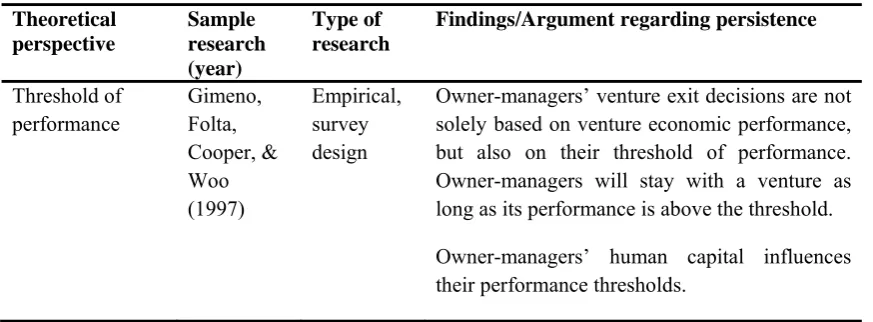
personal values and adversity interacted with entrepreneurs’ decision attributes to influence their persistence decisions, and found that different entrepreneurs used different persistence decision policies depending on their personal values and the level of adversity. Table 2 lists previous theoretical perspectives and sample research on
persistence.
Table 2. Previous theoretical perspectives on persistence
Theoretical perspective
Sample research (year)
Type of research
Findings/Argument regarding persistence
Threshold of performance
Gimeno, Folta, Cooper, & Woo (1997)
Empirical, survey design
Cognitive biases resulting in escalation of commitment DeTienne, Shepherd, & Castro (2008) Empirical, conjoint analysis
Entrepreneurs’ persistence decisions could be a form of commitment escalation. Such decisions are influenced by factors reflecting the perceived probability and value of future outcomes (e.g., environmental munificence), the motivation to justify previous decisions (e.g., personal investment, personal options), and norms for consistency (e.g., previous organizational success and perceived collective efficacy). In addition, individual extrinsic motivation can also influence entrepreneurs’ decision policies.
Procrastination Shepherd (2009); Shepherd, Wiklund, & Haynie (2009)
Theoretical Owner-managers delay business failure because they want to temporally avoid the negative emotions associated with business failure.
Passion, attachment Cardon, Zietsma, Saparito, Matherne, & Davis (2005)
Theoretical Passion for and attachment to the venture may make it difficult for entrepreneurs to leave the venture when it is time to exit.
Family-embeddedness
Justo & DeTienne (2008)
Empirical Women entrepreneurs and married entrepreneurs are more likely to exit a venture compared with their counterparts after firm performance is controlled for.
Founder role identity
Hoang & Gimeno (2010)
Theoretical Founder role centrality and role complexity jointly influence persistence behaviour.
Social cognitive theory Holland & Shepherd (2011) Empirical, conjoint analysis
Persistence decisions are a function of both the environment (adversity) and personal factors (personal values).
2.4 Potential Gaps in Prior Research
Although existing research has provided insight into entrepreneurs’ or owner-managers’ persistence decisions, several research gaps can be identified. First, although entrepreneurship scholars have theorized and empirically examined the impact of some individual characteristics, such as human capital (Gimeno et al., 1997), passion and
attachment (Cardon et al., 2005), and extrinsic motivation (DeTienne et al., 2008), given that self-concept is a multi-faceted construct, including individual and social representations (Brewer, 1991; Brewer & Gardner, 1996) and a variety of possible future selves (Markus & Nurius, 1986), our current knowledge of how the self may influence
owner-managers’ persistence decisions is still limited.
Second, inspired by Granovetter’s (1985) social-embeddedness perspective of
human action, an increasing number of entrepreneurship scholars have begun to investigate how entrepreneurs act as social selves and how their decisions are influenced by their social networks extended by family and other social relations (Aldrich & Cliff,
2003; Fauchart & Gruber, 2011). The entrepreneurial persistence research has followed this line and has shown the impact of collective efficacy (DeTienne et al., 2008) and family conditions (Justo & DeTienne, 2008) on entrepreneurs’ persistence decisions. However, given the multiple roles played by individuals, and hence the potential multiple,
Finally, although some scholars have theorized the relationship between entrepreneurs’ venture attachment and persistence (Cardon et al., 2005), little empirical research has been conducted to explore how attachment may influence the persistence with underperforming ventures. More research thus is needed (Cardon et al., 2005).
Therefore, my dissertation aims to address the above-mentioned research gaps.
The next chapter introduces the theoretical framework of this research and develops hypotheses accordingly.
CHAPTER 3: THEORETICAL FRAMEWORK AND HYPOTHESIS
DEVELOPMENT
3.1 Theoretical Framework
Owner-managers’ persistence decisions about an underperforming venture reflect owner-managers’ propensity to continue committing to the venture. Thus, persistence decisions are the decisions to act (McMullen & Shepherd, 2006). Moreover,
owner-managers’ persistence decisions have been found to be influenced by both the
environment and individual characteristics (Holland & Shepherd, 2011); I thus draw upon social cognitive theory as the overarching theoretical framework of this research.
Social cognitive theory suggests reciprocal relationships among the environment, individual cognitive, affective, and biological factors, and individual actions. That is, individual actions are not only influenced by but also shape the environment and
individual characteristics, which also affect each other (Bandura, 1986, 1999). In this research, to make my framework manageable and testable, I adopt only part of Bandura’s social cognitive theory, and investigate how owner-managers’ persistence decisions are influenced by the decision context and self-images—a set of beliefs and attitudes about
To further conceptualize the decision context, I draw upon role theory and the mental simulation literature. I use role theory as part of the theoretical foundation for this research because individuals seek not only uniqueness but also a sense of belonging (Baumeister & Leary, 1995; Brewer, 1991). Their decisions and actions thus are
influenced by the expectations of the multiple roles they assume in society (Kahn et al., 1964). In addition to the roles currently assumed by individuals, individuals may also have opportunities to become a different being in the future, either a self that one aspires
to be or a self that one wants to avoid becoming (Markus & Nurius, 1986). The presence of such opportunities, as part of the environment, may lead individuals to mentally simulate different futures, and this mental simulation has been found to influence individuals’ current decisions (Taylor & Schneider, 1989). Therefore, the mental
simulation literature is also related to the current research.
Finally, within the broad network of contextual influences, individuals’
self-images further affect how individuals view the environment and act in the environment. Because our beliefs and attitudes about ourselves are dynamic and multi-faceted (Markus & Wurf, 1987), it is valuable to examine how different types of self-images may affect decisions differently. In this research, I draw upon the psychological capital and fear of
failure literature to examine how a competent self-image (i.e., psychological capital) and a vulnerable self-image (i.e., fear of failure) (Mitchell & Shepherd, 2010) may influence owner-managers’ persistence decisions. Below, I link together role theory, the mental simulation literature, and the self-image literature to introduce the theoretical framework
3.1.1 Role theory
Individuals play multiple roles in society. These roles affect individuals’ physical and emotional states, and hence their behaviour (Kahn et al., 1964). A role refers to the cultural expectations that are attached to certain societal status or positions (e.g., mother, father, or student)(Cast, 2004). These expectations come from people who are related to
the focal individual and whose performance has a stake in the focal individual’s performance. Therefore, the expectations represent a role pressure that arouses a psychological force within the focal individual to behave to meet the expectations (Kahn et al., 1964). Satisfactory role performance not only validates a person’s societal statuses
or positions (Callero, Howard, & Piliavin, 1987), but also enhances his or her self-esteem (Franks & Marolla, 1976; Gecas & Schwalbe, 1983). However, failing to meet role expectations may result in sanctions (Kahn et al., 1964).
Owner-managers assume multiple roles in society. They are the owners and the key decision makers for their ventures. On the one hand, starting and developing a
business venture renders autonomy, control, and enjoyment (Benz & Frey, 2008; Kolvereid, 1996; Kuratko, Hornsby, & Naffziger, 1997; Shane et al., 2003), thereby increasing psychic income (Gimeno et al., 1997). Such psychic income is likely to give rise to a sense of uniqueness for owner-managers compared with organizational
(Aldrich & Cliff, 2003; Aldrich & Zimmer, 1986). For example, owner-managers are family members and need to fulfill family obligations (DeMartino & Barbato, 2003). Meanwhile, owner-managers are community members and may be expected to embrace community values and contribute back to the community (Peredo & Chrisman, 2006).
Recently, there has been increasing interest in the psychological connection
between the owner-manager and the venture (Cardon et al., 2005; DeTienne, 2010), the family-embeddedness perspective of entrepreneurship (Aldrich & Cliff, 2003; Jennings & McDougald, 2007; Justo & DeTienne, 2008), and the interactions of entrepreneurship and social networks (e.g., community) (Cornwall, 1998; De Carolis & Saparito, 2006;
Fauchart & Gruber, 2011). These streams of research, however, develop in parallel, and leave us with an incomplete picture of how the three different domains (i.e., venture, family, community) may jointly contribute to the complexity of entrepreneurs and owner-managers’ decision making (Holland & Shepherd, 2011; Mitchell & Shepherd, 2010).
Thus, the call for further research on how entrepreneurial persistence will be affected by venture attachment (Cardon et al., 2005) and family conditions (Justo & DeTienne, 2008), as well as the need to look at the interactions among entrepreneurs, families, and communities (Peredo & Chrisman, 2006), motivated me to select the following three
decision context factors as part of my theoretical framework: venture attachment, family time pressure, and social approval pressure.
3.1.2 Mental simulation
Mental simulation is defined as “the cognitive construction of hypothetical scenarios or the reconstruction of real scenarios (Taylor & Schneider, 1989: 175).” Mental simulation can take several forms, such as rehearsing future events that are likely to happen, reconstructing past events, imagining oneself behaving a certain way, and
mixing together real and hypothetical events (Taylor & Schneider, 1989). Mental simulation enables individuals to envision the future and can help them make plans, solve problems, and manage emotional states (Taylor, Pham, Rivkin, & Armor, 1998).
Consumer behaviour research, management research, and entrepreneurship research have shown that mental simulation of the future affects individuals’ decisions, intention, and behaviour. Scholars studying consumer behaviour found that consumers
were more likely to remain in a service relationship when they expected high future use and when they anticipated regret due to discontinuing the service relationship (Lemon, White, & Winer, 2002). Consumers’ expectations of future use and relative advantages of
durable products also enhanced their purchase intentions (Holak, Lehmann, & Sultan, 1987). Clients who imagined themselves staying in psychotherapy for a certain period of time demonstrated a lower dropout rate than those who did not imagine themselves continuing the therapy (Sherman & Anderson, 1987). In the management literature,
summary, individuals’ decisions and behaviour are likely to be influenced by considerations of the future through mental simulation.
Mental simulation is relevant to the persistence decision-making context because owner-managers may have personal options outside their current ventures, and these options provide a context for owner-managers to envision a different future, which
affects owner-managers’ evaluation of the current persistence decision-making context. The more options owner-managers have, the easier it is for them to visualize futures (Markus & Nurius, 1986) that are different than the owner-manager of an underperforming venture, and the more likely it is that owner-managers’ persistence
decisions are affected by the availability of personal options. Therefore, the number of personal options is relevant to my research and becomes the fourth decision context factor in my theoretical framework.
3.1.3 Self-images
While the decision context is an external influence on individuals’ decisions, individuals’ decisions are also influenced by their self-images. Self-image refers to a set of beliefs and attitudes about the self that regulate one’s behaviour, that are constructed
based on one’s identity, that are influenced by environmental feedback regarding one’s performance, and that is subject to changes (Burke, 1980). Individuals are active agents, who form their own values and beliefs and who produce feedback through their own actions that shape the environment (Bandura, 1989, 1999; Franks & Seeburger, 1980;
self-
images that are relevant to owner-managers’ persistence decisions: a competent self and a vulnerable self.
Individuals have the feelings of efficacy and competence that stem from their perceptions and experience of how their actions can affect the environment and how they can make things happen despite setbacks (Franks & Marolla, 1976). This inner, active
self exerts an important influence on individuals’ self-evaluations and subsequent decisions and actions. In the entrepreneurship context, entrepreneurs have been found to demonstrate high self-efficacy (Chen et al., 1998) and optimism (Busenitz & Barney, 1997; Fraser & Greene, 2006; Lowe & Ziedonis, 2006), which have been shown to affect
their investment decisions and venture performance (Hmieleski & Baron, 2008, 2009; Mitchell & Shepherd, 2010). It has also been suggested that self-efficacy predicts persistence (Chen et al., 1998). Therefore, the competent self is relevant to the persistence decision-making context. In this research, I specifically choose to examine
one type of competent self-image—psychological capital. Psychological capital is a positive psychological state of development consisting of efficacy, hope, optimism, and resilience (Luthans, Avolio, Avey, & Norman, 2007; Youssef & Luthans, 2007). As psychological capital is about the state of the four components of one’s inner life
(Luthans et al., 2007) and it directly speaks to one’s belief in his or her ability to affect the world (i.e., the efficacy component) and to bounce back from adversity (i.e., the resilience component), it is a competent self-image and is relevant to this research.
experiencing shame and embarrassment, fear of experiencing an uncertain future, fear of upsetting important others, fear of important others losing interest, and fear of underestimating the self (Conroy, 2001b; Conroy, Willow, & Metzler, 2002). Fear of failure is the fear of being a failure, thereby representing a vulnerable self (Mitchell &
Shepherd, 2010). Individuals high in fear of failure worry about their lack of capabilities to perform certain tasks (Bryan, Sonnefeld, & Grabowski, 1983), to achieve certain goals (Burnstein, 1963), and to meet important others’ expectations.
Many owner-managers invest considerable time, money, and energy in starting and developing a venture, the performance of which may reflect owner-managers’
capabilities (Townsend, DeTienne, Yitshaki, & Arthurs, 2009), and may have powerful consequences on owner-managers’ personal growth (Shepherd, 2003; Shepherd & Cardon, 2009). Moreover, the time invested in the venture significantly reduces the time available for family (Parasuraman & Simmers, 2001) and may upset family members.
Thus, owner-managers are likely to suffer from fear of failure because of the existence of internal and external pressure on them to perform well. This fear of failure may affect owner-managers’ business decisions.
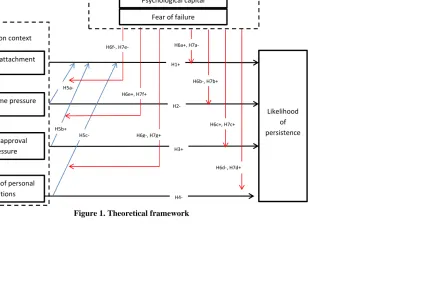
Likelihood of persistence H1+
H2‐
H3+
H4‐ H5a‐
H5c‐ H5b+
H6f‐, H7e‐
H6e+, H7f+
H6g‐, H7g+
H6a+, H7a‐
H6b‐, H7b+
H6c+, H7c+
H6d‐, H7d+
Venture attachment
Family time pressure
Social approval pressure
Number of personal options
Psychological capital
Fear of failure Self‐images
Decision context
3.2 Hypothesis Development
3.2.1 Venture attachment and persistence decisions
I first draw upon the possession attachment literature in consumer behaviour
research to define venture attachment. Our possessions are an extension of our sense of self (Belk, 1988). Possession attachment is described as the degree to which “an object, which is owned, expected to be owned, or previously owned by an individual, is used by that individual to maintain his or her self-concept” (Ball & Tasaki, 1992: 158). The key
aspect of the definition of possession attachment is the identity link between the owner and the possession—that is, the owner uses the possession to extend his or her self-concept (Kleine, Kleine, & Allen, 1995; Schultz, Kleine, & Kernan, 1989). The possession functions as an identity marker (Ball & Tasaki, 1992; Richins, 1994), an
extension of the self, and a window into one’s inner self (Richins, 1994).
Based on the definition of possession attachment, I define an owner-manager’s venture attachment as the degree to which the venture defines and develops the owner-manager’s self-concept. In the entrepreneurship literature, venture attachment has been viewed either as an emotional bond between the entrepreneur and the venture (Cardon et
al., 2005; Shepherd, 2003) or an extension of the personality of business owners (Carland, Hoy, Boulton, & Carland, 1984; Stewart, Watson, Carland, & Carland, 1999). In this paper, I focus on the type of venture attachment that is the identity link between the owner-manager and the venture, and argue that the formation of this type of venture
First, some ventures reflect the managers’ identity because the owner-managers build their ventures based on their own ideas. These owner-owner-managers identify an opportunity with earning potentials, design a business model to take advantage of the opportunity, and mobilize financial, marketing, and human resources to exploit the
opportunity (Cardon et al., 2005). Owner-managers may also imprint their values, goals, and characteristics on the venture, deal with every problem it has, and wish to see it succeed (Wasserman, 2008). As one’s ideas are regarded as an extension of self (Belk,
1988; Belk & Coon, 1993), owner-managers are likely to consider such ventures as things that represent who they are. For example, an individual has experienced a problem that cannot be solved by any existing products. She thus recognizes an opportunity and starts a venture by designing and selling products that can solve the problem. This
owner-manager regards her venture as part of herself and feels proud because she has created it and successfully helped many people like her to solve their problems.
Second, some ventures become part of the self because they impart the feeling of ownership to owner-managers (Pierce, Kostova, & Dirks, 2001, 2003). For example, an
owner-manager develops the feeling of ownership by gaining a sense of control, developing intimate knowledge about the venture, and/or investing the self in the venture. Such feeling of psychological ownership can link the owner-manager’s self-identity with the identity of the venture (Shepherd, Covin, & Kuratko, 2009a).
loves music very much. He opens a music store and sells classic records. He feels excited every morning when he wakes up because he knows he is going to talk about music with people who are also passionate about music.
Finally, some ventures transform owner-managers’ identity and become part of
the self. For instance, an owner-manager starts a venture, also a new career, when an opportunity pops up. She finds her service meaningful and rewarding as it has changed her customers’ lives. This venture thus becomes part of the self and makes her who she is.
Below, I theorize how venture attachment may influence owner-managers’ persistence decisions.
First, venture attachment may influence owner-managers’ persistence decisions through the intention to avoid losing part of the self. Because the venture is part of the
self, losing the venture means losing part of the self and being left with an incomplete identity, which may lead to identity crisis (where owner-managers do not know how to define themselves after their ventures are gone) (Brockner et al., 1986) and arouse negative emotions (e.g., grief) (Shepherd, 2003) and even pathological consequences
(Pierce et al., 2001). These negative emotions oftentimes demand a long recovery period, and interfere with owner-managers’ learning from failure (Shepherd & Cardon, 2009), thus demotivating them to start new ventures in the future. The negative psychological implications of losing a venture make it reasonable to expect that owner-managers choose
Second, venture attachment may influence owner-managers’ persistence decisions through the intention to avoid an uncertain future. Owner-managers whose identity is intertwined with that of the venture are likely to view the venture as a public projection of their personality, goals, and identity. Venture outcomes, therefore, are perceived by
owner-managers as a reflection of their skills, abilities, and self-worth (Townsend et al., 2009). Exiting an underperforming venture because of inability to turn it around may be viewed as a failure of the self (Shepherd et al., 2009a), making owner-managers
experience decreased self-efficacy—to feel less confident in their capabilities to perform certain business tasks in the future (Cardon & McGrath, 1999; Gist, 1987), thus making the future appear even more uncertain. Therefore, I expect that owner-managers may choose to stay with underperforming ventures to avoid an uncertain future.
In contrast, owner-managers who are less attached to the venture are likely to sell it or close it down when the venture’s performance is below their expectations for a long
period of time. For these owner-managers, the venture has no special meaning to them, as their identities are not connected to the venture. The venture may only provide an instrumental value to the owner-managers. Thus, losing it is not psychologically damaging (Shepherd, 2009). When the venture is underperforming, instead of persisting
with it, owner-managers may choose to exit the venture and actively explore other opportunities.
Hypothesis 1: There is a positive relationship between venture attachment and the
3.2.2 Family time pressure and persistence decisions
Family has been found to be an important predictor of individuals’ attitudes and behaviours at work (Rothausen, 1999). Family role pressure may be divided into different categories, for instance, the pressure to spend time with family members, the pressure to provide financial security for the family, and the pressure to sustain family businesses
across generations. In this paper, I focus on the first type of family role pressure—family time pressure, which comes from family members’ expectations of the focal individual to commit time to family.
I focus on family time pressure for two reasons. First, family time pressure may lead to time-based work-family conflict (Greenhaus & Beutell, 1985) because investing more resources in the family domain may result in under-investment in the work domain
(Lee, Kim, & Ling, 2001). Organization studies have found a link between work-family conflict and employees’ turnover intention (Burke, 1988; Jones, Chonko, Rangarajan, & Roberts, 2007). These studies suggest a potential relationship between family time
pressure and owner-managers’ persistence decisions. Second, existing studies on work-family considerations in the entrepreneurship context mainly focus on how work-family influences new venture creation decisions (Aldrich & Cliff, 2003; Boden, 1999; DeMartino & Barbato, 2003) and growth decisions (Cliff, 1998). Relatively little
Work-family interface research suggests that work and family demands are mutually incompatible (Greenhaus & Beutell, 1985; Huang, Hammer, Neal, & Perrin, 2004; Martins, Eddleston, & Veiga, 2002; Netemeyer, Boles, & McMurrian, 1996; Rau & Hyland, 2002). Whereas work roles come with expectations such as improving
performance at work, a family role has expectations such as spending time with the family, fulfilling household responsibilities, and being emotionally supportive of the family (Cliff, 1998; Gardner, Gabriel, & Hochschild, 2002). The incompatible nature of
the two domains combined with individuals’ limited cognitive resources may result in pressure from the family domain, and hence work-family conflict if one over-spends his or her effort in the business domain (Greenhaus & Beutell, 1985; Greenhaus & Powell, 2003; Hammer, Cullen, Neal, Sinclair, & Shafiro, 2005).
In the entrepreneurship context, an increasing number of entrepreneurship scholars suggest that entrepreneurs’ businesses and families are intertwined institutions
(Aldrich & Cliff, 2003; Dyer, 2003; Heck & Trent, 1999) and that families influence fundamental entrepreneurial processes and outcomes (Boden, 1999; Cliff, 1998). Owner-managers have a wide variety of organization maintenance responsibilities that demand significant investment of time and energy, such as searching for and dealing with
suppliers and customers, bookkeeping, hiring, and managing payroll. For owner-managers operating underperforming ventures, venture demands will be even greater because these owner-managers may experience greater financial difficulties and have fewer customers than owner-managers of well performing ventures do. In this situation, if
conflict is highly likely to occur (Stoner, Hartman, & Arora, 1990). Owner-managers have been found to suffer from greater work-family conflict and lower family satisfaction than organizational employees (Parasuraman & Simmers, 2001). Failure to meet family members’ expectations increases the possibility of receiving sanctions from families
(Kahn et al., 1964) such as divorce (Neider, 1987), decreased life satisfaction (Kim & Ling, 2001; Parasuraman, Purohit, Godshalk, & Beutell, 1996), and poor well-being (Burke, 1988; Edwards & Rothbard, 2000). These negative consequences are likely to
spill over to the business domain and cause emotional exhaustion and job burnout (Jamal, 2007), which, in turn, may leave owner-managers with few psychological resources to deal with business issues involved in the underperforming venture, thereby increasing the likelihood of disengaging from the underperforming venture.
Hypothesis 2: There is a negative relationship between family time pressure and
the likelihood of persisting with an underperforming venture.
3.2.3 Social approval pressure and persistence decisions
Entrepreneurship involves community-based activities (Korsching & Allen, 2004). Community is a web of affect-laden relationships with shared values, norms, and
meanings (Etzioni, 1996). Venture performance and community development are interdependent (Korsching & Allen, 2004). The community matters because it influences local ventures’ survival (Cardon et al., 2005; Matteson, Burr, & Marshall, 1998), serves as a source of resources and support (Cromie & Birley, 1992), and enhances local