Exploring an AM-Enabled Combination-of-Functions
Approach for Modular Product Design
Charul Chadha1, Kathryn A. Crowe2, Christina L. Carmen3, and Albert E. Patterson4∗
1 Department of Aerospace Engineering, University of Illinois at Urbana-Champaign, 306 Talbot Laboratory,
104 South Wright Street, Urbana, IL 61801, USA; [email protected]
2 NASA Marshall Space Flight Center, Huntsville, Alabama, 35811, USA; [email protected]
3 Department of Mechanical and Aerospace Engineering, University of Alabama in Huntsville, Technology
Hall N274, 300 Sparkman Drive, Huntsville, Alabama, 35899, USA; [email protected]
4 Department of Industrial and Enterprise Systems Engineering, University of Illinois at Urbana-Champaign,
117 Transportation Building, 104 South Mathews Avenue, Urbana, IL 61801, USA * Correspondence: [email protected]; Tel.: +1-217-333-2731
Abstract:This work explores an additive-manufacturing-enabled combination-of-function approach for design of modular products. AM technologies allow the design and manufacturing of nearly free-form geometry, which can be used to create more complex, multi-function or multi-feature parts. The approach presented here replaces sub-assemblies within a modular product or system with more complex single parts that are designed and manufactured using AM technologies. This approach can increase the reliability of systems and products by reducing the number of interfaces, as well as allowing the optimization of the more complex parts during the design. The smaller part count and the ability of users to replace or upgrade the system or product parts on-demand should reduce user risk, life-cycle costs, and prevent obsolescence for the user of many systems. This study presents a detailed review on the current state-of-the-art in modular product design in order to demonstrate the place, need and usefulness of this AM-enabled method for systems and products that could benefit from it. A detailed case study is developed and presented to demonstrate the concepts.
Keywords: Additive manufacturing; modular design; design-for-manufacturability; sustainable design; design optimization; product re-design
1. Introduction
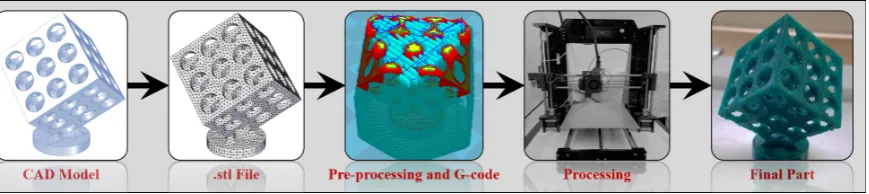
As additive manufacturing (AM) technologies becomes more widely used and accepted within the engineering and production world, the many benefits it offers are becoming increasingly useful in engineering design. One of the main advantages offered is the elimination of tooling and work fixtures needed in traditional manufacturing processes [1–4]. AM builds parts in layers directly from computer-aided design (CAD) data with few geometric restrictions, allowing the use and manufacturing of parts with very complex features. This design freedom is very useful in the production of optimized parts which could replace existing single parts or even whole several parts which interact with each other. Since no special tooling or fixtures are needed, it is also possible to produce replacement or upgraded parts on-demand as the user needs them [5,6]. Additive technologies could also allow the development of part families [7,8], allowing a single system to adapt to different jobs by the simple exchanging of a few essential components as needed. A final and concrete part or system design is not needed from the original designer for many systems, as additional parts and part sets can be made on-demand, often even in the field [9–11]. Figure1shows the concept map of the general AM process flow. A plethora of additive processes are available, based on several different parent technologies and are able to effectively process a very wide variety of materials [5,12,13]. The process families are defined according to the state of the raw material before processing, the method of material deposition, and method of layer fusion. The distinction between processes is important
when considering the process mechanics in the manufacturing design stage of the design, as various processes have different strengths and weaknesses for different applications [5,13,14].
Figure 1.AM concept map
Reduced integration complexity within many systems or products can serve to increase their reliability, giving a longer useful life and higher customer satisfaction. It is well known that most failures in any system happen at the interfaces between the system components, so the more interfaces that exist in the design, the more failure modes exist as well. The whole system reliability is also based on the reliabilities of the individual components, with the system or product reliability being based on the product of thencomponent reliabilities [15–17] for a system of series components (Figure2).
R=P(x1)P(x2)P(x3)· · ·P(xn) (1)
Figure 2.System reliabilities and interfaces concept
The system can be made more or less reliable with the addition of fail-safe components and the system arrangement changes (e.g. using parallel components) [18,19]. However, the elimination of interfaces in the system should improve it by simplification in itself. When the reduction in part count and the careful arrangement of the component, the system can be improved greatly.
Figure 3. Modular design examples: (a) design method to add sections to existing buildings [22], (b) modular panels for emergency housing construction [23], (c) battery storage system in an electric grid [24], and (d) modular mechanical manipulator [25]
When the concepts of AM-enabled design (AMED) are applied to modular systems, components that were formerly designed as sub-assemblies can now be designed as single parts with many built-in functions, drastically decreasing the time and cost involved in designing, developing, integrating, and producing them. This definition of modular design was first described in detail by Hernandezet al. [26] in the context of rocket airframe design. The present study further explored and developed the concept for general engineering design. The main focus of this study was to explore the idea of modular product design based the use of large, complex, multi-function parts that can replace some sub-assemblies in modular design. This study analyzes the concept in several parts, each presented in a section of the paper. First, an extensive review of the literature will be done to find the overall working definition of modular product design and explore traditional design modularization methods (Section 2). Next, AM-enabled design and combination-of-functions approach will be carefully defined and discussed (Section 3). The application space for the concept will also be discussed and a hybrid system proposed (Section 4). Finally, a case study to demonstrate the concept that will be developed in this study will be presented in detail and discussed (Section 5). Note that in this paper, the terms “system” and “product” are used interchangeably; in the context of this work, the only significant
difference between two consists of the size and scale of the design.
2. Modular Design: Theory and Applications
and reconfigured. According to Bonvoisinet al.[30], modular design can be broken down into three complementary activities: (1) design with modules, (2) identification of modules, and (3) design of modules (Table1).
Table 1.Basic modular design activities
Design with modules Involves designing a new product out of existing pools of pre-defined modules or parts; conceptually, this is similar to assembling a set of Lego-blocks
Identifying modules Requires a deep understanding of the product or system and includes studying the current product, evaluating the component grouping, clustering the components accordingly, then redesigning and integrating the defined modules and their interfaces
Design of modules Necessitates the design of new modules to meet new requirements or to replace obsolete or poorly-designed modules
Concepts of “modularity” in design theory and practice have undergone several modifications in recent decades; according to an extensive literature survey conducted by Gershensonet al.[28], it is difficult to achieve a common consensus on definition and appropriate application of the termsmodular ormodularity. Similarly, Bonvoisinet al.[30] conclude that different researchers typically use their own interpretation of the definition and parameters used to produce modular designs, making a universal definition even more difficult to achieve. According to Todorova & Durisin [31], theories on modular management of products are often conflicted between increasing flexibility through manufacturing multiple products from few components and gaining flexibility through faster component innovation.
Even with this ambiguity in definitions, the interest in modularization of product design has increased over the years because of its many benefits in some applications. Gershensonet al.[28] and Ulrich & Tung [32] studied the impact of modularity on different industries. These studies described several benefits, including:
• Decrease in production cost due to re-usability of components across different families
• Ease of product updating due to functional modules
• Increased product variety from a smaller set of components
• Decreased order lead-time due to fewer different components
• Ease of design and testing due to the decoupling of product functions
• Ease of service due to differential consumption
Gershensonet al.[28] further concluded that, because of fewer assembly types and increase utilization of part designs for several systems, production quantities for a given module can be increased, while simultaneously reducing the learning curve for production personnel. In addition, because of fewer unique parts, products can be produced in greater quantity, decreasing the production cost. The development and production cost of modular components is strongly influenced by the product architecture and optimization status (Table2).
Table 2.Modular design cost drivers
Static product architecture The architecture should be designed in such a way that the component is re-useable in several products
Performance optimization Modularity can be increased by function sharing and influenced by the product size
Component optimization Products and systems can be optimized to reduce assembly time, labor cost, inventory cost, simplification of re-working assemblies and increase flexibility-to-respond
on open innovation, concluding that modularity increases incentive for open innovation during final stages of the design to make it compatible with different modules. However, Ettlie & Kubarek [34] studied commercial design teams to understand the extent to which the modularity is beneficial; after closely surveying 42 companies, they concluded that novelty in design suffers after 33% of design reuse, and further innovation was absent above 55%. Kassaiet al.[35] studied the impact of modularity on agile manufacturing, during which the development of a modularity matrix helped designers to better understand the product. The process involved ranking components for different functionalities and attributes, and developing a consolidated matrix using these rankings.
Based on the definition and desired impact of modularity, researchers have defined several sets of parameters that drive modularity. Ericsson & Erixon [36] defined amodular driveras the driving forces that impact product modularity and competitive advantages gained from using it. Through different case studies, they obtained twelve modular drivers, which cover the entire life cycle. Kreng & Lee [37] also studied this problem and identified fourteen drivers based on strategies of modular design, product market characteristics, competitive advantages, and customer requirements. Okudan et al.[38,39] categorized the methods developed for planning and using product modularization in design into three broad categories, specifically: (1) data-mining approaches, (2) mathematical approaches, and (3) design-for-X approaches.
The data mining approaches analyze information from databases and surveys concerning the functions, geometry, supply chain information, and customer feedback to come up with new designs. Agard & Kusiak [40] described a data-mining approach for modularity analysis, which defines product modules by creating function structures that define the variability and generates options to satisfy design requirements. This approach helps to bridge gap between market and designers. However, data collection may take a long time and incur high cost for the stakeholders. Some researchers also proposed reverse engineering to modify existing products using adaptive redesign as part of a data mining approach [41–43]. The mathematical modeling approach involves designing for a set of constraints and objective functions using defined variables. In this method, a design structure matrix is commonly used to represent relationships between components and objectives [44–46]. These methods are useful during product development and product planning while considering many factors. Design-for-X considers conditions for multiple views such as assembly, sustainability, and life cycle [47–49]. Typically, theXfactor that is designed for is a set of defined characteristics, or even a single characteristic. It differs from typical mathematical approaches as it focuses the bulk of design resources on the optimization of a single characteristic or a small set of them. Design-for-X approaches can also be used to generate design constraints to be used for a mathematical approach to designing the system [14].
A methodology for defining modules for lifecycle engineering using an interaction matrix in weighted average sense, and using algorithms for clustering the modules was developed by Guet al.[50]. Similarly, Maet al.[51] developed an approach using characteristics such as cost, environmental impact, and labor time to assess the sustainability at early design stage using fuzzy algorithm. They also included end of lifecycle stage uncertainty to assess the environmental impact. Mutingiet al.[52] also proposed application of a multi criteria fuzzy grouping genetic algorithm approach during early design stage when exact evaluation criteria are unknown to model imprecise information and evaluate possible solutions. Chunget al.[27] and Kristianto & Helo [53] studied the performance of the modular structure during various stages of the supply chain, and using statistical techniques concluded that modular structure optimization can reduce the environmental impact during different stages. Yanget al.[54] and Wanget al.[55] proposed eco-design methods for life cycle engineering of electronic and electricity equipment for improving maintainability, reusability and recyclability of equipment.
integrated together by the design teams or a dedicated team of systems engineers; a secondary goal is often to use each unit in more than one product. The overall goal is to produce more product flexibility, increase design and manufacturing efficiency, overcome manufacturing problems, improve customer usability, and decrease overall product cost [8,26,50,56]. A number of basic principles can be derived to best use and harvest value from the modular design process. Some of the important principles [26,57,58] are:
1. Design of parts and subsystems should be done by specialized teams of experts
2. After design, an integration phase will be required for the system, during which the parts and sub-assemblies are converted into a usable system or product
3. Every aspect of the system should be standardized as much as possible
4. Every design technique used or derived should be developed to be as widely applicable as possible 5. Integrate further plans for testing, maintenance, and upgrades into the original design process 6. Consider end-of-life disassembly, recycling, and retirement during the design process
7. Every component and subsystem should be easily upgradable and repairable 8. Systems should be easily reconfigurable for as many missions as possible
Figure 4.Modular design complexity levels (adapted from [26], used with permission)
the interfaces within the system [17,59–62]. In order to effectively use modular design techniques in practice, a robust method of integration is needed, as discussed in the modular design literature above. The most effective systems engineering (SE) product lifecycle engines consider this in depth in their procedures. Sophisticated examples of this are the SE Engine used by the United States (US) National Aeronautics and Space Administration (NASA) [63] and System-of-Systems method used by the US Missile Defense Agency (MDA) [64].
3. AM-Enabled Modular Design (AMEMD) Concept
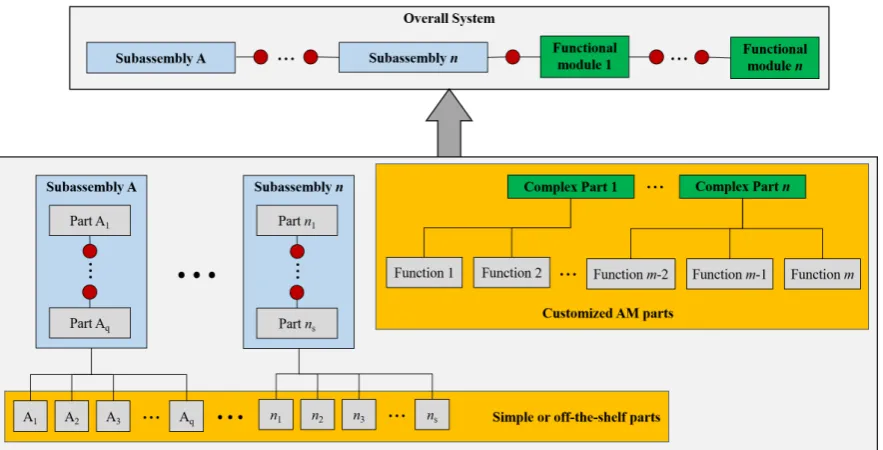
An effective, though not widely considered, method for modular or semi-modular design is enabled by AM technologies [26,65,66]. The ability of AM to make parts of almost unlimited complexity and with high functionality is the key [20,66]. The concept is simple:when possible, replace the subsystems within the overall system with complex parts that each have the functionality of a subsystem[26]. Of course, this approach is only applicable for systems that are relatively small and which can be manufactured fully or partially using AM.
The benefits of modular design can still be realized, but with many fewer system interfaces and with a simpler design process. In theory, just the elimination of interfaces would dramatically improve the reliability of the system [61,62]. Figure5demonstrates the combination-of-functions concept. In the lower field, the functions are combined into a series of complex, multi-function parts which are essentially “functional modules” [26,67,68]; these are single parts but have the behavior of a sub-assembly of several parts, simply with the interfaces removed. When these are combined into the overall system, they still need to be integrated (where the red dots indicated integration points) but there are far fewer of these points than in the traditional system.
Figure 5.Combination-of-Features concept (adapted from [9,26], used with permission)
On engineering grounds, the potential objection to this approach in design is that the technique eliminates standardization and requires that the parts be highly specialized. Fortunately, one of the most important aspects of AM is its ability for easy mass customization for parts [69,70]. Since no special tooling or fixtures are required, batches of parts can be nearly infinitely customizable at the design stage [5]. If applied correctly by a knowledgeable designer, considering both the strengths and weaknesses of AM technologies, the need for a supply chain of standard off-the-shelf parts is greatly reduced or eliminated in many systems [5,9,11,13,71].
from modularity in design, the subsystem-level is likely the highest where it is practical to use a combination-of-functions approach. Hence the concept of feature cataloging in design [26,74], which uses a function database of options in design instead of a parts or subsystem catalog, as was often done in traditional design [75–78].
AM parts are, by definition, unique one-off or batch parts, where the cost of production depends only on the volume of material used, printing time, and post-processing requirements, as well as certification if needed. In functionally-modular systems, maintaining flexibility is paramount; AM is the perfect tool to deal with this, as the layered nature of additive manufacturing allows for almost infinite design flexibility during the design stage and allows easy part consolidation [26,65]. However, AM can limit modifications to the design in the field when compared with traditional modular design. From this perspective, it becomes clear that the use of AM in modular design requires the input of some non-modular design principles as well. Several of the basic modularization principles discussed in Section 2 are affected by this change in perspective, particularly standardization, serviceability, and customization (Table3).
Table 3.Modular principles directly affected by the combination-of-functions approach
Standardization AM allows the standardization of components, but it is usually more efficient and effective to prioritize optimization of the parts over standardization.
Serviceability Most AM parts do not allow service on the parts after they are built and must simply be replaced when they wear out. The AM materials are typically highly recyclable and may even be recycled and made into new raw material by the part manufacturer, drastically reducing costs and simplifying the supply chain. The great reduction in cost, both from the elimination of tooling and from recycled materials, could offset the disadvantages of using non-serviceable parts.
User customization AM-based design could potentially reduce the number of parts in the system, reducing the ability of the customer to modify the system. However, this can be offset by the ability to more completely customize the system during the design stage, reducing the need for the user to modify or optimize it in service. The need for a do-it-all system is greatly reduced when the system can be optimized for its mission at a low cost, as is the case with AM-enabled design. It should be noted that this requires a very good understanding of the operating environment by the designer prior to fielding of the product or system.
With these aspects, both positive and negative, of the concept in mind, a reasonable definition of AM-enabled modular design (AMEMD) is:
The process of decomposing a system into sets of functionalities or functions which can be performed by the design and additive manufacturing of multi-functional complex parts. These complex parts will be integrated together to produce the whole system. The functionality of the new system must be equal or superior to a system built from sub-assemblies of off-the-shelf parts, while containing fewer physical parts and interfaces.
Specific characteristics of this design methodology are:
• Complexity vs standardization:An increase in geometric complexity that results in fewer, but more function-dense parts is preferred over standardization of the parts and the use of assemblies of simple parts
• Optimization:Optimization for performance of complex parts is preferred over standardization
• Design and integration:Design teams for each of the complex parts focus on the design optimization and integration of the part into the system or product
• On-demand manufacturing:For relatively simple systems, all AM parts, both original and replacement or upgrade parts, are manufactured on-demand directly from CAD data and are not kept in stock. For parts that belong to systems with certification requirements or that require constant stand-by spares, batches of parts can be made and kept as spares, with the option to make more on-demand if needed.
• Serviceability:While the parts are usually non-serviceable, they are easily replaced or upgraded, as long as the system allows access to the parts after completion (i.e. a “line-replaceable unit”)
• Part disposal:Old parts that are worn out or upgraded are easily recycled due to the low-hazard status of most AM-processes materials
• User customization:Parts of the system are almost infinitely customizable and optimizable during the design, but usually not customizable in the field after production
• Mass customization:Several parts can be made at once using the same machine and the same batch of raw materials; there may be several of the same part or several different parts in a batch
• Core mission:There is only one core mission or set of missions for each system configuration, but this is offset by the increased speed and reduced cost of production and by the optimization of the design before use 4. Domain Applicability
The method presented is not be universally applicable to all types of products and systems and would require a defined domain of validity. The most important restrictions on the use of this design methodology are the physical size of parts, the available batch sizes, material requirements, and the designer’s level of skill and experience with the technologies. In addition to these concerns, the designer must also ensure that the proper design-for-manufacturability constraints [14] are applied on the design to ensure that it is feasible for AM. Not all parts and systems will be best made using AM; this determination should be made early in the design process and the AMEMD only used if the complex parts can be feasibly made using AM.
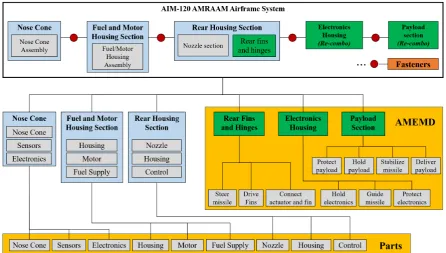
Figure 6.Hybrid subassembly-AMEMD system design concept
be used in a dynamic system or otherwise pose a risk to human life if failure occurs during use. This is an area that has not yet been explored well in the design literature and merits further consideration in future research in this area.
As discussed previously, it is vital that the decision to use or not use an AMEMD concept should be made as early in the design process as possible. The design and integration teams should examine the relevant aspects of the design and make this determination during the system requirements phase, if possible. An off-ramping protocol should also be built into the design process to allow the rejection of this method and adoption of a more well-established one, should it become clear that it is not feasible or advantageous to use it for the system in question.
5. Case Study: Re-design of AIM-120 AMRAAM Airframe
5.1. Overview and Model Details
Presented in this section is a simple case study that was developed to demonstrate the procedure of re-design using AMEMD principles. In this case study, the system was taken and the parts combined into as few parts as possible in order to reduce their number and to reduce interfaces. The parts were then optimized on performance and mass to produce a system that is both optimized and has fewer components. One of the case studies presented by Hernandezet al. [26] was a fixed-fin model of an AIM-9X Sidewinder (Air Intercept Missile 9X). In the present work, another (more complex) missile airframe was studied, the AIM-120 AMRAAM (Advanced Medium-Range Air-to-Air Missile) (Figure7); the airframe for this missile can be re-designed in order to decrease the number of parts while not fundamentally changing the external design. However, the internal design can be modified to utilize lattice structures or topology optimization that can be made using AM to optimize the design. Note that the exact design for this airframe is not available due to commercial and government protection, so the one presented here is a simplified model [79–82] but is as accurate as possible and will serve the purpose of this study.
Figure 7.AIM-120 AMRAAM missile model [79,83] (used with permission)
Table4shows the basic list of components for this model, which consists of tube sections, control surfaces, and fasteners, for a total of 17 major parts and 60 fasteners; the exploded view of the airframe is shown in Figure8. In this model, the airframe parts are assumed to be made from tough polymer materials, such as a phenolic, except for the fasteners and the rear control surfaces; those parts are assumed to be made from aluminum. The walls of the airframe are assumed to be 4mmthick. The airframe will be subjected to some fatigue, but the duration of that fatigue will be limited to the few hours that the missile will be attached to an aircraft and be in flight after launch. Therefore, the anisotropic nature of the AM materials is not anticipated to be a threat to the integrity of the structure during storage or use. In use, certification will be required, as it will be for all AM-build flight hardware.
AM processes. Therefore, this airframe is a good candidate for AMEMD to improve its design and reduce the number of parts. In reviewing the basic design of this system, it becomes clear that a hybrid modular-AMEMD method would produce the most effective design. Some of the sub-assemblies (Table5) need to remain as such, but re-design can be accomplished on some other areas. The particular areas that should be examined are those where large parts can be combined or an interface between several parts.
Table 4.AIM-120 AMRAAM airframe components
Item Component Number in Model
1 Nose cone 1
2 Front electronics and control section 1 3 Rear electronics and control section 1
4 Payload housing section 1
5 Front control surfaces (fixed) 4 6 Fuel and motor housing section 1 7 Nozzle and rear control housing section 1 8 Rear control surfaces (adjustable) 4 9 Rear control surface actuator hinges 4
10 Fasteners 60
Figure 8.Exploded view: AIM-120 AMRAAM [79,83] (used with permission)
Table 5.AIM-120 airframe parts and sub-assemblies
Sub-assembly Parts
Nose cone Nose cone
Electronics housing Front electronics and control section Rear electronics and control section Payload section Payload housing
Front control surfaces
Fuel and motor housing Fuel and motor housing section Rear housing Nozzle and rear control housing section
Rear control surfaces
5.2. Examination of Part Combination Opportunities
Excluding the fasteners, there are 17 interfaces in the model as it is currently designed, each of which should be examined to find opportunities to combine parts into larger and more complex ones:
1. Nose cone - upper electronics housing: The nose cone holds the guidance for the missile and may need to be replaced or upgraded, so it is best to not eliminate this interface.
2. Upper and lower electronics housing: One of the details that can be derived from the promotional literature for the AIM-120 is that the upper section which holds the electronics is made in two pieces, which can be easily combined into a single piece, assuming that the internal components will allow this. It is assumed that it was originally made in two parts to allow customized connections to the internal parts; using AM to create an optimized internal structure to connect to the electronics should allow the combination of these two parts. In addition to removing an interface, 12 of the fasteners can also be eliminated. Preserving access to the electronics for assembly and maintenance would be an important design consideration during the part re-combination. This should be checked to ensure that either no conflict exists or the AM part can be modified to account for it.
3. Electronics housing to payload: It is obvious that the payload section needs to be easily accessible to the user of the missile, so it would be best to retain this interface as-is.
4. Payload to upper control surfaces: For this missile, the upper control surfaces are fixed to the airframe and assumed to be made from the same material as the airframe. Therefore, the upper control surfaces can and should be integrated into the payload housing. The front fins could be combined with either the payload section or the motor/fuel section, but the best choice is the payload section; this is primarily to ensure that the air flows smoothly around the fins and that interface issues will not affect the leading surface of the control fin.
5. Payload to motor/fuel section: As previously stated, the payload section should be independent as much as possible, so this interface should remain. Access to the motor and fuel supply are also reasons to retain the interface between the payload and motor/fuel sections.
6. Motor to nozzle section: The rear control surfaces are driven by actuators near the nozzle and the nozzle and motor interface may need to be maintained and inspected.
7. Nozzle section to rear control surface hinges: Since the hinges need to be free-moving and connected to internal actuators, no combination can be accomplished.
8. Hinges to rear control surfaces: Since the rear control surfaces and hinges are both made from aluminum in this model, and the combination of them is relatively small, AMEMD makes sense for these parts.
5.3. Part Re-Combination and New System Model
After examination, three areas can benefit from the use of AMEMD, for a total reduction of parts from 17 to nine major components, plus the elimination of at least 12 fasteners. The upper and lower sections of the electronics housing (Figure9a), the payload housing and its fins (Figure9b), and the lower fins and their hinges (Figure9c) can be recombined. In this case, the focus will be on reducing part count and optimizing the parts; future work will need to focus on other perspectives, such as ergonomics, safety, testing costs, and other such considerations.
Figure 9. Part recombination opportunities for the AIM-120 AMRAAM airframe, (a) electronics housing, (b) payload section and upper fins, and (c) rear fins and actuator hinges
Figure 10.Proposed new AMRAAM airframe system design
5.4. Part Re-Design and Optimization
In addition to combining functions into larger and more complex parts, the parts under study can be further optimized due to the design freedom offered by the use of AM to manufacture them.
5.4.1. Electronics Housing Optimization
Figure 11.Proposed new AMRAAM airframe system design
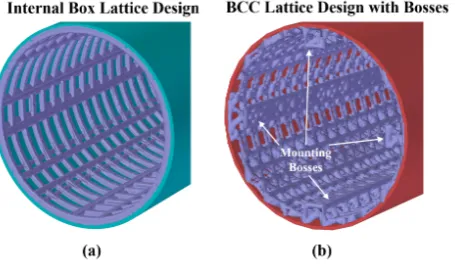
Figure 12.Internal lattice designs for electronics housing section where (a) is a simple lattice and (b) is a BCC lattice with integrated mounting bosses
particularly topology optimization and lattice design. In addition to the basic housing, mounting bosses and other internal structures can be integrated into the design. Figure12shows examples of this for the section under study, where the ParetoR TopOpt software was used to optimize the part. The basic housing (Figure12a) can be redesigned with a box lattice structure, reducing the mass significantly (about 40% for this section) while maintaining structural integrity. If integrated internal features are needed, such as mounting bosses for the electronics, these can be integrated into the lattice as well; Figure12b shows this with a body-centered cubic (BCC) lattice design. Both of these designs can easily be made using a variety of AM processes, subject only to the minimal length scale requirement for manufacturing [88–90]. In addition to the reduction of mass, the use of a lattice structure could also assist in cooling the electronics system.
5.4.2. Payload and Upper Control Surfaces
Figure 13.Redesign of payload section and upper control surfaces, where both new designs use an internal lattice and (a) uses a corner smoothing ofr=10mmwhile (b) usesr=100mm
as frame integrity and stability during flight or the effect of a lighter airframe on the native sensor network in the missile.
Figure13shows an example solution for this, but many re-designs are feasible for this, determined primarily by the design and composition of the internal components. The fundamental purpose of the smoothing between the fins and the payload section is to reduce drag on the fins while also reinforcing them and preventing failure during flight. Since this missile is usually launched from a horizontal orientation, it is essential that the control surfaces are steady and reliable. The smoothing radius is a simple parameter that is easy to control during design and analysis, so two levels are shown. The radius can affect the streamlining of the missile, and therefore its stability and controllability during flight. Therefore, the designer should consider the best radius using both computational tools and physical testing.
5.4.3. Rear Control Surfaces
The re-design of the rear control surface is the least complex of the three new parts generated in this case study, requiring only the combination of the two parts and integrating. The combination of the two parts can be used as-is (Figure14a) or the control surface can be re-designed to be more streamlined (Figure14b), depending on the needs and preferences of the designer.
Figure 14.Redesign of rear control surface, (a) with a simple integration of the two functions and (b) with a re-design to streamline the airflow around the fin
6. Summary and Conclusions
of sub-assemblies. The elimination of the interfaces within the system is predicted to increase the reliability of the system, as well as simplifying it. The concept presented follows most of the basic principles of modular product design, as reviewed and discussed extensively, except for the principles of standardization, serviceability, and in-the-field customization. However, the loss of these capabilities within the modular design is not a problem due to the design freedom from AM; standardization is no longer any more efficient than customization, serviceability and field customization are not major concerns, as new parts can be made on-demand in a few hours or days. This is, of course, subject to testing and certification requirements for any manufactured flight hardware made using AM.
A broad case study was presented to demonstrate the concepts and to provide a practical example of applicability. A missile airframe was re-designed in a hybrid function-combination and traditional modular design, which resulted in the reduction of almost 50% of the parts and elimination of a number of fasteners. Optimization of the parts via AM-enabled digital means was demonstrated as well with the lattice design and streamlining of the parts.
Of course, the domain of applicability for this method is restricted by the size of the combined parts, the use of AM-processable materials, and on the skill and expertise of the designer to ensure manufacturability in the design. AM technologies are not efficient or preferable in all cases, so a study should be done before attempting such a design technique to ensure that it is feasible. The option to off-ramp from using an AM-based method should be built in as well, in case the design process proved non-feasible or too expensive for the problem as hand.
The two most important considerations are the choice of materials, the presence of fatigue stresses in the system (due to the anisotropic nature of the materials), and the smallest feature in the built part. This method is potentially very valuable for some systems, but should be considered one of several feasible methods until established as preferable and feasible by the designer. An important future research area for this concept is the certification of the resulting parts for use on actual systems. The case study presented in this study will require flight-hardware certification before use, but not all systems will require such a detailed and expensive process before use.
Author Contributions:C.C. and A.E.P. conceived and designed the study, C.C. preformed the modular design review, A.E.P. created the figures and case study, and A.E.P. and K.A.K. did the AM review and outline. C.L.C. and K.A.K. provided significant technical guidance and feedback on the ideas. All authors contributed to writing and polishing the manuscript for publication.
Acknowledgments:The authors would like to thank the following people for providing discussion and support for this work: Dr. James T. Allison, Dr. Dilcu Barnes, Dr. Paul D. Collopy, Dr. Kai James. Thanks to Kavian Niazi for granting permission to use the AIM-120 AMRAAM model from GrabCAD for the case study.
Conflicts of Interest:The authors declare no conflict of interest. No external funding was used to perform the work described in this study. Opinions and conclusions presented in this work are solely those of the authors.
References
1. Rosen, D.W. Computer-Aided Design for Additive Manufacturing of Cellular Structures. Computer-Aided Design and Applications2007,4, 585–594. doi:10.1080/16864360.2007.10738493.
2. Parthasarathy, J.; Starly, B.; Raman, S. A design for the additive manufacture of functionally graded porous structures with tailored mechanical properties for biomedical applications.Journal of Manufacturing Processes2011,13, 160–170. doi:10.1016/j.jmapro.2011.01.004.
3. Doubrovski, Z.; Verlinden, J.C.; Geraedts, J.M.P. Optimal Design for Additive Manufacturing: Opportunities and Challenges. Volume 9: 23rd International Conference on Design Theory and Methodology; 16th Design for Manufacturing and the Life Cycle Conference. ASME, 2011. doi:10.1115/detc2011-48131.
4. Yang, S.; Zhao, Y.F. Additive manufacturing-enabled design theory and methodology: a critical review. The International Journal of Advanced Manufacturing Technology2015,80, 327–342.
5. Guo, N.; Leu, M.C. Additive manufacturing: technology, applications and research needs.Frontiers of Mechanical Engineering2013,8, 215–243. doi:10.1007/s11465-013-0248-8.
6. Gibson, I.; Rosen, D.; Stucker, B.Additive Manufacturing Technologies: 3D Printing, Rapid Prototyping, and Direct Digital Manufacturing; Springer, 2016.
7. Lei, N.; Yao, X.; Moon, S.K.; Bi, G. An additive manufacturing process model for product family design. Journal of Engineering Design2016,27, 751–767. doi:10.1080/09544828.2016.1228101.
8. Agard, B.; Bassetto, S. Modular design of product families for quality and cost. International Journal of Production Research2013,51, 1648–1667. doi:10.1080/00207543.2012.693963.
9. Patterson, A.E.; Thomas, L.D.; Messimer, S.L. Disruptive Effects of Additive Technologies on SE Product Lifecycle. August 2016 JANNAF Technical Interchange Conference, August 23-25, Jackson Center, Huntsville, Alabama, USA. JANNAF, 2016.
10. Liu, P.; Huang, S.H.; Mokasdar, A.; Zhou, H.; Hou, L. The impact of additive manufacturing in the aircraft spare parts supply chain: supply chain operation reference (SCOR) model based analysis. Production Planning & Control2013,25, 1169–1181. doi:10.1080/09537287.2013.808835.
11. Khajavi, S.H.; Partanen, J.; Holmström, J. Additive manufacturing in the spare parts supply chain. Computers in Industry2014,65, 50–63. doi:10.1016/j.compind.2013.07.008.
12. ASTM. F2792-12a: Standard Terminology for Additive Manufacturing Technologies.ASTM Standard (Withdrawn)2012. doi:10.1520/f2792-12a.
13. Patterson, A.E.; Collopy, P.; Messimer, S.L. State-of-the-Art Survey of Additive Manufacturing
Technologies, Methods, and Materials. Technical report, University of Alabama in Huntsville, Department of Industrial & Systems Engineering and Engineering Management, 2015. Report Number UAH 2015-06, doi:10.13140/RG.2.2.33894.47684/2.
14. Patterson, A.E.; Allison, J.T. Manufacturability Constraint Formulation for Design Under Hybrid Additive-Subtractive Manufacturing. ASME 2018 IDETC/CIE: 23rd Deign for Manufacturing and the Life Cycle Conference (DFMLC); ASME: Quebec City, Canada, 2018. doi:10.1115/DETC2018-85637.
15. Murthy, D.; Østerås, T.; Rausand, M. Component reliability specification. Reliability Engineering & System Safety2009,94, 1609–1617. doi:10.1016/j.ress.2009.02.029.
16. Aal, A.; Polte, T. On component reliability and system reliability for automotive applications. 2012 IEEE International Integrated Reliability Workshop Final Report. IEEE, 2012. doi:10.1109/iirw.2012.6468947.
17. Elsayed, E.A.Reliability Engineering (Wiley Series in Systems Engineering and Management); Wiley, 2012.
18. Hohenbichler, M.; Rackwitz, R. First-order concepts in system reliability.Structural Safety1982,1, 177–188. doi:10.1016/0167-4730(82)90024-8.
19. Chern, M.S. On the computational complexity of reliability redundancy allocation in a series system. Operations Research Letters1992,11, 309–315. doi:10.1016/0167-6377(92)90008-q.
20. Anderson, K.B.; Lockwood, S.Y.; Martin, R.S.; Spence, D.M. A 3D Printed Fluidic Device that Enables Integrated Features. Analytical Chemistry2013,85, 5622–5626. doi:10.1021/ac4009594.
21. Bralla, J.G.Design for Manufacturability Handbook; McGraw-Hill Education, 1998.
22. Dind, A.; Lufkin, S.; Rey, E. A Modular Timber Construction System for the Sustainable Vertical Extension of Office Buildings.Designs2018,2, 30. doi:10.3390/designs2030030.
23. Sharafi, P.; Nemati, S.; Samali, B.; Ghodrat, M. Development of an Innovative Modular Foam-Filled Panelized System for Rapidly Assembled Postdisaster Housing. Buildings2018,8, 97.
doi:10.3390/buildings8080097.
24. Zhang, X.; Huang, Y.; Li, L.; Yeh, W.C. Power and Capacity Consensus Tracking of Distributed Battery Storage Systems in Modular Microgrids. Energies2018,11, 1439. doi:10.3390/en11061439.
25. Mishra, A.; Mondini, A.; Dottore, E.D.; Sadeghi, A.; Tramacere, F.; Mazzolai, B. Modular Continuum Manipulator: Analysis and Characterization of Its Basic Module. Biomimetics2018,3, 3.
26. Hernandez, R.; Singh, H.; Messimer, S.; Patterson, A. Design and Performance of Modular 3-D Printed Solid-Propellant Rocket Airframes.Aerospace2017,4, 17. doi:10.3390/aerospace4020017.
27. Chung, W.H.; Kremer, G.E.O.; Wysk, R.A. Life cycle implications of product modular architectures in closed-loop supply chains. The International Journal of Advanced Manufacturing Technology2013, 70, 2013–2028. doi:10.1007/s00170-013-5409-8.
28. Gershenson, J.K.; Prasad, G.J.; Zhang, Y. Product modularity: Definitions and benefits.Journal of Engineering Design2003,14, 295–313. doi:10.1080/0954482031000091068.
29. Baldwin, C.; Clark, K. Managing in the Age of Modularity. Harvard Business Review1997,75, 84–93.
30. Bonvoisin, J.; Halstenberg, F.; Buchert, T.; Stark, R. A systematic literature review on modular product design. Journal of Engineering Design2016,27, 488–514. doi:10.1080/09544828.2016.1166482.
31. Todorova, G.; Burisin, B. Do firms innovate through integrated modular designs? Disentangling the effects of types of modularity on types of innovation. Technical report, 2009. KITeS Knowledge,
Internationalization, and Technology Studies.
32. Ulrich, K. Fundamentals of Product Modularity. InManagement of Design; Springer Netherlands, 1994; pp. 219–231. doi:10.1007/978-94-011-1390-8_12.
33. Ozman, M. Modularity, Industry Life Cycle and Open Innovation. Journal of technology management & innovation2011,6, 26–34. doi:10.4067/s0718-27242011000100003.
34. Ettlie, J.E.; Kubarek, M. Design Reuse in Manufacturing and Services. Journal of Product Innovation Management2008,25, 457–472. doi:10.1111/j.1540-5885.2008.00314.x.
35. Kassi, T.; Leisti, S.; Puheloinen, T. Impact of product modular design on agile manufacturing. Mechanika
2008,74, 56–62.
36. Ericsson, A.; Erixon, G.Controlling Design Variants: Modular Product Platforms; Society of Manufacturing Engineers, 1999.
37. Kreng, V.B.; Lee, T.P. QFD-based modular product design with linear integer programming—A case study. Journal of Engineering Design2004,15, 261–284. doi:10.1080/09544820410001647069.
38. Kremer, G.E.O.; Gupta, S. Analysis of modularity implementation methods from an assembly and variety viewpoints.The International Journal of Advanced Manufacturing Technology2012,66, 1959–1976.
doi:10.1007/s00170-012-4473-9.
39. Okudan, G.E.; Chiu, M.C.; Kim, T.H. Perceived feature utility-based product family design: A mobile phone case study.Journal of Intelligent Manufacturing2012,24, 935–949. doi:10.1007/s10845-012-0699-5.
40. Agard, B.; Kusiak, A. Data-mining-based methodology for the design of product families.International Journal of Production Research2004,42, 2955–2969. doi:10.1080/00207540410001691929.
41. Otto, K.N.; Wood, K.L. Product Evolution: A Reverse Engineering and Redesign Methodology. Research in Engineering Design1998,10, 226–243. doi:10.1007/s001639870003.
42. Stone, R.B.; McAdams, D.A.; Kayyalethekkel, V.J. A product architecture-based conceptual DFA technique. Design Studies2004,25, 301–325. doi:10.1016/j.destud.2003.09.001.
43. Asan, U.; Polat, S.; Serdar, S. An integrated method for designing modular products.Journal of Manufacturing Technology Management2004,15, 29–49. doi:10.1108/09576060410512257.
44. Wasley, N.S.; Lewis, P.K.; Mattson, C.A.; Ottosson, H.J. Experimenting with concepts from modular product design and multi-objective optimization to benefit people living in poverty.Development Engineering2017,2, 29–37. doi:10.1016/j.deveng.2016.12.002.
45. Yigit, A.S.; Ulsoy, A.G.; Allahverdi, A. Optimizing modular product design for reconfigurable manufacturing2002. 13, 309–316. doi:10.1023/a:1016032714680.
46. Levin, M.S. Combinatorial optimization in system configuration design. Automation and Remote Control
2009,70, 519–561. doi:10.1134/s0005117909030187.
48. Gatenby, D.A.; Foo, G. Design for X (DFX): Key to Competitive, Profitable Products. AT&T Technical Journal1990,69, 2–13. doi:10.1002/j.1538-7305.1990.tb00332.x.
49. Chiu, M.C.; Okudan, G. An Integrative Methodology for Product and Supply Chain Design Decisions at the Product Design Stage. Journal of Mechanical Design2011,133, 021008. doi:10.1115/1.4003289.
50. Gu, P.; Hashemian, M.; Sosale, S.; Rivin, E. An Integrated Modular Design Methodology for Life-Cycle Engineering. CIRP Annals1997,46, 71–74. doi:10.1016/s0007-8506(07)60778-1.
51. Ma, J.; Kremer, G.E.O. A sustainable modular product design approach with key components and uncertain end-of-life strategy consideration. The International Journal of Advanced Manufacturing Technology
2015,85, 741–763. doi:10.1007/s00170-015-7979-0.
52. Mutingi, M.; Dube, P.; Mbohwa, C. A Modular Product Design Approach for Sustainable Manufacturing in A Fuzzy Environment.Procedia Manufacturing2017,8, 471–478. doi:10.1016/j.promfg.2017.02.060.
53. Kristianto, Y.; Helo, P. Product architecture modularity implications for operations economy of green supply chains. Transportation Research Part E: Logistics and Transportation Review2014,70, 128–145. doi:10.1016/j.tre.2014.06.019.
54. Yang, Q.; Yu, S.; Sekhari, A. A modular eco-design method for life cycle engineering based on redesign risk control. The International Journal of Advanced Manufacturing Technology2011,56, 1215–1233.
doi:10.1007/s00170-011-3246-1.
55. Wang, Q.; Tang, D.; Yin, L.; Yang, J. A Method for Green Modular Design Considering Product Platform Planning Strategy. Procedia CIRP2016,56, 40–45. doi:10.1016/j.procir.2016.10.013.
56. Booker, J.; Swift, K.; Brown, N. Designing for assembly quality: Strategies, guidelines and techniques. Journal of Engineering Design2005,16, 279–295. doi:10.1080/09544820500126672.
57. Gu, P.; Sosale, S. Product modularization for life cycle engineering. Robotics and Computer-Integrated Manufacturing1999,15, 387–401. doi:10.1016/s0736-5845(99)00049-6.
58. Sosa, M.E.; Eppinger, S.D.; Rowles, C.M. Identifying Modular and Integrative Systems and Their Impact on Design Team Interactions.Journal of Mechanical Design2003,125, 240. doi:10.1115/1.1564074.
59. Li, Z.S.; Mobin, M.S. System reliability assessment incorporating interface and function failure. 2015 Annual Reliability and Maintainability Symposium (RAMS). IEEE, 2015. doi:10.1109/rams.2015.7105192.
60. Ebeling, C.E.An Introduction to Reliability and Maintainability Engineering; Waveland Press, 2009.
61. Kapur, K.C.; Pecht, M.Reliability Engineering (Wiley Series in Systems Engineering and Management); Wiley, 2014.
62. Blanchard, B.S.; Fabrycky, W.J.Systems Engineering and Analysis (4th Edition); Prentice Hall, 2005.
63. NASA.NASA Systems Engineering Handbook: NASA/Sp-2016-6105 Rev2 - Full Color Version; 12th Media Services, 2017.
64. Sommerer, S.; Guevara, M.D.; Landis, M.A.; Rizzuto, J.M.; Sheppard, J.M.; Grant, C.J. System-of-Systems Engineering in Air and Missile Defense. Johns Hopkins APL Technical Digest2012,31, 5–20.
65. Yang, S.; Tang, Y.; Zhao, Y.F. A new part consolidation method to embrace the design freedom of additive manufacturing. Journal of Manufacturing Processes2015,20, 444–449. doi:10.1016/j.jmapro.2015.06.024.
66. Becker, R.; Grzesiak, A.; Henning, A. Rethink assembly design. Assembly Automation2005,25, 262–266. doi:10.1108/01445150510626370.
67. Salemi, B.; Moll, M.; min Shen, W. SUPERBOT: A Deployable, Multi-Functional, and Modular
Self-Reconfigurable Robotic System. 2006 IEEE/RSJ International Conference on Intelligent Robots and Systems. IEEE, 2006. doi:10.1109/iros.2006.281719.
68. Kelmar, L.; Khosla, P. Automatic generation of kinematics for a reconfigurable modular manipulator system. Proceedings. 1988 IEEE International Conference on Robotics and Automation. IEEE Comput. Soc. Press, 1988. doi:10.1109/robot.1988.12135.
70. Petrick, I.J.; Simpson, T.W. 3D Printing Disrupts Manufacturing: How Economies of One Create New Rules of Competition. Research-Technology Management2013,56, 12–16. doi:10.5437/08956308x5606193.
71. Thomas, D. Costs, benefits, and adoption of additive manufacturing: a supply chain perspective. The International Journal of Advanced Manufacturing Technology2015,85, 1857–1876.
doi:10.1007/s00170-015-7973-6.
72. Charter, M. Sustainable Product Design. InThe Durable Use of Consumer Products; Springer US, 1998; pp. 57–68. doi:10.1007/978-1-4757-2819-4_5.
73. Allison, N.; Richards, J. Current status and future trends for disposable technology in the biopharmaceutical industry. Journal of Chemical Technology & Biotechnology2013,89, 1283–1287. doi:10.1002/jctb.4277.
74. Maidin, S.B.; Campbell, I.; Pei, E. Development of a design feature database to support design for additive manufacturing. Assembly Automation2012,32, 235–244. doi:10.1108/01445151211244375.
75. Boothroyd, G.; Knight, W. Design for assembly. IEEE Spectrum1993,30, 53–55. doi:10.1109/6.275164.
76. Mok, H.S.; Kim, C.H.; Kim, C.B. Automation of mold designs with the reuse of standard parts. Expert Systems with Applications2011,38, 12537–12547. doi:10.1016/j.eswa.2011.04.040.
77. Culley, S.J. Classification approaches for standard parts to aid design reuse.Proceedings of the Institution of Mechanical Engineers, Part B: Journal of Engineering Manufacture1999,213, 203–207.
doi:10.1243/0954405991517371.
78. Novak, S.; Eppinger, S.D. Sourcing By Design: Product Complexity and the Supply Chain. Management Science2001,47, 189–204. doi:10.1287/mnsc.47.1.189.10662.
79. Niazi, K. AIM-120 AMRAAM. GrabCAD modelhttps://grabcad.com/library/aim-120-amraam-1. Accessed: 2018-05-30.
80. Gonzalez-Sanchez, M.; Amezquita-Brooks, L.; Liceaga-Castro, E.; del C Zambrano-Robledo, P. Simplifying quadrotor controllers by using simplified design models. 52nd IEEE Conference on Decision and Control. IEEE, 2013. doi:10.1109/cdc.2013.6760540.
81. Kim, C.; Mijar, A.; Arora, J. Development of simplified models for design and optimization of automotive structures for crashworthiness.Structural and Multidisciplinary Optimization2001,22, 307–321.
doi:10.1007/pl00013285.
82. Lu, X.; Xie, L.; Yu, C.; Lu, X. Development and application of a simplified model for the design of a super-tall mega-braced frame-core tube building. Engineering Structures2016,110, 116–126. doi:10.1016/j.engstruct.2015.11.039.
83. AMRAAM missile: modern, versatile, and proven.
https://www.raytheon.com/capabilities/products/amraam. Accessed: 2018-06-15.
84. Snelling, D.; Williams, C.; Druschitz, A. A comparison of binder burnout and mechanical characteristics of printed and chemically bonded sand molds. Proceedings of the 2014 Solid Freeform Fabrication
Symposium, Austin, Texas, USA, 2014.
85. Kumar, S.; Kruth, J.P. Composites by rapid prototyping technology. Materials & Design2010,31, 850–856. doi:10.1016/j.matdes.2009.07.045.
86. Louvis, E.; Fox, P.; Sutcliffe, C.J. Selective laser melting of aluminium components. Journal of Materials Processing Technology2011,211, 275–284. doi:10.1016/j.jmatprotec.2010.09.019.
87. Aboulkhair, N.T.; Everitt, N.M.; Maskery, I.; Ashcroft, I.; Tuck, C. Selective laser melting of aluminum alloys. MRS Bulletin2017,42, 311–319. doi:10.1557/mrs.2017.63.
88. Vyatskikh, A.; Delalande, S.; Kudo, A.; Zhang, X.; Portela, C.M.; Greer, J.R. Additive manufacturing of 3D nano-architected metals. Nature Communications2018,9. doi:10.1038/s41467-018-03071-9.
![Figure 3. Modular design examples: (a) design method to add sections to existing buildings [(b) modular panels for emergency housing construction [22],23], (c) battery storage system in an electricgrid [24], and (d) modular mechanical manipulator [25]](https://thumb-us.123doks.com/thumbv2/123dok_us/7970915.1321846/3.595.122.476.86.374/examples-sections-buildings-emergency-construction-electricgrid-mechanical-manipulator.webp)
![Figure 4. Modular design complexity levels (adapted from [26], used with permission)](https://thumb-us.123doks.com/thumbv2/123dok_us/7970915.1321846/6.595.73.522.333.614/figure-modular-design-complexity-levels-adapted-used-permission.webp)
![Figure 5. Combination-of-Features concept (adapted from [9,26], used with permission)](https://thumb-us.123doks.com/thumbv2/123dok_us/7970915.1321846/7.595.70.525.398.561/figure-combination-features-concept-adapted-used-permission.webp)
![Figure 7. AIM-120 AMRAAM missile model [79,83] (used with permission)](https://thumb-us.123doks.com/thumbv2/123dok_us/7970915.1321846/10.595.81.517.446.576/figure-aim-amraam-missile-model-used-permission.webp)