Pathology In the Eating Disorders
Victoria Mountford
D.CIin.Psy. 2002
University Coiiege London
ProQuest Number: 10013870
All rights reserved
INFORMATION TO ALL USERS
The quality of this reproduction is dependent upon the quality of the copy submitted.
In the unlikely event that the author did not send a complete manuscript and there are missing pages, these will be noted. Also, if material had to be removed,
a note will indicate the deletion.
uest.
ProQuest 10013870
Published by ProQuest LLC(2016). Copyright of the Dissertation is held by the Author.
All rights reserved.
This work is protected against unauthorized copying under Title 17, United States Code. Microform Edition © ProQuest LLC.
ProQuest LLC
789 East Eisenhower Parkway P.O. Box 1346
CONTENTS
Page
Acknowledgements vii
Abstract viii
Chapter One: Introduction 1
Eating Disorders 2
Anorexia Nervosa 2
Bulimia Nervosa 4
Aetiology and Maintenance of Anorexia Nervosa 7
Cognitive and Behavioural Models 8
Psychodynamic Models 14
Systemic and Family Models 16
Aetiology and Maintenance of Bulimia Nervosa 18
Status of Treatment Models for Anorexia Nervosa and
Bulimia Nervosa 21
Implications of Treatment Efficacy Differences 24
Cognitive Theory and Schemas 25
Schema Theory 27
Current Research Status regarding Eating Disorders 31
and Schemas
Implications for Future Research 34
Experimental Paradigm 37
Preconscious and Conscious Processing 38
The Subliminal Psychodynamic Activation Method 39
The use of Cognitive Processing Paradigms in the Study 40
The role of schema compensation in restrictive pathology in the eating disorders
Summary of the Literature 42
Aims of the Study 43
Research Questions 44
Chapter Two: Method 45
Design 45
Participants 45
Ethics 47
Procedure 47
Materials and Measures 48
Analysis 66
Chapter Three: Results 68
Overview 68
Tests for Normality 68
Descriptive data 70
Hypotheses 78
Summary 98
Chapter Four: Discussion 99
Overview 99
Aims of the Study 99
Summary of Findings 101
Relationship to Existing Literature 103
Clinical Literature 103
Research Literature 105
Relationship to Theory 106
Research Implications 108
References 118
Appendices 136
Appendix 1. List of Young’s (1998) schemas 137 Appendix 2. Information Sheets and Consent Forms 140
Appendix 3. Letter of Ethical Approval 141
Appendix 4. Questionnaire Packet 142
Appendix 5. Protocol and Debriefing for Computer Processing 143
task
The role of schema compensation in restrictive pathology in the eating disorders
List of Tables
Page 2.1 Mean age and body mass index of participants 47
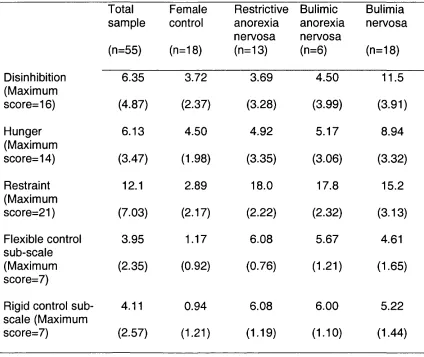
3.1 Means and standard deviations for the TFEQ 71
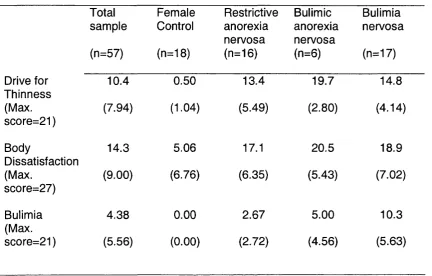
3.2 Means and standard deviations for EDI sub-scales 73
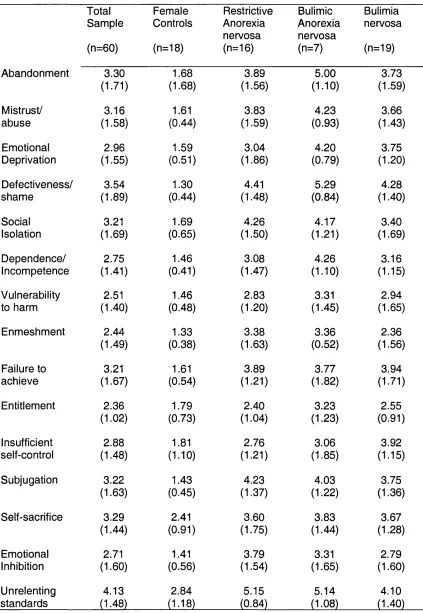
3.3 Means and standard deviations for YSQ-S 75
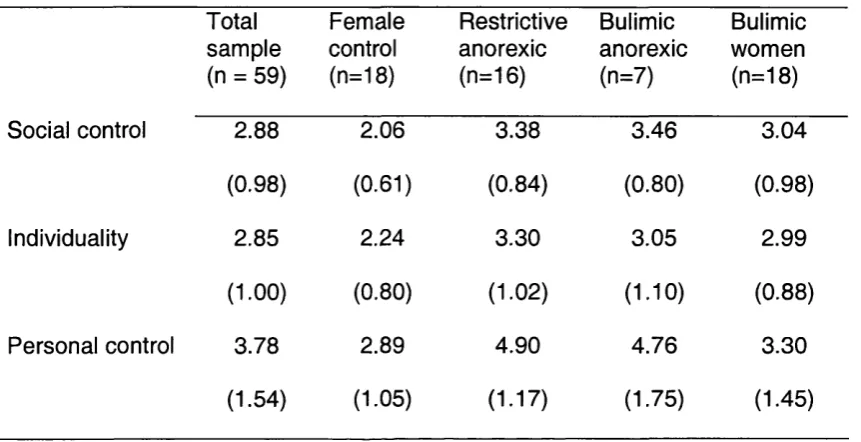
3.4 Means and standard deviations for YCl sub-scales 76
3.5 Means and standard deviations for YRAI sub-scales 77
3.6 Means and standard deviations for over-searching index 80
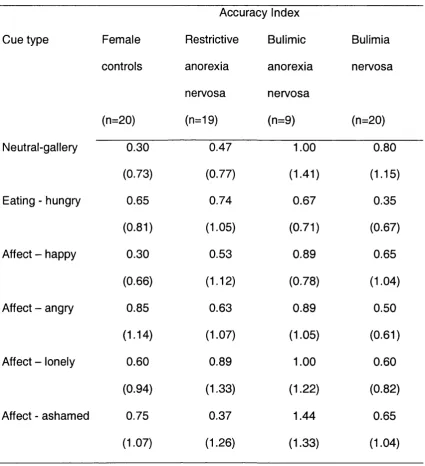
3.7 Means and standard deviations for accuracy index 81
3.8 Correlation coefficients for TFEQ Flexible Control and over- 88
searching index
3.9 Correlation coefficients for TFEQ Rigid Control and over- 89
searching index
3.10 Multiple regression - over-searching index and YCl and 93
YRAI
3.11 Multiple regression -accuracy index and YCl and YRAI 94
3.12 Correlation between schema content and over-searching 96
index for clinical group
3.13 Correlation between schema content and over-searching 97
List of Figures
Page 1.1 The cognitive view of the maintenance of bulimia 20
nervosa (Fairburn, 1997)
1.2 The schema-focused model of restrictive pathology 35
(Waller, under consideration)
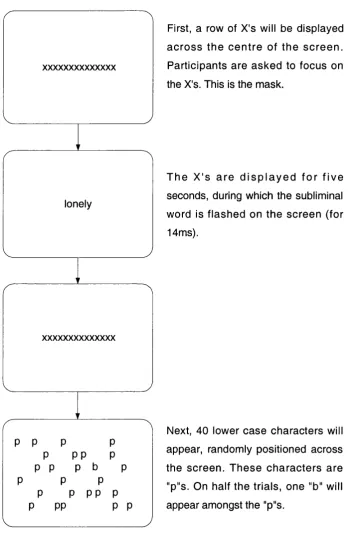
2.1 Pictorial representation of computer task 64
Graph 1 Over-searching index (age & BMI controlled) 83
Graph 2 Accuracy Index (age & BMI controlled) 85
4.1 Example of a schema focused formulation for an 112
The role of schema compensation in restrictive pathology in the eating disorders
ACKNOWLEDGEMENTS
I would like to thank my supervisor, Professor Glenn Waller, for his
advice, encouragement and patience throughout this work, and over the past
year.
I would also like to thank Dr Peter Scragg for the support and help he
gave me during this project.
I would also like to thank all the research participants who took part in this
study.
Finally, I would like to thank my family and friends for their support and
encouragement during the completion of this project, and over the last three
ABSTRACT
Despite relative success in establishing effective treatment for bulimia
nervosa, empirically validated treatment for anorexia nervosa is lacking. It has
been suggested that current models are mistakenly targeting superficial
cognitions, instead of deeper level cognitions. A new schema-based cognitive-
behavioural model of eating disorder pathology suggests that the process of
schema compensation is key to restrictive pathology. The current experimental
study aimed to provide support for the presence of such a process. Sixty-eight
eating-disordered and female control participants completed a computer-driven
task measuring the compensation process. The results of the study provide
limited support for the hypotheses. There was some evidence of increased
schema compensation in individuals with restrictive anorexia, and this was
correlated with increasing levels of restrictive pathology. Clinical and research
The role of schema compensation in restrictive pathology in the eating disorders
CHAPTER ONE
INTRODUCTION
The core of existing cognitive-behavioural models of anorexia nervosa
(e.g., Garner & Bemis, 1982) is that anorexic behaviours are precipitated and
maintained by a series of maladaptive thoughts and dysfunctional assumptions
regarding body shape and weight. Whilst research suggests that cognitive-
behavioural therapy (CBT) is the treatment of choice for bulimia nervosa, there
is still a lack of research regarding efficacy of CBT for anorexia nervosa (Roth &
Fonagy, 1996). Fairburn, Shafran and Cooper (1999) suggest that these findings
may be due to a limited understanding of anorexia nervosa, and Cooper (1997)
suggests that it may be advisable to address underlying maladaptive core
beliefs, instead of focusing exclusively on dysfunctional assumptions. A
suggested area for future cognitive research is the schema-focused model
(described by Young, 1994). Within this model, researchers have investigated
the role of schema content in the eating disorders. However, the importance of
schema processes is gaining increasing recognition, and may illuminate new
treatment angles. Using an experimental paradigm, this study aims to
investigate the role of one such process - schema compensation - in women
with restrictive anorexia nervosa.
The Introduction chapter is divided into three parts. First, current
(regardless of theoretical orientation), in contrast to the effectiveness of
treatments for bulimia nervosa. Second, the current literature on cognitive theory
and, in particular, the schema-focused model will be discussed. The
development of cognitive theory and practice for more complex and enduring
cases will be discussed. Third, the current studies using experimental paradigms
with individuals with eating disorders will be presented, including a summary of
the contribution of such studies to the literature so far and a discussion of the
advantages and disadvantages of the approach.
1.1 EATING DISORDERS
1.1.1 Introduction to the Eating Disorders
The core feature of an eating disorder is an overwhelming obsession with
control of weight and shape, in conjunction with restricted, chaotic or irregular
eating styles. The identification of a mental disorder associated with severe and
inexplicable emaciation and amenorrhoea occurred in the late 1800s (Gull,
1874, Lasegue, 1873; cited in Russell, 1995). In 1979, Russell delineated the
new syndrome of bulimia nervosa (Russell, 1979). Subsequently, further types
of eating disorders (e.g., binge eating disorder) have been identified, though
these are less well established.
1.1.2 Anorexia Nervosa
The primary feature of anorexia nervosa is significant and often life-
The role of schema compensation in restrictive pathology in the eating disorders
will place excessive importance on body weight or shape as a means of self-
evaluation, and may deny the seriousness of current low body weight. Anorexia
nervosa is listed on Axis I of DSM-IV (American Psychiatric Association, 1994),
and may be diagnosed if the following criteria are fulfilled:
1. Refusal to maintain body weight at or above a minimally normal
weight for age and height. This is defined as a body weight of less
than 85% expected or the failure to gain weight during a period of
weight gain, again leading to a body weight of less than 85% of
that expected.
2. An intense fear of becoming fat or gaining weight, even though
underweight.
3. A disturbed perception of body image and weight.
4. In post-menarchal women, amenorrhoea will be present.
There are two sub-types of anorexia nervosa. The binge eating/purging
sub-type involves regular self-induced bingeing or vomiting, use of laxatives, or
other purging behaviour. These behaviours are absent in the restrictive sub-
type.
Anorexia nervosa is associated with many medical complications,
including hormonal disturbance, osteoporosis, stunted growth, and
gastrointestinal and cardiovascular complications. In patients who vomit or use
laxatives, renal and metabolic complications may arise due to dehydration
shown that these individuals are more likely to have asymmetric blood flow in
the temporal lobes (Chowdury, Gordon & Lask, 2001). These findings are
currently of uncertain significance.
Anorexia nervosa has been shown to be comorbid with anxiety and
depression (Braun, Sunday & Halmi, 1994). Concurrent anxiety disorders
include obsessive-compulsive disorder, phobias, social phobia, panic disorder
and generalised anxiety disorder. There is debate as to the presence of
personality disorder in these individuals, with different studies yielding
prevalence rates from 23-80% (Halmi, 1995). However, anorectic restrictors are
less likely to have a personality disorder diagnosis than the other eating disorder
sub-types (Braun, Sunday & Halmi, 1994). The premorbid personality of these
patients is often described as perfectionistic, shy and compliant (Vitousek &
Manke, 1994). They may be harshly self-critical and profoundly insecure. In an
attempt to hide or compensate for their perceived inadequacies, anorexics feel
driven to excel at every activity undertaken, and may sometimes experience a
brief but heady feeling when they are successful (Vitousek & Hollon, 1990).
Vitousek and Hollon (1990) suggest that anorexics can be characterised by their
“New Year’s Resolution” cognitive style: “I must just do X, so that Y will come to
pass - and I shall be a better person for my efforts”. This emphasises their
preference for simplicity and certainty.
1.1.3 Bulimia Nervosa
The role of schema compensation in restrictive pathology in the eating disorders
they maintain a normal body weight or higher. Bulimia nervosa may be
diagnosed (DSM-IV, American Psychiatric Association, 1994) if the following
features are present:
1. Recurrent episodes of binge eating (more than two episodes per
week) associated with a lack of control over eating behaviour
during the binges.
2. Recurrent inappropriate behaviours (including self-induced
vomiting, fasting, use of laxatives or diuretics, and excessive
exercise) are used to compensate for loss of control and bingeing.
3. Persistent preoccupation with shape and weight, and self-
evaluation is linked to shape and weight.
4. Diagnosis is excluded if the behaviours occur exclusively during
episodes of anorexia nervosa.
There are two sub-types of bulimia nervosa. In the purging sub-type,
individuals regularly purge after binge eating via self-induced vomiting, the
abuse of laxatives or other purging behaviours. In the non-purging sub-type,
individuals do not engage in purging behaviours but use compensatory methods
of dieting or exercising. Individuals with bulimia nervosa may complain of
fatigue, nausea, abdominal pain and feeling bloated. Associated physical
complications include enlarged parotid glands (resulting in a puffy cheeked
appearance), dental enamel erosion, and abrasions on the knuckles from using
Raised levels of depression are also evident in individuals with bulimia
nervosa (Braun, Sunday & Halmi, 1994). Significantly higher levels of subs;ance
and alcohol abuse are found in all bulimic subgroups of eating disorder
compared with anorectic restrictors (Braun, Sunday & Halmi, 1994). A study of
in-patients revealed a DSM-IV (American Psychiatric Association, 1994)
diagnosis of a cluster B (dramatic) personality disorder in one third of the bulimic
group, while approximately one third had a cluster C (anxious) personality
disorder diagnosis (Braun, Halmi & Sunday, 1994). In contrast to the rigidity
often displayed by anorectics, bulimics appear to manifest an erratic pattern, in
which restraint and disinhibition alternate, suggesting premorbid characteristics
of impulsivity and compulsivity (Vitousek & Manke, 1994).
1.1.4 Prevalence
Establishing the prevalence rates for eating disorders is difficult. Evidence
suggests that the rates are rising or that more cases are comirg to
professionals’ attention (Lucas, Crowson, O’Fallon, & Melton, 1999;
Steinhausen, Rauss-Mason & Seidal, 1991). DSM-IV (American Psychiatric
Association, 1994) estimates the prevalence of anorexia nervosa among women
in late adolescence and early adulthood at between 0.5% and 1.0%. Hsu (1991)
estimates rates of 1-2%. In their review of studies of prevalence rates for bulimia
nervosa, Fairburn and Beglin (1990) find rates between 1% and 3%.
Overwhelmingly, eating disorders are seen within a female population (female:
The role of schema compensation in restrictive pathology in the eating disorders
1.1.5 Outcome
Anorexia nervosa is associated with poor outcome. Zipfel, Lowe, Reas,
Deter and Herzog (2000) reviewed 84 female patients a mean of 21 years
(SD=2.9) after their first hospitalisation for anorexia nervosa. Although 50.6%
had made a full recovery, 10.4% still met full diagnostic criteria for the disorder,
and 15.6% had died from causes related to anorexia nervosa. Herzog et al.
(2000) concluded that anorexia nervosa is associated with significant risk of
death or suicide.
Although initially thought to be unresponsive to treatment, more recent
studies suggest that bulimia nervosa is responsive to a number of different
interventions, including cognitive-behavioural therapy and anti-depressants
(Craighead & Agras, 1991). Thus, the outcome may be less severe than for
anorexia nervosa. A follow-up study of women with bulimia nervosa a decade
after initial presentation found that 11% met full criteria for bulimia nervosa,
0.6% met full criteria for anorexia nervosa, 18.5% met criteria for an eating
disorder not otherwise specified (EDNOS), and 69.9% were in remission (Keel,
Mitchell, Miller, Davis & Grow, 1999).
1.1.6 Aetiology and Maintenance of Anorexia Nervosa
psychodynamic, cognitive and family models. A number of potential causal or
risk factors have been implicated, such as personality (e.g., Wonderlich, 1995)
and sexual abuse (e.g.. Palmer, 1995). The development of cognitive-
behavioural models of anorexia nervosa will be presented below, followed by an
overview of psychodynamic and systemic models to inform the reader of current
theoretical positions regarding anorexia nervosa.
1.1.6.1 Cognitive and Behavioural Models
1.1.6.2 Behavioural Models
In the most simplistic behavioural form, anorexia nervosa can be
conceptualised as a learned behaviour, maintained by positive reinforcement.
The individual diets to lose weight, and this behaviour is reinforced by the
positive reactions of others. Thus, the individual continues dieting, to the point
where their health is in jeopardy. Initial dieting may be triggered by a disparaging
remark regarding size, or by a pressure to be slim. Clearly, this basic model has
many limitations and leaves many questions unanswered. For example, what
provides the immediate reinforcement to continue dieting, and what provides the
reinforcement once the individual has passed the desired shape and weight and
become emaciated?
Slade’s (1982) functional analysis of anorexia nervosa may be the most
useful of the behavioural models in understanding the aetiology. Slade highlights
the importance of antecedent factors in the context of the necessary setting
The role of schema compensation in restrictive pathology in the eating disorders
may be triggered by specific psychosocial stimuli (e.g., peer group comments or
preoccupation with weight). Dieting is then reinforced positively by feelings of
success and “being in control”, and negatively through the fear of weight gain
and avoidance of other problems. Thus, central to the model is the hypothesis
that an individual with perfectionist tendencies, in a situation where they are
experiencing dissatisfaction with their lives, will seek to gain complete control or
success in one area of their life (namely, weight control). This reinforcement is
sufficient to maintain and intensify dieting behaviour, eventually developing into
anorexia nervosa.
Slade’s conceptualisation of the role of antecedent events is supported by
the evidence that many anorexics show perfectionist or obsessive tendencies
(e.g.. Dally & Gomez, 1979), and by evidence of a relationship between onset of
dieting and stressful events, such as family difficulties and examinations (e.g.,
Beumont, George & Smart, 1976). It has been suggested that a major limitation
of this model is the emphasis on the need for control at the expense of concerns
about shape and weight (Fairburn, Shafran & Cooper, 1999). Furthermore, in
common with behavioural models for other psychological difficulties, it ignores
the role of cognitions (de Silva, 1995).
The role of cognitions and maladaptive thinking in eating disorders has
been implicitly recognised for many years (de Silva, 1995), and was noted in the
clinical observations of Bruch (1973). Garner and Bemis (1982, 1985) were
recently, their account has been perceived as the leading cognitive-behavioural
model, and is outlined below.
1.1.6.3 Gamer & Bemis’s (1982, 1985) cognitive-behavioural model
Garner and Bemis (1985) suggest that at some point, causal factors
converge in the patient’s belief: “it is absolutely essential that I be thin”. The
avoidance paradigm, which assumes that behaviour is more likely to occur
following negative reinforcement, is crucial to this model. The anorexic’s
stereotypical behaviour, (such as exercising, dieting, vomiting and the use of
purgatives) is aimed at avoiding the feared stimulus (i.e., being fat). Avoidance
behaviour is generally resistant to extinction because it prevents the individual
from recognising when the aversive contingencies are no longer in place.
Cognitive distortion contributes to this process. Although these patterns of
behavioural and cognitive avoidance suggest parallels with a phobic disorder.
Garner and Bemis (1982) have commented on an aspect they believe to be
unique to eating disorders. The individual is unable to place significant distance
between herself and the feared stimulus, since this is herself at higher weight
levels. Therefore she seeks to control her weight through constant vigilance. In
contrast to other disorders in which avoidance plays a fundamental role, the
anorexic may not wish to be relieved of her anxiety around food and weight gain,
because her anxiety is functional in enabling her to engage in dietary restraint
despite overwhelming hunger.
The role of schema compensation in restrictive pathology in the eating disorders
sense of gratification in its own right, and a thinner weight is actively pursued
through dieting. Within Western culture, a thin body is equated with sexuality,
beauty, success and social competence. However, social reinforcement does
not adequately account for the development of anorexia nervosa, since the
emaciated shape of most anorexics far exceeds societal views of a desirable
shape. Instead, it is suggested that the sense of mastery, competence and self-
control derived from relentless dieting provides strong cognitive self
reinforcement. This recognition of the role of cognitive reinforcement makes the
cognitive models far more apt than the simplistic behavioural models, which rely
solely on societal reinforcement. This hypothesis is supported by observations
on the pride and sense of accomplishment that anorexics express with regard to
weight loss, and the exhilaration or elation that may follow weight loss (see
Garner & Bemis, 1985).
Treatment follows the lines suggested by Beck for the treatment of
depression, and includes tackling the belief “I must become thin”. Assumptions
include the belief that a perfect weight can and should be sought, and that
weight or shape can serve as the sole indices of self-worth. Treatment focuses
on the discovery of distortions in the processing and interpretation of events,
and the evaluation of automatic thoughts and the underlying assumptions.
This model incorporates a number of key factors, providing a framework
to understand the cognitive processes of positive and negative self
and maintenance variables than long-term aetiology (de Silva, 1995). It does not
fully explain why some dieters develop an eating disorder and others do not, or
which eating disorder they may develop, and it neglects issues relating to control
(Fairburn, Shafran & Cooper 1999).
1.1.6.4 Fairburn, Shafran and Cooper’s (1999) cognitive-behavioural model
In 1999, Fairburn, Shafran and Cooper proposed a new cognitive-
behavioural model of the maintenance of anorexia nervosa, in which they
elaborate the ideas of Slade (1982) and Garner and Bemis (1982, 1985).
Fairburn, Shafran & Cooper (1999) propose that once attempts to restrict eating
begin, these are reinforced through three main feedback mechanisms that vary
in influence over time. The first mechanism is that introduced by Slade (1982),
who states that dietary restriction enhances the sense of being in control. The
second reinforcing mechanism is that aspects of starvation encourage further
dietary restriction, through the physiological and psychological changes bought
about by starvation (including impaired concentration, intense hunger and
heightened sense of fullness), which all threaten the anorexic's sense of self-
control. The third mechanism focuses on concerns about shape and weight, and
may be culturally specific to Western societies. Shape and weight become
inextricably bound up in the individual’s perception of their self-worth. The
individual engages in hypervigilant body checking and secondary avoidance,
which are reinforced by distorted beliefs about weight and perceived body
The role of schema compensation in restrictive pathology in the eating disorders
Bemis (1982, 1985), is viewed as optional by Fairburn and his colleagues,
accounting for anorexia nervosa in the absence of shape or weight concerns.
This new model has many strengths. Fairburn, Shafran and Cooper
(1999) acknowledge that the over-evaluation of shape and weight is an
important maintaining factor and that it is associated with information
processing. However, in contrast to Garner and Bemis’ (1982) account, they
hypothesise that it operates largely through issues of self-control. The optional
nature of the third mechanism provides an adequate explanation for the
suggestion that concerns regarding shape and weight are a relatively recent
addition to anorexia nervosa (Russell, 1995) and the absence of these concerns
in many cases from non-Western cultures (Palmer, 1993).
Fairburn, Shafran & Cooper (1999) suggest the onset of the disorder
may be related to a need for self-control in general, which is a result of the
individual’s well-recognised and typical sense of perfectionism (Vitousek &
Manke, 1994) interacting with long-standing low self-esteem. Such individuals
may attempt to control various aspects of their lives (such as work, sport or
other interests), but soon learn that controlling their eating is the one domain
impervious to external factors. Another “advantage” of dieting is that successful
restriction will provide direct and immediate evidence of self-control. Thus, as
Slade (1982) states, control over eating becomes essential because it is
experienced as “successful behaviour in the context of perceived failure in all
dieting and limiting puberty (which itself may be perceived as a threat to self-
control, Crisp, 1980).
The theory has two major implications for treatment. First, Fairburn,
Shafran & Cooper (1999) suggest that treatment should be considerably more
focused than it is at present, and should be directed at the core maintaining
mechanisms, only broadening if other issues are proving an obstacle. Features
that need to be addressed are: the use of eating, shape and weight as indices of
self-control and self-worth; the disturbed eating itself and associated extreme
weight control behaviour; body checking; and low body weight. In contrast, low
self-esteem, difficulty recognising and expressing emotions; interpersonal
problems and family difficulties do not need to be addressed. The second major
implication is a focus on the patient’s need for self-control. Thus, the focus on
what is the core of anorexia nervosa moves from shape and weight concerns to
the extreme need to control eating.
1.1.6.5 Psychodynamic models
There are many variations on the psychodynamic model of anorexia;
some of which are outlined in the following section. As with all the theoretical
orientations, there is currently little evidence supporting these models (Dare,
Eisler, Russell, Treasure & Dodge, 2001). Selvini-Palazzoli’s (1978) object-
relations view holds that the future anorexic experiences unresolved problems in
the oral incorporative stage, which impede later separation-individuation. The
The role of schema compensation in restrictive pathology in the eating disorders
body as the maternal object, from which the ego must separate itself at all costs.
Starvation is an attempt to end the féminisation of her body, thereby minimising
the ambivalent identification with her mother. The anorexic behaviour arises
from these distorted mental representations of self, body and object.
Selvini-Palazzoli’s theory shares ideas with that of the work of Bruch
(1962, 1973, 1978), who proposed that the self-starvation in anorexia represents
a struggle for autonomy, control, competence and self-respect. The failure of the
mother to recognise and confirm the child’s expression of independent needs
leads to an inner confusion. This confusion is expressed in the three areas of
perceptual/conceptual disturbance that are central to anorexia nervosa: body
image disturbance; interoceptive disturbance (characterised by an inability to
identify and attend to internal sensations such as hunger, satiety, affective
states and sexual feelings); and a pervasive sense of ineffectiveness (reflected
by feelings of loss of control).
Self-psychologists emphasise the absence of mirroring, idealising and
validation during the development of the future anorexic, which leads to deficits
in self-esteem, cohesion and various self-regulating capacities, resulting in
impaired self-object capacities (Goodsitt, 1997). In contrast to boys, young girls
are often discouraged from seeking gratification from academic or sporting
achievements. Instead, the focus is on physical appearance. The failure to
provide an appropriate and affirming self-object may occur when parents
the parents’ condition, she may decide never to become a burden on others,
and her goal becomes to ensure others’ well-being. Thus emerges the compliant
model child, who in caring for others, negates her own self-object needs. On
some level, she is aware of her limitations and dreads puberty and maturity
because it means loss, loneliness, isolation, emptiness and coming apart. When
the onset of anorexia occurs, the ignored wishes and needs break through.
Now, with her emaciated frame, the anorexic can no longer be ignored. As the
anorexia develops, it provides a sense of self and control for the anorexic.
Attempts at recovery are defended against, as the illness is all that stands
between the individual and nothingness or insignificance.
Crisp (1980, 1997) stresses the importance of a developmental model, in
which the psychopathology of anorexia is rooted in the biological and
psychological experiences of entering puberty and reaching adult weight. Crisp
postulates that anorexia nervosa is an attempt to cope with fears and conflicts
associated with psychobiological maturity. These dynamic issues have resulted
in a “phobic fear” of adult body weight.
1.1.6.6 Systemic and family models
Proponents of family and systems models have argued convincingly that
an eating disorder may reflect certain dysfunctional roles, alliances, conflicts or
interactional patterns within a family (e.g., Minuchin, Rosman & Baker, 1978;
Selvini-Palazzoli, 1974). Minuchin and his co-workers (Minuchin, Rosman &
The role of schema compensation in restrictive pathology in the eating disorders
the child is physiologically vulnerable; secondly, the family has certain
transactional characteristics (enmeshment, rigidity, overprotectiveness and lack
of conflict resolution) and finally, the sick child plays an important role in the
family’s pattern of conflict avoidance. The importance of this role maintains the
symptoms. In contrast, the central idea of the Milan approach (Selvini-Palazzoli,
1974; Selvini-Palazzoli, Boscolo, Checchin & Prata, 1978) is that the family has
become a rigidly organised interactional system in which the symptoms of the
anorexia play an important role as a powerful homeostatic mechanism.
The most contemporary familial model, the Maudsley model (Dare &
Eisler, 1997), suggests that an interactional systems model is necessary to be
able to account for the multifactorial aetiological influences that result in
anorexia. Social, genetic and physiological influences affect the individual in a
unidirectional manner. However, there is also the circular influence of the life
cycle, which itself is influenced by the psychological state of the individual and
her family. The symptom, which arises as a result of the complex interaction of
the aetiological factors, now has an impact upon the family and on the
individual’s psychology, and therefore the life cycle. This model also emphasises
the impact upon the family of the anorectic symptoms (e.g., mood, behaviour
and social functioning), and acknowledges that the dysfunction observed in
these families may be a result of the intense stress caused by the life-
threatening illness in a previously healthy child, rather than being the trigger of
1.1.7 Aetiology and maintenance of bulimia nervosa
In this section, the aetiology and maintenance of bulimia nervosa is
outlined briefly, so that the reader can appreciate the difference in the models
for bulimia and anorexia nervosa. This will assist the reader in understanding
why treatment approaches are currently more successful for bulimia nervosa
than anorexia nervosa (discussed in greater detail in Sections 1.1.8 & 1.1.9),
and will provide a context for the current study.
The most widely used model within the eating disorders field for the
aetiology and maintenance of bulimia nervosa is the cognitive model of Fairburn
and his colleagues (e.g., Fairburn, 1997; Fairburn, Marcus & Wilson, 1993). As
in Garner and Bemis’s (1982, 1985) account of anorexia nervosa, Fairburn,
Marcus and Wilson (1993) take their lead from Beck’s model of depression,
hypothesising that the patients’ attitudes to their shape and weight are central to
the maintenance of the disorder. Attitudes to food and eating are thought to be
secondary consequences of attitudes to shape and weight. Patients with bulimia
nervosa also hold the same rigid beliefs and emphasis on evaluation of self in
terms of shape and weight as patients with anorexia nervosa. It is hypothesised
that they also share certain dysfunctional styles of reasoning and disturbances
in information processing. Intense concern about shape and weight causes
patients to adopt extreme dieting rules, which are impossible to comply with.
Inevitable minor deviations from these self-imposed rules are seen as
catastrophic and a sign of weakness, reflecting a dichotomous thinking style. In
The role of schema compensation in restrictive pathology in the eating disorders
are likely to temporarily abandon all controls over eating, with subsequent
episodes of binge-eating. Thus, one mechanism maintaining the disorder is that
of rule violation. Another mechanism, although less well elaborated, is affect-
triggered binges.
Purging and other forms of extreme weight control follow binge eating as
the individual attempts to compensate for the effects of binge-eating. Purging
helps to maintain binge-eating by reducing the individual’s anxiety about
potential weight gain, and by disrupting the learned satiety that regulates food
intake. In turn, binge-eating and purging cause distress and lower self-esteem,
thereby reinforcing the conditions that lead to further episodes of dietary
Figure 1.1 The cognitive view of the maintenance of bulimia nervosa (Fairburn.
1997)
Perfectionism and dichotomous
thinking
Perfectionism and dichotomous
thinking
Negative affect Binge-eating
Negative self-evaluation
Characteristic extreme concerns about shape
and weight
The role of schema compensation in restrictive pathology in the eating disorders
Fairburn, Marcus and Wilson’s (1993) model for the treatment of bulimia
nervosa also focuses on challenging and modifying negative automatic thoughts
and dysfunctional assumptions. Both this and the treatment for anorexia nervosa
(Garner & Bemis, 1982, 1985) were, in general, developed primarily on the basis
of clinical observation and anecdotal reports, rather than empirical evidence
(Cooper, 1997).
Thus, it appears that the aetiology of anorexia and bulimia nervosa share
the setting conditions of low self-esteem, preoccupation with shape and weight,
and an overemphasis on these factors as a measure of self-worth. The point at
which the models divide appears to be in the response of the individual to
deviations from their self-imposed dietary regimes - anorectics tend to increase
their levels of restriction, whilst bulimics abandon all limits. As yet, the models
cannot predict which eating disorder sub-type an individual will develop.
Research presented in 1.1.2 and 1.1.3 suggests that premorbid personality may
play a role. Other work (Waller, under consideration) and the findings from the
current study may illuminate the role of differing cognitive processes in the
eating disorders. These cognitive processes will be outlined at a further point in
the Introduction (Section 1.2.2.2).
1.1.8 Status of treatment models for anorexia nervosa and bulimia nervosa
Cognitive-behaviour therapy and psychodynamic therapy have been
trial compared cognitive-behavioural treatment with behavioural treatment and
routine outpatient management (Channon, de Silva, Hemsley & Perkins, 1989).
Following Garner and Bemis' (1982, 1985) model, the main focus of cognitive-
behavioural treatment was identifying and challenging dysfunctional
assumptions associated with eating, weight and shape. All subjects
demonstrated improvement regardless of group membership, and cognitive-
behavioural treatment was found to be superior only in terms of number of
sessions attended (suggesting this approach may be more acceptable to
patients).
A further randomised controlled trial compared dietary advice with twenty
sessions of manualised cognitive therapy in the outpatient treatment of anorexia
nervosa (Serfaty, Turkington, Heap, Ledsham & Jolley, 1999). In contrast to
Channon et al. (1989), schema level interventions were included in the cognitive
treatment. At three months, all dietary advice participants had dropped out,
whilst only two of those receiving cognitive therapy dropped out. Cognitive
therapy participants showed significant improvement at six months, as
measured by body mass index (BMI), and by scores on the Beck Depression
Inventory and the Eating Disorder Inventory. Sixteen out of 23 (70%) patients
treated with cognitive therapy no longer met diagnostic criteria for anorexia
nervosa. The high dropout of the control group limits the comparisons that can
be made, and Serfaty et al. (1999) admit that comparisons with an alternative
therapeutic intervention such as family or interpersonal therapy are desirable.
The role of schema compensation in restrictive pathology in the eating disorders
beliefs about the self, rather than simply at negative assumptions regarding
weight and shape.
More recently, the results of a randomised controlled trial, with a sample
of 84 anorexic patients have been published, comparing four out-patient
treatments - focal psychoanalytic psychotherapy, cognitive-analytic therapy
(CAT), family therapy and low contact “routine” treatment (control group) (Dare,
Eisler, Russell, Treasure & Dodge, 2001). All treatments were for one year,
except CAT which lasted seven months. At the end of the one-year treatment
phase, approximately one third of the patients in the three specialist
psychotherapies no longer met diagnostic DSM criteria for anorexia nervosa, in
comparison to only 5% in the routine contact group. The focal psychoanalytic
psychotherapy and family therapy were superior to CAT. It is unfortunate that
this trial did not incorporate a cognitive treatment to enable comparisons. It is
difficult to make direct comparisons between these trials, particularly since the
patients in the Dare et al. (2001) trial had been ill for longer and had lower BMIs
at the start of treatment. Both these trials (Dare et al., 2001; Serfaty et al., 1999)
require longer-term follow-up and are limited by the relatively small sample
sizes.
In contrast, the effectiveness of cognitive-behaviour therapy for bulimia
nervosa is well-established (Agras, Walsh, Fairburn, Wilson & Kraemer, 2000).
A review of the best-controlled studies show a mean percentage reduction in
(Fairburn, Norman, Welch, O’Connor, Doll & Reveler, 1995). CBT has proved to
be at least, if not more effective than antidepressant drug treatment and
alternative psychological therapies (Wilson, Fairburn & Agras, 1997). Cognitive-
behaviour therapy, within a stepped care approach, is now widely regarded as
the treatment of choice for bulimia nervosa (Royal College of Psychiatrists,
1992). Hollon and Beck (1994) comment that, despite the apparent success of
CBT for bulimia nervosa, it is still unclear as to whether it has been
operationalised in the most powerful manner possible.
1.1.9 Implications of treatment efficacy differences
Paradoxically, it appears that the theory and treatment of bulimia nervosa
(a disorder first described only 23 years ago) is more advanced than that of
anorexia nervosa (which has been recognised for centuries). As discussed
above, current models of anorexia nervosa have strengths (e.g., highlighting the
role of shape- and weight-related cognitions in anorexia), but are based mainly
upon clinical observation. From the review of the outcome literature, it is clear
that (in contrast to bulimia nervosa) anorexia nervosa is not being treated
effectively. It is valid, therefore, to re-examine existing knowledge with regard to
cognitive theory and anorexia nervosa.
Traditional cognitive-behavioural models (e.g.. Garner & Bemis, 1982,
1985) have focused on identifying and challenging negative automatic thoughts
and dysfunctional assumptions regarding shape, size and weight. Core beliefs
The role of schema compensation in restrictive pathology in the eating disorders
begun to suggest that traditional cognitive therapy may be mistaken in targeting
less important cognitive levels (e.g., Cooper, 1997). Support for this hypothesis
arises from Cooper and Fairburn’s (1992) exploration of the negative self
statements of women with anorexia and bulimia nervosa. They found that
women with bulimia nervosa are particularly concerned with weight and
appearance, whilst women with anorexia are more concerned with eating. Since
current cognitive-behavioural models have a tendency to focus on dysfunctional
assumptions regarding shape and weight, this might explain why cognitive-
behaviour therapy is an effective treatment for bulimia but not anorexia nervosa.
In order to increase our understanding of anorexia nervosa, clinicians and
researchers (Cooper, 1997) have suggested a need to address underlying
maladaptive core beliefs, rather than focusing exclusively on dysfunctional
assumptions regarding shape, weight and size. In the following section, the
reader will be introduced to schema theory. The evidence regarding schemas
and the eating disorders will then be reviewed.
1.2 COGNITIVE THEORY AND SCHEMAS
The work of Fairburn, Shafran and Cooper (1999), Cooper (1997) and
Waller and Kennerley (in press) indicates that core underlying beliefs about the
self may be important in developing our understanding of anorexia nervosa.
Cognitive theorists have started to address such concerns using schema theory,
1.2.1 Cognitive Theory
Cognitive therapy was initially developed in the 1960s as a structured,
short-term, present-oriented psychotherapy for depression, aimed at solving
current problems and modifying dysfunctional thoughts and behaviour (Beck,
1964). The core premise of cognitive theory is that it is the individual's
interpretation of beliefs surrounding an event that are responsible for
psychological disturbance. Cognitive therapy has been adapted to treat a
number of psychological disorders, and is empirically supported as a treatment
for depression, anxiety, social phobia, obsessive-compulsive disorder and more
(e.g.. Beck, 1995). As exploration of cognitive therapy has continued and
therapists have begun to focus on more complex presentations (including
psychosis and personality disorder), the limitations of Beck’s original model have
become apparent (e.g.. Holmes, 2002; James, 2001).
Young (1999) highlights the characteristics of people with personality
disorder that might limit success in short-term cognitive therapy. First, cognitive
therapy assumes that an individual has sufficient flexibility in their thinking to be
able to modify their maladaptive beliefs after engaging in collaborative
empiricism with the therapist. According to DSM-IV (American Psychiatric
Association, 1994) and Young’s clinical experience, people with personality
disorder have a pervasive, inflexible and enduring cognitive pattern, which is a
serious obstacle to collaborative empiricism. The rigidity of thinking found in
people with personality disorders can be compared to the rigid thinking style
The role of schema compensation in restrictive pathology in the eating disorders
avoid thoughts and feelings because they are painful. This, too, can be viewed
as representative of the eating disorder patient who denies there is anything
wrong. The third characteristic (shared by patients with personality disorder and
eating disorders) is interpersonal difficulties, which have implications for the
therapeutic relationship.
Therefore, as researchers in the eating disorders field became more
aware of the importance of deeper, core beliefs (e.g.. Cooper, 1997), Young and
his colleagues (e.g., Layden, Newman, Freeman & Morse, 1993; Padesky,
1994) were developing a cognitive therapy that focused upon these schema-
level representations. The parallels between individuals with personality disorder
and eating disorder (and, indeed, those with comorbid eating and personality
disorder presentations) discussed above and further features of anorexics
(including possible resistance to treatment, low motivation, and an active
“valuing” of their disorder) support the suggestion that schema-focused cognitive
therapy may prove highly relevant to this population.
1.2.2 Schema Theory
While Beck defined and included a schema level of cognition in his model
(Beck et al., 1979), Young (1999) conceptualises schema therapy as an
expansion of the short-term cognitive model proposed by Beck and his
colleagues (1979). The term “schemas” has been used for many years with
definition. From a theoretical and non-clinical perspective, schemas are
conceptualised as stored bodies of knowledge, which interact with the encoding,
comprehension and retrieval of new information by guiding attention,
expectancies and interpretation. The schemas then act as templates by which
new information is organised (Williams et al., 1997). Thus, schemas function to
assist us when we encounter new experiences that resemble previous situations
(e.g., if we go to a new supermarket, we will expect to see goods for sale,
trolleys or baskets to carry goods in, and so on).
To date, the development of schema theory has been clinically-led, and
the model is intended primarily to guide intervention rather than being seen as a
comprehensive model of psychopathology. The model is organised around early
maladaptive schemas (EMS), and schema processes, which are described
below.
1.2.2.1 Early Maladaptive Schemas
The term “Early Maladaptive Schemas” is used to describe extremely
stable, negative, rigid and global core beliefs, which develop during childhood
and which are expanded upon throughout the individual’s lifetime. The early
childhood experiences of people who develop these negative schemas are
described as invalidating and lacking in support and nurturance. In childhood,
these schemas were adaptive because they enabled the child to understand and
cope with aversive and/or abusive experiences. They are then used as a
The role of schema compensation in restrictive pathology in the eating disorders
of cognitive processes and distortions. When a schema or core belief is
triggered, the individual will experience intense affect, such as a high level of
anger, anxiety, sadness or shame. It is this intolerable level of affect that drives
the schema processes, as the individual attempts to avoid or eradicate these
feelings.
With regard to this clinical definition of early maladaptive schema, the
terms schema and core belief are used interchangeably to represent the
deepest level of cognitions. To date. Young has identified a number of early
maladaptive schemas (Appendix 1).
1.2.2.2 Schema processes
Three major schema processes have been identified - avoidance,
maintenance and compensation. It is these processes that explain how schemas
function within an individual.
1.2.2.2.1 Schema maintenance
Schema maintenance refers to the process by which the schemas are
directly reinforced or perpetuated, including cognitive distortions and
maladaptive thinking. This accounts for the rigidity observed in such individuals.
At the cognitive level, schema maintenance is accomplished by the processes
already described by Beck (1967) as cognitive distortions (e.g., exaggerating
At the behavioural level, schema maintenance is achieved through self-
defeating behaviour patterns. These behaviours may have been adaptive and
functional in the context of the individual’s dysfunctional childhood environment.
In adulthood, however, away from the family of origin, these behaviours serve to
reinforce the negative schema (Young, 1999).
1.2.2.2 2 Schema avoidance
The importance of avoidance has already been noted. Schema
avoidance is the process by which an individual uses cognitive, emotional or
behavioural strategies to avoid triggering a schema and the intensely painful
affect associated with it. This process can be automatic or volitional. At a
cognitive level, this involves attempts to block thoughts or images that might
trigger the schema. Patients may say they do not wish to think about an event
that triggers the schema, or will be unable to visualise it. Other strategies include
depersonalisation (in which the individual removes herself psychologically from
the situation that triggers the schema) and compulsive behaviours (which
function by distracting the individual from focusing on their thoughts).
Behavioural avoidance occurs when the individual seeks to avoid real-life events
or circumstances that might trigger their schemata.
1.2.2.2.3 Schema compensation
The final process by which schemas are reinforced is known as schema
The role of schema compensation in restrictive pathology in the eating disorders
from their schemas and that the patients were overcompensating for their
schema. However, it appears that in an attempt to challenge their schemas,
these individuals are often too extreme, and this may lead to undesirable
consequences (e.g., an individual who has a schema relating to dependence
may become very independent, even in situations in which seeking help is
appropriate). It has been suggested that in restrictive disorders, schema
compensation may manifest behaviourally, for example, restricting dietary intake
or compulsively exercising, in order to perfect the body.
1.2.4 Current research status regarding eating disorders and schemas
The majority of research to date has focused on identifying the content of
schemas in the eating disorders (e.g., Leung, Waller & Thomas, 1999; Waller,
Ohanian, Meyer & Osman, 2000). Both anorexic and bulimic women have
significantly higher levels of maladaptive core beliefs (schema content) than
comparison women (Cooper & Turner, 2000; Leung et al., 1999). However,
there is no significant difference between anorexic and bulimic individuals in
terms of schema content (Leung et al., 2000). It may be that similar patterns of
maladaptive schema content are present in other psychopathologies, for
example, depression (Waller, Shah, Ohanian & Elliot, 2001). Furthermore,
differing patterns of association between core beliefs and eating
psychopathology have been found between anorexic and bulimic women (Leung
women, emotional inhibition beliefs predict severity of bingeing, while
defectiveness/shame beliefs predict severity of vomiting (Waller et al., 2000).
Leung et al. (1999) concluded that it is not the intensity of the core beliefs that is
important in distinguishing between anorexic and bulimic individuals but how the
beliefs relate to the maladaptive eating patterns. Furthermore, they suggest that
core beliefs may play very different roles in anorexia nervosa and bulimia
nervosa. It has been suggested, therefore, that schema processes may be
superior to schema content in understanding and distinguishing eating
pathologies (Waller, 2000). Research interest has therefore extended to include
schema processes as well as schema content (Vitousek & Hollon, 1990).
Some research has focused on identifying the cognitive processes
involved in bulimic pathology, using tests of information processing (e.g.. Waller
& Meyer, 1997; Waller & Mijatovich, 1998; Waller, Quinton & Watson, 1995).
Studies have demonstrated that the subliminal presentation of threat cues
triggers eating in women with unhealthy eating attitudes (Meyer & Waller, 2000;
Waller & Mijatovich, 1998). Non-clinical women with more bulimic attitudes have
been shown to take longer to respond to threatening than neutral words on a
computer-driven task of information processing, whilst there was no such effect
for those women with less bulimic attitudes (Waller, Quinton & Watson, 1995).
Furthermore, women with bulimic attitudes are differentially sensitive to threat
cues, with ego threat cues (e.g., words such as “failure” or “stupid”) having
greater impact than physical threat cues (e.g., “hurt”, “kill”) (Waller & Meyer,
The role of schema compensation in restrictive pathology in the eating disorders
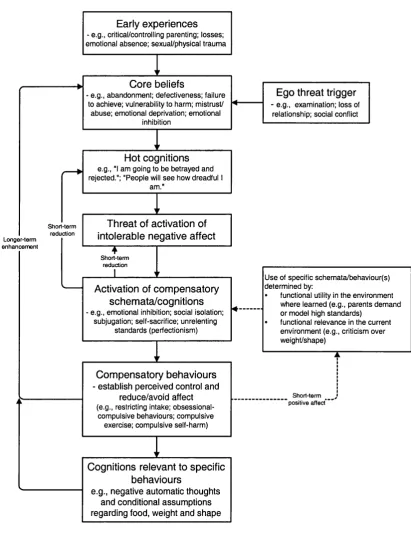
processing. It has been proposed that, under abandonment threats, a schema
avoidance process is activated, in which the bulimic individual uses recognised
behaviours (e.g., binging, vomiting) to escape from awareness of that threat.
This concurs with previous suggestions that bulimia is linked with efforts to avoid
unbearable cognitive or emotional states (Heatherton & Baumeister, 1991;
Lacey, 1986). Attempts have been made to differentiate between domains of
schema avoidance, and to find a means of assessing avoidance that is clinically
meaningful when working with individuals with bulimia (Spranger, Waller &
Bryant-Waugh, 2001).
Less investigation has occurred with regard to the schema processes that
underpin restrictive attitudes and behaviours (i.e., those that predominate in
anorexia).
1.2.3 Literature review of schema-focused cognitive therapy
Controlled clinical trials comparing the efficacy of schema-focused
cognitive therapy with traditional cognitive therapy have yet to be conducted
(James, 2001). However, the literature reports successful clinic-based schema-
focused interventions, including: relapse prevention in anxiety and depressive
disorders (Morrison, 2000; Young, Beck & Weinberger, 1993); treatment of
avoidant, dependent, compulsive, passive-aggressive, histrionic, borderline, and
narcissistic personality disorders; treatment of substance abuse during the
1.2.5 Implications for future research
A new model is under development, aimed at understanding and treating
these deeper level cognitions (Waller, under consideration). It is hypothesised
that bulimic behaviours are characteristic of schema avoidance, whilst restrictive
behaviours are characteristic of schema compensation. It is emphasised that
these models represent restrictive and bulimic pathology, not diagnoses. The
schema compensation process involves making consistent efforts to reduce
awareness of negative cognitions in order to avoid the triggering of avers ive and
intolerable emotion. This often involves the use of compensatory schemas -
alternative schemas that do not trigger avers ive levels of affect. The restrictive
The role of schema compensation in restrictive pathology in the eating disorders
Figure 1.2 The schema-focused model of restrictive pathology (Waller, under
consideration) Short-term reduction Longer-term enhancem ent Short-term reduction
Short-term _ positive affect*
Ego threat trigger - e.g., exam ination; loss of
relationship; social conflict
Threat of activation of intolerable negative affect
Early experiences - e.g., critical/controlling parenting; losses; em otional absence; sexual/physical trau m a
Hot cognitions e.g., "I am going to be betrayed and rejected."; "People will s ee how dreadful
am." Core beliefs
- e.g., abandonm ent; defectiveness; failure to achieve; vulnerability to harm; m istrust/ abuse; em otional deprivation; em otional
inhibition
Activation of compensatory schemata/cognitions î.g., em otional inhibition; social isolation;
subjugation; self-sacrifice; unrelenting standards (perfectionism )
Cognitions relevant to specific behaviours
e.g., negative automatic thoughts and conditional assumptions regarding food, weight and shape
Compensatory behaviours
- establish perceived control and reduce/avoid affect
(e.g., restricting intake; obsessional-com pulsive behaviours; obsessional-com pulsive exercise; com pulsive self-harm )
U se of specific sch em ata/behaviour(s) determ ined by;
• functional utility in the environm ent w here learned (e.g., parents dem and or m odel high standards)
It could be suggested that the type of behaviour and schema reflecting a
compensation process include an unrelenting standards schema. This
corresponds with the well-documented image of a restrictive anorexic as
perfectionistic and high in achievement (Vitousek & Manke, 1994). Bruch (1982)
observed that individuals with anorexia feel compelled to conceal or compensate
for perceived imperfections by striving to excel at everything they do. High levels
of obsessive and compulsive behaviours are often observed in individuals with
anorexia (Serpell, Livingstone, Neiderman & Lask, under consideration). Waller
(under consideration), therefore, suggests that whilst bulimic behaviours are
best understood as characteristic of impulsive elements, restrictive pathology is
best characterised as the more compulsive element of the eating disorders.
These hypotheses suggest a new treatment angle for the eating disorders, using
a schema-focused cognitive approach that addresses the process as well as the
content of core beliefs (Kennerley, 1997; Waller, under consideration).
A further implication of the current research is increased understanding of
the differences between the eating disorders, and the ability to predict which
individual will develop which disorder. Although the behaviour of individuals with
anorexia and bulimia is superficially quite different, in key respects they are
almost identical. Both validate their self-worth in terms of shape and weight, both
fear weight gain and fatness, and both devote a large proportion of time and
energy in the pursuit of thinness. More often than not, the difference is explained
in terms of premorbid personality, but it remains to be established whether these
The role of schema compensation in restrictive pathology in the eating disorders
here suggests that it is the underlying cognitive or schematic processes that are
responsible for the different behaviours.
3. EXPERIMENTAL PARADIGMS
Work on the cognitive theory of anorexia nervosa (e.g., Cooper, 1997),
findings regarding the triggering of a schema avoidance process in bulimics
when faced with a “threat” (e.g.. Waller & Mijatovich, 1998) and current research
on schema content and process in the eating disorders have culminated in a
new hypothesis. This hypothesis suggests that for individuals with restrictive
pathology, “threat” situations result in the activation of a schema compensation
process. The aim of the current study, therefore, was to operationalise and test
this hypothesis. Since a large quantity of non-experimental data already exists,
an experimental paradigm offers the strongest opportunity to confirm or
disconfirm these ideas. A subliminal procedure was selected because it is
suggested that conscious presentation of material allows participants to modify
their responses (Bernstein, 1990).
The next section, therefore, will outline the concept of parallel processing
followed by a description of the subliminal psychodynamic activation procedure,
(SPA; Silverman, 1983) and an outline of recent relevant research in the eating
disorder field. This will enable the reader to understand the rationale for the