
Scholarship at UWindsor
Scholarship at UWindsor
Electronic Theses and Dissertations Theses, Dissertations, and Major Papers
2016
Social Functioning in Nonverbal Learning Disorder and High
Social Functioning in Nonverbal Learning Disorder and High
Functioning Autism: A Pilot Study
Functioning Autism: A Pilot Study
Selena Scott
University of Windsor
Follow this and additional works at: https://scholar.uwindsor.ca/etd
Recommended Citation Recommended Citation
Scott, Selena, "Social Functioning in Nonverbal Learning Disorder and High Functioning Autism: A Pilot Study" (2016). Electronic Theses and Dissertations. 5781.
https://scholar.uwindsor.ca/etd/5781
This online database contains the full-text of PhD dissertations and Masters’ theses of University of Windsor students from 1954 forward. These documents are made available for personal study and research purposes only, in accordance with the Canadian Copyright Act and the Creative Commons license—CC BY-NC-ND (Attribution, Non-Commercial, No Derivative Works). Under this license, works must always be attributed to the copyright holder (original author), cannot be used for any commercial purposes, and may not be altered. Any other use would require the permission of the copyright holder. Students may inquire about withdrawing their dissertation and/or thesis from this database. For additional inquiries, please contact the repository administrator via email
SOCIAL FUNCTIONING IN NONVERBAL LEARNING DISORDER AND HIGH
FUNCTIONING AUTISM: A PILOT STUDY
by
Selena Scott
A Dissertation
Submitted to the Faculty of Graduate Studies through the Department of Psychology in Partial Fulfillment of the Requirements for
the Degree of Doctor of Philosophy at the University of Windsor
Windsor, Ontario, Canada
2016
SOCIAL FUNCTIONING IN NONVERBAL LEARNING DISORDER AND HIGH FUNCTIONING AUTISM: A PILOT STUDY
by
Selena Scott
APPROVED BY:
__________________________________________________ Janine Montgomery, External Examiner
University of Manitoba
__________________________________________________ Geri Salinitri
Faculty of Education
__________________________________________________ Marcia Gragg
Department of Psychology
__________________________________________________ Erin Picard
Department of Psychology
__________________________________________________ Joseph Casey, Advisor
Department of Psychology
Declaration of Originality
I hereby certify that I am the sole author of this thesis and that no part of this
thesis has been published or submitted for publication.
I certify that, to the best of my knowledge, my thesis does not infringe upon
anyone‘s copyright nor violate any proprietary rights and that any ideas, techniques,
quotations, or any other material from the work of other people included in my thesis,
published or otherwise, are fully acknowledged in accordance with the standard
referencing practices. Furthermore, to the extent that I have included copyrighted
material that surpasses the bounds of fair dealing within the meaning of the Canada
Copyright Act, I certify that I have obtained a written permission from the copyright
owner(s) to include such material(s) in my thesis and have included copies of such
copyright clearances to my appendix.
I declare that this is a true copy of my thesis, including any final revisions, as
approved by my thesis committee and the Graduate Studies office, and that this thesis has
Abstract
The variant of autism spectrum disorder (ASD) in which there is no evidence of a
comorbid intellectual disability (often informally referred to as high functioning autism
[HFA]) and nonverbal learning disorder (NLD) are two clinical disorders associated with
social difficulties. Whereas social functions have been studied extensively in ASD,
relatively little research has investigated social functioning in NLD. As such, it is unclear
whether the pattern and severity of social functioning difficulties is different between
these disorders. Furthermore, it is often challenging to establish a differential diagnosis
between these disorders, which is critical given the need for different treatment
approaches. The present study aimed to investigate parents‘ perceptions of social
adjustment in these groups, as well as to identify reliable differences in pragmatic
communication, social motivation, and other aspects of social functioning based on
behaviour inventories and standardized direct observation of social behaviour.
Twenty-two participants (10 in the NLD group and 12 in the HFA group) between the ages of 9
and 17 years were recruited from Southwestern Ontario. The results indicated that overall
both groups are characterized by social difficulties, with those of children in the HFA
group tending to be more severe. The mean scores of each group were elevated in the
At-Risk range on the Behavioral Symptoms Index composite of the BASC-2, indicating
some social adjustment difficulties in both groups. The Social Interaction Difference
Index (SIDI) from the Children‘s Communication Checklist-2 (CCC-2) and the Overall
Total score from Module 3 of the Autism Diagnostic Observation Schedule-2 (ADOS-2)
each significantly discriminated between the groups. The Reduced Contact and Social
not significantly predict group membership, and both groups were reported to have low
frequency of interacting with peers. The present findings provide preliminary support that
children in both groups experience social adjustment difficulties, pragmatic language
difficulties, as well as reduced social interest in others, and preliminary evidence
regarding the clinical usefulness of the CCC-2 and the ADOS-2 in the context of
Acknowledgements
There are a number of people whom I would like to thank for their support over
the course of my graduate studies. I would like to thank Dr. Joseph Casey for his
guidance during every step of this project‘s development as well as during my years in
graduate school. Through our numerous discussions, the ideas for this study took shape.
Furthermore, his thoughtful insights during clinical supervision and my coursework have
scaffolded and shaped my clinical skills. I would also like to thank Dr. Geri Salinitri, Dr.
Marcia Gragg, Dr. Erin Picard, and Dr. Janine Montgomery for their helpful suggestions.
Their input strengthened the design of my research, clarified the scope of this project, and
helped me to consider diverse perspectives from which to interpret my findings. I also am
very grateful to Jaspreet Rai, who helped with collecting data, writing reports, and
recruiting participants over the course of this project.
I am indebted to the parents and children who participated in this study. Working
with these individuals was a wonderful experience and they have inspired me to continue
to work clinically with children and their families throughout my career.
I would like to thank my friends and family for their support over the years,
including their understanding of my commitment to my education and their
encouragement to pursue what I enjoy most.
I am also grateful for the financial aid that I received in support of this project,
including that provided by the Ontario Graduate Scholarships I received, as well as the
Table of Contents
Declaration of Originality ... iii
Abstract ... iv
Acknowledgements ... vi
List of Tables ... ix
List of Figures ... x
List of Appendices ... xi
List of Abbreviations ... xii
Chapter 1: Introduction ... 1
Definitions of Terms Commonly used in the Social Neuroscience Literature ... 4
Social competence and social functioning ... 5
Social adjustment ... 8
Social outcomes ... 10
Adaptive behaviour ... 10
Social skills ... 14
Social cognition ... 16
Social motivation ... 17
Nonverbal Learning Disorder. ... 21
Defining learning disorders and NLD... 21
Validity of NLD ... 27
Brief history of NLD ... 28
Theoretical models of NLD ... 31
Representation of NLD in major diagnostic systems ... 37
Descriptive epidemiology ... 38
Social adjustment and adaptive behaviour in NLD ... 38
Pragmatic communication in NLD ... 46
Autism Spectrum Disorder. ... 49
Definition of ASD ... 49
Brief history of ASD ... 50
Diagnostic features of ASD in DSM-5 ... 51
Descriptive epidemiology of ASD ... 52
Social adjustment in HFA ... 53
Adaptive behaviour in HFA ... 57
Pragmatic communication in HFA ... 60
Social (Pragmatic) Communication Disorder. ... 62
Measuring and Evaluating Social Behaviour ... 64
The Socio-Cognitive Integration of Abilities Model ... 69
The Social Motivation Theory of Autism ... 76
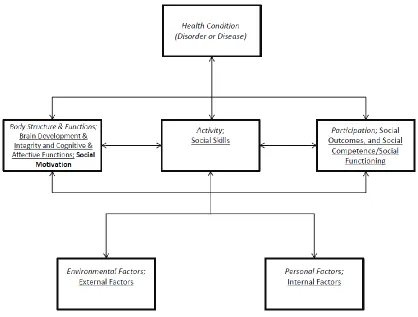
The International Classification of Functioning, Disability and Health (ICF) ... 80
Integration of Three Frameworks in the Present Study ... 88
Differential Diagnosis Between HFA and NLD ... 91
The Present Study ... 98
Chapter 2: Method ... 102
Participants ... 102
Measures ... 112
Group Comparison Measures. ... 113
Autism Diagnostic Observation Schedule Second Edition. ... 113
Behavior Assessment System for Children Second Edition. ... 113
The Children‘s Communication Checklist Second Edition. ... 113
Children's Social Behaviour Questionnaire Revised. ... 114
Research Design and Statistical Methods ... 114
Chapter 3: Results ... 118
Participant Characteristics ... 118
Data Analysis ... 120
Hypothesis 1... 120
Hypothesis 2... 124
Hypothesis 3... 124
Hypothesis 4... 128
Hypothesis 5... 132
Post-hoc analyses. ... 135
Chapter 4: Discussion ... 139
Hypothesis 1... 139
Hypothesis 2... 142
Hypothesis 3... 144
Hypothesis 4... 148
Hypothesis 5... 148
Implications of the Findings ... 150
Strengths of the Study ... 152
Limitations of the Present Study ... 152
Directions for Future Research ... 159
References ... 161
Appendices ... 216
Appendix A: Screening Questions for Participation ... 216
Appendix B: Letter of Information ... 217
Appendix C: Consent and Assent forms ... 221
Appendix D: Clinical Interview and Child History Questions ... 232
Appendix E: Neuropsychological and Screening Measures ... 240
Appendix F: Group Comparison Measures ... 254
Appendix G: NLD Scale ... 265
List of Tables
1. Demographic characteristics of participants ...103
2. Criteria for inclusion in the NLD group ...104
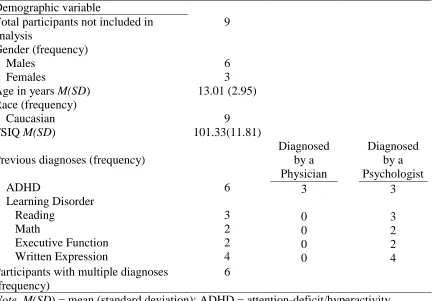
3. Demographic characteristics of participants who were not eligible to continue
participating in the study ...106
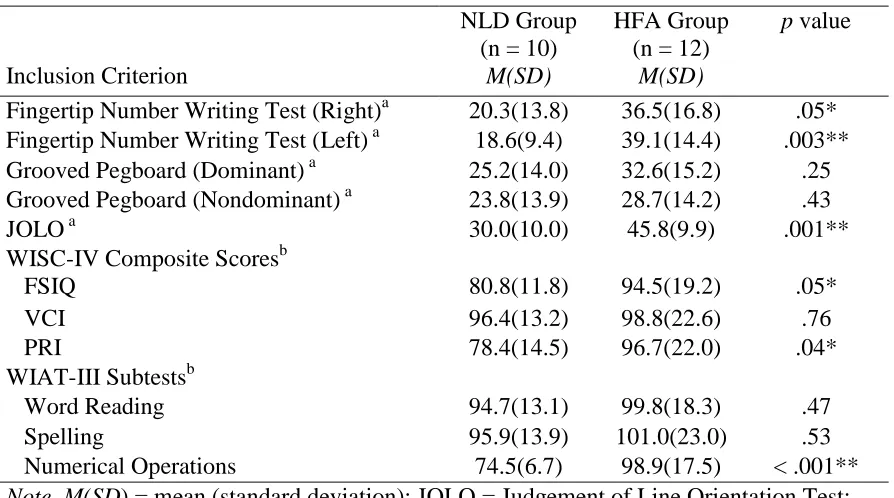
4. Descriptive statistics for the for the neuropsychological measures used to define the
inclusion criteria for the HFA and NLD groups ...119
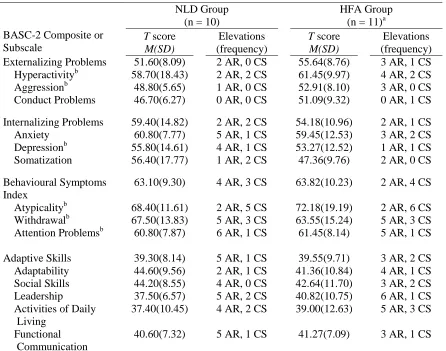
5. Descriptive statistics for the PRS of the BASC-2 for the HFA and NLD groups ...123
6. Descriptive statistics for the independent variables for the HFA and NLD groups ....126
7. Logistic Regression Results for Hypotheses 3, 4 and 5, as well as post-hoc analyses 127
List of Figures
1. Summary of the neuropsychological strengths and weaknesses in NLD. ...32
2. The socio-cognitive integration of abilities model (SOCIAL) ...70
3. The ICF model . ...83
4. The integrated model ...90
5. Diagram of the flow of participants through the study ...109
6. Receiver-operator characteristic curve for hypothesis 3 ...128
7. Receiver-operator characteristic curve for hypothesis 4 ...131
8. Receiver-operator characteristic curve for hypothesis 5 ...134
List of Appendices
A. Screening Questions for Participation ...216
B.Letter of Information ...217
C.Consent and Assent forms ...221
D.Clinical Interview and Child History Questions ...232
E. Neuropsychological and Screening Measures ...240
F. Group Comparison Measures ...254
List of Abbreviations
AAIDD – American Association on Intellectual and Developmental Disabilities
ADOS – Autism Diagnostic Observation Schedule
ADOS-2 – Autism Diagnostic Observation Schedule - Second Edition
ADOS-G – Autism Diagnostic Observation Schedule - Generic
ADHD – attention-deficit/hyperactivity disorder
ADI-R – Autism Diagnostic Interview Revised
APA – American Psychiatric Association
ASD – autism spectrum disorder
BASC-2 – Behavior Assessment System for Children - Second Edition
CARS – Childhood Autism Rating Scale
CCC – Children‘s Communication Checklist
CCC-2 – Children‘s Communication Checklist - Second Edition
C-HRNB – Halstead-Reitan Neuropsychological Test Battery for Children
CSBQR – Children‘s Social Behaviour Questionnaire - Revised
DSM-5 – Diagnostic and Statistical Manual of Mental Disorders - Fifth Edition
DSM-IV-TR – Diagnostic and Statistical Manual of Mental Disorders - Fourth Edition:
Text Revision
EIBI – Early Intensive Behavioural Intervention
FSIQ – Full Scale Intelligence Quotient
FTNW – Fingertip Number Writing Test of the Kløve-Matthews Sensory-Perceptual
GCC – Global Communication Composite of the CCC-2
HFA – high functioning autism
ICD-10 – International Classification of Diseases and Related Health Problems - Tenth
Edition
ICF – International Classification of Functioning, Disability and Health
ICF-CY – International Classification of Functioning, Disability and Health: Children
and Youth Version
JOLO – Judgement of Line Orientation
LDAWE – Learning Disability Association of Windsor-Essex County
NLD – nonverbal learning disorder
PIC – Personality Inventory for Children
PIC-R – Personality Inventory for Children Revised
PDD-NOS – pervasive developmental disorder, not otherwise specified
PRI – Perceptual Reasoning Index of the WISC-IV
PRS – Parent Rating Scale of the BASC-2
ROC – receiver operating characteristic
SIDI – Social Interaction Difference Index of the CCC-2
SOCIAL – socio-cognitive integration of abilities model
TPT – Tactual Performance Test
VCI – Verbal Comprehension Index of the WISC-IV
WAIS-R – Wechsler Adult Intelligence Scale Revised
WASI – Wechsler Abbreviated Scale of Intelligence
WRAVMA – Wide Range Assessment of Visual Motor Abilities
WISC – Wechsler Intelligence Scale for Children
WISC-III – Wechsler Intelligence Scale for Children Third Edition
Chapter 1: Introduction
Competently navigating the social landscape in one‘s life is a hallmark of
positive, healthy functioning throughout the lifespan (Stump, Ratliff, Wu, & Hawley,
2009). Unsuccessfully navigating the social landscape can have a profound and
wide-ranging impact on children‘s daily lives and development, including negative
consequences for academic achievement and coping skills (Miles & Stipek, 2006), as
well as for physical and mental health (Spitzberg, 2003). With regard to the latter, social
problems have been associated with anxiety, delinquency, and substance use, among a
variety of other difficulties (Fydrich, Chambless, Perry, Buergener, Beazley, 1998; Green
& Biederman, 1999; Renwick & Emler, 1991).
When social problems are severe enough to significantly impact daily
functioning, this may be an indication of a psychological disorder. A significant
disruption to social functioning represents an associated feature or a diagnostic criterion
of a variety of childhood disorders within the major diagnostic systems used by mental
health professionals, including the fifth edition of the Diagnostic and Statistical Manual
of Mental Disorders (DSM-5; American Psychiatric Association, 2013) and the tenth
edition of the International Classification of Diseases and Related Health Problems
(ICD-10; World Health Organization, 2004). Among the psychological disorders that are
associated with social dysfunction are anxiety disorders (Fombonne, Wostear, Cooper,
Harrington, & Rutter, 2001), mood disorders (Fombonne et al., 2001), as well as many
developmental disorders, including social (pragmatic) communication disorder (APA,
2013), learning disorders (Gadeyne, Ghesquiere, & Onghena, 2004; Greenham, 1999),
Simonoff et al., 2008). With regard to the latter, children with ASD often experience
significant difficulty fulfilling social roles in their family or community, functioning in a
classroom setting, or integrating with peers at school or in the community (Humphrey &
Symes, 2011; Scheuermann & Webber, 2002; Wing, 1981). Children with NLD may
experience a similar pattern of difficulties, including difficulty forming and maintaining
friendships with peers (Strang & Del Dotto, 1985; Rourke, Fisk & Strang, 1986;
Semrud-Clikeman, 2007) and a tendency to engage in inappropriate social behaviors, such as
misjudging the appropriate distance from others during social interactions (Rourke et al.,
1986). Especially enigmatic is understanding the similarities and differences among the
social problems that are associated with ASD and NLD (Semrud-Clikeman, 2007).
Children with ASD are a heterogeneous group, with some children having a
comorbid intellectual disorder or a language impairment and others having intellectual
and verbal abilities that are within normative expectations. It is estimated that 25 percent
of children with ASD have limited or no functional speech (Lord et al., 2004; Weitz,
Dexter, & Moore, 1997). The form of ASD without a comorbid intellectual impairment is
often informally labelled high functioning autism (HFA; Klinger, Dawson, Barnes &
Crisler, 2014; Pennington, 2008). The HFA label also includes children who were
diagnosed with Asperger‘s disorder under previous diagnostic systems, given that this
diagnosis included only children who did not have intellectual or language delays.
Although the core social features required for diagnosis are the same in children with
ASD who do and do not have a comorbid intellectual disorder or language impairment,
there are some differences in aspects of social functioning between higher and lower
& Hamdan-Allen, 1995). For example, those with HFA tend to have somewhat more
favourable social adjustment (Sigman, Dissanayake, Arbelle, & Ruskin, 1997) and
adaptive functioning (Schatz & Hamdan-Allen, 1995), although these are still below
normative expectations overall (Semrud-Clikeman, Walkowiak, Wilkinson, & Minne,
2010; Thomeer et al., 2012; Volker et al., 2010). Higher verbal abilities in ASD have
been found to be positively related to initiating social exchanges and responsiveness to
social exchanges (Hauck, Fein, Warehouse, & Feinstein, 1995; Sigman & Ruskin, 1999;
Stone & Caro-Martinez, 1990). In spite of these relative strengths, social behavior of
children with HFA does not occur at the same frequency and is not of the same quality as
that of typically developing children, including functioning within the area of language
pragmatics, or the social use of language (Lord & Magill-Evans, 1995).
Similarly, the quality of the social behavior of children with NLD and social
(pragmatic) communication disorder, particularly in terms of nonverbal behaviors and
pragmatic aspects of communication, has been reported to be of a lower caliber than that
of typically developing peers (Swineford, Thurm, Baird, Wetherby, & Swedo, 2014;
Tsatsanis & Rourke, 2003), in the context of the absence of an intellectual disability and
functional language abilities. Given the similarities in social difficulties and in relative
strengths in intellectual functioning and functional language abilities among HFA, NLD,
and social (pragmatic) communication disorder, these three disorders are often
challenging to disentangle diagnostically.
From the standpoint of mental health professionals, understanding the similarities
and differences in social functioning between HFA and NLD is important for diagnostic
overlap between disorders associated with similar profiles of social problems as
comprehensively as possible, a number of issues must be explored. The definitions of
major terms and constructs commonly used in the research literature pertaining to social
functioning will be discussed first. Subsequently, the criteria used to diagnose the
disorders of interest and any relevant history in the evolution of the diagnoses in
commonly used diagnostic systems will be reviewed. Major theoretical approaches to
social functioning and a framework to guide clinical thinking when evaluating children
for these disorders will then be outlined. Specific research that has investigated
differential diagnosis of these disorders will also be summarized. These topics will be
reviewed in order before the present study is described.
Definitions of Terms Commonly used in the Social Neuroscience Literature
To ensure the consistent use of terminology and for definitional clarity, a number
of commonly used terms and definitions from the social cognitive neuroscience literature
will be reviewed. These are arranged from superordinate multidimensional constructs to
subordinate constructs, including those emphasizing aspects of interpersonal behavior
and those emphasizing particular cognitive functions. There are two common approaches
to defining constructs: using operational definitions that describe ways in which the
construct can be observed and measured, or defining constructs in terms of their
relationships to other constructs (AAIDD, 2010). The latter approach will be used in this
section because it allows an understanding of the proposed superordinate and subordinate
relationships among constructs and it facilitates organization of the relevant constructs.
For each term, definitions will be provided, component constructs and their relationships
and supplementary information regarding the history of the terms or the theories of social
functioning from which they were drawn will be included where relevant. The
overarching theories of social functioning that underpin the present investigation will be
referenced briefly when describing some terms, and these theories will be outlined in
detail in a subsequent section.
Social competence and social functioning. Social competence and social
functioning are terms that have been used interchangeably in the research literature to
refer to the same underlying construct (Yager & Ehmann, 2006). Social competence has
been described as ―mega-construct‖ (Cavell, Meehan, & Fiala, 2003, p. 433) with
multiple dimensions. Numerous definitions of social competence have been put forward in
the research literature, but a general consensus surrounding a definition has not yet
emerged (Cavell et al., 2003; Hupp, LeBlanc, Jewell, & Warnes, 2009; Stump et al.,
2009). In terms of common definitions of these two terms, social competence has been
referred to generally as children‘s ability to thrive within their respective social
environments (Stump et al., 2009). Another influential theory defined social competence
broadly as ―effectiveness in interaction‖ (Rose-Krasnor, 1997, p. 111) and also more
specifically as children‘s ability to simultaneously meet their individual social or personal
goals and sustain positive relationships across time and social contexts (Rubin and
Rose-Krasnor, 1992). Social functioning has been defined as employing social skills to interact
with others in day-to-day contexts (Tobin, Drager, & Richardson, 2014). A more
comprehensive general definition states that social functioning is a multidimensional
construct that refers to the overall performance of day-to-day activities that have an
recreational activities (Green, 1996; Yager & Ehmann, 2006). In terms of common
themes among definitions, many definitions share an emphasis on the multidimensional
nature of the construct as well as a focus on overall social performance across a variety of
everyday contexts (Cavell et al., 2003; Green, 1996; Yager & Ehmann, 2006). Social
competence is also viewed by many researchers as having multiple levels of complexity,
including the level of the individual (e.g., a person‘s social skills and overall level of
social adjustment) and the level of interactions with one or more conversation partners
(e.g., typical performance of social skills when interacting with others in everyday
contexts; Yeates et al., 2007)
In spite of similarities among definitions of the construct at the superordinate
level, differences remain among theories in terms of the specific components that are
included. Specifically, many definitions have some overlap, but often include a different
assortment of components or hypothesize different relationships among their respective
components. For example, Cavell (1990) reported a hierarchical model of social
competence in which social skills are subsumed by social adjustment, which is in turn
subsumed by social competence, the superordinate construct. A model proposed by
Yeates et al. (2007) purports bidirectional relationships among three levels of social
competence: social cognition, social interactions, and social adjustment. Other models of
social functioning often include social cognition (Beauchamp & Anderson, 2010) and
social skills (Beauchamp & Anderson, 2010; Gresham & Elliott, 1987) as components of
social functioning, with each of those constructs including component variables as well,
such as attention, executive functions, communication skills, adequate awareness and
Halberstadt, Denham, & Dunsmore, 2001). Unfortunately, in spite of numerous published
articles identifying features, measures, and correlates of social competence, a
comprehensive and unifying theory of the construct has not yet emerged (Stump et al.,
2009).
Stump et al. (2009) made a useful distinction between theories of social
competence that are ―top-down‖ and theories that are ―bottom-up.‖ The former describe
theories that initially identify behaviours deemed to be socially competent--typically
behaviors that are socially appealing, culturally valued, or morally principled--and studies
subsequently investigate the common underlying roots of such behaviors (Stump et al.,
2009). In contrast, the ―bottom-up‖ approach focuses on the individual, the needs that
drive an individual‘s behavior, and the way in which those needs are met through social
means. That is, the ―bottom-up‖ approach focuses on identifying the roots of the behavior
determining social outcomes, and allows for multiple pathways to achieving social
competence (Stump et al., 2009). Specific social strategies are conceptualized as a means
to an end (i.e., meeting an individual need) as opposed to being the primary manifestation
of social competence. For example, Stump et al. (2009) note that bottom-up theories
begin with the individual and his or her innate needs and drives (e.g., social motivation,
the need to be accepted by others; Maniaci, 2009); such theories are not nested within a
moral framework (i.e., a behavior need not necessarily be virtuous or altruistic to be
socially competent), and focus instead on whether the individual achieves his or her
defined social goals that relate to meeting an innate need as one of the measures of
outcome. While there are benefits and limitations to either approach, viewing social
differences in component abilities among clinical groups that have been documented to
have difficulties with aspects of social competence while taking into account organismic
variables, such as motivation to interact with others. The bottom-up approach aligns more
closely with the present study.
Social adjustment. Social adjustment has been defined somewhat differently
depending on the theory that is referenced. Crick and Dodge (1994) conceptualize social
adjustment as the extent to which children interact agreeably with peers, refrain from
abrasive or incompetent social behaviour, and competently display adaptive social
behavior. In contrast, Cavell (1990) defines social adjustment on a broader scale.
Specifically, social adjustment is the extent to which children meet developmentally
based societal and cultural expectations across various domains, including physical and
mental health, academic achievement, legal status, employment status, familial status
(e.g., composition and level of cohesion), social status (e.g., peer acceptance; number,
quality, and type of relationships), and socioeconomic status. In Canada, for example, as
well as many other areas in the world, there are general societal expectations that children
will be physically and mentally healthy, will be achieving at grade level academically,
will adhere to social and moral behavioral conventions, and will be accepted and cared
for by their family and friends (Cavell, 1990). Yeates et al. (2007) argue that the
construct can be approached from the individual‘s perspective or from the perspective of
informants who are familiar with the individual (e.g., peers, parents, teachers; Parker,
Rubin, Erath, Wojslawowicz, & Buskirk, 2006; Rubin, Bukowski, & Parker, 2006).
There may be a discrepancy between self-evaluations and informant evaluations of social
children with low self-awareness, such as children who have had a traumatic brain injury
(Prigatano, 1991; Prigatano, Altman, & O‘Brien, 1990) or children with ASD
(Semrud-Clikeman, Walkowiak, Wilkinson, & Minne, 2010; Yeates et al., 2007). In light of the
different definitions of social adjustment that have been offered in the literature, Cavell‘s
(1990) definition will be emphasized in the present investigation due to its compatibility
with the social outcomes construct, which is reviewed next, as well as this definition‘s
place within a well-described theory of social competence that includes several other
relevant constructs defined in this section.
In terms of the relationships between social adjustment and other constructs in the
social cognitive neuroscience literature, a considerable body of research has found that
social adjustment, social information processing, social performance, and social
competence are interrelated (Cavell, 1990; Parker et al., 2006; Rubin et al., 2006; Yeates
et al., 2007). In particular, status in many of the domains included under the umbrella of
social adjustment is viewed as a product or component of social competence (e.g., Cavell,
1990; Crick & Dodge, 1994). The theory proposed by Cavell (1990) is a useful
conceptualization of social adjustment because it clearly outlines a hypothesized and
testable hierarchical structure of several related constructs, including social competence,
social adjustment, social performance, and social skills, respectively. Furthermore, this
theory‘s definition of social adjustment, with its emphasis on mental health, lends itself to
measurement using broad-band behavioral inventories. Such inventories are capable of
detecting and quantifying overall behavior patterns and symptoms, such as those
Social outcomes. In the context of psychological research, an outcome is a key
variable or dimension that is chosen to represent an aspect of natural recovery from, or
the effects of an intervention on, an illness, psychological disorder, or injury (Malec,
2011). Measuring an outcome involves the evaluation of abilities or functions that are
relevant to the chosen key dimension (Malec, 2011). In the case of research investigating
social outcomes in developmental disabilities, outcome variables have included
integration in personal and community life; acquisition and generalization of social,
practical, or academic skills across environments; the social impact of an intervention on
children and their families such as meaningful changes in personal, family, or school
settings (e.g., acquiring new social relationships, increased community participation, or
decreased stress in the family; Tsatsanis, Foley, & Donehower, 2004); and, more
generally, the degree of success children have in performing social roles and participating
in society (Priebe, 2007). The term has also been used synonymously with long-term
psychosocial adjustment (Yeates & Selman, 1989). When social outcomes are
conceptualized in terms of social adjustment, they are subsequently amenable to
measurement over time with standardized behavioral inventories that assess social
adjustment (Tsatsanis et al., 2004). Yeates et al. (2007) argued that a comprehensive
investigation of social outcomes should include evaluation at the level of the individual
(i.e., social skills and social adjustment) as well as at the level of dyads and groups (i.e.,
performance of an individual during social interactions).
Adaptive behavior. Adaptive behavior is a multidimensional construct that
includes some components that overlap with social functioning (American Association on
which has also been referred to as adaptive skills or adaptive functioning interchangeably
in the research literature, has historically been surrounded by some contention among
researchers and has evolved over time (Kamphaus, 2003). Recent conceptualizations of
adaptive behavior define this construct as the extent to which individuals meet societally
determined standards of personal independence and social role fulfillment relative to
peers with a similar sociocultural background (APA, 2013; Grossman, 1983; Tassé et al.,
2012). The general consensus that has emerged from the research literature is that
adaptive behavior is developmental in nature, increases in complexity over time; is
situated within an individual‘s cultural context; and focuses on typical performance of
skills and behaviors in one‘s everyday routines and environment as opposed to optimal
performance under ideal conditions (Kamphaus, 2003; Tassé et al., 2012).
Although historically some researchers have argued that adaptive behavior is a
unidimensional construct (e.g., Bruininks, McGrew, & Maruyama, 1988), adaptive
behavior is currently widely considered to be a multidimensional construct based on the
findings compiled from a large body of factor analytic research (Tassé et al., 2012;
Widaman, Borthwick-Duffy, & Little, 1991). In spite of some disagreement among
researchers regarding the structure of the components of adaptive behavior (Arias,
Verdugo, Navas, & Gómez, 2013) as well as its relationship to other constructs in the
social cognitive neuroscience literature, it is generally agreed that adaptive behavior
includes three components: conceptual, practical, and social skills (Harrison & Oakland,
2003; Widaman et al., 1991; Widaman & McGrew, 1996). Conceptual skills include
cognitive functions such as academic abilities, memory, application of practical
APA, 2013). Practical skills include managing money and time, managing basic self-care
activities, maintaining one‘s health and safety, using technology (e.g., phones or
computers), traveling or using public transportation, engaging in recreational activities,
and developing and adhering to a schedule (AAIDD, 2010; APA, 2013). Social skills
include empathy, self-esteem, adherence to legal rules and regulations, avoidance of
victimization, management of social conflict, interpersonal communication skills, and
judgment in interpersonal situations, among others (AAIDD, 2010; APA, 2013).
Although fine and gross motor skills were included as a dimension of adaptive behavior
at one time (i.e., DeStefano & Thompson, 1990; Rourke, Fisk & Strang, 1986), motor
skills are now commonly regarded as directly related to physical development and as
more appropriately assessed separately from adaptive behavior (Luckasson et al., 2002;
Schalock et al., 2010). The three main components of adaptive behavior have been
identified and replicated in populations of typically developing children as well as
children with an intellectual disability (Arias et al., 2013).
In terms of the history of the construct and the theory from which it was drawn,
adaptive behavior has been discussed primarily in the context of the intellectual
disabilities literature (Harrison & Oakland, 2003). However, over the course of time it
has been shown that the evaluation of adaptive behavior is also important in the
assessment of children with other psychological and physical disorders, such as ASD
(Bölte & Poustka, 2002; Fisch, Simensen, & Schroer, 2002; Harrison & Oakland, 2003),
developmental delay (Harrison & Oakland, 2003), specific learning disabilities
(Ditterline, Banner, Oakland, & Becton, 2008; Oakland & Harrison, 2008; Harrison &
Rosenberg, 2012), traumatic brain injury (Andrews, Rose, & Johnson, 1998; Max et al.,
1998), as well as hearing and visual impairments (Harrison & Oakland, 2003; Metsiou,
Papadopoulos, & Agaliotis, 2011). The groups most often studied include children who
have an intellectual disability, an ASD, or children with both of these disorders
(Damberga et al., 2014).
An area in which clarification is needed is identifying the relationship between the
constructs of social competence and adaptive behavior. Initially the term social
competence was used to identify the adaptive behavior construct (DeStefano &
Thompson, 1990). However, this practice declined long ago as research refined the
definition and conceptualization of adaptive behavior (Kamphaus, 2003). More recently,
some researchers purport that social competence subsumes adaptive behavior (e.g.,
Gresham & Elliott, 1987), while others categorize social competence under the umbrella
of adaptive behavior (Cavell et al., 2003; Widaman et al., 1991; Widaman & McGrew,
1996). Furthermore, the adaptive behavior construct has been criticized for the lack of
definitional clarity in the research literature (Harrison & Boan, 2004). Other researchers
criticize the factor analytic method of identifying the scope and content of the adaptive
behaviour construct, arguing that this method provides no way of determining whether
potentially important dimensions of this construct have been overlooked (Reschly,
Myers, & Hartel, 2002). There are also bottom-up theories of social competence, namely
self-determination theory (Deci & Ryan, 2000), which is a theory of adaptive behavior,
but has been argued to applicable as a theory of social competence as well (Stump et al.,
2009). Furthermore, adaptive behavior is a skills-based definition, while social
functioning. Overall, it appears that there is at least some overlap between social
competence and adaptive behavior, particularly with regard to social skills, a widely
recognized component of both (Jewell, Grippi, Hupp, & Krohn, 2007), but that there may
be separable dimensions as well, such as certain adaptive behaviours that may not
necessarily involve social interaction (e.g., meal preparation or some other daily living
skills). Further scholarly work is needed to sort out the complex relationship between
adaptive functioning and social competence, including whether one construct subsumes
the other, or whether there are distinct areas or areas of overlap between the two.
Social skills. Social skills are multiple cognitive and behavioral abilities that
include detecting socially-relevant cues and information, interpreting these accurately,
formulating appropriate and strategic responses based on that information and the present
context, and adeptly executing a planned response in a way that maximizes the chance of
achieving one's social goals and maintaining positive social relationships with others
(Bedell & Lennox, 1997). The social skills construct is a component of many theories of
social competence (e.g., Beauchamp & Anderson, 2010; Cavell, 1990; Rose-Krasnor &
Denham, 2009; Yager & Ehmann, 2006; Yeates et al., 2007) and has been reported by
various authors to include an array of abilities.
In terms of the components of this construct, different theories include somewhat
different components. Yager & Ehmann (2006) conceptualize social skills as forming a
hierarchy that ranges from basic skills that are discrete and observable (e.g., prosody or
eye contact) to complex skills that integrate multiple lower level skills (e.g., initiating an
interaction, providing support to others, dealing with interpersonal conflicts). Social
functioning (e.g., Beauchamp & Anderson, 2010; Cavell, 1990; Crick & Dodge, 1994;
Rose-Krasnor & Denham, 2009; Yager & Ehmann, 2006; Yeates et al., 2007).
Pragmatic communication has been defined as a collection of complex social
skills that involve social cognitive components (e.g., identifying or planning social goals
in a given situation), linguistic components (e.g., word selection), supralinguistic
components (e.g., knowledge of tacit rules that govern conversation in a given culture,
such as appropriate ways to initiate, maintain, and end a social interaction, and nonverbal
behaviors, such as body language, distance between speakers, tone of voice, and facial
expressions), and contextual components (i.e., calibrating language and nonverbal
behaviors to the current conversation partner and situation, such as using formal language
in a formal setting with conversation partners who are of a high status; Ciccia, 2011).
Pragmatic aspects of communication have been described as an organizational framework
people use to plan and execute verbal and nonverbal behaviors that maximize the
probability of them achieving their social goals in a particular situation (Ciccia, 2011).
Social emotional reciprocity is also a complex social skill that has implications for
social competence as well as the formation and closeness of relationships (Feldman,
Bamberger & Kanat-Maymon, 2013). Social emotional reciprocity has been defined as
the ability to initiate and sustain social interaction by engaging in emotionally appropriate
taking of turns when sharing thoughts and feelings with others (APA, 2013; Constantino
& Todd, 2000). Appropriate social emotional reciprocity facilitates the smooth navigation
of social interactions and relationships, and has been described as a hallmark of social
Most theories of social competence have purported that social skills are a
necessary, but not a sufficient determinant of social competence (e.g., Cavell, 1990;
Gresham & Elliott, 1987; Lemerise & Arsenio, 2000; Rose-Krasnor & Denham, 2009).
Many theorists differentiate between children‘s social skill capabilities and their typical
level of performance. A number of other factors that influence the expression of social
skills have been identified, including motivational factors (Gresham & Cavell, 1986;
Gresham & Elliott, 1984; Chevallier, Molesworth & Happe, 2012); affective factors, such
as emotion regulation (Lemerise & Arsenio, 2000); situational factors (Cavell, 1990); and
developmental factors, such as self-efficacy (Rose-Krasnor & Denham, 2009), as well as
the impact of early relationships on shaping children‘s emotional development (Cavell,
1990). In short, social skills form the foundation of many theories of social competence,
but it is generally agreed among researchers that other factors and constructs are
important and contribute to the expression of social skills and social competence.
Social cognition. Social cognition refers to aspects of higher order thinking that
are critical to interpreting social cues and formulating appropriate responses and the brain
systems that underlie them (Adolphs, 2002, 2003, 2006; Scourfield, Martin, Lewis, &
McGuffin, 1999). Social cognition has been defined as a sequential process that involves
perceiving socially relevant stimuli, processing of this information to generate possible
responses, selecting and executing a response, and finally evaluating the effectiveness of
that response in meeting their goals for the situation (Crick & Dodge, 1994; D‘Zurilla &
Goldfried, 1971; Lemerise & Arsenio 2000; Lipton & Nowicki, 2009; Wallace et al.,
1980; Yager & Ehmann, 2006; Yeates et al., 2007). Social cognitive abilities are
There are a number of theories of social cognition, including the contextual social
cognitive model (Lochman & Wells, 2002), the Social-Emotional Learning Framework
(Lipton & Nowicki, 2009), Emotional Intelligence (Mayer & Salovey, 1997), and the
Social Information Processing Model (Crick & Dodge, 1994). Crick and Dodge (1994)
postulated a model of social cognition that has been influential (Ladd, 1999) and used as
a foundation for several subsequent theories (e.g., Beauchamp & Anderson, 2010;
Halberstadt, Denham, & Dunsmore, 2001). Crick and Dodge‘s (1994) theory includes six
component cognitive processes that are involved in processing social information. These
are encoding salient information, interpreting social cues and developing a mental
representation of a given social interaction, establishing social goals, identifying possible
responses, selecting an appropriate response, and finally carrying out the selected
response (Crick & Dodge, 1994). This model integrates research data and insights from
multiple fields, including developmental psychology, clinical psychology, and cognitive
science (Crick & Dodge, 1994).
As with other social skills, it is widely recognized that a multitude of factors
influence social cognition in any given situation, and that performance in a particular
situation may be inadequate in spite of adequate social skills and knowledge (Cavell,
1990; Lemerise & Arsenio, 2000). For example, emotion regulation and executive
abilities can impact social cognition (Dodge, Laird, Lochman, & Zelli, 2002; Guralnick,
1999; Lemerise & Arsenio, 2000), as can other cognitive, personality, or affective
variables (Dodge et al., 2002).
Social Motivation. The terms social motivation, social interest, motivation to be
used interchangeably to refer to the same construct (Leary & Allen, 2011). Social
motivation has been conceptualized as rooted in an innate human drive which has been
referred to by various terms, such as ―the need to belong,‖ ―the need for belonging,‖ and
―the need for relatedness‖ (Maniaci, 2009, p. 165). This construct has been defined
somewhat differently depending on the theory that is referenced. For example, social
motivation has been defined as a desire for social interaction or affiliation (Leary &
Allen, 2011), as the spontaneous self-driven initiation of social interaction (Kohls,
Chevallier, Troiani, & Schultz, 2012), as well as the desire to develop and sustain at least
a minimal number of social relationships that are significant and rewarding to the
individual (Leary & Cox, 2008; Maniaci, 2009). Chevallier, Kohls, Troiani, Brodkin, and
Schultz (2012) argue that adequate description of this construct requires explanations of
social motivation that pertain to immediate and future goals of the individual, as well as
the evolutionary pressures of natural selection that have been exerted on humans over
time. That is, at the level of the individual, social motivation is a set of biological
mechanisms and psychological biases that incline a person to prioritize socially relevant
information, find social interaction rewarding , and maintain relationships (Chevallier,
Kohls, et al., 2012). From an evolutionary standpoint, Chevallier, Kohls, et al. (2012)
argue that those individuals who cooperated and collaborated with others to meet their
survival needs tended to have a greater chance of surviving, of adapting to their
environment, and of reproducing, making a cooperative orientation a desirable and
adaptive trait that was shaped by selection pressures.
The study of the link between social motivation and reward processing in humans
of reward have been thoroughly investigated, there are few available theories that outline
specific components of social motivation. Chevallier, Kohls, et al. (2012)‘s Social
Motivation Theory of Autism is one such theory, and it includes three components of
social motivation that are behavioral manifestations of the construct. Specifically, social
orienting, social reward, and social maintaining are included as the major components.
Social orienting refers to noticing and prioritizing socially relevant information
(Chevallier, Kohls, et al., 2012). Social reward refers to both the desire to spontaneously
initiate social interaction as well as the enjoyment brought about by interacting with
others (Chevallier, Kohls, et al., 2012). Social maintaining refers to the desire to maintain
social relationships, as well as efforts taken to foster and maintain relationships
(Chevallier, Kohls, et al., 2012).
The components of reward processing have been outlined in multiple theories.
―Wanting‖ and ―liking,‖ although sometimes defined and labelled slightly differently, are
two components of reward processing that have been included in several theories
(Berridge, Robinson, & Aldridge, 2009; Chevallier, Kohls, et al., 2012; Schultz, 2006).
Berridge et al. (2009) and Schultz (2006) also include ―learning‖ as a component of
reward processing, and Schultz (2006) included subcomponents of learning as well.
Wanting refers to the incentive one has to seek and engage in social interaction in order
to experience pleasure (Berridge et al., 2009; Chevallier, Kohls, et al., 2012). Liking
refers to pleasure experienced as a result of social interaction (Berridge et al., 2009;
Chevallier, Kohls, et al., 2012). Learning refers to associations that are developed
between reward-related cues and pleasure that are used to predict what social stimuli will
Theoretical approaches to social motivation are rooted in drive theories as well as
theories of reward (Berridge et al., 2009; Leary & Cox, 2008). With regard to the former,
social motivation is widely considered to stem from a fundamental human need to belong
to one or more social groups (Axelrod & Hamilton, 1981; Buss, 1995; Leary & Allen,
2011, Maniaci, 2009). Psychological drives have been defined as organizing processes
that incite purposive behavior (Gallistel, 1975; Hebb, 1949; Ikemoto, 2010). Although
there are some variations in the definition of psychological needs between theories, there
is general agreement that drives involve impulses to meet needs and that need satisfaction
contributes to overall well-being. A potent emotional response may be invoked when
needs are not met to draw the individual‘s attention and motivate them to meet the need.
Failure to meet needs may lead to significant negative consequences for socio-emotional
or health-related functioning (Maniaci, 2009). It is hypothesized that a disruption to the
need to belong may explain the fundamental nature of autism spectrum disorders
(Chevallier, Kohls, et al., 2012; Dawson, Carver, et al., 2002; Dawson, Webb, &
McPartland, 2005; Grelotti, Gauthier, & Schultz, 2002; Waterhouse, Fein, & Modahl,
1996).
Theories of reward also inform conceptualizations of social motivation and
complement drive theories. Specifically, Berridge et al. (2009) outlined evidence that the
psychological experience of reward includes desire, enjoyment, and prediction or
learning. Although reward has traditionally been studied in the context of some forms of
psychopathology, such as addiction (Blum, Cull, Braverman, & Comings, 1996; Blum et
al., 2000; Bowirrat & Oscar-Berman, 2005; Salamone, 2006), as well as in the context of
recently grown to include investigations of the role of reward as it pertains to social
motivation in children with autism spectrum disorder (Blum et al., 2000; Chevallier,
Kohls, et al., 2012).
Now that many commonly used definitions have been outlined, the next section
will discuss some of these constructs as they relate to social competence difficulties
observed in children with the disorders under investigation.
Nonverbal Learning Disorder
In this section, definitions of learning disorders in general and NLD will be
described. The evidence supporting the validity of NLD will be introduced and will be
revisited throughout the various components of this section. A brief outline of the history
of NLD will be presented. A discussion of the main features of NLD as outlined in the
most comprehensive model of the disorder that is currently available (e.g., Rourke, 1989)
and updates to this model (e.g., Casey, 2012) will follow. Subsequently, NLD‘s current
representation in diagnostic systems will be described, as will information pertaining to
its descriptive epidemiology. This section will close with a review of the literature that
investigates the social adjustment difficulties, adaptive behavior difficulties, and
pragmatic language difficulties that are associated with NLD.
Defining learning disorders and NLD. The term ―learning disorder‖ has been
defined in a number of ways and has been approached from a number of different
perspectives, including formal diagnostic systems, such as the DSM-IV-TR (APA, 2000)
and DSM-5 (APA, 2013), the field of education, the field of neuropsychology, advocates
for special education, and the law (Tannock, 2013). There is currently no consensus
(2008) used the term ―learning disorder‖ to refer to ―any neurodevelopmental disorder
that interferes with learning of academic and/or social skills‖ (p. 3). This use of the term
is unique in that it includes social dimensions in the definition, whereas most other
definitions do not explicitly include this or note that it is an associated feature of learning
disorders. Additionally, Pennington (2008) used ―learning disorders‖ as a broad term that
subsumes learning disabilities, such as the specific learning disabilities listed in DSM-5
(APA, 2013), as well as other neurodevelopmental disorders, including ASD. A widely
used definition offered by the Learning Disabilities Association of Ontario (2016) states
that learning disorders involve impairments in cognitive processes involved in learning,
including acquiring, remembering, comprehending, or organizing information, that lead
to unexpectedly low academic performance in one or more areas, in the context of
reasoning abilities that are within normative expectations. The cognitive processes are
impaired due to a combination of one or more congenital, genetic, or biological variables.
The skills most commonly affected include oral language, reading, written language, and
mathematics. Furthermore, the Learning Disabilities Association of Ontario (2016)
argues that achievement may be within expected levels, but that in order to diagnose a
learning disorder there must be evidence that this level of achievement is sustained only
with an atypically high level of effort and support which, if removed, would result in an
unexpectedly low level of achievement. It is also noted that learning disabilities may
result in social perception or social interaction difficulties.
There are three main approaches to identifying learning disorders (Fletcher,
Francis, Morris, & Lyon, 2005; Lewandowski & Lovett, 2014). The low achievement
across areas assessed by standardized achievement tests, such as the 25th percentile
(Siegel, 1992) or the 16th percentile (Dombrowski, Kamphaus, & Reynolds, 2004;
Lewandowski & Lovett, 2014). Children who receive scores below the cutoff and do not
have other factors significantly contributing to their low achievement, such as an
intellectual disability or inadequate instruction, are then diagnosed with a learning
disorder.
In contrast, the response to intervention approach is an indirect method of
identifying learning disorders that is grounded in providing high quality instruction in
research based curricula to all children. Children who are not meeting grade level
expectations are initially identified through periodic testing of all students with measures
based on the skills taught in the curriculum (Lewandowski & Lovett, 2014). Although
there is variation among specific models of the response to intervention approach, all
models emphasize that children who are not performing at grade level expectations on the
periodic measures receive a more intense level of instruction and intervention. If children
continue to not meet expectations with more intense instruction, individualized
instruction and other accommodations may be implemented (Lewandowski & Lovett,
2014).
The third approach is the cognitive processing or intra-individual differences
approach, which involves administering standardized psychological measures of
cognition as a means of assessing the psychological processes that are the foundation of
learning (Lewandowski & Lovett, 2014). This approach is an evolution of the
IQ-achievement disparity model, which has been widely criticized on conceptual and
Sternberg & Grigorenko, 2002; Stuebing et al., 2002). Profiles of scores on cognitive
measures are analyzed. If areas of weakness correlate with areas in which the child is not
achieving at the expected level on standardized achievement tests and school work, while
other cognitive skills are within normative expectations, this is evidence in support of a
learning disorder (Lewandowski & Lovett, 2014). Harrison‘s (2005) approach to learning
disorder identification emphasized the necessity of establishing a logical correspondence
between identified weaknesses in cognitive processes that underlie learning to the
demonstrated learning difficulties.
A neuropsychological approach to learning disorders dovetails with the cognitive
processing approach (D'Amato, Crepeau-Hobson, Huang, & Geil, 2005; Lewandowski &
Lovett, 2014) in that it emphasizes the need for a comprehensive assessment of relevant
cognitive abilities that underlie learning (Pennington, 2008). Furthermore, the
neuropsychological approach is grounded in evidence that there are multiple cognitive
impairments associated with all learning disorders (Pennington, 2008) and that these
impairments are related to the learning difficulties observed by teachers, caregivers, and
peers (Pennington, 2008). There is evidence that structural and functional differences in
the brains of children who have learning disorders compared with typically developing
children are associated with cognitive impairments that can be detected with
neuropsychological tests (Pennington, 2008).
Just as approaches to identifying learning disorders are heterogeneous in nature,
so are learning disorders themselves. Research on learning disorders supports that they
are comprised of different subgroups or subtypes (Fletcher, Lyon, Fuchs, & Barnes,
Johnson & Myklebust, 1967). NLD has also been referred to as nonverbal learning
disability (Rouke, 1988, 1989), right-hemisphere learning disability (Pennington, 2008),
as well as nonverbal perceptual-organizational-output disability (Strang & Rourke, 1985)
at one time. Just as there is no consensus regarding the definition of learning disorders
more generally, there is also currently no consensus regarding the definition of NLD, its
diagnostic criteria, the procedures that should be followed to establish a diagnosis of
NLD (e.g., Casey, 2012; Mammarella & Cornoldi, 2014; Pelletier, Ahmad, & Rourke
2001), or the impact it has on functioning in everyday contexts, including the classroom
(Casey, 2012). Based on Casey‘s (2015) review of the history and current status of
research investigating NLD, he summarized NLD as being defined by a
neuropsychological and functional profile that includes impaired fine-motor functioning,
visual perception, tactile perception, and speed of thinking, with average or better
spelling, reading, auditory perceptual, expressive language, and basic writing abilities on
standardized neuropsychological measures. Additionally, children with NLD tend to
demonstrate higher standard scores on the VIQ of Wechsler intelligence scales than PIQ
(Rourke, 1989) and to have difficulty with some executive functions, including nonverbal
problem solving (Fisher, DeLuca, & Rourke, 1997). Some features associated with this
profile include difficulty with procedural mathematics, difficulty with pragmatic
language skills (Broitman & Davis, 2013; Rourke, 2000; Volden, 2004) and a proclivity
towards internalized forms of psychopathology (Rourke, 2000). This profile of
neuropsychological strengths and weaknesses has often been hypothesized to be linked
with dysfunction of the right hemisphere (e.g., Johnson & Myklebust, 1967; Rourke,
Given the profile of strengths and weaknesses associated with NLD and its
definition at one point as a neuropsychological disorder (Rourke, 1989), the
neuropsychological approach is particularly suited to investigations of NLD. One of the
major advantages in adopting the neuropsychological approach to identifying learning
disorders over approaches that emphasize low achievement or a discrepancy between
achievement and ability in one or more academic areas (Fletcher et al., 2005) when
investigating NLD is that cognitive impairments and functional difficulties in children‘s
daily lives can be identified even in cases where performance in the subjects typically
emphasized in school is not low. That is, the traditional school setting arguably places
greater emphasis on cognitive functions typically associated primarily with the left
hemisphere (Dowker, 2006; Gaddes & Edgell, 2010), such as reading, writing, and other
language skills, as opposed to skills typically associated with right hemisphere
functioning, such as visual-perceptual organizational skills and some mathematical skills
(Dowker, 2006). With regard to the latter, mathematical skills do not neatly lateralize to
one hemisphere, but rather tend to be associated with widespread activation in both
hemispheres of the brain, particularly in the parietal lobes, in children (Kaufmann, Wood,
Rubinstein, & Henik, 2011). Gaddes and Edgell (2010) argued that having a disorder that
primarily impacts functions typically subserved by the right hemisphere, may not result
in significant difficulties in the academic subjects studied in school, including
mathematics. Indeed, NLD has been linked to low achievement in procedural
mathematics in many cases, but not all persons with NLD have this difficulty (Forrest,
Edgell‘s (2010) assertion may help to explain some of the variability in mathematics
performance among children with NLD.
Validity of NLD. For a disorder to be considered valid, a process of research
must establish that the group of symptoms of a particular disorder co-occur consistently,
form a theoretically meaningful entity, is associated with impairments that impact
day-to-day functioning, and cannot be better explained or accounted for by another disorder that
has already been validated (Pennington, 2008). Although some researchers are critical of
the validity of NLD (e.g., Spreen, 2011), there is a body of literature that spans nearly 50
years investigating the defining characteristics, associated features, and validity of NLD.
Pennington (2008) notes that there is considerably less empirical research investigating
NLD compared with some other learning disorders, such as ASD,
attention-deficit/hyperactivity disorder, and specific learning disorders with impairment in reading
or mathematics. However, he notes that there is a sufficient research base to establish the
provisional validity of NLD as research continues to be carried out to address some
remaining research questions that are relevant to its validity (Pennington, 2008). The
research that covers the brief history of NLD highlights that a considerable number of
studies have found that the symptoms of NLD tend to cluster together and co-occur
consistently. Those studies are supplemented by findings from research investigating
other disorders that tend to present with NLD symptoms. For example, a profile of
neuropsychological strengths and weaknesses similar to that found in NLD has been
found in children with Turner syndrome, and difficulties with social adjustment or the
social use of language (i.e., language pragmatics) have been found in fragile X syndrome
Rourke (1989) put forward the most comprehensive model of NLD that is currently
available, which covers the profile of primary, secondary, and tertiary
neuropsychological strengths and weaknesses that characterize the disorder, describes
childhood outcomes of the disorder in academic and social arenas, and provides a
potential explanation for some of the underlying causes of the disorder. Casey (2012),
building on Rourke‘s (1989) model, summarized the areas of impairment in NLD and the
functional impact of these impairments in children‘s day-to-day lives. This will be
reviewed in the section that discusses the Rourke (1989) model and updates to this
model. An area of ongoing investigation, and a question that undergirds the present study,
is whether NLD is most appropriately conceptualized as a disorder in its own right, or
whether the features of NLD can be better accounted for by existing disorders, such as
ASD, social (pragmatic) communication disorder, or specific learning disorder with
impairment in mathematics (Pennington, 2008). This question will be more thoroughly
addressed in a subsequent section that discusses research investigating the differential
diagnosis between NLD and HFA.
Brief history of NLD. The evolution of the description of NLD must be obtained
through a review of the research literature. The developmental form of NLD was first
identified by Johnson and Myklebust (1967) as a subtype of learning disorder. These
authors adopted the view that learning disorders were rooted in brain dysfunction, and
that for all people, learning was a process characterized by ―hierarchies of experience‖
(Johnson & Myklebust, 1967, p. 32). The hierarchy consists of five levels: sensation,
perception, imagery, symbolization, and conceptualization, respectively (Johnson &
learning was characterized by impairments in perception and imagery, meaning that
children with NLD have difficulty bringing appropriate meaning to their sensory
experiences and mentally manipulating sensory information they have perceived. They
also purported that this extended to perceiving and interpreting social information. That
is, children with NLD were reported to have difficulty with correctly interpreting other‘s
affect and with understanding how others perceive them (Johnson & Myklebust, 1967).
These authors also hypothesized that NLD was a disorder that involved primarily systems
ordinarily thought to be subserved by the right hemisphere (Johnson & Myklebust, 1967).
Casey (2015) provided a summary of the early studies that investigated and
established an empirical basis of the neuropsychological features of NLD. An early series
of studies (e.g., Rourke, Dietrich, & Young, 1973; Rourke & Telegdy, 1971; Rourke,
Young, & Flewelling, 1971) used neuropsychological measures to investigate similarities
and differences among children with diverse learning difficulties. Children were divided
into groups on the basis of their performance on the Wechsler Intelligence Scale for
Children (Wechsler, 1949). Specifically, one group included children with a Verbal
Intelligence Quotient (VIQ) at least ten standard scores points higher than their
Performance Intelligence Quotient (PIQ), another group included children with the
opposite pattern of standard score point differences between the VIQ and PIQ, and a third
group included children who had a VIQ and a PIQ that were within four standard score
points of each other. The findings from these studies supported the position that there are
multiple subtypes of learning disorders. Furthermore, the findings indicated different
patterns of performance across the three groups of children that corresponded with




![QSAR, Molecular Docking and Dynamics Studies of Pyrrolo[2,3-b]Pyridine Derivatives as Bruton’s Tyrosine Kinase Inhibitors](data:image/gif;base64,R0lGODlhAQABAIAAAP///wAAACH5BAEAAAAALAAAAAABAAEAAAICRAEAOw==)