ABSTRACT
BRADLEY-LAMBRIGHT, PORTIA ELIZABETH. Examining School Counselor Influence on the Placement of Ninth-Grade Students into Mathematics Courses: An Analysis of the High School Longitudinal Study of 2009. (Under the direction of Dr. Lance Fusarelli).
The purpose of this quantitative study was to understand the placement of ninth-grade students within advanced mathematics courses. High school counselors are often criticized for being an ineffective resource in the placement of students of color and low-income students into such classes; even though their professional mandates state that they advocate ensuring educational equity, access, and academic success for all students (Beale, 2003). _____Mathematics is important for students who want to enter the Science, Technology, Engineering, and Mathematics (STEM) workforce. Enrollment of U.S. students majoring in STEM fields and pursuing STEM careers are the basis for the surveys in the High School Longitudinal Study of 2009 (HSLS:09). For the U.S to compete in a global economy that is increasingly technologically based, a skilled STEM workforce is an essential (National Academies, 2010). This study was based upon the secondary analysis of data collected by the National Center for Education Statistics (NCES) High School Longitudinal Study of 2009 (HSLS:09). HSLS:09 is composed of a stratified random sample of 21,444 ninth graders in 944 schools that was representative of the 50 United States and the District of Columbia at that time (Ingels et al., 2011).
used to examine factors in the placement of typical ninth-grade students into mathematics courses.
Descriptive statistics, exploratory data analysis, factor analysis, and ordered logistic regression were used to analyze data from the High School Longitudinal Study of 2009 (HSLS:09), in order to more closely examine the issue of student placement into high school mathematics courses.
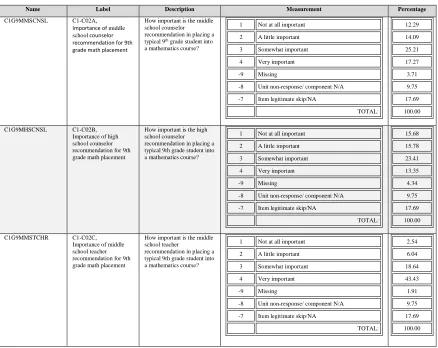
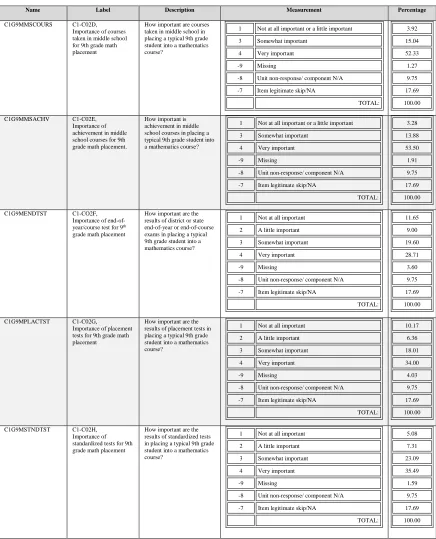
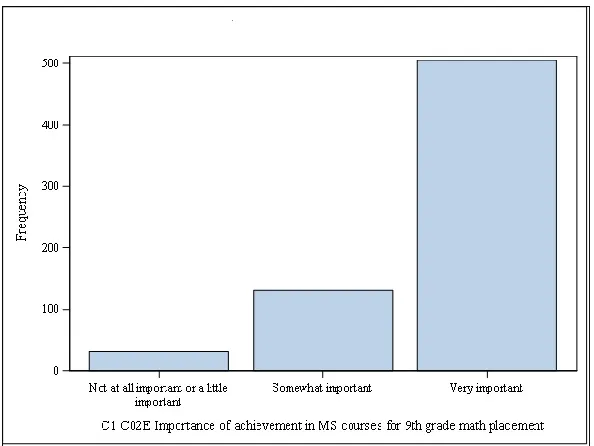
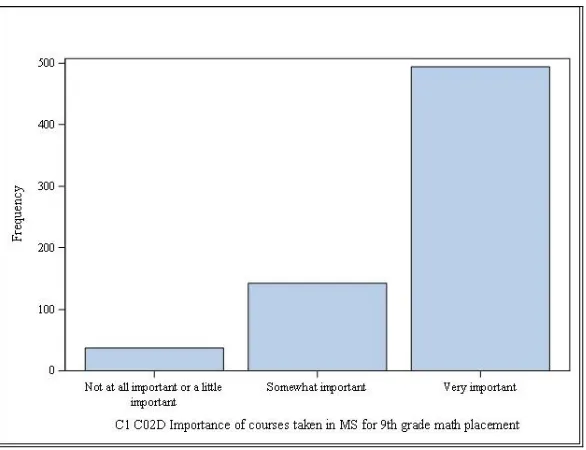
Findings revealed that most counselors in the study believed middle school achievement and middle school courses to be the most important factors in determining a student’s course placement in ninth-grade mathematics. Notably, a student’s career/education
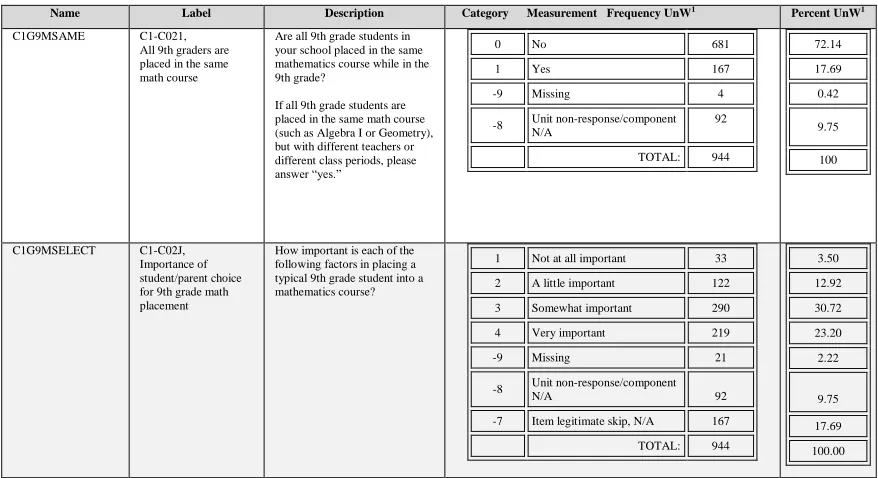
plan was found to be of little importance for ninth-grade mathematics course placement, though a few counselors in the study did indicate that it was an important factor. From the counselors’ responses, three themes emerged as significant factors for ninth-grade mathematics
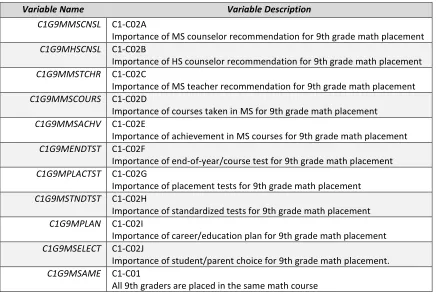
course placement: students’ past performance, students’ performance on tests, and students' future potential. Each of the factors examined in the current study fell under one of these themes. Students’ past performance included middle school achievement, middle school
courses, and middle school teacher recommendations; students’ performance on tests included standardized tests as well as placement tests; and students’ future potential included
Examining School Counselor Influence on the Placement of Ninth-Grade Students into Mathematics Courses: An Analysis of the High School Longitudinal Study of 2009
by
Portia Elizabeth Bradley-Lambright
A dissertation submitted to the Graduate Faculty of North Carolina State University
in partial fulfillment of the requirements for the degree of
Doctor of Education
Educational Administration and Supervision
Raleigh, North Carolina 2016
APPROVED BY:
________________________________ ________________________________
Dr. Lance D. Fusarelli Dr. Stanley B. Baker
DEDICATION
I dedicate this dissertation first to my husband, Gary Lambright, for his love,
understanding and humor. His endless support and patience helped make it possible for me to accomplish one of my biggest dreams. I also dedicate this work to my aunts Dolly Williams and Perto Coleman, my sons Travis and Jasen Lambright, as well as to my daughter-in-law Christine Murray-Lambright and granddaughters Seraphina Rose and Aliya Lambright.
As the oldest of 10 children, I must also recognize my beloved siblings: Larry Bradley, Cheryl Malone Brown, Debra Thompson, Kevin Bradley, Nancy Minor, Stacey Bradley, Lenore Bradley, and Mark Bradley.
BIOGRAPHY
I am the eldest of three brothers and six sisters and lovingly known as the “Queen Bee” in my family. As a youth growing up in the inner city of Newark, N.J., I was presented
opportunities from the public school system, the public library, the Girl Scouts, my church, Upward Bound, and from my participation in the Newark Museum—all of which opened many doors for me throughout my journey to adulthood. But it was Miss Molloy, my eighth-grade teacher at Burnet Street Elementary School, who helped me make a vital choice. While I thought I wanted to attend vocational school to be a beautician, she insisted that I move forward in my academic career and enroll in a ninth-grade college preparatory program.
I followed Miss Malloy’s wise advice, and it led me toward the path I am on today.
During the ninth grade, I had the opportunity to take an admissions test for a prestigious local high school, again at the not-so-subtle urging of my junior high school counselor who signed me up for the test without my knowledge. I soon entered tenth grade at Arts High, and went on to attend Seton Hall University in New Jersey after graduation.
I graduated from Seton Hall University with a Bachelor of Science in Education and a Master of Education in Student Personnel in Higher Education. After marriage, I continued my education at Cleveland State University, South Florida University, Texas Christian College, North Texas College, and North Carolina State University, to earn various
ACKNOWLEDGMENTS
“Surround yourself with only people who are going to lift you higher.” —Oprah Winfrey
I have had the good fortune of making this journey with the support of many
phenomenal individuals. First, I would like to express my gratitude for my husband and best friend, Gary Lambright. He has weathered many storms of my frustration and
procrastination, and done so with nothing but grace and kindness. Even more, his constant encouragement gave me the strength to overcome any obstacles I faced during the
completion of this study. Gary has been my steadfast rock of reason and positive energy. Next, I would like to thank the North Carolina State University faculty for imparting their knowledge and providing unwavering support in the writing of my dissertation. I am particularly indebted to Dr. Paul Bitting, Dr. Tamara Young, and Dr. Lance Fusarelli, each of whom has spent many years in supporting me on this project. I also thank Dr. Edwin Gerler and Dr. Stanley Baker for their roles as members of my committee.
I have also had the great luck of meeting and working with peers who ultimately became instrumental in supporting my success. To Lilian Cheung and Trudy Whitehead, I give my deepest thanks.
TABLE OF CONTENTS
LIST OF TABLES ... vii
LIST OF FIGURES ... ix
CHAPTER 1: INTRODUCTION ... 1
Demographic Shift in Education ... 2
Twenty-First Century Students ... 3
School Reform ... 5
Statement of the Problem ... 6
Background and Context for the Problem ... 7
Purpose of Study ... 9
Definition of Terms ... 11
CHAPTER 2: LITERATURE REVIEW ... 13
Context ... 13
Purpose... 15
Importance of Advanced Mathematics ... 15
Effects of Mathematics Placement Decisions ... 16
Advanced Mathematics Placement Process... 17
Mathematics Matters ... 19
International Comparison of Student Performance ... 21
Tracking ... 23
Algebra for All... 25
Opportunity to Learn ... 28
Placement ... 30
School Counselors ... 32
Defining the School Counselor Role ... 33
Overview of School Counselor Job Description ... 34
School Counselors and School Reform ... 36
High School Longitudinal Study of 2009 ... 39
Parent Survey ... 41
The Need for Quantitative Research on School Counselors ... 42
Chapter Summary ... 43
CHAPTER 3: METHODOLOGY ... 44
Overview of Research Design ... 44
Data Source: The High School Longitudinal Study of 2009 ... 45
Sampling Procedures ... 46
Instrumentation ... 46
Counselor Surveys ... 47
Descriptive Statistics ... 47
Variables ... 48
Multicollinearity Diagnostics ... 51
Missing Value Analysis ... 53
Simple Regression ... 54
Limitations of the Study ... 56
Chapter Summary ... 56
CHAPTER 4: FINDINGS ... 58
Review of the Purpose of the Study ... 58
Data Description... 58
Statistical Objectives and Methodology ... 59
Exploratory Data Analysis Results... 61
Data Importation and Pre-processing ... 61
Data Cleaning: Dealing with Missing Values ... 62
Summary Statistics ... 63
MCAR Test ... 75
Factor Analysis ... 77
Ordered Logistic Regression (or Cumulative Logit) Results ... 81
Ranked Order of Variables by Researcher ... 97
Counselor with an Ideal Caseload and RAMPed Program ... 97
Counselor with a Heavy Caseload and UnRAMPed Program ... 99
Chapter Summary ... 101
CHAPTER 5: DISCUSSION ... 103
Introduction ... 103
Summary of Responses ... 104
Emergent Themes ... 105
Students’ Past Performance ... 106
Students’ Performance on Tests... 110
Students’ Future Potential ... 112
Alignment of Findings with HSLS:09 ... 115
Comparison of Findings with Previous Research ... 116
Limitations of the Study ... 117
Restricted Data ... 117
Sampling Limitations ... 118
Implications for Future Research... 118
Implications for Counseling Practice ... 119
LIST OF TABLES
Table 1: Math Placement Factors from School Counselor Variables from HSLS:09 .... 48
Table 2: Variables (Factors) of Interest ... 60
Table 3: SAS Analyses Output/ Summary Statistics for all Variables of Interest ... 63
Table 4: C1-C02E, Importance of Achievement in Middle School Courses for 9th-Grade Math Placement ... 65
Table 5: C1-C02D, Importance of Courses Taken in Middle School for 9th-Grade Math Placement ... 66
Table 6: C1-C02C, Importance of Middle School Teacher Recommendation for 9th -Grade Math Placement... 67
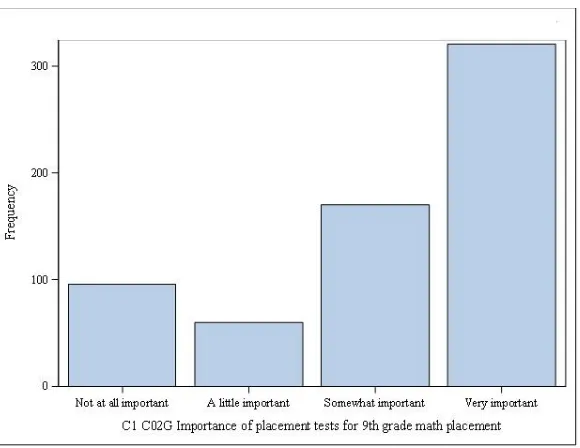
Table 7: C1-C02H, Importance of Standardized Tests for 9th-Grade Math Placement 68 Table 8: C1-C02G, Importance of Placement Tests for 9th-Grade Math Placement ... 69
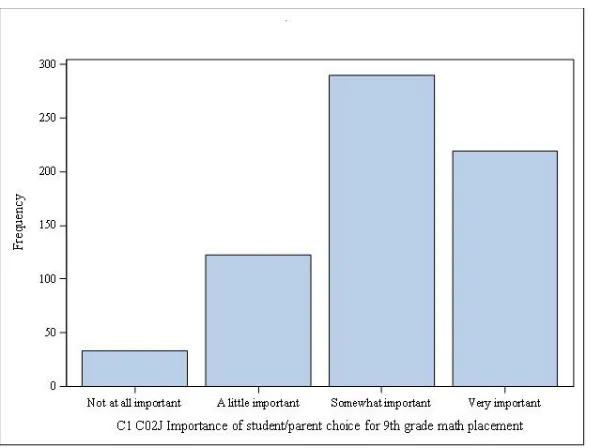
Table 9: C1-C02J, Importance of Student/Parent Choice for 9th-Grade Math Placement ... 70
Table 10: C1-C02F, Importance of End-of-Year/Course Test for 9th-Grade Math Placement ... 71
Table 11: C1-C02A, Importance of Middle School Counselor Recommendation for 9th -Grade Math Placement... 72
Table 12: C1-C02B, Importance of High School Counselor Recommendation for 9th -Grade Math Placement... 73
Table 13: C1-C02I, Importance of Career/Education Plan for 9th-Grade Math Placement ... 74
Table 14: Eigenvalues of the Correlation Matrix ... 77
Table 15: Factor Loadings after Varimax Rotation ... 78
Table 16: Ordered Logistic Regression Output, C1G9MHSCNSL regressed ... 83
Table 17: Odds Ratio Estimates, C1G9MHSCNSL regressed ... 84
Table 18: Ordered Logistic Regression, C1G9MMSCNSL regressed ... 85
Table 19: Odds Ratio Estimates, C1G9MMSCNSL regressed ... 86
Table 20: Ordered Logistic Regression, C1G9MMSTCHR regressed ... 86
Table 21: Odds Ratio Estimates, C1G9MMSTCHR regressed ... 88
Table 22: Ordered Logistic Regression, C1G9MMSCOURS regressed... 88
Table 23: Odds Ratio Estimates, C1G9MMSCOURS regressed ... 89
Table 24: Ordered Logistic Regression, C1G9MMSACHV regressed ... 89
Table 25: Odds Ratio Estimates, C1G9MMSACHV regressed ... 90
Table 26: Ordered Logistic Regression, C1G9MENDTST regressed... 90
Table 27: Odds Ratio Estimates, C1G9MENDTST regressed ... 91
Table 28: Ordered Logistic Regression, C1G9MPLACTST regressed ... 92
Table 29: Odds Ratio Estimates, C1G9MPLACTST regressed ... 92
Table 30: Ordered Logistic Regression, C1G9MSTNDTST regressed ... 93
Table 31: Odds Ratio Estimates, C1G9MSTNDTST regressed ... 94
Table 32: Ordered Logistic Regression, C1G9MPLAN regressed ... 94
LIST OF FIGURES
Figure 1: Counselors’ Ranking of the Importance of Achievement in Middle School
Courses for 9th-Grade Math Placement (C1G9MMSACHV)... 65
Figure 2: Counselors’ Ranking of the Importance of Courses Taken in Middle School for 9th-Grade Math Placement (C1G9MMSCOURS) ... 66
Figure 3: Counselors’ Ranking of the Importance of Middle School Teacher Recommendations for 9th-Grade Math Placement (Variable CLG9MMSTCHR) ... 67
Figure 4: Counselors’ Ranking of the Importance of Standardized Tests for 9th-Grade Math Placement (C1G9MSTNDTST) ... 68
Figure 5: Counselors’ Ranking of the Importance of Placement Tests for 9th-Grade Math Placement (C1G9MPLACTST)... 69
Figure 6: Counselors’ Ranking of the Importance of Student/Parent Choice for 9th-Grade Math Placement (C1G9MSELECT) ... 70
Figure 7: Counselors’ Ranking of the Importance of End-of-Year/Course Test for 9th-Grade Math Placement (C1G9MENDTST) ... 71
Figure 8: Counselors’ Ranking of the Importance of Middle School Counselor Recommendation for 9th-Grade Math Placement (C1G9MMSCNSL) ... 72
Figure 9: Counselors’ Ranking of the Importance of High School Counselor Recommendation for 9th-Grade Math Placement (C1G9MHSCNSL) ... 73
Figure 10: Counselors’ Ranking of the Importance of Career/Education Plan for 9th-Grade Math Placement (C1G9MPLAN) ... 74
Figure 11: MCAR Test Results ... 76
Figure 12: Scree Plot ... 78
CHAPTER 1: INTRODUCTION
“The strength of the American economy is inextricably linked to the strength of America’s education system. Now more than ever, the American economy needs a workforce that is skilled, adaptable, creative, and equipped for success in global marketplace” (The
White House, 2015). The quality of life in the twenty-first century will be influenced by how well its citizens are educated. The continued practice of using the twentieth-century process – or similar versions of sorting and placing students into general, vocational, and college preparatory school pathways – will not produce enough educated workers to drive growth in the modern economy. Much criticism of the current United States educational system focuses on the inability to prepare adequately all high school graduates for work and college (Berger & Fisher, 2013; Peterson, Woessman, Hanushek, & Lastra-Anadón, 2011). There is an urgency to educate all students to be work-ready and have the needed skillsets to take advantage of college or post-high school training.
Student access to high-quality curriculum and effective instruction has an important impact on their academic accomplishment. This is especially true for the average student, the high-achieving students of color, and students from low-income families (Achieve Inc., 2008; Akos, Shoffner, & Ellis, 2007; Bromberg & Theokas, 2014; Darling-Hammond, 2008; Muller, Riegle-Crumb, Schiller, Wilkinson, & Frank, 2010). Enrollment in higher-level coursework has the potential to develop students’ skills, adaptability, and critical thinking, thus contributing educated citizens to twenty-first-century society.
have proficiency in science, technology, and math. Because there is a strong link between education and income, college-bound students pursuing, STEM careers will have greater opportunities to obtain higher paying wages (Baum, Ma, & Payea, 2013).
Nationally, there are an underrepresentation of high school students of color and students from low-income families enrolled in advanced placement (AP) courses.
Historically, students of color and students from low-income families are found to be tracked into low-level math and science classes. The prerequisite courses required for advanced math, science, technology, and engineering classes have a low enrollment of students of color and low-income students. Their low membership in rigorous mathematics and science classes is well documented (Archbald & Farley-Ripple, 2012; Archbald, Glutting, & Qian, 2009; Bromberg & Theokas, 2014; Hallinan, 1988; United States Department of Education, 2014).
Demographic Shift in Education
The demographics of America are changing within the public school system. Student enrollment distribution, which has historically been primarily Caucasian, is shifting to students of color (Children’s Defense Fund, 2010). The future of a vibrant and successful American economy will gradually depend upon the success of its well-educated people of color (College Board, 2012).
low-level, watered-down courses” (Hallinan, Bottoms, & Pallas, 2003, p. 125). Today, the enrollment of students of color is increasing in the public school system. The diminishing quality of education received by students in the public school system could result in America losing its tier-one ranking and dropping to a tier-two or even tier-three level.
Twenty-First Century Students
Globalization is influencing how public school systems educate students. Policymakers are rethinking education criteria to meet the twenty-first century demands students face as they compete in a diverse world (Paredes et al., 2008; Peterson et al., 2011; VandeWiele, 2008). Students are bombarded with knowledge from ever-increasing sources. They are using the Internet, computers, smartphones, iPads, and social network systems as vehicles for learning. They have the ability to be skillful in the modern digital world, but will also need strong
foundations in STEM concepts. Because of this, United States legislatures strongly suggest that school policymakers review whether schools are adequately preparing students for the twenty-first-century global economy (Government Accountability Office, 2009, 2011).
The skillsets to survive and thrive in the twenty-first century require individuals to be continuous learners. They need to be creative and critical thinkers who can handle the constant change of the modern world and are ready for the problems of the future (Treadwell, 2011). Students from diverse backgrounds depend on the educational system to prepare them with the life skills necessary for their future. Moreover, the educational skills that dominated the
along with the generations that follow them, will have different issues to deal with to maintain the democratic way of life.
Today, smart machines are replacing traditional jobs in grocery stores, customer services, and manufacturing, resulting in discarded occupations like keypunch operators, copy boys, and stenographers, to name a few. Other unskilled positions that once provided a
comfortable living are on the path to extinction. Thus, the twenty-first century survivor must have the ability to problem-solve in a way that centers on more than just the basic skills and single-focus job readiness that once sustained the baby boomers' way of life (Belfield & Levin, 2007; Peterson et al., 2011; Pink, 2006; Treadwell, 2011). With the loss of unskilled and semi-skilled occupations, the American educational system has shifted focus to prepare students for what can be called today’s “era of knowledge and technology.” While less skilled workers are
believed apt to become obsolete, skilled workers are needed in society today to use and support new technologies (Goldin & Katz, 2008). The twenty-first-century student, then, will need “strong quantitative and analytical skills” (Dalton, Ingels, Downing, & Boznick, 2007; Ingels,
Dalton, Holder, Lauff, & Burns, 2011; Peterson et al., 2011) to work in a technical global economy.
School Reform
Strict safety measures to guarantee the education of all students have been in place since the United States Supreme Court verdict in Brown v. the Board of Education. Then, in 1963, the A Nation at Risk report exposed some frailties of the American educational system, revealing that not all American students were receiving a quality education. The No Child Left Behind (NCLB) and Race to the Top (RTT) reform movements attempted to address problems in the educational system and with the way children are educated nationally.
While these reform measures have seemed to influence educational equality, equity, and access for all students, it has been more through rhetoric than by action (Hunt, 2008; Louis & Gordon, 2006; Payne & Kaba, 2007; Vinovskis, 2009). For example, NCLB legislation is cited for penalizing schools with limited resources, unqualified teachers, and diverse school populations. States have protested the NCLB’s 1,000 pages of mandates for being unfunded and have brought lawsuits against the federal government (Darling-Hammond, 2007a). In addition, some researchers suggest that the achievement gap and opportunity gap between White students, students of color, and students living in poverty have slightly closed in some years, but are currently widening in the public school system (Darden, 2011; Ferguson, 2007; Gorey, 2009; Murphy, 2009).
The causes for such limited academic growth of students living in poverty and among students of color are complicated, and various perspectives have been put forth in the research. Contributing factors can include parents, environment, teachers, policy, poverty,
non-White students. Despite factors that inhibit academic growth for students of color and for students living in poverty, there is an urgency to educate all students in order for America to maintain its status as a prominent world power (Barbara, 2010; Children's Defense Fund, 2010; Kirst, Haertel, et al., 2010; Peterson et al., 2011).
The needed skillsets for the twenty-first century require students to have a firm
foundation in STEM. Furthermore, it is in the best interests of more than just local jurisdictions that students are prepared in these subjects. In an attempt to investigate this issue further, the High School Longitudinal Study of 2009 (HSLS:09), a federal study, was conducted to investigate students' perceptions on their career plans (Ingels, Pratt, et al., 2011; LoGerfo, Christopher, & Flanagan, 2011). As math students' goals are in alignment with those of STEM, the current study used HSLS:09 to examine how school counselors influence student
placement in math.
Statement of the Problem
Rigorous high school mathematics has been documented as an important course-taking step for advancing students’ overall academic achievement, college readiness, and
post-secondary success (Archbald et al., 2009; McKillip, Rawls, & Barry, 2012; Taliaferro & DeCuir-Gunby, 2008; U.S. Department of Education, 2014; Zelkowski, 2011). Students taking demanding honor-level and AP math courses are more likely to graduate and attend college than their counterparts (Achieve Inc., 2008; Archbald et al., 2009; Baum et al., 2013).
Historically, school counselors’ role in sorting and placing students in math classes is
the United States, it became the practice of high school guidance counselors to sort and place students on general, vocational, and college preparatory paths (Cicourel & Kitsuse, 1963; Rosenbaum, Miller, & Krei, 1996; Smith, 2011). Their duty was to identify capable students to attend competitive colleges and universities for math and science majors, to ensure that capable students were enrolled in the rigorous math and science classes required for college admission. Today’s comprehensive school counseling program should be aligned with twenty-first
century educational goals, rather than the outdated mindset that sorted and placed students in courses—but it is not. While students need strong mathematical skills for modern employment rch opportunities, there are valid concerns that students of color and students from low-income families are not accessing advanced-level mathematics courses, which can affect their college and employment opportunities. Therefore, the question remains: What role do school
counselors have in ensuring the placement of students in classes that will meet their aspirations and goals for post-secondary opportunities?
Background and Context for the Problem
High school mathematics has been documented to be an essential factor in advancing students’ overall academic achievement, college readiness, and post-secondary success (Cobbs,
2014; Oakes, 1990; Tate & Rousseau, 2002; Zelkowski, 2011). Placement of students into
math courses, whether intentional or unintentional, is sometimes based on race, gender,
Garrity, 2009; Ford & Moore, 2013). The number of African-American and Hispanic students signing up for advanced classes looks to be below that of Asians and Whites on a national level (College Board, 2012). Arguably, these low enrollment numbers may be contributing to
African American, Hispanic, and female students’ exclusion from eventual admission into honors or AP math classes (Crosnoe & Schneider, 2010; Ford & Moore, 2013; Hill, 2010; Riegle-Crumb & Grodsky, 2010).
Research also shows that a high percentage of African-American, Hispanic, and female students are assigned to low-level mathematics courses that do not adequately prepare them for subsequent, higher-level school courses, nor for entrance into the workforce and/or college. For example, Algebra I is a gateway course for enrollment into subsequent advanced-level math courses, yet researchers have documented that gender and racial implications have prohibited admission into Algebra I in middle school (Killingsworth, 2011; Lee, 2012). Others even argue that enrollment in Algebra I is a civil rights issue that needs to be addressed in the public education system (Moses & Cobb, 2002). Thus, some students of color encounter barriers to entry into rigorous mathematics courses, and opportunities to enroll are lacking in many school districts.
Whether or not to teach Algebra I at the eighth-grade level is a hot topic debated by educators. When students take Algebra I in some school districts, it determines the level of advanced math courses they can complete in high school. Research suggests that students who complete Algebra I in the eighth grade will be successful in higher-level math classes
unprepared for higher-level courses (Darden, 2011; Harris, 2011; Riegle-Crumb & Grodsky, 2010), it seems evident that school policies and practices contribute to these students’ exclusion from honors or AP math classes.
The way in which students are sorted and placed in courses has demonstrable effects on their performance in academic non-college and college programs. Researchers tracking
students have found that students of color and those from low-income families are more affected by achievement gaps and have reduced opportunities to learn. That is, students in low-level classes are taught lower-low-level curriculum than their peers. This suggests that the
placement of students into low-level course pathways by counselors is no longer an acceptable approach to preparing them for adulthood in the twenty-first century. Many learners tracked out of these demanding classes are leaving high school unprepared for the workforce, not graduating from two- or four-year colleges, and with underdeveloped higher thinking skills (Bridgeland & Bruce, 2011; Bromberg & Theokas, 2014; Burris & Garrity, 2009; Minor, Desimone, Spencer, & Phillips, 2015). Additionally, students’ mathematics placement facilitates course selection for other subjects such as science and language arts, and more demanding coursework helps prepare students for post-secondary choices overall.
Purpose of Study
ninth-grade mathematics courses, with a specific emphasis on how school counselors’
impressions and judgments affect student placement. The High School Longitudinal Study of 2009 (HSLS:09) was used to examine the school counselor characteristics that influenced their placement of students into math courses.
Students taking rigorous mathematics courses during their high school years are expected to complete college courses and be prepared to enter high-level occupations
(Bromberg & Theokas, 2014; Stearns, Potochnick, Moller, & Southworth, 2010). Conversely, low-level mathematics classes seem to prepare poorly students for the modern competitive workforce, and graduating students who take these classes underperform in college courses (Ballon, 2008; Sakura-Lemessy, Carter-Tellison, & Sakura-Lemessy, 2009). Mathematics enrollment decisions can be one of the primary determining factors affecting students’ future educational and occupational opportunities. Considering this, can school counselors have an impact on student mathematics placement within the secondary setting?
School counselors are in a unique position to influence students to take rigorous mathematics classes. In addition to advising students about which mathematics and other challenging courses to take, counselors can support and assist students to help them succeed in their classes (Amatea, 2007). Yet, there is a body of research suggesting that school counselors are the "gatekeepers" and the "obstacles" to students enrolling in upper-level math
1. What factors do school counselors consider important in the placement of a typical ninth-grade student into a mathematics course?
Definition of Terms
Achievement gap. The gap in achievement between students of color and White
students. Notably, there is a disparity in academic achievement between two populations of students – Anglo, Asian, and socioeconomically advantaged students, and their African American, Hispanic/Latino, Native American, Southeast Asian, and socioeconomically disadvantaged counterparts – as evidenced by standardized test scores (Symonds, 2004).
Advanced. Curriculum that places students ahead of the minimum
requirements/standards for a particular course or grade level, synonymous with the term “honors.”
Advanced Placement (AP). A rigorous academic program that allows high school
students to earn both high school and college credits simultaneously standardized throughout the United States and governed by the College Board. Students earn college credit for AP exam scores of three or more.
Equity. The promotion of fairness and social justice via policies, procedures, and
practices. Equity is an operational principle that enables educators to provide varying levels of support for the dynamic requirements of their students. While equity is not a guarantee that all students will succeed, it assures that all students will have the opportunity to succeed (Singleton & Linton, 2006).
Honors. Increased complexity in curriculum and coursework compared to standard
Student of color. Any racial or ethnic group categorized as non-White.
Socioeconomic status (SES). A measure of an individual’s or family’s relative
economic and social ranking (high, middle, or low). A student’s eligibility for a free or reduced lunch can be a measure of their SES as determined by their parents’ income.
Tracking. Grouping students based on academic ability, including providing curriculum
CHAPTER 2: LITERATURE REVIEW
W.E.B. Dubois, a renowned civil rights leader and staunch advocate for education, once addressed the value of the right to learn:
Of all the civil rights for which the world has struggled and fought for 5,000 years, the right to learn is undoubtedly the most fundamental…The freedom to learn…has been bought by bitter sacrifice. And whatever we may think of the curtailment of other civil rights, we should fight to the last ditch to keep open the right to learn; the right to have examined in our schools not only what we believe, but what we do not believe; not only what our leaders say, but what the leaders of other groups and nations, and the leaders of other centuries have said. We must insist upon this to give our children the fairness of a start which will equip them with such an array of facts and such an attitude toward truth that they can have a real chance to judge what the world is and what its greater minds have thought it might be. (as cited in Darling-Hammond, 1996, p. 5)
This researcher’s equally firm belief in the right of all students to learn was the foundation for the current study.
Context
between students of color and their White peers (Darling-Hammond, 2007b; Ingersoll, 2004; Logan, 2006; Monroe, 2013; Walker & Pearsall, 2012). Moreover, because a
disproportionate number of students will inevitably leave the public schools unprepared for the workforce or college, it is important to find a resolution to this racially-based
achievement gap (Archbald et al., 2009; Farkas, 2003; Ford & Moore, 2013).
Students of color and students from low-socioeconomic status (SES) families are underrepresented in rigorous math and advanced placement (AP) math classes (Ballon, 2008; Bromberg & Theokas, 2014; United States Department of Education, 2014). School
counselors’ decisions regarding placement of students in math courses can be correlated to
how they are tracked into general, vocational, or college preparatory pathways. According to Cicourel and Kitsue (1963), guidance counselors sorted and placed students on tracks based on whether they would potentially major in science and math programs in the college. That is, students in the 1960s were identified for potential talent in math or science, and then tracked into courses to develop skills in these areas. Students of color and low SES were traditionally tracked into non-college preparatory classes, a practice which perpetuated the stratification process. The extant research on tracking suggests that teachers, school policies, and school funding were factors that determined how students were assigned to academic and training programs (Archbald & Keleher, 2008; Hallinan, 1994; Oakes & Guiton, 1995; Rosenbaum, 1976; Werblow, Urick, & Duesbery, 2013). Today, some still hold the
Purpose
The purpose of this literature review is to examine the empirical research about factors that influence ninth-grade students’ enrollment into advanced mathematics classes. The review addresses the following topics:
• The importance of students enrolling in advanced mathematics classes • Opportunity to Learn (OTL) as a theoretical framework
• Factors that influence school counselors’ decisions about student math placement • The role school counselors play in the level of access to advanced classes available to
students of color and low-SES
• School counselors’ participation in HSLS:09
These five topics provide an overview of the problem. In addition, they offer insight into the variables that influence counselors’ decisions about math placement for ninth-grade students.
The overall focus of the current study was to examine course-taking rather than the development of mathematical knowledge. While students’ development of knowledge in math is certainly of great importance, it was beyond the scope of this study. The current study instead focused on understanding how students end up in the courses they take, in the interest of providing information that may be used to support both theory and policy.
Importance of Advanced Mathematics
decisions and the importance of participation in rigorous math coursework for students of color and low SES.
Effects of Mathematics Placement Decisions
Researchers have found that there is a connection between AP tests and attending and completing college (Achieve Inc., 2008; Archbald & Farley-Ripple, 2012). A student’s ninth-grade math placement level can determine the overall trajectory of their high school math experience. Students with adequate math skills, and even students with high ability are often not enrolled in upper-level math classes. Specifically, students of color and students from low-income families are disproportionally overlooked for placement into advanced math classes. The United States Department of Education’s Office of Civil Rights (2014) reported
that 25% of high schools with a large population of enrolled Black, Latino, American Indian, and Alaska Native students do not even offer Algebra II.
Additionally, challenging mathematics classes are more beneficial to students than low-level mathematics classes (Achieve Inc., 2008; Archbald & Farley-Ripple, 2012;
Darling-Hammond, 2008). High school students are taking lower-level math courses such as basic math, also known as general or applied math, are not adequately prepared for college-level curriculum. Several researchers have found that students taking rigorous math courses have a greater chance of passing math exams (Archbald & Farley-Ripple, 2012; Bromberg & Theokas, 2014; Killingsworth, 2011). For example:
…high-achieving Black and Latino students obtain passing scores on a smaller share
all the AP tests they take, whereas high-achieving, high-SES students pass 73 percent of their exams. (Bromberg & Theokas, 2014, p. 2)
These numbers suggest that socioeconomic status can be correlated with students’
educational achievement levels, which is arguably due to the way students are placed into mathematics courses.
Advanced Mathematics Placement Process
The placement of students into math courses is conditional and based on several school and individual student factors. Teacher recommendations, school size, standardized test scores, and parental or student requests all can have an impact on student placement (Archer-Banks & Behar-Horenstein, 2012; Gamoran, 2001). In an examination of math course placement, Useem (1992) found school size to be an additional contributing factor affecting student access to rigorous math courses. The emphasis placed on each unique criterion varies from school to school. Many smaller schools are often faced with resource constraints that restrict their ability to provide more rigorous course offerings. In addition to school size, personnel such as school counselors play an essential role in the placement of students of color and low-SES students into challenging courses.
AP courses; the author also concluded that the important counseling of students about advanced course-taking was overshadowed by other student concerns such as addressing behavioral problems (Ogbu, 2003). Similarly, Riehl, Natriello, and Pallas (1992) found that counselors in high-poverty schools, faced with time constraints and limited personnel, frequently enrolled Black students into classes without directly speaking with them. These studies illustrate that counselors’ decisions, whether consciously or subconsciously, contribute to the persistence of educational inequality among students. However, the
literature on school counselors’ recommendations into advanced courses is currently limited. The United States Department of Education’s Office of Civil Rights (2014) describes the unequal access to high-level math and science courses:
While 78% and 83% of the schools serving the lowest percentages of [B]lack and Latino students offer chemistry and Algebra II, respectively, only 66% and 74% of schools serving the highest percentages of black and Latino students offer chemistry and Algebra II, respectively. (p. 8)
As their survey included access to full range of courses and enrollment by race/ethnicity, their findings suggest that schools that serve larger populations of minority students offer less advanced courses. Moreover, they note:
school students have access to the full range of math and science courses in their high schools. (U.S. Department of Education, 2014, p. 8)
Additionally, the United States Department of Education Office of Civil Rights (2014) pointed to a trend that shows African American and Latino student enrollment has increased nationally for Algebra II but decreased in calculus. They found that “while black and Latino students represent 16% and 21%, respectively, of high school enrollment, they are only 8% and 12%, respectively, of the students, enrolled in calculus” (p. 10).
Mathematics Matters
Career opportunities and entrance to post-secondary institutions can be traced to high school mathematics completion. That is, students taking rigorous mathematics classes have a greater chance of completing college while those taking basic mathematics or lower-level mathematics classes have a greater chance of taking remedial mathematics classes in two- or four-year degree collegiate programs. Research suggests that college students are taking several remedial classes, including mathematics, do not complete their degree program within five years (Bahr, 2010; Hoepner, 2010; Lee, 2012; Stern, 2012).
There is a concern that students with inadequate mathematics skills may not be eligible to attend higher-education institutions or sufficiently prepared to complete the demanding coursework required in college. Predictably, many underprepared first-year college students will not be able to keep up and will therefore drop out of college
Evidence also indicates that low-level mathematics skills do not prepare students to obtain high-level employment. The employment criteria for graduating twenty-first-century high school students are changing. The low-skill manufacturing jobs of their parents and grandparents are becoming automated, outsourced, or obsolete. The twentieth century
industrial age has come to an end, and the twenty-first-century workforce requires candidates to have a two-year or advanced degree to be employable (Bridgeland & Bruce, 2011; College Board, 2012; Friedman & Mandelbaum, 2011).
Public schools are being asked to change their culture of learning. Schools are now focusing more on ensuring that all graduating high school students be workforce and college ready. Schools that can meet the greater demands associated with educating all students for post-high school could be considered to be high-performing students. By contrast, high schools with an excessive dropout rate, a large number of students underprepared for the workforce, or a high percentage of non-college eligible students could be considered as low-performing students. America can no longer afford to support low-low-performing schools, or “dropout factories”, that result in an unprepared and underdeveloped workforce.
for a productive post-high school life. This was one of the Race to The Top’s core mandates and a determining factor for schools receiving federal government funding.
Educational achievement gaps among Whites, Asians, African Americans, Hispanics and Native Americans are visible and under attack by all levels of government, business, parents, and educators. America’s educational system must go beyond merely providing
students with an average education that barely allows for a living wage, and must instead treat education as part of America’s formula for greatness (Friedman & Mandelbaum, 2011). An educated society is compulsory to help keep America vibrant and achieving.
School policies and practices have contributed to the exclusion of some African American, Hispanic, and female students from admission to middle school and high school honors and AP mathematics classes (Crosnoe & Schneider, 2010; Hill, 2010; Riegle-Crumb & Grodsky, 2010). It seems that a large percentage of African American, Hispanic, and female students have been placed into low-level mathematics courses that do not usually prepare them for subsequent-level high school courses. Furthermore, the low-level math courses poorly prepare students for the workforce and entrance to college.
International Comparison of Student Performance
there are arguments suggesting that comparing students’ performance on the United States Program for International Student Assessment (PISA) to that of international students is unfair. It has been argued that other countries are selecting their best students to take the PISA, while United States has a diverse student population taking the test. This could explain why ethnic and racial groups in the United States have lower mathematics performance scores than their White and Asian counterparts.
Peterson (2011) provides a broader perspective on the condition of United States mathematics students:
While 42 percent of white students were identified as proficient in math, only 11 percent of African American students, 15 percent of Hispanic students, and 16 percent of Native Americans were so identified. Fifty percent of students with an ethnic background from Asia and the Pacific Islands, however, were proficient in math. (p. vii)
mathematics is still viewed as an acceptable way to assess students’ mathematical potential in the American educational system.
Tracking
Tracking is a school procedure that can sort students into heterogeneous or homogeneous mathematics classes. One of the goals of tracking students is to place math students with similar cognitive ability together. Placement tracking gathers students into high- and low-ability groupings. Students with strong mathematics abilities are encouraged to enroll in rigorous mathematics classes that will challenge and advance their mathematics abilities. These students experience mathematics lessons from well-prepared teachers that encourage critical thinking, collaboration with peers, and continuous practice with problem-solving skills. Students enrolled in low-level mathematics classes tend to receive their education from novice or underqualified teachers whose instructional delivery tends to be remedial and rote-learning, focused on low-level mathematics skills (College Board, 2012; Darling-Hammond, 2008; Laprade, 2011; Oakes, 1990; Riegle-Crumb & Grodsky, 2010).
courses in middle school, the percentages who will complete two college prep mathematics classes in high school are 2%, 23% and 91% respectively” (p. 107). The students who fail to complete college-prep courses may be eligible for second-tier universities or community college, but are not adequately prepared to complete four years at a competitive college. Those unprepared students who do go on to post-secondary school tend to be at-risk of dropping out during their freshman year (Bahr, 2008; Sisson, 2011; Verdugo, 2011).
Results have shown that students who have taken advanced classes tend to get better scores on standardized tests such as NAEP, PISA, SAT, PSAT, and State instruments (Bridgeland & Bruce, 2011; Burris, Heubert, & Levin, 2006; College Board, 2012; Ingels, Dalton, et al., 2011; LoGerfo et al., 2011). When the data from these tests are disaggregated, interesting trends among subgroups become noticeable. Student factors such as gender, ethnicity, race, and income characterize the differences in students’ scores on standardized local, state, national, and international tests.
pace of Advanced Algebra, s/he would still have the opportunity to complete an Algebra course and become proficient with the course material. However, students tracked in basic mathematics classes usually stay in low-level classes throughout their middle and high school years (Bahr, 2008; Crosnoe & Schneider, 2010; Hill, 2010; Meador, 2011; Schiller & Hunt, 2011).
Students that are tracked in general or remedial mathematics courses receive a curriculum that reviews arithmetic and below grade-level mathematics. Research shows that many of these classes do not have teachers with mathematics credentials. As a result, many students in lower-level math classes have teachers with lower expectations that their students will move to subsequently higher levels of mathematics upon completion of their course. Because they have less exposure to grade-level and advanced math opportunities, the achievement gap rarely closes for students who remain in general mathematics classes and leaves them at a disadvantage (Burris et al., 2004; Darling-Hammond, 2008; Gutiérrez, 2000; Haycock, 2004; Ingersoll, 2004). The tracking process, then, becomes problematic for
students taking low-level mathematics coursework, because they have limited opportunities to develop proficient enough skills to allow them to proceed to higher-level mathematic courses.
Algebra for All
or calculus during high school. The brightest or top-tier eighth-grade students are
traditionally eligible for Algebra I enrollment, while students with average or below grades are typically excluded and relegated to watered-down mathematics classes.
The idea that all in the eighth-grade students should be enrolled in Algebra has its critics (Bracey, 2008; Kaufman, Stein, Sherman, & Hillen, 2011; Loveless, 2008; McKibben, 2009; Nomi & Allensworth, 2009). These researchers have criticized school policies and practices that mandate Algebra for all students, particularly for the eighth grade. They explain that the performance of unprepared math students required to take Algebra suffers as a result of their insufficient prerequisite mathematics skills, and they emphasize that teachers of these students needed to spend more time on remediation and less time teaching Algebra. Notably, though, despite the importance of Algebra as a gateway to advanced math courses, Khadaroo (2011) found that approximately 3,000 United States high schools do not offer higher-level math courses after Algebra I.
School districts across the nation have had varying degrees of eighth-grade students taking Algebra. California made a strong suggestion that all eighth-grade students should enroll in Algebra I by 2011(Kirst et al., 2010). The District of Columbia enrolled 53 percent of its eighth-grade students into Algebra in 1996. Nationally, 31 percent of all eighth graders enrolled in Algebra in 2007 (Loveless, 2008). However, the results have not always be positive. Low-performing mathematics students who could not complete fundamental math problems such as multiplication, division, fractions, and complex subtraction but still
for all” policy believe that it might be doing a disservice to those students lacking basic mathematics skills.
There is research to suggest that students who complete Algebra I in eighth grade will be successful in higher-level math classes during high school. It has also been noted that successful completion of Algebra I can determine the level of advanced mathematics courses a student could complete in high school. However, the benefit of enrolling all eighth-graders into Algebra I is debatable. For example, many have argued African American, Hispanic, and female students who have been funneled into low-level mathematics courses are unprepared for Algebra and advanced high school math courses (Darden, 2011; Harris, 2011; Riegle-Crumb & Grodsky, 2010).
What if putting students who are not ready into advanced Algebra is not the primary issue, but the problem is also about eligible students being kept out of the class? Let us suppose, and then, there are four categories instead of two categories of students that could be taking Algebra I. The categories could be the following:
1. Students taking Algebra I who are not ready 2. Students taking Algebra I who are ready
3. Students who are ready but not taking Algebra I 4. Students are not taking Algebra I who are not ready
there are students who are capable or eligible to participate in higher-level math courses but are not enrolling in them. For example, the number of African American and Hispanic students enrolling in advanced classes seems to be below Asians and Whites on a national level (Aud & Hannes, 2010; College Board, 2012). This may suggest that school policies and practices contribute to the exclusion of admission to honors or AP math classes for African American, Hispanic, and female students.
Supporters of the “Algebra for all” view stress that this gateway course can make an important difference as students make post-secondary choices about academic opportunities or entering the workforce. Kress (2005) and Moses and Cobb (2001) delineate that Algebra is the new civil rights for minority students and those from financially challenged families. Students who lack Algebra instruction have a greater chance of being unprepared for college and only qualified for lower-paying jobs.
Opportunity to Learn
of the achievement gap helps to contradict deficit thinking (Gutiérrez, 2008). Having a different way of looking at a problem can produce a different way of handling it. Instead of evaluating characteristics such as poverty, ethnicity, gender, cognitive ability, or cultural disadvantage, there may be other reasons for low mathematics scores.
The concept Opportunity to Learn (OTL) takes a different perspective on why certain groups of students are not progressing in mathematics as successfully as their White and Asian peers. OTL is described by Cooper and Liou (2007) as “the conditions or
circumstances within schools and classrooms that promote learning for all students. It includes the multiplicity of factors that create the conditions for teaching and learning, such as curricula, learning materials, facilities, teachers and instructional experiences” (p. 43). In high-poverty, predominately African American, Hispanic, or Native American schools, many students have limited access to OTL. Students in these schools have a greater possibility of having unqualified teachers (Burris et al., 2006; Darling-Hammond, 2007a, 2008; Flores, 2007). With limited funding, these schools tend to offer mediocre courses that are inadequate to provide students many options for post-secondary work and college (Starratt, 2003).
Flores (2007) broadens the OTL concept by illustrating how students receive
information about course selections and career options. He points out that school counselors can be an obstacle for students’ acquisition of important information that helps them prepare for their future. Johnson and Rochkind (2010) have been critical about how school
counselors advise students. In a survey sponsored by The Bill and Melinda Gates
the college advice given to them by their high school counselors (Johnson & Rochkind, 2010).
School counselors are gatekeepers who have a history of determining which students should get information regarding future opportunities; as gatekeepers, it is considerable that they are barriers to the OTL concept. Notably, during the 1960s and 1970s, the school counselor was considered to be powerful in directing the lives of students, because they assessed and provided information to students based on their income, ethnicity, race, and gender. From their evaluation, students were sorted to go to top-tier to lower-ranking colleges, vocational schools, or the workforce (Cicourel, 1963). Though it is true that technological progress has enabled many students to make still informed decisions about their post-secondary choices without the counselor’s involvement, students with limited income and first-generation college-eligible students often still need assistance. Navigating through educational prerequisites and requirements to prepare for post-secondary options can be daunting for financially challenged students, and they continue to depend on the school counselor for help. Thus, even today, school counselors can be instrumental in assisting students to realize their potential (Bridgeland & Bruce, 2011).
Placement
Little is known about the secondary level, and the role school counselors have in assisting potential STEM students to be college and career ready (Ingels et al., 2011; Ingels, Pratt, et al., 2011).
The literature suggests that students who take AP courses have a greater chance of completing STEM field courses in college. Students that pass advanced mathematics classes are likely to obtain higher scores on standardized tests in high school (College Board, 2012; Ingels, Pratt, et al., 2011). Additionally, successful completion of Algebra I is usually a prerequisite for enrollment into advanced mathematics classes. Therefore, students of basic mathematics or diluted Algebra classes – Algebra I parts 1 and 2 tend to be ineligible for high school honors or AP courses like pre-Calculus and Trigonometry (Burris et al., 2006; Gutiérrez, 2000).
do not, or cannot, enroll in them because of their SES and minority status (Kelly, 2009; Ohrt, Lambie, & Ieva, 2009; Ringo, 2008; Silvernail, 2010; VandeWiele, 2008).
Under-representation of minority students in AP classes can be traced to the belief that only students with high-standardized-test scores, high GPAs, and above-average behavior should be considered for the coursework. College Board (2012) is attempting to dispel the belief held by some that students earning grades less than an “A” should not be able to participate in AP courses. Students with average or strong average grades, regardless of their SES, can benefit from participating in coursework that strengthens their academic potential (Killingsworth, 2011).
Addressing the low numbers of minorities in AP classes, Taliaferro and DeCuir-Gunby (2008) argued that recruitment of new students for participation in these courses has been degraded, which hinders efforts to expand the number of minority students enrolling. In addition, many minorities are not recommended by teachers or school counselors and are therefore bypassed for AP exams. This leaves them with a lower-level curriculum that excludes them as AP participants, which affects their placement in future college courses. Due to the small number that participates, it could be that there is a sense of alienation among the marginal students who do enroll in AP classes.
School Counselors
Research suggests there is a disconnection between what parents and students expect from school counselors and the role that counselors play in the school setting. That is, school counselors’ training and work assignments do not match the expectations of principals,
students. Yet, while these good intentions are often noted in the way school counselors are perceived, being a “nice counselor” is not enough to make them effective in assisting
students toward their academic goals and preparing them for post-secondary opportunities (Archbald & Keleher, 2008; Archbald et al., 2009; Bemak & Chi-Ying Chung, 2008; Johnson & Rochkind, 2010).
Defining the School Counselor Role
The definition of the counselor’s role varies from person to person and has changed over time. Gysbers (2010) provides a historical account of the school counselor that dates back to the 1900s when they were merely teachers without any formal training; counseling was an additional responsibility. Gradually, the profession evolved with titles such as guidance counselor, vocational counselor, personnel worker, and school counselor.
Bruce, 2011; McKillip et al., 2012). The implication here seems to be that, historically, counselors have needed to advocate for themselves with regard to their counseling duties.
Overview of School Counselor Job Description
What does a counselor do? As cited in Gysbers (2010), Arbuckle (1968) attempted to address this question because it could determine the effectiveness of the school counselor’s services to students, stating:
The disagreement in the field is between those who see the counselor as having special functions and responsibilities, quite distinct from those of teacher and administrator, and those who see the counselor as being basically a teacher or administrator, with similar functions and responsibilities. (p. 101)
Though this observation was made decades ago, perceptions of how to define school counselor responsibilities still vary widely in the twenty-first century (Bridgeland & Bruce, 2011; Johnson & Rochkind, 2010; McKillip et al., 2012).
School counselors may have other non-counseling duties in addition to, or in place of, actual counseling, depending on various factors such as the school district, the principal, counselor training, and parents’ expectations. Zerface and Cox (1971) highlight the
“suppressive environment of the school” that results in having non-counseling counselors (as
The history of the school counselor shows that clarification of their role has remained in flux, and they continue to experience a redefinition of their position in the twenty-first century. In addition to other variations in a counselor’s job description, their responsibilities may vary with different grade-level assignments. Furthermore, the principal or assistant principal in charge of their evaluation could determine the counselors’ duties and
responsibilities. School counselors may be asked to perform other non-counseling duties as deemed necessary by the administrator, which could include mental health services, therapy, classroom guidance, scheduling, small group counseling, individual counseling, testing coordination, and surveillance, to name a few (Bridgeland & Bruce, 2011; Corwin, Venegas, Oliverez, & Colyar, 2004; Johnson & Rochkind, 2010).
As the school counselors’ responsibilities continue to change, there is an effort to
redefine what they do to help students navigate the system and reach their academic goals for college and attain post-secondary occupations. Organizations such as Education Trust, American School Counselor Association (ASCA), American Counseling Association, and National Association for College Admission Counseling are a few establishments that seek to redefine the roles and responsibilities of the school counselor.
Counselor Competencies (2008); and the Council for Accreditation of Counseling and Related Educational Programs (CACREP) (2009). These standards and accountability
measures have been established to guide school counselors in serving students (Bridgeland & Bruce, 2011; Ekstrom, 2004; Gysbers, 2010; Holcomb-McCoy, Bryan, & Rahill, 2002; House, 1998; Sink, 2009).
According to House (1998), school counselors are allowing others to define their role. In addition, the dissatisfaction they feel about not doing what they are trained to do is one possible reason they are leaving the profession (Baggerly & Osborn, 2006). These factors present a persistent problem for the school counseling profession.
School Counselors and School Reform
The No Child Left Behind Act (NCLB) did not include school counselors as part of the reform movement (Adelman, 2002). Educational Trust and ASCA are organizations that support changing the school counselor’s role by including them in school reform.
Educational Trust advocated for school counselors to serve proactively students through increased attention to academics, and stressed that the counselors’ focus on mental health and self-esteem themes were shortchanging students. School counselors were not accountable to students’ need for assistance with enrollment into rigorous courses that prepare them for
entrance to college and into the workforce (House, 1998).
agent for all students. Disruption of status quo policies and practices, along with the
dismantling of educational inequity, highlight the Educational Trust’s goals, objectives, and mission (Bridgeland & Bruce, 2011; House, 1998, 2002; Martin, 2002; Pérusse & Colbert, 2007).
Practitioners, counseling educators, leaders in the field, and administrators all debate which direction school counseling should take, and have highlighted additional ways that students could receive counseling services. It has been stated that school counselors need to adopt a social justice approach to delivering counseling services to all students in their
schools (Bemak & Chi-Ying Chung, 2008; Bridgeland & Bruce, 2011; Dahir & Stone, 2009). Holcomb-McCoy (2007) describes that, in the next 20 years, the demographics of student populations entering the public school system will be changing. One suggested solution for closing the achievement gap is to encourage systemic school change by training school counselors to become advocates of social justice as part of their school counseling services. Using the social justice format would require school counselors to be database-driven and equity-conscientious while serving all students. School counselors could go beyond providing services based on race, gender, and ethnicity by starting implementation of a comprehensive, data-driven school counseling program.
National Model: A Framework for School Counseling Programs provides a blueprint for school counselors to follow in order to help them provide service to all students. The implementation of a national model like this will help counselors to document what they do and how they might improve student-learning outcomes. The plan provides a framework to ensure that all students know, understand, and can manage their academic, personal, social, and career counseling curriculums (ASCA, 2012). The four major quadrants in the model are Foundation, Management, Delivery, and Accountability, with four overarching themes: leadership, collaboration, advocacy, and systemic change.
The Management section of the ASCA National Model helps evaluate school counseling, provides tools to deliver comprehensive services, and aids in answering when, why, and under what authority the program is implemented. For example, school counselors have developed calendars, used data to measure their effectiveness, established advisory councils, and developed closing-the-gap action plans. The “how” of the program is
highlighted in the Delivery section, which stipulates that direct services such as classroom guidance and small groups can focus on academics, careers, social, and personal needs. School counselors can provide direct advocacy services to their students via presentations. Additionally, data analysis and evaluations can provide important feedback about how students are benefiting from school counselor services. In short, the school counselors’ effectiveness can be quantitatively measured by the results of student outcomes in the areas of academics, careers, and social/personal growth.
needs, counselors can be instrumental in leading a cultural change in their schools—by serving as the catalyst for the placement of more students into rigorous mathematics classes.
High School Longitudinal Study of 2009
The High School Longitudinal Study of 2009 (HSLS:09) is a dataset derived from the study of thousands of ninth graders’ paths from the start of high school through their post-secondary education and/or career paths and beyond. The study was endorsed by several educational organizations including the American Counseling Association. The primary research questions of the study investigated ninth-graders’ course selections in science, technology, engineering, and mathematics (STEM), as well as how students’ responses to educational choices and social experiences related to the career plans they made and the paths they followed (Ingels et al., 2011). The data for the current study were taken from HSLS:09.
HSLS:09 was a "nationally representative, longitudinal study of approximately 21,000 ninth-graders in 944 schools" (LoGerfo et al., 2011) with students selected from public, private, and charter schools from California, Florida, Georgia, Michigan, North Carolina, Ohio, Pennsylvania, Tennessee, Texas, and Washington. The final product of HSLS:09 was a data set derived from surveys designed specifically for ninth-grade students and their parents, teachers, school administrators, and school counselors. Important to the current study was the HSLS:09 mathematics assessment that participating ninth-graders took during the 2009 fall term, which focused on algebraic reasoning and included survey questions about student demographics and career aspirations. School Counselors’ Participation in HSLS:09
Research Triangle Institute International (RTI) was one of the subcontractors delegated to collect and analyze data for HSLS:09. Materials were mailed out to the school counselor at each participating school that provided counselor contact information. RTI received completed school counselor interviews from 36 of the 41 schools, roughly 88 percent.
The items in Section A of the HSLS:09 questionnaire focused on staffing, counselor responsibilities, and services offered by the school’s counseling department. Overall, respondents took 12.58 minutes to complete the 83 items in this section. Section B focused on the factors associated with students’ mathematics and science course placement. Overall,
Of the 852 school counselor respondents, a total of 782 surveys were completed online (92 percent) and an additional 70 surveys were completed by telephone (8 percent). The total unweighted response rate for the school counselor survey was 90.3 percent. One percent or 10 school counselors refused to complete the survey. The remaining 82 school counselors (8.7 percent) never responded to the request to complete the survey. (Ingels, Pratt, et al., 2011, p. 89-90)
Moreover, for each sample school there was one sampled high school counselor. Where more than one counselor worked at the school, the senior or head counselor was selected to be in the sample when available, as previous NCES studies have suggested that senior counselors are most familiar with the school’s counseling infrastructure (Ingels, Pratt, et al., 2011).
HSLS:09 included the responses from 944 school counselors (94% returned). These counselors participating in the study were identified as head counselors and not necessarily grade-level counselors (Ingels et al., 2011). In fact, few recent national longitudinal studies include a large number and variety of school counselors. Notably, HSLS:09 is the first national study by NCES to include counselors.
Parent Survey