Scholarship at UWindsor
Scholarship at UWindsor
Electronic Theses and Dissertations Theses, Dissertations, and Major Papers
1-1-2008
The influence of coaching efficacy on team cohesion and
The influence of coaching efficacy on team cohesion and
performance.
performance.
Ashleigh Baker University of Windsor
Follow this and additional works at: https://scholar.uwindsor.ca/etd
Recommended Citation Recommended Citation
Baker, Ashleigh, "The influence of coaching efficacy on team cohesion and performance." (2008). Electronic Theses and Dissertations. 7179.
https://scholar.uwindsor.ca/etd/7179
This online database contains the full-text of PhD dissertations and Masters’ theses of University of Windsor students from 1954 forward. These documents are made available for personal study and research purposes only, in accordance with the Canadian Copyright Act and the Creative Commons license—CC BY-NC-ND (Attribution, Non-Commercial, No Derivative Works). Under this license, works must always be attributed to the copyright holder (original author), cannot be used for any commercial purposes, and may not be altered. Any other use would require the permission of the copyright holder. Students may inquire about withdrawing their dissertation and/or thesis from this database. For additional inquiries, please contact the repository administrator via email
PERFORMANCE
By Ashleigh Baker
A Thesis
Submitted to the Faculty of Graduate Studies Through the Faculty of Human Kinetics in Partial Fulfillment of the Requirements for the
Degree of Master of Human Kinetics at the University of Windsor
Windsor, Ontario, Canada
2008
1*1
Published Heritage Branch
395 Wellington Street OttawaONK1A0N4 Canada
Direction du
Patrimoine de I'edition
395, rue Wellington OttawaONK1A0N4 Canada
Your file Votre reference ISBN: 978-0-494-82090-2 Our file Notre reference ISBN: 978-0-494-82090-2
NOTICE:
The author has granted a
non-exclusive license allowing Library and Archives Canada to reproduce,
publish, archive, preserve, conserve, communicate to the public by
telecommunication or on the Internet, loan, distribute and sell theses worldwide, for commercial or non-commercial purposes, in microform, paper, electronic and/or any other formats.
The author retains copyright ownership and moral rights in this thesis. Neither the thesis nor substantial extracts from it may be printed or otherwise reproduced without the author's permission.
AVIS:
L'auteur a accorde une licence non exclusive permettant a la Bibliotheque et Archives Canada de reproduire, publier, archiver, sauvegarder, conserver, transmettre au public par telecommunication ou par I'lnternet, preter, distribuer et vendre des theses partout dans le monde, a des fins commerciales ou autres, sur support microforme, papier, electronique et/ou autres formats.
L'auteur conserve la propriete du droit d'auteur et des droits moraux qui protege cette these. Ni la these ni des extra its substantiels de celle-ci ne doivent etre imprimes ou autrement
reproduits sans son autorisation.
In compliance with the Canadian Privacy Act some supporting forms may have been removed from this thesis.
While these forms may be included in the document page count, their removal does not represent any loss of content from the thesis.
Conformement a la loi canadienne sur la protection de la vie privee, quelques formulaires secondaires ont ete enleves de cette these.
Bien que ces formulaires aient inclus dans la pagination, il n'y aura aucun contenu manquant.
1+1
Author's Declaration of Originality
I hereby certify that I am the sole author of this thesis and that no part of this
thesis has been published or submitted for publication.
I certify that, to the best of my knowledge, my thesis does not infringe upon
anyone's copyright nor violate any proprietary rights and that any ideas, techniques,
quotations, or any other material from the work of other people included in my thesis,
published or otherwise, are fully acknowledged in accordance with the standard
referencing practices. Furthermore, to the extent that I have included copyrighted
material that surpasses the bounds of fair dealing within the meaning of the Canada
Copyright Act, I certify that I have obtained a written permission from the copyright
owner(s) to include such material(s) in my thesis and have included copies of such
copyright clearances to my appendix.
I declare that this is a true copy of my thesis, including any final revisions, as
approved by my thesis committee and the Graduate Studies office, and that this thesis has
Abstract
The purpose of the current study was to determine whether cohesion mediated the
relationship between coaching efficacy and performance in sport. Participants included
167 athletes on competitive soccer, baseball, and synchronized skating teams. Each
athlete completed the Group Environment Questionnaire (Carron, Widmeyer, & Brawley,
1985) to assess cohesion, the Coaching Efficacy Scale (Feltz, Chase, Moritz, & Sullivan,
1999) to assess their perceptions of their coaches' efficacy, and the Perceived Exertion
Scale (Borg, 1971) to assess their performance. Baron and Kenny's (1986) guidelines for
testing mediation was utilized. Overall, a significant relationship was found between
cohesion and coaching efficacy, whereby all four dimensions of cohesion (T,
ATG-S, GI-T, and GI-S) were influenced by two dimensions of coaching efficacy; Motivation
efficacy and Skills and strategy efficacy. However, no relationship was found between
coaching efficacy and performance, indicating that cohesion did not mediate the
Acknowledgements
This project was both the most rewarding and challenging work I have completed
thus far. It would not have been possible without the assistance and support of a number
of people.
First and foremost, I would like to acknowledge my advisor, Dr. Todd Loughead.
Throughout my experiences at graduate school, Dr. Loughead has been a source of
expertise, motivation, and guidance. He stuck with me through the ups and downs of this
particular research project (often when it seemed there were more downs than ups!). He
has been patient, but still managed to keep me on track. His dedication to all his graduate
students is outstanding, and without him, this project would not have been
conceptualized.
Secondly, I would like to extend my gratitude to my committee members, Dr.
Jackson from psychology and Dr. Chandler from Human Kinetics. Your input, advice
and ideas were most appreciated. Thank you for taking the time to be a part of this project
with me. This piece of research would not be what it is without your help.
On a personal level, I would like to point out a number of people who stood by
me through this phase of my education. My family has been a constant source of
motivation and support throughout my education, especially this final phase. Mom and
dad, I could rely on you to keep me focused on what mattered, and not distracted by
smaller problems. Gareth, you helped me to learn not to take life too seriously.
Everything you have done has made me the person I am today, and just knowing that you
Finally, the friends I have made while at school are some of the best friends I
have. We all went through the same process together, and were able to keep each other
focused, motivated, and distracted, when needed. Through thick and thin, you girls have
provided me with unconditional support and entertainment. Diana and Trista, I would not
have been able to do this without you girls alongside me. Your loyalty, support, love, and
stern lectures have made these past two years possible. You kept me grounded when I
needed it, and have stood by me through numerous tough times. T3, we all made it!
Danielle and Paula, I will never forget all the memories we have together. The support
(or distraction) you provided was much needed and I look forward to all the memories to
be made in the future. Friends are the family we choose for ourselves, and I'm proud to
Table of Contents
AUTHOR'S DECLARATION OF ORIGINALITY iii
ABSTRACT iv
ACKNOWLEDGEMENTS v
LIST OF TABLES viii
LIST OF FIGURES ix
LIST OF APPENDICES x
RESEARCH ARTICLE 1
Introduction 1
Method 8
Results 14
Discussion 17
References 24
Tables 32
LITERATURE REVIEW 36
Cohesion 36
Coaching Efficacy 45
References 55
APPENDICES 63
List of Tables
Table 1. Bivariate correlations among cohesion, coaching efficacy and perceived
exertion 32
List of Figures
Figure 1. Conceptual model for the study of cohesion 31, 60
Figure 2. Conceptual framework for the study of cohesion 61
List of Appendices
Appendix A. Group Environment Questionnaire 63
Appendix B. Coaching Efficacy Scale 66
Appendix C. Borg's Perceived Exertion Scale 70
Appendix D. Demographic Questionnaire 71
Appendix E. Letter of information for consent to participate in research 72
Research Article
Introduction
The dominant leader on athletic teams is the coach (Feltz, Chase, Moritz, &
Sullivan, 1999). Coaches hold a central role concerning the functioning of the team such
as making decisions, running practices, and influencing the behaviors of their athletes.
Previous research has found coaching behaviors to be positively associated with higher
levels of cohesion (e.g., Gardner, Shields, Bredemeier, & Bostrom, 1996; Westre &
Weiss, 1991). Not surprisingly, athletes and coaches have often cited team cohesion as a
fundamental reason for their team's success. In fact, Carron (1982) suggested that
cohesion is central to effective team functioning. Given this importance, cohesion has
historically been identified as the most important small-group variable (Golembiewski,
1962; Lott & Lott, 1965). One of the reasons why cohesion is viewed as a critical
construct may be due to the fact that it serves as a mediating variable in group
development, maintenance, and productivity (Bollen & Hoyle, 1990). The identification
of mediational variables is crucial since they indicate which constructs should be targeted
for intervention (Baranowski, Anderson, & Carmack, 1998).
One model that views cohesion as a mediator is Carron's (1982) conceptual
model for the study of cohesion (see Figure 1). This is a linear model that consists of
antecedents, throughputs, and consequences. The antecedents of cohesion can be
classified into four categories: environmental, personal, team, and leadership.
Environmental factors represent the organizational system of the group, and are viewed
as being the most general factors contributing to the development of cohesion. Examples
organizational orientation of the team. Personal factors encompass a wide variety of
factors, but can consist of the individual's motivation (e.g., task, affiliation), individual
satisfaction, gender, race, and socioeconomic status. In terms of team factors, Carron
highlighted that team orientation, team ability, team stability, desire for team success, and
team norms are variables that can influence cohesion. The final antecedent of the model
is leadership and has been defined as, "a process whereby an individual influences a
group of individuals to achieve a common goal" (Northouse, 2004, p. 3). This body of
research has shown that leadership positively influenced perceptions of team cohesion.
For example, Westre and Weiss (1991) found that coaching behaviors (i.e., training and
instruction, social support, positive feedback) to be associated with higher levels of task
cohesion. Similar results were found by Gardner et al. (1996), who found that teams with
coaches perceived by the athletes as high in training and instruction, democratic behavior,
social support, and positive feedback, and low in autocratic behavior showed
significantly higher levels of team cohesion.
Although all four antecedents contained in the model appear to be important, the
present study will focus on the leadership factor, due to the fact that coaches occupy a
central role within the team environment. In addition, the majority of research to date
examining the leadership-cohesion relationship has focused on the behaviors of coaches,
however, another line of leadership research has recently emerged, namely coaching
efficacy. Coaching efficacy refers to the extent to which a coach believes he/she has the
capacity to affect the learning and performance of his/her athletes, and has been
conceptualized to be comprised of four dimensions: Ggame strategy. Motivation,
the coaches' belief in their ability to coach during competition and lead their team to
victory. Motivation efficacy concerns the coaches' belief in their ability to impact their
athletes' mental states and psychological skills. Technique efficacy is the belief coaches
have in their instructional and diagnostic skills relevant to their sport. Finally, character
building efficacy refers to the coaches' belief in their ability to positively influence their
athletes' personal attitude and development.
To date, coaching efficacy has been examined in relation to a number of factors
such as performance (Myers, Vargas-Tonsing, & Feltz, 2005), coach education
(Campbell & Sullivan, 2005; Malete & Feltz, 2000), coaching behaviors (Sullivan &
Kent, 2003), and individual and collective efficacy (Vargas-Tonsing, Warners, & Feltz,
2003). Myers et al. found that coaching efficacy predicted performance, operationalized
as the team's winning percentage, for male teams but not for female teams. In terms of
coach education programs, two studies (i.e., Campbell & Sullivan; Malete & Feltz) found
coaches who completed a coach education program (e.g., NCCP) had higher coaching
efficacy levels than coaches in a control condition receiving no coaching education.
Coaching efficacy has also been found to predict coaching behaviors (Sullivan & Kent,
2003). More specifically, the coaching efficacy dimensions of Motivation efficacy and
Technique efficacy significantly predicted the leadership behaviors of positive feedback,
and training and instruction. Finally, Vargas-Tonsing et al. (2003) found that coaching
efficacy significantly predicted collective efficacy, but not individual player efficacy.
Specifically, two dimensions of coaching efficacy were found to have a significant
The throughput in Carron's (1982) model is cohesion. Carron, Brawley, and
Widmeyer (1998) defined cohesion as "a dynamic process which is reflected in the
tendency for a group to stick together and remain united in the pursuit of its instrumental
objectives and/or for the satisfaction of member affective needs" (p. 213). Cohesion is
comprised of four dimensions, individual attractions to the group-task (ATG-T),
individual attractions to the group-social (ATG-S), group integration-task (GI-T), and
group integration-social (GI-S) (Carron et al., 1998). The cohesion dimension of ATG-T
is defined as the individual's attraction to, as well as, their personal involvement in the
group's goals, productivity, and objectives. The cohesion dimension of ATG-S is viewed
as the individual's attraction to the group as a social unit, as well as their feelings about
his or her personal acceptance within the group. The cohesion dimension of GI-T is
viewed as the individual's feelings about the similarity, closeness, and bonding present
within the group around their task. Finally, GI-S is viewed as the individual's feelings
about the similarity, closeness, and bonding present within the group as a social unit.
Finally, the consequences of cohesion represent the factors that are influenced by
cohesion. To date, research has examined the influence of cohesion on a variety of
outcomes, such as perceived belonging (Allen, 2006), intention to return to the team the
following season (Spink, 1995), work output (Prapavessis & Carron, 1997), and
performance (Carron, Bray. & Eys, 2002). While all of the consequences of cohesion are
important, performance has been examined the most often. In fact, Carron, Colman,
Wheeler, and Stevens (2002) conducted a meta-analysis on the cohesion-performance
relationship in sport using a total of 46 empirical-based studies. Overall, the results
.66). More specifically, the results indicated that both task (Cohen's d = .58) and social
cohesion (Cohen's d = 70) were found to have an impact on performance. Furthermore, a
variety of moderating variables were examined, such as sport type, measure of
performance, and level of competition. The results showed that sport type (e.g. coactive
vs. interdependent) does not moderate the cohesion-performance relationship. As for the
measure of performance, Carron, Colman, et al. examined whether self-reports of
performance or actual behavioral indices influenced the cohesion-performance
relationship. The results revealed that both self-report and actual behavioral indices
influenced the cohesion-performance relationship equally. Similarly, when level of
competition was examined (professional, club, varsity, high school, and intramural), the
results showed that level of competition was not a moderator in the
cohesion-performance relationship (Carron, Colman, et al.).
Although research has shown that cohesion is related to both leadership and
performance, this body of knowledge does have its shortcomings. First, the Carron
(1982) model for the study of cohesion is mediational in nature, however, research testing
this assumption has been sparse, especially in sport. The majority of research examining
cohesion as a mediator has been in the exercise domain. For instance, Loughead and
colleagues (e.g., Loughead & Carron, 2004; Loughead, Colman, & Carron, 2001;
Loughead, Patterson, & Carron, 2008) conducted a series of studies examining whether
cohesion served as a mediating variable between exercise leader behaviors and several
exercise-related outcomes. Overall, the results from these studies have shown that all task
dimensions of cohesion served as a mediator. Specifically, Loughead et al. (2001) found
motivation and enthusiasm) and adherence (operationalized as attendance). Also, GI-T
mediated the relationship between an exercise leader's enthusiasm and attendance.
Loughead and Carron found that ATG-T and GI-T mediated the relationship between
exercise leader behavior and exerciser satisfaction. Finally, Loughead et al. (2008) found
that ATG-T mediated the relationship between exercise leader behavior and an
exerciser's mood state. To date, only one study has examined whether cohesion served as
a mediator in sport. Specifically, Spink (1998) examined whether the cohesion dimension
of ATG-S mediated the relationship between the leadership behavior of training and
instruction and the outcome of intention to return to their sport the following season. The
results indicated that ATG-S mediated the relationship between training and instruction
and intention to return to sport.
Second, while research has shown a positive relationship between coaching
behaviors and cohesion, no research has examined the coaching efficacy-cohesion
relationship. This is somewhat surprising given that a positive relationship has been
found between efficacy, specifically collective efficacy, and cohesion (Kozub &
McDonnell, 1997; Paskevich, 1995; Spink, 1990). For instance, Spink (1990) found that
two dimensions of cohesion (ATG-T and GI-S) differentiated between low and high
collective efficacy in various sport teams, whereby high collective efficacy teams had
greater perceptions of cohesion. Similarly, Kozub and McDonnell conducted a study with
rugby players that found a significant relationship between all four dimensions of
cohesion and collective efficacy.
Third, the majority of research regarding coaching efficacy has examined the
developmental nature of the construct. In particular, a significant portion of the research
has focused on developing a valid and reliable measurement tool (i.e., Coaching Efficacy
Scale; Feltz et al, 1999) and as such coaches' input was deemed essential. Consequently,
research has focused on establishing content and factorial validity, and acceptable
internal consistency values for the Coaching Efficacy Scale. However, it is equally
important to obtain the athletes' perspective concerning coaching efficacy in order to
have a more complete understanding of this construct. If athletes perceive their coaches
to be efficacious, then it is likely that the team environment will be impacted (e.g.,
perceptions of team cohesion). In fact, Vargas-Tonsing, Myers, and Feltz (2004) found
that coaches' perceptions were generally incongruent to that of their athletes' perceptions
in regards to the frequency and effectiveness of efficacy enhancing techniques.
Specifically, coaches' and athletes' perceptions were in agreement for two of the 13
efficacy enhancing techniques. The two techniques that coaches and athletes agreed upon
were employing hard physical conditioning and the coaches acting confident themselves.
Similarly, Short and Short (2004) compared coaches and athletes scores on the Coaching
Efficacy Scale, the athletes rated their coaches' efficacy higher than the coaches rated
themselves. Due to these differences in perceptions, it is vital to expand upon the limited
findings.
Fourth, although Spink (1998) conducted the only study examining cohesion as a
mediator in sport, the author examined only one dimension of cohesion, ATG-S,
neglecting the other three dimensions without providing a rationale for this decision. This
is problematic due to the fact that cohesion is comprised of four conceptually distinct
Spink, 1995; ATG-T: Loughead et al., 2008; GI-T: Lowther & Lane, 2003) has shown
that these four dimensions have different antecedents and/or consequences, it is important
to test all four dimensions of cohesion concurrently.
Therefore, the purpose of the current study was to determine whether cohesion
mediated the relationship between coaching efficacy and performance in sport. As was
noted earlier, research has shown that coaching efficacy was related to performance
(Myers et al., 2005) and that cohesion was related to both performance (Carron et al.,
2002) and coaching behaviors (Westre & Weiss, 1991). Using these bodies of evidence
as a basis, it was hypothesized that coaching efficacy would contribute to the
development of team cohesion and team cohesion, in turn, would be related to
performance. In short, a mediation relationship is expected between coaching efficacy,
cohesion, and performance. However, given the exploratory nature of the proposed
study, no specific a priori predictions were made for each specific dimension of cohesion,
each specific dimension of coaching efficacy, and performance.
Method
Participants
The participants consisted of 167 athletes (98 male, 69 female), from 21 teams,
and were selected based on a convenience sample. The teams represented competitive
soccer teams (« = 60), baseball teams (n = 73), and synchronized ice skating teams (« =
34) from two cities in Ontario: Windsor and Ottawa. The participants ranged in age from
17 to 55 years, and had a mean age of 24.3 years, and were on their current team for an
average of 3.5 years. Given that one aspect of the study concerns coaching efficacy, only
seven male coaches, and one female coach. The 10 baseball teams were coached by
males, and the three synchronized skating teams had female coaches.
Measures
Cohesion. Cohesion was measured using the Group Environment Questionnaire
(GEQ; Carron, Widmeyer, & Brawley, 1985, see Appendix A). TherGEQ is an 18-item
self-report inventory that measures the four dimensions of cohesion. The ATG-T scale
consists of four items, an example being: "I like the amount of playing time I get" The
ATG-S scale consists of five items, an example being: "For me, this team is one of the
most important social groups to which I belong" The GI-T scale consists of five items,
an example being: "Our team is united in trying to reach its goals for performance"
Finally, the GI-S scale consists of four items, an example being: "Members of our team
would rather go out on their own than get together as a team" The GEQ is measured on a
9-point Likert scale, anchored by 1 {strongly disagree) and 9 {strongly agree). Research
using the GEQ has shown acceptable internal consistency values (Patterson, Carron, &
Loughead, 2005), as well as demonstrated face (Carron et al., 1985), concurrent
(Paskevich et al., 2001), predictive (Paskevich et al.), and factorial validity (Carron et al.,
1985;Paskevichetal.).
A few studies (e.g., Gardner et al., 1996; Westre & Weiss, 1991) have found low
internal consistency values for some of the dimensions contained in the GEQ. One reason
that may explain a lower than ideal internal consistency value may be attributed to the
wording of the items on the questionnaire. In particular. 12 of the 18 items contained in
the GEQ are negatively worded. Recently, Eys, Carron, Bray, and Brawley (2007)
positively worded, produced high internal consistency values for three of the four
dimensions (i.e., ATG-S, GI-T, GI-S). For this reason, the modified version of the GEQ,
where all items are positively worded, was used in the current study.
Coaching efficacy. Coaching efficacy was measured using a modified version of
the Coaching Efficacy Scale (CES; Feltz et al., 1999). That is, the CES'has typically been
completed by coaches, however for this study, the athletes completed an athlete version.
The only modification to the inventory concerns the stem that precedes the items. The
original stem for the coaches reads: "How confident are you in your ability to..."
Whereas in the modified version the stem addressed the athletes and reads: "How
strongly do you believe in your coaches' ability to..."
The modified CES consists of 24 items that assessed four dimensions of coaching
efficacy (see Appendix B). Motivation efficacy was assessed by seven items, an example
being: "Build the self-esteem of the athletes?" Game strategy efficacy was assessed by
seven items with an example being: "Adjust the game/meet strategy to fit the team's
talent?" Technique efficacy was represented by six items, an example being: "Teach the
skills of the sport?" The final dimension, character building efficacy was represented by
four items, an example of which is: "Instill an attitude of respect for others?" The CES
measures efficacy on a 10-point Likert scale with the anchors of 0 {not at all confident) to
9 {extremely confident). Research using the CES has found acceptable internal
consistency values (Campbell & Sullivan, 2005; Feltz et al., 1999; Kent & Sullivan,
2003), construct validity (Kent & Sullivan), factorial validity, and convergent validity
Performance. Performance was measured using the Perceived Exertion Scale
(Borg, 1971, see Appendix C). Athletes were asked to circle the number that best
represents how hard they worked on a 15-point Borg scale (6 = very very light; 20 = very
very hard). This scale has previously been used in studies examining cohesion and
performance (e.g. Loughead et al., 2001; Patterson et al., 2005) and has been found to be
a reliable and valid measurement tool (Skinner, Hustler, Bergsteinova, & Buskirk, 1973).
Athletes completed four versions of the Perceived Exertion Scale to assess their
performance in both practice and competition settings, and how hard they worked over
the last four weeks and during their last training and competition session. To this end, the
four versions are referred to as, Perceived Exertion Competition 1 (last 4 weeks),
Perceived Exertion Competition 2 (last competition), Perceived Exertion Practice 1 (last
4 weeks), and Perceived Exertion Practice 2 (last practice).
Demographics. Demographic information was collected for each of the
participants including age, gender, tenure on current team, tenure with current coach, and
experience competing in current sport (see Appendix D).
Procedures
Upon receiving ethical clearance, coaches from the Windsor, Ontario and Ottawa
Ontario regions were contacted through email to request permission to administer the
questionnaire to the athletes on their teams. Once approval from the coaches was
obtained, the athletes were given a description of the study and informed consent was
obtained prior to the completion of the questionnaire. After obtaining informed consent,
the athletes completed the Group Environment Questionnaire, Coaching Efficacy Scale,
counter-balanced to ensure that each of the three had equal opportunity at being
completed.
Data Analysis
Prior to conducting analysis, the data were cleaned and screened for missing data,
by running frequencies. In addition, the data were examined for outliers using a
scatterplot of standardized residuals against fitted values. Furthermore, two of the most
important assumptions for multilevel modeling were conducted (Luke, 2004). The first
assumption was that the level-1 (within-group) errors were independent and normally
distributed. The second assumption was that the random effects were normally distributed
with a mean of zero, and were independent across groups. The assumption of normality
and linearity was satisfied by inspecting the residuals, for each of the independent and
dependent variables.
Prior to undertaking tests of mediation, an issue that arises in research studying
groups pertains to the fact that athletes in the current study were nested within teams, thus
making the data inherently clustered. Therefore, traditional analyses (e.g., regression in
SPSS) are not designed to accommodate clustered data. This violates the independent
observations assumption of ordinary least squares estimation which inflates the
probability of a Type I error. In order to overcome this problem, multilevel modeling was
developed to appropriately analyze data that are clustered. The basic requirement for
using multilevel analyses in tests of mediation include (a) a meditional model whereby
the outcome variable (i.e.. performance operationalized as perceived exertion) is
measured at the individual level, and (b) that the data be clustered with a positive
former, perceived exertion refers to how hard an individual athlete worked, thus
satisfying the first requirement. As for the latter, the results of the ICC for coaching
efficacy (i.e., Motivation efficacy, Game strategy efficacy, Technique efficacy, and
Character building efficacy) and cohesion (i.e., ATG-T, ATG-S, GI-T, and GI-S) had
positive ICCs (Motivation efficacy, r = A4,p < .05, Game strategy efficacy, r = Al,p<
.05, Technique efficacy, r = .25, p < .05, Character building efficacy, r = .28,/? < .05,
ATG-T, r = .06, p < .05; ATG-S, r = .04,/? < .05, GI-T, r = .20,p < .05, and GI-S, r =
.17, p < .05). On the basis of these results, the second requirement was satisfied.
Therefore, Baron and Kenny's (1986) procedure for testing mediational relationships in a
multilevel context was applied as suggested by Krull and MacKinnon using HLM 6
(Raudenbush, Bryk, Cheong, Congdon, & du Toit, 2004).
Baron and Kenny (1986) suggested that a variable will function as a mediator,
cohesion in the current study, when it meets the following conditions:
Condition 1: The predictor variable (i.e., coaching efficacy) is significantly
related to the mediator variable (i.e., cohesion).
Condition 2: The predictor variable (i.e., coaching efficacy) is significantly
related to the output variable (i.e., performance).
Condition 3: The mediator variable (i.e., cohesion) is significantly related to the
outcome variable (i.e., performance) when regressed with the predictor variable (i.e.,
coaching efficacy).
Condition 4: If the preceding three conditions are present, the effect of the
predictor variable (i.e.. coaching efficacy) on the outcome variable (i.e., performance)
when regressed without it. Theoretically, a reduction demonstrates that mediation is
present.
There is one final issue concerning the analysis of multilevel mediational models
that should be mentioned. That is, many of the variables in the present study (e.g.,
cohesion) may be conceptualized at more than "one level (i.e., individual vs. team level).
That is, any variable measured at the individual level can be aggregated to the team level
by simply taking the mean for each team. However, multilevel modeling provides no
guidance in determining the level at which a variable should reside. As Gavin and
Hofmann (2002) noted the decision should consider the conceptual nature of the research
question. Given that the present study was concerned with how individual athletes
perceive their coaches and their team environment, it was decided that all the variables
(i.e., coaching efficacy, cohesion, and performance) be conceptualized and subsequently
analyzed at the individual level.
Results
Descriptive statistics
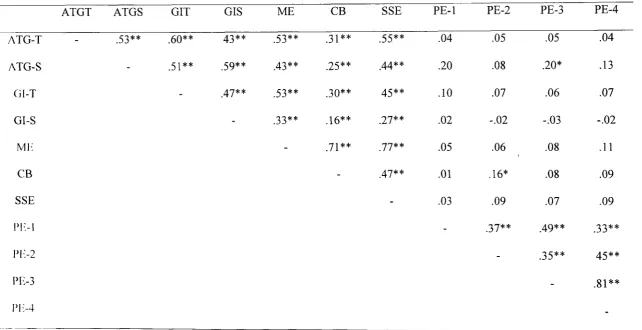
A summary of the bivariate correlations among all variables can be found in
Table 1. The results showed that the four dimensions of cohesion (i.e., ATG-T, GI-T,
ATG-S, & GI-S) were significantly related to one another with correlations ranging from
.43 to .60. Similarly it should be noted that the four dimensions of coaching efficacy were
also related to each other. It should be noted the coaching efficacy subscales of Game
strategy efficacy and Technique efficacy demonstrated evidence of multicollinearity with
a correlation of .91. To rectify this problem Tabachnick and Fidell (2001) recommended
Skills and strategy efficacy Consequently, the correlations between the dimensions of
coaching efficacy (i.e., Motivation efficacy, Character building efficacy, & Skills and
strategy efficacy) ranged from .16 to .77 Lastly, the four measures of perceived exertion
were all significantly related to each other with correlations ranging from .33 to .81.
Internal consistencies were calculated for each of the four cohesion subscales and
the three coaching efficacy subscales. Nunnally and Bernstein (1994) recommended that
internal consistency values be greater than .70. The cohesion dimensions of ATG-S,
GI-T, and GI-S showed acceptable internal consistency values of .78, .78, and .84
respectively. However, the cohesion dimension of ATG-T had an internal consistency
value of .69. In order to improve the internal consistency, one item was deleted, which
increased the internal consistency to .72. The three coaching efficacy subscales
demonstrated acceptable internal consistency values (Motivation efficacy = .91,
Character building efficacy = .78, and Skills and strategy efficacy = .96).
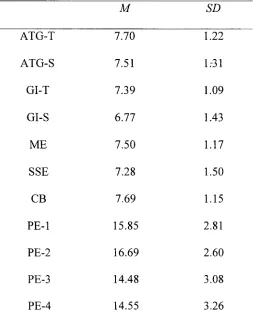
Means and standard deviations were calculated for the four dimensions of
cohesion, the three dimensions of coaching efficacy, and perceived exertion (see Table
2). In terms of cohesion, ATG-T was rated the highest (M= 7.70 on the 9-point scale, SD
= 1.22), followed by ATG-S (M= 7.51, SD = 1.31), T (M= 7.39, SD = 1.09), and
GI-S (M= 6.77, GI-SD = 1.43). Insofar as coaching efficacy, Character building efficacy was
rated the highest (M= 7.69 on the 10-point scale, SD = 1.54), followed by Motivation
efficacy (M= 7.50, SD = 1.17), and Skills and strategy efficacy {M= 7.28, SD = 1.50).
As for perceived exertion, the results showed that Perceived Exertion Competition 2
1 (M= 15.85, SD = 2.81), Perceived Exertion Practice 2 (M= 14.55, SD = 3.26), and
Perceived Exertion Practice 1 {M= 14.48, SD = 3.01), using the 15-point scale.
Testing for mediation
The main research question focused on whether cohesion served to mediate the
relationship between coaching efficacy and performance. In order to test this relationship,
Baron and Kenny's (1986) guidelines for mediation were followed, whereby four
separate conditions need to be met. Insofar as the first condition is concerned, the results
showed that there was a significant relationship between cohesion and coaching efficacy.
In particular, the cohesion dimension of ATG-T was significantly related to the coaching
efficacy dimensions of Motivation efficacy, and Skills and strategy efficacy (B = .34, SE
= .13,/? < .05; and B = .31, SE = .09,/? < .05, respectively). As well, the cohesion
dimension of ATG-S was related to the coaching efficacy dimensions of Motivation
efficacy and Skills and strategy efficacy (B = .30, SE = .15,/? < .05; and B = .25, SE = .10,
p < .05, respectively). Finally, the cohesion dimensions of GI-T and GI-S were related to
Motivation efficacy (B =.47, SE = . 11, p < .05; and B = .42, SE = . 17, p < .05,
respectively).
Insofar as condition two is concerned, the results showed no significant
relationships between coaching efficacy and performance. In particular, the three
dimensions of coaching efficacy, Motivation efficacy, Character building efficacy, and
Skills and strategy efficacy, were not significantly related to the performance measures of
Perceived Exertion Last Practice 1 (B = -.08, SE = .39. /? > .05; B = .03, SE = .31, p > .05;
and B = . 17. SE = .26, p > .05. respectively). In terms of the Perceived Exertion Practice
SE= .42, p > .05; B = .02, SE=.33,p > .05; and B = .06, SE=.2S,p > .05, respectively
When regressed with Perceived Exertion Competition 1, the three coaching efficacy
subscales had values of B = .14, SE= .37,/? > .05; B = -.06, SE=.2S,p > .05; and B = .04,
SE = .25, p > .05, respectively. Finally, when coaching efficacy was regressed with
Perceived Exertion Competition 2, the values were as follows, B = -.55, SE = .33, p > .05,
B = .51, SE = .26, p > .05; and B = .30, SE = .22,p > .05, respectively. Given that the
second condition was not satisfied, conditions three and four were not tested.
Discussion
The purpose of the current study was to determine whether cohesion mediated the
relationship between coaching efficacy and performance in sport. It was predicted that
coaching efficacy would contribute to the development of cohesion and, in turn, cohesion
would be related to performance. The results showed that cohesion did not mediate the
relationship between coaching efficacy and performance. However, the results revealed
that there was a significant relationship between coaching efficacy and cohesion. Beyond
these findings, a number of aspects associated with the results should be highlighted.
The first point pertains to the relationship found between cohesion and coaching
efficacy. While these two constructs have never been examined concurrently, a
relationship was hypothesized due to the fact that other measures of efficacy (e.g.,
collective efficacy) have been found to be associated to cohesion (Kozub & McDonnell,
1997; Paskevich, 1995; Spink, 1990). Indeed a strong, positive relationship was found
between these two constructs. In fact, all four dimensions of cohesion were related to the
coaching efficacy dimension of Motivation efficacy. This result showed that the more
likely the athletes were to feel a high level of attraction and involvement in the team's
goals and objectives, as well as a closeness and bonding with their teammates around
their tasks and social aspects. These results are similar to ones found by Ball and Carron
(1976) when they examined cohesion in relation to participation motivation. Specifically,
they found that a large percentage of variability of team success was accounted for by
cohesion and self-motivation. Furthermore, the findings of the present study are similar to
previous research in exercise. In particular, Loughead et al. (2001) examined the found
that the motivation provided by the fitness instructor was related to the cohesion
dimension of ATG-T
The results of the current study also showed a relationship between the cohesion
dimensions of ATG-T and ATG-S, and the coaching efficacy dimension of Skills and
strategy efficacy. From the athletes' perspective, it is logical for their sense of
involvement and acceptance of team goals and objectives to increase when they feel their
coach is able to supply them with the appropriate skill and strategy information in order
to attain such goals. This finding extends previous research findings in the field of
leadership and cohesion. Specifically, Shields, Gardner, Bredemeier, and Bostrom (1997)
found that task cohesion was related to the leadership dimension of training and
instruction, which is similar in nature to the Skills and strategy dimension used in the
present study. Similarly Jowett and Chaundy (2004) found task and social dimensions of
cohesion to be related to leadership behavior of training and instruction.
Based on the findings from the current study, it can be suggested that in order to
build team cohesion, it is important for the athletes to perceive their coaches to be
that attending coaching clinics leads to an increase in coaching efficacy among coaches
(Campbell & Sullivan, 2005; Malete & Feltz, 2000). Therefore, if athletes were made
aware of the clinics and educational programs their coaches attend, as well as their
previous experiences and credentials, higher efficacy levels may develop among the
athletes, which will in turn foster greater perceptions of team cohesion.
In terms of the second condition in testing for mediation, the results indicated no
significant relationship between coaching efficacy and performance. While these results
were unexpected, there are a few possible explanations. The athletes in the current study
had approximately 15 years experience in their sport, but only three years on average
with their current coach. It is possible that over the athletes' playing careers, they have
been coached by a number of different coaches, lessening their dependence on a coach in
order to perform. At this point in their athletic careers, they may be intrinsically
motivated to perform, and do not require high perceptions of coaching efficacy in order
to perform. Meyers (2003) found elite level athletes demonstrated higher task-orientation
over ego-orientation. Higher task-orientation has been positively linked to hard work,
success, and trying one's best for self-improvement. The athletes in the current sample
could be classified as elite, as many of them have or were competing at a high level (e.g.,
national, provincial) at the time of the study. The task-orientation could be a reason why
the athletes did not require high efficacy beliefs in their coaches in order to perform;, they
are doing it for themselves. A second possible explanation concerns the type of sports in
the current study. For example, the amount of time a soccer player exerts themselves
differs greatly from a baseball player who waits for their turn at bat, or may not be
competition time is minimal compared to soccer or baseball. The differences between
these sports may have had an impact on how the athletes responded to the perceived
exertion scale. A third possible explanation concerns the operationalization of
performance. Previous research examining 4he coaching efficacy-performance
relationship has shown that performance operationalized as winning percentage was
positively related to a coach's own perceived efficacy (Feltz et al., 1999). Winning
percentage can be viewed as a purely objective measure of performance. Whereas, in the
present study, performance was operationalized as perceived exertion—a self-report
measure. While a number of studies have provided empirical support for the use of
self-report exertion measures (e.g., Loughead et al., 2001), others have found discrepancies
between the self-report measure and actual performance exhibited by the athletes (e.g.,
Kuijer, Gerrits, & Reneman, 2004).
While the current study makes a contribution to the group dynamics literature by
establishing an empirical link between cohesion and coaching efficacy, there are a few
limitations which should be highlighted. It is important to note the multicollinarity found
between the coaching efficacy subscales of Technique efficacy and Game strategy
efficacy, which resulted in the creation of a composite subscale. The results demonstrated
that the athletes scored these two subscales in a similar manner to the point that they
appear to be measuring the same construct. This begs the question as to whether this
evidence of multicollinarity is a function of the sample utilized in the present study or a
problem \\ ith the questionnaire itself. The present study was the first to have athletes
conclusion would be to suggest that since the CES was originally developed using a
sample of coaches, athletes had difficulty discriminating between Technique efficacy and
Game strategy efficacy. However, an examination of the factor loadings from when the
inventory was originally developed (i.e., Feltz et al.) shows that the items from these two
dimensions may be related to one another. In fact, Myers et al. (2005) have suggested
limited discriminant validity among the dimensions contained in the CES, particularly
between Game strategy efficacy and Technique efficacy. In addition, these authors
suggested that the definitions of the factors be refined and then modify some of the items
to lessen the overlap among the subscales. Therefore, since its development the CES has
suffered from some overlap between its subscales. The results of the present study, which
used a sample of athletes, provide additional evidence that a revised version of the
inventory be considered.
Another limitation to the present study is the sample itself. Only athletes
participating in competitive level sports were sampled. This limits the ability to
generalize the results to athletes in other sports, and of different competitive levels (e.g.,
recreational or professional).
A third limitation surrounds the issue of response bias. Due to the fact that the
athletes were asked to report on their coach, they may have felt pressure to provide the
"correct" answer, or to support their coach out of loyalty. They may have answered the
questionnaires as they felt the researcher wanted them to, as opposed to their true
response. Future research should take this into consideration, and either consider
include a social desirability scale in the questionnaire package, for example, the
Marlowe-Crowne Social Desirability Scale (Crowne & Marlowe, 1960).
The last limitation to the current study is the research design. This study is
correlational in nature, which assesses whether or not a relationship exists between
variables. However, it does not provide information as to the direction of the relationship.
Hence, it is impossible to draw any conclusions as to the direction of the relationship
between cohesion and coaching efficacy. Future researchers may want to consider
conducting a cross lagged study, whereby the participating teams complete the
questionnaires at two different time points in the season. Between the two measurements,
researchers can establish which direction the relationship between variables is occurring.
Research regarding coaching efficacy, cohesion, and performance is in its
infancy, as this study is the first to examine all three constructs concurrently. However,
future research should carefully consider the aforementioned limitations to the current
study and build from them. For example, future research should sample from a wide
variety of sports as well as competitive levels. Future researchers in this area should also
consider using a variety of performance measurement options; self-report, observational,
or statistical measures (e.g., win - loss records).
It is recommended that mediational research involving cohesion should be
continued. The current study is only the second piece of research to examine the
mediational relationship between cohesion and other variables in a sport context. While
this study did not find a mediational relationship between coaching efficacy, cohesion
and performance, further research needs to be conducted. Mediational research is
variables should be targeted in order for interventions to be successful (Baranowski et al.,
1998).
Overall, the current study provided support for the relationship between cohesion
and coaching efficacy, two variables which had never been examined in conjunction to
one another. It also offers partial support of Carron's conceptual model of cohesion
(1982), whereby coaching efficacy can be viewed as a leadership antecedent. While there
was no support for a relationship between coaching efficacy and performance, future
research is advised to continue this line of questioning, utilizing different performance
References
Allen, J. B. (2006). The perceived belonging in sport scale: Examining validity.
Psychology of Sport and Exercise, 7, 387-405.
Baranowski,T., Anderson, C , & Carmack, C. (1998). Mediating variable framework in
physical activity interventions. How are we doing? How might we do better?
American Journal of Preventive Medicine, 15, 266-297
Ball, J, & Carron, A. (1976). The influence of team cohesion and participation motivation
upon performance success in intercollegiate ice hockey. Canadian Journal of
Applied Sport Sciences, 4, 271-275.
Baron, R. M., & Kenny, D. A. (1986). The moderator-mediator variable distinction in
social psychological research: Conceptual, strategic, and statistical considerations.
Journal of Personality and Social Psychology, 51, 1173-1182.
Bollen, K. A., & Hoyle, R. H. (1990). Perceived cohesion: A conceptual and empirical
examination. Social Forces, 69, 479-504.
Borg, G. (1971). The perceptions of physical performance. In R. J. Shephard (Ed.),
Frontiers of fitness (pp. 280-294). Springfield, IL: Charles C. Thomas.
Campbell, T., & Sullivan, P (2005). The effect of a standardized coaching education
program on the efficacy of novice coaches. Gender and Coaching Education, 11,
38-45.
Carron, A. V (1982). Cohesiveness in sport groups: Implications and consideration.
Carron, A. V., Brawley, L. R., & Widmeyer, W N. (1998). Measurement of cohesion in
sport and exercise. In J. L. Duda (Ed.), Advances in sport and exercise psychology
measurement (pp. 213-226). Morgantown, WV: Fitness Information Technology.
Carron, A. V., Bray, S. R., & Eys, M. A. (2002). Team cohesion and team success in
sport. Journal of Sport Sciences, 20, 119-126.
Carron, A. V., Colman, M. M., Wheeler, J., & Stevens, D. (2002). Cohesion and
performance in sport: A meta-analysis. Journal of Sport and Exercise Psychology,
24, 168-188.
Carron, A. V., Widmeyer, W N., & Brawley, L. R. (1985). The development of an
instrument to assess cohesion in sport teams: The Group Environment
Questionnaire. Journal of Sport Psychology, 24, 168-188.
Crowne, D. P., & Marlowe, D. (1960). A new scale of social desirability independent of
psychopathology. Journal of Consulting Psychology, 24, 349-354
Eys, M. A., Carron, A. V., Bray, S. R., & Brawley, L. R. (2007). Item wording and
internal consistency of a measure of cohesion: The Group Environment
Questionnaire. Journal of Sport and Exercise Psychology, 29, 395-402.
Feltz, D. L., Chase, M. A., Moritz, S. E.. & Sullivan, S. J. (1999). A conceptual model of
coaching efficacy: Preliminary investigation and instrument development. Journal
of Educational Psychology, 19, 765-776.
Gardner,D. E., Shields, D. L., Bredemeier, B. J., & Bostrom, A. (1996). The relationship
between perceived coaching behaviors and team cohesion among baseball and
Gavin, M. B., & Hofmann, D. A. (2002). Using hierarchical linear modeling to
investigate the moderating influence of leadership climate. The Leadership
Quarterly, 13, 15-33.
Golembiewski, R. T. (1962). The small group. University of Chicago Press.
Jowett, S. & Chaundy, V (2004). An investigation into the impact of coach leadership
and coach-athlete relationship on group cohesion. Group Dynamics Theory,
Research, and Practice, 8, 302-311.
Kent, A., & Sullivan, P J. (2003). Coaching efficacy as a predictor of university coaches'
commitment. International Sports Journal, 7. 78-87.
Kozub, S. A., & Mcdonnell, J. F. (1997). Exploring the relationship between cohesion
and collective efficacy in rugby teams. Journal of Sport Behavior, 23, 120-129.
Kuijer, W., Gerrits, E. H. J., & Reneman, M. F (2004). Measuring physical performance
via self-report in healthy young adults. Journal of Occupational Rehabilitation,
14, 77-87.
Lott, A. J., & Lott, B. E. (1965). Group cohesiveness as interpersonal attraction: A review
of relationships with antecedents and consequent variables. Psychological
Bulletin, 64, 259-309.
Loughead, T. M., & Carron, A. V (2004). The mediating role of cohesion in the leader
behavior - satisfaction relationship. Psychology of Sport and Exercise, 5,
355-371.
Loughead. T M.. Colman, M. M., & Carron, A. V (2001). Investigating the mediational
relationship of leadership, class cohesion, and adherence in an exercise setting.
behavior and cohesion on an exerciser's affective state. International Journal of
Sport and Exercise Psychology, 6, 53-68.
Lowther, J., & Lane, A. (2003). Relationships between mood, cohesion and satisfaction
with performance among soccer players. Athletic Insight, 14, 1-12.
Luke, D. A. (2004). Multilevel modeling. Thousand Oaks, CA: Sage.
Malete, L., & Feltz, D. L. (2000). The effect of a coaching education program on
coaching efficacy. The Sport Psychologist, 14, 410-417.
Meyers, J. L. (2003). Leadership perceptions and achievement motivation in sport.
Dissertation Abstracts International, 58-01 A, 0119.
Myers, N. D., Vargas-Tonsing, T. M., & Feltz, D. L. (2005). Coaching efficacy in
intercollegiate coaches: Sources, coaching behavior, and team variables.
Psychology of Sport and Exercise, 6, 129-143.
Northouse, P G. (2004). Leadership: Theory and practice. Thousand Oaks, CA: Sage
Publications.
Nunnally, J. C , & Bernstein, I. H. (1994). Psychometric theory (3rd ed.) New York:
McGraw-Hill.
Paskevich, D. M. (1995). Conceptual and measurement factors of collective efficacy in its
relationship to cohesion and performance outcome. Unpublished doctoral
dissertation. University of Waterloo, Canada.
Patterson, M. M.. Carron, A.V.. & Loughead, T. M. (2005). The influence of team norms
on the cohesion-self reported performance relationship : A multi-level analysis.
Prapavessis, H., & Carron, A. V (1997). Cohesion and work output. Small Group
Research, 28, 294-301.
Shields, D. L. L., Gardner, D. E., Bredmeier, B. J. L., & Bostrom, A. (1997). The
relationship between leadership behaviors and group cohesion in team sports. The
Journal of Psychology, 131, 196-210.
Short, S. E., & Short, M. W- (2004). Coaches' assessment of their coaching efficacy
compared to athletes' perceptions. Perceptual and Motor Skills, 99, 729-736.
Skinner, J. S., Hustler, R., Bergsteinova, V., & Buskirk, E. R. (1973). The validity and
reliability of a rating scale of perceived exertion. Medicine and Science of Sports,
5, 97-103.
Spink, K. S. (1990). Group cohesion and collective efficacy of volleyball teams. Journal
of Sport and Exercise Psychology, 12, 301-311.
Spink, K. S. (1995). Cohesion and intention to participate of female sport team athletes.
Journal of Sport and Exercise Psychology, 17. 416-427
Spink, K. S. (1998). Mediational effects of social cohesion on the leadership
behavior-intention to return relationship in sport. Group Dynamics: Theory, Research, and
Practice, 2, 92-100.
Sullivan, P J., & Kent, A. (2003). Coaching efficacy as a predictor of leadership style in
intercollegiate athletics. Journal of Applied Sport Psychology, 15, 1-11.
Tabachnick, B. G.. & Fidell, L. S. (2001). Using multivariate statistics (4th ed.). Boston:
perceptions of efficacy-enhancing techniques. The Sport Psychologist, 18,
397-414.
Vargas-Tonsing, T. M., Warners, A. L., & Feltz, D. L. (2003). The predictability of
coaching efficacy on team efficacy and player efficacy in volleyball. Journal of
Sport Behavior, 26, 396-407
Westre, K. R., & Weiss, M. R. (1991). The relationship between perceived coaching
behaviors and group cohesion in high school football teams. The Sport
Figure Captions
Antecedents
Environmental
Personal
Team
Leadership
Throughputs
Cohesion
ATG-T ATG-S GI-T GI-S
Outputs
Performance
Satisfaction
Intent to Return
Table 1
Bivariate correlations among cohesion, coaching efficacy and perceived exertion
ATGT ATGS GIT GIS ME CB SSE PE-1 PE-2 PE-3 PE-4
.04
.20
.10
.02
.05
.08
.07
-.02
.05
.20*
.06
-.03
.04
.13
.07
-.02 ATG-T - .53** .60** 43** .53** .31** .55**
ATG-S - .51** .59** .43** .25** .44**
Q\JJ . 47** 53** 30** 45**
GI-S - .33** .16** .27**
ML - .71** .77** .05 .06 .08 .11
CB - .47** .01 .16* .08 .09
SSE - .03 .09 .07 .09
PH-1 . 27** 49** 33**
PH-2 - .35** 45**
PE-3 _ .81**
PH-4
Now. ATG-T = Individual Attractions to the Group - Task, ATG-S = Individual Attractions to the Group - Social, GI-T = Group
Strategy Efficacy. PE1 = Perceived Exertion Competition, last four weeks, PE2 = Perceived Exertion, last competition, PE3
-Perceived Exertion Practice, last four weeks, PE - 4 = -Perceived Exertion, last practice.
*/?<.05.
Table 2
Descriptive statistics of the dimensions of cohesion and coaching efficacy
ATG-T ATG-S GI-T GI-S ME SSE CB PE-1 PE-2 PE-3 PE-4 M 7.70 7.51 7.39 6.77 7.50 7.28 7.69 15.85 16.69 14.48 14.55 SD 1.22 1.-31 1.09 1.43 1.17 1.50 1.15 2.81 2.60 3.08 3.26
Note. ATG-T = Individual Attractions to the Group - Task, ATG-S = Individual
Attractions to the Group - Social, GI-T = Group Integration - Task, GI-S = Group
Integration - Social. ME = Motivation Efficacy, SSE = Skills and Strategy Efficacy, CB
= Character Building. PE-1 = Perceived Exertion Competition, last four weeks, PE-2 =
Perceived Exertion, last competition, PE-3 = Perceived Exertion Practice, last four
weeks, PE - 4 = Perceived Exertion, last practice.
Cohesion was scored on a 9-point scale with 9 representing a greater endorsement of the
endorsement of the construct. Perceived Exertion was scored a 15-point scale with 20
The present thesis will be designed to examine whether cohesion mediates the
relationship between coaching efficacy and performance. Consequently, the review of
literature will be divided into two parts: (a) cohesion, and (b) coaching efficacy.
Cohesion
This section of the thesis will review the literature pertaining to cohesion. First,
the construct of cohesion will be defined. Second, the characteristics of cohesion will be
reviewed. Third, a conceptual model of cohesion along with the measurement of cohesion
will be presented. Finally, the conceptual framework for the study of cohesion will be
explained.
Definition of Cohesion
The construct of cohesion has received a great deal attention with a number of
researchers attempting to define and conceptualize this construct. One of the first
definitions was advanced by Festinger, Schachter, and Back (1950) who defined cohesion
as "the total field of forces that act on members to remain in the group" (p. 164). In this
definition, the authors distinguished between two sources which contribute to cohesion,
the attractiveness of the group, and the ability of the group to assist members in achieving
their individual goals. Later that same year, Festinger (1950) advanced a revised
definition, whereby cohesion was viewed as "the resultant of all the forces acting on
members to remain in the group" (p. 274). Finally. Gross and Martin (1952) put forth
another definition, stating that cohesion was "the resistance of a group to disruptive
forces" (p. 553). arguing that their definition was superior to Festinger et al. as it focused
Mudrack (1989) critically analyzed all three definitions and noted some of their
shortcomings. Primarily, all three of these definitions conceptualized cohesion as being a
unidimensional construct, limiting the ability to generalize studies to numerous types of
groups. In addition, Mudrack noted that Gross and Martin's (1952) definition is difficult
to operationalize, as ethical issues prevent researchers from inflicting 'disruptive forces'
on a group. Furthermore, cohesion according to Mudrack, cohesion is not merely a
group's ability to withstand disruptions, nor is it only the member's attraction to the
group, but rather, a combination of these two elements.
In an attempt to overcome some of the shortcomings of these early definitions,
Carron (1982) advanced a multidimensional definition of cohesion, stating that it is, "a
dynamic process that is reflected in the tendency for a group to stick together and remain
united in the pursuit of its goals and objectives" (p. 124). This definition was later revised
to include an affective component whereby Carron, Brawley, and Widmeyer (1998)
defined it as "a dynamic process that is reflected in the tendency for a group to stick
together and remain united in the pursuit of its instrumental objectives and/or for the
satisfaction of member affective needs" (p. 213). This definition is the most widely used
and accepted definition of cohesion (Loughead & Hardy, 2006).
Characteristics of Cohesion
Carron et al. s (1998) definition highlighted four important characteristics of
cohesion. That is, cohesion is multidimensional, dynamic, instrumental, and affective in
nature. The multidimensional nature of cohesion can be influenced by a number of
different factors which work to keep the group together. However, these factors will not
team may have high task cohesion (e.g., they have the same goals for the team), but they
may have low social cohesion (e.g. the teammates do not get along outside of practice
and games). On the other hand, another basketball team may have high social cohesion
but low task cohesion.
The second characteristic of cohesion is that it is dynamic in nature. Cohesion is
not a stable construct; rather it can fluctuate as a team progresses through its
development. For example, a recently formed team is,more likely to be united around
perceptions of task cohesion (e.g., performance goals), but as the season progresses, the
team may develop more social cohesion as friendships are formed.
A third characteristic of cohesion reflects the instrumental nature of this construct;
denoting that all groups form for a particular reason (Loughead & Hardy, 2006). For
example, sports teams form to fulfill task oriented reasons (e.g. to win a tournament);
however, other groups may form to fulfill member's social needs (e.g. the need to belong
to a group). In either case, the group serves to fill the instrumental purpose of satisfying
the need to belong.
The fourth characteristic of cohesion is its affective component. It was noted that
belonging to a group, for either social or task purposes, is fulfilling to group members
(Baumeister & Leary, 1995). The bonding felt within a group fulfills the members' need,
while being excluded from a group will bring about negative affect, such as depression
(Baumeister & Leary).
Conceptual Framework of Cohesion
In order to overcome some of the shortcomings in the measurement of cohesion,
framework. The rationale for a new framework was based on the notion that instead of
using patchwork methods to repair existing inventories or develop new measures with
similar problems, Carron et al. argued that it was important to go to the root of the
problem—the lack of a clear conceptualization of the construct.
Given that cohesion could be viewed as a group property, Carron et al. (1985)
developed a conceptual framework based on three assumptions from group dynamics
theory. First, the assumption that cohesion can be properly evaluated using the individual
member's perception was derived from social cognition theory (Bandura, 1986), which
allows researchers to use the individual team members as the level of measurement for a
group phenomenon. While cohesion is a group construct, each individual team member
experiences every situation and develops his/her own beliefs about the group, and
therefore is able to make accurate perceptions about the group environment. The second
assumption highlighted the need to distinguish between individual and group
orientations. Carron et al. suggested that team members could hold cognitions about the
cohesiveness of the team which were related to the group as a whole and the degree to
which the team satisfied their own personal needs. As a result two types of cognitions
could emerge from the individual; group integration and individual attractions to the
group. Group integration refers to the individual's perceptions of the group's unity as a
whole; while individual attractions to the group refers to the individual's perceptions
about his/her motivations to maintain membership in the group as well as his/her personal
cognitions of the group (Carron et al., 1998). The third assumption distinguished between
the social and task oriented concerns of group members. The social orientation refers to