A Monthly Double-Blind Peer Reviewed Refereed Open Access International e-Journal - Included in the International Serial Directories International Journal in IT and Engineering
http://www.ijmr.net.in email id- [email protected] Page 46 A COMPREHENSIVE STUDY OF FACTS ABOUT CHALLENGES AND FUTURE DIRECTION FOR MIMO IN
COMMUNICATION SYSTEM
Krishna Murthy Ajmera1, Dr. Phool Singh Chouhan2, Dr. Senthilkumar A3 Department of Electronics andCommunication Engineering
1,2,3
OPJS University, Churu (Rajasthan) Abstract
In this paper primary goal is to provide the reasonable issues experienced in MIMO communication
system. Here just two noteworthy issues are considered. The first is the estimation of the channel state
data and the impacts of the estimation blunder on the system execution. The second subject point by
point is the conceivable sub-channel relationship between's transmit and get antenna sets and the
execution examination with the nearness of connection. One of the principle contemplations in MIMO
communication system is antenna choice which is likewise examined in this paper. Couple of new
technology Multi-Input Multi-Output (MIMO) is the Future Wireless system will be a great deal more
productive to take care of the substantial demand of Wireless communication in accessible constrained
recurrence resources.
Keywords: 4G; LTE; MIMO; MISO; SIMO; SISO
1. INTRODUCTION
Wireless system keep on striving for ever higher
information rates. This objective is especially
trying for frameworks that are power,
transmission capacity, and intricacy restricted
[1]. Be that as it may, another area can be
abused to fundamentally expand channel limit:
the utilization of various transmit and get
receiving wires. This report condenses the
fragment of the late work concentrated on the
limit of MIMO frameworks for both single clients
and numerous clients under various
presumptions about the spatial relationship and
channel data accessible at the transmitter and
collector.
The huge phantom efficiencies connected with
MIMO channels depend on the preface that a
rich dissipating environment gives autonomous
transmission ways from each transmit receiving
wire to each get reception apparatus. In this
manner, for single-client frameworks [2], a
transmission and gathering system that
adventures this structure accomplishes limit on
around min(M,N) isolate channels, where is the
quantity of transmit reception apparatuses and
N is the quantity of get radio wires. In this
manner, limit scales directly with min (M,N) in
respect to a framework with only one transmit
A Monthly Double-Blind Peer Reviewed Refereed Open Access International e-Journal - Included in the International Serial Directories International Journal in IT and Engineering
http://www.ijmr.net.in email id- [email protected] Page 47
This limit increment requires a disseminating
situation to such an extent that the framework
of channel picks up amongst transmits and gets
reception apparatus sets has full rank and free
passages and that flawless appraisal of these
additions are accessible at the beneficiary [3].
Idealize appraisals of these additions at both the
transmitter and recipient give an expansion in
the steady multiplier connected with the straight
scaling. MIMO channel limit depends vigorously
on the factual properties and receiving wire
component relationships of the channel.
2. MATHEMATICAL MODEL OF MIMO
Consider a remote correspondence framework
with Nt transmit (TX) and Nr gets (RX) receiving
wires. The thought is to transmit diverse floods
of information on the distinctive transmit radio
wires, yet at similar bearer recurrence [5]. The
stream on the p-th transmits receiving wire, as
the capacity of the time t, will be indicated by sp
(t). At the point when a transmission happens,
the transmitted flag from the p-th TX receiving
wire may discover diverse ways to land at the
q-th RX reception apparatus, in particular, an
immediate way and circuitous ways through
various reflections.
On the off chance that quantity of conditions is
bigger than quantity of questions, an answer can
be found by playing out a projection utilizing the
slightest squares technique [4], otherwise called
the Zero Forcing (ZF) strategy. For the symmetric
case, the ZF arrangement brings about the novel
arrangement.
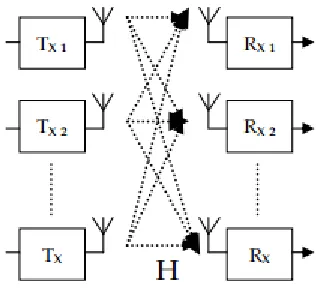
Figure 1: Schematics Representation Of A MIMO Communication System 3. GENERATION AND COMMUNICATION MODELS
Here we will study different generation from first upto LTE:
1G: 1G (or 1-G) alludes to the original of wireless
stele phone technology, mobile communications.
These are the simple telecommunications
models that were presented in the 1980s and
preceded until being supplanted by 2Gdigital
telecommunications. 1G speed change between
that of a 28k modem (28kbit/s) and 56k modem
(56kbit/s), which means genuine download
paces of 28kbit/s to 56kbit/s Antecedent to 1G
technology is the mobile radio phone, or 0G.
2G: 2G (or 2-G) is short for second-generation
A Monthly Double-Blind Peer Reviewed Refereed Open Access International e-Journal - Included in the International Serial Directories International Journal in IT and Engineering
http://www.ijmr.net.in email id- [email protected] Page 48
generation 2G cell telecom networks were
industrially propelled on the GSM standard in
Finland by Radiolinja (now a portion of Elisa Oyj)
in 1991 [5]. Three essential advantages of 2G
networks over their antecedents were that
telephone discussions were carefully scrambled;
2G systems were altogether more proficient on
the range taking into account far more
prominent mobile telephone infiltration levels;
and 2G presented information administrations
for mobile, beginning with SMS instant
messages. 2G network takes into account much
more noteworthy entrance power. 2G
innovations empowered the different mobile
telephone networks to give the administrations,
for example, instant messages, picture messages
and MMS (multi media messages). All instant
messages sent more than 2G are carefully
scrambled, taking into account the move of
information in a manner that exclusive the
proposed receiver can get and read it.
3G: 3G, short for third Generation, is the third
generation of mobile telecommunications
technology. 3G telecommunication networks
bolster benefits that give a data exchange rate of
no less than 200 kbit/s. Later 3G discharges,
regularly meant 3.5G and 3.75G, likewise give
mobile broadband access of a few Mbit/s to cell
phones and mobile modems in PCs.
4G: 4G, short fourth generation, is the fourth
generation of mobile telecommunications
technology succeeding 3G. A 4G system,
notwithstanding regular voice and different
administrations of 3G system, gives mobile
ultra-broadband Internet access, for instance to
portable workstations with USB wireless
modems, to advanced cells, and to other mobile
gadgets.
5G: 5G (fifth generation mobile networks or fifth
generation wireless systems) indicates the
following real period of mobile
telecommunications models past the current
4G/IMT-Advanced principles. 5G is additionally
alluded to as past 2020 mobile communications
advancements. 5G does not depict a specific
detail in any official report distributed by any
telecommunication standardization body. In
spite of the fact that upgraded benchmarks that
characterize capacities past those characterized
in the current 4G guidelines are under thought,
those new abilities are as yet being assembled
under the current ITU-T 4G gauges.
LTE: LTE, an acronym for Long Term Evolution, regularly advertised as 4G LTE, is a standard for
wireless communication of rapid information for
mobile telephones and information terminals. It
depends on the GSM/EDGE and UMTS/HSPA
network advancements, expanding the limit and
speed utilizing an alternate radio interface
together with center network upgrades.
Presently, basically there are four
A Monthly Double-Blind Peer Reviewed Refereed Open Access International e-Journal - Included in the International Serial Directories International Journal in IT and Engineering
http://www.ijmr.net.in email id- [email protected] Page 49
communication which are depicted as takes
after:
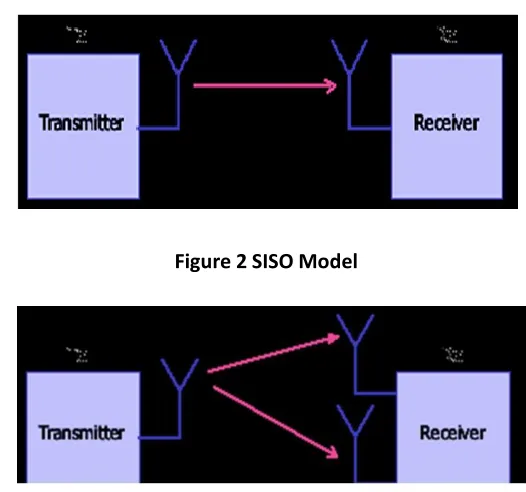
SISO: SISO remains for single input single output. In this communication single antenna in
accessible at transmitter and single at receiver,
SISO systems are normally less mind boggling
than multiple-input.
Figure 2 SISO Model
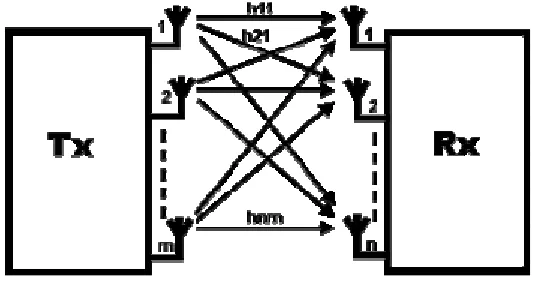
Figure 3 Single Input Multi Output
Multiple-output (MIMO) systems. More often than not, it is likewise less demanding to make
request of greatness or inclining forecasts "on
the fly" or "back of the envelope". MIMO
systems have an excessive number of
connections for a large portion of us to follow
through them rapidly, altogether, and viably in
our heads.
SIMO: SIMO remains for single input multiple outputs. In this communication demonstrate
single antenna is associated at transmitter and
multiple at accepting side. The wireless
communications in which multiple antennas are
utilized at the goal (receiver). The antennas are
joined to minimize blunders and upgrade
information speed.
MISO: MISO remains for multiple input single output. In this model multiple antennas are
associated at transmitter and single at the
receiver. MISO (multiple inputs, single output) is
an antenna technology for wireless
communications in which multiple antennas are
utilized at the source (transmitter). The antennas
are consolidated to minimize mistakes and
enhance information speed. The goal (receiver)
has just a single antenna. MISO is one of a few
A Monthly Double-Blind Peer Reviewed Refereed Open Access International e-Journal - Included in the International Serial Directories International Journal in IT and Engineering
http://www.ijmr.net.in email id- [email protected] Page 50
being MIMO (multiple inputs, multiple outputs)
and SIMO (single input, multiple output).
MIMO: MIMO remains for multiple input multiple output. In this communication show
multiple antennas are at transmitter and
multiple at receiver side because of which they
got signal get change and this further enhances
the throughput of communication model.
4. HISTORY AND PRINCIPLE OF MIMO
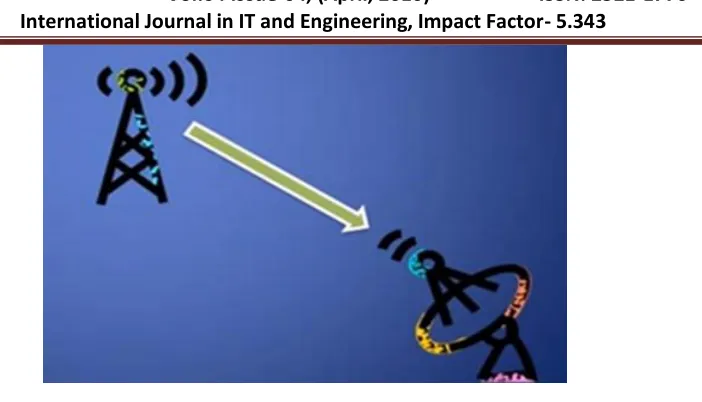
Figure 4 Multi Input Single Outputs (MISO)
HISTORY
The most punctual thoughts in this field
backtrack to work by AR Kaye and DA George
(1970), Brandenburg and Wyner (1974) and W.
van Etten (1975, 1976). Jack Winters and Jack
Salz at Bell Laboratories distributed a few
papers on bar framing related applications in
1984 and 1986.
PRINCIPLE
The fundamental standard behind this
technology MIMO utilizes technology Named
as spatial multiplexing and bar framing. In
1996, Greg Raleigh, Gerard J. Foschini, and
Emre Telatar refined new ways to deal with
MIMO technology, considering an
arrangement where multiple transmit
antennas are co-situated at one transmitter to
enhance the link throughput successfully [6–8].
Chime Labs was the first to exhibit a research
center prototype of spatial multiplexing in
1998, where spatial multiplexing is a key
technology to enhance the execution of MIMO
A Monthly Double-Blind Peer Reviewed Refereed Open Access International e-Journal - Included in the International Serial Directories International Journal in IT and Engineering
http://www.ijmr.net.in email id- [email protected] Page 51 Figure 5. Spatial multiplexing with and without
5. MIMO SYSTEM
MIMO is fundamentally a technology in which
multiple antennas are utilized both at
transmitter and receiver to enhance
communication execution. It is one of a few
types of shrewd antenna technology. Here the
term input and output alludes to the radio
channel conveying the signal not to the gadget
having antenna. Fundamental goal is to
contemplate the essential guideline behind
this technology. MIMO utilizes technology
named as spatial multiplexing and pillar
framing.
Spatial Multiplexing: - In spatial multiplexing, a
high rate signal is part into multiple lower rate
streams and every stream is transmitted from
an alternate transmit antenna in a similar
recurrence channel. In this signal originating
from various antenna are joined and suitable
numerical capacity is connected to get
adequate output. Underneath two fig
demonstrates spatial multiplexing with and
without SM which essentially lets us know
that in first visual the output got at getting
antenna is with and without defers that is
unquestionably not the proficient output to
endless supply of one in second visual which
delineates that output acquired at PC are
certainly a great deal more grounded and
further can be enhanced by applying suitable
scientific capacity as per the kind of use.
Shaft shaping: - Beam framing or spatial sifting
is a signal handling system utilized as a part of
sensor clusters for directional signal
transmission or gathering. This is accomplished
by consolidating components in a staged
exhibit in a manner that signals at specific
edges encounter valuable obstruction while
others encounter ruinous impedance. Shaft
shaping can be utilized at both the
transmitting and getting closes keeping in
mind the end goal to accomplish spatial
selectivity. The change contrasted and
omnidirectional recep-tion/transmission is
known as the get/transmit pick up (or
A Monthly Double-Blind Peer Reviewed Refereed Open Access International e-Journal - Included in the International Serial Directories International Journal in IT and Engineering
http://www.ijmr.net.in email id- [email protected] Page 52 Figure 6. Beam forming
Gadget call cooperatively transmit the same
subcarrier which ca likewise twofold uplink limit.
To enhance the information rate or throughput
of wireless get to even under state of
impedance, signal blurring for long separation
along this utilization of restricted bandwidth
successfully. In the event that the impediments
are to be considered of MIMO system are
fundamentally its planning, multichannel
synchronization, DSP specialists are required to
execute more refined baseband handling
calculation to better decipher the channel
demonstrate.
6. Capacity of MIMO
MIMO can be sub-parceled into three central
classes, precoding, spatial multiplexing or SM,
and assorted qualities coding.
Spatial multiplexing requires MIMO radio wire
setup. In spatial multiplexing, a high rate flag is
part into different lower rate streams and each
stream is transmitted from another transmit
radio wire in a comparable repeat channel. If
these signs connect at the recipient receiving
wire display with satisfactorily special spatial
imprints and the beneficiary has exact CSI, it can
disconnect these streams into (for all intents and
purposes) parallel channels. Spatial multiplexing
is a viable strategy for growing channel confine
at higher Signal-to-commotion extents (SNR).
The most outrageous number of spatial streams
is confined by the lesser of the amount of
receiving wires at the transmitter or recipient.
Spatial multiplexing can be used without CSI at
the transmitter, yet can be joined with precoding
if CSI is available. Spatial multiplexing can
moreover be used for synchronous transmission
to numerous collectors, known as space-division
various get to or multi-customer MIMO, in which
case CSI is required at the transmitter. The
booking of collectors with different spatial
imprints grants incredible distinctness.
Differences coding techniques are used when
there is no channel learning at the transmitter. In
differing qualities techniques, a singular stream
A Monthly Double-Blind Peer Reviewed Refereed Open Access International e-Journal - Included in the International Serial Directories International Journal in IT and Engineering
http://www.ijmr.net.in email id- [email protected] Page 53
transmitted, yet the flag is coded using strategies
called space-time coding. The flag is transmitted
from each of the transmit reception apparatuses
with full or close orthogonal coding Diversity
coding manhandle the free obscuring in the
numerous radio wire connections to update flag
assorted qualities. Since there is no channel
learning, there is no pillar shaping or show get
from assorted qualities coding. Assorted qualities
coding can be combined with spatial
multiplexing when some channel data is
available at the transmitter.
Moreover, speculative examination exhibited
that reception apparatus assurance keeps up the
high data rate of spatial multiplexing MIMO
frameworks, and improves assorted qualities
orchestrate in every information stream without
complex space-time taking care of at
transmitters and recipients [13]. Like most
designing issues, the arrangement of receiving
wire decision count incorporates numerous,
regularly clashing layout criteria and finding the
perfect arrangement is thusly not a direct
errand. Subsequently, there is a necessity for
headway based system that can be used to
layout receiving wire subset decision techniques
for MIMO-OFDM. In this way, finding a genuine
perfect radio wire choice plot which satisfies
concentrated on QOS, improved point of
confinement and transmission unwavering
quality prerequisites is still a test.
As of late, authorities have proposed a couple of
systems for perfect radio wire subset choice in
MIMO-OFDM and can be broadly requested into
three classes.
7. ANTENNA SEELCTION FOR MIMO
The huge impediment in MIMO-based
frameworks is the cost of the gear, in light of the
fact that each a tennaelement requires an
aggregate radio repeat (RF) chain that is made
out of blenders, intensifiers, and easy
to-automated change. A promising technique
named reception apparatus subset decision an
alluring plan has been proposed to decrease the
gear unusualness, i.e., spare cash on RF chains,
while holding various arranged points of interest
[10, 11].
In addition, it staggeringly improves the
throughput/enduring quality tradeoff [12]. In
such subset decisions, the amount of RF chains is
more diminutive than the genuine number of
radio wire segments. The RF chains are
connected with the "best" receiving wire parts.
What's more, theoretical examination showed
that radio wire assurance keeps up the high data
rate of spatial multiplexing MIMO frameworks,
and upgrades differing qualities orchestrate in
every information stream without complex
space-time taking care of at transmitters and
collectors [13]. Like most building issues, the
arrangement of radio wire decision count
incorporates various, regularly clashing layout
criteria and finding the perfect arrangement is
A Monthly Double-Blind Peer Reviewed Refereed Open Access International e-Journal - Included in the International Serial Directories International Journal in IT and Engineering
http://www.ijmr.net.in email id- [email protected] Page 54
there is a prerequisite for headway based
technique that can be used to framework
receiving wire subset decision methodology for
MIMO-OFDM. In this way, finding a genuine
perfect reception apparatus choice plot which
satisfies concentrated on QOS, improved farthest
point and transmission dependability necessities
is still a test.
As of late, pros have proposed a couple of
strategies for perfect receiving wire subset
determination in MIMO-OFDM and can be
widely requested into three classes.
For example,
1. Transmit Antenna Selection (TAS)
2. Receive Antenna Selection (RAS)
3. Joint Antenna Selection (JAS)
8. CHALANGES FACED BY MIMO
Channel State Information Estimation: In wireless
communications, channel state data (CSI) alludes
to known channel properties of a
communication link. This data portrays how a
signal spreads from the transmitter to the
receiver and speaks to the joined impact of, for
instance, dispersing, blurring, and control rot
with separation. The CSI makes it conceivable to
adjust transmissions to current channel
conditions, which is pivotal for accomplishing
dependable communication with high
information rates in multi-antenna systems.
Spatial Channel Correlation for MIMO system:
Theoretically, the execution of wireless
communication systems can be enhanced by
having multiple antennas at the transmitter and
the receiver. The thought is that if the
proliferation channels between every match of
transmit and get antennas are factually free and
indistinguishably circulated, then multiple
autonomous channels with indistinguishable
attributes can be made by precoding and be
utilized for either transmitting multiple
information streams or expanding the
unwavering quality (in terms of bit mistake rate).
9. FUTURE DIRECTIONS
The MIMO system gives distinctive increases, for
example, exhibit pick up, diversity pick up,
multiplexing addition and co-channel obstruction
decrease. Every term which is previously
mentioned has their own focal points, for
example, cluster pick up builds scope and
Quos(quality of administration) comparably the
diversity pick up , multiplexing pick up
increments ghastly effectiveness, and co-channel
obstruction decrease increments cell limit. Most
importantly when MIMO system helped with
OFDM technology it ended up being the best
future technology for LTE systems.
10. CONCLUSION
In this paper there is fundamentally a study with
respect to MIMO frameworks. This paper
A Monthly Double-Blind Peer Reviewed Refereed Open Access International e-Journal - Included in the International Serial Directories International Journal in IT and Engineering
http://www.ijmr.net.in email id- [email protected] Page 55
alongside various generations from 1G to LTE
frameworks, and then correspondence models
are concentrated on beginning from SISO to
SIMO to MISO lastly towards MIMO which are
most broadly utilized as a part of various future
advancements. In MIMO correspondence
framework fundamentally their causes, rule,
work and an alternate test confronted by this
innovation is concentrated on.
References
[1] V. Tarokh, H. Jafarkhani, and A. R.
Calderbank, “Space-time block codes
from orthogonal designs,” Information
Theory, IEEE Transactions on, vol. 45,
no. 5, pp. 1456–1467, 1999.
[2] P. B. Rapajic and B. S. Vucetic,
“Adaptive receiver structures for
asynchronous cdma systems,” Selected
Areas in Communications, IEEE Journal
on, vol. 12, no. 4, pp. 685–697, 1994.
[3] N. Parveen and D. Venkateswarlu,
“Multipath interference cancellation in
mimo mobile cellular system,”
International Journal of Distributed &
Parallel Systems, vol. 3, no. 3, 2012.
[4] “Radiolinja’s history,” 2004.
[5] G. Raleigh and J. M. Cioffi,
“Spatio-temporal coding for wireless
communication,” Communications,
IEEE Transactions on, vol. 46, no. 3, pp.
357–366, 1998.
[6] G. J. Foschini, “Layered space-time
architecture for wireless
communication in a fading
environment when using multi-element
antennas,” Bell labs technical journal,
vol. 1, no. 2, pp. 41–59, 1996.
[7] E. Telatar, “Capacity of multi-antenna
gaussian channels,” European
transactions on telecommunications,
vol. 10, no. 6, pp. 585–595, 1999.
[8] G. Golden, C. Foschini, R. A. Valenzuela,
and P. Wolniansky, “Detection
algorithm and initial laboratory results
using v-blast space-time
communication architecture,”
Electronics letters, vol. 35, no. 1, pp.
14–16, 1999.
[9] Gorokhov, M. Collados, D. Gore, and A.
Paulraj, “Transmit/receive mimo
antenna subset selection,” in Acoustics,
Speech, and Signal Processing, 2004.
Proceedings. (ICASSP’04). IEEE
International Conference on, vol. 2, pp.
ii–13, IEEE, 2004.
[10] Gorokhov, D. A. Gore, and A. J. Paulraj,
“Receive antenna selection for mimo
spatial multiplexing: theory and
algorithms,” Signal Processing, IEEE
Transactions on, vol. 51, no. 11, pp.
2796–2807, 2003.
[11] F. Molisch, “Mimo systems with
antenna selection-an overview,” in
Radio and Wireless Confer-ence, 2003.
RAWCON’03. Proceedings, pp. 167–
A Monthly Double-Blind Peer Reviewed Refereed Open Access International e-Journal - Included in the International Serial Directories International Journal in IT and Engineering
http://www.ijmr.net.in email id- [email protected] Page 56
[12] H. Zhang, A. F. Molisch, and J. Zhang,
“Applying antenna selection in wlans
for achieving broadband multimedia
communications,” Broadcasting, IEEE
Transactions on, vol. 52, no. 4, pp. 475–
482, 2006.
[13] Y. Liu, Y. Zhang, C. Ji, W. Q. Malik, and
D. J. Edwards, “Joint antenna selection
for mimo-ofdm systems over spatially