University of South Carolina
Scholar Commons
Theses and Dissertations
2018
Domestic Extension Of Public Diplomacy: Media
Competition For Credibility, Dependency And
Activation Of Publics
Yicheng Zhu
University of South Carolina
Follow this and additional works at:https://scholarcommons.sc.edu/etd
Part of theMass Communication Commons
Recommended Citation
Zhu, Y.(2018).Domestic Extension Of Public Diplomacy: Media Competition For Credibility, Dependency And Activation Of Publics.
D
OMESTICE
XTENSION OFP
UBLICD
IPLOMACY:
M
EDIAC
OMPETITION FORC
REDIBILITY,
D
EPENDENCY ANDA
CTIVATION OFP
UBLICSby Yicheng Zhu Bachelor of Arts
Communication University of China, 2011 Master of Arts
University of Sheffield, 2012
Submitted in Partial Fulfillment of the Requirements For the Degree of Doctor of Philosophy in
Mass Communications
College of Information and Communications University of South Carolina
2018 Accepted by:
August Grant, Major Professor Shannon Bowen, Committee Member
Ran Wei, Committee Member Katherine Barbieri, Committee Member
DEDICATION
ACKNOWLEDGEMENTS
I would like to take this opportunity to thank my advisor, Prof. August Grant, for the care he invested into my doctoral pursuit. His welcoming attitude to different ideas and views is the very foundation of this dissertation. I am extremely fortunate working under his patient and meticulous guidance for my entire PhD program.
My gratitude also goes to Prof. Shannon Bowen, who led me into the world of public relations and supported me with great kindness; and to Prof. Ran Wei, who tirelessly helped me with political communication research and international outreach. I would also like to thank Prof. Katherine Barbieri, she has been an irreplaceable mentor when I search for knowledge in Gambrell Hall at the department of political science. And special thanks to Prof. Guy Golan and Prof. Jeong-Nam Kim for their valuable
ABSTRACT
TABLE OF CONTENTS
DEDICATION ... iii
ACKNOWLEDGEMENTS ... iv
ABSTRACT ... v
LIST OF TABLES ... ix
LIST OF FIGURES ... x
CHAPTER 1. INTRODUCTION ... 1
1.1 Public Diplomacy, Public Relations and Foreign Publics Activation ... 2
1.2 Restricting Foreign Influence: Introduction and Assumptions ... 4
1.3 Structure of the Dissertation ... 5
CHAPTER 2. THEORETICAL FRAMEWORK ... 8
2.1 What is Public Diplomacy? ... 8
2.2 The Existing Problems of Public Diplomacy Conceptualization. ... 14
2.3 Rethinking Actors in Public Diplomacy: State, Mediator and Publics. ... 21
3.2 Differentiation of Foreign and Domestic Media ... 49
3.3 Aspects of Global Media Credibility ... 51
3.4 Selctive Control on Media Accessibility in the Chinese Context ... 53
3.5 Selective Accessibility Control and Media Credibility ... 57
3.6 Media Credibility and Media Dependency ... 59
CHAPTER 4. ACTIVATING AND DEACTIVATING PUBLICS ... 64
4.1 The link between public relations and diplomacy ... 66
4.2 Psychological Antecedent of Communicative Behavior ... 69
4.3 Media Dependency and Activeness ... 71
CHAPTER 5. METHOD ... 77
5.1 Choice of Data Collection Method... 77
5.2 Operationalization of Variables ... 80
5.3 Stabilization of Scales: Confirmatory Factor Analysis ... 84
5.4 SEM Specification and Identification ... 90
5.5 Sample ... 95
CHAPTER 6. EMPIRICAL ANALYSES RESULTS... 103
6.1 Review on Data Analysis Strategy ... 103
6.2 Hypotheses Testing for Chapter III ... 104
6.3 Post Hoc Analysis on Model 1 (Chapter III model)... 106
6.5 Post Hoc Analysis on Model 2 (Chapter III and Chapter IV combined) .... 109
CHAPTER 7. DISCUSSION & CONCLUSION ... 112
7.1 Important Findings ... 112
7.2 Foreign Media as a Concept: Identification and Credibility ... 113
7.3 Controlling Accessibility: Key to Modification ... 116
7.4 Situational Motivation as Outcome of Relationship with Media ... 118
7.5 Media Ownership and Actors in Public Diplomacy ... 121
7.6 Theoretical and Geographical Extension ... 123
7.7 Level of Analysis of Public Diplomacy: Connecting to Soft Power ... 126
7.8 Limitations ... 129
7.9 Conclusions ... 132
REFERENCES ... 134
APPENDIX A: DISSERTATION QUESTIONNAIRE ... 147
LIST OF TABLES
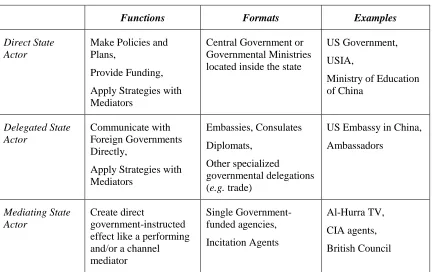
Table 2.1 Typology of State Actors in Public Diplomacy ... 27
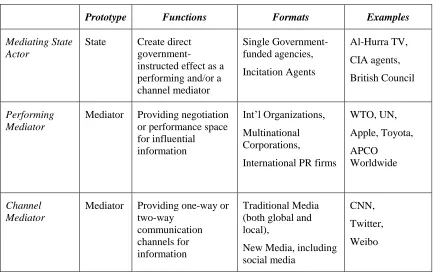
Table 2.2 Typology of Public Diplomacy Actors that could have Mediating Functions . 28 Table 5.1 Means, Standard Deviations, Reliabilities of Latent Constructs ... 88
Table 5.2 Check for Reliability, Discriminant Validity and Convergent Validity ... 89
Table 5.3 Power Analysis Results ... 99
Table 5.4 Comparison of Demographics ... 101
Table 5.5 Comparison of Sample’s Geographical Distribution ... 102
Table 6.1 Hypothesis Testing in Model 1 (shown in figure 5.1) ... 108
LIST OF FIGURES
Figure 2.1 Spectra of Foci of Different Approaches to Public Diplomacy ... 13
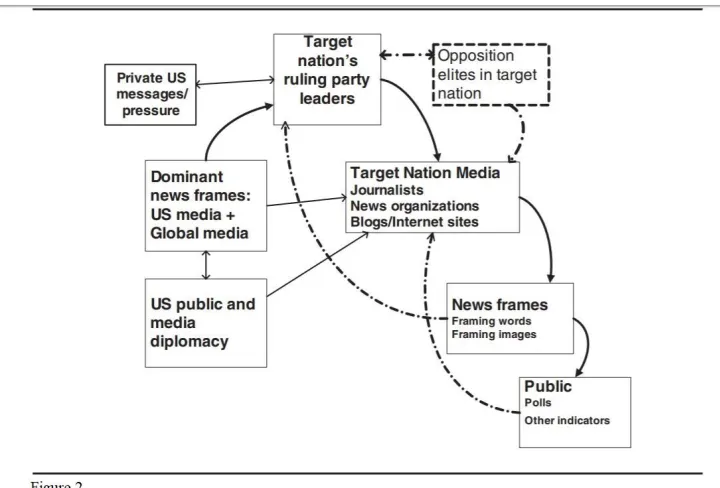
Figure 2.2 Entman (2008, p.98) Cascading Model of Public Diplomacy ... 33
Figure 2.3 Ecology Model of Public Diplomacy ... 38
Figure 2.4 Competition Model of Public Diplomacy ... 42
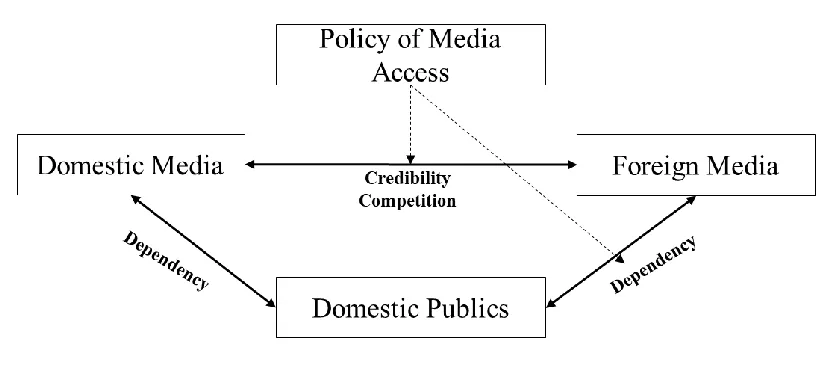
Figure 2.5 Simplified Competition Model of Public Diplomacy ... 43
Figure 3.1Conceptual Links Tested in Chapter 3 ... 45
Figure 3.2 Model Specification Allowing Direct Credibility Competition ... 62
Figure 4.1 Media Dependency Leading to Psychological Activation ... 75
Figure 5.1 Model Testing Chapter III Hypotheses (Model 1) ... 91
Figure 5.2 Final Model ... 93
Figure 6.1 Hypothses Testing of Model 1 ... 105
Figure 6.2 Respecification of Model 1: Model 1b ... 107
CHAPTER 1.
INTRODUCTION
The advancement of communication technologies has enabled governments to interact with people in other countries. For either international collaboration or
international competition, governments became interested in communicating with foreign people because they want to build better national image, facilitate international trade, increase the clarity of their foreign policy; sometimes, governments communicate with foreign activist groups to destabilize an administration, or reduce rival countries’ bargaining power in negotiation.
With examples of international broadcasting plans and public diplomacy campaigns preceding this dissertation, it examines and compares different channels of activating foreign publics through international media. It focuses on the importance of people’s perception of the credibility of the communication channel and information source. Moreover, it studies how governmental media influence its people preemptively to reduce the effect of foreign public diplomacy. This means that governments are looking forward to the establishment of an academic rationalization of the defensive
domestic extension of public diplomacy.
order to help the reader to get a better conceptualization of the research theme and objective. The following sections include: an introduction to the public diplomacy model; an introduction to the dis-accreditation of foreign media model; and an introduction to the general structure of the dissertation.
1.1 Public Diplomacy, Public Relations and Foreign Publics Activation
In public relations theory, people who have a direct or indirect association with the organization is called “publics”, and there are four types of them: non-publics, latent publics, aware publics and active publics. Organizations around the world try to
harmonize their surrounding environment by understanding, communicating and influencing the publics, sometimes this includes activating latent publics to generate debate, or deactivating publics for crisis management.
Governments are essentially organizations, and as they want to do the same thing with its people and foreign publics, scholars and practitioners call this particular type of public relations practice “public diplomacy”. Similarly, an important function of the practice of public diplomacy is turning foreign publics from latent publics into active publics. Research shows that the Arab Spring movement is an example of outside management of public awareness about “Democracy”, the Color Revolution among former Soviet states can also be attributed to active engagement of foreign public diplomacy activities.
were persuaded or incited. But it also includes more ethical and bilateral methods of understanding and communicating with foreign people. One example was the campaign about air pollution in China by the US embassy in Beijing. It not only turned the Chinese publics into active publics against over-industrialization and pollution, but also educated the foreign publics, benefitted US government’s credibility, and Chinese’s perception of US’ reliability.
Some may argue that the air pollution case can hardly be called a deliberate public diplomacy campaign: the whole national debate around air pollution, PM 2.5, PM 10 (criteria of air quality measurement) started from a routine report of air quality done by the US embassy in Beijing. But its consequential success in activating Chinese awareness and communication about the issue has been phenomenal. The reason is that the issue relates to the Chinese people’s personal health, and it showed US government’s concern in a neutral and credible way, and the communication was largely happening on social media, ensuring a reactive and two-way communication strategy.
This dissertation studies how such successful case could be replicated by starting with the right step: researching and understanding the target publics. The results of this dissertation show what are the psychological components that drive foreign publics into active communication about an issue. More importantly, it compares how these
psychological components interrelate through different information channels (e.g. direct US media, social media, target government media, and US media quoted by target government media). In general, this dissertation answered these questions:
“How important is the credibility of these channels in activating foreign publics?”
1.2 Restricting Foreign Influence: Introduction and Assumptions
However public diplomacy is conceptualized or defined, it is a certain type of diplomacy. This means that it is building relationship and negotiating over an issue with foreign entities. Public diplomacy fundamentally means the existence of foreign
influence in a certain country, and not all countries welcome foreign influence. Examples about governments expressing their concerns about the existence of foreign media, foreign products, and even the use of foreign language are countless. In modern times, governments sometimes accuse each other for building relationship with their domestic activists, who are a potential political threat to national stability and security.
In certain government types where power is more centralized, government may easily restrict the incoming flow of foreign persuasive information, or the activities of foreign public diplomats. Russia, for example, has announced that it would block radio broadcasting of Voice of America, and several countries blocked online access to Wall Street Journal, New York Times, or CNN. However, as the global information network became increasingly difficult to block, these governments started to understand the importance of consolidating internal relationship with their domestic publics (the people). Relationships are resources, thus one way to consolidate internal relationship is to
primetime Chinese TV. In consecutive years, the access to Western social media started to be restricted. In recent years, the Chinese authorities promoted the idea of Western media bias and the construction of a new Chinese worldview and common Chinese dream.
The current dissertation holds no ethical or moral responsibility, ability and intention to judge the morals of governmental policies. Rather, it tends to illustrate and study the simple fact the governments can adopt defensive strategies against other countries’ relationship building process with its people. Now, given the fact that some countries have far more powerful and extensive information networks and global media than others (Fuchs, 2010), let us imagine a dyadic relationship where one country is the acting country and other is the receiving country of public diplomacy, and let us assume that national/governmental image and the image of that country’s media are positively connected, and their action are coordinated. Then, as a continuation of the first part of this dissertation, it also studies and seeks to answer the following questions:
“How can the receiving countries discredit foreign channels of information?”
“How effectively can they discredit different types of foreign channels?”
“How effectively can they deactivate the publics preemptively?”
1.3 Structure of the Dissertation
conceptual mechanism with which the later analysis could make sense. Without understanding to how public diplomacy works theoretically, how public diplomacy campaigns were conducted, and what were their results, it would be difficult to
understand why this study is important and meaningful. Its results will benefit not only the field of international political communication and public relations, but also
international broadcasting and international relations. This also means that Chapter II will serve as a “Literature Review” chapter that connects relevant research and cases from the above-mentioned fields.
If one finds the mechanism of public diplomacy acceptable, and agrees that governments have intentions to activate foreign publics, Chapter III will layout a
theoretical model of state moderation of foreign media credibility. Moreover, Chapter IV incorporates the notion of public segmentation into the study of public diplomacy: that is, it proposes a model that will empirically test the efficiency of foreign publics’ activations in different experimental scenarios. It is expected that such efficiency is dependent on the different information channels and different perceptions about the credibility of
information sources. The efficiency will be measured in terms of general model fit indexes and the effect (coefficients) of antecedent variables on communicative behavior.
examines only a part, or several links, inside the conceptual models of public diplomacy
proposed in Chapter II.
CHAPTER 2.
THEORETICAL FRAMEWORK
This chapter depicts the theoretical framework of the dissertation and it includes four main parts. Firstly, it introduces public diplomacy to the reader in terms of its definition in four different schools of thought. Secondly, it summarizes previous research and illustrates the problems of previous essentialist and functionalist approaches to public diplomacy. Thirdly, in a structuralist approach, which re-conceptualizes the three of the actors in public diplomacy: the state, the mediator and the people. Last but not the least, it explains the relationships between the different types of actors with a one-sided
ecology model and a two-sided negotiation model.
2.1 What is Public Diplomacy?
The introduction of this dissertation has already showcased a few examples of public diplomacy. However, a few cases or examples are not enough to start the
theoretical construction, for they cannot provide an accurate answer to the question “what is public diplomacy?”
This is not an easy question, not even for public diplomacy researchers and practitioners. The actual business of public diplomacy is being practiced by media
governmental entities practice public diplomacy, they asked this question (what is public diplomacy?) to a wide range of distinct academics. They include scholars from
international relations, public relations, advertising, and mass communication. Although there are numerous ways to categorize public diplomacy, this section mainly focuses on the above-mentioned four areas of study.
What is public diplomacy? The first answer was provided by a then retired foreign service officer, dean of the Fletcher School of Law and Diplomacy at Tufts University, Mr. Edmund Guillon, in 1965. His definition of public diplomacy can be traced in the documents of the Murrow Center of Public Diplomacy:
“Public diplomacy... deals with the influence of public attitudes on the formation and execution of foreign policies. It encompasses dimensions of international relations beyond traditional diplomacy; the cultivation by governments of public opinion in other countries; the interaction of private groups and interests in one country with another; the reporting of foreign affairs and its impact on policy; communication between those whose job is communication, as diplomats and foreign correspondents; and the process of intercultural communications” (Cull 2008, p. 17)
Guillon’s definition focuses on foreign policies, international relations and foreign public opinion. In comparison to definitions by scholars from other disciplines, this definition is based on the essential interest in international relations, with special focus on
who conducts public diplomacy and what public diplomacy can do for them in terms of international relations.
communication with foreign publics in an attempt to bring about understanding for its nation's ideas and ideals, its institutions and culture, as well as its national goals and policies.” Nye (2008), on the other hand, defined public diplomacy as a “tool through which a country’s soft power is exerted”.
Public relations scholars have argued for theoretical convergence between
international PR and public diplomacy. Signitzer and Coombs (1992) argued that most of the international PR literature studied how to effectively communicate with foreign publics for the benefits of multinational corporations, not for governments. They compared the basic theoretical components of public diplomacy and Grunig & Hunt’s (1984) typology of public relations models, and argued that the two field were “naturally converging”. Yun (2006) tested the applicability of the Excellence theory (Grunig, 1992) among diplomats from around the world in Washington, DC, and found supportive evidence: diplomats’ strategies of public diplomacy can be theoretically explained and categorized by the Excellence theory of public relations. Signitzer and Wamser (B. Signitzer & Wamser, 2006) argued that public diplomacy is a “specific government public relations function” (p.435), and that both public diplomacy and public relations are “strategic communication functions of either organizations or nation-states, and typically deal with the reciprocal consequences a sponsor and its publics have upon each other” (p.441).
Scholars of nation branding do not usually define public diplomacy in their own terms, but mainly illustrated the association between public diplomacy and concepts such as place branding, nation branding or national image management. For example, Wang (2006a) argued that the management of a nation’s image abroad is a key component of public diplomacy. Van Ham (2002, 2003) argued that what citizen around the world think and feel about a state is vital to that state’s success. Such success includes gaining
supportive voice, attracting tourism and investment and expanding exports of domestic products. The key takeaway from the advertising school is that they tried to directly link the practice of nation branding, or public diplomacy in general, with the “shift in political paradigms” from modern sense of geopolitics to postmodern competitions of symbols and images (Van Ham, 2002, p.252). In other word, advertising scholars advanced Nye’s (1990) concept of soft power into a more social-interaction, symbol- and emotion-based area of study. For example, Zhang (2006) conceptualized public diplomacy as
“the active participation by nations in the construction of meanings, in which each nation is one of the many players in the international community that continually interacts through exchanging symbols, forming and negotiating meanings, and performing acts based on their respective meanings” (p.27)
It is important to add an additional note here about the differences between the public relations approach and the advertising approach to public diplomacy. Although there are a number of concepts from both schools that may have similar meaning at face value. The public relations approach could be robust in conceptualizing public
advertising scholars are more goal-oriented and influenced by other schools such as marketing. The advertising approach to public diplomacy could be closer to propaganda campaigns, nations’ image building and incitation campaigns, while the public relations approach could be more useful for local relationship building, education programs and reputation management of governments and national leaders.
The mass communication perspective on public diplomacy has the longest history. While PR focuses on relationship-building, nation branders focus on the emotional and affective outcomes of national image perception. Mass communication scholars are often not regarded as a legitimate member of the public diplomacy research community, for sometimes public diplomats hope to differentiate themselves from propagandists who engage in persuasion, dissemination of false information, and psychological warfare (Fitzpatrick, 2007; Nye, 2008). However, mass communication scholars’ focus on the relationships among media, public opinion and government is nevertheless valuable (Gilboa, 2008; Soroka, 2006). Most mass communication scholars also do not bother with the definition of public diplomacy, but their focus on the linkages among media frames, agendas, foreign public opinion and foreign government is unique. Mass communication scholars often come up with empirical models that explains how an international broadcasting system or internationalized social media, work as a mediator between governments and citizen (Entman, 2008; Golan & Himelboim, 2015). These models will be explained with more details later.
relations scholars focuses more on the defining the actor (the government) and the expected outcome (ideals, policies), some of them even focuses on resources of public diplomacy (culture) (Nye, 1990) and the instrumentalization of public diplomacy in international relations (Nye, 2008). Mass communication scholars cling the most tightly to international relations in terms of conceptualization, but focuses on the relationships among media, government and public opinion, and are engaged more in empirical studies of foreign public opinion management. Public Relations scholars conceptualized public diplomacy as a government’s specific function of relationship management. And advertising scholars have their unique ways of conceptualizing public diplomacy and focuses on governments’ efforts in the creation and maintenance of national image. However, as shown in Figure 2.1, it is difficult to draw definite lines between their approaches to public diplomacy, their differences are not absolute, but rather lying on different spectra.
2.2 The Existing Problems of Public Diplomacy Conceptualization.
The previous section discussed the conceptualization of public diplomacy as a government practice in different academic fields. It summarizes these conceptualizations, the current conceptualizations of public diplomacy practice and relationships between different actors do not provide a clear answer to how to strategically analyze a single public diplomacy project.
For example, the symbolic interactionist interpretation of public diplomacy provides a convenient perspective to study what scholars called “cultural diplomacy”, it has a focus on the collaborative work by global institutions in the creation, recreation and negotiation of symbols. However, it does not explain the structural order within such collaboration and in most cases, is only interested in the process and results of
interactions. This means that the symbolic interactionist school does not explain which institution should complete which task and the corresponding responsibilities of different entities in a public diplomacy project.
This is not to say that there is no normative theory in the study of public diplomacy. Public relations researchers have proposed several versions of a normative public diplomacy theory which incorporates public relations norms (Golan, 2013;
The Importance of Competition in Public Diplomacy.
Many would argue that public diplomacy goes beyond the deliberate actions of governments in some cases. For example, the popularity of Hollywood movies can hardly be a direct result of US public diplomacy. Of course, symbolic interactionism again provides a convenient analytical perspective to study the influence of media products abroad. The public relations school would also turn its focus on the strategies of Hollywood movie companies’ strategy in promoting their products abroad. These are indeed useful and valuable perspectives, but they both ignore an important feature of mass communication: each human being’s energy in media consumption is limited to a certain extent, that means there is a fundamental competition between Hollywood movies, Bollywood movies, and other international cinema. To achieve the goal of gaining positive and supportive public opinion abroad, or to promote national culture and values, governments and culture promoters needs to compete in the market of ideas.
Diplomacy means negotiation, and negotiation means there are competing ideas. But the advertising school focuses on a single-sided story of image creation and
particularly clear in explaining the relationship between the US government and US-owned global media: the US influence was simplified to “US news frames” as a foreign news source.
The cascading activation model illustrated a point larger than the structuralist perspective it adopted: it showed that within each society there are relationships and mutual influences between the government, the opposing elites, the media and the citizen. The observation into the internal structure of a society is important for the practice of foreign public diplomacy. Because it means that a public diplomat has to look at not only channels and effects, but also other actors influencing those channels and effects. For example, if a person wants to travel from one point to another point, he/she has to consider the method of transportation, the landscape of the route and whether the
destination is accessible. But practically, he/she also has to consider if there are too many cars in the designed route, the local regulations about travelling through that route and the driving habits of other drivers on the road.
Scholars of mass communication and international relations noticed frame
contestation and the differences of societal structures in different countries. For example, studies have shown that the relationships between media, government and public opinion are different from one society to another. Studies also examined and compared media credibility of different global media platforms for a particular population. Thus, there is knowledge about how differently governments manage public opinion, and how
that a nation’s leader’s image is important in increasing friendly sentiments abroad, while others found that multinational corporations are the main players helped building
relationships with foreign publics. In this case, it is important to set boundaries between different entities of public diplomacy.
The Lack of Boundaries between Public Diplomacy Actors.
Among the four major schools that study public diplomacy, the social-interactionist approach is perhaps the most vanguard school of thought. With the emergence of Habermas’s concept of public sphere, and Castell’s elaboration of a new public sphere in the information age, scholars of public diplomacy were quick in applying a constructivist perspective: so that we see many studies about a “brand-state” is
constructed by social interactions. With the rise of social media, the academic inquiry of public diplomacy has been slightly diverted to the focus on the diminishing boundaries between target audience, the global publics, the media, and powerful authorities. Some theories claim the spontaneity of the citizens, other theories focused on the functions of media platforms, some others focused on the influence of authoritative and governmental power in public diplomacy. With the many versions of categorization of untraditional diplomacy (Cull, 2008b; Gilboa, 2008; Golan, 2013; Wang, 2006b), scholars studying public diplomacy found different prototypes of diplomacy to the publics or diplomacy with the publics. These categorizations include public diplomacy, media diplomacy, cultural diplomacy, education diplomacy, international political marketing, international broadcasting, and so on.
These types of untraditional diplomacy are distinguished from traditional
not policy change or persuasion; and c) assuming that the diplomacy is not done to/with another government. And those assumptions are usually rationalized because the special functions of social institutions in the process of untraditional diplomacy. For example, media diplomacy means the use of media to address foreign government officials (instead of global publics in general). As Gilboa noticed, her and other scholar’s work often make categorizations based on the different goals and means of nontraditional diplomacy.
Golan, Yang, and Kinsey (2015) draw the boundaries between campaigns, public diplomacy and cultural diplomacy by looking at the time it would take for any effect. For example, they categorized them into short-term, mid-term and long-term projects to address foreign public opinion. This perspective is valuable as it provides a strategic focus on the actual practice of public diplomacy projects, but it still does not give a clear answer to the interrelated nature of public diplomacy actors. Gilboa (2008, p. 59) did a great job in introducing three models of public diplomacy based on the actors of public diplomacy and the relationship among them. The three models are respectively the Basic Cold War model, the Nonstate Transnational Model and the Domestic PR model.
model: the use of international broad casting to inspire public unrest in China. From the U.S. perspective, however, the prodemocracy campaign in China was an example of the Nonstate Transnational model: an
opposition group in China using global communication to mobilize public opinion in the West to actively support their cause. Application of the models showed that the U.S. interpretation was the correct one…” p. 60
However, the difference between the two models is, as Golan et al (2015)
categorized, the difference between a short-term effect and a long-term effect. The actors involved in the prodemocracy demonstrations in China are just there despite of the observer’s preference: the opening-up policy of Chinese government in 1978, the import of Western goods, the broadcasting of Western media products and the westernization of Chinese education. The Chinese government, the US government, media of all kinds, international trade facilitators, students, universities are all part of the actors in that event. Simply categorizing a public diplomacy phenomenon as either a Basic Cold War model or a Nonstate Transnational model is too much simplification of the process. And such simplification will cause ignorance to the competitive nature of public diplomacy, as well as create confusion about the structural relationship between actors.
The Analytical Problems Caused.
propaganda? Scholars studying soft power also ask whether this is hard power or soft
power?
Obviously, the use of naval forces’ vessels to transport international aid resources associates this action with a country’s military resources and economic resource. Its portrayal and discussion in media platforms may cause the action to have an effect in global public opinion. Thus, scholars can categorize the different aspects of this action into either international collaboration, traditional diplomacy, public diplomacy, media diplomacy and so on. That is, the major categorization of public diplomacy is drawn by looking at the intention of the immediate effect of any single actor in the whole event. This categorization has many merits, but it provides obstacles to analyze a relationship building/image promotion/diplomacy process taking all major actor into consideration at the same time (Baldwin, 2016).
(Powers & Gilboa, 2007). But few have asked the question: why Al Jazeera gained popularity? How were the locals communicating through non-Western local media? Was
Al Jazeera similar to CNN or BBC in terms of its role in local society and its relationship with local governments?
Because there were no clear boundaries between actors in public diplomacy, scholars could only image the relationships between them by guessing their role in local society (Wang, 2006a). Assuming media organizations to have the same function worldwide because they are “media” is too essentialist. For example, China Central Television is similar to CNN in many ways, but their resource of power and their social place in China and the US differs drastically. The upcoming section will provide new conceptualizations of actors in public diplomacy. In other words, it tries to draw clear boundaries between actors NOT according to their names, labels or functions in a special scenario, but their power resources, relationship with other actors and functions when
connected to another actor.
2.3 Rethinking Actors in Public Diplomacy: State, Mediator and Publics.
As can be seen in Figure 2.1, different schools that study public diplomacy have distinct focus in terms of entities. This also means that they have different
corporations. And public relations scholars are more interested in activist groups, NGOs, NPOs and local communities.
Some of these actors overlap in terms of what they stand for. These overlaps create difficulties for theoretical integration of public diplomacy, which requires the re-organization or even the re-conceptualization of actors, relationships and goals. This dissertation categorizes different actors in public diplomacy into three groups: the state, the mediator and the publics. In this dissertation, the state refers to governments or governmental agencies that has the goal of influencing foreign public opinion and even behaviors of foreign people (e.g. Embassies, British Council). The mediator refers to organizations or platforms that the state collaborates with or utilizes to modify the effect of such influence (e.g. CNN, Olympic Games, WTO, Facebook, foreign agents). And the
publics refers to (groups of) ordinary individuals who are subject to a particular goal of a foreign government.
State actors in Camouflage.
the Arabic world (Gentzkow & Shapiro, 2003; Golan & Kiousis, 2010; Plaisance, 2005; Powers & El Gody, 2009), the USIA was put down. However, the Obama administration actually established numerous offices under the Public Information department that focused respectively on different regions in terms of foreign public opinion. The Chinese central government also promoted campaigns such the “Chinese Dream” starting 2014, and such campaign coordinated the efforts from the Unified Front Work Department, the Publicity Department of CPC, Ministry of Education and Ministry of Foreign Affairs1.
There has been a plausible change in terms of governments’ use of official public diplomacy agency: both the US and China, together with Britain and France, are trying to avoid the establishment of a standalone public diplomacy agency, and tried to put public diplomacy activities in the camouflage of national images, cultural exchanges,
educational programs. For public diplomacy researchers, these can hardly be a camouflage, because Cull (2008), Gilboa (2008) and many others have already categorized above-mentioned activities under the umbrella of public diplomacy.
However, it is hard to deny that governments are labelling some of their sub-branches as “NGO”s, “NPO”s or “nondepartmental” for better public perception (Hartig, 2012). The camouflage can be effective for ordinary publics, and even for scholars who are not familiar with public diplomacy research.
Because of this camouflage, many would argue about where to draw a line
between governmental agencies and non-state actors in public diplomacy. For example, a
1 The current Chinese system of national governance is a combination of the party system and a government system.
number of governments have established cultural promotion departments/agencies: public diplomacy researchers and practitioners are familiar with organizations like British
Council (UK), Alliance Française (France), Goethe-Institut (Germany), Instituto
Cervantes (Spain) and Confucius Institute (China), etc. Some researchers conceptualize them as channels of psychological influence or cultural promotion (Cull, 2008b; Gilboa, 2008; Signitzer & Wamser, 2006). However, although these institutions often have diverse sources of funding including business corporations or private foundations, they only receive funding from one government in terms of government funding. Some of them are also subordinate to direct supervisions of central governments while claiming to be a “non-governmental organization”.
Moreover, state-owned corporations should be conceptualized as a state actor in this dissertation. For example, charity campaigns of Chinese construction conglomerates in Latin America should be considered as a state action rather than a pure business strategy of promoting the image of the company’s social responsibility. This is because state-owned companies are more directly monitored, influenced and controlled by their governments in terms of outreach. Researchers would still argue that private
history of governmental affiliation and is still subject to a Royal Charter which the government can amend (Andrews, 2005). Samsung is a family-owned business, but its connections to the Korean government can be traced in the investigations of South Korean ex-president Park Geun-hye.
Another type of state actors in public diplomacy is the delegated state actor. This type of actor often times do not try to cover their connection with the foreign
government. Embassies and professional diplomats have played an important role in public diplomacy as well, but they are somehow perceived to be closer to the local
citizens than their central government. For example, the pan-social debate on air pollution in China was inspired by a routine report of air quality in Beijing provided by the US embassy. The appointment of a Chinese American diplomat (Gary Faye Locke, a.k.a. 骆 家辉) as the US ambassador in China also inspired good hope of the Chinese citizens
about Sino-American relations (Zhang, 2013). Another study of US embassy in South Korea also showed that embassies are good actors directly causing pro-American sentiments abroad (Lee & Jun, 2013).
representation of the government, and messages from diplomats usually depend on a certain type of media for dissemination. On the other hand, organizations such as the “nondepartmental” British Council, can host cultural events in foreign universities, and can collaborate with the British embassies in search for an official voice (Vickers, 2004). The Confucius Institute of China establish branches of Confucius Institutes of Confucius Classrooms with a joint-funding from a Chinese university and a foreign university (Hartig, 2012). The US-funded Al Hurra TV in the Middle East is an example of a government agency in the camouflage of a TV station (Powers & El Gody, 2009). Its main competitor in the region, Al Jazeera, should also be conceptualized as a mediating state actor because it is a state-owned media company of Qatar (Samuel-Azran, 2013).
Of course, using ownership and source of funding as the only criteria to draw a line between state actors and non-state actors could be blunt. There is a series of studies about the factors influencing the editorial agenda and preferences of media agencies besides ownership, and there is also evidence that British Council and Confucius Institute have certain degrees of freedom in terms of policy-making and collaboration. But when researching a multi-faceted practice like public diplomacy, a clear structuralist
categorization is useful so that the different objectives and effects of public diplomacy campaigns can be better categorized. If we can better understand the policy-wise patronage of actors, and the different goals of these actors, we could better answer questions about how different factors influence the outcomes of public diplomacy
Table 2.1 Typology of State Actors in Public Diplomacy
Mediator: Performing and Channeling.
Mediator in the current context could be understood as platforms, channels or tools for the modification of public opinion. These mediators do not necessarily have a
spontaneous motive and objective in terms of modifying public opinion or activating publics (in the public relation sense) abroad, but are collaborators, tools or facilitators for governmental goals of public diplomacy. Thus, this particular definition does not limit the format, nationality or the size of a mediator entity: for example, the World Trade Organization can be a mediator through which the outcome of inter-governmental negotiations influences global public opinion about globalization and international trade policies. The Olympic Games can be a platform on which a government wins positive foreign public opinion by showing economic might, credibility and responsibility in
Functions Formats Examples
Direct State Actor
Make Policies and Plans,
Provide Funding,
Apply Strategies with Mediators
Central Government or Governmental Ministries located inside the state
US Government,
USIA,
Ministry of Education of China Delegated State Actor Communicate with Foreign Governments Directly,
Apply Strategies with Mediators
Embassies, Consulates
Diplomats,
Other specialized
governmental delegations (e.g. trade)
US Embassy in China,
Ambassadors
Mediating State Actor
Create direct
international commitment. Moreover, different forms of media (traditional and new) are perhaps the most important mediators in this process, for they serve the role of
dissemination of information on a global scale.
Table 2.2 Typology of Public Diplomacy Actors that could have Mediating Functions
Although media and international organizations are two oversimplifying words, their differences are important: media are often the channels of communication,
international organizations are often the venue of public diplomacy performances. Previous public diplomacy research studied both these two kinds of mediators, however, few studies addressed their differences in terms of their roles in public diplomacy. For example, studies about Western media in Color Revolutions treated Western media as a
Prototype Functions Formats Examples
Mediating State Actor
State Create direct
government-instructed effect as a performing and/or a channel mediator Single Government-funded agencies, Incitation Agents Al-Hurra TV, CIA agents, British Council Performing Mediator
Mediator Providing negotiation
or performance space for influential information
Int’l Organizations,
Multinational Corporations,
International PR firms
WTO, UN, Apple, Toyota, APCO Worldwide Channel Mediator
Mediator Providing one-way or
two-way communication channels for information
Traditional Media (both global and local),
New Media, including social media
CNN,
Twitter,
2008). As discussed above, these activist groups should be categorized as mediating state actors, not a mediator. Similarly, a decision made within the WTO cannot travel by itself into the households of foreign people, but was transmitted by the global media such as
TheWall Street Journal to the world audience. Thus, an analyst of public diplomacy should be careful when conceptualizing public diplomacy actors: for there are difference between a mediating state actor, a performing mediator and a channel mediator. Their differences are summarized in Table 2.2.
To further clarify, mediators are entities that don’t receive funding and policy-wise instructions from a single government. To qualify as a mediator, an organization should at least self-claim to be a non-partisan, objective information provider. For example, CNN and BBC as internationally recognized broadcasters, claim themselves as objective information providers with a balance of opinions in their news reporting. Secondly, a mediator could receive funding from a collection of governments, but not from a single government: international organizations could be mediators of public diplomacy because they are venues of international negotiation: taking the World Bank as an example, it provides a platform for negotiations about international fiscal policies, these policies often times determine the prospect of certain countries economic
development and influences global expectations. The key takeaway here is that the World Bank does not make decisions, the decisions are an outcome of negotiation between different governments, meaning that no government has absolute power in making global fiscal policies.
deliberately invested more leverage onto the US, UK, France, Russia and China as winners of World War II. Research about decision making in WTO also showed that there is power imbalance among member states. Media mediators have certain values that are akin to certain states as well: for example, content analyses showed that media of different nationalities reported the same events using different frames, and placed the events on different agendas. Recent research and media response in China to “biased Western values” also showed a conflict in values. These findings and many others have an important implication for this dissertation: mediators can hardly be value free and cannot assume a balance of voices within themselves.
Publics: Activeness, Opinion Leaders and Elites.
As discussed earlier, state actors have a variety of goals in public diplomacy, varying from incitation of foreign publics to building benign relationships with them. No matter which goal might be for a public diplomacy campaign, publics are a key factor in the process of reaching that objective. This section will discuss the segmentation of publics according to their activeness about a certain issue, the importance of opinion leaders and elites.
activeness into four types: nonpublics are not connected to the present issue in any way;
latent publics are those who have possible connections to the present issue, but are not psychologically active in elaborating the issue; aware publics are already psychologically preoccupied with the issue but inactive in terms of behaviors; active publics are active both psychologically and behaviorally.
This typology has useful implications to the management of public diplomacy, for they provide a method of categorizing active versus passive communicative behaviors and prioritizing certain strategies of public diplomacy. For example, the scale of the objective of a state actor in a certain public diplomacy project helps to identify
nonpublics, if the objective is to promote national image around the globe in the Olympic Games, then there is probably no nonpublic for such project (everyone should at least be latent publics). However, if a project is country- o region-specific like the Al Hurra TV
project, then the nonpublic is identifiable in terms of regional and religious focus, because the project is geo- and issue-specific. Moreover, one of the objectives of public diplomacy is to influence the policy-making process of another state actor. In many circumstances, this is done through the activation of publics in another state. The obvious example for this is the Arab Spring revolutions and the Color Revolutions in the mid-1990s: these public diplomacy campaigns activated local publics’ awareness and behaviors in favor of “Western Democracy” (Bruns, Highfield, & Burgess, 2013;
Khondker, 2011; Way, 2008), not only did they alter the policy-making process in many states, but also fundamentally reinstalled the regional political system. American
environmental policies in the public discourse. Moreover, research about the role of ethics in public relations management (Bowen, 2004) also shows that incorporating values of autonomy, mutual respect and authenticity in activation campaigns could benefit campaign outcome, for the activists in foreign countries long for these values.
Another dimension of the publics actor is the actor’s political and social ability in a certain social structure. The publics actor is NOT the last piece of a chain of
psychological or behavioral influence. This is to say, although the objectives of public diplomacy are usually in people, but publics are constantly entangled in the process as a feedback provider for the state actors. For example, Entman (2008, p. 88) proposed a model of cascading network activation model to describe in a functionalist sense public diplomacy campaigns that involve “shorter term and more targeted efforts using mass communication (including the internet) to increase support of a country’s specific foreign policies among audiences beyond that country’s borders”. The applied model (Entman, 2008, p. 98, shown in Figure 2.2) included feedback paths from public to national media and finally to the leaders of the ruling party. The publics actor in this model could be a goal in itself, but could also be an influencer of national policy, while being influenced by a “contestation of frames” (p. 90) from the US and the targeted country.
The mediated public diplomacy’s cascading network model has at least two important implications for the current theorization: first, the final model considered the influence of “opposition elites in target nation” (Entman, 2008, p.98) in target nation
allows the US news frames to win in the “contestation of frames” against domestic or other types of news frames. This is to say that not only the segmentation and
identification of publics is important, but that the management of the environment in which the desired messages are delivered is also vital.
Figure 2.2 Entman (2008, p.98) Cascading Model of Public Diplomacy
2.4 Relationships between Actors of Public Diplomacy
This section will discuss the relationships between the different actors of public diplomacy mentioned earlier: namely the state actor, the mediator actor and the publics
actor. Moreover, this section organizes these relationships and proposes a new structuralist model of public diplomacy. This new model illustrates not only the
one state actor can influence another state actor’s public diplomacy practice. Thus, this section consists of two main parts: the first part constructs a traditional one-sided model with the new conceptualization of public diplomacy actors; the second part adds a mirror image of the one-sided model and discuss interactions between state actor A’s public diplomacy and state actor B’s.
The One-Sided Ecology Model of Public Diplomacy.
Public diplomacy is conceptualized as fundamentally a state action. Thus, this model begins with a state actor, and this is actually what many public diplomacy studies begin with in terms of analysis. For example, the Chinese central government have been hiring international PR firms around the world to promote Chinese culture in Time Square, New York City. The PR firms used advertisements on large billboards in the square as the media platform. In this typical case, the relationships between the state actor and the mediator can be conceptualized as (arrows are directions of influence, the same applies to other illustrations in this section):
In this scenario, the state actor collaborated with the performing actor in terms of the strategic planning of the cultural promotion campaign. Collaboration was in place because the performing actor provides a venue of negotiation. For example, the international PR firms may have expertise in where and when to broadcast the content that the Chinese government hopes to put out; they could also have negotiated in terms of actual design of the advertisement and payment issues. The billboards do not belong to the PR companies as a property, but they are an important channel through which the negotiated strategies are broadcasted.
economically capable state that could probably attract global attention. This creates an interdependency between the International Olympic Committee and the Korean
government because they both seeks unique resources from the other side.
The successful 1988 Seoul Olympics reached households around the world not directly through the International Olympic Committee, but through international media and broadcasting. Take the US as an example, the then WNBC-4 got the authorization to broadcast the event, which would hopefully strengthen its domestic market share during the 1988 games. Vice versa, the International Olympic Committee makes a considerable amount of profit by selling broadcasting rights to TV stations around the world.
Moreover, The WNBC-4 would have to rely on the South Korean government in terms of local protection and permissions to operate, and the South Korean government would also depend on WNBC -4 to deliver favorable images of South Korea as the host country in the US. In short, in this scenario, there would be an ecological relationship between the state and different mediators because of the many interdependencies:
The ecology of the state-mediator relationships is an important model for the state actor to participate in international negotiation and execute its strategies, and it is also an important venue for international and trans-border organizations and media to gain vitality through government funding and other sources of revenues. However, because dependency is volatile and resources are flowing worldwide constantly, the inter-dependencies between these actors will vary from one scenario to another (S.J. Ball-Rokeach & DeFleur, 1976; Emerson, 1962; Grant, 1996). For example, the CNN and BBC are dominant in terms of coverage and audience size as an international media, and their connection to the US or UK state could be stronger than their relationship with other states. In cases where the state is using a mediating state actor (e.g. the British Council) to promote national culture and national values, the ecology may become the
Although the goals of different public diplomacy projects vary from persuasion to relationship building, their actualization needs the participation of the publics actors. As discussed, publics actors have two important functions: the first is to disseminate
This model resembles of combination of the ecology model between state and mediator actors and the public relations model of external environmental scanning and publics activation. Regarding the feedback links from the publics actors to mediator actors, it also incorporates Entman’s (2008) cascading activation model of mediated public diplomacy. Because of the necessity to consider Entman’s conceptualization of elite news media in this model, the elite publics was incorporated into this figure:
however, this is not to say that elite publics belongs to the traditional typology of publics segmentation in the public relations sense. The elite publics is put above the other three types of publics (active-, aware- and latent-publics) because they indeed structurally becomes a special link between public opinion and media content: for the rise of social media has empowered many celebrities, politicians or experts to have more
communicative ability than media organizations.
In other words, although “elite publics” was only represented by a single box in Figure 2.3, what distinguish them from other types of publics is not their activeness, but their higher role in the publics activation process: they usually possess more resources and political power in terms of public opinion. Thus, it is reasonable to conceptualize the segmentation of elite publics as well: there would be active elites, aware elites, and latent elites (see last section for reasons why there would be almost no non-publics for public diplomacy).
researchers to observe the distinct activation effects of international news media: for example, aware publics usually perceive an issue as problematic, but is not feeling involved enough, or feeling powerless to do anything about it. Their communication with active publics and channeling mediators (often international media or broadcasters in a conventional sense) could psychologically enroll them into the issue and empower them.
However, it is important to note that this model only depicts a one-sided story: that is, this model only tends to explain a mechanism by which one state actor
communicates with the publics in another state. As discussed earlier, in this model there is an ignorance to the actions of state actors from another country. Because relationship building or communication between two collective entities are not exclusive, publics in country B can still have relationship with their own government, their domestic media and even actors from country C. Thus, in the following section, a two-sided story will be told about mechanism of a negotiation model of public diplomacy.
The Two-Sided Negotiation Model of Public Diplomacy.
Keeping the one-sided ecology model mentioned above in mind, this section sets free one of the assumptions of classical definitions of public diplomacy: that it is a relationship building/communication process involving two actors: a state and a target population. This section allows the three types of actors (state, mediator and publics) to simultaneously have relationships with two actors of another, but same type. For
Let us label the hypothetical states as Country A and Country B for the
convenience of further theoretical elaboration. The key point of the two-sided story is that either country can now attempt to influence the public diplomacy projects of its
counterpart targeting its own publics actors. Assuming a scenario where state B wants to influence or modify the effect of state A’s public diplomacy on publics in B, real world cases showed that state B can achieve this by a) negotiation with state A and b)
negotiation with mediators.
Negotiation between state actors about public diplomacy usually happens to reinforce or facilitate such efforts. For example, the Japanese Cool Japan initiative involves negotiations between Japanese governmental agencies with foreign state agencies in Asian countries to facilitate the broadcast of Japanese programs on foreign TV screens (Daliot-Bul, 2009). The broadcast of some of the most famous Japanese TV dramas was also a result of negotiation between the Japanese and Chinese government. It was meant to soften hostile Chinese public opinion toward Japan for the normalization of diplomatic relationship. Local governments also negotiate directly with foreign cultural institutions such as Alliance Française to settle terms for local operation and activities (Paschalidis, 2009; Roberts, 2007).
States negotiate with performing mediators such as the WTO, the International Monetary Fund, the UN for access to foreign media and more benign image on the world stage in general. International organizations are oftentimes the venue where countries negotiate to resolve conflict, decide financial aid or sanctions, and even make
public opinion management process. Countries within powerful networks of international organizations are often perceived to be more credible and responsible as well. Other performing mediators such as NGOs are even more convenient for states to gain access to a specific public opinion arena. At the local level, performing mediators such as
universities function as hubs of educational and cultural exchange, but they do have to negotiate with foreign government agencies regarding financial support, visa policies and an appropriate purpose of such exchange programs.
With country A’s channeling mediators, state actors in B usually negotiate in terms of their operations domestically. For example, failure of successfully negotiate a deal about operation standards and regulations with the Chinese government caused the blocking of Facebook and Twitter in mainland China. HBO and CNN also need to tailor their content when broadcasting in other parts of the world both in terms of language and content to stay in line with the local regulations.
The figure above shows a prototype of the negotiation model of public diplomacy. However, it is important to mention that mediators of A and B is combined as single boxes in this figure. This may create difficulty in illustrating the transnational
relationship between state actors and mediators, but it does explain the truth that the key of state actors’ influence on channeling mediator is access and competition: as more traditional forms of domestic media and governmental media becomes more
internationalized, and with the emergence of international social media, the international mediator arena is a list of information platforms that both A and B’s publics can choose from. For example, government control over social media access and competition of international vs. domestic news frames happens in the box of “channeling media of A and B”, while international negotiations and traditional diplomacy results derive from
performing mediators and become information used in public diplomacy. Last but not the least, since there is the existence of international social media, the activation of key publics in B can often times be done by elite publics or active publics in A through an international social media channeling mediator.
That said, because of the many specific relationship between the actors, the figure above lacks simplicity. For simplicity, the negotiation model can be illustrated as:
CHAPTER 3.
STATE MODERATION OF FOREIGN MEDIA
CREDIBILITY
International media compete for audiences around the world. At the same time, for a sovereign state, its domestic audiences are seeking relevantly credible information from a collection of news media. This is especially true in China, as the state has been cautious about the dissemination of foreign information among Chinese audiences. Chapter II theorized that governments have the interest and ability to influence the
process of global media competition, and an important subject of governments’ interest to modify is foreign media credibility among its citizens.
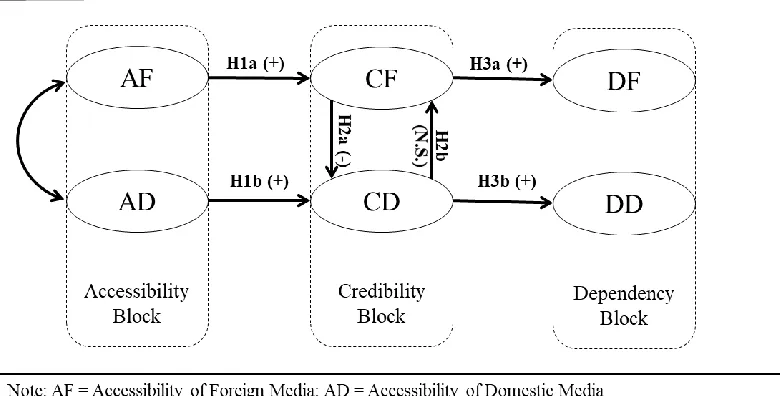
This chapter studies the conceptual model shown in figure 3.1: control on media accessibility leads to the possibility of modifying audiences’ perception of
domestic/foreign media credibility (which is a part of the grand models discussed in chapter II). Such perception of global media credibility further leads to audiences’ dependence on domestic vs. foreign media. In other words, the power to control media accessibility as information resources could create power imbalance between the state and the mass public. And such power could be valuable in the process of public
diplomacy: because, as Chapter II illustrated, public diplomacy could be understood as a power ecology between the state, the mediators and the mass public (the one-sided ecology model).
This chapter provides theoretical analysis of past research on media credibility, media accessibility and media system dependency. It works as an empirical extension of Chapter II to test its theoretical arguments: especially focusing on governmental
influence in the domestic arena of public diplomacy. At the end of this chapter, when the hypotheses are proposed, a psychometric structural equation model was operationalized and proposed to illustrate the conceptual relationship in figure 3.1.
is NOT about “Chinese governmental control of information”, but rather a general depiction of all governments’ important role in global media competition, especially at the domestic stage. Of course, choosing the Chinese context could potentially benefit the upcoming empirical analysis, because media ownership in China can be more centralized and controlled in comparison to that in other places.
3.1 State Actors in Camouflage: The Question of Why
Information transparency has been brought to the publics’ attention after the 2016 US election, when the Federal Bureau of Investigation’s concern about Russian
interference in US presidential election was reported by US and international media. This is an important real-world case illustrating the fact that a government (a state actor) can be upset and sensitive to foreign manipulation of domestic public opinion. The alleged Russian interference happened in the format of “Fake news” which was propagated through social media platforms such as Facebook, Twitter and Youtube. In January 2018, CBS accused RT (Russian Today), a Russia-based international broadcaster, for its interference in the 2016 US election, basing the arguments on a report from Office of the Director of National Intelligence (2017) pointing out that RT functions as “the Kremlin’s principal international propaganda outlet” to assist in the leak of DNC data during the 2016 election. (Simonyan, 2018)
“formal disassociation from Kremlin” which “facilitates RT US messaging” (Office of the Director of National Intelligence, 2017, p. 12). In the interview with CBS, Margarita Simonyan (Editor-in-chief of RT) countered such accusations as she thinks CBS and US intelligence agencies are “destroying our reputation.” (Margarita Simonyan, 2018, 1:15)
In their analysis of RT’s engagement with global audience during the 2014 Sochi Winter Olympics, one study (Hutchings, Gillespie, Yablokov, Lvov, & Voss, 2015) pointed out that RT is militarizing the global information environment and assumed that there is no objectivity to begin with in international broadcasting, for RT, international broadcasting efforts are a “counter-hegemonic struggle”. The paper argues that RT conceptualizes the information arena to be a highly competitive environment for credibility. For the US-funded Al Hurra in the Middle East, researchers found that identification of Al Hurra’s ownership negatively influences its perceived credibility among local viewers, and that knowledge about Al Hurra’s ownership also negatively moderates the relationship between viewing and opinion about the United States (Dabbous & Nasser, 2009; Douai, 2009; Samei, 2010).
mainstream media predominant in the current environment have the advantage of framing such intention to win the credibility competition.
Thus, in the context of international broadcasting, unless being forced to declare ownership and source of funding by law, it is reasonable to argue that global mediators, either state-funded or non-state-funded, would not be willing to actively advertise about its source of funding or ownership. And for state-funded mediating actors in public diplomacy, as they often operate in a foreign environment, and perhaps with a national strategic goal, a pan-social acknowledgement about its ownership and funding source could be detrimental to its credibility and influence. It is also one of the reasons why Youtube launched an experimental project to label videos on its site in terms of
ownership and funding source, with the hope to “equip users with additional information to help them better understand the sources of news content that they choose to watch on YouTube.” (Youtube, 2018)
3.2 Differentiation of Foreign and Domestic Media