Motor skill acquisition in childhood: Exploring the links between
working memory, implicit learning and equipment modification
by
TIM BUSZARD, BExSc (Hons)
College of Sport and Exercise Science, Victoria University
Submitted in fulfillment of the requirements of the degree of DOCTOR OF PHILOSOPHY
ABSTRACT
The aim of this dissertation was twofold. First, this thesis explored the role that working memory plays in children’s motor learning. Working memory is responsible for the temporary storage and manipulation of information in the mind, and is the primary
ACKNOLWEDGEMENTS
There are three people I must thank first – Damian Farrow, Rich Masters and Machar Reid – my three supervisors. They proved to be the perfect combination. Typically, Rich was the theorist, always questioning what I was doing and the reasons why, and providing endless ideas. Machar, the high performance manager of Tennis Australia, ensured that I was
constantly thinking about the applied element of my research. And Damian, my primary supervisor, was brilliant at understanding both the theoretical and applied nature of my work.
When I began my PhD in 2011, I entered an environment of academics, whereby I was the youngest with the least experience. Initially, I was unsure as to whether I had the skill set to match it with my superior peers. However, to the credit of Damian, he taught me
(probably without realising it) to trust my intuition and to be confident with the decisions I made. To that end, I thank ‘Damo’ as that was as important as any ‘academic knowledge’ I learnt throughout my PhD. Damian’s relaxed persona also allowed my PhD to be very stress-free and thoroughly enjoyable. My favourite ‘supervisor meetings’ occurred on the golf course… although, come to think of it, I am not sure if much was achieved during these meetings other than discover weaknesses with our golf! Importantly, however, Damian’s ability to provide quick feedback regarding my work (despite wherever he was in the world) was a testament to his remarkable work ethic.
career as a researcher. One of Rich’s hallmarks was his attempt at being nice when my writing didn’t meet his standards. Rich would often say, in his kindest possible voice: “Tim, you just haven’t quite the hang of this one, have you!” I quickly learnt that was code for, “Tim, try again!” Nonetheless, the conversation would always end with a challenge for me, and one that only he could make sound exciting.
Without doubt, my biggest thanks to Rich is for initially inviting me over to the University of Hong Kong in 2012 (and then for allowing me back in 2013!). Thank you to everyone at the Institute of Human Performance at HKU for making my time so enjoyable. In particular, thank you to Neha Malhotra and Liis Uiga for putting up with me everyday in my most recent trip – it must have been difficult! But, importantly, you were largely the reason why I enjoyed Hong Kong so much. I will never forget our nights out in Lan Kwai Fong, nor will I ever forgot the epic weekends I spent with Magdalena Taczkowska during my initial Hong Kong trip. Thank you also to Jamie Poolton, Antje Cosgrove, Catherine Capio, Frank Zhu and Dong Ryu for their friendship and support during my time in Hong Kong. Equally, thanks to the Hong Kong Cricket Club for their hospitality during my two visits. Finally, I must acknowledge the entire Masters’ family (Nancy, Jacob, Noah, Rei and Tess), not only for providing me with accommodation during my stay in 2012, but also for being great friends.
insightful feedback. Thanks also to everyone else at Tennis Australia who made me feel welcome from the first day I started my PhD (Darren McInerney, Eliza Keany and Peta Allen). In particular, thank you to Kim Kachel, Geoff Quinlan and Craig Morris who
provided me with ideas for my research and increased my understanding of tennis coaching. Because my PhD was linked with Tennis Australia, my research was also partially funded by the International Tennis Federation, for which I was extremely grateful.
I must also thank my colleagues at Victoria University. My fellow PhD friends in P141: Georgia Giblin, James Rudd, Ewout Timmerman, Shelley Duncan and Mel Penn – cheers for the entertainment over the journey! And to the senior members of the office who were there for majority of my PhD: Derek Panchuk, Jason Berry, Jacqueline Williams and Michael Butson – thanks for your support and willingness to assist me. My thanks also extend to the College of Sport and Exercise Science and the Institute of Sport, Exercise and Active Living at Victoria University for their continual support of my research.
The studies that I conducted could not have occurred without the help from my research assistants, especially those that helped out on numerous occasions – Joel (thanks also for the accommodation in the Netherlands in 2013!), Brianna, Danni and Emma. Furthermore, I appreciated the enthusiasm of the schools (Eltham Primary School, Ivanhoe Grammar School, St Joan of Arc Primary School and Templestowe Park Primary School) for allowing me to conduct my research with their students. Thank you also to Peter Spence and David Parkin for their receptiveness when I inquired about research regarding modified equipment in children’s sport in the early phases of my PhD.
some explicit words of advice! However, we both agreed that traditional coaching methods should not impede the use of other more subtle coaching practices that encourage implicit learning. Thank you also to the Smith family (Wayne, Kate, Josh and Alex) in Northop Hall (UK) where I lived for 5 months at the beginning of my PhD. Similarly, thanks also to the Sparks’ family (Tony, Carol and Maeve) for their support during my time living in the UK.
As I finished writing this thesis, I think back to the two things that I often heard from others who have completed a PhD. First, many talk about ‘the end your social life’ during the PhD years. Second, most talk of the relief they felt when they finally finished. For me
LIST OF PUBLICATIONS & PRESENTATIONS
Sections of this thesis have been published (or submitted for publication) and/or presented at relevant scientific conferences.
PUBLICATIONS
Chapter 3
Buszard, T., Farrow, D., Reid, M., & Masters, R. S. W. (in review). Hypothesis testing by children performing motor tasks: The influence of verbal working memory. Quarterly Journal of Experimental Psychology.
Chapter 4
Buszard, T., Farrow, D., Zhu, F. F., & Masters, R. S. W. (2013). Examining movement specific reinvestment ad working memory capacity in adults and children.
International Journal of Sports Psychology, 44(4), 351-366.
Chapter 6
Buszard, T., Farrow, D., Reid, M., & Masters, R. S. W. (in press). Scaling sporting equipment for children promotes implicit processes during performance.
Consciousness and Cognition.
Chapter 7
Other publications during my PhD
Buszard, T., Farrow, D., & Masters, R. S. W. (2013). What is the ‘significance’ of choking in sport? A commentary on Mesagno and Hill. International Journal of Sports
Psychology, 44(4), 278-280.
Kachel, K., Buszard, T., Reid, M. (2014). The effect of ball compression on the match-play characteristics of elite junior tennis players. Journal of Sports Sciences. doi:
10.1080/02640414.2014.942683
SPORTS COACHING PROFESSIONAL PUBLICATIONS
Buszard, T., Farrow, D., Reid, M., & Masters, R. S. W. (2013). Implicit motor learning: Designing practice for performance. ITF Coaching & Sport Science Review, 60, 3-5.
MEDIA PUBLICATIONS
Buszard, T. (2014). Different strokes: How Rafael and Tiger hit the top of their games. Retrieved from http://the conversation.com/different-strokes-how-rafael-and-tiger-hit-the-top of-their-games-22238
Buszard, T. (2013). Panic Stations: Azarenka’s ‘extended break’ and the science of choking. Retrieved from http://theconversation.com/panic-stations-azarenkas-extended-break-and-the-science-of-choking-11809
Buszard, T. (2013). Small courts, big futures: how to nurture young tennis aces. Retrieved from http://theconversation.com/small-courts-big-futures-how-to-nurture-young-tennis-aces-11786
Buszard, T., Reid, M., & Morris, C. (2013). The modified approach to developing success.
Giblin, G., & Buszard, T. (2012). What a coach can see? Australian Tennis Magazine,
February, 72-73.
SCIENTIFIC CONFERENCE PRESENTATIONS
Buszard, T., Farrow, D., Reid, M., & Masters, R. S. W. (2012). The benefits of modified equipment for children playing tennis. Paper presented at the Australasian Skill Acquisition Research Group, Melbourne, Australia.
Buszard, T., Farrow, D., Reid, M., & Masters, R. S. W. (2013). The modified approach to skill acquisition: Tennis. Paper presented at the Australasian Skill Acquisition Research Group, Sydney, Australia.
Buszard, T., Farrow, D., Reid, M., & Masters, R. S. W. (2013). The implicit benefits of using modified equipment: Enhancing children’s skill acquisition. Paper presented at the 11th Motor Control and Human Skill Conference, Melbourne, Australia.
Buszard, T., Farrow, D., Reid, M., Zhu, F. F., & Masters, R. S. W. (2013). Examining the association between hypothesis-testing and working memory during motor learning.
Paper presented at the 18th annual Congress of the European College of Sports Science, Barcelona, Spain.
INVITED PROFESSIONAL SEMINAR PRESENTATIONS
Buszard, T. (2013). The modified approach to developing success in tennis. Invited
presentation at the Institute of Sport, Exercise and Active Living Seminar, Melbourne, Australia.
TABLE OF CONTENTS
ABSTRACT……….. ii
STUDENT DECLARATION………... iii
ACKNOWLEDGEMENTS……….. iv
LIST OF PUBLICATIONS & PRESENTATIONS………. viii
TABLE OF CONTENTS……….. xi
LIST OF FIGURES………... xvii
LIST OF TABLES……… xviii
LIST OF APPENDICIES……….. xix
CHAPTER 1: INTRODUCTION & OVERVIEW OF THESIS……… 1
Introduction……….. 2
Aim of the Dissertation……… 4
General Aims……….. 4
Specific Aims………. 4
Chapter Organisation………... 5
CHAPTER 2: A REVIEW OF THE CONSCIOUS (AND UNCONSCIOUS) PROCESSES ASSOCIATED WITH MOTOR LEARNING IN CHILDREN……. 9
Introduction……….. 10
Motor Learning in Children………. 10
Theories of Skill Acquisition……….. 11
Age of Acquisition: The benefits of learning early……… 13
Children’s Cognitive Development………. 16
Working Memory: An Overview………... 17
The Development of Working Memory: From Birth to Adulthood……….. 20
Individual Differences in Working Memory Capacity……….. 22
Enhancing Children’s Motor Learning, Implicitly!... 23
The current thesis………. 28
. CHAPTER 3: HYPOTHESIS TESTING BY CHILDREN PERFORMING MOTOR TASKS: THE INFLUENCE OF VERBAL WORKING MEMORY……… 29
Introduction……….. 30
Method………. 33
Working Memory Assessment………... 33
Verbal Short-Term Memory ……… 34
Visuo-Spatial Short-Term Memory……….. 34
Verbal Working Memory………. 34
Visuo-Spatial Working Memory……….. 34
Experimental Design and Procedure……….. 34
Hitting Task……….. 34
Measuring Hypotheses-Testing……… 35
Statistical Analysis………. 36
Results………. 37
Descriptive Statistics……….. 37
Regression Analyses: Predictors of Hypothesis Testing……… 39
Forced-Entry Regression Analysis………... 39
Fixed-Order Hierarchical Regression Analysis……… 40
Agreement Between the two Hypothesis Testing Measures: Verbal Recall & Adjustments to technique………... 41
Discussion……… 42
CHAPTER 4: THE RELATIONSHIP BETWEEN WORKING MEMORY CAPACITY AND CONSCIOUS CONTROL OF MOVEMENTS……… 48
EXAMINING MOVEMENT SPECIFIC REINVESTMENT AND WORKING MEMORY CAPACITY IN ADULTS AND CHILDREN……….. 49
Introduction………. 49
Study 1………. 52
Method………... 53
Participants……… 53
Measures………... 53
Working Memory Assessment……… 53
Movement Specific Reinvestment Scale for Children………… 53
Statistical Analysis……… 54
Results & Discussion………. 55
Study 2………. 56
Method………... 56
Participants……… 56
Procedure……….. 57
Working Memory Assessment……… 57
Movement Specific Reinvestment Scale for Adults……… 57
Hitting Task Procedure……… 57
Pressure Manipulation………. 58
Results & Discussion………. 59
Descriptive Statistics………. 59
Correlation Coefficients……… 59
Step-Wise Regression Analyses………... 60
General Discussion……….. 62
THE RELATIONSHIP BETWEEN WORKING MEMORY CAPACITY AND EEG COHERENCE DURING A MOTOR TASK………... 66
Introduction……….. 66
Method………. 67
Participants………. 67
Experimental Design……….. 68
Working Memory Assessment………... 68
Hitting Task Procedure………... 68
EEG Activity……….. 69
Statistical Analysis………. 70
Results………. 71
Descriptive Statistics……….. 71
Correlation Coefficients………. 72
Step-Wise Regression Analyses………. 74
Predicting EEG Coherence During Condition 1 (no pressure)………. 74
Predicting EEG Coherence During Condition 2 (pressure)………….. 74
Discussion……… 76
CHAPTER 5: COACHING INSTRUCTIONS ADVANTAGE CHILDREN WITH LARGER WORKING MEMORY CAPACITY: EVIDENCE FROM A FIELD-BASED STUDY………. 79
Introduction……….. 80
Method………. 81
Participants………. 81
Experimental Design……….. 82
Working Memory Assessment………... 82
Tennis Skill Testing Procedure……….. 83
Hitting Performance Task………. 83
Technique Measures………. 84
Practice Procedure……….. 84
Statistical Analysis………. 85
Results……….. 86
Working Memory Scores………... 86
Group Equality During Practice………. 87
Pre- Post-Test Performance……… 87
Hitting Performance………. 87
Forehand Technique………. 89
Backhand Technique………. 89
Underarm Serve Technique……….. 90
Discussion……… 91
CHAPTER 6: SCALING SPORTING EQUIPMENT FOR CHILDREN PROMOTES IMPLICIT PROCESSES DURING PERFORMANCE……….. 94
Introduction……….. 95
Method………. 98
Participants………. 98
Experimental Design……….. 99
Working Memory Assessment………... 99
Hitting Task Procedure……….. 99
Hitting Task……….. 99
Attention Conditions………. 100
Hitting Task Assessment……… 101
Hitting Performance………. 101
Hitting Technique………. 101
Statistical Analysis………. 102
Results………. 103
Working Memory Assessment………... 103
Hitting Performance………... 103
Hitting Technique……….. 104
Discussion……… 106
CHAPTER 7: MODIFYING EQUIPMENT IN EARLY SKILL DEVELOPMENT: A TENNIS PERSPECTIVE………. 110
Introduction………. 111
Method………. 113
Participants………. 113
Experimental Design and Apparatus……….. 113
Hitting Task Procedure………... 114
Hitting Task Assessment……… 115
Hitting Performance……….. 115
Hitting Technique………. 115
Statistical Analyses……… 116
Results………. 117
Hitting Performance………... 117
Hitting Technique……….. 118
Discussion……… 121
CHAPTER 8: USING A MODIFIED RACQUET IMPROVES MOVEMENT PROFICIENCY IN YOUNG CHILDREN LEARNING TENNIS……… 126
Introduction……….. 127
Method………. 129
Participants………. 129
Experimental Design……….. 130
Test Procedures……….. 131
Hand-Eye Coordination Measures……… 131
Tennis Skills Hitting Technique………... 131
Hitting Performance Task………. 132
Dual-Task Test……….. 132
Practice Procedures……… 132
Statistical Analysis………. 133
Results………. 134
Group Equality at Pre-Test………. 134
Tennis-Specific Measures………. 134
Hand-Eye Coordination Measures……… 134
Group Equality During Practice Session……… 135
Pre- Post-Test Differences: Hitting Technique……….. 137
Using the Small Racquet in Testing………. 137
Using the Large Racquet in Testing………. 138
Pre- Post-Test Differences: Hitting Performance……….. 140
Using the Small Racquet in Testing………. 140
Using the Large Racquet in Testing………. 140
Dual-Task Test………... 141
Using the Small Racquet in Testing………. 141
Using the Large Racquet in Testing………. 141
Hand-Eye Coordination Measures………. 142
Using the Small Racquet in Testing………. 142
Using the Large Racquet in Testing………. 143
CHAPTER 9: GENERAL DISCUSSION………. 148
The Experimental Series……….. 149
Phase 1: The Role of Working Memory in Children’s Skill Acquisition….. 149
Phase 2: The Influence of Using Modified Equipment on Skill Performance and Learning………. 151
Theoretical Implications……….. 153
Working Memory and Explicit Processes in Children………... 153
Modified Equipment, Task Simplification and Implicit Motor Learning….. 155
Practical Implications……….. 156
Methodological Implications………... 157
Future Directions………. 159
Concluding Remarks………... 160
REFERENCES……… 162
LIST OF FIGURES
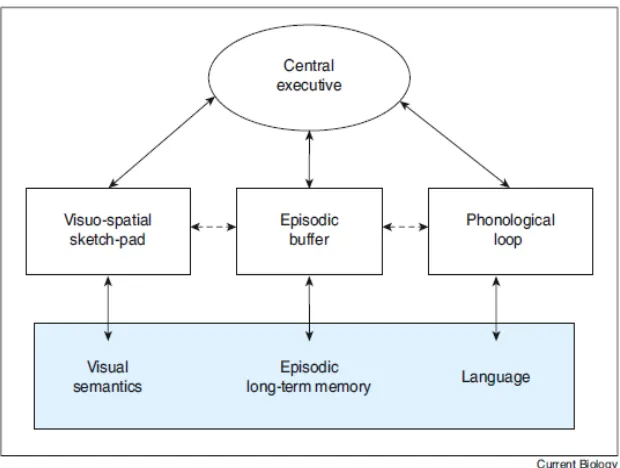
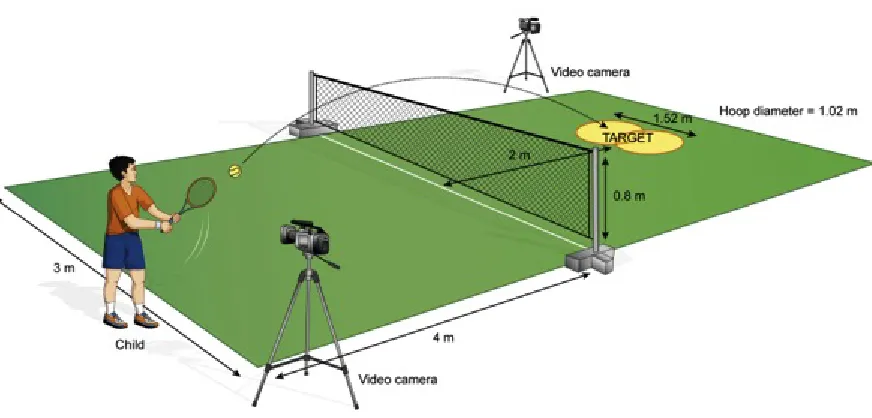
Figure 2.1. Baddeley’s revised multicomponent model of the working memory… 19 Figure 3.1. The hitting task set-up……… 36 Figure 4.1. The EEG monitoring system……….. 70 Figure 4.2. The relationship between verbal and visuo-spatial working memory
and EEG coherence between the T3-F3 regions during Condition 1
(no pressure)……….. 75
Figure 4.3. The relationship between verbal and visuo-spatial working memory and EEG coherence between the T3-F3 regions during Condition 2
(pressure)……… 76 Figure 5.1. The court dimensions for the hitting task………... 84 Figure 5.2. Hitting performance scores during the pre- and post-test for the four
groups………. 89 Figure 6.1. The court set-up and dimensions……… 100 Figure 6.2. Mean hitting performance for the skilled group and less skilled group
in the two attention conditions when using (a) modified equipment
and (b) full size equipment………. 104 Figure 7.1. The court-set up for the hitting task………... 115 Figure 7.2. The mean points scored (hitting performance) for the nine
racquet/ball combinations……….. 118 Figure 7.3. The mean number of occurrences of (a) low-to-high swings and (b)
impacts with the ball in front and to the side of the body……….. 120 Figure 8.1. The mean forehand technique scores for the SR group and the LR
group when using the small and large racquet during the pre- and
post-test……….. 138
Figure 8.2. The mean backhand technique scores for the SR group and the LR group when using the small and large racquet during the pre- and
post-test……….. 139
Figure 8.3. The mean serve technique scores for the SR group and the LR group when using the small and large racquet during the pre- and
post-test………... 140 Figure 8.4. The mean hitting performance scores for the SR group and the LR
group when using the small and large racquet during the pre-test,
LIST OF TABLES
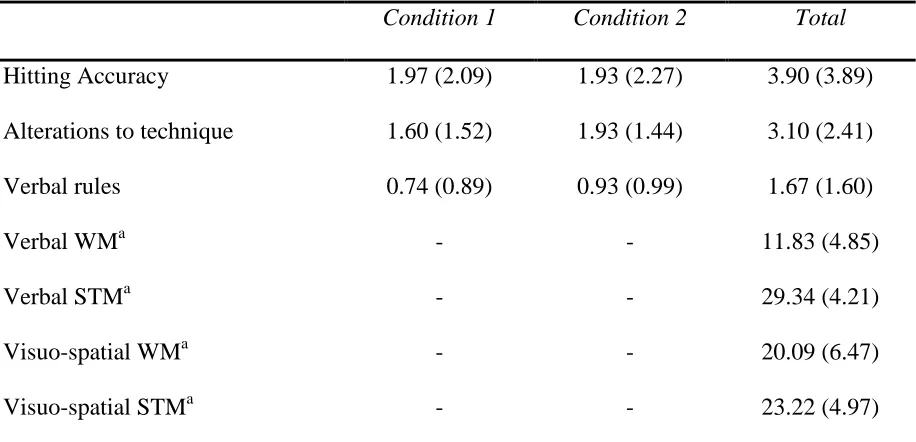
Table 3.1. Means and standard deviations for hitting accuracy, alterations to
technique, verbal rules reported and the four AWMA measures………. 38
Table 3.2. Correlation coefficients among all measures………... 39
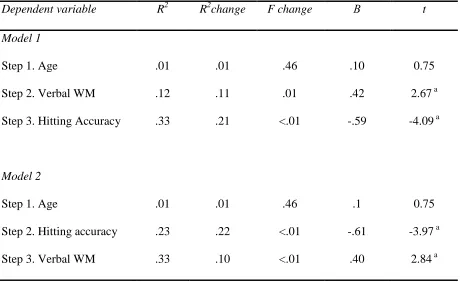
Table 3.3. Forced-entry regression analysis predicting alterations to technique….. 40
Table 3.4. Hierarchical regression analyses predicting alternations to technique…. 41 Table 4.1. Means And Standard Deviations For The Verbal And Visual Tests Of Working Memory Capacity And For The Conscious Motor Processing And Movement Self-Conscious Components Of The Movement Specific Reinvestment Scale In Children………. 55
Table 4.2. Means And Standard Deviations For The Verbal And Visual Tests Of Working Memory Capacity And For The Conscious Motor Processing And Movement Self-Conscious Components Of The Movement Specific Reinvestment Scale In Adults……… 60
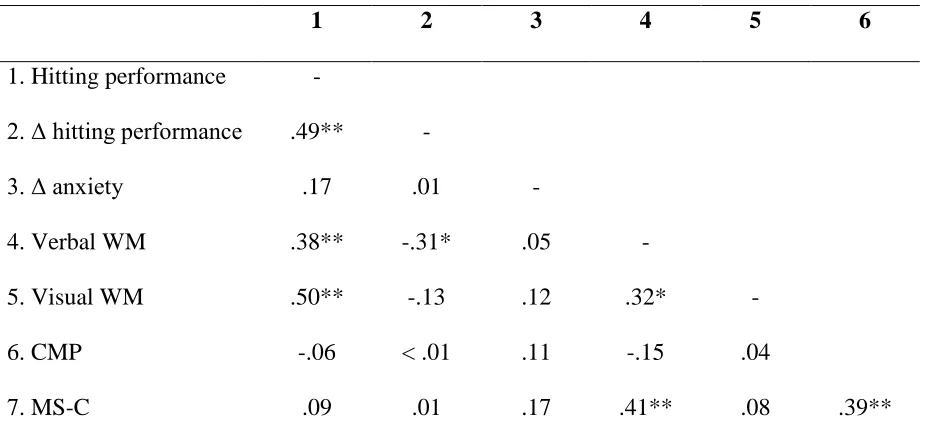
Table 4.3. Correlation Coefficients Among All Measures……… 61
Table 4.4. Step-Wise Regression Analysis Predicting Change In Hitting Performance From The Unpressured Test To The Pressured Test……… 62
Table 4.5. The means and standard deviations for hitting performance and EEG coherence in the two conditions………... 72
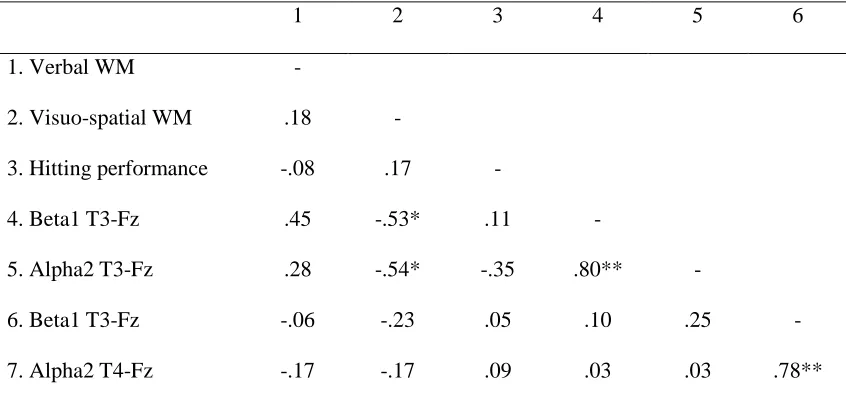
Table 4.6. Correlation coefficients during Condition 1 (no pressure)………... 73
Table 4.7. Correlation coefficients during Condition 2 (pressure)……… 73
Table 5.1. The means and standard deviations of the technique scores for each stroke type during the pre- and post-test……….. 91
Table 6.1. The means and standard deviations for the six hitting technique variables……… 105
Table 8.1. The median number of times each group could perform the two hand-eye coordination skills during the pre- and post-test……… 135
Table 8.2. The median number of hitting opportunities during each session for the two groups……… 136
Table 8.3. Summary of the significant differences for each measure………... 144
Table A1. The activities conducted in session 1………... 217
Table A2. The activities conducted in session 2………... 218
Table A3. The activities conducted in session 3………... 218
Table A4. The activities conducted in session 4………... 219
Table A5. The activities conducted in session 5………... 219
Table A6. Descriptions of the six technical points for the forehand………... 220
Table A7. Descriptions of the six technical points for the backhand……….. 221
LIST OF APPENDICES
Appendix A Information statement for the experiments in Chapters 3, 4, 6 & 7….. 191 Appendix B Participant consent form for the experiments in Chapters 3, 4, 6 & 7.. 194 Appendix C Participant consent form for the experiment in Chapter 4………. 196 Appendix D Movement Specific Reinvestment Form (children) for the experiment
in Chapter 4……… 197 Appendix E Movement Specific Reinvestment Form (adults) for the experiment in
Chapter 4……… 198 Appendix F Information statement for the experiments in Chapters 5 & 8………... 200 Appendix G Participant consent form for the experiments in Chapters 5 & 8……... 203 Appendix H Overview of Tennis Australia’s Hot Shots program……….. 205 Appendix I Outline of the tennis practice sessions used in Chapters 5 & 8………. 217 Appendix J Description of the tennis hitting technique analysis used in Chapters 5
CHAPTER 1
Introduction
The acquisition of a motor skill is a complex process. Traditional theories of motor learning postulate that there is high conscious involvement in early skill acquisition (Fitts & Posner, 1967), whereby the performer is trying to discover the most effective and efficient movement patterns to execute the skill (i.e., testing hypotheses). Consequently, the performer acquires a set of explicit rules about how the skill should be performed. For example, a golfer learning to hit a ‘drive’ might develop the rule: “I hit the ball more accurately when I swing the club slower”. The cognitive process supporting this ‘rule-making’ behavior is working memory (Maxwell, Masters, & Eves, 2003) – the construct responsible for the temporary storage and manipulation of information in the mind (Baddeley, 2010; Baddeley & Hitch, 1974; Gathercole, 2008). Over time, following substantial practice, performance of the skill improves and there is less working memory involvement. Eventually, when the skill is mastered, it is performed independent of working memory. This is also referred to as
automaticity (Fitts & Posner, 1967).
While this theory of motor learning may provide an accurate account for the
acquisition of many skills, it does not explain how some skills are acquired without conscious involvement. For instance, it is highly unlikely that a young child learning to walk develops explicit rules to acquire such movements. Masters (1992) proposed the implicit motor learning theory, which suggests that skills can be acquired with minimal conscious
processing. As such, a performer that learns a skill implicitly has difficulty verbalising the processes involved in the execution of the skill (e.g., Hardy, Mullen, & Jones, 1996; Masters, 1992; Maxwell et al., 2003). While this theory has largely been applied to adults, the
processes and, therefore, skills acquired implicitly remain largely unaffected by factors such as age and intelligence.
If young children are more inclined to acquire motor skills implicitly, there must be a stage in a child’s development whereby explicit (conscious) processes become more involved in the acquisition of a skill. For example, if a 4-year-old learns a skill using predominantly implicit processes, and a 20-year-old learns using predominantly explicit processes, when does the transition from implicit to explicit processing occur? Additionally, what are the mechanisms underpinning this transition? Given that working memory plays a critical role in explicit motor learning in adults, it is likely that the development of working memory
throughout childhood (e.g., Gathercole, Pickering, Ambridge, & Wearing, 2004) increases the propensity for explicit processing of information. If this prediction is correct, then children’s learning should be enhanced if practice places fewer demands on the developing working memory.
Capio, Poolton, Sit, Holmstrom, and Masters, (2013) argued that the reduction of errors during practice is one method of reducing demands on working memory to enhance skill acquisition in children. This typically involves the manipulation of the target to ensure successful outcomes (e.g., increasing the target size). Another potential method, based on a similar principle, is the use of modified equipment to simplify the skill for children. By simplifying the skill, children may be more inclined to perform the skill using unconscious processes. Conversely, using equipment that increases the skill’s difficulty (e.g., a heavy tennis racquet) may encourage conscious processes. Given that the use of modified
Aims of the Dissertation
General Aims
This thesis aims to increase our understanding of children’s motor learning by
examining the influence of working memory on the acquisition of motor skills. Furthermore, this thesis aims to extend the small but growing literature examining implicit motor learning in children by investigating whether the use of modified equipment reduces the reliance on working memory and, in turn, encourages an implicit mode of learning.
Specific Aims
1. To explore whether working memory capacity predicts the propensity to test hypotheses when acquiring a motor skill.
2. To examine the relationship between working memory capacity and the likelihood of consciously controlling movements.
3. To determine if working memory capacity predicts brain activity
(electroencephalography coherence) between the regions of the brain associated with motor performance when executing a motor skill.
4. To investigate whether working memory capacity influences motor learning when the practice environment places large demands on working memory.
5. To discover if the use of modified equipment reduces demands on working memory during performance of a motor skill.
Chapter Organisation
Chapter 1 has introduced the topic of the dissertation by providing a brief rationale for the research while discussing the specific aims of the thesis. Chapter 2 critiques research encompassing the study of motor learning in children, with a specific focus on its interaction with the children’s cognitive development. In chapters 3 to 5, a series of experiments are presented that aim to examine the influence of working memory capacity on skill acquisition and skill performance. Chapters 6 to 8 present experiments that aim to establish whether the use of modified equipment reduces reliance on working memory during performance and, subsequently, whether it is beneficial to children’s motor learning. The final chapter (Chapter 9) summarises the findings of each chapter and discusses the theoretical, practical and
methodological implications of the study, as well as providing directions for future research. Specifically, Chapter 3 investigated the relationship between working memory capacity and the propensity to test hypotheses when performing a motor skill. Results indicated that hitting accuracy and verbal working memory capacity were the most significant predictors of hypothesis-testing, with lower hitting accuracy and larger verbal working memory capacity associated with more hypotheses being tested. The findings of this study established the important role that working memory may play during children’s motor learning.
Movement Specific Reinvestment Scale). Additionally, for adults, verbal working memory capacity predicted the amount of improvement in performance during a pressured situation, with lower capacity performers displaying greater skill improvements than higher capacity participants. The findings are discussed in the context of cognitive demands of problem solving and hypothesis testing during early skill acquisition and implicit motor learning theory.
The second experimental paper in Chapter 4 extends these findings by assessing whether individual differences in working memory capacity influenced the amount of EEG activity when performing a tennis-hitting task. Results showed that both verbal and visuo-spatial working memory were significant predictors of EEG coherence in the T3-Fz regions of the brain (i.e., the verbal-analytical and the motor planning regions). Larger verbal working memory capacity was associated with greater coherence while the opposite trend was observed for visuo-spatial working memory capacity. There was also some evidence that larger visuo-spatial working memory was associated with lower coherence in the T4-Fz regions (i.e., the visuo-spatial and the motor planning regions). These results indicate that larger verbal working memory capacity is associated with a greater tendency to use explicit processes during motor performance, whereas larger visuo-spatial working memory capacity encourages implicit processes.
Chapter 5 details a field-based experiment that assessed the influence of working memory capacity in young children on skill acquisition following the provision of (i) explicit verbal instructions or (ii) no explicit verbal instructions. Presumably, the provision of explicit instructions would place large demands on working memory, which should advantage
instructions. For the practice groups that received no explicit instructions, there was no difference between low and high working memory children with regards to the amount of skill improvement from pre- to post-test. Ultimately, the findings of this study provide further evidence that working memory capacity plays a critical role during the acquisition of motor skills in children.
Based on Chapters 2-5, it seemed logical that children’s motor learning would be enhanced if practice environments placed fewer demands on working memory. Subsequently, Chapters 6-8 present three experiments that aimed to examine the influence of children using modified equipment on skill acquisition and performance, and whether the use of such equipment reduces demands on working memory (i.e., encourages implicit motor learning). Chapter 6 investigates whether the use of modified equipment (smaller tennis racquet and lower compression ball) by children reduces conscious processing during performance, thus minimising working memory involvement, compared to the use of full size equipment. Results showed that hitting performance was not disrupted by a cognitively demanding secondary task when using modified equipment. Comparatively, performance was
significantly worse when using full size equipment; although, this was only observed with the less skilled children. The results are discussed with relevance to implicit motor learning theory.
racquets and low compression balls, and supports the contention that using modified equipment simplifies skills for children.
Chapter 8 compares the use of a small racquet versus a large racquet on children’s skill acquisition over a five-week period. Specifically, the study aimed to discover whether the use of modified equipment evoked an implicit mode of learning. Results showed that the children practising with the small racquet displayed greater improvements in hitting
technique than the children using the large racquet. However, there was no evidence of implicit-explicit learning differences between the use of the small and large racquet. This was likely due to certain limitations of the study.
The final chapter of this thesis (Chapter 9) provides a summary and a general discussion of the experimental series. Implications of the research are considered with specific reference to the two themes during this thesis: the role of working memory during children’s skill acquisition and the influence of modified equipment on the learning process.
Please note that the majority of chapters in this dissertation have been written with the intention to publish (or have already been published) and, subsequently, the definitions of key terms (e.g., implicit motor learning, working memory) have been repeated in several
CHAPTER 2
A REVIEW OF THE CONSCIOUS (AND UNCONSCIOUS)
PROCESSES ASSOCIATED WITH MOTOR LEARNING IN
CHILDREN
Introduction
The study of motor learning, particularly in children, has interested researchers for over a century (for an overview of a century of motor skill acquisition research, see Adams, 1987). For instance, in the late 1890’s, a series of studies were conducted which examined the motor behaviour and development of infants and young children (Moore, 1897; Tracy, 1896; Trettien, 1900). Interestingly, the cited observations are still of curiosity today. For example, Tracy (1896) reported: “children not only manifest more automatisms than adolescents on a whole, but are surprisingly more prodigal in the use of certain parts” (pp. 699). Ultimately, this observation reflects the main aim of this review: do children learn motor skills via unconscious processes (i.e., automatically/implicitly), or, like adults (and adolescents), do conscious processes play a role in the acquisition of motor skills? If young children do learn motor skills unconsciously, there must be a point in time where conscious processes begin to have an influence. I argue that this ‘point in time’ is a reflection of the child’s cognitive development. There is further research in other domains showing that children tend to learn skills unconsciously (e.g., first-language learning, Chandler, 1993; second-language learning, Carr & Curran 1994; social skills, Reber, 1993); however, there is a lack of understanding of the manner in which children acquire motor skills. In this chapter, I begin by reviewing theories of skill acquisition and how these apply to children. I then explore cognitive development in children, and discuss how age and cognitive development may influence the manner in which information is processed. Finally, practical ideas of how to enhance children’s motor learning are discussed.
Motor Learning in Children
despite this ability, could children (like adults) explicitly explain how they perform these skills? The answer to this question is likely to be related to the manner in which children acquired the skill. For instance, implicit motor learning research has shown that individuals who learn a skill implicitly (unconsciously) have difficulty verbalising how they executed the skill, whereas individuals who learn a skill explicitly (consciously) are able to report many ‘rules’ about how the skill was performed (Hardy et al., 1996; Lam, Maxwell, & Masters, 2009; Law, Masters, Bray, Eves, & Bardswell, 2003; Liao & Masters, 2001; Masters, 1992; Masters, Lo, Maxwell, & Patil, 2008; Masters, MacMahon, & Pall, 2004; Masters, Poolton, Maxwell, & Raab, 2008; Maxwell, Masters, & Eves, 2000; Maxwell et al., 2003; Maxwell, Masters, Kerr, & Weedon, 2001; Orrell, Eves, & Masters, 2006b; Poolton, Masters, &
Maxwell, 2006; Poolton, Masters, & Maxwell, 2007a; Poolton, Masters, & Maxwell, 2007b). The relevant question therefore appears to be: are children more inclined to learn motor skills implicitly or explicitly? The following sections delve into the complexity of this question.
Theories of Skill Acquisition
Cognitive theories of skill acquisition (Anderson, 1983; Fitts & Posner, 1967; Proctor & Dutta, 1995) suggest that skills are initially acquired with substantial verbal engagement in the task, with the learner consciously devising strategies to achieve the desired outcome (i.e., hypothesis testing). After extensive repetition of the skill, performance becomes automatic, with reduced verbal engagement. Specific to motor learning, this model holds true for adults, as there is considerable research demonstrating that adults consciously accumulate
‘explicit’ rules about how the skill should be executed compared to the participants who learnt the skill via an implicit practice method1 (see also Hardy et al., 1996; Maxwell et al., 2000). Furthermore, discovery learners performed significantly worse under stressful
conditions, which was presumably a consequence of a highly conscious learning style (Hardy et al., 1992; Masters, 1992). Studies have also shown that the declarative knowledge
accumulated about skill performance was reflected in alterations made to technique during practice (Maxwell et al, 2001; Poolton, Masters, & Maxwell, 2005). For example, if a golfer reported that “I hit the ball more accurately when I changed my grip”, not surprisingly, when examining video replay, they actually did change their grip!
Neuroscience research provides further evidence that the initial stage of learning involves a high degree of conscious involvement in adults. High electroencephalography (EEG) coherence between the verbal-analytical regions and the motor-planning regions of the cerebral cortex implies communication between these regions (Silverstein, 1995; Weiss & Mueller, 2003). For novice golfers learning to golf putt, there was high coherence between these regions during the initial stage of practice, indicating large conscious involvement (Zhu et al., 2010). Likewise, expert marksmen displayed lower coherence between these regions compared to novice shooters prior to shot execution, suggesting that there is less verbal-cognitive involvement as skill performance becomes automated (Deeny, Haufler, Saffer, & Hatfield, 2009). Thus, when we combine the research discussed above, there is considerable evidence to suggest that there is substantial conscious involvement when initially learning a motor skill during adulthood.
With regards to children however, the literature remains silent about whether learning also occurs in a similar conscious driven manner. There is strong rationale to believe that
1 In the Masters (1992) study, the ‘implicit learners’ practised golf putting using the dual-task practice
young children, whose important cognitive functions are still developing (Alloway, Gathercole, & Pickering, 2006; Best & Miller, 2010; Halford, Maybery, O’Hare, & Grant, 1994; Luciana, Conklin, Hooper, & Yarger, 2005; Luna, Garver, Urban, Lazar, & Sweeney, 2004; Markovitz, Fleury, Quinn, & Venet, 1998; Thomason et al., 2009; van Leijenhorst, Crone, & van der Molen, 2007), are more inclined to learn motor skills implicitly rather than explicitly. In the following section, I discuss the literature examining ‘age of acquisition’, drawing upon research from language learning.
Age of Acquisition: The Benefits of Learning Early
It is well documented that young children learn languages easier than adults, with faster reaction times and greater accuracy found when responding to words learnt in early childhood compared to in adulthood (Barry, Morrison, Ellis, 1997; Cuetos, Ellis, & Morrison, 1999; Ellis & Morrison, 1998; Gerhand & Barry, 1998, 1999; Gilhooly & Gilhooly, 1979; Lewis, 1999; Meschyan & Hernandez, 2002; Morrison, Chappell, & Ellis, 1997; Morrison & Ellis, 1995, 2000). Furthermore, neuroimaging studies show that late-learned words,
compared to early-learned words, elicit greater activation in areas of the brain that are
responsible for phonological word representations (Fiebach, Friederici, Muller, von Cramon, & Hernandez, 2003; Hernandez & Fiebach, 2006). This indicates that language learning in adulthood involves greater conscious processing involving explicit memory, whereas early-learned words elicit greater activation in the areas of the brain responsible for auditory processing.
explicitly, involving more perceptual and motor processes than verbal-analytical processes. Adults, on the other hand, tend to rely on conscious hypothesis testing strategies that utilise explicit memory. Other developmental theorists also support the notion that children learn motor skills implicitly (e.g., Karmiloff-Smith, 1992). Hernandez et al. (2011) examined putting performance of two groups of golfers: those that learnt to play prior to the age of 10 (early learners) and those that learnt after the age of 10 (late learners). Golf putting was assessed in three conditions – a single-task condition (normal putting), a skill-focused
condition (attention directed towards the skill mechanics) and a dual-task condition (attention directed to a non-relevant secondary task). There were no differences in putting performance between the groups in the single-task and dual-task conditions. However, there was a
Despite the findings by Hernandez et al. (2011), we should interpret the results with caution. The authors claim that both groups were matched for skill level, age and years of golf experience. Although, if the groups were the same age during the experiment and had the same years of golf experience, how can their ‘age of acquisition’ be much different from each other? Also, each group had approximately 12 years of golf experience, but does this mean they were playing consistently on a weekly basis for 12 years? This is doubtful given that the handicaps of the two groups were 24 (early learners) and 18 (late learners), which are
relatively high for persons playing golf consistently for 10 years. Thus, the measurement of ‘golfing experience’ must be questioned in this study given that we do not precisely know the amount of golf each group had played. Indeed, the variability in golfing experience among the participants was very high (6 to 22 years). When we add the small sample size (n = 20) to the list of limitations, the reliability and validity of the results in this study are difficult to infer.
Children’s Cognitive Development
Important cognitive functions develop throughout childhood and these are likely to influence the manner in which motor skills are learnt. According to the classic work by Piaget (1937, 1954) and Bruner (1977, 1987, 1990), children’s cognitive development can be divided into stages. The first stage occurs in the first one-to-two years of life, where memory and language begin to develop. Bruner specifically argued that information learnt in these years is stored as ‘muscle memory’ (i.e., implicit memory) rather than internal
representations (i.e., explicit memory). From age 2 to 7, language becomes more mature and children learn to distinguish between past and future events, with information learnt being stored as sensory images. It should be noted however that neither Piaget nor Bruner
suggested that children learn information using conscious explicit processes prior to the age of 7. From ages 7 to 12, Piaget argued that children developed ‘operational thinking’, which involves the ability to perform reversible mental actions and recognise one’s own thoughts. Finally, the ability to formulate hypotheses and consider possibilities occurs after the age of 12. Bruner accounted for these developmental changes by proposing that after the age of seven, children develop the ability to store information as symbols (words) in verbal
(explicit) memory. According to this view, it is after the age of 7 when children represent the world through language. Thus, if we relate these theories to motor learning, it would appear that children process information implicitly prior to the age of 7, and explicitly after this age. This conclusion sits well with the sensorimotor hypothesis (Hernandez & Li, 2007;
The behavioural changes in children’s cognition, as outlined by Piaget and Bruner, are likely to be partially attributable to developments in executive functions – the cognitive processes that underlie goal-directed behaviour (Best & Miller, 2010). Executive functioning is thought to be comprised of three interrelated but separate components (Best & Miller, 2010; Miyake et al., 2000): inhibition, shifting and working memory. Inhibition refers to the ability to constrain a response to a certain stimulus; shifting is the skill of switching focus between multiple tasks; and working memory involves the maintenance and manipulation of information over brief periods of time. These three components are dissociable in early childhood (Hughes, 1998; Senn, Epsy & Kaufmann, 2004; Welsh, Pennington, & Groisser, 1991), and there is evidence showing that these components develop substantially after the age of five through to adolescence (for a comprehensive review of the development of executive function, at both the behavioural and neural level, see Best & Miller, 2010). Similarly, the speed of information processing has been shown to decrease exponentially throughout childhood until approximately 15 years of age (Adams & Lambos, 1986; Hale, 1990; Kail, 1993; Ruffer, Grapenthin, Huey, & Patterson, 1985; for a review of the
development of processing speed, see Luna et al., 2004). Improvements in processing speed appear to assist the development of other cognitive functions such as working memory. Indeed, probably most relevant to motor learning is the development of working memory, as this function plays a key role in the explicit acquisition of motor skills (Maxwell et al, 2003).
Working Memory: An Overview
2008). The most influential theoretical account of working memory was Baddeley and Hitch’s (1974) multicomponent model. This model has been refined and extended over the years (Baddeley, 1986, 2000; Burgess & Hitch, 1992, 1999) and now consists of four components (see Figure 2.1): the phonological loop, the visuospatial sketchpad, the central executive and the episodic buffer. The phonological loop and the visuospatial sketchpad are considered slave sub-systems that specialize in the temporary storage of information in particular domains (verbal and visuo-spatial, respectively). In contrast, the central executive is theorized to be responsible for a range of regulatory functions including attention, the control of action, problem solving and the retrieval of information from long-term memory. The fourth component, the episodic buffer, is thought to bind representations from different parts of the system (e.g., combining visual information with auditory information).
Alternative theories of working memory have been proposed with some highlighting the role of attention (Cowan, 1995, 2001; Engle, Tuholski, Laughlin, & Conway, 1999), others viewing working memory as a flexible resource system (Daneman & Carpenter, 1980, 1983; Just & Carpenter, 1992), and a few emphasizing time-based loss of information
Figure 2.1. Baddeley’s revised multicomponent model of the working memory. It includes links to long-term memory and a fourth component, the episodic buffer that is accessible to conscious awareness [extracted from Baddeley, 2010].
Before discussing the development of working memory and its potential influence on motor learning, it is important to first have a clear understanding of the two slave
sub-systems.
(i) The phonological loop (also referred to as verbal working memory) has two components: a short-term store and a sub-vocal rehearsal process. Speech-coded information is stored for a temporary period of time in the short-term store, and this information decays rapidly if no sub-vocal rehearsal is applied. Information that is sub-vocally rehearsed can be maintained in the phonological loop
Schaafstal, & Schraagen, 1988), representing the developmental differences in working memory from young children to adults. This is discussed further in the next section.
(ii) The visuo-spatial sketchpad (also referred to as visuo-spatial working memory) is also comprised of two components; however, unlike its sister slave system, there is no rehearsal process as this would activate speech-motor planning. The two components are a visuo store and a spatial store, which stores visual and spatial information respectively.
The Development of Working Memory: From Birth to Adulthood
Working memory appears to emerge during late infancy, as evidenced by the ability to direct one’s actions into the future (Diamond, 1990), and there is substantial literature showing that working memory gradually improves throughout early childhood (Alloway et al., 2006; Zelazo, Fry, Rapus, 1996; Zelazo & Resnick, 1991) and into adolescence
(Bjorklund, 1987; Chelonis, Daniels-Showb, Blakea, & Paule, 2000; Conklin, Luciana, Hooper, & Yarger, 2007; Gathercole et al., 2004; Hitch, Towse, & Hutton, 2001; Kemps, de Rammaleare, & Desmet, 2000; Luciana et al., 2005; Luna et al., 2004).
age, children develop the ability to combine information about movement patterns in relation to performance outcomes and, thereby, develop the ability to learn explicitly.
The switch in problem solving strategies may specifically be related to the
The differences between children and adults in working memory functioning can be further narrowed down to differences between young children and older children. It appears young children do not have the ability to code pictures as verbal information like older children and adults do. Children younger than 7 years typically rely on the visuo-spatial sketchpad to remember information presented visually, whereas older children tend to process this information using the phonological loop (Halliday, Hitch, Lennon, & Pettipher, 1990; Hitch & Halliday, 1983; Hitch et al., 1988; Hitch, Woodin, & Baker, 1989). For example, when looking at a banana, young children will remember the image of the banana, whereas older children will remember its name. Whilst the phonological loop is in place by the preschool period (i.e., about 4 years of age), it appears that the sub-vocal rehearsal process does not develop until the middle childhood years (i.e., after 7 years of age).
To summarise the working memory research, children learn the ability to solve problems in early childhood (e.g., Siegal & Ryan, 1989); however, information is typically processed in the visuo-spatial system (Hitch et al., 1988). At approximately 7 years of age, children begin solving problems using anticipatory strategies (Davidson, 1987). This is likely related to a switch in information processing, from the visuo-spatial system to the
phonological loop (Hitch et al., 1988). The development of working memory is underpinned by the maturation of the brain (e.g., Huttenlocher, 1990), including the specialization of hemispheres (e.g., Thomason et al., 2009). Overall, this body of research provides further support that young children (prior to the age of 7) acquire information with little verbal involvement (i.e., implicitly), whereas older children tend to acquire information explicitly.
Individual Differences in Working Memory Capacity
high working memory capacity, compared to people with low working memory capacity, are better at controlling attention on a task to keep the relevant information in active memory (Conway, Cowan, & Bunting, 2001; Kane & Engle, 2002; Unsworth, Schrock, & Engle, 2004). Similarly, people with low working memory capacity are more likely to have their mind ‘wander’ when performing a complex task (Kane et al., 2007). Finally, working memory capacity has been shown to be a key predictor of academic achievement in later years, with higher working memory capacity correlating with greater academic success (Alloway et al., 2007; Nevo & Breznitz, 2011).
Given these findings, differences in working memory capacity may therefore also influence motor skill learning. Individuals with low working memory capacity are less likely to have the ability to assess their movement patterns in relation to performance outcome, and then keep this information in active memory to apply to the next performance. Perhaps this prediction is most relevant for children whose working memory capacity are still developing. For instance, imagine there are two children: Child A and Child B, and they are both eight years of age. Child A, however, has a large working memory capacity relative to their age, whereas child B has a small working memory capacity. When they both begin learning a novel motor skill, it is more likely that Child A will acquire the skill with some conscious involvement, by consciously comparing movement patterns with performance outcome, whereas Child B will probably learn the skill implicitly with no verbal engagement.
Enhancing Children’s Motor Learning, Implicitly!
Sit, Abernethy, & Masters, 2012). Implicit motor learning refers to the acquisition of a skill with little to no working memory involvement and, subsequently, minimal accrual of task-related declarative knowledge (Masters, 1992; for a recent review of implicit motor learning, see Masters & Poolton, 2012). A number of practice techniques have been developed to evoke the implicit acquisition of motor skills in adults, such as dual-task practice (Hardy et al., 1996; Masters, 1992; Maxwell et al., 2000), removing feedback (Maxwell et al., 2003), providing ‘subliminal’ feedback (Masters, Maxwell, & Eves, 2009) using analogies as instructions (Lam et al., 2009; Liao & Masters, 2001; Poolton et al., 2007b; Poolton et al., 2006) and limiting errors during practice (Masters et al., 2004; Masters, Poolton, & Maxwell, 2008; Maxwell et al., 2001; Orrell et al., 2006b; Poolton et al., 2007a; Poolton et al., 2005). The major benefit of learning implicitly, as opposed to explicitly, is that performance remains stable under psychological stress (Hardy et al., 1996; Liao & Masters, 2001; Masters, 1992) and physiological fatigue (Masters et al., 2008; Poolton et al., 2007a). Additionally,
performance does not decline when a cognitively demanding secondary task is
simultaneously included (e.g., Lam et al., 2009; Masters et al., 2004; Maxwell et al., 2001). These benefits are consistent with Reber’s (1992a, 1992b) evolutionary reasoning that implicit learning processes are phylogenetically older than explicit learning processes and, therefore, skills acquired implicitly remain mostly unaffected by factors such as age, intelligence, time and cognitively demanding scenarios.
(Chauvel et al., 2012). To evoke implicit-explicit learning differences, the errorless learning paradigm was applied. Errorless practice, as the name suggests, refers to practicing with minimal errors, which decreases cognitive demands during practice, thereby minimising declarative knowledge build-up (e.g., Maxwell et al., 2001; Orrel et al., 2006b; Poolton et al., 2007a; Poolton et al., 2005). Therefore, in the Chauvel et al. (2012) study, there were two errorless practice groups (for young and old adults respectively) which involved initially putting from a short distance from the hole and then gradually moving further away, and two errorful groups, which began further away from the hole and gradually moved closer. Results showed that for the errorless practice groups, the young adults and older adults showed similar performance (i.e., number of successful putts) throughout practice and also during a dual-task test following practice. Comparatively, in the errorful groups, the young adults displayed greater performance than the older adults during practice and during the dual-task test. These results imply that implicit learning (i.e., via errorless practice) is independent of age and cognitive deficits, whereas explicit learning (i.e., via errorful practice) is dependent upon working memory functioning. Thus, if we associate older adults working memory functioning with young children, it appears that the compromised working memory functioning observed in young children may hinder the ability to learn motor skills consciously via explicit processes (Steenbergen, van der Kamp, Verneau, Jongbloed-Pereboom, & Masters, 2010).
period) compared to children that learnt with many errors. Further, the errorless practice group did not show a decline in performance when required to concurrently perform a secondary counting task, whereas the errorful group did. This infers that the reduction of cognitive demands during practice enhances learning in children. Although, because there was no measure of declarative knowledge accumulation in their study, we cannot be certain that the decline in performance under secondary-task conditions in the errorful condition was indeed due to an explicit mode of learning.
Capio extended her findings by conducting a similar experiment with intellectually disabled children (Capio, Poolton, Sit, Euiga, & Masters, 2013). Whilst working memory was not measured in their study, typically, children with intellectual disabilities have low working memory functioning (e.g., Hulme & Mackenzie, 1992; Jarrold & Baddeley, 1997; Jarrold, Baddeley, & Hewes, 1999, 2000; Russell, Jarrold, & Henry, 1996; van der Molen, van Luit, Jongmans & van der Molen., 2007). The results were almost identical to the initial study (i.e., Capio, Poolton, Sit, Holmstrom et al., 2013) with those who practised with fewer errors not only showing greater improvements from pre to post test, but also displaying the ability to perform the skill whilst concurrently performing a secondary task. Thus, based on the results of these two studies, it appears that the reduction of errors during practice facilitates an unconscious mode of learning, and this is particularly useful for children with immature working memory functioning.
Master et al., 2008; Poolton et al., 2007b; Poolton et al., 2006). For example, research with beginner table tennis players has shown that the analogy ‘move the bat as if it is travelling up the side of a mountain’ to evoke implicit learning benefits (Masters, Poolton, Maxwell, & Raab, 2008; Poolton et al; 2007b; Poolton et al., 2006). Whilst providing a performer with an analogy is explicit in nature, it is cognitively efficient – meaning it demands few attention resources. Liao and Masters (2001) argued that analogies are processed as images in the visuo-spatial component of working memory. Given that young children (less than seven years) tend to process information in the visuo-spatial system, the use of analogies seems fitting for children.
Another method of practice that may evoke implicit motor learning in children is the concept of equipment modification. The use of modified equipment to suit the physical capabilities of children is very common in junior sport (e.g., Orlick & Borterill, 1975; Parkin, 1980; Winter, 1980). It simplifies the task ensuring that skills are performed with greater success (e.g., Burton & Welch, 1990; Elliott, 1981; Elliott & Marsh, 1989; Farrow & Reid, 2010b; Hammond & Smith, 2006; Wright, 1967). For instance, in tennis children perform skills better when using smaller racquets compared to full-size (adult) racquets (Elliot & Marsh, 1989). Moreover, when lower compression balls are used, which bounce lower and travel slower through the air than standard tennis balls, children appear to strike the ball with more power and with a better technique (Hammond & Smith, 2006). Farrow and Reid (2010b) also showed that children experienced greater learning when a scaled (i.e., smaller) tennis court was coupled with lower compression balls as opposed to practice on a full-size court with standard tennis balls.
skill may also have the opposite effect and encourage greater conscious exploration of movement patterns. This is indeed a conundrum; however, if the latter is the case, the conscious exploration of movements is likely to be dependent upon the cognitive development of the child, with high working memory capacity children more prone to consciously exploring movement patterns and low working memory capacity children tending to learn entirely via unconscious processes.
In summary, children’s motor learning appears to be enhanced when the demands on working memory are reduced. Essentially, this theory is identical to that proposed by
Gathercole, Durling, Evans, Jeffcock and Stone (2008) regarding children’s acquisition of knowledge: “reducing working memory loads may provide an effective means of preventing task failures and the associated lost learning opportunities, and hence of improving the academic progress of these children’ (pp. 1035). Replace the word ‘academic’ with ‘motor learning’ and it is fundamentally the same argument proposed by Capio and colleagues (Capio, Poolton, Sit, Euiga et al., 2013; Capio, Poolton, Sit, Holmstrom et al., 2013; Capio et al., 2012). While the errorless learning paradigm provides a useful method to enhance
children’s skill acquisition, future research should look to explore alternative methods, such as the provision of analogies (which has already been established in adults) and the use of modified equipment.
The Current Thesis
CHAPTER 3
HYPOTHESIS TESTING BY CHILDREN PERFORMING MOTOR
Introduction
Polietek (2001) describes hypothesis testing as “comparing internal thoughts to external facts in order to interact with the world” (p. 1). When applied to motor learning, hypothesis testing is considered to be a comparison of conscious thoughts or theories about how to move in order to achieve a desired motor solution, with feedback or facts about the movements and their outcomes (Masters & Maxwell, 2004). The significance of hypothesis testing within the motor learning domain stems from description of the stages of learning a person supposedly progresses through when acquiring a motor skill (e.g., Fitts & Posner, 1967). Initially, there is substantial verbal engagement in the task, as the learner consciously devises strategies to achieve the desired motor outcome (via hypothesis testing), but after a prolonged period of repetition performance of the task becomes automatic, with reduced verbal engagement. However, the literature remains silent about whether children learn in a similar hypothesis driven manner to adults.
It is well documented that cognitive functioning differs between children and adults. For instance, verbal working memory (sometimes referred to as phonological working memory), the mechanism responsible for maintaining and manipulating verbal information temporally in the mind (Baddeley & Hitch, 1974; Baddeley, 2012; Gathercole, 2008; Miyake & Shah, 1999), develops commensurate with language ability (e.g., Adams, 1996; Adams, Bourke, & Willis, 1999; Adams & Gathercole, 1995; Baddeley, 2003; Gathercole, Service, Hitch, Adams, & Martin, 1999; Hulme, Thompson, Muir, & Lawrence, 1984; Majerus, Poncelet, & Greffe, & van der Linden, 2006). Given that language ability develops
more perceptual and motor processes than verbal-analytical processes (Hernandez & Li, 2007; Hernandez et al., 2011). Adults, on the other hand, tend to rely on conscious hypothesis testing strategies that utilise explicit memory.
Numerous studies have also shown that adults store information using phonological codes, whereas young children (5 years of age) store information visually (Halliday et al., 1990; Hitch et al., 1988). For example, when shown pictures of objects, adults tend to encode the name of the object, while young children are more likely to encode the image of the object. Even older children (10-11 years of age) tend to store information using phonological codes rather than visual images (Halliday et al., 1990; Hitch et al., 1988; Hitch et al., 1989). According to Piaget (1937/1954), it is not until children reach the age of about 11 years that the ability to formulate and test hypotheses develops. Nevertheless, it is unclear whether children have the cognitive capacity to consciously test hypotheses when learning a motor skill and, if so, when this ability occurs in a child’s development?
long-term memory and can be accessed by working memory at any time. The capacity of working memory develops throughout childhood (e.g., Alloway et al., 2006; Kemps et al., 2000; Luna et al., 2004), typically reaching maximum capacity during adolescence (e.g., Gathercole et al., 2004; Luciana et al., 2005; Luna et al., 2004). Individual differences exist in working memory capacity (e.g., Alloway et al., 2006) and Engle (2002, 2010) proposed that high working memory capacity is associated with a greater ability to control attention on a task to keep the most relevant information in active memory. Consequently, it is possible that working memory capacity, rather than age, moderates the propensity to explicitly test hypotheses.
The purpose of this study was therefore to examine whether children aged 6-11 years tested hypotheses when performing an unfamiliar motor-skill and to assess whether this ability was related to skill outcome (hitting accuracy), age, and/or working memory capacity. Hypothesis testing during motor learning has in the past been measured using verbal recall strategies (e.g., Hardy et al., 1996; Liao & Masters, 2001; Masters, 1992; Masters, Poolton, Maxwell, & Raab, 2008; Maxwell et al., 2001; Poolton et al., 2005) in which participants recall any mechanical rules or hypotheses that they formulated following a period of practice. This measurement is limited, however, as the process of recalling information may
Both verbal and visuo-spatial components of working memory capacity were
measured in the children (Alloway, 2007a). Given that the act of hypothesis testing involves the storage of verbal information, it was predicted that verbal working memory capacity would be a key predictor of the propensity to test hypotheses. Also, previous research has demonstrated that hypothesis testing is less likely to occur when skills are executed
successfully (Capio, Poolton, Sit, Holmstrom et al., 2013; Lam, Masters & Maxwell, 2010; Maxwell et al., 2001; Poolton et al., 2005). Therefore, it was also expected that children who performed the skill with fewest errors would be least likely to test hypotheses, irrespective of their working memory capacity.
Method
Participants
Fifty-eight children (29 boys and 29 girls) aged between 6 and 11 years (boys, M = 9.1, SD = 1.6; girls, M = 9.0, SD = 1.5) participated in the experiment. The children had limited to no experience playing tennis. All participants and their parents or guardian gave written voluntary consent (see Appendix A and B). The Human Research Ethics Committee of the University where the study was conducted as well as the relevant Department of Early Childhood Development approved the study.
Working Memory Assessment