Scholarship@Western
Scholarship@Western
Electronic Thesis and Dissertation Repository
4-20-2018 1:15 PM
A Mixed Methods Study: The Impact of Self-Regulated Learning
A Mixed Methods Study: The Impact of Self-Regulated Learning
on L2 Writing and Strategy Use
on L2 Writing and Strategy Use
Mohammed Almazloum The University of Western Ontario
Supervisor Dr. Bird, Steve
The University of Western Ontario Graduate Program in Education
A thesis submitted in partial fulfillment of the requirements for the degree in Doctor of Philosophy
© Mohammed Almazloum 2018
Follow this and additional works at: https://ir.lib.uwo.ca/etd
Part of the Adult and Continuing Education and Teaching Commons, Curriculum and Instruction Commons, Educational Methods Commons, and the Language and Literacy Education Commons
Recommended Citation Recommended Citation
Almazloum, Mohammed, "A Mixed Methods Study: The Impact of Self-Regulated Learning on L2 Writing and Strategy Use" (2018). Electronic Thesis and Dissertation Repository. 5355.
https://ir.lib.uwo.ca/etd/5355
This Dissertation/Thesis is brought to you for free and open access by Scholarship@Western. It has been accepted for inclusion in Electronic Thesis and Dissertation Repository by an authorized administrator of
i Abstract
This convergent mixed methods study aimed to find out how a self-regulated
learning (SRL) instructional intervention could impact the Palestinian students’ second
language (L2) writing and strategy use. L2 writers face common writing challenges,
including but not limited to a lack of competences, effective writing approach, proactive
planning, motivation, and self-efficacy (Hammad, 2016). Helping the students to
overcome their challenges, improve their L2 writing, and become self-regulated writers
was an expected outcome of the study. The study was informed by the social cognitive
theory of SRL that views successful writers as proactive and self-regulated learners. In
the quantitative part, a quasi-experimental design with writing pre-tests and post-tests
was used to compare changes to the writing scores of 32 SRL students with the writing
scores of 34 students in a control group. In the qualitative part, the study utilized
interviews, diary studies, and observation to explore the students’ experiences with SRL
instruction to find out if it helped them develop and use SRL strategies that would impact
their L2 writing.
The findings showed that the students who received SRL instruction significantly
outperformed those who received regular instruction. The study suggested that SRL
instruction was effective for improving students’ writing achievement. SRL instruction
was also relevant to help the students alleviate their writing challenges and enhance their
SRL strategy use. It helped them become more active and self-regulated learners who
would contribute to their academic success. Their improved motivation, self-identities
(self-efficacy, self-concept, self-esteem), autonomy, and empowerment were among
ii
The study suggested that teachers should engage their learners in constructive
learning environments where they feel safe, take risks, exchange roles and experiences,
make decisions, and enjoy constructive feedback. The employment of teaching methods
should depend on addressing L2 learners’ needs rather than on following a certain
approach per se. While modelling and direct instruction proved to be effective for
enhancing learning, facilitation and dialogue could contribute to more successful
learning.
Keywords: Self-regulated learning, Self-regulatory processes, Feedback loop,
iii Dedications
To my late mother who was always longing to see my success, but could not witness such
success.
To my wonderful father who has always empowered me with his ongoing love, support,
and inspiration.
To my late brother, Ramy, who sacrificed his life for the sake of freeing our home land.
To my wife who has always been with me with love, support, and encouragement and has
been patient until I make my dreams come true.
To my children who waited impatiently to attend their father’s convocation.
iv
Acknowledgment
All praise and thanks are due to Allah, The Gracious The Almighty, who directed
me to the right path and made it easy to complete this thesis. I find myself obliged to
deliver my sincere gratitude and appreciation to those who deserve them for the
continuous inspiration, support, guidance, contribution, and facilitation they generously
gave me, without which I could not reach this accomplishment.
I would like to thank my supervisor, Dr. Steve Bird, for the time, efforts,
guidance, and support he provided me with throughout the various phases of writing my
PhD thesis. My sincere gratitude is expanded for his continuous and constructive
feedback, encouragement, and future inspiration. His direction and facilitation during my
proposal and thesis writing were significantly helpful as they informed, inspired, and
empowered me to stay motivated and resolve emergent issues. His feedback on the
quantitative strand of my thesis was amazingly constructive and meaningful.
I also feel grateful to my thesis supervisory committee member, Dr. Shelley
Taylor, for reading my proposal, providing insightful feedback, and suggesting future
steps. Her significant support was present during the entire phases of writing my thesis as
she provided me with meaningful and in-depth comments and walked me through the
qualitative strand of the thesis.
I’d like also to thank my thesis examination team, Dr. Augusto Riveros-Barrera,
Julie Byrd Clark, Dr. Joyce Bruhn de Garavito, and Dr. Khaled Barkaoui for their
insightful feedback they gave me during the thesis defense. My thanks are extended to all
my friends and colleagues who inspired me, supported me in spirit, and wished me the
v
Special thanks, gratitude, appreciation, and love are forwarded to my extended
family. I wish my mother, Fatima (May Allah Bless Her), was alive to witness my
accomplishment and success. She was always longing to see this moment of pride. I
always pray to Allah to keep my father, Zakaria, in good state of health and faith. My
father has continuously encouraged and supported me to achieve my life goals including
my PhD degree. He has always supported me spiritually, morally, and financially despite
the obstacles and the thousands of miles separating us. My siblings have been always a
big support to me wishing me the best in my life and academic career, thanks to all of
them.
I, finally, communicate my finalprofound thanks,affectionate gratitude, and
overwhelming love to my wife, May, who truly deserves them for all the support,
understanding, commitment, advice, and love she bestowed upon me. May has been
always with me hand in hand throughout all ups and downs and happy and hard times.
My love and thanks are also due to my beloved children, Amr, Asal, Mariam, Zakaria,
vi
Table of Contents
Abstract ... i
Dedication ... iii
Acknowledgements ... iv
Table of Contents ... vi
List of Figures ... ix
List of Tables ... x
List of Appendices ... xi
Chapter One: Introduction ... 1
1.1 Motivation for the Study ... 2
1.2 Contextual Background ... 3
1.3 Statement of the Problem ... 10
1.4 Research Gap ………..………12
1.5 Purpose of the Study and Research Questions ……….…... 14
1.6 Key Definitions ………... 15
1.7 Overview of the Dissertation Chapters ………...……… 16
Chapter Two: Theoretical Framework and Literature Review ……….…….. 17
Theoretical Framework ……….………. 17
2.1 SRL ……….………17
2.1.1 Operant Viewpoint of SRL ………...…….19
2.1.2 Phenomenological Viewpoint of SRL………... 19
2.1.3 Cognitive Viewpoint of SRL ……….……… 22
2.1.4 Volitional Viewpoint of SRL ……… 22
2.1.5 Sociocultural Viewpoint of SRL ………...……… 24
2.1.6 Constructivist Viewpoint of SRL ………...…………... 25
2.1.7 The Social Cognitive Theory of SRL ……….……….. 26
2.1.7.1 Tenets of the Social Cognitive Theory ………. 28
2.1.7.2 Learners’ Agency in SRL ………. 32
2.2 Cyclical Model of SRL ………... 38
2.2.1 Levels of SRL Development ………..………... 38
2.2.2 Phases of the Cyclical Model of SRL ……… 41
2.2.3 SRL and L2 Writing ……….. 45
2.2.4 Deliberation on SRL ………. 47
Literature Review ……….. 50
2.3 The Writing Process ……….……….. 50
2.3.1 The Product Approach ……….. 51
2.3.2 Process Approaches ……….. 52
2.3.3 Genre Approaches ………. 57
2.3.4 SRL Approach to Writing ………. 60
2.4 Empirical Research on SRL of Writing ……….. 61
2.4.1 SRL Research on Writing ……….. 62
2.4.2 Research on L2 Writing ……… 64
vii
Chapter Three: Methodology ………. 70
3.1 Introduction ………... 70
3.2 Research Design ………. 72
3.3 Quantitative Strand ……… 73
3.3.1 Participants and Sampling ………. 74
3.3.2 Data Collection, Analysis, and Instrument ……… 78
3.3.2.1 Pre-Test and Post-Test of IELTS Writing - Task 2 ……….. 78
3.3.2.2 IELTS Writing Task 2 Test ……….. 81
3.3.2.3 Classroom Instructional Material ………….………... 83
3.4 Qualitative strand ………... 89
3.4.1 The Participants ……… 91
3.4.2 Data Collection and Analysis ……… 92
3.4.2.1 Semi-Structured Interview ………... 92
3.4.2.3 Diary Studies ……… 93
3.4.2.4 Observation ………... 94
3.4.3 Data analysis ………. 95
3.5 Procedures of Analyzing Concurrent Quantitative and Qualitative Data ……... 95
3.6 Summary of Chapter Three ……… 99
Chapter Four: Findings ……… 101
4.1 Results of Research Question 1 ……… 101
4.1.1 Descriptive Results of The Written Essays ……….. 101
4.1.2 Independent Samples t-test ………. 103
4.2 Results of Research Question 2………. 104
4.2.1 Description of Learning Contexts ………... 105
4.2.1.1 Control Classroom ………... 105
4.2.1.2 Experimental Classroom ……….. 108
4.2.2 Change to Students Use of SRL Strategies ……….. 114
4.2.2.1 Forethought Phase ……….. 114
4.2.2.2 Performance Phase ………. 137
4.2.2.3 Self-Reflection Phase ………. 148
4.2.3 Themes ……… 168
4.2.3.1 Shared Responsibility ……… 169
4.2.3.2 Rapport ……….. 172
4.2.3.3 Agency ………... 174
4.2.3.4 Learning Potentials ……… 176
4.2.3.5 Dealing with Resources ……….. 184
4.2.4 Summary of Chapter Four ………... 191
Chapter Five: Discussion ………. 197
5.1 Overview of the Study ……….. 197
5.2 Merging Mixed Methods Findings ………... 198
5.2.1 Summary of Results of Research Question 1 ………... 199
5.2.2 Summary of Results of Research Question 2 ………... 199
viii
5.3 Learners’ Beliefs of Improvement ………... 207
5.3.1 Development of SRL Strategies ……….. 209
5.3.2 Improved Competence ……… 217
5.3.3 Learner Autonomy ……….. 223
5.4 Implications for Theory ……… 226
5.4.1 Centeredness in the Classroom ……… 226
5.4.2 Students Empowerment ……….. 232
5.4.3 Motivation ……….. 236
5.5 Implications for Practice ……….. 242
5.5.1 Promoting SRL strategies ……….. 243
5.5.2 Incorporating social influences ………... 244
5.5.3 Constructing learner-needs-oriented teaching methods ……….. 244
5.5.4 Enhancing Students’ Motivation ………. 245
5.5.5 Building a Constructive Learning Environment ……….. 245
5.5.6 Enhancing Learner Autonomy ………... 246
5.5.7 Creating Opportunities for Multiple Sources of Feedback ……….. 247
5.5.8 Incorporating Technology in the Writing Process ………. 247
5.6 Limitation of the Study and Future Research Directions ……….. 248
5.7 Conclusion ………... 250
References ………... 256
Appendices ……….. 292
ix
List of Figures
x List of Tables
Table 3.1 Age and Distribution of Participants ………... 75
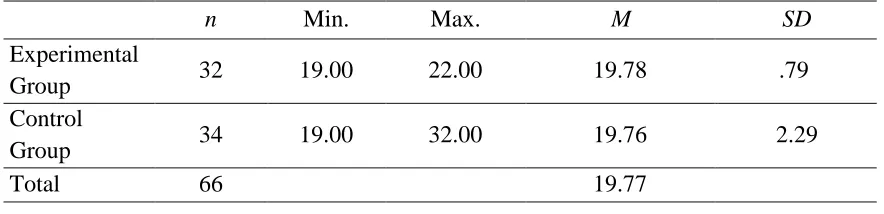
Table 3.2 Descriptive Statistics: Means, Standard Deviations, Change Score ………… 79
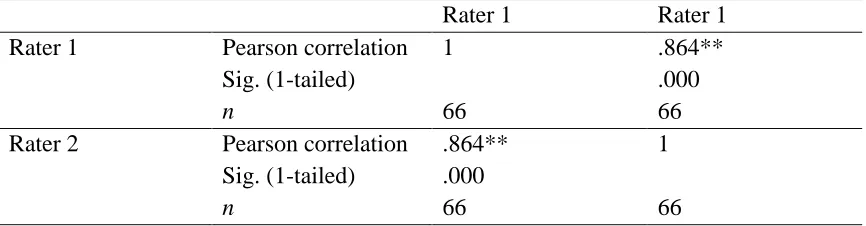
Table 3.3 Pre-Test Inter-Rater Reliability Between Raters Measured by Pearson’s r ………... 81
Table 3.4 Post-Test Inter-Rater Reliability Between Raters Measured by Pearson’s r ………... 81
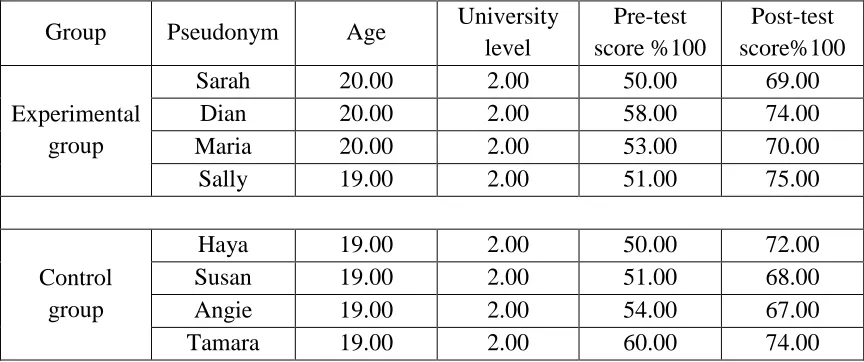
Table 3.5 The participants ……… 92
Table 3.6 Overview of the Research Procedure ………. 100
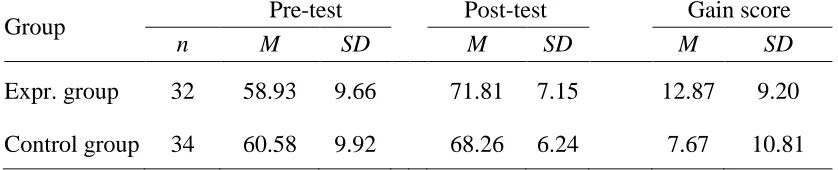
Table 4.1 Overall Results of Written Essays Between Groups Over Time ………. 102
xi
List of Appendices
Appendix A: Ethical Approval for Actual Study ………... 293
Appendix B: Letter of Information and Consent – Students in the Self-Regulated Approach Class ……… 294
Appendix C: Letter of Information and Consent – Student in the Traditional Approach Class ………. 299
Appendix D: Letter of Information and Consent – Teacher ……….. 304
Appendix E: Pre-test IELTS Writing Task 2 Test ………. 309
Appendix F: Post-test IELTS Writing Task 2 Test ……… 310
Appendix G: IELTS Task 2 Writing Assessment Criteria ………. 311
Appendix H: Explicit Teaching Resources ……… 313
Appendix I: Classroom SRL Instructional Activities ………...………. 314
Appendix J: Students Interview ………... 329
Chapter One: Introduction
This convergent mixed methods research study aimed to find out how a SRL
instructional intervention could impact the Palestinian undergraduate students’ L2 writing
and strategy use. Research showed that L2 writers face common challenges including,
limited competences, lack of effective approach, lack of proactive planning, and low
motivation and self-efficacy (Dastjerdi & Samian, 2011; Erkan & Saban, 2011; Hamad,
2007; Hammad, 2015; Hammad, 2016; Kara, 2013; Mojica,2010). Writing effectively
and becoming a SRL writer were recognized as a complex and multifaceted process that
required reciprocal interaction among various personal, behavioral, and environmental
factors (Zimmerman & Risemberg, 1997). It is suggested that employing a SRL approach
to writing could help L2 writers alleviate their writing challenges and improve their L2
writing and strategy use (Cleary & Zimmerman, 2004; Graham & Harris, 2009).
SRL witnessed a widely growing attention among L2 researchers because of its
significant contribution to academic achievement and strategy use (Andrade & Evans,
2013). SRL is defined as “deliberate planning, monitoring, and regulating of cognitive,
behavioral, and affective or motivational processes toward completion of an academic
task” (Hadwin, 2008, p. 175). From a social cognitive theory, SRL advocates triadic
interplay among personal, behavioral, and environmental self-regulatory processes that
learners use when they perform a task. Personal processes include cognitive beliefs,
motivational, and affective states. While behavioral processes include physical activities,
environmental processes include physical and social setting (Zimmerman, 2013).
SRL maintained a cumulative prominence due to its grounding roots in
metacognitive learning, and strategic competence (Wenden, 1998, 2002). Research on
SRL confirmed well-established contributions to writing in terms of better writing quality
and SRL strategy use (Graham & Harris, 2009; MacArthur & Philippakos, 2013;
Matsuhashi & Gordon, 1985). SRL was credited for improving academic achievements
(McCaslin & Hickey, 2001) and better-controlled problematic behavioral and cognitive
issues (Durlak, Furnham & Lampman, 1991). These well-established findings incited my
interest to employ SRL approach in this research in the Palestinian L2 writing context.
1.1 Motivation for the Study
Coming to this research was driven by two interrelated impetuses: practice and
research. At the practical level, my motivation for the study stemmed from my twofold
experience as a former L2 university student and, later, as an L2 instructor who suffered
in both situations. As a student, I encountered many L2 writing challenges that affected
my writing. Later, when I became an instructor of English as a foreign language at
postsecondary institutes, I observed my students struggling to write in English (for more
details, see below).That experience created a need to research the Palestinian students’
challenges and potential innovations in L2 writing contexts. Such research could benefit
from drawing on my personal experience as a former L2 learner and as an instructor in
Palestinian institutes.
At the research level, the study contributes knowledge to obtain better
understanding of the best ways of learning and teaching L2 writing. Although the
literature is dense with research on L2 writing, it is still wise to think that not all L2
learning-related questions and gaps have been addressed. Given that L2 teaching and
answers to my intended questions (Dörnyei, 2007). The learning diversity created a good
reason to accomplish my study to inspire “more effective teachers [as] research
contributes to more effective teaching, not by offering definitive answers to pedagogical
questions, but rather by providing new insights into the teaching and learning process”
(McKay, 2006, p. I). Nevertheless, it is wise to advance this proposed L2 writing-related
research by building on results of previous research as research is always in progress
(Dörnyei, 2007).
1.2 Contextual Background
The students in my study were L2 learners who studied English as a foreign
language and were enrolled in the Department of English & Literature at a Palestinian
university. They were required to take two writing courses as part of the requirements for
the degree in Bachelor of Art, English & Literature. Writing (I) ENGL 1325 provides the
students with an introduction to writing with special attention to the sentence and
paragraph level. It also aims to assist them to handle “a large selection of useful sentence
structures, and awareness of stylistic differences between alternative ways of saying,
more or less, the same thing. The topic sentence and types of paragraphs are also taken
into consideration” (university prospectus, p., 290). The second writing course, Writing
(II) ENGL 2325, is a “further detailed course in writing skills at the sentence and
paragraph levels. It is designed in order to enable students to successfully deal with a
large selection of useful patterns and structures” (p. 291).
While the two courses seem to focus solely on the writing product in terms of
“knowledge about the structure of language” (Badger & White, 2000), I hold a strong
to improve writing knowledge, approach of writing, and SRL strategies to produce good
written texts (Santangelo, Harris & Graham, 2007). “Becoming an adept writer involves
more than knowledge of vocabulary and grammar, it depends on high levels of personal
regulation because writing activities are usually planned, initiated, and
self-sustained” (Zimmerman & Risemberg, 1997, p. 73). Recognizing its complexity, I
acknowledge that L2 writing is “a process of discovery which involves brainstorming,
multiple drafting, feedback practices, revision, and final editing” (Zhang, 2008, p. 96). I
also believe that students have to be active agents in the writing process and that teachers
have to draw on their learners’ prior learning, current proficiencies and future needs.
Instructors should be explicit about the content, significance and expectations of their
instruction. Moreover, enhancing the students’ skills and competence depends highly on
the reciprocal interaction between instructors and students in a supported developmental
environment (Hyland, 2007).
Acknowledging the complexity of the writing process and the challenges that L2
writers face (Dastjerdi & Samian, 2011; Erkan & Saban, 2011; Hamad, 2007; Hammad,
2015; Hammad, 2016; Kara, 2013; Mojica,2010), I reflected on my own experience
below. During my undergraduate study, many of my classmates and I struggled to write
good academic essays. Lack of writing knowledge, approach of writing, advance
planning, generating content, revising, transcribing, persistence and self-efficacy have
been found the most common challenges that students face in writing (Santangelo et al.,
2007). Such challenges were ascribed to factors related to learners, instructors, learning
environment, and learning and instructional resources. Some of my personal-related
We, as students, did not establish a good conception of being learning agents with
certain responsibilities towards achieving our goals and our learning in the Department of
English at the university level. We were not aware of what was expected from us as
current students at that time or as prospective contributors to the community. There was a
lack of awareness of the essence of writing, its rationality, and writing process among the
students. We also lacked competence that could be properly defined in this context as
“the sum of knowledge, skills and characteristics that allow a person to perform actions”
(The Council of Europe, 2001, p. 9). We lacked what Canale and Swain (1980) proposed
as linguistic competence, sociolinguistic competence, discourse competence, and
strategic competence that involve knowledge, including but not limited to language, with
proper use of this knowledge in context (Hymes, 1972). Accordingly, we did not make
use of relevant knowledge (Harris, Santangelo & Graham, 2010) required to perform
writing task analysis, self-motivation, self-control, self-observation, self-judgment or
self-reaction (Zimmerman, 2011). We were more reactive than proactive self-regulators
and we suffered from low motivation to writing due to those challenges.
Part of the problem could be due to not emphasizing the importance of strategy
use and SRL or teaching them by instructors. Moreover, instructors’ feedback and
response might not have been enough to provide scaffolding to support our learning
needs due to large classes and time constrains. Although teacher feedback, group review,
peer reviews, and self-assessment are found to be beneficial to improve the students’
writing (Karabenick, 2011), our instructors might not have addressed them relevantly.
Seeking help from the teacher or other peers was rarely applied in our writing classroom.
use, that strategy was not in good use due to the typical perception that only low
achievers would seek help. We were not instructed on how to determine if we could feel
the problem, need help, seek help, why to seek help, and from whom to seek help
(Zimmerman, 2011). Our awareness was not triggered regarding the importance of
help-seeking strategy.
As an L2 instructor in postsecondary institutes in Palestine, I could realize the
magnitude of challenges that my students had. Citing my experience would help me to
identify and reflect on the pedagogical practices that I suffered from during my teaching
experience. Low motivation toward writing represented the most remarkable challenge
among many students. They had insufficient self-efficacy which is defined as “people's
judgments of their capabilities to organize and execute courses of action required to attain
designated types of performances" (Bandura, 1986, p. 391). I emphasize the importance
of self-efficacy because research has proved that self-efficacy has a crucial impact on
academic performance. Writing self-efficacy has positive correlation with students’
achievement goals and self-evaluative standards (Zimmerman & Bandura, 1994). It
affects students’ expended efforts, persistence, and interest (Pajares, 1996b). Students’
low self-efficacy could be attributed to lack of mastery experience (poor writing),
vicarious experiences (no modeling), forms of persuasion (no reassurance by instructors),
and physiological indexes such as apprehension and anxiety (Schunk, & Usher, 2011).
Many students also lacked self-direction toward their learning, including but not
limited to setting goals, self-monitoring their learning, and self-reflecting on their
progress. They relied heavily on their instructors in a teacher-centered learning
cognitive, motivational, and behavioral resources. That drawback might have been
blamed on both students and instructors.
The learning environment worsened the problem due to physical environmental
constrains such as classroom sizes, furniture supplies, classroom structure, technological
equipment, and power supplies. Some writing classes and other L2-related classes in that
university exceeded 80 students which represented a challenge for learning in such large
classes. Moreover, the classroom lacked proper furnishing due to lack of relevant
furniture which left the choice for organizing the classroom desks and tables in the
traditional row-structure manner. There was severe lack of technological equipment such
as commuters, LCD projectors and other modern technologically and digitally-assisted
devices. Power supplies played an essential part in worsening the learning context as
power was available, sometimes, only 4 hours a day, more or less. Such challenges led to
poor and deficient employment of learning opportunities that students might benefit from.
The students could not set up the right place or time to plan, write, or revise.
These learning environment-related challenges, classroom sizes, furniture
supplies, classroom structure, technological equipment, and power supplies, were closely
related to the deteriorated political situation in the Gaza strip where my study took place.
As the Gaza Strip lies under the Israeli occupation, Israel enforced closure, siege,
sanction, and collective punishment against the Gaza Strip, represented by the “full
control of all movement of people and goods to and from Gaza by sea, air and land”
(United Nations Country Team in the occupied Palestinian territory, 2017, p. 7). That
control negatively influenced the Gazans’ general life aspects as the Israeli Government
people and goods, ultimately amounting to a blockade by sea, air and land” (p. 7). Those
sanctions and restrictions played the biggest part of hardening the mission of properly
building a relevant learning environment that the students should enjoy during their study
because “provision of basic services, including health and education, has continued to
decline, as the needs for… classrooms… and teachers… have not been met” (p. 3).
Financial aids and revenues assumed to provide educational and instructional support and
create physical space for good learning were badly affected because of the Israeli
collective punishments that included all life aspects.
The Israeli collective punishment also led to high rates of unemployment which
consequently affected negatively the students’ admission into universities due inability to
pay tuition fees because of poor job opportunities and low family income (United Nations
Country Team in the occupied Palestinian territory, 2017). Many enrolled students had to
withdraw for the same reasons. As the university depends partially on students’ tuition
fees to pay for its various services and facilities, shortage of finance influenced the proper
creation of learning and instructional resources at the university. Writing support services
at the university were not available for financial shortage. No training courses,
workshops, or one-on-one sessions on writing were available. The dearth of writing
centers and student success centers in the Palestinian universities increased students’
challenges and left them unassisted.
Few research studies were conducted to identify challenges that the Palestinian
undergraduate students might face regarding L2 writing and strategy use. The lack of
linguistic competence represented a major problem for the students as they had issues
(Hammad, 2016). Although the students could be aware that they made errors, they were
not aware of the number of error types they committed (Mourtaga, 2004).
Academic writing complications were also predominant among the students as
they found it challenging to produce a text with full components, well-organized format,
and appropriate citation. These challenges were attributed to shortage of academic
resources, curricular issues, instructors’ capability of teaching, and university regulations
(Abou Shaban, 2003). They also complained against not receiving feedback from their
instructors (Abu Shawish & Atea, 2010, Hammad, 2015; Hammad, 2016).
Writing practice was a substantial problem that most students suffered from due
to lack of time devoted to writing in English in the classroom (Hammad, 2016; Mourtaga
2010). They did not employ enough relevant writing strategies which affected the level of
selecting, implementing and evaluating learning strategies. That short learning was
attributed to ignorance of utilizing explicit strategy instruction. As a result, the students
produced poor written essays (Hammad, 2013).
The students’ understanding of writing was flawed as they perceived it only as
speech recording with most emphasis made on the sentence level. Harris et al. (2010)
criticized this knowledge-telling model because it could make the students rely solely on
retrieving content from memory. The students did not have relevant conceptualization of
what writing could mean to the writer and the audience, nor did they understand the
purpose of writing (Abd Al- Raheem, 2011). In this regard, Zimmerman and Moylan
(2009) warned that students may run into metacognitive deficiencies. Moreover, Harris et
al. (2010) emphasized the role that declarative, procedural and conditional knowledge
The affective variable was another factor that played a crucial role in facilitating
or hindering students’ writing. When properly employed, affective elements such as
self-esteem, contribute to students’ second language learning (Schumann, 1998). Many
students reported that they suffered from apprehension issues during the writing class
(Abu Shawish & Atea, 2010). They felt depressed and frustrated to receive inappropriate
response from their instructors when they committed writing errors. They might have
been mocked by their instructors and classmates for their bad handwriting which
increased their stress. It was found that less skilled L2 students felt more writing
apprehension than more skilled students. In addition, male students had more writing
apprehension than female students (Abu Shawish & Atea, 2010). The students might
have been in a risk of running into a “fear of the writing process that outweighs the
projected gain from the ability to write” (Thompson, 1980, p. 121). For example, some
students dropped courses when they felt that their efforts were not valued to avoid
embarrassment. Consequently, the students’ writing performance could be negatively
affected due to writing apprehension (Abu Shawish & Atea, 2010; Atay & Kurt, 2006;
Cheng, Horwitz & Shallert, 1999).
1.3 Statement of the Problem
Producing good writing pieces and becoming self-regulated writers require the
development of SRL strategies along with writing competence and expertise. Developing
SRL strategies and writing competence and expertise represented an essential challenge
for the Palestinian writers. They faced difficulties to acquire, utilize, and manage expert
writers’ strategies and competences. These challenges included limited knowledge of
motivation and self-efficacy. Moreover, the Palestinian students received instruction that
did not help them to develop L2 writing knowledge, skills, and SRL strategies or to
address their learning needs (Santangelo et al., 2007). That approach enhanced
instructors’ authority, overlooked learner autonomy, and lowered the students’
motivation to learn. There existed a need to employ a more relevant instructional
approach that could help the students achieve more academic success, become strategic
learners, and feel more self-efficacious (Cleary & Zimmerman, 2004; Zimmerman &
Schunk 2011).
Utilizing SRL instruction in this study assumed that employing a SRL approach
would “develop active [writers] who are confident, resourceful, diligent, and seek help
when needed” (Andrade, & Evans, 2013, p. 17). Addressing the students’ L2 writing
challenges from a SRL perspective stemmed from the well-established contributions to
pedagogy and curriculum (Zimmerman & Schunk 2011). Nevertheless, despite the fact
that SRL has gained a widespread research interest with significant contribution to
improving students’ achievement and strategy use (Zimmerman & Schunk 2011), it is
still fairly new to the field of L2 learning. Although many studies have examined and
explored its impact on academic achievement, there has been very little research on L2
writing (Andrade, & Evans, 2013), particularly in the Palestinian context.
My review of the literature revealed a dearth of research on L2 writing as the
number of the studies conducted within SRL is remarkably limited. More importantly,
most of the research was confined to identify writing challenges without carrying out
empirical efforts to overcome such challenges or improve students’ writing (Abou
noticed that most of the research has focused on the linguistic competence in writing.
Although there are few studies that focused on non-linguistic factors in writing (Abu
Shawish & Atea, 2010; Al-Shaer, 2014), less research has studied SRL or strategy use.
1.4 Research Gap
I searched Palestinian related journals, magazines, and universities libraries
databases for a chance to find related publications. I also searched the ProQuest
Education Journals, ERIC, PsycINFO, Google, Google Scholar, and Summon through
Western Libraries for research studies, articles, and any other related publications. My
review of the literature revealed that none of the existing studies employed a full model
of SRL in L2 writing in the Palestinian context in specific (Hammad, 2016) and
elsewhere in general (Andrade, & Evans, 2013). Rather, they investigated isolated
sub-processes of SRL strategies such as self-efficacy (Hetthong & Teo, 2013), goal setting
(Kato, 2009), and self-monitoring (Creswell, 2000). Massey (2009) maintained that one
sub-process, without internalizing multiple SRL processes, could not support SRL as a
whole. Rather, we should examine these processes simultaneously. Despite the
well-established contributions of SRL to writing (MacArthur & Philippakos, 2013; Graham &
Harris, 2009; Matsuhashi & Gordon, 1985), that work has placed focus on the outcomes
in terms of process and product gains. Little research has attempted to explore the
teacher-learner relations and roles in the L2 classroom (Harris, Graham & Mason, 2006;
MacArthur & Philippakos, 2013; Schunk & Swartz, 1993a, 1993b; Zimmerman &
Kitsantas, 1999, 2002).
The study aspired to generate a standpoint that could help to clarify the nature of
“teaching SRL may seem to empower students to exercise their agency … it actually
serves as an instrument to encourage complicity, compliance, and obedience” (Vassallo,
2013, p. 60). It is valuable to explore the unresolved deliberation of the teacher-directed
SRL instruction as of whether SRL dictates student compliance and complicity or
promotes autonomy and independency. It is also essential to elaborate on whether SRL
associated with agency might be allied to compliance and/or resistance to teacher
authority and instruction.
By helping resolve this deliberation, the findings of the study could assist teachers
who justify teaching their students SRL strategies as a tool of academic success to make
informed decisions. Consequently, making informed decisions can help them to shape
their understanding of themselves, their students, and teaching responsibilities and to map
out appropriate pedagogical practices engendered from relevant theorizing. There should
exist an insightful understanding to the agentic self-regulation of students with active
engagement in their learning activity. Learning in a secure learning environment where
learners are supported by mindful teachers who undertake supportive roles enables L2
writers to self-plan, self-initiate, and self-sustain their writing activities (Zimmerman &
Risemberg, 1997).
Research into teacher-learner relations and roles in SRL instructional programs
has been so limited that the results were inconclusive. Results inconclusiveness blurred
the agentic role undertaken by learners when they engage in learning activities. There has
been a gap in research where investigations have primarily attended to classroom
contexts without referring to learners’ experience as of what they actually do (Perry &
consideration to the mutual and bidirectional influence that each exerts on the other. The
study presumed to use relevant tools to spotlight the students learning in real tasks and
time as part of its data collection techniques.
1.5 Purpose of the Study and Research Questions
The purpose of the study was to find out how a SRL instructional intervention
impacted the Palestinian undergraduate students’ L2 writing and strategy use. The study
was theoretically inspired by the social cognitive theory (Bandura, 1986) and was
practically informed by the cyclical model of SRL (Zimmerman & Risemberg, 1997;
Zimmerman, 2011, Zimmerman, 2013).
By employing SRL instruction, the study hoped to reduce the gap between novice
and expert writers. Novice writers are different from expert writers in the sense that the
novices have shortcomings. These shortcomings include limited knowledge of writing,
ineffective writing approach, disengagement from advance planning, difficulty generating
content, and limited time and efforts spent on writing tasks (Santangelo et al., 2007).
Reducing the gap could help to ease the challenges of the L2 writers’ who “fail to apply
knowledge, do only enough work to get by, and persist with the same behaviors
regardless of outcomes”. It could also develop successful writers who produce clear and
accurate written texts by using SRL strategies throughout the writing process (Andrade &
Evan, 2013, p. 12).
The study aspired to explore the relationships between the teacher and students,
clarifying if SRL could empower students as agents evolved from their engagement in
their writing experience. The study sought to provide an insight on aspects of agency that
thoughts, actions, emotions, and abilities to make choices. That insight could help to
identify the type of responsibilities that both teachers and learners should undertake to
initiate, maintain, and evaluate L2 learning opportunities. Those opportunities could
happen through meaningful interaction and negotiation processes under the mandate of
the cyclical model of SRL. This type of responsibilities might be difficult to identify
without creating a guideline on the nature of the relationship between the teacher and
students as the main players in the L2 learning process.
Following Creswell and Clark’s (2011) guideline for writing research questions in
convergent mixed methods research, the study’s research questions are stated
independently. The first question was addressed quantitatively while the second questions
was addressed qualitatively.
RQ1. Did the IELTS writing score differ significantly between the students who
received the SRL instructional intervention and those who did not receive
the intervention?”
RQ2. How did the SRL instructional intervention influence the students’
development of SRL strategies and writing?
1.6 Key Definitions
• L1: Acronym for one’s first or native language.
• L2: This acronym has been used to refer to any additional language (second, third,
fourth, or higher) learned beyond the L1, whether this occurs in a foreign language
context, in which English is not the medium of daily communication, or a second
language context, in which the language being learned is the commonly spoken
• L2 writers: Individuals who learn to write an additional language beyond their L1.
• Learner autonomy: “The ability to take charge of one's learning” (Holec, 1981, P. 3).
• Self-efficacy: “People's judgments of their capabilities to organize and execute
courses of action required to attain designated types of performances" (Bandura,
1986, p. 391).
• Strategy: “any organized, purposeful and regulated line of action chosen by an
individual to carry out a task which he or she sets for himself or herself or with which
he or she is confronted” (CEFR 2001, 10).
• SRL: “deliberate planning, monitoring, and regulating of cognitive, behavioral, and
affective or motivational processes toward completion of an academic task” (Hadwin,
2008, p. 175).
1.7 Overview of the Dissertation Chapters
This doctoral dissertation is divided into five chapters. In Chapter One, I
discussed my motivation to carry out this research study which stemmed from research
and practice. I provided contextual background about the learning context in which the
study took place. L2 writers’ challenges with writing were presented. The statement of
the problem was identified to pedagogically help L2 writers to improve their writing and theoretically to resolve the deliberation over the teacher-directness in SRL classroom.
Identifying the research gap and reflecting on the problem, I presented the purpose of the
study along with the two research questions. Some key definitions were presented at the
end of the chapter.
In chapter Two, I presented the theoretical framework that discussed the main
pedagogical application of the instructional intervention was discussed too. I also
presented literature review of various writing approaches that influenced L2 writing and
related previous studies on L2 writing through SRL perspective. In Chapter Three, I
discussed the methodological considerations underpinning my study, research design, and
methods of data collection and analysis. In Chapter Four, I reported the results of the two
research questions across the quantitative and qualitative strands of this mixed methods
study. In Chapter Six, I provided an overview of the research results which helped to
discuss the findings in both quantitative and qualitative strands synthetically. I also
provided theoretical and pedagogical implications that can contribute to advancement of
Chapter Two: Theoretical Framework and Literature Review
This chapter consists of two parts. The first part presents the theoretical
framework of the study, elaborating on the SRL processes, various SRL perspectives, and
educational contributions. It also discusses the underlying features of the social cognitive
theory of SRL in more detail along with the cyclical model of SRL. The second part
provides a literature review of the major writing approaches that influenced L2 writing,
influential empirical research that investigated L2 writing through SRL.
Theoretical Framework
2.1 SRL
The development of SRL was tracked back to the 1960s and 1970s with diversity
of theoretical origins. The application of these theories was conducive to substantial
research and development of practices in various domains and contexts. More
specifically, SRL flourished in the educational field, improving understanding of how
learners regulate their behaviors (Boekaerts, Pintrich & Zeidner, 2000). The significance
of these contributions was endorsed by meta-analysis research findings that learners
academically perform more effectively when they used SRL strategies but perform
poorly when they did not use them (Zimmerman & Martinez-Pons, 1988). SRL assisted
learners with different proficiency levels to improve their achievement effectively
(Schunk, 1984). SRL proved to resolve academic concerns related to academic
achievement when students struggled at schools. It helped to alleviate underachievement
and procrastination issues that resulted in poor learning and performance and high levels
of dissatisfaction (Schmitz & Wiese, 2006). Research also established that students
but also developed strategic behavior and motivation (Dignath, Buettner & Langfeldt,
2008).
SRL involves “processes whereby learners personally activate and sustain
cognition, affects and behaviors that are systematically oriented towards the attainment of
personal goals” (Zimmerman & Schunk, 2011, p. 1). During SRL, several metacognitive
processes such as planning, setting goals, and evaluation are deployed to draw on their
understanding of learning tasks, and to modify plans, goals, strategies, and efforts
(Azevedo & Witherspoon, 2011). Metacognitive monitoring plays an essential role in
identifying the discrepancy between learners’ current achievement and their desired states
(Hadwin, Jarvela & Miller, 2011).
SRL emerged from several theoretical perspectives such as the operant theory,
phenomenological theory, social cognitive theory, cognitive models, volitional-based
SRL theory, sociocultural theory, and constructivist theories. Despite this diverse
emergence, there are mutual grounds on which these theories rely. First, SRL requires the
“purposive use of specific processes, strategies, or responses, by students to improve their
academic achievement” (Zimmerman, 2001, p. 5). Second, SRL involves a cyclical
process of feedback in which students engage in monitoring how effective their learning
strategies are and how they use a variety of ways to respond to this feedback. Third, the
motivation of selecting certain SRL strategies and how students select them is a conjoint
feature of SRL theoretical perspectives. Fourth, students need extra time to prepare, need
to attend to tasks, and need effort with sufficiently attractive outcomes to self-regulate
among these SRL theories in the ways they conceptualize and reflect on the theoretical
and practical principles.
2.1.1 Operant Viewpoint of SRL
The operant theory emphasizes that students’ behaviors are controlled by external
factors (Skinner, 1974). Students’ behaviors can alter the environment and their
behaviors when they are engaged in self-control, impulsivity, or commitment.
Self-control involves postponing an immediate reward for the sake of getting a greater one at a
later time. Impulsivity is to select an immediate smaller reward over a delayed and
greater alternative. Commitment guarantees a larger delayed reinforcement by excluding
the choice between the immediate smaller and delayed larger alternative. The main SRL
strategies used according to the operant theory are monitoring, instruction,
self-evaluation and self-reinforcement (Mace, Belfore & Hutchinson, 2001). The operant
theory is credited for providing powerful tools to arrange one’s learning environment
consistent with long-term contexts. This can be done by providing self-instruction that
guides learners to the delayed rewards, self-reinforcement (coffee break after
accomplishing a task), and self-recording devices that link current accomplishments to
long term reinforcers. However, this approach is criticized for its sole emphasis on the
external factors (reinforcers) as the main motivations for learners.
2.1.2 Phenomenological Viewpoint of SRL
From the viewpoint of the phenomenological theory, the self is “playing a key
role in generating hypotheses, interpretations, predictions, and in the processing and
organization of information” (McCombs, 2001). SRL is derived from the importance of
achievement. Students are motivated to learn by means of developing their self-system
defined as “cognitive structures that provide reference mechanisms and to a set of
sub-functions for the perception, evaluation, and regulation of behavior” (Bandura, 1978, p.
248). Self-system maintains consistency to personality when people observe, symbolize,
and evaluate their behaviors in accordance with their anticipated future consequences.
Self-esteem and self-concept are seen as covert processes that students need to establish
in order to develop their self-system (Zimmerman, 2001). Self-esteem is “a global
evaluation reflecting our view of our accomplishments and capabilities, our values, our
bodies, other’s responses to us, and events, or occasions, our possessions” (Tesser, 2000,
p. 142). Self-concept is defined as the individuals’ “beliefs and perceptions of their
ability to direct and control their cognition, affects, motivation, and behavior in learning
situations” (McCombs, 2001, p. 86).
Self-identities as a key component of learners’ self-system account for learners’
perception of learning and the long-term motivation that explain their effective learning.
Learners’ perception of learning tasks is evaluated in accordance with their sense of
identity such as a scholar, an athlete, or a leader (Zimmerman & Schunk, 2001). For,
example, research showed that some learners rejected an academic identity for
themselves when they received adverse feedback from teachers and other social sources.
Instead, they undertook counterproductive identities that, when formed, affected their
goals and learning methods. Undertaking nonacademic identities was often conducive to
disengagement from academic learning (Paris, Byrnes & Paris, 2001). Despite the
importance of self-identities, there are debates over the definition, measurement, and
different measurement methods which eventually rendered discrepant findings
(Zimmerman & Schunk, 2001).
2.1.3 Cognitive Viewpoint of SRL
Cognitive models of SRL advocate that frequently teaching students how to use
cognitive strategies enhances and leads to higher levels of learning. Cognitive theorists
posit that knowledge has a key role in learning, forming implicit cognition in which
individuals learn without needing to control details of how it unfolds (Zimmerman,
2011). Learners require continuous effort to self-regulate (Winne, 2011). SRL
performance is gauged and enhanced by self-evaluative standards, self-monitoring,
standards-based performance outcomes, and adjustment. “Negative discrepancies
between feedback and self-evaluative standards compel learners to continue their
efforts… until the discrepancies are resolved” (Zimmerman & Schunk, 2001, p. 294).
However, not advocated in the cognitive models, the effectiveness of feedback can be
augmented by combining both positive and negative control reactions. Searching,
monitoring, assembling, rehearsing, and translating are some recommended strategies
used in the cognitive models to enable learners to self-regulate (Winne, 2001). Although
using these strategies can be transferred to other learning contexts, students struggle to
remember them, to generalize them to new tasks, and to use them instinctively when
being in authentic contexts (Zimmerman, 2011).
2.1.4 Volitional Viewpoint of SRL
Volitional-based SRL theory emphasizes the “post-decisional, self-regulatory
processes that energize the maintenance and enactment of intended actions” (Kuhl, 1985,
accomplish an academic task. They aim to protect the intention to learn after motivational
processes (self-efficacy, value, and interest) promote the intention to do so (Corno, 2001).
“Motivational processes mediate the formation of decisions and promote decision,
whereas volitional processes mediate the enactment of those decisions and protect them”
(Zimmerman, 2001, p. 23). When students operate within various situational (classroom
settings, teachers’ actions… etc.) and personal constraints (motives, goals… etc.), their
ability to maintain concentration against confronting obstacles is seen as volitional
aptitude (Corno, 2001). For example, to stay engaged cognitively, students can
restructure the environment by studying in a library, for instance, instead of a noisy
dormitory to remove distractions (Kuhl, 2000).
Kuhl (1985) identifies two categories of volitional control: covert processes of
self-control and overt processes of self-control. The covert processes consist of cognition
control (attention, encoding, and information processing control), emotion control, and
motivation control (incentive escalation, attribution, instruction). The overt processes
comprise control of the task situation (task control and setting control) and control of
others in the task setting (peer and teacher control).
Volitional theory gains an influential importance through the emphasis made on
the essential role of enabling learners to resist distraction temptation (movie,
coffee…etc.) and to strengthen their persistence. Restructuring the learning environment
is a helpful technique to remove distractions. However, separating motivational processes
from volitional ones and eliminating the motivational processes have not rendered proven
2.1.5 Sociocultural Viewpoint of SRL
The sociocultural view of SRL posits that learners develop SRL as an outcome of
their transformation of cognitive and social skills (Diaz, Neal & Amaya-Williams, 1990)
by the use of language as a key tool that enables them to control their thoughts and
actions (Zimmerman, 2011). SRL is developed through two influential processes. 1- In
the inter-psychological process learners are engaged in social interactions that help them
initiate cultural mediators to control their environment, to influence others, and to
eventually regulate their cognition and behaviors. 2- In the intra-psychological process,
learners internalize external operations by using external mediators that become part of
their internal organization (Diaz, Neal, & Amaya-Williams, 1990).
Private speech emerges as a result of reciprocal interactions which starts as overt
verbalization (think aloud) to regulate thought and behavior. Then it turns to covert,
internal, which emerges at any challenging time for learners (Vygotsky, 1986). The zone
of proximal development, “the difference between what a learner cannot do alone yet can
do with help from a teacher or more capable peer” (McCaslin & Hickey, 2001), has been
utilized in many educational practices. Assistance from others is provided as needed by
learners and then can be withdrawn gradually when a learner can independently
accomplish a task. To enhance learners’ SRL, self-verbalization training should be
provided to scaffold their development of SRL (Zimmerman, 2011).
Self-verbalization from the sociocultural viewpoint has endowed pedagogical
benefits for engaging learners as community members in constructive activities
(Zimmerman & Schunk, 2001) such as planning, organizing, monitoring and
with negotiated meaning and agency as teachers can understand their students’ needs
through the use of speech (Özdemir, 2011). Educational implications, however, diverge
due to the different interpretations that researchers have encountered through the
sociocultural theory. On the one hand, contrasting academic interventions occur in which
one stream emphasizes self-verbalization as a cognitive behavioral regulatory strategy.
On the other hand, another stream underlines dialogue as a constructive regulatory
strategy (Zimmerman & Schunk, 2001).
2.1.6 Constructivist Viewpoint of SRL
Constructivist theorists argue that “learning is situated in social and historical
contexts that shape content and processes of thinking” (Paris, et al., 2001, p. 255).
Experience is imparted to novice learners through practical activities in the local
community. Constructing one’s own self depends on the interplay between the individual
and the surrounding groups in a way that integrates cognitive and motivational factors to
practice control over their learning (Vassallo, 2013). Self-identities represent an essential
construct that learners seek to establish by developing theories regarding
self-competence, agency and control, schooling and academic tasks. Self-competence refers
to learners’ ability to self-regulate. Agency and control relate to learners’ interpretation of
success and failure. Schooling and academic tasks are concerned with learners’ beliefs
about task characteristics (Zimmerman, 2001).
Although self-identities maintain a fundamental component of the constructivist
theory, there was a discrepancy in the theorists’ views of conceptualizing and enacting
SRL process. Cognitive constructivists emphasize the cognitive conflict (discovery
motivation to learning (Zimmerman & Schunk, 2001). Social constructivists adopt the
situated cognition perspective to motivate learners. Situated cognition perspective
proposes that “intelligent behavior arises from the dynamic coupling between intelligent
subject and its environment rather than only from the agent's mind (brain, control system)
itself” (Roth & Jornet, 2013p. 264). Social constructivists argue that elaborative
questioning and cooperative learning assists learners to improve their learning. They
emphasize the substantive role of goal orientation, perceived self-competence, agency
and control, tasks orientation, and strategies orientation for learners in order to
self-regulate (Paris, et al, 2001). The discrepancy between the cognitive constructivists and
social constructivists resulted in different implications for practice. For example,
cognitive constructivists stressed the advantage of discovery learning and social conflict
that that involves confronting students with debating views. However, social
constructivists recommended that students should learn in authentic contexts by
establishing social communities of learners. Collaboration in such communities is
favored over conflict.
2.1.7 The Social Cognitive Theory of SRL
The social cognitive theory is discussed in more details in this section as it
represents the main theoretical framework of the study. SRL, in the social cognitive
perspective, is defined as “self-generated thoughts, feelings, and actions that are planned
and cyclically adapted to the attainment of personal goals” (Zimmerman, 2000, p. 14).
SRL is enacted by the interplay among three influences of self-regulation: personal,
behavioral, and environmental influences. Personal influences include cognition,
self-regulatory processes pertaining to cognitive strategies (setting learning goals),
motivational strategies (increasing self-efficacy), or affective strategies (reducing
anxiety). Behavioral influences include overt motoric activities such as keeping a record
of how many paragraphs were written in a given period of time. Environmental
influences include physical and social setting such as selecting a quiet place (library) to
write in (Zimmerman, & Risemberg, 1997).
The interplay among the three influences is conceived as an internal process
operating and influenced by social interaction when learners perform tasks (Bandura,
1986). “Each of these triadic forms of self-regulation interact via a cyclic feedback loop
through which writers self-monitor and self-react to feedback about the effectiveness of
specific self-regulatory techniques or processes” (Zimmerman & Risemberg, 1997, p.
73). This leads to continuing successful strategies and modifying or changing
non-successful ones (Zimmerman, 2000). For example, a student’s personal perception of
efficacy does not determine his response to perform a learning task without
environmental stimuli such as encouragement from the teacher and enactive outcomes
such as obtaining feedback on a previous successful task. The student’s self-regulative
response (self-recording) has an impact on the environmental processes in which a
document can be created on the personal processes such as perceptions of self-efficacy.
Accordingly, the student’s behavior is generated out of self-generated and external
sources of influences (Zimmerman, 1989).
Each form of self-regulation has relative importance during the task performance
which is determined upon three bases: personal efforts to self-regulate, outcomes of
who is asked to write an essay might start the writing process by setting daily output
goals to enhance her writing effectiveness. To enhance her progress, she could keep a
diary of what she has written every day or seek feedback on her essay from another
student (Zimmerman & Risemberg, 1997).
2.1.7.1 Tenets of the Social Cognitive Theory
Triadic reciprocity is a key feature of the social cognitive theory in which “SRL
is not determined merely by personal processes; these processes are assumed to be
influenced by environmental and behavioral events in reciprocal fashion” (Zimmerman,
1989, p. 330). The reciprocity of these factors is assumed to be changeable, and thus, they
need to be monitored (Zimmerman, 2000) because monitoring prompts changes in
students’ strategies, cognitions, affects, and behaviors (Schunk & Usher, 2011).
Self-efficacy beliefs, as “people's judgments of their capabilities to organize and
execute courses of action required to attain designated types of performances" (Bandura,
1986, p. 391) have influential impacts on students’ motivation, achievement, and
self-regulation (Schunk & Usher, 2011). Students’ choice of tasks, persistence, efforts, and
achievement (Schunk, 1995) “modify their efficacy belief … on which [p]rogress
indicators convey to students that they are capable of performing well, which enhances
self-efficacy for continual learning” (Schunk, 2001, p. 127). Sources of self-efficacy,
through which students can interpret information about their capabilities of
accomplishing tasks, include enactive learning (students’ actual performances), vicarious
learning (observed or modeled experience), forms of persuasion, and physiological
indexes (worry, apprehension…etc.), and value of learning (Bandura, 1997; Schunk,
learning contexts. Self-efficacy was associated with higher student achievement as
demonstrated by course grades (Hsieh, 2008; Mills, Pajares & Herron, 2006, 2007).
Self-efficacy was predictive to student learning achievement as learners with strong
self-efficacy were reported to promote higher interest in L2 learning, build more positive
attitudes, and establish integrative orientation (Hsieh, 2008).
Modeling, as “cognitive, affective, and behavioral changes that derive from
observing models” (Schunk, 2001, p. 128), plays an essential part in the pedagogical
practices endorsed by the social cognitive theory (Vassallo, 2013). Models could be real
or symbolic individuals who show and demonstrate behaviors, verbalizations, and other
experiences when learners engage in doing or performing learning tasks. In schools,
teachers and students can act as models to share these experiences by means of
illustration and vicarious reinforcement that help to develop students’ strategies and to
improve their self-efficacy. Fostering self-regulatory processes can be achieved through
modeling by acquiring new behaviors, consolidating or fading behavior, and performing
previous learning (Schunk, 2001). Research revealed that modeling facilitated rapid
learning, significant transfer to untrained tasks, and significant retention over time
(Zimmerman & Rosenthal, 1974a). Modeling enabled learners to induce abstract
concepts facilitated through cognitive models and generalize them to unfamiliar tasks
(Zimmerman & Lanaro, 1974). In Zimmerman and Koussa’s (1979) study, modeling
increased learners’ (as observers) personal choice of learning tasks and enhanced their
motivation.
Sub-processes, including self-observation, self-judgment, and self-reaction are
inform students about their progress toward their goals when they operate within specific
conditions. Self-observation represents valuable information for learners to establish a
program of change. It can also motivate behavioral changes when students keep record of
their actions that guide them to recognize relevant behaviors (Schunk, 2001). Research
findings demonstrated that students who used self-observation strategies such as
record-keeping used higher repertoire and diversity of SRL strategies. Self-observation helped
those students effectively use their time and motivated them to spend extra time studying
(Lan, 1998).
Self-judgment is a process through which students can compare their current
performance with their goals. Self-judgment can be influenced by several factors such as
the type of standards, goal properties, importance of goal orientation and attribution.
Standards can be fixed or normative. Fixed standards refer to the goals that a learner sets
to achieve, such as completing six workbook pages in 30 minutes. This goal represents an
absolute standard that the learner can gauge his progress in accordance with. Normative
standards are related to observing models (a teacher) in which learners make social
comparison with others that allows them to evaluate their performances. A student, for
example, might compare her work on an assignment with a peer to determine who
accomplishes it first (Schunk, 1996a).
Goals are also influential through their properties that include specificity,
proximity, and goal orientation and attribution. For example, setting a goal with specific
performance standards promotes self-efficacy as it is easier to gauge progress. Proximal
goals motivate learners more than distal goals as it is easier to gauge progress toward
motivation. Students tend to be more motivated when they work on goals that are not too
difficult or too easy. Challenging but attainable goals are optimal to motivate the
students’ learning (Bandura, 1988).
Goal orientation is interdependent with the learners’ valuing of their goals
(Bandura, 1997). Learners who hold little value and interest in performing a task, may
not assess their performance. Receiving positive feedback on their performance, learners
can enhance their goals importance by setting specific goals and regularly judging their
progress (Bandura, 1997; Elliott & Dweck, 1988). Goal attribution is also crucial to
learners’ motivation and learning. The causes of outcomes that can be successes or
difficulties can be associated with ability, effort, and task difficulty (Weiner, 2004). For
example, learners who attribute their accomplishment to the teacher’s help might feel less
self-efficacious because they think they could not succeed on their own. Learners feel
more self-efficacious when they attribute their successes to their personal efforts than
when attributing them to others. Exerting higher efforts than needed to accomplish a task
might also result in less self-efficacy than when minimal efforts are required. Learners’
age also plays an important role in motivation and learning. As learners grow up, their
ability attributions exert a more important influence on expectancies while their efforts
attributions exert less importance (Schunk, 2001).
Self-reaction refers to how students respond to their self-judgment of goals
progress. While positive evaluation of goal achievement leads to more efficacy beliefs
toward learning, negative evaluation does not necessarily decrease students’ motivation.
Students can maintain their motivation when they have good self-efficacy beliefs about