The Optimization Methodology for Large Scale Multi-User
MIMO-OFDM Systems with PAPR Reduction
T.Aparna
1,A.Pavan
2,Dr.E.V.Krishna Rao
3Post Graduate Student1, Department of Electronics and Communication Engineering,. Priyadarshini College of Engineering and Technology, Andhra Pradesh., India
Associate Professor2, Department of Electronics and Communication Engineering,Priyadarshini College of Engineering and Technology, Andhra Pradesh., India
Professor3,Department of Electronics and Communication Engineering,K.L.University, Koneru Lakshmaiah Education Foundation,Guntur,Andhra Pradesh,India
Email:[email protected],[email protected],[email protected]
Abstract-Wireless communication is one of the important vital aspects of life. The growth of wireless communication technologies has been producing the enormous demand for high-speed, efficient, reliable voice & data communication. For better transmission, replaced single – carrier waves by multi – carrier waves. Hence, we proposed a novel technique which efficiently suited for PAR reduction in OFDM. This paper discussed about the PAR reduction aiming to achieve higher throughput, higher data rate and better performance. The use of OFDM causes a high peak to- average (power) ratio (PAR), which necessitate expensive and power- inefficient radio-frequency (RF) components at the base station. In this paper, we present a novel data transmission scheme, which exploits the massive tone reservation available in large-scale MU-MIMO-OFDM systems to achieve low PAR. In previous algorithm, we are applying FITRA for PMP .Here to reduce computational complexity of FITRA, we proposed a novel scheme based on sparse for PMP. We developed a corresponding algorithm is fast iterative truncation algorithm (FITRA) with sparse representation and show numerical results to demonstrate tremendous PAR-reduction capability. Experimental results show that our method will achieve better results compared to state-of-art criteria like FITRA in terms of PAR and computational complexity.
Index Terms - Convex optimization, MU MIMO-OFDM, Peak to average(power) ratio reduction, Precoding and Sparse.
1. INTRODUCTION
After more than thirty years of research and growth carried out in the field of communication OFDM has been widely implemented in high speed digital communication [1]. OFDM has its major benefits of higher data rates and better performance. The higher data rates are achieved by use of multiple carriers and performance improved by use of guard interval which leads to removal of Inter Symbol Interference (ISI) [2]. OFDM has several features which makes it more advantageous for high speed data transmission. These features include High Spectral competence, Robustness to Channel Fading, and Immunity to Impulse Interference and Easy Equalization.
In spite of these benefits there are some drawbacks such as PAPR, Offset frequency and Inter Carrier Interference (ICI) between sub-carriers [3]. Practical wireless channels typically exhibit frequency selective fading and a low-PAR precoding solution suitable for
such channels would be desirable. whereas heavier dispensation could be afforded at the BS. Orthogonal frequency-division multiplexing (OFDM) [4] is an efficient and well-established way of commerce with frequency selective channels.
MU-MIMO s to facilitate parallel low-cost and low-power BS implementations.
1.1. Orthogonality
Orthogonal means the peak of one carrier occurs at null of the other carrier at 90 degrees. Since the carriers are all sine and cosine waves. Finally, we can observe the orthogonality principle in Fig 2.2. Generally, we know that two periodic signals are orthogonal when their integral product over one period is equal to zero. Hence, OFDM system is bandwidth efficient when compared to FDM.
Fig1.sub-carrier allocation by using orthogonality
Take an action to combat the challenging linearity requirements of OFDM, a much of PAR-reduction schemes have been proposed for point-to-point single-antenna and MIMO wireless systems, e.g., . For MU-MIMO systems, however, a straight forward adaptation of these schemes is non-trivial, mainly because MU systems require the removal of MUI using a Precoding methods. PAR-reduction schemes suitable for the MU-MISO and MU-MIMO downlink transmission, and rely on Tomlinson-Hiroshima precoding. Both schemes, however, require specialized signal processing in the (mobile) terminals (e.g., modulo reduction), which prevents or reduced their use in conventional MIMO-OFDM systems, such as IEEE 802.11n or 3GPP LTE.
2. LITERATURE SURVEY
In this paper, we develop a novel system broadcast scheme for large-scale MU-MIMO-OFDM wireless system, which only affects the signal processing at the BS[6] while leaving the meting out required at each terminal undamaged. The key idea of the proposed scheme is to exploit the excess of degrees-of-freedom (DoF) offered by equip the BS with a large number of antennas and to jointly perform MU precoding, OFDM modulation, and PAR reduction, referred to as PMP in the remnants of the paper. We develop and examine a novel optimization algorithm, referred to as fast iterative
truncation algorithm (FITRA), which is able to find the solution to PMP efficiently for the (typically large) dimensions arising in large-scale MU-MIMO-OFDM s.For reducing the complexity of the fast iterative truncation algorithm we are applying continuation strategies, is a practical implementation of PMP in hardware.
2.1. Notations
Notation lowercase bold-face writing for column vectors and upper-case bold-face letters designate matrix. The M×M distinctiveness matrix is denoted by Im. The M×N all zeros matrixes by 0m×n. and Fm refers to the M×M discrete Fourier transform(DFT) matrix.
2.2. Outline of the paper
The remainder of the paper is organized as introduces the model and summarizes important PAR-reduction concepts. The proposed system transmission scheme is detailed and the fast iterative truncation algorithm (FITRA) is developed.
3. BLOCK DIAGRAM OF MU MIMO-OFDM DOWNLINK
The input data symbols are supplied into a channel encoder that data are mapped onto QPSK/QAM constellation. The data symbols are converted from serial to parallel and using Inverse Discrete Fourier Transform (IDFT) to achieve the time domain OFDM symbols[7]. Time domain signal is cyclically extended to prevent Inter Symbol Interference (ISI) from the former OFDM symbol using cyclic prefix (CP). Input data symbols are supplied into a channel encoder that data are mapped onto BPSK/QPSK/QAM constellation.
In below fig ,first the data symbols are converted from serial to parallel and using Inverse Fast Fourier Transform (IFFT) to achieve the time domain OFDM symbols.
Time domain signal is cyclically extended to prevent Inter Symbol Interference (ISI) .
In receiver side we have to remove cyclic prefix in receiver side and then the data symbols are converted from series to parallel. Finally ,by using Fast Fourier Transform we are converting from time domain to frequency domain.
Fig.3. Large scale multi-user MIMO-OFDM downlink receiver block diagram
The advantage of using QAM is that it is a higher order form of modulation and as a result it is able to carry more bits of information per symbol. By selecting a higher order format of QAM, the data rate of a link can be increased.QAM is a means of modulating both streams(imaginary& real) onto one RF carriers[8].QAM achieves a greater distance between adjacent points in the I-Q plane by distributing the points more evenly. Modulating the symbols onto subcarriers can be done very efficiently using the FFT algorithm OFDM is efficiently implemented using IFFT/FFT large amount of work has been devoted to reducing the computation time of a FFT.IFFT on the transmitter side FFT on the receiver side By using Fourier transform we can change the domain
3.1. Sparse Matrix
The large matrices that arise in real-world problems in science, engineering , and mathematics tend to be mostly zero, or sparse. Sparse matrix algorithms lie in the inter section of graph theory and numerical linear algebra.
If a matrix M is stored in ordinary (dense) format, then the command S = sparse(M) creates a copy of the matrix stored in sparse format.
For example: >> M = [0 1 0;1 0 2;0 -3 0]
M = 0 1 0 1 0 2 0 -3 0 >> S = sparse(M)
S = (2,1) 1
(3,2) -3 (1,2) 1 (2,3) 2
Name Size Bytes Class
M 3x3 72 double array S 3x3 64 sparse array
In numerical analysis, a sparse matrix is also a matrix .In this matrix most of the elements are zero. Suppose, if most of the elements are nonzero co-efficient, then the matrix is considered as dense. The selection (fraction) of zero elements (non-zero elements) in a matrix is called the sparsity (density). In the case of a sparse matrix, considerable memory requirement reductions can be realized by storing only the non-zero entries in the matrix. Finally, it depends on the number and distribution of the non-zero entries in the matrix. Different data structures can be used and yield huge savings in memory storage when compared to the basic approach.
Sparse matrix-vector multiplication is an important calculation kernel that arises in scientific simulations, data mining, image and signal processing, and other applications also. It performs poorly on modern processors, because of its high ratio of memory operations to arithmetic operations and the also irregular memory access model patterns. However Optimizing this algorithm is difficult, because the performance depends on the nonzero structure of the matrix as well as the characteristics of a given memory system. The sparse matrix is a matrix that allows a special technique to take advantage of the large number of "background" (commonly zero) elements.My requirement or aim is to find exactly how many zeros are present in the matrix or a percentage of zeros present totally in the matrix. We used the "Eq.(1)" like
x = sum((y == 0)); (1)
which is supposed to give the no of zeros present in the column of the matrix.
EDU>>M
M= 0 11 001 1 1 1
EDU >> numel(M)-nnz(sparse(M)) (2)
3. 2. Normalization
Mathematically a norm is a total length or size of all vectors in a vector space or matrices. For simplicity, finally we can say that the higher the norm is, the bigger the (value in) matrix size or vector size. Norm may come in many forms and also many names, including these popular name: Euclidean distance, Mean-squared Error, etc.
Most of the time the norm appears in a equation like
this:
x
where x can be a vector or a matrix.
For example, a Euclidean norm of a vector is
a= Euclidean norm or formally called an l2-norm. Formally the ln-norm of x is defined come upon a choice of deciding whether to use the L1-norm or the L2-L1-norm or ln L1-norm for regularization. L1-norm is also known as least absolute deviations between the target values and estimated values.
L2-norm is also known as least squares. This norm is
Depending upon the application and requirement we may have to choose L1- norm or L2 or etc.
L-Infinity norm, the definition for
l
∞-norm isthe matrix size is more so the complexity also more .In this type of applications we have to choose L -infinity
that this "Eq.(9)" is the maximum entries magnitude of
that vector. That surely demystified the meaning of
l
∞ -norm[14].Sparsity refers to that only a few entries in a matrix
Large-scale (or massive) input multiple-output (MIMO) technology is a challenging wireless communication technology. It means that by using this technology we get higher throughput and improved quality-of-service in multi-user (MU) wireless communication systems. In particular, set up the base station (BS) with a large number of antennas, while serving a few users concurrently and in the same frequency band, has the potential to increase the spectral efficiency of existing wireless systems.
In addition, large-scale MIMO is able to reduce the operational power consumption at the transmitter (i.e., the BS). Practical consciousness of large-scale MIMO, however, need novel means to reduce the costs of hundreds of antennas at the BS. In particular, the use of orthogonal frequency division multiplexing (OFDM) we need of PAR reduction techniques. This simulator provides an environment to assess the performance of the large-scale MU-MIMO-OFDM downlink and provides narrative algorithms to reduce the PAR using different precoding methods. In particular, the simulator contains the PMP algorithm which relies on
convex
l
∞ -norm minimization via the fast iterativetruncation algorithm (FITRA) to appreciably reduce the PAR at the same time perfectly avoiding MU interference.
4.1. Proposed techniques
l
1-minimization has been one of the hot topics in the signal processing and optimization communities in the last five years or so. In compressive sensing (CS) theory , it has been shown to be an efficient approach to recover the sparsest solutions to certain underdetermined systems of linear equations.Gradient Projection Methods: We first discuss gradient projection (GP) methods that seek sparse representation x along certain gradient direction, which induces much faster convergence speed. The approach
reformulates the `
l
1min as a quadratic programming (QP) problem compared to the LP implementation in PDIPA. We start with the `1-min problem (P1;2). It is equivalent to the so-called LASSO objective function.5. MEASURE THE PERFORMANCE
we are compare the PAR characteristics in different types of precoding methods ,we use the complementary cumulative distribution function defined as
CCDF(PAR)=p{PARn >PAR} (10)
Compressed Sensing is the name assigned to the idea of encoding a large sparse signal using a relatively small
number of linear measurements, and minimizing the `
l
1-norm (or its variants)in order to decode the signal(1). CS channel estimation method concerns the sparse reconstruction problem of estimating an unknown sparse channel vector from an observed vector of measurements based on the linear model, namely the measurement by omitting the superscript for brevity[9].
R
=
ψ
h
+
Z
(11)∈
where c > 0 is a constant. Secondly, the measurement matrix ψ should satisfy the RIP, namely, for all L-sparse vector h, we have
L
l l L
h
h
δ
ψ
δ
≤
≤
+
−
1
1
22
2 2
(13)
Where
0
≤
δ
l≤
1
is the isometry constant,2 l
H
is thel2-norm.
ψ
=
φ
mF
(14)For the concerned in another word, the RIP requires the
rows
{ }
φ
mj of m φ cannot sparsely represent thecolumn
{ }
F
i of F and vice versa[10]. Now we prove the RIP of the measurement matrix = m ψφ F(4) .As we mentioned above, mφ is the m-by-N matrix which consists of m unit vectors i e , and it is the unit matrixIN when the number of pilot m is N. F is the N-by-N
DFT matrix, which is also the unitary matrix. Since
F
F
I
=
H , every row of I, ei, can be expressed aswhere is the conjugate operation, j ,i F s the (j, i)- th element of DFT matrix F(5) , and j F is the j-th column vector of F.
5.1. Peak to average power ratio(PAPR)
One of the main problem emerging in OFDM s is the so-called Peak to Average Power Ratio (PAPR) problem. The input symbol stream of the IDFT should possess a uniform power spectrum, but the output of the IDFT may result in a non-uniform or spiky power spectrum. Most of transmission energy would be allocated for a few instead of the majority subcarriers. This problem can be quantified as the PAPR measure. It causes many problems in the OFDM at the transmitting end.
5.2. Calculation of PAPR
The peak to average power ratio for a signal x(t) is defined as in "Eq.(15)".
( ) ( )
[
]
( ) ( )
[
x
t
x
t
]
E
t
x
t
x
papr
∗
∗
=
max
, (15)where *corresponds to the conjugate operator. Expressing in decibels
(
papr
)
papr
dB=
10
log
10 (16) By using this "Eq.(16)" we can get PAPR in dBs.6.SIMULATION RESULTS
The PAR reduction capabilities and error rate performance for different precoding methods.
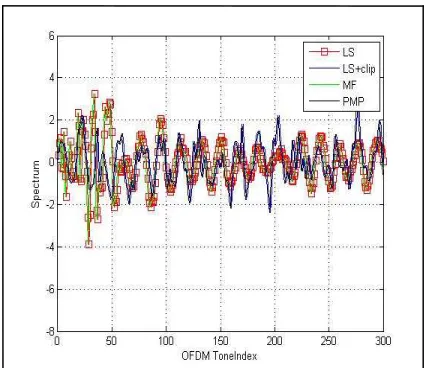
Fig4. Time Representation for different Pre-codings.
Fig 4 shows the time representation for different precoding methods.PMP results in time domain signals having a significantly smaller PAR than that of LS,MF and LS+clip .
fig 5.Frequency Representation for different Pre-coding methods
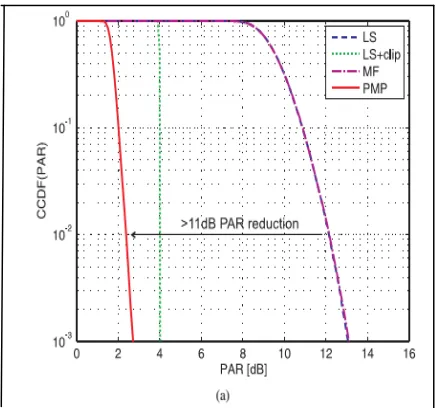
Fig 6. PAR performance for different schemes
Fig(6)PAR performance for various precoding
schemes.PMP relying on FITRA for PAR
performance(the curves of LS and MF overlap). The PAR for LS+clip is 4dB .Note that PMP effectively reduces the PAR compared to LS and MF precoding.
Fig 7. SER performance for different method
Fig(7) Symbol error-rate (SER) performance for various precoding methods. Note that the signal normalization causes 1dB SNR-performance loss for PMP compared to LS precoding
Fig 8.PAR and SNR performance comparison
Fig (8) PAR and SNR Performance comparison for different precoding methods. Sparse effectively reduce the PAR compare to fast iterative truncation algorithm(FITRA) and LS precoding methods.
7. CONCLUSION
In this project, we apply sparse representation based on L1- minimization applied to FITRA algorithm which is proposed in state-of –art methodology [1],by using sparse representation, we can reduce PAR values drastically. We compare our results with state-of-art criteria like FITRA using l-infinity minimization, and we prove that our methodology will give better results based on PAR values which we obtained. Essentially, the MU MIMO_OFDM downlink channel matrix has a high-dimensional null-space, which enables us to design transmit signals with “hardware-friendly” properties, like low PAR. In general, PMP yields per-antenna constant-envelope OFDM signals in the large-antenna limit, i.e., for N →
∞
.Further development for this is combining PMP with other PAPR reduction techniques and also different precoding techniques. In addition , a detailed analysis of the impact of imperfect channel state information(CSI) on the performance of PMP is left for future work.
8. ACKNOWLEDGEMENT
Without her most precious cooperation, I couldn’t have prepared perfectly this paper. So, I humbly express my sincere gratefulness forever to my respectful guide for rendering great support with most precious and constructive criticism that instilled great hope in my project work.
9.REFERENCES
[1] Christoph, Studer.; Larsson, Erik G.(2013): PAR- Aware Large-Scale Multi-User MIMO-OFDM Downlink .IEEE common., 31(2).
[2] Studer, C.;Larsson, E. G.(2012): PAR-aware multi-user precoder for the large-scale MIMO-OFDM downlink .
[3] Marzetta, T. L.(2010): Non-cooperative cellular wireless with unlimited numbers of base station antennas. IEEE Trans..,Wireless Comm., 9(11) . [4] Seethaler, D.;Bölcskei, H.(2010): Performance and
complexity analysis of infinity-norm sphere-decoding. IEEE Trans. Inf. Theory, 56(3) 3,pp. 1085–1105.
[5] Pacific Grove, CA.(2006): How much training is required for multi-user MIMO. pp. 359–363. [6] Hoydis, J.; Ten Brink, S.;Debbah, D.(2011):
Massive MIMO: How many antennas do we need.
IEEE, Monticello, IL, pp. 545–550.
[7] Lyubarskii,Y.;Vershynin,V.(2010):Uncertainty principles and vectorquantization. IEEE Trans. Inf. Theory, 56(7), pp. 3491–3501.
[8] Seethaler,D.;Bölcskei,H.(2010):Performance and complexity analysis of infinity-norm sphere-decoding. IEEE Trans. Inf. Theory, 56(3) ,pp. 1085–1105.
[9] Van Nee,R,;Prasad,R.(2000): OFDM for wireless multimedia communications. Artech House Pub. [10] Siegl,C,;Fischer,R.F.H.(2011):Selected basis for
PAR reduction in multi-user downlink scenarios using lattice-reduction-aided precoding. vol. 17, pp. 1–11.
[11] Han,S.H,; Lee,J.H.(2005): An overview of peak-to-average power ratio reduction techniques for multicarrier transmission. IEEE Wireless Comm., 12( 2), pp. 1536–1284.
[12] R. W. Bäuml, R. F. H. Fischer, and J. B. Huber.(1996): Reducing the peak-to average power ratio of multicarrier modulation by selected mapping. IEE Elec. Letters, vol. 32, no. 22, pp. 2056–2057.
[13] S. H. Müller and J. B. Huber.(1997): OFDM with reduced peak-to-average power ratio by optimum combination of partial transmit sequences. IEE
Elec. Letters, vol. 33, no. 5, pp. 368–369.
[14] B. S. Krongold and D. L. Jones.(2003): PAR reduction in OFDM via active constellation extension. in IEEE Int. Conf. on Acoustics, Speech,
and Sig. Proc. (ICASSP), vol. 4, Hong Kong,
China, pp. 525–528.
[15] Krongold, B.S.(2004):An active-set approach for OFDM PAR reduction via tone reservation.IEEE
Trans. Sig. Proc., vol. 52, no. 2, pp. 495–509.
[16] R. F. H. Fischer and M. Hoch,(2006): Directed selected mapping for peakto-average power ratio reduction in MIMO OFDM. IEE Elec. Letters,vol. 42, no. 2, pp. 1289–1290.
[17] J. Illic and T. Strohmer.(2009): PAPR reduction in OFDM using Kashin’srepresentation. Perugia, Italy.
AUTHORS
Talapaneni Aparna
She got her Engineering
graduation from
J.N.T.University. Now, She is pursuing Post Graduation program – M.Tech., from the same university. She is doing her project work under the guidance of Mrs. A.Pavan, Assoc. Professor in Department of Electronics and Communication of Engineering at Priyadarshini College of Engineering & Technology ,Nellore ,A.P, India.
had taken up her long interesting profession that is teaching and has been working as Asst. Professor in various organizations since 2003. Presently she is working as Assoct.Professor in the department of ECE of Priyadarshini College of Engineering and Technololgy, Kanuparthipadu, Nellore District of Andhra Pradesh. She is now pursuing her Ph.D., from JNTU,Kakinada, Andhra Pradesh. She is also a member of ISTE.