ESSC-ESF POSITION PAPER
Scientific Evaluation
and Future Priorities of ESA’s
ELIPS Programme
The European Science Foundation (ESF) was estab-lished in 1974 to create a common European platform for cross-border cooperation in all aspects of scien-tific research.
With its emphasis on a multidisciplinary and pan-European approach, the Foundation provides the leadership necessary to open new frontiers in Euro-pean science.
its activities include providing science policy advice (Science Strategy); stimulating cooperation between researchers and organisations to explore new direc-tions (Science Synergy); and the administration of externally funded programmes (Science Man-agement). These take place in the following areas: Physical and engineering sciences; Medical sciences; life, earth and environmental sciences; Humanities; Social sciences; Polar; Marine; Space; Radio astron-omy frequencies; Nuclear physics.
Headquartered in Strasbourg with offices in Brussels and Ostend, the ESF’s membership comprises 77 national funding agencies, research performing agen-cies and academies from 30 European countries. The Foundation’s independence allows the ESF to objectively represent the priorities of all these mem-bers.
This work was carried out under ESA contract No. 21477/08/Nl/VJ
The European Space Sciences Committee (ESSC), established in 1975, grew out of the need for a col-laborative effort that would ensure European space scientists made their voices heard on the other side of the Atlantic. More than 30 years later the ESSC has become even more relevant today as it acts as an interface with the European Spa ce Agency (ESA), the European Commission, national space agencies, and ESF Member Organisations on space-related aspects. The mission of the ESSC is to provide an independent European voice on European space research and policy.
The ESSC is non-governmental and provides an inde-pendent forum for scientists to debate space sciences issues. The ESSC is represented ex officio in ESA’s scientific advisory bodies, in ESA’s High-level Science Policy Advisory Committee advising its Director Gen-eral, in the EC’s FP7 Space Advisory Group, and it holds an observer status in ESA’s Ministerial Councils. At the international level, ESSC maintains strong rela-tionships with the NRC’s Space Studies Board in the U.S., and corresponding bodies in Japan and China.
Front cover:
The International Space Station and European
Foreword
In May 2007 the ESA Directorate for Human Spacefl ight, Microgravity and Exploration (D-HME) asked the ESF’s European Space Sciences Committee (ESSC) to organise a broad scientifi c consultation of the users’ community in the preparation of the next ESA Ministerial Council (November 2008), in order to evaluate the achievements and defi ne future strategic and scientifi c priorities of ESA’s programme in life and physical sciences in space (ELIPS). This exercise would constitute the follow-on of the assessment studies done at the Bischenberg, Obernai and Evian workshops, which the ESF and ESSC organised in 2000 and 2004/05 to structure and assess the value of ESA’s ELIPS programme. The evaluation would look at: the achievements of the ELIPS programme between 2004 and 2007; the expectations and require-ments of the users’ community with regard to its future and in particular the validity of the Cornerstone scheme which was updated in 2005; and the scientifi c perspec-tives of the Exploration programme which are relevant to the ELIPS programme.
A Steering Committee, comprising scientists in life and physical sciences, was therefore formally established in October 2007 and met in Brussels on 16 January 2008 to defi ne the format of the evaluation workshop and agree on the scientists to be invited to this workshop. ESA’s ELIPS research plan is split in two main categories: life sciences and physical sciences. The workshop itself was
thus also split in two parts, taking place consecutively during the same week, with two 2-day periods dealing separately with physical sciences and with life sciences. Both disciplinary workshops gathered some 80 persons each. A synthesis meeting consisting of the rapporteurs of the various sessions of the two workshops plus a limited number of selected observers then met on 14 April 2008 to fi nalise and approve the contents of the evaluation report. Following ESF and ESSC rules the report was then independently peer-reviewed.
We are glad to be able to provide this fi nal report to ESA, European national space agencies and the space science community. We hope that it will help Europe better defi ne its strategy for future research in life and physical sciences in space, and in particular reap its investments that led to the realisation of the Columbus laboratory, its launch and attachment to the International Space Station in February 2008.
Jean-Pierre Swings
Chairman
European Space Sciences Committee
General Recommendations
Commonalities and synergies
ESA is to be commended for its support for user-driven research in space and for the opportunities that have been given to European scientists and their international partners to achieve important goals in the disciplines of life sciences and physical sciences. In order to con-tinuously improve European excellence in microgravity research, ESA must emphasise that space experiments should be embedded in strong basic science.
Recommendation G1
The era that began in February 2008 with the attach-ment of the Columbus orbital laboratory to the ISS, and then the successful docking of the ATV Jules Verne to the ISS, must signifi cantly increase the return on European investment in the International Space Station.
The ELIPS programme is essential for European research in life and physical sciences in space. We fully sup-port ESA in proposing the ELIPS 3 programme at the November 2008 Ministerial Council.
Recommendation G2
The ELIPS programme must be continued through its Phase 3 at the funding level mandated by the fact that science utilisation and return will sharply increase as of 2008 with the Columbus laboratory attached to the ISS and in full operation. Optimum usage of Columbus within the ELIPS programme is manda-tory. In order to achieve maximum output and return on investment the funding level has therefore to be raised accordingly.
The full potential of ISS utilisation will not be exhausted by 2018, and the continuation of utilisation beyond that date would deliver enhanced return on investment.
Recommendation G3
Specifi c investments will have to be made for a new generation of payloads (or new inserts into existing facilities) for the ISS. In parallel, preparatory steps have to be taken for the post-ISS era by looking into alternative payload carriers, ballistic fl ights and free-fl ying orbiters. Creative use of the ATV in this context is encouraged.
Topical Teams act as very successful incubators for emerging and interdisciplinary topics, and to prepare for a network of European scientists working for the ELIPS programme. Microgravity Application Promotion (MAP)
projects are also considered to be a unique platform to perform in-depth research on complex phenomena that require the teaming of European experts.
Recommendation G4
The present form of the MAP projects should be continued, meaning that these projects would have application-oriented, yet not solely industry-driven, strategic long-term objectives. As promotion is no longer an issue, the programme should be renamed, e.g. Microgravity Assisted Research. Furthermore, Topical Teams as incubators for future research topics should be continued.
The ELIPS programme has demonstrated its high scientifi c value and relevance to European research ambitions and its balance must be preserved. Hence new programmes on solar system exploration should not be established at the expense of ISS utilisation and ELIPS.
Furthermore, concern was expressed about the impact on the coordination of astrobiology science in ESA as a result of the transfer of ExoMars and Mars Sample Return from the HME/HSF Directorate to the SCI/ SRE Directorate. Liaison between ELIPS and Exploration programmes currently occurs predominantly at working level with varying degrees of effectiveness, although clear scientifi c and technological synergies exist between ELIPS and the Exploration Core programme. The reor-ganisation between these two programmes, including transfer of key personnel, could alter this relationship.
Recommendation G5
To maintain and foster the high international scientifi c reputation of European astrobiology research, a strong coordination between the two ESA directorates on ELIPS (D-HSF) and the robotic exploration programme (D-SRE) is thereby mandatory. We further recommend that ESA should have a more specifi c strategy for coordination between programmes and stress the importance of seriously assessing the consequences of this transfer of programme components.
ESA has contributed to the success of the ELIPS pro-gramme by communicating the scientifi c results of research in space, for example through the Erasmus Experiment Archive, and through ESA’s own web-site. However, although recent years have seen some improvement in ESA’s public relations activities, educa-tion and outreach are clearly areas where major efforts must be undertaken.
Recommendation G6
Materials Fluid Fundamental
science physics physics
Biology
Astrobiology
Physiology
Psychology
schools or workshops on various research topics cov-ered by ELIPS could be initiated. ESA should reach an agreement about ECTS credits in these classes in collaboration with interested universities. Thus stu-dents could become involved in space sciences early in their career.
Substantial development of Internet resources and particularly the website of ESA is also recommended. A model in that area remains NASA’s numerous websites that offer dedicated resources directed at various audiences, from specialists to school pupils. ESA’s website should become a reference in Europe, also offering real-time coverage of Europe-specifi c space events through a web-based ‘ESA TV’.
Cornerstones and emergence
of interdisciplinary fi elds
The scientifi c community is traditionally organised in the ‘classical’ thematic fi elds appearing in the various sections of this report. Nevertheless the need for cross-disciplinary discussions and activities is obvious and many synergies exist between the various disciplines of the ELIPS programme, including life and physical sciences. A signifi cant fi nding of this evaluation is the identifi cation of several potential interdisciplinary areas that cut across the traditional division of research and are of interest to two, three or four of these disciplines (see Table ES1).
Recommendation G7
These cross-disciplinary areas should help defi ne a set of ‘orthogonal cornerstones’ and therefore provide an innovative approach to the structuring of the Phase 3
of ELIPS. It is therefore recommended to foster cross-disciplinary activities in these domains. This could be achieved by common ELIPS workshops in science and technology to look at corresponding cross-cutting science and technology problems, and/or by setting up Topical Teams in these areas.
Life sciences-specifi c
recommendations
The following summarises the main recommendations in each disciplinary fi eld. Detailed recommendations and the underlying rationales are to be found in section 3.
Biology
The Biology working group has defi ned new corner-stones. The previous defi nitions based on science areas (cell and molecular biology, plant biology and devel-opmental biology) were often confusing or misleading because of the vastly overlapping research topics. The new cornerstones focus instead on the underlying basic scientifi c questions which are common independently from the specifi c issues addressed.
Recommendation BIO1
The existing concept of cornerstones should be modifi ed, focusing on the following three science questions.
1. The perception of gravity, the effect of radiation and the respective adaptation processes at the cellular level.
Table ES1: Interdisiciplinary areas
Fluid fl ow, welding and phase transition
Biofl uids
C
e
ll b
io
-r
e
a
c
to
rs
O
rg
a
n
is
m r
e
s
p
o
n
s
e
to s
p
a
c
e c
o
n
d
it
io
n
s
Ra
d
ia
ti
o
n
2. Relation of single cells to extracellular matrices, other cells, tissues, organs and the whole organ-ism.
3. How is gravity shaping organisms?
In addition to these cornerstones, the following gen-eral recommendations are made:
Recommendation BIO2
The selection of model organisms has to be science-driven. We deliberately do not recommend particular model organisms and/or cell culture systems. In a diverse fi eld such as biology it is necessary to choose the best system for the best science. However, wher-ever and whenwher-ever possible, sample-sharing should be encouraged, preferably in the context of multilab experiments. This, of course, enforces the use of ‘com-mon sense’ model systems, but ‘uncom‘com-mon’ model systems must not be discouraged.
Recommendation BIO3
Prefl ight hardware has to be provided in suffi cient qual-ity and quantqual-ity early enough to allow the PIs/USOCs to perform ground tests in order to prepare for any possible necessary countermeasures. Ground-based studies are needed in support and an optimisation of experiment collection and assembly of different experiments during an enhancement onboard ISS should be enforced.
Recommendation BIO4
For the use of transgenic organisms ESA should de-velop rules based on national and European laws.
Recommendation BIO5
Other recommendations focus on communication (ESA-scientist, scientist-scientist in an interdisciplinary context) which should be improved, the implementa-tion of the ESF/ESSC recommendaimplementa-tions (ESA should inform ESSC of any implementations on a yearly basis), programme coordination (regarding an improvement of funding by national agencies/EU programmes in the context of multinational experiments) and techno-logical restrictions (development of hardware, design of alternatives to be used after the era of ISS). The details of these recommendations are to be found in section 3.
Physiology
The Physiology working group stressed that future research strategy should build upon the themes high-lighted in the previous 2005 ESF report.
Recommendation PHY1
The Physiology working group recommended that physiology research programmes should be based upon three principle pillars:
1. Fundamental science 2. Applied science
3. Exploration-driven science
The working group further recommended that the fol-lowing themes should be superimposed upon this foundation:
• Radiation
• Human performance • Microbial safety
• Systems homeostasis and adaptation • Life-support systems
• Countermeasures
The nature of space physiology research demands a holistic approach to studies, considering the interactions between whole-organ systems. Microgravity physiol-ogy remains one of the few areas of research, outside terrestrial medicine, in which whole-body integrated physiology is central. It is this potential for an integrated approach to research that is the greatest strength of the current ESA programme. However, to date, ESA has not taken full advantage of this asset.
Recommendation PHY2
Resources should be committed to more fully exploit-ing the potential for integrated, cross-disciplinary physiology research programmes.
Much of the research undertaken in support of human spacefl ight operations has relevance to terrestrial appli-cations.
Recommendation PHY3
Further resources should be committed to translating space physiology research for application in multiple fi elds of human activities on Earth. This includes the development of new, advanced diagnostic techniques, therapeutic and rehabilitation techniques, learning and training methodologies as well as non-invasive and minimally invasive biotelemetry. For this to succeed, small well-focused multidisciplinary teams should be assembled and tasked with specifi c solutions.
coupled with the long-term nature of studies of human physiology, demand a new approach to data analysis and processing.
Recommendation PHY4
Resources should be committed to exploring how data mining techniques can be deployed on these complex data sets such that the maximum benefi t can be obtained. Secure, high-integrity data archiv-ing techniques should exist, which allow anonymised records to be held in perpetuity and accessed by future research teams or for the purposes of longitu-dinal health monitoring. Finally, there should be better communication between the operational aspects of human spacefl ight and the science side such that medical data with potential scientifi c value do not remain hidden indefi nitely.
Future plans regarding planetary exploration require a better understanding of partial gravity environments/ artifi cial gravity. The study of physiology under condi-tions of microgravity provides a unique tool with which to probe physiological systems, yielding new data which could not have otherwise been obtained. This provides a suffi cient case to continue the parallel pursuit of both discrete and multisystem countermeasures.
Recommendation PHY5
ESA has an advantage in this area having inherited earlier, and now abandoned efforts, from the United States. This, coupled with the multidisciplinary ap-proach highlighted above, provides a new and unique opportunity that should not be missed.
Astrobiology
ESA’s life sciences programmes have been the historical home of astrobiology (previously termed ‘exobiology’) for more than 30 years.
Recommendation AST1
This highly evolving multidisciplinary area of space life sciences shall remain an active part of ESA’s ELIPS programme.
The Astrobiology group expressed concern about the impact on the coordination of astrobiology science in ESA as a result of the transfer of ExoMars and MSR from the Human Space Flight to the Science and Robotic Exploration Directorates.
Recommendation AST2
To maintain and foster the high international scientifi c reputation of the European astrobiology research, a
strong coordination between the two directorates is mandatory.
The Astrobiology working group saw the possibility for clear scientifi c and technological synergies between ELIPS and the Aurora Core programme. However the group urges careful assessment of the merger and its consequences so that these synergies may be achieved.
Recommendation AST3
An in-depth discussion should occur with the European astrobiology community prior to any related decision. It is further recommended that ESA prepare an astrobiol-ogy ‘roadmap’ clearly identifying required synergies between programmes, identifying fl ight opportunities (Earth orbit and planetary missions), ground-based studies and fi eld studies. This could be done through the organisation of a workshop in coordination with existing organisations, e.g. EANA, ESF.
The availability of the Columbus module at the ISS is an important milestone for future astrobiology research in Low Earth Orbit (LEO).
Recommendation AST4
ESA should therefore provide further long-term ex-perimentation opportunities on board the ISS with advanced external exposure facilities (e.g. sun-pointing, low temperature, in situ analysis) as well as bioreactors with sophisticated analysis devices inside the Columbus module.
Recommendation AST5
ESA should continue to provide frequent short-term missions in LEO for astrobiology experiments using free-fl ying satellites. Such experiments are required for (i) increasing the statistical signifi cance of the results by repetition of the experiments, (ii) defi ning experimentation conditions in the preparation of long-term experiments on board the ISS, and (iii) testing astrobiology space hardware in the preparation of astrobiology experiments on board the ISS or plan-etary missions.
Recommendation AST6
Several moons of the giant planets (e.g. Europa, Titan, Enceladus) carry a large potential for astrobiology research.
Recommendation AST7
Whereas missions to these bodies are properly located within the new ESA science and robotic exploration programme, preparatory laboratory and fi eld studies to determine the habitability of those bodies should remain part of the ESA ELIPS programme and be con-ducted, in a coordinated fashion within ESA.
If Europe becomes further involved in robotic or human missions to the Moon, several areas of astrobiology may benefi t from such missions.
Recommendation AST8
Provision of relevant astrobiology facilities should be included in the ELIPS programme.
Recommendation AST9
ESA should set a certain budget aside for astrobiology laboratory and fi eld studies. The experience gained from such studies is vital for the success of astrobiol-ogy studies in LEO, on Mars and on other bodies of the solar system relevant to astrobiology.
Recommendation AST10
As already stated in the 2005 evaluation of the ELIPS programme (ESF, 2005) ESA should continue to foster its planetary protection activities. These activities include the development of its own planetary protec-tion programme (e.g. an ESA handbook for planetary protection measures, training of space engineers involved in planetary missions, and development of sample-receiving and curation facilities).
Recommendation AST11
ESA should foster the establishment of a Virtual Institute of Astrobiology with a strong education programme in order to teach students and scientists interested in the multidisciplinary fi eld of astrobiology and to augment public perception of astrobiology.
Psychology
Recommendation PSY1
In the short term, the Psychology working group recom-mended focusing on the following research priorities, the details of which are laid out in section 3.4.1. • Psychological health and wellbeing
• Interpersonal relationships
• Cognitive and psychomotor performance
Limitations of previous research have been the intracta-ble prointracta-blems of small sample sizes as well as a lack of methodological consistency. Comparison of data col-lected from space with those from simulation studies will be essential to assess the value of the information with regard to different aspects of space missions beyond the characteristics of the physical environment. Any attempt to transfer experiences across settings requires a thorough evaluation of the variables of crew member characteristics, crew size, crew tasks and overall mis-sion objectives.
A mission to Mars will add a new dimension to the history of human expeditions regarding the distance and duration of travel. Such missions might not be comparable to any other undertaking humans have ever attempted because of the long distance of travel, the duration of permanent living dependent on automated life-support systems, the degree of isolation and confi nement, and the lack of short-term rescue possibilities in case of emergen-cies. Current knowledge about human adaptation under these conditions is very limited, although predictions about the emergence of certain psychological issues might be extrapolated from Earth-based analogues and studies and previous spacefl ights.
Recommendation PSY2
Specifi cally, more research in the following areas is needed in the longer term.
• Research on, and development of, effective train-ing tools in order to prepare crews for exploratory missions;
• Research on, and development of, effective support tools in order to provide the best possible psycho-logical in-fl ight support of crews during exploratory missions:
– establish countermeasures for monitoring and dealing with social problems and individual stress reactions;
– establish countermeasures for reducing the impact of boredom and monotony on performance and psy-chological health;
Physical sciences-specifi c
recommendations
The following summarises the main recommendations in each disciplinary fi eld. Detailed recommendations and the underlying rationales are to be found in section 4.
Fundamental physics
Fundamental physics research objectives fall under three headings: (i) fundamental research for understanding the systems under study; (ii) transfer of know-how into other fundamental and applied research areas; and (iii) transfer of know-how for industrial application(s).
Recommendation FUP1
In contrast to Phase 1 and Phase 2 of the ELIPS programme, three major fi elds of interest have been identifi ed:
1. Fundamental interactions and quantum physics in space-time.
2. Soft matter physics (covering the fi elds of complex plasma physics, dust physics, and vibration and granular matter physics).
3. Environmental physics (covering mainly the research activities with regard to the Atmosphere-Space Interaction Monitor to be mounted on ISS).
Recommendation FUP2
The existing and planned facilities should be used (or brought into use) as quickly as possible to gain the maximum scientifi c return. New research subjects must be implemented without further delay. In order to con-tinuously improve European excellence in microgravity research, ESA must emphasise that space experiments should be embedded in strong basic science.
Recommendation FUP3
It is also recommended to establish the new and emerging fi eld of ‘matter wave interferometry with massive particles’. Although the quantum super-position principle is well established in the microscopic domain, we have at present no indication whether it still holds in the macroscopic world. A viable way to test this experimentally is to bring increasingly massive particles into a macroscopically distinct superposi-tion state of their posisuperposi-tion, as is done in matter wave interferometry.
Recommendation FUP4
The following implementation plan for Fundamental Physics is recommended:
• Completion of the Phase C/D and fi nal implementa-tion of the ACES atomic fountain clock until 2013;
• Strong support of cold atom physics research under weightlessness with emphasis on Phase A/B stud-ies and pre-developments of space hardware, in particular the developments of:
– Space Atom Interferometer
– Facility to process Bose-Einstein condensates and atom lasers
– Space Optical Clock
– Space Optical Frequency Comb
– Space-QUEST (for quantum entanglement experi-ments);
• Support of the emerging fi eld of Super massive Particle Interferometry;
• Continuation and completion of the Phase C/D de-velopment of the PK(Plasma Crystal)-4 facility; • Start of the Phase C/D for the IPE-Facility;
• Start of the Phase C/D for the VIPGran-Facility for granular physics;
• Strong support of the Phase A/B development for the double rack facility IMPACT consisting of the IMPF-Facility for Complex Plasma Research and the ICAPS-Facility for research on dust agglomeration; • Strong support of the Phase C/D activities for the
development of the ASIM observation platform.
Recommendation FUP5
The Fundamental Physics working group has identifi ed a number of key critical technologies that should be developed and supported for fulfi lling the programme’s objectives in those fi elds, and also technologies that are of benefi t for general application and in particu-lar for adaptation in ESA´s Exploration and A urora programmes. These technologies are listed in sec-tion 4.2.1. In addisec-tion, some interesting impacts for fundamental research are expected from the planned Exploration programme. In particular, for gravitational physics, the possibility of precise deep space ranging to satellites and planets as well as Very Long Baseline Interferometry (VLBI) will be of great benefi t in order to be able to carry out various tests of special and general relativity (e.g. experiments to measure the Shapiro time delay).
Recommendation FUP6
Fluid physics and combustion
Recommendation FLP1
A number of activities in fl uid physics and combus-tion are currently running and should be continued throughout Phase 3 of the ELIPS programme, with corresponding support.
Concerning future activities, and to make the fl uid phys-ics and combustion research activities more effi cient, it is proposed that ESA considers the following recom-mendations.
Recommendation FLP2
ESA should foster an interdisciplinary research pro-gramme with life science teams, with bearing, for instance, on the Exploration programme. Two exam-ples can be given: the case of micro-biofl uidics and the recycling of wastes by cold combustion in super-critical water waste, in connection with the life support MELiSSA project.
Recommendation FLP3
A signifi cant hiatus exists in Europe between the fund-ing mechanisms for space experiments by ESA and the mechanisms for funding of researchers, ground-based work, data exploitation etc. at national or EU level. It is recommended that a way be found to harmonise the approval cycles and funding processes of ESA and national agencies. In addition ESA should support ground-based experimental and simulation activities and aim at a better consolidation between 1g and 0g research. Together with national agencies and the EU, ESA should seek to establish a more harmonised selection process.
Recommendation FLP4
It is recommended that ESA aims at utilising or re-designing existing facilities rather than spending funds for new facilities in fl uid physics and combustion.
The science of fl uids and combustion in space aims at investigating the behaviour of fl uids and chemically reacting fl uids in a reduced gravity environment. Some objectives are then already clearly application-oriented.
Recommendation FLP5
The Fluid physics working group has identifi ed a number of application-oriented fi elds which will need emphasis and adequate support throughout the Phase 3 of the ELIPS programme, such as:
• More effi cient cooling/heating systems;
• Better understanding of emulsion fl ows, especially drainage and phase separation in micro-channels with application to micro-fl uidic machinery;
• Waste treatment;
• Biofl uidics for health and life science;
• Better understanding of fl ame propagation on solid walls, methods of fi re suppression;
• New standards on the defi nition of materials fl am-mability based on fundamental knowledge rather than on empirical data gained from 1g-experiments; • New functional materials (e.g. sensors, catalysts etc.)
through thin-fi lm deposition of combustion synthe-sised nanoparticles.
Recommendation FLP6
Several links have been identifi ed between fl uid phys-ics and combustion and the Exploration programme. These fi elds will require adequate support:
• Investigation of fl uid and combustion behaviour at Moon and Mars gravity, using e.g. dedicated para-bolic fl ights. Experiments using a centrifuge on drop-tower experiments or the use of magnetic fi elds on the ground would also be needed;
• Life support and waste treatment (MELiSSA project);
• Fire safety research;
• Energy production using Lunar and Martian resourc-es.
Materials science
Basic research in materials science is a prerequisite for applied research. However it is also true that the area of materials science is, by defi nition, application-oriented. This is manifested, for example, through the active par-ticipation of more than 40 industrial companies in related ESA-MAP research programmes.
Recommendation MAT1
The cornerstones of materials science, as defi ned in the previous evaluation, remain:
• Thermophysical properties of fl uids for advanced processes
• New materials, products and processes
The consolidated list of topics related to these two cornerstones has been identifi ed to sustain the design of new and improved materials in space with better per-formance. These topics are detailed in section 4.3.1.
Recommendation MAT2
In addition to these two main cornerstones, two spe-cifi c topics have been highlighted in the domain of crystal growth, namely:
• Containerless and Solution growth (intermetallics, THM growth of CZT, SiGe)
Recommendation MAT3
The area of ‘soft matter’ will become a major topic for the materials science community within the next 10 years. This includes fractal aggregates, aerosols, aerogel, foams, proteins, colloids, and granular mate-rial that closely relate to many other areas in ELIPS.
With the availability of Columbus, the research capabili-ties will increase dramatically as compared with previous years. Drawbacks and funding shortages during the Phase 2 of ELIPS are well known and documented (work packages cancelled, MAPs delayed or on hold etc.) and had a negative impact on the return on investment.
Recommendation MAT4
Full utilisation of the available resources on ISS requires a proportional increase in the envisaged budget for setting up a sensible research programme with corre-sponding manpower in order to achieve the ambitious scientifi c and programmatic goals.
Microgravity-assisted materials science can substantially contribute to the Aurora programme by supporting the required materials development for future human space missions. This activity may become one of the future priorities of the present programme.
Recommendation MAT5
The development of materials science activities related to exploration is considered as a service to the Aurora programme and would consequently require funding from that source. Critical topics in this regard are reli-ability, life-time under space conditions and the design and development of new materials such as:
• Light-weight and high-strength structural materials (crystalline, nanocrystalline, quasi-crystalline, non-crystalline)
• Energy-related materials (for heat exchangers, cata-lysts, liquid metal coolants, heat pipes)
• Radiation-resistant materials • Sensor materials
One of the key ISS facilities under development is the Electromagnetic Levitation device (EML). The EML per-mits containerless melting and solidifi cation of alloys and semiconductor samples, either in ultra-high vacuum or high-purity gaseous atmospheres.
Another ISS facility in the fi eld of materials research is the Materials Science Laboratory (MSL). The furnace inserts allow both directional and isothermal solidifi ca-tion experiments to be performed under microgravity conditions.
Recommendation MAT6
• The completion of EML is critical for a number of top-priority materials science projects.
This strategy report has been reviewed by individuals chosen for their diverse perspectives and expertise, in accordance with procedures used by the European Science Foundation (ESF). The purpose of this independ-ent review was to provide additional critical commindepend-ents to assist ESF and the European Space Sciences Committee (ESSC) in making the published report as sound as pos-sible and to ensure that it meets standards for objectivity, evidence and responsiveness to the study charge. The contents of the review comments and draft manuscript remain confi dential to protect the integrity of the delibera-tive process. We wish to thank the following individuals for their participation in the review of this report: – Ricardo Amils, CAB-CSIC, Spain
– John Leonard Culhane, MSSL-UCL, United Kingdom – Peter Norsk, University of Copenhagen, Denmark – Christophe Salomon, LKB-ENS, France
The European Science Foundation and the European Space Sciences Committee would like to thank the fol-lowing individuals for their dedication, commitment and hard work applied in the completion of this project. • Chairs, Session Chairs and Rapporteurs of the
Sasbachwalden workshops. • Steering Committee members.
• All participants to the Sasbachwalden workshops. • Observers and ESA national delegates.
Contents
Foreword 1
Executive Summary 2
Acknowledgements 10
Section 1:
Framework of the evaluation 13
1.1 Background and approach 13
1.2 Evaluation guidelines 14
1.3 Workshop participants 15
Section 2:
Achievements of the ELIPS programme 16
2.1 General remarks 16
2.2 Life sciences 16
2.3 Physical sciences 36
Section 3:
Life sciences 55
3.1 Biology 55
3.2 Astrobiology 66
3.3 Physiology 72
3.4 Psychology 74
Section 4:
Physical sciences 76
4.1 Fluid physics and combustion 76
4.2 Fundamental physics 79
4.3 Materials science 83
Section 5:
Commonalities and synergies 88
5.1 Commonalities 88
5.2 Synergies 89
Section 6:
Appendices 91
6.1 Steering Committee composition 91
6.2 Workshop participants 91
6.3 ESSC members (June 2008) 94
1. Framework of the evaluation
1.1 Background and approach
At the request of the European Space Agency (ESA), the European Science Foundation’s (ESF) European Space Sciences Committee (ESSC) organised two workshops in Sasbachwalden (Black Forest, Germany) to evalu-ate ESA’s programme in life and physical sciences in space (ELIPS). These workshops gathered some 160 scientists and agency representatives. This document constitutes the fi nal report from this evaluation exercise. It was delivered to ESA in advance of the ESA Ministerial Council of November 2008.
The aim of this exercise was to evaluate the achieve-ments and to define future strategic and scientific priorities of ESA’s ELIPS programme. This is the third time that ESSC-ESF has carried out such an evaluation exer-cise on the ELIPS programme, the other two instances being the Bischenberg (ESF 2001) and Obernai/Evian (ESF 2005) workshops. This time the evaluation looked at the achievements of the ELIPS programme between 2004 and 2007; the expectations and requirements of the users’ community with regard to its future; the validity of the Cornerstone scheme which was updated in 2005; and the scientifi c perspectives of the Exploration programme which are relevant to the ELIPS programme.
A Steering Committee formed of independent scien-tifi c experts in life and physical sciences was therefore formally established in October 2007 and met in Brussels on 16 January 2008 to defi ne the format of the evaluation workshops and agree on which scientists to invite to this workshop. The committee also included the Chairman and the Executive Scientifi c Secretary of ESSC, ESF Standing Committee representatives (PESC, LESC and EMRC), as well as ESF and ESSC appropriate staff members.
The two workshops took place consecutively dur-ing the same week, with two 2-day periods dealdur-ing separately with physical and life sciences. A synthesis
meeting consisting of the rapporteurs of the various sessions of the two workshops plus a limited number of selected observers then met on 14 April 2008 to fi nal-ise and approve the contents of the evaluation report. Following ESF and ESSC rules, the report was then independently peer-reviewed. The balance between disciplines was adequate. The physical sciences part was subdivided into three general themes: fl uid physics, materials science, and fundamental physics; the life sciences part was also subdivided into three general themes: biology, physiology and astrobiology. A general introduction to each workshop was provided by ESSC-ESF, detailing the objectives and expected outcome. ESA also prepared a series of general and disciplinary overviews and briefi ngs. This input derived from a docu-ment prepared by ESA, Outlook for the ELIPS-ARISE Programme Proposal, which constitutes a draft proposal for the Phase 3 of ELIPS that ESA submitted to ESSC-ESF and to the workshop participants for appraisal and comments. This document generated substantial discus-sion regarding whether or not the research cornerstones defi ned in 2004 were still adequate for Phase 3 of the ELIPS programme. Table 1.1 depicts the research cor-nerstones defi ned in 2004 in Obernai and Évian.
The discussion led during a specifi c ‘achievements’ session addressed: (i) the major ELIPS scientifi c achieve-ments; (ii) whether the ESF 2005 recommendations had been implemented by ESA and, if so, what the outcomes were; (iii) whether new fi elds were appearing on the scene; and (iv) if more prioritisation should be advocated by the science community, for instance by defi ning model sce-narios, model organisms or streamlined processes.
Other background documents were made avail-able to participants in advance of the workshops (e.g. ESA 2005a, 2005b, ESF 2008, Nederhof et al. 2006). Working sessions in each theme identifi ed above as well as cross-thematic plenary sessions took place during each two-day period, introduced by a series of keynote
Table 1.1: Cornerstones defi ned in 2005 in Obernai and Évian
Physical sciences research cornerstones Life sciences research cornerstones
Fundamental physics Physiology
• Physics of plasmas and solid/liquid dust particles • Integrative gravitational physiology • Cold atom clocks, matter-wave interferometers • Non-gravitational physiology of spacefl ight
and Bose-Einstein condensates • Countermeasures
Materials science Biology
• Thermophysical properties of fl uids for advanced • Molecular and cell biology
processes • Plant biology
• New materials, products and processes • Developmental biology
Fluid physics Astrobiology
• Fluid, interface and combustion physics • Origin, evolution and distribution of life
presentations. The chairpersons and rapporteurs of the sessions were members of the Steering Committee (see Table 1.2 and Appendix 6.1).
Finally, the fi eld of psychology is becoming increas-ingly important, both for human space fl ight in low-Earth orbit and for future exploration missions with humans. Only a few experts in this domain attended the Sasbachwalden life sciences workshop and it was therefore deemed necessary to implement an additional consultation after the workshop to ensure that the community’s viewpoints were adequately represented. As a result a section on psychology including achievements as well as research priorities for the future has been added to this report. That part of the report was compiled by Gro Mjeldheim Sandal, Bob Hockey and Dietrich Manzey, who also considered additional input from Gabriel de la Torre and Berna van Baarsen.
1.2 Evaluation guidelines
Prior to the workshops, ESSC-ESF had sent each invitee a set of questions, both general and thematic, and asked them to provide a written set of comments. The com-ments received were integrated, sent to the chairs and rapporteurs who used this information to structure the discussion in their sessions, and also made it avail-able to all workshop participants. This set of questions, detailed below, served as evaluation guidelines for the workshops.
1.2.1 Current and upcoming research
priorities
• What are the top level scientifi c priorities? • What are the specifi c objectives to be reached?
• What is the state of development of this fi eld, what is its potential to grow?
• To what extent or in what fi eld can we benefi t from cooperative programmes and projects with international partners? Are there specifi c expertise and competen-cies missing in Europe and, if so, where? What are the opportunities in terms of fl ights and payloads? What is the status of research on ISS/STS?
• In what fi elds is interdisciplinary cooperation wanted or mandatory?
• What would be the main constraints with regard to scientifi c achievements?
– what are the gaps in terms of competencies and expertise?
– technological: what are the critical technological needs and developments, including infrastructures? – programmatic?
– schedule-wise?
1.2.2 Long-term research priorities
• What are the top level emerging scientifi c fi elds and priorities?
• What are the critical technological needs and develop-ments, including infrastructures?
• Is there a need for additional platforms?
1.2.3 Potential spin-off applications
and societal importance
• What is the main spin-off potential of current research?
• What are the main potential spin-offs and application fi elds of societal importance of short- and long-term research?
• What is the impact of MAPs, their importance and future?
• Outreach, education and training.
Table 1.2: Chairpersons and rapporteurs
Physical sciences workshop Life sciences workshop
Chair: Jean-Claude Legros Chair: Monica Grady Fundamental physics Physiology
Chair: Gregor Morfi ll Chair: Helmut Hinghofer-Szalkay Rapporteur: Hans-Jörg Dittus Rapporteur: Kevin Fong
Materials science Biology
Chair: Hans Fecht Chair: Michael Lebert
Rapporteur: Ivan Egry Rapporteur: Ralf Anken
Fluid physics Astrobiology
Chair: Daniel Beysens Chair: Charles Cockell
1.2.4 Thematic issues discussed
in workshops
• Where are the interfaces and synergies of ELIPS with the other ESA programmes, e.g. exploration, science, etc?
• How can my research fi eld benefi t from these pro-grammes?
• How can these programmes benefi t from my research fi eld?
• What concrete steps and decisions should be taken to optimise and/or streamline research activities, e.g. by an agreement on model organisms, by management and exploitation of data, development and funding of large interdisciplinary projects, coordination of national efforts, etc?
• How to effi ciently implement ESF-ESSC recommen-dations?
After the workshops, chairs and rapporteurs produced fi nal reports from their sessions; these session reports constitute the backbone of this document.
1.3 Workshop participants
Participating scientists were the key elements of this evaluation. It is important that the participants’ scientifi c expertise and knowledge in their specifi c domain are well assessed and recognised within the scientifi c commu-nity. The workshops attracted space scientists as well as researchers who are usually not actively engaged in space projects. Concerning the latter, the aim of hav-ing such mainstream scientists was to provide us with a different outlook on those space activities which had to be evaluated. Indeed projects undertaken in space or using space tools and assets should ideally be evalu-ated against other projects in the same mainstream discipline, although not using space, in order to assess their relevance and interest to the whole fi eld.
A list of some 600 scientists was established to this end, using the suggestions made by:
• The Steering Committee
• ESF’s Standing and Expert Committee members (PESC, LESC, EMRC, ESSC, EPB, MB)
• The European Space Agency
• National delegations to PB-HME, the corresponding ESA programme board
A complete list of all workshop participants is pro-vided in Appendix 6.2.
A synthesis meeting of the Steering Committee and a few observers took place in Brussels on 14 April 2008. This meeting summarised the conclusions and fi ndings of
the fi rst two workshops, extracted general fi ndings and recommendations, and produced an integrated report. This report then went through the normal approval cycle
of all ESF reports, namely. independent peer-review and formal approval by ESF’s governance. The fi nal report was approved and delivered to ESA.
Bibliography
ESA 2005a, Topical Teams in the life and physical sciences – Towards new research applications in space, SP-1281, ESTEC Noordwijk, ISBN 92-9092-974-X, ISSN 0379-6566. ESA 2005b, Microgravity Application programme – Successful
teaming of science and industry, SP-1290, ESTEC Noordwijk, ISBN 92-9092-971-5 ISSN 0379-6566. ESF 2008, Science-driven scenario for space exploration,
ESSC-ESF position paper, ESF Strasbourg, ISBN 2-912049-80-6.
2.1 General remarks
ESA’s ELIPS programme began in 2002, following plans drawn up by ESA in response to scientifi c developments and after a prospective evaluation by the ESF in 2000. In 2004 the progress made with ELIPS was assessed through an ESF-driven consultation of the community and priorities for the future were also established, including the defi nition of research cornerstones. Four years later, another such evaluation of the achievements, opportuni-ties, impact, and future directions of ELIPS 3 is needed with a view to advising the responsible bodies (ESA, Ministerial Council, national agencies) on their future course of actions and investments.
Overall, ESA is to be commended for its support of user-driven research in space and the opportunities that have been given to European scientists and their international partners to achieve important goals in the disciplines of life sciences and physical sciences. Over the years Europe has secured a position of excellence in these areas; in some of the latter Europe is even the only place where certain ISS-related research can be carried out.
Overall, Europe receives a substantial return on its investments in the space station, and the era that began in February 2008 with the attachment of the Columbus orbital laboratory to the ISS must signifi cantly increase this return on investment.
ESA has contributed to this success by its support of the ELIPS programme, the fostering of networking between interdisciplinary Topical Teams, communicating the scientifi c results of research in space, for example through the Erasmus Experiment Archive, and through ESA’s own website. However, although recent years have seen some improvement in ESA’s public relations activities, education and outreach are clearly areas where major efforts must be undertaken.
2.2 Life Sciences
The three working groups that comprised the Life Sciences workshop covered the fi elds of human physi-ology, biology and astrobiology. Presentations in all three subject areas stressed the importance of the success-ful addition of the Columbus module to the ISS, and it was apparent that usage of Columbus would play an increasingly prominent role in future research projects. However, all three groups also made it clear that without supporting ground-based facilities, life sciences research in the next phase of the ELIPS programme would be seriously constrained.
The achievements of biological research carried out within the ELIPS programme can be divided into results from ‘macro’ investigations, which are experi-ments undertaken at the systemic/organismal and/or the cellular level level, and ‘micro’ investigations, undertaken at the molecular level. In systemic/organismal, cellular and molecular biology, there are stress responses, visible as changes in growth and development that are a result of the general space environment; there are also more specifi c variations in response to the low gravity environ-ment of the ISS. Over the period covered by this report, there have been signifi cant advances in distinguishing between effects from the two stressors, radiation and microgravity. Astrobiology is currently a high profi le subject, not just in Europe, but internationally, and ESA’s forthcoming ExoMars mission is eagerly awaited. The Astrobiology working group identifi ed an area where the ELIPS programme could make a signifi cant input into pre-parative studies for ExoMars (and other Mars missions), if it were to coordinate or support fi eld studies in terrestrial analogues of Martian environments. The working group also highlighted advances made in understanding the effects of radiation on organisms in the space environ-ment, making use of the EXPOSE facility on the ISS. They report advances obtained through use of several different facilities in addition to the ISS, including the short-term exposure experiments carried out on the BIOPAN facil-ity. Waste recycling is recognised as an important issue for human spacefl ight, and progress has been achieved with various different bacterial strains during spacefl ight experiments to investigate closed-loop recycling and regeneration, for future use in life-support systems. The third working group, Physiology, covered a wide diversity of specialities, including basic human physiology, medical and health studies and psychology. All areas benefi ted from research undertaken on the ISS, from investiga-tions of motor, nerve and cardiovascular systems, to the socio-psychological effects of working in confi ned quarters in stressful conditions. Study of human physiol-ogy under microgravity has direct relevance to human health issues, particularly when related to degenerative bone and muscle conditions. The population of Europe is Figure 2.1: View of the European Columbus laboratory attached to
the ISS.
C
o
u
rte
s
y
: E
S
A
/NA
S
ageing, and advances in treatment of syndromes associ-ated with ageing are increasing in signifi cance; it is in this fi eld that some of the most valuable contributions from research using the ISS have been made. Results from research into psychological issues surrounding working in stressful conditions can be applied to envi-ronments other than the space environment. However, given the recent Global Space Exploration initiative, and its declared intent to plan for international lunar activities involving human occupation of the Moon, psychological research is likely to become an expanding fi eld.
Alongside scientifi c and technical advances, all three working groups reported on their experience of public outreach and education within the ELIPS programme. There was strong agreement that public outreach was a vital part of ESA’s remit; unfortunately, there was equally strong agreement that ESA was not achieving the visibility that it should within Europe for the achievements of its investments. All groups recommended that future models of the ELIPS programme should have a directed out-reach programme based on a clear and readily-navigable website. They recognised that this would have resource implications, but felt that without a more visible and iden-tifi able European human spacefl ight programme, ESA would always be regarded as a poor second to NASA as far as the European community was concerned.
2.2.1 Biology
Life sciences have undergone dramatic changes in the past decades. The genome projects not only revealed the knowledge of the building blocks of the cells but also provided the pathway towards unravelling the function of the many genes, their interactions with other genes and with the environment. Space research has benefi ted from these developments highlighting these endeavours by fi nding the fi rst key components of gravity-mediated signalling in various model organisms and integrating them into pathways. Systems biology will be a logi-cal follow-up in the forthcoming years yielding greater insights than do piecemeal contributions by separate fi elds. Such multidisciplinary approaches will integrate the fi elds of mathematics, chemistry, physics, informatics, engineering and others to enhance the understanding of biological processes affected by gravity. To understand the complexity of these processes, new tools need to be developed for quantitative data capturing and integrat-ing this into computational modellintegrat-ing, simulation and ground- or space-bound experiments.
General
• A good understanding has been reached about the differences between stress responses arising from the specifi c space environment and specifi c gravity-related
effects. Substantial progress was made in the analysis of gravity sensing by non-specialised cells.
• The use of artifi cial microgravity (2D and 3D clinostat/ random positioning machine RPM, magnetic levitation) and hypergravity has brought deeper insights in gravity-induced biological phenomena. In particular, several important studies, published in leading cell biological journals, were performed based on the application of microgravity simulations (e.g. using clinostats) or hypergravity systems. Although not directly included in ELIPS, they were related to ELIPS fl ight experiments (e.g. van Loon 2007a, b, c, van Loon et al. 2004, 2005a, b, c, 2007, Pardo et al., 2005, Loesberg et al., 2005, 2006a, b, 2007, 2008, Bacabac et al. 2007a, b, Hughes-Fulford et al., 2005, Walther et al., 2005, Morbidelli et al., 2005, Boonyaratanakornkit et al., 2005, Infanger et al., 2006a, b, 2007, Monici et al., 2006, Grimm et al., 2006, Babbick et al., 2007, Anken, 2006).
Cellular and molecular biology
• Recent research demonstrated that in micro-/hypergrav-ity the gene expression profi le of pro- and eukaryotic cells including multicellular organisms (from plants to mammalian species) changes and the alterations involve numerous important pathways. On the cellular level, much progress has been made in understanding cytoskeleton-related organisation processes (includ-ing the role of the cytoskeleton in gravirespond(includ-ing) as well as concerning gravity-related genes, the signal transduction of gravity involving, for example, calcium signalling.
After the pioneering discovery of A. Cogoli and co-workers on the fi rst Spacelab-Mission 20 years ago, it is known that the proliferative response of lym-phocytes after mitogenic stimulation is suppressed in microgravity. Whereas it is well known that gravity can be perceived by gravireceptors (statocyst-like organelles or gravisensitive ion channels in the cell membrane) in unicellular organisms where it strongly infl uences intracellular signal transduction and behaviour, the molecular mechanisms of gravisensitivity in mammalian cells remain widely unknown.
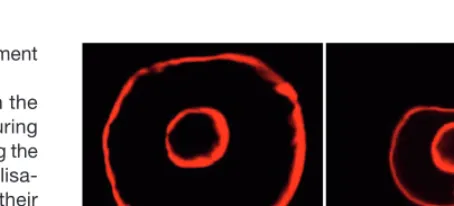
Regarding another cellular model system (human epidermal A431 carcinoma cells) signifi cant changes in cell morphology were observed under microgravity conditions. During a number of sounding rocket fl ights it was demonstrated that the amount of F-actin increased under microgravity conditions, indicating that either actin polymerisation increased under microgravity con-ditions or that actin depolymerisation was inhibited.
been demonstrated to play a regulatory role in actin polymerisation or actin depolymerisation, but it has not yet been elucidated the expression, activity and localisation of these proteins under different micro-gravity conditions.
• The cell cycle and cell proliferation in real and simulated microgravity has been further studied and, for instance, the motility and interaction of human immunocells in microgravity has been analysed (a study in the course of the 10th DLR Parabolic Flight Campaign, for example, addressed the effect of microgravity on the cytoskel-eton and calcium signalling of immune cells during cell migration); in immunology, also the role of cytokines and growth factors with regard to the gravitational environment has been raised as an issue of importance. Such studies on cells led to an increased knowledge on cellular mechano-transduction, particularly regarding the role of the cytoskeleton.
• Radiation issues have been successfully analysed (e.g. Rabbow et al., 2004, Rettberg et al., 2006) and an experiment (Triple-Lux; gene, immune and cellular responses to single and combined spacefl ight condi-tions: Triple-lux assay), will be fl own on Columbus within the BioLab facility in 2009.
• Three-dimensional growth of normal cells and tumour cells in vitro is an established cell culture model with a variety of advantages in many research applications. Three-dimensional cultures, often referred to as ‘mul-ticellular spheroids’, represent an experimental model that is intermediate in its complexity between monolayer cultures and tumours grown in vivo. As spheroids form three-dimensional intercellular contacts, they usually show radial gradients of oxygen, metabolites, and nutrients with low values in the centre and high values in the periphery. So far, the liquid-overlay method and the spinnerfl ask technique have been used to trigger cells to assemble in a three-dimensional manner. Recently, D. Grimm and her co-workers observed that cells switch from two- to three-dimensional growth, when monolay-ers were cultured on a random positioning machine, which mimics microgravity. Rounded spheroids were obtained when thyroid cancer cells were clinorotated (Grimm et al., 2002, Kossmehl et al., 2003), but tube-like structures arose, when endothelial cells of the cell line EA.hy926 were cultured under conditions of simulated microgravity (Infanger et al., 2006, 2007). Thus, they concluded that the kind of cell aggregates formed under microgravity depends on the type of cells. Therefore, endothelial cells are currently clinorotated with the aim of studying the development of new blood vessels.
The SPHEROIDS team (D. Grimm) tested the rel-evance of simulated microgravity on endothelial cells and thyroid cancer cells using a three-dimensional random positioning machine (RPM; Collaboration Egli, ETH Zurich, and Zero-g LifeTec GmbH A. Cogoli, Zurich,
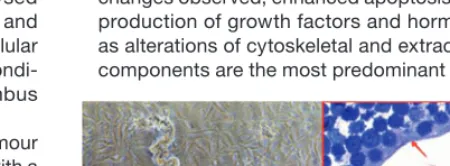
Switzerland; numerous experiments using the RPM have been performed at the ETH Zurich in collaboration with several institutes in Europe and USA: Hughes-Fulford et al., 2005, Walther et al., 2005, Morbidelli et al., 2005, Boonyaratanakornkit et al., 2005, Infanger et al., 2006a, b, 2007, Monici et al., 2006, Grimm et al., 2006). Today, we know that exposure of both types of cells to simu-lated microgravity triggers cells living within monolayer cultures to turn spontaneously into three-dimensional cell aggregates with remarkable new features. It is cer-tain that, under simulated microgravity, human thyroid cancer cells of the cell line ML-1 form rounded three-dimensional aggregates, while endothelial cells of the type EA.hy926 cell line assemble to tube-like structures. These three-dimensional aggregates exhibit various biological and histological features of their originating tissues but rather often also an altered expression of interesting cell components. Amongst the biochemical changes observed, enhanced apoptosis and different production of growth factors and hormones as well as alterations of cytoskeletal and extracellular matrix components are the most predominant ones.
• Apoptosis, that is, programmed cell death is an issue of major concern regarding manned spaceflight. Contributions to the closer understanding of the ini-tiation of apoptosis by the space environment have been provided.
• Progress was gained in understanding/differentiat-ing indirect from direct effects of altered gravity on cells. Identifi ed neurons within the nervous system of developing and adult insects (E. Horn) (crickets
Acheta domesticus: Eneide mission and RPM; fruitfl y
Drosophila sp.: RPM; R. Marco) were not affected with regard to their basic patterns. Proliferation of identifi ed neurons was not affected even after in-orbit fertilisation (Eneide mission).
• The objective of FLOWSPACE is to defi ne the bone cell mechano-sensitive characteristics and experiment
C
o
u
rte
s
y
: M
. I
n
fa
n
g
e
r
requirements to be used for the development and use of a cell culture module for gravitational biological experiments. The specifi c aim is to test whether grav-ity, simulated and real microgravity and hypergravity modulates the sensitivity of bone cells for mechanical stress.
The laboratory setup for testing bone cell response to mechanical loading, as used in the regular research of the FLOWSPACE group around J. Klein-Nulend/J. van Loon, has been thoroughly characterised and was downscaled to comply with spacefl ight requirements. The response of bone cells to mechanical loading by fl uid fl ow was also tested. It was found that bone cells respond to fl ow in a rate-dependent manner. These results were used for the FLOW experiment fl own to the International Space Station (via the DELTA mission or Dutch Soyuz Mission). Preparations for the FLOW experiment provided experience for an actual spacefl ight involvement, in terms of developing spacefl ight-approved hardware and optimising primary bone cell cultures for robust pre-fl ight environmental conditions.
Further experiments on bone cell responses to different mechanical stress conditions revealed that bone cell response to vibration stress is linearly rate-dependent, and that noise enhanced the response of bone cells to fl uid shear stress loading. It was also found that bone cell mechanical compliance is frequency dependent. New fi ndings on the effects of mechani-cal stress on bone cells provide relevant experience and information for the fi nal experiment FLOWSPACE. Numerous papers have been published relating to Flow and Flowspace (Bacabac et al., 2004, 2005a, b, c, 2006a, b, c, 2007a, b, Klein-Nulend et al., 2005, 2008, Mullender et al., 2006).
• After the successful start and implementation of Columbus, BioLab on ISS is now a major achievement for gravitational biologists. The fi rst experiment (WAICO 1; PI G. Scherer) has been on orbit since early 2008. The protocol was successful and the recovery of fresh samples yielded unexpected insights (pers. com. PI to rapporteur). This experiment is intended to gain a closer understanding of the connection between gravitropism and circumnutation in plants (Arabidopsis).
Developmental biology
There is an apparent lack of effects from the space envi-ronment on the overall development of a large series of biological systems that have been exposed to these conditions. On the other hand, specifi c processes have been shown to be affected but they are eventually com-pensated. Many of the properties of the compensation mechanisms are unclear.
• Regarding the development of arthropods (Drosophila), R. Marco and his group (in collaboration with further international groups) have studied the overall behav-iour of the Drosophila genomic expression in pupae developed and fi xed in the ISS in real microgravity and compared them with the data obtained in the Random Position Machine (simulated microgravity) in the Dutch Experiment Support Centre (DESC – J. van Loon) in Amsterdam. A high number of genes changed expression levels in Drosophila pupas developing in microgravity and, just as important, these changes could be reproduced in the simulated microgravity in the RPM. Details on Drosophila investigations (‘Ageing’ and ‘Gene’ Experiment) in the context of the Spanish Soyuz mission Cervantes are provided in Herranz et al. (2005, 2007), Leandro et al. (2007) and de Juan et al. (2007).
• Experiments employing aquatic vertebrates have yielded an improved description of critical periods for vestibular development (e.g. Horn, 2004, 2005, 2006, Horn et al., 2006). Especially, new perspectives on the existence of critical periods during development of the vestibu-loocular refl ex have been raised by the comparison of the amphibians Xenopus laevis and Pleurodeles waltii
C
o
u
rte
s
y
: M
. C
o
g
o
li-G
re
u
te
r
C
o
u
rte
s
y
: J. v
a
n L
o
o
n
Figure 2.2.1.2: F- ACTIN in J-111 cells in KUBIK Bio1.