Original Research Article
Assessment of postnatal depression and some associated risk factors
among mothers attending the immunisation outpatient department in a
tertiary health care centre: a cross sectional study
Shruti Gaikwad, Vinod Mundada*, Vishal Dhande, Mohan Doibale
INTRODUCTION
Postnatal depression is an affective disorder (any mental disorder characterized by a consistent change in mood that affects thoughts and behaviours) that can occur after pregnancies of all duration, from spontaneous (not induced) abortions, also called miscarriages, to full-term deliveries.1 Postnatal depression may range from mild self-limiting depression named postpartum blues to postnatal major depression and psychosis.2
According to the National Institutes of Mental Health studies, the childbearing years are when a woman is most
likely to experience depression in her lifetime.3 Postpartum depressions is a significant and common health problem that causes a considerable amount of impact and distress on the family and society.4 PPD elicits negative clinical implications for maternal-infant attachment there is a withdrawn and disengaged behaviour in the mother and/or intrusive and hostile mother-infant communication.5-8
Research has shown that experiencing symptoms of PPD can have immediate ill effects on the offspring.9 Thus, the recognition and assessment of this psychological disorder is important. The present study was undertaken to
ABSTRACT
Background: Postpartum depression is a significant and common health problem that causes a considerable amount of impact to both the mother and baby and distress on the family and society. The objective of this study is to find out prevalence of postnatal depression among mothers attending immunization outpatient department (OPD) for immunization of their baby in a tertiary health care center and to study some risk factors responsible for it.
Methods: This cross sectional study was conducted in a tertiary care teaching hospital of Maharashtra state during period September to February 2019. Total 188 mothers were screened for postpartum depression using local version of EPDS (Edinburgh Postnatal Depression Scale).
Results: 24 (12.76%) mothers were found to have a score of 10–12 indicating moderate depressive symptoms, and 18 mothers had a score of 13 and above. (9.57%). Risk factors found to be significantly associated with postnatal depression rural residence of mother, lack of support during and after pregnancy, history of domestic abuse, and stressful life events in the past year.
Conclusions: Since the prevalence of EPDS score >13 was found to be high in the current study, we recommend routine screening for PPD in our population.
Keywords: Postnatal depression, EPDS, Tertiary health care centre Department of Community Medicine, GMC Aurangabad, Maharashtra, India
Received: 24 July 2019
Revised: 06 September 2019
Accepted: 07 September 2019
*Correspondence:
Dr. Vinod Mundada,
E-mail: [email protected]
Copyright: © the author(s), publisher and licensee Medip Academy. This is an open-access article distributed under the terms of the Creative Commons Attribution Non-Commercial License, which permits unrestricted non-commercial use, distribution, and reproduction in any medium, provided the original work is properly cited.
determine the prevalence of probable depression among women attending OPD of tertiary care hospital in Maharashtra state and identify some associated risk factors.
METHODS
The present cross sectional study was carried out in
Government Medical College, Aurangabad in
Maharashtra state during period September to February 2019. All the mothers attending immunisation OPD for immunization of their baby who have completed 42 days since their last delivery but are <6 months of delivery were included in the study. Women who were not consenting to participate in the study were excluded. Sample size was calculated by taking 7.5% as prevalence from a study by Sheela et al carried out in St. John’s medical College and Hospital, Bangalore, considering 95% confidence level and 5% allowable error.10 The sample size came to be 111. We have studied total 188 participants.
The participants were administered the Edinburgh postnatal depression scale (EPDS), with a cut off value of score 13, in the local language, which has been pre validated.11 The 10 item scale gauges depression based on a 7-day recall of mood and feelings, each item scored on a severity scale of 0 to 3, giving a total score ranging from 0 to 30. A score of 10–12 indicates moderate
depressive symptoms and 13 or more a clinically relevant depressive symptomatology.12-14 The questionnaire also included information about the socio demographic profile of the mother and history regarding risk factors for postnatal depression. Written informed consent was taken from every participant. Data entry and analysis of the variables were done using the MS Excel and trial version of SPSS 16 Descriptive statistics were calculated for background variables and postpartum depression. Association between postpartum depression and the related factors were analysed using the Chi‑square test.
RESULTS
Total 188 study participants were studied in this study, out of these 24 (12.76%) mothers were found to have a
score of 10–12 indicating moderate depressive
symptoms, and 18 mothers had a score of 13 and above (9.57%).
The mean age of study participants was 25.07 years. Most of i.e., 86 study participants were from age group 21-25 years old. All the study participants were married. Only 2 participants were illiterate, 6 had completed primary education, 64 had completed secondary education, 41 had completed HSC, and majority i.e., 75 were graduates or post graduates. 159 participants resided in urban area (84.6%) and 29 in rural area (15.4%).
Table 1: Socio-demographic profile of study subjects.
Not depressed (n=170) Depressed (n=18) Total (n=188) Chi square
Age group (years)
<20 24 2 26
χ2=0.866
p=0.834
21-25 78 8 86
26-30 51 7 58
>31 17 1 18
Education
Illiterate 2 0 2
χ2
=7.390 p=0.117
Primary 4 2 6
Middle school 55 9 64
Higher secondary 39 2 41
Graduation and above 70 5 75
Occupation
Employed 42 4 46 X2=0.54
p=0.538
Housewives 128 14 142
Resident
Urban 147 12 159 χ2=4.893
p=0.039
Rural 23 6 29
Religion
Hindu 93 10 103
χ2
=0.583 p=0.965
Muslim 70 7 77
Buddhist 5 1 6
Christian 1 0 1
Others 1 1 0
Type of family
Nuclear 63 6 69 χ2=0.097
p=0.489
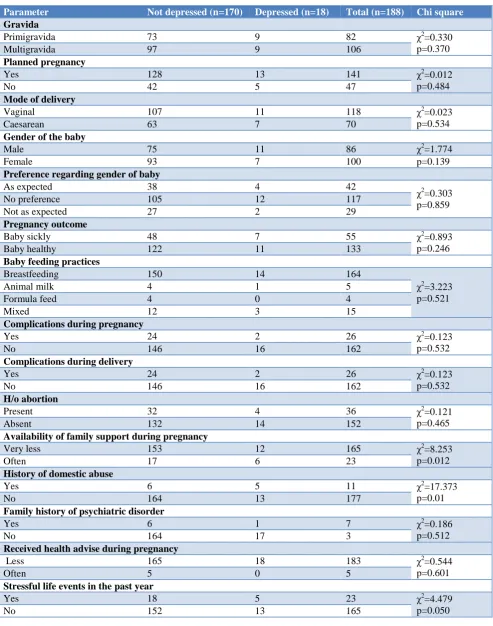
Table 2: Association between various risk factors and the prevalence of postnatal depression among the study participants.
Parameter Not depressed (n=170) Depressed (n=18) Total (n=188) Chi square
Gravida
Primigravida 73 9 82 χ2=0.330
p=0.370
Multigravida 97 9 106
Planned pregnancy
Yes 128 13 141 χ2
=0.012 p=0.484
No 42 5 47
Mode of delivery
Vaginal 107 11 118 χ2=0.023
p=0.534
Caesarean 63 7 70
Gender of the baby
Male 75 11 86 χ2=1.774
Female 93 7 100 p=0.139
Preference regarding gender of baby
As expected 38 4 42
χ2=0.303
p=0.859
No preference 105 12 117
Not as expected 27 2 29
Pregnancy outcome
Baby sickly 48 7 55 χ2=0.893
p=0.246
Baby healthy 122 11 133
Baby feeding practices
Breastfeeding 150 14 164
χ2
=3.223 p=0.521
Animal milk 4 1 5
Formula feed 4 0 4
Mixed 12 3 15
Complications during pregnancy
Yes 24 2 26 χ2
=0.123 p=0.532
No 146 16 162
Complications during delivery
Yes 24 2 26 χ2=0.123
p=0.532
No 146 16 162
H/o abortion
Present 32 4 36 χ2=0.121
p=0.465
Absent 132 14 152
Availability of family support during pregnancy
Very less 153 12 165 χ2=8.253
p=0.012
Often 17 6 23
History of domestic abuse
Yes 6 5 11 χ2
=17.373 p=0.01
No 164 13 177
Family history of psychiatric disorder
Yes 6 1 7 χ2=0.186
p=0.512
No 164 17 3
Received health advise during pregnancy
Less 165 18 183 χ2=0.544
p=0.601
Often 5 0 5
Stressful life events in the past year
Yes 18 5 23 χ2=4.479
p=0.050
No 152 13 165
The association between residence of mother and postpartum depression was found to be statistically significant (p value <0.05). 69 participants belonged to a
by religion. Table 1 shows the socio demographic details of the participants.
82 participants were primigravida (43.6%), and 106 were multigravida (56.4%). 141 pregnancies were wanted (75%), 47 pregnancies were unwanted (27%). The mode of delivery was vaginal in 118 participants (62.8%), and LSCS in 70 cases (37.2%). 86 participants delivered a male child (46.2%), and 100 delivered a female child (52.9%). Majority of the mothers (117) had no preference regarding the gender of the baby (62.2%), 42 say gender of the baby was as expected, and 29 mothers were unhappy with the gender of their child. Majority of the mothers (163) exclusively breastfed their baby (86.7%), 2.7% sustained their babies on animal milk, 4 on formula feed, and the rest on a combination of the above. 133 (70.7%) babies were healthy, and 55 (29.3%) were sickly.
Majority of the participants had an uncomplicated pregnancy and delivery. The commonest complications
during pregnancy were pre-eclampsia and
oligohydromnios, and those during delivery were prolonged labour. 59% participants did not have a live male child and 19% had a previous abortion history. 11 participants admitted to marital conflict during pregnancy, and 23 had no support from their in laws during pregnancy. Majority participants received healthcare advice during their ANC period, 23 had suffered a stressful life event during the past year, and 7 had a family history of depression.
Table 2 shows association between various risk factors and the prevalence of postnatal depression among the study participants. Residence of the mother, lack of support during pregnancy, history of domestic abuse , and stressful life events during the past year were significantly associated with postpartum depression (p<0.05).
DISCUSSION
All the mothers of postpartum period between 6 weeks to 6 months who attended the OPD for immunisation of their children were interviewed for Postnatal Depression by EPDS Scale with some socio demographic characteristics and risk factors like age, sex, occupation, gender of neonate, family support, history of abortion obstetric outcome, antenatal complications etc. Total 188 study participants were studied in this study, out of these 24 (12.76%) mothers were found to have a score of 10– 12 indicating moderate depressive symptoms, and 18 mothers had a score of 13 and above. (9.57%) Similar results were found in a study by Sheela et al (7.5%), and Lanes et alwho found national prevalence of minor/major and major PPDS in Canadian women as 8.46% and 8.69% respectively.10,15
Other studies carried out by Suguna et al, Shriraam et al and Saldanha et al have recorded the prevalence of postpartum depression as 18%, 11% and 21.5% respectively.16-18 Differences in reported prevalence
among various studies might be due to differences in the cut-off score used for EPD scale, reporting style, differences in educational status, levels of social support or its perception, differences in perception of mental health, as well as biological vulnerability factors.
The prevalence of postpartum depression was more in women residing in rural area as compared to urban area, this difference was statistically significant (p<0.05). Conflicting results have been obtained in the previous studies regarding the association of postpartum depression with the area of residence. The difference in the present study may be attributed to presence of additional factors reported in rural women such as having 2 or more young children.19
The women who had faced stressful life events in the past 1 year recorded higher scores on the EPDS scale compared to other women (p<0.05). Similar results were found in study done by Qobadi et alamong new mothers in Mississippi, and in a study by Hegde et al conducted at a district hospital and maternity and child health centre in South India.20,21
History of domestic abuse was highly significant in its association with postpartum depression. These findings are consistent with the studies by Bacchus et al and Nongrum, et al which confirmed a significant association between domestic violence and maternal and pregnancy related outcomes (e.g., maternal depression).22,23
Social support is a multidimensional concept; sources of support can be spouse, relatives and friends. Receiving social support during stressful times is thought to be a protective factor against developing depression. Lack of support from spouse and in laws during the pregnancy and after the delivery of the child was found to be significantly associated with postpartum depression in this study. These findings are corroborated by studies by Alasoom et al and Lanes et al.14,15
The findings of the present study are in accordance with those of the previous literature in terms of risk factors like domestic abuse, lack of support during and after pregnancy, and history of stressful life events. In addition rural residence of the mother was also found to be significantly associated with postpartum depression. Further research is needed to explore the role of this factor as a risk factor for postpartum depression. Other obstetric and non-obstetric risk factors inquired for in this study were found to be not significant.
Limitations
comprehension of the questions and rapport with the investigator.
CONCLUSION
The impact of PPD is significant not only to the mother, but also to the baby. Since the prevalence of EPDS score >13 was found to be high in the current study, we recommend routine screening for PPD in our population.
Funding: No funding sources Conflict of interest: None declared Ethical approval: Not required
REFERENCES
1. Dhande N, Khapre M, Nayak S, Mudey A.
Assessment of Postnatal Depression among mothers following delivery in rural area of Wardha District: A cross sectional study. Innovative Journal of Medical and Health Science. 2014;4(2):53-5.
2. Khara S, Kose V. Assessment of postpartum
depression among mother s following delivery in a
rural based tertiary care centre, Nagpur,
Maharashtra: A cross-sectional study. Panacea Journal of Medical Sciences. 2018;8(1):40–2. 3. Chasse JD. Washington Baby: A Collection of
Studies and Research in Maternal/Perinatal
Psychology, Health and Public Policy Issues. Beltsville, Maryland: Jill Chasse; 2006.
4. Alasoom LI, Koura MR. Predictors of postpartum depression in the eastern province capital of Saudi Arabia. J Fam Med Primary Care. 2014;3:146-50. 5. Barnes DL. Postpartum Depression: Its Impact on
Couples and Marital Satisfaction. Journal of Systemic Therapies. 2006;25:25-42.
6. Dennis C, McQueen K. The relationship between infant-feeding outcomes and postpartum depression: a qualitative systematic review. Pediatrics. 2009;123:e736-e751.
7. Halbreich U, Karkun S. Cross-cultural and social diversity of prevalence of postpartum depression and depressive symptoms. J Affect Disorder. 2006;91:97-111.
8. Mancini F, Carlson C, Albers L. Use of the Postpartum Depression Screening Scale in a collaborative obstetric practice. J Midwifery Women’s Health. 2007;52:429-34.
9. Kavanaugh M, Halterman J, Montes G, Epstein M, Hightower AD, Weitzman M. Maternal depressive symptoms are adversely associated with prevention practices and parenting behaviors for preschool children. Ambulatory Pediatric. 2006;6:32-7. 10. Sheela et al. Screening for Postnatal Depression in a
Tertiary Care Hospital. J Obstet Gynecol India. 2016;66(S1):S72–6.
11. Khapre M, Dhande N, Mudey A. Validity and Reliability of Marathi Version of Edinburgh Postnatal Depression Scale as a Screening Tool for
Post Natal Depression. Ntl J Community Med. 2017;8(3):116-21.
12. Wisner KL, Parry BL, Piontek CM. Clinical practice. Postpartum depression. N Engl J Med. 2002;347:194-9.
13. Cox JL, Holden JM, Sagovsky R. Detection of postnatal depression. Development of the 10-item Edinburgh postnatal depression scale. Br J Psychiatr. 1987;150:782-6.
14. Sidor A, Kunz E, Schweyer D, Eickhorst A, Cierpka M. Links between maternal postpartum depressive symptoms, maternal distress, infant gender and sensitivity in a high-risk population. Child Adolesc Psychiatr Ment Health. 2011;5:7.
15. Lanes A, Kuk JL, Tamim H. Prevalence and
characteristics of Postpartum Depression
symptomatology among Canadian women: a cross-sectional study. BMC Public Health. 2011;11:302.
16. Suguna A, Naveen R, Surekha A. Postnatal
Depression among Women Attending A Rural Maternity Hospital in South India. Ntl J of Community Med. 2015;6(3):297-301.
17. Shriraam V, Shah PB, Rani MA, Sathiyasekaran B. A community-based study of postpartum depression in rural Southern India. Indian J Soc Psychiatry. 2019;35:64-8.
18. Saldanha D, Rathi N, Bal H, Chaudhari B. Incidence and evaluation of factors contributing towards postpartum depression. Med J D Y Patil Univ. 2014;7:309-16.
19. Villegas L, McKay K, Dennis CL, Ross LE. Postpartum depression among rural women from developed and developing countries: a systematic review. J Rural Health. 2011;27(3):278-88.
20. Qobadi M, Collier C, Zhang L. The effect of stressful life events on postpartum depression: findings from the 2009-2011 Mississippi pregnancy risk assessment monitoring system. Matern Child Health J. 2016;20(S1);164–72.
21. Hegde SS, Latha KVK, Bhat SM, Sharma PS, Kamath A, Shetty AK. Postpartum Depression: Prevalence and Associated Factors among Women in India. J Womens Health, Issues Care. 2016;1:1. 22. Bacchus L, Mezey G, Bewley S. Domestic violence:
prevalence in pregnant women and associations with physical and psychological health. Eur J Obstet Gynecol Reprod Biol. 2004;113(1):6-11.
23. Nongrum R, Thomas E, Lionel J, Jacob KS. Domestic violence as a risk factor for maternal depression and neonatal outcomes: A hospital-based cohort study. Indian J Psychol Med. 2014;36:179-81.
24. Alasoom LI, Koura MR. Predictors of postpartum depression in the eastern province capital of Saudi Arabia. J Fam Med Primary Care. 2014;3:146-50.